Politic?

This is a blog dedicated to a personal interpretation of political news of the day. I attempt to be as knowledgeable as possible before commenting and committing my thoughts to a day's communication.

Sunday, November 19, 2023

Beating Iran at its Terrorist-Enabling Game

"The Hamas battle is a relatively minor theatre in the larger war waged by Iran."
"Until you deal with the Iran question, Middle East peace and stability in the wider world will be increasingly disrupted by Hamas in Gaza, Hezbollah in the failed state of Lebanon, the Houthi war in Yemen and the ongoing mass murders carried out by the Assad regime in Syria."
"We already have a revolutionary movement in Iran that wants to topple the regime."
"What the west needs to do is help that revolutionary movement. What is needed is several lines of support to destabilize the situation inside the country. Funding, training, organizing the opposition so they can work together and topple the regime."
"If we're serious about solving all these problems, the answer is you need a change of regime in Tehran."
You have a population in the country that wants democracy and is open to the west and is open to Israel. Let's make use of this incredible resource that's at our disposal. The people in the streets of Iran are not equivocating. They want this regime gone."
Kave Shahrooz, Iranian-Canadian human rights jurist, democracy activist
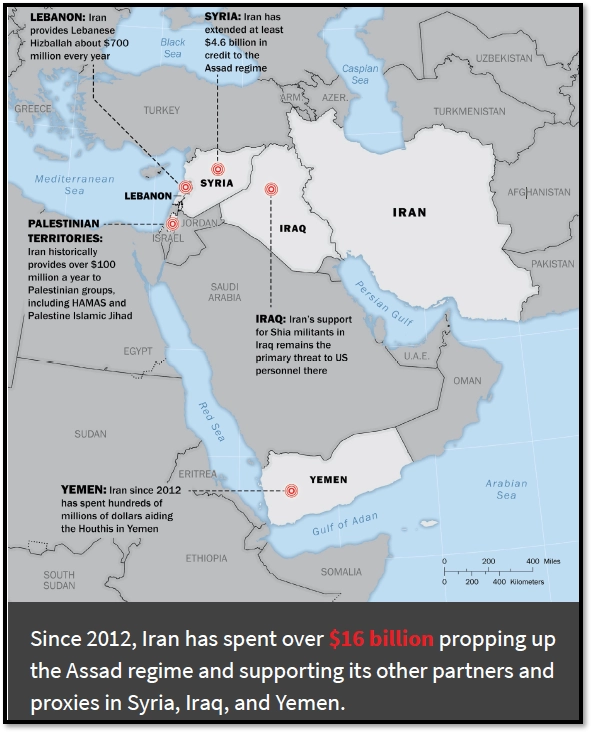
https://www.wilsoncenter.org/sites/default/files/styles/embed_text_block/public/media/uploads/images/State%20Department%20Iran%20Proxy%20Map%202020.webp
Hamas has fired thousands of rockets into Israel just within the six weeks since Hamas and Islamic Jihad invaded Israel. Only now that the Israel Defense Forces is destroying the capacity of the terrorist organization in Gaza, the rockets have diminished in number from the previous 100 daily to under 20 every day. But then, other rockets, far more sophisticated and powerful ones supplied by Iran to the Ansarullah Houthi regime in Sanaa, Yemen is sending its drones, rockets and missiles into Israel.
 
Yemen's Ansarullah group staged a military parade in late September to showcase several new types of Iranian cruise missiles and ballistic missiles recently acquired from the Islamic Republic of Iran to their protegees. Precision-guided liquid-propellant "Toufan" missiles with a range potential of up to 1,950 kilometres that brings the Red Sea port Israeli city of Eilat within striking range.

Israeli fighter jets and the country's Arrow air defence system intercepted several Ansurallah barrages of surface-to-surface missiles and drones; none of the attacks have yet managed to penetrate Israeli airspace. American warships in the Red Sea also have come under attack by drones launched from Yemen. Skirmishes with Iran's Hezbollah proxy terror group on Israel's northern border have been increasing. Airstrikes from Israel have responded to the Hezbollah rockets. 

Israel plans to maintain its focus on Gaza, but the prospect of a wider war initiated by Iran appears on the horizon. Hezbollah is in possession of a substantial arsenal, equal to that of a dozen UN member-states. In 2007 Hezbollah's weapons cache consisted of some 15,000 medium-range sophisticated missiles. At present, despite Israeli airstrikes on missile shipments going through from Syria to bases in Lebanon have allowed Hezbollah to stockpile 150,000 rockets and missiles; 400 long-range missiles.

Iran's Quds Force has been exerting influence in Syria in support of Bashar al Assad over the past three years, augmenting Iranian militias in Iraq, in a chain of command. Assad's military and security services now are supplemented by Shia militias faithful to Iran. Iran's armed groups in Iraq, Syria, Lebanon, Yemen and Bahrain, according to the Centre for Strategic and International Studies, have recruits from Afghanistan and Pakistan, numbering in total some 250,000 fighters.

A lot of manoeuvering and consolidation has taken place in the six weeks since Hamas invaded Israel with its barbaric terrorist slaughter of 1,200 civilians and abduction of some 239 Israeli children, women, the elderly and foreign agricultural workers into Gaza. Matters are proceeding precisely as the Islamic Republic has planned and there is obviously more, much more to come.
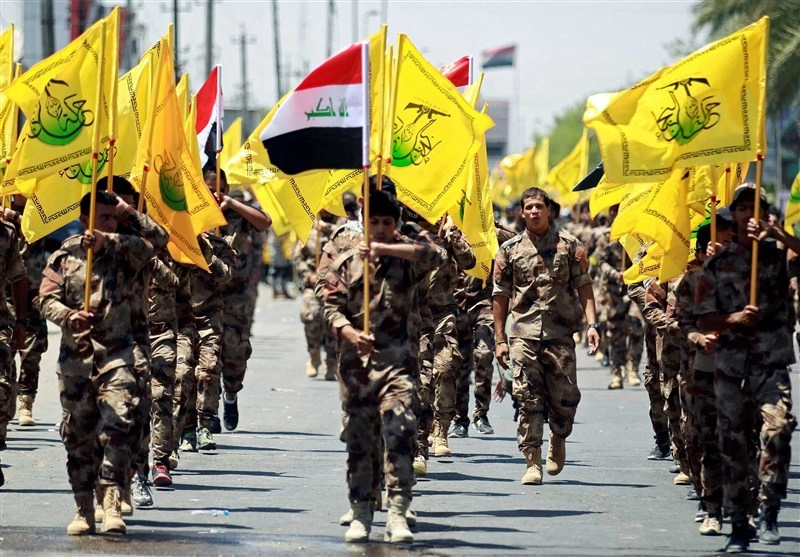
 
https://www.wilsoncenter.org/sites/default/files/styles/embed_text_block/public/media/uploads/images/Nujaba%20Iraq%20Tasnim.webp
Harakat Hezbollah al Nujaba, an Iraqi militia trained by Iran's Revolutionary Guards  Tasnim News Agency
 
Iran is recognized internationally as the world's foremost sponsor of terrorist groups, ever since power was seized by Khomeini in 1979. Partially enabled by the policy approach of the Obama administration, then reconstituted with Joe Biden's inauguration; a policy viewing the Khomeinist regime's presence as a "balance" to the major Arab states in the Middle East. A geopolitical arrangement Barack Obama attempted to secure through a nuclear-weapons agreement.

Rapprochement, he was certain, would become his foreign policy legacy, moving him to allow Bashar al Assad to cross the "red line" with chemical weapons use in the Syrian Arab Spring uprising of Sunni Syrians against the Alawite-Shia-Baathist dictatorship. 1,400 civilians were slaughtered in 2013 in Eastern Ghouta and Moudamiyat al-Cham, by sarin gas. Obama failed to act, under Iran's threat to leave the nuclear talks.

Conflict-resolution specialist Robert Malley was the architect of the Obama strategy and he was reinstated by President Biden, to revive the Obama plan. Until Malley's security clearance was revoked pending an FBI probe into classified intelligence that was shared with Tehran. Then the eruption of a scandal when Tehran's "Iran Experts Initiative" infiltrated senior policy-making circles in Washington.

Long story short, the United States would do well to abandon the intention to have a partnership with the Khomeinist regime in nuclear containment, or indeed any issue whatever. According to Kaveh Shahroz, Iranian-Canadian human rights and democracy activist, a fortuitous alliance of helpfulness with Iran's dissidents should enable Iranians themselves to target Tehran to dispose of the terrorist-enabling regime.
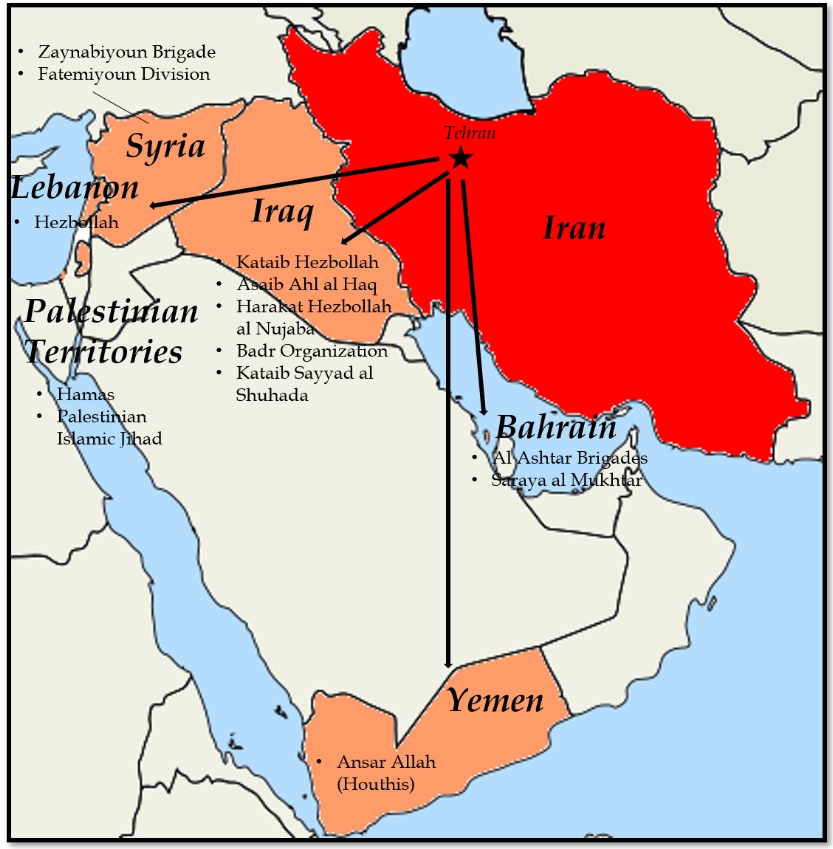
https://www.wilsoncenter.org/sites/default/files/styles/embed_text_block/public/media/uploads/images/Iran%20Proxy%20Map%20only%202020%20small.webp
U.S. Institute of Peace, Woodrow Wilson Center

"Hamas is backed by Iran. Hezbollah is backed by Iran. The Houthis are backed by Iran. All roads in this war lead back to Iran and the hundreds of millions of dollars they spend on these terror groups in the region to help them terrorize Israel and extend their hegemony throughout the region."
Iran's so-called supreme leader applauded Hamas for its horrifying October 7 attacks that targeted innocent Israeli civilians."
"Iran's shadow war with Israel is stepping into the sunlight, and Iran must be sanctioned. That starts with listing the IRGC as a terrorist entity and the total isolation of Iran within the international community."
Shimon Koffler Fogel, chairman, CEO, Centre for Israel and Jewish Affairs

Labels: , , , , , , , ,

Tuesday, August 22, 2023

Crossing the Border From Yemen To Saudi Arabia -- Don't!

 
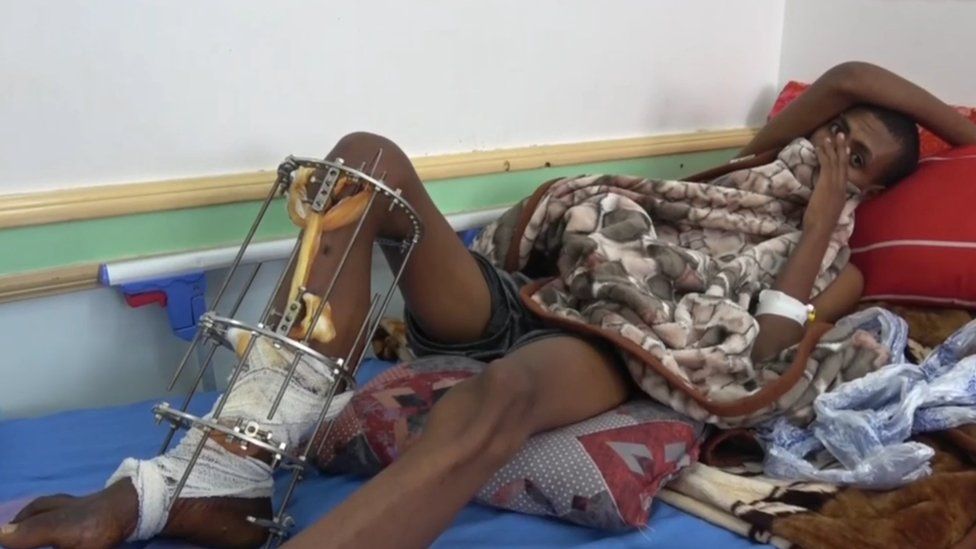
"The shooting went on and on."
"I didn't even notice I was shot but when I tried to get up and walk, part of my leg was not with me."
"I went to Saudi Arabia because I wanted to improve my family's life but what I hoped for didn't materialize. Now my parents do everything for me."
21-year-old Mustafa Soufia Mohammed   
 
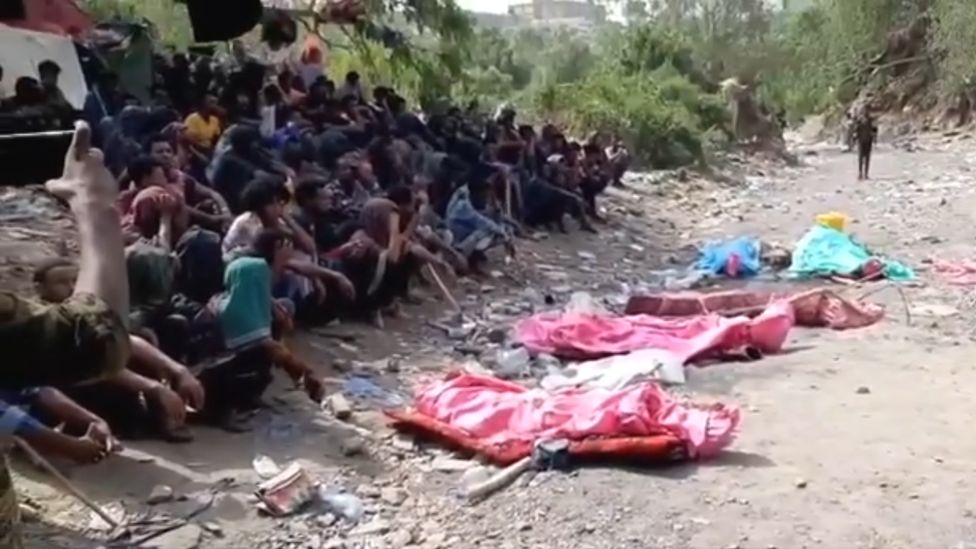
"They beat us, killed some and took those who survived to the hospital. The bodies of those killed were left scattered on the ground." 
"I was shot between my thighs near my groin, and my legs are paralyzed now. I can't even walk. I thought I would die." 
Ibsaa, Ethiopian migrant
A migrant with an injured leg lies on a hospital bed in the Yemeni city of Saada
Ethiopian migrants say they were shot when they tried to cross from Yemen into Saudi Arabia BBC
"What we documented are essentially mass killings."
"People described sites that sound like killing fields - bodies strewn all over the hillside."
"We say a minimum of 655 [killed], but it's likely to be thousands. We have factually demonstrated that the abuses are widespread and systematic and may amount to a crime against humanity."
Human Rights Watch report's lead author, Nadia Hardman

"I saw people killed in a way I have never imagined."
"Immediately after we arrived [at the border], they [Saudi Border guards] fired on us."
"A lot of people were dying. In a group of 200 migrants only fifty people survived."
"It wasn't a bullet they were shooting. It was thrown from the back of a car, like a bomb. It kills a lot of people. They fired on a lot of people."
Dahabo, 20, economic migrant
From personal accounts of migrants crossing from Yemen toward the Saudi Arabian border, rockets were fired by Saudi border guards, according to a newly published investigation. Fleeing turmoil in the Horn of Africa, hordes of migrants were shot with rifles and blown up with rocket-launcher-like weaponry as they attempted to cross by land into the Kingdom of Saudi Arabia.

Border guards were charged with forcing teenagers to rape other migrants. Victims were forced to select which of their own limbs they preferred to be shot in, according to testimony evaluated from 42 survivors that Human Rights Watch collated and published in their report. It is a graphic, 79-page report claiming that Saudi border guards "systematically fired mortar and rocket launcher type weapons" on Ethiopian migrants.

The situation is one of a background of neighbouring Yemen's civil war overlapping into Saudi Arabia, Houthi terrorists, funded by the Islamic Republic of Iran to transform Yemen into a Shi'ite stronghold aligned with Iran, just as Syria, Iraq and Lebanon have become political satellites of Iran in its plan to subjugate the Sunni majority in the Middle East to Iran's quest to become its regional powerhouse. Saudi Arabia formed a coalition of other Gulf states to intervene in Yemen to restore its rightful government.

An offensive stalemate was reached, the coalition unable to unseat the Houthi rebels from the half of Yemen they took by military force. The Houthis have attacked Saudi Arabia's oil infrastructure on occasion and the war in Yemen grinds on. Simultaneously a surge in migration into Saudi Arabia has taken place at its border with Yemen. Although the Houthi leadership denies Saudi claims that they have been collaborating with human smuggler groups to guide migrants into Saudi Arabia, this is what is occurring.

The ageless hostilities between between Saudi Arabia and Iran, the latter believing it should control Medina and Mecca, not Saudi Arabia, came to a surprising pause when the two countries recently signed an agreement presumably of regional cooperation. Despite which there has been no pause or cessation of the Iran-sponsored Houthi attacks on Saudi Arabia.

The report issued by Human Rights Watch notes that the Houthis in Yemen were aiding in the smuggling of mostly Ethiopian migrants arriving by boat from Africa to the border with Saudi Arabia. It was also outlined that "widespread" attacks by Saudi Arbia on the migrants have been a reality since 2022, their deaths numbering in the hundreds, potentially in the thousands; under international law, a crime against humanity.
 
Migrants look at covered bodies during a burial on the Saudi-Yemeni border
The report says it is impossible estimate how many migrants have been killed along the border   Social Media
 
There have been overtures to Saudi Arabia for years, prosecuted mostly by the United States, for a new alliance between Saudi Arabia and Israel, to become a partner in the Abraham Accords, an initiative for regional peace formalized at long last, but Crown Prince Mohammed bin Salman, the de facto ruler of Saudi Arabia has continued to balk at that commitment. While the Islamic Republic of Iran continually threatens Israel with destruction, its decades-long goal of nuclear devices geared to that threat.

The issue of Saudi Arabia and other gulf states forming closer relations with China is one that perturbs the United States and its allies. Human Rights Watch has shown graphic video footage and photographs of survivors of Saudi attacks complete with atrocious injuries to the limbs and faces of the migrants. The migrants' injuries appear consistent with those sustained by explosive ammunition and gunshots, according to consulted weapons experts.

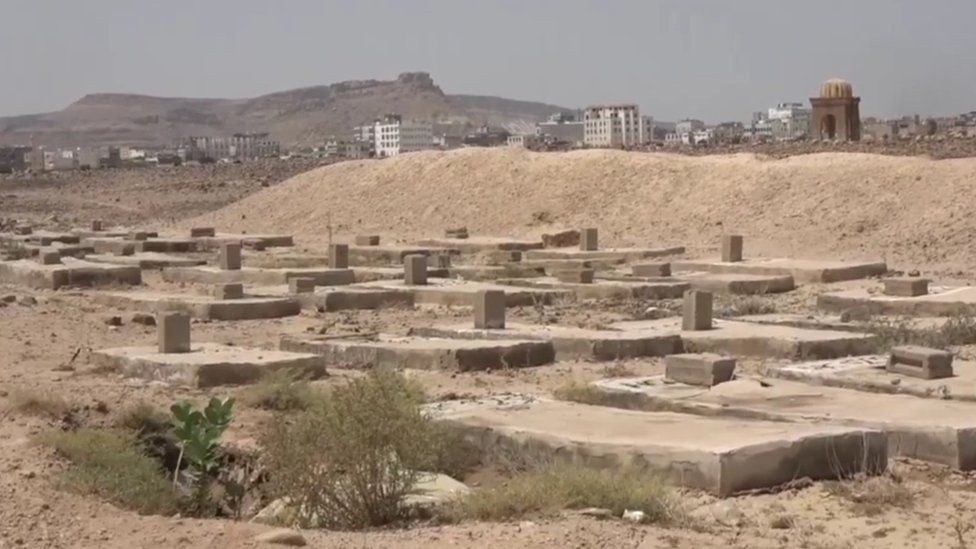
Human Rights Watch declares the most recent attacks killing migrants "appear to be a deliberate escalation in both the number and manner of targeted killings" that have taken place near the Yemen border since 2014. Through its research the human rights group used satellite imagery to locate large numbers of grave sites where victims were buried following the massacres.
"Saudi officials are killing hundreds of migrants and asylum seekers in this remote border area out of view of the rest of the world."
"Spending billions buying up professional golf, football clubs, and major entertainment events to improve the Saudi image should not deflect attention from these horrendous crimes."
Nadia Hardman, researcher, Human Rights Watch
A row of graves in the Yemeni city of Saada
Migrant routes in Yemen are littered with graves  BBC

Perhaps the real mystery here is that of human nature itself. That a mind-chilling reality of a nation that is notoriously xenophobic, one that does not welcome those in whom it has no interest other than as temporary labourers toward whom citizenship or civil rights will never be given, prefer to be oblivious to the reality that the violent reception at the border meted out to unwanted migrants fails to dissuade them. The knowledge of the hostility with which they are met has not dampened the ardour of young men to intrude where they are not wanted.

The imagined lure of financial success should they access a country's limitless resources for advancement propels them to continue testing fortune. Penetrating the border when they cannot hope for any kind of official status as immigrants and potential citizens of a wealthy country motivates them to ignore the reality of the violent reception they will be exposed to. That is the puzzle of human nature just as much as the unwillingness to accept the presence of those that are unwanted and to emphasize the resistance to be forced to accept them by simply dispatching them from life.

Labels: , , , , ,

Thursday, January 16, 2020

The Chaotic Turmoil of the Medieval Middle East

Protesters fill a street during an anti-government demonstration in Tehran, Iran.
An anti-government protest in Tehran on January 14, 2020. Demonstrations erupted after Iran admitted to unintentionally shooting down a passenger jet last week.
Fatemeh Bahrami/Anadolu Agency via Getty Images
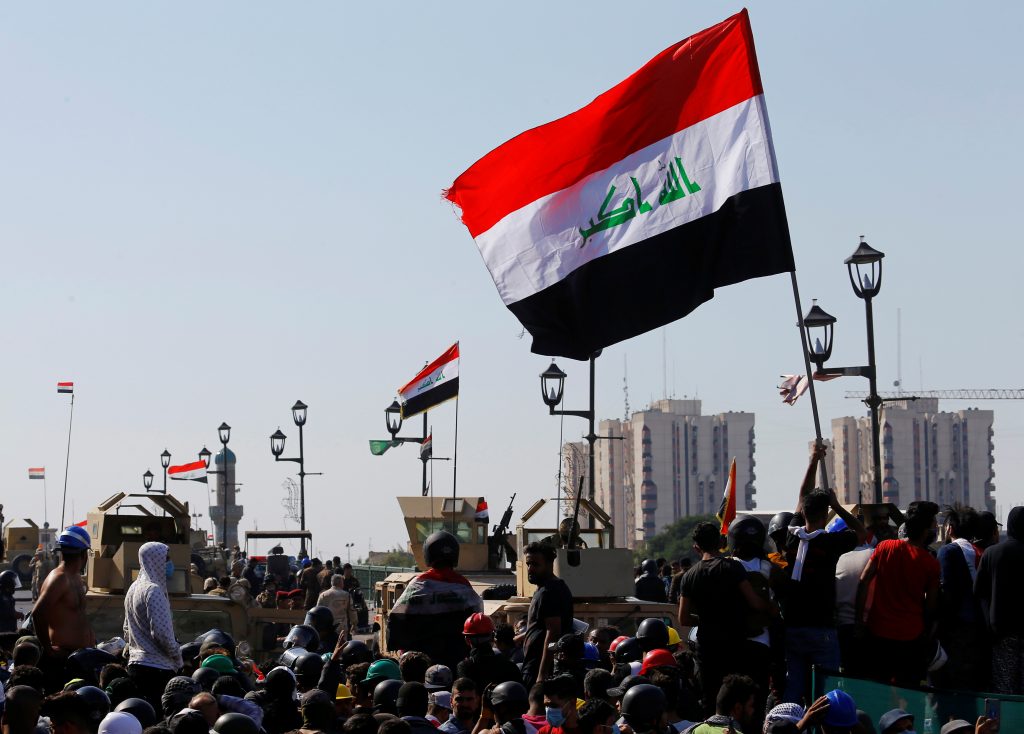
"Aware of the anti-Iranian mood on the Iraqi streets—exemplified by protesters beating their shoes against portraits of Khamenei, just as they had done with former Iraqi President Saddam Hussein in 2003—an unnerved Khamenei did not hesitate to intervene."
"Referring to the unrest as a conspiracy orchestrated by the United States, Saudi Arabia, and the 'Zionist regime' [Israel], the ayatollah called on forces in Iraq to 'remedy the insecurity and turmoil'—a metaphor that served as a green light for Iranian-backed militias to quash demonstrations in Iraq." "But Suleimani’s fingerprints have been found in other parts of Iraq too. It recently emerged that the day after the protests started, the Iranian general secretly flew to Baghdad to meet with security officials. Suleimani called for a heavy-handed approach to deal with people on the streets, reportedly saying, 'we in Iran know how to deal with protests', an implicit reference to prior violent suppressions of peaceful demonstrations in Iran and, more aggressively, in Syria. The death toll in Iraq surpassed 100 the day after his departure, confirming the power of Iran’s word."
Kasra Aarabi, Foreign Policy
Protesters gather at Tahrir Square in Baghdad, Iraq, amid ongoing anti-government demonstrations.
Protesters gather in Baghdad, Iraq, amid anti-government demonstrations on Dec. 10, 2019. Sabah Arar/AFP/Getty Images
"If there was no escalation recently in the region, those Canadians would be right now home with their families."
Canadian Prime Minister Justin Trudeau

"In Iraq and in Lebanon, society is rebelling against an entire political class that, while ostensibly sharing power on a multi-sectarian basis, is actually looting state resources and failing to provide the most basic services. The protesters, furthermore, do not want to be part of a quasi-Iranian protectorate. Ominously for Iran, the Iraqi protests spread like wildfire from Baghdad — a mainly Shia city — throughout the Shia heartlands and holy cities of the south."
"In Lebanon, where demonstrations inside the capital have mixed Sunni and Shia, Christian and Druze, the Shia southern suburbs, and other Hizbollah strongholds in south Lebanon and the Bekaa Valley, have been a sea of Lebanese flags rather than the Party of God’s strident yellow banners. In Iraq, militia snipers as well as security forces have shot protesters, with more than 250 dead. In Lebanon, a tense peace has held — so far. Nobody has forgotten the sectarian bloodletting of the 1975-90 civil war. Thugs from Hizbollah and allied Shia militia Amal have attacked demonstrators."
David Gardner, Financial Times
Why Iran wants the Lebanon and Iraq uprisings to fade
Iraqi demonstrators take part in one of the ongoing anti-government protests in Baghdad, Iraq, (Reuters)
On Tuesday night, 59 people were arrested in Lebanon, protesting in cities like Tripoli, Sidon, Bekaa and Beirut. Serious injuries to protesters took place amidst riot police, broken windows, ambulances and tear gas. Hundreds of thousands of protesters  have come out since last October to pour through the streets, protesting the government's incompetence and Hezbollah's influence; most of all they raged against the presence of Iranian interference in the country.

BEIRUT, LEBANON - NOVEMBER 04: Riot police remove anti-government protesters occupying the
Riot police confront anti-government protesters blocking a main road in Beirut, Lebanon © Getty

There have been nothing like the violence of those riots in Iran, though the protests have been numerous and vehemently expressed in viral antipathy against the theocratic government, the Basij and the IRGC preoccupied with their interference in Syria, Lebanon, Iraq and Yemen, while the nation's economy is in freefall as a result of biting U.S. sanctions and Iranians are suffering privation. People on the streets of Iran's cities decry the dictatorship they suffer under and call for Supreme Leader Ali Khamenei's removal.

In Iraq, a wave of street demonstrations, strikes, marches and occupations begun last October has seen brutal violence causing the deaths of at least 500 protesters, and the injurious wounding suffered by another 19,000, all of which failed to put an end to the protests. Iraq has been coping with its most severe crisis since the 17 years of a U.S.-led invasion and occupation to remove the Butcher of Baghdad, Saddam Hussein which unleashed a sectarian backlash of slaughter.

And then there is Syria and the collapse of a former thriving country whose crumbling into chaotic destruction of its society and its heritage began with a quiet protest by Sunni Syrians over their second-rate status in a minority Shiite-Alawite-dominated regime whose president, Bashar Assad sneered at the 'terrorists' confronting his rule and unleashed chemical warfare, barrel bombs, the targeting of hospitals and schools and markets to convince Syrian Sunnis they have no future in Syria.

Discontent in Iraq and Lebanon is a way to expose Iran's corruption
Getty Images

The common denominator in these Shiite-led countries is their hegemonic relationship with the Islamic Republic of Iran which had set out to form a sectarian alliance of aggressive Islamist strength on its way to achieving power and influence over its Arab, Sunni-majority neighbours. Iranian tentacles throughout the Middle East, from Lebanon and Yemen, Syria and Iraq to Qatar and Turkey has served to roil the geography in an escalating hurricane of Islamist disequilibrium, long predating  the Hellfire missiles from a Reaper drone over Baghdad airport, targeting Qassem Soleimani.

Yet, despite this background of escalating dysfunction, hundreds of thousands of lives extinguished, millions of refugees created, amidst a high-boiling point of distrust and fear born of hatred and vengeance, Western leaders like Canada's Justin Trudeau quail at the prospect of holding Iran to sole and full account for the Quds Force malfunction causing the death of 176 passengers on Ukrainian Airlines Flight 752, killing 57 Canadians of Iranian origin, and countless more Iranian students heading to Canada on student visas.

From Damascus to Beirut, Baghdad to Sanaa, and Gaza included, the Khomeinist regime holds full sway, plaguing the region with its nefarious, violent agenda, exploiting sectarian divisions while continuing to defy injunctions and sanctions against uranium enrichment and technical advancements of the delivery systems in ICBMs. At the same time exhorting its proxies to wreak havoc in the oil fields of Saudi Arabia, while the IRGC speedboats hector and harass shipping in the Persian Gulf and Strait of Hormuz.

So, in fact, the 'escalation' of hostilities does not rest with the current White House administration which has finally departed in earnest from the folly of its previous resident's disastrous 'agreement' for nuclear deterrence of the JCPOA which Tehran endorsed but never intended to implement, succumbing instead to steeper sanctions imposed by the U.S. when it opted to have its satellite militias bomb U.S. bases in Iraq and Syria, never anticipating that this administration would commit to a 'disproportionate' response, which on reconsideration was entirely proportionately appropriate.

Labels: , , , , , , , , , , ,

Sunday, November 19, 2017

It's The Arab Culture

"It's not about us -- we have no power to stop this war. Even if the international community ... provides millions of dollars, Yemen will not recover unless the war stops."
"It's so painful to see hopeless families. I've met some who are all infected with cholera or other diseases. Can you imagine a father, whose eight children who are infected and he is so poor?"
"People are very pessimistic. I think we will be neglected slowly by the international community and the world."
Sadeq Al-Ameen, aid worker, Sanaa, Yemen

"We're looking for this simple, over-arching narrative and this idea of a proxy war is something people can understand -- group X backs these guys and group Y backs these guys."
"The reality is you've got a multiplicity of different groups, each with different agendas working and fighting on the ground against one another." 
"They've gone from literally 25 guys in the mountains 13 years ago to thousands if not tens of thousands of men operating on the ground in control of all these resources. They're being told, you're on the back foot and it's time to give up, which to my mind if you look at their history, their trajectory, it just doesn't compute."
"Lots of different groups control lots of different parts of the country and that control allows them to tax trade. We end up in this situation where it becomes self-fuelling, where guys who have taken up arms, maybe for ideological reasons, maybe for local politics, now have money and power they didn't have before the war ... They're not being talked to, so what incentive do they have to give up their arms and newfound resources and power?
"The lesson the Saudis have learned is that they can get away with a great deal when it comes to Yemen. They can really do things that if another country were doing it in another context there would be international outcry, there would be action at the Security Council level, but in this case that's just not happening because of the value western and other states place on their relationship with Saudi Arabia."
Peter Salisbury, Chatham House paper author

"I do think Syria has exhausted resources, personal and governmental. I'm not surprised given the extent of the war there."
"But I also think if Yemen preceded Syria, nothing would change. Yemen is jut not a country that western nations and peoples think of -- hardly on their radar."
Kamal Al-Solaylee, Yemen born, Toronto author, professor
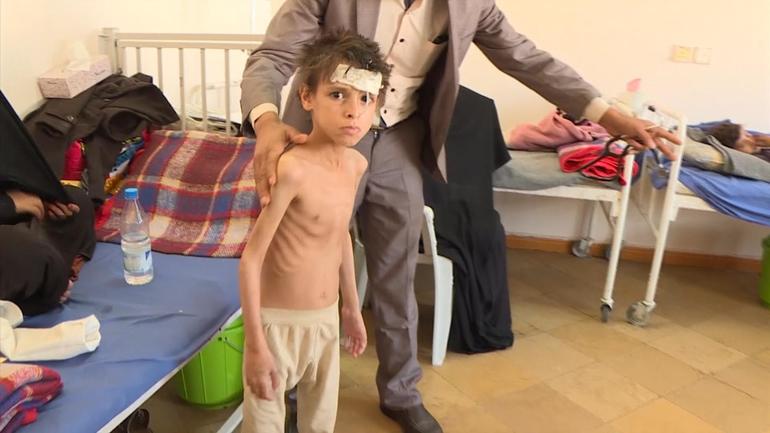
yemen-child-3.jpg
A child in Yemen     CBS News

The war in Yemen is indeed a proxy war between Saudi Arabia and the Islamic Republic of Iran, one an Arab state the other Aryan, both Muslim-majority countries, the former Sunni, the latter Shiite. Saudi Arabia views itself as a leading power in the Middle East, not least because it is the custodian of the two most sacred sites in Islam, Mecca and Medina. The challenge by Iran which imagines itself once again reflecting influence and power from the historical era of the Persian Empire threatens the eminence of the Saudi majority in the Middle East -- and world wide which consider Shia Islam illegitimate.

Since 1979 and the transformation of Persian Iran into the Islamic Republic it is now, modernity and moderation have taken a back seat to the fundamentalist Ayatollahs' mission to assume the mantle of the Middle East power and influence, to bring Shia Islam to the fore and to achieve that goal it has gone out of its way to form, train and arm Shiite militias, to support what are undeniably terrorist groups, to launch terrorist attacks against perceived enemies both in the Middle East and abroad while enlarging its sphere of influence.

Iran's mission to arm its military with medium- and long-range ballistic missiles, its steady work toward manufacturing nuclear bombs and its overt hostility toward the majority Arab Sunni community hugely alarms that community, no less than it does the only other non-Arab state in the Middle East, Israel. The threats emanating from Iran toward Israel, to wipe it from the map of the Middle East are overt, while the threats against the Sunni states are covert and implied, but no less real.

The Yemeni Houthi rebels practise a brand of Shia Islam linking them to Iran, which has encouraged the Houthis to overwhelm the Western- and Saudi-approved Abd-Rabbu Mansour Hadi who took the helm of Yemen after the Arab spring 2011 protests rid the country of Ali Abdullah Saleh, an autocratic ruler not beloved by his people, similar to what had occurred in Tunisia. But the Houthis aligned themselves with Saleh, attacking the capital and wresting it from the Hadi government.

The rise of the Houthis as a rebel group with a fierce fighting reputation is similar in type to that of the Islamic State of Iraq and the Levant; while one is Shiite, the other Sunni, each was a persecuted minority in their countries ruled by a sectarian majority. Saudi Arabia gathered a coalition of Sunni states to launch a war against the Houthis to return their candidate to power though it is mostly Saudis bombing Yemen to achieve that end. And more refugees are added to the world total, an amazing number of which are of Arab origin.
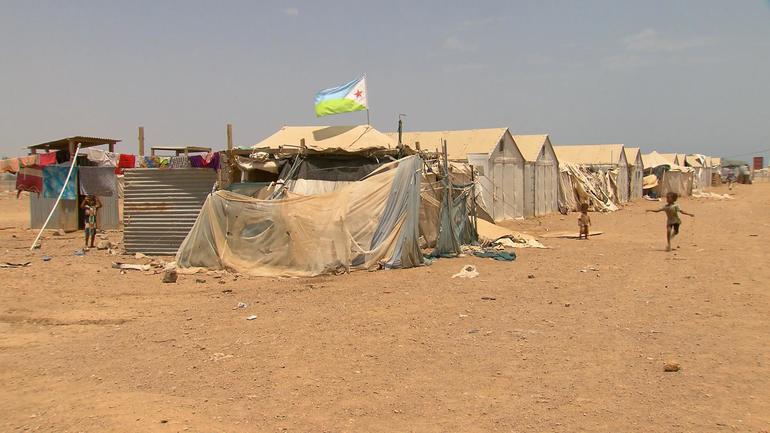
djibouti-refugee-camp.jpg
Yemeni refugees in a Djbouti refugee camp    CBS News
And if the observation has been made that the Saudis can get away with bombing a poor country like Yemen, helping to cause a downspiral of food scarcity, medical impoverishment and an out-of-control cholera epidemic where disease and starvation stalk the country, this immunity from blame and lack of censure from the United Nations sees a complementary version in the Palestine Liberation Organization which incites Palestinians to violence against Israeli Jews, and consistently refuses to work toward a settlement with Israel leading to peace.

As long as it is sectarian Islam in conflict with itself the 57-member states of the Organization of Islamic Cooperation will do nothing, say nothing, fail to apply pressure on either Iran or Saudi Arabia to cease and desist and allow Yemen to save itself from even greater destabilization if such a thing is even remotely possible. This is the Arab and Muslim world, after all. It is not only the Houthis who are in conflict against their sectarian rivals in Yemen, for al-Qaeda and Islamic State have also positioned themselves there, all jostling to achieve their own goals.

Labels: , , , , , ,

Monday, March 20, 2017

Desperately Seeking Haven

"There is a saying in Somalia: 'Choose between one of two hard things'. In Yemen, there is war. Here in Somalia, there is no good employment but at least there is peace."
"I saw bodies in the street [in Yemen]."
"We were all afraid the boat would sink. It was not safe [his family's passage across the Gulf of Aden, fleeing Yemen for Somalia]."
"Sometimes it [his meagre earnings] is enough, sometimes it is not enough [to feed his family]. Sometimes we are hungry. Life is very tough here."
Hassan Cabdoo, Yemeni refugee, Burao, Somaliland

"Due to the political situation in Yemen, more and more are coming. They face big challenges when they arrive."
"We need to be sure proper information is delivered. We can't allow people to come to Somalia with no knowledge about the situation, which includes dramatic issues with the drought."
Julien Navier, spokesman, UNHCR agency
THE United Nations compound in Mogadishu now bears the scars of the world body’s troubled return to Somalia’s battered capital. Suicide-bombers blew off its front gates on June 19th, letting gunmen of the Shabab, the al-Qaeda-linked movement that used to dominate the country, shoot their way in

Somalia is a ruined country. In the aftermath of its civil war it has been struggling to re-establish law and order and rebuild ruined infrastructure. It is also suffering from drought conditions, and like many other parts of Africa, the prospect of famine raises its ugly head. Hardly a place where anyone might want to migrate to, to find haven, to begin a new life, to aspire to prosper, to give their children another chance to gain opportunities for the future.

Somalia is neither safe, nor is its economy regenerated. Unemployment is high, and Mogadishu, like much of the country lies in a ruined state. Warlords, drug dealing, Islamist insurgents, kidnappers and pirates all make their home in this violent, dysfunctional country. This is no secret, that Somalia is a dangerous country to live in. Somalians have made their desperate way out of the country to seek haven in Europe, joining the vast throngs of other nationals fleeing conflict and danger.

But this is where tens of thousands of Yemeni refugees have sought to establish themselves, where they hope to find safety from the newer war ravaging their country. In Yemen the war is actively raging, with a Saudi Arabian-led military assault group fighting the Iranian-supported Houthi rebels who have challenged the official government. This is a proxy war between the Islamic Republic of Iran, seeking to enlarge its influence in the region, encompassing Shiite links with Iran in Syria, Lebanon (Hezbollah), Iraq, and Yemen.

The sectarian conflicts that have roiled the Middle East led to the situation where millions of Syrian Sunnis have fled their country to find refuge in Lebanon, Jordan, Turkey and elsewhere, spilling over when the opportunity presents itself, overland and by sea into Europe. Yemenites, desperate to escape the bombings and killings, have opted to find haven elsewhere. Their choices are not great, and some have risked their very lives to leave Yemen for Somalia.

Their choice is to remain where they are, and hope to survive the brutal onslaught where Sunni and Shiite challenge one another, where al-Qaeda and Islamic State have their own fanatical presence in the country, awaiting their opportunities, or to choose to leave their country of origin. Now struggling to remain alive in Somalia, a country where aid agencies warn that hundreds of thousands face the possibility of starvation, their dilemma has improved but marginally.

When Hassan Cabdoo fled Yemen for Mogadishu his family was among hundreds of other Yemenites loaded into an unseaworthy boat for the two-day crossing across the Gulf of Aden, facing a rough sea, insufficient food and night-time plunging temperatures. Now established in Burao among mostly nomads whose own fortunes have plummeted as their livestock succumbed to the drought, malnourished children crowd the local hospital.

A tailor who earned an average $15 daily in Yemen before the outbreak of civil war, if he can earn $5 a day he considers himself fortunate. And while there is no war in Somalia, there is crime and there is everpresent danger. And there is also the fact of high unemployment. In a relatively stable and wealthy country like South Africa, which has seen an increase in refugees from nearby warring states, unemployment is also high, and so is resentment, with South Africans blaming refugees for taking jobs from them.

How long before violence breaks out between the indigenous Somalians unable to find work, much less feed their hungry families, blaming the presence of Yemenite refugees for the worsening situation? And bearing in mind that the influx of Yemeni families is nowhere near finished, as greater numbers strive to leave the violence and the fear of death behind, to stake their claims in another impoverished nation like their own, broken by war and savagely beset by crime and starvation.

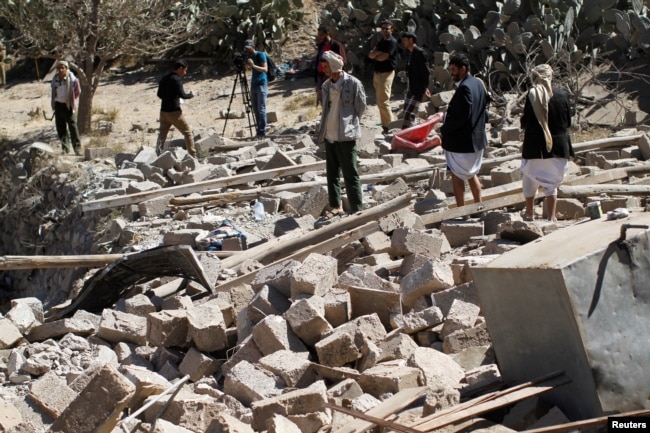
People walk on the rubble of a house destroyed by a Saudi-led airstrike in Sana'a, Yemen, Feb. 2, 2017.
              

Labels: , , , , , ,

Thursday, August 20, 2015

 Islam's Suffering Children

Across the country, nearly 10 million children – 80 percent of the country's under-18 population – are in need of urgent humanitarian assistance [UNICEF]
"The firepower with which this war is fought on the ground and in the air is causing more suffering than in other societies which are stronger and where infrastructures are better off and people are wealthier and have reserves and can escape."
"The images I have from Sanaa and Aden remind of what I have seen in Syria. So Yemen after five months looks like Syria after five years."
Peter Maurer, president, International Committee for the Red Cross
Young Yemenis walk past a tank destroyed in clashes between Houthi rebels and government forces in the port city of Aden - 19 August 2015
Gulf states intervened in Yemen in a bid to restore the exiled government's control

The Islamic Republic of Iran's meddling has once again caused instability, this time in a country that has always suffered from endemic poverty. The ethnic Houthi Shiites in an otherwise Sunni Muslim country were incited to rebel against the ruling Sunnis because it would suit Iran's purpose to succeed in ensuring a Shiite crescent challenged the greater Sunni majority nations in the Middle East. Iran is anxious to demonstrate its titular historic place as the commanding Islamic leader.

The arc of Syria, Lebanon, Iran and Yemen with Shiite power in the ascendancy offends the Sunni majority countries and they have intervened, with Saudi Arabia leading a U.S.-approved coalition dedicated to aerial bombing of the Houthis. The Houthis, attacking to reinstall former president Ali Abdullah Saleh have raised the ire of neighbouring Saudi Arabia, sheltering President Abed Rabbo Mansour Hadi.

As always, when conflict breaks out, it is the civilian population that suffers and in Yemen the situation is made more dire because this is a population that already suffers from privation. It is the poorest of all Arab countries and its children are suffering horrendously. Infrastructure in the port city of Aden has been shattered, the result of incessant bombing missions, leaving residents without basic amenities, awaiting aid from abroad, which is slow in coming.

© Khaled Abdullah
The capital Sanaa, silently suffers. The lethal mixture of sectarian hatred, tribal antipathies, pitting rebels against local and tribal militias, southern separatists and Sunni Islamic militants has resulted in a civil war complicated by aerial bombing leaving the country devastated, with over two thousand of its people dead since March. Months of tense warfare and limits on imported foodstuffs resulting from an international embargo have led to catastrophic conditions for Yemenites.

Even recent gains by the southern resistance have "not materialized in a dramatic increase in the influx of goods", according to Mr. Maurer with the ICRC. Leading the United Nations to raise Yemen to its highest level of humanitarian crisis, placing it alongside emergencies in South Sudan, Syria and Iraq. Each of those countries being drained of their citizens becoming refugees seeking haven elsewhere have one thing in common: clan, tribal and religious strife.

Yemen Crisis

Four months of fighting between Houthi rebels and government forces, and Saudi-led coalition air strikes, have left the impoverished country in chaos

  • 80% of the population need aid
  • 13m people face food shortages
  • 1.4m forced from their homes
  • 2,000 civilians killed

Labels: , , , , ,

Tuesday, April 21, 2015

Gatestone Institute


Translations of this item:
As Iran's chief puppet in the Middle East (along with Syria's Bashar Assad), Nasrallah wants to see Iran take over most of the Arab countries.
"[W]hat is the difference between Iran and Islamic State? The answer is simple; they are all trying to establish a foothold on the border with Saudi Arabia." — Tariq al-Hamid, prominent Saudi editor and political analyst.
Now, however, many Arabs seem to have woken up to the reality that Nasrallah is nothing but an Iranian puppet whose sole goal is to serve his masters in Tehran. But it remains to be seen whether the U.S. Administration and other Western powers will also wake up and realize that Iran and its proxies pose a real threat not only to Israel, but also to many Arabs and Muslims.
Hezbollah leader Hassan Nasrallah, Iran's protégé and partner in the Middle East, seems to be leading the Lebanese people into another catastrophe.

In 2006, Nasrallah initiated a war with Israel that wrought havoc on the Lebanese, after an ambush by Hezbollah in Israeli territory that left three Israeli soldiers dead and two abducted.
Now the Lebanese people are about to pay another heavy price – this time because of Nasrallah's involvement in the Syrian civil war and his strong condemnations of Saudi Arabia and other Arab countries over the conflict in Yemen.

During a speech in Beirut last Friday, Nasrallah condemned the Saudi-led "aggression" against Yemen. "It is our human, jihadist and religious duty to take this stance and all the sons of this nation must reassess their responsibilities and take the appropriate stance," he said. "Intimidation or threats will not prevent us from continuing to declare our condemnation of the aggression against Yemen. The war's real objective is to restore the Saudi-American hegemony over Yemen."

Hezbollah leader Hassan Nasrallah blasted Saudi Arabia's military intervention in Yemen, in a speech he gave in Beirut on April 17, 2015. (Image source: PressTV video screenshot)

The real reason why Nasrallah has come out against the Saudi-led coalition's air strikes in Yemen is that he is worried about the fate of the Iranian-backed Houthis, who are seeking to take over the Arab country. Indeed, Nasrallah has good reason to be worried. A defeat for the Houthis would also be seen as a defeat for Hezbollah and Iran. As Iran's chief puppet in the Middle East (along with Syria's Bashar Assad), Nasrallah wants to see Iran take over most of the Arab countries.

Nasrallah seems determined to achieve this goal at any cost. He does not care if the Lebanese people pay a heavy price for his alliance with Iran.

His attacks on Saudi Arabia and its allies have triggered fears that Lebanese nationals living in the Gulf will be the first to pay the price.

This is precisely what happened to the Palestinians when they supported Saddam Hussein's invasion of Kuwait in 1990. After Kuwait was liberated, the emirate and other Gulf countries expelled hundreds of thousands of Palestinians who were living and working there.

Now, thanks to Nasrallah's policies and public statements, the Lebanese living in the Gulf could meet the same fate.

"Where does Nasrallah wish to take Lebanon and the Lebanese through his tense speeches against Saudi Arabia?" asked Lebanese Druze leader Walid Jumblatt. "Has he taken into consideration the consequences of his words on the lives of around 50,000 Lebanese living in Saudi Arabia? The foolish tone of Nasrallah is not beneficial."

Jumblatt was not the only Lebanese politician to express concern over Nasrallah's fiery speech against Saudi Arabia and its allies.

Lebanese Justice Minister Ashraf Rifi said Nasrallah should be "ashamed" of his attacks on Saudi Arabia, "which has supported Lebanon's state institutions and has not paid money to any side or sect and has not created militias." Rifi described Hezbollah as a "mere tool" of Iran that "sacrifices itself and its people for the sake of a failing (Iranian) project. ...
Hezbollah is turning Lebanon into an operations room to spread Iranian hegemony."

Lebanese Foreign Minister Gebran Bassil warned that his country could plunge into chaos if political powers in Lebanon bet on competing foreign powers and bring regional conflicts into the country.

"We do not have the right to bid on foreign powers and attract conflicts that are bigger than Lebanon and which Lebanon cannot handle," Bassil said. Referring to Hezbollah, he added: "If a group, party or sect still wants to try this after the failure of all past experiences, we would be subjecting our people and our country to an existential threat."

When the Lebanese foreign minister talks about "failure of past experiences," he is obviously referring to the wars with Israel that Hezbollah has brought on Lebanon.

Former Lebanese Prime Minister Saad Hariri said that Nasrallah's speech against the Saudi-led coalition in Yemen was "wailing and crying." He said that Nasrallah was following in the footsteps of Iran's supreme leader Ayatollah Ali Khamenei, by adopting "creativity in falsification, misinterpretation, deception, show of force and sectarian mobilization." He said that Hezbollah is "keen to rescue the [Syrian] regime of Bashar al-Assad and the Iranian role in infiltrating Yemen and interfering in Arab affairs."

Lebanese TV anchor Hanadi Zaidan accused Nasrallah of working for Iranian interests and against his home country of Lebanon.

"Hezbollah and its secretary-general [Nasrallah] are the only ones who swim against the Arab and Lebanese current, declaring their blind loyalty to the Iranian birds of darkness," Zaidan said. "His [Nasrallah's] job is to implement an Iranian agenda against the Lebanese state." She added that Nasrallah and his "Iranian masters" have been caught off-guard by the coalition of Arab states in Yemen.

Judging from the reactions of Saudi and other Gulf commentators, it is evident that Nasrallah has already managed to cause huge and irreversible damage to Lebanon's relations with the predominantly Sunni Muslim Arab world.

These commentators, whose views reflect government thinking, have used extremely harsh words to denounce Nasrallah, with some dubbing him "deranged" and an "ingrate."
Lt. Gen. Dahi Khalfan Tamim, Deputy Chairman of Police and General Security in Dubai, said that Nasrallah was a fool.

"A friend informs me that Nasarallat [the nickname Tamim gives to Nasrallah] says that Iran's interference in Yemen is as a charity foundation ... What a fool!" Tamim said.
Tariq al-Hamid, a prominent Saudi editor and political analyst, said that both Iran and Hezbollah have "gone haywire" as a result of the Saudi-led coalition's air strikes against the Iranian-backed Houthi militias in Yemen.

Al-Hamid pointed out that Iran and Hezbollah were now frustrated because of the severe blows that their allies have been dealt in Yemen. "They were hoping that the Houthi control over Yemen would boost the morale of their followers, who are already frustrated because of what is happening to them in Syria," he said. "All the crazy folks in the region are now targeting Saudi Arabia. What is the difference between Hezbollah and Al-Qaeda? And what is the difference between Iran and the Islamic State? The answer is simple; they are all trying to establish a foothold on the border with Saudi Arabia."

Addressing the Hezbollah leader, a Saudi blogger wrote: "You must pay the price for the crime you committed against Lebanon in 2006, when you destroyed Lebanon through your light-heated actions. All what you were seeking back then was to rally as many Arabs and Muslims behind you through your dirty trick." Another blogger wrote: "It is time for the Arab countries to arrest the terrorist Nasrallah and bring him to trial for his interference in Yemen's affairs and crimes against Syria, as well as his betrayal of his country, Lebanon."

Nasrallah and his Hezbollah terrorist group are now more isolated than ever in the Arab world. Until a few years ago, Nasrallah was seen as a "hero" of the Arab world because of his fight against Israel.

Now, however, many Arabs seem to have woken up to the reality that Nasrallah is nothing but an Iranian puppet whose sole goal is to serve his masters in Tehran. This, of course, is good news for moderate Arabs and Muslims in the region. But it remains to be seen whether the U.S. Administration and other Western powers will also wake up and realize that Iran and its proxies pose a real threat not only to Israel, but also to many Arabs and Muslims.

Labels: , , , , , ,

Saturday, April 11, 2015


Iran, Saudi Arabia in tense buildup opposite Yemen’s Gulf of Aden shore: US air tankers refueling Saudi jets

DEBKAfile Exclusive Report April 10, 2015, 8:30 AM (IDT)
Iran's Bushehr helicopter carrier warship

Saudi-Iranian saber-rattling over Yemen has reached a dangerous peak, Thursday, April 9, the Saudi army spokesman, Brig. Gen. Ahmad Al-Assiri, warned: “Iranian ships have the right to be present in international waters, but won’t be allowed to enter Yemeni territorial waters.”

This was Riyadh’s rapid-fire riposte for the Iranian decision to deploy its navy’s 34th Flotilla, consisting of the Alborz destroyer and the Bushehr helicopter carrier warship, in the Gulf of Aden opposite the Yemeni coast.

The Saudi general noted that Iran had not evacuated any of its citizens from Yemen because, he said, “they are all involved in training and arming the Houthis.”

Soon after launching their air offensive in late March against the Iranian-backed Houthi rebels and forces loyal to ousted president Ali Saleh, the Saudis took control of the country’s airspace to prevent the landing of airlifted Iranian supplies for the Houthis. Russian flights were also barred later from landing in the embattled country.

Gen. Al-Assiri then issued Saudi Arabia's bluntest threat yet: “Those Iranians planning to remain in the country would face the same fate as the Houthis and their supporters,” he said.

Clearly, the Iranian Revolutionary Guards personnel were being trapped in a Saudi vice: Unable to leave Yemen, on the one hand, they were threatened with death if caught, on the other.

Tehran decided to send its most effective naval force to the Gulf of Aden when it realized that Riyadh would not heed its warnings to back off Yemen. Its presence substantiated the threat of direct Iranian intervention in the Yemeni conflict should harm come to the elite IRGC force aiding the rebels.

The Bushehr helicopter carrier made its maiden voyage to Port Sudan at the end of 2012. Shortly after that, on Dec. 8 of that year, debkafile first revealed is features:
The new 13,000-ton vessel carries 12 Iranian strike helicopters, a crew of 200 and has a range of 8,000 nautical miles that reaches the US coast. There are five landing spots on its decks and four parking spots, as well as SM-1 and SAM anti-air missiles and 40-mm Fath-40 AAA anti-air cannon. Tehran invested $800 million in its first helicopter carrier.

If Tehran is not scared off by the Saudi threat and does order the Bushehr to sail into Yemeni territorial waters, its guns and missiles would be in range there to strike targets in neighboring Saudi Arabia to the north. Tehran could justify this attack by Yemeni President Abd Rabbo Mansour Hadi having been granted asylum in the oil kingdom.

However, the Saudi Air Force would also be on hand close by over Yemen to retaliate by bombing the Iranian Bushehr and other warships to chase them away from the Yemeni coast, if not to sink them.

Our sources predict that this naval-air collision would likely be limited in extent. After peaking to a dangerous crisis, the clash would most probably be contained before it escalated into a full-blown war between Saudi Arabia and Iran.

The Obama administration’s backing for the Saudi Arabian intervention in support of the internationally recognized Yemen president Hadi was intended to keep Iran in check.

On Tuesday, April 7, US Deputy Secretary of State Antony Blinken arrived in Riyadh and stated: "Saudi Arabia is sending a strong message to the Houthis and their allies that they cannot overrun Yemen by force.  As part of that effort, we have expedited weapons deliveries, we have increased our intelligence sharing, and we have established a joint coordination planning cell in the Saudi operation center."

He was sending a clear message to Tehran backed up by solid US assistance
1.  Tehran was being warned not to make the mistake of assuming that its understandings with Washington over Iran's regional promotion included license for aggression against Saudi Arabia.
2.  Tehran was notified that the Saudi operational chiefs would henceforth receive ongoing intelligence gathered by a US military satellite over the region through their joint coordination center in Riyadh. This intelligence would also cover the movements of Iranian warships in the Gulf of Aden and the Red Sea.
3. Further details of vital US aid came through Thursday, April 9, from Pentagon spokesman Army Col. Steve Warren. He announced that the US Air Force had begun an aerial refueling mission for “the Saudi Arabian-led mission engaged in air strikes on Shiite Houthi rebels in Yemen.” In its first task Wednesday, a US KC-135 Stratotanker refueled a Saudi Air Force F-15 Eagle and a UAE F-16 Fighting Falcon.

Warren said that the US Central Command aimed to fly one tanker mission a day in support of the Saudi-led alliance, but it would not enter Yemeni airspace to perform it.

Nonetheless, a potential sea-cum-air clash of arms between Saudi Arabia and Iran off the shores of Yemen cannot be ruled out, especially after Riyadh ratcheted up the tension Friday with a ban imposed on Iranian flights carrying pilgrims to Mecca.

It would not be the first firefight to be triggered by the Yemeni conflict. Earlier this week, Egyptian and Iranian warships exchanged fire in the tussle for control over the strategic Bab el-Mandeb Strait. The episode ended with the Iranian ships being ordered directed from Tehran to break off contact and distance themselves from the Egyptian craft. The Iranian Navy commander Rear Adm. Habibollah Sayyari later denied reports appearing in the Gulf media that Egyptian warships had forced Iranian naval vessels to retreat and quit the Gulf of Aden.

The incendiary tension around the Gulf of Aden and rising fear of a Saudi-Iranian military engagement has raised enough alarm for the US, French and British fleets with a naval presence in the Gulf to go on a state of preparedness.
 

Labels: , , ,

Sunday, April 05, 2015


Post "Arab Spring," the Middle East is in chaos. And ready to be devoured by the mullahs of Iran.
In a process of profound importance, five Arab states in the Middle East have effectively ceased to exist over the last decade. The five states in question are Iraq, Syria, Lebanon, Yemen and Libya. It is possible that more will follow.

The causes of their disappearance are not all the same. In two cases (Iraq, Libya) it was western military intervention which began the process of collapse. In another case (Lebanon) it is intervention from a Middle Eastern state (Iran) which is at the root of the definitive hollowing out of the state.
But in all these cases, the result has been remarkably similar — it is the ceding of power from strong central authorities to a variety of political-military organizations, usually but not always organized around a shared sectarian or ethnic origin. The Middle East today is overshadowed by this process. We are living in the time of the militias.

Five Arab states in the Middle East have effectively ceased to exist over the last decade.
Observe: in Syria, the clearest-cut case, the country is now effectively separated into separated ethnic and sectarian enclaves — an area dominated by Bashar Assad in the south and west, an area dominated by the Sunni jihadi Islamic State group in the east, three non-contiguous Kurdish enclaves across the north, an area under the domination of al-Qaeda and its allies in the northwest and a small area in the southwest held jointly by al-Qaeda and a variety of other Sunni Arab militias supported by the west.

The important point to note here is that the area controlled by Assad (around 40% of the total area of Syria) does not essentially differ in its militia-nature from the other areas.

On the contrary, Assad has been able to survive because he is aligned with the force best designed to successfully exploit the fragmentation of Arab states and the emergence of militias seeking to impose their authority on the ruins of the state.

This force is Iran, and more specifically the Iranian Revolutionary Guards Corps and its Qods Force.
This force is a unique body. It exists for the precise purpose of building proxy paramilitary organizations to serve the Iranian regional interest. At a time like the present, the possession of such a force is an enormous advantage.

Assad's large, mainly Sunni Arab conventional army became largely useless to him in 2011/12. The IRGC stepped in and created for him one of its own preferred force types. Today, this militia (the National Defense Forces) along with other Iranian-created or -sponsored militia forces from neighboring Iraq and Lebanon are largely responsible for Assad's survival. But he survives as a warlord and militia chief, not as a "president" or the head of a state.

In Iraq, the country is today separated into three areas, a Kurdish north, an area in the center controlled by Sunni jihadis and a Shia area in the south. Again, the Shia south, which is still seen in the west as the "legitimate" government of Iraq, is in fact an area in which Shia militias are the key element, operating freely and acting according to their own will. Often, this will is the product of the desires of the Qods Force, and its commander General Qassem Suleimani.

In Lebanon, in a notably different process, an Iran-created militia, Hizballah, acquired the dominant role in the area once ruled by the state, because the state was a hollow construct long competed over by rival sectarian militias, and because Iranian and Syrian support enabled Hizballah to acquire a level of strength which no other homegrown political-military force could match. It may well be that this is now changing, as al-Qaeda associated Sunni militias enter the arena.

In Yemen, where the state and central government was also weak, the Iranian supported militia Ansar Allah (the "Houthis") seized the capital in January. Sunni elements in the south, including one of the strongest franchises of al-Qaeda, are fighting against them. A mobilization of Arab air and sea power is underway to prevent Iran's proxies from seizing the Bab-el-Mandeb strait. Control of this vital waterway, between the Gulf of Aden and the Red Sea, would tilt the regional balance yet further in Iran's favor.

The Iranians, because of their matchless IRGC, are best equipped to make gains from this chaos.
Finally, in Libya, the western destruction of the Gadaffi regime has led to the splitting of the country between two rival governments — one supported by the Egyptians in Tobruk, another backed by Islamist militias in Tripoli.

Five Arab states, effectively no longer in existence. In all, militia power has replaced ordered government.

What does all this mean for the region? It means that a huge chunk of the long misgoverned Middle East has exchanged an age of despotic torpor for an age of chaos. The Iranians, because of their matchless IRGC, are best equipped to make gains from this.

But nowhere (with the partial exception of tiny Lebanon) have the Iranians yet succeeded in keeping a country united under the control of their local proxy. This is not a story of an unstoppable Iranian advance, like a juggernaut, across the region. Their successes are notable, but partial in each area of operation. Sunni and Kurdish forces prevent their complete victory and are likely to continue to do so.

Where will all this end — what will the landscape look like when the storm passes? Impossible to say.

But it may be said with certainty that the shadow of the gunmen is today hanging over the Middle East, all the way from the Iraq–Iran border to the Mediterranean coast and from the Gulf of Aden to Libya.
Jonathan Spyer is Director of the Rubin Center for Research in International Affairs and a fellow at the Middle East Forum. He is the author of The Transforming Fire: The Rise of the Israel-Islamist Conflict (Continuum, 2011).

Labels: , , , , , , , ,

Sunday, March 29, 2015

The Saudis have done something unprecedented in putting together a military coalition to support Yemeni President Abd-Rabbu Mansour, seen here being greeted upon his arrival in Riyadh on March 26 by the Saudi Defense Minister, Prince Mohammad bin Salman.
The Middle East witnessed something radically new two days ago, when the Kingdom of Saudi Arabia responded to a plea by Yemen's president and led a 10-country coalition to intervene in the air and on the ground in the country. "Operation Decisive Storm" prompts many reflections:
Saudi and Egypt in alliance: Half a century ago, Riyadh and Cairo were active in a Yemen war, but then they supported opposing sides, respectively the status-quo forces and the revolutionaries. Their now being allies points to continuity in Saudia along with profound changes in Egypt.

Arabic-speakers getting their act together: Through Israel's early decades, Arabs dreamt of uniting militarily against it but the realities of infighting and rivalries smashed every such hope. Even on the three occasions (1948-49, 1967, 1973) when they did join forces, they did so at cross-purposes and ineffectively.

How striking, then that finally they should coalesce not against Israel but against Iran.

Arab leaders have a long history of meeting but not cooperating. From the right: King Hussein of Jordan, Gamal Abdel Nasser of Egypt, Yasir Arafat of the PLO, and Muammar Qaddafi of Libya in September 1970.
This implicitly points to their understanding that the Islamic Republic of Iran poses a real threat, whereas anti-Zionism amounts to mere indulgence. It also points to panic and the need to take action resulting from a stark American retreat.

Yemen at the center of attention: Yemen played a peripheral role in the Bible, in the rise of Islam, and in modern times; it's never been the focus of world concern – until suddenly now. Yemen resembles other once-marginal countries – the Koreas, Cuba, the Vietnams, Afghanistan – which out of nowhere became the focus of global concern.

The Middle East cold war went hot: The Iranian and Saudi regimes have headed dueling blocs for about a decade. They did combat as the U.S. and Soviet governments once did – via contending ideologies, espionage, aid, trade, and covert action. On March 26, that cold war went hot, where it's likely long to remain.

Arab leaders understand that the Islamic Republic of Iran poses a real threat, whereas anti-Zionism is mere indulgence.
Can the Saudi-led coalition win? Highly unlikely, as these are rookies taking on Iran's battle-hardened allies in a forbidding terrain.

Islamists dominate: The leaders of both blocs share much: both aspire universally to apply the sacred law of Islam (the Shari'a), both despise infidels, and both turned faith into ideology. Their falling out confirms Islamism as the Middle East's only game, permitting its proponents the luxury to fight each other.

The Turkey-Qatar-Muslim Brotherhood alliance in decline: A third alliance of Sunni revisionists somewhere between the Shi'i revolutionaries and the Sunni status-quotians has been active during recent years in many countries – Iraq, Syria, Egypt, Libya. But now, in part thanks to diplomacy initiated by the brand-new King Salman of Saudi Arabia, its members are gravitating toward their Sunni co-religionists.

Isolated Iran: Yes, a belligerent Tehran now boasts of dominating four Arab capitals (Baghdad, Damascus, Beirut, Sana'a) but that's also its problem: abrupt Iranian gains have many in the region (including such previously friendly states as Pakistan and Sudan) fearing Iran.

American diplomats meet again with their Iranian counterparts to capitulate on yet another difference.
Sidelining the Arab-Israeli conflict: If the Obama administration and European leaders remain obsessed with Palestinians, seeing them as key to the region, regional players have far more urgent priorities. Not only does Israel hardly concern them but the Jewish state serves as a tacit auxiliary of the Saudi-led bloc. Does this change mark a long-term shift in Arab attitudes toward Israel?

Probably not; when the Iran crisis fades, expect attention to return to the Palestinians and Israel, as it always does.

American policy in disarray: Middle East hands rightly scoffed in 2009 when Barack Obama and his fellow naïfs expected that by leaving Iraq, smiling at Tehran, and trying harder at Arab-Israeli negotiations they would fix the region, permitting a "pivot" to East Asia. Instead, the incompetents squatting atop the U.S. government cannot keep up with fast-moving, adverse events, many of its own creation (anarchy in Libya, tensions with traditional allies, a more bellicose Iran).

Impact on a deal with Iran: Although Washington has folded on many positions in negotiations with Iran and done the mullah's regime many favors (for example, not listing it or its Hizbullah ally as terrorist), it drew a line in Yemen, offering the anti-Iran coalition some support. Will Iran's Supreme Leader Ali Khamene'i now stomp out of the talks? Highly unlikely, for the deal offered him is too sweet to turn down.

In sum, Salman's skilled diplomacy and his readiness to use force in Yemen responds to the deadly combination of Arab anarchy, Iranian aggression, and Obama weakness in a way that will shape the region for years.
Daniel Pipes (DanielPipes.org, @DanielPipes) is president of the Middle East Forum.

Labels: , , , , , ,

() Follow @rheytah Tweet