Politic?

This is a blog dedicated to a personal interpretation of political news of the day. I attempt to be as knowledgeable as possible before commenting and committing my thoughts to a day's communication.

Thursday, January 16, 2020

The Chaotic Turmoil of the Medieval Middle East

Protesters fill a street during an anti-government demonstration in Tehran, Iran.
An anti-government protest in Tehran on January 14, 2020. Demonstrations erupted after Iran admitted to unintentionally shooting down a passenger jet last week.
Fatemeh Bahrami/Anadolu Agency via Getty Images
"Aware of the anti-Iranian mood on the Iraqi streets—exemplified by protesters beating their shoes against portraits of Khamenei, just as they had done with former Iraqi President Saddam Hussein in 2003—an unnerved Khamenei did not hesitate to intervene."
"Referring to the unrest as a conspiracy orchestrated by the United States, Saudi Arabia, and the 'Zionist regime' [Israel], the ayatollah called on forces in Iraq to 'remedy the insecurity and turmoil'—a metaphor that served as a green light for Iranian-backed militias to quash demonstrations in Iraq." "But Suleimani’s fingerprints have been found in other parts of Iraq too. It recently emerged that the day after the protests started, the Iranian general secretly flew to Baghdad to meet with security officials. Suleimani called for a heavy-handed approach to deal with people on the streets, reportedly saying, 'we in Iran know how to deal with protests', an implicit reference to prior violent suppressions of peaceful demonstrations in Iran and, more aggressively, in Syria. The death toll in Iraq surpassed 100 the day after his departure, confirming the power of Iran’s word."
Kasra Aarabi, Foreign Policy
Protesters gather at Tahrir Square in Baghdad, Iraq, amid ongoing anti-government demonstrations.
Protesters gather in Baghdad, Iraq, amid anti-government demonstrations on Dec. 10, 2019. Sabah Arar/AFP/Getty Images
"If there was no escalation recently in the region, those Canadians would be right now home with their families."
Canadian Prime Minister Justin Trudeau

"In Iraq and in Lebanon, society is rebelling against an entire political class that, while ostensibly sharing power on a multi-sectarian basis, is actually looting state resources and failing to provide the most basic services. The protesters, furthermore, do not want to be part of a quasi-Iranian protectorate. Ominously for Iran, the Iraqi protests spread like wildfire from Baghdad — a mainly Shia city — throughout the Shia heartlands and holy cities of the south."
"In Lebanon, where demonstrations inside the capital have mixed Sunni and Shia, Christian and Druze, the Shia southern suburbs, and other Hizbollah strongholds in south Lebanon and the Bekaa Valley, have been a sea of Lebanese flags rather than the Party of God’s strident yellow banners. In Iraq, militia snipers as well as security forces have shot protesters, with more than 250 dead. In Lebanon, a tense peace has held — so far. Nobody has forgotten the sectarian bloodletting of the 1975-90 civil war. Thugs from Hizbollah and allied Shia militia Amal have attacked demonstrators."
David Gardner, Financial Times
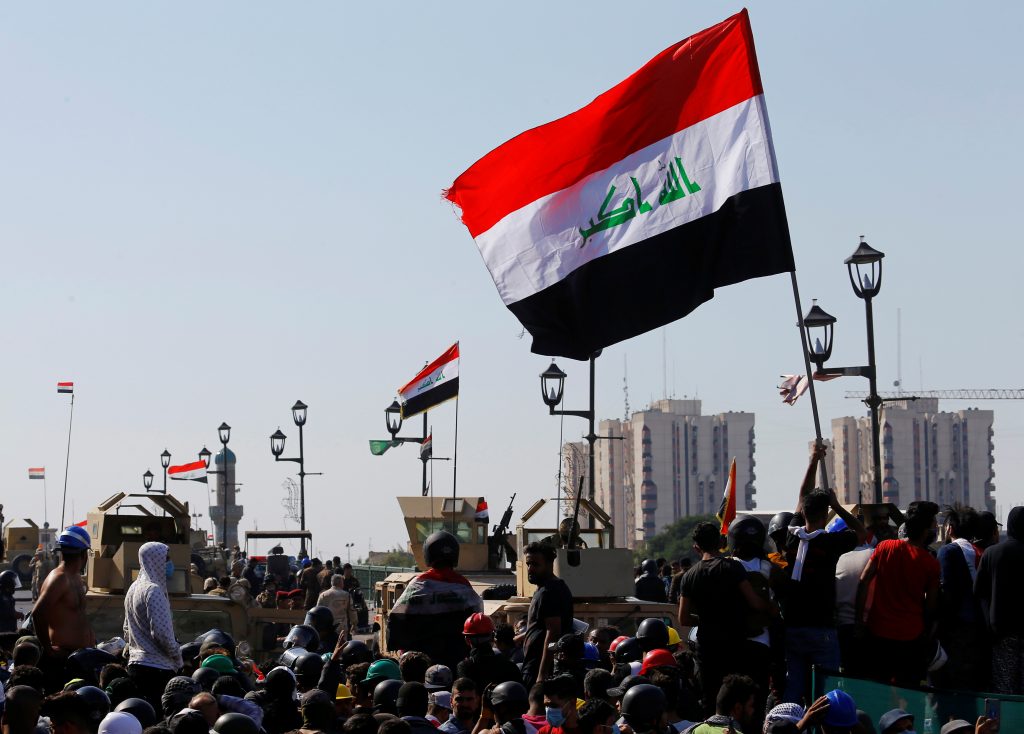
Why Iran wants the Lebanon and Iraq uprisings to fade
Iraqi demonstrators take part in one of the ongoing anti-government protests in Baghdad, Iraq, (Reuters)
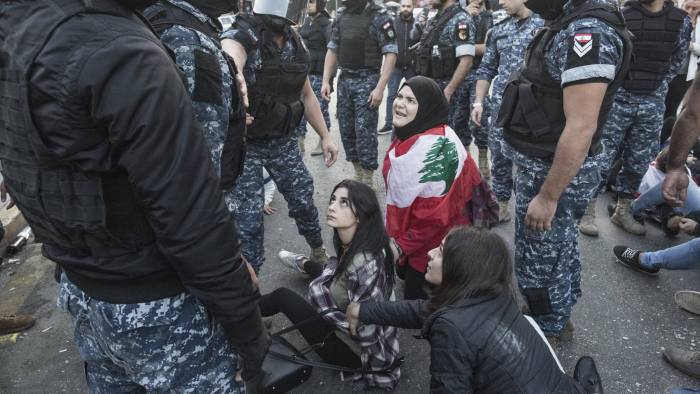
On Tuesday night, 59 people were arrested in Lebanon, protesting in cities like Tripoli, Sidon, Bekaa and Beirut. Serious injuries to protesters took place amidst riot police, broken windows, ambulances and tear gas. Hundreds of thousands of protesters  have come out since last October to pour through the streets, protesting the government's incompetence and Hezbollah's influence; most of all they raged against the presence of Iranian interference in the country.

BEIRUT, LEBANON - NOVEMBER 04: Riot police remove anti-government protesters occupying the
Riot police confront anti-government protesters blocking a main road in Beirut, Lebanon © Getty

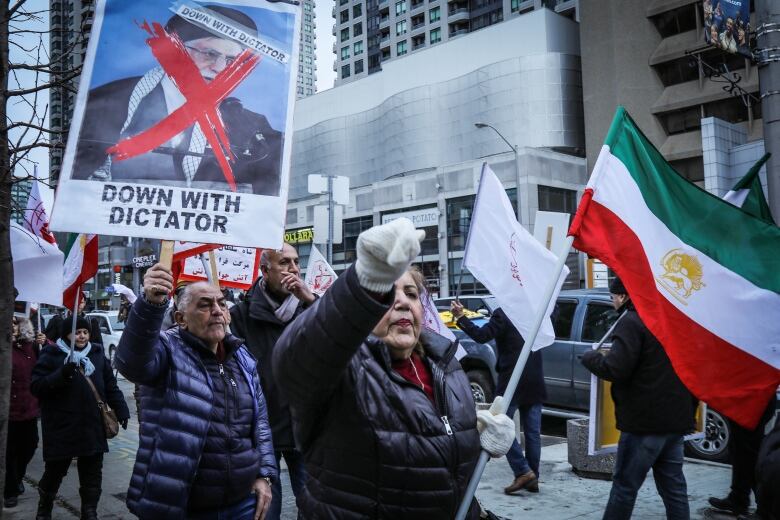
There have been nothing like the violence of those riots in Iran, though the protests have been numerous and vehemently expressed in viral antipathy against the theocratic government, the Basij and the IRGC preoccupied with their interference in Syria, Lebanon, Iraq and Yemen, while the nation's economy is in freefall as a result of biting U.S. sanctions and Iranians are suffering privation. People on the streets of Iran's cities decry the dictatorship they suffer under and call for Supreme Leader Ali Khamenei's removal.

In Iraq, a wave of street demonstrations, strikes, marches and occupations begun last October has seen brutal violence causing the deaths of at least 500 protesters, and the injurious wounding suffered by another 19,000, all of which failed to put an end to the protests. Iraq has been coping with its most severe crisis since the 17 years of a U.S.-led invasion and occupation to remove the Butcher of Baghdad, Saddam Hussein which unleashed a sectarian backlash of slaughter.

And then there is Syria and the collapse of a former thriving country whose crumbling into chaotic destruction of its society and its heritage began with a quiet protest by Sunni Syrians over their second-rate status in a minority Shiite-Alawite-dominated regime whose president, Bashar Assad sneered at the 'terrorists' confronting his rule and unleashed chemical warfare, barrel bombs, the targeting of hospitals and schools and markets to convince Syrian Sunnis they have no future in Syria.

Discontent in Iraq and Lebanon is a way to expose Iran's corruption
Getty Images

The common denominator in these Shiite-led countries is their hegemonic relationship with the Islamic Republic of Iran which had set out to form a sectarian alliance of aggressive Islamist strength on its way to achieving power and influence over its Arab, Sunni-majority neighbours. Iranian tentacles throughout the Middle East, from Lebanon and Yemen, Syria and Iraq to Qatar and Turkey has served to roil the geography in an escalating hurricane of Islamist disequilibrium, long predating  the Hellfire missiles from a Reaper drone over Baghdad airport, targeting Qassem Soleimani.

Yet, despite this background of escalating dysfunction, hundreds of thousands of lives extinguished, millions of refugees created, amidst a high-boiling point of distrust and fear born of hatred and vengeance, Western leaders like Canada's Justin Trudeau quail at the prospect of holding Iran to sole and full account for the Quds Force malfunction causing the death of 176 passengers on Ukrainian Airlines Flight 752, killing 57 Canadians of Iranian origin, and countless more Iranian students heading to Canada on student visas.

From Damascus to Beirut, Baghdad to Sanaa, and Gaza included, the Khomeinist regime holds full sway, plaguing the region with its nefarious, violent agenda, exploiting sectarian divisions while continuing to defy injunctions and sanctions against uranium enrichment and technical advancements of the delivery systems in ICBMs. At the same time exhorting its proxies to wreak havoc in the oil fields of Saudi Arabia, while the IRGC speedboats hector and harass shipping in the Persian Gulf and Strait of Hormuz.

So, in fact, the 'escalation' of hostilities does not rest with the current White House administration which has finally departed in earnest from the folly of its previous resident's disastrous 'agreement' for nuclear deterrence of the JCPOA which Tehran endorsed but never intended to implement, succumbing instead to steeper sanctions imposed by the U.S. when it opted to have its satellite militias bomb U.S. bases in Iraq and Syria, never anticipating that this administration would commit to a 'disproportionate' response, which on reconsideration was entirely proportionately appropriate.

Labels: , , , , , , , , , , ,

Wednesday, January 08, 2020

The Islamic Republic of Iran -- Death by Misadventure

"[The missiles had 1,000 to 2,000-pound warheads on them, each with significant explosive power and] kill radius."
"I believe, based on what I saw and what I know, is that [the strikes] were intended to cause structural damage, destroy vehicles and equipment and aircraft and to kill personnel. That's my own personal assessment."
"But the analytics is in the hands of professional intelligence analysts. So they're looking at that."
U.S. Army General Mark Milley, chairman, Joint Chiefs of Staff

"It is clear these missiles were launched from Iran and targeted at least two Iraqi military and coalition personnel."
"As we evaluate the situation and our response, we will take all necessary measures to protect and defend U.S. personnel, partners, and allies in the region."
Pentagon statement

"Lacking a modern airforce, Iran  has embraced ballistic missiles as a long-range strike capability to dissuade its adversaries from attacking Iran."
"Iran also has the largest missile force in the Middle East, with substantial inventory of close-range ballistic missiles, short-range ballistic missiles and medium-range ballistic missiles that can strike targets throughout the region as far as 2,000 kilometres away."
Christian Saunders, senior defence analyst, Pentagon

And so, in retaliation for a U.S. drone striking four missiles at a two-vehicle convey setting out from Baghdad International Airport last Thursday to target and destroy Iran's commander of the IRGC Quds Force, Qassam Soleimani who was accompanied by the leader of the Iranian-sponsored militia Kataib Hezbollah and five other Iraqi militia terrorists, Iranian forces launched over a dozen ballistic missiles against two military bases in Iraq with the intention of striking American forces.

Iran has been fuming at the assassination of Soleimani, revered in the country as a national treasure, a warrior for Shiite Islam, and mastermind behind countless bloody attacks by Hezbollah in Lebanon, Hamas in Gaza, extending attack blueprints into Afghanistan, and Yemen, and above all, enabling Syria's murderous President Bashar al-Assad to slaughter a half-million Sunni Syrians. Second in esteem and power only to Supreme Leader Ali Khamenei, Soleimani boasted he would erase Israel and drive the U.S. from the Middle East.

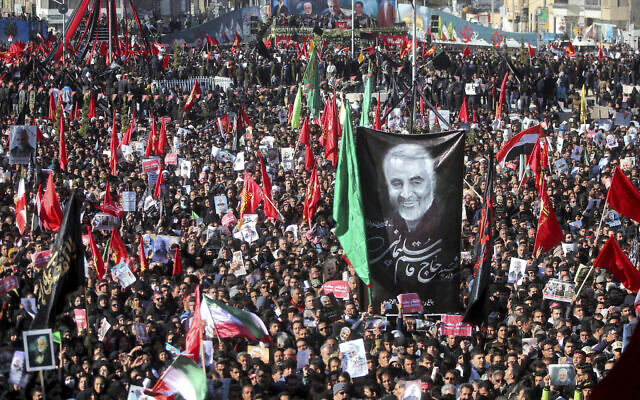
The funeral for Brig.Gen. Qassam Soleimani was attended by hundreds of thousands of Iranians, mourning their martyred champion. When his casket procession travelled to Kerman, the town of his birth, the route followed a narrowing passage insufficient for a fluid advance of the crowds, and panic ensued, people were trampled, and many more Iranians joined Soleimani in martyrdom; over 50 funeral attendees died, and hundreds were injured, delaying his burial.


The Islamic Revolutionary Guard Corps proudly took responsibility for the barrage of missiles that targeted two bases, one in Western Iraq, the other facility in Kurdistan's Erbil, both hosting U.S. servicemen. According to initial estimates, damage to the facilities appears minimal. And while Tehran claims that over 200 American soldiers were killed in the attacks, the White House scathingly gave the number of American casualties as zero; no deaths whatever. As the Pentagon continues to take stock that will be either verified or rebutted.

"They're still in bunker mode", one U.S. official stated, speaking of ongoing assessment of possible damage resulting from the strikes. The Pentagon had anticipated that Iran was prepared to deploy a rising number of "more accurate and lethal ballistic missiles" as its technology evolves. It has supplied quite a stock of missiles to Lebanon's Hezbollah and the other terrorist group, Hamas in Gaza. Both their targets are known to be Israel; threats to Israel's existence by the Islamic Republic of Iran, and by its proxy terrorist groups are well known.

The Anbar base houses part of the five thousand American troops stationed in Iraq, training local forces in conflict practise against the Islamic State, considered to be the ultimate Islamist jihadi terrorist group, on the Sunni divide in Islam. This is as much a sectarian war, rife throughout the Middle East and beyond as the the conflict in Syria reflects. Heretofore, Iran's Quds Force and their militias have targeted its Saudi Sunni regional counterpart's oil interests on land and by sea.

The increasing attacks by the Shiite proxies against U.S. installations notched the situation up substantially, when Kataib Hezbollah launched 31 rockets at a base near Kirkuk killing a contractor and wounding a few U.S. troops. An action following on others that finally persuaded the U.S. military to return airstrikes on targets linked to Iranian-backed forces. When Kataib Hezbollah engineered an attack on the U.S. embassy in Baghdad, triumphantly teaching the U.S. a lesson, it backfired.

The American response was to target Brig.Gen Soleimani and the leader of Kataib Hezbollah. And Tehran, in its disbelief and its grief at the loss of one of its most competent of terrorist strategists became somewhat careless when it allowed missiles to continue crowding the skies over Tehran, even while a Ukrainian Airlines passenger jet with 175 aboard took off and moments later, exploded in the air, falling in pieces to the ground below. Like Malaysia Airlines Flight 17 shot down over rebel eastern Ukraine by a Russian Buk missile in 2014.  Leading to the deaths of all aboard then, and this time around as well.

Unsurprisingly, Tehran is firm in its intention to withhold the black boxes retrieved from the wreckage from scrutiny by Ukrainian or American investigators. Just notch up more deaths resulting from the nefariously deadly schemes of the Islamic Republic of Iran intent on its commanding imperialist agenda of Shia conquest in a Sunni Arab landscape.


Labels: , , , , , ,

Tuesday, January 07, 2020

The Middle East in Chaos, The World on Tenterhooks

"Thirty-five vital American positions in the region are within the reach of the Islamic Republic, and Tel Aviv."
"The Strait of Hormuz is a vital thoroughfare for the West, and a large number of American destroyers and warships cross the Strait of Hormuz, the Sea of Oman and the Persian Gulf."
Brig.Gen Golamali Abuhamzeh, Iran

"Iran has been nothing but a problem for many years."
"Let this serve as a warning that if Iran strikes any Americans, or American assets, we have targeted 52 Iranian sites [reflecting the 52 American hostages taken by Iran during the storming, siege and takeover of the U.S. Embassy in Tehran in 1979], some at a very high level & important to Iran & the Iranian culture, and those targets, and Iran itself, will be hit very fast and very hard. The USA wants no more threats."
American President Donald Trump

"We have increased security and defensive measures at the Iraqi bases that host anti-ISIS coalition troops."
"Our command places protection of U.S. forces, as well as our allies and security partners in the coalition, as the top priority; we remain vigilant and resolute."
U.S.-led military coalition against the Islamic State group
us embassy
Iraqi forces taking security measures last Tuesday after an assault on the US Embassy in Baghdad.
Murtadha Sudani/Anadolu Agency via Getty Images

Members of Iraqi security forces were warned by Kataib Hezbollah, one of a number of Iraqi militias acting as Iranian terrorism proxies, to keep their distance from American military bases in Iraq. This was the militia that had planned and led supporters in a violent siege of the U.S. Embassy in Baghdad after Iraqi security had allowed them to enter the confines of the heavily guarded and hardened Green Zone where foreign embassies, aid groups and government offices are located.

In Baghdad itself thousands of Iraqis marched in a mourning procession memorializing Iran's powerful Quds Branch of the Iranian Republican Guard Corps Qassem Soleimani's assassination when missiles fired from a U.S. drone hit a vehicle convoy in which he was travelling from Baghdad Airport, with a number of Iraqi Shiite militia members, among them the leader of Kataib Hezbollah. "Death to America, death to Israel", they chanted. "We will take our revenge!"
Mourners attend a funeral ceremony for Iranian Gen. Qassem Soleimani and his comrades, who were killed in Iraq in a US drone strike, in the city of Kerman, Iran, January 7, 2020 (Erfan Kouchari/Tasnim News Agency via AP)

Qassem Soleimani and Abu Mahdi al-Muhandis, the Shiite militia leader, both of whom were buried on Tuesday, were not the only martyrs, aside from the other five militia members hit by the drone's missiles last Thursday. There was a stampede during the Soleimani funeral procession, along the route to Soleimani's hometown Kerman burial destination. Hundreds of thousands filled the streets to mourn the terrorist kingpin, now a martyr. And joining him in martyrdom were 56 mourners , victims of the crush of people, with another 212 injured.

Thousands of people were crammed within a single street, along the poorly planned funeral route.
"The route that they chose was too narrow for this crowd. This is something that could have been prevented", an unnamed Kerman resident, said. "The surrounding alleyways were also blocked for different reasons. There was no way to go back or turn around." This too is what the U.S. and Israel are responsible for, earning further shouts of "Death to the U.S.", "Death to Israel", as civilized nations everywhere are wont to declare.

Iranians, however, have god on their side.
"God the almighty has promised to get his revenge, and God is the main avenger. Certainly, actions will be taken."
"We promise to continue down martyr Soleimani's path as firmly as before with help of God. [The aim is] to get rid of America from the region."
Esmail Ghaani, Soleimani's replacement as head of the IRGC's Quds Brigade
And nor is Ghaani's and Grand Ayatollah Ali Khamenei's promises of vengeance the only ones to generate news after the timely death of the venerated Soleimani, for his daughter Zanab, 28, who happens, quite amazingly, to have American citizenship has announced her own promises of revenge for her sainted father's death. "Families of the American soldiers ... will spend their days waiting for the death of their children. Crazy Trump, don't think that everything is over with my father's martyrdom."

But wait; there's more. A $80-million bounty on the head of Donald Trump. "We are 80 million Iranians", stated a eulogist at the Soleimani funeral. "If each one of us puts aside one American dollar, we will have 80 million American dollars, and we will reward anyone who brings us [Trump's] head with that amount."
Mourners holding posters of Iranian Gen. Qassem Soleimani attend a funeral ceremony for him and his comrades, who were killed in Iraq in a U.S. drone strike on Friday, at the Enqelab-e-Eslami (Islamic Revolution) Square in Tehran, Iran, Monday, Jan. 6, 2020. The processions mark the first time Iran honored a single man with a multi-city ceremony. Not even Ayatollah Ruhollah Khomeini, who founded the Islamic Republic, received such a processional with his death in 1989. Soleimani on Monday will lie in state at Tehran's famed Musalla mosque as the revolutionary leader did before him. (AP Photo/Ebrahim Noroozi)
Mourners holding posters of Iranian Maj. Gen. Qassem Soleimani at a funeral in Tehran on Monday.
Associated Press

Labels: , , ,

Sunday, January 05, 2020


Canada's Iranian Demographic


"We are in a great world now after Soleimani's elimination."
"I feel wonderful because we really think this is long overdue."
Hamid Gharajeh, spokesperson, Iran Democratic Association of Canada
Dozens of people rally Friday in Toronto's Mel Lastman Square in celebration of the death of Qassem Soleimani. (Rozen Nicolle/CBC)

"It burns my heart. [Soleimani's death] was a total injustice to the world", stated Riaz Hussain, with the Mahdi Youth, leading a crowd of hundreds, chanting "Down with U.S.A.", along with "Trump is a terrorist". According to Hussain, Soleimani, leader of the Quds Force, the expeditionary wing of the Iranian Revolutionary Guard Corps, was a distinguished war hero, a dedicated military careerist whose loyalty to Iran's theocracy was undisputed in its fight against oppressors, a hero whose purpose was to stamp out terrorism.

Outside Iran itself, Canada hosts the second largest expatriate Iranian group, second only to Los Angeles. An estimated 100,000 Iranians live in Canada, as citizens and landed immigrants. They first began arriving in 1979, escaping the Iranian revolution, and since then have trickled into Canada, a less complicated immigration process enabling them, than what would likely be their first choice, the United States. The Islamic Republic of Iran launched an outreach within the Canadian-Iranian community to ensure their loyalties would remain with the Republic.

For those original emigrants to Canada, disinterested in their home country's current theocratic governance, not much headway was made, but for those who came later, there was an impact, the result being that among the second group some remain loyal to the Republic, while the first group never was. And with the death of Brig.General Qassam Soleimani, venerated by Islamists as a champion of jihad, detested by those who have been victimized by his expertise in planning and exercising jihad, there are two distinct camps within the community.

One is clearly that of the Mahdi Youth society who saw fit to respond to the drone strikes that destroyed the lives of Soleimani and his Iraqi colleagues in Hezbollah with grieving and a memorial gathering in downtown Toronto while the other, comprised of a far greater number of Canadian-Iranians who despised the mastermind of the al Quds IRGC terrorist atrocities from Syria to Yemen, Lebanon to Gaza and beyond Afghanistan. One group calls for peace, the second for commitment to jihad.


The Mahdi Youth Society announcement was quickly noted and picked up by vigilant newspeople in
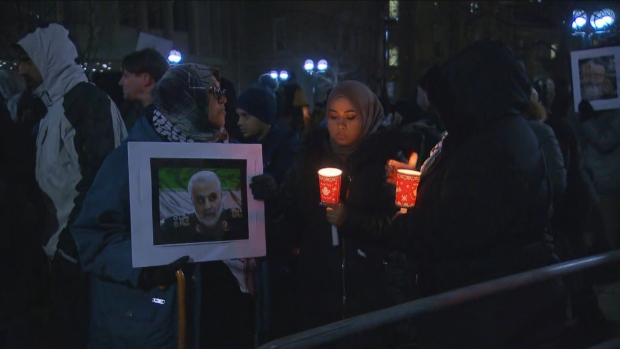
Toronto, set for the evening of January 4, in front of Toronto Superior Court, 361 University Avenue, directly across from the American consulate. These were Iranians mourning the death of two jihadi 'martyrs', responsible for the deaths of thousands of people through their jihadist intrigues and terrorist activities. The mourners lit candles at a memorial they set up for that purpose.

Some 100 demonstrators gathered outside the U.S. Consulate in Toronto Saturday in protest against President Donald Trump's ordering of the death of the top Iranian general Qassem Soleimani. (Angelina King/CBC)

Toronto police were on hand to ensure a separation between this group and another group of Iranians who identified themselves as non-political peace activists. Their motto was No War With Iran Action, assembling at a University Avenue square for two hours, making speeches and holding placards opposing any additional military action. The 250 activists responded to a public call for peace over fears the death of the world's most influential threat to peace would lead to war in the Middle East, where a low-grade war is already in effect.

"We're here to promote peace and to let the Canadian government know what Canadians want is peace."
"We don't want the casualties and don't want our troops to have to make sacrifices again."
"A war with Iran has no winners. We all understand that when a nation attacks another nation's general, that in itself is an act of war."
Amir Moazzami, event organizer
Tensions between the U.S. and Iran are at a high after U.S. airstrikes killed a top Iranian general and an Iraqi militia leader on Friday in Baghdad.

Joint funeral services in Baghdad Saturday were held for the two military leaders whose vehicles were hit by a drone precision strike of four missiles that also obliterated another five of their terrorist companions. The Toronto peace activists called for conciliation to deflect further conflict, their rally one of an estimated 70 such anti-war protests taking place across the U.S. Mr. Moazzami, the peace activist, rejected the U.S. explanation for the strike; to stop "imminent and sinister" attacks.

"False self-justification" whose purpose was to "legitimatize their attack", he stated, leading a less-than-neutral observer to muse that his message was different from that of the Mahdi Youth only by degrees of concealment. And then again, there was the appearance of a small group of counter- protesters among whom some bore American flags and their own chants and placards. Moving to an opposing street corner, police ensured the the groups were kept apart.

The protest that saw Soleimani being lionized as a hero of the Quds IRGC, and his Hezbollah counterpart mourned, with pictures of Soleimani being held by pro-Iranian protesters, his name spelled out in tealight candles represents a criminal act in Canada. Both Hezbollah and the Quds IRGC are on Canada's terrorist list. As such, recognized terrorist groups. These Canadians of Iranian extraction have committed a criminal offence, and should face the penalty thereof.


Night protest

Labels: , , , , , ,

() Follow @rheytah Tweet