Politic?

This is a blog dedicated to a personal interpretation of political news of the day. I attempt to be as knowledgeable as possible before commenting and committing my thoughts to a day's communication.

Tuesday, June 30, 2026

All The Markers Of A Failed State

"There are different categories of starvation."
"We are only able to reach those who are really on the verge of, if you don't give them something now, they will not be there tomorrow."
"[In some areas, children are still getting food, but not pregnant mothers]. Literally, it's who dies first, and who dies next."
Hameed Nuru, Somalia director, World Food Program 
 
"The situation has become unbearable."
"The American regime is led by a person who really doesn't care about anything happening outside his gates."
"The Americans are not honoring their commitment to the world." 
Adan Bare Ali, deputy mayor, Dollow, Somalia
https://wvusstatic.com/www/uploads/2026/06/16170527/W345-0329-118-850x596.jpg
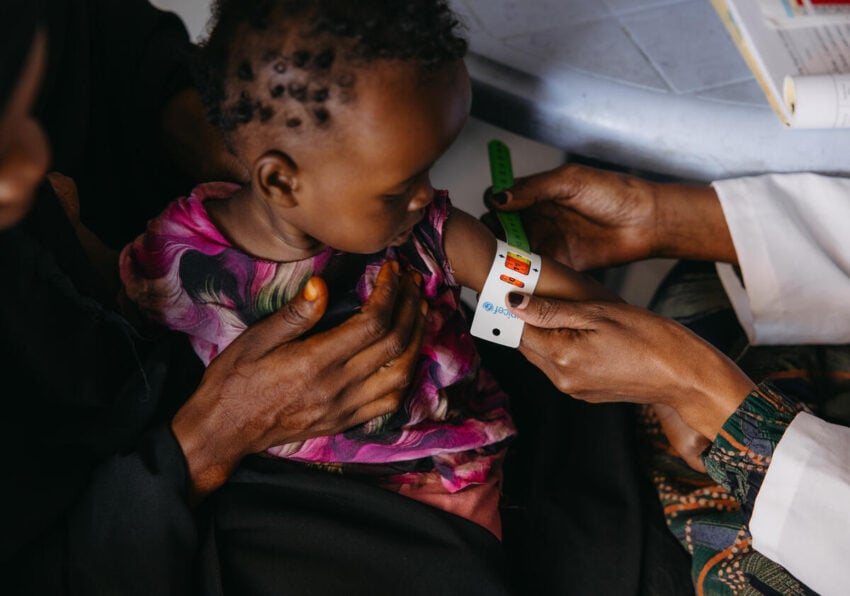
In northeastern Somalia, the Jeexdin Health Center is a critical medical and nutrition clinic serving children and adults near Garowe and Galkayo. Photo by Abigajla Conway)
 
In Somalia, one of the world's poorest and least stable countries, acute hunger is set to increase beyond its current state. When Russia invaded Ukraine four years ago the global supply of fertilizers and cereal grains was disrupted leading to fears of hunger, from Africa to South Asia. A $43 billion humanitarian assistance drive led by governments and multilateral institutions limited the human damage of primary scarcities of the substances of life-sustaining provisions. Food aid, water and medical care was delivered o the desperately needy, with $17 billion of that total supplied by the United States.
 
Currently, humanitarian funding saw a disastrous drop to $28 billion, with the share provided by the United States diminished to $4 billion. "The system has been eviscerated", stated the head of global advocacy at Mercy Corps, Kate Phillips-Barrasso. "This is the era of indifference", she concluded.
 
For decades, Somalians have suffered through a brutal civil war, through famine and the attacks of the fundamentalist Islamic group Al Shabab. The country's most recent harvest was ravaged by drought. Approximately one-third of the Somali population -- 6.5 million people -- encountered hunger at levels described as an emergency, with the U.N. Food and Agriculture Organization warning that over 1.8 million children under 5 were facing acute malnutrition. That was back in February, with the situation since exacerbated due to the war in Iran.
 
https://wvusstatic.com/www/uploads/2026/06/16165718/W345-0329-196.jpg
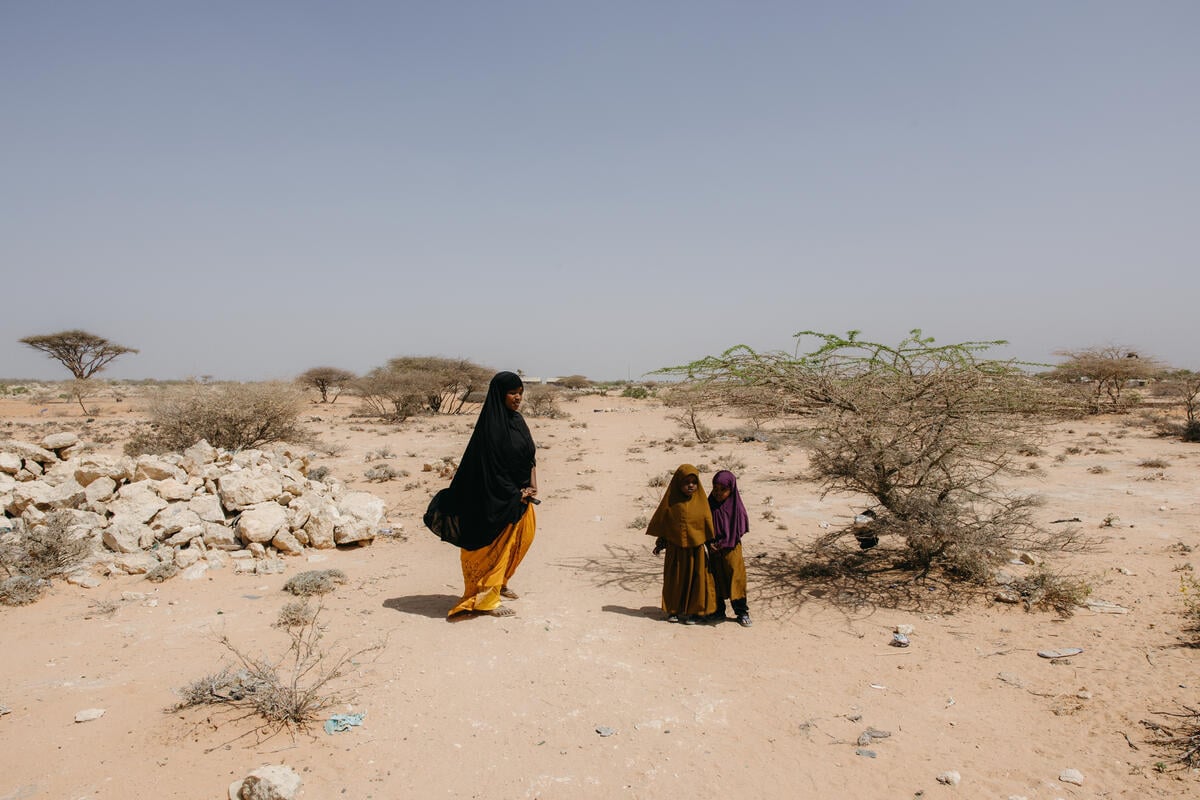
An increasing number of displaced families in Somalia are experiencing severe hunger. Near Garowe, Somalia. 2025 Photo by Abigajla Conway
 
A mere 2 percent of all relief from international donors for Somalia was derived from the United States. From providing humanitarian assistance to Somalia in 2024 of $467 million, last year the U.S. administration slashed that aid to $70 million. Dependent on oil from the United Arab Emirates, Iranian strikes on production facilities in the Persian gulf affected transport cessation, leading to the price of gasoline and diesel over-doubling in price.
 
The predictable response was trucking companies doubling and tripling costs for trucking sacks of corn from Ethiopia over the border to Somalia. Rice shipped into Somalian ports rose similarly. The price of water at public wells tripled since many of the pumps use diesel for energy. One third of fertilizers for Somalia's farming sector is derived from the Persian Gulf so with stocks marooned at the Strait of Hormuz, farmers face steeply higher operating costs.
 
Unaffordable food in combination with fewer medical clinics in operation resulted in children likelier to suffer malnutrition. Infants and toddlers with severe cases of malnutrition were given therapeutic milk formula and antibiotics, while those in greatest danger went to a stabilization unit operated by UNICEF within a local hospital. Children on cots with feeding tubes and some attached to oxygen, fought for their lives and their futures. 
 
The largest source of aid in Somalia, the World Food Program, has sufficient funding to support 300,000 people monthly through to July, representing a fraction of the close to two million people a month it was serving in early 2025. Somalia depends on imports for 70 percent of its food, at a time when staple goods like rice and wheat have doubled in price.
 
https://www.doctorswithoutborders.org/sites/default/files/styles/crop_article_desktop_1238_529/public/image_base_media/2026/05/MSF367250.jpg?h=3a209dfb&itok=Qx5Gc3D-

Three years ago, Tahliil Abdulahi Cali had 250 goats. Today he has 100. The rest died as the rains failed, season after season, across his community in the Mudug region. Mohamed Said Barkhadle


Labels: , , , , ,

Wednesday, August 21, 2019

Somali Criminals Find Haven In Canada

"The removal of convicted, repeat offenders is an enforcement priority."
Canada Border Services Agency

"[Abdilahi Elmi] has committed extensive crimes within Canada and is considered a danger to the public."
Mylene Estrada-Del Rosario, spokesperson, Canada Border Services Agency

"My future has been just living day to day in a cell, year after year. This is not life at all. I want to be a better person ... I know that I have made a lot of mistakes in my life that I can't take back and I am not a bad person."
"I am a kind, helpful, and loving person."
Abdilahi Elmi, 34, Somali refugee, Edmonton

Image result for photo, somali abdilahi elmi
Abdilahi Elmi


"This is a violation of human rights."
"Here we are, a year later, and we see that this is still continuing for people who have been in the child welfare system."
"It's a very simple ask: why can't we change the law? It's past time to change the law to ensure that all children in care receive their citizenship."
El Jones, Halifax activist

Community activists El Jones and Kate Macdonald talk to reporters Tuesday at MP Andy Fillmore’s office in downtown Halifax. They were part of a group of about a dozen calling on federal Public Safety Minister Ralph Goodale to stop the deportation of Abdilahi Elmi to Somalia, scheduled for Wednesday. - Francis Campbell

Now an adult, Elmi arrived in Canada from his home in Somalia with his family, escaping the never-ending violence in that violently dysfunctional society. He was ten years old when he arrived, 24 years ago. Soon afterward he was brought into foster care in Ontario. It was somehow overlooked by officials to register him as was commonly done, for permanent residency. Aside from which he has been living over the succeeding decades as a permanent resident. One who could, of his own initiative, have made a late application and applied as well for citizenship, but never did.

During those years of residency as an adult, the man amassed a long record of various criminal charges including assault. It is the assault charges that have led to his deportation as a non-citizen of Canada. The Canada Border Services Agency ruled on June 26 that Elmi be deported to Kismayo in Somalia at some late date in August. Last year there was a similar case of another former child refugee from Somalia who was on the cusp of removal back to Somalia as an adult whose criminal activity in Canada moved authorities to launch similar extradition proceedings.

Abdoul Abdi however, was ultimately permitted to remain in Canada when a Federal Court judge in Halifax overruled a a decision referring the case to a deportation hearing.  El Jones had been an involved activist in that case as well. The Somali community argued against his removal and pleaded for humanitarian grounds on his behalf, despite his long criminal record in Canada, insisting his life would be in danger, he would be isolated in his country of birth and vulnerable.

In this latest case Abdoul Abdi's sister, Fatuma Abdoul expressed disappointment that the resolution of her brother's impending deportation being overturned to be an indication that despite a lack of citizenship former child refugees would no longer face deportation as a result of their criminal activities in Canada. "Obviously, nothing has changed. We're making a plea for [Elmi] and trying to save his life", she observed righteously with the obvious expectation of entitlements for criminal offences committed by non-citizen Somalis.

Supporters mostly from among the Somali immigrant/refugee community assisted by others in sympathy, claim Elmi deserves a reprieve in the face of "certain death" in Somalia, with no relatives and a language he cannot comprehend. A language he undoubtedly spoke fluently until age ten when he arrived in Canada. The portrayal of Somalia as a dangerous place to live is not entirely misplaced, but millions of Somalis live in the country at various levels of society and one more arriving cannot equate with impending death for the poor unfortunate.

"No one is saying that he didn't commit criminal acts. We're saying that the payment for that should be prison and not deportation", stated Jones of the man who arrived in 1994, age ten, granted refugee status with his family, taken into foster care at 13, living on the streets at age 16, involved with drugs and criminal behaviour, an ongoing burden and threat to Canadian society. An online petition has garnered 3,400 supporters on the change.org site where a note from Elmi explains that alcohol had clouded his judgement.

Robert Wright. Photo Robert Devet


"When a child is made a permanent ward of a provincial jurisdiction, they have effectively been adopted by this country. It is our failure to provide adequately for our children in this state that results in their lack of education, their criminalization and their bumpy transition into a healthy and productive adulthood."
"It would be a travesty of justice and a great shame to our country if we did not intervene right now."
Robert Wright, Halifax social worker

Demonstrators chant in MP Andy Fillmore's constituency office advocating for a stay on the deportation of Abdilahi Elmi to Somalia during a protest in Halifax on Tuesday, August 20, 2019. Included in the group advocating for the stay was Fatuma Abdi, the sister of Abdoul Abdi, the former refugee youth in care who successfully stayed his deportation.   Darren Calabrese / THE CANADIAN PRESS

Labels: , , , ,

Monday, March 20, 2017

Desperately Seeking Haven

"There is a saying in Somalia: 'Choose between one of two hard things'. In Yemen, there is war. Here in Somalia, there is no good employment but at least there is peace."
"I saw bodies in the street [in Yemen]."
"We were all afraid the boat would sink. It was not safe [his family's passage across the Gulf of Aden, fleeing Yemen for Somalia]."
"Sometimes it [his meagre earnings] is enough, sometimes it is not enough [to feed his family]. Sometimes we are hungry. Life is very tough here."
Hassan Cabdoo, Yemeni refugee, Burao, Somaliland

"Due to the political situation in Yemen, more and more are coming. They face big challenges when they arrive."
"We need to be sure proper information is delivered. We can't allow people to come to Somalia with no knowledge about the situation, which includes dramatic issues with the drought."
Julien Navier, spokesman, UNHCR agency
THE United Nations compound in Mogadishu now bears the scars of the world body’s troubled return to Somalia’s battered capital. Suicide-bombers blew off its front gates on June 19th, letting gunmen of the Shabab, the al-Qaeda-linked movement that used to dominate the country, shoot their way in

Somalia is a ruined country. In the aftermath of its civil war it has been struggling to re-establish law and order and rebuild ruined infrastructure. It is also suffering from drought conditions, and like many other parts of Africa, the prospect of famine raises its ugly head. Hardly a place where anyone might want to migrate to, to find haven, to begin a new life, to aspire to prosper, to give their children another chance to gain opportunities for the future.

Somalia is neither safe, nor is its economy regenerated. Unemployment is high, and Mogadishu, like much of the country lies in a ruined state. Warlords, drug dealing, Islamist insurgents, kidnappers and pirates all make their home in this violent, dysfunctional country. This is no secret, that Somalia is a dangerous country to live in. Somalians have made their desperate way out of the country to seek haven in Europe, joining the vast throngs of other nationals fleeing conflict and danger.

But this is where tens of thousands of Yemeni refugees have sought to establish themselves, where they hope to find safety from the newer war ravaging their country. In Yemen the war is actively raging, with a Saudi Arabian-led military assault group fighting the Iranian-supported Houthi rebels who have challenged the official government. This is a proxy war between the Islamic Republic of Iran, seeking to enlarge its influence in the region, encompassing Shiite links with Iran in Syria, Lebanon (Hezbollah), Iraq, and Yemen.

The sectarian conflicts that have roiled the Middle East led to the situation where millions of Syrian Sunnis have fled their country to find refuge in Lebanon, Jordan, Turkey and elsewhere, spilling over when the opportunity presents itself, overland and by sea into Europe. Yemenites, desperate to escape the bombings and killings, have opted to find haven elsewhere. Their choices are not great, and some have risked their very lives to leave Yemen for Somalia.

Their choice is to remain where they are, and hope to survive the brutal onslaught where Sunni and Shiite challenge one another, where al-Qaeda and Islamic State have their own fanatical presence in the country, awaiting their opportunities, or to choose to leave their country of origin. Now struggling to remain alive in Somalia, a country where aid agencies warn that hundreds of thousands face the possibility of starvation, their dilemma has improved but marginally.

When Hassan Cabdoo fled Yemen for Mogadishu his family was among hundreds of other Yemenites loaded into an unseaworthy boat for the two-day crossing across the Gulf of Aden, facing a rough sea, insufficient food and night-time plunging temperatures. Now established in Burao among mostly nomads whose own fortunes have plummeted as their livestock succumbed to the drought, malnourished children crowd the local hospital.

A tailor who earned an average $15 daily in Yemen before the outbreak of civil war, if he can earn $5 a day he considers himself fortunate. And while there is no war in Somalia, there is crime and there is everpresent danger. And there is also the fact of high unemployment. In a relatively stable and wealthy country like South Africa, which has seen an increase in refugees from nearby warring states, unemployment is also high, and so is resentment, with South Africans blaming refugees for taking jobs from them.

How long before violence breaks out between the indigenous Somalians unable to find work, much less feed their hungry families, blaming the presence of Yemenite refugees for the worsening situation? And bearing in mind that the influx of Yemeni families is nowhere near finished, as greater numbers strive to leave the violence and the fear of death behind, to stake their claims in another impoverished nation like their own, broken by war and savagely beset by crime and starvation.

People walk on the rubble of a house destroyed by a Saudi-led airstrike in Sana'a, Yemen, Feb. 2, 2017.
              

Labels: , , , , , ,

Wednesday, May 06, 2015

Criminally Challenged, Academically Inclined

"[He's] not a perfect kid, I don't know if there is such a thing."
"That [Somalian descent] gives people the notion that this is a troublemaker who just came from a war-torn country. He was Canadian."
"Here, anyone is an associate [of a gang]. He is a victim."
Abdul Hassan, uncle of Sharif Said, 21, deceased

Sharif Said, 21, was gunned down on Tremblay Road on the weekend. His family insists he was not involved with gangs.

A victim he most certainly was. And likely a gang member as well, despite the denials of Sharif Said's family. He was born in Canada of immigrant Somali parents. And there is another fact as well, that Somali youth are disproportionately involved in crime, drugs, violence and death in the nation's capital. They may have been born in Canada, but there appears to be a propensity among young Somali males toward gangs, guns, drugs and violence.

All of the above appear to have been involved in some measure to conclude Sharif Said's life at a tragically early age. There can be little doubt that his family is in deep mourning. The oldest of their six children; five boys and a girl, is now dead. And it was not the troubling exposure to crime he might have encountered at an Ottawa high school that might have corrupted his values, since he attended the Ottawa Islamic School.

And there he excelled academically, earning an "improved conflict resolution" award, and distinguishing himself at a regional spelling bee -- receiving acceptance letters from Carleton University and the University of Ottawa because of his "impressive academic record" earning him as well an Ontario Scholar status, as well as a university scholarship.

Police believe the young man's death was related to both gangs and drugs. He had, in fact, a criminal record, pleading guilty to obstructing a police officer, sentenced to 14 days in jail in 2014. Months earlier he faced a charge for drug possession. And a year before that, at age 19, he was charged with assault causing bodily harm, assault, assault (with a knife) to commit a robbery and breaching conditions.

Said's mother had informed the court that sentenced him to a nine-month conditional sentence in June 2013 that she and her husband were shocked by the charges, representing a "completely out of character" violent act by her son; quite inexplicable. When he attended University of Ottawa in the 2011-12 academic year he "failed his courses in second semester as he became more involved with a new, negative peer group and criminal behaviours", state court documents.

The investigation into the young man's murder continues. When his body is released to the family, with the autopsy completed, his funeral, in accord with Islamic tradition, will be conducted and the young man buried as soon as possible.

Labels: , , ,

Sunday, February 22, 2015

Terrorism By Threat of Islamist Atrocities

"If just a handful of mujahedeen fighters could bring Kenya to a complete standstill for nearly a week, then imagine what a dedicated mujahedeen in the West could do to the American or Jewish-owned shopping centers across the world."
"What if such an attack was to occur in the Mall of America in Minnesota, or the West Edmonton Mall in Canada, or in London’s Oxford Street, or any of the hundred or so Jewish-owned Westfield shopping centers dotted right across the western world?"
Al-Shabaab spokesman, YouTube video, Somalia
The terrorist , who has a strong English accent, gave GPS co-ordinates for two London shopping centres 
"The most recent threat by al-Shabaab against malls, and more specifically against Jewish-owned institutions around the world, is another indication that global jihadi groups are increasingly focusing on Jews and Jewish institutions as a way to rally support for their cause."
Dr. Joshua Gleis, president, Gleis Security Consulting 


"And we know that the three largest concentrations of Somali communities in Canada are in Edmonton, Ottawa and Toronto. We also know that we have some Somali youth who appear to have disappeared from Edmonton and joined up with al-Shabaab."
"They're in competition with ISIS and with al-Qaeda for air time. And I think the primary purpose here is for them to get air time in the media, to show that they, too, are a group that requires attention by the West and that they, too, need to be taken seriously, as to their particular demands."
Christian Leuprecht, security expert, Royal Military College of Canada, Kingston, Queen's University

"The Jews are spread out throughout the world, and the Jews’ properties are spread everywhere. In light of this, the Muslims must attack the Jews and their properties in every place, and they must pray for their brothers in Gaza."
Ali Dhere, spokesman, al-Shabaab, Barawa mosque, Somalia, July 2014

Al-Shabaab must be feeling ignored. All attention has been focused on the Islamic State in Syria, Iraq and Libya, on Boko Haram in Nigeria, ignoring the Somali terror group's own exploits in terrorism. So they have issued notice to the world that they too are actively and continuously engaged in the Islamist business of violence and mayhem. Having caught international headlines back in 2013, they are clearly pining for a refocus. What they managed to pull off in killing 63 and wounding 175 at Kenya's Westgate Mall, they now threaten to repeat internationally.

The unifying principle being the Islamist focus on Jews, and the Jewish owners of places where great numbers of people tend to congregate. And nowhere do large numbers of people come together more frequently and loyally than in shopping districts, and more particularly modern versions of the traditional old bazaars where people brought their wares and shoppers chose from among those that most appealed to their need to acquire food and durable goods. That the owners of some of the largest malls happen to be Jews from Iran, and Iran is the sponsor of terrorists can be lost on no one.

A lengthy propaganda video where al-Shabaab congratulated itself on its daring exploits in mass slaughter contained a message for the West that large shopping malls owned by Jewish interests were in their cross-hairs, consolidating the earlier evidence that attacks on Jewish targets are anything but random, as suggested by President Obama's interpretation of the Paris Kosher supermarket attack and the Belgian synagogue attack. Kenya's Westgate Mall atrocity was merely the beginning, they promise in a more extensively ambitious blueprint for Islamist vengeance on Jewish interests.

Malls in the U.S. and Canada were identified as well as two in Paris. The Mall of America, one of the named prospective targets is owned by an Iranian-Jewish family, just as the West Edmonton Mall is, and both Minneapolis where the Mall of America is located, and Edmonton, have large Somali immigrant populations. CNN has noted that al-Shabaab has succeeded in recruiting to their jihadi cause from among the Minneapolis Somalis. 

"This latest statement from al-Shabaab reflects the new phase we've evolved to in the global terrorist threat, in that you have groups such as al-Shabaab and ISIL publicly calling for independent actors in their homelands to carry out attacks", noted U.S. Homeland Security Secretary Jeh Johnson, advising people planning to go to the mall to be particularly careful. Al-Shabaab will note that advice with particular satisfaction.


As for Edmonton; Staff Sergeant Brent Meyer of the Royal Canadian Mounted Police stated that "there is no evidence at this time of any specific or imminent threat to Canadians. West Edmonton Mall has implemented extra security precautions; some may be noticeable to guests, and others won’t be".


In 2012, Kenyan sup­port­ers of al-Shabaab pub­lished a pre­dom­i­nantly Swahili-language online       ter­rorist mag­a­zine, Gaidi Mtaani ["Terrorism Street"] fea­turing arti­cles describing Jews as "the worst enemy of Islam". The magazine wrote of "the Zionist with their American partners" conducting "crusade" in Somalia. The Kenyan president came under special fire for having travelled to Israel to urge Israel's cooperation in counterterrorism efforts, according to the Jewish group the Anti-Defamation League.
west-edmonton-mall-small
CBC
"This was a very general comment ... it wasn’t a specific threat. [Edmonton police have a] very good working relationship [with the mall]."
"I would dare say they [West Edmonton Mall] have one of the best systems that I’ve seen."
Brian Simpson, deputy chief, Edmonton Police Service

And, needless to add, through the threat of Islamist jihadists giving due warning of their intentions, a good part of their plan to terrorize has been accomplished, whether or not an actual attack takes place. Prospective shoppers at all these shopping arenas, popular as they are, will now think carefully before they risk life and limb to venture out to these places in particular. Striking an economic blow against the national economy and Jewish-owned enterprises in particular.

Labels: , , , , , , ,

Monday, September 08, 2014

Africa Union troops 'raped' girls in Mogadishu, Somalia

BBC News online -- 8 September 2014
African Union (AU) soldiers from Uganda fire at al-Shabab positions in the Lower Shabelle region of Somalia on 30 August 2014 The AU force is in Somalia to help the UN-backed government defeat insurgents
African Union (AU) troops raped women and girls seeking medical aid or water from their bases in Somalia's capital, Mogadishu, a rights group says. 

The troops had "misused" their power over women fleeing violence and poverty, Human Rights Watch (HRW) said.

One Muslim girl, aged 15, reportedly had her headscarf ripped off before being raped.
The AU, which has some 22,000 troops fighting militant Islamists in Somalia, says it will investigate the claims.

In 2012, the UN recorded 1,700 rapes in camps for displaced people in Somalia.
Many were thought to have been carried out by members of the Somali security forces.

Last year, there was a huge public outcry following claims that AU and government soldiers had gang-raped a woman in Mogadishu.
Faduma Aden Mohamud holding a baby as she cooks samosas in her house in a displacement camp in the Somali capital, Mogadishu Tens of thousands of people have been forced to flee their homes because of conflict
A destroyed car after an attack by militants at the Jilacow underground cell inside a national security compound in Mogadishu (31 August 2014) Al-Shabab carries out periodic attacks in Mogadishu

A joint investigation by the AU and government dismissed the allegation as unfounded, even though neither the woman nor independent witnesses had been interviewed.
Most of the women who were abused lived in camps for displaced people after fleeing violence and the 2011 famine, HRW said.

map

"The AU can no longer turn a blind eye to the abuses on Amisom [AU Mission in Somalia] bases, as it's undermining the very credibility of the mission," said Liesl Gerntholtz, HRW's women's rights director.

It interviewed 21 women and girls, some as young as 12, who described being raped or sexually exploited by Ugandan or Burundian soldiers in the AU force, HRW said.

Only one rape case, in which the victim was a child, is before Uganda's military court in Kampala, it added.

"Some Amisom soldiers have used humanitarian assistance, provided by the mission, to coerce vulnerable women and girls into sexual activity," HRW said.

"A number of the women and girls interviewed for this report said that they were initially approached for sex in return for money or raped while seeking medical assistance and water on the Amisom bases, particularly the Burundian contingent's base."

A Burundian soldier gave a 15-year-old girl $10 (£6) after raping her, HRW said.
"First he ripped off my hijab [headscarf] and then he attacked me," it quoted her as saying.
The girl had gone to an AU base of Burundian soldiers to collect medicine for her mother who was ill, HRW said.

Somalia has been hit by instability since the overthrow of long-serving ruler Siad Barre in 1991.
The AU force was deployed in 2007, with most of its troops coming from Uganda and Burundi.

More on This Story

Somalia: Failed State

Labels: , , ,

Wednesday, September 03, 2014

Africa Afire With Terror

"The failure of emergency rule to contain and impede Boko Haram violence clearly shows that the military option with an absolute focus on the violent destruction of Boko Haram is not tenable and an alternative must be sought."
Chatham House, Britain, report

"Advanced splintering seems like a probable outcome."
"If Shabaab ends up exiting al-Qaeda, there will be global implications for that ... but it's hard to say right now which way that will go."
Matt Bryden, head, Sahan Research, Nairobi

Two African Islamist terrorist groups fomenting violence and terror, vying with other Islamist groups like Hamas, Islamic State and Hezbollah, to capture the world's attention, fear and apprehension that perhaps if they prevail, the countries of the West may be next in line. Thousands of Nigerians in northeastern Nigeria are streaming out of harm's way as Boko Haram has inflicted fear and violence on their communities.

Boko Haram is fighting for control of Bama, the second-largest city in Borno state, even while the Nigerian military claims it has repelled the Islamists in fierce fighting. Taking possession of Bama would open their way to attack the state capital of Maiduguri, which also happens to represent the military headquarters of the fight the regime has launched against Boko Haram. With a population of 200,000, located 75 kilometres from Maiduguri, Bama represents a strategic goal.


Some analysts says that Boko Haram is seeking to encircle the state capital, Maiduguri [Reuters]

According to residents, the Islamists had succeeded in taking the military barracks in the city, even as the military claimed they had fought off the attackers. What did happen was the air force bombed the barracks, killing soldiers and civilians sheltering there. With Boko Haram's declaration of an Islamic caliphate it has overrun villages in eastern Borno, attracting international criticism for mass kidnappings of 200 schoolgirls in their enforcement of Islamism.

Africa's most populous nation of 170-million, half of which is Muslim and the south of which is Christian has seen the government's campaign against the Islamists fail. Chatham House has recommended that international allies attempt to aid Nigeria in focusing on another strategy to led to success, even while a military state of emergency imposed a year ago alienated ordinary Nigerians as the armed forces are accused of human rights abuses.

In Somalia, where the United States conducted a drone strike, it seems that the spiritual leader of Al-Shabaab, 37 year-old Ahmed Abde Godane has been assassinated. While that sounds somewhat positive in outcome, U.S. intelligence feels that this event may lead to a split in the terrorist group which may now decide to leave behind its association with al-Qaeda, for the preferential alliance with the more successful, newly-notorious, atrocity-prone Islamic State.

A Somali government soldier fires at al-Shabaab after rebels attacked Mogadishu’s Godka Jilacow jail
A Somali government soldier fires at al-Shabaab militants after rebels attacked Mogadishu’s Godka Jilacow prison to free insurgents. Photo: Feisal Omar/Reuters

American special operations forces took to manned and unmanned aircraft using Hellfire missiles and precision-guided munitions to destroy a vehicle that Godane and several terrorists were travelling in, killing six altogether. After the airstrikes that one witness described as an "earthquake", masked Islamic terrorists arrested dozens of residents whom they suspected of spying for the United States. A specialty of groups like Hamas and Hezbollah as well, who seek out revenge on their own.

Labels: , , , ,

Friday, June 27, 2014

Non-Violent Terrorism

"I don't know what non-violent terrorism is. All terrorism is inherently violent."
"People should know that even if they try to join a foreign terrorist group and are unsuccessful, they will be heavily punished for the attempt. Ten years is completely appropriate to reflect Mr. Hersi's overall culpability."
Jim Clark, Crown Attorney, Brampton Ontario courtroom

"Living in Somalis today is much better than living in Toronto 'cause when you live in a place where there's Islamic law, there's harmony, there's no more raping or murder."
"In Toronto, there is rape and murder happening right now every day every minute..."
"See how secular her mind is [Tunisian girl critical of the hijab]. She's against the hijab, this is something that's from Islam, right?"
"She's against it, you know. Allah tells the believing woman to cover up, right? And she's against it 'cause she does ... she lost her religion altogether, right. Very tyrannical."
Mohamed Hersi, Somali-Canadian
Hersi
May 30, 2014 Mohamed Hersi leaves Brampton court during a lunch break while awaiting a verdict from the jury, May 30, 2014. Photo: (J.P. Moczulski for National Post)
Mohamed Hersi's lawyer has described his client as a "mainstream Muslim in his ideology". He is faithful to the precepts of Islam, and feels discomfort and that he has been discriminated against as a Canadian of Somali origin. With no previous criminal record, and no record of subscribing to extremist beliefs, it is a shame that a jury has found him guilty of the charges brought against him. Guilty of two terrorism related counts. From the quotes attributed to him it would appear he is more guilty of simple-minded idiocy than much else.

Evidence was presented that he planned to join Al-Shabab, and that he attempted to recruit another man who was an undercover police agent to jihad. Al-Shabab is, of course, a terrorist group which has been involved in the very crimes that Mr. Hersi insists are rampant in Canada; rape and murder, but on quite a grand scale in prosecuting their atrocities, to be sure. To be a good, observant Muslim, Mr. Hersi felt it his duty to join them.

The Crown has called for Mr. Hersi to receive five-year terms for each count he has been found guilty of, and to be declared ineligible for parole for five years. He had been arrested as he prepared to board a flight to Cairo en route to his final destination in Somalia. It was also made clear that he attempted to evade authorities to enable him to return to Canada where he might engage in jihadist attacks here. "And that, in my submission is a chilling prospect", observed Mr. Clark.

Mr. Hersi's lawyer pointed out that his client used drugs and browsed Internet pornography; stating in his client's defence that "These are not the kinds of activities that one would expect from an extremist Muslim". Perhaps he has chosen to ignore the well enough publicized fact that Mohammed Atta and the other jihadis of 9/11 infamy enjoyed visiting strip clubs and drinking alcohol before they embarked on their monumental atrocities.
According to US investigators, five of the hijackers including Atta, Al-Shehhi, Nawaq Alhamzi, Ziad Jarrah, and Hani Hanjour visited Las Vegas at least six times between May and August 2001. The San Francisco Chronicle reports that here, they “engaged in some decidedly un-Islamic sampling of prohibited pleasures in America’s reputed capital of moral corrosion,” including drinking alcohol, gambling, and visiting strip-clubs. As the South Florida Sun Sentinel observed, the hijackers’ frequent debauchery was at odds with the most basic tenets of Islam:
“Three guys cavorting with lap dancers at the Pink Pony Nude Theater. Two others knocking back glasses of Stolichnaya and rum and Coke at a fish joint in Hollywood the weekend before committing suicide and mass murder. That might describe the behavior of several men who are suspects in Tuesday’s terrorist attack, but it is not a picture of devout Muslims, experts say. Let alone that of religious zealots in their final days on Earth”. 
 Due to the "undefined nature" of Hersi's activities he might have engaged in with Al-Shabab, lawyer Paul Slansky claimed, a milder sentence would be appropriate. "Proportionality does not justify the sentence sought in this case by the Crown", he claimed. His client and his Somali-Canadian supporters appear to be enjoying the proceedings enormously. Perhaps they'd all get a bigger bang out of a longer sentence for the moderate Muslim his family describes.

Labels: , , , , ,

Sunday, June 01, 2014

A Significant Milestone

"I felt that throughout my time in Canada, I felt lot of discrimination whether because I'm black or I'm Muslim. I felt that if I lived in a Muslim country I probably would not experience Islamophobia."
"I never told him to join al-Shabab but I basically told him ways to evade capture, if you will, because I didn't want to see a good friend go to jail." 
"I probably should have called [to report the undercover officer], but he wasn't saying he wanted to do anything in Canada. I was like, out of sight, out of mind."
"Yeah, I always pictured myself as a type of, ah you know, like a silent assassin, you know what I mean."
"If you ever insult the Prophet Allah, peace and blessings be upon him, you deserve a certain outcome, you know?"
Mohamed Hersi, convicted Canadian-Somali jihadi

Mohamed Hersi
Mohamed Hersi, 25, outside Brampton court in April. (Stan Behal/Toronto Sun files)
If the seasoned, experienced reporter quoted Mr. Hersi correctly, does that mean that this devout Muslim is ignorant of the name of the Prophet Mohammed, confusing him with the Almighty? That aside, he's contradicting fairly serious evidence pin-pointing him as precisely what he claims not to be. The advice he gave to the undercover police officer posing as a sympathetic figure to Mr. Hersi's own oft-stated intention to travel to Somalia to join al-Shabab was replete with usefulness.

Say, for example, handing over for the undercover officer's edification a U.S. sniper training manual and a copy of The Anarchist Cookbook. Telling  his friend the undercover officer not to "burn any bridges in Canada" before leaving for his overseas destination in case al-Shabab might decide to dispatch him on a mission back to Canada to "take care of" anyone there who might be foolish enough to insult the Prophet Mohammad.

Two of Mohamed Hersi's Canadian school chums had already departed for Somalia, much earlier, to join al-Shabab in defence of fanatical Islamism; one of them died a martyr to the cause. Mr. Hersi had contact with the other through Facebook. He had gone online, a survey of his computer contents revealed to the RCMP, to search such innocuous terms as "shotgun Somalia", "Somalia AK-47 cost", and "gun market in Mogadishu Somalia". Just curious, see?

Mr. Hersi would never have come to the attention of police had not a drycleaner in Toronto discovered a USB memory device in the man's security guard uniform. When it developed that the device contained a book on bomb-making the drycleaners called in Toronto police, and an undercover investigation was launched. The undercover agent dispatched to make contact with Mr. Hersi gained his confidence.

And their relationship followed from there. At trial Mohamed Hersi insisted that his undercover friend was the instigator, who continually expressed interest in al-Shabab. "I said, 'I don't want to join al-Shabab", insisted Mr. Hersi. But testimony and recordings played for the jury revealed that Mr. Hersi never hesitated in giving advice about how to make up a cover story for a trip to Somalia, how much money to take along, and how to make "connections" in Kenya.

Bribing his way across the border into Somalia would be a cake-walk. Buy weapons in Africa. Read the Al-Qaeda magazine Inspire. Listen to the online lectures of idealogue Anwar Al-Awlaki. And just don't fear anything about the venture. "The verdict here is not the end of things", warned Paul Slansky, lawyer for the convicted, planning an argument that his client was entrapped. And facing up to ten years' imprisonment.

"You shouldn't fear them. They're stupid as a rock, you know?", Hersi had said convincingly to the undercover officer. "They don't know too much. They're not very intelligent themselves, you know? When you think about it they are very stupid, you know?" So stupid that he pretty well convicted himself.

"It's not fair. Where is the justice in the world. He didn't do anything", a woman dressed in traditional Somali garb sobbed outside the courtroom. For their part, the stupid RCMP spoke of the verdict as a "significant milestone", that "underscores the reality of the threats that exist in Canada, as well as abroad, including Canadians participating in violent extremism."

Labels: , , , , , , ,

Wednesday, May 07, 2014

Studying Koranic Arabic

"In Toronto, when I knew these guys they were hard-working, studious, good to their mothers."
"I probably should have called, but he wasn't saying he wanted to do anything in Canada. I was like, out of sight out of mind. In hindsight I probably should have reported him."
Mohamed Hersi, Toronto

"Indeed, the physical fitness of the mujahid, his ability to run long distances, carry heavy loads and exert a lot of bodily effort for extended periods of time is the primary factor that determines his usefulness on the battlefield."
A Mujahadeen's Fitness Training; Sheikh Usuf Al-Uyayri, Saudi Arabia
Star.fm.Kenya

On trial on charges of attempting to join Al-Shabab, Torontonian Mohamed Hersi underwent questioning in court in a trial soon set to wind up. On the witness stand, the Crown was given the opportunity to question him. As a former trained security guard he was asked to explain why despite his training in response to security threats he had failed to report alarmingly suspicious statements an undercover police officer made, in an attempt to draw out his intentions as a budding jihadist.

He had acknowledged a friendship with a former high school classmate, Mohamed Elmi Ibrahim, whose family he had visited for the purpose of paying his respects on the news that the young man had been killed in Mogadishu after travelling there to join Al-Shabab. He claimed his interest was simply that of nostalgia for a childhood friend, in respect of his memory, and why not?

As for knowing "Casanyo" Abdurahman from Winston Churchill Collegiate Institute and the mosque they both attended, he had accepted a 'friend' request on Facebook from him even though he more than suspected his old friend was now located at an Al-Shabab camp. Despite which he hadn't communicated with them since they left Toronto for Somalia, and had no interest whatever in following their footsteps.

As the first person to be charged with attempting to leave Canada for the purpose of becoming part of jihad in joining a terrorist group the 28-year-old's charges and testimony represents a template case in the RCMP's attempt to intervene when Canadian youth seek to join their futures with fanatical Islamism. He is charged secondarily with counselling an undercover Toronto police officer in the joys of terrorist activity, urging him to join Al-Shabab to attain full satisfaction in life as a jihadist.

These are allegations which he has strenuously denied as having any relevance to his life, his attitude, his values and his actual actions. He had set out to leave Canada not to join a terrorist group but to travel to Cairo to further his Arabic studies, wishing as any good Muslim should, to attain fluency in the language in which the holy Koran is written.

As for the undercover police officer; he had himself confided he was on his way to Somalia for the direct purpose of joining Al-Shabab. Despite which Mr. Hersi never saw fit to break off their relationship or to turn him in to authorities. Rather, he proffered advice on how to travel to Somalia and to secure guns; how much money he would need to take along, and how to avoid actions that might arouse official suspicion.

As well, he recommended an article by Al-Qaeda ideologue Anwar Awlaki. Along with these sterling recommendations and suggestions was one where he thought his friend might afterward think to return to Canada to "take care of" anyone who insulted the Prophet Mohammed. "Don't be scared", Mr. Hersi encouraged the undercover agent.

Not at all; Mr. Hersi corrected the Crown, he had, in reality given due warning to the undercover agent four or five times, telling him to forget his plans of travelling to Somalia, much less to join Al-Shabab. But he realized his friend was stubbornly intent on proceeding with his intentions, so he offered him tips to help him avoid being detected.

Crown lawyer Iona Jaffe reminded the accused that he had recommended that the undercover officer read the writing of Saudi Sheikh Yusuf Al-Uyayri encouraging Muslims to acquire greater physical fitness as "an essential asset to the mujahid, especially in the case of street-fighting". No, he was not himself preparing to join Al-Shabab and for that purpose getting in shape; his exercise regimen's purpose was "for my own personal health and well-being", the book in question simply incidental.

"I flip-flopped from different plans", he explained. The book written by Sheik Al-Uyayri related not only to fitness but contained as well a section on philosophy and prayers. "The book", he said solemnly, "had multiple aspects".

Cool Dude.

Labels: , , , ,

Tuesday, April 29, 2014

Apprehending Jihad

"I felt that throughout my time in Canada I felt a lot of discrimination, whether because I'm black or I'm Muslim. I felt that if I lived in a Muslim country, I probably would not experience Islamophobia."
"I have sort of a love-hate relationship with the police. I love to hate them, they love to hate me."
Mohamed Hassan Hersi
Mohamed Hersi arrives with an unidentified woman to testify at his trial at the Brampton courthouse, April 24, 2014.
J.P. Moczulski for National Post   Mohamed Hersi arrives with an unidentified woman to testify at his trial at the Brampton courthouse, April 24, 2014.
 
A young man, working in Toronto as a security guard, is now on trial for attempting, evidence alleges, to join the Al-Shabab Somali terror group. Mr. Hersi, 28, was arrested at Pearson airport in Toronto on March 9, 2011, as he prepared to board a flight to Cairo. The undercover police officer who had secured his confidence, testified that Mr. Hersi had confided in him that his plan was to travel on to Somalia for the purpose of joining Al-Shabab.

Canada's security intelligence agencies, CSIS and the RCMP, have embarked on a proactive enterprise to apprehend young Muslim Canadians who appear to have been radicalized, to stop them from travelling to North African or Middle East hot spots of conflict to join Islamist jihadis in their conflicts with other Muslims and the governments of the countries they travelled to, answering the call to violent jihad.

Overtures have been made to Canadian Muslim centres, schools, mosques, and communities in general to convince them of the value of interaction with the intelligence agencies to warn them when untoward jihadist action, or knowledge of recruitment to jihad activities are taking place, in a combined security-community attempt to dissuade Muslim youth from embarking on what they may believe is a responsibility to Islam.

Mr. Hersi, however, strenuously denies that either he or his family believe in violent action as Muslims. Opposed to terrorism, he claims it is in his opinion immoral and anti-Islamic. Citing Islam to justify violence requires taking the Koran out of its historical context, he claimed. Which is perplexing, to say the least, to anyone who may have read the Koran or had it interpreted through expert opinion writing on the topic of violence and Islam and its place in the Koran.

Before his arrest, Mr. Hersi's laptop had a history of searching the Internet for issues such as "Somalia AK-47 cost". A search of his hard drive found that he had downloaded an edition of the online magazine Inspire, associated with al Qaeda ideology. Not according to his lawyer Paul Slansky, who averred that his client never intended to join Al-Shabab, nor had he ever, despite the undercover officer's testimony to the contrary, encouraged him to join Al-Shabab.

Born in Mogadishu, Somalia, Mr. Hersi arrived in Canada with his mother, claiming refugee status. His father had died before he could join the family in Toronto, while he was working at the Islamic Development Bank in Saudi Arabia. The young man claimed to have been discriminated against while living at a Toronto Community Housing Corp. apartment building, where police, he claimed, harassed blacks and Muslims.

He planned to become fluent in Arabic, to spend six to 12 months in Cairo, then return to Canada for graduate studies and finally move to a Muslim country like Egypt or Turkey. But contact with Al-Shabab? Never! Yes, he had a 'friend' request on Facebook from Abdurahman Guled, a presumed Al-Shabab member, but that was incidental; they had been high school friends.

This court case represents the first attempt to prosecute a Canadian attempting to travel outside the country for the purpose of joining a terrorist group. The RCMP had identified "high risk travelers" they meant to track and disrupt in their purpose to become involved in violent jihad. Two Canadians had died last year during an Al-Shabab massacre in Nairobi at the Westgate shopping mall. 

One of whom was a jihadist, the other a Canada Border Services Agency officer.

Labels: , , , , ,

Tuesday, March 25, 2014

Tracking Terrorists

"Most troubling, if they participate in a foreign conflict or train with a terrorist group, they might return with certain operational skills that can be deployed themselves or taught to fellow Canadian extremists."
Annual report, Canadian Security Intelligence Service

"We don't know their state of mind ... No one goes to a war zone without being affected, especially if they were exposed to a long period of indoctrination."
Michel Juneau-Katsuya, former CSIS officer

"CSIS is aware of Canadians who have returned to Canada after having been abroad for terrorist purposes ... [the agency] actively investigates such individuals and is co-ordinating with the RCMP in order to keep Canadians safe."
Tahera Mufti, CSIS spokeswoman
Goran Tomasevic

Well, thank heavens for that reassurance. CSIS is busy, and one can only assume that the intelligence agents that have been tasked to follow up on the activities, covert and otherwise, of the 80 Canadians that CSIS is aware of, are good at their jobs and capable of assessing their prospects adequately enough to ensure that their newfound skills are not put to the test of challenging the country's ability to protect itself from the malign efforts of some of its own citizens.

According to the inexplicit information about the activities of those on CSIS's radar, returned from their instructional, hands-on visits abroad, of some of the 130 Canadian citizens known to have made such trips, about one third of whom have resisted the homing impulse to return to Canada, and have presumably taken part in combat situations, many of them in Syria. With that knowledge, reassure us again, please do, it would be appreciated.

On the other hand, while some proportion of the absent-from-Canada on extremely violent jihad adventures have embroiled themselves in paramilitary action, others are believed to have studied in extremist Islamic schools.( Is this reassuring?) Or provided logistical or fundraising support. Some, presumably, like the paterfamilias of the notorious Canadian Khadr family, have engaged in all of the above. But they are, for citizenship purposes, Canadian.

The "foreign fighter" phenomenon is concerning for the intelligence community, provoking the spectre of those returning to Canada, radicalized beyond the impulse that took them from the country into the maelstrom of dysfunctional Islamic countries at war with themselves. And if it's concerning for the intelligence community, how much more concerning must it be for us poor innocent Canadians not knowing the vipers that exist among us, prepared at any moment to spread their deadly poison?

CSIS director, Michel Coulombe, reported to the Senate committee on national security and defence in early February, when he testified about his agency's awareness of the numbers of Canadians abroad, supporting extremist activities. The concern he and his minions are consumed with, should such individuals, on their return, decide to practise here what they learned and so enjoyed abroad, preying on the defenceless, clashing with their sectarian enemies, sowing fear, discord and above all, death.

RCMP spokeswoman Sgt. Julie Gagnon commented her inability to "confirm or deny the existence of a national security criminal investigation for privacy concerns. Also, to do so could potentially negatively impact ongoing investigations", in response to the welcome revelation that the RCMP is working in smooth concert with CSIS. The public most certainly does not wish to impact negatively on such investigations, so we wish them all the luck in the world, for we will benefit hugely from it.

And we can hope that the set of anti-terrorism laws that the federal government passed last year, with new penalties in store for any jihad-minded Canadians who leave or attempt to leave Canada to participate in terrorist activities will have a useful impact. Now, if we could only be convinced that should some 'citizens' successfully leave to take part in such activities, their deaths-by-martyrdom could be guaranteed, thus gifting them with the honour they seek, and we could all be happy.

The Senate committee was informed that those individuals seeking their very particular Islamist life-fulfillment are in flux, motivations difficult to discern (oh, really?), destinations frequently to active conflict zones or failed states (think Somalia, Yemen, North and East Africa), so that co-operation with foreign 'partners' (other governments and their security and intelligence agencies) is not always possible. Right...

Another complication ... "Canada has not, to date, systematically collected exit information that could be used to reliably confirm an individual's departure".... 

And, for heaven's sake, why not?!

Labels: , , , , , , ,

Friday, December 13, 2013

The Somali-Canadian Connection

"I hope that I will fulfill the duties I am entrusted with, and if parliament approves my nomination, I will swiftly name a high calibre cabinet."                                        Abdiweli Sheikh Ahmed

"I'm hoping that the naming of a new prime minister will herald the beginning of real work by this government. "So those are the issues [corruption and impunity, human rights abuses, rape epidemic] that we hope this new prime minister will deal with, but I am skeptical. I don't have a lot of faith in this administration. I don't think a new prime minister will really do much."
Ahmed Hussen, Canadian Somali Congress

"We feel a little bit now that we are more secure than before. In a sense, yes, they have been defeated [al-Shabab] but at the same time it looks like they are coming back ... Once and for all this has to be eradicated."
Abdurahman Adan Ibrahim, Somali MP, former deputy prime minister
 Another distinction for Canada. Home to the world's largest ethnic Somali diaspora. Somalians who fled the civil war consuming their country, the general lawlessness that followed, the aura of desperate fear and all-consuming will to survive the turmoil, fled for haven elsewhere, anywhere but Somalia. And Canada welcomed large numbers, giving them a sense of security. Enough so that many have decided to return to a resurgent civil Somalia.

There are those who have been written of in the language of dire warnings emanating from Canada's security establishments; young men whose mothers wring their hands in helpless fear and concern for the well-being of their sons, conscripted by mosque or social-centre figures of sinister intent, to persuade them to return to a country of their heritage, to fight for 'freedom' with the Islamist group that has instilled fear and loathing, al-Shabab, a creature of al-Qaeda.

Somali President Hassan Sheikh Mohamud has named Abdiweli Sheikh Ahmed, 54, as prime minister of Somalia. Sheikh Ahmed is not the first Somali-Canadian to have had this honour pressed upon him. Omar Abdirashid Ali Sharmarke, a graduate of Carleton University, held the post from 2009 to 2010. So far there have been six prime ministers presiding over the country in six years.

Mr. Ahmed arrived in Canada in 1998, then earned a Master's degree in economics from the University of Ottawa, along with a diploma in computer programming at Algonquin College. He worked as an international trade and development analyst, then left in 2003 to work for the African Union in Nairobi. Finally he worked at the Bank of Canada and Islamic Development Bank in Saudi Arabia.

The current government formed in August 2012 under international backing has a number of challenges to face; to instill order and bring economic development to a nation that has been lawless, and isolated from the global community for two decades. When the general public thought of Somalia it was in terms of the U.S. 'peacekeeping' debacle captured in the film Blackhawk Down, and more latterly, Somali pirates plying their trade on the high seas, taking foreign vessels and seamen hostage for ransom.

The Al-Qaeda affiliated al-Shabab has been a psychopathic presence within Somalia, battling the government and African Union forces, mounting attacks as far afield as Kenya, in revenge for its troops fighting the terror group in Somalia. A report issued by the New York Police claimed that al-Shabab had recruited "radicalized" members of the Somalia diaspora from the U.S., Canada, Britain, Australia and Sweden.

"The fear is that these trained individuals could also be used to conduct attacks on U.S. soil or against U.S. interests overseas" concluded the report. Canada' security agencies also reached a similar conclusion, warning of the possibility that trained jihadists originally travelling from Canada to Somalia to join al-Shabab could conceivably return to Canada and proceed to mount havoc there.

A counterbalance of possibility against the more usefully humane traffic of Somali-Canadians exiting Canada to return to their country of birth to effect a civil renaissance and finally combat the forces of evil that violent Islamist militias represent.

Labels: , , , , , ,

Wednesday, November 27, 2013

Forewarned Is Forearmed....

"I would say that the Canadians should be very vigilant of not losing their own children, because this child, maybe he's been told to go to jihad but next day he will be told to do the same jihad in the middle of Toronto. Why not? It's the same thing. Because they are saying, 'You are going to fight the infidels.' What is actually keeping them from fighting the infidels of Toronto or the infidels of Montreal or the infidels of Ottawa? So we don't need what happened in Westgate.
"I'm saying, go with your own children. Be with them. Don't actually give them a chance to be alone with those preachers, which is very important. If we do that, we minimize at least 75% of the risk."
Andurahman Adan Ibrahim, former Somali Deputy Prime Minister
"[...He would] "make sure that our policemen are reaching out that -- I mean with imams. I meet with the Somali community who come to us and say, 'Help us because our young are being radicalized.
"The message has to be clear and we need to develop and articulate that counter-narrative to fight efficiently against the germs, the ideas that are behind the actions [countering extremist ideology]."
Public Safety Minister Steven Blaney
A member of the Somalian Parliament, Abdulahman Adan Ibrahim, a member of his government's foreign relations committee, accompanied Somali-Canadian Sooyaan Abdi Warsame back to Canada, after he had been wounded in a November 8 bomb attack by Al-Shabab outside the Hotel Maka in Mogadishu. Mr. Warsame is receiving medical treatment for his physical condition relating to the attack, but his mental state is perhaps also under repair.

And Mr. Ibrahim, while in Canada, was warning the Government of Canada of the presence of malign forces of Islamist jihad that have infiltrated the Somalian community in Canada. As a former University of Saskatchewan student who returned to his country to take up a number of sequential cabinet posts he is heavily involved in both countries, with intimate knowledge of both. He is clear enough in his message.

In the mosques and meeting places throughout the country that service the spiritual and social needs of the expatriate Somali community within Canada all mosques have been cast under suspicion for harbouring radical jihadists aligned with Al-Shabab whose purpose is to recruit young Somali men for the sacred cause of resurrecting the true purpose of Islam, returning Somalia to a pure Islamist state, by violent upheaval.

Mr. Ibrahim has not only cautioned the government, but he has also met with members of the Somali-Canadian community, cautioning them to remain "very careful" who was preaching to their children, vulnerable to the appeal of jihad. "So-called clerics", he stressed, were spreading a virally dangerous message to the community's youth. He was himself aware of a number of young men who joined Al-Shabab whom someone in the community had twisted to radical violence and financed their travel to Somalia.

If, then, a member of the Somali government intimately involved in his government's foreign relations, warns of the presence of malign forces of terrorist-inspired jihad presenting themselves at mosques as clerics to be trusted, why then is the Somali community itself not prepared to reject the presence of such dangerous individuals, as well as approaching government to save their sons from their respected preachers?

Additionally, with government security agencies thus warned, should their surveillance activities not identify the presence of such threats to Canadian and Somalian society, and arrange to usher them out of the country as viable, potential dangers to national security? Is, in fact, the Somali community in full cooperation with the authorities whom they plead with to save their sons?

Labels: , , , ,

Wednesday, November 20, 2013

Self-Sacrificing Targets

[Al-Shabab] "an organized but shifting Islamist group dedicated to establishing a Somali caliphate, waging war against the (sic: perceived) enemies of Islam and removing all foreign forces and Western influence from Somalia".
Public Safety Canada website

Canada formally recognized Al-Shabab as a terrorist organization in 2010 in response to the growing realization that the group had infiltrated the consciousness of Canadian youths of Somalian heritage for recruitment into jihad. It was not only from Canada, but the United States and throughout Europe that young Somali men were returning to the country of their heritage to join Al-Shabab, lured by the prospect of doing something 'positive' for their country as devout Muslims.

Or simply attracted to the prospect of perceived adventure, of the excitement of conflict, of becoming skilled as a fighter and in the use of firearms and explosive devices, thanks to training camps that further indoctrinate the young and the impressionable into the ideology of violent jihad. It is a quite exclusive club, in fact. One in which there is little doubt that some young men take especial pride in being a part of.

Following the deadly attack by Al-Shabab in Nairobi in September where four gunmen slaughtered 67 innocent people at the upscale Westgate shopping mall, the Somali-Canadian community in Toronto held a rally to condemn Al-Shabab. Somalia used to be known primarily for its 'resistance' to American forces attempting to restore civil order to a country riven by violence. And then it was known for its piracy on the high seas.

Piracy is no longer an issue; international ships patrolling the waters off the Somali coast have more or less put an end to Somalian Islamist attacks on shipping freighters in the region, holding them for ransom and holding their crews as hostages. A free enterprise initiative that many ascribed to Somali fishermen desperate to replace their livelihood interrupted by illegal poaching by other fishing nations' boats.

Somali-Canadians have been leaving Canada for reasons other than to join a terrorist group in their country of origin. Many, like Sooyaan Abdi Warsame who had lived in Toronto since the early 1990s when he emigrated to Canada, the son of a government minister before the country's collapse, returned to help Somalia rebuild itself. He was named to the Federal Parliament of Somalia in 2012.

He has returned to Canada and Toronto seeking medical treatment. He was injured in a suicide bombing when an Al-Shabab car bomb exploded outside the Hotel Maka in Mogadishu on November 8. Six others died in the attack. Mr. Warsame's injuries are confined to shrapnel wounds.

On Tuesday, a car bomb exploded outside the Beledweyne police headquarters in south-central Somalia leaving 19 dead. Another al-Shabab success, target ting African Union troops. It was, in fact, African Union troops, hugely represented by Kenyan military that succeeded in removing Al-Shabab from some its Somalia strongholds; the Nairobi attack was in reprisal.

The explosion at the Hotel Maka, a popular venue used by Mogadishu's government and business elite, killed Abdulkadir Ali Dhuub, Somalia's once acting ambassador to London. The bomb had been wrapped in sharp objects, striking Mr. Warsame, among others.

A host on the Somali-language Toronto FM station Radio Ogaal noted diaspora Somalis return to Mogadishu to serve in government, to set up businesses and to work for NGOs. The very fact that they are focused on doing their part to bring stability, good governance and change for the better to Somalia, brings them to the malevolent attention of Al-Shabab.

"They're making an effort", said Hassan Abdillahi. "The bad thing is, they will be the targets."

Labels: , , , , ,

Thursday, October 10, 2013

Failed Intelligence

Kenya's National Intelligence Service had produced an internal report predating the September 21 Al-Shabab attack on the Westgate Mall in Nairobi, warning that it was aware of Al-Shabab members being in Nairobi "and are planning to mount suicide attacks on undisclosed date, targeting Westgate Mall and Holy Family Basilica." It warned also of "Mumbai-style attacks", so Kenya's intelligence community was in possession of hard facts.

Kenya perhaps, isn't aware that it is incumbent on their intelligence services not only to know these things, but to plan their response should they, as suspected on the evidence at hand, actually occur. Yet they were obviously taken by complete surprise, and had the unmitigated gall to criticize their intelligence partners in the U.S. and Israel for not sufficiently alerting them to the imminence of the attack.

That outside intelligence agencies are expected to be alert to the potential of attack and to have information on their actual occurrence, while the home agency feels justified in letting down their guard and simply resting on the possibility that others will do their work for them, is rather mind-boggling. That, in their defence against charges of incompetence they point a finger of blame elsewhere says volumes.

Belatedly, Interpol was asked to issue an arrest notice for Samantha Lewthwaite, a woman of British origin, as one of the "key actors" in the Nairobi mall attack. Acknowledged in retrospect as the lead planner of the attack, giving orders instantly obeyed by her Al-Shabab cohorts, she was not apprehended. Although perhaps she could have been, pre-attack, if Kenyan intelligence had been sufficiently alert.

The U.S., whom they excoriated for its lack of intelligence and response to a purely Kenyan-Somalia episode of terrorism, made an effort to capture a Kenyan in Somalia, known to have plotted an attack on his country's parliament buildings and the UN Nairobi Headquarters. Kenyan intelligence knows all about him. Did they ever make an effort to collect this Kenyan, in full awareness of his intentions?

The U.S. Navy SEALs' attempt to capture Abdulkadir Mohamed Abdulkadir (Ikrima) through a pre-dawn raid in Somalia failed because, unlike Kenyan intelligence and its military, Al-Shabab was alert and conscious of the potential of such an attack which happened to have been carried out by the very unit that raided the bin Laden compound in Pakistan, successfully.

Kenya's National Intelligence Service identifies Mr. Abdulkadir as the lead planner of a plot to carry out multiple attacks in East Africa in late 2011 and early 2012, in collaboration with Al-Qaeda's top henchmen in Pakistan. They have the information but it would appear, sadly enough, not the intelligence in the sense of using the intelligence on hand to act appropriately.

The undisclosed date for the planned suicide attack on the Westgate Mall was just too nebulous for them to grasp, one supposes. Two of the suspects involved were thought to have been wearing suicide vests, making good use of grenades and AK-47 assault rifles. Perhaps the Al-Shabab terrorists grasp the idea that gives them the courage to act in the knowledge that the Kenyan military is incapable of so doing.

Finding looting the premises of the mall far more appealing than confronting the terrorists of Al-Shabab. One of whom may have been Mr. Abdulkadir, or may not have been. In any event, he's still on the loose, and doubtless chortling at the expeditious response of his own terror group in confronting the SEALs in a hail of fire, sufficient to put them off the target.

For fear, they said, that innocents might be injured in the resulting melee.

Labels: , , , ,

() Follow @rheytah Tweet