Politic?

This is a blog dedicated to a personal interpretation of political news of the day. I attempt to be as knowledgeable as possible before commenting and committing my thoughts to a day's communication.

Sunday, July 19, 2026

"The U.S. Military Might Just Finish The Job"

"[The U.S. strikes were in response to the attacks on shipping]; if it happens again, it will get much worse!" 
"Anything that happens is going to happen very fast." 
"[The U.S. military might] just finish the job."
U.S. President Donald J. Trump  
 
"He made it very clear that, based on the assessments of CENTCOM -- and I remember those -- the expectation was much higher as far as Iran's ability to close the Strait of Hormuz or the scope of the attacks. So it really shows that CENTCOM has been able to really effectively degrade those operations by the Iranians."
"Oil is flowing out of the Strait of Hormuz. There were -- U.S. energy secretary today said that 15 million barrels of oil is coming out of the Strait of Hormuz. There were oil tankers that were coming out of the Strait of Hormuz last night, kind of coming closer to the coast of Oman."
"So, Iranians' ability has been degraded to really -- to do what they were able to do at the beginning. And I think if you continue with these strikes, you're going to see that Iranians kind of that -- the arm of their threat to the Strait of Hormuz being rolled back."
"I think CENTCOM has the ability to do it. I think you're going to see these airstrikes continue to target those launching pads, naval assets, and then it could be possible that CENTCOM, U.S. Central Command or NAVCENT, they're going to get more involved in escorting the ships out of the Strait of Hormuz."
Miad Maleki, Foundation for the Defense of Democracies  
https://img.lemde.fr/2026/07/17/0/0/5554/3703/556/0/75/0/af2ed71_ftp-1-nlt0ohxo4gvy-fea7075640a341b8a7dccabf7ff023c5-0-979a10f1c5e841989f299fd4c52d4537.jpg
United States President Donald Trump arrives aboard Air Force One at John F. Kennedy International Airport in New York, July 17, 2026.
 
Tehran has been targeting American assets (military bases) across the Middle East, reflecting the largest escalation in hostilities since the signing of the Memorandum of Understanding between the United States and the Iranian regime that put a halt to the conflict initiated jointly by the U.S. and Israel in February aerial assaults. A month following the MOA signing Iran has accused US. forces of hitting civilian and energy infrastructure, including an airport, a railway station and two bridges. 
 
State media reported eight dead and 20 wounded in Friday overnight attacks.
 
It takes a bit of naive credulity to imagine the Islamic Republic being concerned over eight of its citizens dead and 20 wounded in view of its record of habitually treating its own as enemy combatants when Iranians from time to time converge in public to denounce the regime for its overwhelming human rights abuses practised against its own population. Its defense of its population against the strikes imposed by a foreign power far more concerned over the welfare of long-suffering Iranians than their government is ludicrous.
 
American strikes have expanded, focusing on Iranian infrastructure, as promised by the U.S. President. Citizens were informed by their energy ministry to reduce  electricity usage, switch off air conditioners during peak hours in view of the fact that the power grid is under strain from what it identified as American strikes on energy facilities in southern Iran. Hard to estimate how much more inconvenient this is for Iranians than the total closing of internet imposed by the regime during the height of the protests opposing the regime back in January.
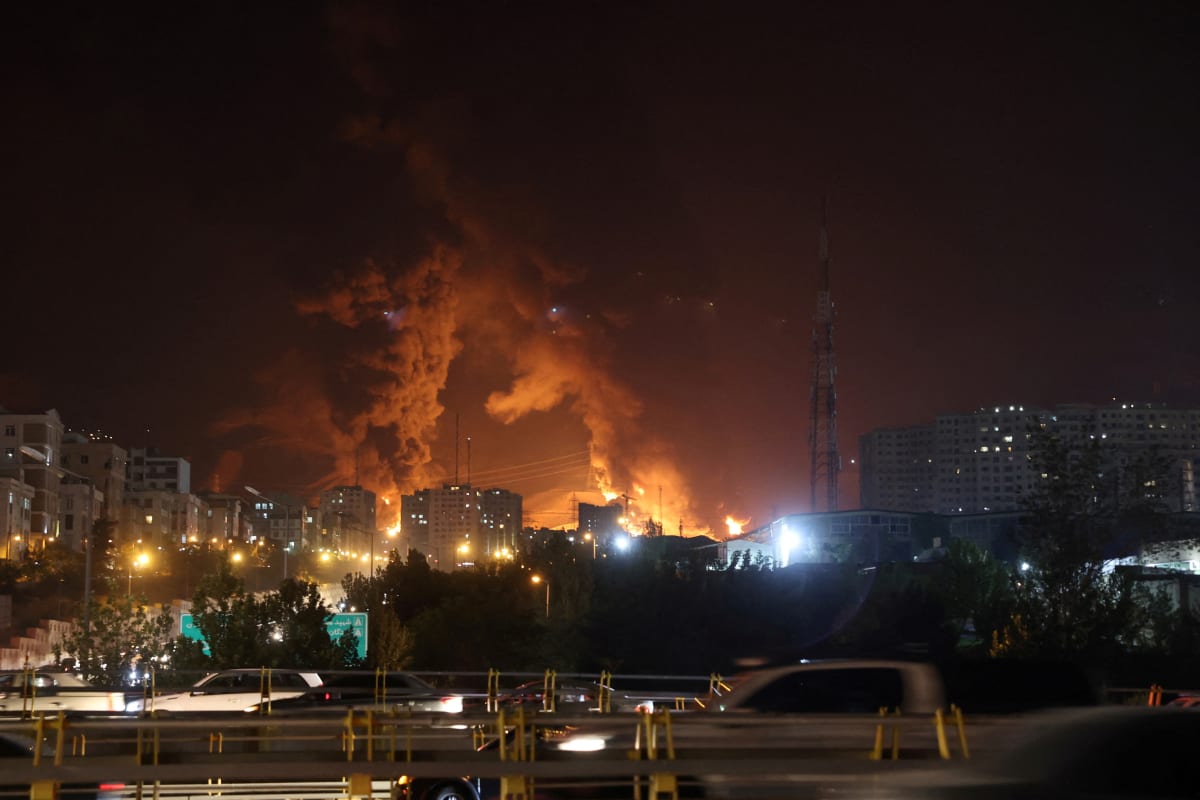
 
https://assets.cfr.org/images/t_gct_w1200/v1755543045/globalconflicttracker/Irans-Conflict-With-Israel-and-the-United-States-2025-06-15T032418Z_25498935_RC2O2FA9EFTD_RTRMADP_3_IRAN-NUCLEAR/Irans-Conflict-With-Israel-and-the-United-States-2025-06-15T032418Z_25498935_RC2O2FA9EFTD_RTRMADP_3_IRAN-NUCLEAR.jpg?_i=AA
Smoke rises from an Israeli attack on the Sharam Oil Depot in Tehran, Iran  June 15, 2026  West Asia News Agency, Reuters
 
 In view of the renewed attacks by the U.S. military following Iran's continued striking of ships transiting the Strait of Hormuz, the Iranian military threatened strikes against "all infrastructure across the region" would follow any strikes on its own infrastructure. Friday saw it launching widespread strikes on its Gulf neighbours, following an exchange of fire, the largest since the MOA was signed a month earlier. U.S. military sites in Kuwait were targeted Friday, a power and water plant damaged by an Iranian attack. Kuwait in turn urged its citizens to "ration their electricity consumption".
 
The Islamic Revolutionary Guards claimed to have targeted US. radar systems and military aircraft in Qatar to "punish the aggressor". Doha, on the other hand, stated the missile attack had been intercepted. Two American radar sites in Oman as well as the Al-Tanf military base in Syria were also attacked by the IRGC. The Syrian military, however, denied that claim, noting that U.S. forces had withdrawn from the base earlier in the year.
 
According to the Jordanian military, three Iranian missiles had been shot down (forgetting to mention that it was Israel that shot them down for Jordan). In Iraq, Kurdish forces explained that the U.S.-led coalition had shot down several drones over Erbil. Iraq's Kurdistan region saw strikes that killed eight members of an Iranian Kurdish armed opposition group, by an Iranian attack. Tehran targeted US. helicopters and planes at an airbase in Bahrain, according to Iranian state media, causing the island nation to urge its citizens to take shelter. 
 
Tehran and Washington have been trading fire for eight days following a  battle over the Strait of Hormuz. According to Iran's health ministry at least 38 people were killed and over 400 injured in the country with the resumption of fighting. This, from a regime that has most recently murdered thousands of its citizens in December/January, injured and imprisoned many thousands more, who had called for their reviled, persecuting government to stand down. 
 
https://res.cloudinary.com/dmovl8u5q/images/w_1024,h_999,c_scale/f_auto,q_auto/v1783957296/globalconflicttracker/62goi-where-the-u.s.-iran-deal-lands-on-core-issues-/62goi-where-the-u.s.-iran-deal-lands-on-core-issues-.png?_i=AA 


Labels: , , , ,

Saturday, June 20, 2026

A Victory of American Might And Capitulation

"Having failed to achieve his goals in the joint U.S.-Israel war on Iran, Trump is now attempting to disguise the setback as a victory."-Israeli military aggression."
"Enemy forces failed to attain any of their stated objectives and did not approach Iranian territorial waters."
Tehran Times 
 
"[The] immediate and permanent [end to military operations on all fronts, including Lebanon, paving the way to a] final deal [in the next 60 days] extendable with mutual consent."
"[The U.S. Treasury to waive sanctions on Iranian oil exports and the two countries to] refrain from interfering in each other's internal affairs."
Memorandum of Understanding 
https://ichef.bbci.co.uk/news/1024/cpsprodpb/529e/live/47941ef0-6b3e-11f1-bc34-19faf070d2ff.jpg.webp
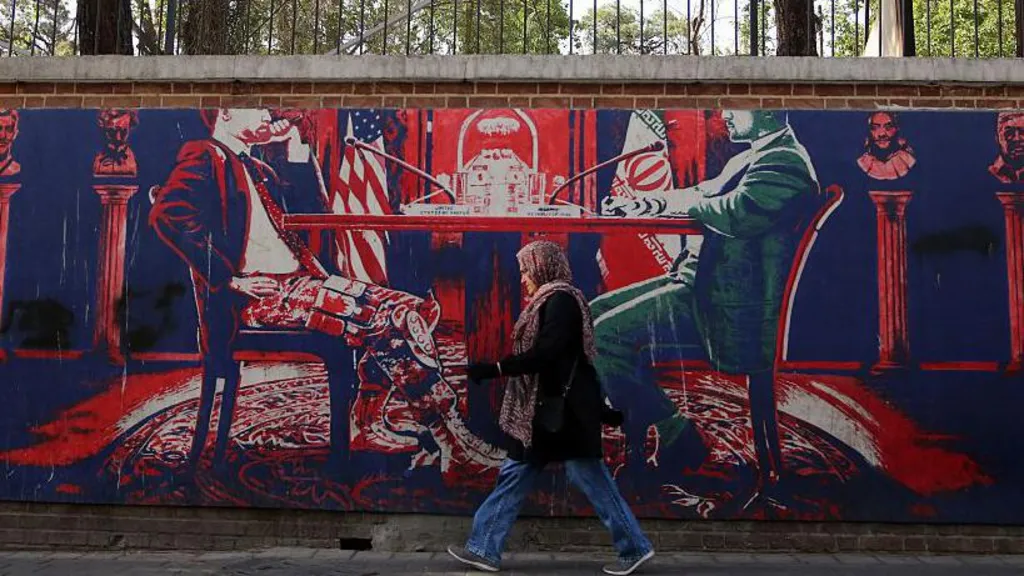
A mural in Tehran depicting negotiators, Anadolu via Getty
 
The Iranian regime is ecstatic; their not-without-reason interpretation of the Memorandum of Understanding is a surrender by the United States to the greater bargaining power and wisdom of the Islamic Republic whose tactical brilliance in closing the Strait of Hormuz sent U.S. President Donald Trump's triumphant self-congratulatory messages to the world in a tail-spin of second-think. "Oil-down" this master negotiator acknowledged as he became complicit with the Iranian regime's inexorable hold on power.
 
Sinking the Iranian navy, bombing its air defences and nuclear and missile sites was a clear military victory advantaging the United States over an obdurate, resilient enemy. The death of the totalitarian mastermind Ayatollah Ali Khamenei was a triumph of decapitation, or it would have been in any ordinary theocracy that was not backed by an Islamist-obsessed Republican Guard Corps, having at its service men schooled in a death cult subservient to a hidden Mahdi soon to arrive and demolish undeserving humanity.
 
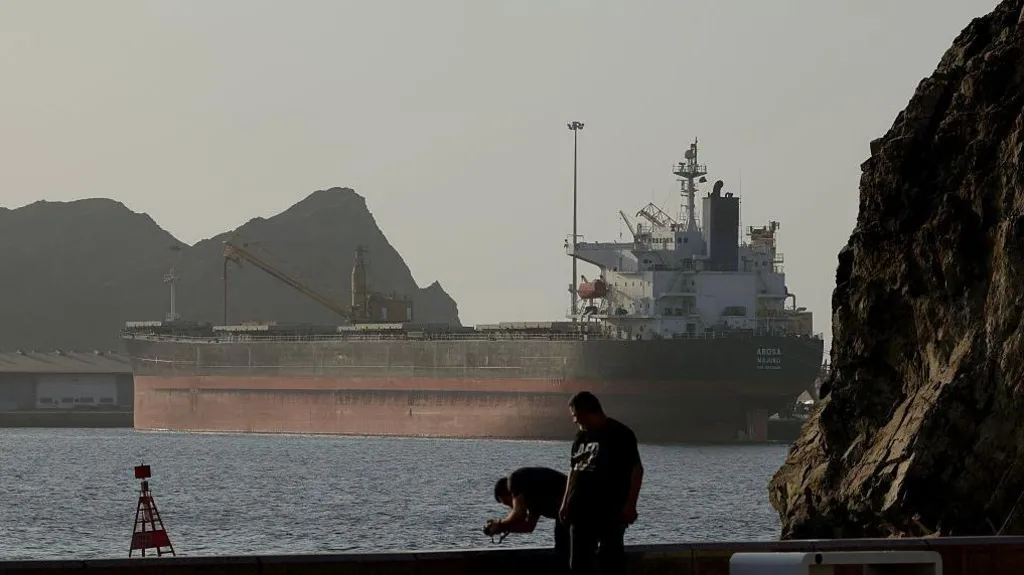
Then came the blockage of the Strait of Hormuz, the attacks on Gulf oligarchies and the West reeling under an economic shock and rising energy prices, and the game suddenly turned sideways. Hesitating to invade and destroy the Islamic Revolutionary Guard Corps and the remnants of the regime's senior figures the American President held out the white flag of surrender while declaring its military victory, and its reconsideration over replacing the regime to release the Iranian people from its totalitarian bondage.
 
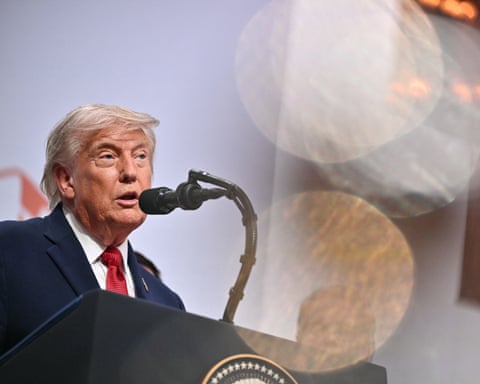
Donald Trump addresses the media at the G7 summit in Evian, France, 17 June 2026.
Donald Trump addresses the media at the G7 summit in Evian, France, 17 June 2026. Photograph: Mandel Ngan/AFP/Getty Images
 
The vaunted Memorandum of Understanding which excluded Israel from the partnership between the United States and the Jewish state in reality unleashed Israel from the unbreakable bond of mutual trust, friendship and comradely military functionality. Israel lacks the appeal of wealthy Gulf states whose gilded pomp and oil production figure so large in world prosperity. All the more so when one such as Qatar can bedazzle the U.S. President with its generous shower of lucre and impressive gift-giving.
 
The MOU's "the Islamic Republic of Iran reaffirms that it shall not procure or develop nuclear weapons", and "the disposition of stockpiled enriched material" will be resolved by the International Atomic Energy supervising the process need not be questioned for the surface relief it promises, with the Islamic Republic whose word of honour has become a metaphor for conniving, threatening psychopathy. 
 
"The Islamic Republic of Iran will maintain the current status quo of its nuclear program, and the United States of America will not impose any new sanctions and will not deploy additional forces in the region", according to the Memorandum of Understanding. Why would anyone dare question the reliability of such grandiloquent promises, unless they have had the misfortune of being on the receiving end of Tehran's ballistic missiles?
 
As a reward for its "compliance", the U.S. is prepared to develop a $300-billion plan for "the reconstruction and economic development of the Islamic Republic of Iran" and it will "terminate all types of sanctions", unfreeze Iran's bank accounts, and allow Iranian oil to flow, relinquishing control of the Strait of Hormuz to Iran and Oman.  Truly a victory for the ages.
 
https://ichef.bbci.co.uk/news/1024/cpsprodpb/5277/live/e2c02aa0-6b01-11f1-8317-e1f912f75a64.jpg.webp
Shipping in the Strait of Hormuz on Wednesday, Anadolu via Getty
 

Labels: , , , , , ,

Monday, December 15, 2025

Lebanon At A Crossroad ... Do Or Die

"They're going to respond anytime, anywhere."
"When the Israelis find these guys, they just take them out, so you have two or three a week that are whacked."
"If  you're a soldier in the Lebanese army earning $300 a month, you have to have three jobs. You're an Uber drive, a barista and a soldier."
"So you go knock on a Shia door on Monday and say, 'I'm sorry, man, can I go into your basement and take out the AK-47s?' And you're risking your life."
"[Still], we've got to have just one army." 
US. ambassador to Turkey/special envoy to Lebanon and Syria, Tom Barrack
 
"We have an unchecked player acting as a hegemon under a leader, Netanyahu, growing stronger by the day."
"At the same time there's a new generation across the world that can no longer tolerate Israeli behaviour."
"To monitor what goes on around you, you don't need to be on top of a 700-meter hill with binoculars or a Galileo telescope!"
"Israel has satellite imagery and drones and balloons with the most sophisticated cameras."
"The Israelis say they can't leave unless Hezbollah disarms, and Hezbollah says how can we disarm as long as the Israelis don't?"
Nawaf Salam, Lebanese prime minister 
https://pbs.twimg.com/media/G1utPQ-W4AAu0-T?format=jpg&name=medium
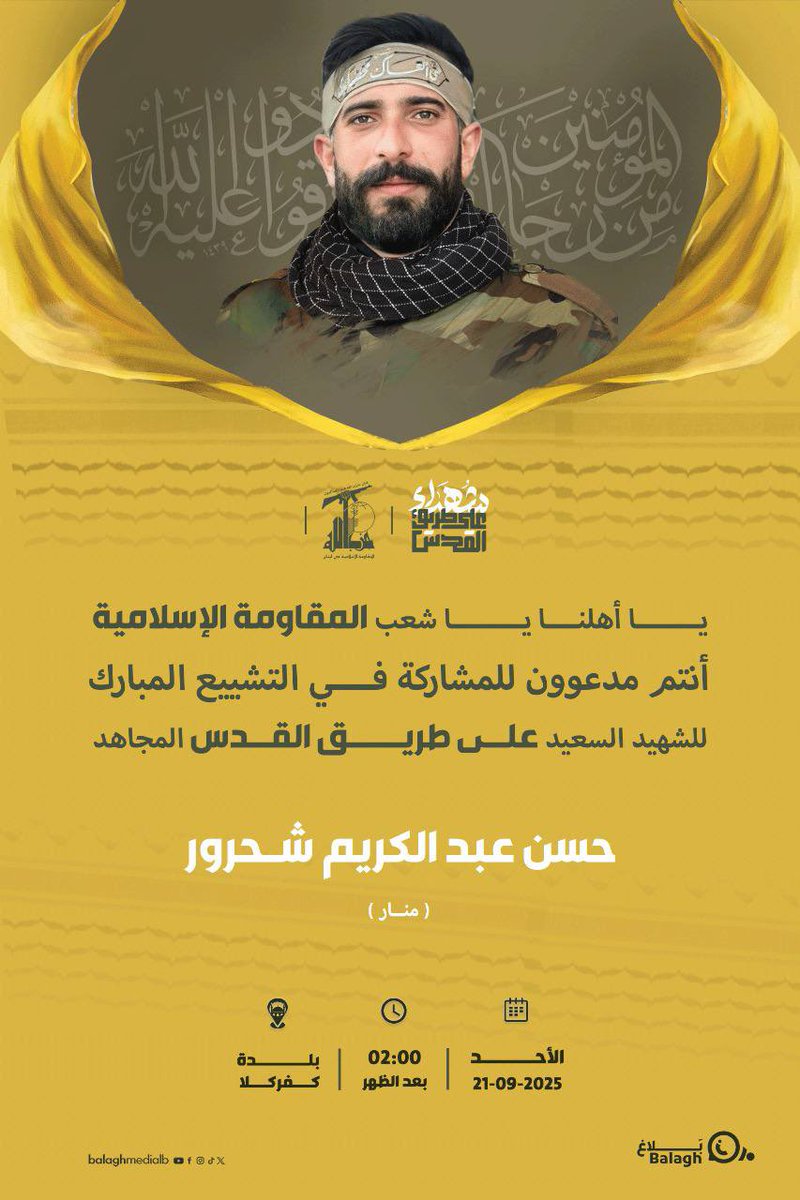
Hezbollah terrorist organization announced the death of its member Hassan Abdul Karim Shahrour, eliminated in an IAF strike, September 2025, Lebanon strike on Saturday on the Khardali-Marjayoun road in southern Lebanon
 
They prey on Israel, their goal is the Jewish state's obliteration. Hezbollah is an auxiliary force of the Islamic Revolutionary Guard Corps. It is a creature of the Islamic Republic of Iran, one whose reputation as a formidable foe of Israel was a well-earned reputation. Iran has quite a number of proxy militias, among them Iraq's many Shia militias whose fealty to Iran is  unquestionable. There is Yemen's Houthis with their Red Sea exploits in maritime piracy, upending a significant part of the globe's shipping industry. And there is Hamas, which though Sunni, is on the same dedicated track of totalitarian Islamofascism.
 
At a time when the Israel Defense Forces were wholly focused on destroying the attack capabilities of Gaza's Hamas following the mass terrorist atrocities in southern Israel that devastated kibbutz farming communities, Hezbollah felt it would be timely to attack on Israel's north from Lebanon, and the Houthis too felt the time was right to lob their own missiles into Israel. Missiles from Gaza, from Lebanon and from Yemen. Oh yes, let us not overlook those that were sent by Iran itself, which persuaded Israel it was time to give Iran a good drubbing.
 
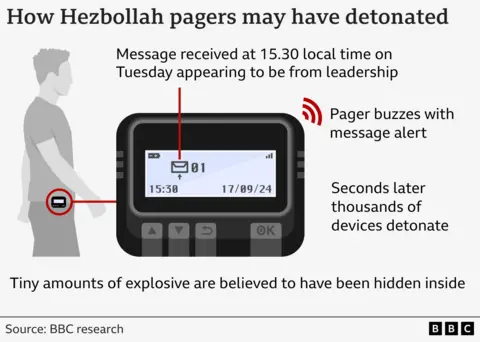
One tiny sliver of a country amidst a wide field of deadly adversaries. Israeli ingenuity believes in taking its enemies off guard and it did just that with a cunning scheme of explosive pagers and walkie-talkies reminded Hezbollah and by extension others hostile to Israel's presence on its ancestral Judean geography
that lethality comes in many forms, unexpected and quite effective in delivering a chastening demoralizing message. When Hezbollah began lobbing missiles from the Golan Heights into Israeli towns below they were guaranteed a response and it targeted southern Lebanon held by Hezbollah. 
 
Graphic showing how the Hezbollah pagers may have detonated as the result of a message sent to the device
 
Iran, its subsidiaries and its powerfully persuasive, glad-handing ally Qatar, have been busy frantically plotting the rescue of their partially emasculated terror groups, anxious to grasp any opportunity to strike additional blows at Israel. And if Israel is unapproachable, then why not strike at Jews living in the West whose governments prefer not to invest themselves in the security of the Jews among them? Islamists are exceedingly fond of striking Israel and by extension Jews anywhere during times of major Jewish holidays when attention is elsewhere than security for the targets.
 
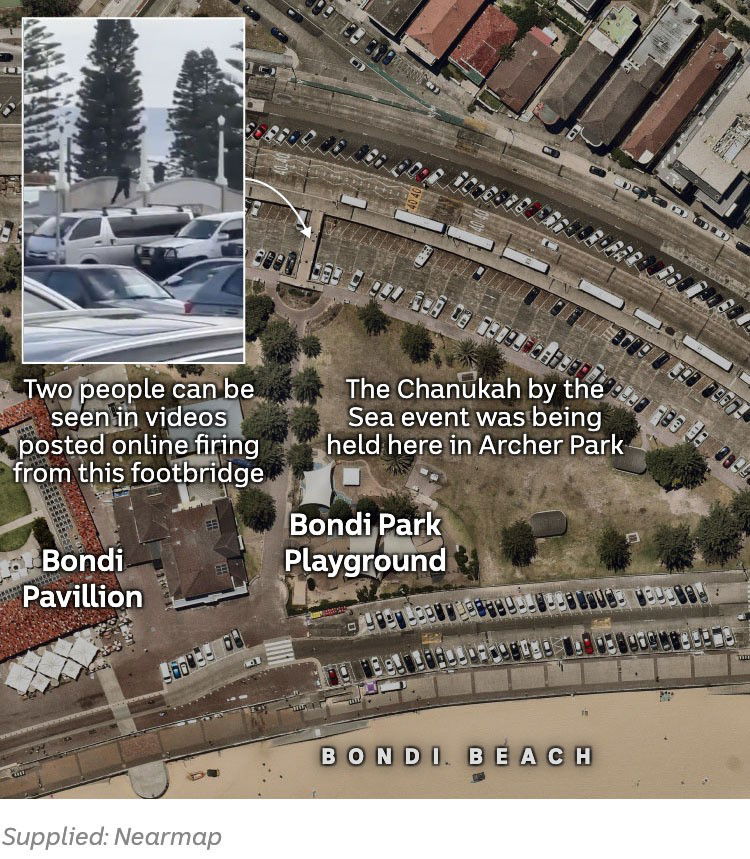
And so it was that for Hanukkah of 2025 Australia was the chosen site for yet another atrocity, killing and maiming and shocking and traumatizing a population of Australian Jews whose leaders have pleaded with their government to respond forcefully and within existing laws to ensure security for all their citizens, Jews included. But then, there is a problem, one linked inexorably to lax security, indifference to Jewish concerns and above all, an immigration flood of Palestinians -- including Hezbollah and Hamas operatives and other Muslims from across the Middle East and North Africa; an experience familiar to all Western democracies where sheer numbers and politics collide.
 
https://au-img-cdn.livecenter.com/lc-aus-images/lcimg-a88cfcd5-55fc-411c-b7c0-f133f2bf798b.jpeg
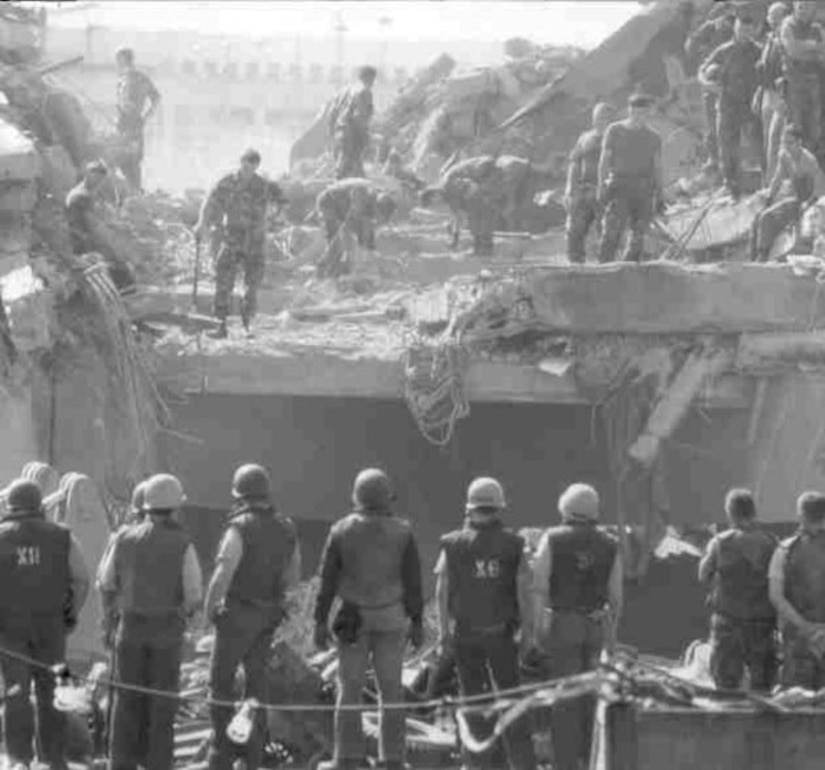
Lebanese Prime Minister Nawaf Salam's position on Hezbollah is a disgrace. The terrorist group has destroyed Lebanon, taking advantage of a bloody civil war and a weakened alliance between Sunni and Shia Muslims, Christians and Druze. In the vacuum of the failed alliance, the presence of Palestinians, the UN peacekeeping mission in the 1980s, Israel's withdrawal once Yasser Arafat and Fatah were forced to leave and would no longer attack Israel from Lebanon, the IRGC shaped, trained and armed Hezbollah whose first suicide mission was to blow up the U.S. marine barracks in Lebanon.
 
At this point in Lebanon's history with a diminished Hezbollah licking its wounds from its conflict with Israel the opportunity is there for the Lebanese government to exert itself in the disarming of Hezbollah. Something that the government has vowed it would accomplish for decades, with little success. All the more so with Iran steadily providing greater and more sophisticated munitions to the Shia terrorist group grasping Lebanon in its stranglehold.
 
https://media.defense.gov/2023/Oct/24/2003326616/825/780/0/831023-O-D0439-002.JPG
U.S. Department of War, photo of 1983 Hezbollah destruction of Lebanone-based marine barracks
 
Hezbollah can still count on tens of thousands of dedicated operatives. Like Hamas, following its 'peace agreement' with Israel to halt the active conflict, it has used that time to regroup, recruit and rearm. And like Hamas, although that peace agreement included the stipulation that both terror groups disarm, neither has, and neither intends to. In a recent address by Naim Qassem, the leader appointed to take the place of assassinated Hassan Nasrallah, he said: "The enemy is sill the same enemy, and the perpetrator of the massacre (of his predecessor) is the same. So how can we abandon weapons? How?"
 
His followers may be rapt at his presentation, feeling justified in supporting a group whose purpose is the annihilation of Israel, and whose rationale cannot stand the scrutiny of cause-and-effect, in that it is not Israel that attacks Lebanon or Hezbollah, but Hezbollah whose pledge is to destroy Israel and to that end commit endless attacks. To which Israel responds as would any country attacked by hostile entities acting as proxies for the theocratic state of Iran. 
 
Foundation for Defense of Democracies


Labels: , , , , , ,

Sunday, February 04, 2024

"If You Harm An American, We Will Respond"

"Our response began today. It will continue at times and places of our choosing."
"Let all those who might seek to do us harm know this: If you harm an American we will respond."
"[Any American response would not be limited to one hit, but a] tiered response [over time]."
U.S. President Joe Biden 

"We know that there are militants that use these locations, IRGC as well as Iranian-aligned militia group personnel."
"We made these strikes tonight with an idea that there would likely be casualties associated with people inside those facilities."
Lt.-General Douglas Sims, director, Joint Staff
https://media.cnn.com/api/v1/images/stellar/prod/ap24033715109840.jpg?q=w_1110,c_fill/f_webp
 
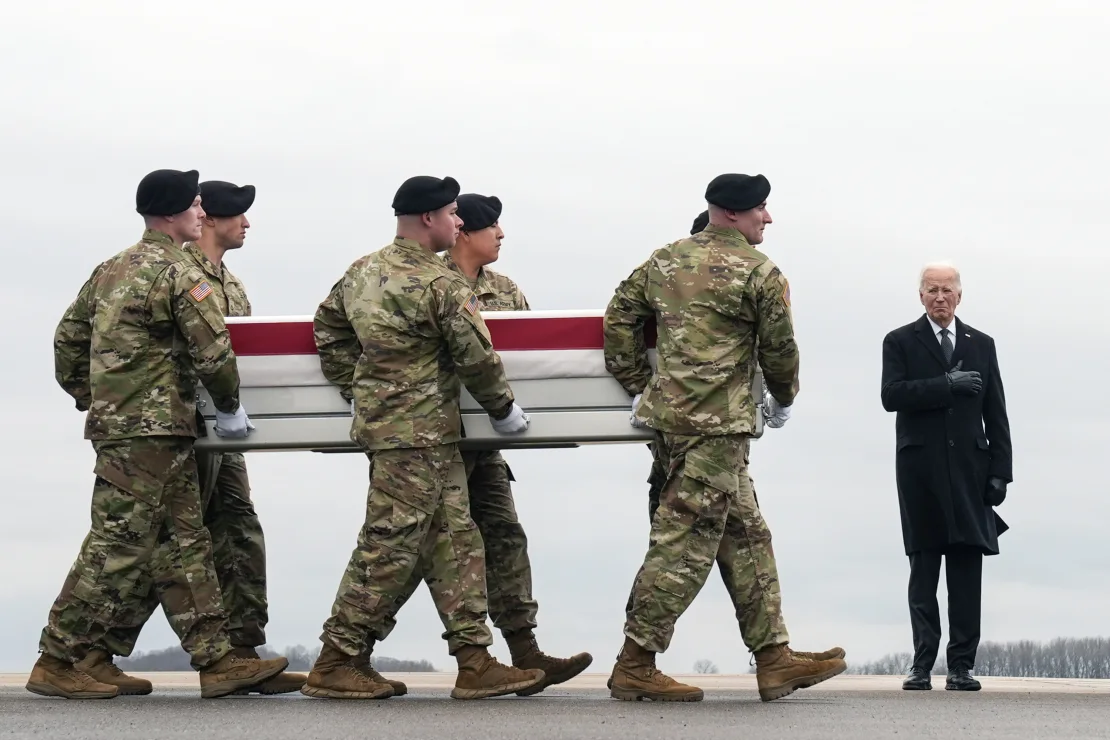
According to U.S. Central Command the assault made use of over 125 precision munitions. The U.S. planned the strikes, scanning the weather, in order to allow the United States to confirm that its forces hit the right targets while planning to avoid civilian casualties. This was the result of the American military launching an air assault on dozens of sites in both Iraq and Syria.

These are sites known to be used by Iranian-backed militias and the Iranian Revolutionary Guard Corps. Friday's assault represented the opening salvo of retaliation for the drone strike last week that killed three U.S. troops in Jordan, wounding scores of others. 

Over 85 targets located at several areas including command and control headquarters, intelligence centres, involved a massive barrage of rockets and missiles, drones to strike at ammunition storage sites along with other facilities connected to the militias or the IRGC's Quds Force. In his announcement to the public President Biden made it clear there would be more to follow.

In the interests of preventing conflict from escalating further, the U.S. strikes appeared to stop just short of targeting Iran directly, or senior leaders of the Revolutionary Guard Quds Force within its borders. What the impact of the strikes will be is unclear. The U.S.  telegraphed warning of the imminence of a response and it was assumed militia members had scattered. Given that multiple groups operate at a number of locations in several countries the assault is not expected to have delivered a wholesale blow.

Kataib Hezbollah, one of the major Iranian-backed militias, had stated its intention to suspend attacks on American troops, while other militias stated their intention to continue fighting in interests of demonstrating themselves as champions of the Palestinian cause in a conflict in Gaza that Hamas atrocities in Israel incited the Israel Defense Forces to invade the Strip with the intention of destroying its ruling Hamas terror group.

According to National Security Council spokesperson John Kirby, the targets to be hit "were carefully selected to avoid civilian casualties, and based on clear, irrefutable evidence that they were connected to attacks on American personnel in the region". The strikes took 30 minutes from start to completion. Three sites struck were located in Iraq, and four were in Syria, noted Lt.-Gen.Douglas Sims. 

Syria state media reported casualties without issuing details. In the Syria strikes, reported the U.K.-based Syrian Observatory for Human Rights, 18 terrorists died. Yahya Rasool, Iraqi army spokesperson, said the city of al-Qaim and areas along the border with Syria were hit by the airstrikes which "constitute a violation of Iraqi sovereignty and undermine the efforts of the Iraqi government, posing a threat that will pull Iraq and the region to undesirable consequences."

As for Iran's President Ebrahim Aaisi, earlier promises by Tehran to retaliate for any American strikes targeting its interests were repeated: We "will not start a war, but if a country, if a cruel force wants to bully us, the Islamic Republic of Iran will give a strong response".

https://media.cnn.com/api/v1/images/stellar/prod/gettyimages-1974225653-20240203104954377.jpg?c=16x9&q=h_653,w_1160,c_fill/f_webp

Labels: , , ,

Saturday, October 08, 2022

Canada's Sanctimonious Hypocrisy

"We are using the most powerful tools at our disposal to crack down on this brutal regime."
"[This Canadian action will serve to] raise the bar internationally in holding Iran accountable."
"[Ottawa plans to make certain it is] going after the right people, be they in Iran or in Canada".
"We intend to massively expand targeted sanctions to hold to account those people most responsible for Iran's egregious behaviour."
Canadian Prime Minister Justin Trudeau
 
"This is a big concern for Iranian people. It's mainly the legal teams or the advisers; they still believe in negotiation with Iran because they don't see Iran, or the Iranian regime as a Mafia group."
"If you change  your mindset, that you're not negotiating with Switzerland or a democratic country, then it would solve the problem."
"Canada has become a safe haven for the criminals of the Islamic Republic of Iran."
Hamed Esmaellion, Iranian-Canadian
Mahsa Amini, undated photo
 
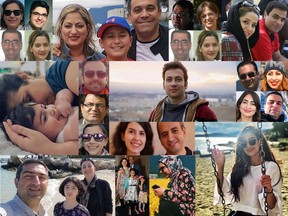
An Iranian Canadian, Hamed Esmellion who lost his wife and daughter in the January 2020 tragedy, represents a group of families grieving the loss of their loved ones as the 1000-day anniversary approaches of a Ukraine Airlines flight leaving Tehran shot down by the IRGC on edge, expecting a return salvo to artillery aimed at an American base in Iraq as payback for a U.S. strike killing major-General Qasem Soleimani. Despite their unease no move was made to close the airways to civilian air traffic, and the airliner was hit by two missiles, killing all 175 aboard, mostly headed to Canada.
 
Those same Iranians who lost spouses, sisters, brothers, parents and children in that missile attack know of the presence of numerous Iranians linked to the ruling theocracy, who worked for the regime or are related to senior officials, moving back and forth from Iran to Canada, some living there, others on temporary visas. The presence of these regime-linked Iranians in Canada is well known, an offence to Canada's own laws which do not permit entry to those involved in conflict or have been members of human-rights-abusing regimes.

NDP foreign affairs critic Heather McPherson has been attempting to access information relating to sanctions on Russians related to the war in Ukraine: "We can't get information about how much, what's been seized, how effective have they been. I worry that they [the new Iranian sanctions] are not going to be as effective as they could be, because the government doesn't want to be transparent on how that's being rolled out."

Worldwide protests against the Islamic Republic of Iran have spread from Iranian Kurdistan to all the provinces of Iran, reflecting outrage over the murder of 22-year-old Kurdish-Iranian Mahsa Amini at the hands of the Iranian morality police while she was visiting Tehran to see her brother. She was arrested in September for the sin of wearing her hijab too loosely, so that wisps of her hair could be seen. She was beaten in custody and when she died, police announced it was the result of a heart attack.
Bleeding from the right ear can be seen in this hospital photo of Mahsa Amini
 
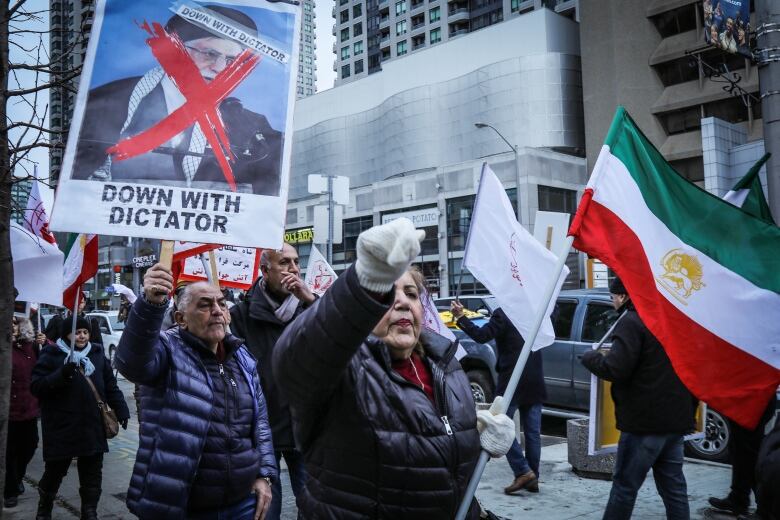
Last week, 50,000 Canadians attended a rally in support of the Iranian protesters that took place in Richmond Hill, just north of Toronto. Invited to speak, Prime Minister Trudeau was disinterested and instead went bungee-jumping with his son. The limited sanctions announced by the prime minister fails to designate the entire Islamic Revolutionary Guard Corps as a terrorist group. Another oversight of this Liberal government which had intended to restore diplomatic relations with Iran, after the previous government had closed Canada's embassy in Tehran and ordered Iranian diplomats out of Canada.

Protesters in Mashhad, Iran second largest city and an important religious center. October 8, 2022
"[The Liberal government] has overall a bit of an issue with following up on rhetorical commitments in its foreign policy in general, and specifically on sanctions, to actually implement sanctions."
"The symbol of announcing sanctions on these individuals is necessary, and it's a good first step, but what I think we should all be looking at now is if it actually happens."
"What if an individual shows up at the Canadian border or an individual is a permanent resident or a citizen in Canada, and he says, 'yes, I was in the IRGC, but I was a cook as a conscript for one year in 1997'. How do you know that's true?"
"[Canada already has a history of announcing without implement sanctions fully, which] carries a cost in terms of credibility [with both allies and opponents."
"The issue for me is always to actually follow through."
Thomas Juneau, associate professor, international affairs, University of Ottawa
 
"The Iranian regime are known to have assets, are known to come and go freely in this country, and they should be banned as a terrorist organization."
"[Seizing the assets of the Iranian regime in Canada to redistribute funding to victims of Ukraine International Airlines flight 752, shot down by Iran in 2020 killing 176 aboard], That's what would do justice to those victims."
Conservative foreign affairs critic Melissa Lantsman
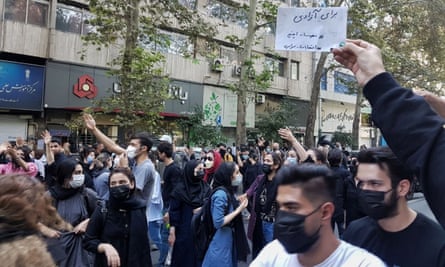
Protest blocking a road in Tehran on 1 October.
Protest blocking a road in Tehran on 1 October. Photograph: EPA


Labels: , , , , , ,

Saturday, January 08, 2022

Iran's Influence on International Affairs

"The first thing that comes to your mind is that this was not a mistake. This could not have been a mistake."
"This is a plane leaving the airport and three minutes later it's shot down."
"I never gave [my brother] a strong hug at the end because I was not very emotional. I was thinking 'He is going, I will see him shortly'."
"I couldn't really believe what had happened. I took the phone and tried to call the airport to see if there was another Ukrainian airliner. The person I talked to said, 'No, there was only one flight.' I was just shaking."
Ali Pourzarabi, bereaved brother of Ukraine Airlines PS752 doomed flight, Iran
 
"I think this is a new low they went to."
"To be able to ruthlessly sacrifice a planeload of people in the worst possible way, subject them to the pain and agony for three minutes on a plunging plane ... that's just unimaginable."
"I told her [his mother] I'm really getting worried."
"She said, 'No, you'll see me tomorrow, you'll pick me up at the airport." 
"All the hopes I had were shattered. I could not even cry because I was so shocked."
Amir Alavi, Iranian-Canadian, bereaved son, Toronto
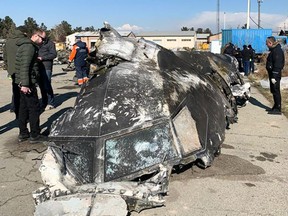
People analyze the fragments and remains of the Ukraine International Airlines plane that was shot down by Iran on Jan. 8, 2020.
There was a total of 167 passengers, 58 Canadian citizens, 30 permanent residents of Canada and another 53 returning to Canada for studies. Others aboard were from the UK,Ukraine, Afghanistan, and Sweden. They had flown to Iran to visit relatives, to celebrate the season, to get married, two years ago. "Full takeoff thrust", Captain Volodymyr Gaponenko, the 50-year-old pilot of the Ukraine Airlines plane said. "Eighty knots" responded First Officer Serhii Khomenko, 48, the Boeing 737-800 lifting off from Iran's Imam Khomeini Airport on 8 January, 2020.

"Good morning", Khomenko greeted the air traffic control: "On board, on course". Six minutes after takeoff the plane plummeted to earth, flames from its fuselage lighting its way in the pre-dawn darkness. The airliner hit a park gazebo, plowed across a soccer field and finally exploded in a fiery ball, breaking the jet into pieces. No living soul could survive that inferno and its disastrous crash. Passengers' possessions were strewn everywhere, the passengers themselves, torn to pieces, were as well.

Iran's Republican Guard Corps had in the early morning hours moved a mobile anti-aircraft battery near the airport six hours previously. Tehran was on high alert, after missiles had been shot off into Iraq to hit two American bases in retaliation for a U.S. missile strike that hit a vehicle carrying the senior head of the al-Quds division of the Iranian Republican Guard Corps, Brig.-Gen.Qasem Soleimani, whose function was to act for the state abroad. 
 
In anticipation of a response strike from the U.S. the IRGC was on high alert. Nevertheless no one in command, nor the government in Tehran closed their air space to commercial traffic At least four other commercial flights took off from the airport in a trajectory similar to that of PS752, unaware of the tense situation, but suffering no consequences. 
 
The cockpit voice recorder of the downed airliner recovered after the crash had picked up "a strong and short impulse similar to a detonation" at 6:15 a.m.; an altitude warning tone sounding in the cockpit. "I have a strong feeling about [a] bad event", the instructor pilot said in the recording. "What is this?! the captain responded. And seventeen seconds later the recording stopped: 6:16 a.m.

The Ukrainian jet had taken off from the airport at 6:12 a.m. and for three minutes all was calm as it headed toward Kyiv, a three-and-a-half-hour flight. At 6:16 a.m. the pilot of an incoming flight of Iran's
Aseman Airlines reported to air traffic controllers an unusual sighting: "A series of flares ... like that of a missile ... Is there anything like this over there?" Not that the controller knew of. But he attempted for the following two minutes to repeatedly raise the Ukraine International flight, but had no response.
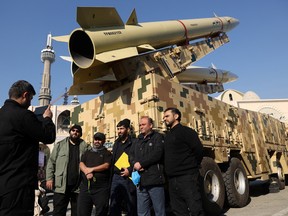
Iranians take photos during an exhibition displaying missiles of the kind used during Iran’s retaliatory strike on the U.S Ayn al-Asad military base in 2020 are seen on display at Imam Khomeini Grand Mosalla in Tehran Jan. 7, 2022.
Iranians take photos during an exhibition displaying missiles of the kind used during Iran’s retaliatory strike on the U.S Ayn al-Asad military base in 2020 are seen on display at Imam Khomeini Grand Mosalla in Tehran Jan. 7, 2022. Photo by Majid Asgaripour/WANA (West Asia News Agency) via REUTERS
 
"It was an explosion sir; we saw a huge light over there. I wonder what it was really!", the approaching Aseman pilot said, when the flight controller asked just exactly what was seen. The IRGC crew of the TOR M1 air-defence system spotted they decided, not an airliner full of passengers at 6:14 a.m. but an infinitely smaller, faster cruise missile, assuming the U.S. military deployed it. It took 39 seconds and the crew fired their first SA-15 missile, hitting the plane. A second missile was dispatched 12 seconds later.

The PS752 flight path shows the pilots making a desperate attempt following the first blast to turn around to fly back to the airport. Engulfed in flames the 737 crashed near Khalajabad instead, southwest of Tehran. Amateur video showed a massive explosion lighting up the still-dark sky. A video that would be played all across the world, while the government of Iran denied they had any involvement it what they claimed was a 'technical' crash.
 
Soon after the crash of PS752, Tehran, refusing to admit it had any hand in the catastrophic collision between a passenger jet and two missiles fired by the IRGC, deliberately destroying the airliner and all those within, photographs taken of the site of the vast debris field showed bulldozers shovelling up debris, completely and deliberately destroying any vestiges of the crash that might be helpful to investigators into its cause. People were seen in the area, looting pieces of the plane along with the personal belongings of its passengers.
"Iran contends that its decision to keep its airspace open and its corresponding airspace management decisions were justified and based on sound risk assessment. Iran’s risk assessment, as presented in the Final Report, failed to address contradictory information suggesting that risk levels were much higher. Iran’s air defences represented a clear and present danger. Its military was on high alert and tasked with monitoring airspace where multiple civilian aircraft would be present. Iran implemented a single mitigation measure that required military pre-authorization for flights before take-off from Imam Khomeini International Airport (IKA). Iran’s determination that the risk was “low,” the decision to keep its airspace open over Tehran, and the implementation of only one preventative measure were all flawed decisions. It is the Forensic Team’s assessment that this fell short of internationally recognized standards in place to ensure airspace safety."
"Furthermore, Iran did not provide official notification of the increased risk to airlines and pilots before Flight PS752 departed or adequately explain why this basic measure was not implemented. Iranian military authorities were the only ones who were aware of the recent military activities and high alert resulting from Iran’s launch of missiles into Iraq. Only they knew that SAM units had been deployed in proximity to an international airport. Despite having knowledge of International Civil Aviation Organization guidance from 2018 with respect to “conflict zones,” Iran chose not to notify airlines of this danger. This lack of pertinent threat-related information deprived airlines (such as Ukraine International Airlines) of the full and up-to-date picture of conditions necessary to determine whether it was safe to fly."
Forensic Examination and Assessment Team, Government of Canada
Some of the Canadian victims of Ukraine International Airlines Flight PS752, which was shot down by the Islamic Revolutionary Guard Corps shortly after takeoff from Tehran on Jan. 8, 2020, killing all 176 aboard.
Some of the Canadian victims of Ukraine International Airlines Flight PS752, which was shot down by the Islamic Revolutionary Guard Corps shortly after takeoff from Tehran on Jan. 8, 2020, killing all 176 aboard. Photo by Handout

Labels: , , , , ,

Tuesday, August 10, 2021

Iran's Shadow War

"All available evidence clearly points to Iran [being behind a drone attack on July 29 against an Israel-linked tanker that killed a former British soldier and Romanian national]."
"This was a deliberate and targeted attack, and a clear violation of international law … There is no justification for this attack."
"Vessels must be allowed to navigate freely in accordance with international law. [We will] do our utmost to protect all shipping, upon which the global economy depends. Iran’s behaviour, alongside its support to proxy forces and non-state armed actors, threatens international peace and security."
G7 Foreign Ministers
 
"The UK knows that Iran was responsible for this attack. We know it was deliberate and targeted. [The evidence is] clear cut."
"The door for diplomacy and dialogue remains open. But if Iran chooses not to take that route, then we would seek to hold Iran to account and apply a cost to that."
British Ambassador to the UN Barbara Woodward
 
"[The accusations are] baseless."
"For those who are familiar with the history of the region, the design of such conspiracies at different junctures by the Israeli regime is nothing new."
"[Iran would not hesitate in defending its national interests and would respond to any] possible adventurism." 
"[Allegations that Iran was responsible] were contradictory, false and provocative."
Saeed Khatibzadeh, spokesman, Iranian Foreign Ministry
 
"[The attack may have been launched from the Iranian coast. The distance to the locations of the attacks] was within the range of documented Iranian one-way attack [drones]."
"Some of the material was transferred to US Fifth Fleet headquarters in Manama, Bahrain and subsequently to a US national laboratory for further testing and verification."
Central Command, which oversees US forces in the region
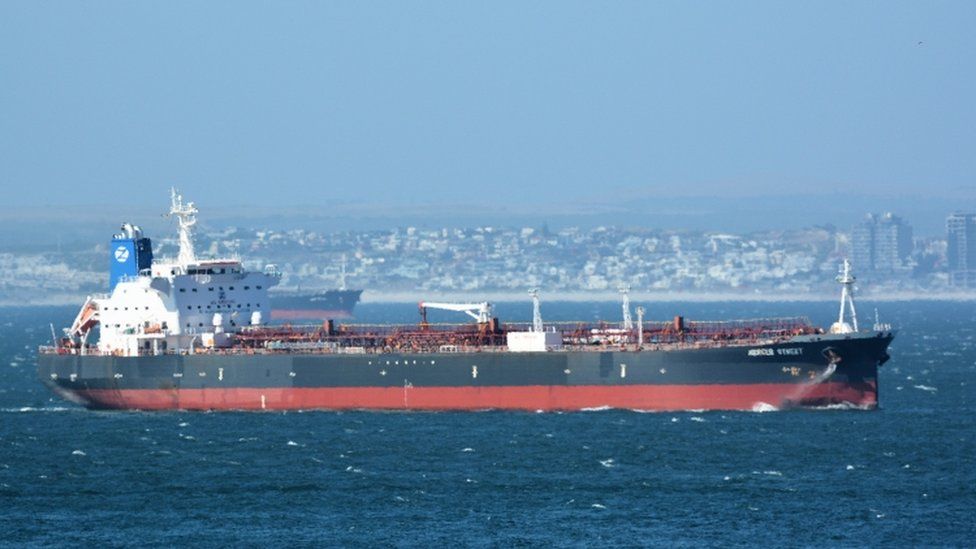
The Mercer Street tanker
The Mercer Street was attacked off the coast of Oman, and two on board were killed   Johan Victor via Reuters
 
Intelligence agencies from the United Kingdom, Canada, Israel and the United States, all marked the Islamic State of Iran as the perpetrator of yet another attack on a vessel sailing in the norther Indian Ocean on July 30 off the coast of Oman. Two crew members of the ship named the Mercer Street managed by Zodiac Maritime based in the United Kingdom, owned by an Israeli shipping owner died in the attack. The Romanian captain of the ship and a British security guard lost their lives in the event. Those on board the ship reported having been targeted by two drones hours before the explosive drone hit the ship.

The attack appears to be yet another 'adventure' undertaken by Iran's Revolutionary Guard Corps which, with their armed speed boats, have taken to surrounding, harassing and attacking vessels in international waters claiming them to be in waters of Iranian jurisdiction. Following this most recent deadly attack, within days other foreign oil tankers reported they were both physically hijacked and digitally interfered with while sailing off the Gulf of Oman, in violation of international law.

This too is a hallmark operation of the Republic which has for years claimed ownership  of the Strait of Hormus, threatening to close it off to international shipping and navigation should an armed conflict break out. The waters off the United Arab Emirates have been roiled for the past two years by a series of explosions and hijackings. For which the U.S.Navy has blamed Iran, in limpet mine attacks damaging oil tankers. The Israel-owned ships Helios Ray and Hyperion Ray were similarly attacked.

Iran claims plausible deniability. The theocratic dictatorship that is known to be the major supporter of Islamist terrorism through its proxies Lebanese Hezbollah and Yemeni Houthis, as well as Shi'ite militias, and also Hamas, supplying them with weaponry and deploying their militias when it suits their purpose of sowing terror in specific targets, is no innocent bystander as it claims to be. Its deliberate, planned acts of violence and maritime sabotage and criminal attacks reflect its agenda to throw opponents into disarray and advance Iran's plans to lead a Shi'ite conquest in a majority Sunni Arab Middle East.

Its signing of the 2015 Joint Comprehensive Plan of Action with China, France, Germany, Russia, the United Kingdom, the United States and the European Union was nothing but a smokescreen for its urgent search for enriched uranium to bring its nuclear program closer to completion. Despite signing the JCPOA, it continued enriching uranium covertly while advancing the updated technology of its medium-range ballistic missiles, designed to carry a nuclear warhead. And carrying on a clandestine connection with North Korea.

The region is under threat of constant violent provocation by Iran, through missions delivered by its proxy terrorist groups and its greatest asset, its state terrorist group, the IRGC. While the United States reignited a new series of negotiations to renew the JCPOA, Iran has been emboldened to threaten dire consequences for those interfering in its affairs. Affairs that include destabilizing the Middle East, and threatening to demolish Israel, for which a nuclear warhead would be an invaluable tool, and setting the entire region on edge, venturing outward from the Middle East to Venezuela, Nicaragua, Brazil, Cuba.

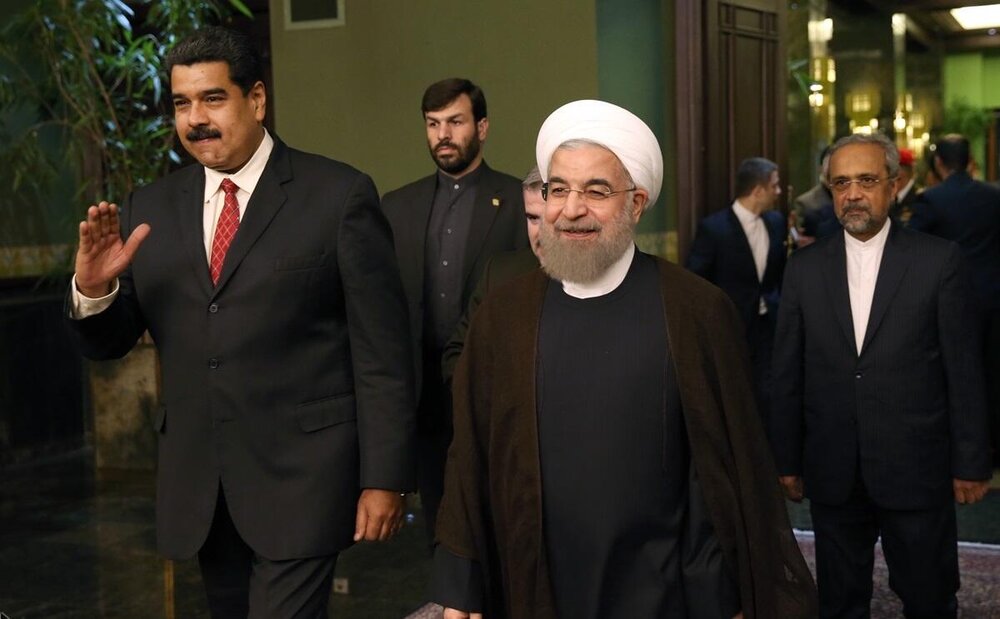
As two oil-producing countries under U.S. sanctions, Iran and Venezuela have been working in recent years to strengthen geopolitical ties to relieve U.S. pressure and find a solution to improve their economies.

Labels: , , , , ,

Thursday, January 16, 2020

The Chaotic Turmoil of the Medieval Middle East

Protesters fill a street during an anti-government demonstration in Tehran, Iran.
An anti-government protest in Tehran on January 14, 2020. Demonstrations erupted after Iran admitted to unintentionally shooting down a passenger jet last week.
Fatemeh Bahrami/Anadolu Agency via Getty Images
"Aware of the anti-Iranian mood on the Iraqi streets—exemplified by protesters beating their shoes against portraits of Khamenei, just as they had done with former Iraqi President Saddam Hussein in 2003—an unnerved Khamenei did not hesitate to intervene."
"Referring to the unrest as a conspiracy orchestrated by the United States, Saudi Arabia, and the 'Zionist regime' [Israel], the ayatollah called on forces in Iraq to 'remedy the insecurity and turmoil'—a metaphor that served as a green light for Iranian-backed militias to quash demonstrations in Iraq." "But Suleimani’s fingerprints have been found in other parts of Iraq too. It recently emerged that the day after the protests started, the Iranian general secretly flew to Baghdad to meet with security officials. Suleimani called for a heavy-handed approach to deal with people on the streets, reportedly saying, 'we in Iran know how to deal with protests', an implicit reference to prior violent suppressions of peaceful demonstrations in Iran and, more aggressively, in Syria. The death toll in Iraq surpassed 100 the day after his departure, confirming the power of Iran’s word."
Kasra Aarabi, Foreign Policy
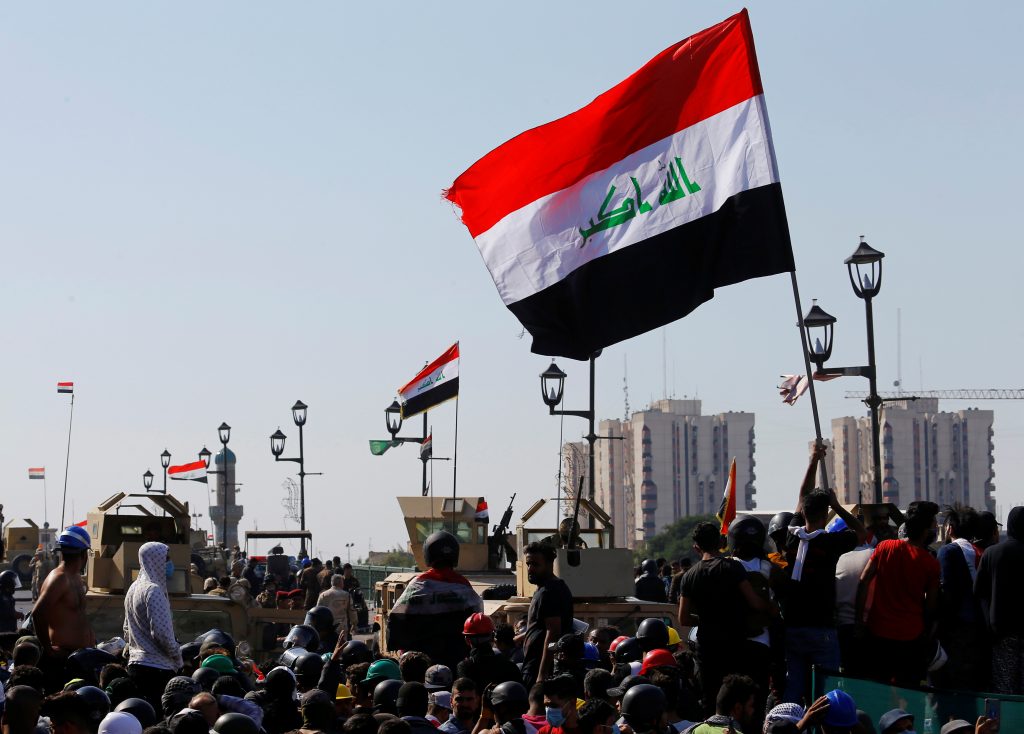
Protesters gather at Tahrir Square in Baghdad, Iraq, amid ongoing anti-government demonstrations.
Protesters gather in Baghdad, Iraq, amid anti-government demonstrations on Dec. 10, 2019. Sabah Arar/AFP/Getty Images
"If there was no escalation recently in the region, those Canadians would be right now home with their families."
Canadian Prime Minister Justin Trudeau

"In Iraq and in Lebanon, society is rebelling against an entire political class that, while ostensibly sharing power on a multi-sectarian basis, is actually looting state resources and failing to provide the most basic services. The protesters, furthermore, do not want to be part of a quasi-Iranian protectorate. Ominously for Iran, the Iraqi protests spread like wildfire from Baghdad — a mainly Shia city — throughout the Shia heartlands and holy cities of the south."
"In Lebanon, where demonstrations inside the capital have mixed Sunni and Shia, Christian and Druze, the Shia southern suburbs, and other Hizbollah strongholds in south Lebanon and the Bekaa Valley, have been a sea of Lebanese flags rather than the Party of God’s strident yellow banners. In Iraq, militia snipers as well as security forces have shot protesters, with more than 250 dead. In Lebanon, a tense peace has held — so far. Nobody has forgotten the sectarian bloodletting of the 1975-90 civil war. Thugs from Hizbollah and allied Shia militia Amal have attacked demonstrators."
David Gardner, Financial Times
Why Iran wants the Lebanon and Iraq uprisings to fade
Iraqi demonstrators take part in one of the ongoing anti-government protests in Baghdad, Iraq, (Reuters)
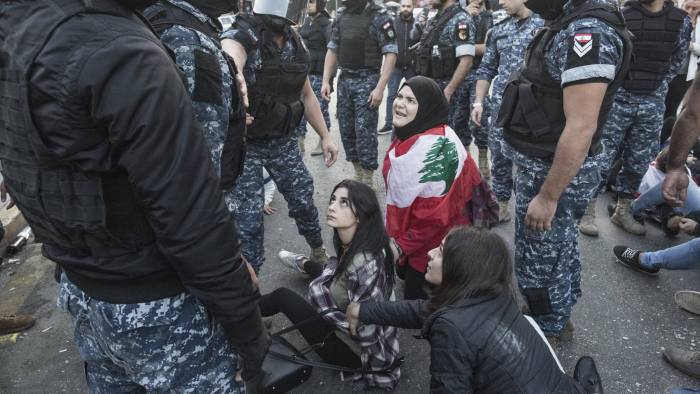
On Tuesday night, 59 people were arrested in Lebanon, protesting in cities like Tripoli, Sidon, Bekaa and Beirut. Serious injuries to protesters took place amidst riot police, broken windows, ambulances and tear gas. Hundreds of thousands of protesters  have come out since last October to pour through the streets, protesting the government's incompetence and Hezbollah's influence; most of all they raged against the presence of Iranian interference in the country.

BEIRUT, LEBANON - NOVEMBER 04: Riot police remove anti-government protesters occupying the
Riot police confront anti-government protesters blocking a main road in Beirut, Lebanon © Getty

There have been nothing like the violence of those riots in Iran, though the protests have been numerous and vehemently expressed in viral antipathy against the theocratic government, the Basij and the IRGC preoccupied with their interference in Syria, Lebanon, Iraq and Yemen, while the nation's economy is in freefall as a result of biting U.S. sanctions and Iranians are suffering privation. People on the streets of Iran's cities decry the dictatorship they suffer under and call for Supreme Leader Ali Khamenei's removal.

In Iraq, a wave of street demonstrations, strikes, marches and occupations begun last October has seen brutal violence causing the deaths of at least 500 protesters, and the injurious wounding suffered by another 19,000, all of which failed to put an end to the protests. Iraq has been coping with its most severe crisis since the 17 years of a U.S.-led invasion and occupation to remove the Butcher of Baghdad, Saddam Hussein which unleashed a sectarian backlash of slaughter.

And then there is Syria and the collapse of a former thriving country whose crumbling into chaotic destruction of its society and its heritage began with a quiet protest by Sunni Syrians over their second-rate status in a minority Shiite-Alawite-dominated regime whose president, Bashar Assad sneered at the 'terrorists' confronting his rule and unleashed chemical warfare, barrel bombs, the targeting of hospitals and schools and markets to convince Syrian Sunnis they have no future in Syria.

Discontent in Iraq and Lebanon is a way to expose Iran's corruption
Getty Images

The common denominator in these Shiite-led countries is their hegemonic relationship with the Islamic Republic of Iran which had set out to form a sectarian alliance of aggressive Islamist strength on its way to achieving power and influence over its Arab, Sunni-majority neighbours. Iranian tentacles throughout the Middle East, from Lebanon and Yemen, Syria and Iraq to Qatar and Turkey has served to roil the geography in an escalating hurricane of Islamist disequilibrium, long predating  the Hellfire missiles from a Reaper drone over Baghdad airport, targeting Qassem Soleimani.

Yet, despite this background of escalating dysfunction, hundreds of thousands of lives extinguished, millions of refugees created, amidst a high-boiling point of distrust and fear born of hatred and vengeance, Western leaders like Canada's Justin Trudeau quail at the prospect of holding Iran to sole and full account for the Quds Force malfunction causing the death of 176 passengers on Ukrainian Airlines Flight 752, killing 57 Canadians of Iranian origin, and countless more Iranian students heading to Canada on student visas.

From Damascus to Beirut, Baghdad to Sanaa, and Gaza included, the Khomeinist regime holds full sway, plaguing the region with its nefarious, violent agenda, exploiting sectarian divisions while continuing to defy injunctions and sanctions against uranium enrichment and technical advancements of the delivery systems in ICBMs. At the same time exhorting its proxies to wreak havoc in the oil fields of Saudi Arabia, while the IRGC speedboats hector and harass shipping in the Persian Gulf and Strait of Hormuz.

So, in fact, the 'escalation' of hostilities does not rest with the current White House administration which has finally departed in earnest from the folly of its previous resident's disastrous 'agreement' for nuclear deterrence of the JCPOA which Tehran endorsed but never intended to implement, succumbing instead to steeper sanctions imposed by the U.S. when it opted to have its satellite militias bomb U.S. bases in Iraq and Syria, never anticipating that this administration would commit to a 'disproportionate' response, which on reconsideration was entirely proportionately appropriate.

Labels: , , , , , , , , , , ,

Sunday, January 05, 2020


Canada's Iranian Demographic


"We are in a great world now after Soleimani's elimination."
"I feel wonderful because we really think this is long overdue."
Hamid Gharajeh, spokesperson, Iran Democratic Association of Canada
Dozens of people rally Friday in Toronto's Mel Lastman Square in celebration of the death of Qassem Soleimani. (Rozen Nicolle/CBC)

"It burns my heart. [Soleimani's death] was a total injustice to the world", stated Riaz Hussain, with the Mahdi Youth, leading a crowd of hundreds, chanting "Down with U.S.A.", along with "Trump is a terrorist". According to Hussain, Soleimani, leader of the Quds Force, the expeditionary wing of the Iranian Revolutionary Guard Corps, was a distinguished war hero, a dedicated military careerist whose loyalty to Iran's theocracy was undisputed in its fight against oppressors, a hero whose purpose was to stamp out terrorism.

Outside Iran itself, Canada hosts the second largest expatriate Iranian group, second only to Los Angeles. An estimated 100,000 Iranians live in Canada, as citizens and landed immigrants. They first began arriving in 1979, escaping the Iranian revolution, and since then have trickled into Canada, a less complicated immigration process enabling them, than what would likely be their first choice, the United States. The Islamic Republic of Iran launched an outreach within the Canadian-Iranian community to ensure their loyalties would remain with the Republic.

For those original emigrants to Canada, disinterested in their home country's current theocratic governance, not much headway was made, but for those who came later, there was an impact, the result being that among the second group some remain loyal to the Republic, while the first group never was. And with the death of Brig.General Qassam Soleimani, venerated by Islamists as a champion of jihad, detested by those who have been victimized by his expertise in planning and exercising jihad, there are two distinct camps within the community.

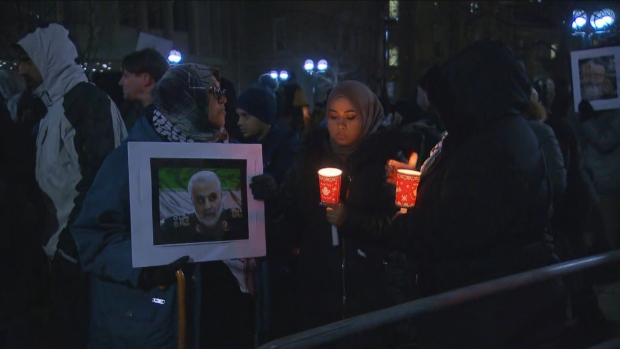
One is clearly that of the Mahdi Youth society who saw fit to respond to the drone strikes that destroyed the lives of Soleimani and his Iraqi colleagues in Hezbollah with grieving and a memorial gathering in downtown Toronto while the other, comprised of a far greater number of Canadian-Iranians who despised the mastermind of the al Quds IRGC terrorist atrocities from Syria to Yemen, Lebanon to Gaza and beyond Afghanistan. One group calls for peace, the second for commitment to jihad.


The Mahdi Youth Society announcement was quickly noted and picked up by vigilant newspeople in
Toronto, set for the evening of January 4, in front of Toronto Superior Court, 361 University Avenue, directly across from the American consulate. These were Iranians mourning the death of two jihadi 'martyrs', responsible for the deaths of thousands of people through their jihadist intrigues and terrorist activities. The mourners lit candles at a memorial they set up for that purpose.

Some 100 demonstrators gathered outside the U.S. Consulate in Toronto Saturday in protest against President Donald Trump's ordering of the death of the top Iranian general Qassem Soleimani. (Angelina King/CBC)

Toronto police were on hand to ensure a separation between this group and another group of Iranians who identified themselves as non-political peace activists. Their motto was No War With Iran Action, assembling at a University Avenue square for two hours, making speeches and holding placards opposing any additional military action. The 250 activists responded to a public call for peace over fears the death of the world's most influential threat to peace would lead to war in the Middle East, where a low-grade war is already in effect.

"We're here to promote peace and to let the Canadian government know what Canadians want is peace."
"We don't want the casualties and don't want our troops to have to make sacrifices again."
"A war with Iran has no winners. We all understand that when a nation attacks another nation's general, that in itself is an act of war."
Amir Moazzami, event organizer
Tensions between the U.S. and Iran are at a high after U.S. airstrikes killed a top Iranian general and an Iraqi militia leader on Friday in Baghdad.

Joint funeral services in Baghdad Saturday were held for the two military leaders whose vehicles were hit by a drone precision strike of four missiles that also obliterated another five of their terrorist companions. The Toronto peace activists called for conciliation to deflect further conflict, their rally one of an estimated 70 such anti-war protests taking place across the U.S. Mr. Moazzami, the peace activist, rejected the U.S. explanation for the strike; to stop "imminent and sinister" attacks.

"False self-justification" whose purpose was to "legitimatize their attack", he stated, leading a less-than-neutral observer to muse that his message was different from that of the Mahdi Youth only by degrees of concealment. And then again, there was the appearance of a small group of counter- protesters among whom some bore American flags and their own chants and placards. Moving to an opposing street corner, police ensured the the groups were kept apart.

The protest that saw Soleimani being lionized as a hero of the Quds IRGC, and his Hezbollah counterpart mourned, with pictures of Soleimani being held by pro-Iranian protesters, his name spelled out in tealight candles represents a criminal act in Canada. Both Hezbollah and the Quds IRGC are on Canada's terrorist list. As such, recognized terrorist groups. These Canadians of Iranian extraction have committed a criminal offence, and should face the penalty thereof.


Night protest

Labels: , , , , , ,

Sunday, December 15, 2019

Repressive, Conspiring, Conniving, Brutal Iran

"His mind was filled with love for Iran but this regime is against this type of mind. They do not want these minds to work for our country. They want them destroyed by bullets."
"I will cry out for justice and freedom on his [regime-murdered son Pouya Bakhtiari] behalf and on behalf of the young people of Iran, on behalf of all the people of my beloved country, who will eventually bring these people [the Islamic Republic regime] to their defeat."
Manouchehr Bakhtiari, Karaj, Iran

"When the Internet came back, I was bombarded with videos of shootings and killings in the streets."
Masih Alinejad, Iranian journalist, opposition activist, Tehran

"This is a system that perceives itself to be under siege."
"At the end of the day they are all in the same boat and preserving the Islamic Republic is a common goal among both the hardliners and the moderates." 
"Without the implementation of major economic and political reforms, I think there will be more frequent and more violent confrontations between the state and the society in coming months."
"With or without U.S. sanctions, Iran's economic and political systems are in urgent need of an overhaul. As the level of street anger shows, there may not be much time to undertake it."
Ali Vaez, director, Iran Project, International Crisis Group
Iranian rotesters gather around a burning car during a demonstration against an increase in gasoline prices in Tehran, on Nov. 16.
Iranian protesters gather around a burning car during a demonstration against an increase in gasoline prices in Tehran, on Nov. 16. AFP/Getty Images

"[Some video footage shows security forces shooting demonstrators in the face, and in the back as they ran away] — in other words shooting to kill."
"Verified video footage indicates severe violence was used against protesters, including armed members of security forces shooting from the roof of a justice department building in one city, and from helicopters in another."
UN High Commissioner for Human Rights Michelle Bachelet 
Image:
Iranian protesters block a road during a demonstration against an increase in gasoline prices in the central city of Shiraz on Nov. 16.   AFP - Getty Images file
Over 200 people were killed in Iran through four days dedicated to protests that turned into intensely violent spectacles from November 15 to the 18th, the government of Iran suppressing the protests that broke out spontaneously everywhere in the Republic, leading to the deadliest unrest in the 40-year reign of the theocracy that is the Islamic Republic of Iran. Security forces were given orders for a violently aggressive response against demonstrators, of a type of violence unseen in previous protests of recent vintage.

IN 2009 during the 'green movement' protests related to a rigged election that brought Mahmoud Ahmadinejad back to the presidency, over the course of seven months 72 Iranians were killed, while about 24 lost their lives in the 2017-18 mass demonstrations linked to the failing economy. In these most recent demonstrations where Iranians took to the streets to make it abundantly clear their patience with this regime's handling of Iranian affairs is at its absolute nadir, the Revolutionary Guard Corps set out to shed blood.

All the while what was happening to the rebellious protesters was hidden to the world when the regime cut off Internet access so protesters were unable to use the platforms formerly made use of to communicate and coordinate activities for greatest effect, much less communicate with the outside world. When restrictions were lifted after a week, the killing spree was revealed in all its horrendous proportions, of a government that set out to exact a lethal punishment whose effect would still protests through state terrorism.

The ayatollahs, after all had a precedent nearby which they studied at close hand and in effect took part in themselves, when the Syrian President Bashar al-Assad responded to his Sunni Syrian citizens' protests over unequal treatment to Shiite (Alawite) Syrians' privileged status. Assad spoke of the protesters as 'terrorists' and treated them accordingly, with lethal military weaponry, barrel bombs, aerial gunships targeting breadlines, hospitals and Shiite neighbourhoods with chemical weapons. The civil war that ensued took the lives of half a million Syrians.

Iran's proxy militia Hezbollah was given orders to intervene in Syria and the IRGC al-Quds division entered Syria as well in aid of the Bashar regime, a kind of dry run rehearsal for their own potential reaction to 'pacifying' dissidents-cum-'terrorists' in Iran. The deaths of 208 Iranians has been verified by Amnesty International, but thought to represent only a quarter of those whose lives were taken as punishment for insubordination to the regime.

No official death toll has been released by the government, and Iranians have been warned of consequences for those who speak to international media. Families are informed their loved ones' corpses will be returned to them for customary funeral rites only with guarantees they would not provoke fresh protests and upon payment of "bullet money", the fee charged by authorities authorizing return of the bodies.

Iranian protesters clash in the streets of Isfahan, central Iran, on Nov. 16. (EPA-EFE)

U.S. sanctions that have strangled oil sales and damaged the Iranian economy led to the protests, when the regime, which prefers to fund rockets for Hezbollah and Hamas to threaten Israel, over paying for needed food and medical imports, announced a fifty percent increase in the subsidized gas for Iranians, the cheapest in the world at 30 cents a litre. The immediately following protests in various cities that began on November 15 saw demonstrators blocking streets, burning gas stations, chanting "Gas prices went up, the poor just got poorer".

Supreme Leader Grand Ayatollah Ali Khamenei characterized the protests as a "dangerous deep conspiracy" by foreign powers while President Hassan Rouhani, the 'moderate' to Khamenei's 'hard line', called the protesters "mercenaries" and "hooligans", tools of the Americans. Several days after the first protests had broken out, Tehran saw street blockages take place, and it was when that occurred that Pouya Bakhtiari, 27, found himself taking part in one on the streets of Karaj only to be shot in the head, part of his skull blown off, killed by an Iranian state gunman.

A government sniper fired at protests from the justice ministry building rooftop in the city of Javanroud. Soldiers shot from a helicopter as it flew over a crowd gathered in the city of Shiraz. A 14-year-old girl was killed in Tehran by gunfire; "bullet money" was waived for her, given her age. In Mahshahr, a mostly Arab-populated city close to the border with Iraq, Revolutionary Guards exchanged fire with residents, pushing about 100 armed people into a marsh. The marsh was raked with bullets by guardsmen in pickup trucks with mounted machine guns.

Now, the 27-year-old Bakhtiari's father has pledged to take over his son's Instagram page where he had written: "People, don't miss this opportunity. Once and for all, let's destroy this criminal and corrupt regime", before he died. "Here is a gorgeous sunset. I wish a better sunrise for the people of Iran", he had written, his vehicle helping to block a street, part of the protest strategy to bring his city to a halt. That was the last sunset he would ever see. His father posted a defiant note to the government, announcing a traditional memorial service for 40 days in honour of his son.
Shattered windows line a building that was set ablaze during recent protests over government-set gasoline prices rises, in Tehran, Iran, on Nov. 20, 2019. The demonstrations struck at least 100 cities and towns, spiraling into violence that saw banks, stores and police stations attacked and burned.
Shattered windows line a building that was set ablaze during recent protests over government-set gasoline prices rises, in Tehran, Iran, on Nov. 20, 2019. The demonstrations struck at least 100 cities and towns, spiraling into violence that saw banks, stores and police stations attacked and burned.(Ebrahim Noroozi)
This is the regime that the European Union through a joint effort initiated by France, Germany, the United Kingdom -- to which other European countries have committed, to help Iran bypass U.S. sanctions on the sale of oil -- give aid and comfort to a regime that will stop at nothing to ensure their human-rights destroying regime continues unopposed, with its agenda of roiling its neighbours in the Middle East, imposing its power and plans to once again be represented as influential, controlling the region's politics through violent religious fervour; implacable enemies of human rights and western values.

The Islamic Republic of Iran represents the single most potent theocratic-based threat to world peace in its incitement toward terrorism, its alliance and support for non-state Islamist jihadists, its interference with the internal tribal-sectarian divisions of other countries in its push to command and control and surround itself with vassal states countering the strength and alliance of the majority Sunni Arab states in its bid to subjugate them to Shiite Persian authority.

Labels: , , ,

() Follow @rheytah Tweet