

All The Markers Of A Failed State
"There are different categories of starvation.""We are only able to reach those who are really on the verge of, if you don't give them something now, they will not be there tomorrow.""[In some areas, children are still getting food, but not pregnant mothers]. Literally, it's who dies first, and who dies next."Hameed Nuru, Somalia director, World Food Program"The situation has become unbearable.""The American regime is led by a person who really doesn't care about anything happening outside his gates.""The Americans are not honoring their commitment to the world."Adan Bare Ali, deputy mayor, Dollow, Somalia
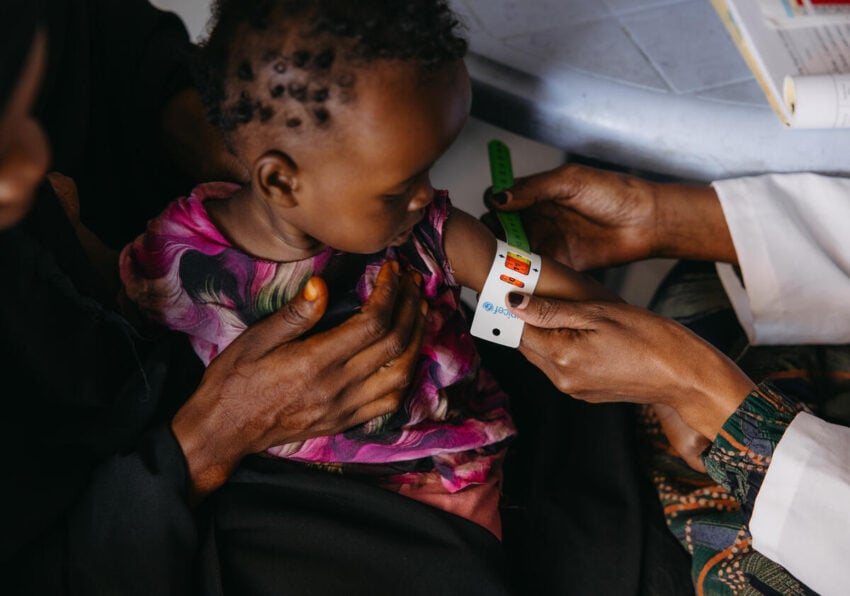 |
| In northeastern Somalia, the Jeexdin Health Center is a critical medical and nutrition clinic serving children and adults near Garowe and Galkayo. Photo by Abigajla Conway) |
In Somalia, one of the world's poorest and least stable countries, acute hunger is set to increase beyond its current state. When Russia invaded Ukraine four years ago the global supply of fertilizers and cereal grains was disrupted leading to fears of hunger, from Africa to South Asia. A $43 billion humanitarian assistance drive led by governments and multilateral institutions limited the human damage of primary scarcities of the substances of life-sustaining provisions. Food aid, water and medical care was delivered o the desperately needy, with $17 billion of that total supplied by the United States.
Currently, humanitarian funding saw a disastrous drop to $28 billion, with the share provided by the United States diminished to $4 billion. "The system has been eviscerated", stated the head of global advocacy at Mercy Corps, Kate Phillips-Barrasso. "This is the era of indifference", she concluded.
For decades, Somalians have suffered through a brutal civil war, through famine and the attacks of the fundamentalist Islamic group Al Shabab. The country's most recent harvest was ravaged by drought. Approximately one-third of the Somali population -- 6.5 million people -- encountered hunger at levels described as an emergency, with the U.N. Food and Agriculture Organization warning that over 1.8 million children under 5 were facing acute malnutrition. That was back in February, with the situation since exacerbated due to the war in Iran.
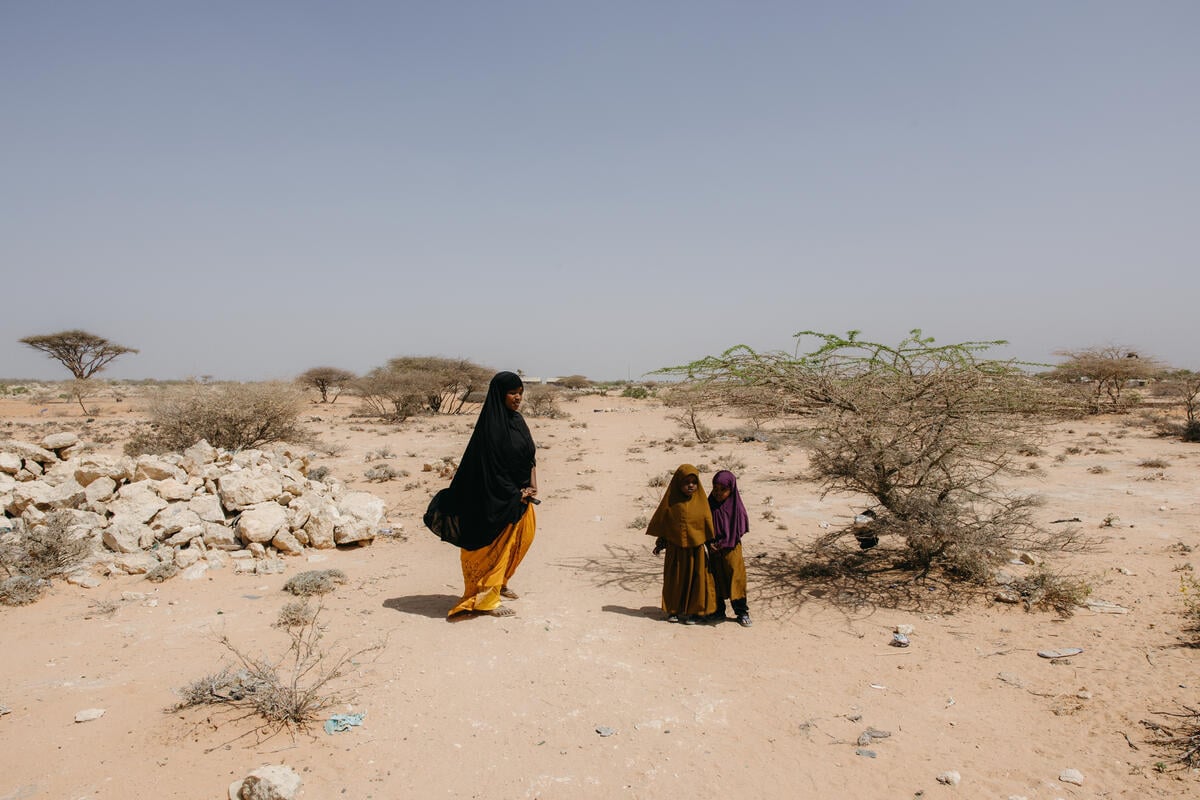 |
| An increasing number of displaced families in Somalia are experiencing severe hunger. Near Garowe, Somalia. 2025 Photo by Abigajla Conway |
A mere 2 percent of all relief from international donors for Somalia was derived from the United States. From providing humanitarian assistance to Somalia in 2024 of $467 million, last year the U.S. administration slashed that aid to $70 million. Dependent on oil from the United Arab Emirates, Iranian strikes on production facilities in the Persian gulf affected transport cessation, leading to the price of gasoline and diesel over-doubling in price.
The predictable response was trucking companies doubling and tripling costs for trucking sacks of corn from Ethiopia over the border to Somalia. Rice shipped into Somalian ports rose similarly. The price of water at public wells tripled since many of the pumps use diesel for energy. One third of fertilizers for Somalia's farming sector is derived from the Persian Gulf so with stocks marooned at the Strait of Hormuz, farmers face steeply higher operating costs.
Unaffordable food in combination with fewer medical clinics in operation resulted in children likelier to suffer malnutrition. Infants and toddlers with severe cases of malnutrition were given therapeutic milk formula and antibiotics, while those in greatest danger went to a stabilization unit operated by UNICEF within a local hospital. Children on cots with feeding tubes and some attached to oxygen, fought for their lives and their futures.
The largest source of aid in Somalia, the World Food Program, has sufficient funding to support 300,000 people monthly through to July, representing a fraction of the close to two million people a month it was serving in early 2025. Somalia depends on imports for 70 percent of its food, at a time when staple goods like rice and wheat have doubled in price.
 |
Three years ago, Tahliil Abdulahi Cali had 250 goats. Today he has 100. The rest died as the rains failed, season after season, across his community in the Mudug region. Mohamed Said Barkhadle |
Labels: Al Shabab, Civil War, Drought, Failed Administration, Penury, Somalia
posted by Pieface | 9:27 PM


0 Comments:
Post a Comment
<< Home