Politic?

This is a blog dedicated to a personal interpretation of political news of the day. I attempt to be as knowledgeable as possible before commenting and committing my thoughts to a day's communication.

Tuesday, December 02, 2025

Compassion for Non-Citizen Criminals in Canadian Law

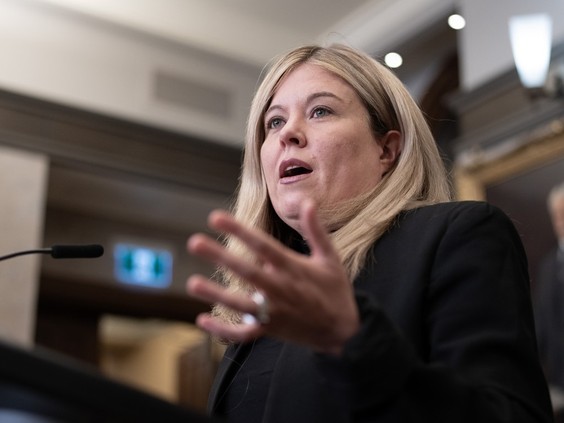
"A senior Liberal [Member of Parliament Kevin Lamoureux] debating my bill to stop leniency for serious crimes said this: 'If someone is going out raping another individual, do we really believe they'll get special treatment from a judge'?"
"The next day, there was a story of a non-Canadian raping a 13-year-old girl and impregnating her twice, and the rapist was given an adjournment to see the impact of a guilty pleas on what? His immigration status."
"Will the Liberals admit they were wrong?" 
Conservative MP Michelle Rempel Garner
https://smartcdn.gprod.postmedia.digital/nationalpost/wp-content/uploads/2025/12/0813-conservatives_298125037.jpg?quality=90&strip=all&w=564&h=423&type=webp&sig=TgdM1EfNpgBkgsHbnSMuKg
 
"There are individuals who make bad decisions. Sometimes it does not necessarily justify a deportation."
"At the end of the day, with the types of crime that are being suggested, people are going to be deported anyway."
"If someone is going out there and raping another individual, do we really believe that they are going to get special treatment from a judge when they go before a court?"
"It is nowhere near the degree to which the Conservatives are trying to put it on the record."
Liberal MP Kevin Lamoureux
 
"There are provisions in place if a non-citizen commits a crime and serves a sentence, they are removed from Canada."
"CBSA [Canada Border Services Agency] works on these cases and they prioritize criminal cases, in fact, when making removals."
Liberal MP Ruby Sahota
courthouse920230503
The Barrie courthouse at 75 Mulcaster St.
 
An unnamed now-47-year-old man, a non-citizen living in Bradford, Ontario pleaded guilty to "two counts of sexual interference, one charge of child luring and another to breaching his release conditions" last week, according to local news outlet BarrieToday. The man had met the girl at a convenience store when he was 44. He groomed her, and than raped her. This occurred on two separate occasions; each time the rape resulted in a pregnancy.
 
One of those pregnancies was carried to term. The  girl, now a few years older, has kept her baby. To protect identities of the girl and child, a publication ban is in place. Court orders to stay away from the girl were ignored by the man. He raped her again while out on release. When he breached conditions of his release a third time he was arrested and since has been  incarcerated for over two and a half years. The man is said to have had 13 children born to women he has been associated with over the years.  
"The actual harm (inflicted) are of the highest magnitude, [listing aggravating details in the case]."
"[The victim’s] normal social interactions were completely fractured. [She will be forever] entangled [with the man because she bore his child]."
"[Her 104-month sentence request was already a] mitigated number'."
Crown attorney Elizabeth Stokes  
The Crown had called for a 8.5-year prison sentence. However, the man, not a Canadian citizen, was permitted an adjournment as a reflection of how a lengthy potential prison sentence would affect his immigrant status. His guilty plea evidently, and his apology, are being weighed in a type of compassionate exoneration of his sexual crimes, specifically the violence suffered by a trusting child whose childhood was essentially viciously ended. 
 
Immigrants are conventionally subject to deportation if convicted of a serious crime. Yet in the past several years, sentencing has tended to favour 'compassion' for crimes committed by immigrants arriving from different cultures. Needless to say, rape as a cultural proclivity does not conform to the values of any civilized society. And much less so violent crimes committed against children. 
 
The man is now due back in court for a sentencing hearing, on January 29, with the Crown seeking a ten-year sentence. This aura of compassion for violent criminals exudes from the ranks of the Liberal government in Canada. The Conservative official opposition has stated time and again its calls for tougher penalties for violent crime, and in this instance such crimes should be viewed through the lens of consequential desserts. 
"In recent years, there have been multiple instances of judges issuing sentences to non-citizens convicted of serious crimes that were designed to allow them to evade deportation."
"[This creates a] two-tiered system between non-citizens and those with Canadian citizenship."
"[This is] unfair [listing seven examples of convicted non-citizens who received] lenient sentences in very recent history."
"Despite the judge admitting that six to 12 months would have been a more appropriate sentence, this was to avoid deportation. The judge even said this." 
Michelle Rempel Garner 
Indeed, before the advent of the Liberal government of Justin Trudeau for the decade following his election in 2015, criminal law application in Canada has been considerably softened in favour of the  criminal class, much to the outrage of Canadian police associations, and certainly of the victims of crime. The 'progressive', left-Liberal government of Canada in that decade -- and continuing under a new Liberal government -- altered much of the traditional values of Canadian society, while inviting an inundation of new immigrants, refugees, illegal migrants without due consideration to their background cultures and histories.  
"[It is an] unbelievable perversion of justice [that non-citizen criminals were receiving lower sentences] in order to allow them to stay."
"It should be a stated policy of our system to get criminals out of Canada."
"If someone is not a citizen, not a Canadian, and commits a crime, then they should be shown the door."
Conservative Party Leader Pierre Poilievre 

Labels: , , , , ,

Sunday, June 08, 2025

Actions and Choices Have Consequences

"To accede to Mr. Bajwa's request for a [conditional sentence] or a reduction of the jail time on either count for the impact of the collateral immigration consequences to Mr. Bajwa and as a remedy [for breaching his Charter right to be free from unreasonable search and seizure] would bring the administration of justice into disrepute and result in an inappropriate and artificial sentence; in other words, an unfit sentence."
"He received his first British Columbia driving prohibition on March 19 1993. He has also accumulated a substantial number of additional Criminal Code convictions and Motor Vehicle Act infractions."
"I am flabbergasted that Crown counsel has only sought a four-month consecutive jail sentence [for driving while prohibited]."
"Given the circumstances of the offence, it is hard to imagine a more suitable case for the two-year-less-a-day maximum sentence allowed." 
Judge David Patterson, British Columbia Provincial Court 
https://img-s-msn-com.akamaized.net/tenant/amp/entityid/AA1Ggk25.img?w=768&h=576&m=6
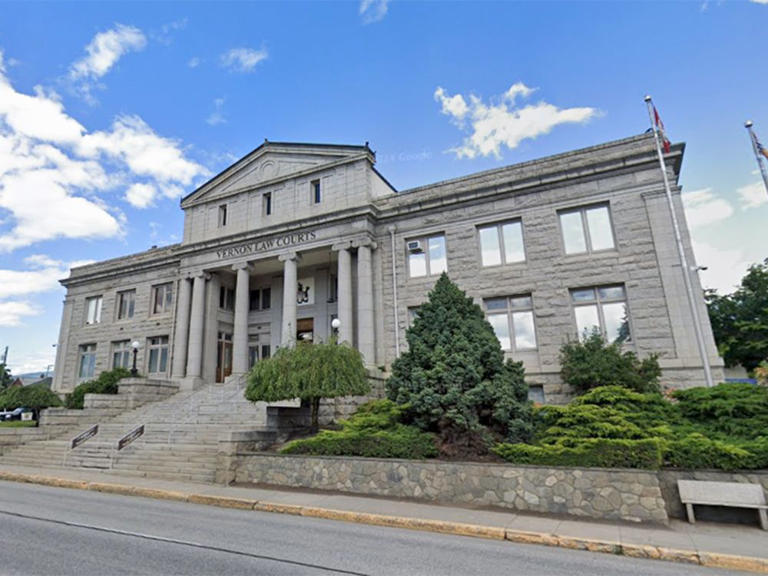
The provincial courthouse in Vernon, B.C.
 
Judge Patterson sentenced Vernon, B.C. resident Gurinder Pal Singh Bajwa, a permanent resident of Canada, to 198 days in prison (just over six months) for impaired driving, gave him a fine of $2,000 and banned the man from driving for a three-year-period. In addition, Bajwa was handed another 120 days (about four months) by Judge Patterson for driving while prohibited; the additional time to be served consecutively, for a total of some ten months in jail. 
 
This was no ordinary, run-of-the-mill impaired driving (driving under the influence) event. This resident of Canada racked up a total of 32 driving prohibitions or suspensions, along with 16 twenty-four-hour driving bans. That record weighed the scale against the B.C. judge filing to be convinced of the plaintiff's argument that he should have a lighter sentence than what would be normal disciplinary action reflecting drunk driving, based on the fact that a sentence of over six months in jail could see him being deported to India.
 
Mr. Bajwa escaped deportation in 2019 on a similar impaired driving conviction when he was granted a sentence of five months and 29 days, a reduced sentence on humanitarian grounds. He was arrested for impaired driving again on May 22, 2022 when he rear-ended another vehicle with his Mercedes SUV, in the parking lot of a Wholesale Club. On that occasion his blood alcohol level was over twice the legal limit. 
 
Originally from India's Punjab region, the now-57-year-old man immigrated to Canada over 34 years ago. Had he, during that lengthy period, sought Canadian citizenship to formalize his status in Canada as a citizen, the specter of deportation would never be haunting him. As it is, his less formal status as a permanent resident makes him vulnerable to being returned to the country he left. His personal circumstances should have no bearing on his removal to his place of origin; that he no longer has family or friends there, and the decades that have passed have rendered the India he knew totally different from from the India of today.
 
Noting that a more forgiving sentence would enable his client to remain in Canada, Mr. Bajwa's lawyer argued for a conditional sentence or no greater period of incarceration than what he received in 2019 -- five months and 29 days behind bars. It takes no effort to produce sympathy for Mr. Bajwa's plight; the court heard that the man "has no one in India", and he is in the process of divorcing "as  his alcohol usage ruined his relationship with his estranged wife and his children", who live in Canada.
 
It seems unfortunate, but eight days following a drunk driving conviction in May of 2022, Mr. Bajwa "was very intoxicated at his daughter's wedding and smacked a plate of food out of her hand. He was subsequently convicted of assault ... and handed a 60-day jail sentence followed by an 28-month probation order , which included having no contact with his estranged wife or children." And that was "the last straw for the family, essentially".
 
In February of 2024 Mr. Bajwa received a letter from the Canada Border Services Agency "alleging he may be inadmissible to Canada" for serious criminality. "Removal from Canada would lead to dire consequences for Mr. Bajwa. He would be forced to leave the country he has called home for more than 34 years. He would face the prospect of returning to India, which has changed since he last resided there. A country that now may be as foreign to him as Canada was when Mr. Bajwa immigrated to Canada." Yet, on the other hand, Mr. Bajwa’s “moral blameworthiness is at the highest end of the spectrum”, pointed out Judge Patterson, as he delivered his judgement.

https://infotel.ca/images/webp/2fec76972d7e84967b85658a514d22b276a017223b35e20220638fd053594656.webp
Image Credit: TWITTER / Canada Border Services Agency
 

Labels: , , , , , , , ,

Thursday, January 21, 2021

Tragedy and Compassion

scott thomas
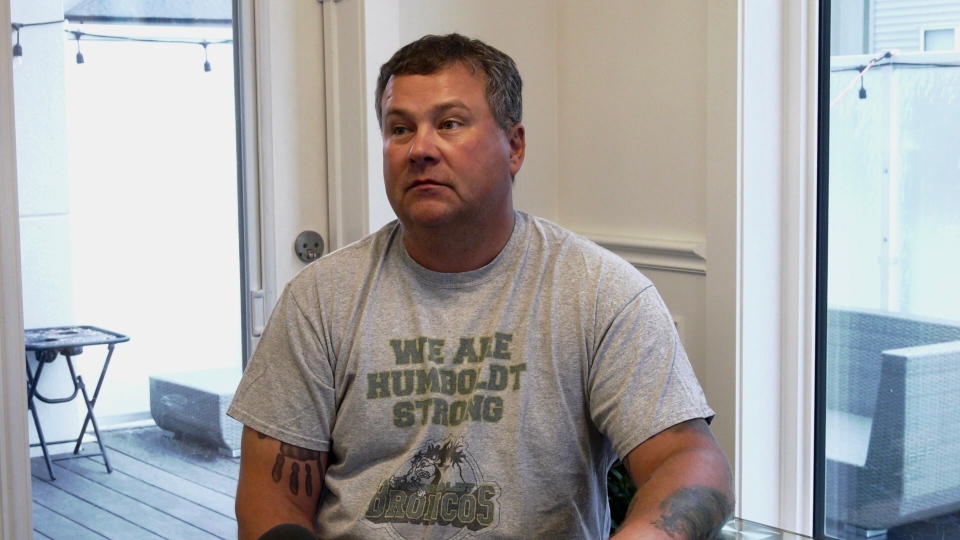
Scott Thomas lost his son Evan in 2018.
"I know for a fact that he'll never drive a semi again. I know for a fact that if he could take back what happened that day he would in a heartbeat. He would trade places with any one of those boys."
"There'll be a lot of families that would never support this [allowing the crash driver to remain in Canada] and there are going to be some that do, too."
"We just always felt that the deportation part of it shouldn't necessarily apply. He's a broken man. He's broken psychologically and spiritually, and to deport him now would just add to the suffering to him and his family and other people that were involved."
"He did everything he could to minimize the impact to the families through all this, and then in the end he took a sentence and he’s serving it like a man."
"[Sidhu’s family was in] a pretty tough place, and how if our family could find it in our hearts to communicate with them a little bit, it might help them out."
"I don't know if we'd call it consistent communication, but we've communicated a little bit with them. At one point [Tanvir, Sidhu's wife] asked us if we would consider writing a letter to support his application to stay in Canada, and we said ‘Yes, for sure, have your lawyer get in contact with us'."
“He's in a pretty tough place, and I have no doubt about that."
Jaskirat Sidhu
Truck driver Jaskirat Sidhu  CP/Kayle Neis
"His wife is genuinely thankful, and he's genuinely thankful that we've expressed some concern for him and that we've communicated our forgiveness to him, and found a place to advocate for his well being, if you will, going forward. I know for a fact that we're having a good effect on his health."
"It has allowed us to focus our energies, I think, more on Evan’s legacy, and not being anchored down by the negative emotions that could come from it."
"This will be a part of our life for the rest of our lives, absolutely, and Jaskirat Sidhu will be a part of my core for the rest of my life. But I don't want him to be a factor in the rest of my life."
"Forgiving, and moving on, and just being at rest with that I'm doing the best that I can in our family and doing the best that we can to create a positive situation, and do what we can to support our son's legacy. It's definitely helped us move forward."
Thomas Scott, father of 18-year-old Evan Scott, victim of Humboldt crash
"It's very difficult to say how it's going to go [decision of the Canada Border Services Agency on deportation], but I do think this is one of those types of cases where [border services] could choose to exercise their discretion given the exceptional circumstances."
"But on the other hand, you've got this terrible tragedy where there were so many victims. It's quite rare for people to not then still get referred for a removal order."
"This is the end of the road for him [truck driver Jaskirat Singh Sidhu's last appeal]."
Erica Olmstead, immigration lawyer, Vancouver
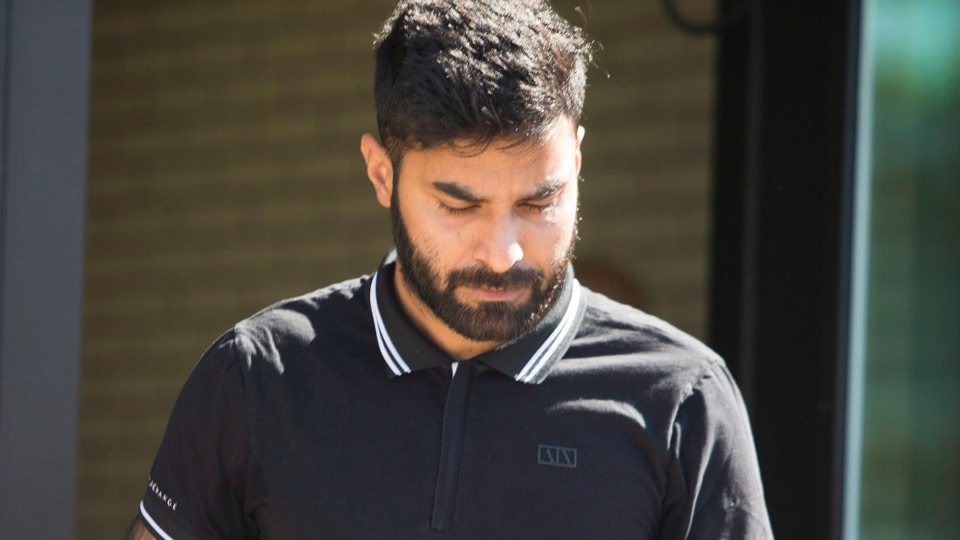
Jaskirat Singh Sidhu, the driver of the truck that the Humboldt Broncos team bus crashed into, is currently waiting for the Canada Border Services Agency to write a report that will recommend whether he be allowed to stay in his adopted country or be deported. (Ryan Remiorz/The Canadian Press)

The entire country went into a state of shocked disbelief when news of a tragic accident was reported, that a bus carrying team members of the Humboldt Broncos was hit by a semi-trailer that failed to stop, despite signage. An accident of horrendous proportions where 16 people were killed, and 13 injured, some so seriously their lives were completely turned around. The driver of the bus was killed, several coaches, and thirteen young players, when the semi carrying a full load of peat moss ran a blinking red light and hit them.
 
The tragedy that occurred that 2018 day in April in Saskatchewan hit the public mood; on porches all over Canada, hockey sticks were placed in prominent positions as a memorial to those lost in that dreadful accident. A GoFundMe campaign raised millions for the grieving families in Humboldt, Saskatchewan. And 29-year-old Jaskirat Singh Sidhu, a recent landed-immigrant to Canada from India was taken into custody and charged with a number of criminal traffic offences leading to death. 
 
Newly married with permanent resident status, the driver had missed a stop sign at a rural intersection driving straight into the path of the bus carrying Bronco players and staff to a junior hockey league playoff game. The young druver was found to have had little experience driving a truck of that size. He was a commerce graduate, looking to make his permanent home in Canada. He had emigrated to Canada following his partner who had arrived in 2013.

Sentenced close to two years ago after pleading guilty to dangerous driving causing death and bodily harm, he has served one-fourth of his eight-year sentence. That length of time in prison, pointed out his lawyer at the time of sentencing, would result in his being disallowed to remain in Canada since a criminal conviction exceeding a sentence of over six months produces ineligibility for a permanent resident to remain in Canada. 

He has appealed to be allowed to stay in Canada once he has completed his prison sentence, however. And is now awaiting a critical report from the Canada Border Services Agency containing what he hopes might be a recommendation to allow him to remain rather than be deported. An issue that other previous cases were invested in, when deportation was avoided. Mr. Sidhu, pointed out lawyer Michael Greene representing him, has no prior criminal history, is well-educated, fluent in English and is utterly remorseful over the tragic accident.

Mr.Thomas, who lost a son in the accident spoke to the issue, emphasizing his own concern is focused on regulations that allowed the inexperienced truck driver a mere three weeks into his employment with the trucking company, to drive a semi-tractor. Vancouver-based lawyer Erica Olmstead  points out the purpose of deportation in such cases is to protect Canada's security, but her experience has included such orders having been avoided when someone has been found guilty of a single offence, such as in Sidhu's case.

It is, of course, the extent of the outcome of his momentary inattention however, that makes this decision and the acceptance of the possibility that he might remain in Canada, so difficult for families involved in the tragedy to accept. Should the Immigration and Refugee Board rule against a request to avoid deportation, a permanent resident is able to appeal the board's decision on humanitarian and compassionate grounds. Mr. Sidhu is disqualified from that option due to the fact that his sentence exceeds the six-month cut-off point allowing appeal.
"We're all in this situation in the first place because he did not obey the Canadian laws, simply by running a stop sign. If he truly is remorseful, we would expect him to obey the laws that are set in place.
Our pain is going to be here forever. We have a life sentence."
"But if we can get the laws to get him deported, that's one little thing that we don't have to worry about ever again. We don't have to see him in the news, we don't have to go through that."
Chris Joseph, who lost his son Jaxon
 
"Whether you've lost a child or a parent or a friend or whatever, or you're just watching your child lift his own limbs everyday, it’s (heartbreaking). I don't know that it's going to change if he's deported or not, but it is the law."
Michelle Straschnizki’s son Ryan sustained a life-changing spinal cord injury
 
“He can start a family, he'll look across the table and he'll have a family. We don't have that, our family is broken forever because of him."
"I think it's the way to heal, is he's got to be out of our sight."
Russ Herold’s son Adam died in the accident
A 'pray for Humboldt' jersey is draped at the site of the Humboldt Broncos bus crash. (Susan Ormiston/CBC)


Labels: , , , ,

Friday, January 31, 2020

Terrorism Refuge in Canada

"It is a principle of long standing that an applicant for insurance has an obligation to reveal to the insurer any information that is material to the application. The deceased knew that his past activities were relevant."
"The past actions of the deceased were material to the risk that he posed for the purpose of having his life insured."
"There is no suggestion that [Manufacturers] ought to have known that the information related to the deceased's past existed, and therefore cannot be faulted for not having inquired into it."
"Our conclusion that the deceased intentionally withheld this information is sufficient to establish fraud."
Ontario Court of Appeal

"On Boxing Day 1968, Mohammad and another PFLP member stormed an Israeli passenger plane as it was preparing for takeoff in Athens. They fired 83 rounds and lobbed six grenades at the Boeing 707, killing a[n Israeli] passenger."
"A Greek court sentenced Mohammad to 17 years in prison, but the government released him in 1970 after Palestinian terrorists hijacked a Greek airliner and threatened to kill everyone on board unless he was set free."
"Mohammad eventually made his way to Madrid, where he applied to immigrate to Canada with his wife and three children. He failed to disclose he had been convicted of a terrorist crime, and by the time Canadian authorities caught up with him, he was already in Canada."
"Mahmoud Mohammad Issa Mohammad, who slipped into Canada in 1987 after attacking an El Al plane in Athens and killing an Israeli passenger, was escorted to Lebanon on Saturday by Canada Border Services Agency officers."
Stewart Bell, National Post, May 13, 2013
A fighter of the Popular Front for the Liberation of Palestine General Command (PFLP-GC) aims his rifle as he walks past the rubble of destroyed building in the Yarmouk refugee camp in the Syrian capital Damascus on September 12, 2013 ANWAR AMROANWAR AMRO/AFP/Getty Images
The Palestinian terrorist known as "Triple M" lied to immigration authorities when he sought a visa to relocate to Canada for himself, his wife and three children in 1987 and entered under an alias to settle in Brantford, Ontario, not far from Toronto. A member of the terrorist group Popular Front for the Liberation of Palestine, he was convicted in Greece of manslaughter and other offences and imprisoned after he and a fellow terrorist with the PFLP attacked an El Al passenger aircraft at Athens airport.

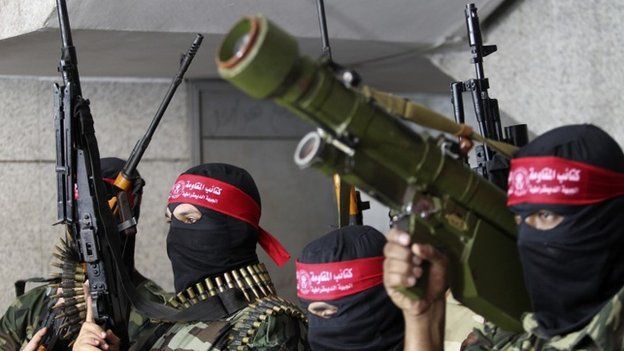
Militants from the Popular Front for the Liberation of Palestine (PFLP) take part in a parade in Gaza City (2 September 2014)
Image copyright Reuters
The PFLP's  Abu Ali Mustafa Brigades, launched numerous attacks from Gaza

He failed to serve his full sentence of 17 years when a demand was made for his release by the PFLP through a hostage negotiation when another plane was stormed by them in Greece. Once free, he moved to Lebanon and from there applied with Canadian consular officials in Spain, for residency in Canada. A year later an immigration official sought to revoke his visa after uncovering his past association with the PFLP.

Mohammad insisted on his innocence, that: "I was a freedom fighter – not a terrorist. I was fighting Israel, the enemy of (his people)... My record in Canada is clean, clear and good. I'll fight to the last moment [to avoid deportation]. I am not going to give up." As was his right under Canadian law, he launched a number of appeals and ended up remaining in Canada another 23 years, at a cost to the government of up to $3 million to contest the appeals.

He was eventually deported back to Lebanon in 2013 where he died of cancer two years later.

He had, while living in Canada, taken out a life insurance policy with Manufacturers Life Insurance Company. His wife, Fadia Khalil Mohammad attempted to collect on the life insurance. The insurance company informed her the contract was voided in view of the fact that her husband had lied on his application and there was no obligation on the part of the insurance company to honour the $75,000 policy. He had informed the insurer he had moved from Spain to Canada, providing a social insurance number.

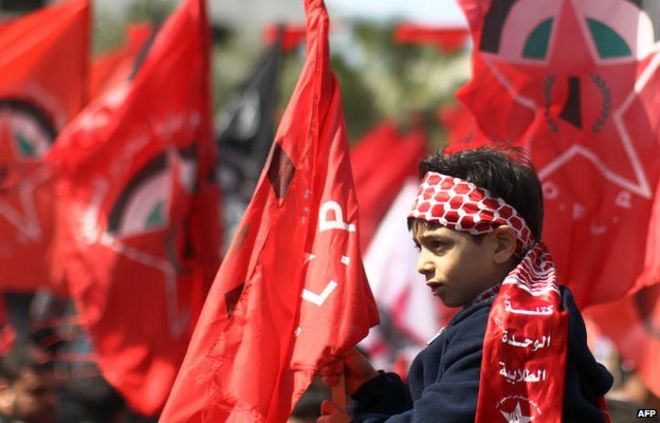
PFLP supporters
Image copyright AFP 
The PFLP was officially created in the wake of the 1967 Six Day war

He was not questioned about his citizenship or residency status or whether he had any criminal convictions, and made no mention himself of his past activities. His widow had argued last May before the Superior Court that she should receive the insurance and Justice Shaun O'Brien ruled that no misrepresentation had taken place over immigration status or background, because the insurance company had failed to ask those questions on the application form. The insurance company appealed, maintaining the failure to disclose material facts voided the policy.

And the Appeal Court agreed with the insurance company; that insurance legislation requires applicants to disclose all facts material to the insurance. Shortly after applying for the insurance, pointed out the higher court, the man himself had argued his life would be endangered if he were to be deported to Israel. He had with intention, hidden his past from Manufacturer's, in the very same manner and for the same reason that he had done with immigration authorities.

He was not the sole member of the PLFP to come to Canada. Canada's easy immigration and refugee programs are hugely appealing to those with murky, violent pasts who feel it time they searched out a new life, from post-WWII when Nazis arrived concealing their past, along with East European Nazi collaborators, and later those involved in the mass murder of Tutsis in Rwanda, to active members of Hezbollah, Hamas and Fatah.

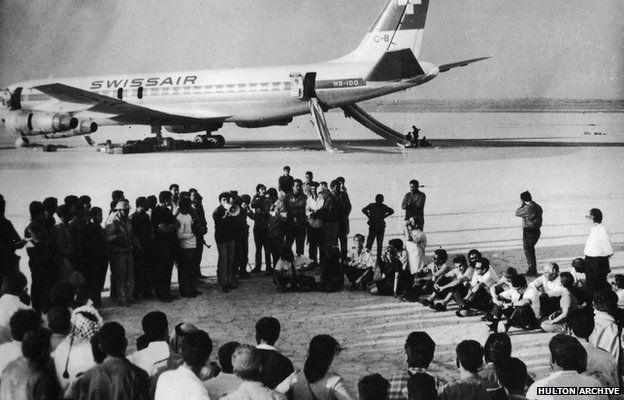
Hostages from three hijacked aircraft attend a new conference by the Popular Front for the Liberation of Palestine in the Jordanian desert, in front of a Swissair passenger plane (September 1970)
Image copyright Hulton Archive
Image caption The group gained international notoriety for a series of airline hijackings

Labels: , , , , , ,

Wednesday, August 21, 2019

Somali Criminals Find Haven In Canada

"The removal of convicted, repeat offenders is an enforcement priority."
Canada Border Services Agency

"[Abdilahi Elmi] has committed extensive crimes within Canada and is considered a danger to the public."
Mylene Estrada-Del Rosario, spokesperson, Canada Border Services Agency

"My future has been just living day to day in a cell, year after year. This is not life at all. I want to be a better person ... I know that I have made a lot of mistakes in my life that I can't take back and I am not a bad person."
"I am a kind, helpful, and loving person."
Abdilahi Elmi, 34, Somali refugee, Edmonton

Image result for photo, somali abdilahi elmi
Abdilahi Elmi


"This is a violation of human rights."
"Here we are, a year later, and we see that this is still continuing for people who have been in the child welfare system."
"It's a very simple ask: why can't we change the law? It's past time to change the law to ensure that all children in care receive their citizenship."
El Jones, Halifax activist

Community activists El Jones and Kate Macdonald talk to reporters Tuesday at MP Andy Fillmore’s office in downtown Halifax. They were part of a group of about a dozen calling on federal Public Safety Minister Ralph Goodale to stop the deportation of Abdilahi Elmi to Somalia, scheduled for Wednesday. - Francis Campbell

Now an adult, Elmi arrived in Canada from his home in Somalia with his family, escaping the never-ending violence in that violently dysfunctional society. He was ten years old when he arrived, 24 years ago. Soon afterward he was brought into foster care in Ontario. It was somehow overlooked by officials to register him as was commonly done, for permanent residency. Aside from which he has been living over the succeeding decades as a permanent resident. One who could, of his own initiative, have made a late application and applied as well for citizenship, but never did.

During those years of residency as an adult, the man amassed a long record of various criminal charges including assault. It is the assault charges that have led to his deportation as a non-citizen of Canada. The Canada Border Services Agency ruled on June 26 that Elmi be deported to Kismayo in Somalia at some late date in August. Last year there was a similar case of another former child refugee from Somalia who was on the cusp of removal back to Somalia as an adult whose criminal activity in Canada moved authorities to launch similar extradition proceedings.

Abdoul Abdi however, was ultimately permitted to remain in Canada when a Federal Court judge in Halifax overruled a a decision referring the case to a deportation hearing.  El Jones had been an involved activist in that case as well. The Somali community argued against his removal and pleaded for humanitarian grounds on his behalf, despite his long criminal record in Canada, insisting his life would be in danger, he would be isolated in his country of birth and vulnerable.

In this latest case Abdoul Abdi's sister, Fatuma Abdoul expressed disappointment that the resolution of her brother's impending deportation being overturned to be an indication that despite a lack of citizenship former child refugees would no longer face deportation as a result of their criminal activities in Canada. "Obviously, nothing has changed. We're making a plea for [Elmi] and trying to save his life", she observed righteously with the obvious expectation of entitlements for criminal offences committed by non-citizen Somalis.

Supporters mostly from among the Somali immigrant/refugee community assisted by others in sympathy, claim Elmi deserves a reprieve in the face of "certain death" in Somalia, with no relatives and a language he cannot comprehend. A language he undoubtedly spoke fluently until age ten when he arrived in Canada. The portrayal of Somalia as a dangerous place to live is not entirely misplaced, but millions of Somalis live in the country at various levels of society and one more arriving cannot equate with impending death for the poor unfortunate.

"No one is saying that he didn't commit criminal acts. We're saying that the payment for that should be prison and not deportation", stated Jones of the man who arrived in 1994, age ten, granted refugee status with his family, taken into foster care at 13, living on the streets at age 16, involved with drugs and criminal behaviour, an ongoing burden and threat to Canadian society. An online petition has garnered 3,400 supporters on the change.org site where a note from Elmi explains that alcohol had clouded his judgement.

Robert Wright. Photo Robert Devet


"When a child is made a permanent ward of a provincial jurisdiction, they have effectively been adopted by this country. It is our failure to provide adequately for our children in this state that results in their lack of education, their criminalization and their bumpy transition into a healthy and productive adulthood."
"It would be a travesty of justice and a great shame to our country if we did not intervene right now."
Robert Wright, Halifax social worker

Demonstrators chant in MP Andy Fillmore's constituency office advocating for a stay on the deportation of Abdilahi Elmi to Somalia during a protest in Halifax on Tuesday, August 20, 2019. Included in the group advocating for the stay was Fatuma Abdi, the sister of Abdoul Abdi, the former refugee youth in care who successfully stayed his deportation.   Darren Calabrese / THE CANADIAN PRESS

Labels: , , , ,

Tuesday, November 20, 2018

'Progressive' Standards of Unequally-Applied Justice

"[The longer sentence] may result in his [the criminal accused] deportation [but was a requirement since the sentencing judge] failed to impose a sentence that was proportionate to the gravity of the offences."
"[The lower court judge] imposed an artificial sentence [to protect Yare from deportation, acknowledging the sentence fully applied] will affect  his right of appeal ... and may result in his deportation."
Manitoba Court of Appeal
The Manitoba Court of Appeal found a lower court judge "imposed an artificial sentence" to prevent Mustaf Ahmed Yare from being deported.   Brian Donogh/Postmedia/File

"I'm going to get my gang and I'm going to find you and kill you. I'm a real gangster and you will die."
"Trust me, you f---ing goofs [Winnipeg police]."
Mustaf Ahmed Yare, Somali refugee, resident of Canada

"[He] ought to be jailed for about a year for these charges."
"I am not inclined to subject you to deportation hearings, but you need to know how lucky you are."
Sentencing judge
A lower-court judge faced with the case of a Somali refugee against whom criminal charges had been brought, weighed the seriousness of the charges against what he obviously viewed as a humanitarian concern that should someone in this young man's circumstances as a refugee lacking citizenship rights in Canada be given a long prison sentence that would place him in a federal penal institution it would automatically move forward a system whereby serious criminality results in removal from Canada.

The compassionate judge exercising his legal judgement alongside his liberal-progressive values to sentence 23-year-old Mustaf Ahmed Yare to five months and 25 days in prison which would place him in provincial detention and circumvent any move by the federal government to deport the man back to his country of birth. His Somali family while living in a refugee camp gave birth to this young man there.

Eventually the family moved to Canada in 2009 where he lived with his parents and the family became permanent residents of Canada. He was arrested in September 2017 after refusing to pull over during a traffic stop; accelerated, rammed into the police car and drove off at high speed, police cars chasing him as he crashed the vehicle he was driving into a metal sign post and ran away on foot. Once arrested he threatened police officers with death.

Released on bail, after two weeks he was again arrested, in breach of his curfew. As it was, he was already in probation when he was arrested. The man has a "lengthy and related criminal record". He pleaded guilty to charges that included fleeing police and uttering threats. The man, it appears, is an unregenerate criminal against whose presence the public should be protected. The status of permanent residence can be revoked if someone is arrested for committing a crime, convicted and given a sentence of six months or longer.

With the new sentence of 13 months and ten days imposed by the Court of Appeal revising the original sentence, it should be but a short matter of time before this man is deported. In the interim, he has since been once again arrested, is back in custody on charges of assault with a weapon and uttering threats. Though the Supreme Court of Canada ruled that judges exercise discretion bearing in mind immigration consequences in sentencing, criminal acts merit punishment commensurate to their impact.

Sergio Karas, an immigration lawyer and analyst pointed out the obvious, that there is nothing fair in seeking justice for criminal acts on an unequal basis, as when a non-citizen is able to achieve a lower sentence than a citizen for the same crime in an effort to avoid having the non-citizen deported from Canada. In fact, when a non-citizen demonstrates just as this man has how unfit he is to become a Canadian citizen there is every reason to deny him residence.
"You can't have that [lenience in sentencing non-citizens], because otherwise it's like playing favourites".
"Let’s face it. For somebody to be sentenced to six months of incarceration, it’s got to be a pretty heavy-duty offence."
Sergio Karas, immigration lawyer, Toronto

Labels: , , ,

Wednesday, February 14, 2018

Israel: The Jewish State

"Every country must guard its borders."
"It is important that people understand that we are doing something here that is completely legal and completely essential."
Israeli Prime Minister Benjamin Netanyahu

"We are talking about the history of the Jewish people, from the exodus from Egypt to the terrible tragedy of the Holocaust."
"Refugeedom is in our DNA. Seeking asylum is in our blood."
Rabbi Nava Hefetz, leader, refugee support group

"Israel is too small and has its own problems."
"It can not serve as the employment agency for the African continent."
Ayelet Shaked, Israeli justice minister
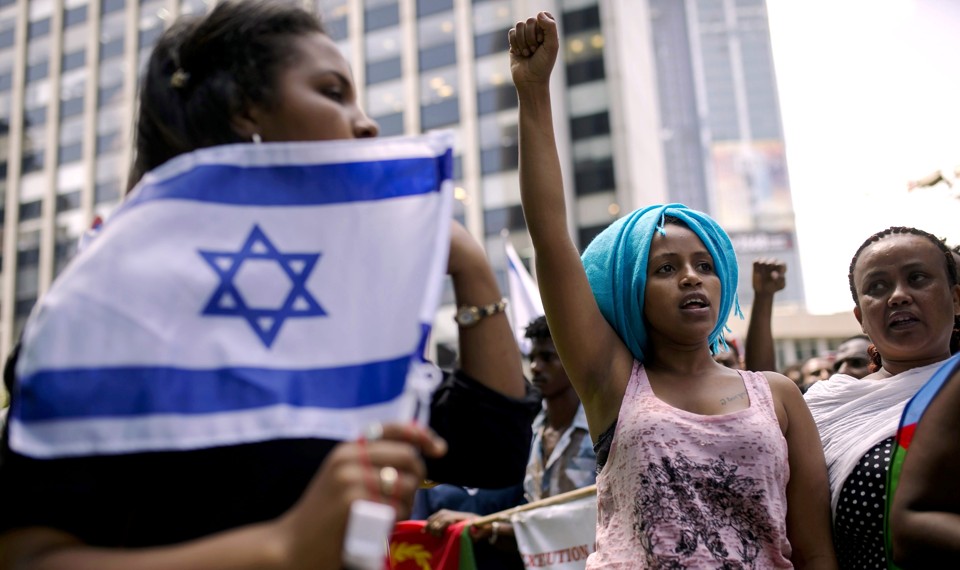
A migrant from Eritrea gestures during a protest in Israel.
A migrant from Eritrea gestures during a protest in Israel     Baz Ratner / Reuters

Over the years Israel has undertaken the 'rescue' and patriation transfer of thousands of Ethiopians. Both secretly and more latterly in agreement with the government of Ethiopia in a 'magic carpet' enterprise that saw Ethiopians flown discreetly to Israel to become citizens. Theirs was a type of historical re-uniting, however, since those Ethiopians called 'Falashas' were from ancient times to the present, faithful to Judaism and as such eager to live in Israel in a Jewish state where they would no longer face religious discrimination.

When does a Jewish state face the peril of losing its majority Jewish status and raison d'etre? When too large a proportion of its population is not Jewish, and then the state risks losing its original purpose and as such its status as a haven for persecuted Jews from all over the world. In the last few years, black Africans have been fleeing institutionalized persecution, the carnage of conflict, the lack of economic opportunities, and flooding to areas of the world where they see a potential for a better future.

While Europe has been flooded with migrants and refugees, Israel too has been infiltrated by illegal migrants. Europe is a vast geographic estate whereas Israel is a tiny sliver of a country in the midst of much larger territories governed by Arab and Muslim nations. Those Arab nations are contending with their own influx of refugees from war-torn Syria, from Lebanon, Libya, from Iraq and from the Palestinian Territories, but they have closed their borders to African migrants who have infiltrated Egypt and crossed into Israel in search of employment.
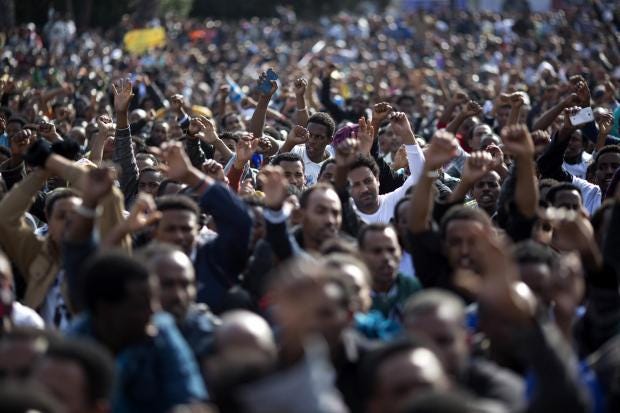
African migrants protest about the deportation plans in Rabin Square, Tel Aviv AP

Tens of thousands of Eritreans, Sudanese and others from the African continent have penetrated Israel. Some like the Eritreans flee their country's national service, deemed a crime punishable by death. Israel also has a national service draft, given its history of military invasions by its neighbours. Ultra-religious orthodox Israeli Jews manage to evade the draft, by and large without punishment. As do Arabs, Druze and other minority Israeli citizens, though some are proud to serve.

Israel cannot afford to absorb the estimated 60,000 Africans who have migrated in the last decade and has initiated a deportation program which some Jewish Israelis protest against. Other Jewish Israelis complain that where their areas have a dense congregation of these migrants, crime proliferates and security fails. The Israeli government has offered 38,000 migrants from Eritrea and Sudan a choice of $3,500 and a plane ticket to a third country in Africa, or jail.

Petitions opposing the policy emanating from Israeli Jews across the spectrum arguing that a nation comprised of refugees after the Holocaust has an obligation to welcome refugees with compassion. Israel, like all other nations has an existential obligation to protect its borders against these incursions, however, to prevent illegal immigration, striking a balance with compassion. Its choice is a stark one; preserve the Jewish character of the state or diminish it beyond recognition.

International conventions disallow the repatriation of asylum seekers to countries they emanate from where they may face persecution or criminal prosecution. A steel barrier along the border with Egypt built to stop the influx years ago, succeeded. Although thousands of Eritreans and Sudanese filed asylum requests in Israel, a vanishing number have received refugee status -- representing Darfurians from Sudan, granted special humanitarian status.

Some 20,000 African migrants chose to leave Israel under the expressed terms. The remainder are now subject to deportation. Some third countries in Africa have agreed to take the deported migrants, but only if the migrants themselves agree. Israel has deported over 5,000 non-African illegal immigrants in the past year representing over 20,000 Ukrainians and Georgians who have sought asylum in recent years in Israel.

Families of the approximately five thousand children of asylum seekers born in Israel would not be affected by the new deportation policy, aiming pointedly to move single African men out of Israel, those who had not submitted asylum requests by the new year.

Safe: Deportation notices are only being handed out to men with no dependents in Israel who have not been awarded asylum. All women and children are allowed to stay - for now. Pictured: African migrant children  in Tel Aviv last week
Deportation notices are only being handed out to men with no dependents in Israel who have not been awarded asylum. All women and children are allowed to stay - for now. Pictured: African migrant children in Tel Aviv last week

Labels: , , , , , , ,

Thursday, March 17, 2016

Live Normally, Mr. Anteer, But Not in Canada

"I told them Fatah is not terrorist group. It is a group that works with Canada, it is a group that works with the Stephen Harper; the United Nations works with Fatah. I don't have any history like that [as a security risk]."
"Arafat came to Palestine and signed for peace with Israel. I was a volunteer with Arafat. I was a young guy. He talked about stopping the problems in Palestine; war wasn't good. Just talking to him about the problems; I talked to him like that."
"I was at House Arafat as a volunteer, many people were. People came from the university, from the schools to stay there. The military [Israel Defense Forces] thought people in the house were terrorists, maybe. I told them, 'Never I have problems, why you put me in here in jail'?"
"They say, because you're with House Arafat you stay in jail'."
"After that, I'm thinking I come to Canada because I have family there."
Akram Muslih Anteer, 30
Palestinian leader Yasser Arafat inspects his private apartments inside his battered Ramallah headquarters after an Israeli army raid in June 2004.
Atta Oweisat/AFP/Getty Images   Palestinian leader Yasser Arafat inspects his private apartments inside his battered Ramallah headquarters after an Israeli army raid in June 2004
 
Mr. Anteer came to Canada in 2013, claiming refugee status. He came, he said, to join his mother and two sisters living in Mississauga, Ontario. He no longer is in Canada, escorted out of the country on charges of being a member of Fatah, deemed a terrorist group, irrespective of the fact that Fatah rules the West Bank through the Palestinian Authority, with Fatah member, Mahmoud Abbas as President of the PA, a colleague of its former head of the PLO, Yasser Arafat, a co-founder of the Palestine Liberation Organization of which Fatah is a part.

The Immigration and Refugee Board made a decision to remove this man, a ruling upheld by the Federal Court of Canada. Complicated somewhat by the fact that Canada donates financial support to the administration of the West Bank. The country's foreign affairs ministry affirmed Canada's support of the PA: "Canada continues to support Palestinian President Mahmoud Abbas" with "a commitment of $300-million over five years towards improving Palestinian security, governance and prosperity." The PA, a Fatah-led kleptocracy, is doubtless grateful.

 Coincidentally and polarizingly diplomatically, the IRB stated quite unequivocally that Mr. Anteer is inadmissible to Canada as a result of "reasonable grounds to believe" that Fatah is "a terrorist organization." Mr. Anteer had lived in Sweden before travelling to Canada, and he was ordered deported back to Sweden in June. After which order, he appealed by bringing his case before the Federal Court of Canada where Justice Cecily Strickland rejected his appeal.

In his interview with Canada Border Services Agency, Mr. Anteer discussed his involvement in Fatah, stating he had joined as a youth post-Oslo Accords in 1993. His refugee status was denied and he was ordered detained. The CBSA reported that his role with Fatah was to identify and intercept opponents of Fatah as he worked alongside high ranking Fatah officials. According to Mr. Anteer's own account, he reported directly to Ata Abu Rumeila, head of the Jenin area Fatah.
Files
Files   Akram Anteer
 
Enforcement officials noted that Rumeila was the reputed head of the al-Aqsa Martyrs Brigade in Jenin, a designated terrorist organization on Canada's list. Evidence gained by the IRB was that Fatah was in full support of al-Aqsa in its commission of terrorism against Israel. "I never have any work from him [Rumeila], I never have any job with him I don't even like him. I don't have any contact", objected Mr. Anteer.

But, you are known by the company you keep, even this fine young man. "I haven't any trouble with the government, I just want to live normally, nothing more", said Mr. Anteer, echoing what all war criminals such as post-World War II Nazis who entered Canada under false pretenses claimed, as after the atrocities they were involved with became history, they became model citizens in open-hearted and accepting Canada.

As for the Fatah charter, is it rather interesting and certainly revelatory:


Principles... Goals.... Methods
The Movement's Essential Principles
Article (1) Palestine is part of the Arab World, and the Palestinian people are part of the Arab Nation, and their struggle is part of its struggle.
Article (2) The Palestinian people have an independent identity. They are the sole authority that decides their own destiny, and they have complete sovereignty on all their lands.
Article (3) The Palestinian Revolution plays a leading role in liberating Palestine.
Article (4) The Palestinian struggle is part and parcel of the world-wide struggle against Zionism, colonialism and international imperialism.
Article (5) Liberating Palestine is a national obligation which necessities the materialistic and human support of the Arab Nation.
Article (6) UN projects, accords and reso, or those of any individual cowhich undermine the Palestinian people's right in their homeland are illegal and rejected.
Article (7) The Zionist Movement is racial, colonial and aggressive in ideology, goals, organisation and method.
Article (8) The Israeli existence in Palestine is a Zionist invasion with a colonial expansive base, and it is a natural ally to colonialism and international imperialism.
Article (9) Liberating Palestine and protecting its holy places is an Arab, religious and human obligation.
Article (10) Palestinian National Liberation Movement, "FATEH", is an independent national revolutionary movement representing the revolutionary vanguard of the Palestinian people.
Article (11) The crowds which participate in the revolution and liberation are the proprietors of the Palestinian land.

Goals
Article (12) Complete liberation of Palestine, and eradication of Zionist economic, political, military and cultural existence.
Article (13) Establishing an independent democratic state with complete sovereignty on all Palestinian lands, and Jerusalem is its capital city, and protecting the citizens' legal and equal rights without any racial or religious discrimination.
Article (14) Setting up a progressive society that warrants people's rights and their public freedom.
Article (15) Active participation in achieving the Arab Nation's goals in liberation and building an independent, progressive and united Arab society.
Article (16) Backing up all oppressed people in their struggle for liberation and self-determination in order to build a just, international peace.

Method
Article (17) Armed public revolution is the inevitable method to liberating Palestine.
Article (18) Entire dependence on the Palestinian people which is the pedestal forefront and on the Arab Nation as a partner in the fight, and realising actual interaction between the Arab Nation and the Palestinian people by involving the Arab people in the fight through a united Arab front.
Article (19) Armed struggle is a strategy and not a tactic, and the Palestinian Arab People's armed revolution is a decisive factor in the liberation fight and in uprooting the Zionist existence, and this struggle will not cease unless the Zionist state is demolished and Palestine is completely liberated.
Article (20) Achieving mutual understanding with all the national forces participating in the armed struggle to attain the national unity.
Article (21) Revealing the revolutionary nature of the Palestinian identity at the international level, and this does not contradict the everlasting unity between the Arab Nation and the Palestinian people.
Article (22) Opposing any political solution offered as an alternative to demolishing the Zionist occupation in Palestine, as well as any project intended to liquidate the Palestinian case or impose any international mandate on its people.
Article (23) Maintaining relations with Arab countries with the objective of developing the positive aspects in their attitudes with the proviso that the armed struggle is not negatively affected.
Article (24) Maintaining relations with all liberal forces supporting our just struggle in order to resist together Zionism and imperialism.
Article (25) Convincing concerned countries in the world to prevent Jewish immigration to Palestine as a method of solving the problem.
Article (26) Avoiding attempts to exploit the Palestinian case in any Arab or international problems and considering the case above all contentions.
Article (27) "FATEH" does not interfere with local Arab affairs and hence, does not tolerate such interference or obstructing its struggle by any party.


Labels: , , , ,

Tuesday, January 19, 2016

Criminally Stateless

"Deepan has yet to be convicted and the charges are unproven. Regardless of the outcome of these charges, the Justice for Deepan Support Commitee continues to fight against the erosion of citizenship from people born in Canada or who have become naturalized Canadians."
"Living without Canadian citizenship and being stateless for over three years has meant that the federal government has made it virtually impossible for Deepan to live on his own, form meaningful relationships, find legal work, and access basic health care."
Justice for Deepan Support Committee statement

"Even those of us who are charged with crimes and go to jail have a right to citizenship. As a stateless person, how can you make claims to ensure your right to a fair trial, and proper treatment while in prison are protected? You can't."
Stacy Douglas, support group member

deepan
Deepan Budlakoti. (Ottawa Sun Files)
At first reading, it seems dreadfully unfair. That a man born in Canada of East Indian parents working at the Indian High Commission who received their own Canadian citizenship two decades ago, is stateless because he never thought to apply for citizenship on his own. The family's reasoning was that since Deepan Budlakoti was born in Canada, has lived all his life in Ottawa, he is automatically a citizen of the country. That would be true if it were not for the fact that this rule of birth-equalling- status is suspended for those living and working within the foreign diplomatic community.

Now 26 years old, in 2010 he was sentenced to three years in prison on charges of weapons and drug trafficking. The serious nature of the convictions required deportation of a non-citizen under Canadian law, but India balked at receiving him. With his earlier convictions of two counts of breaking and entering, he had amassed quite a criminal record. But he is aghast at the very thought that he might be deported from the only country he has ever lived in, unable to speak any language but English, unaware of what constitutes Indian customs, and with no family in India.

He is attempting to appeal to the Supreme Court of Canada on the basis of his Charter rights being infringed. In the meantime, he is evidently searching for success in discovering a "meaningful relationship", finding meaning in consorting with criminal drug dealers, and carrying restricted firearms, endangering other people in the highways by reckless driving, and dealing both drugs and firearms, a line of endeavour that appears to appeal to him far more than a licit workplace.

In October 2015, Budlakoti was arrested and charged by the Ontario Provincial Police with stunt driving when on Highway 417 in a rented Chevrolet Camaro, he was clocked at travelling 165 km/hr. Months earlier, his deportation order had been eased reflecting "good behaviour". Now, most recently, he has been charged after arrest in an anti-gang raid. On December 17, 2015, a Gatineau police anti-gang squad raided two St.Joseph Blvd. apartments, arresting him along with two others.

Police were acting on information that cocaine and fentanyl were present and they seized 144 grams of cocaine, a semi-automatic handgun, ammunition, drug paraphernalia and several thousands in cash. Court documents testify to the charges of two counts of possessing drugs for trafficking; possession of property obtained by crime; two counts of possessing  weapon for a dangerous purpose; possessing a firearm knowing it is unauthorized; two counts of committing an offence with a prohibited weapon; two counts of possessing a weapon obtained by crime; possessing a prohibited or restricted firearm with ammunition; possessing a firearm knowing that its serial number has been altered, defaced or removed; improper storage of a firearm; and two counts of breaching [a] weapons ban.

His support group had no comment to make on the new criminal charges brought against Deepan Budlakoti other than they had not yet been proven in court. They were on the process of attempting to raise funds to cover the man's costs for health insurance for a year through an online crowdfunding campaign they launched in early December. Such crowdfunding ventures have been quite successful for a variety of situations, some for desperately needy people, some on the basis of hoped-for personal success of a trivial nature. In Mr. Budlakoti's campaign the goal was set at $2,650 and the total amount raised was $495.

One can only imagine that the old adage that you can fool some of the people some of the time, but not all of the people all of the time holds true here.

Labels: , , , , ,

Sunday, August 30, 2015

Pre-Emptive Inaction


"The discussions on this case continue; they continue very frequently. They are taking part both locally, nationally, internationally."
Spokesperson, Canada Border Services Agency

"We don't want them to just walk away."
Nazia Khalid, press secretary, Pakistani High Commission, Ottawa
A video screen shows Jahanzeb Malik, 33, making an appearance at the Immigration Refugee Board hearing in Toronto on Monday, May 11, 2015.
Stewart Bell / National Post   A video screen shows Jahanzeb Malik, 33, making an appearance at the Immigration Refugee Board hearing in Toronto on Monday, May 11, 2015.

What does any self-respecting nation do when it is alerted to the fact that members of terrorist groups have appeared on their soil, and may be planning terrorist attacks? Why, just what Canada has done; arrested the presumed threats to the country. And, since they are citizens of another country, their deportation is a matter of primary importance.

The first action is to ensure that they are not left at large to pursue any nefarious, injurious-to-society activities, the second is to rid the country of their presence.

Pakistan is a Muslim country whose relations with its neighbours are fraught; both India and Afghanistan have Pakistan to thank for violence and ongoing threats to their own security. Pakistan and its military and its infamous secret intelligence service is well infiltrated with violence-dedicated Islamists; both Afghanistan and India can attest to their neighbour's deadly interference in their own affairs.

That Pakistan's mountain tribes are independent of central rule, and pose an internal and external threat as well, is another factor in the country's instability with the spectre of this nuclear-armed country failing to safeguard its nuclear warheads from capture by tribal Islamist jihadis. Pakistan's own paranoia and its threats to use nuclear weapons should it believe that neighbouring India may invade, describe it as a menace to the entire geography.

That menace does not stop in the near abroad, but travels elsewhere across the globe. And Canada is the beneficiary of lone Islamists appearing on its shores, portending no good. Muhammad Aqeeq Ansari and Jahanzeb Malik are two men from Pakistan known to have jihadist terrorist connections and aspirations whom Canada is determined to deport to their native Pakistan. Ansari is a member of the terrorist group Sipah-e-Sahaba Pakistan.

And Malik, who has family living in Canada and who arrived in 2007, was arrested on suspicion of planning terrorist attacks, backed by an arsenal of weapons and Islamist materials also in his possession. They both claim concern for their safety should they be returned to Pakistan. As for Pakistani authorities, they would prefer that the two men be kept incarcerated in Canada, courtesy of the Canadian taxpayer.

While neither man faces criminal charges in Canada, their deportation is critical; neither is a Canadian citizen, and the Immigration and Refugee Board has ruled that both represent security threats to the country. The Canada Border Services Agency and Department of Foreign Affairs authorities have been meeting with the Pakistani high commissioner and the Toronto-based consul general of Pakistan.

That the government of Pakistan has not yet arrived at their final decision whether it will agree to the deportations is intolerable. These are their nationals; claiming that they may represent a threat to Pakistan security is an absurdity, given the obvious reality that the entire machinery of government is well infiltrated by threats to their own security. The government policy of the country represents a threat to the country's security.

Labels: , , , , ,

Sunday, August 02, 2015

Three Strikes And You're Out...

"Even if you're going to try to remove him, it's inhumane in his medical condition to send him to a war zone where he will have no access to medical care."
"His continued detention, based on the new medical evidence that we have, constitutes cruel and unusual treatment."
Arghavan Gerami, defence lawyer

"In addition to your criminal record, which is a valid consideration in assessing the issue of danger to the public, members previously took note of the fact that not only was there an escalation in dangerous criminal behaviour but there was little evidence of rehabilitation to mitigate the danger concerns."
"You do not accept responsibility for your conduct, you have claimed that you were duped into committing the bank robberies."
Immigration Division custody decision
Ahmed Ali Ahmed.
Ahmed Ali Ahmed. Family photo

What a dilemma. What to do with a convicted felon living in Canada without official status, whom the Immigration and Refugee Board ruled should be deported, when his country of origin and citizenship is less than anxious to welcome him back with open arms. Yemen, to be sure, is in a state of war, with its legal government unseated by a sectarian religious offensive, determined to place their own candidate in the presidency. But attempts to remove this man predated the insurgency.

Here is a young men, in the custody of immigration since the completion of a two-year sentence for robbery. He has a torn ligament in his knee, which has been refused reconstructive surgery to be performed on the Canadian dime. Meanwhile, the Canada Border Services Agency will attempt for the fourth time to remove Ahmed Ali Ahmed from Canada.

Since the Yemeni mission in Ottawa seems disinterested in discharging its duty to a Yemeni citizen clearly in need of representation, and repatriation, the fourth attempt to remove him and return him to his country of birth may not succeed either. In which case, Ahmed Ali Ahmed will continue to fester in prison, since he is considered a risk to reoffend, as well as being a flight risk. Flight, that is, from impending removal.

This man, like others in similar situations, represents a true nuisance factor. His criminal record in Canada is not just for robbery, but includes sexual assault, and forgery convictions as well. Not a very nice young man, and clearly a risk to Canadians should he be released. The board has rejected arguments that detention for this man constitutes cruel and unusual punishment.

And nor does Canada consider his detention indefinite. The airports in Yemen have reopened.

Labels: , , ,

() Follow @rheytah Tweet