Politic?

This is a blog dedicated to a personal interpretation of political news of the day. I attempt to be as knowledgeable as possible before commenting and committing my thoughts to a day's communication.

Tuesday, June 30, 2026

All The Markers Of A Failed State

"There are different categories of starvation."
"We are only able to reach those who are really on the verge of, if you don't give them something now, they will not be there tomorrow."
"[In some areas, children are still getting food, but not pregnant mothers]. Literally, it's who dies first, and who dies next."
Hameed Nuru, Somalia director, World Food Program 
 
"The situation has become unbearable."
"The American regime is led by a person who really doesn't care about anything happening outside his gates."
"The Americans are not honoring their commitment to the world." 
Adan Bare Ali, deputy mayor, Dollow, Somalia
https://wvusstatic.com/www/uploads/2026/06/16170527/W345-0329-118-850x596.jpg
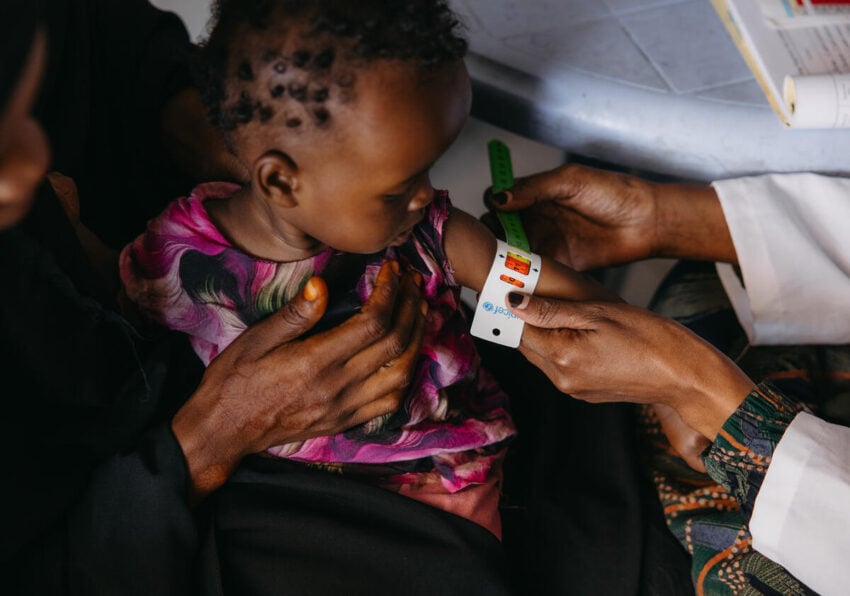
In northeastern Somalia, the Jeexdin Health Center is a critical medical and nutrition clinic serving children and adults near Garowe and Galkayo. Photo by Abigajla Conway)
 
In Somalia, one of the world's poorest and least stable countries, acute hunger is set to increase beyond its current state. When Russia invaded Ukraine four years ago the global supply of fertilizers and cereal grains was disrupted leading to fears of hunger, from Africa to South Asia. A $43 billion humanitarian assistance drive led by governments and multilateral institutions limited the human damage of primary scarcities of the substances of life-sustaining provisions. Food aid, water and medical care was delivered o the desperately needy, with $17 billion of that total supplied by the United States.
 
Currently, humanitarian funding saw a disastrous drop to $28 billion, with the share provided by the United States diminished to $4 billion. "The system has been eviscerated", stated the head of global advocacy at Mercy Corps, Kate Phillips-Barrasso. "This is the era of indifference", she concluded.
 
For decades, Somalians have suffered through a brutal civil war, through famine and the attacks of the fundamentalist Islamic group Al Shabab. The country's most recent harvest was ravaged by drought. Approximately one-third of the Somali population -- 6.5 million people -- encountered hunger at levels described as an emergency, with the U.N. Food and Agriculture Organization warning that over 1.8 million children under 5 were facing acute malnutrition. That was back in February, with the situation since exacerbated due to the war in Iran.
 
https://wvusstatic.com/www/uploads/2026/06/16165718/W345-0329-196.jpg
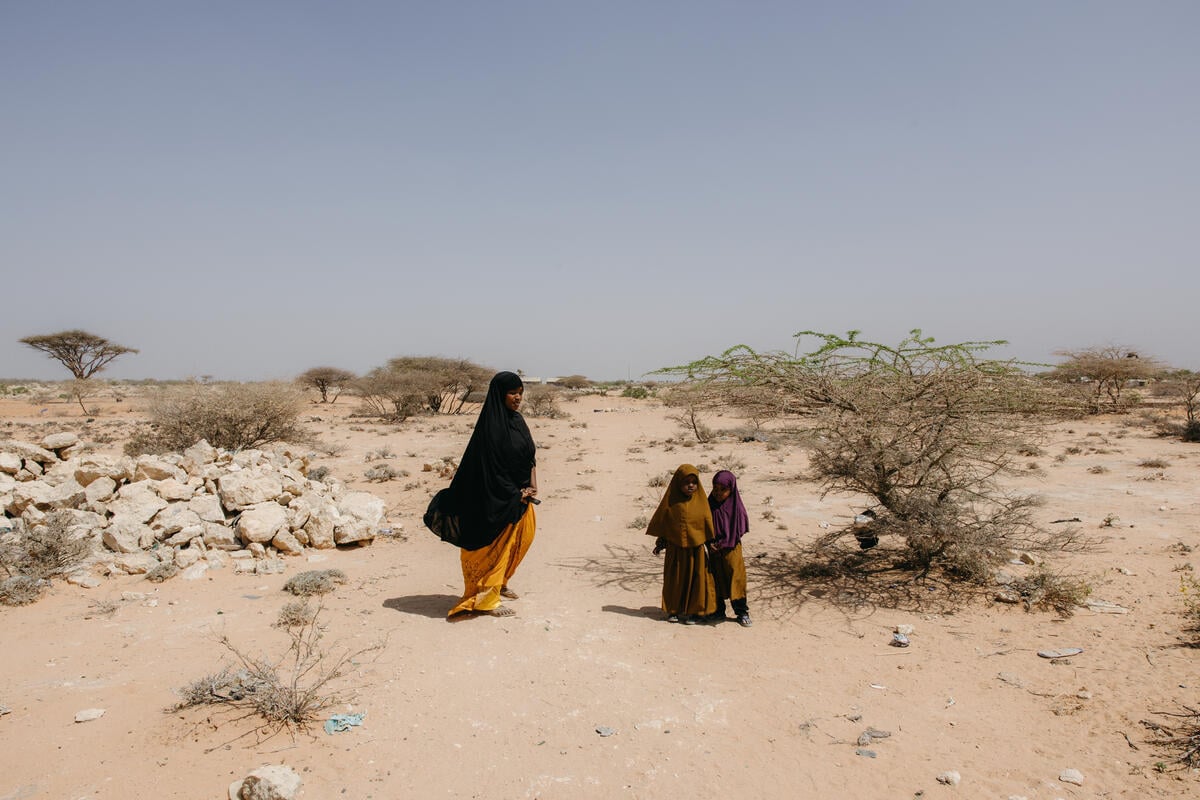
An increasing number of displaced families in Somalia are experiencing severe hunger. Near Garowe, Somalia. 2025 Photo by Abigajla Conway
 
A mere 2 percent of all relief from international donors for Somalia was derived from the United States. From providing humanitarian assistance to Somalia in 2024 of $467 million, last year the U.S. administration slashed that aid to $70 million. Dependent on oil from the United Arab Emirates, Iranian strikes on production facilities in the Persian gulf affected transport cessation, leading to the price of gasoline and diesel over-doubling in price.
 
The predictable response was trucking companies doubling and tripling costs for trucking sacks of corn from Ethiopia over the border to Somalia. Rice shipped into Somalian ports rose similarly. The price of water at public wells tripled since many of the pumps use diesel for energy. One third of fertilizers for Somalia's farming sector is derived from the Persian Gulf so with stocks marooned at the Strait of Hormuz, farmers face steeply higher operating costs.
 
Unaffordable food in combination with fewer medical clinics in operation resulted in children likelier to suffer malnutrition. Infants and toddlers with severe cases of malnutrition were given therapeutic milk formula and antibiotics, while those in greatest danger went to a stabilization unit operated by UNICEF within a local hospital. Children on cots with feeding tubes and some attached to oxygen, fought for their lives and their futures. 
 
The largest source of aid in Somalia, the World Food Program, has sufficient funding to support 300,000 people monthly through to July, representing a fraction of the close to two million people a month it was serving in early 2025. Somalia depends on imports for 70 percent of its food, at a time when staple goods like rice and wheat have doubled in price.
 
https://www.doctorswithoutborders.org/sites/default/files/styles/crop_article_desktop_1238_529/public/image_base_media/2026/05/MSF367250.jpg?h=3a209dfb&itok=Qx5Gc3D-

Three years ago, Tahliil Abdulahi Cali had 250 goats. Today he has 100. The rest died as the rains failed, season after season, across his community in the Mudug region. Mohamed Said Barkhadle


Labels: , , , , ,

Saturday, August 21, 2021

It's a Drought, Searing Heat-Impacted Harvest in the Canadian Prairies

"It's really brown right now, but our farm is actually in a beautiful spot."
"It's pretty remarkable to say that this wheat I'm growing right now is going to end up all over the world and in someone's kitchen. It's a pretty special thing to get to say that I'm growing wheat in Alberta."
"In the middle of the summer, I was feeling pretty stressed about it [drought]. And you do what  you can. We're going to be fine for next year. But what really contributes to my stress levels is that it's been said that droughts come in three- and five-year cycles. So if we do find ourselves in a prolonged drought cycle, it will have impacts on our ability to keep doing this."
Hanna Konschuh, Generation Land & Grain Co.Ltd., family farm 
Wheat harvest takes place on Hannah Konschuh's family farm near Cluny, Alberta
“We had a really good growing season last year (pictured), so that’s going to buffer us a bit,” says Hannah Konschuh, who farms near Cluny, Alta. Photo by Hannah Konschuh
"It's going to be an interesting season because we're seeing lowered production across major exporters. So the supply available globally is shorter than it has been in previous years."
"Our domestic consumption in a normal year would be around eight million tonnes -- [24 million tonnes is] more than enough."
Daniel Ramage, director of market access and trade policy Cereals Canada  

"I think what's becoming increasingly challenging, especially for young farmers who are just coming into this and facing some pretty significant expenses, is not knowing."
"It's the uncertainty of what impact climate change is going to have on their ability to viably farm."
Erin Gowriluk, executive director, Grain Growers of Canada
Wheat Farmers Forced To Make Hay Following Crop Failure Due To Drought
Photo by David Gray /Getty Images
"This is the worst year I've ever witnessed. Since the snow left this spring, we haven't had enough rain that would wet your T-shirt."
"Even in my garden, I had cherry trees that looked like I was going to get a nice crop and the heat just fried them. They shrivelled up to nothing. It was just so hot.""Apples were burnt on one side, little green apples. It's like someone took a torch to them."
"We might not be able to fill some bigger orders."
Tony Van Den Tillaart, co-founder, Fieldstone Organics, Armstrong, British Columbia
Western Canada's prairie provinces are seeing unprecedented soaring heat temperatures this year. On Hannah Konschuh's farm overlooking the Bow River, Canadian Prairie spring wheat yield has dwindled to 12 bushels an acre from its 2020 yield of 65 bushels an acre. Hard red spring wheat generally considered more drought-tolerant has succumbed to the drought and searing heat, as has the farm's barley, yielding 10 to 15 bushels per acre as compared to over 100 the year before.

Through Western Canada, from Vancouver Island to northwestern Ontario a stark picture has emerged out of Agriculture and Agri-Food Canada's Drought Monitor map where the three Prairie provinces are mottled brown, red, orange, tan and yellow; a sliding scale of abnormal lack of moisture. Harvest began seven to 14 days earlier as a result of the record-breaking temperatures and absent rain, explained Cereals Canada's director of market access and trade policy, Daniel Ramage, adding that the situation pertains right across North America.

The forecast is for 24 million tonnes of Canadian what production, a 32 percent decrease from 2020 according to the latest USDA estimate. Countries such as Russia and Kazakhstan have cut their production estimates as well in indication that lower yields in North America have also impacted the wheat growing season in those countries and for the same reasons. Bread prices are tentatively forecast to rise by up to 6.5 percent by year's end.

While harvest is underway, the full impact of the severe weather on quantity and quality of grain has not yet been fully determined since farmers in some areas fare well but in others harvest is anticipated to be as low as 50 percent normal. What is unique about this drought season is its widespread nature whereas in the past there were pockets of drought causing a drop in wheat quality but 80 percent would still be good, very good or excellent. The current situation reverses that, where in Alberta 80 percent of crops are now of lesser quality.

Some areas have been coping with drought effects while under wildfire evacuation alert. "These fires have just made it worse because you don't get the sunlight. It affects plants that are trying to ripen", explained Tony Van Den Tillaart of Armstrong, B.C. Some farmers in his area are harvesting 75 percent of what 2020 rendered, while others can manage only 50, 25 and others yet, ten percent of normal harvest. 

In Saskatoon, baker Bryn Rawlyk  has canvassed local farmers and each of them has been affected by drought; some have sufficient stock set aside from 2020 to meet his bakery's needs for the coming year, but his concerns centre on the drought conditions continuing. "Everyone's been on edge", he states. How will wheat grown in drought conditions and under heat stress perform for bakers -- another area of concern when local flour is prioritized.
 
Heat, wind, grasshoppers and very little rain have resulted in major production loss for Saskatchewan farmers. (Richard Agecoutay/CBC News)
"People in Saskatchewan are always once or twice removed from a farmer. Here in the Prairies, we're known as the breadbasket of North America. That's shown in the product, but also just the livelihoods of so many of the people, and the people connected with those activities and families and forums."
"We try to find different uses for it [drought-stressed wheat] within the bakery [baking flatbreads instead of aiming for a lofty loaf]."
"That's what I think is a nice thing about the dynamic nature of what we're allowed to do, and those skills as bakers in the bakery - of taking a product and being more nimble with it."
Bryn Rawlyk, The Night Oven, Saskatoon bakery
University of Saskatchewan Prof. John Pomeroy predicts more frequent and severe droughts in the Prairie region by the late 21st century. (Richard Agecoutay/CBC News)
"Some are projecting almost no harvest at all, or just enough to maybe replace the seed that they planted in the ground so they can get seed planted next summer. Some are harvesting about 25 percent of what they would typically expect The conditions are terrible."
"We will feel the effects in a few months when grain reserves start to really dwindle, and we're scrambling to find [grains] and we're probably paying much higher prices."
"The farmers are the people on those first lines. They see it every single day that there's no rain in the forecast, and it's awful to witness. But it's important to be connected to our food in that way."
"Because we're extremely committed to our farming suppliers and milling our own grain, we have to let the grain tell us how to make the bread."
"This is bad timing to be coming off of a really terrible harvest. But I hope it serves as an opportunity to help illustrate to people the challenges of growing food."
Janna Bishop, co-founder, CEO, Flourist, Vancouver mill and bakery

Labels: , , , ,

Wednesday, December 13, 2017

Allocating Blame as California Burns

"With climate change, some scientists are saying California is literally burning up."
"[The immense blazes represent] the new normal [California has been introduced to] the new reality."
California Governor Jerry Brown

"[Usually, winds in the area] flow from the west, carrying cool, humid air from the [Pacific Ocean] onshore."
"[But the hot, dry Diablos [winds] reversed course. It now blows from the northeast toward the ocean at 65 km/hr, with gusts up to 120 km/hr, giving massive impetus to the fires]."
"These hot, dry winds develop from an unusual pattern of high and low pressure cells, and are most prominent in autumn. They follow the normal summer and fall drought that occurs in this Mediterranean-type climate, leading to severe fire weather conditions."
"The speed of these fires is a major factor leading to the loss of human lives."
"Nearly all fires in Sonoma County are caused directly or indirectly by people, such as intentional ignitions or power lines igniting fires. Population growth raises the probability of fire igniting under severe weather conditions."
Jon Keeley, research geologist, U.S. Geological Survey
California wildfires FBN AP
Officials are currently unsure what sparked the wildfires in Southern California.  (The Associated Press)

And so, California, which every year without fail, suffers catastrophic wildfires difficult to control much less extinguish, exacting a great cost in human lives, firefighting, and destroyed property, is now facing the seeming potential of much exacerbated conditions leading to ever greater such natural phenomena. Raging infernos have struck around Los Angeles, convincing people living there that what they are witnessing and have ample cause to fear, are events much worse than those experienced in the past.

Over forty people were left dead from the Sonoma County fires north of San Francisco where the Thomas Fire has succeeded in destroying 800 structures, damaging or threatening over 18,00 more in the Santa Barbara area. Another unprecedented phenomena emerged when California underwent a five-year drought, concluding only last year. There's a misguided belief that even in ordinary circumstances California never receives rain, but that is a misconception that reality proves otherwise.
A fire truck drives up Romero Canyon to a house surrounded by smoke from the Thomas Fire in Montecito as California battles against a devastating blaze 
A fire truck drives up Romero Canyon to a house surrounded by smoke from the Thomas Fire in Montecito as California battles against a devastating blaze

In the winter months it rains in the southern portion of the state. In the northern and central mountains there is ample snow, and come spring snow melts, irrigating the valleys below. Where foliage blooms everywhere thanks to that moisture all over the state. Famously, California artists paint entrancing landscapes of California in seasonal bloom, vast seas of colour. But when summer arrives, the hot sun bakes the atmosphere and the landscape becomes dry when moisture is scarce.
"Plants are happy and growing well in the winter time, and when summer proceeds to the fall they get drier and drier."
"The amount of water in the plants get lower and lower and lower; it means that they are very dry. When it gets to critical threshold level and a fire comes through, they're very flammable. It happens every year."
"The intensity of the Santa Ana winds is about as extreme as they get [driving the Thomas Fire into legend]."
Marti Witter, fire ecologist, National Park Service, Santa Monica National Recreation Area
Antelope Valley California Poppy Reserve, California
Antelope Valley California Poppy Reserve / Rennett Stowe,

And then there is the simple, obvious, and quite discomfiting fact that county planners and housing developers are directly responsible for much of the destruction that takes place when multitudes of buildings are consumed in these implacable fire situations. Right contiguous with wildlands in the West, two million homes went up in both Washington and California, according to Headwaters Economics, a nonprofit independent group studying wildfire prevention.

These scenic areas are in high demand. When houses are built where they are vulnerable to such natural outcomes as seasonal fires reacting from weather and climate conditions, peoples' homes are heartbreakingly destroyed, and the residents themselves are placed in mortal danger. Residents treasure their access to the natural beauty in such remote locations, despite the moderate to high risk of experiencing wildfires and the fire-torching of their homes. An estimated $500-billion-worth of property destruction results, figures from CoreLogic, a company specializing in real estate economics.

"It's a witch's brew. The risk keeps increasing. I'm putting firefighters in harm's way", says Tom Harbour, former national fire and aviation director for the Forest Service.

The Thomas Fire is southern California spread 50,000 acres in just one day making it the fifth largest wildfire in modern California history.
The Thomas Fire is southern California spread 50,000 acres in just one day making it the fifth largest wildfire in modern California history.  Fox News


Labels: , , , ,

Saturday, June 24, 2017

African Tribal Violence

"The briefing [between the Canadian diplomat and South Sudan's foreign minister in 2011] was repeatedly interrupted just because of the noise from the gunfire. Tank rounds going off. And the minister was saying, 'Do not worry. Everything is perfectly normal."
"Those 20,000 people at the airport? It's always busy at Christmas. We wish them happy holidays."
"We'd park our vehicle [at the airport in Juba]. To be honest, it was a bit like a football tailgate party. The [foreign] embassies would park their vehicles and put their flag up. The Canadians [South Sudanese with Canadian passports] would come to us."
"I was constantly negotiating with the friendly countries -- do you have any seats on aircraft? Or they would come to us and say: 'We've got some Canadians [Sudanese-Canadians]. Can you check their documents?"
"Within two days you had 20,000 camped out at the UN compound at the airport and another 20,000 in town who didn't dare come out to the fence. And there was a 6:00 p.m. curfew. At six, the military would start shooting."
"Some [Nuers] we had to literally hold their hands to get them out of the airport. We'd be taking them out by the arm and the soldiers would come and I'd have to push them away and say, 'No, no, no. Diplomatic. Diplomatic'."
Nicholas Coghlan, (retired) Canadian diplomat with the Canadian Embassy in South Sudan
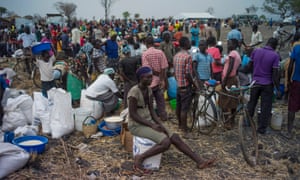
Families wait in line as the World Food Program prepares to deliver food aid at the Bidi Bidi refugee camp on Feb. 22 in Arua, Uganda. The continued flow of refugees from South Sudan has pushed the camp's population to more than 270,000.   Dan Kitwood/Getty Images

South Sudan, after a long conflict with the government of Sudan, an Arab, Muslim hierarchy governing black Sudanese Christians and animists, as well as Black Muslim farming communities all of whom felt marginalized and ill-treated by Khartoum, became the newest nation in the world in 2011, after a referendum in the south resulted in Sudan finally agreeing to respect a breakaway portion of their geography in the creation of South Sudan.

For awhile competing political and ethnic and religious interests were set aside as the impoverished nation attempted to pull itself together. The rivalries that had been tamped down as the various interests cooperated in their greater struggle against the government in Khartoum didn't last long, however, and the majority Dinkas in South Sudan began to attack the minority Nuer people; their shared government fell apart. By 2013 the country was roiled by civil war.

Foreign embassies became frantically involved in trying to rescue South Sudanese refugees who had sought haven and achieved citizenship in the West, and then returned to South Sudan with the intention of helping the new nation become an independent, sovereign success. But things turned ugly and even their own ethnic group, the minority Nuer, rejected those that had left while the country was in its original turmoil: "They were told, 'Where were you? I was in the bush for 2 years while you were living the high life in Canada'." explained former diplomat Coghlan.

That was then; four years later nothing has been resolved, the ethnic conflict continues. About 1.8 million South Sudanese have fled the fighting in their new nation for haven abroad. Almost a million ended up in Uganda, with large numbers also finding haven in Sudan, Ethiopia, Kenya and the Democratic Republic of Congo, even though inner conflict and poverty strikes there as elsewhere in Africa. Aside from those leaving South Sudan, an additional two million forced from their homes remain within, living in camps, fending as best they can.
"We are managing but there is a severe shortage of funding. We are only getting about 15 percent of the funding we require. That is a serious gap that may drive us beyond the breaking point."
"This could force the government [of Uganda] to examine its generosity at some point."
"That [the $20 million of the $400-million required to operate refugee camps in Uganda for South Sudanese refugees] is a drop in the ocean. There are refugees suffering in a poor country that has given everything that it can. And the world is walking away from us."
Robert Baryamwesiga, commandant [mayor], Bidi Bidi, Uganda
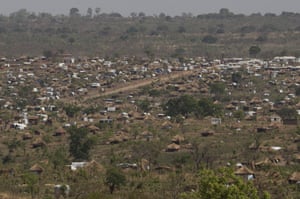
The Bidi Bidi refugee camp in Uganda is home to about 274,000 people, making it the largest camp in the world.
The Bidi Bidi refugee camp in Uganda is home to about 274,000 people, making it the largest camp in the world. Photograph: Dan Kitwood/Getty Images

The Ugandan town of Bidi Bidi grew last August from a tiny enclave to become a refuge to 272,000 South Sudanese fleeing violence, starvation and death in their country. It has the distinction of representing the world's largest refugee camp. Masses of refugees registered with Ugandan authorities form long lineups daily for food, water and vaccinations. They have become the forgotten refugees; the world's attention focused on Syria and Iraq, with over a million refugees and migrants showing up in Europe.

As for China, with its deep interests in African investment and focus on furthering its presence there to gain influence and supply its own industries with food and minerals derived from African natural resources, its interests seem to stop short at the exploitation stage and feeding its own economy, not the refugee dregs of a desperately poor country. South Sudan and its violent upheaval has become a local event of disinterest to the global community fixated on the Middle East.

Famine stalks South Sudan. Partially because of a catastrophic drought. But then people were too frightened to plant, let alone harvest crops. And the issue of international aid with humanitarian shipments of food meant to stave off large-scale starvation has created a deadlock of another dimension when the competing sides often refuse to allow food aid through.

"They arrive, not having had food and water for weeks. That is what is mobilizing people to leave South Sudan", explains Elyas Mohammed, co-ordinator for the United Nations in Bidi Bidi for whom the focus is on the provision of food, water and shelter. Uganda requires at least $400-million for the operation of its network of refugee camps, but of that total, an insufficient $60-million was pledged, and merely $20 million received.

As Uganda struggles with its dedication to humanitarian aid offered to desperate refugees, though the country itself has experienced more than its share of conflict and desperation and is now yet another desperately poor African nation, it braces itself for a further influx of South Sudanese, with an anticipated additional 400,000 refugees expected to flood over the border in this year's remaining months.

Refugees gather at a settlement in Palorinya, northern Uganda
Refugees gather at a settlement in Palorinya, northern Uganda. In March, 2,800 people arrived in Uganda every day from South Sudan. Photograph: Dan Kitwood/Getty Images

Labels: , , , , , , ,

() Follow @rheytah Tweet