Politic?

This is a blog dedicated to a personal interpretation of political news of the day. I attempt to be as knowledgeable as possible before commenting and committing my thoughts to a day's communication.

Saturday, August 22, 2026

Delusions of Existential Grandeur

"It is better that we bring the war to an end now as we are in a position of power and dignity."
"The whole world acknowledges our victory and emphasize that America has attacked our schools, hospitals and infrastructure in violation of all regulations and is hated around the world."
"They cannot find even a single clause in this agreement that indicates capitulation. All the commitments concern the other side."
"Today, we believe that all our commanders and armed forces are fully prepared to defend the country with all their might and with their lives in their hands. They also believe that the government is wholeheartedly seeking to serve the people." 
Iranian President Masoud Pezeshkian
https://www.tbsnews.net/sites/default/files/styles/big_3/public/images/2024/07/06/iran_masoud_pezeshkian_01.jpg
Iranian president Masoud Pezeshkian waves during a campaign event in Tehran, Iran. Photo: Majid Asgaripour/WANA (West Asia News Agency) via REUTERS
 
"Sanctions and pressure will not help resolve the issue."
"China calls on all relevant parties to take responsible measures and resolve the problem through political and diplomatic means."
Chinese Foreign Ministry spokesman Lin Jian  
China's spokesman sounds as though wisdom and world peace is always uppermost in the minds of Beijing's Communist Party elites. This is the country, of course, that shot down pro-democracy students in Tiananmen Square, who wanted the end to one-party dictatorship of China. Any Chinese citizen who dares to publicly commemorate the event and mourn the death of thousands of protesters, under Chinese law is held guilty of "incitement to subversion" and faces a long prison sentence. In China, furthermore, Muslims such as the Uyghurs in Xinjiang face cultural obliteration, but as long as Islam is kept out of China, Beijing is front and centre in support of an Islamist regime even more brutal than its own. 
 
The U.S. war in Iran against the Islamic Republic that began in February with U.S. and Israeli coordinated aerial bombardments of the country, is at a standstill. The issue of the IRGC closing the Strait of Hormuz to normal marine traffic moving oil, LNG, fertilizers and other products valued by the global community threw a spanner into President Trump's plans to remove the Iranian regime to ensure that no further efforts would be made in pursuit of nuclear and long-range missile development to threaten the world community, as well as rescue Iranians from the persecution of the Ayatollahs and the Islamic Revolutionary Guard Corps they have suffered under since 1979.
 
https://dims.apnews.com/dims4/default/6304692/2147483647/strip/true/crop/6000x4000+0+0/resize/800x533!/format/webp/quality/90/?url=https%3A%2F%2Fassets.apnews.com%2Fdd%2Fdf%2Fd21260d4be510ac58a02c659f28c%2F648dc7f1fff14d8d93cf05ae45ba4a68
Oil residue lines the shore near fishing boats on Qeshm Island, Iran, Thursday, Aug. 13, 2026, amid ongoing wartime attacks on vessels and infrastructure in and around the Strait of Hormuz, though the spill’s source has not been independently determined.(Amirhosein Khorgooi/ISNA via AP)
 
The unpopularity of the war in the United States resulted in political vulnerability for the American president, with the understanding that if he ordered a ground invasion to complement and support the air and sea bombardments, he would face certain political repercussions in the future, and the Republican Party would be in a poor position with upcoming Congressional elections through voter resentment of having their country dragged into another 'forever' war in the Middle East. Issuing threats rather than taking firm action has resulted in a half-completed war, leaving the Iranian regime exultant that its ploy to provoke its neighbours through strikes that would leave them less enamoured of hosting U.S. military sites created a rift that in the end profited Iran's regime.
 
The hyperbole emanating from the Iranian government which has seen its geography relentlessly bombed, its political and theocratic leaders targeted and eliminated along with its military and scientific elite, its weapons stocks destroyed, its airfields and naval assets destroyed, creates an aura for interior consumption of a valiant nation courageously confronting an alien power set on its destruction. While countering the American offensive, the regime was also engaged in destroying its citizens' hopes of rescue from its theistic Islamist rule, through arrests, torture and the death penalty for those who had been detained among the hundreds of thousands who attended mass protests throughout the country in December. 
 
Now the Iranian president acts out a role of peacemaker, that his country is prepared to accept certain conditions demanded by U.S. negotiators in Tehran's projected belief that its position is in a better place  than that of its nemesis, Washington. The on-hold talks aside, Tehran is still blocking access to passage through the Strait of Hormuz, as its victory centrepiece. As though it is of no concern that Washington has instituted a naval counter-blockade of Iran.
 
https://dims.apnews.com/dims4/default/7f54e84/2147483647/strip/true/crop/5958x3972+0+0/resize/800x533!/format/webp/quality/90/?url=https%3A%2F%2Fassets.apnews.com%2F49%2F4a%2F3e2060362bdb90b27cb120bf6caa%2Fddaecdcfc5d2455798e857d7cf0f0138
President Donald Trump speaks during a meeting with technology leaders in the Roosevelt Room of the White House, Wednesday, Aug. 19, 2026, in Washington. (AP Photo/Jacquelyn Martin)
 
The prospect of signing an agreement which Iranian Supreme Leader Mojtaba Khamenei purportedly approved, despite 'differing views', toward the goal of ending the war, will allow the Iranian regime to proclaim victory. Even as Iran's parliamentary hard-line lawmakers criticize the government, accusing it of concessions to placate the US. including reopening of the strategic Strait, even as the U.S. Navy organizes and protects convoys of tankers through the Strait's southern sector, such an event would allow the regime to retain its power and exult over its having 'won the war'. 
 
Iran's Foreign Ministry accused the US. of "economic terrorism" and "crimes against humanity", in a sanctimonious reversal of the regime's modus operandi. "The perpetrators and instigators of these sanctions are deserving of trial and punishment for committing such heinous crimes", they stated, following U.S. Treasury Secretary Scott Bessent's declaration that Washington would "collapse" the Iranian regime with an economics sanctions campaign.
 
U.S. politics, with the Republicans taking the  temperature of the U.S. public over the prolonged Middle East conflict has led the Trump administration to abandon its half-successful aerial bombardments and threatening naval presence in favour of an economic embargo. The plan, which Bessent elaborated on to a degree is to intensify economic sanctions, favouring that route over a continuation of heavy military operations.
 
Iranian Foreign Minister had his own interpretation of these events: "The so-called 'Economic D-Day' is a diversion from America's own crisis: unprecedented debt and surging interests costs", spat Abbas Araghchi in an X post. 
https://images.jpost.com/image/upload/f_auto,fl_lossy/c_fill,g_faces:center,h_537,w_822/508037
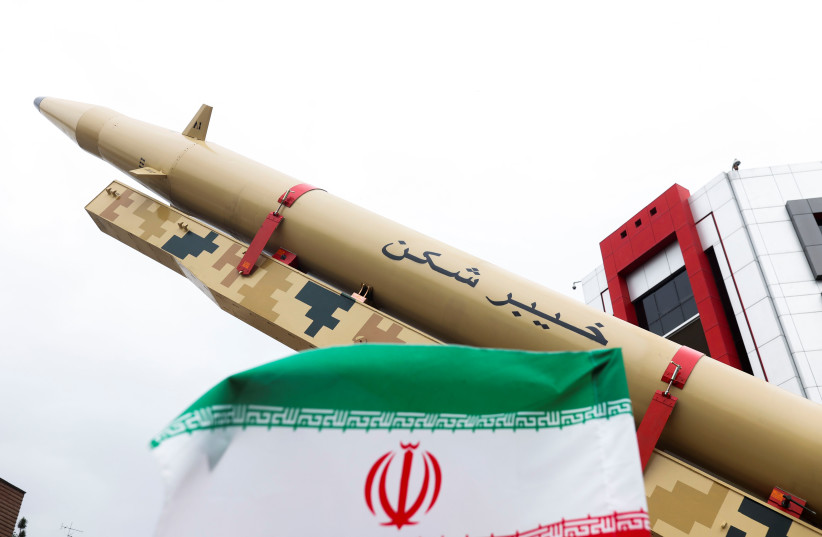
An Iranian missile is displayed during a rally marking the annual Quds Day, or Jerusalem Day, on the last Friday of the holy month of Ramadan in Tehran, Iran. (credit: MAJID ASGARIPOUR/WANA (WEST ASIA NEWS AGENCY) VIA REUTERS)
 

Labels: , , ,

Sunday, August 09, 2026

Beggared and Battered The Islamic Republic Believes It is In Charge

"[The United States must agree to a list of demands for reopening the strait, including an end to the] war and aggression against Iran and its allies in Lebanon, Palestine, Yemen, and Iraq]."
Iranian Security Chief Mohammad Bagher Zolghadr 
 
"[Hormuz’s reopening had] nothing to do with the negotiations between Iran and Oman."
"[The] enemy is forced to accept Iran’s conditions for the opening of the strait."
Islamic Revolutionary Guard Corps 
 
"[We condemn the] hostile Iranian attack that targeted a tanker belonging to ADNOC (Abu Dhabi National Oil Company) with a missile while it was transiting the Strait of Hormuz, [despite that the attack occurred] without causing casualties."
United Arab Emirates’ foreign ministry
 
"[We condemn] repeated attacks on vessels transiting the Strait of Hormuz."
"Ongoing negotiations regarding navigation arrangements in the Strait of Hormuz are proceeding in a positive and constructive atmosphere. [We urge against any actions that might jeopardize the progress]."
Omani Foreign Ministry
 
"We are low-keying it."
"We are only semi-negotiating with them. We are just watching Iran with its huge inflation and the fact they have no money."
"It will work out. It's like a chess game."
U.S. President Donald J. Trump  
https://fortune.com/img-assets/wp-content/uploads/2026/08/GettyImages-2288486958-e1786222225153.jpg?format=webp&w=768&q=100"
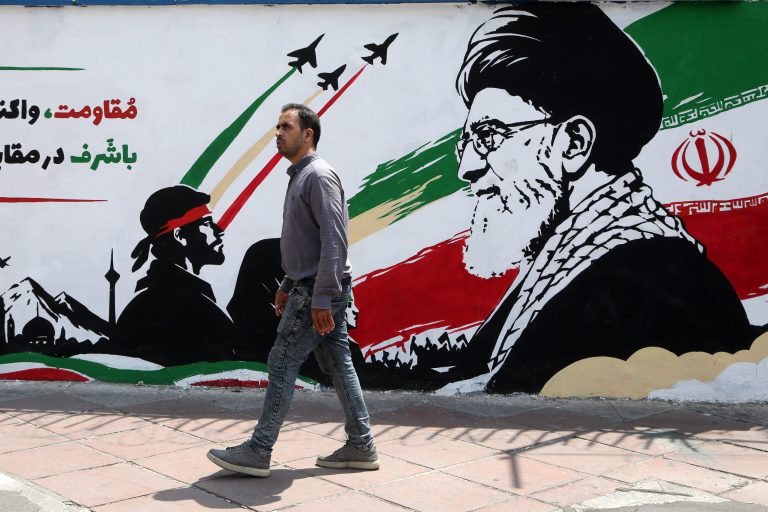
A man walks in front of a wall mural in Tehran, Iran, on August 6, 2026. Fatemeh Bahrami/Anadolu via Getty Images
 
"We currently have no negotiations with the United States. Intermediaries are still making efforts to find ways to resume negotiations. From our perspective, there can be no resumption of talks until the United States ends its violations of the Memorandum of Understanding (MoU) and makes amends for the breaches it has committed."
"Until the violations of the memorandum of understanding by the United States are ended and the United States does not make amends for what it has violated, in our opinion, there is no possibility of resuming negotiations." 
"Of course, this [agreement with Oman] does not mean the opening of the Strait of Hormuz. This agreement may be reached, but the opening of the Strait of Hormuz is subject to a series of conditions." 
"The opening of the Strait is subject to other conditions, including the compensation for the US's violations of the Islamabad Agreement." 
Iranian Foreign Minister Seyyed Abbas Araghchi  
"I try to remind people that we're really in the middle of the game here."
"[The question is whether Iran will be able] to give the things that are necessary for us to be happy, for us to feel like we've gotten what we need out of this particular engagement."
"What we're really working through now is how you can actually set up a traffic scheme so that the ships that pass can pass through safely."
U.S. Vice-President, J.D. Vance  
Battered and bruised, many of its key government figures, including the Grand Ayatollah, high-placed members of the Iranian military, nuclear scientists, IRGC officials were targeted and eliminated in the February aerial attacks coordinated between the U.S. and Israel. Iranian shipping and military fleets were bombed, its aircraft destroyed, nuclear facilities bombed as well as government offices, communications were hit and the country's munitions stockpiles destroyed. What wasn't destroyed is the arrogant assumptions by the Islamic Revolutionary Guard Corps that despite these massive losses, they remain 'in charge'. 
 
They engineered a response, though considered by analysts prior to its implementation as a possibility, that was a stroke of Byzantine economic/military genius; blocking the Strait of Hormuz to international shipping as a critical gateway from the Middle East to the rest of the world dependent for their energy supplies and agricultural fertilizers. Holding the Strait hostage to the world's dependency on this energy lifeline represented a clever move to squeeze the political fortunes of a foreign government that 'won' a war and lost the rewards of its aftermath through sheer economic gangsterism.
 
That 'conquered' nation whose economy is in tatters, whose military infrastructure is in huge upheaval, whose population prays for its downfall still managed to terrorize its neighbours in destructive bombardments of their territories housing U.S. military assets, in targeting their oil depots, in threatening that for every U.S. military move on Iranian assets in reaction to Iran's intransigence for refusing to be defeated, has demonstrated its cunning manoeuvres counteracting the 'victory' of a much more powerful military. 
 
https://www.politico.com/dims4/default/resize/630/quality/90/format/webp?url=https%3A%2F%2Fstatic.politico.com%2Fb3%2F1e%2F53e733d3408889755226ffd2a1cf%2Firan-war-strait-of-hormuz-69637.jpg
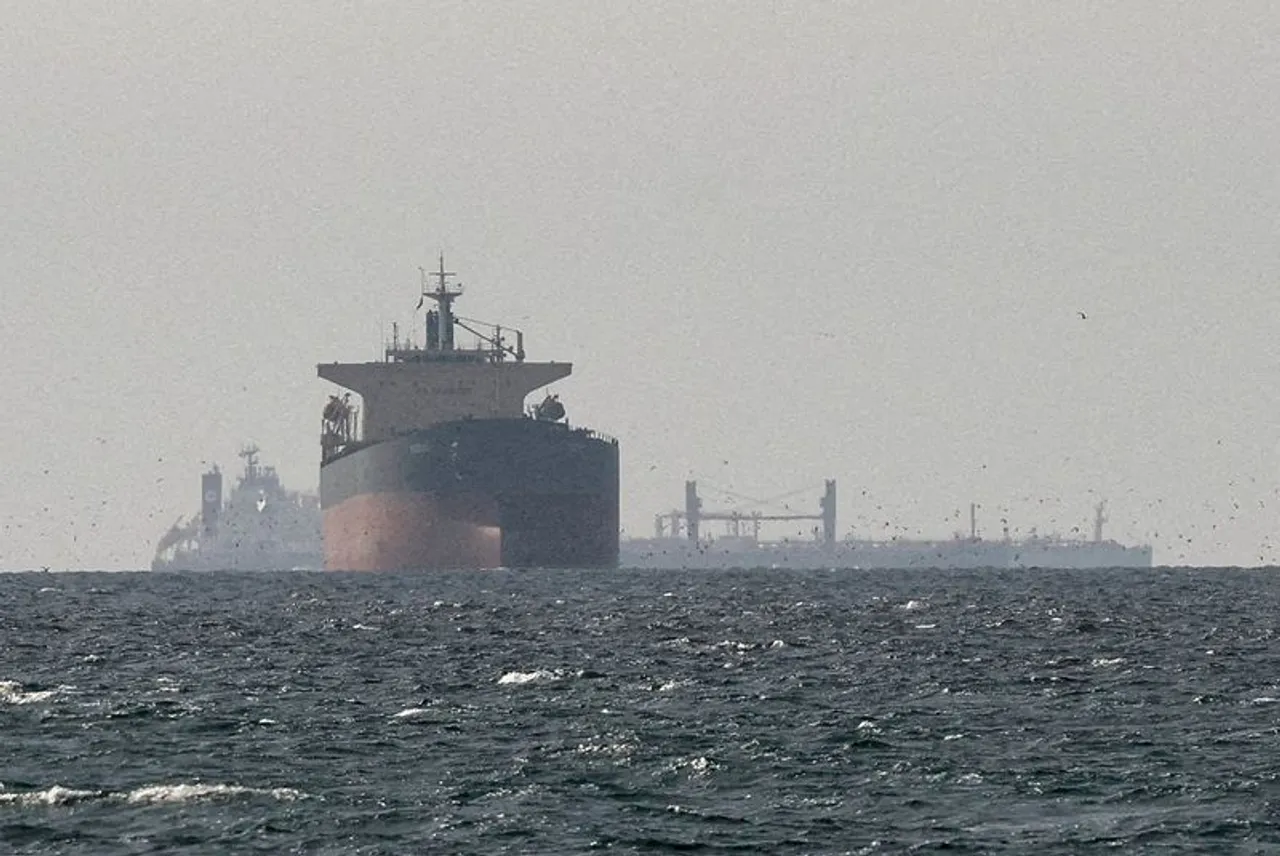
A small boat sails past cargo ships and other commercial vessels anchored in the Strait of Hormuz off Bandar Abbas, Iran, Wednesday, Aug. 5, 2026. (Amirhosein Khorgooi/ISNA via AP)AP
 
Iran, the defeated, yet actively defiant assailant of its own people, of its neighbours, has delivered an ultimatum to the world's most powerful nation: do as we demand or your victory will turn to the dust of history's recounting of a debacle of unforeseen consequences. Just as the Islamic Republic demands reparations from the very neighbours it has pounded time and again with missiles and drones in retaliation for their having acceded to hosting U.S. military emplacements, to prod its nemesis, the United States, to rethink its flawed efforts to bring down the regime, it now demands the same from the U.S.
 
Iran's Supreme National Security Council secretary Mohammad Bagher Zolghadr, a commander in the Revolutionary Guard Corps, has issued a list of new demands, emphasizing that the Strait of Hormuz will not be reopened to international marine traffic until such time as the United States "corrects its behaviour" by adhering to the following:
  • The United States must never again threaten Iran;
  • The United States must permanently end its war with Iran and its regional armed proxies;
  • The U.S. must lift the naval blockade of Iranian ports;
  • The U.S. must withdraw its military from the area;
  • The U.S. must completely compensate Iran for war damages;
  • The U.S. must life sanctions and unconditionally release Iran's frozen assets.
Separately, Iran has been negotiating a stand-alone agreement with Oman to manage the Strait running between the two countries' borders. The waterway's reopening rests on other conditions, including the stalemate resulting from the U.S. violation of the interim deal signed in June to end sanctions and plan on compensation as part of a final agreement, according to Iranian Foreign Minister Abbas Araghchi.  
 
https://newsmedia.tasnimnews.ir/Tasnim/Uploaded/Image/1404/09/06/1404090612211728734852494.jpg

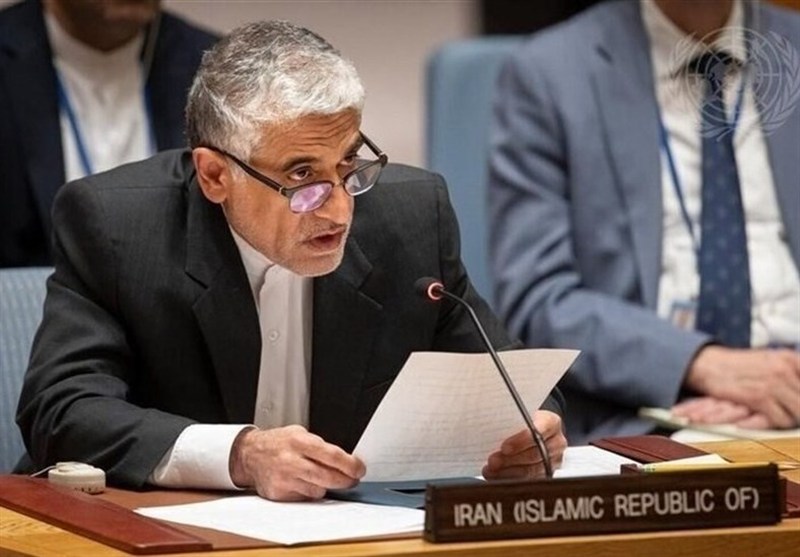
Iran's UN envoy demanded full reparations from Bahrain, Saudi Arabia, Qatar, the UAE, and Jordan, accusing them of facilitating unlawful armed attacks and breaching international obligations that led to significant material and moral damage to the Islamic Republic of Iran.  Tasnim News Agency

More recently, an Abu Dhabi state-owned ADNOC oil and gas company vessel while transiting the Strait was attacked, according to Emirati authorities. A reflection of Iran's tendency to fire missiles on commercial shipping as it seeks to 'privatize' the formerly international waterway by imposing stiff tariffs for passage through the Strait, paid directly to the Islamic Republic. The tentative agreement with Oman would see that country too exacting tariffs for safe passage through its side of the waterway. 
 
According to ADNOC, over a dozen of its vessels have been hit by missiles and drones while  transiting the Strait, since the war on Iran was launched in February. In that time, one crew member was killed and twenty others wounded. The United Kingdom Maritime Trade Operations Center confirmed that a vessel east of Khasah, Oman, was struck by a projectile causing a fire which the  crew put out. 
 
https://d2udx5iz3h7s4h.cloudfront.net/2026/5/10/Reuters/image/2026_05_10T124737Z_1_LYNXMPEM49065_RTROPTP_3_IRAN_CRISIS_SHIPPING_QATAR.JPG?width=1440&format=webp&quality=80
Iran demands US reparations and Hormuz control in latest peace proposal. (Photo: FILE) / Reuters


Labels: , , , , , ,

Sunday, July 19, 2026

"The U.S. Military Might Just Finish The Job"

"[The U.S. strikes were in response to the attacks on shipping]; if it happens again, it will get much worse!" 
"Anything that happens is going to happen very fast." 
"[The U.S. military might] just finish the job."
U.S. President Donald J. Trump  
 
"He made it very clear that, based on the assessments of CENTCOM -- and I remember those -- the expectation was much higher as far as Iran's ability to close the Strait of Hormuz or the scope of the attacks. So it really shows that CENTCOM has been able to really effectively degrade those operations by the Iranians."
"Oil is flowing out of the Strait of Hormuz. There were -- U.S. energy secretary today said that 15 million barrels of oil is coming out of the Strait of Hormuz. There were oil tankers that were coming out of the Strait of Hormuz last night, kind of coming closer to the coast of Oman."
"So, Iranians' ability has been degraded to really -- to do what they were able to do at the beginning. And I think if you continue with these strikes, you're going to see that Iranians kind of that -- the arm of their threat to the Strait of Hormuz being rolled back."
"I think CENTCOM has the ability to do it. I think you're going to see these airstrikes continue to target those launching pads, naval assets, and then it could be possible that CENTCOM, U.S. Central Command or NAVCENT, they're going to get more involved in escorting the ships out of the Strait of Hormuz."
Miad Maleki, Foundation for the Defense of Democracies  
https://img.lemde.fr/2026/07/17/0/0/5554/3703/556/0/75/0/af2ed71_ftp-1-nlt0ohxo4gvy-fea7075640a341b8a7dccabf7ff023c5-0-979a10f1c5e841989f299fd4c52d4537.jpg
United States President Donald Trump arrives aboard Air Force One at John F. Kennedy International Airport in New York, July 17, 2026.
 
Tehran has been targeting American assets (military bases) across the Middle East, reflecting the largest escalation in hostilities since the signing of the Memorandum of Understanding between the United States and the Iranian regime that put a halt to the conflict initiated jointly by the U.S. and Israel in February aerial assaults. A month following the MOA signing Iran has accused US. forces of hitting civilian and energy infrastructure, including an airport, a railway station and two bridges. 
 
State media reported eight dead and 20 wounded in Friday overnight attacks.
 
It takes a bit of naive credulity to imagine the Islamic Republic being concerned over eight of its citizens dead and 20 wounded in view of its record of habitually treating its own as enemy combatants when Iranians from time to time converge in public to denounce the regime for its overwhelming human rights abuses practised against its own population. Its defense of its population against the strikes imposed by a foreign power far more concerned over the welfare of long-suffering Iranians than their government is ludicrous.
 
American strikes have expanded, focusing on Iranian infrastructure, as promised by the U.S. President. Citizens were informed by their energy ministry to reduce  electricity usage, switch off air conditioners during peak hours in view of the fact that the power grid is under strain from what it identified as American strikes on energy facilities in southern Iran. Hard to estimate how much more inconvenient this is for Iranians than the total closing of internet imposed by the regime during the height of the protests opposing the regime back in January.
 
https://assets.cfr.org/images/t_gct_w1200/v1755543045/globalconflicttracker/Irans-Conflict-With-Israel-and-the-United-States-2025-06-15T032418Z_25498935_RC2O2FA9EFTD_RTRMADP_3_IRAN-NUCLEAR/Irans-Conflict-With-Israel-and-the-United-States-2025-06-15T032418Z_25498935_RC2O2FA9EFTD_RTRMADP_3_IRAN-NUCLEAR.jpg?_i=AA
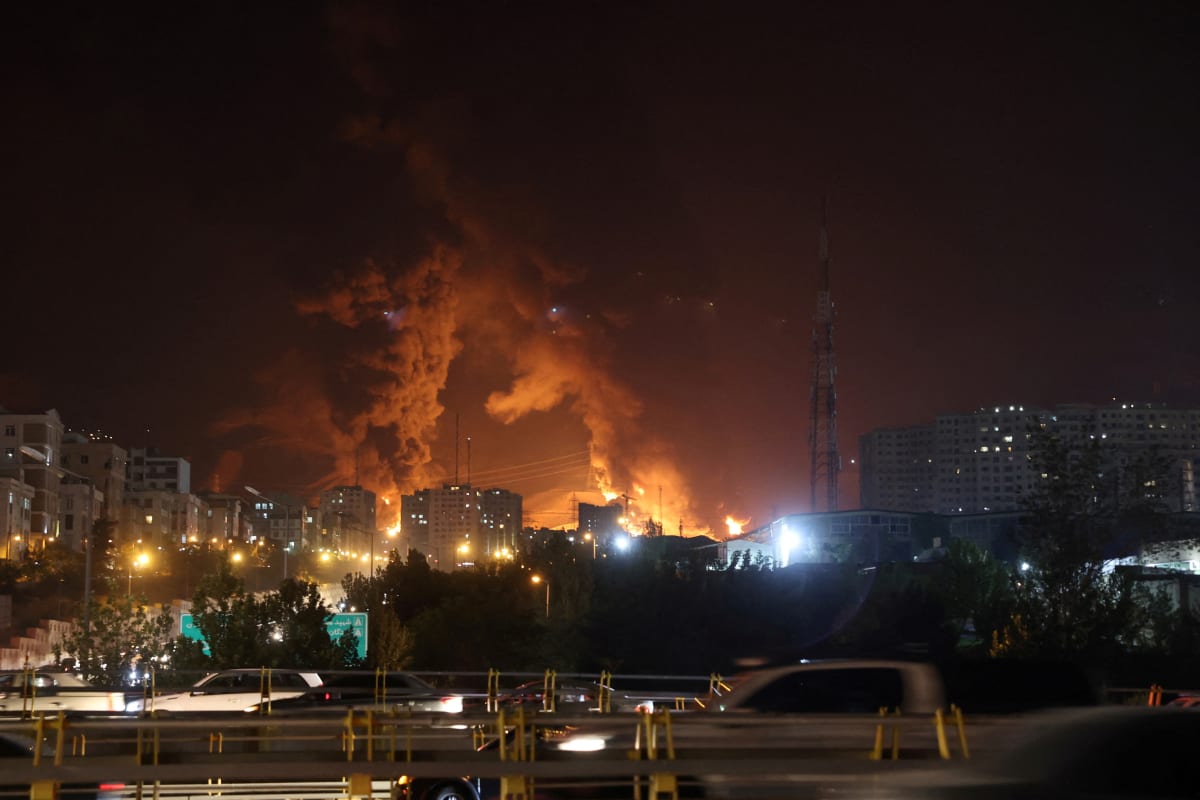
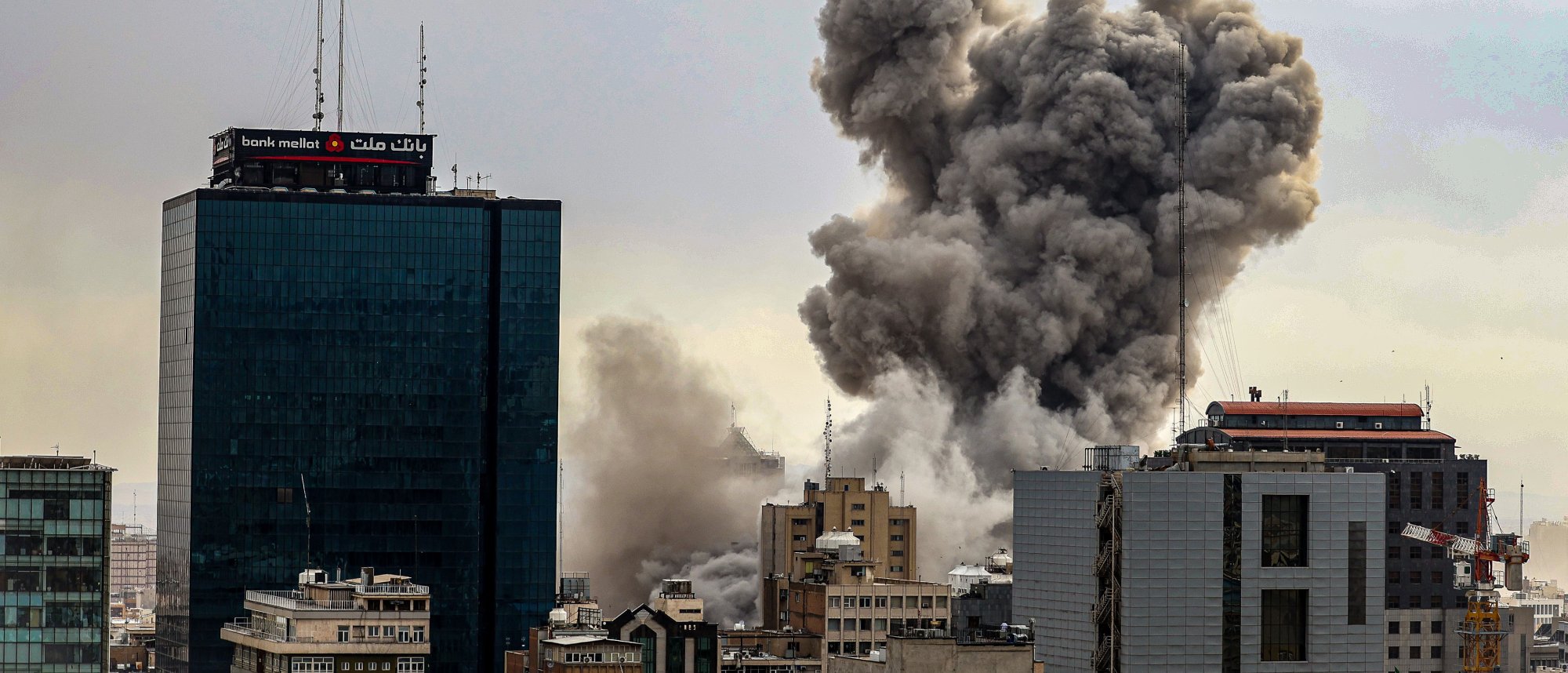
Smoke rises from an Israeli attack on the Sharam Oil Depot in Tehran, Iran  June 15, 2026  West Asia News Agency, Reuters
 
 In view of the renewed attacks by the U.S. military following Iran's continued striking of ships transiting the Strait of Hormuz, the Iranian military threatened strikes against "all infrastructure across the region" would follow any strikes on its own infrastructure. Friday saw it launching widespread strikes on its Gulf neighbours, following an exchange of fire, the largest since the MOA was signed a month earlier. U.S. military sites in Kuwait were targeted Friday, a power and water plant damaged by an Iranian attack. Kuwait in turn urged its citizens to "ration their electricity consumption".
 
The Islamic Revolutionary Guards claimed to have targeted US. radar systems and military aircraft in Qatar to "punish the aggressor". Doha, on the other hand, stated the missile attack had been intercepted. Two American radar sites in Oman as well as the Al-Tanf military base in Syria were also attacked by the IRGC. The Syrian military, however, denied that claim, noting that U.S. forces had withdrawn from the base earlier in the year.
 
According to the Jordanian military, three Iranian missiles had been shot down (forgetting to mention that it was Israel that shot them down for Jordan). In Iraq, Kurdish forces explained that the U.S.-led coalition had shot down several drones over Erbil. Iraq's Kurdistan region saw strikes that killed eight members of an Iranian Kurdish armed opposition group, by an Iranian attack. Tehran targeted US. helicopters and planes at an airbase in Bahrain, according to Iranian state media, causing the island nation to urge its citizens to take shelter. 
 
Tehran and Washington have been trading fire for eight days following a  battle over the Strait of Hormuz. According to Iran's health ministry at least 38 people were killed and over 400 injured in the country with the resumption of fighting. This, from a regime that has most recently murdered thousands of its citizens in December/January, injured and imprisoned many thousands more, who had called for their reviled, persecuting government to stand down. 
 
https://res.cloudinary.com/dmovl8u5q/images/w_1024,h_999,c_scale/f_auto,q_auto/v1783957296/globalconflicttracker/62goi-where-the-u.s.-iran-deal-lands-on-core-issues-/62goi-where-the-u.s.-iran-deal-lands-on-core-issues-.png?_i=AA 


Labels: , , , ,

Friday, July 10, 2026

The Intransigent, Defiant, Deadly Islamic Republic

"They asked for a time out [from military action]. They wanted to go to the funeral of Khamenei. And I said, ‘Give it to them.’ And they started shooting missiles. I mean, it was the craziest thing."
"I don’t want to deal with them anymore. They’re scum. You know what scum is? They’re scum. They’re sick people. They’re led by sick people and they’re vicious, violent people. And if they had a nuclear weapon, they’d use it. As far as I’m concerned, it’s over."
"They’re liars. If I make a deal with them, we have a deal. And he [the Iranian negotiator] goes out, he talks. We make a deal, everyone’s agreed: no nuclear weapon. We make a deal, they [the Iranian delegation] go outside, talk to the press, and they say, ‘We never even talked about it.’ There’s something wrong with them. They’re cuckoo. As far as I’m concerned, it’s over."
U.S. President Donald Trump
 
 
On again, off again. Decisions made spontaneously reflecting an impulsive of-the-moment thought process, leavened with emotional irritation. An incendiary situation whose outcome is vital to the well-being not only of the population of the Islamic Republic who have suffered since 1979 under the theocratic rule of a totalitarian state imposing its will, meting out imprisonment, torture and death to all who oppose it. And to the larger community inhabiting the Middle East, as the source of inciting to terrorism through sponsorship of select militias whose formation is vital to the regime's agenda of conquest where the al-Quds branch of the Islamic Republican Guard Corps recruited, trained, armed and  tasked them as proxy militias to carry out its death-cult orders.
 
From Hezbollah to Hamas to Palestinian Islamic Jihad and Iraqi Shia militias all loyal to the regime, the noose tightened not only on Israel, marked for annihilation by the Ayatollahs, but Sunni-majority countries in the region as well; not for annihilation but the conquest of domination. Its weapons' focus as a means to assert its dominance through technological means with missiles and drones, and aspirationally, a nuclear program to allow the Iranian regime to wield the most fearful of all weapons to achieve its goals.
 
Iran Illustration 
 
Upended briefly and temporarily when joint aerial strikes by Israel and the United States complicated those plans by assassinating through pinpoint, intelligence-gathered strikes, military commanders, religious figures, including the most senior  cleric whose direct messaging from above moved the strings of the dread and powerful IRGC puppets to action along with nuclear scientists, and strategic strikes on nuclear sites and weapons depots. Any other country would reel from the strength of those blows, but not Iran.
 
It had only months earlier destroyed the lives of thousands of its disaffected people whose effrontery  in massing by the tens of thousands in street demonstrations throughout the country to demand an end to the regime, and the right to live as free people, enjoying liberty as a human right, refusing the straitjackets of passivity in fear of consequences. Their punishment by state police, the Basij and the  Iranian military was swift, decisive and deadly. Battling military-to-military of two well-armed attacking countries required another tack; the manipulation of circumstances and in this case cutting off global shipping to inflict pain internationally. 
"They want recognition of Iran basically having control of the Strait of Hormuz. That is their bottom line. That is their leverage with the United States and the West that has replaced earlier enriching higher and higher levels of uranium."
"Fundamentally, they think time is on their side. They can suffer more than the Americans and the Gulf and that's what they're gambling on."
Alex Vatanka, senior fellow, Middle East Institute 
The Strait of Hormuz became the winning move for Iran in this chess game of a war. Following the February 28-initiated strikes on Iran, since April 8, President Trump declared one ceasefire initiative with Iran after another as oil prices gushed skyward and Washington grappled with the dilemma of lifting itself out of a quagmire it had no stomach to pursue, in a war that proved hugely unpopular with American voters. This was a president who had given the impression that he meant what he said; no more U.S. troops involved in endless MidEast wars.
 
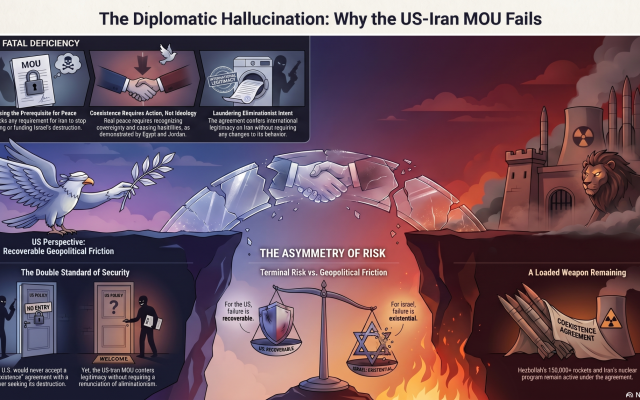
https://static-cdn.toi-media.com/blogs/uploads/2026/06/Why_the_US-Iran_MOU_Fails-640x400.png 
 
Instead, Mr. Trump had to focus on the measure that Iran took to disrupt world energy supplies, along with fertilizer and other critical supplies to a dependent world. Any tankers or cargo ships leaving the Gulf States for their usual destinations crossing through the Strait risked Iranian drones or missiles and before long ships one after another were stranded awaiting an opportunity that never came. Then came the system of fees inaugurated by the IRGC for safe passage. Followed by negotiations and a Memo of Understanding and the war footing went limp, all in abeyance.
 
While the U.S. administration faces the democratic anger of its population persuading it to leaven its actions accordingly, no such constraints face the Islamic Republic, for its population is forcibly mute and as much as it detests its government, the fear, anger and resentment of up to 35,000 lives destroyed only a few months ago, acts as an anchor to further action against a government that will not be dislodged. The Islamic regime has decided to wait things out. Until enough pressure from the U.S. public and the international community against a continuation of the war, forces the U.S. military to withdraw. 
 
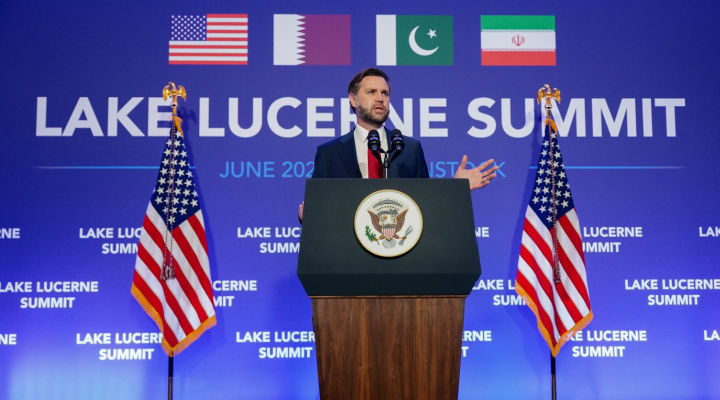
US Vice President JD Vance speaks to members of the media before boarding Air Force Two, after the US and Iran held high-level talks at the Lake Lucerne Summit, at Emmen Military Air Base, Emmen, Switzerland, June 22, 2026. Photo: REUTERS/Nathan Howard/Pool
 
"Iran is trying to avoid another full-scale war. But it also believes that failing to respond caries its own risks because it would project weakness and invite further pressure."
"Iran's calculation is that calibrated, limited escalation can restore deterrence without crossing the threshhold into all-out war."
Negar Nirtazavi, senior fellow, Center for International Policy 
   

Labels: , , , , , , ,

Sunday, June 14, 2026

In the U.A.E. -- Waiting It Out For Now

"We are at this juncture pint. Are we going to maintain the view of the world that we had before, or not? Is this war going to mutate our DNA?"
"[The DNA of the United Arab Emirates, and much of the Persian Gulf region was coded for] connectivity and economic relations despite political strife."
"The whole world economy is [now] Iran's human shield. This is now Iran's new-found nuclear weapon." 
Mohammed Baharoon, director general, Dubai research centre B'huth
 
"[In attacking so grievously, Iran attempted to] break the model we successfully embodied."
"They failed, because the people stayed. We are already building resilience."
"We know that a military solution alone will not work." 
Anonymous U.A.E. official
 
"We can be under no illusion: this has gone on longer than any of us imagined."
"Trump doesn't inspire any confidence. You hear there is a deal, then you hear bombs."
"There is an incredible amount of interest in being here. Everyone understands: ending the war] is not in their hands."
Cherif Sleiman, chief revenue officer, Property Finder real estate company   
https://www.washingtonpost.com/wp-apps/imrs.php?src=https://arc-anglerfish-washpost-prod-washpost.s3.amazonaws.com/public/NCAVUEQM7NLF4GEYCKNG6L6BL4_size-normalized.jpg&w=1440&impolicy=high_res
Brookfield Place at the Dubai International Financial Centre on June 10. (Katarina Premfors for The Washington Post)
 
 In Dubai, schools have reopened now that the missile and drone alerts no longer arrest people's attention to impending danger. The UAE's financial centre is back in business. Traffic has resumed its street-choking normalcy. All seems back to normal, but uncertainty over new strikes on Iran by the U.S. and Israel occasioning the certainty of the Islamic Republic reacting by targeting its near neighbours remains. An active return to the conflict haunts the minds of those who had enjoyed their lives in this thriving metropolis.
 
Mohammed Baharoon's mind returns to the reality of Iran's regime's use of violence for the purpose of pressuring its adversaries. And should the regime continue its control of the Strait of Hormuz its ramifications in continuing to strangle local economics is certain to have its impact beyond the Gulf as a financial and logistical linchpin. 
 
The unforeseen was realized when the aerial bombardments of the United States and Israel, and the pinpoint assassinations of key Iranian figures led fundamentalist Islamists in the country to a devious scheme demonstrating it had no need to develop a nuclear device when control of the Strait could accomplish economic Armageddon.
 
When the war was yet young, the United Arab Emirates saw a barrage of over 2,500 missile and drone strikes rain down, mostly in the most populated of its seven emirates, Dubai. The strikes were a menacing warning to the U.A.E. that its reputation as an oasis of wealth and stability was vulnerable to punishment by the Islamic Republic. 
https://www.washingtonpost.com/wp-apps/imrs.php?src=https://arc-anglerfish-washpost-prod-washpost.s3.amazonaws.com/public/XWQEN5DLC5L7ETV2BYOYVNKLEY_size-normalized.jpg&w=1440&impolicy=high_res
Residents said there are quiet signs everywhere that things are not quite right, from the closed yoga studios to the exodus of students from international schools. (Katarina Premfors for The Washington Post)
 
Of Dubai's four million residents, 90 percent are comprised of foreign citizens living and working in the futuristic city. Landmarks such as the Fairmont Hotel and the Birj Al Arab, Dubai International Airport and buildings in the financial centre were targeted by Iranian bombs. Following the ceasefire in April those strikes decelerated and halted, enabling many resident who had left, to return. The stock marketed rebounded and though tourism was badly wounded, construction is ongoing. 
 
The 80 percent hotel occupancy in Dubai had dropped precipitately to 10 percent and no signs yet have arisen that tourism will rebound any time soon. Should the current uncertainty drag on, according to Cherif Sleiman, families may decide to leave and enroll their children at schools in their countries of origin. Living in Dubai the past 20 years, Sleiman is staying, committed to the U.A.E. and trustful of the government.
 
https://www.washingtonpost.com/wp-apps/imrs.php?src=https://arc-anglerfish-washpost-prod-washpost.s3.amazonaws.com/public/OMGYGAHE45WZ42NHUOMNQSIJYU_size-normalized.jpg&w=1440&impolicy=high_res
Cherif Sleiman fears ongoing uncertainty around the war will cause more families to leave Dubai. (Katarina Premfors for The Washington Post)
 
 In neighbourhoods at the outskirts of the city, where migrant workers live, the war's effects is felt particularly among those who represent the working backbone of the Dubai economy. Migrant workers who support their families back home suffered most of the war casualties. These workers were laid off en masse, as hotels and restaurants closed while the conflict proceeded. Higher fuel and food prices afflict them most acutely. "It is not OK, but we are managing for now" security guard, 52-year-old Ghanian Isaac Antwi stated.
 
Despite the fear of  higher prices, Ugandan Simon Obbo, 27, fails to recognize an option of leaving. "I still need to achieve my dream, he explained. "That dream is supporting my family." Alex, manager at one of the oldest companies, spoke of the current dilemma over future prospects. "Business is down 95 percent. We fear that this will not end, that it will become like Ukraine."
 
https://www.washingtonpost.com/wp-apps/imrs.php?src=https://arc-anglerfish-washpost-prod-washpost.s3.amazonaws.com/public/LGQTYT7ZM3P4UPWHAFNQE4PF6M_size-normalized.jpg&w=1440&impolicy=high_res
"It is not okay, but we are managing, for now,” Isaac Antwi, 52, said of rising food prices. (Katarina Premfors for The Washington Post)


Labels: , , , , , ,

Monday, April 27, 2026

The Sting of the I.R.G.C. 'Mosquito Boats'

"The Islamic Republican Guard Corps navy works more like a guerrilla force at sea."
"It is focused on asymmetrical warfare, especially in the Persian Gulf and the Strait of Hormuz."
"So instead of relying on big warships and classic naval battles, it depends on hit-and-run attacks."
Saeid Golkar, Guards expert, political science professor, University of Tennessee, Chattanooga
 
"When it is very bumpy, they [armed forces onboard] cannot shoot."
"[They are also ill-equipped to go head to head with a ​warship, and would likely suffer] very heavy casualties [​in any direct assault on one]."
"Even if they tried to saturate the ship’s defences by attacking from multiple directions, they would be extremely vulnerable to the air support that would be called in."
"It is going to be ​much harder to eliminate ⁠the small boat threat than it was to destroy Iran’s larger naval vessels, which were big targets that were relatively easy to find and track and, at most, only had a limited ability to defend themselves from air attack." 
Jeremy Binnie, Middle East specialist, defence intelligence company Janes 
https://nypost.com/wp-content/uploads/sites/2/2026/04/2024-persian-gulf-national-day-125898400_67a3b9.jpg?resize=1024,681&quality=75&strip=all
The IRGC speed boats are fast, light, and easily replaceable. NurPhoto via Getty Images

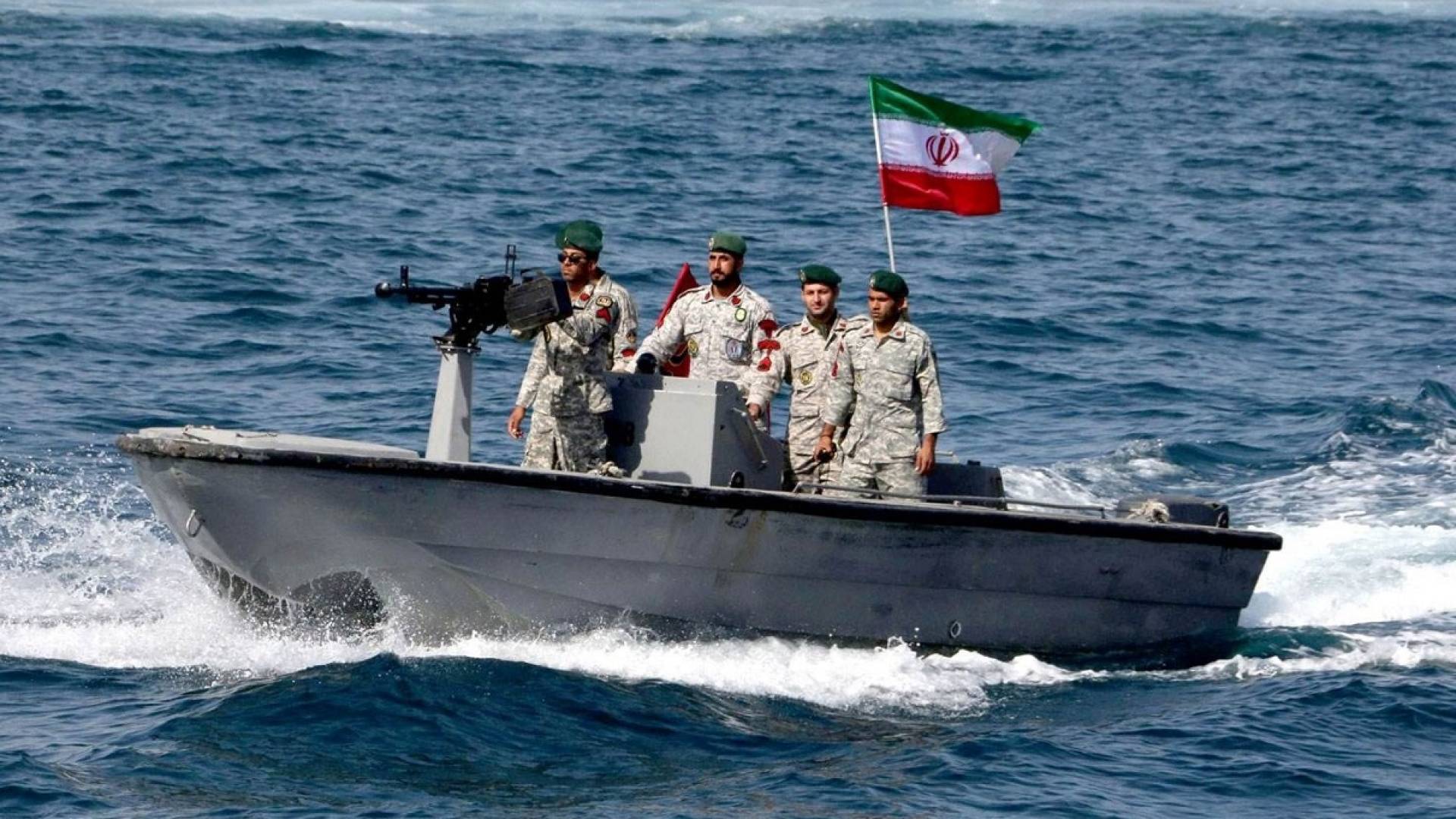
It all began when recreational boats were mounted with rocket-propelled grenades or machine guns, when Iran first began using small boats that were fast, maneuverable, and deadly when patrolling the Strait of Hormuz and the Persian Gulf. Those recreational craft underwent a  transformation when a range of specially designed small boats, along with miniature submarines and marine drones were built to the IRGC specifications, over the years. That 'mosquito fleet' of small boats has become a real and present threat in the Strait as a consequence of the U.S.-Israeli conflict in Iran.
 
The flotilla of small, fast boats whose purpose by the IRGC has been to harass local and international shipping through the Gulf, has turned now to threatening and firing upon global shipping in the Strait of Hormuz during the recent face-off between the U.S. and the Islamic Republic of Iran -- or what's left of it, aside from the IRGC. The Islamic Revolutionary Guard Corps is separate and apart from the regular Navy of Iran, which had been struck a cataclysmic blow in the opening days of the aerial bombardment. 
 
Over 90 percent of Iran's navy's fleet was destroyed, according to U.S. General Dan Caine, chairman of the Joint Chiefs of Staff. They all, including the country's major warships, were sunk and sit now on the ocean's bottom. At the same time, an estimated 50 percent of the fast attack boats belonging to the Guards were sunk. Estimates of the total number of these small ships prior to the U.S. sinking of the fleet ranged from hundreds to thousands. They are still not now in short supply. 
 
IRGC Takes Delivery Of 340 Boats
Arrival of new shipment of IRGC fastboats. Photo via Mehdi H
 
The size of the boats make them mostly invisible on satellite images from where they're moored alongside piers, where the  excavation of deep caves along the rocky coastline shelters them, prepared for deployment at a moment's notice. During the current conflict, at least 20 vessels were attacked by the 'mosquito fleet', according to the International Maritime Agency. Analysts consider the attacks to have been by drones fired from mobile launchers on land.
 
As for the small boat arsenal which poses a major threat to commercial shipping both in the Gulf and the Strait, "It remains a disruptive force. You never quite knew what they were up to and what their intentions were", commented Admiral Gary Roughead, retired chief of U.S. Naval Operations. "The IRGC navy has always believed that it is at the forefront of the confrontation with the Great Satan", added specialist on the Guards navy, Farzin Nadimi from the Washington Institute think tank.
 
According to experts, these small boats can reach speeds of over 100 knots. Larger, more sophisticated warships were also recently developed by the Guards, and they too were targeted when the U.S. bombardments focused on bombing Iran's naval fleet as well as its fleet of warplanes. The largest drone carrier, the Shahid Bagheri, a converted container ship able to launch anti-ship missiles, was also hit by U.S. air strikes.
 
It is the swarms of small boats that pose an ongoing threat to commercial vessels which have no defences against such attacks. U.S. warships, on the other hand, can counter a potential swam of small boats with their high-caliber cannons and additional weaponry.  
 
https://backend.royanews.tv/imageserv/Size728Q70/english/news/20260412/69db7959c97ea1775991129.jpg
60 percent of IRGC fast boats still threaten shipping lanes: WSJ
 

Labels: , , , , ,

Saturday, April 18, 2026

China: Defender of Stability, Diplomacy, Open Global Economy: Yup

"Many want Beijing to play a larger role as a defender of stability diplomacy, and an open global economy."
"World leaders are heading to Beijing because they increasingly see China as a hedge against an unpredictable United States." 
Neil Thomas, fellow, Chinese Politics, Asia Society Policy Institute Center for China Analysis 
 
"Beijing also has concerns about managing its own relationship with Washington."
"More direct and active involvement in negotiations [with the Islamic Republic] could win the Trump administration's affirmation as much as earn its ire and blame."
Ja Ian Chong, associate professor of political science, National University of Singapore 
 
"It is very easy to criticize the U.S. Even America's allies are at odds with Trump and Washington these days."
"But sooner or later, China needs to go beyond the position of critic, and get some real diplomatic skin in the game."
Richard McGregor, senior fellow for East Asia, The Lowy Institute
https://static.dw.com/image/76770490_1004.webp
Spain struck a trade deal with China on Tuesday
 
China no longer viewed by the West as an economic ogre, one whose finesse at hostage diplomacy, whose penchant for cybertheft and purloining foreign industrial/commercial formulae and government secrets for its benefits; a gargantuan, omnivorous threat to the well-being of other nations' wealth and aspirations? What a swift transition. And to think that it has been occasioned by the president of the United States of America's belligerence over trade tariffs and unity in Western security over threats poised by Xi and Putin!
 
Yet in one week alone Spain's Prime Minister Pedro Sanchez, Abu Dhabi's Crown Prince Sheikh Khaled bin Mohamnmed, Vietnam's president To Lam, all came visiting one after another. Impressed, no doubt over President Xi Jinping's turning the leaf on his book of global exploits in presenting China as a source of dependable stability and (newfound) respect for international rules. As, for example in contrast to President Trump's unspeakably dire threat to bomb Iran "back to the Stone Ages", a bit of bluster to match Iran's own, that horrified Pope Leo XIV. 
 
In fact, the contrast is a deep and unfolding reality, where Trump's unchecked pronouncements on his social media site has served to further confound, affront and distance erstwhile staunch supporters in Europe, North America and Asia of U.S. policies and allied support. Italy's Giorgia Meloni, the U.K.'s Keir Starmer were this week recipients of President Trump's ire; not that it was undeserving, simply a trifle undiplomatic, as is his inimitable style. Nor did Pope Leo come away unscathed for his penchant at being "terrible for foreign policy"; that too not far from reality.   
 
Oh, and Italy's foreign minister also visited Beijing this week, coming away with a pledge that China is prepared to deepen ties with Rome. Mr. Trump's frustration with allies over their disinterest in teaming up with the U.S. military to open the Strait of Hormuz to normal shipping so that energy can continue to flow from the Persian Gulf to the people who most need and use it, including those allies, has deepened with their continued hands-off negativity.  
"Donald Trump’s second Administration is bringing about a historic reconfiguration of transatlantic relations, compelling the EU and its member states to reassess multiple dimensions of their foreign policy. In response to the deepening rift with Washington, Europe is adopting a hedging strategy by strengthening ties with other global actors, including China."
"This approach was underscored by Ursula von der Leyen at the World Economic Forum, referring to the 50th anniversary of the establishment of diplomatic relations with Beijing as ‘an opportunity to engage and deepen our relationship with China, and where possible, even to expand our trade and investment ties’. "
Mario Esteban, Elcano Royal Institute  
They've chosen instead to go-it-alone as a group, sans the U.S. and that purpose saw the U.K.'s Starmer in Paris to host a video conference alongside Emmanuel Macron, steering a coalition of some 40 countries planning to help independently restore free transit through the Strait of Hormuz, South Korea, Japan and Australia included -- all supporting a ceasefire in return for intervention. Nations in Southeast Asia have been given support in their energy crisis by a $10-billion financial package promised by Japan's Sanae Takaichi on a new "Power Asia" initiative.
 
https://www.globaltimes.cn/Portals/0/attachment/2026/2026-04-12/e7db8f9c-f03b-4c0f-94db-ea9a1821c009.jpeg
An aerial view of the cityscape of Beijing, China Photo: VCG
 
That China stoutly maintains its support of Russia, despite its full-fledged conflict in Ukraine makes the entire scenario somewhat bizarrely Byzantine; even as European leaders, fixed in their support of Ukraine's battle to sustain its sovereignty, visit China to explore lucrative trade agreements, Xi met with Russian Foreign Minister Sergei Lavrov to pledge deeper bilateral coordination. Not to be forgotten is Russian and Chinese backing of Iran, their major oil supplier, despite global sanctions.
 
As the world's largest oil importer, China has vast commercial oil reserves to tide it conveniently over the current shortage afflicting its neighbours. China is content with taking an observer's back seat with the ongoing conflict in the Middle East. Officially it calls for restraint and de-escalation. Business as usual, for China.
 
https://cb-2022.netlify.app/images/country-guides/China-portal-add-banner-desktop.jpg
INVESTING IN CHINA
Powered by China Briefing, the experts at Dezan Shira & Associates, and their partners
 

Labels: , , , , , ,

Wednesday, April 01, 2026

The Solidarity of NATO Allies

"The president and our country will have to re-examine all of this after this operation is over."
"If NATO is just about us defending Europe if they're attacked, but them denying us basing rights when we need them, that's not a very good arrangement. That's a hard one to stay engaged in." 
"When this operation is over, it [Strait of Hormuz] will be open and it'll be open one way or another."
"It will be open because Iran agrees to abide by international law and not block the commercial waterway, or a coalition of nations from around the world -- and the region -- with the participation of the United States, will make sure that it's open."
U.S. Secretary of State Marco Rubio
Takeaways from Trump's speech on Iran - Headlines news and analysis from Global Banking & Finance Review
Global Banking & Finance Review
 
"Maybe we take Kharg Island, maybe we don't. We have a lot of options."
"It would also mean we had to be there [on Kharg Island] for a while." 
"I would only say that we're doing extremely well in that negotiation but you never know with Iran because we negotiate with them and then we always have to blow them up."
U.S. President Donald J. Trump
 
"An Iranian regime that launches ballistic missiles at homes, weaponizes global trade and supports proxies is no longer an acceptable feature of the regional landscape."
"We want a guarantee that this will never happen again."
Noura Al Kaabi, minister of State, Foreign Ministry, UAE 
 
"This [use of Spanish airspace] was made perfectly clear to the American military and forces from the very beginning. Therefore, neither the bases are authorized, nor, of course, is the use of Spanish airspace authorized for any actions related to the war in Iran."
"[The war in Iran is] profoundly illegal and profoundly unjust. [The U.S. was made aware of Spain's position] from the very beginning."
"You cannot respond to one illegality with another, because that's how humanity's great disasters begin."
 Spanish Defence Minister Margarita Robles 
https://ichef.bbci.co.uk/news/1024/cpsprodpb/2b50/live/dd5d4230-2df5-11f1-84b6-e98f87f2e88b.jpg.webp
Tehran has faced waves of US-Israeli strikes since the war began in February   Getty
 
Spain's airspace has been completely off service to U.S. planes involved in the Iran war; the latest step announced by one of the loudest opponents in Europe of the U.S.-Israeli conflict in the Middle East. This announcement links to Spain's earlier denial for the U.S. to make use of jointly operated military bases during the conflict. Prime Minister Pedro Sanchez  described the war as illegal, reckless and unjust. Following Spain's denial of the Rota and Moron military bases in southern Spain, President Trump suggested the U.S. could do without trade with Madrid.
 
Spain's Sanchez has been on a roll as one of the most vocal critics of Israel's invasion of Gaza and the war being waged against the Gazan government's Hamas terrorist group that had been responsible for five thousand Palestinian terror operatives swarming across the border from Gaza for a wholesale atrocity of sadistic savagery committed against Israeli civilians, highlighted by body cams worn by the terrorists while they mass-raped, tortured and murdered women and girls, infants and the elderly, entire families torched in their homes. According to Sanchez is it inhumane for the Israeli Defense Forces to hunt down the murderers of Jews.
 
The military alliance's lack of enthusiasm to fulfill their mandate does not sit well with the Trump administration, finding the lack of support during this latest military chaos in the Middle East "very disappointing", in the Secretary of State's opinion. Having largely rebuffed Trump's frequent requests to assist in the reopening of the Strait of Hormuz, blocked by Iran following the February 28 start of the U.S.-Israel aerial  war on the Islamic Republic, it is actually Europe that finds itself in increasingly dire straits, depending largely on oil and gas from the Middle East.
 
First to inspire anger has been Spain distancing itself from the conflict by blocking U.S. use of bases in Spain. And nor has U.K. Prime Minister Keir Starmer's position been appreciated following his initial rejection of the request to permit the U.S. access to its military bases to assist in the carrying out of strikes on Iran. In a reversal since, the U.S. has since been given allowance to use bases for "limited defensive action"
 
Perhaps most disappointing, but yet not surprising is the hesitation of the Gulf nations to take action themselves against Iran's constant bombardment hitting, Kuwait, Qatar, Saudi Arabia and the United Arab Emirates. Aside from suggestions of action emanating from them time to time, no concrete moves have yet been taken to respond to the deadly missiles and drones targeting Gulf oil depots, airports and civilian areas, by an Iran that now has nothing to lose in breaking loose and making good on its decades-old threats against its neighbours. Aside from intercepting missiles, no counter-action has yet been taken by Saudi Arabia et al.
 
https://www.brookings.edu/wp-content/uploads/2026/04/GettyImages-2264040491.jpg?resize=1500,1126
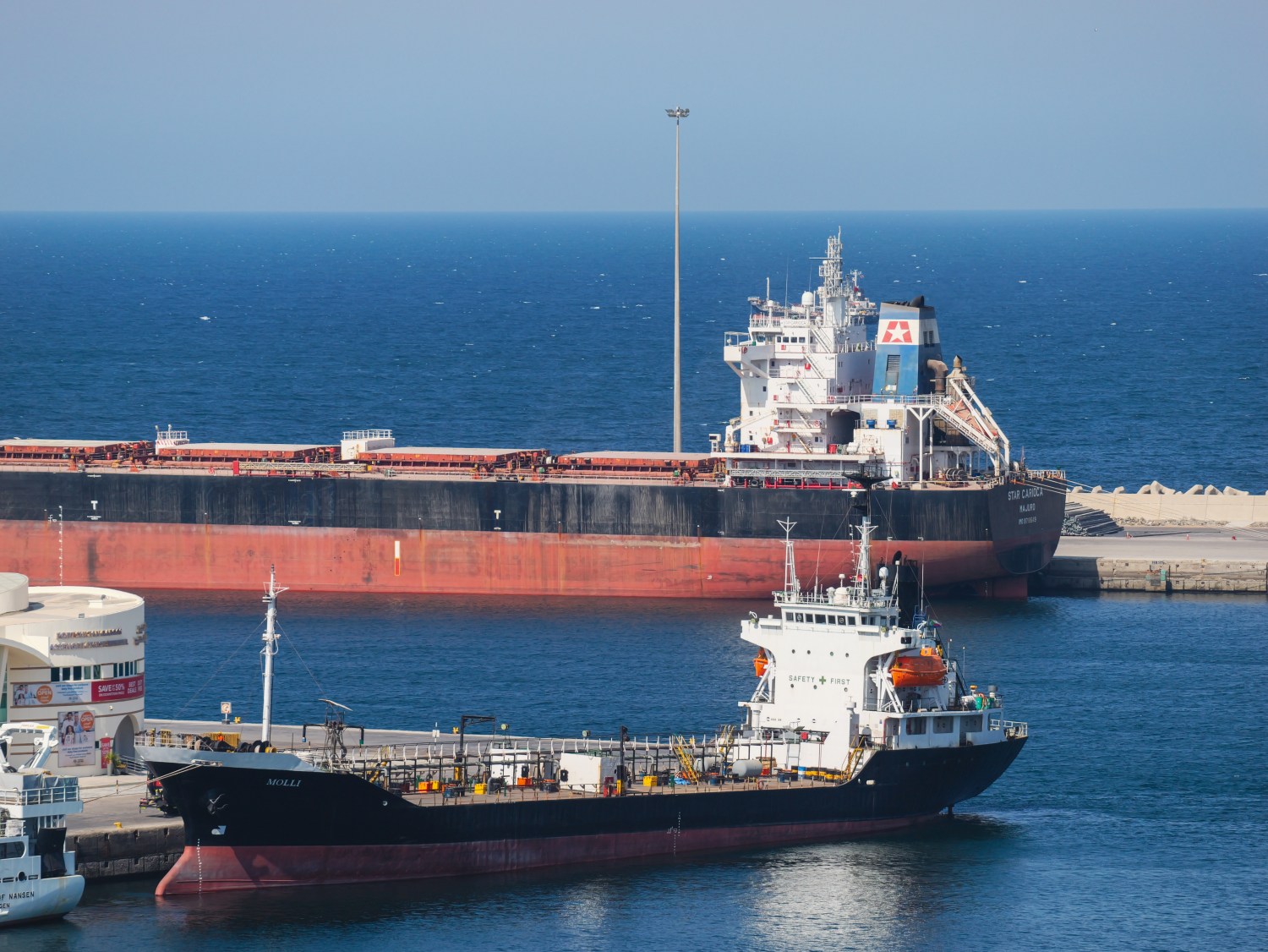
Large oil tankers berthed at the Port of Mutrah in Muscat, as regional tensions in the Strait of Hormuz raise concerns over global oil supply disruption and energy market instability. Muscat, Oman, Feb. 28 2026. Craig Hastings, Getty Images
"Without the United States, there is no NATO."
"An alliance has to be mutually beneficial. It cannot be a one-way street."
"Let's hope we can fix it."
Marco Rubio 

Labels: , , , ,

Monday, March 30, 2026

"We Will See Where Things Lead..."

"The problem with the strait is this. Let's say we do a great job. We say we got 99 percent. One percent is unacceptable, because one percent is a missile going into the hull of a ship that cost $1 billion."
"If we do a 99 percent decimation, that's no good."
"I read a story today that I'm desperate to make a deal. I'm not. I'm the opposite of desperate. I don't care. ... In fact, we have other targets we want to hit before we leave. "
"I don't like to say this, we've won this. This war has been won. They have no navy and they have no air force, and they have nothing."
"And we literally have planes flying over Tehran and other parts of their country They can't do a thing about it."
U.S. President Donald J. Trump 
https://csis-website-prod.s3.amazonaws.com/s3fs-public/styles/1400x600/s3/2026-03/Iran%20Air.jpeg?VersionId=f.ntT7ovrpou_HH1JMXYE6qR5E9s1TZJ&h=266da715&itok=FUmSCZRY
Photo: Lee Hathaway
"Iran wants to fight this war of attrition."
"Once the war got underway, they had two objectives. One was to survive, but the second was to outlast Trump."
"Make the U.S. feel so much pain through the economy, strikes on the energy infrastructure, that they don't do it again."
"What they're trying to ensure is that Israel doesn't go in and do a war like they do in Lebanon every six months."
Nate Swanson, former U.S. diplomat 
 
"Mr. President, you are acting now to ensure future generations do not have to live under the threat of a nuclear-armed Iran."
"Unlike Iraq, this isn't a tie. This is not parity. This is is not chaos. This is success."
"Pure American success on plan."
U.S. Defense Secretary Pete Hegseth 
 
"The American position was essentially Iranian surrender, and the Iranian response was essentially American surrender."
"The American position was, 'Get rid of  your nuclear program, missiles and proxies', and the Iranian position was, 'Compensate us for our losses, and get out of the Middle East'."
Ilan Goldenberg, Middle East policy adviser for the Biden administration 
https://csis-website-prod.s3.amazonaws.com/s3fs-public/styles/2000_x_858/s3/2026-03/GettyImages-2264385014_cropped.jpg?VersionId=QGwxHsPN1evnCKjNV0mT18ygJCvuETk7&h=266da715&itok=_5n5-O2z
War in Iran  Center for Strategic and International Studies
 
Four weeks after the start of the February 28 aerial bombardment by U.S. and Israeli warplanes over Iran, those left in positions of power to represent the Islamic regime are no closer to surrendering to American demands than they were prior to the conflict. This, despite that their elite leaders both at the governing level and from the Islamic Republican Guard Corps have been dispatched to hold counsel with the Hidden Mahdi in Paradise, and a succession of lesser authority figures stepping in to take their place, in a roundtable of continuing precision strikes picks off each substitute.
 
The situation appears now to be in the defiant hands of the IRGC and even there it is questionable who has assumed the position of elite enforcer. On the American side, the war has proven to be extremely unpopular among American citizens. The U.S. legacy press is not in support of ongoing hostilities, the European Union is tying itself into knots trying to avoid Mr. Trump's accusations of elusive allies in a pinch, and China and Russia are ever ready at the UN to vote down any sanctions against their ally, Iran.
 
The signature closure of the Strait of Hormuz has struck the world economy and the stock market, an uncomfortable position for the Trump administration to find itself glued to. The threat and danger to global shipping targeted by Iran and the IRGC has thrown the shipment of oil, gas and fertilizer off kilter. The U.S. is self-sufficient in energy resources; it is Europe whose sourcing of energy revolves hugely around Iran that will suffer; still none among them is prepared to enlist in the U.S.-Israeli conflict in Iran.
 
The Gulf States, most geographically vulnerable to a desperate Iran with too many missiles and drones at its disposal, and receiving the blunt end of Iranian revenge-spite, speak of defence, but mostly hang their expectations on the U.S.-Israeli duo to rid the Middle East of the simmering threat of the Islamic Republic's nuclear threat and its terrorist proxies. They are anxious to see the job done and over with and the threat they've been living under since 1979 dispensed with.
 
Pressing help from the European and Asian nations to secure the Strait of Hormuz, Secretary of State Marco Rubio met with as much success as did the U.S. President. All are eager to do their part with one proviso: the conflict must first come to an end. In five national surveys in a week it was revealed that Americans oppose the war and fail to approve of its handling by their president. This, though Americans support efforts to stop Iran from nuclear weapons.  
"We will see where things lead, and if we can convince Iran that this is the inflection point, with no good alternatives for them other than more death and destruction -- we have strong signs that this is a possibility -- and if a deal  happens, it will be great for the country of Iran, for the entire region and the world at large."
Steve Witkoff, U.S. peace envoy  
https://csis-website-prod.s3.amazonaws.com/s3fs-public/styles/1400x600/s3/2026-03/GettyImages-1239497623_cropped.jpg?VersionId=w5I1eCVemidx4Gzt5zZ3jhYzONhqhCaZ&h=47ea0187&itok=2qnI5OnK
Photo: Stringer/Anadolu Agency/Getty Images
 

Labels: , , , , ,

() Follow @rheytah Tweet