Politic?

This is a blog dedicated to a personal interpretation of political news of the day. I attempt to be as knowledgeable as possible before commenting and committing my thoughts to a day's communication.

Monday, June 15, 2026

Have Turkey's Erdogan and Russia's Putin Kissed-and-Made-up for the Very Last Time?

"This is a person [Recep Tayyip Erdogan] who keeps his word — a man."
"He does not follow his tail. If he believes it is advantageous for his country, he goes to the end"
"There is an element of predictability, and it is very important to understand who you are dealing with."
Vladimir Putin, 2021
 
"[Putin’s words are] exactly how I have known Mr. Putin since I first met him."
"He is straightforward and keeps his word."
"It is rare to have such strong relations with any state."
Recep Tayyip Erdogan
The Uneasy Alliance Between Putin and Erdogan
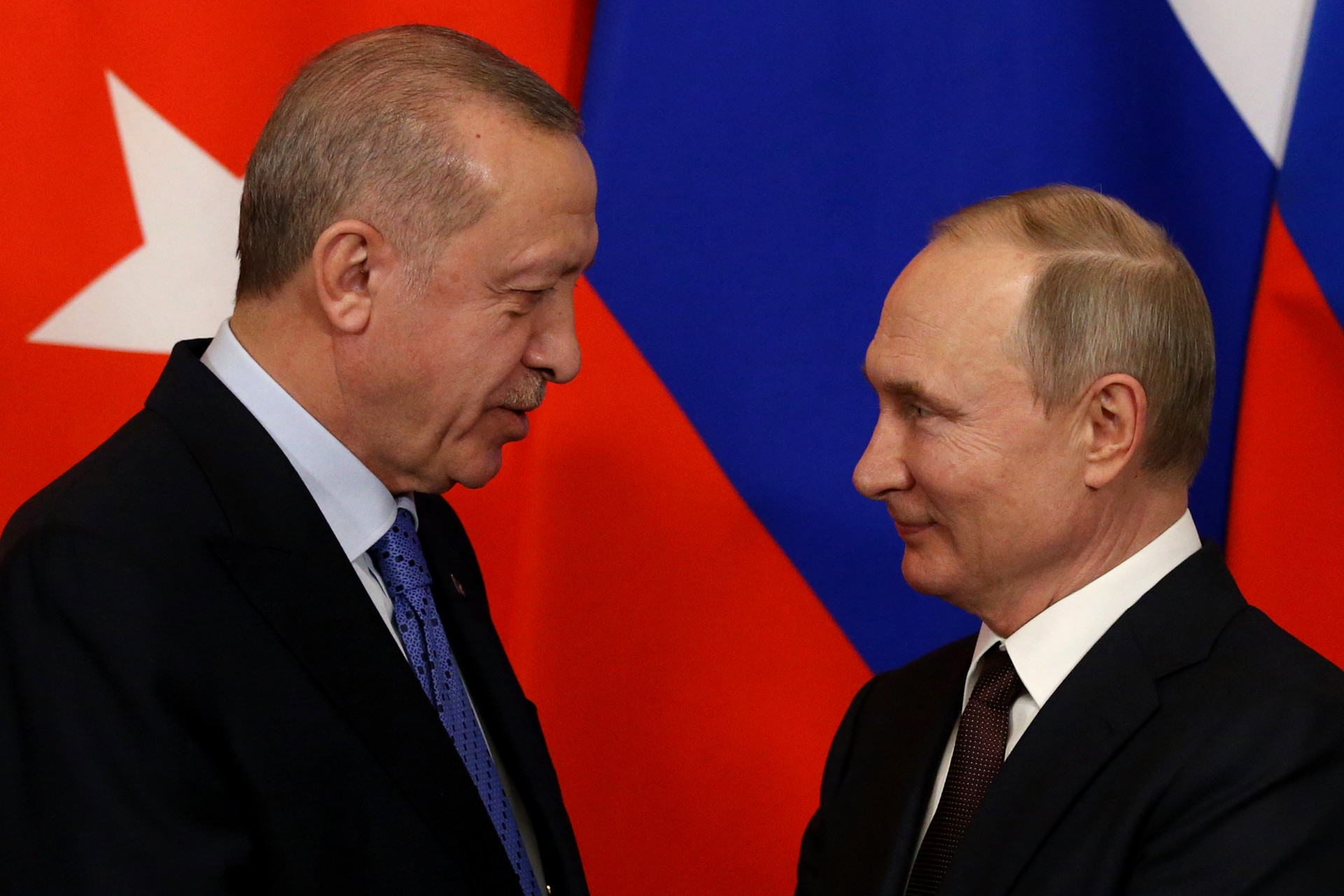
Russian President Vladimir Putin and Turkish President Recep Tayyip Erdogan at the Kremlin on March 5, 2020 in Moscow, Russia/ Mikhail Svetlov/Getty Images
  
"On Nov. 24, 2015, Turkey shot down a Russian fighter jet over Syria, resulting in the deaths of two Russian soldiers and prompting a sometimes spine-chilling war of words. At his annual press conference in December that year, Putin’s description of Erdoğan was quite different from the one he gave five years later. He said he did not “see any prospect of improving relations with the Turkish leadership,” whom he accused of trying to “lick the Americans in a certain place”."
"Sinking the knife in even deeper, Putin accused Erdoğan of betraying the secular system put in place by Turkey’s national hero, Mustafa Kemal Atatürk. “The creeping Islamization would probably cause Atatürk to turn in his grave,” he said. Erdoğan, for his part, lambasted Russian “war crimes” in Syria. Russia imposed sanctions, with the package holidays that brought hundreds of thousands of tourists to Turkey’s Mediterranean coast halted and goods like Turkish tomatoes no longer welcome in the other direction."
Stuart Williams, New Lines Magazine  
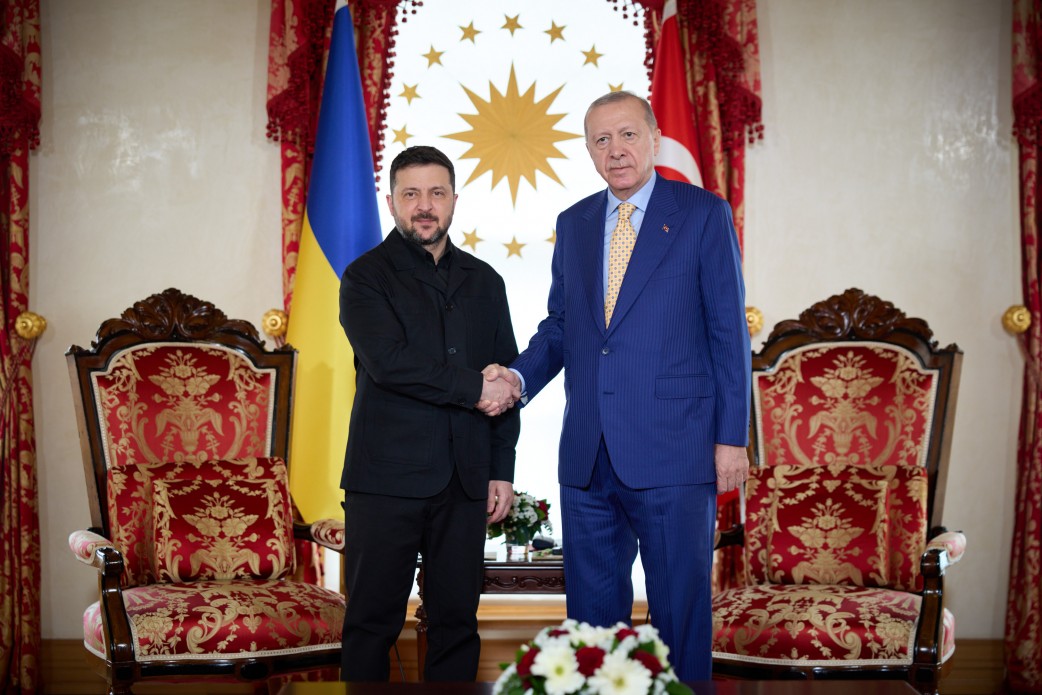
Suddenly Turkey is Ukraine's best friend -- no, really. With Erdogan's courteous assistance, Ukrainian President Volodymyr Zelenskyy now has cordial ingress to the movers-and-shakers of the Middle East. Many of whom have been under extreme violent duress, with the Islamic Republic of Iran punishing the Gulf states for their friendliness with the United States, not to mention Israel. U.S. military bases in Saudi Arabia, the UAE, Bahrain, Qatar and Kuwait, all of whom have been, to some degree targeted by the IRGC; above all, the United Arab Emirates.
 
If any leader of any country currently knows anything about counteroffensives and self-preservation, it is the Ukrainian President, and he is more than pleased to be able to demonstrate what the Ukrainian military has learned while it has been under massive bombardment by an aggressive, much larger conventionally armed neighbour. The Iran war has enabled Mr. Zelenskyy to cultivate closer ties with Gulf states. The Shahed-136 kamikaze drones that Russia uses in Ukraine have been supplied to Iran by Russia and China.
 
https://www.president.gov.ua/storage/j-image-storage/57/22/45/04cea6a977c8fa00116ae17bf3ba8d4c_1775321832_extra_large.jpeg
At the Dolmabahçe Palace in Istanbul, President of Ukraine Volodymyr Zelenskyy held a meeting with President of Türkiye Recep Tayyip Erdoğan.  President of Ukraine
 
Ukraine's answer to the devastating attacks on its cities and civil infrastructure was almost-instant devising, production and use of surprisingly simple advance drone technology which has given it longer reach into Russia itself, demonstrating what's good for the goose is fine for the gander in blowing up Russian military bases, bridges, ships, weapons storage, and oil depots. Ukrainian resistance has resulted in the deaths of tens of thousands Russian servicemen monthly, dealing severe blows to Russia's troop numbers and recruitment.
 
With all that experience behind them, Ukraine was pleased to dispatch air defense teams to Qatar, Saudi Arabia and the United Arab Emirates. Turkey, in ushering Ukraine into the comfort zone of making new contacts in the Middle East, has a new partner, as it leaves behind the old one with which its own agenda was never quite a perfect fit. After all, during the drawn-out civil war in Syria, Turkey armed the Sunni groups trying to break Bashar al-Assad's Alawite grip on the country, even as Erdogan targeted Kurds whose fighting prowess was superior to all of the regime's opponents.
 
And it was Russian warplanes out of the Russian air base in Syria that constantly flew over Sunni strongholds bombing them mercilessly. Just incidentally the very same Sunni fighting groups that Mr. Putin has attempted after the fall of President Assad, (domiciled now in Russia), to ingratiate himself with, hoping to be able to maintain both his remaining naval and air bases in the new Sunni-led government of Ahmed al-Sharaa. 
 
https://www.newarab.com/sites/default/files/media/images/0A76B1EF-A62A-44EC-89A0-0F4D6392318C.jpg
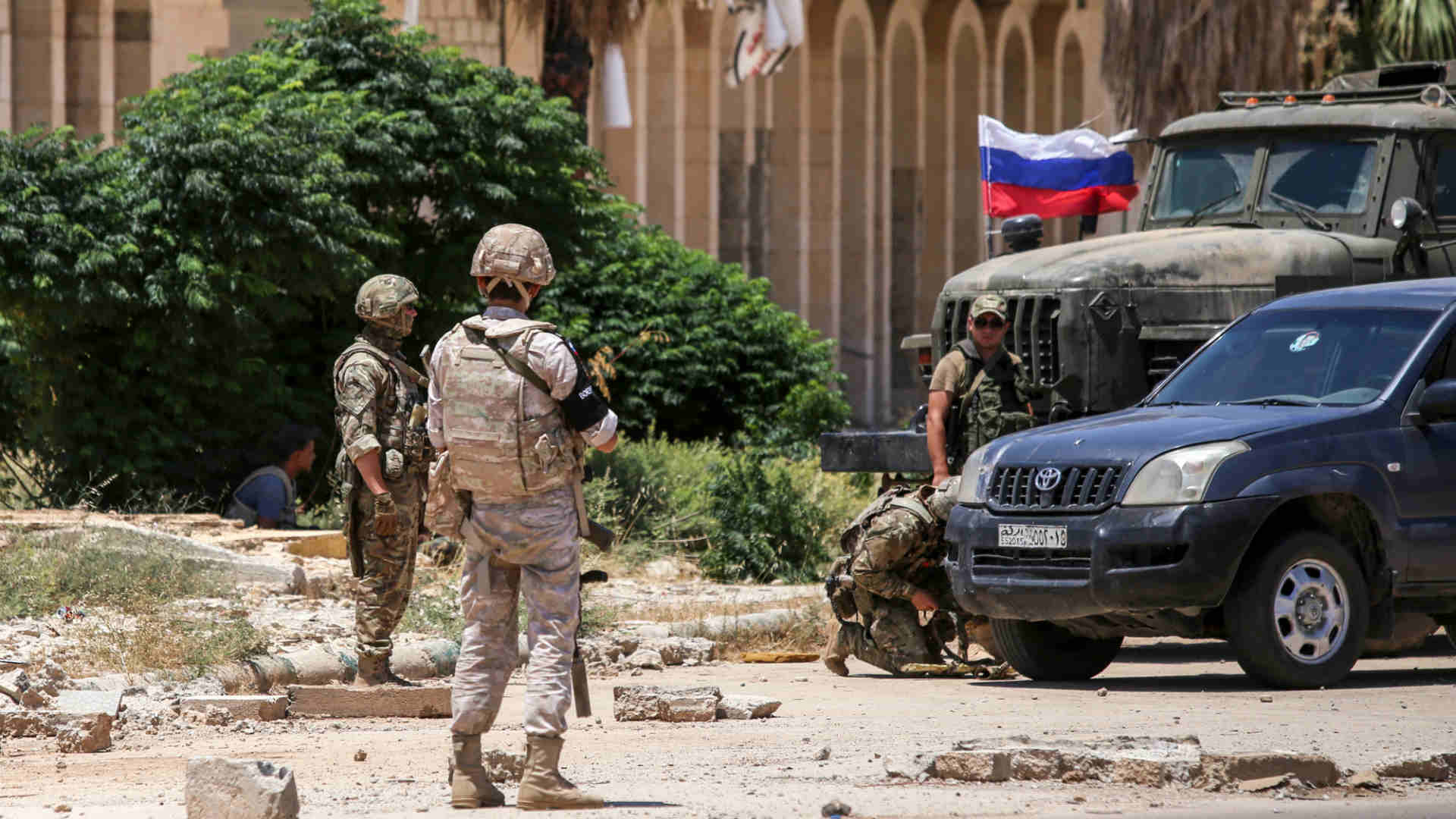
The Russian military presence in Syria has declined significantly over the past two years, from 114 military sites to only two bases today. [Getty]
 
In the early years of Russia's conflict in Ukraine when Moscow was isolated by the West, Turkey, though a standing member of the NATO alliance, spurned the sanctions. In the process becoming a link for Russian trade, investment and energy flows. A situation that gave Ankara greater leverage over Moscow. Russia, before the ouster of the Syrian Alawite regime, could do anything it wanted there and had hundreds of military bases; now under the new Sunni-led regime, reduced to two, albeit its major bases. 
 
It is Turkey that is now the power lever in Syria, helping its interim president al-Sharaa to be presented to the EU, the U.S. as the new, kinder, 'democratic' face of Syria with whom they could all do business with confidence. And in the process, Turkey has become the king-maker, which suits its future plans of greater dominance in the Middle East very well. A role that as a junior partner to Russia for so many years, Russia cultivated for itself, while it is Turkey now that has inserted itself in helping to rebuild the Syrian Army.
 
By openly giving assistance to Ukraine's President Zelenskyy, Mr. Erdogan is amply demonstrating that once again Turkey has spurned its sometimes-tenuous, but generally past-useful allyship with Russia, moreover a Russia that has, by its territorial aggression served to isolate itself, while continuing to aggravate and threaten his eastern European neighbours and needling NATO, of which Turkey is a member. Vladimir Putin and his war-wearied economy has lost the projection of global power, and Turkey for the time being has no further use of his allyship with Russia. 
 
https://cdn-live.foreignaffairs.com/sites/default/files/styles/_webp_medium_2x/public/images/2026/06/09/2025-09-01T101030Z_1521986028_RC2YIGAOA3UO_RTRMADP_3_CHINA-SCO-PUTIN-ERDOGAN.JPG.webp?itok=fDEDQRY6
Russian and Turkish delegations at a summit in Tianjin, China, September 2025 Vladimir Smirnov / Reuters


Labels: , , , , , , ,

Wednesday, April 01, 2026

The Solidarity of NATO Allies

"The president and our country will have to re-examine all of this after this operation is over."
"If NATO is just about us defending Europe if they're attacked, but them denying us basing rights when we need them, that's not a very good arrangement. That's a hard one to stay engaged in." 
"When this operation is over, it [Strait of Hormuz] will be open and it'll be open one way or another."
"It will be open because Iran agrees to abide by international law and not block the commercial waterway, or a coalition of nations from around the world -- and the region -- with the participation of the United States, will make sure that it's open."
U.S. Secretary of State Marco Rubio
Takeaways from Trump's speech on Iran - Headlines news and analysis from Global Banking & Finance Review
Global Banking & Finance Review
 
"Maybe we take Kharg Island, maybe we don't. We have a lot of options."
"It would also mean we had to be there [on Kharg Island] for a while." 
"I would only say that we're doing extremely well in that negotiation but you never know with Iran because we negotiate with them and then we always have to blow them up."
U.S. President Donald J. Trump
 
"An Iranian regime that launches ballistic missiles at homes, weaponizes global trade and supports proxies is no longer an acceptable feature of the regional landscape."
"We want a guarantee that this will never happen again."
Noura Al Kaabi, minister of State, Foreign Ministry, UAE 
 
"This [use of Spanish airspace] was made perfectly clear to the American military and forces from the very beginning. Therefore, neither the bases are authorized, nor, of course, is the use of Spanish airspace authorized for any actions related to the war in Iran."
"[The war in Iran is] profoundly illegal and profoundly unjust. [The U.S. was made aware of Spain's position] from the very beginning."
"You cannot respond to one illegality with another, because that's how humanity's great disasters begin."
 Spanish Defence Minister Margarita Robles 
https://ichef.bbci.co.uk/news/1024/cpsprodpb/2b50/live/dd5d4230-2df5-11f1-84b6-e98f87f2e88b.jpg.webp
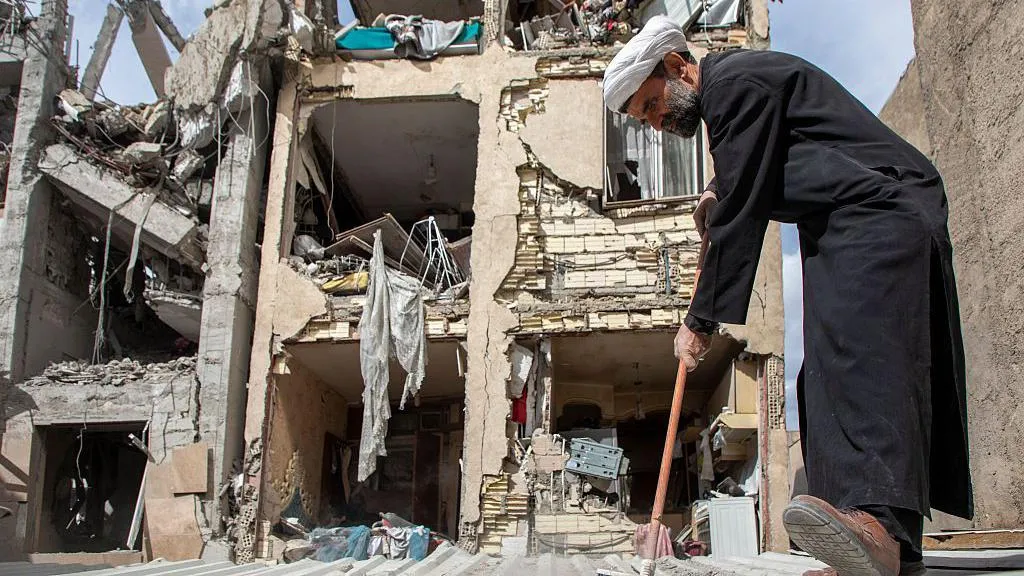
Tehran has faced waves of US-Israeli strikes since the war began in February   Getty
 
Spain's airspace has been completely off service to U.S. planes involved in the Iran war; the latest step announced by one of the loudest opponents in Europe of the U.S.-Israeli conflict in the Middle East. This announcement links to Spain's earlier denial for the U.S. to make use of jointly operated military bases during the conflict. Prime Minister Pedro Sanchez  described the war as illegal, reckless and unjust. Following Spain's denial of the Rota and Moron military bases in southern Spain, President Trump suggested the U.S. could do without trade with Madrid.
 
Spain's Sanchez has been on a roll as one of the most vocal critics of Israel's invasion of Gaza and the war being waged against the Gazan government's Hamas terrorist group that had been responsible for five thousand Palestinian terror operatives swarming across the border from Gaza for a wholesale atrocity of sadistic savagery committed against Israeli civilians, highlighted by body cams worn by the terrorists while they mass-raped, tortured and murdered women and girls, infants and the elderly, entire families torched in their homes. According to Sanchez is it inhumane for the Israeli Defense Forces to hunt down the murderers of Jews.
 
The military alliance's lack of enthusiasm to fulfill their mandate does not sit well with the Trump administration, finding the lack of support during this latest military chaos in the Middle East "very disappointing", in the Secretary of State's opinion. Having largely rebuffed Trump's frequent requests to assist in the reopening of the Strait of Hormuz, blocked by Iran following the February 28 start of the U.S.-Israel aerial  war on the Islamic Republic, it is actually Europe that finds itself in increasingly dire straits, depending largely on oil and gas from the Middle East.
 
First to inspire anger has been Spain distancing itself from the conflict by blocking U.S. use of bases in Spain. And nor has U.K. Prime Minister Keir Starmer's position been appreciated following his initial rejection of the request to permit the U.S. access to its military bases to assist in the carrying out of strikes on Iran. In a reversal since, the U.S. has since been given allowance to use bases for "limited defensive action"
 
Perhaps most disappointing, but yet not surprising is the hesitation of the Gulf nations to take action themselves against Iran's constant bombardment hitting, Kuwait, Qatar, Saudi Arabia and the United Arab Emirates. Aside from suggestions of action emanating from them time to time, no concrete moves have yet been taken to respond to the deadly missiles and drones targeting Gulf oil depots, airports and civilian areas, by an Iran that now has nothing to lose in breaking loose and making good on its decades-old threats against its neighbours. Aside from intercepting missiles, no counter-action has yet been taken by Saudi Arabia et al.
 
https://www.brookings.edu/wp-content/uploads/2026/04/GettyImages-2264040491.jpg?resize=1500,1126
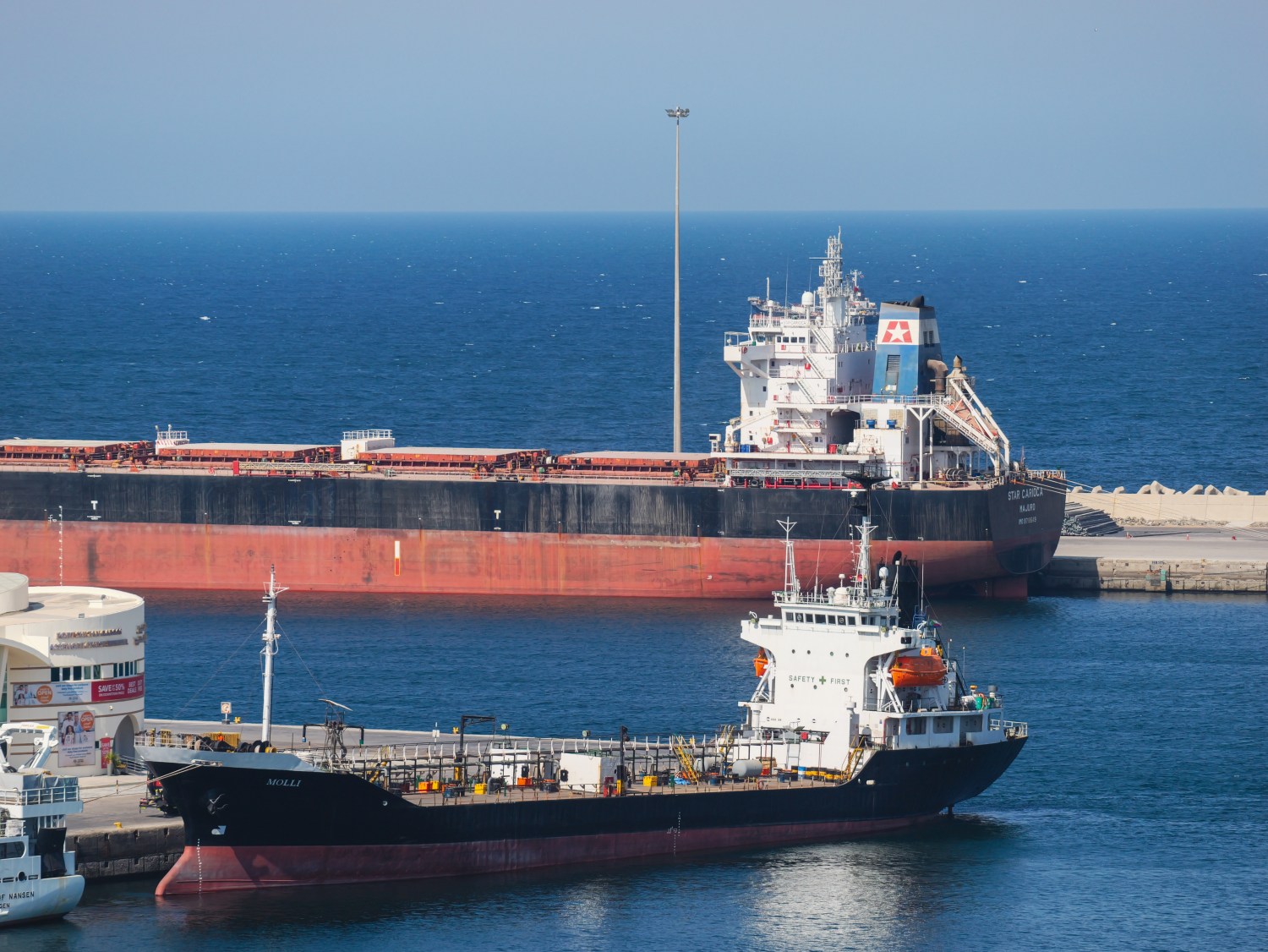
Large oil tankers berthed at the Port of Mutrah in Muscat, as regional tensions in the Strait of Hormuz raise concerns over global oil supply disruption and energy market instability. Muscat, Oman, Feb. 28 2026. Craig Hastings, Getty Images
"Without the United States, there is no NATO."
"An alliance has to be mutually beneficial. It cannot be a one-way street."
"Let's hope we can fix it."
Marco Rubio 

Labels: , , , ,

Monday, March 30, 2026

"We Will See Where Things Lead..."

"The problem with the strait is this. Let's say we do a great job. We say we got 99 percent. One percent is unacceptable, because one percent is a missile going into the hull of a ship that cost $1 billion."
"If we do a 99 percent decimation, that's no good."
"I read a story today that I'm desperate to make a deal. I'm not. I'm the opposite of desperate. I don't care. ... In fact, we have other targets we want to hit before we leave. "
"I don't like to say this, we've won this. This war has been won. They have no navy and they have no air force, and they have nothing."
"And we literally have planes flying over Tehran and other parts of their country They can't do a thing about it."
U.S. President Donald J. Trump 
https://csis-website-prod.s3.amazonaws.com/s3fs-public/styles/1400x600/s3/2026-03/Iran%20Air.jpeg?VersionId=f.ntT7ovrpou_HH1JMXYE6qR5E9s1TZJ&h=266da715&itok=FUmSCZRY
Photo: Lee Hathaway
"Iran wants to fight this war of attrition."
"Once the war got underway, they had two objectives. One was to survive, but the second was to outlast Trump."
"Make the U.S. feel so much pain through the economy, strikes on the energy infrastructure, that they don't do it again."
"What they're trying to ensure is that Israel doesn't go in and do a war like they do in Lebanon every six months."
Nate Swanson, former U.S. diplomat 
 
"Mr. President, you are acting now to ensure future generations do not have to live under the threat of a nuclear-armed Iran."
"Unlike Iraq, this isn't a tie. This is not parity. This is is not chaos. This is success."
"Pure American success on plan."
U.S. Defense Secretary Pete Hegseth 
 
"The American position was essentially Iranian surrender, and the Iranian response was essentially American surrender."
"The American position was, 'Get rid of  your nuclear program, missiles and proxies', and the Iranian position was, 'Compensate us for our losses, and get out of the Middle East'."
Ilan Goldenberg, Middle East policy adviser for the Biden administration 
https://csis-website-prod.s3.amazonaws.com/s3fs-public/styles/2000_x_858/s3/2026-03/GettyImages-2264385014_cropped.jpg?VersionId=QGwxHsPN1evnCKjNV0mT18ygJCvuETk7&h=266da715&itok=_5n5-O2z
War in Iran  Center for Strategic and International Studies
 
Four weeks after the start of the February 28 aerial bombardment by U.S. and Israeli warplanes over Iran, those left in positions of power to represent the Islamic regime are no closer to surrendering to American demands than they were prior to the conflict. This, despite that their elite leaders both at the governing level and from the Islamic Republican Guard Corps have been dispatched to hold counsel with the Hidden Mahdi in Paradise, and a succession of lesser authority figures stepping in to take their place, in a roundtable of continuing precision strikes picks off each substitute.
 
The situation appears now to be in the defiant hands of the IRGC and even there it is questionable who has assumed the position of elite enforcer. On the American side, the war has proven to be extremely unpopular among American citizens. The U.S. legacy press is not in support of ongoing hostilities, the European Union is tying itself into knots trying to avoid Mr. Trump's accusations of elusive allies in a pinch, and China and Russia are ever ready at the UN to vote down any sanctions against their ally, Iran.
 
The signature closure of the Strait of Hormuz has struck the world economy and the stock market, an uncomfortable position for the Trump administration to find itself glued to. The threat and danger to global shipping targeted by Iran and the IRGC has thrown the shipment of oil, gas and fertilizer off kilter. The U.S. is self-sufficient in energy resources; it is Europe whose sourcing of energy revolves hugely around Iran that will suffer; still none among them is prepared to enlist in the U.S.-Israeli conflict in Iran.
 
The Gulf States, most geographically vulnerable to a desperate Iran with too many missiles and drones at its disposal, and receiving the blunt end of Iranian revenge-spite, speak of defence, but mostly hang their expectations on the U.S.-Israeli duo to rid the Middle East of the simmering threat of the Islamic Republic's nuclear threat and its terrorist proxies. They are anxious to see the job done and over with and the threat they've been living under since 1979 dispensed with.
 
Pressing help from the European and Asian nations to secure the Strait of Hormuz, Secretary of State Marco Rubio met with as much success as did the U.S. President. All are eager to do their part with one proviso: the conflict must first come to an end. In five national surveys in a week it was revealed that Americans oppose the war and fail to approve of its handling by their president. This, though Americans support efforts to stop Iran from nuclear weapons.  
"We will see where things lead, and if we can convince Iran that this is the inflection point, with no good alternatives for them other than more death and destruction -- we have strong signs that this is a possibility -- and if a deal  happens, it will be great for the country of Iran, for the entire region and the world at large."
Steve Witkoff, U.S. peace envoy  
https://csis-website-prod.s3.amazonaws.com/s3fs-public/styles/1400x600/s3/2026-03/GettyImages-1239497623_cropped.jpg?VersionId=w5I1eCVemidx4Gzt5zZ3jhYzONhqhCaZ&h=47ea0187&itok=2qnI5OnK
Photo: Stringer/Anadolu Agency/Getty Images
 

Labels: , , , , ,

Saturday, March 07, 2026

As The U.S.-Israel Strikes in the Islamic Republic Progress...

"The war in Iran has been well underway for a week. Iran’s former Supreme Leader Ayatollah Ali Khamenei and much of the regime’s leadership are dead, more than two thousand targets have been struck across the country, and per U.S. Central Command, the U.S. military has “struck or sunk” more than thirty Iranian ships. Iran has retaliated in full force, unlike its token attack against U.S. forces in Qatar after Operation Midnight Hammer, striking military, civilian, and infrastructure targets in eleven countries so far."
"With the exception of China, Russia, and maybe North Korea, very few countries are going to cry tears for the loss of Khamenei, whatever their public posture on the U.S. and Israeli attacks at the moment. His regime wreaked havoc across the region, sponsored terrorism, and had challenged U.S. interests and the interests of Western and Gulf countries for some time. Nevertheless, there is still clearly some discomfort with the operation, from Capitol Hill to our European allies and throughout the Middle East. At the risk of stating the obvious, my sense is that this operation will ultimately be judged on its long-term outcome. If we end up with a more stable and peaceful region and a less hostile Iranian regime, it will be heralded as a resounding success. If, on the other hand, we find ourselves in a quagmire with ongoing chaos and conflict, there will be a lot of second-guessing."
Michael Froman, president, Council on Foreign Relations
https://assets.cfr.org/images/w_768/t_cfr_3_2/f_auto/v1772811560/Iran_TWTW_03062026_A/Iran_TWTW_03062026_A.jpg?_i=AA
Men watch from a hillside as a plume of smoke rises after an explosion on March 2, 2026 in Tehran, Iran. Majid Saeedi/Getty Images
 
"It could be six, it could be eight, it could be three [weeks before operations are concluded]."
"[The U.S. has an] unlimited supply of weapons."
"Iran is hoping we cannot sustain this."
"Our capabilities are overwhelming and gathering still, as are those of our Israeli partners."
"Our munitions are full up."
U.S. Defense Secretary Pete Hegseth  
If he isn't assassinated before being chosen, Supreme Leader Ali Khamenei's second-oldest son, himself a hard-line cleric, without being the Islamic Shi'ite elite scholar -- the 'pope' of Islam's Shia minority's faithful -- his father was, may yet be named as his successor, as the next leader of Iran. Mojtaba Khamenei, in that role is without doubt, a marked man. One whom President Trump considers a 'lightweight' with whom the regime's policies would remain sacrosanct. 
 
Some Middle East and Iran experts hypothesize that Iran's Islamic Republican Guard Corps who answered to no authority but that of the Supreme Leader, and now continue to follow through on his final instructions, are counting on the U.S. and Israel running out of munitions. For while the IRGC sets off inexpensive drones, its challengers are making use of expensive missiles to intercept them. Reckoning that if they can hold out against the U.S. and Israel long enough, victory will be theirs.
 
In the meanwhile, they continue to lob missiles and drones at their near neighbours, friends and foes alike. That part of their wartime schematic posits that if the IRGC places their Gulf neighbours under enough strain and stress, they will demand a cessation of hostilities; for the U.S. and Israel to pull back and leave off hammering the Islamic Republic. It was revealed that Russia not only has given Iran intelligence on U.S. installations in the Gulf, but is also supplying them with drones; a reversal of Iran supplying Shahed drones to Russia for its conflict with Ukraine. 
 
"Action to reduce pressure on oil is imminent", Mr. Trump said Thursday even as pump prices advanced to their highest level since 2024 in the U.S. ahead of November midterm elections. Shipping through the Strait of Hormuz is at a near total halt, leaving exporters to scramble for routes away from the region. A protracted war could "bring down the economies of the world", warned Qatar. Gulf energy exporters could shut production within weeks, it was predicted. 
 
A barrage of missiles and drones targeting Gulf countries overnight and into Friday sent powerful blasts into Kuwait and Bahrain. Dubai sent out missile alerts for the second day, on Friday. While maintaining airstrikes on the Islamic Republic, Israel "significantly expanded" its presence on the ground in Lebanon where Tehran-linked Hezbollah sent missiles into Israel and for their trouble saw a wave of airstrikes by Israel hit the southern suburbs of Beirut, the Shia Hezbollah's stronghold. 
 
A wide shot of smoke billowing up above low-rise buildings in a dense neighbourhood.
Smoke rises after an Israeli strike on Beirut's southern suburbs on Friday, following an escalation between Hezbollah and Israel in Lebanon amid the U.S.-Israeli conflict with Iran. As the conflict in the Middle East widens, Iran may find many of its traditional allies are reluctant to get directly involved. (Khalil Ashawi/Reuters)
 
The Islamic Republic, stated Iran's sidelined (by the IRGC) president Masoud Pezeshkian, is "committed to lasting peace", and to that end will continue to defend itself. For his part, Mr. Trump vowed to "totally demolish" Iranian forces, planning to "clean out" the Iranian leadership structure. So far in the joint U.S.-Israeli strikes, 1,332 people are estimated to have been killed, dozens others elsewhere in the region by Iran's retaliatory strikes, among them six U.S. troops. 
 
Overnight into Friday Arab states intercepted Iranian projectiles, with Bahrain revealing that the region's oldest refinery, a unit at its Sitra site, had caught fire, struck by a missile. An attack targeting the U.S. military facility at Al Udeid Air Base  was thwarted by Qatar, while multiple missiles and drones were intercepted overnight by Saudi Arabia where strikes were directed at a U.S. facility at Al Kharj near Riyadh, and the Aramco headquarters in the east.
 
Iran has launched 500 ballistic and cruise missiles plus 2,000 drones since the war's start; 60 percent at American targets located in Gulf states. South Korea is in talks with the U.S. in potential redeployment of weapons, Patriot air-defence systems among them, while France authorized U.S. military support aircraft to use Istres Air Base as long as they are not used in Iran operations. 
 
"UNCONDITIONAL SURRENDER!" wrote Trump Friday on Truth Social, demanding that Iran surrender, on the seventh day of the conflict. There will be no negotiations for the conflict's end. 
 
https://media.cnn.com/api/v1/images/stellar/prod/117770-fren-tehran-smoke-16x9-00-00-14-01-still001.jpg?c=16x9&q=h_540,w_960,c_fill
Strikes continue to hit Iran’s capital, Tehran, late Saturday night. CNN
 

Labels: , , , ,

Monday, October 14, 2019

Sobering Realities

"A total of 20 cruise missiles and drones were used in the attack. Drone wreckage discovered in Saudi Arabia shows that the Iranians are manufacturing and operating drones so advanced [with jet engines and significant stealth capabilities] that they do not lag behind Israeli capabilities in this field."
"Seventeen targets incurred a direct hit in this concentrated bombardment. Considering the 20 projectiles whose debris was found at the attack site, that's an 85-percent success rate, which indicates the very high capability and reliability of the technology that was used."
"[Photographs of the attack aftermath] show the precision that was achieved in the attack. Each one of the spherical gas tankers in the picture was hit in the center."
"The pictures also show that the strike precision was one meter ... The Iranians, or their proxies, showed that they can hit specific targets with great precision and from a distance of hundreds of kilometers."
"We [Israeli authorities] have to accept the fact that we are now vulnerable to such a strike."
"Dimona nuclear reactor should be halted. It has now been shown to be vulnerable, and the harm it could cause would likely exceed its benefits."
Uzi Even, chemistry professor, Tel Aviv University, founding scientist, Dimona nuclear reactor

(Above and at article top:) The military wing of the Gaza-based Islamic Jihad terror group releases a video threatening rocket attacks on the nuclear reactor in Dimona and other sensitive sites in Israel, May 4, 2019. (Screen grab)

The September 14 launch of 20 drones and cruise missiles at one of Saudi Arabia's vital Aramco oil fields and processing facilities followed on Iran's Republican Guard Corps speedboats harassing and taking into custody Gulf oil carriers as a response to Britain having earlier taken an Iranian oil tanker into custody in Gibraltar under the charge that it was attempting to bypass sanctions on delivering oil under an embargo by the EU, to Syria.

It's an incendiary, dangerous game that the two Middle East enemies play; Arab Sunni Kingdom of Saudi Arabia, and Persian Shiite Islamic Republic of Iran, both jockeying for power; the Saudis to retain their preeminent position as Sunni Islam's guardian of the two most sacred sites in Islam, and the Iranian Ayatollahs intent on challenging the Saudis for influence and power in the Middle East. Iran's zest for accomplishing its nuclear aspirations have inspired foreboding in the Sunni Arab states.

At the same time, Iran's very public threats against the State of Israel, threatening its annihilation, has placed both Israel and its Sunni Arab neighbours, particularly Saudi Arabia and the United Arab Emirates in recognition of a common enemy. The Arab Gulf states have taken comfort in the fact that as threatening to the stability of the Middle East and the continued ascendancy of the majority Sunnis Iran is, there is a countervailing military power capable of holding the balance and if need be, challenging Iran militarily.

Israel's well-earned reputation as a military powerhouse, a nuclear power, a country accustomed to fighting against uneven odds for survival, and a technologically advanced society capable of producing cutting-edge surveillance and self-protective defensive military devices to stop the aerial flight of missiles, has enabled it to finally make some headway in its efforts to convince its neighbours that it has a right to existence amongst them.

In the wake of the Iranian attack on Saudi Arabia's oil fields, mixed messages have arisen. On the one hand, Iran now claims that Saudi Arabia recently attacked one of its oil vessels in the Persian Gulf in obvious response to Iran's provocations, and on the other the two countries have begun, through intermediaries such as Pakistan and Qatar, to look into preliminary 'talks' to clear the air between them.

Should the two Middle East most powerful Islamic nations reach a level of 'understanding' to stand back from further confrontation, will that leave the newly-created relaxation of tensions between Israel and Saudi Arabia in the trash heap?

Certainly, for Saudi Arabia, the seamless attack by Iran, using advanced stealth technology to send the missiles low enough to evade radar pick-up by either the Saudis or the American forces stationed in defence of the Saudis, this has been a sobering event, another reality altogether highlighting its vulnerability to an enemy whose resources and technical attack advances have surprised everyone. And if Saudi Arabia is vulnerable, perhaps its inclination is to appease the threat.

Credit via Reuters
In the same token, it has become clear that Iranian advances in precision rocketry represents a dire threat to Israel. Iran provides both terrorist Islamist groups, Hezbollah, its proxy militia in Lebanon, and Hamas in Gaza, with rockets. The early rockets were clumsy, unguided surface-to-surface rockets whose range was limited, but, crossing the border into Israel caused anguish and fear. Now the rockets Iran transfers to Hezbollah are precision-guided missiles capable of hitting specific targets.

Israel's ports, airports, power plants, nuclear reactor, factories, civil infrastructure, just about any targets that keep the country humming along are now under potential threat. Should Hezbollah at one end, and Hamas at the other, receive the signal from Iran which now also has military stations on the Syrian side of the Golan Heights, to coordinate deadly attacks, Israel's worst nightmares appear to be on the horizon. The stealth attacks over Syria on Iranian/Hezbollah weapons depots interrupting the transfer of rockets and other advanced weaponry were a stop-gap effort to mitigate the threat.

Now, Israeli security more than ever is compromised, surrounded by Iranian-linked emissaries of conquest and death. Messages to Iran that there will be unforeseeable repercussions of major impact on its own security and that of its supporters in Lebanon and Syria seem to fall on deaf ears. The venomous hatred of Israel by the Islamic Republic determined to expunge its presence entirely from the Middle East is certainly not amenable to threats of destructive retaliation.

The Iranian Ayatollahs and their IRCG commanders are so convinced that their nuclear and Israel-vanquishing aspirations have the divine support of a higher power, they simply slough off any credible threats that would make other adversaries think twice. Tehran can send its proxies and continue to claim that it is they, not it, responsible for the mayhem that Iran will inflict upon its enemies, but in attacking Israel they will find their miscalculations will cost them dearly.
Maj. Gen. Hossein Salami: "Today, with the grace and power of God and the wise leadership of your honor [Ayatollah Ali Khamenei], we have conquered major, key posts. The communication lines of the Islamic Revolution have become thousands of kilometers deep.
"The sidelining of America in the region’s security and political developments, the accelerated decline of the regime of [Western] domination, and the paralyzing of the ‘cobweb regimes’ that are on the verge of collapse indicate the waning of the evil regime of global arrogance, in the center of which lies America."
"Today, friends and enemies alike have realized that the deterrence capabilities of the revolution have almost reached their peak. Not only has the reputation of threat and power of the U.S. declined to a great extent, but the Zionist regime no longer poses a threat. In other words, not only is it incapable of any viable threat, but it knows that the smallest mistake on its part would be its last because any new war will erase that regime from the political geography of the world."
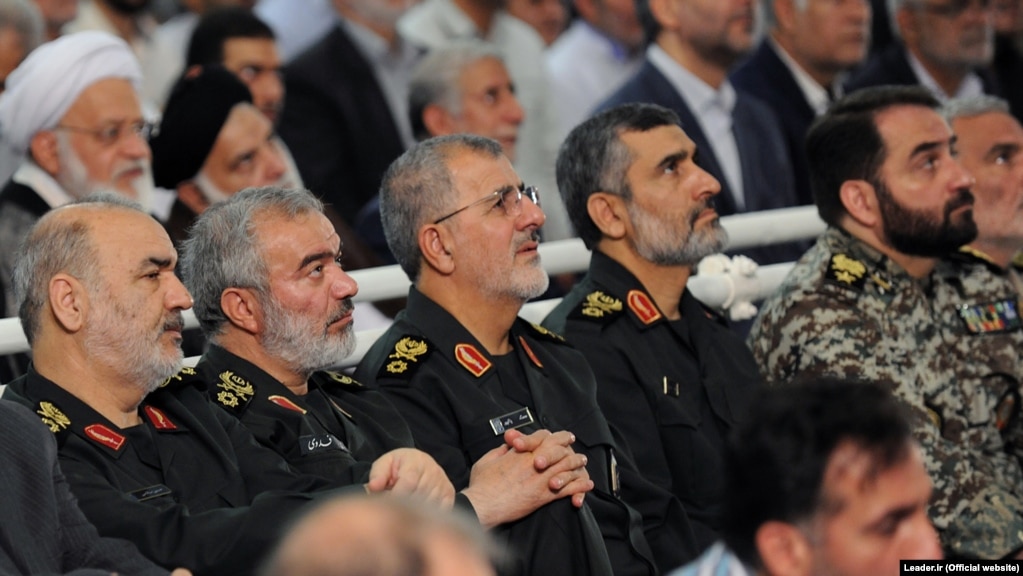
Top IRGC commanders (L2R) Hossein Salami, Ali Fadavi, Mohammad Pakpour and Amir Ali Hajizadeh on Fitr Prayer in Tehran on June 26, 2017.
IRGC commanders (L2R) Hossein Salami, Ali Fadavi, Mohammad Pakpour and Amir Ali Hajizadeh on Fitr Prayer in Tehran on June 26, 2017

Labels: , , , , ,

Monday, September 07, 2015

Neglected Opportunities At Source

"This is an opportunity. The immigrants have to decide whether they want to take advantage of it. We are taking this step so Hungary's transportation is not paralyzed during the next 24 hours."
"A migration crisis is shaking Hungary."
"[Buses would be used to transit refugees from Bicske to the Austrian border since] transportation safety can't be put at risk."
Janos Lazar, chief of staff, Prime Minister Viktor Orban
Hundreds of refugees frustrated at being stuck at two train stations in Hungary set off for Austria, one group forming a line nearly a half-mile long as they streamed out of Budapest, the other breaking out of a train near a migrant reception center : The Washington Post

Once tricked by Hungarian authorities convincing refugees to leave the camp and a train would take them to their destination, that destination turned out to be a registration processing centre. Knowing that if Hungary processed them they would be unable to go any further into Europe, the migrants balked at offers to bus them directly to the Austrian border. But this time the offer was genuine, and thousands were bused and welcomed to Austria and to Germany.

Taken to the main Hegyeshalom crossing with Austria, they finally believed the authorities who urged them to take up the offer. Refugees are supposed, under European law, to seek asylum in the first EU country they enter. Despite the fact that the refugees are tired and hungry, and escaping conflict in hopes for a life elsewhere, they have no wish to remain in the border countries of Europe where economic opportunities don't beckon as they do in Germany.

The Hungarian Parliament, averse to taking in Muslim refugees to begin with, in fears that their society will be completely transformed, from experience gleaned elsewhere in Europe, saw fit to tighten its existing immigration rules, and in the process created transit zones on the border with Serbia to retain migrants until asylum requests could be decided, the outcomes of which migrants could not readily appeal.

A "day of uprisings" saw hundreds of people break through a police cordon in Bicske to begin a mass march to Austria on foot, 135 kilometres away to the west, marching on tracks leading from the railway station. Women and children left behind boarded buses and were driven to the asylum centre nearby. The marchers covered about 50 kilometres by nightfall. Hungarians handed out bottles of water along the way.

And in Austria, police began preparing main border points with reception areas and first aid facilities to welcome the influx of refugees for a limited period, while Germany has not yet placed any limitations on either time or numbers of refugees it is prepared to absorb before they reach their stated figure of a staggering 800,000.

While the West flagellates itself over the fate of desperate refugees taking chances with their lives in attempts to reach Europe, some ask what the world's wealthiest countries in the Arab Gulf are contributing to the welfare of their co-religionists and fellow Arabs. It is well known that Jordan, Lebanon and Turkey have taken in millions of Syrian refugees. Jordan and Lebanon are anything but wealthy and their resources are dreadfully strained.

So have the six Gulf countries of Qatar, United Arab Emirates, Saudi Arabia, Kuwait, Oman and Bahrain whose oil riches have made them the economic royalty of the world, embarked on a mission to aid those whom Europe is scrambling to deal with? No offers of resettlement opportunities to Syrian refugees, zero. The countries that incorporate some of the Arab world's sturdiest military budgets, the height of living standards, have done nothing to help.

Saudi Arabia, Qatar, the UAE and Kuwait have invested in the Syrian conflict, however, funding and arming rebel and Islamist factions in conflict with the Alawite regime of President Bashar al-Assad. It is, at its heart, an Islamic sectarian, tribal conflict. The forces of Shiite Islam, against those of mainstream Sunni Islam. A proxy war between Iran and Saudi Arabia, in effect.

While the U.S. has given four billion to date in aid of the refugees, Gulf donations have totalled less than one billion. The giant construction companies like that of the bin Laden family are capable of building housing for refugees, shelters for the homeless Syrians flooding the countries that have opened their borders to them. The vast financial reserves of the Gulf States are being withheld while awaiting the full and generous response of Europe.

The world of Islam has no wish to over-exert itself on a rescue campaign of displaced Syrians; their metier is more geared toward military missions, usually by proxy militias they fund and arm; their own expensive military toys are seldom used, but if the funding for the Yemen campaign had been diverted to challenging Bashar al-Assad directly and removing his opportunities to continue inflicting death on Sunni Syrians, the tide of refugees would certainly have been stemmed.

Labels: , , , , , ,

Wednesday, June 12, 2013

Gulf begins mass expulsion of Lebanese Shiites over Hizballah’s role in Syria

DEBKAfile Exclusive Report June 12, 2013, 3:47 PM (IDT)
Kuwait acts on the GCC resolution against Hizballah
Kuwait is the first Gulf emirate ready to act on the resolution of the recent Gulf Cooperation Council meeting in Jeddah to punish Hizballah for its “flagrant intervention in Syria” against “freedom fighters.” The Interior Ministry in Kuwait is about to “end the residency of some 2,000 Lebanese Shiite citizens” and shut down their financial and commercial businesses.   
 
The six-member bloc denounced Iran’s Lebanese proxy as a terrorist group for its “flagrant military intervention in Syria and its participation in shedding the blood of Syrian people.” The Saudi Cabinet earlier condemned Hezbollah’s “blatant intervention” in the Syrian crisis.

These Kuwait and Saudi moves are expected to soon touch off mass expulsions from the six Gulf nations of tens of thousands of Lebanese Shiites employed or operating businesses there. This forced repatriation of masses of unemployed Shiites will not only be a destabilizing factor in Lebanon but is bound to raise military temperatures between Shiite Iran and the Sunni Gulf.

Tehran and Hizballah may resort to retaliatory steps, including the activation of sleeper terrorist cells against the Sunni governments.

Tehran will certainly not be happy about the GCC taking the opportunity of getting rid of Iranian and Hizballah spy networks operating in those countries, and even less about the liquidations of businesses which helped bankroll the activities of Hizballah and Iran’s Revolutionary Guards covert operations.

Kuwait will also “deny visas” to members of Lebanese groups associated with Hizballah, which run their own militias, such as Nabih Berri (Shiite Amal) and Walid Jumblatt (Druzes).

The GCC is therefore striking hard at supporters of Iran, Hizballah and the Assad regime across a wide spectrum.

Tuesday, June 11, debkafile reported exclusively that Hizballah and Iran had suspended their military and financial ties with the Palestinian Sunni Hamas after discovering its members fighting with Syrian rebels in the al Quseyr battle.

A day later, the Sunni Gulf is seen to be meting out punishment to the Shiite powers. The estrangement between Sunni and Shiite Muslims in the Arab world is deepening sharply in consequence of the Syrian conflict.

Read the earlier debkafile report below.
Hizballah forces helping Syrian troops capture the key Syrian town of al Qusayr from rebel hands last week caught five armed members of the radical Palestinian Hamas fighting with the rebels, debkafile’s intelligence sources disclose. Within hours of this discovery being reported to Hizballah chief Hassan Nasrallah, the order to shut down Hamas offices in the Shiite Dahya neighborhood in Beirut went down the Hizballah chain of command.

Wafiq Safa, head of the organizations intelligence and terror wing, who commands the organization’s war effort in Syria, summoned Ali Baraka, the Hamas envoy in Beirut. He was told to shut down shop forthwith and remove himself and staff from the Lebanese capital. Hamas cells in southern Lebanon were likewise expelled. Ali Baraka hurriedly moved his people over to the southern port of Sidon, which is outside Hizballah’s turf. Nasrallah also suspended all military and technical assistance to the Hamas military arm, Ezz a-din al-Qassam - both in Lebanon and the Gaza Strip - after years of close cooperation between the two radical terrorist organizations.

Before breaking off ties with the Palestinian group, the Hizballah high command conferred with the Iranian al Qods Brigades chief, Gen. Qassem Soleimani.

Tehran has not commented on the break-up with its Palestinian protégé, except to hold up the latest installment of Iran’s financial aid to the Gaza Strip regime. Queries from Gaza elicited evasive answers from Tehran.

The rupture with Hizballah and Iran has left the Hamas government in the Gaza Strip in serious financial straits. Its allocation from Qatar was sharply reduced this year; the Saudis stopped all assistance last year and Hamas’s parent organization, Egypt’s Muslim Brotherhood, has since assuming power in Cairo been struggling with its own government’s empty coffers.

In panicky conferences in Istanbul, Gaza and Cairo, Hamas leaders decided their only recourse was to send peace delegations to Tehran and Beirut in the hope that Supreme Leader Ayatollah Ali Khamenei and Nasrallah would relent and resume the flow of financial aid.

Hamas politburo member Emad al-Alami heads the delegation to Tehran and Salah al-Arouri, who runs Hamas operations on the West Bank from Istanbul, leads the delegation to Beirut.
Both are still cooling their heels and waiting for appointments.

The new situation has sharpened the discord within the Hamas leadership between the faction in favor of Iran and Syria, headed by strongman Mahmoud A-Zahar and the deputy commander of the Ezz a-din al-Qassam, Marwan Issa, on the one hand, and, on the other, the reinstated head of the politburo Khaled Meshaal, who sent the Hamas contingent to fight with the Syrian rebels against Bashar Assad and his Hizballah allies.

Labels: , , , , , , ,

() Follow @rheytah Tweet