


Have Turkey's Erdogan and Russia's Putin Kissed-and-Made-up for the Very Last Time?
"This is a person [Recep Tayyip Erdogan] who keeps his word — a man.""He does not follow his tail. If he believes it is advantageous for his country, he goes to the end""There is an element of predictability, and it is very important to understand who you are dealing with."Vladimir Putin, 2021"[Putin’s words are] exactly how I have known Mr. Putin since I first met him.""He is straightforward and keeps his word.""It is rare to have such strong relations with any state."Recep Tayyip Erdogan
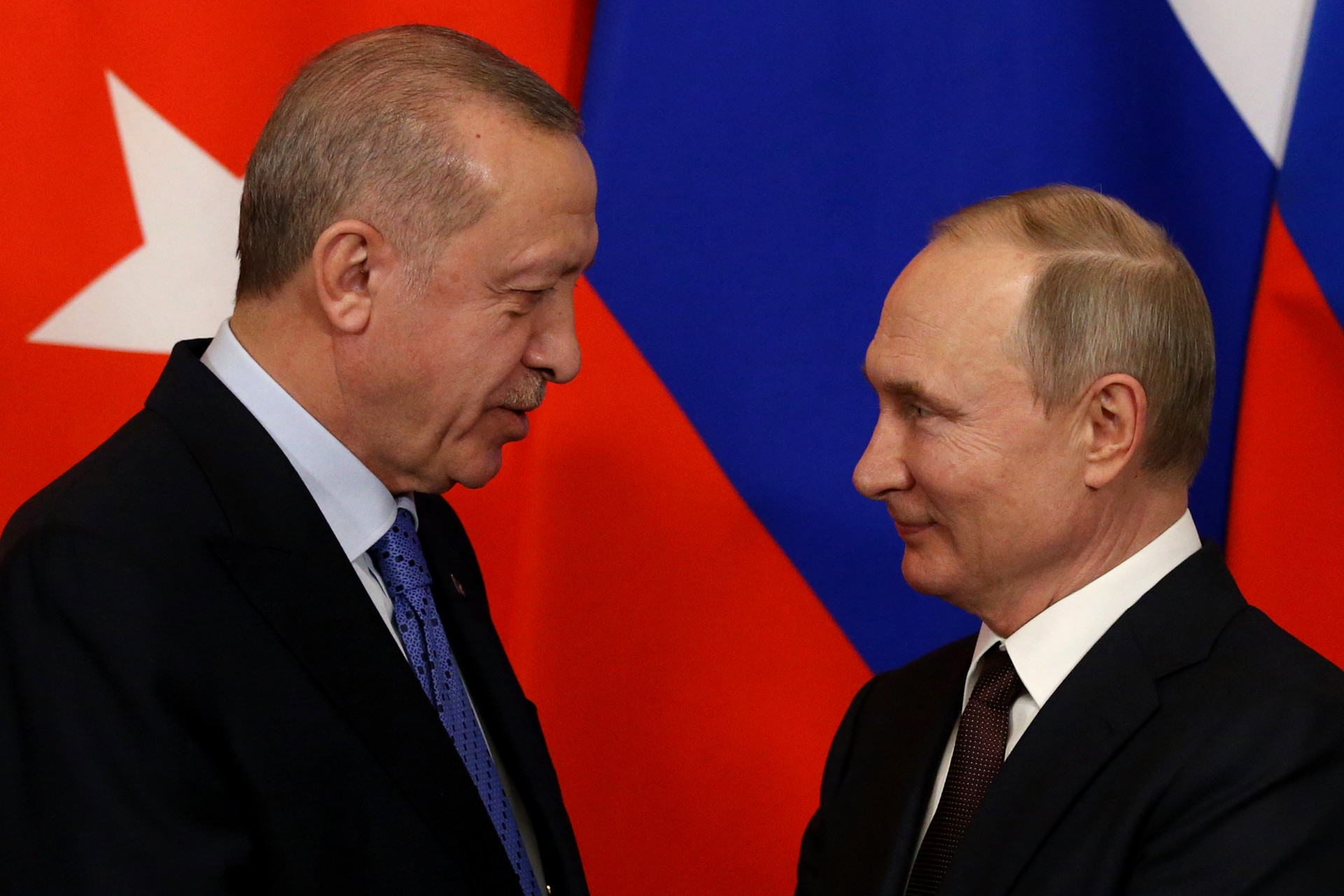 |
| Russian President Vladimir Putin and Turkish President Recep Tayyip Erdogan at the Kremlin on March 5, 2020 in Moscow, Russia/ Mikhail Svetlov/Getty Images |
"On Nov. 24, 2015, Turkey shot down a Russian fighter jet over Syria, resulting in the deaths of two Russian soldiers and prompting a sometimes spine-chilling war of words. At his annual press conference in December that year, Putin’s description of Erdoğan was quite different from the one he gave five years later. He said he did not “see any prospect of improving relations with the Turkish leadership,” whom he accused of trying to “lick the Americans in a certain place”.""Sinking the knife in even deeper, Putin accused Erdoğan of betraying the secular system put in place by Turkey’s national hero, Mustafa Kemal Atatürk. “The creeping Islamization would probably cause Atatürk to turn in his grave,” he said. Erdoğan, for his part, lambasted Russian “war crimes” in Syria. Russia imposed sanctions, with the package holidays that brought hundreds of thousands of tourists to Turkey’s Mediterranean coast halted and goods like Turkish tomatoes no longer welcome in the other direction."Stuart Williams, New Lines Magazine
Suddenly Turkey is Ukraine's best friend -- no, really. With Erdogan's courteous assistance, Ukrainian President Volodymyr Zelenskyy now has cordial ingress to the movers-and-shakers of the Middle East. Many of whom have been under extreme violent duress, with the Islamic Republic of Iran punishing the Gulf states for their friendliness with the United States, not to mention Israel. U.S. military bases in Saudi Arabia, the UAE, Bahrain, Qatar and Kuwait, all of whom have been, to some degree targeted by the IRGC; above all, the United Arab Emirates.
If any leader of any country currently knows anything about counteroffensives and self-preservation, it is the Ukrainian President, and he is more than pleased to be able to demonstrate what the Ukrainian military has learned while it has been under massive bombardment by an aggressive, much larger conventionally armed neighbour. The Iran war has enabled Mr. Zelenskyy to cultivate closer ties with Gulf states. The Shahed-136 kamikaze drones that Russia uses in Ukraine have been supplied to Iran by Russia and China.
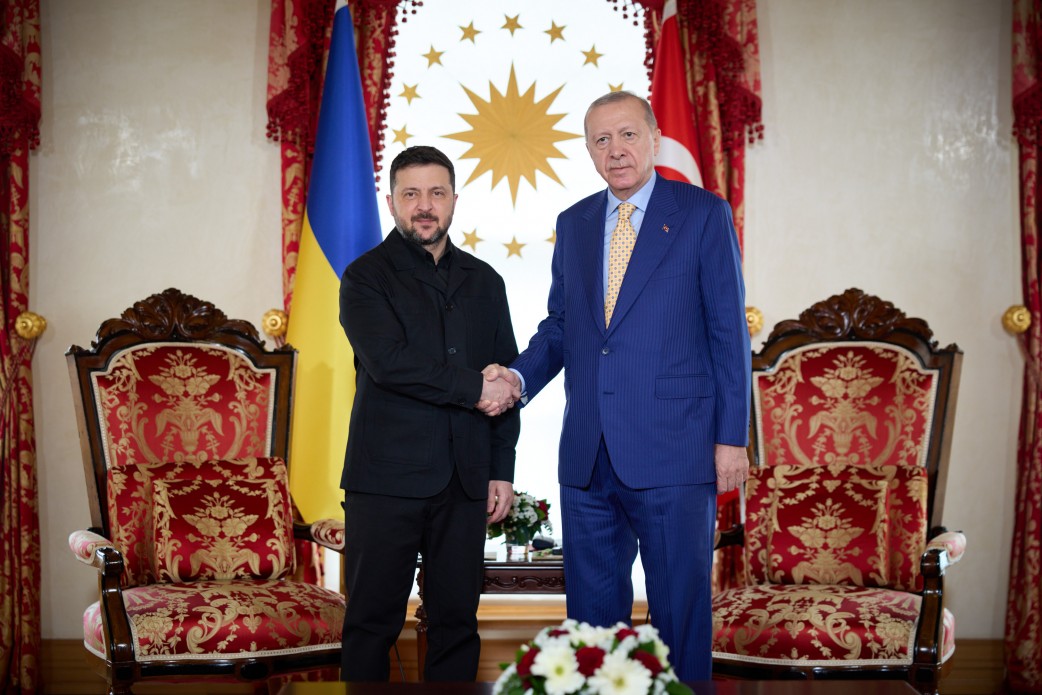 |
| At the Dolmabahçe Palace in Istanbul, President of Ukraine Volodymyr Zelenskyy held a meeting with President of Türkiye Recep Tayyip Erdoğan. President of Ukraine |
Ukraine's answer to the devastating attacks on its cities and civil infrastructure was almost-instant devising, production and use of surprisingly simple advance drone technology which has given it longer reach into Russia itself, demonstrating what's good for the goose is fine for the gander in blowing up Russian military bases, bridges, ships, weapons storage, and oil depots. Ukrainian resistance has resulted in the deaths of tens of thousands Russian servicemen monthly, dealing severe blows to Russia's troop numbers and recruitment.
With all that experience behind them, Ukraine was pleased to dispatch air defense teams to Qatar, Saudi Arabia and the United Arab Emirates. Turkey, in ushering Ukraine into the comfort zone of making new contacts in the Middle East, has a new partner, as it leaves behind the old one with which its own agenda was never quite a perfect fit. After all, during the drawn-out civil war in Syria, Turkey armed the Sunni groups trying to break Bashar al-Assad's Alawite grip on the country, even as Erdogan targeted Kurds whose fighting prowess was superior to all of the regime's opponents.
And it was Russian warplanes out of the Russian air base in Syria that constantly flew over Sunni strongholds bombing them mercilessly. Just incidentally the very same Sunni fighting groups that Mr. Putin has attempted after the fall of President Assad, (domiciled now in Russia), to ingratiate himself with, hoping to be able to maintain both his remaining naval and air bases in the new Sunni-led government of Ahmed al-Sharaa.
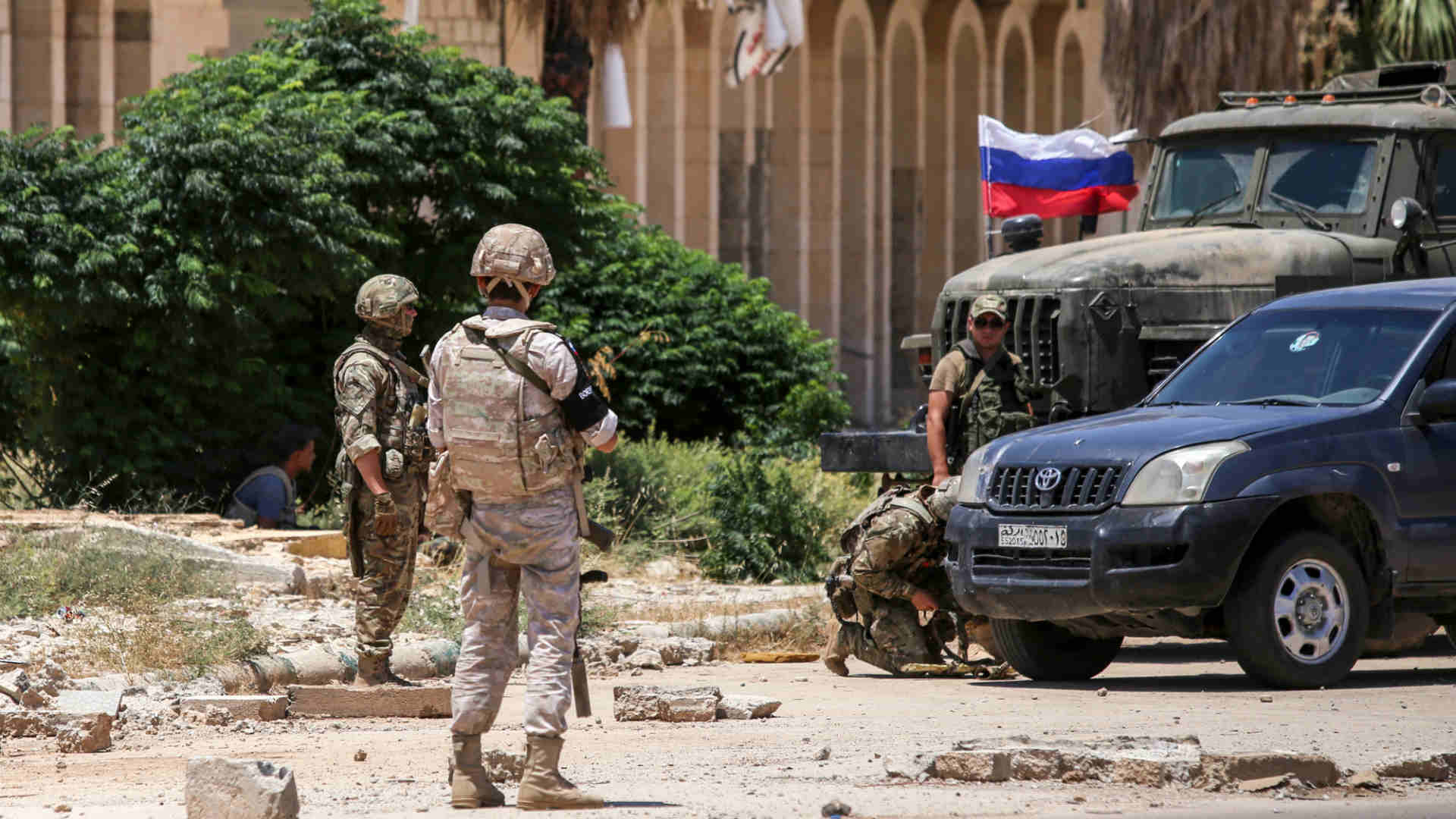 |
| The Russian military presence in Syria has declined significantly over the past two years, from 114 military sites to only two bases today. [Getty] |
In the early years of Russia's conflict in Ukraine when Moscow was isolated by the West, Turkey, though a standing member of the NATO alliance, spurned the sanctions. In the process becoming a link for Russian trade, investment and energy flows. A situation that gave Ankara greater leverage over Moscow. Russia, before the ouster of the Syrian Alawite regime, could do anything it wanted there and had hundreds of military bases; now under the new Sunni-led regime, reduced to two, albeit its major bases.
It is Turkey that is now the power lever in Syria, helping its interim president al-Sharaa to be presented to the EU, the U.S. as the new, kinder, 'democratic' face of Syria with whom they could all do business with confidence. And in the process, Turkey has become the king-maker, which suits its future plans of greater dominance in the Middle East very well. A role that as a junior partner to Russia for so many years, Russia cultivated for itself, while it is Turkey now that has inserted itself in helping to rebuild the Syrian Army.
By openly giving assistance to Ukraine's President Zelenskyy, Mr. Erdogan is amply demonstrating that once again Turkey has spurned its sometimes-tenuous, but generally past-useful allyship with Russia, moreover a Russia that has, by its territorial aggression served to isolate itself, while continuing to aggravate and threaten his eastern European neighbours and needling NATO, of which Turkey is a member. Vladimir Putin and his war-wearied economy has lost the projection of global power, and Turkey for the time being has no further use of his allyship with Russia.
 |
| Russian and Turkish delegations at a summit in Tianjin, China, September 2025 Vladimir Smirnov / Reuters |
Labels: Gulf States, Iran Conflict, Recep Tayyip Erdogan, Russian Invasion of Ukraine, Sanctions, Syrian Civil War, Turkey-Russian Alliance, Ukrainian President Volodymyr Zelenskyy
posted by Pieface | 9:59 PM
|
0 comments


