

The Solidarity of NATO Allies
"The president and our country will have to re-examine all of this after this operation is over.""If NATO is just about us defending Europe if they're attacked, but them denying us basing rights when we need them, that's not a very good arrangement. That's a hard one to stay engaged in.""When this operation is over, it [Strait of Hormuz] will be open and it'll be open one way or another.""It will be open because Iran agrees to abide by international law and not block the commercial waterway, or a coalition of nations from around the world -- and the region -- with the participation of the United States, will make sure that it's open."U.S. Secretary of State Marco Rubio
| Global Banking & Finance Review |
"Maybe we take Kharg Island, maybe we don't. We have a lot of options.""It would also mean we had to be there [on Kharg Island] for a while.""I would only say that we're doing extremely well in that negotiation but you never know with Iran because we negotiate with them and then we always have to blow them up."U.S. President Donald J. Trump"An Iranian regime that launches ballistic missiles at homes, weaponizes global trade and supports proxies is no longer an acceptable feature of the regional landscape.""We want a guarantee that this will never happen again."Noura Al Kaabi, minister of State, Foreign Ministry, UAE"This [use of Spanish airspace] was made perfectly clear to the American military and forces from the very beginning. Therefore, neither the bases are authorized, nor, of course, is the use of Spanish airspace authorized for any actions related to the war in Iran.""[The war in Iran is] profoundly illegal and profoundly unjust. [The U.S. was made aware of Spain's position] from the very beginning.""You cannot respond to one illegality with another, because that's how humanity's great disasters begin."Spanish Defence Minister Margarita Robles
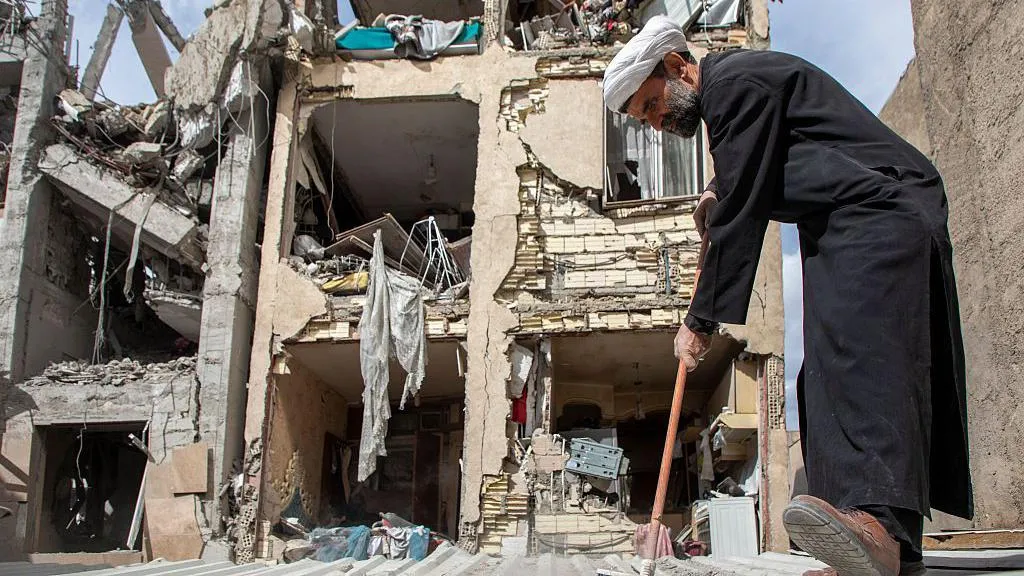 |
| Tehran has faced waves of US-Israeli strikes since the war began in February Getty |
Spain's airspace has been completely off service to U.S. planes involved in the Iran war; the latest step announced by one of the loudest opponents in Europe of the U.S.-Israeli conflict in the Middle East. This announcement links to Spain's earlier denial for the U.S. to make use of jointly operated military bases during the conflict. Prime Minister Pedro Sanchez described the war as illegal, reckless and unjust. Following Spain's denial of the Rota and Moron military bases in southern Spain, President Trump suggested the U.S. could do without trade with Madrid.
Spain's Sanchez has been on a roll as one of the most vocal critics of Israel's invasion of Gaza and the war being waged against the Gazan government's Hamas terrorist group that had been responsible for five thousand Palestinian terror operatives swarming across the border from Gaza for a wholesale atrocity of sadistic savagery committed against Israeli civilians, highlighted by body cams worn by the terrorists while they mass-raped, tortured and murdered women and girls, infants and the elderly, entire families torched in their homes. According to Sanchez is it inhumane for the Israeli Defense Forces to hunt down the murderers of Jews.
The military alliance's lack of enthusiasm to fulfill their mandate does not sit well with the Trump administration, finding the lack of support during this latest military chaos in the Middle East "very disappointing", in the Secretary of State's opinion. Having largely rebuffed Trump's frequent requests to assist in the reopening of the Strait of Hormuz, blocked by Iran following the February 28 start of the U.S.-Israel aerial war on the Islamic Republic, it is actually Europe that finds itself in increasingly dire straits, depending largely on oil and gas from the Middle East.
First to inspire anger has been Spain distancing itself from the conflict by blocking U.S. use of bases in Spain. And nor has U.K. Prime Minister Keir Starmer's position been appreciated following his initial rejection of the request to permit the U.S. access to its military bases to assist in the carrying out of strikes on Iran. In a reversal since, the U.S. has since been given allowance to use bases for "limited defensive action".
Perhaps most disappointing, but yet not surprising is the hesitation of the Gulf nations to take action themselves against Iran's constant bombardment hitting, Kuwait, Qatar, Saudi Arabia and the United Arab Emirates. Aside from suggestions of action emanating from them time to time, no concrete moves have yet been taken to respond to the deadly missiles and drones targeting Gulf oil depots, airports and civilian areas, by an Iran that now has nothing to lose in breaking loose and making good on its decades-old threats against its neighbours. Aside from intercepting missiles, no counter-action has yet been taken by Saudi Arabia et al.
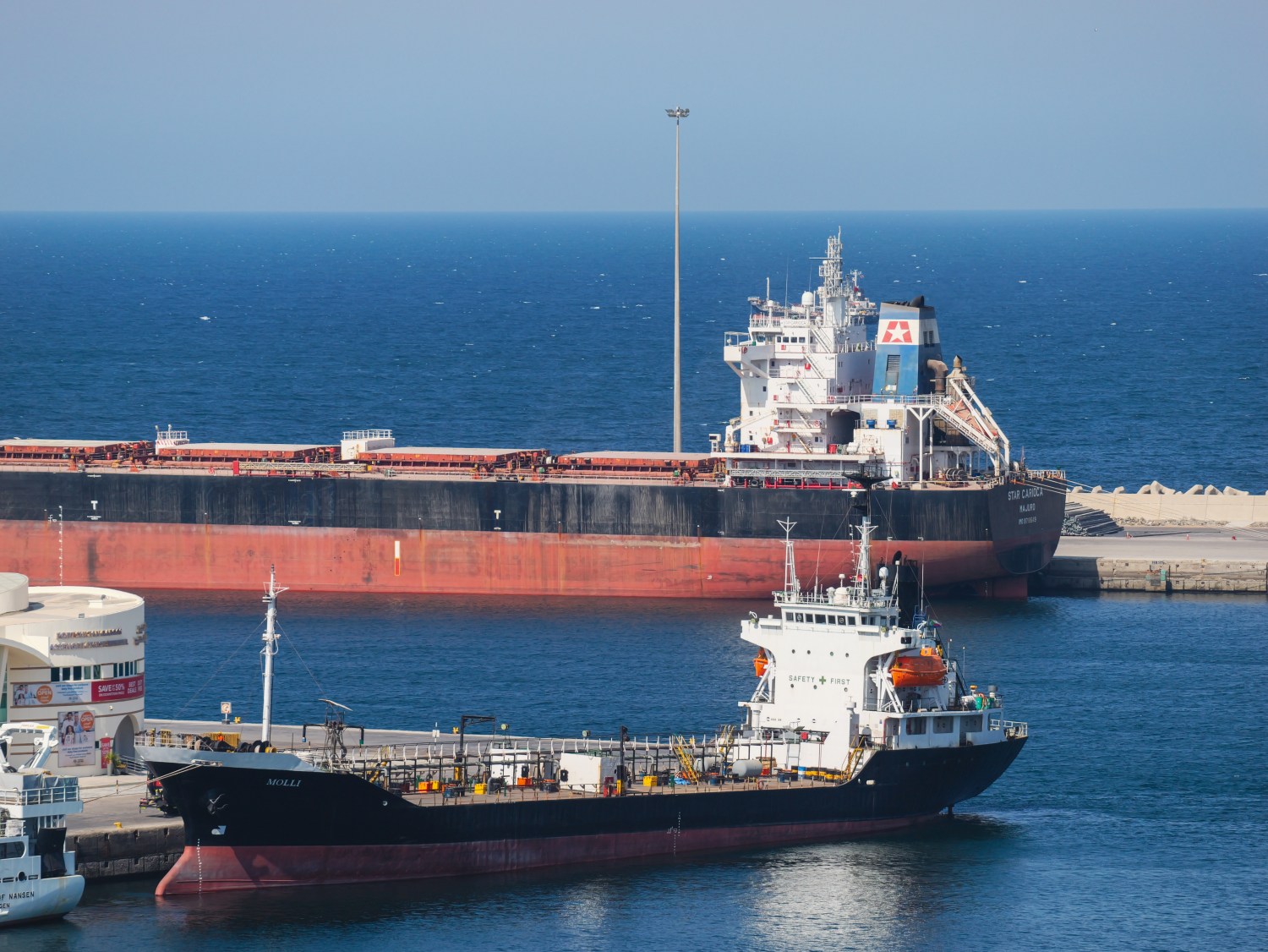 |
| Large oil tankers berthed at the Port of Mutrah in Muscat, as regional tensions in the Strait of Hormuz raise concerns over global oil supply disruption and energy market instability. Muscat, Oman, Feb. 28 2026. Craig Hastings, Getty Images |
"Without the United States, there is no NATO.""An alliance has to be mutually beneficial. It cannot be a one-way street.""Let's hope we can fix it."Marco Rubio
Labels: Gulf States, Islamic Republic in Desperation, NATO Members, Strait of Hormuz, U.S.-Israel Conflict in Iran
posted by Pieface | 9:00 PM


0 Comments:
Post a Comment
<< Home