Politic?

This is a blog dedicated to a personal interpretation of political news of the day. I attempt to be as knowledgeable as possible before commenting and committing my thoughts to a day's communication.

Monday, May 15, 2023

Another Blighted Rescue of Quasi-Canadians

"There has been a loss of integrity in the Canadian immigration process."
"Most of these people have been living in Sudan for years."
"Sometimes they never really lived in Canada and don't speak English or French."
Unidentified insider source asking for anonymity 

"[Statistics  on the phenomenon known as] Canadians of convenience [during the Lebanon evacuation are not readily available."
"I don't know how common it is, but it's likely not negligible. We only tend to get a sense in cases like Lebanon and now Sudan."
Andrew Griffith, former director general, Immigration, Refugee and Citizenship Canada
Signs of a ceasefire in Sudan are scarce as the two warring factions have returned to fighting that has temporarily derailed rescue attempts for Canadians still trapped in the country.  CBC

Thousands of Lebanese-Canadian citizens were evacuated at Canadian government expense in 2006 during the war in Lebanon, to bring them back to safety in Canada. Most of whom, after the fact, turned out to be citizens in name only, who had acquired and maintained citizenship as a type of 'insurance' in case of emergencies. In this realm of convenience citizenship, Chinese Hong-Kongers represent another group from abroad who famously went to great lengths to acquire Canadian citizenship as a future haven should their lives in Hong Kong suddenly become 'complicated'.
 
For the Lebanese emergency, it cost $94 million for Canada to evacuate some 14,000 Canadians from Lebanon at war. Half that number returned to Lebanon when hostilities ceased. Now, in Africa there are sources suggesting there may be a repeat of this 'rescue' operation of 'citizens of convenience' in Sudan where a civil war has been unfolding. According to government figures, 550 people were flown out of Sudan to Kenya on Canadian evacuation flights.
 
Of that total, 175 were Canadian citizens or permanent residents. On flights organized earlier by other countries, another 210 Canadian citizens left. According to an individual familiar with the situation, it has emerged while the evacuees were being processed that as many as half of the 175 Canadian citizens and permanent residents happen to be refugees granted status in Canada who returned to Sudan, some continuing to claim welfare and child benefits.
 
Smoke rises from a stack atop a large multi-storey ship packed with people, under a pale blue sky.
A ferry transports some 1,900 evacuees across the Red Sea from Port Sudan to the Saudi King Faisal navy base in Jeddah, Saudi Arabia.  (Fayez Nureldine/AFP/Getty Images)

Some are refugees who are in the process of becoming Canadians, which means they should not have left the country to return to Sudan while the process has not yet been completed. All of the evacuees in Kenya were accommodated and cared for in hotels at Canada's expense. In the past five years, Canada accepted 2,120 refugee claims from Sudan; individuals who are accepted are given protection in Canada. If they return to their country of origin, however, they effectively relinquish refugee status.
 
Immigration, Refugees and Citizenship Canada had "no response to offer" when a spokesperson was approached for clarification on the matter. Nor could the government provide cost estimates of an operation involving the Canadian High Commissioner in Nairobi, the embassy in Cairo, Egypt, the embassy in Amman, Jordan, the consulate in Djibouti and 200 Canadian Forces on the ground in the region helping to expedite the 'rescue'. 
 
The Canadian portion of the relief effort has been described as "chaos" by sources in Africa. A C-130J Hercules transport aircraft left Jordan to head to Port Sudan on the Red Sea on a mission to retrieve stranded Canadians after the Wadi Seidna Air Base north of Khartoum was seen as too dangerous. According to a Forces spokesperson, Sudanese authorities reused to permit personnel to disembark, and the flight was forced to return to Jordan empty following a "diplomatic credentials mix-up".

After the fiasco in Lebanon, the-then Conservative government in Canada, instituted limitations on citizenship by descent, limiting it to one generation born outside Canada, revoking citizenship of thousands of Lebanese who obtained status through fraudulent means. Should it be established that some Sudanese evacuated to Nairobi have similarly cheated the system, they should have their citizenship invalidated.

Status can be revoked under the Canadian Citizenship Act, if it becomes clear that the person involved obtained citizenship by "false representation, fraud or knowingly concealing material circumstances". In Canada, refugee claimants must establish they have a subjective fear of persecution should they return to their home country. Those people who obtained Canadian citizenship for the purpose of escaping persecution in Sudan should not be in Sudan.

Canada has suspended its evacuation operation at a Khartoum airfield after a ceasefire unravelled and violence escalated, but Canadians are still stranded in Sudan and escape options are limited.   CBC

Labels: , , , , ,

Tuesday, March 08, 2022

"This is Murder. Deliberate Murder"

"We will not forgive the shooting of unarmed people. Destruction of our infrastructure."
"We. Will. Not. Forgive. Hundreds and hundreds of victims. Thousands and thousands of sufferings. And God will not forgive. Not today. Not tomorrow. Never. And instead of Forgiveness, there will be a Day of Judgement."
"It seems everything Russian servicemen have already done is still not enough for them. Not enough ruined destinies. Mutilated lives. They want to kill even more."
"Tomorrow Russia has officially announced the shelling of our territory. Our enterprises. Defence complex. Most were built decades ago. By the Soviet government. Built in cities. And now they are in the middle of an ordinary urban environment. Thousands of people work there. Hundreds of thousands live nearby."
"This is murder. Deliberate murder."
"And I have not heard a reaction from any Western politician. Reaction to this announcement. Think about the sense of impunity of the invaders: they announce their planned atrocities. Why?"
"Because there is no reaction. Because there is silence. Not a word, as if Western leaders have dissolved tonight. For this day, I hope that at least tomorrow you will notice it. React. Say something. We know exactly who prepared this attack. We know exactly how orders will follow the vertical command. We know everything."
"And we will not forgive anything. The Tribunal is waiting for you. And God's judgement, if you try to hide."
Ukrainian President Volodymyr Zelenskyy

"There was heavy shelling in Irpin."
"They fired at houses, people. A woman and a 13-year-old child died. A few people are left here."
"It is hard and scary. It is a war, it is fascism, it is genocide against the whole of Ukraine."
Galya Fedorchuk, exiting Irpin, Ukraine, for shelter elsewhere
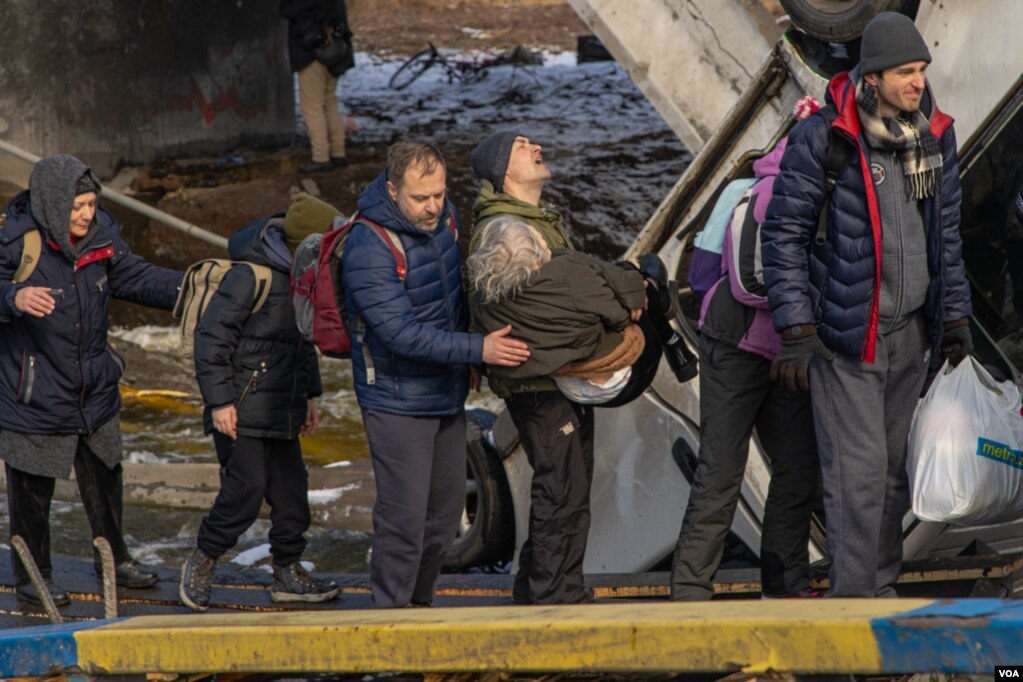
A man carries an elderly woman as a group of people walk through an improvised path created under a bombed bridge over the Irpin River, in Ukraine, March 8, 2022. (Yan Boechat/VOA)

Irpin is shedding its population in an effort to escape advancing Russian forces. On their way to Kyiv, the capital, and since Irpin is a mere 20 km distance, it gave Russian troops the opportunity to rehearse what it means to unleash on Kyiv, the prize for the Kremlin. Its capture, after being encircled for a week, will be a treasured gift for Vladimir Putin: mission accomplished. 
 
The softening-up process; fear at the imminence of the attack; long-range bombing to reduce infrastructure, aiming not only at government buildings, military installations, but apartment blocks, hospitals, schools.
 
If civilians die, this is the cost of war, particularly war inflicted on a people and a country that have no wish to go to war to defend themselves from capture and destruction as a state. Recent shelling has reduced Irpin to a fraction of what it had been. As for the population, few are left in the destroyed town. Yet its people continue crossing the Irpin River, moving south toward Kyiv, on Monday. 
 
The day before a woman, her teen son and younger daughter, along with a male friend accompanying them evacuated toward a 'safe route' but nowhere is safe now in northeastern Ukraine. All four were killed outright by direct mortar fire. Rather than evacuate at an earlier date, the mother had been detained in Irpin to care for her ailing mother. Furnishing yet more gruesome photographs to circulate on social media, of the four sprawled on the roadside, immobilized in death.
 
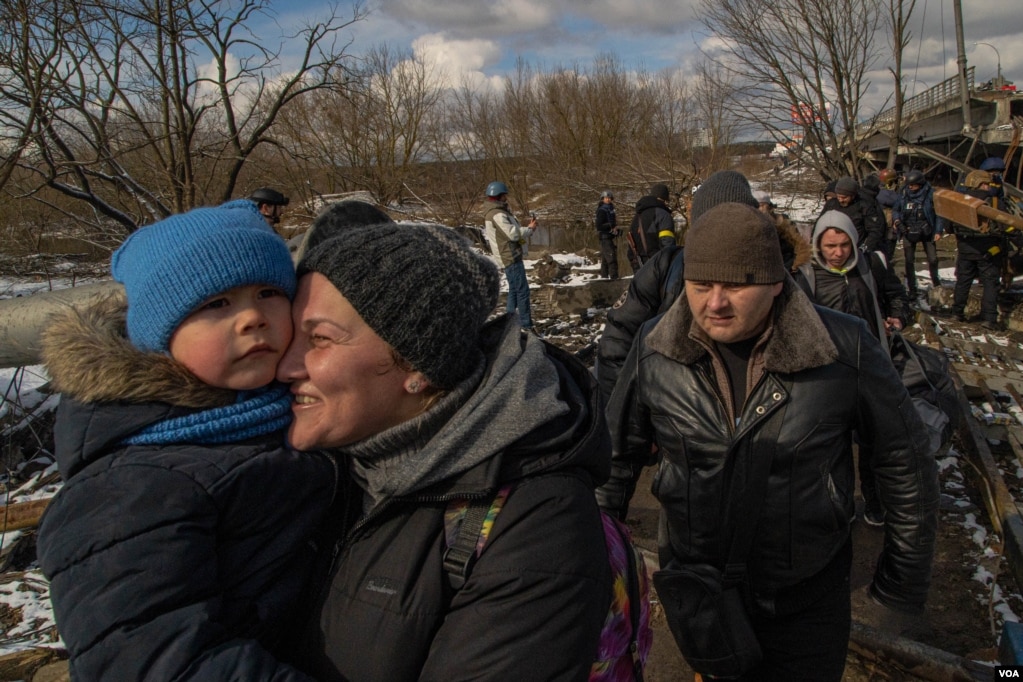
A woman embraces her son after escaping the little town of Irpin, on the outskirts of Kyiv, Ukraine, March 8, 2022. Thousands of civilians were trapped in the city, which has been a battleground for Ukrainian and Russian forces. (Yan Boechat/VOA)
 
People carrying backpacks with whatever worldly possessions and critical identifying items, fleeing along a route believed to be safe, until struck by a mortar round. Irpin evacuees using a damaged bridge fording the Irpin River, during an agreed-upon ceasefire, only to discover that the advancing Russian forces broke the ceasefire. An exposed street had to be crossed by fleeing civilians on the Kyiv side of the bridge. Families in small groups risking a run while Ukrainian solders dart out to pluck young children to safety.

The first mortar shells struck 100 yards from the bridge, and then a series of "thunderous blasts" hit a street section where people were dashing onward. Ukrainian soldiers rush forward to try to help, but it's too late. "This is Murder. Deliberate Murder."

Around Irpin, Ukrainian troops have been obstructing the Russian advance, but it seems inevitable given the inequality in military hardware and growing troop numbers that there will come a time in the near future when the advance can no longer be delayed. About 30 percent of the town is occupied by Russian forces; elsewhere in the town Ukrainian control still prevails. Most evacuations occur without residents coming under fire.

There is a notable increase on the Russian military's growing reliance on longer-range strikes targeting Ukraine, seen in the steadily increasing number of civilian casualties and resulting damage to civilian infrastructure. "More civilians are being killed and wounded ... and [Russian President Vladimir] Putin still has a choice", grimly observed Pentagon spokesman John Kirby. Who also commented that the U.S. believes Russian forces have failed to make major progress in the north and northeast of Ukraine.

According to Dmitry Peskov speaking for Vladimir Putin, the independence of Ukraine is an accepted fact but certain terms must be met to gain a ceasefire, including the recognition by Ukraine of Moscow's right to rule Crimea and the independence accepted by Ukraine of the two Russian-held separatist regions of Donesk and Luhansk. Kyiv must as well meet the Kremlin's expectation that it surrender its ambitions to join both NATO and the European Union.
 
Ukrainian Foreign Minister Dmytro Kuleba, following the third round of talks without progress, stated that Ukraine needs direct talks to take place between President Zelenskyy and President Putin.
"We have long wanted a direct conversation between the president of Ukraine and Vladimir Putin, because we all understand that it is he who makes the final decisions, especially now."
"Our president is not scared of anything, including a direct meeting with Putin. If Putin is also not scared, let him come to the meeting, let them sit down and talk."
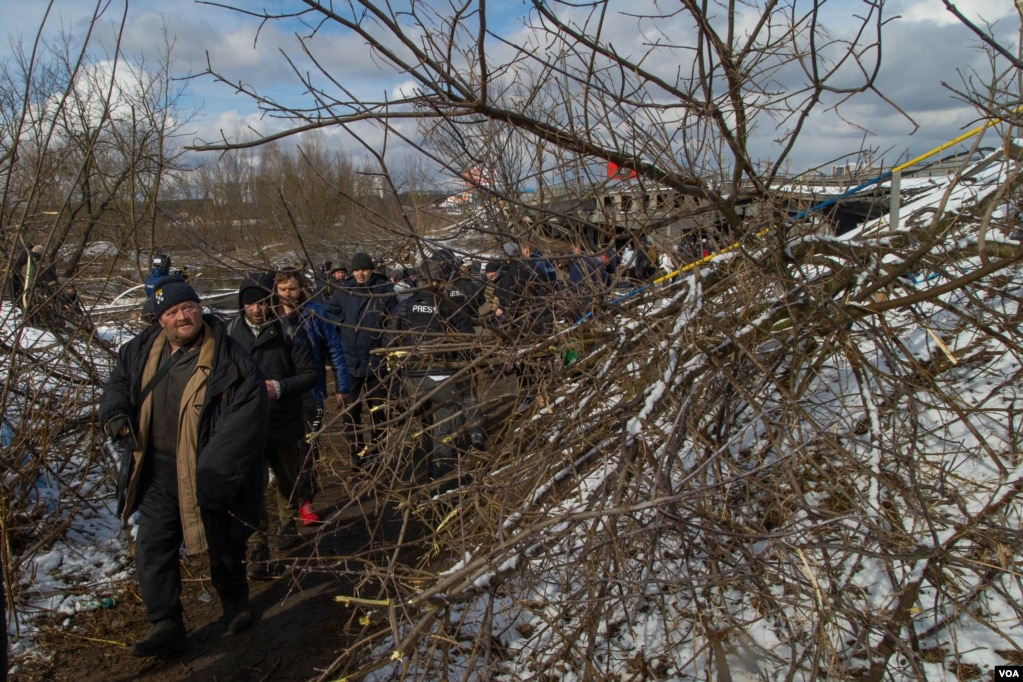
Civilians that were trapped in the little town of Irpin escape from the battles through an improvised path created alongside a bombed bridge by Ukrainian forces, in Irpin, Ukraine, March 8, 2022. (Yan Boechat/VOA)
Civilians who were trapped in the little town of Irpin escape from the battles through an improvised path created alongside a bombed bridge by Ukrainian forces, in Irpin, Ukraine, March 8, 2022. (Yan Boechat/VOA)


Labels: , , , ,

Sunday, February 13, 2022

High Alert in Eastern Europe

"We're in a window when an invasion could begin at any time, and to be clear, that includes during the Olympics."
"Simply put, we continue to see very troubling signs of Russian escalation, including new forces arriving at the Ukrainian border."
U.S.Secretary of State Antony Blinken 

"I urge all Canadians in Ukraine to make the necessary arrangements to leave the country now."
"Our highest priority remains the safety and security of Canadians."
Canadian Foreign Affairs Minister Melanie Joly
 
"We are ready to continue results-oriented diplomacy that addresses the security concerns of the United States, Russia and Europe, consistent with our values and with the principle of reciprocity."
"We’ve continued to make that clear to Russia, in close coordination with our European allies and partners."
"We are also ready to respond decisively alongside those allies and partners should Russia choose to take military action."
White House National Security Adviser Jake Sullivan
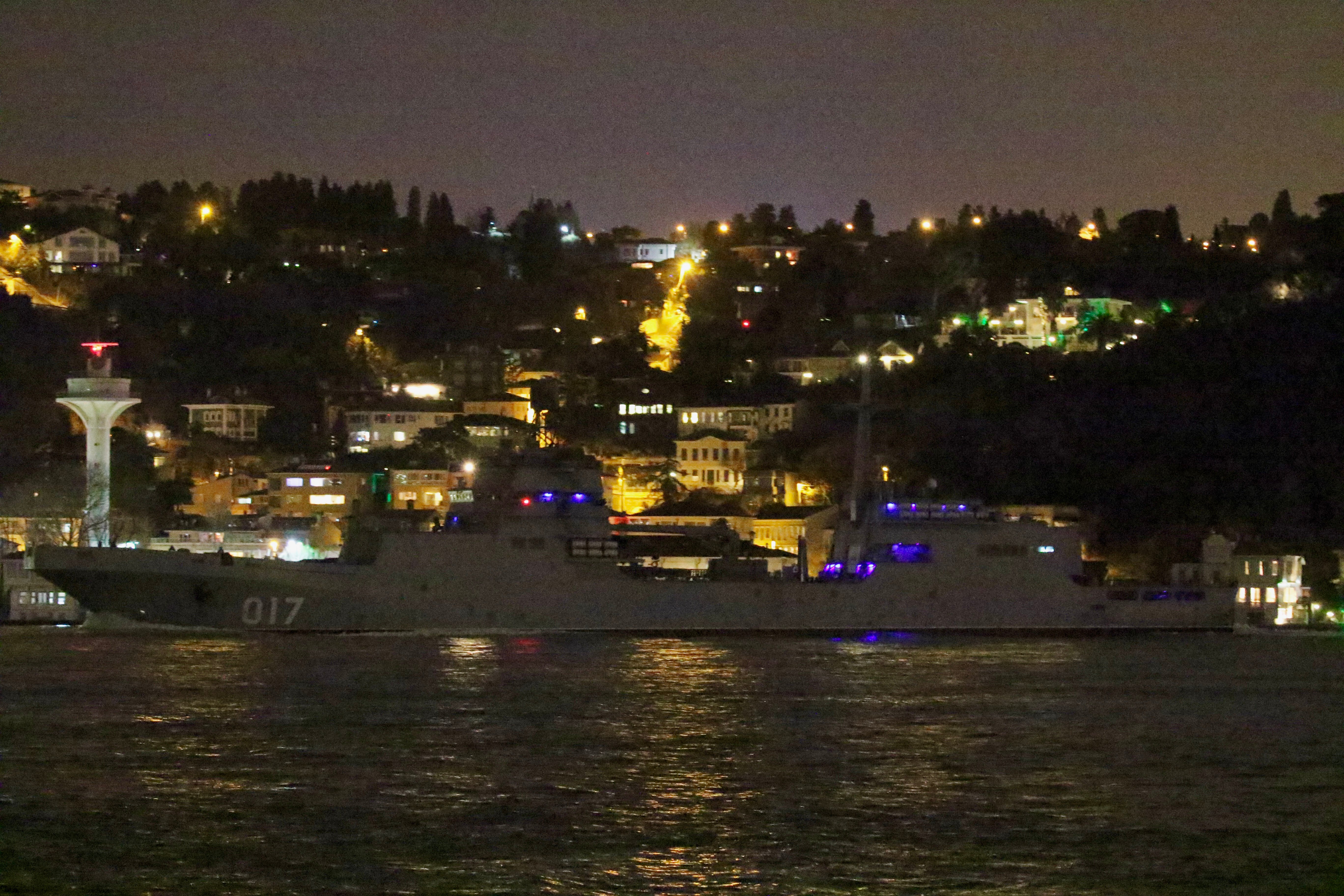
van Gren-class amphibious warship RTS Pyotr Morgunov (117) entering the Black Sea on Feb. 9, 2022. Photo by Yörük Işık‏ used with permission
 
Canada's Foreign Affairs department at the beginning of February 'asked' Canadians to avoid all travel to Ukraine "because of the ongoing Russian threats and the risk of armed conflict". Any Canadians already in Ukraine were urged to leave the country "while commercial means are still available". That message has undergone a stark change, the government now urgently calling all Canadians to immediately leave Ukraine. 
 
In effect, following the United States and United Kingdom reflecting fears of an imminent Russian invasion.

In the United States, officials warn that Russian President Vladimir Putin could launch an attack imminently on Ukraine. White House National Security Adviser Jake Sullivan Friday announced that Russia has sufficient forces gathered now to conduct a major military operation against Ukraine; that an assault was likely to begin "any day now".
 
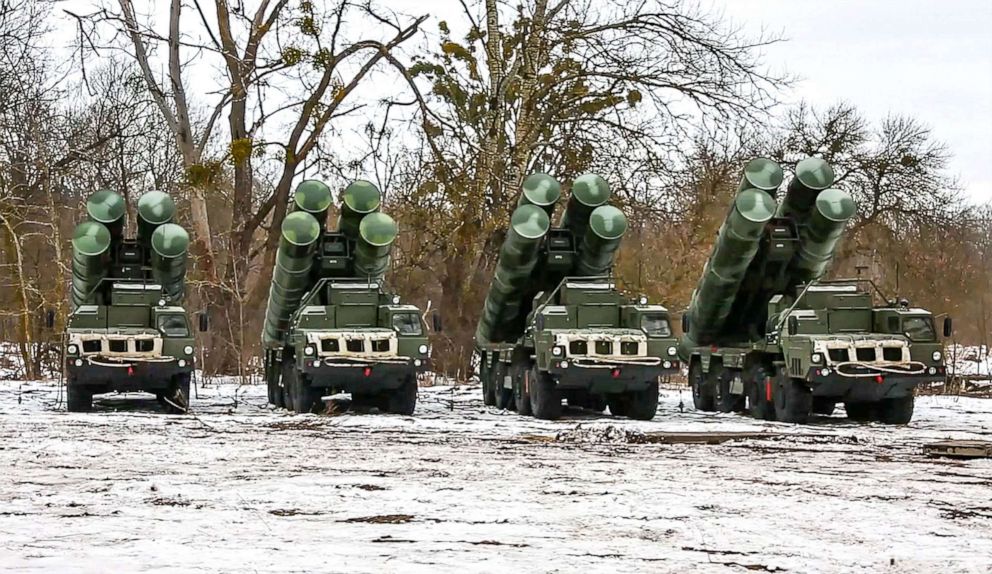
PHOTO: This handout video grab released by the Russian Defense Ministry on Feb. 9, 2022 shows combat crews of the S-400 air defense system taking up combat duty during joint exercises in Belarus.
Russian Defense Ministry/AFP via Getty Images
This handout video grab released by the Russian Defense Ministry on Feb. 9, 2022 shows combat crews of the S-400 air defense system taking up combat duty during joint exercises in Belarus.
 
Speaking at a White House briefing no specific evidence was given, but Mr. Sullivan cited U.S. Intelligence belief that President Putin could order an invasion prior to the Winter Olympics in Beijing concluding. He spoke of the possibility of a rapid assault on Kyiv and that any Americans remaining in Ukraine should leave within the next 24-48 hours. A Russian invasion could begin with an air assault after which departure would be extremely difficult.

It is as yet not clear whether Mr. Putin has given an order to initiate an invasion A private American company's commercial satellite images showed new Russian military deployments at several sites close to the Ukraine border. President Joe Biden in  his starkest warning, stated he would not send troops to rescue any American citizens who chose to remain in Ukraine, in the event of a Russian assault. "Things could go crazy quickly", he said.
A uniformed soldier stands with an assault rifle in front of a dozen others
Dozens of civilians have been joining Ukraine's army reserves in recent weeks.(AP: Efrem Lukatsky)
 
A remote meeting was held by Mr. Biden with the leaders of Britain, Canada, France, Germany, Poland and Romania, along with NATO's and the EU's heads. With alarm spreading, British Prime Minister Boris Johnson along with a handful of other nations urged its citizens to leave Ukraine immediately. American officials believe the crisis could be approaching a critical point. Rhetoric from Moscow appears to be more belligerent.

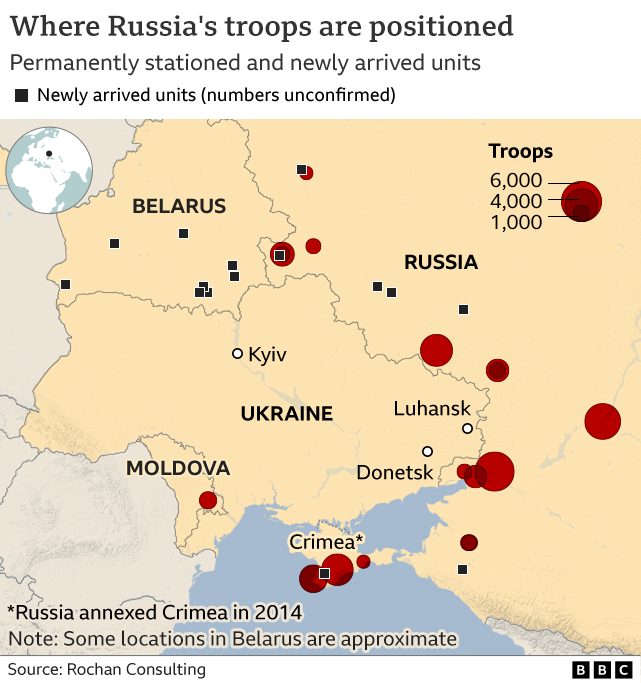
More Russian military equipment has been arriving in Belarus where Russa and its neighbour have been conducting joint military exercises and naval drills in the Black Sea. Six Russian warships are joining the fleet in the Black Sea. Japan, Latvia, Norway and the Netherland have informed their citizens they must immediately leave Ukraine. Israel is evacuating families of its embassy staff. 

Map shows where Russia's troops are positioned.

Labels: , , , , , , ,

Friday, November 19, 2021

Terrifying Flooding In British Columbia

These videos shared by Jordan Jongema to his Instagram detailed the devastation to his home in Yarrow and the conditions that stranded him and his dog Bowser on Monday overnight before crews rescued the pair.
These videos shared by Jordan Jongema to his Instagram detailed the devastation to his home in Yarrow and the conditions that stranded him and his dog Bowser on Monday overnight before crews rescued the pair. Photo by JORDAN JONGEMA / INSTAGRAM

Jordan Jongema
"Those ten hours were easily the most terrifying times I've ever experienced in my life."
"I had heard there were looters going around Yarrow to empty houses, so shame on me for staying just a few minutes too long to protect the place."
"As we were leaving, the water pooled over the road and it started like fountaining, like a stream. I could have been driving into a deeper pool so I just...went back to my house and we had to wait it out in there. And as time went by, it got worse and worse.”
"A massive wave of water started to rush [over the roadway and into his front yard]."
"By the time it was midnight, I was wading through the kitchen, swimming in the backyard up to my chest, trying to find any flotation devices. Pitch black and freezing cold water for hours."
"The fear of the pump station breaking and the Fraser River flowing through made me want to die. Bows and I lay on my bed with the water half-an-inch from covering it."
Jordan Jongema, B.C. flood victim, Yarrow, British Columbia
"I believe it was Coquitlam Fire or Coquitlam SAR, actually, went and got that dog right near the end of the [rescue] queue."
"He's a service dog and so the fellow was just over the moon."
"So it was really cool that they were able to pull that off. That was good customer service, definitely worth the risk."
Abbotsford Fire Chief Darren Lee
Bowser, a 120-pound Bernese mountain dog, is pictured in a rescue boat in the early hours of Tueday after he and his owner Jordan Jongema were rescued after flood waters breached his home and left the pair stranded.
Bowser, a 120-pound Bernese mountain dog, is pictured in a rescue boat in the early hours of Tuesday after he and his owner Jordan Jongema were rescued after flood waters breached his home and left the pair stranded. Photo by HANDOUT

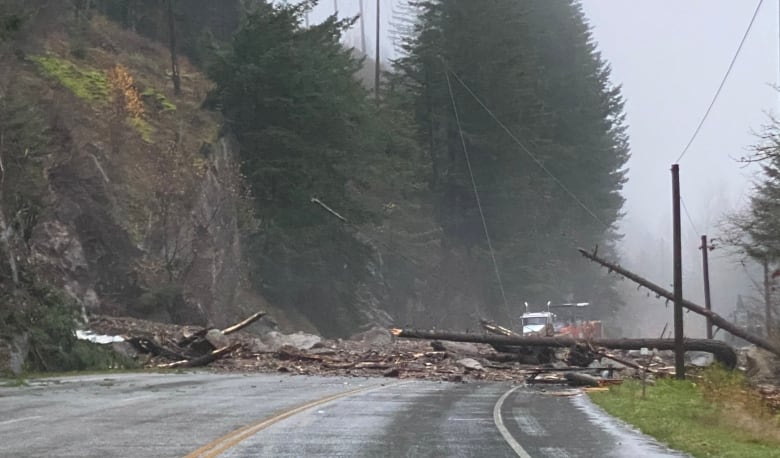
British Columbia's Interior was  hit by a catastrophic rain event that started last Sunday with high winds and torrential rain. Between Sunday and Monday, more rain fell than normally would in a full month during the province's late fall rainy season. The local weatherman spoke of an 'atmospheric river' that drenched the province causing critical mudslides, rockfalls and floods leaving motorists stranded for 17 hours on highways between two road washouts. Rail lines were disrupted, bridges were washed out and so were highways.
 
Orders for evacuation went out for a number of places inundated by floods. Several hundred people stranded in their vehicles were airlifted by helicopter to safety. Farmers were desperately trying to lead their livestock to higher ground, many remaining behind on their farms despite orders to evacuate. The military was called in to provide logistical and rescue assistance. All of the province's many and varied rescue teams were tasked to endure unsafe conditions to rescue those trapped in flooded areas.
 
A person paddles a kayak past a submerged taxi after the major flood event in Abbotsford. More federal assistance is on its way to the province as reconstruction begins. (Ben Nelms/CBC)

Jordan Jongema was one of those trapped people. He and his dog Bowser, a 120-pound Bernese mountain dog, found themselves in a frightening impasse with rising flood waters. They were stranded when rising flood waters suddenly breached his home and property. He was in fact preparing to leave for safety from Yarrow where he lived, some 99 km east of Vancouver. He thought he had time to spare but was soon disabused of that reassurance. 
 
"A massive wave of water started to rush" over the road and into his front yard as he began pulling out of his driveway. With thoughts of his car being flipped by the debris-filled water he turned back, deciding that he and Bowser would stay where they were, safe at home while the water raged outside. Nature had other plans, as he soon discovered. The flood waters entered his house and by 1:00 a.m. reached up to his knees.

He thought about seeking respite from the rising waters on the roof of his house, but found himself struggling with trying to figure out how he might manage to get Bowser onto the roof. And then, an hour later, his phone battery died, leaving him feeling "emotionally butchered". He lay with Bowser on his bed, just minimally above the water level and no doubt imagining what might happen as the water kept inching up.

And then, at about 3:30 a.m., a boat sounded outside his window. He leaped to the window and shouted, shining a flashlight, hoping to attract the attention of whoever it was in the boat. As the rescuers in the boat edged close to the house, Jongema held Bowser up and shoved him out the window, then crawled himself out to the raft. One they reached dry land some kilometres distant, Jongema and Bowser were then driven to a safe site.

According to officials, eleven people in the vicinity that night were rescued overnight. Forty farmers chose to remain in the eastern portion of the Sumas Prairie, tending their properties and their livestock.

Farmers carry their livestock out of a flooded barn in Abbotsford. The city southeast of Vancouver is home to half of B.C.'s dairy farms and has been hit badly by the devastating floods. (Ben Nelms/CBC)

Labels: , , ,

Wednesday, November 17, 2021

B.C.'s Storm of the Century

"They [her six- and four-year-old children] are getting scared."
"My heart breaks listening to my kids [ask] for water and food and I have nothing to provide for them."
Angela Howard, marooned on a B.C. flood-swept highway

"We all had moments like,'Is this it? Is this the last time we're going to see our kids'?"
"We were talking to our parents and our families, but it was just a scary situation."
Melanie Forsythe, marooned between mudslides

"People were going off the side of the road. We had cars flipped over."
"A situation where one member [of rscue crew] had to throw in a life-jacket and swim out, wade out to a car that was overturned to bring someone back [to safety]."
Mike Serr, Abbotsford, B.C. Police Chief
Abbotsford, B.C., flooding, Nov. 16, 2021
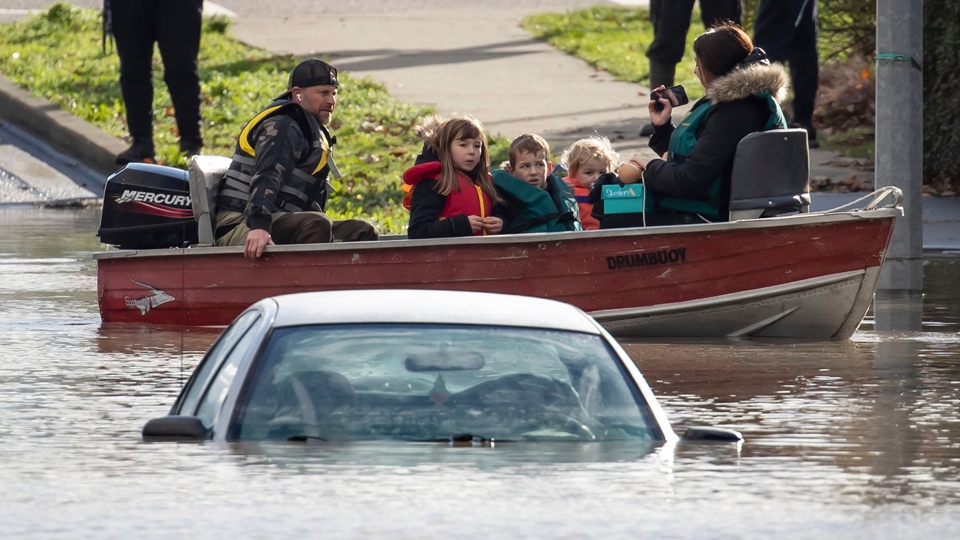
A woman and children who were stranded by high water due to flooding are rescued by a volunteer operating a boat in Abbotsford, B.C., on Nov. 16, 2021. THE CANADIAN PRESS/Darryl Dyck
 
Angela Howard did her best to rise to the emergency occasion for her children, rigging plastic bags to the outside of her vehicle in hopes of catching rainwater as her children slept fitfully behind her in their car seats during their interminable wait for rescue. Every now and again she would turn on the car to warm the interior, carefully watching the gas gauge. 

The monumental rains and windstorm that began on Sunday had dissipated by Tuesday, leaving the threat of flooding to remain a major risk with more evacuations ordered for large swaths of the British Columbia cities of Abbotsford and Chilliwack. Nearby farmland was under water. Farmers were helping one another to get their livestock to higher ground  The entire 8,000 population of Merritt was evacuated on Monday.

The Port of Vancouver sees $550 million in cargo pass through daily, everything from cars to food. Now that eastward routes are out of commission with road closures due to rock- and mud-slides, goods  will not be moving as they normally do, to arrive at final destinations in good time. The entire country will feel the impact of this weather catastrophe, not only the people living in the B.C. Interior.
 
Parts of southern British Columbia remained under local states of emergency on Tuesday after unrelenting rains caused severe flooding, stranding hundreds of people in their cars across multiple highways and swamping homes in the Fraser Valley. Here, people are transported on a boat after being rescued from an area that was cut off due to flooding in Abbotsford, B.C. Ben Nelms/CBC
 
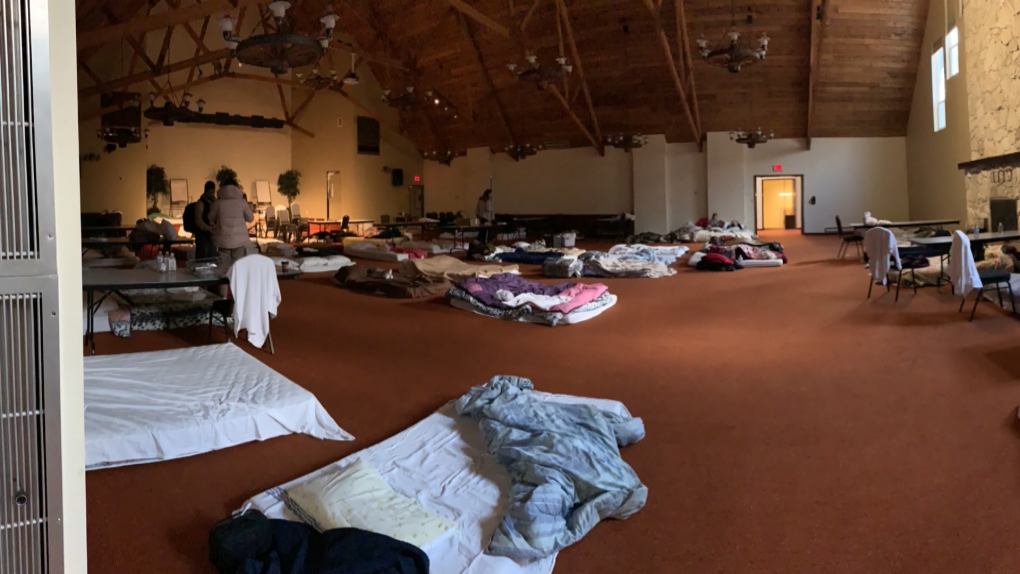
"This is like having a labour strike, it's big. It will harm the flowthrough of goods for however long this lasts", increasing costs and slowing down delivery times, noted rail consultant Malcolm Cairns. All rail service to and from the port facility was halted, according to the Port of Vancouver. The province is preparing to provide 1,000 cots to be put up in shelters at churches and high schools for stranded motorists.

Mudslides and flooding had trapped hundreds of people in their vehicles, forcing others to evacuate homes in communities nearby. Helicopter rescuers airlifted 275  people to safety from where they had been stranded for over 17 hours between mudslides near Agassiz, B.C., some 120 m. east of Vancouver. One woman was found dead in her car under a mudslide near Lilooet.  Others are reported missing.
 
Homes and farmland in the community of Sumas Prairie are pictured underwater during flooding in Abbotsford. Dozens of families living in the area were ordered to leave their homes immediately on Tuesday as water levels started quickly rising. Ben Nelms/CBC
 
Rescuers equipped with diggers and dogs worked to dismantle huge debris and mud mounds looking for anyone left behind in cars trapped under the mudslides. "If a bit of machinery contacts a vehicle or the dogs indicate a person, that's when we stop -- and dig by hand until we find what they were indicating, to confirm whether it's a live victim of if it's a recovery", explained Capt.John Gormick of Vancouver's heavy urban search and rescue team.

By the time the heavy rainfall subsided Monday afternoon several areas had received 100 to 250 mm of rain over a period of 36 hours, an amount that usually falls during B.C.'s fall-to-winter rainy season in a month's time. The Weather Network called it an "atmospheric river" that triggered multiple mudslides across highways and bridges. Winds gusting up to 90 km/r continued to blow through the province. According to Environment Canada, 20 rainfall records were set on Sunday.

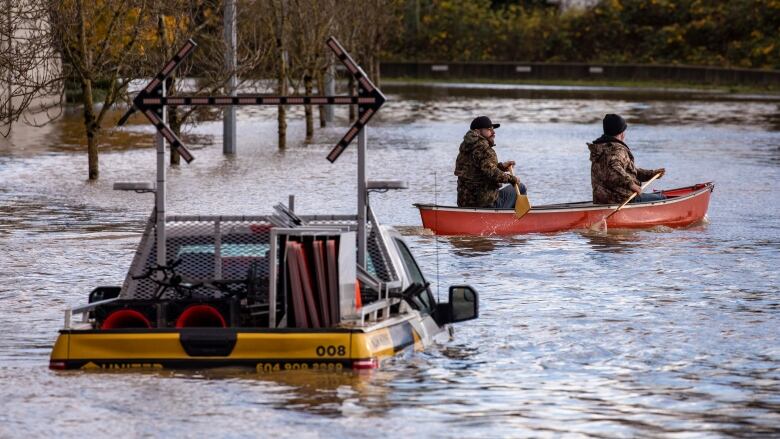
Two people canoe past a submerged truck near a flooded Trans Canada highway in Abbotsford, B.C., on Tuesday. Officials in the province were still assessing damage from floods and mudslides after torrential rains that began on the weekend finally started to subside. (Ben Nelms/CBC)

Labels: , , , , , ,

Tuesday, November 16, 2021

British Columbia Extreme Weather Event ... Collapsed Geology

Officials believe about 50 vehicles were trapped on Highway 7 between the two debris fields, with approximately two to three people in each vehicle. (Julia Murray)
"Trapped between two slides are approximately275 additional people, including fifty children, who were advised to shelter in place overnight as debris was unstable and unsafe to cross."
"The current operational priority is evacuating those trapped between the slides, and Canadian Forces Cormorant helicopters are starting the first of multiple rescue flights between the slide area and a reception centre in Agassiz."
"The commendable efforts of Agassiz Fire Department last night in treacherous conditions was key to saving those trapped in their vehicles, which were filling with debris and water."
Joint release, City of Vancouver, Canada Task Force 1

"The visibility was nil in the middle of the day because the rain was coming down so hard."
"There are people here that are lacking insulin, and there are children."
"I feel scared, but at least we're safe in a vehicle. We're not stranded beside the river in a vehicle."
Melanie Forsythe, stranded on Highway 7, B.C.

"The floodwaters have now inundated two bridges across the Coldwater River, and floodwaters prevent access to the third."
"Continued habitation of the community without sanitary services presents risk of mass sewage backup and personal health risk."
"For your own safety, you must now leave Merritt. Please offer help to your friends, families and neighbours. Drive safely and take care of yourselves."
City of Merritt, Mayor Linda Brown
Helicopters are being used to rescue the roughly 275 people who were trapped overnight on the highway near Agassiz, B.C., after a mudslide.
 
British Columbia, arguably, the most geologically diverse and stunningly beautiful province in Canada has had what the Chinese curse calls 'living in interesting times'. This summer a small town in B.C. registered the hottest temperature -- through the appearance of a stationery heat dome -- ever recorded in Canada, and the town of Lytton burnt to the ground, as a result. Now, although this is the rainy season, downpours have vastly exceeded expectations.

The massive inundation of heavy rains has caused mudslides, as the result of an 'atmospheric river' bringing a rain deluge to parts of the province leading to an evacuation order in the Interior town of Merritt, with its 7,000 population. According to Environment Canada, 225 millimetres of rain deluged the community of Hope since Saturday, with 180 millimetres falling around Agassiz and Chilliwack, the home of Old Growth forests.
 
A vehicle is caught in a landslide near Agassiz, B.C., on Monday. (Submitted by Cory Lysohirka)
 
The local fire department of Agassiz was called out on Sunday evening before the Vancouver Heavy Urban Search and Rescue Team was called in the following day, Monday, to rescue a dozen people from Highway 7 close to Agassiz, in extremely difficult weather conditions. By Monday close to 300 people were trapped on Highway 7 between two mud slides closing off passage; they could go neither forward nor backward. A day later it would be discovered that 5 to 7 vehicles had been washed off the road into a ravine. It is not known how many people are missing.
 
Chilliwack Search and Rescue and a geotechnical engineer joined the two major rescue groups to survey the area for anyone who might have been trapped in the debris. Bright yellow Cormorant helicopters began picking up the stranded and dropping them off close to the Agassiz community centre, then taking off again for more rescue trips. 
 
A woman stranded by landslides near Agassiz, B.C., is pulled into a helicopter by Canadian Forces members on Monday. (Submitted by Cory Lysohirka)
 
Concerns were raised over the appearance of high winds, making rescue efforts more challenging. "They will be doing everything they can to ensure that they reach people who are trapped in their vehicles between those slides as quickly as possible", noted the province's public safety minister. Evacuees were informed they should head on to Kamloops or Kelowna. All gas stations were requested to remain open to accommodate those leaving Merritt under evacuation orders.
 
Slides and falling rocks necessitated the closure of the Highway 5 corridor leading between Hope and Merritt in the wake of 200 millimetres of rain on the weekend. Wind storms uprooting trees and causing power outages in some areas mostly in the eastern Fraser Valley, resulted from continued heavy rain on Monday. Wind gusts up to 90 kilometres an hour were expected for the capital Victoria and much of the south coast and into the Interior, according to a meteorologist with Environment and Climate Change Canada.
 
Kayakers paddle down a flooded Trans Canada Highway after flooding in Abbotsford, British Columbia. Work on the highway is set to take days. (Ben Nelms/CBC)

"Definitely the atmospheric river will end today as it moves south, deeper into Washington state. That said, as that clearing happens, it's going to be coming with a big shot of wind", warned Armel Castellan, meteorologist. Flooding, mud and rock slides in part of the eastern Fraser Valley caused by heavy rain brought a local state of emergency and the closure of highways to and from the southern Interior.

House and Home magazine was set to feature a family home in Abbotsford for their Christmas issue, but it was hit by a wave of water on Sunday as creeks overflowed in the neighbourhood. Some homes sustained damage so severe they appeared to have been hit by a vehicle, not merely water. 

There are about 1,100 people stranded in Hope, B.C., many of them sleeping in local schools.

Labels: , , , , , ,

Friday, August 27, 2021

Canada's Mismanaged Afghan Kabul Evacuations

Gen. Wayne Eyre   CBC
"We wish we could have stayed longer and rescued everyone who was so desperate to leave. That we could not is truly heartbreaking, but the circumstances on the ground rapidly deteriorated."
"[Soldiers] witnessed horrific things, they faced incredible dangers and the feeling of helplessness and guilt that arises from having to leave people behind can be overwhelming."
"I have received emails from people I worked with during my tours in Afghanistan who are desperate to get out or get their families out. Their pleas, and the photos of the families in terrible situations that accompany them, are heart-wrenching. They tear at our souls."
"Throughout the operation, we received word of multiple imminent attacks, which necessitated changes to our plans on the ground, and demanded maximum adaptability and agility on the part of our people."
"[This is the] most complex and dangerous] evacuation operation] in modern history."
Acting Chief of Defense Staff Lt.-Gen. Wayne Eyre, Ottawa, Canada
Afghanistan-Taliban Crisis Highlights: At Least 85 Killed In Kabul Blasts, Joe Biden Warns Bombers
Kabul Airport Attack: 13 US service members were killed and 18 others wounded.   NDTV

"Canada's poor initial response in Kabul points to an extreme of centralized political micro-management", commented retired Canadian General Andrew Leslie, former head of the Canadian Army, elected to Parliament from 2015 to 2019, when he declined to run again, after  having served in a minor portfolio with the Liberal government of Justin Trudeau, when one of the Prime Minister's many sordid exploits that revealed his vindictive streak in ruining the career of the-then vice-chief of staff, Admiral Mark Norman, offended Mr. Leslie by its corrupt misuse of executive power.

Canada managed to airlift an estimated 3,700 people out of Afghanistan in 16 flights, before the Liberal government ended its evacuation operation on Thursday. Too little, too late. The Liberal government headed by Justin Trudeau knew for months that Canadians living in Afghanistan and Afghans who had worked alongside and with Canadians, both military and diplomatic as interpreters and aides would be in peril soon after the U.S./NATO deadline of 31 August departure from Afghanistan.

Military veterans' groups in Canada urged the government to act, to complete the paperwork, to contact the vulnerable Afghans who depended on Canada's promise it would look after their interests by removing them from the danger that threatened their lives and the lives of their families, to expedite matters and bring them to safety. The government did nothing. It issued some visas but failed to follow up, and desperate Afghans attempting to make contact with officials in Ottawa were shunted from department to department, nothing resolved.

The shabby, uncaring treatment that former Afghan allies received from a careless government whose leader was more interested in returning to a majority position from the minority government of the last election, reflected scant attention to the catastrophe unfolding in Afghanistan when the Taliban moved swiftly to confront and oust the duly elected government supported by the West, and disperse the defences of the government; the national police and the military, all three abandoned by the U.S. in its zeal to exit the country.

"There is no country in the world other than the U.S. that's got the capability of projecting force to the other side of the world, and securing an airport like that", said Lt.-Gen. Eyre in his concluding remarks to the press on the imminent departure of the U.S. by August 31. A date which 'justified' Canada's decision to end its evacuation flights as of yesterday. Citing the growing threat of terrorist attacks from the Islamic State. And then the anticipated and feared attack occurred only hours after Canada's announcement that its evacuation activity was over.

When a horrendous, "complex" and "heinous" attack with two explosions by suicide bombers took place at two entrance gates to Kabul airport. In one of the attacks where the bomber wore an explosives vest he was being questioned by U.S. Marines at a checkpoint when he detonated the vest. Thirteen Marines died in the blast and many others were injured. The twin bombs killed at least 80 Afghan men, women and children, many of whom had been waiting for hours in a foetid drainage ditch, for permission to enter the airport with their papers, on flights that would take them to freedom.

An estimated 8,000 Afghans had made application for evacuation by Canada. The number left behind is unknown, but the Canadian Armed Forces are making no apologies, just sincere regrets that their mission was halted due to extremely dangerous conditions prevailing in the area, along with the shortage of time to continue expediting passage out of Afghanistan. There was no "abandonment" of people, bridled the military. The responsibility of timing and efficiency not completely theirs however, and the prime minister adamantly makes no apologies on his part.

"[CAF members] experiences have not been made any easier by the fact that operation was carried out under intense, and often misinformed public scrutiny and criticism", remarked Lt.-Gen. Eyre. In particular as an example he mentioned reports of a video appearing to show Canadian special forces ignoring Afghans waving what they claimed to be Canadian exit documents. 

"We were surprised by the speed of the Taliban takeover of Kabul. And I'm sure there'll be much ink spilt about this. This is an extraordinary humanitarian crisis. But make no mistake, this is a crisis of the Taliban's making." And just incidentally a prime minister whose personal ambitions trumped his responsibility as chief executive of a nation that promised aid and comfort to those who worked with it under dangerous conditions and now face deathly reprisals from the Taliban.

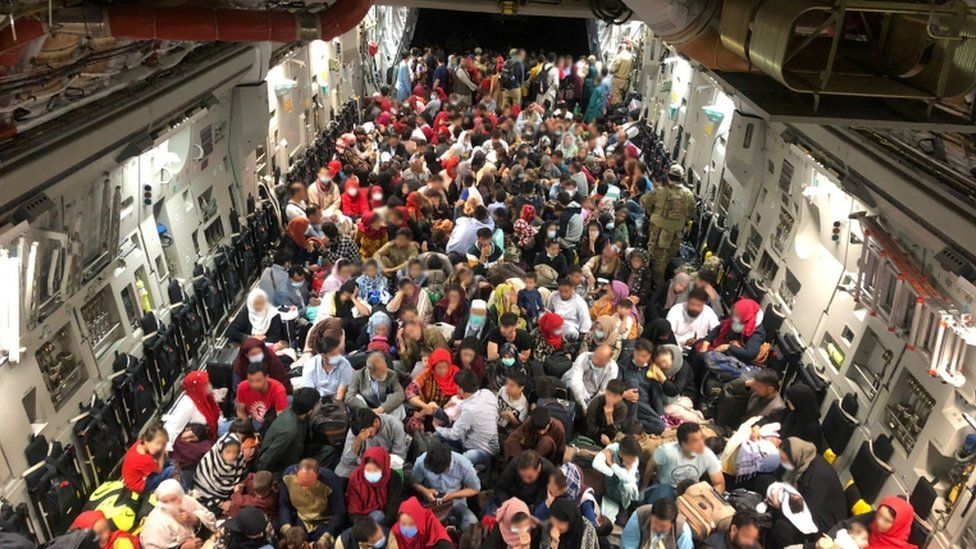
Evacuees sit in an RCAF C-177 Globemaster III transport plane en route to Canada
A Canadian aircraft flies evacuees out of Kabul on 23 August    Reuters
"Watching explosions, watching death and destruction in Afghanistan is heart-breaking. Women and girls will once again be subjected to a brutal Taliban regime. There is no rule of law, no respect for rights, it's a travesty."
"We were calling for action to get people out, to work with our allies. We've been demanding this for months and, in some cases, years. The Trudeau government has failed to act and they have abandoned people on the ground in Afghanistan." 
Conservative Leader of the Parliamentary Opposition, Erin O'Toole

Labels: , , , ,

Wednesday, July 21, 2021

Wildfire Evacuations, Emergency Alert in British Columbia, Manitoba, Saskatchewn

"In a briefing last night, I received word that we'll be facing a few days of very difficult weather in the interior."
"We have reached a critical point."
"Based on the advice of emergency management and wildfire officials, in my briefing last night on the worsening weather, I am declaring a provincial state of emergency."
"It will address the potential for a mass evacuation scenario and provide our government with the means to secure the accommodation spaces necessary to support the evacuees."
"What is forecast may lead to more severe fire behaviour, and the potential for more evacuations."
"Contact friends and family to ensure you have somewhere to go, should the worst happen."
"While the province will continue to support anyone in need of emergency support services, having a plan ... (shows) that I care for those who have no other option."
"[Clean up properties...] Whether that's trimming trees, clearing grass and gutters and helping your neighbours, you're not only helping to protect your property and those of your community, but also the firefighters who may be called on to protect it." 
Mike Farnworth, Public Safety Minister, British Columbia 

"We are expecting what we call a ‘subtropical feed’ coming up from the United States which is going to bring significant wind into the South Coast Fire Centre and to the Interior of the province."
"What this means is that we are going to see our efforts on the fires that are on the landscape challenged, our control lines will be challenged and we have the potential to see significant fire behaviour across the province and particularly in the southern half of the province where the conditions remain extremely dry, and extremely volatile."
Clint Chapman, British Columbia Wildfire Service
fire crew camp

 British Columbia has declared a state of emergency reflecting the unusual heat record just smashed in Lytton, B.C. when the temperature reached a startling 49.4C, followed by a wildfire that wiped out the town and hundreds of other wildfires erupting over the next few days. The growing wildfires send warning signals of threats to human habitation making it clear that evacuations are in order. What may be different this time around is the possibility of mass evacuations and the challenge of securing sufficient accommodation for evacuees.

The warning that weather conditions would continue sparking fires that will turn into severe wildfire hazards threatening the interior of the province has mobilized government resources to act preemptively. Declaring a state of emergency means government agencies such as the fire commissioner and the RCMP have the authority to take action they consider to be required to fight the wildfires while protecting local communities and their inhabitants.
 
TC_299393_web_2021072009074-60f6ca64fc6769e70041028bjpeg.jpg
Looking high above the small town of Osoyoos B.C. in the southern Okanagan the glow of smoke and fire illuminates the night sky on Thursday July 19, 2018. At least 160 properties have been ordered to evacuate as an aggressive wildfire burns in the south Okanagan. THE CANADIAN PRESS/Jeff Bassett

An estimated 300 fires were blazing across the province, several encroaching on nearby communities for which evacuation orders or alerts have been issued, consequently. Of the evacuation orders, 40 affected roughly 5,700 people equating to close to 2,900 properties in the province. In addition to which 69 evacuation alerts which inform people they must be prepared to flee immediately on short notice, affecting just under 33,000 people and their 16,000 properties were also issued.

Hot and dry conditions continue to be forecasted, and heightened wind activity in the Interior and affecting south-eastern British Columbia are driving the wildfires. Four First Nations in Manitoba have been evacuated as a result of wildfires in the east of that province, with over 1,300 people from Pauingassi, Little Grand Rapids, Bloodvein and Berens River First Nations being sent to Winnipeg and Brandon, Manitoba.

Sparks Lake night
A night view of the massive Sparks Lake fire. The fire started about 40 kilometres northwest of Kamloops and has grown to almost 48,000 hectares as of July 20, 2021 - Contributed


Labels: , , , ,

Sunday, May 09, 2021

COVID? It's Everywhere! Mount Everest?!

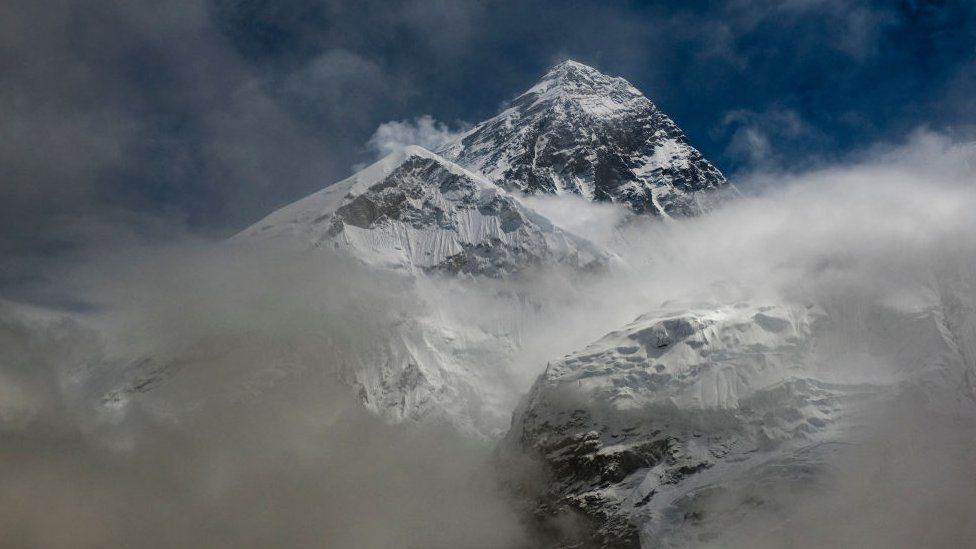
Mount Everest
Everest was closed to mountaineers last year due to the pandemic    Getty Images
"We don't have tests."
"And high altitude makes it difficult to identify COVID from cough and HAPE [high altitude pulmonary edema], which is common here."
"[There is a] dilemma [about whether to cancel the Everest climbing season]. Unventilated camps and camps close [to one another] make it easier to spread [COVID-19] here."
Dr. Prakash Karel, Everest base camp physician

"More than 30 people have already been evacuated to Kathmandu in helicopters with suspected pulmonary edema -- later found to be positive for the coronavirus."
Pawel Michalski, Polish climber

"I have taken a helicopter out of EBC [Everest base camp] back to Kathmandu after one day."
"Once I was in the hospital a COVID test confirmed I was positive and had pneumonia. I've spent four nights in the ICU."
"The COVID situation at EBC is a total s---storm. I had no clue what I was flying into."
Gina Marie Hans-Lee, evacuated climber

"The Nepal Government is still denying there is a COVID outbreak at Everest base camp, despite emerging evidence."
"Why is the government hiding the truth?"
"At camp I saw many sick people. At a gorakshep [small village, last stop on most treks to base camp] hotel, there were [a] few sick climbers isolating, as well."
"I found COVID is so common around the camp people. They took it so easily. One Sherpa told me, 'COVID is just like the flu."
Rojita Adhikari, positive-tested climber, April 19
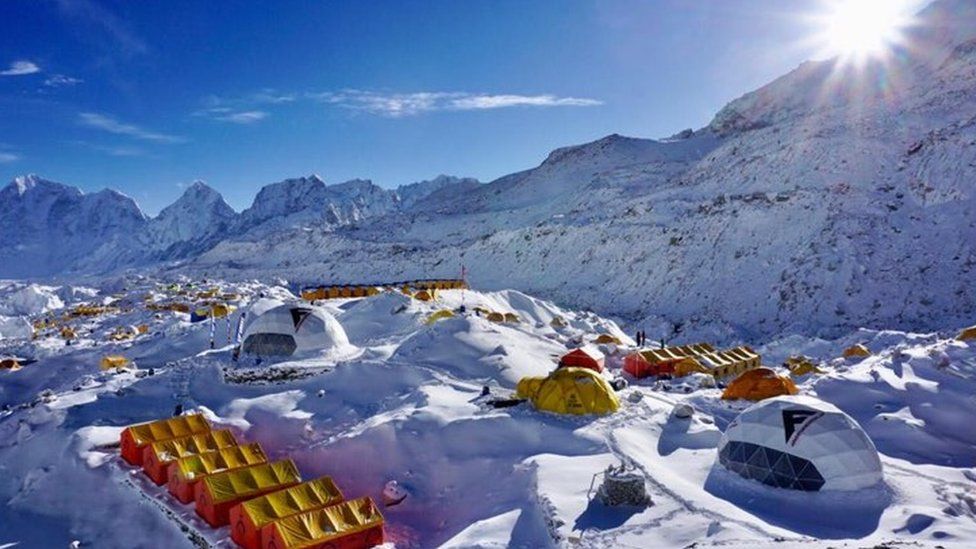
Everest base camp this climbing season
Health officials have warned of rising numbers of Covid-19 cases at base camp     Lukas Furtenbach

Nepal, contiguously bordered with India, where a massive coronavirus wave has spread, has seen itself well on the way to becoming overwhelmed with the pathogen with an average of 6,700 cases reported daily up to May 5, representing an increase from 1,100 a mere two weeks earlier. While the country faces its steepest coronavirus wave yet encountered, it has decided to keep the main tourist attraction -- the Nepali side of Mount Everest -- open for business to foreigners hoping to climb the world's tallest mountain. 
 
The 2020 climbing season during the first introductory wave of the SARS-CoV-2 virus causing COVID-19 had been cancelled. Now, during the second COVID wave, turning out to be far more invasive, intense and worrying, a record number of expedition permits totalling 408 have been issued. Climbers and expedition leaders are left to work out for themselves methods of containing the spread of the virus amidst growing concerns of an outbreak of the coronavirus at the mountain.

The issue of safety on behalf of visiting climbers and locals alike has risen in the wake of multiple people being evacuated from base camp, later tested in hospital for the virus, and found positive. A negative coronavirus test is required by the Nepal Department of Tourism 72 hours prior to entering the country but the government removed a seven-day quarantine requirement in late March, in an effort to revive the country's tourism industry. 
 
At $20-billion, tourism contributes about eight percent of the country's GDP, with Everest expeditions alone contributing over $300 million to the economy in 2019. On the mountain there is no way for climbers to access tests, other than bringing along their own. The Everest base camp clinic has no laboratory permission to test for the virus, leaving guide companies to enact their own precautions.
 
Furtenbach Adventures, as an example, operates "flash expeditions", lasting three to four weeks rather than the classic nine-week trip. Providing climbers with hypoxic tents to help them become acclimated at home with high altitudes, a process normally requiring a four-week stay at base camp. Teams ranging in size from two to 29 members take other precautions during the expeditions, but despite all precautions late April saw the first case of coronavirus confirmed at base camp.
 
After which reports of multiple people testing positive followed. The first climber at base camp to test positive began feeling ill two days before reaching base camp but thought he was suffering from mountain sickness reflecting the high altitude. Mountain sickness can produce symptoms similar to those of COVID. He remained unaware of his true condition until tested three days later at a Kathmandu hospital.This year there is an estimated 1,200 climbers at base camp, making social distancing difficult.
 
Four coronavirus cases were identified by the Nepal Mountaineering Association; one local guide and three climbers. Those numbers are challenged for accuracy by mountaineers' own experiences. Some climbers who tested positive before or after leaving base camp insist that unreported cases remain. One physician working out of the Everest base camp clinic described to the Explorersweb blog, speaking anonymously, the situation at base camp, that "many people" were evacuated with coronavirus symptoms testing positive at the Kathmandu hospital.
 
"Many climbers are isolated in their tents at the moment. In Kathmandu, hospitals are not yet at full capacity, but ICUs are filling up quickly", he said. The base camp Everest ER spoke of a meeting between doctors and expedition leaders discussing managing respiratory illnesses, including "encouraging all to maintain their bubble/discouraging visits between camps, wearing masks even within their camps, sending any members with respiratory illness to see the doctors at Everest ER for further evaluation." 
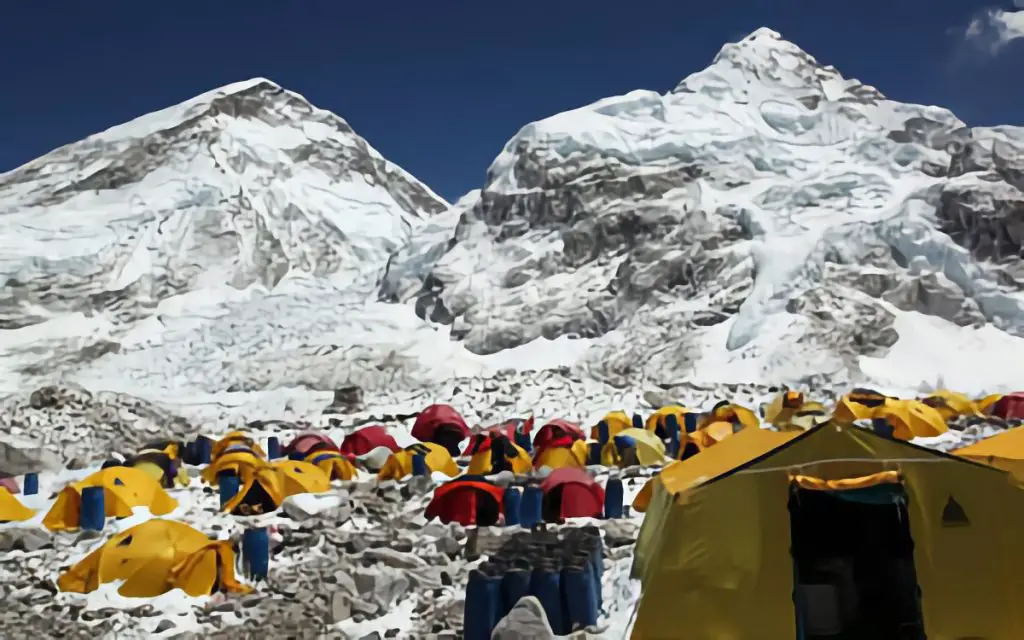
Everest Base Camp
The Adventure Blog
"Normally there's a lot of socializing, events, base camp parties, and teams are visiting other teams and making new friends."
"We all used hypoxic tents at home, we sent them to the clients, and they simulate the oxygen level of higher altitude."
"My guess is there will be more cases. Everyone is concerned about a message coming from the Department of Tourism: 'You all have to go home.'"
"We would expect that the government [would be] confirming these cases, keeping everything transparent, maybe even sending a team to base camp to do a mass test which would find superspreaders."
"I think every operator would be happy to pay for this -- it would probably save the season, because there is the risk if there's more and more cases that [there] could be an early end to this season."
"Your whole body is already working on its limits, so catching COVID would be a real threat to your health and even to your life."
"If the weather's bad and someone's developing problems, evacuation without a helicopter would take days and it's very dangerous. So it would be a big problem if someone infected developed symptoms higher up the mountain."
"If there are more and more cases coming in [at base camp], the authorities in Nepal will have to do something. I think they tried to do the right thing, they tried to save the season. But maybe it's not the right thing."
Lukas Furtenbach, an expedition leader, Mera Peak, Everest
 
"We're getting emails from people on other teams, trying to decide whether to go home, because it seems clear that things are getting quite serious."
"I'm hearing from guides, Sherpas, and one of the helicopter companies about how many COVID rescues they're doing. I've had another major operator write me saying: 'You're so glad you didn't go.'"
"Every single person's respiratory system is struggling, and is working in overdrive, and it's that much more susceptible to upper respiratory illness [climbers face an intense physical battle with each step up the mountain]."
"You can't sleep at altitude, so you have this deep fatigue from days of not sleeping. You can't eat, because your digestive system is considered non-essential -- anything you put in your stomach, you become incredibly nauseous,"
"I think we'll start to see some climbers leaving because they just feel that they're on the wrong side of the moral question, with the Kathmandu outbreak being so strong. They're sitting there with thousands of bottles of oxygen."
Adrian Ballinger, an expedition leader who pulled out of the Everest climbing season over COVID-19 concerns.
Mount Everest
Climbers rejoiced when Nepal decided to reopen its side of Mount Everest this year, but reports suggest even the world's highest peak isn't safe from the spread of coronavirus. (Prakash Mathema/AFP/Getty Images)


Labels: , , , , ,

() Follow @rheytah Tweet