Widespread Atrocities in Darfur, Sudan
"Our main concern is that though we have seen approximately 5,000 people coming out of El-Fasher toward Tawila, we don't know where the other hundreds of thousands have gone.""That is worrying given the ethnic nature of targetting of violence toward civilians by the RSF.""I've never seen anything so shocking in all my 15 years of my work."MSF President Javid Abdelmoneim
 |
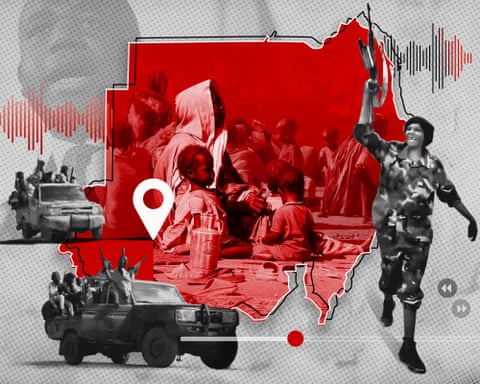
| This image grab taken from handout video footage released on the paramilitary RSF's Telegram account on October 26, 2025, shows RSF fighters holding weapons and celebrating in the streets of el-Fasher in Sudan's Darfur region [AFP] |
The
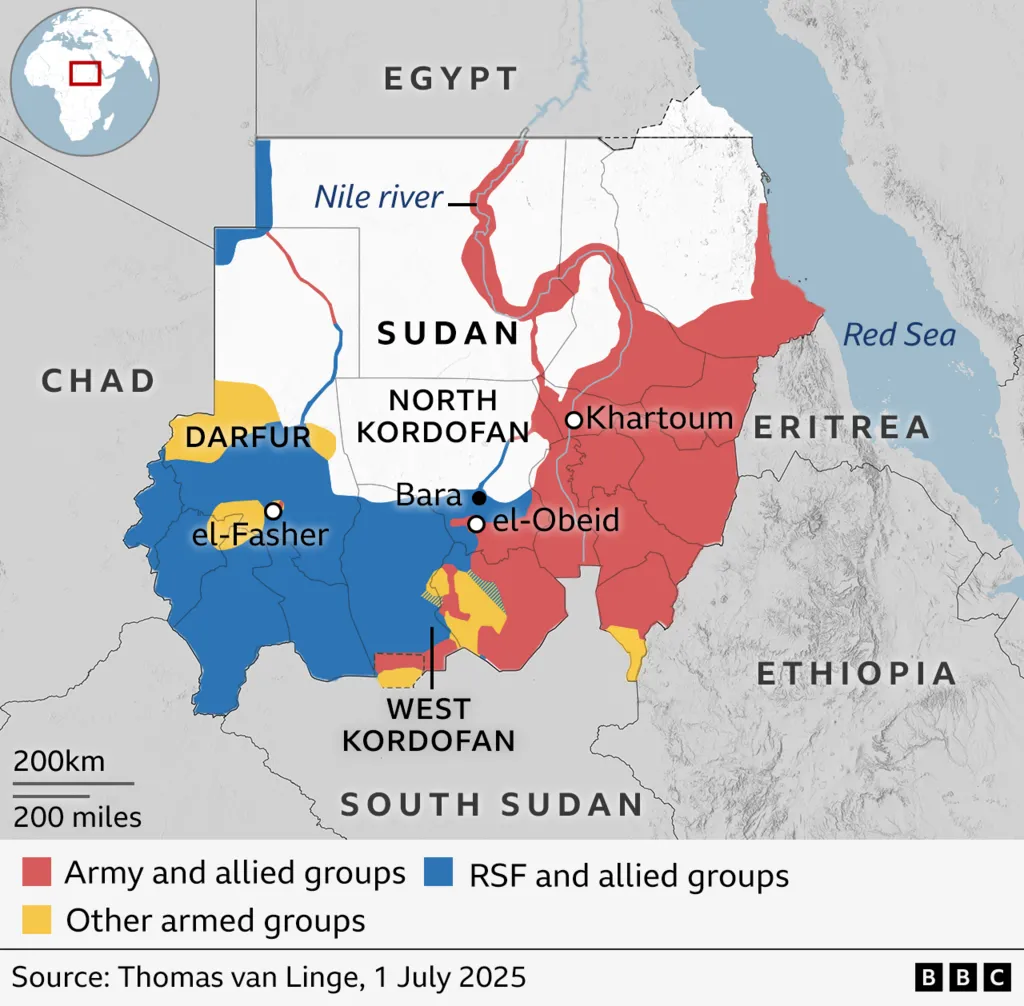
fate of hundreds of thousands of Sudanese in flight from ethnically
targetted violence in the western Sudanese city of El-Fasher remains
unknown in the wake of satellite images indicating suspected mass
graves. At war with the Sudanese military since 2023, with which it was
once allied, the Paramilitary Rapid Support Forces (RSF) seized control
of the strategic city of Al-Fasher in the Darfur region following a
brutal 18-month siege.
Emerging
reports of executions, sexual violence and abductions in and around
El-Fasher has alarmed aid groups and the United Nations to the fate of
ethnic minorities in yet another impending disaster rivalling the
slaughter in Darfur when the RSF were known as the Janjaweed, Arab
horsed tribesmen who attacked and raped and murdered hundreds of
thousands of Fur, Masalit, and Zaghawa minorities mostly engaged in
farming, as opposed to the Arab herdsmen, competing for territory.
New
satellite imagery analyzed by Yale researchers suggest that mass graves
are appearing in the city from which thousands have fled. Survivors in
the town of Tawila, some 70 kilometres west of El-Fasher recounted to
Medecines sans Frontieres 'harrowing' stories of "ethnically targeted torture, rape and summary executions", revealed a Sudanese-Iranian national.
Paramilitaries
have taken full control now of all five state capitals in Darfur with
the fall of El-Fasher, raising troubling concerns that Sudan could be
partitioned along an east-west axis. The Humanitarian Research Lab at
Yale University has revealed its finding of evidence consistent with "body disposal activities", leading to the worst fears being realized. "At
least two earth disturbances consistent with mass graves - were
identified -- at a mosque and at the former Children's Hospital."
Tens
of thousands of people have been killed, millions have been displaced
in the Sudan civil war which has also led to the largest displacement
and hunger crisis in the world today, where both sides have been accused
of widespread atrocities.
“It’s been almost a year since the State Department determined that the RSF is committing genocide in Sudan.
"These harrowing images from Yale University’s Humanitarian Lab demonstrate that the genocide continues unabated and largely ignored by the international community.""The testimony of refugees from el-Fasher also leaves no doubt that ethnically targeted killings are the order of the day.” —Clifford D. May, Founder and President, Foundation in Defense of Democracies
 |
| Niarchos -- El-Fasher--Getty Images |
Labels: Al-Fasher, Civil War, Darfur, Humanitarian Crisis, Paramilitary Rapid Support Forces, Sudan, Sudanese Military
posted by Pieface | 9:14 PM
|
0 comments






![National flags of Bahrain, UAE, Israel and the US are projected on the walls of Jerusalem's Old City [File: L Ronen Zvulun/Reuters]](/wp-content/uploads/2020/11/2020-10-20T000000Z_210160863_RC2BMJ90IV8U_RTRMADP_3_EMIRATES-ISRAEL.jpg?resize=770%2C513)