Politic?

This is a blog dedicated to a personal interpretation of political news of the day. I attempt to be as knowledgeable as possible before commenting and committing my thoughts to a day's communication.

Sunday, December 20, 2020

Russia's Declining Population Base

"If we had money to provide for our children, then of course it would've been different, and we would've had more kids."
"The entire family lived on my dad's pension and my mom's salary. We are three sisters, but there are just three grandchildren."
Maria Ivanko, Kemerovo, Russia
 
"Many people would like to leave."
"Everyone I talk to here says, we would leave if we could."
Elena Ponkratova, local journalist
 
Last year, a demographic report out of the United Nations calculated the "pessimistic" outlook for Russia to be the population descending to 124.6 million by 2050 and to 83.7 million by 2100. Russia has long been facing a stagnant birthrate, its population slumping. One issue is that women are bearing fewer children, reflective of the economy. Kemerovo, where Maria Ivanko lives, is a Siberian coal mine town where small family sizes reflect Russia's stagnant birthrates and slumping population.

President Vladimir Putin has spoken of feeling haunted by the prospect of a shrinking Russia. He prioritizes reversing the population contraction in Russia by incentivizing Russian women to bear larger families by 2024. The population in Kemerovo and surrounding steppes located some 2,600 miles east of Moscow declined by losing 100,000 of their numbers in the past decade, leaving 2.6 million inhabitants, according to Rosstat, Russia's statistics agency.
 
Visitors take in a panoramic view on a hilltop in Kemerovo, Russia, on Nov. 14. (Arthur Bondar for The Washington Post)
 
The biggest population decline since 2005 is expected to occur, accelerated by closing Russian borders to migrants, and the effect of coronavirus deaths of over 36,000 Russians. Russia also suffers a high rate of early death resulting from runaway alcohol consumption. According to government expectations there will be a 352,500-person population decline seen in 2020; leading to a more general estimated decrease of 1.2 million people between 2020 and 2024. At the present time, Russia has a population of about 146.7 million.

In stark contrast, the United States expects a population growth of 0.72 percent in 2020. Around Kemerov the coal industry, a boom industry during the years of the Soviet Union, has become a burden. Struggling before the entry of the pandemic, the falling economy served to drive down coal demand and increased layoffs among miners typically paid less than $400 monthly, forcing more layoffs. Wages on occasion have been withheld for up to three months for those who have managed to retain work in the mines.

A local college offers a mining program which at one time had around 90 students each term, reduced now to one student in the past year. Young people migrate to other Siberian cities or to Moscow looking for work. A local demographer speaks of a larger drop in coming years, as a consequence of the pandemic. Additionally, marriages through July of 2020 saw a 23 percent reduction in comparison with the same period the year before, according to Rosstat.
 
Fresh graves in Kemerovo on Nov. 15. (Arthur Bondar for The Washington Post)
 
The Kemerovo region's five maternity wards saw three wards converted to coronavirus treatment centres. In a small section of the Kemerovo cemetery 25 plots were recently dug on a Sunday morning amidst rows of other new graves with dates of death engraved of September, October and early November. And although Russia's official figures total fewer than 40,000 deaths from COVID, it is assumed generally that the real figure is substantially higher. 

The rural areas have struggled during this time with the lack of available hospital beds and medicine. Respiratory illnesses and cancers were already prevalent in Kemerovo as a result of severe pollution, with the mortality rate among the highest in Russia; 14.6 deaths per 1,000 people in 2019 in comparison with nine births per 1,000. "Ask anyone here, and they'll have a loved one who died from cancer", local activist Maksim Uchatov remarked.

Radioactive: Stop, no Entry. (Photo: Arthur Bondar)
Fifteen residents of a nearby village last year appealed to Canadian Prime Minister Justin Trudeau for asylum in a video address, citing the fact that their homes are located mere steps away from an abandoned underground mine they claim to be still radioactive. "Stop no entry" signs surround one plot of ground. The response by the Canadian government was that the residents' request could be entertained only if the applicants qualify as refugees under immigration law. Which identifies 'refugees' as those living outside their country of origin.

A view into an open coal mine in Kiselyovsk, seen Nov. 13. (Arthur Bondar for The Washington Post)

Labels: , , , , ,

Monday, August 31, 2020

COVID-19 Control: Nothing as Straightforward as Could be Hoped

"I lose sleep over this daily. Everybody needs the money. It's really discouraging because I know what's going to happen."                                                                  "I know that as soon as those schools open ... that these elderly and vulnerable people are going to start dying again."                                                              "We're all really scared for these people that we support."                                   Unnamed woman working in developmental services sector

"[There are no rules] prohibiting staff from working in external locations, and we have not received any direction from public health or the ministry that this measure should be taken."                                                                                            "According to legal advice received, we are unable to impose these types of restrictions on employees in the absence of a specific public-health directive."  Ottawa-Carleton District School Board

Laura Walton,  custodial staff on casual supply lists. (CBC)

"We have raised it [with the ministry], and said, 'What do we do'? At this point, there doesn't seem to be any indication."                                       "This is an indication of just how low-paid these jobs are. For far too long, this government and previous governments have chosen to balance books on the backs of public services ... And I think, as a result, they're a little bit more hesitant to actually address the issue that they know they themselves have created."                                             Laura Walton, president Ontario School Board Council of Unions

"Our staffing situation is critical right now, and it is the thing that keeps us up at night."                                                                                                                   "[With temporary solutions to LTC staffing shortages winding down, the] pandemic pay [wage boost --] anything that takes any more people out of our system just makes us that much more vulnerable."                                                                     Donna Duncan, CEO, Ontario Long-Term Care Association 

"You can't blame the individuals, who are simply trying to cobble together a living [wage]. It's something that's very difficult for us to tackle other than to advocate for an increase in pay that would prevent them from having to double up on work in that fashion."                                                                                                       "There needs to be a solution that safeguards students, safeguards the people in the other congregate-care settings, safeguards the families that these people go home to, but doesn't punish the individuals by depriving them of the ability to make a living."                                                                                                                    "It would be absolutely irresponsible for anybody to stick their head in the sand when this issue has been raised."                                                                            Harvey Bischof, president, Ontario Secondary School Teachers' Federation

A custodian cleans a classroom in Brubaker Elementary School in Des Moines, Iowa. Not having enough staff to clean and maintain Ontario public schools was an issue even before COVID-19, according to the Ontario School Board Council of Unions. (Charlie Neibergall/The Associated Press)

It is a problem with menacing ramifications. The huge death rate out of long-term care institutions during the first wave of the coronavirus sweeping through Canada resulted from conditions in the homes where residents shared sleeping facilities, bathroom facilities, where distancing was difficult to achieve, where an alert and preparations to control the contagion were absent, where personal care personnel were improperly trained, and often brought the virus with them into the homes unaware that they were infected, and the result was a high mortality rate among the vulnerable inmates, elderly and health-impaired.

Now, suddenly, with the re-opening of schools as a new school year presents itself next week, the focus is on school custodians and other support employees of schools who spend the school day supporting students in a vital job that is low-paid. In contrast school teachers themselves make a truly handsome salary in compensation for their vital job teaching students. Education costs are sky-high, a major portion of which is dedicated to teaching staff salaries. Their unions never stop agitating for wage increases. The situation is one of injustice, the difficult and vital work of teaching aides and custodians fails to be adequately financially compensated.

One can imagine the horrified response of someone like Mr. Bischof should government, careful of tax dollars, recommend that teachers be satisfied with their munificent salaries to allow lesser-paid employees of equal merit in their positions to be offered a long-overdue increase in their salaries. Which could result in those low-paid employees no longer feeling it necessary to head out to another job after school closes for the day, to augment their school board salaries to make up for a living wage.

Dr. Christopher Labos says there is little value in testing every child for the coronavirus before school starts and he speaks to concerns about keeping kids apart in the classroom.

Now, alarm bells are pealing as schools are resuming in an atmosphere of doubt and fear, with parents on tenterhooks, having to return to work and grappling with the options open to them; continue home-schooling and forego that career (obviously mothers) or send the child back to school and hope for the best. In either instance, as long as the coronavirus remains a threat grandparents can no longer be counted on for after-school care. The 'bubble' that worked well in the past few months has been pricked in the face of social distancing problems as children converge on their schools.

Suddenly the very real impact of separation and care have met head on; and the possibility of COVID-19 transmission through concurrrent employment in education and congregate care has come to the fore, even if a little late in the game. The government of Ontario took steps in the wake of horrendous deaths at retirement and long-term care homes to ensure that workers would adhere to new guidelines mandating that they work at only one such home rather than as in the past trying to supplement incomes incommensurate with their roles, to provide a living wage.

That having been made clear, that going from one home to another turned out to be a contagion-nightmare, failed to take into account that the measure was specific to the homes, nowhere mentioning the situation whereby those working in school settings seek to top up their income by working as well in long-term care and retirement homes, among the vulnerable, setting the stage for the previous massive death toll where Canada's entire death rate due to COVID was 82 percent represented by the steep mortality rate seen in such homes.

The restrictions relate to working in more than one retirement or long-term care home. Nothing in it addresses the likelihood of a worker seeking employment in areas outside health care, such as education. Workers with jobs in both areas now present as an entirely new headache, one not readily solved other than to deprive low-paid education workers with the opportunity to top up an inadequate wage with taking a second job in a field of medical and long-term care badly in need of workers.

The situation where daily death rates in long-term and retirement homes shocked the public and led governments throughout the country to pledge to solve the problem resulted in a stabilization. And that situation is now on the cusp of resurging. The executive director of Ottawa-Carleton Lifeskills considers the situation 'challenging'. The group operates eight residential group homes employing close to two hundred front-line staff asking of them that any who will plan to work for a school board inform them. And should an outbreak of COVID-19 occur at a school, immediate updates would be required.

Labels: , , , ,

Friday, August 28, 2020

Expectations of Europe's Second Coronavirus Surge

"The resurgence in cases will go for quite a few months. [But] it will probably never get to the same level as the first big wave in spring."                                       "Although we've seen hospitalizations going up in some countries, it is not anywhere near the situation in March and April. ICUs are not clogged and health services now have much better planning and response times. So, I am optimistic we will not see the big, horrible scenes we saw in March and April, but we will see a lot more cases."                                                                                                      "I don't see the need for moving back to a full suppression strategy. That was justified when the ICUs and hospitals were full, but that is not the case now. As long as hospitals can cope, there is no need for such drastic measures."              "Because most plans were geared towards flu, they were mostly mitigation plans. They didn't have suppression tools, with measures like lockdowns and so on."      "In around 2015, the World Health Organization came out with the concept of the famous Disease X; the idea we should plan flexibly for a novel pathogen. That was much closer to what we're seeing with COVID-19, and the countries that bought into that kind of planning did have the suppression idea in their pandemic plans. The countries that implemented very tough measures early were the ones with better preparedness plans."                                                                                     "In a way, we're lucky. It's nothing like the 1918 Spanish Flu or smallpox and cholera in the 1800s. The problem is we didn't take very seriously the plans of Disease X. This is something that, in the future, I think we are going to take much more seriously."                                                                                                                Sergio Brusin, principal expert, European Centre for Disease Prevention and Control

post featured image

He's the man. the lead expert co-ordinating Europe's response to the global pandemic. And in his great knowledge, he predicts a "continued resurgence" of cases this winter across Europe, but remains "optimistic" that another spike in the death rate will not occur. The "horrible scenes" witnessed throughout Europe, but particularly in Italy and Spain, as the virus overwhelmed hospitals in March and April weren't likely to see a repeat, not in the face of experience that has resulted in improved health-care capacity and planning.

This expert credits the public heeding the best advice of epidemiologists and other health experts who persuaded their various governments to go into lockdown, convincing their populations to practise diligent social distancing and to react at various levels of government to local outbreaks for gaining control of the initial wave of SARS-CoV-2. He was the leading European expert, and from his official post surveilling and recommending response strategies, he warned the U.K. in early March that Britain would succumb to the same trajectory as did Italy, urging the government to react swiftly to avoid that outcome.

It took two weeks, until March 23 for government to act, and by that time community transmission of the coronavirus was widespread. According to Dr. Brusin, what distinguished states in Europe in their coping mechanisms was the degree to which the pandemic plans were "up to date", and how swiftly brought into play. The degree to which national plans accepted expert strategies for "suppressing the virus" rather than just "mitigating" the impact was critical.

The European Centre for Disease Prevention and Control was initiated for the purpose of coordinating disease outbreak response in Europe following the 2003 SARS epidemic, and since then it has played a vital role in response to COVID-19 in the area of data and information sharing, and strategy formation, recommending from the outset how most western European countries proceeded in ramping up social distancing and similar containment measures, in accordance with how widespread the virus became locally. Determined by thorough testing and contact tracing.

Britain's first action was to adopt a strategy of "contain, research, delay, mitigate". Which was transitioned to now reflect the ECDPC approach, following the spring crisis. Countries across Europe have utilized the ECDC's latest weekly data set to track the epidemic and adjust their international travel policies. The once-weekly data set indicates that infection rates across the continent increased continuously for the 31 days to August 19.


Hospital admissions were increased in six of the 18 countries that had seen a rise in confirmed case numbers, while deaths had risen in Belgium and Romania. A country's ability to maintain case numbers under control this winter, according to Dr. Brusin, would be determined by a population's behaviour. And, as far as he is concerned, Europe could have been hit by a much more lethal pathogen than COVID-19.

"What is really driving the [current] resurgence is the fact that we have still quite a few gatherings of people. In most of the countries where the resurgence is significant, it comes mostly from weddings, bars and discos; places where quite a lot of people are mixing. It is also relevant that a lot of the new cases are among young people. They are less vulnerable, but they will pass it to older groups. There is a particular need to protect the vulnerable."

Labels: ,

Thursday, August 27, 2020

Governing Wisely in a Time of Crisis -- or Courting Bought Votes?

Distribution of CERB: Estimating the Number of Eligible Young People Living with Parents

"We're now sitting in August. We've had two extensions of CERB [Canada Emergency Response Benefit] with no change in eligibility. So if we're making that argument in April [government claiming its focus in aiding the population was on getting the money out the door as quickly as possible], I think it's a very different dynamic than five months later."                                                                      "There's a whole lot of people who don't need assistance or whose need is much less, who are not only getting assistance, but they're actually being made better off than they were last year."                                                                                       "We have a world class Department of Finance and I just have to believe that they were raising some concerns about the degree to which the approach we were using on so many of these new programs, was actually going to get money to people who needed it."                                                                                              "I don't know the rationale to send money to seniors who have household income of up to $200,000. We're not getting enough money to that single mom or single dad, who is in extraordinarily difficult circumstances. At the same time, we're giving money to people who again, I just think at best, their need is questionable."      Jason Clemens, executive vice-president, Fraser Institute (think tank) 

When the Canada Emergency Response Benefit was rolled out it was ostensibly and for all purposes meant to give badly needed financial assistance to the many Canadian workers who lost their employment as a result of the country shuttering schools, businesses and all commercial enterprises with the exception of pharmacies and grocers, as essential industries for obvious reasons. Questions soon began to arise when word got out that there was no caution and no oversight over the applicability of registrants for the CERB. And those administering the program were specifically told not to look too deeply into the applications to find issues of incompatibility with guidelines.

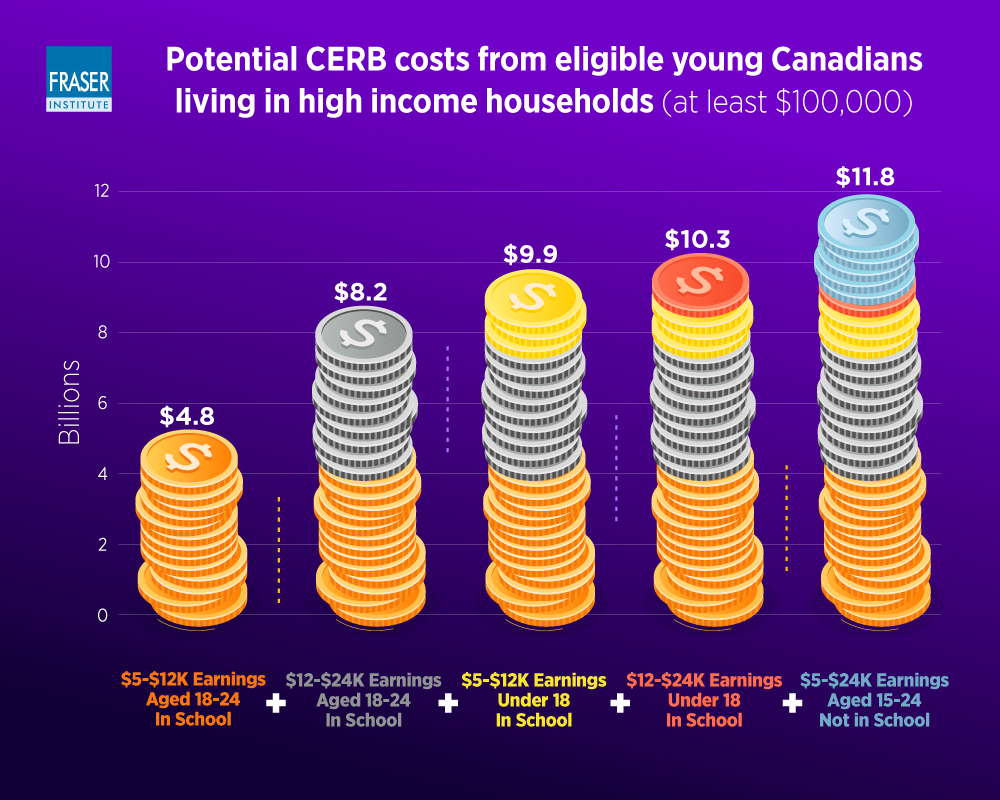
Infograph, Fraser Institute

In fact, whenever such applications clearly reflected that the applicant did not fall into the category of entitlement to receive the relief payments, instructions were to approve them regardless. Including thousands of applications that had been flagged as ineligible. In service to the greater issue of providing relief funding to people who needed it. That at some future date an investigation into entitlement under the guidelines would be undertaken, and any who had applied inadvertently or with the intention of defrauding the system, would be held to account, the incorrectly received funding to be returned to government coffers.

The newly released study by the Fraser Institute estimates that up to $22.3 billion may have been disbursed to people who would not have qualified for the CERB; those who had no real need of funding in the presence of the novel coronavirus and its unemployment fallout. CERB was one of several programs that the government had issued as an emergency measure to help Canadians cope with the extraordinary new world they found themselves in; laid off from permanent or part-time or temporary work with bankruptcy staring them in the face.

According to the study, $81.6 billion in COVID recession spending has been remitted to students, parents and seniors, along with people who found themselves peremptorily out of work when stores, restaurants and other small businesses closed as a result of the pandemic. CERB to the rescue. A program that seemed to make sense at its introduction, first launched in April when the country was in its second month of shutdown. Then came two extensions, with no change to the program such as revisiting eligibility rules.

Photo by Peter J. Thompson/National Post

Jason Clemens, coauthor of the Fraser Institute report, used Statistics Canada data in his analysis to determine the number of people who were classified either as dependent children or spouses in families with incomes in excess of $100,000. Had any of the people making application to receive CERB earned at least $5,000 in 2019, then lost income as a result of CERB, they would be seen to qualify for CERB. The study estimated a maximum of $11.8 billion may have gone out to  young people with part-time jobs, who are dependents in families with household incomes over $100,000 annually.

That is with the assumption a part-time income in 2019 was lost or had hours reduced in 2020 and those people applied for CERB. Another $7 billion could have been sent out to spouses in circumstances quite similar, living in families earning over $100,000 annually. Government could have chosen to make relatively simple, common-sense changes to the application form to disqualify people who were dependents where there was no diminished family income.

The top-up payments for seniors who receive the Old Age Security (OAS) pension and the Guaranteed Income Supplement, also went under the microscope in the study. Government, stated Mr. Clemens should have forwarded that funding to GIS (Guaranteed Income Supplement) recipients only [as without the GIS they fall under the poverty line], since the benefit was meant to specifically aid low-income seniors. The reality being that a senior couple can conceivably have a $260,000 annual income and still qualify for OAS.

Poor CERB targeting wastes billions
Fraser Institute

Labels: , , , ,

Sunday, August 16, 2020

What Do You Value More Than Your Child's Safety?

 "It is like sitting on a cliff. For parents, it revolves around the central question: Am I doing the right thing? What is the right thing for you when the ground is a long way down or shifting under you constantly."                                                                  "It's exhausting, and I think it is increasing stress and anxiety and the mental fatigue that we experience when we have to deal with life-critical things and don't have a solid, consistent basis on which to make decisions."                            "There's no black and white. It's this pendulum that swings between risk and benefit and it has to be a calculated trade-off."                                                    Dr.Judy Illes, Canada Research Chair, neuroethics, University of British Columbia

"[Children remain] remarkably unimpacted by COVID-19. [There is no evidence kids are epidemiologically important in community transmission]."                      "The stereotype that children are just germspreading machines goes back to influenza, but we know now that COVID-19 is very different than influenza when it comes to kids."                                                                                           Dr.Michael Silverman, chief, division of infectious diseases, Schulich School of Medicine & Dentistry, Western University

"Children may therefore have the potential to be substantial drivers of the pandemic. [While the first early reports out of China failed to find children being major vectors, school closures early in the pandemic] thwarted larger-scale investigations of schools as a source of community transmission."                   "[While children experience much less severe illness from the virus] there is no reason to think that children are less likely to transmit the virus than adults."  Dr.Zoe Hyde, University of Western Australia

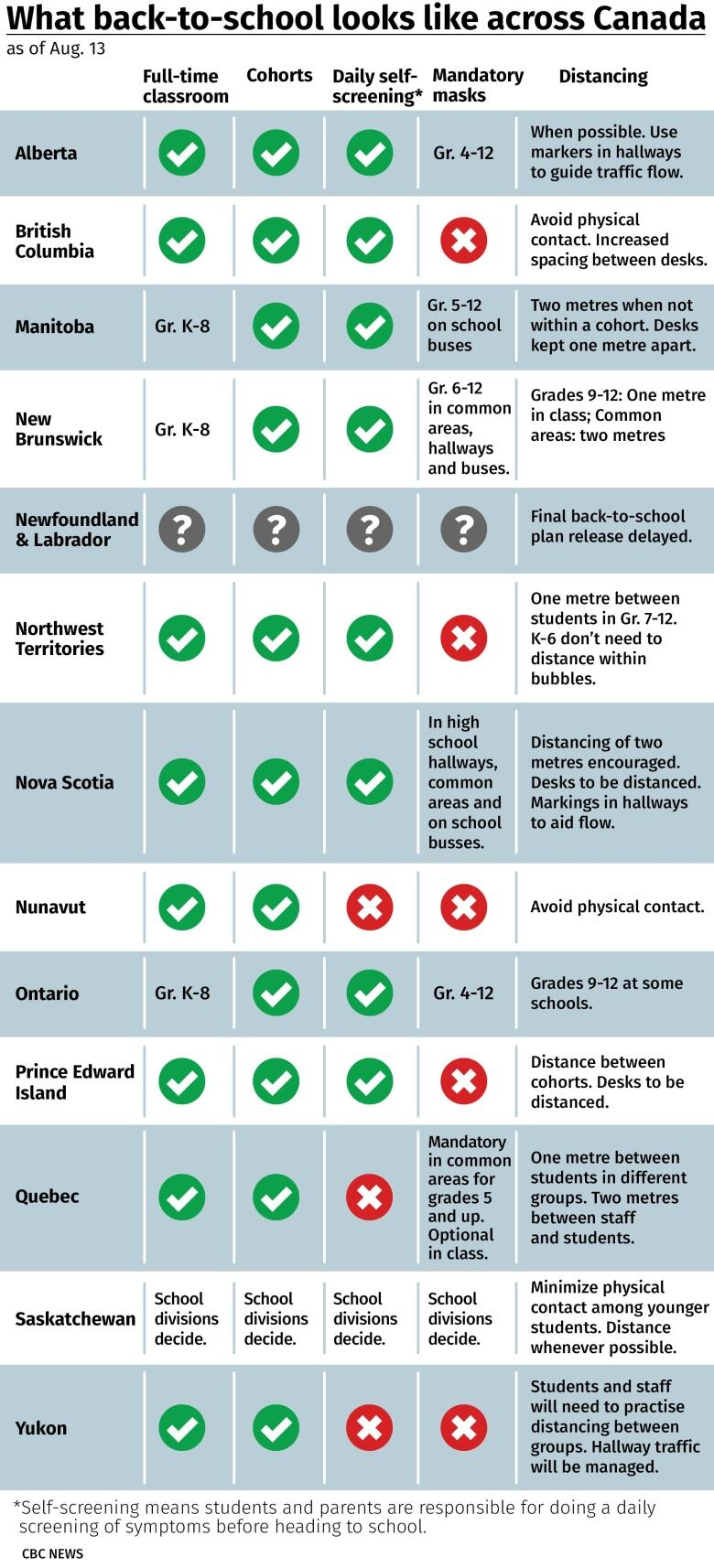
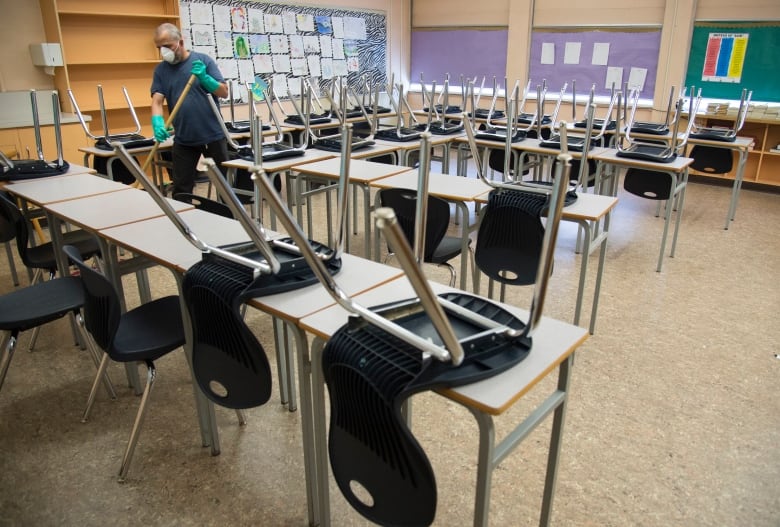
A custodian cleans a classroom in March after the pandemic hit. School will look differently when students return in the fall. In Ontario, there will only be 15 students in a classroom at one time in schools that have to have an 'adaptive model.' (Jonathan Hayward/Canadian Press)

Confused yet? Contrasting impressions, don't know which might be correct? That's the impression frustrated parents have, casting about for definite answers to tremulous questions over whether they should be sending their children back to school in September or committing to home schooling them and in the process sacrificing their professional lives. Balancing the important things of life; your offspring as opposed to your ambitions.

People, particularly parents of young children, are experiencing restless nights. Accompanied by strange dreams where shape-shifting and puzzling backgrounds, frightful occurrences and inexplicable conclusions come to them during their fitful episodes of sleep sandwiched between wide-awake struggles to return to sleep. Night-time, when we are at our most vulnerable, assailed by troubling and fearful thoughts of events overtaking us, making us helpless to decide our own futures with any degree of confidence.

An infectious diseases expert weighs in on Canada's reopening plans for schools, which vary from province to province.

Across Quebec and Ontario parents are petitioning for smaller class sizes. Some teachers admit going back into a classroom terrifies them. "Is it safe to send my child back to school?", parents everywhere that the global pandemic has struck -- and that's everywhere -- ponder, frustrated at the information coming their way, that seems to change from day to day. Dr.Judy Illes and UBC neurology resident Dr.Chris Feehan are of the opinion that as the stress inherent in awaiting the next pandemic surges, preparing for the unknown may trigger pre-traumatic stress.

This syndrome is not yet included in the official manual of mental illnesses, but in all likelihood, it is destined to be, "as the body reacts to perceived future dangers", the two wrote. "Real or imagined, these dangers activate the nervous system in preparation for a burst of activity potentially necessary for survival", they wrote, "And not knowing what that act will entail, or when." Though their focus was on front line health workers, it applies as well to parents "and just about everyone else who is confused about the fall, and waiting for the next shoe to drop."

The latest federal modelling of the near future in Canada was released just days earlier, including a "reasonable worst-case scenario" represented by a large fall peak of COVID cases, followed by additional peaks and valleys. Even while numbers of new reported cases daily is on the increase, with schools soon to reopen "everyone is on nerve", according to Montreal cardiologist and epidemiologist Dr.Christopher Labos. Mindful that the combined topic of children's well-being, and COVID-19 has now found common agreement.

The medical community has screening, which may look like asking someone about potential symptoms or temperature-checking, as a major prevention tool. 

A paper published in JAMA Pediatrics found the amount of viral RNA (genetic pieces of the virus) detected in nose swabs of children between the ages of five to 17 turned out to be similar to those taken from adults. Children under age five showed viral levels ten to 100 times higher. Even though children have experienced less severe illness by far from the virus "there is no reason to think that children are less likely to transmit the virus than adults", pointed out Dr.Hyde.

Whose conclusion was challenged by the publication a day later by Dr.Silverman's opposite conclusion. "Part of the energy that is surrounding current protests is about getting out of the house, getting together, screaming together", noted Dr.Illes in another emerging phenomenon she has named anticipatory fatigue; a reflection of the fatigue associated with the unknown. It's difficult to be strategic, she points out, given that the science continues to move, leaving society with a scattershot approach to the future mired in the novel coronavirus.

Students who “break” their bubbles could lead to school-wide outbreaks.

Some studies leave the impression that children who are kept at home develop a higher risk of anxiety and depression. Perhaps sensitive children subconsciously adopt those attitudes because it's what they sense emanates from their parents. A young nuclear family with two professionals desperate to find some quiet time sequestered at home with their offspring who begin to imagine that having their children attend school part time may afford them some badly needed relief and time to themselves.

"Think about what's important to you. What you value", urges Dr. Illes. Negative thoughts of the future can be turned into positive ones when they're reframed to reflect variant scenarios. Focus on evidence-based information. Take care not to consume too much alcohol, or engaging in other unhealthy coping devices, and focus on recognizing symptoms such as constant, vivid concerns and disturbed sleep.

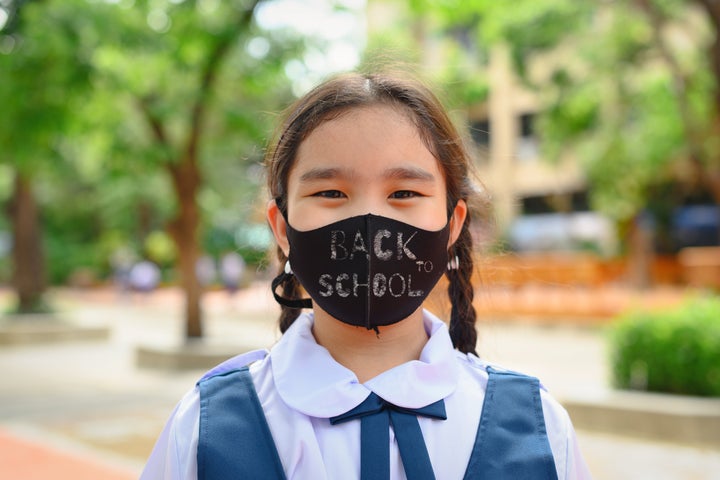
back to school
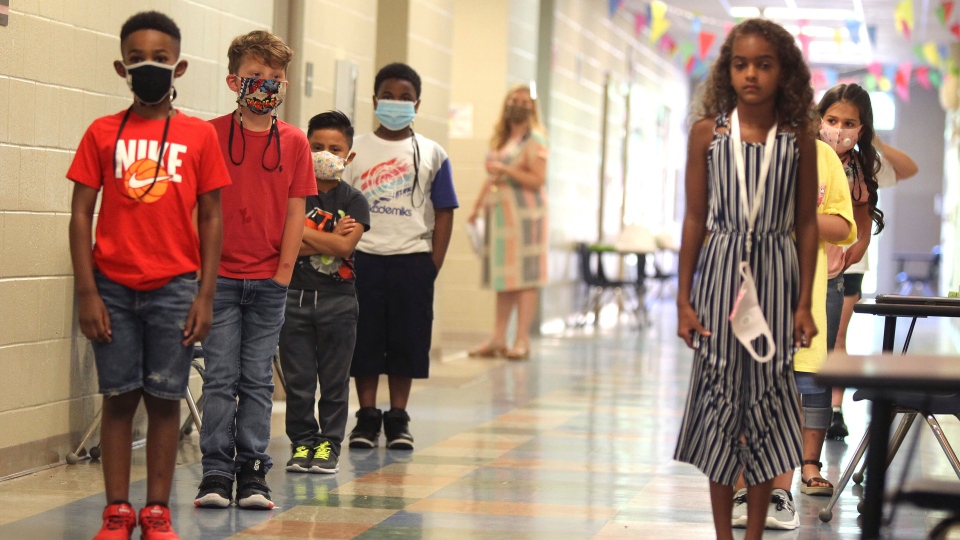
Elementary School students in the U.S. social distance as they line up after leaving the restroom on their first day back to school Monday, July 27, 2020 in Corinth, Miss. Many Canadian students will be returning to classrooms in September as provinces announce school reopening plans. (Adam Robison/The Northeast Mississippi Daily Journal via AP)

Labels: , , , , , ,

Wednesday, August 05, 2020

Bad Faith China Syndrome

"It's likely that the shipment is being delayed as part of China's retaliation against Canada over the Meng [Wanzhou/Huawei Technology] arrest."
"But it could also be due to the kind of sudden, unexplained delay that routinely happens when you're dealing with China's opaque and often uncooperative customs authorities."
"Either way, it raises the question of why the National Research Council thought it was a good idea to work with a Chinese partner on such a sensitive project."
David Mulroney, Canadian ambassador to China, 2009--2012

"We are continuing to wait for the vaccine."
"All we know is that it's awaiting customs clearance by the Chinese government for export. We have not been able to obtain any projected time lines."
"Nothing much else I can say, other than we can start the trial as soon as we receive the vaccine."
Scott Halperin, head, planned Phase-1 trial, Canadian Center for Vaccinology, Dalhousie University
Chinese vaccine maker CanSino Biologics’ sign is pictured on its building in Tianjin, China, Nov. 20, 2018. Stringer/Reuters/File

CanSino's Ad5-nCoV vaccine is the first of many vaccines to have published the results of its initial stage 1 tests. Which led to the peer-reviewed medical journal The Lancet publishing the first set of data about the efficacy of CanSino’s vaccine in humans. A coup for CanSino, and a hope that an efficacious and safe vaccine would shortly be available. If successful, however, it would be one among many. The initial findings indicated Ad5-nCoV induced binding antibodies in most people given the vaccine within 28 days.

Of the larger number of study subjects exposed to the vaccine, one-hundred-and-eight healthy volunteers responded to the vaccine in a way that was read as "safe and well-tolerated", though some of the subjects experienced troubling side-effects. Ad5-nCoV was also approved by China’s military for use by its soldiers for one year. The Chinese military’s medical research unit was also known to have played a role in the development of Ad5-nCoV.

Which leaves open to question why the National Research Council, Canada's premiere medical research group, would choose to make itself available in an agreement with a Chinese biomedical corporation with close ties to the Chinese Communist Party and the Chinese military. CanSino's founder has a Canadian connection, having studied and worked in Canada on biomedical research. But Canada's experience with China, in particular the most recent events have been so fraught with enmity it becomes a puzzle that the government -- not the NRC -- agreed that this critical file would be attached to China's whims.

China has already demonstrated aptly its disregard for international norms when it arbitrarily took under arrest two Canadian businessmen on trumped-up charges of espionage to use them as leverage to force Canada to release Huawei's chief operating officer held on an extradition warrant issued by the United States. Further pressure was applied when a Canadian charged with drug smuggling was suddenly given a death penalty for his crimes. And previous trade agreements for the import of Canadian canola, pork and other comestibles were suddenly cancelled.

The very issue of China's miserable human rights record has never given pause to the Liberal government in its ambition to strike an advantageous trade agreement with Beijing. That ambition of Prime Minister Justin Trudeau's was aborted when conditions were placed on any trade agreement that Canada would sign with any international trade group; insisting on inclusion of respect and equality for women and unions and minorities. China doesn't appreciate being lectured or dictated to.

China is known as a country whose government has never been averse to hijacking other countries' trade and military secrets through cybersecurity infractions. And its past performance infiltrating Canada's world-renowned Nortel Networks, purloining secret data which eventually helped lead to Nortel's downfall followed by former Chinese Nortel employees helping to found Huawei should have been an object lesson in the benefits to be had by maintaining a wide distance between Ottawa and Beijing. A lesson Prime Minister Trudeau flung aside.

According to the agreement signed between CanSino and the NRC in mid-May, the Canadian Centre for Vaccinology at Dalhousie University was to have begun a small Phase 1 safety trial with the vaccine, with the possibility of Phase 2 and 3 trials to follow. On regulator approval, the vaccine could be manufactured at a facility in Montreal owned by the NRC to ensure that Canada was "among the first in the world to have access to a safe and effective vaccine against COVID-19", according to the National Research Council.

It is now known that CanSino conducted talks with Russia, Brazil, Chile and Saudi Arabia to conduct Phase 3 trials. And it just signed an agreement with Egypt to test and produce the vaccine once it could be determined that the vaccine does protect people against infection by the SARS-CoV-2 virus causing COVID-19.  "It might also be that China would prefer to ensure that any vaccine is developed in China first and not shared with a foreign country, especially Canada", suggested Guy Saint-Jacques another former Canadian ambassador to China.

Alternately, he said, the situation "could well be part of the Chinese arsenal" in the dispute over Meng's arrest. As for the CanSino vaccine candidate, it makes use of a harmless virus as a system of delivery where the "adenovirus" is modified to express part of the SARS-CoV-2 germ causing COVID, which should trigger the immune system to fight the coronavirus. Dampened immune response occurred in some people, theoretically attributed to the thought they were exposed previously to the adenovirus backbone in the vaccine and resulting antibodies repelled the vaccine.

A technician works at a manufacturing facility of Chinese vaccine maker CanSino Biologics in Tianjin,China.    Reuters


Labels: , , , ,

Saturday, August 01, 2020

Rodrigo Duterte : Sage Advice : Rivalling Donald Trump

Mr Duterte gave a state of the nation address earlier this week, before his latest comments
Mr Duterte giving a state of the nation address    EPA
"Together, we shall fight this pandemic with the same fervour as our campaign against illegal drugs, criminality, insurgency and corruption in high places and entrenched parochial interests."
"What I said is true. Just go to the gasoline station, and then have some drops, that's disinfectant."
"I am not joking. That is true. You think I am just kidding."
"They [critics] said, 'Duterte's insane.' Stupid! If I'm insane, you should be the president, not me."
"What I've said was true. If alcohol isn't available, especially for the poor, just go to a gasoline station, and use [gas] to disinfect."
"I am not joking. I am not joking. You… you try to get inside my brain."
"At the end of the day, hang [the mask] somewhere and spray it with Lysol if you can afford it."
"For people who don't [have Lysol], drench it in gasoline or diesel... just find some gasoline [and] dip your hand [with the mask] in it."
President Rodrigo Duterte, Manila, Philippines
"You cannot use gasoline as disinfectant."
"Inhaling it may cause harm and could lead to more problems like respiratory disease."
Jose Santiago, president, Philippine Medical Association

"I can't believe that after four years of him as president, you still don't know [him]."                                                                                                                      "[It's only a] joke. Why would we use gasoline for washing?"                                                    Presidential spokesman Harry Roque

Thousands of people in the Philippines have been arrested by authorities for breaching curfew. Authorities have interrupted charity and relief operations and taken those suspected of violating quarantine rules to crowded facilities. Illogically those who flaunt the rules of mask-wearing and social distancing, are placed in crowded holding areas where social distancing is impossible to maintain. But the law is the law and it must be upheld

Police, the Philippine military and officials of neighbourhoods have all been authorized by President Duterte to shoot anyone defying lockdown restrictions. The Philippines, by order of the president, has enforced one of the globe's longest, most stringent lockdowns. Tactics in enforcement include mass arrests alongside threats of state violence. Methods well known to have been put in place in the president's war on drugs, methods deadly to drug dealers, users and innocents mistakenly taken for both.

Health professionals in the Philippines recommend soap and water to be used for cleansing reusable cloth masks. And that proper disinfection of surfaces require the use of 70 percent ethyl or isopropyl alcohol. The Philippine president has made the suggestion of using gasoline on masks on several occasions, eliciting shock from medical professionals as well as from some of his political opponents appalled at the dangerous advice he is propagating to a public that still awards him high approval ratings for his handling of the COVID-19 pandemic.

"DON'T TRY THIS AT HOME", tweeted Senator Risa Hontiveros. "FACT CHECK: Gasoline and diesel should not be used in disinfecting." President Duterte's response to his opponents is to defend his recommendations, emphasizing that his government's response had succeeded in preventing up to 3.5 million infections. The official government figure for the infection rate is 90,000, a figure generally held to be substantially under-counting cases.

No one in the Philippines may take the liberty of not wearing a mask; their use has been mandatory since March. Official figures admit to over 2,000 deaths caused by the SARS-CoV-2 virus causing COVID-19. For a second straight day on Friday, the country reported Southeast Asia's largest daily rise in new coronavirus cases. Restrictions meant to control the spread have been extended. The president has promised that by December the country would return to normal.

The second occasion on which Duterte repeated his singular advice for the use of gasoline or diesel to clean masks, medical experts were quick to override his comments, emphaszing that mask-cleaning tips by the president were not recommended. It's the kind of advice that places him in league with U.S. President Donald Trump's musing over whether injecting or drinking bleach might be effective in killing the virus. And his continued insistent recommendation of the use of a malarial drug as an effective vaccine for COVID.

Philippines
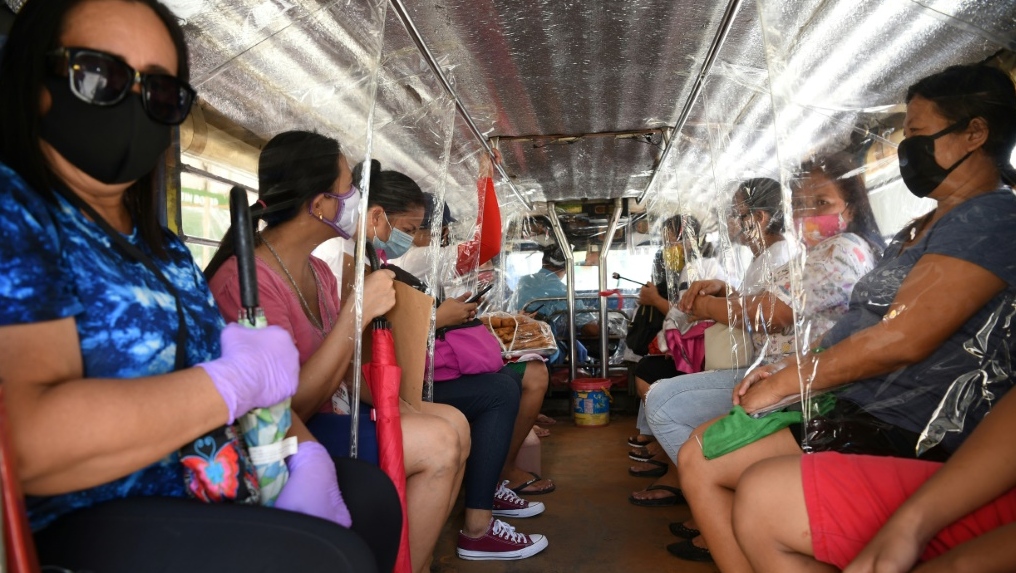
Passengers travel on a jeepney with seat dividers to ensure social distancing in Manila. Residents of Navotas, one of the poorest areas of the capital, will go back into lockdown following a spike in new coronavirus cases. (AFP

Labels: , ,

Monday, July 06, 2020

China's Vision of a New World Order

"[CanSino] deserves credit for the speed with which they pushed the vaccine through pre-clinical studies and human testing."
"It tells you something about their ability to mobilize and leverage the resources that it takes to get all these done. the resources required here are substantial."
"The viral vector CanSino is using is a relatively safe approach compared to other techniques but it's hard to make a call on efficacy for now."
"There's no shortage of histories where promising efforts made it to the last stage of testing only to see things fall apart."
Wang Ruizhe, pharmaceutical industry analyst, Capital Securities Corp, Shanghai
Cansino Biologics INC.
"Most of our families stayed in Canada, and we could only see them a few times a year."
"When you think about your young kids and teenagers growing up without dads, when you know your wife had to shovel out of ten inches of deep snow early morning in -20C wind chill all by herself -- these were the tough moments."
Yu Xuefeng, chief executive, CanSino

"CanSino is in the game and it's about where the other so-called leaders are."
"Whether anybody will cross the finish line where we ever can see safety data that we would like to see is unknown."
William Haseltine, former HIV researcher, Harvard University
Credit: Cansino
In the desperate race to develop a vaccine to immunize populations against the SARS-CoV-2 virus which causes COVID-19, CanSino, a Chinese pharmaceutical company with ties to Canada boasts the reputation of having been the first to publish results of an initial trail with a product they developed with mixed results where its efficacy failed to impress and its alarming side-effects indicate that they're not quite there yet. The CEO of CanSino formerly worked for a Canadian pharmaceutical company, Sanofi as senior executive of vaccine operations.

The 57-year-old CEO of CanSino, born in China, took his doctorate at McGill Univrsity in microbiology. He became the head of vaccine development and production at Sanofi Pasteur in Canada. And now that he heads his own pharmaceutical company in China, relations in Canada with former colleagues have been maintained, at a time when both countries have seen their relations considerably cooled, in trade and diplomacy.

The U.S./Canada/Huawei affair where Huawei's CFO was taken into custody in Vancouver on an extradition warrant from the U.S. and where Meng Wanzhou awaits extradition to the U.S. to stand trial on charges of misleading U.S. banks on her company's sanction-breaking business with Iran, led to Beijing arresting two Canadians in China on trumped-up charges of espionage. Ms.Meng lives in her luxury Vancouver mansions on bail, while Michael Kovrig and Michael Spavor languish in a Chinese prison with no legal representative, unable to communicate with their families and rarely permitted consular visits.

Canada has not yet stated whether or not the government has decided to permit the telecommunications giant Huawei to provide some of the content of Canada's 5G upgrade while Beijing has darkly warned Ottawa of 'consequences' should Huawei be shut out based on fears of the potential based on prior such incidents of Chinese cyber espionage. This is a country whose nationals infiltrated Canadian technology, in working exchanges with Canada's giant successful telecommunications giant, Nortel Industries.

Nortel was subjected to infiltration, to commercial espionage, to a ransacking of secret data by Chinese insiders working for Nortel whose activities eventually concluded in the complete collapse of Nortel Networks, with the one and sole beneficiary being Huawei which took on former Nortel employees and milked their experience and the trade secrets they brought with them, to launch Huawei as a world heavyweight in global telecommunications technology.

Now, CanSino's Yu appears to be following a similar trajectory, substituting bioengineering and pharmaceutical production for advanced communications technology. Yu, whose company has not yet generated revenue, facing a $22 million deficit in 2019 given its enormous investments, has linked his company an its scientific advances with Canada's largest research organization, the National Research Council.

A researcher works at a lab of a Chinese vaccine maker CanSino Biologics in Tianjin, China November 20, 2018.
Lab of Chinese vaccine maker CanSino Biologics in Tianjin. Stringer/Reuters files

While in China, Mr. Yu collaborates closely with prominent military scientist Chen Wei, a major general in China's People's Liberation Army who heads the Institute of Biotechnology at China's Academy of Military Medical Sciences. She has lent her expertise to working with CanSino in the development of an Ebola vaccine approved in 2017 for emergency use and national stockpiling in China. During the SARS outbreak of 2003 she succeeded in developing a therapy for Chinese health workers.

Credit: Cansino
More latterly, CanSino alongside Dr.Chen's team of researchers sped through pre-clinical studies on the coronavirus vaccine, named Ad5-nCoV, starting human clinical trials in Wuhan in mid-March. When CanSino published a study in the medical journal Lancet, the vaccine appeared safe, generating a level of immune response, but with severe shortcomings. But CanSino's Canadian ties has enabled it to receive approval for conducting Phase III tests on its vaccine in Canada where researchers at the Canadian Centre for Vaccinology out of Dalhousie University are leading the clinical trials.

Yu had previously licensed a technology from the National Research Council of Canada in HEK 293 cell lines required to produce large quantities reliably of a vaccine, underpinning CanSino's viral vector technology. At the time few Chinese companies possessed that technology. The National Research Council has the option of producing doses of the vaccine for emergency pandemic use in Canada, should the vaccine candidate be approved by authorities.


Labels: , , , , ,

Wednesday, March 18, 2020

Food Security in the Face of the Coronavirus

"We had four more planes scheduled for this week, but now they aren't coming."
"Broccoli has to be hand-cut. I need an army of people to do that. From now until mid-August I'm planting and harvesting because our retailers want a constant supply."
"Those weeks [in late March] are key because after the greenhouses start, the push is on for outdoor growers, people like me, who seed broccoli and cucumbers and peppers, things like that."
"We were slated in the next month to bring in 4,600 people and 13,600 in the next three months."
"Those people are very important."
Ken Forth, broccoli grower, chair, labour section, Ontario Fruit and Vegetable Growers' Association

"We are not running out of food or essential supplies."
"Our supply chain and store teams are responding to the spikes in volume and quickly getting the most important items back on the shelf."
Loblaw chief executive Galen Weston

"Any time there's a disruption in those rates [steady customer buying] you either have a big buildup in inventory or you have a depletion in inventory."
"When you double or triple the rate at which something is taken out of the system, you end up with gaps. So the gaps may appear in grocery stores, at the wholesaler or even the manufacturer."
"Once an equilibrium is re-established things will get back to normal."
"If the cost of Italian cheese goes up because of what's happening in Italy right now, they won't be able to keep that price down."
David Soberman, Canadian National Chair in strategic marketing, Rotman School of Management

"The Canadian dollar has been diving for six or seven days, that really hurts grocers."
"And while the Canadian government made a decision on travel to keep us safe, they didn't address the issue of foreign labour coming in to support the agricultural sector."
"This could be really problematic for them."
Sylvain Charlebois, scientific director, Agri-Food Analytics Lab, Dalhousie University

"We at least need a skeleton crew to seed the crops."
"And by the time of harvest, I'm hopeful a lot of these tensions will be reduced."
"A lot of farmers rely on these workers and they are very stressed. [I'm hopeful] we'll find solutions quickly."
Mary Robinson, president, Canadian Federation of Agriculture
New border restrictions amid the COVID-19 outbreak have food producers wondering about the approximately 50,000 migrant workers Canadian farms depend on annually. (Jason Kryk/The Canadian Press)
Obviously, the strategists in the Prime Minister's Office failed to take into account the impact on the security of the Canadian food market during this time of crisis with the novel coronavirus spreading throughout the country, when vegetable growers are unable to bring in crop workers from abroad that Canada has always relied upon to do the kind of backbreaking agricultural work at harvest that Canadian workers are loathe to take on themselves.

The newly-declared, sweeping travel restrictions, and the cutting off of the flow of seasonal labour threatens to disrupt harvest on Canadian farms. Foreign travellers to Canada have been banned in an effort to contain the swift spread of the novel coronavirus, with Prime Minister Justin Trudeua saying all international visitors to Canada, with the exception of Americans, diplomats and flight crews, will henceforth be refused entry at airports.

Countries including the Caribbean, Guatemala and Mexico supply Canadian farms with about 60,000 annual workers, arriving in Canada to seed and harvest crops of tomatoes, lettuce, broccoli, cabbages and other fruits and vegetables. Airplanes are hired by farmers' associations to transport workers to Canada. A deadline of midnight Tuesday was the cut-off date to bring in the last group of 250 employees, explained Ken Forth.

A full three-quarters of seasonal labourers who yearly support the fruit and vegetable growers in Canada arrive from outside the country and though several thousand have already arrived and are working in greenhouses, the incoming workers tend to dramatically increase in late March, when seeding season is initiated. Normally, workers would be arriving in large numbers daily over the next few weeks.
The agricultural sector has a lineage of resilience.Elliot Ferguson/Postmedia Network files
Grocers have had to address the public's anxiety over food availability, manifested in panic buying, with assurances that there will be no shortages of essential food items. And to ensure an evenly paced food availability efforts have been made to persuade Canadians to buy no more food than they would normally purchase for an average two-week period. While that is reasonable and appropriate, it has failed to persuade a certain element of the consuming public, who continue to raid supermarket shelves, leaving toilet paper, meat and frozen vegetables in short supply.

Add caption
Growers' associations state that fresh produce is available and there is no immediate supply issue. Oddly, enough supermarket counters burst with fresh fruits and vegetables, some homegrown in hothouses, and some imported from abroad. There is no scarcity of food, yet bare shelves throughout grocery stores are linked to a disruption in the reliance on 'just-in-time' supply relying on people to buy in steady rates.

Loblaw chief executive Weston assures the public that Shoppers Drug Mart chain which Loblaw also owns, and the supermarkets will see no rise in "a single price on any item", taking advantage of the COVID-19 crisis. According to analysts that sunny outlook may be unrealistic given the pressure on labour and the state of the Canadian dollar, where local workers could fill in for seasonal employees but would demand a higher rate of recompense for their work than foreign workers, pushing up product pricing.

Customers stand in line to place an order at Nosso Talho butcher shop and grocery store in Toronto, where sales are up by 400 per cent, according to its manager. (Andy Hincenbergs/CBC)

Labels: , , , ,

() Follow @rheytah Tweet