Politic?

This is a blog dedicated to a personal interpretation of political news of the day. I attempt to be as knowledgeable as possible before commenting and committing my thoughts to a day's communication.

Sunday, August 16, 2020

What Do You Value More Than Your Child's Safety?

 "It is like sitting on a cliff. For parents, it revolves around the central question: Am I doing the right thing? What is the right thing for you when the ground is a long way down or shifting under you constantly."                                                                  "It's exhausting, and I think it is increasing stress and anxiety and the mental fatigue that we experience when we have to deal with life-critical things and don't have a solid, consistent basis on which to make decisions."                            "There's no black and white. It's this pendulum that swings between risk and benefit and it has to be a calculated trade-off."                                                    Dr.Judy Illes, Canada Research Chair, neuroethics, University of British Columbia

"[Children remain] remarkably unimpacted by COVID-19. [There is no evidence kids are epidemiologically important in community transmission]."                      "The stereotype that children are just germspreading machines goes back to influenza, but we know now that COVID-19 is very different than influenza when it comes to kids."                                                                                           Dr.Michael Silverman, chief, division of infectious diseases, Schulich School of Medicine & Dentistry, Western University

"Children may therefore have the potential to be substantial drivers of the pandemic. [While the first early reports out of China failed to find children being major vectors, school closures early in the pandemic] thwarted larger-scale investigations of schools as a source of community transmission."                   "[While children experience much less severe illness from the virus] there is no reason to think that children are less likely to transmit the virus than adults."  Dr.Zoe Hyde, University of Western Australia
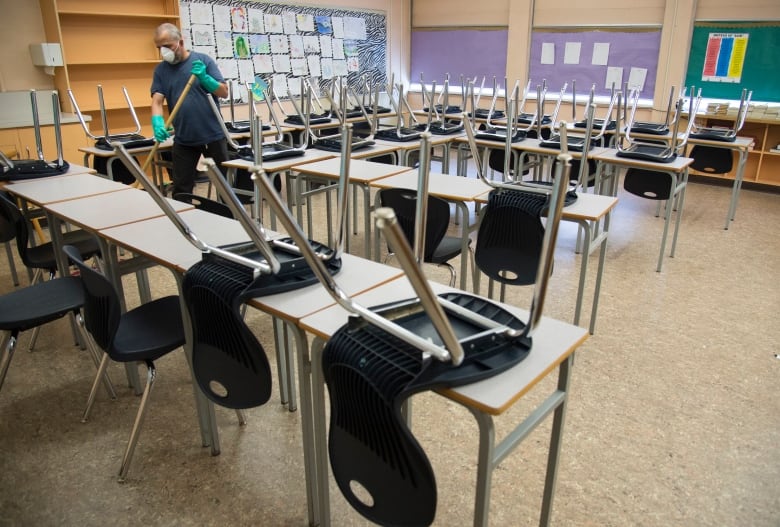
A custodian cleans a classroom in March after the pandemic hit. School will look differently when students return in the fall. In Ontario, there will only be 15 students in a classroom at one time in schools that have to have an 'adaptive model.' (Jonathan Hayward/Canadian Press)

Confused yet? Contrasting impressions, don't know which might be correct? That's the impression frustrated parents have, casting about for definite answers to tremulous questions over whether they should be sending their children back to school in September or committing to home schooling them and in the process sacrificing their professional lives. Balancing the important things of life; your offspring as opposed to your ambitions.

People, particularly parents of young children, are experiencing restless nights. Accompanied by strange dreams where shape-shifting and puzzling backgrounds, frightful occurrences and inexplicable conclusions come to them during their fitful episodes of sleep sandwiched between wide-awake struggles to return to sleep. Night-time, when we are at our most vulnerable, assailed by troubling and fearful thoughts of events overtaking us, making us helpless to decide our own futures with any degree of confidence.
An infectious diseases expert weighs in on Canada's reopening plans for schools, which vary from province to province.

Across Quebec and Ontario parents are petitioning for smaller class sizes. Some teachers admit going back into a classroom terrifies them. "Is it safe to send my child back to school?", parents everywhere that the global pandemic has struck -- and that's everywhere -- ponder, frustrated at the information coming their way, that seems to change from day to day. Dr.Judy Illes and UBC neurology resident Dr.Chris Feehan are of the opinion that as the stress inherent in awaiting the next pandemic surges, preparing for the unknown may trigger pre-traumatic stress.

This syndrome is not yet included in the official manual of mental illnesses, but in all likelihood, it is destined to be, "as the body reacts to perceived future dangers", the two wrote. "Real or imagined, these dangers activate the nervous system in preparation for a burst of activity potentially necessary for survival", they wrote, "And not knowing what that act will entail, or when." Though their focus was on front line health workers, it applies as well to parents "and just about everyone else who is confused about the fall, and waiting for the next shoe to drop."

The latest federal modelling of the near future in Canada was released just days earlier, including a "reasonable worst-case scenario" represented by a large fall peak of COVID cases, followed by additional peaks and valleys. Even while numbers of new reported cases daily is on the increase, with schools soon to reopen "everyone is on nerve", according to Montreal cardiologist and epidemiologist Dr.Christopher Labos. Mindful that the combined topic of children's well-being, and COVID-19 has now found common agreement.
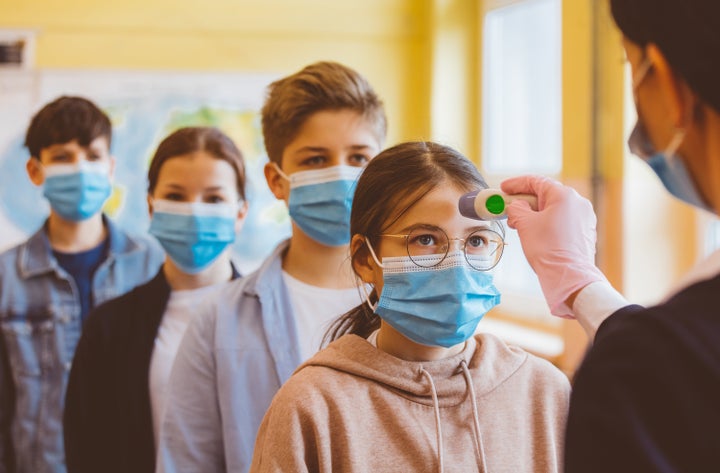
The medical community has screening, which may look like asking someone about potential symptoms or temperature-checking, as a major prevention tool. 

A paper published in JAMA Pediatrics found the amount of viral RNA (genetic pieces of the virus) detected in nose swabs of children between the ages of five to 17 turned out to be similar to those taken from adults. Children under age five showed viral levels ten to 100 times higher. Even though children have experienced less severe illness by far from the virus "there is no reason to think that children are less likely to transmit the virus than adults", pointed out Dr.Hyde.

Whose conclusion was challenged by the publication a day later by Dr.Silverman's opposite conclusion. "Part of the energy that is surrounding current protests is about getting out of the house, getting together, screaming together", noted Dr.Illes in another emerging phenomenon she has named anticipatory fatigue; a reflection of the fatigue associated with the unknown. It's difficult to be strategic, she points out, given that the science continues to move, leaving society with a scattershot approach to the future mired in the novel coronavirus.
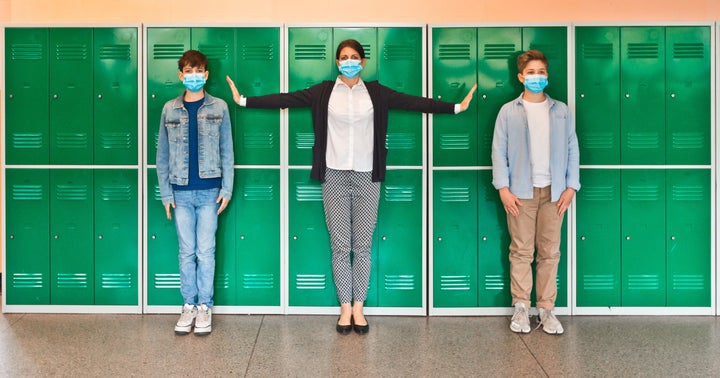
Students who “break” their bubbles could lead to school-wide outbreaks.

Some studies leave the impression that children who are kept at home develop a higher risk of anxiety and depression. Perhaps sensitive children subconsciously adopt those attitudes because it's what they sense emanates from their parents. A young nuclear family with two professionals desperate to find some quiet time sequestered at home with their offspring who begin to imagine that having their children attend school part time may afford them some badly needed relief and time to themselves.

"Think about what's important to you. What you value", urges Dr. Illes. Negative thoughts of the future can be turned into positive ones when they're reframed to reflect variant scenarios. Focus on evidence-based information. Take care not to consume too much alcohol, or engaging in other unhealthy coping devices, and focus on recognizing symptoms such as constant, vivid concerns and disturbed sleep.
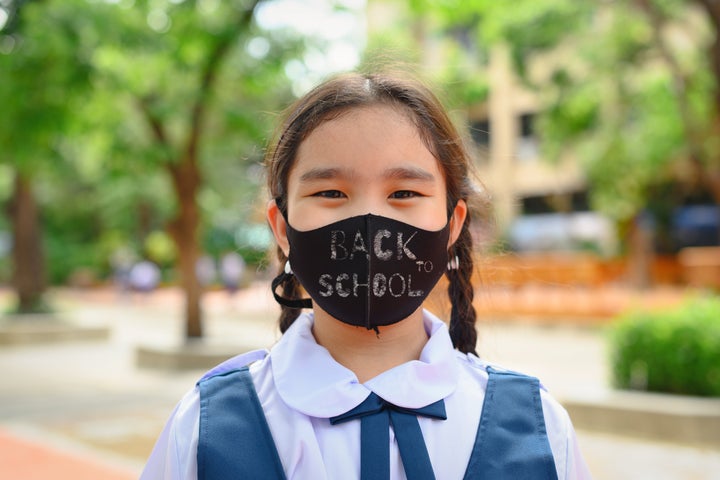
back to school
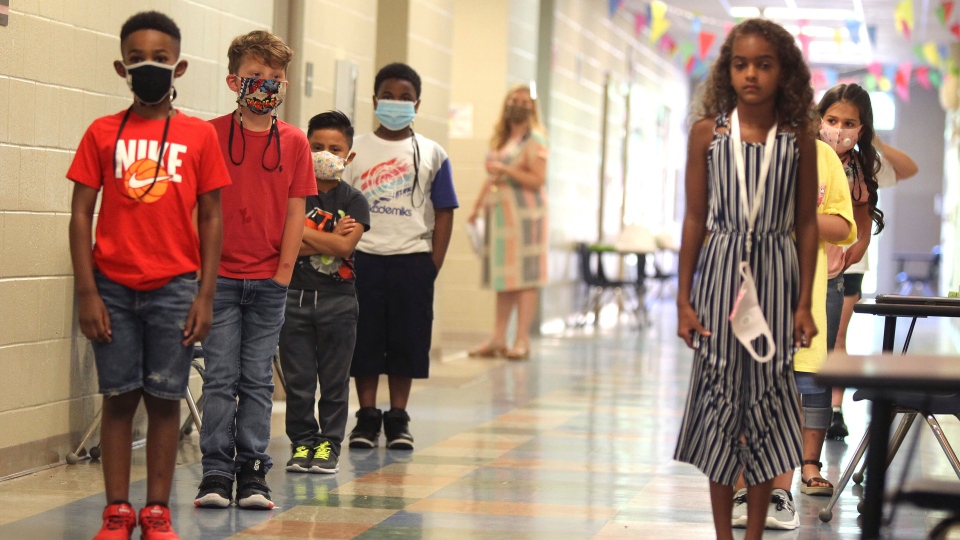
Elementary School students in the U.S. social distance as they line up after leaving the restroom on their first day back to school Monday, July 27, 2020 in Corinth, Miss. Many Canadian students will be returning to classrooms in September as provinces announce school reopening plans. (Adam Robison/The Northeast Mississippi Daily Journal via AP)

Labels: , , , , , ,

Thursday, February 13, 2020

COVID-19: CO for corona, VI for virus, D for disease, and 19 for the year it emerged....

"What has happened in China is that they have changed the definition of what the disease really is -- now they are taking people who have lesser symptoms."
"The deaths are quite worrisome, there is an increased number of deaths reported, but if you look overall at the total number of deaths and the total number of cases, the fatality ratio is about the same as it has been - but it is still high, as high as the death rate in influenza."
David Heymann, Professor of Infectious Disease Epidemiology, London School of Hygiene and Tropical Medicine
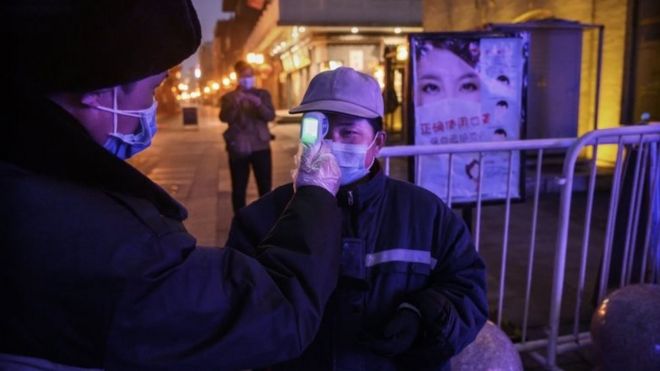
A Chinese worker wears a protective mask as she has her temperature checked on a nearly empty commercial area on February 12, 2020 in Beijing, China.
The WHO has said a vaccine will likely be found but it will take time   Getty Images
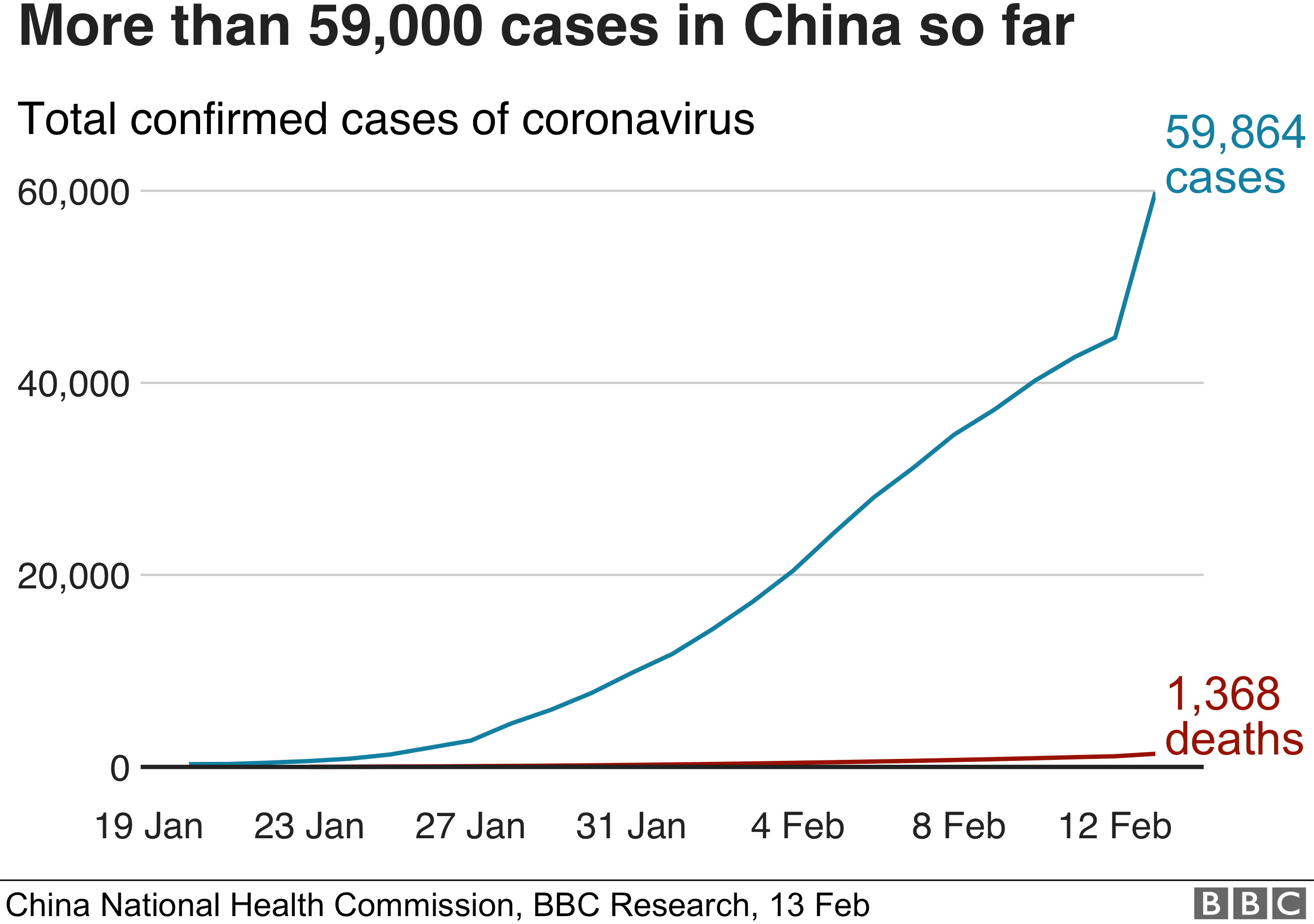
China is assuring the world community that it has the Novel Coronavirus -- now officially named COVID-19 -- well in hand. Wednesday, it reported the lowest number of new cases in two weeks following Beijing's senior medical adviser, epidemiologist Zhong Nanshan stating with apparent confidence that this month would see the peak of the epidemic before it subsides, and that by April the outbreak would be in its last gasps. On Wednesday the figures showed 2,015 new confirmed cases diagnosed, bringing China's total to 44,653 representing the lowest daily rise since January 30.

Well, oops, another day, another story. New figures have been released, that indicate new cases and deaths in the province of Hubei, the epicenter of the epidemic, have pushed the national death toll above 1,350 with almost 60,000 infections in total. Quite a leap for a day (Wednesday) that was, according to Chinese officials, the lowest victim-count day yet. But that would have been the count for the day before. The new count is quite displeasing to Beijing, which has taken steps to dismiss two top officials in Hubei province hours after the new figures were released.

The World Health Organization chief, Tedros Adanom Ghebreyesus, though courteously willing to take China at its word, advised that "extreme caution" should be taken when viewing the optimistic Wednesday figures. "This outbreak could still go in any direction", he advised at a Geneva briefing. And it took little time for that to happen. "It has spread to other places where it's the beginning of the outbreak", responded head of the Global Outbreak Alert and Response Network coordinated by the WHO. "In Singapore, we are at the beginning."

Coronavirus data chart

Of Singapore's 50 cases identified at that point, its largest bank, DBS was speedily evacuated at its head office, when one of the cases was found to be located there. Dozens of other countries -- at last count, 24 and growing -- have reported hundreds of cases; so far three people have died of the virus outside mainland China; in Hong Kong, Japan and the Philippines. And though China reported 1,113 deaths by the end of Tuesday, social media is abuzz over suspicions regarding reliability of the data.

On the cruise ship quarantined off Yokohama with around 3,700 people on board, there have been 175 people who have tested positive for the coronavirus. The MS Westerdam, another cruise ship which had been refused docking by Thailand, Japan, Taiwan, Guam and the Philippines was finally able to dock in Cambodia where its 1,455 passengers and 802 crew will be quarantined and medically tended to. The first Japanese medical officer to examine patients on board the Diamond Princes came down with the virus himself. The ship's total confirmed cases now stand at 174 and rising.

Relatives of passengers wave towards the Diamond Princess cruise ship, with around 3,600 people quarantined onboard due to fears of the new coronavirus. | AFP-JIJI

China bitterly accused the U.S. and other countries of victimizing China when they took steps to curb visitors from China. At a time when China itself has strictly quarantined about 60 million of its own citizens in quarantined cities in Hubei province, including the centre of the outbreak, the provincial capital of 11 million people, Wuhan. A commentary in the Xinhua news outlet spoke of "racist reporting" in some Western media, accusing them of ignoring "the unswerving efforts and huge sacrifice China and its people have made".

China, which has staked so much of its future on its 'one belt, one road' enterprise, with its huge investments in Asia, Africa and the Middle East to increase its already enormous trade potential, now finds itself in a quagmire of a stand-off in its aspirations. It sits frozen in time, unable to do anything while the entire country goes into lockdown, for however long is anyone's guess.

Factories are shuttered. Trains sit in their stations, in Wuhan the streets are still and empty of people, and state censors are working overtime to quell criticism and stop insde information and videos from reaching the outside world.

Image result for one road, one belt

Front-line accounts from overflowing hospitals with their scarcity of medical equipment and drugs, and where infected patients lie in crowded close proximity, and overworked health care professionals are at the point of breaking down as tens of thousands of people continue to become ill while ever more die from the virus do not reflect a country that has a viral epidemic well in hand.

The principal deputy director of the Centers for Disease Control and Prevention in Washington stated recently: "We absolutely assume that the reported cases are an underestimate".

Chinese citizen journalists risk their personal freedom to travel to the virus hotspot of Wuhan, to post what they see and  hear of the real situation as it unfolds, and then suddenly they are incommunicado, arrested, imprisoned, silenced.

"In the evening, the people of Wuhan turned off their lights when Li Wenliang passed away and, using flashlights or their cellphones, shot beams of light into the sky and blew whistles. In the deep dark night, Li Wenliang is this beam of light. After all this time, what can Wuhan people do to dispel the gloom, sadness and anger in their hearts? Perhaps it can only be done this way", wrote novelist Fang Fang, before falling silent.
  Li Wenliang  on Weibo, a Chinese social media platform.Kuang Biao

Li Wenliang was warned by Chinese authorities to stop spreading false rumours, when the young doctor communicated with his medical school colleagues to warn them of a strange, new virus that had appeared at a local hospital that looked suspiciously like a viral pneumonia, but was not, and could have been SARS, but was not.... He was among many medical professionals tending the ill who themselves became infected. And he died a week ago.


Labels: , , , ,

() Follow @rheytah Tweet