


'Rare Earth' Minerals the new Indispensible -- Greenland's Treasure Trove
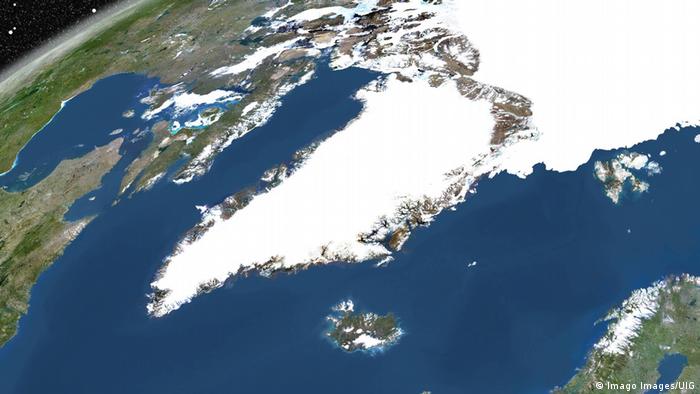 |
| Greenland holds a number of world records. It is the world's largest island, the least densely populated territory on Earth, and home to the only permanent ice sheet outside Antarctica. Most of its 56,000 residents are Inuit, descendants of those who migrated there from what is now Canada in the 13th century. |
"Whether it's an Apple, Mac or an F35 fighter jet, you can't make any smart technology without using rare earth minerals."Dwayne Menezes, managing director, Polar Research and Policy Initiative, London"The mine will destroy everything.""We are afraid dust from the mine will hurt our fishing grounds and drinking water."Jens Davidsen, Greenland fisherman"[Greenland wanted to be a] free and open market for everybody who wants to participate.""[If Europe and the United States were worried], they need to start putting money into exploration."Jens-Erik Kirkegaard, former minerals minister, Denmark
 |
Giant icebergs float in the fjord in the southern Greenland town of Narsaq, the site of a controversial Australian-led uranium and rare-earth mining project. The open-pit mine has divided opinion on the island, which goes to the polls on Tuesday. NORDFOTO/AP |
A vote is pending in Greenland, its population of 56,000 with a voter base fewer than that of some town councils is to settle the issue of the Kvanefield mine project; whether to proceed or to shut down the enterprise. The project overlooks the tiny fishing village of Narsaq where catching whales and seals provide the basic living conditions of the locals perturbed by the inevitable exploitation of one of the world's largest deposits of 'rare earth' minerals in a geology they consider home and inviolable.
The decision they reach has wide implications that will affect materials viewed as critical to the enterprising technology of the 21st century as was oil to the century preceding it. These materials with their supermagnetic, superconductive properties are integral to everything from iPhones and solar panels, to hybrid cars and weapons systems. Key to a high-tech, low-carbon world, extracting them promises to be a balance between caution and an environmentally hazardous process in the making.
Some of the residents of Greenland, skeptical of promises from the Australian company behind the project -- Greenland Minerals -- place little faith in strict measures to be enforced. The ruling Siumut party called snap polls to settle growing unrest over the project. Rowdy public meetings and police being called in to investigate death threats speak to the controversial nature of the disagreements over whether to allow mining to proceed.
Another concern is the fact that Greenland Minerals is partially owned by Shenghe Holdings, a Chinese firm closely tied to the Chinese Communist Party ruling Beijing. The left-wing, pro-green Inuit
Ataqatiglit party has the capacity to toss the mine project out, despite rival parties warning that Greenland's isolated economy has to begin looking elsewhere than its fishing monopoly. And then there is pressure from Western diplomats fearing Beijing is seeking sole authority over Greenland's rare earth deposits.
Ataqatiglit party has the capacity to toss the mine project out, despite rival parties warning that Greenland's isolated economy has to begin looking elsewhere than its fishing monopoly. And then there is pressure from Western diplomats fearing Beijing is seeking sole authority over Greenland's rare earth deposits.
Beijing dominates the rare earth market, a resource fast becoming the world's most valuable natural deposits. Over half of such supplies are mined in China which itself supplies the EU with 98 percent of its associated needs and the U.S. with 80 percent. Greenland's resources are considered the last great untapped rare earth reserves with estimates running up to 25 percent of total resources, placing it in the target position of a new superpower "scramble" for access.
Dwayne Menezes, director of the think-tank Polar Research and Policy Initiative, calls for a minerals alliance between Britain and its traditional allies, including the U.S., Canada, Australia and New
Zealand a group that styles itself the "Five Eyes" intelligence network. A report issued by the think tank states: "Greenland offers the U.S. and its allies the opportunity to reduce their dependence on China for resources essential to their defence and security."
Zealand a group that styles itself the "Five Eyes" intelligence network. A report issued by the think tank states: "Greenland offers the U.S. and its allies the opportunity to reduce their dependence on China for resources essential to their defence and security."
Beijing plays a tough game to follow. It has proffered to Greenland an offer ultimately benefiting China
with its "Polar Silk Road", infrastructure geared around shipping routes, new opportunities opening in tandem with the melting of the Arctic ice cap. It is coming home to Greenlanders that they sit on a treasure trove of the world's newest 'must-have' commodities in rare earth minerals, and with that natural resources comes a drawing into a geopolitical tug-of-war.
One that promises to greatly benefit 56,000 Greenlanders sharing the profits of their natural resources, transforming their living standards and bringing in aid to achieving financial independence from Denmark which subsidizes a third of the government budget of Greenland's capital, Nuuk.
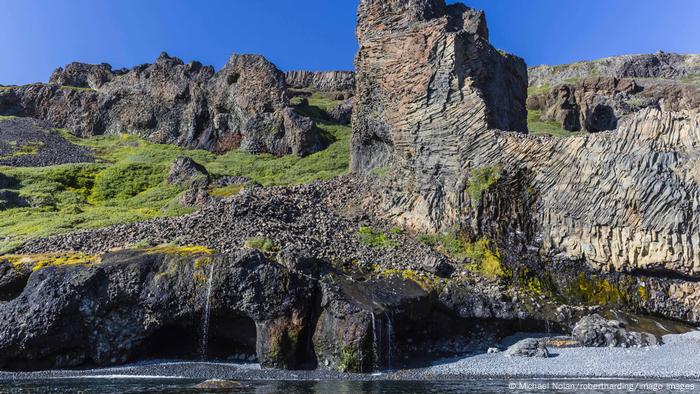 |
| The Kvanefjeld mine could hold the largest deposit of rare-earth metals outside China |
Labels: Chinese Monopoly, Controversy, Greenland, Mining, Rare Earth Minerals, Technology
posted by Pieface | 8:42 PM
|
0 comments


