Politic?

This is a blog dedicated to a personal interpretation of political news of the day. I attempt to be as knowledgeable as possible before commenting and committing my thoughts to a day's communication.

Monday, August 31, 2020

COVID-19 Control: Nothing as Straightforward as Could be Hoped

"I lose sleep over this daily. Everybody needs the money. It's really discouraging because I know what's going to happen."                                                                  "I know that as soon as those schools open ... that these elderly and vulnerable people are going to start dying again."                                                              "We're all really scared for these people that we support."                                   Unnamed woman working in developmental services sector

"[There are no rules] prohibiting staff from working in external locations, and we have not received any direction from public health or the ministry that this measure should be taken."                                                                                            "According to legal advice received, we are unable to impose these types of restrictions on employees in the absence of a specific public-health directive."  Ottawa-Carleton District School Board

Laura Walton,  custodial staff on casual supply lists. (CBC)

"We have raised it [with the ministry], and said, 'What do we do'? At this point, there doesn't seem to be any indication."                                       "This is an indication of just how low-paid these jobs are. For far too long, this government and previous governments have chosen to balance books on the backs of public services ... And I think, as a result, they're a little bit more hesitant to actually address the issue that they know they themselves have created."                                             Laura Walton, president Ontario School Board Council of Unions

"Our staffing situation is critical right now, and it is the thing that keeps us up at night."                                                                                                                   "[With temporary solutions to LTC staffing shortages winding down, the] pandemic pay [wage boost --] anything that takes any more people out of our system just makes us that much more vulnerable."                                                                     Donna Duncan, CEO, Ontario Long-Term Care Association 

"You can't blame the individuals, who are simply trying to cobble together a living [wage]. It's something that's very difficult for us to tackle other than to advocate for an increase in pay that would prevent them from having to double up on work in that fashion."                                                                                                       "There needs to be a solution that safeguards students, safeguards the people in the other congregate-care settings, safeguards the families that these people go home to, but doesn't punish the individuals by depriving them of the ability to make a living."                                                                                                                    "It would be absolutely irresponsible for anybody to stick their head in the sand when this issue has been raised."                                                                            Harvey Bischof, president, Ontario Secondary School Teachers' Federation

A custodian cleans a classroom in Brubaker Elementary School in Des Moines, Iowa. Not having enough staff to clean and maintain Ontario public schools was an issue even before COVID-19, according to the Ontario School Board Council of Unions. (Charlie Neibergall/The Associated Press)

It is a problem with menacing ramifications. The huge death rate out of long-term care institutions during the first wave of the coronavirus sweeping through Canada resulted from conditions in the homes where residents shared sleeping facilities, bathroom facilities, where distancing was difficult to achieve, where an alert and preparations to control the contagion were absent, where personal care personnel were improperly trained, and often brought the virus with them into the homes unaware that they were infected, and the result was a high mortality rate among the vulnerable inmates, elderly and health-impaired.

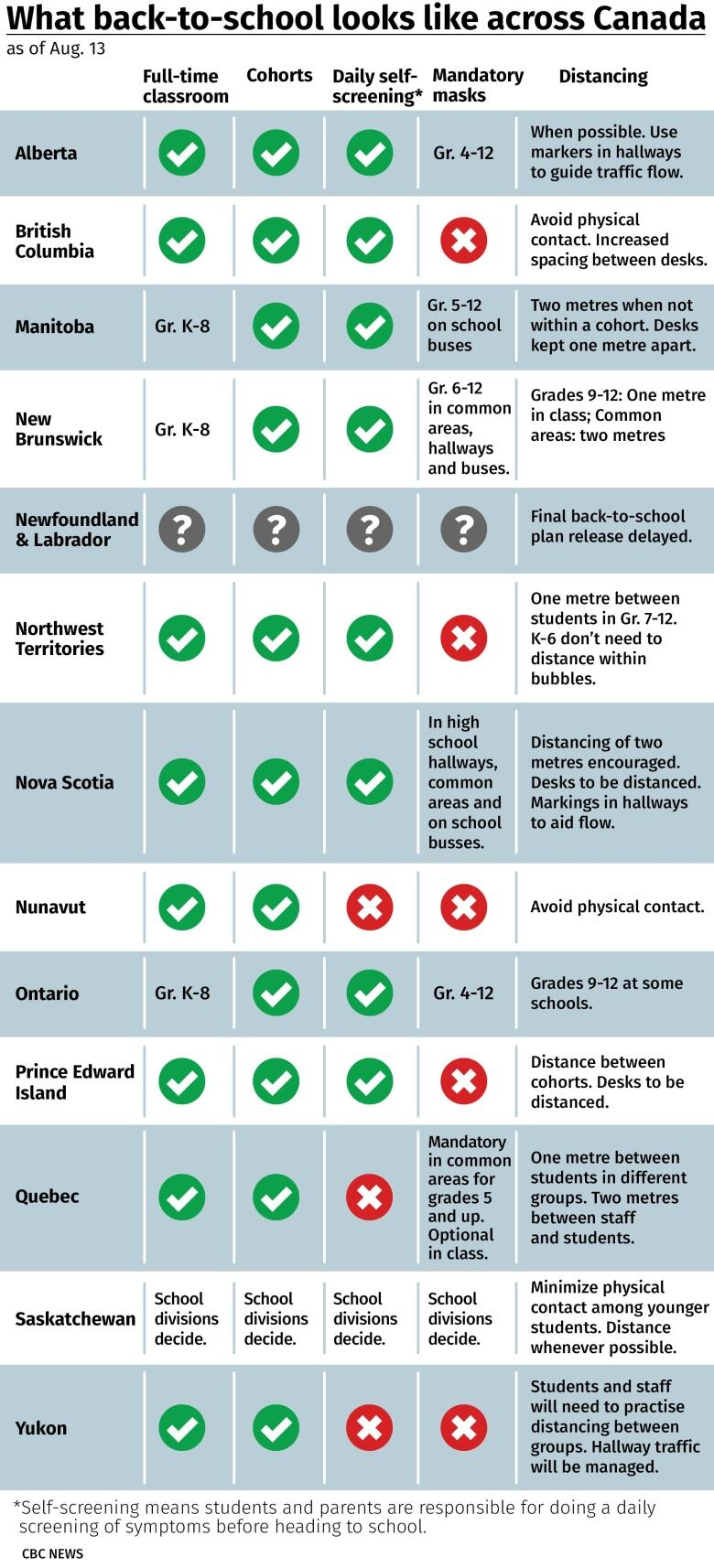
Now, suddenly, with the re-opening of schools as a new school year presents itself next week, the focus is on school custodians and other support employees of schools who spend the school day supporting students in a vital job that is low-paid. In contrast school teachers themselves make a truly handsome salary in compensation for their vital job teaching students. Education costs are sky-high, a major portion of which is dedicated to teaching staff salaries. Their unions never stop agitating for wage increases. The situation is one of injustice, the difficult and vital work of teaching aides and custodians fails to be adequately financially compensated.

One can imagine the horrified response of someone like Mr. Bischof should government, careful of tax dollars, recommend that teachers be satisfied with their munificent salaries to allow lesser-paid employees of equal merit in their positions to be offered a long-overdue increase in their salaries. Which could result in those low-paid employees no longer feeling it necessary to head out to another job after school closes for the day, to augment their school board salaries to make up for a living wage.

Dr. Christopher Labos says there is little value in testing every child for the coronavirus before school starts and he speaks to concerns about keeping kids apart in the classroom.

Now, alarm bells are pealing as schools are resuming in an atmosphere of doubt and fear, with parents on tenterhooks, having to return to work and grappling with the options open to them; continue home-schooling and forego that career (obviously mothers) or send the child back to school and hope for the best. In either instance, as long as the coronavirus remains a threat grandparents can no longer be counted on for after-school care. The 'bubble' that worked well in the past few months has been pricked in the face of social distancing problems as children converge on their schools.

Suddenly the very real impact of separation and care have met head on; and the possibility of COVID-19 transmission through concurrrent employment in education and congregate care has come to the fore, even if a little late in the game. The government of Ontario took steps in the wake of horrendous deaths at retirement and long-term care homes to ensure that workers would adhere to new guidelines mandating that they work at only one such home rather than as in the past trying to supplement incomes incommensurate with their roles, to provide a living wage.

That having been made clear, that going from one home to another turned out to be a contagion-nightmare, failed to take into account that the measure was specific to the homes, nowhere mentioning the situation whereby those working in school settings seek to top up their income by working as well in long-term care and retirement homes, among the vulnerable, setting the stage for the previous massive death toll where Canada's entire death rate due to COVID was 82 percent represented by the steep mortality rate seen in such homes.

The restrictions relate to working in more than one retirement or long-term care home. Nothing in it addresses the likelihood of a worker seeking employment in areas outside health care, such as education. Workers with jobs in both areas now present as an entirely new headache, one not readily solved other than to deprive low-paid education workers with the opportunity to top up an inadequate wage with taking a second job in a field of medical and long-term care badly in need of workers.

The situation where daily death rates in long-term and retirement homes shocked the public and led governments throughout the country to pledge to solve the problem resulted in a stabilization. And that situation is now on the cusp of resurging. The executive director of Ottawa-Carleton Lifeskills considers the situation 'challenging'. The group operates eight residential group homes employing close to two hundred front-line staff asking of them that any who will plan to work for a school board inform them. And should an outbreak of COVID-19 occur at a school, immediate updates would be required.
Labels: , , , ,

Thursday, July 23, 2020

Canada's Shameful Neglect of the Aged/Infirm During COVID-19 Pandemic

"It is hair-raising. We are expecting a second wave and long-term care homes are not ready."
"Overall, it is a completely unacceptable level and quality of care."
Natalie Mehra, executive director, Ontario Health Coalition

"Historically, the federal government has failed to support this sector [nursing and long-term care homes] ... It is imperative they help the sector by providing access to existing federal infrastructure dollars."
"These are simple and readily available solutions [allowing nursing homes access to funds through the national housing strategy] that could have been and can still be implemented quickly to support provinces and operators in modernizing long-term care homes."
"Seniors and their families do not care about who is, strictly speaking, responsible for what parts of senior-care delivery. The arguments that the federal government distributes funds and provinces provide programs might have been a thoughtful argument in the past, in the '80s and '90s, but the demographics today are completely different."
"The federal government cannot ignore the aging crisis any longer."
Jody Hall, association chair, The Canadian Association for Long Term Care
Niagara Health Coalition president Sue Hotte speaks at a recent rally at Garden City Manor in St. Catharines. The provincial organization released a survey this week showing severe staff shortages at long-term care homes across Ontario.

Lack of  support for long-term care homes contributed to conditions leading to widespread COVID-19 outbreaks and deaths in Canadian nursing homes. It was soon discovered with the onset of the first wave of global infections due to SARS-CoV-2, the extent of the fragility of the system of long-term care which became uniquely vulnerable to COVID. Already-vulnerable patients and a new coronavirus took its deadly toll. That was readily seen when it became clear that overall 81 percent of COVID-19 deaths in Canada occurred in long-term care homes.

In comparison, the United States, a developmentally comparable country, but with an immense case load of COVID, saw 31 percent of total deaths from their long-term care homes. In Australia, 28 percent accounted for their total overall death rate, while Spain suffered a 66 percent loss of life in their long-term care homes; all other countries vastly below the number that Canada realized in senior deaths.

Some of the reasons that Canada had such an overwhelming death rate in long-term homes is that the homes in Canada are frequently older, featuring shared bedrooms, bathrooms and dining rooms. Containing COVID-19 became an insuperable challenge in the pandemic's early days when knowledge of its infection rate was sparse, much less its capacity to spread though asymptomatic people.

The Royal Society of Canada early in July released a report on the state of long-term care in Canada wherein it accused the country of failing to protect vulnerable elders. The pandemic represented a "shock wave", exposing many deficiencies of long standing in the system, so that while causes of the systemic failure may be complex, they are also rooted in a situation the report authors spoke of as "systemic and deeply institutionalized implicit attitudes about age and gender".

NH

Across Ontario and Quebec and in other provinces, some homes experienced hundreds of infections, resulting in dozens of deaths of residents, along with the deaths of three personal support workers and illness of many more. Workers had been instructed they may only work at one home at a time, a move meant to reduce the opportunistic spread of infections, which has also exacerbated staff shortages. Many workers attended at multiple care homes since few institutions offer full-time hours.

An extreme shortage of staff at long-term care homes has left the situation in a more parlous state than it was before the pandemic, despite governments at every level professing their shock at the health mayhem that occurred in the first wave, pledging to pull out all the stops to make the homes safer for their residents. Front-line workers began receiving a modest pay bump, now reaching a deadline in an industry that pays their workers very poorly and fails to give them sufficient training.

The Ontario Health Coalition released a survey indicating that 95 percent  of long-term care staff who responded, reported the home they worked at was short-staffed and 63 percent that staffing levels had become more serious than before COVID arrived,k while 28 percent indicated staffing levels remained static. Disturbingly staff also reported residents regularly miss baths and showers because of staff shortages. They spoke of non-existent time to provide residents with emotional support.

Describing stress and limited time frames, they spoke of missing brushing teeth for residents, shaving and caring for their nails, along with sufficient time lacking for the critical issues such as feeding and hydrating residents properly; to reposition them to avoid bed sores, or to take them to the bathroom. The result has been more falls among residents. Personal support workers who constitute the bulk of long-term care staff are in a shortage position at many homes.

But the list of negatives don't end quite there. Shortages also exist of nurses, housekeepers, dietitians and those who do the laundry, engage in activities and rehabilitation. "I don't understand how this is allowed to happen", said a shocked long-time personal support worker, reviewing the findings of the Ontario Health Coalition survey; positively "repulsive".

Local nursing homes are failing our seniors, according to public inspection reports for 2014 on the Ministry of Long-term Care's website. The Expositor has summarized hundreds of inspection reports for readers.  Brian Thompson/Brantford Expositor/Postmedia Network

Labels: , , , ,

Friday, June 26, 2020

Crowded Long-Term Care Homes : Patients at High Risk for COVID 

"Too often, the building and the physical infrastructure gets forgotten in this conversation."
"[But] public health experts ... would know on face value that that's sort of infection-prevention 101: crowded rooms are bad."
Dr.Nathan Stall, geriatrician, Mt.Sinai Hospital, Toronto

"We saw the numbers -- then shared that information with government and said, 'We have a very large problem here'."
"We need to prepare today to look at alternate accommodations and solutions ... We have to move very quickly."
Donna Duncan, CEO, Ontario Long Term Care Association
Verla Pacey, 102, waves through a window at Stoneridge Manor Long Term Care Home in Carleton Place, Ont., where six residents died of COVID-19. Pacey survived the virus. (Supplied)
Some of the havoc caused by COVID-19 in nursing homes where the highest mortality rates in Canada were seen among the elderly, boosting Canada's death rate attributable to the effects of the novel coronavirus, had a quite simple explanation, according to a new study. Elderly and health-impaired residents kept in shared accommodation turned out to be a particularly lethal arrangement.

Close to 300 long-term care resident deaths in one province alone could have been prevented, had the residents been housed in two-bed, rather than the ward-like four-bed rooms, according to the research results. Ontario scientists from University of Toronto, McMaster University and Public Health Ontario highlighted a clear association in the degree of crowding in the homes -- the number of people sharing a room and lavatory -- and the spread of the hugely contagious COVID virus.

The elderly living in the most tightly packed of the facilities turned out to be twice as susceptible to being infected and to perish, in comparison to those living in the least-crowded homes, according to the paper. When the pandemic struck, one in every four long-term care residents was housed in four-bed rooms.

Ontario standards introduced in 1999 held that new facilities would plan for no more than two people for each room, while older homes, mostly for-profit enterprises, were encouraged to retrofit to the same standards. According to Dr.Stall however, few have committed to making those changes to meet the new standards of two people per room.

A new report by the Canadian Institute for Health Information underscores that nursing homes have seen about 80 percent of Canda's 8,500 deaths. The per-capita number of long-term-care deaths averages among like industrialized countries, according to the Institute report. Yet Canada's deaths exceed those of other Organization of Economic Co-opration and Development members.

OECD countries saw deaths in their long-term care homes averaging 42 percent, ranging from under ten percent in Slovenia and Hungary up to 55 percent in Spain. As a percentage of the nation's total COVID-19 death rate, deaths in Canada attributable to COVID, exceed the record of other OECD members.

The Ontario Long Term Care Association says that about ten percent of residents live in four-bed rooms and that converting them to two-bed accommodation at the present time would effectively remove 4,300 places from the system, at a time when waiting lists for nursing home places currently stands at 36,000.

In anticipating the arrival of a second pandmic, Ms.Duncan feels the province should consider the conversion of existing unused building space such as vacant hospitals, hotels or arenas, into long-term care housing. Facilities were ranked in the study on the density of housing ranging  from those with mostly single rooms to homes with only four-person rooms.

The infection spread was seen to be higher in crowded houses with 9.7 percent infected as opposed to 4.5 percent in the least crowded of the homes; deaths 2.7 percent and 1.3 percent respectively. Placing all residents who were in four-bed rooms into two-bed accommodations would have prevented 988 COVID-19 cases and 271 deaths.

Past surveys reveal that 80 percent of residents would select a private room over a shared one, according to the paper. Most four-bed rooms are located in older facilities, with high occupancy rooms having curtains to separate residents, but "curtains are no match for this" virus pointed out Ms.Duncan. Unsurprisingly, an earlier study found that outbreaks were significantly higher in for-profit homes.
People show support for staff and residents at Ottawa's Carlingview Manor long-term care home, a for-profit facility owned by Revera that has experienced 61 deaths due to COVID-19. (Francis Ferland/CBC)


Labels: , , , , ,

Monday, June 08, 2020

Consigning Canada's Seniors to COVID-19

"With the onset of the pandemic it revved  up that discussion [the issue of hospital emergency department avoidance on the part of long-term care homes]."
"There was very little that could be offered in the hospital that could not be offered in the nursing home [feeding assistance, oxygen, hydration, ever control]."
"It wasn't part of the planning to transfer individuals to emergency departments."
"Both the prime minister and the premier said they were going to target the more frail and vulnerable population around the end of March, but the reality was there wasn't a lot of help happening."
Dr.Fred Mather, president, Ontario Long-Term Care Clinicians

"I think residents that are sick with COVID-19 should be in the hospital."
"How we care for this age cohort is so tragically unsuccessful compared with how other countries dealt with the same problem it really demands a thorough investigation and it demands an adjustment in real time."
"The pandemic is not over. This is just the first wave and there is no need for us to continue to operate in the same way."
Michael Hurley, President, Ontario Council of Hospital Workers

"Many people died in situations that were very horrendous because they weren't sent to hospital."
"Long-term care, no matter what the government has said in the past, cannot give proper palliative care in these situations."
"We have heard of homes that had written policies not to send people to hospital without the doctor's OK. We have had many callers say that they had to force homes to call an ambulance for their loved ones."
Jane Meadus, staff lawyer, institutional advocate, Advocacy Centre for the Elderly
An employee serves a resident at CHSLD Éloria Lepage in Montreal. As the pandemic continues to take lives in seniors' homes, the federal government is being pressed to fund the repair and construction of long-term care facilities. (Ivanoh Demers/Radio-Canada)

Canadian authorities at all levels had long before the appearance of the global pandemic, been informed of the vulnerability of the health-impaired, the elderly, those with compromised immune systems, living in inadequately regulated long-term care institutions. Inadequate staff numbers, poorly paid, poorly trained and equipped staff, staff due to an inability to get enough working hours to make a decent living, working in a number of care centres making transmission of illness almost inevitable.

The result was that when COVID-19 arrived on the scene, government orders went out generally for social isolation and lockdown procedures to defend against wholesale transmission in t he face of a novel coronavirus with a raging appetite for infection, and for many people, a devastating impact on their health and longevity prospects. There was a fear that hospitals would be overwhelmed by the sheer crush of patients succumbing to the disease, requiring respirators and isolation. But evidently no thought wasted on the welfare of elderly people unable to self-isolate.

An elderly woman seen sitting in a room at the Lynn Valley Care Centre seniors facility in North Vancouver, B.C., on March 14. It was the first nursing home in Canada to experience an outbreak among its residents. (Darryl Dyck/The Canadian Press)
There were disturbing conversations taking place between authorities and emergency room physicians of difficult choices having to be made potentially; that when confronted with a young patient whose future prospects for recovery were contingent on heroic measures, and an elderly patient whose symptoms appeared dire, that those heroic measures would be withheld in a deliberate choice to make them available to the younger patient with a future.


That kind of 'difficult choice', appears to have permeated on a long-standing basis, the protocol at long-term care homes when an inmate became very ill, to refrain from sending them to hospital and just more or less muddle along; death was 'imminent' in any case, for elderly and frail individuals, why fight it? Except that this attitude led invariably to a horrific number of elderly and health-impaired dying painfully without adequate treatment and end-of-life comfort. The death count among the elderly in long-term care homes accounts for 80% of all deaths in Canada due to COVID-19.

When it was discovered weeks ago that such facilities in Quebec and Ontario were losing an astonishing number of patients to the novel coronavirus, that infection also afflicted long-term staff who may themselves have infected the elderly in their care, as they moved from home to home to home as workers, the home managers and the provincial governments in alarm, pleaded for aid from health workers from local hospitals.

That helped, but more assistance was badly needed, and the military was requested to deploy member of their health-care delivery system. Some nurses re-assigned from  hospitals were aghast at the conditions they discovered at the homes -- in lapses in sanitary conditions, in responding to the needs of the patients, in drug management -- but little heed was taken. And then the Canadian military produced a report that shook the nation.
An Armed Forces member walks out of CHSLD Yvon-Brunet on April 18. About 125 military nursing officers, medical technicians and support personnel were sent to help after Quebec asked Ottawa for assistance. (Graham Hughes/The Canadian Press)
That report detailed inadequate nutrition and hygiene procedures, poor infection control, residents left in soiled diapers, a lack of wellness checks, lack of response to residents crying out for help, and many other instances of institutional dysfunction. At the best of times, pointed out institutional advocate Jane Meadus, such homes are not equipped to offer the care and pain relief that hospitals can and do to end-of-life situations. Family members of patients who ordinarily arrived to help care for their elderly loved ones were no longer admitted to the homes when COVID-19 struck.

By no means were all provincial long-term care homes in such a deplorable state, and many had no cases whatever of COVID-19, though others that did, were able to manage the situation fittingly, as opposed to those who were overwhelmed by the demands placed on them as home residents became ill in droves and many perished of the COVID effects.

Ms. Meadus points to alarming reports out of Italy in the early stages of the global pandemic, alerting health-care workers to the dire situation faced in Europe and the focus on ventilator use for patients. "The decision of whether to send long-term care residents who have COVID-19 to hospital is made on a case-by-case basis by a physician in consultation with the resident and their family", a Ministry of Long-Term Care spokesperson explained. "If residents who tested positive for COVID require medical attention that the long-term care home is unable to provide, these residents are transferred to hospital to meet their health-care needs."
A man wearing a protective suit and a mask is pictured at the Lynn Valley Care Centre in North Vancouver, B.C., on March 9. (Ben Nelms/CBC)

A logical explanation which manages to sidestep the culture in nursing homes of retaining patients in the home, and refraining from sending them to hospital emergency rooms, under the belief that hospitals were there for intensive care and "heroic measures". There were, pointed out Dr.Fred Mather of the Ontario Long-Term Care Clinicians, no clear policy decisions on transferring long-term care residents to hospital even though emergency department avoidance was an active topic before the onset of the pandemic.

The confusion over the situation, where government inspections of the homes failed to detect problems, overlooked what problems they might identify of a minor nature, and seemed not to notice that some homes where up to 50 residents died, were inadequately staffed, the patients left on their own, wallowing in their own fecal matter, crying for help, dehydrated and unfed is one requiring deep and determined investigation -- both of the homes involved and of the inspection units' commitment to ensure safe and secure environments for the elderly prevailed.

At the federal, provincial and municipal levels, governments have been embarrassed at the very least, horrified and guilt-ridden as well perhaps, maintaining their intention to change the system completely from the dreadful mess the military report described -- to one that meets the minimal standards of dedication to care of the elderly. Typically of this Liberal federal government that promised a transparent, open government, the military has been ordered not to publicly air any further such reports of malfeasance and neglect on the part of the nursing homes.

The Ontario Nurses’ Association (ONA) has asked a judge to order three homes, including Eatonville Care Centre in Etobicoke, to stop “breaching” directives made by Ontario’s chief medical officer meant to protect the vulnerable seniors and the staff that serve them.

Labels: , , , ,

Friday, May 29, 2020

Sanctimony over Sacred Duty

“As this COVID-19 outbreak unfolds in coming months, our government will aim to support Canadians and keep them protected. We’ve based our response on input from our world-class health professionals and authorities. We know what the science is telling us. The evidence is clear. The elderly are our greatest risk. We’ve seen the experience in Italy and Spain. We know what happened in China. In Washington State. The first long-term care death in British Columbia occurred March 8."
"The signals are clear. The most vulnerable Canadians are in long-term care institutions."
"Today our government is allocating $20 billion to deploy as many physical and human resources as possible to stop this pandemic from reaching our most vulnerable population. If you are in a long-term care home, or are related to someone who is, rest assured. Our top priority is to get you the help you need."
Prime Minister Justin Trudeau, March statement of assurance

"What’s special about COVID-19 is the asymptomatic transmission. The whole strategy of looking for fever and looking for symptoms didn’t work."
"By the time we found somebody with symptoms, and then tested everybody in the home, you would find 40 or 50 residents already positive."
Long-Term Care Home executive
Flowers sit on a bench in front of Orchard Villa care home in Pickering, Ont. on April 27, 2020. Orchard Villa is one of five Ontario facilities for which Premier Doug Ford requested operational support from the Canadian Armed Forces.

Words are important. If the words are strung together well and they approach a situation while appealing to those who are or will be deleteriously affected, they give reassurance. They shine a light of approval on whoever utters those words, the promise that the problem has been analyzed and authorities are prepared to undertake a solution that will meet the challenges of an all-consuming worry over the projected plight of the most vulnerable within society.

Those words were uttered, the assurance that government is aware and fully prepared to launch a program that would create the needed solution to a viral pathogen threatening the lives of Canada's elderly and health-impaired. After all, before the SARS-CoV-2 invasion hit Canada, there were examples out of Wuhan, China, where the novel coronavirus first emerged before spreading to Europe and onward to radiate over the entire globe with mixed results, none of them good.

Reports being received of the desperate carnage wreaked on institutions housing the elderly and health-compromised, due warning that this disease strikes those least able to ward off its destructive impact due to immune-compromised conditions linked to old age and/or to chronic and/or dread disease onset. Nothing quite so much focuses the mind as watching a tornado of disaster wreak hell elsewhere while it steadily advances toward you, waiting with bated breath.

75 per cent of Canada’s COVID-19 deaths those over age 80. Getty Images
So the data was there, it was analyzed and the solution seemed clear enough; target the virus aiming for the elderly to defuse its impact, and refuse it the opportunity for wholesale wreckage. The funding aiming to erect a scaffolding of defense earmarked for that specific purpose, the personnel alerted and diverted to ensure that the defence was well directed and maintained to fulfill its purpose. The intention publicly stated but never carried through to fruition.

Instead the focus swivelled to society at large, mandating a general lockdown to protect the greater aggregate of the population, those at least risk for harm among the population. And the aged and the infirm were left to chance. And as it happened chance failed to favour their continued longevity. Such are the best-laid plans of mice and men, when the authors of those plans lack the conviction of their intentions and their attention wanders off target...

The result was encapsulated in the Canadian Military report on their findings in a select few long-term care homes in Ontario and Quebec as compelling evidence of a failed initiative. Outlining the case for blaming an uncaring industry whose primary interest is financial gain and whose investment in the well-being of those in their care, an afterthought. After all, of the 6,700 coronavirus deaths in Canada, 8o percent occurred in those inadequately staffed, untrained personnel LTCs.

Health Canada reports that over 6,700 Canadians died in LTC facilities -- the vast preponderance of all deaths in the country due to COVID; 97 percent of the deaths were to those over the age of 60, with 75 percent over the age of 80. By May, 3,652 elderly Canadians died in those facilities. The country was locked down to protect the entire public; those living outside such facilities, deemed to be at low risk, but encouraged to self-isolate, where the elderly were unable to, crowded into those LTCs.

The targeted risk-management so eloquently and warmly promised by Justin Trudeau simply failed to get off the ground. The casualties of that ill-timed 'forgetfulness' were the grandmothers and grandfathers of those who took shelter at home, wore face masks on rare ventures outside and obligingly heeded government orders. The LTC facilities, on the other hand, were left to attempt on their own, to make improvised changes in a desperate move to protect the vulnerable.

"Despite a well-known, evidence-based demographic surge of seniors unable to care for themselves -- and massive waiting lists to enter long-term care, we spent the last decade mired in a program to rebuild or renovate homes that simply don't work", according to the Ontario Long Term Care Association in its pre-pandemic 2018 budget submission, warning that its employees were at a "tipping point", with overwork, yet over-scrutinized by the media and government.

"Problems hiring and retaining staff across the province has resulted in a system that is under siege", they went on. Was anyone listening? The focus on hospitals and their capacity to care for an unstoppable surge of COVID patients in serious condition simply failed to materialize, leaving an extraordinarily rare situation of empty ICU beds.  

Outside Toronto's Eatonville Care Centre, a body wrapped in a white sheet is rolled out on a stretcher, pushed by a woman dressed head to toe in protective gear. (Chris Mulligan/CBC)
 

Labels: , , , ,

Wednesday, May 27, 2020

The Elderly Health-Vulnerable and COVID-19

"COVID-19 has exposed deep cracks in the long-term care system and it is now up to us to fix these problems."
"This tragedy must serve as a wake-up call to our whole country."
"Until yesterday morning, we didn't know the full extent of what these homes, what these residents, were dealing with,"
"I don't feel our government failed seniors. As a matter of fact, we saved a lot of lives by doing what we did. The system was broken."
"My job is to fix a broken system that has been broken for decades. I'm going to move heaven and earth that we leave no stone unturned."
Ontario Premier Doug Ford
A bench decorated with flowers and signs is pictured outside of Orchard Villa Retirement Residence after several residents died of the coronavirus disease (COVID-19) in Pickering, Ont., on May 26, 2020. (Carlos Osorio/Reuters)
  • Eatonville Care Centre, Etobicoke: Resident Deaths: 42 -- COVID-positive residents permitted to wander about exposing everyone at risk; supplies reused despite compromised sterilization; staff burned out; residents frequently sedated with narcotics when depressed or sad.
  • Hawthorne Place Care Centre, North York: Resident Deaths 39 -- Nurses and PSWs observed wearing same PPE for hours, moving between patient rooms; 'significant gross fecal contamination' noted in rooms; insect infestation, including ants and cockroaches; residents' calls for help unresponded to for significant lengths of time;
  • Orchard Villa, Pickering: Deaths: 69 -- Residents left in soiled diapers, not taken to toilets; PSWs and nurses failed to help residents to seated position prior to meals and medications; 
  • Altamont Care Community, Scarborough: Deaths 52 -- Residents bed-bound for several weeks, no evidence they had been moved to wheelchairs for part of the day, bed-repositioned, or properly washed; frequent arguments between staff with the use of derogatory language;
  • Holland Christian Home (Grace Manor), Brampton: Deaths: 11 -- PPE problems such as moving from a COVID unit to other units without a change of PPE.
When it was first revealed that long-term care facilities were experiencing outbreaks of COVID-19 among their elderly, health-impaired residents, and deaths began mounting, public attention was turned to the treatment of the elderly in these residences, and new stories began to focus on the plight of the helpless elderly, dependent on care provided by staff which in some instances were improperly trained, exposing their charges to dangerous infectious rates, sometimes impacting on the staff as well. As time wore on, it became obvious that Canada's death rate owed much to the vulnerable elderly.
"These are the kinds of complaints we hear all the time. It took somebody from the outside to show what was going on."
"There wasn't anything in the [military report on the situation in long-term care homes] report that particularly surprised me. We hear it on a daily basis."
Jane Meadus, lawyer, Advocacy Centre for the elderly

"Nothing in that report is going to be any surprise for those of us working on the front lines. [I guess] it takes the military to get some action."
"It would be nice for front-line voices to get heard as well."
Candace Rennick, secretary treasurer, CUPE Ontario, (former PSW)
When it was first discovered, both in Ontario and Quebec, that a runaway infection and death rate was taking place in both provinces' long-term care institutions, each government appealed for help, sending in public health officials, followed by hospital workers, and finally in desperation calling for volunteers and then asking for the military to help solve the problem of inadequate help in the institutions to quell the tide of deaths among the elderly/health-compromised. A day ago, the military produced an intelligence report on the situation they discovered in the homes, while giving assistance.

Residents, they found were left in the beds, unbathed for weeks, fecal matter found in rooms, cockroaches, as well, and residents were despondently crying out for help for hours, their appeals unanswered, medical equipment that was contaminated, and improper use of personal protective equipment, were all found, along with outdated medications. A litany of oversights, inadequate care, tardy responses, and lax regulations along with a failure to comply with government-mandated quality of care.

It isn't as though the provinces had no inspectors to take inspection rounds to ensure compliance with the due care and respect owing people in the care of these institutions at a time in their lives when devastatingly ill health compounded by advanced age made them vulnerable and highly dependent on professional assistance in their daily lives. Ontario alone has 175 long-term care inspectors. And though the five care homes whose failings are listed above are considered the worse-case scenarios, there are countless other such care homes which have seen no COVID outbreaks, much less deaths.


Canadian Armed Forces personnel arrive at the Villa Val des Arbes seniors residence, Monday, April 20, 2020 in Laval, Que. (Ryan Remiorz/Canadian Press)
The situation has been so dire that of the deaths from COVID-19 in Canada as a whole, the elderly have represented a staggering 82% among long-term care facilities. It is as though the elderly health-impaired are the expendable members of society. Staffing levels in the facilities have been inadequate with no minimum standard of care for residents. The facilities have always been understaffed, many of the staff inadequately trained. And poorly compensated for their invaluable work with the elderly health-impaired. Afterthoughts from beginning to end.

An independent investigation is to be called by provincial governments into the situation surrounding these homes and the convergence of the pandemic impacting on the residents. In some instances, with some homes, abuse of residents' trust and care has been detected. And rumblings of charges of criminal abuse are bandied about. Presumably a thorough investigation will reveal much. Just as the military personnel tasked to help in these long-term care facilities have observed and catalogued their own shocking findings of neglect.

Who might ever have imagined that Canada would be struck with a global pandemic, a virus that lays in wait to infect the incautious and unwary, a virus whose impact is deadly for the elderly and the health-impaired? Who could have imagined that the Canadian military would have to be called upon to restore a semblance of order and helpfulness in the care of these vulnerable old people whose families have entrusted their care to a system that has largely failed them?

Canadian Forces personnel return from their break at the Vigi Mont-Royal CHSLD in the Town of Mount Royal on Tuesday. (Ryan Remiorz/The Canadian Press)


Labels: , , , ,

Sunday, May 17, 2020

Unregulated Abandonment of the Elderly

"I think the society failed."
"[In Quebec, per capita, there are three times greater numbers of seniors in long-term care homes] than anywhere else in the world, [underfunded, understaffed, the workers underpaid]."
"We will still give ourselves a few days to take a decision on retail business. A crucial element that would help us to reopen is for the majority of people to wear a mask in public.."
"What I want to ask them [Montreal's major health care centres] about is why there has been so many deaths ... why there have been so many infections."
Quebec Premier Francois Legault
North Vancouver’s Lynn Valley Care Centre where Canada’s first known COVID-19 death occurred on 
March 8.   Jennifer Gauthier/Reuters/File
"[The long-term care homes suggest that nurses and other medical staff treating COVID-19 patients in LTC homes represent their own narrow, personal interests, while the privately owned LTC homes represent broad, community-based interests."
"I can imagine that the irony of that submission is not lost on the [nurses]. One need only read the affidavits of the individual nurses in this Application record to understand that they spend their working days, in particular during the current emergency situation, sacrificing their personal interests to those of the people under their care."
"And given the nature of the pandemic, they do this not only for the immediate benefit of their patients but for the benefit of society at large."
"To suggest that their quest for the masks, protective gear, and cohorting that they view as crucial to the lives and health of themselves and their patients represents a narrow, private interest seems to sorely miss the mark."
Judge Ed Morgan, Ontario Superior Court
Crosses have been laid out for the 50 residents who have lost their lives due to COVID-19 at Camilla Care Community, a long-term care home in Mississauga, Ont. (Mark Bochsler/CBC)

The crisis in long-term care homes for the elderly and the health-impaired in Canada echoes in part what has been seen all over the world. Societies everywhere in this brave new world of 'nuclear families' who live apart from extended family members and where both parents in the family work, sending children out to day-care, see such families in no position to assume the traditional role of care for elderly parents, grandparents to their own children. The solution has been generally accepted in Western societies not only to farm out children, but grandparents as well.

Care of the elderly who require special medical attention, and constant daily assistance in performing personal ease-of-living and hygiene rituals is now beyond the capacity of most nuclear families to contemplate; everyone is too busy, too involved in the outside world of working careers. Occasional visits to these abandoned seniors suffice now to demonstrate filial love and attention, and so social, emotional and family duties are seen to have been accomplished.

The vulnerable elderly are left in the care of mostly untrained, low-paid staff that do their best to provide empathetic support and assistance where needed, in dressing, hygiene, feeding, aiding in mobility for the elderly, warehoused along with others just like themselves in confined areas, often sharing bedrooms and washroom facilities with strangers, eating communally, sharing communal entertainment and when infectious diseases like COVID-19 strike, sitting ducks for highly communicable diseases.

A nurse wearing personal protective equipment looks out of a window at a long-term care home in Toronto. (Evan Mitsui/CBC)

Little wonder that of Canada's 4,000 death toll, fully 80 percent are represented by deaths that have occurred in long-term care homes. Not only have the elderly fallen victim to the illness, so have their caretakers and minders, and as the elderly die, so do some of the staff of the homes. Necessitating an emergency call-up of Canadian Forces troops to give aid and assistance to those staff remaining in numbers inadequate to providing full care to LTC home inmates. The result being that now some members of the Armed Services giving aid have themselves contracted COVID.

On March 8, a man in his 80s died at the Lynn Valley Care Centre in North Vancouver which became for a short period of time the focus of public concern. And then speedily additional points of focus emerged, Pinecrest Nursing Home in Bobcaygeon, Ontario, Residence Herron in Dorval, Quebec, in an unfolding countrywide felling of seniors-home outbreaks overrun by infections, the elderly dying sometimes faster than their corpses could be moved out.

Roughly four thousand deaths,of which over four out of five, have occurred at seniors' long-term care homes, including staff. That's a massive over-representation of the elderly residents of long-term care homes. A reality that no one really anticipated, but which makes for just another page in a chapter of neglect. It made sense that the most vulnerable in age and health would be targets for a highly infectious virus communicable wherever people tend to congregate and physical proximity is unavoidable.

A Canadian soldier aids a resident at the Vigi Queen Elizabeth care centre in Montreal. Genevieve Beaulieu/Canadian Armed Forces/AFP via Getty Images

It was reported this week that the Vigi Mont-Royal home in Montreal was rife with COVID; every resident and 148 workers had all tested positive for the virus, attributable to a faulty ventilation system that required repair and cleaning. In a facility where isolation is next to impossible, a reflection of the conditions in all of these long-term care facilities. A long-term care home in Niagara Falls is facing a class-action lawsuit over how it handled an outbreak that saw the deaths of 18 residents.

Claims that it failed to train staff and allowed them to move between patient rooms wearing the same protective gowns front and center. A very similar dispute respecting registered nurses at four privately owned long-term care homes in Ontario has been brought to court. The nurses claim management failed to provide personal protective equipment and to launch pandemic plans already in existence. The cause of widepspread exposure of uninfected people to symptomatic patients not yet tested.

A union grievance was filed, but anticipating a lengthy wait for the situation to resolve, the Ontario Nurses Association requested an "unusual" form of urgent action from the Ontario Superior Court, Justice Ed Morgan presiding. Judge Morgan granted the nurses' request, ordering the homes -- which had argued that the balance of convenience should favour their interests -- to obey a provincial government directive on providing personal protective equipment to the nurses.

Labels: , , , ,

Thursday, April 16, 2020

The "Epidemic" In Canada

"The epidemic is slowing down."
"We've got many challenges still to deal with, including managing the outbreaks in long-term care facilities."
"The main message for all Canadians is actually not to let go ... We're doing a great job."
"Let's continue that until we can get to the bottom of that hill and then look at what that new normal would look like."
Dr.Theresa Tam, Chief Medical Officer of Health, Canada
Canadian cases
CONFIRMED
30,095
(Today: +1,731)
DEATHS
1,196
(Today: +186)
RECOVERED
9,729
(Today: +759)
499,772 individuals tested  (Today: +17,959)
"The uncomfortable and tragic truth is that the very places that care for our elderly are the most vulnerable to COVID-19."
"We all need to do better. We all need to take leadership for the seniors who've built this country."
"[The federal government will work with the provinces to get a wage boost for personal care workers] as quickly as possible."
"For many workers looking after the most vulnerable Canadians, including seniors and those with disabilities, we know conditions have gotten more difficult over the past weeks, and you need support right now."
"As we face an unprecedented threat to public health, you are our most important line of defence. We will do whatever we can to help you do your job and support you through this time."
Prime Minister Justin Trudeau
The high proportion of cases in long-term care facilities – funeral home workers seen here on April 15, 2020 removing a body from the Verdun CHSLD seniors residence in Montreal – 'unfortunately results in higher fatality amongst the people who get ill,' Chief Public Health Officer Theresa Tam said Thursday.   Ryan Remiorz/The Canadian Press
Canada's official death toll from the coronavirus swept past 1,000, surpassing the government's modelling which gave Canada an approximate number of deaths between 500 and 700 by April 16. A scenario that looks sunnily optimistic in comparison to the realized reality that arrived well before the date in question, doubling the number of deaths assumed. And almost half of all deaths seen in Canada due to the infectious COVID-19 have occurred in long-term care homes.

The statements by a prime minister who has effectively separated himself physically from the business of government, remaining secluded in his prime ministerial home, only to emerge like clockwork every morning to hold a news conference where he issues both discomfiting and quasi comforting updates as a kind of government public relations-to-the-public assurance under extreme duress updating his parliamentary authority intact, but failing to impress.

The prime minister, in self-imposed physical seclusion, iterates and reiterates the classical advice to the Canadian public that they must isolate themselves, maintain a physical distance from one another, remain in their homes, and not question the paradoxical advice to keep active and exercise, while public spaces like parks and playgrounds are now off limits even if social distancing is rigorously employed.

Canada's chief medical officer of health, stressed that remaining at home, isolating oneself means just that. That people owning more than one home should select one and remain there. That those owning summer cottages should abstain from travelling to them. That rural areas are not prepared during this time to accommodate an influx of seasonal residents. That hospitals and medical staff, public safety authorities, grocers and other services in rural areas are already coping to their limits and don't need additional strains.

To which the prime minister responded with his usual casual disregard by choosing, while commiserating with Canadians that they would have to make do over Easter by refraining from travelling, and instead connecting with their families online instead of in person. Whereas he
travelled to the prime ministerial cottage in Gatineau Park, which the National Capital Commission closed down to all other entrants, to spend the four-day Easter holiday with his wife and children.

Canada's agony of a rising death count in old age, seniors and long-term care homes has been compounded by the fact that this elderly-deadly infectious disease has also infected personal care workers and health professionals working in the homes, leading to a dire shortage of critical staffing. So even though the entirety of the Canadian population has seen an easing of the infection and death rate, the numbers keep rising in these vulnerable group homes.

In Canada, overall identified COVID cases double every ten days now in comparison to late March when they doubled every three days. And the essential care workers in long-care homes who earn less than $2,500 monthly are overworked and overwhelmed while themselves falling ill to the virus. Ontario has had outbreaks at 98 homes, with 145 long-term care deaths, and likely more, when the numbers catch up from local health units.

Over 20 deaths have occurred in at least three Ontario facilities resulting from COVID-19. Increased testing and infection control measures are now being brought in at all the long-term care homes, according to the Ontario premier. "Today we're throwing everything we've got at our long-term care homes", promised Premier Doug Ford. While in Quebec 41 care homes have serious outbreaks and an additional 104 are dealing with fewer infections. Three homes in Quebec had over 25 deaths each.

According to Quebec's Premier Francois Legault, over 1,200 care-home staff have been infected and thus are unavailable for work. He has entreated qualified people like physicians and nurses to help with staffing. Quebec is in the unenviable position of having 487 deaths reported from COVID-19, representing close to 50% of Canada's total number, and 45 percent of those deaths in Quebec relate to long-term care homes.

Labels: , , ,

() Follow @rheytah Tweet