Politic?

This is a blog dedicated to a personal interpretation of political news of the day. I attempt to be as knowledgeable as possible before commenting and committing my thoughts to a day's communication.

Saturday, August 05, 2017

Hideous Accommodation
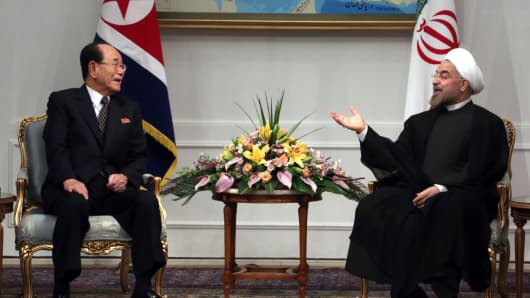
Iran's President Hassan Rouhani meets with North Korea's ceremonial head of state, Kim Yong Nam in 2013.
Atta Kenare | AFP | Getty Images    Iran's President Hassan Rouhani meets with North Korea's ceremonial head of state, Kim Yong Nam in 2013.


War is good for business. It is during times of conflict that, ironically, free enterprise in armaments production gears up, spurred on by the governments of the states that are at war. Infamously, during times of violent conflict, prisoners are used as slave labourers to produce armaments, and the industries that enslaved people to ensure a profit ensued from the use and sale of their products, suffered no repercussions post-world war. Business is business, and the sales of arms meant profits, both for the manufacturers and for their governments.
saudi-arabia.jpg
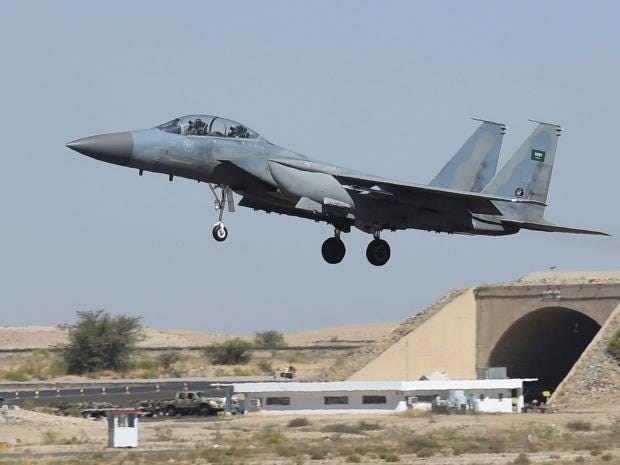
The Saudi-led coalition has acknowledged it had made 'limited use' of British-made cluster bombs FAYEZ NURELDINE/AFP/Getty Images

That's one issue, and it is one of long-standing presence. We deplore the outbreak of conflicts resulting in countless deaths and the destruction of civil infrastructure. We collectively, as intelligent human beings view with compassion the victims of war, and blame corrupt politicians and leaders of governments for their willingness to bring such bleak destruction onto the landscape, destroying countless lives. And conflicts, around the globe break out constantly.

The second issue is that which for the past few decades has taken the world's attention; a reawakened ideology of violent religious conquest has created widespread terrorism breaking out from the Middle East to North Africa, Europe to North America in terrifying incidents of Islam-inspired jihad, a war of religion, of a religion whose sacred scriptures demand its faithful obey their instructions to instill fear and terror in the minds of those spurning Islam, to destroy those nations refusing to surrender to Islam.

The irony is, of course, that Muslim nations themselves and their populations, have come under attack increasingly by those same death-delivering forces inspired by their common religion to view them as less than dedicated to Islam's final dictates to conquer the world. While the democratic, non-Muslim nations of the world attempt to protect themselves from the viral outbreaks of slaughter-bent jihadis, the targeted Islamic nations are forced to do the same.

As a result Muslim nations which themselves produce terrorists reflecting the tenets of the fundamentalist Islamic principles supported by the state, find themselves in a global 'fight' against terrorism, one that links them in agreement to a common cause with Western nations. There is nothing simple that comes out of the Middle East that can be readily addressed and corrected. Medieval and barbaric complexities of tribal, clan and sectarian opposition abound.

When two regional Islamic countries, one Arab, practising a majority-sect version of Islam, the other non-Arab, practising the minority-sect version of Islam, each manoeuvring to be recognized as the most powerfully reflective of Islam, as its most influential leader, to be feared and respected, use the other countries in the region as proxies, installing their supporters as satellites and challenging one another as an axis of conquest, war is inevitable.

And selling monumental amounts of technologically advanced weaponry to each of the adversaries vying for that leadership role is big business. Each side is championed by those international groups that find common cause with them, but even those that do not, and abhor them, will find it expedient to sell warplanes, attack helicopters, armoured vehicles, ballistic missiles, biological and chemical weapons and virtually any other weapons, for profit.
US President Donald Trump (L) walks with Saudi Arabia's King Salman bin Abdulaziz al-Saud after receiving the Order of Abdulaziz al-Saud medal from at the Saudi Royal Court in Riyadh on May 20, 2017. (photo by MANDEL NGAN/AFP)

France, Britain, the United States, Canada and other weapons-producing nations all are eager to gather for themselves the countless billions in profits that accrue to those who produce materiel valued by the adversaries. Saudi Arabia, or Iran, each of which represents nations governed by tyrants; one a royal house the other a theocracy, each supporting terrorist groups of their own religious sect, each responsible for murder and mayhem both within and without, use their oil wealth to seduce the West into arming them.

The Islamic Republic of Iran, on the other hand, is free now after the infamous nuclear agreement to sell its oil on the open market, free of sanctions, and to get on with its mission to acquire for itself nuclear weapons. It has proceeded well with its technological efforts to produce more efficient long-range ballistic missiles. Iran's cooperation with yet another outlier country in achieving success in eventually producing Intercontinental Ballistic Missiles and nuclear-tipped warheads, has it and North Korea in intimate consultation process.
 
Western nations whose weapons manufacturers and governments are eager to be at the head of the line selling advanced weaponry to Saudi Arabia, know that the armoured vehicles produced by giants like General Dynamics will be used against their own citizens, but after all, Sunni Saudi Arabia is only putting down insurrections by Shiite minorities in its territory. And the conflict in Yemen is, after all, one between Saudi Arabia and Iran; Yemenite casualties are unfortunate but that's life.
 
The Middle East's Byzantine politics, assassinations, tyrannies, mass slaughter, aerial bombardment of civilian populations, chemical weapons attacks, flirtations with regime upheavals and civil wars merely represent business as usual there. That it is intrinsically related to the wider international jihad each supports is another thing altogether. But the West recognizes its 'friends' and 'allies' in the war against terror, and its conscience is untroubled in selling protester-murdering weapons to tyrants who must, after all, ensure their longevity is secured.

Labels: , , , , , , , , , ,

Thursday, May 11, 2017

There Will Be Repercussions

"[Turkey's] patience has ended. We want to know that our allies will stand not with a terrorist organization, but with us."
Turkish President Recep Tayyip Erdogan

"We hope the U.S. administration will put a stop to this wrong and turn back from it. Such a policy will not be beneficial; you can't be in the same sack as terrorist organizations."
"There is no reality in the comments that a ground operation against Daesh [Islamic State] can only be successful with the YPG. I hope they turn back from this mistake."
"We are carrying out, and will carry out, all necessary diplomatic communications. Our wish is that the U.S. stops this wrong and does what is mandated by our friendship." 
Deputy Turkish Prime Minister Nurettin Canikli

"[The U.S. has given Ankara few options beyond intensified military action against the YPG which Turkey considers a] direct national security threat."
"Is it going to affect the Raqqa operation? Probably yes. But the problem is, the U.S. is offering nothing -- no way to appease Turkey's security concerns."
Ufuk Ulutas, foreign policy director, Foundation for Political, Economic and Social Research, Ankara
  U.S. forces are seen at the Kurdish People's Protection Units (YPG) headquarters after it was hit by Turkish airstrikes in Mount Karachok near Malikiya, Syria April 25, 2017. REUTERS/ Rodi Said/File Photo
Turkey is displeased. As far as Turkey is concerned, support of any kind for any reason, must be withheld from the YPG, the U.S.-backed Syrian Kurdish Peoples Protection Units and the PKK, since they present an existential threat to Turkey. There will be repercussions, warned Erdogan darkly, should the Trump administration continue on this trajectory. The United States of course, is anything but complacent about Turkey attacking YPG units, has protested those attacks, and has installed a greater American military presence to ensure Turkey takes the full measure of repercussions that would accrue to it, should it continue targeting the Kurdish fighters whom the U.S. relies upon to counter Islamic State.

Message sent, message received. On both sides, although Turkey is concerned only with the message they have sent as a warning to the Americans to proceed no further. "Turkey's message to the Trump administration was that Turkey reserves the right to take military action", according to a senior Turkish official. Military action? Against whom? Certainly they haven't been concentrating on the Islamic State jihadis, but then Turkey has been fairly polarized about their position on ISIL, first supporting them, then, back against the wall as a NATO member, reluctantly countering them.

Kurdish fighters from the People's Protection Units (YPG) head a convoy of U.S military vehicles in the town of Darbasiya next to the Turkish border, Syria April 28, 2017. REUTERS/Rodi Said/File Photo
"[The United States led] open discussions] with Turkey. [The situation] is not always tidy, but we work [together on issues to resolve differences]."
"[Turkey being] the only NATO ally [confronting an insurgency, the U.S. plans to work closely to defend Turkey's southern border]."
"It's Europe's southern border, and we'll stay closely connected."
U.S. Defense Secretary Jim Mattis
It isn't all that difficult to imagine, after all, what Turkey's frustrated moves could lead to, in countering the Trump administration's decision to finally supply the Kurdish fighting forces in Syria with the kind of heavy weaponry they require to effectively battle the better-equipped Islamic State militias. There was a taste of that with the strikes Turkey conducted in northern Syria. And that taste could be ratcheted-up to become a full-scale feast beleaguering the Kurds with the superior war machinery of the Turkish military.

The goal to deprive Islamic State of the last of its large population holdings, one that is widely recognized as ISIL's purported capital of its caliphate, would, when successful, strike a deadly blow to their aspirations in direct contrast to where they were over a year ago when they held control of much of Syria and Iraq. Their ouster from Raqqa, the ISIL capital, would reflect in real time, Islamic State's fall from the power base they had acquired and defended in record time. The lock-step conquest of Raqqa with that of Mosul in Iraq, would put the final nail in the coffin of ISIL's Middle East ambitions. 
Fighters from the Kurdish People’s Protection Units
Fighters from the Kurdish People’s Protection Units (YPG) in north-eastern Syria. The YPG welcomed the US decision, describing it as late but historic. Photograph: Delil Souleiman/AFP/Getty Images
The Syrian Kurds just happen to have immense strategic importance to the United States in their joint efforts to dislodge and defeat Islamic State. That the U.S.-allied force is affiliated with the Kurdistan Workers' Party is an issue that drives Erdogan to a frenzy of hatred. The PKK has long fought Turkish forces in its bid to 'persuade' the Turkish state that it is high time to surrender the Kurdish homeland back to the Kurds, sacrificing a geographic proportion of Turkey's sovereign territory that has always been Kurdish.

It seems clear that the Kurd-frenzied Erdogan, a still-evolving tyrant, was a trifle hasty in welcoming the successor to the U.S. President with whom he had had a testy relationship. Erdogan had somehow envisaged Donald Trump as being more malleable, more susceptible to falling in line with Turkey's goals and views than Obama. Perhaps he had convinced himself on the basis that the two seemed to have much in common; Erdogan and Trump, both given to bellicose grandstanding, narcissism, and uncompromising entitlements.

Labels: , , , , , ,

Tuesday, May 09, 2017

Finally : Stew In That, Erdogan!

"Yesterday, the president authorized the Department of Defense to equip Kurdish elements of the Syrian Democratic Forces as necessary to ensure a clear victory over ISIS in Raqqa, Syria."
"The SDF, partnered with enabling support from U.S. and coalition forces, are the only force on the ground that can successfully seize Raqqa in the near future."
"We are keenly aware of the security concerns of our coalition partner Turkey. We want to reassure the people and government of Turkey that the U.S. is committed to preventing additional security risks and protecting our NATO ally."
Dana W. White, chief Pentagon spokeswoman


Kurdish militia fighters from the Y.P.G. next to American armored vehicles at the Syrian-Turkish border last month. Credit Youssef Rabie Youssef/European Pressphoto Agency

NATO ally Turkey will not be pleased at this turn of events. In fact, it can be guaranteed that Recep Tayyip Erdogan, Turkey's Islamist tyrant will be apoplectic with righteous rage that the United States administration under this new President Trump, as crude, volatile and eruptive as Erdogan himself, has chosen to defy his constant admonitions that to arm Kurds is to permit terrorists to have their way, since all Kurds, according to Erdogan's reckoning, are terrorists. That Erdogan's Turkey is terrorizing Kurdish civilians is another story altogether.

Under President Obama, only small arms were allotted to the Kurds who have more than amply demonstrated that theirs are the only reliable fighting forces whose effectiveness and determination can be expected to counter and defeat the forces of the Islamic State. Although U.S. and other NATO members like Germany and Canada sent military trainers to support the Kurds, the military hardware of a calibre to at least match that in the possession of ISIL was repeatedly denied them. Now, under a president whose impressions and reactions no one can second-guess, that stalemate has been broken.

Battle-hardened, dedicated fighters, the Kurds were lacking anti-tank missiles, heavy machine guns, mortars and armoured vehicles for the fighting field to be levelled between them and the Islamic State fighters. ISIL captured American-issued arms and military vehicles, advanced missiles and ammunition from the military bases they captured in Iraq and Syria when the regime's military forces fled in panic, abandoning their military bases, their stations and their equipment for fear of coming into direct conflict with the Islamist militias whose barbaric reputation preceded them.
"Political recognition [of the Kurdish demand for sovereignty] is just a matter of time now. It should come, but it needs time and needs changes to international laws."
"This is the natural development of the U.S. relationship with the Kurds since they first gave support for our operations against Isis in Kobani [in 2014]."
Nawaf Xelil, a former leader of the Syrian Kurdish PYD
Now, with the long-needed heavier weapons at their disposal, the only fighters capable of meeting the Islamic State fighters head on will have the fighting chance they have called for, to retake Raqqa and clear ISIL out of their Islamic State 'capital'. The Y.P.G. have too long been forced to have their experienced fighters exposed to uneven fighting conditions. Erdogan will have the opportunity to express his displeasure directly to President Trump when they meet in the White House, next week. That should be an interesting exchange.

But Mr. Erdogan has more to say to Mr. Trump about what he should and should not do. Erdogan declares that it would be unwise to the point of enraging him personally once again, and insultingly offensive to the Arab/Muslim world should President Trump decide to honour his election promise to move the U.S. Embassy from Tel Aviv to Jerusalem, thus recognizing finally, Israel's real capital as a reflection of its status as a Jewish state, and its undeniable heritage.

It is so charitable of Mr. Erdogan to take the  trouble to give tutelage in administering the affairs of a nation and non-interference in the affairs of another, to a world leader in his novice learning stages of finding his momentum, so it will be of monumental interest to witness the results of Mr. Trump's grateful response.

Erdogan says US debates over Jerusalem embassy move 'wrong'
The New Arab Turkish President Recep Tayyip Erdogan on Monday said debates over the possibility of moving the US embassy in Israel from Tel Aviv to Jerusalem are "extremely wrong" and should be dropped


Labels: , , , , ,

Wednesday, February 17, 2016

Communicating the Sour Grapes of Lost Profit

"[Canadian soldiers who performed the product evaluation] lacked the necessary expertise [and they based their evaluation on undisclosed criteria]. Aspects of the evaluation process raise a reasonable apprehension of bias."
Raytheon Canada complaint to the Canadian International Trade Tribunal

"They [Raytheon] most certainly cast aspersions on their [Canadian military personnel] work and personal integrity. We do not know how this has individually affected them [military personnel], but it is shameful that they were targeted in the first place." 
"Good faith must be presumed, and unfounded accusations discouraged."
"Because of the nature of the work of public servants and members of the Canadian Forces, and their commitment to Canada, until there are serious and real grounds to believe otherwise, the Tribunal would hope that they are all treated with respect."
Canadian International Trade Tribunal
An undated photo of Canadian soldiers during a drill at Garrison Petawawa,
File   An undated photo of Canadian soldiers during a drill at Garrison Petawawa

Soldiers from Garrison Petawawa in Ontario were tasked with evaluating equipment meant for the Canadian military's Integrated Soldier System Project. This equipment in particular represented a battlefield communications system produced by Raytheon. This is critical equipment that those testing understood that their lives could depend on its reliability of performance and they found it wanting.

Raytheon was rather more than displeased that its equipment was rejected and decided to complain to the trade tribunal. The contract was awarded to Rheinmetall Canada of Saint-Jean-sur-Richelieu whose equipment did meet the criteria and satisfaction of the soldiers who tested it as reliable battlefield communications equipment. That award was an initial $7-million which would eventually be valued up to $250-million.

Once it realized it had lost the competition, Raytheon filed their complaint claiming that the Garrison Petawawa soldiers in collusion with authorities from Public Works the federal authorizing agency for procurement had failed to respect proper procedures in the evaluation of Raytheon's bid. That the evaluation of their equipment was "arbitrary and imprecise".

Raytheon wanted the tribunal to have the Rheinmetall contract cancelled, and the bids re-evaluated by the federal government. After due consideration the trade tribunal reached the conclusion that Raytheon lacked evidence in support of its claims. The tribunal went considerably further in criticizing the company for accusations of bias that "were entirely unfounded" against soldiers assigned to field-test their equipment.

That condemnation was augmented by a financial knuckle-rap of $4,700 to pay tribunal costs.

Labels: , , , , ,

Wednesday, October 14, 2015

Well, Then: Next Step?

They were fairly specific in their report after the Dutch Safety Board investigated the downing of Malaysia Airlines Flight 17 which crashed over eastern Ukraine on July 17, 2014. All 298 people aboard the airliner were killed. The five key findings serve to validate what those in authority already believed had happened. And, just as Moscow denied any involvement by Russia, let alone by the ethnic Russian Ukrainian rebels whom they support when the catastrophe occurred, their denials will be no less emphatic now.


  • The Boeing 777 en route from Amsterdam to Kuala Lumpur was shot down by "a 9N314M warhead carried on the 9M38-series missile installed on the Buk surface-to-air missile system."
  • The missile exploded less than a metre from the upper-left-hand side of the cockpit, bombarding the plane with fragments at speeds of up to 9.000 km/h.
  • The ensuing blast killed the two pilots in an instant, ripping the front of the plane off. 
  • The territory in which the launch took place was within an area in the hands of the separatists.
Those knowledgeable of the Russian military speculated that a Russian-made Buk caused the catastrophic crash of the Malaysian passenger liner. A reporter in fact, noted that he had seen a Buk launcher being transported close to the presumed site of the launch, and had taken a photograph which was later reproduced to confirm his sighting.

According to the report, missile fragments in the cockpit crew's bodies along with paint traces and the spray pattern of the blast indicated consistency with a Buk missile.

Dutch examiners discovered over 350 contact points where recovered fuselage had been punctured or dented. They concluded that there were over 800 strike points in total, finding bow tie- and cube-shaped fragments of unalloyed steel which appeared to be "pre-formed", the operation bearing some resemblance to the much cruder, similarly effective barrel bombs used by the Syrian regime against rebel enclaves, simply in reverse action.

The report ventured its opinion that passengers may have been semi-conscious in the 90 seconds that passed before their bodies struck ground after the concussion exploded the Malaysian jet, but that full awareness of what was occurring eluded them with their brains starved for oxygen in the freezing chaos around them.

There was no effort specifically ventured regarding who was responsible for launching the missile. The report did identify an area of 320 square kilometres where the launch must have taken place, identified as territory, according to daily maps maintained by the Ukrainian National Security Council, that was consistently held by the rebels, between Donetsk and Lohansk.

"Our investigation showed that all parties regarded the conflict in eastern part of Ukraine from a military perspective. Nobody gave any thought of a possible threat to civil aviation", concluded Safety Board chairman Tjibbe Joustra.

The Russian manufacturer of the missile has taken grave exception to the findings. A separate report of its own was released bringing into dispute the suggestion that a Russian Buk was involved in the tragedy. The Buki manufacturer, Almaz-Antey's head Yan Novikov stated: "We have proven with our experiments that the theory about the missile flying from Snizhne is false." 

Two experiments were conducted by them; one that detonated a Buk missile beside an airplane nose similar to that of a Boeing 777, which they claim disputes the findings of the report since the aircraft's remains indicated a far different pattern of damage than that seen on what remained of MH17.

Evidence, according to Mr. Novikov, indicates that had the plane been hit by a Buk, it was fired from Zaroshenske, a village which Russia claims was at that time under Ukrainian control.

Labels: , , , ,

Tuesday, April 21, 2015

Myth And Menace

"They created the myth of nuclear weapons so they could say the Islamic Republic is a source of threat. No, the source of threat is America itself, with its unrestrained, destabilizing interventions."
"The other side is methodically and shamelessly threatening us militarily ... even if they did not make these overt threats, we would have to be prepared."
Grand Ayatollah Ali Khamenei

"We will respond with hot lead [bullets] to those who speak of it [IAEA inspection of Iranian military sites as part of a nuclear relaxation agreement]."
"It means humiliating a nation. They will not even be permitted to inspect the most normal military site in their dreams."
General Hossein Salami, Islamic Revolutionary Guards Corps
Iran's Army Day Parade
An Iranian military truck carries a Bavar-373 air defence missile system past a portrait of Iran's supreme leader, Ali Khamenei during the Army Day parade in Tehran on April 18, 2015. Photographer: Behrouz Mehri/AFP/Getty Images
That inspection -- so critical to determining whether the Islamic Republic of Iran is to be trusted when it repeatedly asserts it has no interest whatever in creating, stockpiling and threatening to use nuclear warheads to fit so snugly on its technologically advanced missiles with their increasingly longer geographic reach that the world seems to insist represents an imminent threat within the Middle East and to the larger world in good time -- which the six world powers thought they had successfully negotiated, has now been resoundingly repudiated by Iran.

That nation that so excels at offensive attacks and threats and condemnation of others, has spoken through its most powerful cleric, accusing the United States and its "chained dog" Israel -- which had no presence whatever in the negotiations -- of engineering a 'myth' for their own demonic purposes; that peacefully innocent Iran is a deceitful, cunning enemy of global peace. With a sense of humour aptly demonstrated when it threatens to destroy Israel. Yet America, alongside Israel, to shield world scrutiny from their evil deeds, portray Iran in a black light of condemnation.

Anyone and everyone should be aware that Iran has no interest in creating strife and unrest in the world, much less create an atomic bomb, for it is a country hugely interested in world peace and harmony among nations. All of which could take a lesson from the Republic on how to nurture human rights by observing Iran's peerless record on the matter. Iran is interested in creating civil energy from nuclear power, and medical isotopes, as would any responsible government; a world-class glut of oil comprising its natural resources notwithstanding.
"Those of us who know the regime well speculate that the government feels as if it has somehow surrendered to the West during the nuclear agreements, and fears appearing weak domestically. As a result, it is flexing its muscles by increasing the number of killings— an escalation that is staggering even for the Islamic Republic, which already holds the record for the highest number of executions per capita throughout the world. The authorities also may want to create fear so that the unhappy population dare not revolt, or even speak out against the regime, during the regime's perceived time of weakness. It is important to note that this government has stayed in power for 36 years solely by systematically killing its opponents both inside Iran and abroad.
"We recently received a report that strongly disturbs even the most seasoned human rights activists; it came from Zabol prison in the Baluchistan Province of Iran. Reliable sources told us that prisoners condemned to death are tied to a pole, and are left without food or water the day before they are hanged. No one ever heard of this sort of treatment before. The regime is becoming more barbaric with each day that the world remains silent and refuses to hold them accountable for human rights violations. I am not sure how much more has to happen or be documented before the world starts to take notice. The question I would like to ask the P5+1 negotiators is: Can a country with such extensive, grotesque human rights violations be trusted in any way?"       Mina Ahadi, founder, International Committee Against Executions

The very fact sheet that the U.S. administration was swift to produce after the early April initial agreement was supposedly successfully completed to everyone's satisfaction with the framework accord states that Iran would be required to grant International Atomic Energy Agency inspectors free access to any "suspicious sites". And as soon as that fact sheet became publicly acknowledged, Iranian negotiators produced a fact sheet of their own, disowning most of the points on the U.S. fact sheet.
Belarusssian S-300 mobile missile launching systems drive through a military parade during celebrations marking Independence Day in Minsk July 3, 2013. (Vasily Fedosenko/Courtesy Reuters)

All of which makes it enormously helpful that Moscow has decided to honour an earlier contract which it had suspended temporarily under the UN sanctions imposed against Iran agreed upon by the Security Council. That Russia is now insouciantly prepared to deliver to Iran S-300 missiles, anticipating the full lifting of sanctions as demanded by Iran, speaks to the utter failure of world powers to seriously impede this terror-inciting and -committed country in its larger aspirations, inclusive of nuclear weapons realization.

Labels: , , , , , ,

Monday, April 20, 2015

The Weapons of Proxy War

"When you look at it, Israel's strategic calculation is a simple one. [The Gulf countries] do not represent a meaningful threat [to Israel]."
"They do represent a meaningful counterbalance to Iran."
Anthony H. Cordesman, Center for Strategic and International Studies
flag-saudi-arabia
Saudi Arabia

"[The militaries of Gulf nations have been] a combination of something between symbols of deterrence and national flying clubs. Now they're suddenly being used [advanced stocked armaments]."
"This could be the precipitating event: the emerging Sunni-Shia civil war coupled with the sale of advanced Russian air-defence systems to Iran."
"If anything is going to result in F-35 clearance to the Gulf States, this is the combination of events."
Richard L. Aboulafia, Teal Group
F-15S_formation

Russia, a major supplier of arms to the Islamic Republic of Iran, has reached a decision to sell its advanced air-defence missile system to Iran. There are few warplanes in flight today that Moscow's more advanced air defence system would be unable to detect. The U.S.-made, advanced technology F-35 fighter jet is thought of as the ultimate air arsenal. Production of that warplane represents the world's most expensive weapons project.

With its stealth capabilities it is the most sought-after warplane, which until the present time the U.S. administration would never consider releasing in sales to any Middle East country other than Israel. Now that the balance of power in the Middle East has been shifted from America's traditional Sunni ally nations to the Shiite-led Iran crescent that has been destabilizing the region, it is unlikely that Israel would protest the sale of the F-35 to an Arab country at this time.

Saudi Arabia is currently making use of F-15 fighter jets from Boeing, in its bombing of Yemen, against the Houthi proxies of Iran. The current sectarian adversarial situation in the Middle East, admixed with battles against terrorist networks has upended the region's normal state of alert fire-spotting, to one of full-bore fire-fighting, with the two major adversaries, Iran and Saudi Arabia aligning their support against one another.

In the U.S., the administration embarked on a cost-cutting venture that straitened the purchasing power of the American military. As the Pentagon is cutting back because of a tighter budget, American arms manufacturers are looking with huge anticipation at the unravelling of order in the Middle East, sharpening their pencils and scribbling profit margins for the near future sales looming on the horizon.

Defence industry officials informed Congress that an anticipated number of requests from Arab allies in conflict with the Islamic State; Saudi Arabia, United Arab Emirates, Qatar, Bahrain, Jordan and Egypt, are expected to begin ordering thousands of U.S.-produced missiles, bombs and other weapons of war to replenish their depleted arsenals. The restrictions that had normally applied to ensure that Israel always had the edge on advanced weapons for its military appears to be falling away.

Qatar is seeking to purchase Boeing F-15 fighters to replace its aging French Mirage jets, above. Credit Louisa Gouliamaki/Agence France-Presse — Getty Images

Israel and the Arab states appear now to be in an unstated yet obvious alliance against Iran and its allies. Qatar, for example, signed a $11-billion deal with the Pentagon for the purchase of Apache attack helicopters and Patriot and Javelin air-defence systems. They're now looking at Boeing F-15 fighters in replacement of their aging French Mirage jets. Then again, it is Saudi Arabia that has topped the expenditures with over $80-billion on weapons last year alone.

Unspoken in the vortex that the Middle East is fast becoming is that it is becoming a proxy battleground for two other nations whose cross purposes with one another have become increasingly obvious from tense standoffs in eastern Europe and the Middle East; Washington and Moscow have invested much in their relations with countries aligned with one or the other.

While the collateral damage will be physically present elsewhere, the adversarial relationship between the two will be played out by the nations each supports.

Labels: , , ,

Thursday, April 16, 2015


Debkafile Logo
Exclusive: Moscow has no S-300 air defense missiles available for Iran. Replacements under discussion
DEBKAfile Exclusive Report April 15, 2015, 11:38 AM (IDT)
Russian S-300 air defense system
Although Tehran celebrated President Vladimir Putin’s decision to release the S-300 missiles withheld from Iran for five years by an arms embargo, debkafile reports exclusively that Iran can’t hope to take delivery of the advanced air defense systems in the foreseeable future. The Russian military industry is already way behind meeting demands for more S-300 missiles and their radar systems for the Russian army, which has none to spare for Iran. Its own needs have soared since Russia fell out with US and Europe over the Ukraine conflict. 
 
The Russian army lately moved S-300 batteries, which are capable of downing fighter jets and missiles, to the country’s southern border with Ukraine, as air cover for the pro-Russian separatists against Ukrainian air bombardment, which has since petered out.

Additional batteries are deployed at Russian sea and air bases on the Black Sea and Crimean Peninsula.

A further batch of S-300 missiles, as well as the S-400 from the same family, has been positioned in the Russian strategic enclave of Kaliningrad on the Baltic Sea, Moscow’s forward military position against Europe.

In response to US plans to install a missile shield network in East and West European countries belonging to  NATO, the Russians advanced into Kaliningrad a number of short-range ballistic K720 Iskander (NATO-named SS-26 Stone9) missiles capable of carrying nuclear warheads.
The S-300 missile batteries are in place to defend them.

debkafile’s military sources also disclose that, after five years of training one Iranian team after another in the operation of the S-300 systems, the Russians have given up on their acquiring the necessary skills.

Tehran and Moscow have still to decide, after eight years of debating, which particular missile system best suits Iran’s needs out of the S-300 family of weapons, each of whose basic six categories is designed for a particular task. Those categories employ seven types of missile, which too break down into 16-sub-types, including the S-400.

In an attempt to reach a decision, our intelligence sources in Moscow report that Iran’s National Security chief Ali Shankhani, who is currently visiting Moscow, has settled on an Iranian military delegation making an early trip to Russia, viewing the various S-300 models and returning home with recommendations. Tehran will then make its choice.

This process too could stretch out over many months. Moscow may not see eye to eye with Tehran on the type of missile to be supplied, a difficulty that would entail a fresh round of negotiations.
Given all these circumstances, it is hard to see Iran taking delivery of the first S-300 missiles any time this year, as it had hoped.

All the same, although the entire transaction is in the air, the US and Israel made big play of protesting the Kremlin’s decision to end its embargo on the S-300s for Iran. When Secretary of State John Kerry talked about it to Foreign Minister Sergei Lavrov Monday, and Prime Minister Binyamin Netanyahu  phoned President Putin Tuesday, both were perfectly aware that the batteries would not be making their way to Tehran any time in the near future.


Labels: , , , , ,

Wednesday, April 15, 2015

Russia's Power Plays

"[Russia is involved in the] penetration of the Ukrainian state intelligence apparatus, through the SBU or Security Service of Ukraine by Russian intelligence agencies including GRU (Russian military Intelligence), the FSB (Federal Security Service) and the SVR (Foreign Intelligence Service)."
Roger McDermott: Brothers Disunited: Russia's Use of Military Power in Ukraine

S-300 missile system (Photo: AFP)
Russian S-300 missile system (Photo: AFP)


Ukrainians sympathetic to Moscow are also believed to be intimately involved in espionage inside or close to almost all Ukrainian military units, alongside formal intelligence operatives. All areas relating to the conflict -- inclusive of war training -- have been compromised by this broad infiltration, resulting in far more difficulties impacting those dedicated to aiding the Ukrainian perspective.

The sheer extent and depth of the pervasiveness of Russian intelligence operations within Ukraine has alerted Canada, which has been supplying satellite imagery to the Kyiv-loyal military, leading to the suspicion that that imagery data could be filtered directly through to Moscow. Validating, some believe, Washington's reluctance to share its satellite imagery with the Ukrainians; its unwillingness to have Russia discover the full capabilities of American satellite function.

Russian espionage has become a titanic headache for the Ukrainian military and its government, apart from and above the threat in its totality of Russia's malignant undermining of Ukrainian sovereignty and its encouragement and practical assistance through arms provision, training, and troops presence stealthily working to destroy Ukraine's economy, political system and plans to distance itself as far as possible from Russian influence.

Russians have been training the ethnic Russian Ukrainian rebel forces for a year, teaching them tactics and strategy, how to use advanced weapons systems inside eastern Ukraine and in southern Russia. It was one of those lessons in the use of a lethal aerial weapons system that went awry last year, taking down a Malaysian passenger jet, to the horror of the world community. An incident that both Russia and the rebels deny having had any part in, evidence to the contrary.

The separatists can be fairly certain that they don't face anywhere close to to a similar level of penetration by Ukrainian intelligence, let alone eastern Ukrainians loyal to Kyiv, for they have long since fled the scene of skirmishes and deadly conflict. Russia has been responsible for triggering many key battles while supplying and equipping the rebels; above all they had committed to training the Ukrainian Russian-speakers long before NATO decided to do the same in reverse.

Ukraine has been begging its supporters and sympathizing nations to supply it with advanced weaponry to match those the rebels are using supplied by Russia. The response from those same Western nations has been disappointing to Ukraine despite what it sees as its existential urgency. For decades Ukraine itself has placed few resources into the training or equipping of their forces with new, advanced gear.

The collapse of the Soviet Union in 1991 placed its former satellites, along with its former adversaries in a blissful fog of release from Cold War tensions. No one, it seems, fully realized that the Cold War was heating up again when Vladimir Putin waxed nostalgic about the past, and sought to reinvigorate Russian pride in that vast near-abroad collective known as the United Soviet Socialist Republic. His longing for a return to world power status has driven him to spurn the blandishments of western Europe to be satisfied with being a global member-country.

He has his agenda, and nothing much appears capable of diverting him from it. And slowly, Russia has been rearming itself with the latest advances in powerful technological armaments. And nor has it been loathe to sell those advanced weapons to other rogue nations like itself. So while the nations belonging to NATO sign on to aiding Ukraine as best they can through training efforts while withholding serious weapons, their obvious support of Ukraine against the belligerence of Russia is moving the world on an uncomfortable and extremely dangerous trajectory.

Russia has warned through Mr. Putin's statements, casual as they appeared at the time, but loaded with menace, that he was prepared to use nuclear weapons at the time that Crimea was annexed. An intervention to halt that international crime of territorial looting might have seen Russia raising the red flag of doom. That would have been a departure from the mutually assured destruction that underpinned the understanding between Russia and the U.S. during the Cold War.

This present era represents a frigid war in frozen suspension not leading, we can still hope, to a melt-down.

Labels: , , , ,

Sunday, March 29, 2015

Arming Hezbollah

"What happens in Syria, happens in Lebanon [in terms of weapons availability], and vice versa. I’ll go a step further and say that everything that happens in Iran can end up in Syria, which can then end up in Lebanon. In the event of war with Hezbollah in Lebanon, I’m not sure Syria will remain on the sidelines. Hezbollah assists the Assad regime, and the help is mutual."
"The types of warheads and their ranges are many. We are in a completely different situation. The sector has changed. They can fire it at military headquarters in Tel Aviv."
"It [the Yakhont] is very fast. It has unusual capabilities. It can fly at a very high altitude, or a low one, depending on the variation. Such weapons pose a challenge to all Western navies in the area."
Israeli Navy source
Tunnel storage for Iranian Qiam ballistic missiles...Press TV-ir

Israel has its concerns, and they are myriad. Hamas threatening to pounce again, from next door in Gaza. And Hezbollah, despite being diverted temporarily next door in Syria, looming as yet another threat as both terrorist groups have been busy since their last military confrontations with Israel, amassing ever-more powerful weapons, secured, generally, from the Islamic Republic of Iran. Iran has been quite busy itself on a large number of fronts. Sending out its tentacles near and abroad, from Yemen to South America and beyond.

Securing allies from the netherworld of outlier countries in support of Iranian connections. Building its network of support while undermining the sovereign territories of other countries by inveigling their Shiite sympathizers to follow in the Iranian Revolutionary footsteps in an eventual global undertaking to see Islamist Shiites, quite the equal of any Sunni Islamist extremist entities, take command of the world's fastest-expanding religion.

The upgraded technical qualities of Hezbollah's new acquisitions of surface-to-sea missiles is spoken of as "unprecedented", with dozens of such advanced weaponry in its arsenal, an estimated ten different types of such advanced missiles ready to be placed into action. Among them the Yakhont has a 300 kilometer range. That weaponry has been flowing into Syria and Lebanon, two politically unstable and critically volatile countries whose civil authority has collapsed into violent extremism.

The Israeli Navy, cognizant of all this movement finds itself spending a good deal of operational time and energy in dealing with the smuggling of those advanced weapons as Iran continues to develop its own weapons from templates originating from other states' technologies. It has developed its own smuggling industry as it studiously and covertly arms its allies and proxies in Syria and Lebanon whose semi-state groups are advancing and with their jihadist agendsas likelier as time goes on to attempt sea-based terrorist attacks.

S-400
Hezbollah's chief Hassan Nasrallah has plans for offensive moves with which to confidently confront Israel in their next confrontation, seeing his group as equal in terms of experience on the battlefield and with equipment equal to that which the Israels have themselves developed or obtained from other sources. Four new missile ships meant to secure four gas drilling platforms in Israel's Exclusive Economic Zone in the Mediterranean comprising an area 2-1/2 times larger than Israel, are slated for the Israeli Navy's possession.


And it is precisely those gas rigs, among other targets that appear increasingly attractive to Hezbollah. In anticipation of which the navy is busy setting up defense layers to surround those vulnerable targets, which include anti-missile defenses on ships and underwater defenses. Additional ships for this task represent an absolute necessity, according to the naval source. The Israeli navy's submarines, according to yet another naval source, carried out covert operations offshore in numbers, in 2014. "We conducted series of operations in various sectors. Some lasted weeks."

The military is hugely dependent on the capacity of submarines to help gather intelligence, including signals intelligence, while remaining submerged for long periods of time far from Israeli shores. The INS Tanin, the fourth German-Dolphin submarine to become part of the navy's fleet, representing the first vessel equipped with Air Independent Propulsion, received weapons and communications systems from domestic defence groups in Israel after their arrival in September from Germany.

Israel has never been advised to relax its guard. Where in years earlier it was the surrounding Arab countries of the Middle East that threatened its existence, it is now their proxies which do the same by stealth attack on an intermittent basis. While the Middle East is at war with itself as sectarian clashes wreak their wholesale bloodbaths and governments are dismantled and reassembled, the voids that occur before they are once again closed, welcome a flood of non-state extremist militias.

At such time as the countries of the Middle East reach an impasse or a solution however temporary, in their aggression against one another, their attention will revert to their commonly-perceived enemy, a Jewish State in the midst of a Muslim geography irrespective of the Judean heritage that far predated Islam. And then the threat will redouble with Israel on the alert against a bored group of states looking around to resume their antipathy for an intruder, plus their proxy jihadist militias.

In a dysfunctional geography where ancient grudges are never laid to rest, where tribal animosities and sectarian rivalries continually erupt in restive and violent clashes, the greater population is held in thrall to the ambitions of tyrants, oil sheikdoms and kingdoms whose tyrannical rule just manages to keep competing ethnic and clan and religious groups from one another's throats. When those populations become unruly and resistant to their oppressive rulers, mayhem erupts and Israel can relax.

Until the tide, as it inevitably does, turns back to swell the shore of discontent and Jew hatred turns the collective attention and their scimitars, allegorical and advanced into technological death machines to routing Jews and their state from land consecrated to Allah.

Labels: , , , , , ,

Monday, February 02, 2015

To Defuse Ukrainian Separatists' Advance

"The West needs to bolster deterrence in Ukraine by raising the risks and costs to Russia of any renewed major offensive. That requires providing direct military assistance — in far larger amounts than provided to date and including lethal defensive arms."
Independent U.S. report urging billions in defences to Ukraine

"Although our focus remains on pursuing a solution through diplomatic means, we are always evaluating other options that will help create space for a negotiated solution to the crisis."
Bernadette Meehan, spokeswoman, National Security Council

"A comprehensive approach is warranted, and we agree that defensive equipment and weapons should be part of that discussion."
Pentagon official

"One of the best ways to deter Russia from supporting the rebels in taking more territory and stepping up the conflict is to increase the cost that the Russians or their surrogates would incur."
"Providing the Ukrainians with something that can stop an armored assault and that puts at risk Russia or Russian-backed forces that are in armored vehicles, I think, is the most important aspect of this [report]."
Michèle A. Flournoy, former senior Pentagon official
Ukrainian soldiers in the Donetsk region. In an independent report to be issued Monday, eight former senior American officials urge that the United States send defensive arms and equipment to Ukraine.    Credit Manu Brabo/Agence France-Presse — Getty Images

The report, issued by a coalition comprised of the Atlantic Council, the Brookings Institution and the Chicago Council on Global Affairs, was prepared along with Strobe Talbott, Clinton administration deputy secretary of State; Charles F. Wald, retired Air Force general, one-time deputy commander of the U.S. European Command; Jan M. Lodal, former Pentagon official; two former U.S. ambassadors to Ukraine, John Herbst and Steven Piper.

The recommendation runs counter to the White House caution leading to limits on American assistance to Ukraine, providing "non-lethal" items, such as body armour, night-vision goggles, first-aid kits and engineering equipment. The report, however, is based on the seeming failure of the imposed economic sanctions to provide sufficient bite to the Kremlin to dissuade Russia from providing heavy weapons and military assistance to the secessionists in eastern Ukraine.

The independent report now urges the U.S. to commit to sending $3-billion-worth of defensive arms and equipment, including anti-armour missiles, reconnaissance drones, armoured Humvees and radar able to determine enemy rocket location and artillery fire. Others who helped in the report preparation include James G. Stravridis, retired general who once served as top NATO military commander and Ivo Daalder, the U.S. ambassador to NATO in Mr. Obama's first term in office.

Russia has chosen to ship heavy weapons in support of the separatist agenda in eastern Ukraine; T-80 and T-72 tanks, multiple-launch rocket systems, artillery and armored personnel carriers, out-weaponizing the Ukrainian military. NATO estimates that around a thousand Russian military and intelligence personnel now support the separatist offensive, though Ukrainian officials put that estimate much higher. Without that Russian involvement the rebels would never have been able to capture the Donetsk airport and to forge on to Debaltseve.

In the last four months alone, the separatists have taken about 193 square miles of added territory, according to NATO. The Minsk agreement has been effectively nullified at the choice of Moscow.
"General Breedlove has repeatedly stated that he supports the pursuit of a diplomatic solution as well as considering practical means of support to the government of Ukraine in its struggle against Russian-backed separatists", spokesman Capt. Gregory Hicks of the Navy noted.

The report pointed out that enemy rocket and artillery attacks represent the causality of 70 percent of the Ukrainian military's casualties, making the point that radars capable of pinpointing rocket and artillery fire locations would be critical to halting those casualties. At the same time, it was suggested that Russian military casualties be highlighted, to inform the Russian population that their soldiers are covertly engaged in an undeclared war, despite Moscow's protests to the contrary.

Because of the separatists' use of antiaircraft missiles, thanks again to Russian military generosity, the Ukrainian military has been forced to halt flights over eastern Ukraine; the supply of reconnaissance drones by the U.S. would be of added inestimable value to the Ukrainian military. Military communications equipment of a kind that Russian intelligence could not intercept, and the transfer of armoured Humvees and field hospitals were also urged upon the Obama administration for consideration.


Should the United States take the initiative, based on the report's recommendations, it seems highly probable that Poland, the Baltic States, Canada and Britain would step up their practical commitment to Ukraine's defence and begin to provide similar defensive weapons to turn the tide toward ensuring Ukraine's sovereign integrity.

Labels: , , , , , , ,

Tuesday, December 30, 2014

UAVs as Potential Threats

"The RCMP is always concerned about the use of new technology for potential terrorist purposes, including UAVs [unmanned aerial vehicles]. However, we take the appropriate steps to address these potential threats and to ensure the safety and security of Canadians is protected."
Sgt. Greg Cox, RCMP spokesman

"[Experts are divided about a UAV's] ability to hit a target in a precise manner within centimetres and to detonate IEDs [improvised explosive devices] or disperse chemical/biological agents at the desired time."
"It could also be very difficult to refine an effective dispersal device for chem/bio agents and to obtain or develop biological agents."
"[However] some attack scenarios may warrant further scientific study to determine the feasibility and requisite safeguards."
RCMP intelligence assessment document
high definition stock photo - Stock Photo - MQ-9 Reaper Drone - UAV - Predator B - Royalty Free  MQ-9 Reaper Drone - UAV - Predator B

Unmanned aerial devices are still, in some respects, in the experimental stages in the sense that their capabilities are still being refined, and may be eventually in advances that usher in greater threats to public security in ways that have not yet been fully realized. If the agents of change are those whose intention it is to do great harm, such as the suggestions of biological or chemical dispersal within a population, catastrophic results could occur.

The Extremist Exploitation of Unmanned Aerial Vehicles intelligence assessment produced by the RCMP cites over a dozen plots globally with the intention of using remote-piloted aircraft to carry explosives or chemical and biological agents. Great good fortune, or perhaps the challenge of carrying out sophisticated attacks that these would represent being beyond the capacity of the plotters has seen to it that none of the plots matured to action, let alone success.

Concern is rising, however, respecting the potential of such attacks being carried out undetected in advance by intelligence agencies who would otherwise compromise its success. To that end, the Royal Canadian Mounted Police struck a committee to develop guidelines for the interception of weaponized drones or UAVs. Among the issues being considered is whether proactive decisions to simply shoot them down, represents one quite direct solution. And an obvious enough first start.

Draft guidelines hold that "members attempting to defeat or disable a UAV must first consider public and peace officer safety. Unless situational factors dictate otherwise, members will not discharge their firearm at a UAV." Thus shooting down the theory that the obvious enough first start of shooting them down is immediately feasible; shoot first, ask questions later; in the event of causing larger harm. But how to judge whether that is the case, to begin with?

Experts, it seems, are divided with respect to the level of threat that UAVs conceivably pose, since up to the present plots have been successfully interrupted through intervention. So far, thirteen identified cases where terrorists have made an attempt or planned to modify remote-controlled aircraft for attacks against targets including the Capital building in Washington, the Pentagon in Arlington, Virginia, the House of Commons in Britain and the military headquarters in Pakistan, were thwarted.

high definition stock photo - ScanEagle UAV Stock Photo - UAS - Unmanned Aerial System ScanEagle UAV - UAS - Unmanned Aerial System

Those are all high-value targets. Hitting any of them would produce a monumental blow to Western society and security at its deepest, most fundamental level. In the case of Pakistan, there is the potential of its nuclear arms being appropriated should such an attack ever be successful. Most such plots came awry of intervention in the planning phase, others foiled during the testing phase. That such sophisticated plans were being developed is food for pause if not panic.

On a lower level of harm, yet instructive respecting a certain level of success, the use of drones by organized crime to fly remote-controlled helicopters over prison walls to drop drugs and cellphones to inmates has happened at jails across Quebec. Even hobbyist use of UAVs has become a problem. Let alone law enforcement, TV and film crew use of the robots. Which brings Transport Canada into the picture.

New guidelines were issued the past fall that such aircraft not be flown within nine kilometres of airports or higher than 90 metres above ground. They must also not be flown close by large groups of people, busy streets, military bases and prisons, and always kept within the line of sight. All others, logically, should be summarily arrested in flight -- by being shot down, of course. Any otherwise law-abiding citizens should face steep fines for not obeying those Transport Canada rulings.

As for the terrorists plotting their threatening operations, attempts to shoot them down should also be taken under consideration.

Labels: , , , ,

Saturday, December 27, 2014

Getting Into That Indiscriminate Bed

"There are some concerns that this treaty affects lawful and responsible firearms owners. We remain committed to making a decision on whether to join the treaty if it is determined that doing so is good for Canada, and for Canadians."
Adam Hodge, spokesman, Foreign Affairs Minister John Baird

"The ATT [Arms Trade Treaty] is the most important conventional weapons control treaty in a generation."
"As more states join the treaty -- Israel became a signatory just last week -- Canada's absence becomes more stark. Why isn't Canada party to this international effort to end irresponsible weapons transfers across borders?"
John Siebert, executive director, Project Ploughshares, Waterloo, Ontario

"As the Arms Trade Treaty comes into force today, New Democrats urge Conservatives to stop undermining it."
"Despite the opposition from the powerful gun lobby, even the United States has signed the treaty, so there is no reason why Canada wouldn't do the same."
Helene Laverdiere, NDP assistant foreign affairs spokesman
Canadian Army G-Wagens

Well not quite; the U.S. has signed, but not yet ratified the treaty. Splitting hairs, perhaps, but the process hasn't been completed. Although other NATO members have, without exception, either signed or ratified the treaty. Leaving Canada in some rather questionable company from the perspective of a Western democratic country. Although Canada voted in favour last year, it now stands alongside Russia, China, Syria and North Korea in refusing to sign.

Mr. Hodge, speaking for Foreign Affairs, has stated that the government's refusal to sign the agreement is not all that intransigent on the world stage, since signing it "would not improve upon how we assess exports of military items (as) Canada already has some of the strongest export controls in the world". On the other hand, deigning to sign, and for the reasons given as well, do not place Canada in a very admirable position.

If only for the company it's keeping. The treaty, points out arms-control groups, will be of great assistance in curbing the flow of weapons and ammunition to the Middle East, Africa and other regions. Precisely those geographic stages throughout the world where conflict, human rights abuses and political-societal instability are most volatile and destructive.

If the mercenary nationalist agenda of boosting Canadian arms exports to aid the economy is the prime motivator here, it's a quite unsavoury reason indeed. The focus on selling Canadian-produced armoured vehicles, helicopters and associated military products to countries in the Middle East, South America and Asia has increased to balance off the reality of weakened markets to allies cutting back on their defence spending.
Light Armoured Vehicle III.

A contract valued at over $10-billion between General Dynamics Land Systems based in London, Ontario and Saudi Arabia where GDLS is contracted to build dozens of armoured military vehicles, the largest such deal in Canadian history was helped along by the Canadian government last year. Saudi Arabia (another country refusing to sign) used similar Canadian-produced armoured vehicles in aiding Bahrain to 'control' demonstrations of its Shiite minorities during the Arab Spring in 2011.

Labels: , , ,

Tuesday, December 23, 2014

Stepping Up The Resources Pledge

"We have been asking for Canada to provide lethal, defensive military support to Ukraine. Canada's been a leader all along. If the U.S. and NATO allies are moving towards a position, I expect that Canada would be co-ordinatd with them in that regard."
"But if we have long-range sniper rifles so that half-a-dozen boys aren't getting killed by the Russian terrorists' snipers every day at the Donetsk airport, that would be useful."
Taras Zalusky, executive director, Ukrainian Canadian Congress
g20018249_fc6f0563de728bdae777bccc2be1184e
Donetsk’s Federative Republic                                                                    Lugansk’s Republic

The Canadian government has steadfastly held the position that its sympathies lie completely with Ukraine over Russia's aggression, and it has condemned without any reservations the illegal act of annexing Crimea, Moscow's and President Vladimir Putin's astonishing act of militaristic intervention in a neighbouring country, inciting a Ukrainian pro-Russian faction to believe their violent movement of secession is legal and worthy of support.

The violence that ensued led to a number of atrocities, not the least was the July downing of the passenger jet Malaysian airlines Flight 17 over Donetsk with the loss of life of 283 passengers and 15 crew. Shot down by Ukrainian-Russian rebels in the belief that they were shooting at a Ukrainian military plane, a number of which they had already brought down. Eastern Ukraine is under siege by the rebels supported by Russian military in green uniforms missing insignia.

When Petro Poroshenko visited Ottawa in the fall he specifically asked for additional materiel assistance, and the government was swift to agree more would be added to the already-considerable aid Canada was committed to. But the government was also quick to respond that no lethal military aid would be forthcoming, as a matter of principle. Canada has also initiated sanctions against Russian officials, banks, energy and arms companies and Ukrainian separatist leaders.

Russia's foreign ministry has issued a warning of "retaliatory measures" it was geared to take against Canada and the United States, over and above its sanctions against a number of Members of Parliament and the restrictions it imposed on Canadian agriculture exports. Canada has now come under criticism from within for its deliberate exceptions to the sanctions of three significant cronies of Vladimir Putin, whom he made head of three important Russian state-owned businesses, because they have signed mutually profitable contracts with Canadian businesses.

Doesn't that make Canada appear rather hypocritical? Last week President Obama signed a law authorizing providing up to $350 million in military hardware and munitions to Ukraine, overturning his country's initial refusal to provide lethal weaponry to Ukraine's military. Included in the U.S. military provisions to Ukraine now will be anti-tank weapons, heavy machine guns, drones, counter-artillery radar and allied equipment. To counter weapons provided by Russia to the rebels.

The rebel Ukrainian-Russians are in possession of heavy and sophisticated weapons; theirs were derived from Russia which has bent over backward, laughingly denying accusations of that very thing, while continuing to ship along weapons to the rebels. "Along with our military contributions to NATO's assurance measures, this is yet another positive action that Canada is taking to help Ukraine respond to Vladimir Putin's military aggression", stated a spokeswoman for the Defence Ministry.

Making note that President Poroshenko had credited Canada's non-lethal aid with saving lives. But it's time to step up the sanctions to include a few losses for select Canadian businesses who had the misfortune to court Russian corporations, and to step up to the plate in the provisioning of military weapons to a country that needs all the help it can get from its friends.

140727-dyakovo-screenshot.png

Labels: , , , , , , ,

Sunday, October 19, 2014

Islamic State Air Farce

"People saw the flights, they went up many times from the airport and they are flying in the skies outside the airport and coming back."
Rami Abdurrahman, director, Observatory for Human Rights, Britain

"The possession of these aircrafts will have a minimal military impact - however, they will provide a significant psychological boost to Islamic State, especially if ISIS can find a way to periodically employ them against military or civilian targets."
Richard Brennan, Iraq expert, RAND Corporation
The Syrian Observatory for Human Rights claims Isis militants are learning to fly captured fighter jets
"We’re not aware of ISIS conducting any flight operations in Syria or elsewhere."
"We continue to keep a close eye on ISIS activity in Syria and Iraq and will continue to conduct strikes against their equipment, facilities, fighters and centres of gravity, wherever they may be."
Colonel Patrick Ryder, U.S. Central Command

ISIS test-flying warplanes in Syria? Another exploit for the Islamist jihadis? They've taken possession of all manner of armoured vehicles, advanced weaponry from the fleeing Iraqi military, why not from airbases overrun in Syria? The Jarrah air base in Syria was captured first by al-Qaeda's Syrian branch, the Nusra Front in 2013. And then the base became the conquested concern of ISIS in 2014.

Now, Mr. Abdurrahman with the Syrian Observatory for Human Rights insists that former Iraqi officers who had served under Saddam Hussein as pilots are on the scene, teaching their Sunni terrorist allies the art of flying MiG fighter jets. The Islamic State of Iraq and Al-Sham never had it so good. Everyone and everything coming their way. Volunteers from Europe and North America to make up the deficit of those killed in U.S. and allied air strikes, cash donations flooding in....

General Lloyd Austin, top American commander for the Middle East, denies that intelligence has raised the issue. No operational reports of ISIS flying jets have been reported. Nor is there any information to share about Iraqi pilots defecting to ISIS. On the other hand, an Iraqi intelligence official counters that his government is aware of a number of ex-Iraqi military officers travelling to Syria to train ISIS terrorists.

Fighters of the Islamic State wave the group's flag from a damaged display of a government fighter jet following the battle for the Tabqa air base, in Raqqa, Syria Isis fighters wave the group's flag from a damaged captured fighter jet in Syria
 
He was evidently aware that ISIS had acquired warplanes from Al-Tabaqa air base in Syria. But not, he hastened to add, when they took over from the Iraqi military in Mosul. Not to worry. Syria and Iraq militaries both are in possession of man-portable-air-defence-systems. To, you know, shoot down the ISIS flights should they be presenting themselves as targets. Neither military has yet shown themselves capable of prevailing in direct conflict with the ISIS upstarts, but they can handle jets flown by them.

The Observatory spokesman claims the planes have been witnessed flying over the Jarrah air base in the eastern countryside of Syria's Aleppo province. They were identified to be MiG-21 and MiG-23s flying at a low altitude, "Apparently to avoid being detected by Syrian military radar in the area". Imagine, the Islamic State of Iraq and Al-Sham capable of suppressing their penchant for ululating victory, and taking cautionary steps to avoid detection, instead. Amazing.

The flights, said Mr. Abdurrahman, represented an ISIS "moral victory", a surprising statement which doesn't appear to have been elaborated upon. "The jets could not fly much further without being knocked down", he said, by the U.S.-led coalition busy conducting air strikes in Iraq and Syria. Terrorist websites had posted photographs of ISIS fighters with the warplanes, but what was left to conjecture was whether the planes were in operational condition.

They're on a roll. They've taken possession of looted artillery, of chemical weaponry, and tracked armoured vehicles and a whole expansively vast lootbag of advanced weaponry. Now they can (maybe) boast an air fleet, as befits a state, even an Islamic State. What's next?

Labels: , , , , ,

() Follow @rheytah Tweet