Politic?

This is a blog dedicated to a personal interpretation of political news of the day. I attempt to be as knowledgeable as possible before commenting and committing my thoughts to a day's communication.

Thursday, January 22, 2026

Depends on Whose Ox Is Being Gored

https://encrypted-tbn0.gstatic.com/images?q=tbn:ANd9GcRzmC-yCn5KtLuB1zhB5sUZhGwmc4xz5vNi0oFOQJRQkA&s
"There are two rumours afloat tonight, but we can confirm nothing. One, that the German fleet has sailed into the Kattegat, north of Denmark, west of Sweden and south of Norway, and is heading for the Skagerrak. Two, that a German expeditionary force is forming at the Baltic pots and that dozens of passenger ships have been hurriedly collected to transport it to Scandinavia."
April 9, 1940
"Hitler this spring day has occupied a couple more countries. At dawn Nazi forces invaded the two neutral states of Denmark and Norway in order, as an official statement piously puts it, 'to protect their freedom and independence'. After twelve swift hours it seems all but over. Denmark, with whom Hitler signed a ten-year non-aggression pact only a year ago, has been completely overrun, and all important military points in Norway, including the capital, are now in Nazi hands. The news is stupefying. Copenhagen occupied this morning, Oslo this afternoon, Kristiansand this evening. All the great Norwegian ports, Narvik, Trondheim, Bergen, Stavanger, captured."
"The Fuhrer has given his answer ... Germany has occupied Danish and Norwegian soil in order to protect those countries from the Allies, and will defend their true neutrality until the end of the war." 
"A special communique of the High Command said Copenhagen had been completely occupied by eight a.m. The German forces, it said, had been transported in ships from Baltic ports during the night, landed at Copenhagen at dawn, and had first occupied the citadel and the radio station."
"It was clear that the Danes had offered no resistance whatsoever. The Norwegians, it appeared, had, though the Germans were confident it would cease by nightfall."
"The Danish Minister here had protested in the Wilhelmstrasse early this morning, but had added quickly that Denmark was not in a position to fight Germany. The Norwegians were not supposed to fight, but apparently did. There are reports of German naval losses. All the Danish and Norwegian correspondents were fished out of their beds at dawn this morning and locked up at the Kaiserhof. It was the first they knew that their countries had been 'protected'.
"Tomorrow the Volkische Beobacter, Hitler's own pride (and money-maker) will bannerline in red ink: "GERMANY SAVES SCANDINAVIA!"
Berlin Diary, William L. Shirer 
https://encyclopedia.ushmm.org/images/large/2e49d47c-dcda-492f-a963-85c4ffe0af17.jpeg
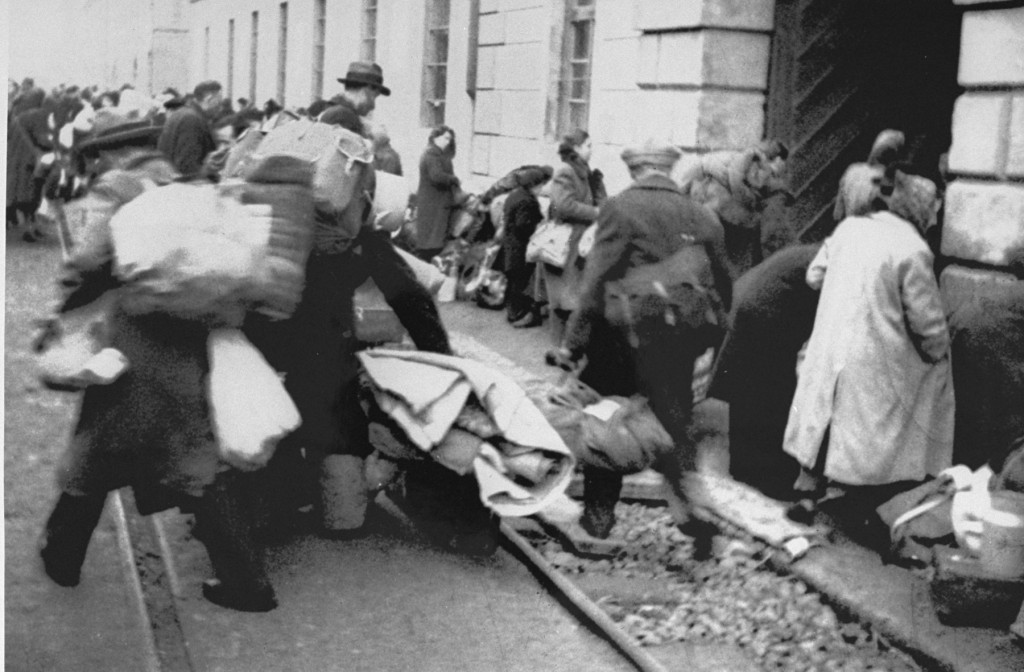
Arrival of a transport of Dutch Jews in the Theresienstadt ghetto. Czechoslovakia, February 1944.
"...Thanks to the proximity of Sweden 7,200 Jews and some 700 of their non-Jewish relatives were transported to safety in the course of three weeks in October 1943. In some cases Jews were caught by the local authorities; some did not want to leave; others had no means or connections enabling them to embark on the journey. A total of 482 Jews, mostly elderly and sick, were caught and deported to the camp of Theresienstadt."
"The rescue operation by the Danish underground is exceptional because of the widespread agreement and resolve of many Danes from all walks of life – intellectuals, priests, policemen, doctors, blue-color workers – to save the Jews. While some Danes were pro-Nazi and even joined the Waffen SS and participated in war crimes, the underground members implemented the unique rescue. They viewed it as a national refutation of Nazi Germany and a reaffirmation of democratic and humanistic values. It should be noted that since the 1990’s historians have uncovered new perspectives of this operation. Danish scholars have shown that in many cases big sums of money were paid to the seamen who brought the Jews across to Sweden."
Yad Vashem 
 
That was then. This is now. Now, Denmark and Sweden suggest that Israel be booted out of the United Nations. This would be the United Nations that has, over the years, sanctioned Israel on hundreds of occasions while studiously overlooking the human rights abuses of two members of the permanent Security Council, China and Russia, and obliging Iran with critical UN positions and rarely sanctioning any Islamic-majority states for their institutionalized human rights crimes. Denmark has, while declaring itself a friend of Israel and is a home to 7,000 Danish Jews, consistently voted against Israel at the UN.
 
https://i.ytimg.com/vi_webp/XNMlCVL9eBU/maxresdefault.webp

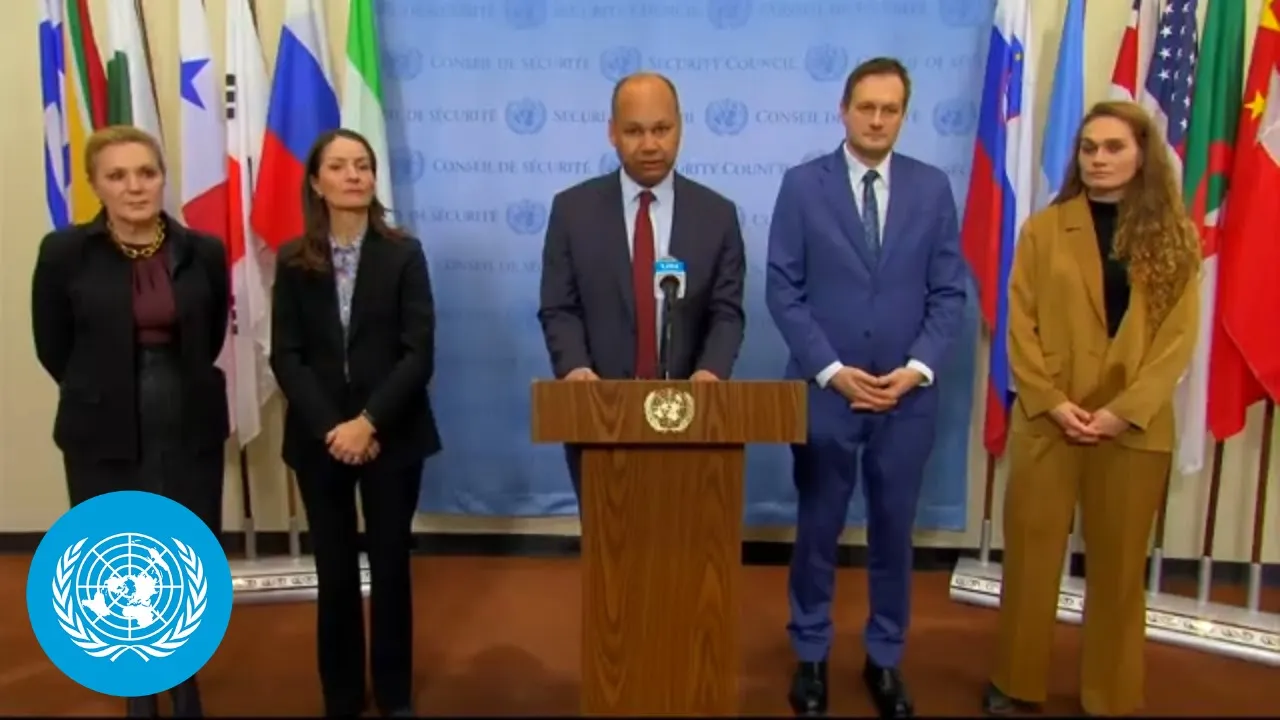
Statement on behalf of Denmark, France, Greece, Slovenia and the United Kingdom.We welcome the important progress that has been made in recent months to end the bloodshed in Gaza, secure the release of the hostages and turn the page on two tragic years of conflict.While the international community is focused on building a peaceful and prosperous future for Gaza, we must not forget what is happening in the West Bank, including East Jerusalem.

 
Israel has suffered 80 years of grievous violence committed against it and its people through lethal attacks by the Palestinian community in its unrelenting war against the Jewish State. While European countries talk incessantly of a 'two-state solution', and Israel was willing to make an agreement with the leaders of the Palestinians, each one was refused, even when Israel's outreach sought to make accommodations for all the demands of the Palestinians. To no avail. To this day, no Palestinian leader will agree to recognize Israel. Without that formal concession there is no two-state solution. For Palestinians anticipate that only Israel's destruction is acceptable, leaving the Palestinians to claim Judean ancestral land for their own.
 
The fiction of Palestinians living in 'occupied' territory cannot stand up to scrutiny. Without Israel's constant military oversight of the Palestinian territories, lethal attacks would simply proliferate as they once did, before Israel took steps to materially separate itself from the Palestinian side, making it difficult for terrorists and ordinary Palestinian citizens to enter Israel with the intention to murder Jews. With no intention to live in peace and mutual security with Israel, the Palestinians still manage to convince the West that they wish to live in peace. October 7, 2023, punctured that fantasy, but not convincingly enough for Israel's detractors.
 
Denmark has assembled the support of the European Union and other allies in its resistance to President Donald Trump's determination to coerce, threaten, and bully Greenland and Denmark into agreeing to hand over the strategic Arctic island to the United States for 'security' purposes. Denmark is outraged that the Kingdom's protectorate status of long standing of Greenland is under pressure from the United States. There is no end of support for its refusal to succumb to either blandishment or raging accusation from President Donald Trump.
 
Yet the blood shed of thousands of Israeli Jews by Palestinians and the reality that the Palestinian leadership which has groomed its population since 1948 to consider Jews and Israel their enemy needing to be vanquished by any means in an ongoing territorial battle with a country that wants and deserves to live in peace is of total disinterest to Israel's critics -- among them nations that had long been considered by Israel to be among its allies. Immense oil wealth in Arab sheikdoms has enabled states like Qatar, Saudi Arabia and Iran to invest heavily in Western universities, in concert with the Muslim Brotherhood whose agenda is Israel's destruction.
 
Yet such transparent ploys fail to penetrate the logic-oblivious mind of Western governments, which  give heed to slanderous accusations against Israel, in the process to delegitimize the Jewish State whose presence is an assurance of defence of Jews throughout the world now facing a mind-wrenching ambush of virulent antisemitism fuelled by the Middle Eastern enemies of Israel who manipulate wider public opinion on charges of 'genocide' against a nation that has never been free of violent deadly attacks seeking its annihilation.
 
Greenlanders as the original inhabitants of their Arctic island, can be defended against the territorial-acquisitive manoeuvering of a powerful nation's president, with an outraged world looking on and Denmark surrounded with sympathetic allies. Israel, on the other hand, facing existential dilemmas, is viewed as an instigator of violence against a population that claims its territory as their own while perfecting terrorism to a fine degree of barbarity.
 
https://assets.nationbuilder.com/cija/pages/1546/meta_images/original/Palestinian_terrorism_2.png?1704399314 

Labels: , , , , , ,

Saturday, December 13, 2025

The Most Controversial President in U.S. History's Ambassador to Canada

"He said, 'What do you want to do?" I said, 'I think I see myself as your ambassador to Canada'. He had kind of a quizzical look ... and he says 'I like that, I like that idea'."
"I'm not only Dutch, I'm Frisian, which they call the most stubborn and blunt group -- and the Dutch pride themselves on being blunt. [That] is pretty valuable as a diplomat ..."
"I don't think [Canadian officials] leave the meeting saying 'What was he trying to tell us? Do you think Trump is really serious about tariffs'?"
Pete Hoekstra, U.S. Ambassador to Canada
 
"For the first time, it appears that the American ambassador's audience in everything he says publicly is the president."
"He is very likely making his boss happy, while he makes the rest of us uneasy."
"He's not from central casting."
Flavio Volpe, president, Automotive Parts Manufacturing Association, Canada
 
"He was just a brilliant guy and a can-do guy who just wanted to get things done."
"He is an original thinker. He's not conventional at all in so far as policies or in terms of ideology."
"He thought outside the box, which I really admired." 
Steve Emerson, Investigative Project on Terrorism 
https://smartcdn.gprod.postmedia.digital/nationalpost/wp-content/uploads/2025/09/global-business-forum_298935562.jpg?quality=90&strip=all&w=564&h=423&type=webp&sig=l2quHjtFli9tiwqtY9Tg5g
 
The man has been labelled 'contentious' and 'pugnacious'; he certainly speaks his mind in a manner that is unreflective of the position he holds as a senior diplomat, though he doesn't come from the professional diplomatic corps, but rather, like his boss, from the business world. And he is, if anything, a true-red Republican Trump loyalist. Although he has some family ties with Canada, of relatives living in the country, and some memories in his dim background of visiting Canada, he appears to know little-to-nothing about the Canadian spirit.
 
In the sense, that is, that he can fathom broad offense taken by Canadians when the  American president he represents and champions insults the country by suggesting it become the  51st state. A 'term of endearment' was his reading of the suggestion, baffled that any offence could be taken. Surely not; more likely taking his cue of making light of the assault on Canadian sovereignty as though to deliberately minimize the spurning reaction of  a people whose dignity as a nation has been  made light of.
 
He is said to be a genial man in person, and no doubt he is. So is President Donald J. Trump when he wants to be, which is to say when everything goes his way. The supreme confidence instilled by holding the position of the most politically powerful man in the world would doubtless make many people immune to criticism, but not Trump and not, Mr. Hoekstra, on Trump's behalf. Criticize Mr. Trump and you have the supreme audacity to find fault with the great United States of America. 
 
"Dear Canada: beware. Hoekstra deserves to be treated as a hostile guest", proclaimed the  website of Common Dreams. The ambassador, 72 years of age, was born in Groningen, a northern city in the Netherlands. His family brought him to the United States when he was three years old through emigration. He earned an MBA in Michigan and entered the business world to become vice-president of marketing at an office furniture manufacturer before he turned to the political arena and election in 1992 to the House of Representatives, as a conservative Republican.
 
He opposed abortion rights, same-sex marriage, gay adoption, gun control and federal employee paid parental leave; the very essence of Democratic liberal values.  He chaired the House of Representatives intelligence committee from 2004-2007. As think tank pundit, author and diplomat he seems the perfect representative in Canada to reflect the current administration. His continued warning of "radical Islam", and that schools in America were used "to indoctrinate our children with Marxist ideology" mark him as controversial but fairly accurate. Since 9/11 he has devoted "almost all of my time" to intelligence, stating the "greatest threat" to the U.S. is the rise of "radical Jihad, radical Islamists".
 
At his Senate confirmation hearing last year he stated "I recognize Canada's long-standing friendship, our deep economic ties and our strong military alliance", as he spoke of Mr. Trump's priorities as "freer, fairer trade". Canadians, along with much of the world might take issue with that last statement. Canada in particular with the imposition of 35 percent tariffs on goods not covered by the CUSMA agreement. The tariffs on aluminum, steel, copper and lumber are particularly onerous and resented. 
 
"You do not come into America and start running political ads -- government-funded political ads -- and expect that there will be no consequences or reaction", he sternly admonished the Province of Ontario's trade representative over a series of well-publicized media spots highlighting former President Ronald Reagan's statements rejecting tariffs as completely unnecessary, as a gentle chide to President Trump's triumph of shocking tariffs and incentives to Canada-based manufacturers to leave Canada and set up manufacturing in the U.S. to unburden themselves of the weight of tariffs.  
"Chaos in the Netherlands. There are cars being burned. There are politicians that are being burned."
"With the influx of the Islamic community ... there are no-go zones in the Netherlands. All right?"
"There are no-go zones in France ... There are no-go zones in Britain as well, but they are tearing the Dutch apart politically." 
Pete Hoekstra, Muslim Migration into Europe: Eurabia Come True? 2015 panel discussion 
Somali-born, Dutch-American writer of note, Ayaan Hirsi Ali, herself a former politician and a bellwether of the kind of furtive jihad practised by the Muslim Brotherhood, would agree with every word of each caution issuing from the mouth of this unusual ambassador whose ideas of diplomacy are rather unconventional. Canada may yet learn much from this frank man of experience whose provocative conservative values counter much of the touchy-feely progressive-liberal standards of its own current government.
  
https://smartcdn.gprod.postmedia.digital/nationalpost/wp-content/uploads/2025/12/Pete-Hoekstra-5.jpg?quality=90&strip=all&w=564&type=webp&sig=_aqmjxg9Axbk_7qiXgmywg
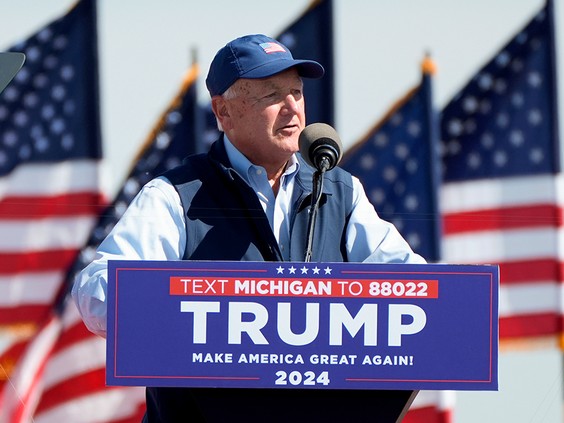
Pete Hoekstra, then Michigan Republican Party chairman, speaks at a Donald Trump campaign rally in Freeland, Mich., May 1, 2024. Photo by Paul Sancya/AP, File
 
"He's got to walk a tightrope. If he tries to inject too much rationality into the discussion, he gets zapped by Trump."
"I'm not going out of my way to defend him, but I feel a bit of sympathy for the predicament he's in."
"I'm sure when he showed up in Ottawa he didn't think he'd become the most controversial U.S. ambassador in history."
David Haglund, international relations professor, Queen's University 

Labels: , , , , ,

Saturday, August 06, 2022

Her Excellency Madam Pelosi

"There is no justification for this extreme, disproportionate and escalatory military response. Now, they've taken dangerous acts to a new level." 
"We will fly, sail and operate wherever international law allows."
U.S. Secretary of State Antony Blinken

"I heard that U.S. Secretary of State Blinken held his news conference and spread some misinformation and was not speaking truthfully."
"We wish to issue a warning to the United States: do not act rashly, do not create a greater crisis."
Chinese Foreign Minister Wang Yi
 
"Our visit is part of our broader trip to the Pacific — including Singapore, Malaysia, South Korea and Japan — focused on mutual security, economic partnership and democratic governance. Our discussions with our Taiwanese partners will focus on reaffirming our support for the island and promoting our shared interests, including advancing a free and open Indo-Pacific region. America’s solidarity with Taiwan is more important today than ever — not only to the 23 million people of the island but also to millions of others oppressed and menaced by the PRC." 
"[The world is facing] a choice between democracy and autocracy."
"America's determination to preserve democracy, here in Taiwan and around the world remains ironclad."
U.S. Speaker of the House, Nancy Pelosi
https://www.politico.com/dims4/default/8ea5a75/2147483647/strip/true/crop/1280x720+0+0/resize/1160x653!/quality/90/?url=https%3A%2F%2Fcf-images.us-east-1.prod.boltdns.net%2Fv1%2Fstatic%2F1155968404%2Fe9471af9-dc14-4c2c-b88c-7c455dfc189d%2F23a853d2-0acd-43c4-bb8d-5346f2061282%2F1280x720%2Fmatch%2Fimage.jpg
"The only way out of this crisis is that the U.S. side must take measures immediately to rectify its mistakes and eliminate the grave impact of Pelosi's visit."
"[Washington should] avoid pushing China-U.S. relations down the dangerous track of conflict and confrontation."
Jing Quan, senior Chinese Embassy official, Washington

"Facing deliberately heightened military threats, Taiwan will not back down."
We will firmly uphold our nation's sovereignty and continue to hold the line of defence for democracy."
Taiwanese President Tsai Ing-wen
President Joe Biden walks with Speaker of the House Nancy Pelosi.
Arguments began when President Joe Biden cast public doubt on the wisdom of Speaker Nancy Pelosi’s visit to Taiwan by suggesting that the Pentagon saw it as too risky. | Susan Walsh/AP Photo

They both represent the same Democratic Party, the president of the United States, and the Speaker of the House. Yet somehow there appears not to have been a discussion by the two executive branches of government about Speaker Nancy Pelosi's intended trip to Taiwan. And in her statements while in Taipei, reassuring the Taiwanese that nothing has changed, America has its back, she spoke with the royal 'we' as though she and her word are imperial law.

How is it possible that when Joe Biden was asked by reporters whether Nancy Pelosi really would be visiting Taiwan as part of her trip to Eastern allies? A controversial trip certain to raise Beijing's hackles at the prospect of a high-level U.S. legislator, sufficiently elite in her position to be considered second in line to the presidency should an emergency arise, and about as diplomatically awkward given current stresses and strains between Washington and Beijing as conceivably provoking. His response was rather odd; admitting he really didn't know.

The trip, it appears, was all about Nancy Pelosi. Smiling for the cameras, being applauded for her courage in inviting an outraged response from Beijing who, after all, promised there would be one -- and there was. Ingratiating herself personally with the political leaders of of America's Asian allies; Japan, Singapore, Taiwan, Malaysia, South Korea, feted everywhere. South Korea's president a bit more cautious; too busy holidaying to meet with her.

And what did she accomplish, glad-handing her Asian counterparts, smiling broadly, promising the largess of American patronage and protection to China's near-abroad neighbours, nervous about Beijing's strident assertiveness in its territorial ambitions and power plays? Her visit, despite words of gratitude from Taipei, placed the country in more imminent peril from a furiously-snubbed Beijing. Of a visit guaranteed to be the ultimate in provocation and changing nothing between the U.S. and Taiwan.

Leading China to launch a series of military operations including live fire within Taiwan's territorial airspace. It will take some time before tensions between the two world's largest trading partners and competitors for the title of dominating world power to relax to a returned working level. The People's Liberation Army Air Force flew a contingent of 21 warplanes close to Taiwan, causing a responding scramble from the Taiwanese air force.

China's Eastern Theater Command of the People's Liberation Army revealed its military conducted air and sea drills to the north, southwest and east of Taiwan "to test the troops' joint combat capabilities".  U.S. Secretary of State Antony Blinken assured Beijing that Washington does not seek a crisis over the unfortunate trip to Taiwan by Ms. Pelosi. Which failed to stop four missiles fired by China over Taipei and others landing in Japan's exclusive economic zone.

If Speaker Pelosi's grand plan was to foment further turmoil for America's allies in the East, her smiling presence certainly did that, and more. "We have said from the start that our representation here is not about changing the status quo in Taiwan or the region", she said reassuringly, after having done her level best to do all that, and more, roiling the region regally.

The Bane of Legitimacy
The Columnist

Labels: , , , , , , , ,

Monday, January 10, 2022

Uprising in Kazakhstan ... Control Re-Established in Kazakhstan

"For us it’s absolutely mandatory to make sure that Ukraine never, never, ever becomes a member of NATO. We do not trust the other side.”
"We need iron-clad, waterproof, bulletproof, legally binding guarantees. Not assurances, not safeguards, guarantees with all the words ‘shall, must’, everything that should be put in, ‘never ever becoming a member of NATO’. It’s a matter of Russia’s national security."
"Unfortunately we have a great disparity in our principled approaches to this. The US and Russia in some ways have opposite views on what needs to be done."
Russian Deputy Foreign Minister Sergei Ryabkov
 
"The events in Kazakhstan are not the first and not the last attempt at interfering in the internal affairs of our states from the outside."
Russian President Vladimir Putin 

"[The demonstrations were instigated by] terrorists [with foreign backing]."
"[I will reveal to the world] additional evidence [of a] terrorist aggression [against Kazakhstan.The demands of peaceful protesters have been] heard and met by the state [and the unrest that followed involved] groups of armed militants [whose goal was to overthrow the government]."
"What kind of talks can we hold with criminals and murderers?"
"We had to deal with armed and well-prepared bandits, local as well as foreign. More precisely, with terrorists. So we have to destroy them, this will be done soon."  
Kazakhstan President Kassym-Jomart Tokayev
 
"The situation has been stabilized in all regions of the country."
"A number of strategic facilities have been transferred under the protection of the united peacekeeping contingent of the CSTO [Collective Security Treaty Organization] member states."
Presidential Office statement
Kazakhstan protest
A crane loads a military truck, which was burned during clashes onto the platform in Almaty, Kazakhstan, Sunday, Jan. 9, 2022. (Vladimir Tretyakov/NUR.KZ via AP)

 Russian President Putin and Kazakhstan President Kassym-Jomart Tokayev may be singing out of different hymnals. Both speak of 'terrorist' and foreign influence involvement in the recent violence taking place in Kazakhstan following peaceful protests against the government. But while Mr. Putin considers the United States and NATO's malign influence in the region the cause of unrest, Mr. Tokayev seems to feel otherwise pointing to the involvement of "mostly Central Asian countries, including Afghanistan," and some from Mideast nations.
 
Strange business this, apprehending an insurrection, accusing foreign elements and 'terrorists' of invading and leading an insurrection, yet taking draconian steps on the part of the government to arrest the nation's top security officials for what effectively amounts to treasonous activities. There's an echo here of Ukraine, with its still-ongoing conflict with ethnic Russian Ukrainians in the east of the country intent on taking possession of the Donbas as, effectively, Russian territory.
 
In essence, Russian troops invaded eastern Ukraine and fought alongside Russian-Ukrainians leading to Moscow taking possession of Ukrainian territory when it secured the Crimean Peninsula into Greater Russia, violating Ukraine's sovereign territory and scheming to take Mariupol to secure a more direct link for itself to Crimea. In this instance, the reverse has occurred where internal strife in Kazakhstan with citizens rising against a corrupt government turned violent and Russia intervened to save a post-Soviet ally's sovereignty.
 
A Central Asian country that, given its rich market of natural resources of oil and uranium bringing international investment of huge proportions basks in wealth, but little of it, unsurprisingly, given the autocratic nature of its government, trickles down to the population. The original protest arose when the price of fuel rose and the population smarted with indignation. The reversal that quickly followed to appease the anger fizzled, however, people's aggrieved state at their governance continued and when the military used violent tactics the protesters responded in kind.

An estimated 8,000 people have been detained and imprisoned after the torching of public buildings and reciprocal killings between protesters and security forces. President Tokayev had issued shoot-to-kill orders to end the violence caused by "bandits and terrorists". A controversial figure of 164 killed during the riots is being contested, caused by the clashes between protesters and security agents. President Tokayev invited Moscow to help tamp down the insurrection.

The Kremlin responded by calling into action the alliance of ex-Soviet states, the Collective Security Treaty Organization. Well, isn't that interesting, somewhat reminiscent of the North Atlantic Treaty Organization whose creeping presence in eastern Europe which Vladimir Putin considers Russia's 'near abroad' is a matter of such consternation to Russia. Member states of the CSTO sent in their battalions and the violence subsided, wearing itself out in the presence of tanks, armaments and soldiers.

Now, Kazakhstan's president is anxious that the CSTO and Russia in particular vacate his country, thank you very much. Mr. Tokayev is prepared to settle his nation's own internal conflict and consolidate his authority, separating his rule from that of his corrupt predecessor who has now resigned all holdover posts and whose spokesperson said: "[He] and the head of state have always been 'on the same side of the barricades' ... In these difficult days they have demonstrated the monolithic nature of state power for all of us"; and that the population must rally around President Tokayev.

As a first order of business he awarded 'prizes' for bravery to the 16 police and army officers who were killed in the violence. "The counter-terrorist operation ... will be continued until the complete elimination of the terrorists", promised Deputy Defence Minister Sultan Gamaletdinov. According to Russian paratrooper commander Andrey Serdyukov, the CSTO force completed its deployment to Kazakhstan and is preparing to remain until complete stabilization is assured.

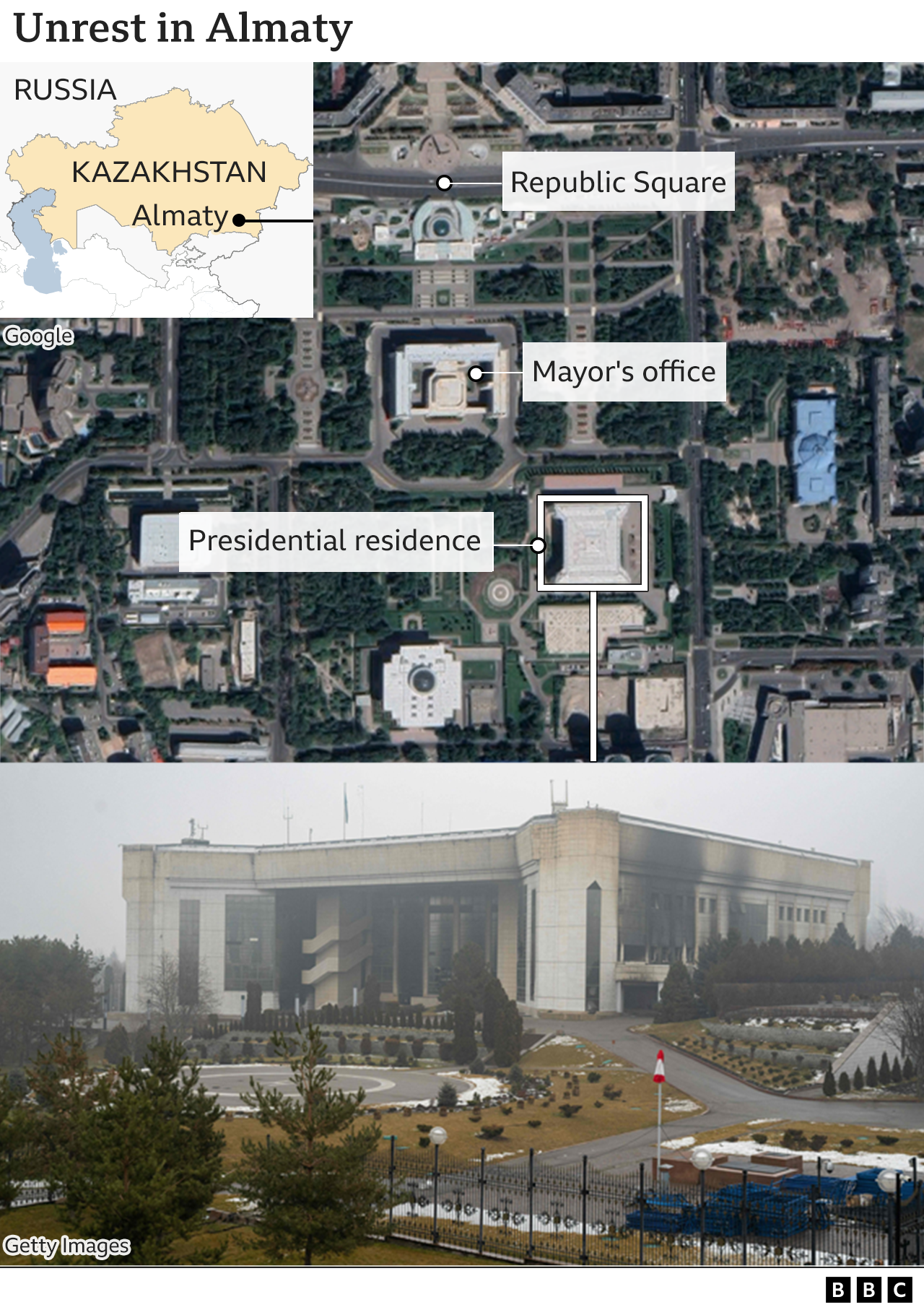
Location of protests in Almaty
 

Labels: , , , , ,

Wednesday, July 28, 2021

All The News That's Fit To Print About China

"China’s construction of nearly 250 new silos has serious implications for international relations and China’s role in the world. The Chinese government has for decades insisted it has a minimum deterrent and that it is not part of any nuclear arms race. Although it remains unclear how many silos will actually be filled with missiles, the massive silo construction and China’s other nuclear modernization programs are on a scale that appears to contradict these polices: the build-up is anything but “minimum” and appears to be part of a race for more nuclear arms to better compete with China’s adversaries."
"The silo construction will likely further deepen military tension, fuel fear of China’s intentions, embolden arguments that arms control and constraints are naïve, and that US and Russian nuclear arsenals cannot be reduced further but instead must be adjusted to take into account the Chinese nuclear build-up.?
"The disclosure of the second Chinese silo missile field comes only days before US and Russian negotiators meet to discuss strategic stability and potential arms control measures. Responding to the Chinese build-up with more nuclear weapons would be unlikely to produce positive results and could cause China build up even more. Moreover, even when the new silos become operational, the Chinese nuclear arsenal will still  to be significantly smaller than those of Russia and the United States."
"The clearest path to reining in China’s nuclear arsenal is through arms control, but this is challenging. The United States has been trying to engage China on nuclear issues since the late-1990s, but so far with minimal success. Rather than discuss specific limitations on weapon systems, these efforts have been limited to increasing transparency about force structure plans and strategy, and well as discussing nuclear doctrine and intentions."
"The Trump administration correctly sought to broaden nuclear arms control to include China, but fumbled the effort by turning it into a public-relations pressure stunt and insisting that China should be part of a New START treaty extension. Beijing not surprisingly rejected the effort, and Chinese officials have plainly stated that “it is unrealistic to expect China to join [the United States and Russia] in a negotiation aimed at nuclear arms reduction,” particularly while China’s arsenal remains a fraction of the size."
Matt Korda and Hans Kristensen, Federation of American Scientists 
The Hami missile silo field domes are identical to silo domes seen at the Yumen missile silo field and the Jilantai training area.
 
"[The Chinese nuclear weapons stockpile was] expected to double, if not triple or quadruple, over the next decade."
Admiral Charles Richard,commander U.S. nuclear forces
 
"The silo construction at Humen and Hami constitutes the most significant expansion of the Chinese nuclear arsenal ever."
Matt Korda and Hans M.Kristensen
China has certainly not endeared itself to the freedom-loving Western democracies of late. Its aggression over territorial rights in the Himalaya with India, in the South China Sea with its near neighbours, disputes over land, sea and air rights have all alerted its neighbours to a sovereignty agenda whose fulfillment will most certainly diminish their own disputed rights. Taiwan is in Beijing's crosshairs, and Hong Kong has suffered a blow to its hopes for the future as a bastion of democracy.
 
Life in prison is the sentence that people in Hong Kong face for daring to challenge the supremacy of China and this is just what a young activist, Tong Ying-kit, 24, is now facing for hoisting a protest flag on July 1st last year reading "Liberate Hong Kong, Revolution of Our Times". He was convicted of terrorism and inciting secession under the controversial national security law meant to stamp out dissent that mightily offends Beijing. 

So it is with a jaundiced eye that the United States looks in at what intelligence agencies suspect is the latest move by China to assert itself. As though to complement Chinese President Xi Jinping's assertion to "bash the heads" of any foreign intrusive powers that plan to interfere with Beijing's sovereign rights on its own territory. As, for example, global criticism of the oppression of Tibetans and of Uyghurs in Xinjiang.

Beijing has had a lot on its plate recently from its Belt & Road initiative with massive investments all over the world meant ultimately to benefit China's status as a trade and production colossus on the world stage where Beijing longs to be recognized as a world power at least on par with the United States of America. United China is Beijing's goal and it will brook no interference nor questioning of its right to act as it will in securing 'harmony' among its many restive parts.
 
The Hami missile silo field covers an area of about 800 square kilometers and is in the early phases of construction.
 
Now, according to satellite images, it appears that China has been busy, building a second nuclear missile base able to hold dozens of intercontinental ballistic missiles. Spread over 300 square miles in the Xinjiang region, the vast site is theorized to hold 110 silos for launching weapons. "The most significant expansion of the Chinese nuclear arsenal ever."

Civilian satellite was utilized by the Federation of American Scientists to examine the Gobi Desert close to Hami where Uyghur Muslims are believed to be kept in "re-education camps". A series of large inflatable domes typical of those generally made use of by construction teams on military bases to shield from view work they are performing within, were identified. 

Only weeks earlier another silo field had been spotted in Yumen, northeast China. There, according to the James Martin Center for Non-proliferation Studies, are located 120 missile silos, as well. China's version of the issue of missile silos and their projectiles are that it maintains a "minimum deterrent" of nuclear weapons, estimated to number some 300, by experts. The United States and Russia both maintain strategic arsenals easily five times that size, along with stockpiles of roughly 5,000 weapons each.

At the same event when President Xi made his "bash the heads" threat, he pledged to build up China's military. He also spoke of the nation's commitment to the "reunification" of Taiwan, reiterating the importance of social stability which would be more certain in Hong Kong under Beijing's thumb, and at the same time enhancing Beijing's thrust toward security and sovereignty. It is President Xi casual scorn of security and sovereignty of other nations that is found so offensive.
"Just because you build the silo doesn't mean you have to fill them all with missiles. they can move them around."
"It's not insane. They make the United States target a lot of silos that may be empty. They can fill these silos slowly if they need to build up their force. And they get leverage in arms control."
"I'm surprised they didn't do this a decade ago."
Vipin Narang, Massachusetts Institute of Technology

The Hami and Yumen missile silo fields are located deeper inside China than any other ICBM base and beyond the reach of conventional cruise missiles.  Image: Google Earth.


Labels: , , ,

Sunday, September 06, 2020

Beijing-Canberra Relations?

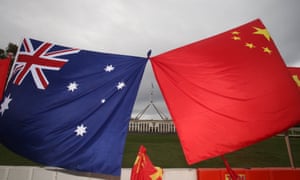
Australia’s and China’s flags on the front lawn of Parliament House in Canberra
Australia’s and China’s flags Mike Bowers/The Guardian
"[Australia had been a great beneficiary of China's economic growth, but] as countries develop they have a responsibility to uphold a stable, prosperous strategic balance in our region."
"China's economy is stronger because they have access to high quality energy, resources, agricultural goods and increasingly services from Australia." 
"And our economy is stronger because we have access to high quality manufactured goods from China."
Australian Prime Minister Scott Morrison

"Chinese companies do not buy Australian commodities, goods or services because they want to do this struggling little island nation a favour -- they do it because it's good value, good quality."
"So much of the Australian business community, faced with criticism or a difference of opinion between Australia and China, will side with China."
"[But], there has been an awakening."
Former Australian Prime Minister Malcolm Turnbull
"Obviously he [Australian home affairs minister Peter Dutton] must have also received some instructions from Washington requiring him to cooperate with the US in its propaganda war against China … [calling for an international inquiry into China's handling of the SARS-CoV-2 virus] Some Australian politicians parroted what those US forces have said and followed them to launch political attacks on China. Their move reveals the former’s ignorance and bigotry as well as a lack of independence, which is sad."
"It is well known that recently some people in the US including high-level officials have been spreading anti-China ‘information virus’. Their aim is to shift blame and deflect attention by smearing China."
Chinese Embassy official
 
"I think in the long term ... if the mood is going from bad to worse, people would think, ‘Why should we go to such a country that is not so friendly to China?’ The tourists may have second thoughts. The parents of the students would also think whether this place which they found is not so friendly, even hostile, whether this is the best place to send their kids here. It is up to the people to decide. Maybe the ordinary people will say, ‘Why should we drink Australian wine? Eat Australian beef'?"
China’s ambassador to Australia, Cheng Jingye
People walk past a tree with a mask and eyes stapled on it, in Melbourne, on 20 April 2020. (William West/AFP)

 Australia has a free trade deal with its largest trading partner to which it exports substantial amounts of coal, natural gas, wine and agricultural products, China's prosperity affects Australia's as it exports its goods to the number two economy of the world. The two countries had good diplomatic relations and two-way trade was robust. Not so much in the diplomatic sphere right at the moment, however, and as for trade, it remains integral to both countries' ongoing march into the future, but it's wobbling slightly. 

Among other things, China's aggression toward its neighbours and its assertions of geographic hegemony have startled those neighbours, Australia among them as it debates around the cabinet table how best to preserve sovereignty while fending off efforts on China's part to interfere in Australian politics. Australians have been warned of an increase in cyberattacks, and a national security test for foreign investments has been introduced accompanied by a dramatic rise in defence spending with a focus on the Indo-Pacific region.

The government of Australia is decidedly nervous over Beijing's efforts to undermine democracies through its disinformation campaign, and the Chinese Communist Party's move to impose its security law on Hong Kong has done nothing to reassure Canberra. What has set China and Australia on a collision course however, was the move by Canberra to lobby world leaders for an inquiry into the origins of the global pandemic. Within the UN 137 member-nations saw fit to co-sponsor a resolution at the World Health Assembly for an investigation.
 
Beijing's immediate reaction was trade diplomacy in the form of sanctions on Australian products, suspending beef imports on a technicality and blocking barley trade with Australia; a process very well known to Canada which also mightily displeased Beijing with its adherence to an extradition request by the U.S. for Chinese technology giant Huawei's CFO. China's foreign ministry called on Australia to "abandon the Cold War mentality".  At stake is the two-way trade with a value of $172 billion annually, and a $51 billion trade surplus for Australia.

Iron ore has not yet been slapped with any inappropriate protectionist trade measures as punishment and for a good reason, with the ore-hungry behemoth receiving 60 percent of Australian iron ore, critical to support an economy struggling to get back to full capacity. "China is never going to impose any economic measures against Australia which damage its own interests", pointed out former Labour prime minister Kevin Rudd, also realistically admitting that Beijing can target imports beyond iron ore, unessential to China. An example: Cheng Jingye's threat to boycott Australian wine, beef and tourism.

Australian public sentiment toward China has been sourly diminished as pointed out by an annual Lowy Institute poll which found trust in China plunged to 23 percent in comparison to a 2018 survey when it stood at 52 percent. Not helped when Beijing refused recognition of a 2016 international court ruling that it had no historical claim over disputed islands in the South China Sea -- when the Turnbull government rebuked China alongside Washington. And nor does a growing awareness of Chinese infiltration of Australian business interests.

When Australia became the first country to officially ban Chinese tech giant Huawei from its next-generation 5G telecom network based on grounds of national security it signalled other countries in the 'Five Eyes' western alliance of Great Britain, the United States, Australia, New Zealand and Canada, to do likewise. Only one now remains to make its decision public.
“Australia is always there, making trouble. It is a bit like chewing gum stuck on the sole of China's shoes."
"Sometimes you have to find a stone to rub it off."
Hu Xijin, the Global Times editor
(left to right) Royal Australian Navy helicopter frigate HMAS Parramatta (top right) conducts officer of the watch manoeuvres with amphibious assault ship USS America (top middle), guided-missile destroyer USS Barry (top left) and guided-missile cruiser USS Bunker Hill (right) in the South China Sea, as pictured in this photo taken on 18 April 2020. (Australia Department Of Defence/Handout via Reuters)
Royal Australian Navy helicopter frigate HMAS Parramatta (top right) conducts officer of the watch manoeuvres with amphibious assault ship USS America (top middle), guided-missile destroyer USS Barry (top left) and guided-missile cruiser USS Bunker Hill (right) in the South China Sea, as pictured in this photo taken on 18 April 2020. (Australia Department Of Defence/Handout via Reuters)
 

Labels: , , , , ,

Monday, June 03, 2019

Vying for Arctic Sovereignty

"We got pinched. You're clearing a path, but the ice moves in and we got pinched."
"By the next morning they said 'We can build a new one out of spare parts'. We called it the Frankenstreamer. It wasn't pretty, but it worked."
"It all pulled it together in making a complete package and, I think, convincing arguments as to why this continental margin is part of the land mass [of Canada in the Arctic]."
"It's connected to the Canadian continental margin off of Ellesmere Island -- physically connected."
Mary-Lynn Dickson, lead scientist, report  to the United Nations

"It's [China]  after global influence, including in the Arctic."
"Arctic countries can't say no to investments. That's clear."
"We want to be sure we know what China is after."
Aleksi Harkonen, Finlandic ambassador for Arctic affairs
Jonathan Hayward / The Canadian Press

What China is after? What it has focused on everywhere in the world; increased visibility, recognition, trade, energy sources, raw materials -- power. To that end, it has created its blueprint to achieve all of that in the hope and expectation that it will lead to outpacing the United States as the world's most powerful economy through the full implementation of China's ambitious "One road, One belt" project, or: All Roads Lead To China.

And to realize this goal, China is making massive investments, extending large amounts of credit in countries from Asia to Africa and Europe in its bid to scoop up opportunities to advance its agenda. In so doing, China is making countries in struggling economic development massively indebted to it to repay funding it has advanced for costly infrastructure in roads, bridges, ports and other avenues of opening trade options.

Even Russia, its traditional rival and sparring partner, has not been exempt from China's blandishments of investment and cooperation. Retreating Arctic sea ice has created the potential for new shipping lanes that will cut transit time and cost substantially across the globe. New economic and strategic ties with Russia sees Chinese crews drilling for gas under the Kara Sea off the Russian northern coast.

Russia is a powerful Arctic power, one of eight nations whose direct geological prominence in the Arctic gives them sovereign claim to 200 nautical miles offshore as their exclusive economic zones. The United Nations Commission on the Limits of the Continental Shelf is the official adjudicator between the Arctic nations claiming their rights and to whom each of those nations -- Sweden, Norway, Russia, Canada, United States, Denmark, Iceland and Finland have submitted their science-based claims in preparation to negotiate terms of acceptance.
na1210_arcticclaim_c_jr
China has bystander status, but no geological proximity claims and is piggy-backing on Russia's claim for its own partnership access to energy and mineral rights extraction. Chinese cargo ships maneuver through the ice packs off Russia, a new Northern Passage they have named the Polar Silk Road, and have recently launched China's second icebreaker, the Snow Dragon 2. Asia's largest country as far from the Arctic as it is, in possession of two icebreakers.

Beijing hasn't stopped at investments only in Russia where billions have been invested in extracting energy from beneath the Yamal Peninsula in northern Russia's permafrost, where China is drilling for gas in Russian waters right alongside Gazprom, Russian's gas exploration giant. China is also prospecting for minerals in Greenland, with Huawei hoping to partner with a Finnish company to lay a new undersea Internet cable connecting Northern Europe to Asia.

Russia and Canada as well as Denmark are competing for recognition of sovereignty over the Lomosonov Shelf that extends from all three countries far out into the Arctic. Canada has just submitted its 2,100-page geological-scientific report to the UN arguing for control over a vast region of the Arctic sea floor, challenging Russia's claim. Dr. Dickson as the lead scientist on the icebreaker being used to delve the depths, described the third expedition north of Ellesmere Island where sea ice had clipped the team's underwaqter microphone, a streamer.

The instrument's use is to record signals rebounding off the sea floor. With the absence of the streamer the expedition was unable to produce the study results that Canada's claim would be partially built upon. The crew's technical team went to work and with spare parts produced a replacement, enabling Canada to make a strong case for the North Pole as part of Canada's Northern Arctic reach.

From the Canadian Coast Guard's Louis St.Laurent, the scientific team set out to prove the shelf is connected to Canada's land mass. Prodding the bottom of the sea through thousands of metres of icy water, researchers observed the thickness and origin of sediment layers, measurements were made of water depth. Geochemistry was analyzed, deciphering the type, age and structures of rocks hauled up from the deep. "They're so precious they're like moon rocks", observed Dr. Dickson.

The modern sea floor was reconstructed from its origins from ancient tectonic plates with comparisons made of the rocks, with data collected on High Arctic islands. The vessel the science team worked on made its way through ice so tough it stopped two icebreakers; so unpredictable two locator beacons were lost when the ice pan they were stationed on drifted away, to be recovered nine months later east of Greenland by the Danish navy.

Labels: , , , , ,

Thursday, July 05, 2018

Good Friends, Best Enemies

Good Friends, Best Enemies 

Andrew Vaughan/The Canadian Press
"Is this overkill? Absolutely. Absolutely overkill."
"It's quite disturbing when you have fishermen on the water, doing their job, providing for their families ... and they're being harassed."
"Canadian fishermen are being harassed by U.S. border patrol. As far as I'm concerned, it needs to stop immediately."
Rick Doucet, New Brunswick fisheries minister

"Border disputes don't go away, they just fester and then something happens. Why wait until it becomes something uglier?"
"[American patrol boats viewing the area as sovereign U.S. waters] they could stop any boats that gave them concern."
Stephen Kelly, former deputy head of mission, U.S. Embassy, Ottawa
"Canada's sovereignty over the Machias Seal Island and the surrounding waters is long-standing and has a strong foundation in international law."
"[The government has engaged with the U.S. agencies involved to investigate the incidents] in Canadian waters." 

"Canada’s sovereignty over the Machias Seal Island and the surrounding waters is long standing and has a strong foundation in international law. Until the matter of the boundary is resolved, we will continue to take practical steps with the U.S. to ensure that the area is well managed."
"Canada and the U.S. have a long history of cooperation which ensures that fishing in this area in well-managed and safe for both countries."

John Babcock, spokesman, Global Affairs Canada
Still from video   Global News

The territory in dispute is tiny Machias Seal Island, no more than an insignificant rock outcropping where fishermen from Maine and New Brunswick and occasionally Nova Scotia compete for the aquatic food resources available to enterprising fishermen. For the most part the competition between the two in what is considered to be a 'grey' zone, where both Canada and the United States claim territorial ownership of the island is low key. On some occasions a flare-up of tensions occur.

And one of those flare-ups is occurring on this disputed border area between Canada and its southern neighbour. Of late, it seems, American patrol vessels have stopped and boarded Canadian fishing boats around Machias Seal Island located between New Brunswick and Maine; that windblown outcropping that brings to mind Russia and Japan squabbling over other absurdly minuscule outcroppings in the Pacific that each claims possession of.

New Brunswick's fisheries minister is steaming after having been informed by fishermen of "heavily armed" border patrol agents stopping lobster boats -- some ten Canadian boats in number to date -- boarding them and informing the fishermen that they were searching for the presence of illegal immigrants. The minister's own riding includes Grand Manan Island, the base for the Canadian boats.

According to the Grand Manan Fishermen's Association, it is their understanding that the U.S. Customs and Border Patrol approached "a few" Canadian fishermen belonging to the Association in the 165-square-kilometre zone under dispute. "Our understanding is that this was part of a regular exercise being conducted along the U.S. marine border", they stated, making note of previously "respectful and cordial" relations with U.S. counterparts.

However, Laurence Cook, the association's lobster fishing committee's chair, wrote an outspoken opinion of his own of the attempt to stop Grand Manan fisherman Nick Brown by the U.S. border patrol: "He informed them he was a Canadian vessel legally fishing in Canadian waters. Right answer Nick. Typical American bullies. Proud of Nick, not surprised to see the Americans trying to push people around."

As for the claim by the U.S. patrol that it was searching for the presence of illegal immigrants, that was "bulls--t". The island itself is a unique home to scores of puffins. It is not the minuscule Machias Seal Island that is the trophy, but rather the encircling ocean hosting a generous bounty of lobsters. A lighthouse built and operated by Canada sits on the island. The puffin rookery is overseen by the Canadian Wildlife Service.

A number of border accords, originally dating from 1783 and the latest dating to 1984, in an International Court of Justice hearing failed the resolve the issue of territorial ownership of Machias Seal Island its waters. This is not, of course, the only area claimed by the Government of Canada to represent sovereign Canadian territory that is countered by the United States. The famed Northwest Passage in the Arctic is yet another such contested territory.

With the opening up of Arctic waters as a result of climate change and the melting of the icepack it is becoming increasingly obvious that new shipping lanes will soon be available as a result of the receding ice. These new shipping lines will be invaluable to expediting commercial shipping. Canada's historic claim to territorial ownership of the Northwest Passage received a rude blow in 1985 when the U.S. Coast Guard icebreaker, Polar Sea began navigating through the passage neglecting to advise Canada, much less ask permission.

That routine resupply mission was interpreted by Canada as a threat to its sovereignty; at best it was an undiplomatic slap alongside the head of the Dominion by the great Republic; longtime neighbours ruffling feathers by ill considered neglect. The take-home message was the U.S. blithely and deliberately encroaching on Canadian territory in the Arctic; a casual insult. The atmosphere of that unsettled lack of recognition by the U.S. of Canadian Arctic territory remains an unsettled issue.

"Historically, Canadians are hyperallergic to living alongside the U.S., a country ten times our size", noted longtime former Canadian diplomat and government official, Derek Burney. "There’s always been a lot of tension about the borders up into the Arctic. We even had planes flying over [the icebreaker], dropping Canadian flags onto it, just to make a statement." No word whether the amiable Oval Office occupant at the time got the message.

Strangely enough, echoes of aggressively assertive Asian giant China manoeuvring to establish its territorial advantage over its neighbours, claiming both areas in dispute in the South China Sea and those claimed by its neighbours as their sovereign territory. It's tough to negotiate much less assert oneself against an unrepentant bully that feels entitled to claim as its own any entitlement or territory that holds advantageous natural resources.

This map shows the open water of the far north, above the Arctic Circle. Dotted red lines represent the possible routes through the islands for ships. This is the Northwest Passage.

Labels: , , ,

Monday, March 06, 2017

Independent Kurdistan

"The One Iraq policy is wrong."
"You tried it, it failed. Don't insist on repeating a failed experience. We can't live together within the same country. But we may be good neighbours."
"We're supposed to be Iraqis and we are asked to be Iraqis, but at the same time we do not benefit from being Iraqi."
"We have our own language, history, culture, music, geography, which is different from that of Arabs."
"We have been free from Iraq since 1991. .. We defied Saddam Hussein."
Falah Mustafa, Kurdistan Regional Government
-
"Question number one is: Does everyone agree that Iraq should hold together? Because if you don't agree that it should hold together, you're not going to reconcile. And that's all about the Kurds. Are the Kurds in or are the Kurds out?"
Unnamed Western official

"Should the [Daesh] threat recede, Baghdad will have to contend with a range of land disputes with the [Kurdish Regional Government], as well as strengthened Iraqi Kurdish forces, which have received training and equipment from coalition members, including Canada."
Global Affairs Canada

"Do I think there's the potential for friction? Absolutely."
"But right now, everyone is saying all of the right things."
Canadian Brig.-Gen. David Anderson, leader, multinational military advisers
citadel
Erbil, Kurdistan -- Photo: LaChicaPhoto/Flickr

So, does it appear as though the Kurds are prepared to once again surrender (de facto) sovereignty, much less the autonomy they have enjoyed since the liberation of Iraq from the dictatorial talons of its tyrant, Saddam Hussein? Since the U.S.-led invasion of Iraq, ill advised from a Western perspective as it might have seemed, which led to the breakdown of civil order and the deathly presence of sectarian violence between the minority Sunni and majority Shiite population of the country, the Kurdish enclave has been serenely well-managed, peaceful and thriving.

But for geography imposed upon the region by foreign diktat, the Kurds have nothing in common with the Arabs. They represent an ethnic heritage and a culture of tolerance whose presence in the region ancient history records. But their region was split in four to become part of artificially-conceived boundaries by occupying European powers post World War One, when the Ottoman Empire fell, despite that Great Britain promised the Kurds would finally be recognized as a nation.They have suffered betrayal, and dreadful oppression in Iraq, Syria, Turkey and Iran.

Saddam Hussein had  his troops sweep through Kurdistan, slaughtering people and animals, destroying towns and villages and leaving desolation behind. How likely is it that Iraqi Kurds would want to remain a part of Iraq? Kurdistan's President Masoud Barzani is committed to a referendum on independence, once the matter of destroying the viciously threatening presence of Islamic State has been accomplished in everyone's best interests. Sovereignty has been a long time coming.

Because of the history of the two Arab countries and Persian Iran, plus Turkey, and the position of the Kurds within their geography Western nations are loathe to lend themselves to the controversy. Yet their commitment to helping the region control and finally defeat the presence of fundamentalist Islamist totalitarians recognized as a threat to civilization everywhere has seen the dispatch of military strategic experts to the Kurds and to the Iraqi military to teach best practises in support of the common good to destroy Islamic State.

Military weapons have been distributed to the Peshmerga with agreement from Baghdad, to ensure they are at least as well armed as the Islamist terrorists, even while the Western governments supplying the military advisers and the weaponry are concerned that both may be turned against what they see as the legitimate government of Iraq in Kurdistan's bid for sovereign recognition. Despite which the final decision to increase the number of military trainers and provide increased military equipment from coalition members, was the right decision to make.

As Kurdistan's top diplomat, Falah Mustafa noted, the Kurds have more than fulfilled their obligations to Iraq, while the central government has suspended budget transfers to the Kurdish enclave, representing 17 percent of the Kurdish national budget, even while it is the Peshmerga that has been providing and prosecuting the most notable and successful of the conflict missions against Islamic State, while at the same time being burdened with their intake of refugees desperately seeking haven from Islamic State predation.

"Once we are economically, financially and politically independent, only then will we be truly independent", stated a resident of Erbil, Kara Alsarraj. Independence is most certainly what Kurds have long since deserved, and independence is what must be accomplished. It has been the Peshmerga, disciplined and fearless, that has managed to defend Iraqi Kurds and Christians and Yazidis from becoming ISIL prey. By contrast, the Iraqi military has been in a state of ignominious disarray, despite the stepped-up training by Western military advisers.

Iraqi Shiites and Sunnis must come to terms with how they will manage to live with one another in Iraq. The government of Iraq must understand that it cannot forever insist that Kurdistan is part of Iraq, for it is not part of Iraq, not historically and not to the present even geographically. Iraq must reconcile itself to becoming a neighbour to an adjacent nation which it has too long insisted is part of theirs but which is willing to be a reliable, good and  helpful neighbour.

erbilcit
Erbil, Kurdistan, Citadel. Shar Park features numerous fountains, brick arcades, and a clock tower.  It also features numerous cafes and teashops   Photo: LaChicaPhoto/Flickr

Labels: , , , , , ,

() Follow @rheytah Tweet