Politic?

This is a blog dedicated to a personal interpretation of political news of the day. I attempt to be as knowledgeable as possible before commenting and committing my thoughts to a day's communication.

Saturday, September 01, 2018

So, How're We Doing, Folks? (Whistling in the Dark)

"We're not there yet. [But] this is a very complex agreement and we're going to continue working at it."
"Our objective in these talks is to update and modernize NAFTA in a way that is good for Canadians, good for Americans and good for Mexicans."
"We know that a win-win-win agreement is within reach." [Have you noticed my new outfit?]
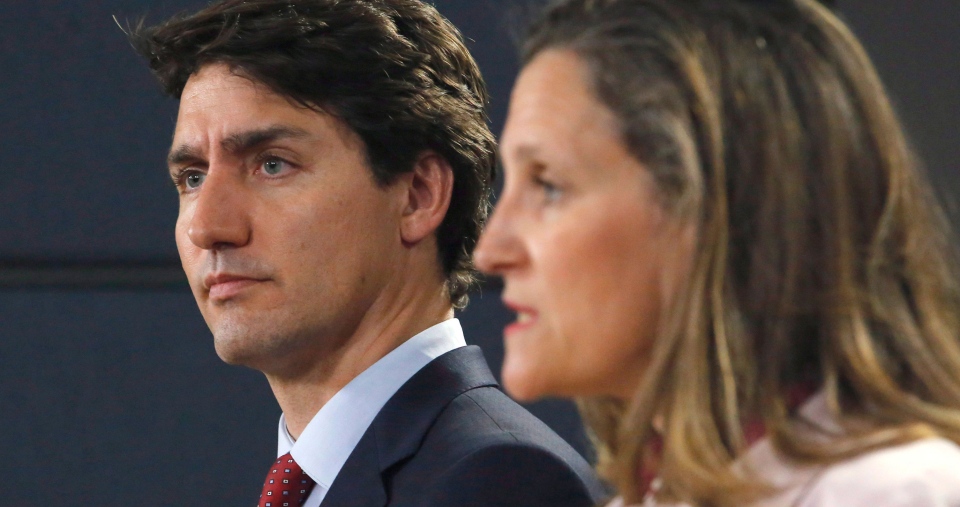
Foreign Affairs Minister Chrystia Freeland

"Canada conceded a whole bunch of things. Canada gave a ton of things."
"Canada was making concessions and Canada needed something, and the U.S. was agreeing to nothing."
Insider source

"The talks were constructive and we made progress."
"Our officials are continuing to work toward agreement."
U.S. Trade Representative Robert Lighthizer office

"[Any deal with Canada would be] totally on our terms."
"[I'm prepared to sign a deal with Mexico in 90 days ... and include Canada] if it is willing, in a timely manner, to meet the high standards for free, fair and reciprocal trade."
"Off the record: totally on our terms. Totally. Here's the problem. If I say no -- the answer's no. If I say no, then you're going to put that, and it's going to be so insulting they're not going to be able to make a deal ... I can't kill these people [Canadian negotiators]."
"At least Canada knows where I stand!"
U.S. President Donald Trump
U.S. President Donald Trump issued several tweets about the North American Free Trade Agreement (NAFTA) Saturday, saying 'NAFTA was one of the WORST Trade Deals ever made.' (Kevin Lamarque/Reuters)

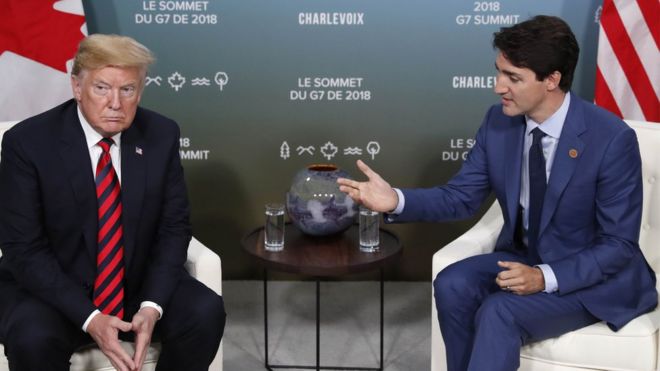
Trust Trudeau. He knows what he's doing. Relax, Canada. There are things that are important in life, agreed? Social justice as an example. Doesn't that beat trade for trade's sake? So the economy takes a hit, we'll get over it. Thousands unemployed; too bad, so sad, but they'll find something else to do. Like I did, when I got bored teaching drama at that exclusive boys' school in Vancouver, then moved on to teaching snowboarding techniques. And there were all those invitations for speaking engagements; good money there, folks. Unemployed? Give it a try!

The sky's the limit! Look at me, now, Prime Minister of Canada. Negotiating with the Most Important Person in the World. That's me. No, I mean Trump. I must be the second-most important person in the world. After all, who had the guts to confront that guy who thinks he's the world's upcoming political superstar in China? Me! Told him, want a free trade deal with Canada, then bring in workers' rights, gender parity and LGBTQ-2 human rights, wrap it all up in free trade and it's a done deal! Turned down that opportunity, didn't he? His loss.

Same thing with the Trans Pacific Partnership and the deal with the European Union. Made them see the light, but I was also generous about it, allowing them to export some dairy products into Canada. Gotta leave your trade opponents some measure of dignity, right?  Even my good friend Trump believes in that kind of diplomatic courtesy. There's another guy who gets things done. Matter of fact, we've got a lot in common; he tells people who criticize him where to go, names them for what they are; sound familiar?

We're both confident of our abilities and cerebral functioning, and with damn good reason. He also has confidence in leaders who get things done, like Xi Jinping, Vladimir Putin, Recep Tayyip Erdogan, MbS (psst, if you don't know, that's Mohammad bin Salman, nice guy), Rodrigo Duterte, Nicolas Maduro, and Ali Khamenei (don't know him? think Supremo Leader) and not to forget Kim Jung-un, eh? Guess what, as a supreme judge of leadership characteristics, me too!
Prime Minister Justin Trudeau, left, reached out to former prime minister Brian Mulroney, centre, about the NAFTA negotiations. He was involved in tough negotiations for the Canada-U.S. Free Trade Agreement, which preceded NAFTA. (Paul Chiasson/The Canadian Press)

Anyway, about NAFTA. Anyone with an ounce of intelligence knows that if this falls through the fault can be directly placed with the previous government of Stephen Harper; it pains me to even put the words 'prime minister' in front of his unworthy name. If he hadn't been such a miserable failure for Canada, I wouldn't have had to spend so much time reversing all of his faulty government initiatives. Ask Amed Hussen our Immigration Minister; he knows that "we inherited a massive backlog of asylum claims after a decade of short-sighted and damaging policies under the Harper Conservatives".

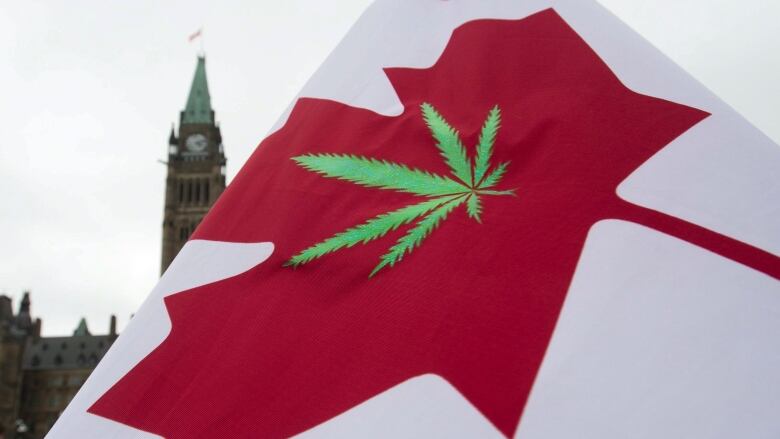
So bad that we've got a backlog of 55,000 claims; impossible to hold the fort, leading to the current crisis of all those poor people clamouring to get into Canada. My Canada, you know ... If there hadn't been a backlog of asylum claims of 10,000 when he was kicked out of office by all the voters who preferred me, we wouldn't be in this position now. But I'm putting things right; remember my pledge to legalize marijuana? We're on it, folks, opening up the store in November, and it's party time!

Guess what? All that loot coming into government coffers through taxing pot sales is gonna clear up that damned deficit and we'll be on easy street. Meanwhile, I've been consulting with former Prime Minister Brian Mulroney, a nice guy who was unfortunate enough to have been a Conservative, but we'll overlook that since he's the guy who oversaw the original Free Trade Agreement that morphed into NAFTA and he's been advising me. And gosh, if things go south, I can always pin the blame on him, he's used to that kinda stuff.

Labels: , , , , ,

Wednesday, August 29, 2018

New Trade Alliances of Necessity

"I don't think it's helpful at all to have more sectors of the economy hit by protectionist tariffs."
"It's not a great thing from our perspective. We wish more sensible heads were prevailing on the U.S. side so we could get back to modernizing the NAFTA agreement."
"I think the Canadian government has reached out [to the steel and aluminum sectors], and you are seeing unanimity among premiers including our premier [John Horgan]. This is a place where you should stand together as one country."
"[From the lumber industry's perspective, the U.S. construction market needs Canadian lumber, which is evident in high lumber prices], so it's super frustrating."
"And I'm sure for [companies] that haven't been exposed to this level of protectionism, it must be very frustrating to them."
"Who's really suffering [as a result of 20 percent U.S. tariffs on Canadian lumber] is the U.S. consumer."
Susan Yurkovich, president, B.C. Lumber Trade Council
tarrifs-and-forestry.14_613.jpg
"We believe the lumber producers were acting not much differently than the oil cartels did back in the 1970s. There is just too much evidence that leads us to conclude that there was profiteering going on."
"He [Vermont home builder] just opened up a wood pallet for his next project, and the lumber was Russian."
"We're at a point where Americans and Canadians are exporting to China, and the Russians are finding it cost-effective to export to the United States ... We've gone through the looking glass."
Jerry Howard, CEO, National Association of Home Builders

"There's no one to pass that cost on to [the tariff imposition on Canadian lumber imports Trump imposed on Canada]."
"It's crippling, quite frankly ... Those kinds of changes are very difficult to run a business around."
"Every increment you go up excludes people [potential new home purchasers] from the market."
Bill Tuyn, vice-president development, Forbes Capretto, custom-home builder, Buffalo 

President Donald Trump's ignorance on free trade issues between countries and the details that irritate him, not necessarily bearing any resemblance to reality, hasn't stopped him from acting on his erroneous impressions and assaulting what he claims is the undue entitlement to profit from a trade agreement with the United States by other, lesser-endowed countries for whom trade is an economic national imperative unlike the U.S. which can take it or leave it, given its huge consumer base, able to absorb its production.

But there are items of primary production that other countries excel in and it is their exports that the U.S. is interested in, to ensure that all its own needs are being met. A simple enough transactional device known as trade and in the global atmosphere where freer trade is recognized to benefit all countries that engage in it, Trump's brilliant move in closing off the U.S. to incipient and present free trade agreements even while important trading partners' production is now integrated with that of the U.S. making separation problematical for all involved, hasn't cautioned him to second-think his split-second decisions.

Now, the home building sector in the United States is pointing a finger of blame at the lumber producing sector, claiming that it has artificially increased the price of building lumber on the backs of home builders. Reliance on Canadian lumber with its ready availability, but with the added headache of the 20 percent increase in cost due to Trump-imposed tariffs has made new housing starts in the U.S. quite a bit more expensive for new buyers and the housing construction companies eager to sell their inventory.

Now that they are under stress, Canadian lumber producers have diversified, seeking customers elsewhere than their traditional export base in the United States. The U.S. share of Canadian lumber exports has fallen from 85 percent in the 1990s to its current 50 percent, a significant difference. And while U.S. home builders were unsupportive of the duties imposed on Canadian lumber, they now look to reduce their traditional dependence on Canadian lumber.

Their suggestion is to cull the U.S. national forests which have about 300 trees per acre in comparison to most other nations' 100 per acre, using downed or diseased wood culled from the forests to help builders and just incidentally, they say, keep the woodlands in a healthier state, less prone to wildfires feeding on dead timber. Ironically, wherever and whenever Trump pries open doors and sticks his fingers in the open cracks to insinuate his primacy in the art of the deal, normalization unravels speedily.

But it isn't quite as though things always went smoothly in trade between Canada and the U.S. Bullying tactics are the forte of the bully. Canada has always weathered accusations of unfairness from the U.S. which claims that Canadian softwood is subsidized since most of it is harvested from Crown land and American lumber from private land, in contrast, with subsequent higher costs. Its the conventional argument of evening the playing field.

Canada has made frequent use of the trade dispute resolution system in response to countervailing and anti dumping duties the U.S. slaps on Canadian lumber products; dispute rulings that have generally favoured the Canadian position; in a system that Trump is anxious to scrap, as he 'improves' the NAFTA agreement, strong-arming Mexico and Canada into meeting his 'fair' and even-handed terms.

Labels: , , , ,

Tuesday, August 28, 2018

The Art of the Trumpian Deal

"We're starting negotiations with Canada, pretty much immediately. If they'd like to negotiate fairly, we'll do that."
"If not, the easiest thing we can do is to tariff their cars coming in ... It could end in one day and we take in a lot of money the following day."
"This is a tremendous thing. They used to call it NAFTA, we're gonna call it the United States-Mexico trade agreement. We'll get rid of the name NAFTA, has a bad connotation because the United States was hurt very badly by NAFTA for many years."
"It's an incredible deal [the U.S.-Mexico agreement], it's an incredible deal for both parties.We'll start negotiating with Canada relatively soon."
U.S. President Donald J. Trump

"This [protecting of intellectual property] would require a significant overhaul of Canadian intellectual property law." 
"These provisions ... are at odds with the Canadian government's commitment to modern intellectual property laws that adequately balance the interests of all stakeholders [as with adding years of patent protection from generic drug competition]."
Michael Geist, intellectual property expert, University of Ottawa
Canadian Foreign Affairs Minister Chrystia Freeland arrives at the Office Of The United States Trade Representative, Tuesday, Aug. 28, 2018, in Washington.Andrew Harnik / ASSOCIATED PRESS

The simple fact is, negotiating a fair and mutually useful agreement on free trade with the three partners representing two supplicants and one powerful bully, the prospect of fairness becomes a lost cause. When the balance of power is held unevenly it represents a big stick to wallop the weaker links in a three-way deal with. Where the U.S. yielded in some areas in the original NAFTA agreement, that time is long gone; now the reality is that the one with that big stick is prepared to use it, as a very effective 'negotiating' device.

Beginning with the unexpected U.S. tariffs on steel and aluminum, and going on, in Canada's case, to target lumber, along with other vulnerable items, even if it ends up hurting American consumers as much as it does Canadian producers. Donald Trump may wax threatening about fairness, when he demands that Canada's Supply Management System be dropped -- an antiquated, anti-consumer farm monopoly that should be rethought -- but it has been repeatedly and pointedly observed that the U.S. has its own farm subsidies more than equal to Canada's.

None of the three major political parties in Canada is prepared to submit on the demand to dissolve supply management; there's too much political interest, as in danger, at stake, in the form of critical votes from a well-oiled lobby group. The Dairy Farmers of Canada, as an example, is not above using the threat of political boycott for any party that seriously considers abolishing the dairy supply management. Its threatening overtures ensures that none of the parties would dare speak to the issue in a conciliatory tone to NAFTA.

At the just-concluded Conservative Party of Canada's annual conference a briefing book produced by the Dairy Farmers of Canada was discovered by the press amplifying the extent of their influence, as when it warns that "Members of the Conservative Party of Canada have sent a clear signal that they do not support Canadian farmers" and "Canadians will remember the position taken by Conservatives today". There was no clear signal, no committed position, not even a discussion on the agenda relating to supply management; the issue was deftly set aside; dead in the water.

But had it not been, and the conference had that debate with a majority deciding that their party would do well to scrap supply management, the little book of instructions cautioned the Conservative Leader not to forget the power vested in his position: "The powers of the Leader are far-reaching in preventing a policy from being in the party platform. DFC has been told by the Leader's office that he will exercise this power ... regardless of the outcome at convention." There's the lobby telling the party how it will act; the party indebted to the vote.

Well, Justin Trudeau has an interesting decision to make. The Liberal Party is firm that this is a non-negotiable issue. And "Canada will not be pushed around". If the farm lobby cannot depend on the Liberals, they can't depend on any party. Oh, yes, of course, the New Democrats; and how likely are they to form government -- heaven forfend. It is a desperate situation when a three-party agreement deliberately cuts out one of the three. Six weeks of negotiations took place between the U.S. and Mexico, Canada clearly informed its presence not only unneeded but unwanted.

The idea being, as senior U.S. trade negotiator Robert Lighthizer noted confidently, to strike an agreement with the slightly more malleable Mexican negotiators and when it's done, allow Canada to enter the negotiations with the knowledge that the U.S. is prepared to conclude a bilateral deal without Canada, and leave Canada out entirely, if they feel the need to do so. Canada cannot afford not to sign on to a renewal of NAFTA; the U.S. represents its trade lifeboat; the U.S. doesn't need trade, Canada does. This is indeed the proverbial rock and a hard place.

Accede to U.S. demands that supply management be dissolved to please Trump, and the Liberals limp, defeated into the October 2019 election. Refuse to drop supply management and retain the dignity of making one's own sovereign decisions over the value placed in Canadian-made internal agreements -- almost all other nations, including the U.S. commit to agricultural subsidies of some sort, to ensure self-reliance on national self-sufficiency of the necessities of life-sustenance -- and the Liberals eat humble pie while the Canadian economy tumbles and the voting public takes its revenge.

No sleeping easy in Ottawa for the next five days, the time-frame the U.S. has given Canada to make up its mind whether it is serious about concluding a deal with its Mexican and U.S. free trade partners. This is one very large lemon to suck on.
United States Trade Representative Robert Lighthizer leaves the Office Of The United States Trade Representative, Tuesday, Aug. 28, 2018, to walk to the Eisenhower Executive Office Building, in Washington, ahead of Canadian Foreign Affairs Minister Chrystia Freeland. Canada, America’s longtime ally and No. 2 trading partner, was left out of a proposed deal Trump just reached with Mexico and is scrambling to keep its place in the regional free-trade bloc. Andrew Harnik / ASSOCIATED PRESS

Labels: , , , , , , , ,

Monday, August 27, 2018

NAFTA's Deal of the Century : Divide and Conquer

"We’ll start negotiating with Canada relatively soon, they want to negotiate very badly. But one way or the other, we have a deal with Canada. It will either be a tariff on cars, or it will be a negotiated deal; and frankly a tariff on cars is a much easier way to go, but perhaps the other would be much better for Canada."
"We’re looking to help our neighbours. If we can help our neighbours, that’s a good thing, not a bad thing. So, we’ll start that negotiation imminently."
"Deal with Mexico is coming along nicely. Autoworkers and farmers must be taken care of or there will be no deal. New President of Mexico has been an absolute gentleman. Canada must wait."
U.S. President Donald J. Trump

"Canada is very encouraged by the optimism we have heard from our partners Mexico and the United States. I've been talking to representatives of those countries a lot this week."
"They seem encouraged and optimistic about the progress they've been making in resolving their bilateral issues."
Foreign Minister Chrystia Freeland

"It was a rich, fun, important negotiation, from which everything emerged in a very satisfactory way for all involved."  [Done Deal!]
Jesus Seade, envoy, Mexican President Andres Manuel Lopez Obrador 

"I've made it very clear. I support supply management and I don't believe that that is a situation we need to be in [putting it on the table for a NAFTA deal]. The Conservative government in the past, when the free trade agreement was originally signed with the United States, was to preserve and protect NAFTA. And I think some of the things that are lost in this conversation is the vast myriad of support systems that the U.S. has for their own producers. That's not part of this conversation."
"So everything from floor prices to their own quota system, in many, many states, as well as the U.S. farm bill."
Leader of the Opposition Conservative Party of Canada, Andrew Scheer

"Canada has a little bit of negotiating power, but not a lot of negotiating power. Canada would have to accept most of what the U.S. and Mexico have agreed to, which, in my opinion, is not bad — not bad at all."
"There are some other issues that are a major irritant, the most important of which is the dairy sector and I think Canada would have to give some ground on that..."
James Brander, NAFTA expert, Sauder School of Business, University of British Columbia
Running scared? Not the Liberal government of Justin Trudeau! He thought he could stick-handle Trump, but somehow his ego got in the way and after the G-7 conference he couldn't resist the urge to maintain that Canada wouldn't be pushed around. Trump is practised at pushing and he is in a position to get results. Canadian trade experts and journalistic commentators months back predicted the U.S. had nothing against Canada in the trade deal; Trump's ire was targeted directly at Mexico for the trade imbalance that so irritated him.

And Canada nobly let it be known that though they could swiftly come to an agreement with the U.S. bilaterally, they wouldn't think of it. Abandon Mexico? Not bloody likely, there's honour involved and this government is nothing if not honourable -- according to its version of what constitutes honour. Don't ask. And then somehow the tables were turned, and Canada's negotiators were invited out of the meeting and suddenly it wasn't Canada conferring with the U.S. and bringing Mexico along, it was Mexico bargaining with the U.S. and Canada outside, waiting to be allowed back in.

Oops, sorry about that. Prime Minister Trudeau knows how vital Quebec is to his future prospects of re-election in 2019 and has made no secret of his commitment to the number one trade irritant for the irascible, determined Trump who has no interest whatever in trade facts, only his own outcomes in making the deal one he can brag about; the bully and the beggars. Trudeau infuriated Trump by his declaration of resolution, and Freeland offended Trump's chief negotiator by going 'behind his back'. Guess they didn't have time to read the seminal instruction in How to Make Friends and Influence People.

How's this for deflating the Canadian ego as exemplified by Trudeau & Company? (We can stick Conservative leader Scheer in there as well) "We’re starting negotiations with Canada pretty much immediately." The Canadian economy, he added is "a smaller segment, Mexico is a very large trading partner." Take that! Or lump it, your preference, Canajuns!
"They used to call it NAFTA. We’re going to call it the United States-Mexico Trade Agreement. We’ll get rid of the name NAFTA", he added for good measure.

Wait, Canada's turn to tune in to NAFTA! And Canada, as usual is prepared to "punch above its weight".

Labels: , , , , , ,

Wednesday, July 18, 2018

A Renewable Natural Resource: Who Owns It?

"This is one of those absurd questions where you get tied up in definitions that are not relevant."
"This [seaweed, Ascophyolum nodosum] is a perfectly good photosynthetic organism, and it's a plant."
Professor David Garbary, biologist, St.Francis Xavier University, Nova Scotia

"Our operation is absolutely sustainable. We have done an inordinate amount of scientific research and publishing of papers to support what we are saying."
"There's not a lot of opportunities for people in places like Washington Country. A vast majority of people will say, 'You know, this is a good thing'." 
"I really struggle when a special interest group can go and make it very, very difficult for an industry to exist. Particularly when the industry is very, very well managed and everybody’s working together to ensure the sustainability of this resource into the future."
"This seaweed will be here forever, the way we’re managing it. After 40 years of harvesting in Nova Scotia and New Brunswick, there is no issue."
Jean-Paul Deveau, president, Acadian Seaplants, Halifax

"I was brought up on the coast [of Maine], and have watched it for 80 years. I know what happened to the gulls and eagles."
"They are depleted, almost gone. Cod are gone. I don't want to take jobs from anyone, but we've got to protect the coast."
"It might be better if it were publicly owned and responsibly managed. But the state was doing exactly the opposite. It’s in collusion with the industry that is exploiting it and doing it without adequate scientific support."
"We think we’re doing more by protecting the habitat and protecting the protective rockweed than they are by cutting it down. We’re providing more longterm benefits to the local fisheries than they are."
Kenneth Ross, 80, retired political science professor, oceanfront property owner

"Acadian is extremely rigorous. We monitor every single ounce [of seaweed harvested]."
"When we hit that 17 percent, we tell the harvester, that's it. Get out of there."
Merritt Carey, head, Maine operations, Acadian Seaplants

"This is a habitat that needs to be protected for its ecological services, not cut down to be sold four cents a pound for fertilizer."
"The highest value for the rockweed is in the water."
Robin Hadlock Seeley, scientist who has researched the effects of rockweed harvesting in Maine 

"There’s nothing wrong with doing the studies, [on potential ecological damage] but I don’t know if we want to deprive people of their livelihood because you think there might be something wrong."
"Particularly if you can’t name what that something might be."
Louis Druehl, professor emeritus, Simon Fraser University, expert in seaweed biology
There is, evidently, some disagreement between good friends and neighbours. Those good friends being residents who live across the border from one another. Where local Maine residents deplore the harvesting of seaplants by a Canadian company headquartered in Halifax, Nova Scotia, warning that it harms the biosphere. As it happens, Maine has no lack of Maine-based seaweed harvesters. No word on whether their concern over their harvesting of seaweed to be made into other consumer products has resulted in a court challenge. And here's the story:
From fresh and frozen kelp for chefs and powdered seaweed blends and liquid extracts for people, animals and plants, to salty-sweet seaweed snack bars and melt-in-your-mouth smoked dulse, Maine seaweed companies offer a wide range of products that begin with Gulf of Maine seaweeds. Species utilized include Dulse (Palmaria palmata), Sugar Kelp (Saccharina latissima), Rockweed (Ascophyllum nodosum), Bladderwrack (Fucus vesiculosus), Sea Lettuce (Ulva lactuca), Laver or Nori (Porphyra species), Alaria (Alaria esculenta), Irish Moss (Chondrus crispus), Fingered or Horsetail Kelp (Laminaria digitata).
Some seaweed companies in Maine have been in business for decades, and some are quite new. They range in size from one-person artisanal operations to larger companies with national and global business. Many were started as family businesses, and most of these remain this way, in some cases passing down from one generation to the next. 
Maine Seaweed Companies

Yet another jurisdictional dispute between American citizens who love their natural surroundings in Maine, landowners along the most northeastern coast of the United States, and a seaweed harvesting company out of Nova Scotia. The Bay of Fundy tides, known to be the highest in the world, daily thrash the shoreline, bringing with it living jewels of the sea, crabs, clams, all manner of sea creatures which also thrive in the shelter of the seaweed densely packed along Maine's shoreline where harvesters in small boats use three-metre rakes to cut and pull aboard seaweed for the Nova Scotia fertilizer company they work for in a state where unemployment is too high.

When property owners look out their windows and see those harvesters at work hauling in seaweed, they feel stricken at the loss of something valuable being taken from the natural environment that thrives on the coast and which they feel deprives the other living organisms in that flourishing habitat, upsetting the ecosystem beyond repair. Acadian Seaweed, the company that gives employment to these Maine employees is not viewed with kind regard by Maine property owners who deplore what they feel is the ravishing of a natural resource for no good reason.

They have decided to take the matter before the Maine Supreme Court which will decide whether seaweed should be considered a plant, making it the property of the complainants, or an animal like a fish or a clam in which case it could be harvested by anyone, as fish from the sea are regarded. Fish are mobile, after all, can be born elsewhere and return to spawn where they were born. Lawyers for both parties have been reduced to arguing the merits of considering the seaweed an animal or a plant; the former benefiting Acadian Seaweed, the latter the grievers, Maine landowners.

In Lubec Maine, a town of 1,300 residents, countless complaints come in to municipal offices over the issue. The chief administrator barely knows what to do, and certainly has no handle on who should be doing what, legally. A puzzlement shared by the marine police who tend to shrug away the issue if and when it is broached. "It's a big circle. Around and around we go", a frustrated Renee Gray remarks.

Seaweed features large in trendy initiatives, with food items such as kelp smoothies, health food supplements, beer additives, weight-loss promises and even cosmetics. They are featured as potential biofuels and a source of food for a hungry planet with a growing population. Not, however, rockweed, which is the seaweed in contention in Maine. Acadian Seaplants is a 37-year-old industry commercially processing rockweed, operating in Iceland, Ireland, the U.S. and Scotland, with six processing plants worldwide, the largest marine plant processor in North America.

The company has 28 people employed in Maine to work along the coastlines at high tide. It is hard work harvesting seaweed. Those engaged in the work can earn $55 a ton, considered good earnings in the state. The hauls are hoisted into a transfer boat to Canada, dried and ground to a powder or liquid to be used for plant fertilizer and animal feed. Maine residents are convinced harvesting the seaweed disturbs the 'nurseries' sheltering and feeding a wide array of fish and wildlife. In the easternmost U.S. town on the continent, and Lubec residents are determined to stop the aquatic carnage.

In this undated handout photo provided by Source, Inc., a Gavin Hood uses a “truth pipe” to measure plants to make sure workers are meeting cut height restrictions of rockweed harvested on the Maine coast. (AP Photo/Source Inc.)
According to state records the harvest, which began along the Maine shoreline in 1999 when Mainers began being hired as harvesters, has grown from 131,000 pounds in 2000 to 20 million tons gathered last year. Retiree Kenneth Ross wants it stopped. His cabin sits on a bluff over mud flats where clammers dig with rakes for crabs, clams and winkles at low tide. Local laws permit clammers to enter private property to hunt for aquatic life left high and dry by the tide to be harvested. It is a situation not loved by Mr. Ross when Acadian argues rockweed represents wild marine stock like the clams or fish waiting to be harvested by anyone.

They argue as well that leaving the environment in good condition is also their commitment as they follow state regulations and snip 16 inches above the bottom of the weed, enabling it to regrow, and take care to ensure harvesting only 17 percent of seaweed mass in any one area. And Acadian's Deveau stresses that jobs and environmental protection should be fairly balanced, most particularly so in the poorest county in Maine. It is left to be seen whether the Maine Supreme Court will agree with them.
Rockweed is a very common seaweed found along the coast of the northeastern U.S. and the Maritimes in Canada (Shaina Luck/CBC)


Labels: , , ,

Sunday, July 15, 2018

Forbidden Entry

"We definitely are not going to miss out on the opportunity."
"All of the Americans are going to be welcome. Getting back, though, is going to be an issue."
Jon Liedtke, co-owner, Higher Limits Cannabis Lounge, Windsor

"Crossing the border with marijuana is prohibited and could potentially result in seizure, fines, and apprehension."
"CBP is always concerned about criminal activity at our U.S. Borders. CBP officers are the nation's first line of defence, including prevention of illegal importation of narcotics, including marijuana."
"U.S. federal law prohibits the importation of marijuana and CBP officers will continue to enforce that law."
U.S. Customs and Border Protection

"We didn't answer at first [question put to Canadian group at the Washington border by a CBP officer whether they had ever used drugs], we were so taken aback. I mean, really, it's none of their business."
"I mean who hasn't had a puff of a joint? The whole thing is just simply ridiculous."
Jessica Goldstein, British Columbian
Cars from Canada line up to cross into the U.S. in Blaine, Wash. (Elaine Thompson/AP Photo)

In the United States, 31 states of the union of that grand Republic allow medical marijuana, reflecting a state-by-state regulatory control. In nine of the U.S. states marijuana, by state law, is legal for recreational purposes. This contravenes U.S. federal law which classifies cannabis as a Schedule 1 prohibition which places it on a par with a powerful drug like heroin. While residents of the states where marijuana use is legal both recreationally and for medical purposes are able to indulge in their state of residence, to do so elsewhere represents a federally criminal act.

And it is American federal law that is paramount at the border between Canada and the United States. Since Canada is set to legalize recreational marijuana in mid-October, this will represent yet another little irritant between the two neighbours. Wicked Canadians will be persona non grata in the United States, as B.C. resident Jessica Goldstein discovered when she finally admitted to a questioning border agent that she had indeed in the past smoked marijuana and was thenceforth banned for life from entering the U.S. which she had often before visited for concerts, visiting friends, shopping.

In point of fact, had she outright refused to answer the question and remained silent that would have been taken as an admission of guilt, and the same result would have been incurred. If she had confided in the agent that she had used marijuana once, fifteen years ago, didn't care for it and would never smoke it again, that statement would have been viewed as absolutely incriminating with a like final result. Had she encountered a more easy-going agent he might have shrugged it off. That wasn't her luck this time.

She will never again in her lifetime, unless a massive change in U.S. law takes place, be able to enjoy using her family's vacation cabin in Washington State. Her friends who had been with her when the interrogation took place at the border decided to respond in the negative; no, they had never, nor would they ever, use marijuana. Welcome to the United States of America!
Terry Johnson Jr. manages a pot shop in Calais, Maine, and thinks people crossing the border may have to educate themselves about laws governing weed. (Matthew Bingley/CBC)

Mind, recreational marijuana has been legal in the state of Washington for the past four years. But when these Canadians attempted to casually cross the border as they were wont to do, they weren't merely crossing from British Columbia into Washington State; they were crossing from Canada into the United States; fine distinction, that. Nor is the situation any more relaxed for Americans returning from a visit to Canada. They too must cross that marijuana militarized zone, a 9,000-kilometre contiguous border.

American citizens wanting to cross the border to re-enter their country with the cannabis prize they bought legally in Canada, meaning to take it to their home state where it is legal, risk being arrested at the border for possession or for smuggling drugs. Stiff fines or years in jail present as quite the deterrence. All the more so now that Attorney General Jeff Sessions has indicated quite clearly that marijuana enforcement by the federal government will continue apace.

From West to East on the continental divide, Windsor is bracing for an inrush of young Americans to augment the 19-to-21-year-olds who flock over on weekends to enjoy Ontario's alcohol drinking age, lower by two years than Michigan's. Windsor is awaiting an influx of all ages looking for the freedom to smoke legal marijuana; legal for medical purposes in Michigan, but soon legal in Ontario for recreation and fun-times.

Cannabis will be legal in Canada as of Oct. 17, but business executives in the cannabis industry say they are facing troubles at the U.S. border. (Adrian Wyld/Canadian Press)

Labels: , , ,

Thursday, July 05, 2018

Good Friends, Best Enemies

Good Friends, Best Enemies 

Andrew Vaughan/The Canadian Press
"Is this overkill? Absolutely. Absolutely overkill."
"It's quite disturbing when you have fishermen on the water, doing their job, providing for their families ... and they're being harassed."
"Canadian fishermen are being harassed by U.S. border patrol. As far as I'm concerned, it needs to stop immediately."
Rick Doucet, New Brunswick fisheries minister

"Border disputes don't go away, they just fester and then something happens. Why wait until it becomes something uglier?"
"[American patrol boats viewing the area as sovereign U.S. waters] they could stop any boats that gave them concern."
Stephen Kelly, former deputy head of mission, U.S. Embassy, Ottawa
"Canada's sovereignty over the Machias Seal Island and the surrounding waters is long-standing and has a strong foundation in international law."
"[The government has engaged with the U.S. agencies involved to investigate the incidents] in Canadian waters." 

"Canada’s sovereignty over the Machias Seal Island and the surrounding waters is long standing and has a strong foundation in international law. Until the matter of the boundary is resolved, we will continue to take practical steps with the U.S. to ensure that the area is well managed."
"Canada and the U.S. have a long history of cooperation which ensures that fishing in this area in well-managed and safe for both countries."

John Babcock, spokesman, Global Affairs Canada
Still from video   Global News

The territory in dispute is tiny Machias Seal Island, no more than an insignificant rock outcropping where fishermen from Maine and New Brunswick and occasionally Nova Scotia compete for the aquatic food resources available to enterprising fishermen. For the most part the competition between the two in what is considered to be a 'grey' zone, where both Canada and the United States claim territorial ownership of the island is low key. On some occasions a flare-up of tensions occur.

And one of those flare-ups is occurring on this disputed border area between Canada and its southern neighbour. Of late, it seems, American patrol vessels have stopped and boarded Canadian fishing boats around Machias Seal Island located between New Brunswick and Maine; that windblown outcropping that brings to mind Russia and Japan squabbling over other absurdly minuscule outcroppings in the Pacific that each claims possession of.

New Brunswick's fisheries minister is steaming after having been informed by fishermen of "heavily armed" border patrol agents stopping lobster boats -- some ten Canadian boats in number to date -- boarding them and informing the fishermen that they were searching for the presence of illegal immigrants. The minister's own riding includes Grand Manan Island, the base for the Canadian boats.

According to the Grand Manan Fishermen's Association, it is their understanding that the U.S. Customs and Border Patrol approached "a few" Canadian fishermen belonging to the Association in the 165-square-kilometre zone under dispute. "Our understanding is that this was part of a regular exercise being conducted along the U.S. marine border", they stated, making note of previously "respectful and cordial" relations with U.S. counterparts.

However, Laurence Cook, the association's lobster fishing committee's chair, wrote an outspoken opinion of his own of the attempt to stop Grand Manan fisherman Nick Brown by the U.S. border patrol: "He informed them he was a Canadian vessel legally fishing in Canadian waters. Right answer Nick. Typical American bullies. Proud of Nick, not surprised to see the Americans trying to push people around."

As for the claim by the U.S. patrol that it was searching for the presence of illegal immigrants, that was "bulls--t". The island itself is a unique home to scores of puffins. It is not the minuscule Machias Seal Island that is the trophy, but rather the encircling ocean hosting a generous bounty of lobsters. A lighthouse built and operated by Canada sits on the island. The puffin rookery is overseen by the Canadian Wildlife Service.

A number of border accords, originally dating from 1783 and the latest dating to 1984, in an International Court of Justice hearing failed the resolve the issue of territorial ownership of Machias Seal Island its waters. This is not, of course, the only area claimed by the Government of Canada to represent sovereign Canadian territory that is countered by the United States. The famed Northwest Passage in the Arctic is yet another such contested territory.

With the opening up of Arctic waters as a result of climate change and the melting of the icepack it is becoming increasingly obvious that new shipping lanes will soon be available as a result of the receding ice. These new shipping lines will be invaluable to expediting commercial shipping. Canada's historic claim to territorial ownership of the Northwest Passage received a rude blow in 1985 when the U.S. Coast Guard icebreaker, Polar Sea began navigating through the passage neglecting to advise Canada, much less ask permission.

That routine resupply mission was interpreted by Canada as a threat to its sovereignty; at best it was an undiplomatic slap alongside the head of the Dominion by the great Republic; longtime neighbours ruffling feathers by ill considered neglect. The take-home message was the U.S. blithely and deliberately encroaching on Canadian territory in the Arctic; a casual insult. The atmosphere of that unsettled lack of recognition by the U.S. of Canadian Arctic territory remains an unsettled issue.

"Historically, Canadians are hyperallergic to living alongside the U.S., a country ten times our size", noted longtime former Canadian diplomat and government official, Derek Burney. "There’s always been a lot of tension about the borders up into the Arctic. We even had planes flying over [the icebreaker], dropping Canadian flags onto it, just to make a statement." No word whether the amiable Oval Office occupant at the time got the message.

Strangely enough, echoes of aggressively assertive Asian giant China manoeuvring to establish its territorial advantage over its neighbours, claiming both areas in dispute in the South China Sea and those claimed by its neighbours as their sovereign territory. It's tough to negotiate much less assert oneself against an unrepentant bully that feels entitled to claim as its own any entitlement or territory that holds advantageous natural resources.

This map shows the open water of the far north, above the Arctic Circle. Dotted red lines represent the possible routes through the islands for ships. This is the Northwest Passage.

Labels: , , ,

Thursday, June 14, 2018

Making a Silk Purse Out of a Sow's Ear - On Trudeau's Watch

"There has never been a better time to diversify."
"In a world where preferential access is the critical ingredient for success, particularly for an economy the size of ours, Canada is poised to become literally the most connected to global consumers."
"This is potentially one of the most exciting pivotal moments in Canadian trading history."
Joseph Pickerill, spokesman, Trade Minister Francois-Philippe Champagne

"Suddenly you've got agreements that matter. Weve got more than enough friggin' work on our hands just trying to get business up to speed on the EU and to get business up to speed on the (CPTPP). These are huge markets, huge potential and it's going to take an inordinate amount of work."
Carlo Dade, Canada West Foundation

"People often overstate the actions they will personally take in response to an issue of concern, so care should be taken in forecasting a northern customer backlash."
"But that having been said, the potential for customers to look for simple ways to tell Americans how upset they are is there [in boycotting American-sourced goods] -- and for some segments of the U.S. economy, the impacts could easily be meaningful, depending on how things unfold."
Bruce Anderson, chair, Abacus Polling

"How the hell can you have an unemployment rate of 3.8 percent if your trade arrangements are so bad? The answer is they're not."
"I told [U.S. Commerce Secretary] Wilbur Ross that if I had a 3.8 percent unemployment rate, I'd still be prime minister of Canada."
Former Prime Minister Brian Mulroney
US President Donald Trump and Canadian PM Justin Trudeau
The Canada-US trade relationship has soured   Reuters
Actually, he wouldn't still be prime minister of the country. Brian Mulroney was an exceedingly unpopular prime minister. He did, however, have excellent country-to-country, diplomatic and personal relations with Ronald Reagan, and as such could be assured to have a sympathetic ear in the American president. It was, of course, Brian Mulroney as Canada's then-prime minister whose trade team successfully negotiated first the bilateral Canada-U.S. Free Trade Agreement, and its follow-up to trilaterally include Mexico, in the North American Free Trade Agreement.

An agreement that served all three countries well. And which ended up integrating their economies and their industrial production to make it an overall success for all three of the trade partners. Until, that is, Donald Trump showed up on the presidential campaign trail and stated up front his rejection of the NAFTA agreement, claiming it took advantage of American generosity at the expense of American workers and he would reject it; either renegotiating to U.S. advantage to address trade imbalances or cancel it outright.

And this, it appears, is precisely what he is aiming for, leaving Canada and Mexico in a trade quandary. What this obnoxious personality that is the American President who enjoys making news by throwing his considerable weight around has done in the process of reasserting American power politics is not only to have violated the trust held by its political and economic partners, but alienated them to the point where the structure of the G7 advanced economies is now in complete disarray. While Trump has abandoned America's friendly relations with its allies, he has embraced its challengers.

The bravado being expressed over Canada's intention to 'diversify' its trade and no longer be so wholly dependent on the U.S. market is just that; bravado. As it happens, Justin Trudeau's father, Pierre E. Trudeau as prime minister before him, went off on just such a tangent himself, determined to be less reliant on being pushed around by the U.S., likening the relationship to a mouse sleeping with an elephant, and exploring enlarging trade with Europe, as an alternative. And that fizzled monumentally. The bulk of Canada's trade is, naturally enough, with the U.S.; their market enormous, their population ten  times the size of Canada's, as next-door neighbours.

Justin Trudeau, in fact, has done more than his share of bungling trade agreements with other countries in an effort to be less dependent on the U.S. While the Trans Pacific Partnership agreement came close to being signed during a 'final' meeting between the countries' heads, Justin Trudeau chose to throw a spanner in works to the surprise of Japan and other nations, after he had introduced Canada's non-negotiable focus on women, gays and workplace standards and nothing was signed. Now, in a panic, Canada is prepared to be the first to ratify the CPTPP whose original name he insisted be changed to include the words "comprehensive and progressive", which neatly sums up his ideological vision.

After he scuppered that deal, he went directly to China where his ideals including "comprehensive and progressive", his arrogance in teaching China what a free trade deal should entail to please Canada's Liberal-led government -- concerned with the treatment of women and gays in the context of a free trade agreement excited both puzzlement and outrage in China -- that one was left floundering for air and nothing was signed. His trip to India which showed the world Trudeau's focus on beguiling costumery, also came up short of trade deals.

And now his absolute Liberal dedication to preserving Quebec's fondness for ripping off the Canadian consuming public in protectionism through quotas on milk, eggs and poultry drew anger first from the European Union which in trade talks attempted to steer Canada away from that degree of subsidies, although needless to say the EU does its own share of the very same as does the United States, despite President Trump's denials and protestations of Canada playing unfair with its traditional supply management system in view of the Quebec lobby and voting patterns.

"That's going to cost a lot of money for the people of Canada", Trump promised, after initiating a trade war, insisting on American protectionism in steel and aluminum imports was a matter of national security. Evidently considering extending it to the auto sector as well, again invoking national security. So Trudeau tells Trump that Canada won't be pushed around, and Trump tells Trudeau he's an ungrateful wretch and the contest for dumbfoolery is on.
“There’s a bit of a patriotic boost going on these past few days,” chuckled Prime Minister Justin Trudeau at an event hosted the other day by the supply-managed farmers who have been celebrating that we’re all blaming Trump for this mess instead of their politically powerful protectionist racket, the primary culprit. They were even giving out free milk and eggs near Parliament Hill, Tuesday. Trudeau has reason to raise a glass himself, now that this rush of pent-up anti-Trump Canadian catharsis has obscured how much he too is to blame for this trade-war disaster.
Largely missed in the sudden and furious reaction to Trump’s salty tweets Sunday was a report by CBC’s Rob Russo on The National that night, which clarifies just how wonderfully it appears trade talks were going between Canada and the U.S. That is, until Trudeau held his post-G7 press conference to remind Trump that Canada would “not be pushed around” by any American president and called the president’s treatment of Canada “kind of insulting.”
Trudeau wasn’t wrong, of course, but his comments were clearly ill-timed. Russo reported that Trump had offered a major giveaway to Trudeau in a NAFTA meeting on the G7 sidelines, finally agreeing to waive his longstanding demand for a sunset clause, the automatic expiry of the deal if it wasn’t renewed every five years, which had been one of the last sticking points. Russo said that Trump’s sudden concession was “surprising (to) his own chief negotiator, according to people who were there, and people (there) think that it’s great.” At the end of the summit, with a NAFTA deal perhaps within grasp, the celebrating was underway. Then came the news conference.
Kevin Libin, Financial Post


Labels: , , , , , , , ,

Monday, March 07, 2016

Inside History

"This was an attack on Canadian nationalism and the attempt at greater Canadian autonomy."
"From Canada's point of view [former U.S. President John F. Kennedy] was an absolute bully."
"Kennedy was told that Canada is essential to the national security of the United States, and this Canadian nationalism was therefore dangerous to the United States and had to be crushed."
"As a leader, he [Kennedy] was inspirational and still is. As a man, he had a great number of flaws."
John Boyko, author, Cold Fire, an account of Canada's role in the Cuban Missile Crisis
With the latest publication probing the decision-making authority of the 35th president of the United States, the relationship between Canada and its southern neighbour is placed into its perspective that the past and the present validate; that the larger, more powerful country is an implacable bully, one resentful of its northern neighbour's sovereign autonomy, willing on occasion to pull in a direction different than the one the elephant would prefer to impose upon the mouse.

THE CANADIAN PRESS/Chuck Mitchell
THE CANADIAN PRESS/Chuck Mitchell    President Richard Nixon and Prime Minister Pierre Trudeau talk in Trudeau's office in Ottawa in this Apr.14, 1972 photo

Newly released documents from the Kennedy Presidential Library and data taken from the Canadian National Archives in Ottawa have provided the author with more than ample documented historical fact and pressures from which to draw his impressions and conclusions. That relations between the two countries have served from amicable to hostile is not new; famously MacKenzie King and Brian Mulroney were two Prime Ministers who deferred to their U.S. counterparts.

One a Liberal, the other Conservative. While Pierre Elliot Trudeau in his time chafed at the influence the U.S. exerted on Canada and before him John Deifenbaker -- again that Liberal/Conservative divide -- echoed a certain loathing for the United States that President Kennedy returned in spades. His successor Lyndon Johnson had no love for Lester B. Pearson who made no secret of his criticism of American actions in Vietnam, causing Johnson to snarl: "You don’t come here to piss on my rug."

Postmedia News file
Postmedia News file   Lester Pearson and Lyndon Johnson in 1965

Currently, there's a bit of a mutual admiration love-in between newly-elected Liberal Prime Minister Justin Trudeau and outgoing Democratic President Barack Obama. While Barack Obama made his first foreign visit a trip to Canada after his 2008 election, warmly welcomed by then Conservative Prime Minister Stephen Harper, the courtesy of a state visit invitation was never extended by Obama to Mr. Harper, whereas Justin Trudeau was immediately invited to the White House on a state visit.

CTV QP: Trudeau-Obama meeting 'sends a message'
"At the time of the greatest peril in their history, New York City and Boston are being guarded by Canadians. How many Americans know that?", Mr. Boyko offered, speaking of Canadian aircraft and naval vessels taking part in a patrol of the American East Coast, RCAF planes identifying and tracking up to seven Soviet submarines during the Cuban Missile Crisis. The United States does not normally publicly identify and give credit to Canada as an ally, however. As for Canada, it tends to do what it thinks it should, usually without fanfare, not an American trait.

During the 1962 and 1963 Canadian elections, President Kennedy was particularly focused on Canada. "[Kennedy] hated Diefenbaker ... He obviously couldn't say anything publicly. But every day or two he would want to know how the election was going", explained Lou Harris the American pollster back in a 2013 interview, speaking of the U.S. President's antipathy toward John Diefenbaker whom he once hung up on when he was informed he would not place Canada on a war footing during the Cuban Missile Crisis.

And nor was he endeared to Deifenbaker during a 1961 visit when he reinjured his back after the Prime Minister insisted the American President plant a tree at Rideau Hall. the Governor General's residence and grounds. President Kennedy was unwilling to see a Canadian government move away from following American foreign policy, a situation that had prevailed after the Second World War. He interpreted Canada's moving away from the U.S. toward a more Canada-centric position on world affairs as deleterious to America's interests.

According to Mr. Boyko the later 1963 budget of Prime Minister Lester Pearson limiting American ownership in Canadian companies raised President Kennedy's ire, insisting that the measure was "economically nationalist", an impressive bit of hypocrisy since the  United States and the American Congress have always been and remain "economically nationalist", never straying from policies that are seen to be in the U.S.'s best political/economic interests irrespective of decisions that harm their neighbour.

Labels:

Saturday, October 31, 2015

Scary Canada! The "Northern Border" Lurks

"I've seen first-hand the issues that our nation faces countering violent drug trafficking, organized crime and potential terrorist acts."
"It is one of the least recognized threats to our national security ... it is scary."
John Katko, Republican Congressman, New York state
U.S. analysis to gauge threat posed by Canadian border

U.S. Border Patrol agents on duty along the Quebec-Vermont border. The U.S. Congress has passed the Northern Border Security Review Act, which calls for a 'threat analysis' of the United States' border with Canada.   Photograph by: Joe Raedle, Getty Images Files , National Post


Hungary has built a wall, fearful of having too many Muslim refugees enter the country, fleeing the sectarian violence that has triggered conflict in Syria, Iraq, Libya, Afghanistan and Eritrea and Nigeria, among the many countries of the world where Islam reigns as the religion of peace and understanding between peoples. On the island of Cypress there is another wall, separating Cypriot Greeks from Turks who have decided they like Cypress for themselves.

The separation wall that the State of Israel built between itself and the Palestinians served nicely to stem the tsunami of 'suicide' bombings that took a horrific yield of Jewish lives in enabling Arab martyrs to reach their destination of Paradise, and whose presence the world decries as a symptom of an 'apartheid' state, a Jewish state where Christians, Jews and Arab Muslims are all guaranteed the protection of the law as citizens.

North America is separated into three countries; Mexico to the south, the United States above, and to the  north, Canada. Canada and the United States share the longest border in the world. Canada, a peace-appreciating country where firearms are used for hunting, a country whose reputation is one of polite boredom, sits next to a country where personal firearms are used to burden the country with one of the highest murder rates in the world; a nation whose power and prestige is limitless.

Canadian border guards are silhouetted at an inspection booth at the Douglas border crossing on the Canada-USA border in Surrey, B.C., on Thursday August 20, 2009.
Darryl Dyck / Canadian Press  Canadian border guards are silhouetted at an inspection booth at the Douglas border crossing on the Canada-USA border in Surrey, B.C., on Thursday August 20, 2009.

The United States, however, is fixated on keeping those Canadians who harbour terrorist tendencies far from their borders -- even while reaping the benefits of millions of vacationing Canadians -- at bay, with the aid of a restraining wall. For countries whose economies are inextricably intertwined, and whose commercial trade and production is similarly attached, a separation wall will make trade more difficult to achieve, despite the free trade status achieved, while its function  as a terror-deterrent appears the last word in paranoid pathology.

Despite which, against all reason, the U.S. Congress has passed a bipartisan Northern Border Security Review Act ordering a "threat analysis" of the Canadian border to be delivered in six months. A former Homeland Security chief infamously stated that the 9-11 Islamist jihadists entered her country through Canada, when the stark reality was that the U.S. had given them visas to enter from Germany and other points excluding Canada.

Not only were they given visas to enter the United States, but that country's aeronautical training industry courteously taught them the skills they required to pilot their one-way hijacking tragedies traumatizing and victimizing American citizens as well as citizens of Canada. But the task set before Homeland Security is to determine which "terrorism and criminal threats" may be on the cusp of entering America through Canada, and to decide the direction to take to "prevent terrorists and instruments of terror from entering the United States".

Some of the 9/11 attackers were on the radar of the CIA and they, unfortunately, neglected to inform their partners in homeland security intelligence at the FBI, quite the oversight, speaking to the rivalry between the two groups. Speaking as well to the inefficiency and dysfunction of the American intelligence community, including Homeland Security. In the search for someone to blame for their ineptness, who else but a neighbour?

And, as borders go, it's a loooong one, 8,800-km in length, with another 2,400 km with Alaska. A one-time Republican contender for the U.S. presidency, Senator John McCain warned a year ago that ISIL terrorists were preparing an attack against the United States; that "our northern border is porous and that they will be coming across". From where, pray tell? Via Syria through Canada, of course, why would you even ask!

"There have been no terrorist attacks on the United States coming from Canada", Canada's ambassador to the U.S. responded in a 2010 letter, after Senator Joe Lieberman had spoken of the low security on the Canadian border as "absolutely alarming". No one seems to be listening. Isn't that what 'intelligence' does? It listens, to be able to formulate reasonable conclusions? Dunces and Dunderheads!

Such a wall would be 62 times longer than Hadrian's Wall, 34 times longer than the militarized border between North and South Korea, 54 times longer than the Berlin Wall, and end, with little doubt, in Canada regarding the United States as pitiably unintelligent.

Labels: ,

() Follow @rheytah Tweet