Politic?

This is a blog dedicated to a personal interpretation of political news of the day. I attempt to be as knowledgeable as possible before commenting and committing my thoughts to a day's communication.

Monday, October 24, 2022

Inshallah, Lebanon

"[Following the Beirut port explosion of August 4, 2020 is the city beginning to heal?] ...No, it's worse. Because [there has been] no justice. Nothing."
"There are so many families that have lost their children, their parents, their aunts, their uncles that are working really hard to do something about it [looking for answers]. But I don't know if we're going to get anywhere."
"Now we have to think twice about everything, everything, everything. It's very mind-boggling. But having said that, I still love Lebanon, and I still love living here."
"It could be the most beautiful country in the world. And, unfortunately, it's not today."
"We're fed up with saying to ourselves 'We need to be resilient'. No. We need to make changes. We need drastic changes."
"It's chaotic. It's difficult. It's a transition, hopefully, to better things."
"And I say this with parentheses -- Inshallah. Meaning' hopeful', in Arabic."
Barbara Abdeni Massaad, Author, photographer
rsz_leinterviste

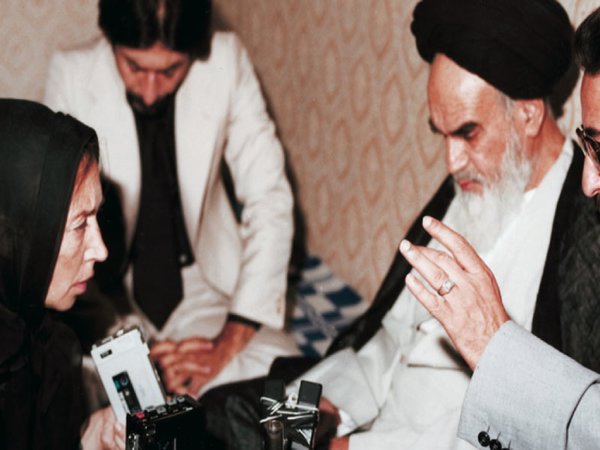
Oriana Fallaci, the verbally pugilistic Italian journalist who earned an admirable reputation as a hard-nosed, intrepid journalist whom Grand Ayatollah Khomeini agreed could interview him soon after the Islamic Revolution in Iran, also wrote a novel based on her experiences in Lebanon during and after the civil war which she titled 'Inshallah'. At that time too, when Beirut had been half-destroyed and Iran sent its al-Quds division of the Islamic Revolutionary Guard Corps to the country to train Shi'ite Lebanese the Islamist death cult of terrorism, there was still hope for the country.  

Fallaci succumbed to the demand placed on her to wear a face-revealing burqa to interview Khomeini for the opportunity to ask him probing, accusative questions of the route he was taking Iran toward. Finally, in the face of the Ayatollah's growing irritation with the questions she posed, she declared she was tearing the 'rags' off ("I’m going to take off this stupid medieval rag right now!”). Her novel described the dismal condition of Lebanon, its Muslim sects divided, the power struggles between Lebanese Christians, Druze and Sunnis, and the inferior status of the Shi'ites.

Shi'ite Hezbollah, Iran's terrorist proxy group is pretty well in control of Lebanon now; threat, intimidation, violence, all accomplished what originally living in a state of harmonious mutual suspicion, alternating political positions in a governing-sharing agreement between Lebanon's various communities has pretty well broken under the weight of the civil war and the inability to recover from the meddling of Syria and Iran. Hezbollah recklessly stored explosive material in dilapidated storehouses in Beirut's port.
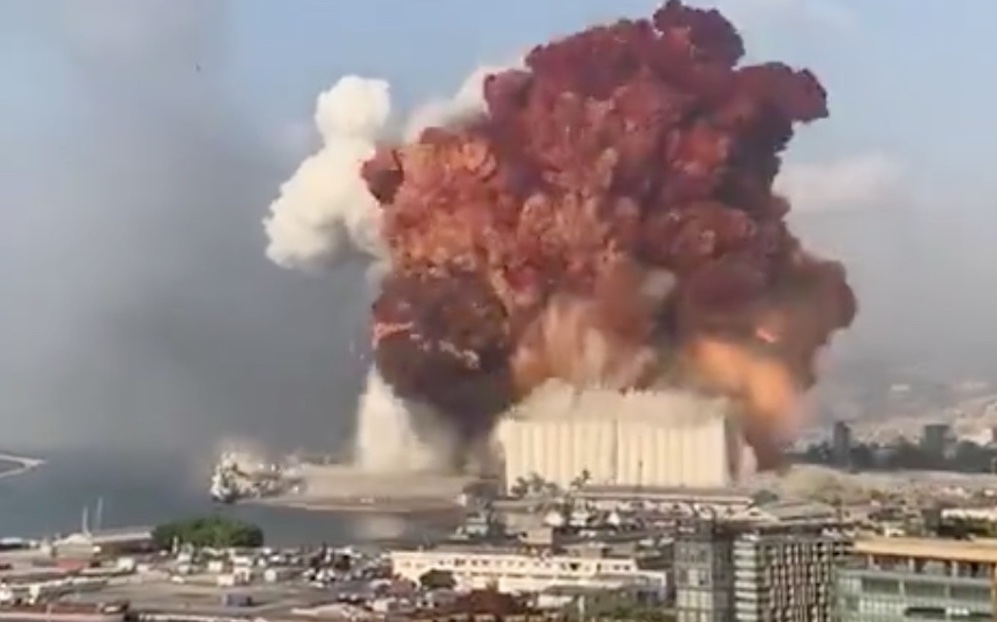
 
Deadly port explosion rocks Beirut - Splash247

Deadly port explosion rocks Beirut - Splash247

The inevitable occurred when a spark led to a massive explosion destroying part of the port infrastructure, killing over 220 Beirutis, and injuring an additional 6,500 others. Two and a half years later, bereaved families are still calling for an investigation to be launched. The originally assigned judge of the Lebanese judiciary resigned amidst threats and intimidation from Hezbollah wanting to protect itself from what would be damning conclusions of its willful neglect causing death and injury.

The February 2005 bomb-assassination of former Lebanese Prime Minister Rafik Hariri's investigation was finally taken over by a UN special tribunal that found, as expected, Hezbollah agents to have planned the murder of the influential and respected Lebanese politician, their strings pulled by Iran.
Hezbollah's first atrocity took place when the newly-fledged terrorist group bombed the American UN military barracks on a UN peacekeeping mission, murdering 307 people: 241 U.S. and 58 French.
 
Over time, Hezbollah has gained in strength and influence, receiving munitions and stockpiling technologically updated missiles from Iran. It has launched attacks against Israelis and Jews internationally as Iran's terrorist proxy, and it has firmly established itself as an integrated part of the Lebanese government, while maintaining its armed forces separate and apart from the Lebanese military. It is more powerful and better armed than the Lebanese military. And under its malign influence Lebanon has faltered and become utterly dysfunctional
.
https://static.dw.com/image/58973346_605.jpg

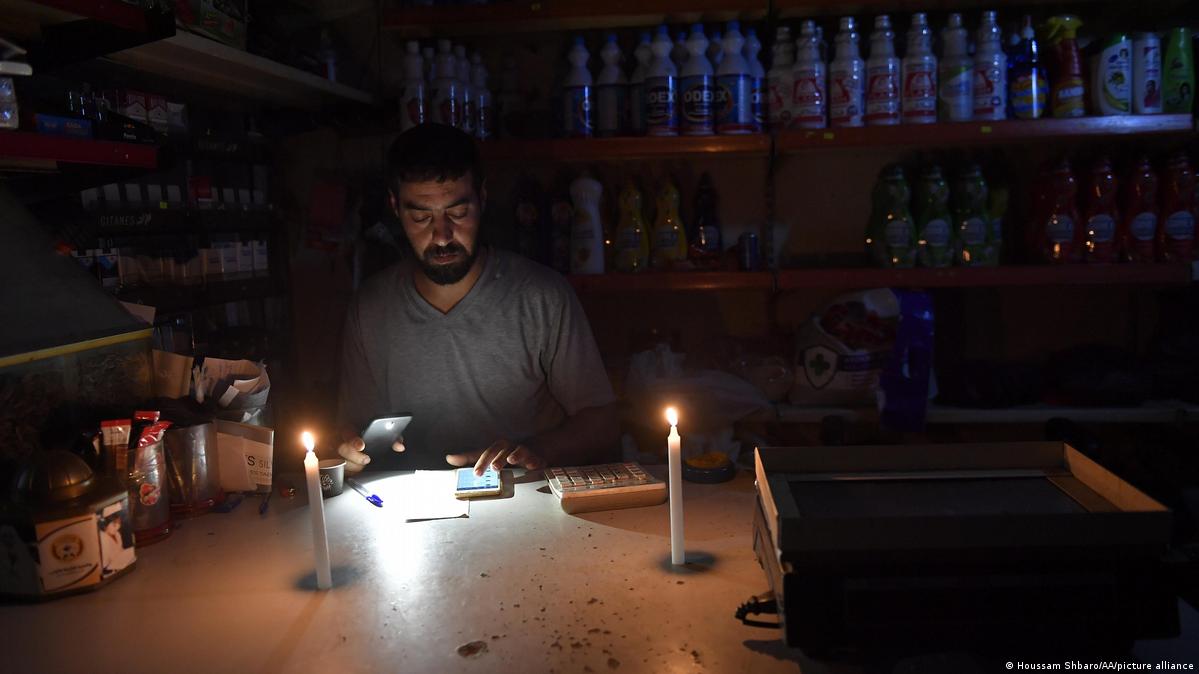
Fuel shortage plunges Lebanon into darkness

Following the blast at Beirut's port, the severely troubled country's economy has been destroyed, inflation has made life impossible for its residents; people cannot withdraw their savings from Lebanon's banking system. Some desperate civilians have taken to robbing banks to the extent of their savings, badly needed to pay for surgeries for ailing family members. Food, heating oil and medical supplies are scarce and people are desperately in need.

The country, once the pride of the Middle East, its coastal 'French Riviera' and 'Swiss Alps', the playground of beautiful landscapes that drew tourists from across the Middle East and further afield is now a pathetic remnant of its former glory. The kidnappings and hostage-taking, the ransom demands and 'prisoner' exchanges, the underground incarceration of Church of England Terry Waite among others, incrementally destroyed the country. It is now on its knees, its people facing starvation.
 
People are threatened daily by economic and political threats. Some 80,000 Lebanese left their country in 2021 representing an increase of 346 percent over 2020. Political instability, economic meltdown, has led to a massive deterioration of the quality of life -- to the extent that 63 percent of Lebanese would emigrate if the opportunity arose. UNICEF reports that Lebanese children "believe emigration is their only hope".
 
According to the United Nations, 78 percent of the population lives in poverty. Lebanese Civil War survivors (1975 to 1990) claim that the crisis of today is worse than the parlous times they experienced living in dread of shelling or sniper fire. 
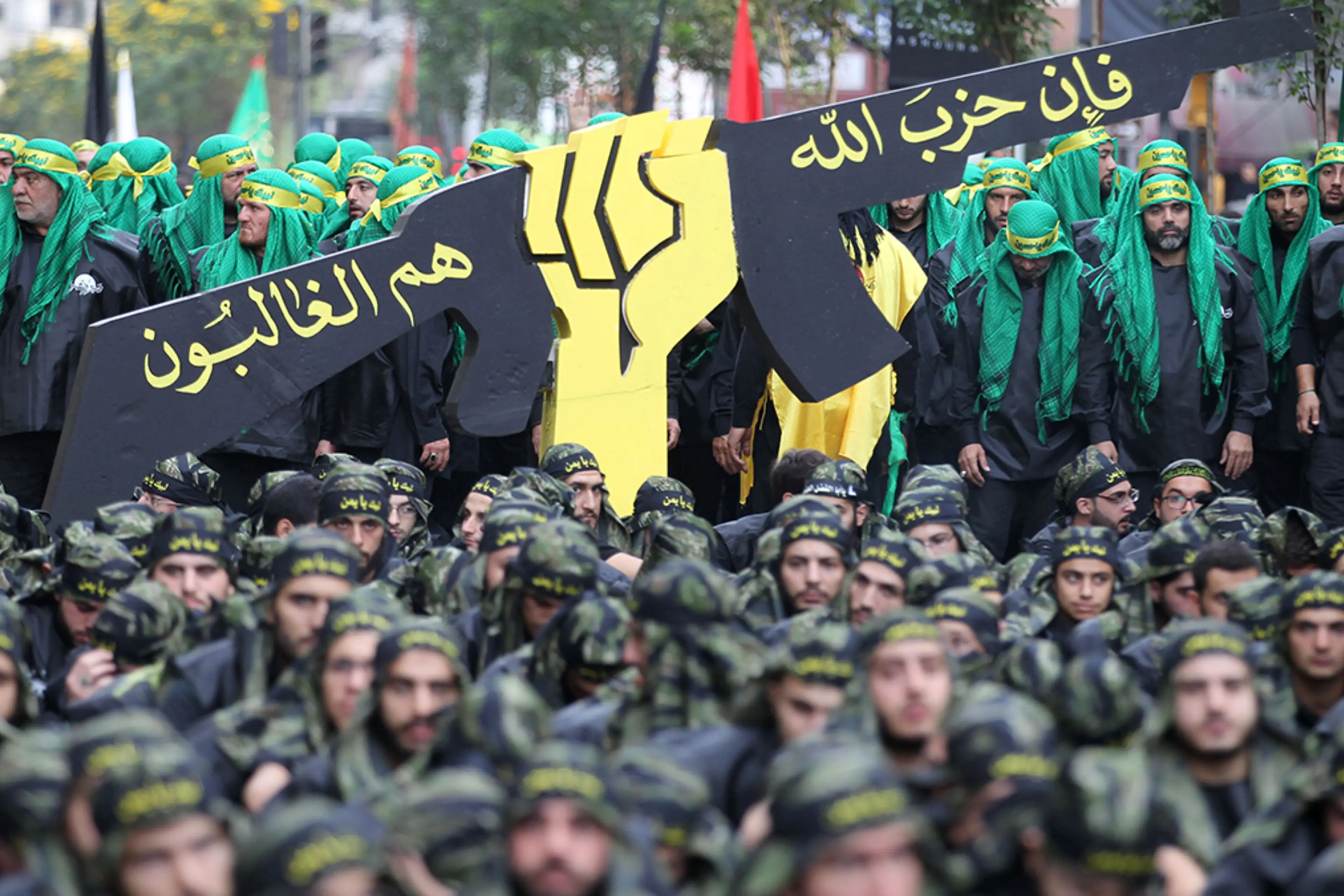
 
Members of Lebanon’s Hezbollah take part in Ashura commemorations in a southern Beirut suburb.
Members of Lebanon’s Hezbollah take part in Ashura commemorations in a southern Beirut suburb. Anwar Amro/AFP/Getty Images


Labels: , , , , , , ,

Wednesday, June 23, 2021

Mlitary Ombudsman Damning Government, Military for Inaction Against Sexual Malfeasance

"[The office of the military ombudsman  is the victim of] subtle and insidious [attempts by the Defence Department to] exert control [over its work and investigations]."
"The ongoing sexual misconduct scandal within the Canadian Armed Forces and the Department of National Defence is moving from crisis to tragedy."
"When leaders turn a blind eye to our recommendations and concerns in order to advance political interests and their own self-preservation or career advancement, it is the members of the defence community that suffer the consequences. It is clear that inaction is rewarded far more than action."
"In the four months since the most recent outbreak of multiple accusations of sexual misconduct, the actions of the Minister of National Defence, senior government and military officials have bitterly proved this point."
"The erratic behaviour of leadership defies common sense or reason. The concept of ministerial accountability has been absent." 
"The cycle of scandals followed by studies, recommendations for independent oversight, half-solutions, and resistance by the Department or the Canadian Armed Forces will only be broken when action is taken."
"In the event that more talk of 'review' surfaces in response to this press conference and my position paper, I have included in the paper an outline of all the reviews already conducted on the subject since 1977. They are numerous and thorough."
Gregory Lick, military ombudsman, Canadian Armed Forces 
Canada's military ombudsman is calling for big changes in the military after years of complaints about misconduct. Gregory Lick issued a position paper calling for full independence for his office    CBC
 
Bitterly damning the government that brought him to his position, and the Minister of National Defence whom Prime Minister Justin Trudeau only the day before threw his 'full confidence' behind, stating him to be perfect for the role he was assigned to in 2015 despite a series of missteps and oversights, both of carelessness and intent, when Harjit Sajjan should have been dismissed from his post long ago, is an indication of just how redundant another National Defence insider's account of damning realities of dysfunction will be to the outcome of a situation that has festered far too long.

Ombudsman Gregory Lick demands the government agree to his office being granted "full independence" from the Department of National Defence and the office of the minister. He and others like him within the department, including his predecessor, are beyond mere outrage at the lack of dedication by both the government and the executive administration of the department to tackle the problem of sexual misconduct within the senior ranks of the military. Where the former chief of the defence staff is being formally investigated for sexual misadventures and the revelation that his replacement is similarly under investigation.

And nor do investigations start and stop with these two high-echelon administrators. Others of high executive rank have also been cited for sexual misdemeanors and have been removed from their posts while under investigation as well. The investigations have been conducted under wraps only revealed through sleuthing by investigative journalists to a shocked public. Previous reports and investigations with their litany of accusations and promises to reform the military have come to naught. Mostly because those who have done the promising and who have led the 'solution-finding' have themselves come under scrutiny.
 
Prime Minister Justin Trudeau responds to questions about military ombudsman Gregory Lick's criticisms of the government's handling of military misconduct   CBC
 
The bluntness with which the ombudsman revealed the extent of the dysfunction blighting the military and its future in Canada is unusual for an executive still active in such a critical post. But he is appalled at the government's "inaction" in failing to address the sexual misconduct crisis that has smeared the Forces Those internal measures whose purpose is to support victims of misconduct have transitioned from "broken", he asserted, to "collapsed". Promises for change turned into "checklist exercises". 

That his office reports to the Minister of National Defence "does not work". He had with him a position paper with a list of "must-have" reforms and new legislation that would advance the empowerment of  his office. A recommendation that would have him report directly to Parliament rather than to the minister's office, enabling him to carry out his work "unimpeded". Controversy of the Liberal government's stance relating to the series of sexual misconduct allegations, along with Defence Minister Harjit Sajjan arose when claims against former Chief of Defence Staff Jonathan Vance were revealed.

Former CDS Vance vigorously denies wrongdoing, but the evidence is there and it speaks loud and clear. Gary Walbourne, Ombudsman Lick's predecessor, had months ago informed a parliamentary committee of having brought to the attention of Defence Minister Sajjan compromising details relating to CDS Vance's conduct, which Minister Sajjan refused to hear or see. When the information was passed on to the Privy Council Office and the Prime Minister's Office, no one took 'notice'. 

When the matter became public, Defence Minister Sajjan announced yet another review, this one to be led by former Supreme Court Justice Louise Arbour. Another review on top of an earlier one by another retired justice, Marie Deschamps, which was, like all such reviews, accepted, then shelved. "I have always had a professional working relationship with Mr. Lick. As Mr. Lick said today, there has been no political interference with his office. Further, I expect he would have alerted me if he felt there was a problem with the relations between our offices. That has never happened", explained tone-deaf Minister Sajjan.

Minister of National Defence Harjit Sajjan is seen during a news conference on May 7, 2020 in Ottawa. The military's ombudsman said Tuesday the minister's office had placed reports 'on hold' and has been 'delaying their publication and availability to the public.' (Adrian Wyld/The Canadian Press)

Labels: , , , ,

Thursday, December 24, 2020

Death of a Lebanese Photographer

Men carry the coffin of Joe Bejjany, a 36-year-old telecoms employee and freelance photographer, during his funeral in the village of Kahaleh

"This is not just about our village. Because today it's Joe, tomorrow it's someone else."
"Are we going to have to protect our own houses and villages?"
"It seems like they had been observing him every day, what time he leaves and goes. The minute he got in his car they came down the stairs and shot him."
"Obviously they had been waiting for him in this area."
"He doesn’t have any enemies at all, so we think there was something he knew with his work."
"We want to send a message. We want a quick investigation and within 24 or 48 hours we want to have information."
Jean Bejjany, head, municipal council, Kahaleh, Lebanon
"The security and judicial agencies, as well as every official, must hasten to uncover the perpetrators and their backgrounds and impose the most severe penalties on them to avoid a return to the logic of self-defence and the complete dissolution of what remains of the state."
Michel Moawad, former Lebanese Member of Parliament
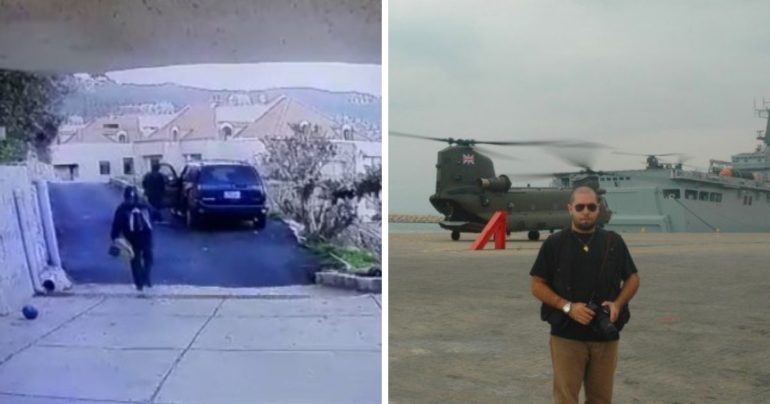
Left, CCTV still   Right, Joe Bejjany

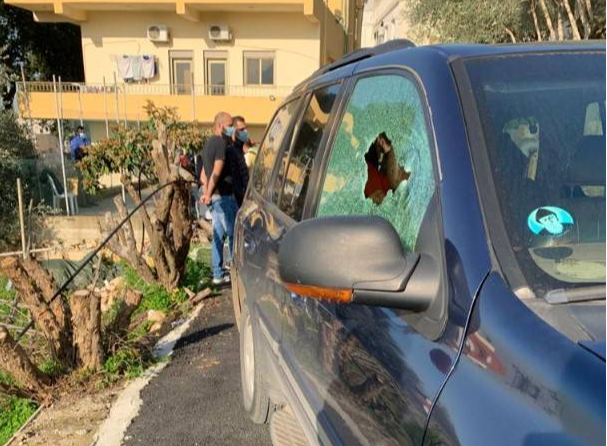
Preparing to drive his two daughters to pre-school, in the majority Christian mountain town of Kahaleh, photographer Joe Bejjany was shot to death with a silencer-equipped weapon. The motive is elusive, but hinted at. The 36-year-old, a Lebanese telecoms employee, freelance photographer and popular resident of the town seemed on the surface an unlikely target for those in the dark underground of a decayed civilization in utter thrall to a theocratic-inspired terrorist militia now essentially ruling Lebanon.

But rumours abound as they will in a country once renowned as the premier vacation resort of the Middle East where Christians, Shia and Sunni Muslims and Druze managed to work things out between them all, with a rotation of government positions and a wary, shared respect. Until Palestinians arrived, who fled into Lebanon when their leaders rejected the United Nations Partition Plan that would divide the area between Israel and the Palestinians led to a Muslim multi-army failed march on the nascent Jewish state.

The Islamic Republic of Iran saw an opportunity to mobilize Shi'ite Lebanese to advance their agenda in creating a Party of God militia answerable to the Quds Force of the Revolutionary Republican Guard Corps as a proxy army that could be used to bring Lebanon into the Iranian Shi'ite fold and threaten the existence of Israel. Hezbollah proved its mettle in the 1980s when it debuted its initial suicide truck bomb to kill hundreds of American troops at a U.S. army base in Lebanon, there on a UN peacekeeping mission.

Since then it has stored munitions, rockets, ammonium nitrate and other conflict-useful items, some of which it has used in its support role at Iran's behest, with Syrian President Bashar al-Assad in his deadly uncivil conflict with Sunni Syrians, and much of it destined -- as newer more advanced rocketry comes along supplied by Iran -- for an inevitable clash with Israel. Ammonium nitrate, used in bomb-making was stored for years in huge amounts at Beirut's harbour. Until it was sparked and the volatile stockpile detonated at the port.

Five months ago 200 people were killed by the immense fiery blast, injuring hundreds more, and ravaged areas of the capital city, adding to the financial meltdown of the country. Surveillance cameras outside the apartment building where Bejjani lived show a professional squad and a planned hit. Backs to the camera, the team appeared unfazed leaving fingerprints at the scene, eschewing gloves. They searched the car of the man they had just killed to retrieve his cell phone, leaving with it, toward a getaway vehicle.

Men carry the coffin of Joe Bejjany, a 36-year-old telecoms employee and freelance photographer, during his funeral in the village of Kahaleh

Joe Bejjani's former job at Alfa telecom was one of logistics, with no access to security data. However, according to sources, he was one of the first to arrive at the port following the deadly explosion, hired by the Lebanese Army and the international committee set to investigate the blast at the port to take forensic photographs. That, according to growing public opinion, placed his life in danger. Former chief of the drug control division at the Lebanese Customs, Colonel Joseph Skaff died suspiciously in 2017.

The Colonel had called for the removal of the 2,750 tons of ammonium nitrate which had arrived at the Port of Beirut in 2013. He was ignored, just as the managers at the port were ignored when they too recommended the same, pointing out the potential danger in storing such readily-ignited chemicals in such a sensitively vulnerable area, threatening the well-being of dock workers and apartment dwellers living nearby. What they had predicted and were helpless to prevent occurred earlier this year.

Early in December, Customs Col.Mounir Abou Rjeily, retired, but formerly stationed at the Beirut port, was discovered dead in his Qartaba, Jbeil home, from blows to the head by a blunt object, according to state-run National News Agency. A high-ranking executive at Byblos Bank in June was also found dead in the parking lot of his home in Hazmieh, Baabda. He too died of a massive blow to the head. Needless to say, authorities promise a thorough investigation in each of these cases.

Kahaleh's municipal chief has stated that no one among Joe Bejjany's friends or family was aware of threats or any enemies that might plan to do him harm. That he had never made any mention of anything that might conceivably have linked him to the port explosion. His daughters, aged two and four, found their father's body in the car minutes after the assassination had occurred. Mounir Bejjany, Joe's godfather spoke of the murder as "an assassination".

According to relatives, Joe had also photographed military events like parades as a freelancer while  he worked at a mobile service provider. The murder was carried out in a professional manner, validated by two security sources. Neighbours wept and threw rice as men in suits carried a white coffin to the church at the Tuesday funeral. Gaby Feghall, Joe's cousin, said Joe had received approval to leave for Canada, about a week earlier. He himself was planning to leave Lebanon to escape the never-ending crises.

A man was murdered in broad daylight, shocking the country and sparking calls for a quick investigation
Joe Bejjany was shot as he was preparing to take his children to school Monday morning. (Credit: Lyana Alameddine/OLJ)


Labels: , , , , , ,

Saturday, June 13, 2020

The Rush to Join a Dysfunctional, Corrupt World Organization

"We will phone member states to ensure they got out to vote, a lot like a usual election. We'll want to make sure that the voters that we've identified as supporting Canada go out and express their vote."
"Haiti had a peacekeeping mission from 2004 to 2020 and it was focused on security and on human rights, but very little focus on development."
"In Sub-Saharan Africa, you have 70 percent of the population that is below 30 years old. Half of that population is without an occupation even before the pandemic. This is a big security issue."
"If that multilateral world doesn't exist, then you're in a situation where only the strongest will prevail. And we know where it leads, because we're only a middle power."
"When you're around that table, you are more influential, if you're more influential, you've more relevant and if you're more relevant, that will represent opportunities for Canada."
Marc-Andre Blanchard, Canada's permanent representative at the United Nations
The United Nations Security Council meets to discuss the situation in Venezuela in the Manhattan borough of New York City, U.S., in January 2019. Canada is vying with Ireland and Norway for two open seats at the council, which will be allocated in a vote on June 17. (Carlo Allegri/Reuters)
Next Wednesday UN ambassadors will begin voting at the General Assembly in groups, to avoid crowding, in respect of the need for social distancing in the time of COVID-19. They will be voting to bring into the two-year temporary revolving Security Council one candidate from the competing countries in this vote; Ireland, Norway or Canada to sit on the 15-member council that complements the permanent Security Council, comprised of the United States, Russia, France, Great Britain and China.
"We know that engaging around the world is important both for Canadians' health and well-being, but also for the good of our economy."
"Even as some of our allies, including the United States, seem to withdraw from the world, Canada is engaging."
Prime Minister Justin Trudeau

"Them [sic] looking at the UN Security Council seat without looking at Canada's foreign policy, and understanding where we are in the world, and what our relationship with our allies and our adversaries alike should be, means that they didn't know what they were going after."
"Justin Trudeau has made some really damaging actions to our relationship and eroded our reputation on the world stage. We don't know what they're willing to trade away to get the seat."
Leona Alleslev, Opposition Conservative Member of Parliament
This would be Justin Trudeau's crowning achievement, his legacy project, his on begging, borrowing or buying votes to bring Canada to a seat on the UN Security Council. This is not a project supported by most Canadians, to whom the very project itself is simply a yawn, acknowledging yet another vanity project by a politician who revels in attention-getting and absurd declarations such as Canada, under his guardianship has 'returned'. What it has returned to is the usual Liberal brand of hoodwinking the electorate, with a special Trudeau touch of cynical sanctimony.

But this project to attain a two-year seat is dear to this man's idea of elevating himself in the esteem of the movers and shakers in the world body, to attain a level of influence and the aura of power that Justin Trudeau feels should be accorded him. He has himself personally taken the time and trouble to speak with as many world leaders in the past weeks as he could possibly tuck into a schedule that includes having his government tackle critical issues such as the handling of the COVID-19 pandemic's effect on Canada, both in medical terms and economic.

There are ongoing protests headed by Black Lives Matter resulting from the murder of George Floyd in the United States, and the allied issues of the desecration of national monuments, history's heroes now revealed by Indigenous and Black groups to be racists. The icons of Canadian history, according to the protest groups, preyed on native populations, were bigots and racists and their statuary must come down, public institutions such as schools, libraries, municipal buildings, street names, must be dismantled, their memories erased.

Canada's ongoing problems with the United States in trade issues, with Saudi Arabia, in arousing the Kingdom's ire over perceived interference in its human rights record, its problems with China whose human rights record is rarely raised, but when an issue such as a request through an American court of justice for the extradition under an agreement between Canada and the U.S. saw China's tech giant Huawei's CFO arrested on a U.S.warrant, spurring China to kidnap two Canadians doing business in China.

None of these issues, apparently, occupy too much time and energy for the prime minister, that he is unable to muster gaps of opportunistic time to engage in cajoling, jollying, and pleading and bribing sometimes unsavoury governments to cast a vote for Canada's bid in the U.S. Both Ireland and Norway, the other two candidates for the vacant seat, have somewhat greater sway in the corridors of the UN. Both give a higher percentage of their GDP to global equity support, and are more involved in UN peacekeeping.

The former U.S. ambassador to the United Nations, placed Trudeau's eagerness not to be too morally or ethically particular about where his votes come from in context, when Nikki Haley in outrage over an executive order from Justin Trudeau to Canada's UN representative to have it on record that Canada supported an anti-Israel motion at the United Nations last year, that he prepared himself to dance with the devil to achieve his end.

Israel, after all, swings one vote, whereas the Organization of Islamic Cooperation can be counted on for at the very least the votes of 53 countries, not to discount the influence the OIC has with the Non-Aligned group of countries within the UN which curries favour with the Arab League and the OIC. But no cost to Canada's moral dignity is too dear to pay for Junior Trudeau's vanity project to sit with the Big Boys of Global authority. For he believes that the world needs more Trudeau, which he deliberately conflates with Canada.

Ms. Alleslev points out the embarrassment on the world stage that Canada suffered with Trudeau's visits to India, or how petty and childish his behaviour was seen during the Trans-Pacific Partnership trade talks as he stalled negotiations and insisted on his version of worker equality, female entitlements and LGBTQ-2 and union issues be considered. According to Canada's Blanchard, Canada's focus is on economic security issues, to rectify the UN's focus on short-term security needs, ignoring long-term economic needs that play into violence and chaos.

Haiti, he points out, still sees ten percent of its population malnourished, with 40 percent dependent on humanitarian assistance. Canada, on the other hand, the sterling representation of a wealthy nation where equality of opportunity is paramount, guaranteeing everyone the chance to live a full and happy and healthy life, has hundreds of food banks to give aid and assistance to the homeless, to the unemployed, to welfare recipients and people living under the poverty line.

This is the first prime minister who has managed to suspend democracy in Canada. He has effectively dismissed the House of Commons. Parliament no longer sits for the purpose for which it was designed, allowing this government and this prime minister to simply proceed with initiatives they feel will benefit them, over the needs of Canadians. He has stilled his critics from the House of Commons by disallowing them the opportunity to question his government's decision-making while he ransacks the nation's economy.

This is tyranny, not democracy. And he would, in fact, fit right in with many of the other members of the Security Council, both temporary and permanent. 

Senegal's President Macky Sall, left, walks alongside Prime Minister Justin Trudeau after arriving at the presidential palace in Dakar, Senegal, Wednesday, Feb. 12, 2020. Trudeau received Senegal's support for a seat on the UN Security Council. (Cheikh A.T/The Associated Press)

Labels: , , , ,

Friday, August 10, 2018

Irreconcilable Identities and Challenging Credulity

"[The lawsuits are intended to] hold the person responsible for Colten's wrongful death accountable [and in the process to] force the RCMP to look deeply within itself [to examine how it] interacts with the Indigenous citizens of Canada."
"The search officers who attended the home deliberately engaged in discrimination by subjecting three proud members of the Red Pheasant First Nation to ridicule, unlawful searches and humiliating breath tests."
"While the loss of Colten [Boushie] has devastated the plaintiffs, it has been the unending memory of the defendants' high-handed and egregious conduct that has caused the plaintiffs' injuries."
Lawyers for the Red Pheasant First Nation Reserve Boushie Family

"[There] can be no true reconciliation until the RCMP, itself, acknowledges that the callous manner [in which officers treated the Boushie family] was due -- at least in part -- to the fact that they were proud members of the Red Pheasant First Nation."
Chris Murphy, lawyer, Boushie family
Debbie Baptiste, mother of Colten Boushie, speaks during a press conference on Parliament Hill in Ottawa on Feb. 14, 2018.
Rural communities in Western Canada have a problem with the presence of First Nations reservation young people's obstreperous behaviour and flouting of the law. Many rural properties and farms owned by white farmers whom Canada's Indigenous nations now characterize as "settler" farms are being plagued with criminal entry and theft of all manner of farm equipment. Homes are frequently illegally entered and the occupants made concerned and wary over the presence of young men often inebriated and frequently up to no good.

Such was the case on August 9, 2015 when five young men and women drove a grey Ford Escape SUV from Red Pheasant First Nation over to a popular swimming area by a nearby river. They spend a fun afternoon together, drinking all the while. When they decided to return home they discovered a flat tire on the vehicle. The SUV was steered onto a farm where later evidence made it clear that someone among the five had made an unsuccessful effort to steal a truck parked there, smashing a window with a .22-calibre rifle they had with them.

The attempt unsuccessful, they drove on to a farm 15 kilometres further up the road belonging to a farmer by the name of Gerald Stanley who was making some fence repairs on his property, with his grown son. Both heard a wild commotion in the distance, around their house, and hurriedly went over to see what was happening. Someone among the inebriated five that arrived in the SUV had tried to start a quad on the property and when the Stanleys drove up all got in the SUV and tried to drive off, hitting a parked vehicle in the melee.

Mr. Stanley, fearful for the safety of his wife who was on the scene mowing the lawn, but whom he was unable to see, told his son to enter their house and retrieve a firearm. He went himself to the nearby garage and took possession of a firearm he had stored there. In the heated atmosphere and excitement and fear, Boushie, seated in the driver's seat, alone, because his companions had run off in a panic, was shot in the head, and killed by a single gunshot. At trial, Mr. Stanley testified that his gun had gone off accidentally and he was found not guilty of the charge of second-degree murder.
William Boushie, brother of Colten Boushie, speaks to media during a rally outside of the Saskatchewan Provincial Court in North Battleford, Thursday, August 18, 2016. People rally outside a Saskatchewan courthouse Thursday where a farmer accused of fatally shooting a First Nations man is to make an appearance.

William Boushie, brother of Colten Boushie, speaks to media during a rally outside of the Saskatchewan Provincial Court in North Battleford, Thursday, August 18, 2016. People rally outside a Saskatchewan courthouse Thursday where a farmer accused of fatally shooting a First Nations man is to make an appearance. Liam Richards/THE CANADIAN PRESS
The verdict by jury which had excluded the presence of any Indigenous representatives, had infuriated the First Nations communities who charged that Canada was racist and its policies and laws injured and dishonoured First Nations. Numerous protests took place, but eventually the issue quieted down, as other similar events continued to take place. Now, the mother of the young man who had lost his life, along with her two remaining children are suing those involved in her son's death; the farmer Gerald Stanley and the RCMP. Two lawsuits totalling $2-million.

Colten Boushie's mother Debbie Baptiste faults Mr. Stanley for acting with "excessive force" against her then-22-year-old son. She seeks $60,000 compensation for grief counselling, $100,000 in lost wages, and $200,000 "in aggravated, exemplary and punitive damages to be proven at trial". The attorney general of Canada and several RCMP officers are named in a separate suit. Her son's death, states his mother is "a direct result of the negligent, reckless or intentional acts of the defendant, Gerald Stanley" who failed to assess potential risk, shot her son at "point blank range" and failed to administer assistance to her son.

Ms. Baptise is also claiming over $400,000 in damages for her suffering following her son's death; the grief she was caused, the loss of his "care and companionship" and past and future income (on a reserve with a 74% unemployment rate). As for the statement of claim against the RCMP, another $550,000 is sought in damages while her sons each seek $450,000 for damages as well. She stated that RCMP officers asked if she had been drinking and told her to "get herself together", on their arrival and the delivery of the message that her son was dead.

She had, the lawsuit states, along with her sons, suffered depression, anxiety, nervous shock, interference with normal sleeping patterns, loss of enjoyment of life and suicidal ideation -- all linked to the harsh manner she contends the RCMP officers confronted her with while delivering their message and looking to find evidence in her home. In grieving and continuing to grieve the loss of her son, this poor woman and her son's siblings would find life's cruel consequences of sociopathic tendencies much easier to deal with once in possession of two million dollars that would help to ease their way to dealing with the past and finding peace and harmony in their deprived lives.

And no, no one on either side of this horribly divisive and unfortunate event would ever wish that a young man should lose his life over the ill life-choice of potential theft of property. The outcome of this tragic event represents an abject failure of both communities; that of the Indigenous community to find a life for themselves other than on isolating reserves with no future for their youth, and that of the outside community which understandably has no idea how to deal with the outcome of a failure to resolve the unresolvable.

Faced with the wildly undisciplined, anti-social presence on private property of five inebriated young people it is in fact, little wonder that the Stanley family went into a panic at the presence of strangers whose behaviour they had no idea how to deal with, or whether they were in mortal danger because of that presence. Imprinted into human reaction to perceived danger is the compulsion to act in self protection. The incidence and reputation of Indigenous youth invading private property and lifting goods invoked unreasoning fear, and little wonder.
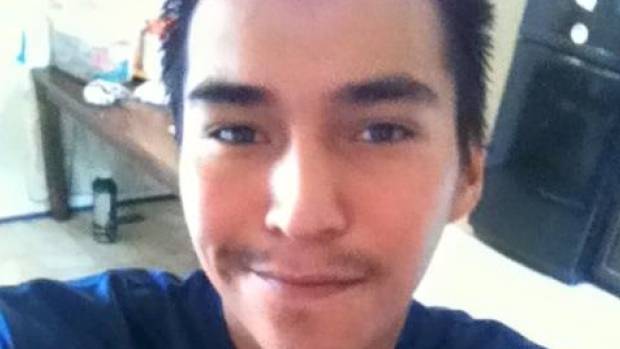
Colten Boushie is shown in this undated Facebook photo.
Colten Boushie is shown in this undated Facebook photo.

Labels: , , , , ,

Thursday, May 31, 2018

Condemning Venezuela's Nicolas Maduro

"I would like to see the states from the G7 agreeing to refer the matter of crimes against humanity to the International Criminal Court for a prospective investigation and prosecution."
"We have a persistent and pervasive culture of impunity finding expression in a massive assault on the rule of law [in Venezuela]."
"There is no independent judiciary. There is no independent prosecutors. There is no independent justice system."
"This is the archtypical example of why a reference is needed, as to why the ICC [International Criminal Court] was created."
"The testimony that we heard in our public hearings, of the graphic examples of torture and rape and imprisonment, and then the humanitarian crisis -- we can't forget that behind all these findings of fact and conclusions of law are suffering human beings. They need justice. They need relief."
Irwin Cotler, former Canadian Liberal Cabinet Minister, human rights lawyer, activist

"We are appalled, though not surprised, by the evidence the panel found supporting the allegation that crimes against humanity have been committed in Venezuela."
"...It is because of the Maduro regime's ongoing abuse of its people and attacks on democracy that Canada has taken a series of punitive actions, including imposing targeted sanctions."
Canadian Foreign Minister Chrystia Freeland
Hungry, sick and increasingly desperate, thousands of Venezuelans are pouring into Colombia
Venezuelans cross the Simon Bolivar International Bridge into Colombia. (Fernando Vergara / Associated Press)
 
The legacy of Hugo Chavez, he of the infamous 'Bolivarian Revolution' using the Cuban revolutionary political model for his guide in socializing Venezuela and in the process setting it on the road to wrack and ruination, has been nicely completed by his chosen successor and protege, Nicolas Maduro, who like his predecessor, is determined to make common cause with those other models of statescraft and superior executive administration of a nation's affairs, taking cues from Iran, Cuba and North Korea.

Venezuela, a once-moderately well-off nation with vast oil resources and related revenues which Chavez as its long-time president sprinkled generously among his neighbours, providing free oil to Cuba and neighbours like Bolivia, neglected to use some of that largesse to upgrade infrastructure in the country, including oil extraction facilities and to build refineries for that oil. Corruption and mismanagement in the extreme have resulted in a breakdown of all the normal parameters of civil administration resulting in critical medical and food and energy shortages.

Like Zimbabwe, under its long-time tyrant Robert Mugabe, now deposed, the country has soaring unemployment rates, violent crime, shortages of all consumer goods, and no hope for the future. Criticism of the government is viewed as a crime resulting in imprisonment. Inflation continues to soar, and desperate Venezuelans exit their country of birth, anxious to find haven anywhere else, crowding into neighbouring countries to escape Venezuela's violence and social breakdown.

Now, a report issued by the Organization of American States calls for the removal of the Maduro regime, accusing it of murder, extra-judicial executions, torture and allied human rights abuses. Canada, under its Liberal government, seeking as always to 'punch above its weight', has become the first country to 'take action' on this file on which Luis Almagro, secretary general of the OAS stated "nobody could do worse" in governing than the Maduro claque.
A Venezuelan woman is vaccinated against measles in Cucuta, Colombia, at the Simon Bolivar International Bridge on the border with Venezuela.
A Venezuelan woman is vaccinated against measles in Cucuta, Colombia, at the Simon Bolivar International Bridge on the border with Venezuela. (Schneyder Mendoza / AFP/Getty Images)
 
A specially assigned OAS panel of which Mr. Cotler was a member, heard from victims, witnesses and human rights crimes experts, to find Maduro responsible for murders, thousands of extra-judicial executions and tens of thousands of arbitrary detentions, cases of torture, of attacks against the judiciary and a "state-sanctioned humanitarian crisis", leading hundreds of thousands of people to become refugees.

Canada has decided -- to step up to the plate, jump the gun on others, call it what you will -- to impose sanctions on 14 Venezuelan elite with connections to the regime, inclusive of Maduro's wife, as part of larger efforts by the U.S. to bring the Maduro government to an end. Yet Canada made no effort to sponsor the OAS panel report to mount a formal investigation by the International Criminal Court. Which, years ago, in the wake of the Darfurian humanitarian outrage in Sudan, sat in judgement of Sudanese President Omar al-Bashir, accusing him and others in his entourage of being war criminals.

A judgement that none of Bashir's Arab leader colleagues seemed to take seriously, since they all without exception ignored their responsibility as signatories to the ICC, to apprehend him while in their countries, and turn him over to the ICC for trial. Canada will be hosting a meeting of the G7 next week at Charlevoix, Quebec, where the issue of Venezuela's plight will be further discussed among the leaders of Canada, the United States, the United Kingdom, France, Germany, Italy and Japan.

It will be their collective opportunity to round out the initial work of the 'little country that could' by imposing meaningful pressure on the Maduro government, including referring the OAS file to the ICC since they all together rejected Venezuela's presidential elections of the last week stating the obvious, that Maduro was solidifying an "authoritarian grip" causing great suffering to his unfortunate people.

Leonardo Albornoz, an unemployed heavy equipment mechanic from Venezuela, stands with his family as he tries to sell candy for coins to passing motorists. "I'm being forced to beg because there is no work," he said.
Leonardo Albornoz, an unemployed heavy equipment mechanic from Venezuela, stands with his family as he tries to sell candy for coins to passing motorists. "I'm being forced to beg because there is no work," he said. (Chris Kraul / For The Times)

Labels: , , , , , , , , ,

Friday, March 09, 2018

The Gap is Widening Between First Nations and the Rest-of-Canada

"The Crown cannot appeal because some people have questions about how the investigation was done or what the lawyers did."
"There is no basis for concluding the judge said or did anything that would justify an appeal."
"The public interest, the fact that something is of great concern or seen as an example of something larger, never factors into it. I believe everything was done appropriately [during the trial that exonerated Saskatchewan farmer Gerald Stanley in the shooting death of Colten Boushie]."
Assistant Deputy Attorney General Anthony Gerein, Regina, Saskatchewan

"The Stanley family is relieved that the criminal process is now complete, but this is not a happy day. A young man died, that is a terrible tragedy. There is no going back; there is no making it right."
"We hope that with time the Boushie/Baptiste family can begin to heal."
Scott Spencer, defence lawyer
Gerald Stanley courthouse
Stanley's defence team argued that he fired two warning shots to scare off Boushie and his friends but that a third shot went off accidentally as he was reaching for the keys of the SUV in which Boushie was seated. (Canadian Press)
"[The Crown's decision is] unfortunate but we weren't surprised."
"There's so many questions. Tell the truth. There won't be any healing until that happens."
"We want our children to have just as much right to respect in the justice system as anybody else. We don't want any more. We don't want any less. [That will happen through education and understanding] truths that are sometimes hard to listen to."
"Such conversations are] going to be difficult, scary and very uncomfortable [but they need to happen]."
Vice-Chief Kim Jonathan, Federation of Sovereign Indigenous Nations

"[The Boushie family] is not taking the news well."
"I feel terrible for Indigenous people in this province who are part of this justice system. The justice system in the province is broken and needs to be fixed."
"The family is going to keep fighting."
Chris Murphy, Boushie family lawyer
Colten Boushie
The circumstances of Boushie's death fuelled racial tensions in Saskatchewan and across Canada and ignited a debate about rural crime and adequate policing. (Facebook)

News that the Crown had no intention of appealing the not-guilty verdict reached by a jury of all-white jurors in the 2016 death of 22-year-old Cree Colten Boushie who had driven along with four friends onto the Stanley farm, with the resulting confrontation between the farm family and the five Aboriginal youths ending in  tragedy, elicited a pledge from the young man's mother that: "This isn't the end of the fight". The not-guilty verdict on the charge of second-degree murder delivered on February 9th, raised a storm of protest from within the Aboriginal community in Saskatchewan and across the country.

"Justice for Boushie" was heard everywhere. The circumstances were that five drunk young people driving an SUV with a blown tire had earlier driven onto another farm and an attempt made to steal a truck there. The young people were in possession of a long gun. They had been to a beach and had spent the afternoon drinking. On arrival at the Stanley farm one of the youths made an effort to start an all-terrain vehicle that was sitting in the yard. When Stanley and his son heard the commotion they rushed over from where they had been building a fence.

A confrontation ensued, with Stanley ordering the young people to leave his farm. Two of the young men ran off after backing up and hitting a parked SUV belonging to one of the Stanleys. Mr. Stanley testified he was worried about the whereabouts of his wife, reached into the truck where Boushie was sitting in the driver's seat to turn off the ignition, and a handgun he was holding and had earlier fired into the air, misfired and hit the young man in the back of the head, killing him. Farmers in Saskatchewan are on edge over an epidemic of thefts from their farms taking place in broad daylight.

Trucks, ATVs, farm equipment, tools, all missing, all costly to replace, all frustrating the farmers who complain the RCMP's response to be inadequate. The prevailing atmosphere is one of suspicion and anger. And there seems to be a culture of petty, ubiquitous thefts for which the Aboriginal community is being held responsible. The Indigenous communities feel themselves targeted, the farmers consider they are seen as easy prey, and both feel ill done by, by the other. Now, after the death of Colten Boushie and the not-guilty judgement in his death, the distance between the two has become a chasm.

First Nations are convinced they will never see justice in Canada. First Nations are over-represented in their numbers in prisons. On the other hand, their commission of crimes surpass those of the non-Indigenous population. Often enough, during criminal trials Indigenous people are given special consideration, under a concept called the Gladue process which takes into account individual, background, culture, heritage and discrimination they have suffered.

There is a weight of dysfunction within First Nations reserves resulting in suicides, violence, child neglect, high unemployment, alcohol and drug addiction, tribal council corruption, and endemic poverty, despite the federal government funding reserves. Those housed by reserve funding see no need to perform the most perfunctory and necessary upkeep to the dwellings they inhabit because they don't own them, and they feel that any repair or upkeep is the responsibility of government. Sometimes the only employment available is to be on the band payroll.

Many of the communities are geographically isolated. There are problems associated with a lack of potable water, food that is imported is prohibitively expensive, and there are complaints that medical services are not on par with those available in urban centres -- understandably. Education available to the young is held to be inferior to that obtained in cities. Children who are taken into the care of provincial childcare agencies are sometimes given to the care of non-Aboriginals, decried by First Nations.

Children are neglected and though too young are left to their own devices. Mental health problems are more numerous and more acute than elsewhere as many reserve residents feel bored and dejected and deplore their own isolation even as they cite pride in heritage and a determination to live on ancestral lands and remain committed to Aboriginal traditions and way of life, though hunting and trapping and traditions are no longer practised as they once were. ATVs, television and processed foods represent their new norms.

Labels: , , , ,

Wednesday, March 07, 2018

A Splinter in the Public Eye -- Poseurs Unite!

"We've all observed your 'science guy' persona, yet, you intentionally avoid telling people you're playing a character."
"You have allowed the illusion to persist for decades that you are an expert on science issues in the public eye."
Critic of science popularizer, American Bill Nye

"Unlike the Science Guy, I am not the skilled labour guy or the dirty jobs guy, nor am I a spokesman for blue-collar America."
"I would never juxtapose myself with work in the same way Bill [Nye] has juxtaposed himself with science."
Mike Rowe, former host, Dirty Jobs

"When you're a baby,  you are a scientist. If I make this noise, wow, I get milk. If I push this button or knock this thing off the table, it lands on me and it hurts. Being a kid is constantly testing, discovering, hypothesis, experiment, solution, learning. It's as we grow older, we start to forget about being scientists."
"Men like explosions, women are building things. [Men mostly think about whether they can] build a really big rocket."
"There's so many of these slow-motion, exploding things. What happens if I drop an anvil on a watermelon?"
Prime Minister Justin Trudeau
Bill Nye shows off a Canadian $5 bill, which features an astronaut and the Canadarm as Prime Minister Justin Trudeau looks on during an armchair discussion highlighting Budget 2018's investments in Canadian innovation at the University of Ottawa in Ottawa on Tuesday, March 6, 2018.   Justin Tang / THE CANADIAN PRESS
Justin Trudeau is utterly oblivious to the perilous state of his vacant mind; he is too obsessed with the conceit of self as Renaissance Man, knowing all, capable of anything and master of all he surveys. Each of his public performances reveal to a gawping public how narcissistic and vacuous this man in arrested adolescence really is, imbued with a streak of malice toward any who might take steps to interfere in his plans. The public humiliation of Vice-Admiral Mark Norman, suspected of attempting to undermine a Trudeau decision on naval ship procurement, removing him from his position as vice-chief of the defence staff a case in point.

As a self-declared feminist and "progressive" Justin Trudeau has angered other heads of foreign governments by his firm stance linking trade agreements with gender equality, sensitivity to Aboriginal affairs, workers' rights and respect for the LGBTQ2S communities. His superior sanctimony has cost him the initial admiration he garnered as a cheerful, good-news personality in his travels abroad, leading to the position he now holds as an intellectual light-weight and embarrassment to Canada.

His soft-on-terrorism and big-on-refugees position has failed to endear him to his home public as tax paying Canadians groan at the million-dollar settlements Trudeau feels that hostile Muslim fighters are entitled to, linked to the alacrity with which he has invited those fleeing sectarian violence out of the Middle East to come and share Canadian largess, taking advantage of generous social welfare programs in a country whose health-care system is already stretched to the limit.

The latest debacle where his clownish display of cultural disrespect to a Democratic ally had the Indian sub-continent puzzled as to why a Westerner would appropriate a religious Hindu symbol of piety while clad in outlandish Bollywood glitter. Abuzz over the eight days of a presumed "trade" mission that had very little trade in the mission but plenty of clumsy play-acting rounded out by clear indications in the carelessness of the company Trudeau keeps that terrorist affiliations fail to faze him even as they alarm his courteous hosts who bear the brunt of it.

Trudeau adores celebrity, his own and any opportunities to brush up against the celebrity of others. This week, the University of Ottawa hosted an event to which American science popularizer Bill Nye was invited, to quip on science alongside the equally knowledgeable Justin Trudeau. Both in their element, each supporting the other in their veneer of scientific knowledgeability. Both had briefly studied engineering, the Science Guy as a mechanical engineer, and as the event moderator pointed out, Trudeau whose brief acquaintance with that field of study left him as "someone who thinks of himself as a bit of a science nerd".

The quotes above can attest to the 'nerdiness' of Trudeau as science aficionado. Trudeau's work experience has included a stint as a drama coach at a private school in Vancouver. He has, additionally, had experience as a snowboarding instructor, nightclub bouncer and camp counselor. On the strength of his family name, he has also had experience as a public speaker, collecting sturdy speaking fees in the process.This extensive work experience and his obvious intellectual brilliance prepared him for his role as Prime Minister of Canada.

Canadian scientists, of whom there are plenty, some celebrities in their own right, were evidently insufficiently internationally known for their celebrity-heft to sit alongside the prime minister to discuss Canadian innovation in science. Bill Nye, the American impersonator of science international apparently was, but why complain; the match-up was fairly inspired. What self-respecting Canadian scientist would, after all, want to play science-stooge for Trudeau?


Labels: , , , , ,

Saturday, February 17, 2018

A Seemingly Insolvable Human Conundrum 

"The RCMP is in a very difficult position."
"You have farmers complaining about under-policing and you tend to have an Indigenous population complaining about over-policing."
Glen Luther, professor of law, University of Saskatchewan

"When you go to your local coffee shop and you find out your neighbour was robbed last night, it sticks in your mind, and you have to start thinking about protecting your own properties."
"It doesn't deter them [First Nations young men] from trying again [without prosecution resulting from crime sprees]. It's an easy get if you're not going to be brought to justice."
Rick Kehler, Saskatchewan farmer, Paynton, Saskatchewan
Colten Boushie, left, was fatally shot in August 2016. Gerald Stanley, right, was acquitted of second-degree murder in the death of Boushie.
Colten Boushie, left, was fatally shot in August 2016. Gerald Stanley, right, was acquitted of second-degree murder in the death of Boushie. (Facebook/Liam Richards/Canadian Press)

And there lies the problem of social dystrophy, where two solitudes view their social obligations, security and responsibilities in wildly variant ways. First Nations Canadians across the spectrum and across the country complain that their youth are disproportionately represented in Canadian prisons. That there is a distinct reason for that state of affairs in that First Nations youth are involved in the commission of more crimes per their population size than non-Indigenous youth appears not to sway them from their complaints.

That Canadian Aboriginals face discrimination and lack of respect, feel oppressed and under-valued is another reality. But the simple reality also is that there is a reluctance to integrate with the larger society alongside a wish to remain separate, to embrace their heritage, and to live on reserves administered by councils that in too many instances, enrich themselves and ignore the needs of the reserve residents, apportioning government funding disproportionately.

Another unfortunate reality is that in greater numbers than the general public, violence and suicide stalk Aboriginal populations in Canada where First Nations people are prone to drug and alcohol addictions so that crime appears to naturally follow. In First Nations communities violence against men, women and children perpetrated by other residents is also disproportionate to the general society, as is the neglect of children's most basic needs for emotional support and guidance.

The insistence among Indigenous leaders that remote reserves should have medical services equal to that of urban dwellers is so obviously impractical. Impractical too is the prevalent view that government provided reserve housing can be allowed to disintegrate because the people who live in them cannot bother simple household upkeep. Just as impractical as complaining of high unemployment in isolated communities where there are no employment opportunities.

A trial just recently concluded where a white farmer in Saskatchewan was found not guilty by a jury of his peers in the death of a 22-year-old Cree man who, along with four friends, drove inebriated onto his property, attempting to steal an all-terrain vehicle there when the same group had an hour previous driven onto another farm property and failed in an attempt to steal a truck there. The entire area is one of rampant crime where farmers report tools, equipment and vehicle theft on a constant basis. And because of a lack of police follow-up have initiated their own monitoring.

The actions of the five young people in the SUV, inebriated and out of control, alarmed the farmer, his adult son and the farmer's wife. A melee ensued resulting in the death of Colten Boushie of the Red Pheasant Cree Nation, by a shot from a handgun held by 55-year-old Gerald Stanley who feared for the safety of his son and wife. Boushie shot dead while seated in the SUV, had a rifle on his lap. Two young women in the SUV exited the vehicle and proceeded to beat the farmer's wife before running off.

The RCMP investigating the death is under criticism because officers entered Boushie's mother's home without a warrant, both informing her of her son's death, and looking for the presence of a witness to the event. The SUV the five young people were driving with a flat tire was impounded, presumably because it was stolen. When the trial jury was selected both the defence and the Crown had the opportunity to refuse jurors which ended up an all-white jury of men and women, no Indigenous.

When RCMP cadets are being trained they are exposed to classroom exercises in Indigenous rights and culture. An interactive exercise introduces them to a sense of the "betrayal, loss, suffering and discrimination Indigenous people suffered following European settlement". In Canadian law when Indigenous people are on trial especial consideration is given to their background circumstances, excusing them where white accused would not be through a process known as the 'Gladu' principle.

Despite all the efforts on the part of non-Indigenous Canada to cater to the needs of First Nations people, nothing seems to work to the advantage of the entire society. At the present time there are 1,500 Indigenous officers on the federal police force, representing roughly 8 percent of the officer ranks. RCMP members have regular meetings with national Indigenous organizations to speak of methods in hopes of preventing crime, to reduce victimization of Indigenous people.
"This testimony [from a witness], although this is entirely up to you to decide, is at odds with the autopsy report that definitively states that Mr. Boushie died from a single gunshot to the head."
"If you have a reasonable doubt about Mr. Stanley's guilt arising from ... the credibility or the reliability of one or more of the witnesses, then you must find him not guilty."
"There is no dispute that Mr. Stanley was lawfully justified in the circumstances of this case to retrieve his handgun and fire it into the air as warning shots, if you find that this is what he did."
"Beyond that, it is for you to determine if his actions continued to be lawful."
Chief Justice Martel Popescul :  Instructions to the jury, Stanley second-degree murder trial : Not guilty

Labels: , , , ,

Sunday, January 15, 2017

Carnage in Venezuela

"They told me: 'We are going to play a game, Little Rafael. It is called electrocution'. They shocked me on the abdomen, the neck, the penis, the butt, the back, my hands -- everywhere."
"I felt like my eardrums would explode."
"I knew nothing. I was just a quiet kid and didn't run around with anyone."
Rafael Gonzalez, 27, Barlovento, Venezuela

"Imagine how I felt as a mother."
"They [the military] killed them [men rounded up for arrest in Barlovento] like animals."
Petra Perez, Barlovento resident

"[Victims were innocent, subjected to] the most unfortunate cases of cruelty and inhuman denigrations [sic: degradation] of torture."
"The army doesn't have the preparation or the professional capacity to do crime prevention. They're not trained to do it."
Tarek William Saab, government ombudsman, Caracas Venezuela
In a jail cell outside Caracas. Many who have been arrested turned to crime because of the country’s economic woes. Credit Meridith Kohut for The New York Times

Just as the Bolivarian revolution of Hugo Chavez, now inherited by President Nicolas Maduro, failed Venezuela, so too has its military, the tool of the failed government. As Venezuela reels in poverty -- despite its oil riches -- and crime always prevalent has soared as the economy descends into underdrive, food shortages has caused mass deprivation and hunger. Drawing thousands of Venezuelans to the streets in protest.

But President Maduro had a solution; he would have the military manage the pitiful food supply, with Venezuelan generals dictating how every item of food staples would be distributed. And now the military is doing such an outstanding job that markets still have empty shelves, while the military is realizing a profit. Grocers have taken to visiting illegal night markets operated by the military.

With the country verging on starvation and pediatric wards of hospitals seeing malnourished children in their death throes, the big business in the country has become food trafficking with the military at the steering wheel of the graft machine."Lately, food is a better business than drugs", mused retired General Cliver Alcala. The socialist government nationalized and neglected farms and factories so that domestic production of food shrivelled. And then the price of oil collapsed.

The Food Ministry created by Hugo Chavez can no longer afford the importation of the food required by hungry citizens in a country now incapable of producing its own food supply for self-sufficiency. Global food traders no longer are interested in selling directly to the Venezuelan government in light of graft concerns. According to one South American businessman, millions were paid in kickbacks to Venezuelan officials who work for the food ministry.

Gang members in Bolívar State, in eastern Venezuela. A constellation of armed groups have turned to kidnappings and robberies. Credit Meridith Kohut for The New York Times

But Venezuelans also have other pressing problems. The military, dispatched to provide a solution to the rising incidence of gangs and crime who are entering villages to arrest, interrogate, torture and kill those they suspect of being involved in criminal gangs. One of the world's highest rates of violent crimes distinguishes Venezuela, and that has become even more aggravated with rising unemployment and inability to procure basic life-needs.

There were 28,479 killings registered last year, to exacerbate the country's economic collapse. At one time gangs were armed by the Bolivarian movement as loyal street enforcers. Now that the country has spiralled into desperate conditions of high inflation, the disappearance of jobs and food shortages the gangs have tightened their grip over neighbourhoods and ordinary citizens themselves have turned to crime.

Now, the government has ordered the military to become involved in commando-type raids. In the rural area of Barlovento, military surprise raids followed by arrests leading to deaths have horrified the country. The military has killed hundreds of people guilty of gang activity and innocent as well. Authorities now state that 18 soldiers were arrested connected with the killings, to be brought to justice; massacres are in no one's best interests.

First the raids, the arrests, then the disappearances and finally the appearances of bodies hastily buried next to highways, some in mass graves. How much further than a country descend into chaos and self-destruction?

A funeral procession in Capaya, Venezuela, for men killed after raids by the security forces. Credit Meridith Kohut for The New York Times

Labels: , , ,

() Follow @rheytah Tweet