

War In Sudan
"Canada has been involved in many peace initiatives, like Colombia and others. We are working to have a political process which will require a lot of support in capacity and expertise.""This is a war of attrition. I don't see any outright victory for any side. There's no military solution."Sudanese former prime minister Abdalla Hamdok
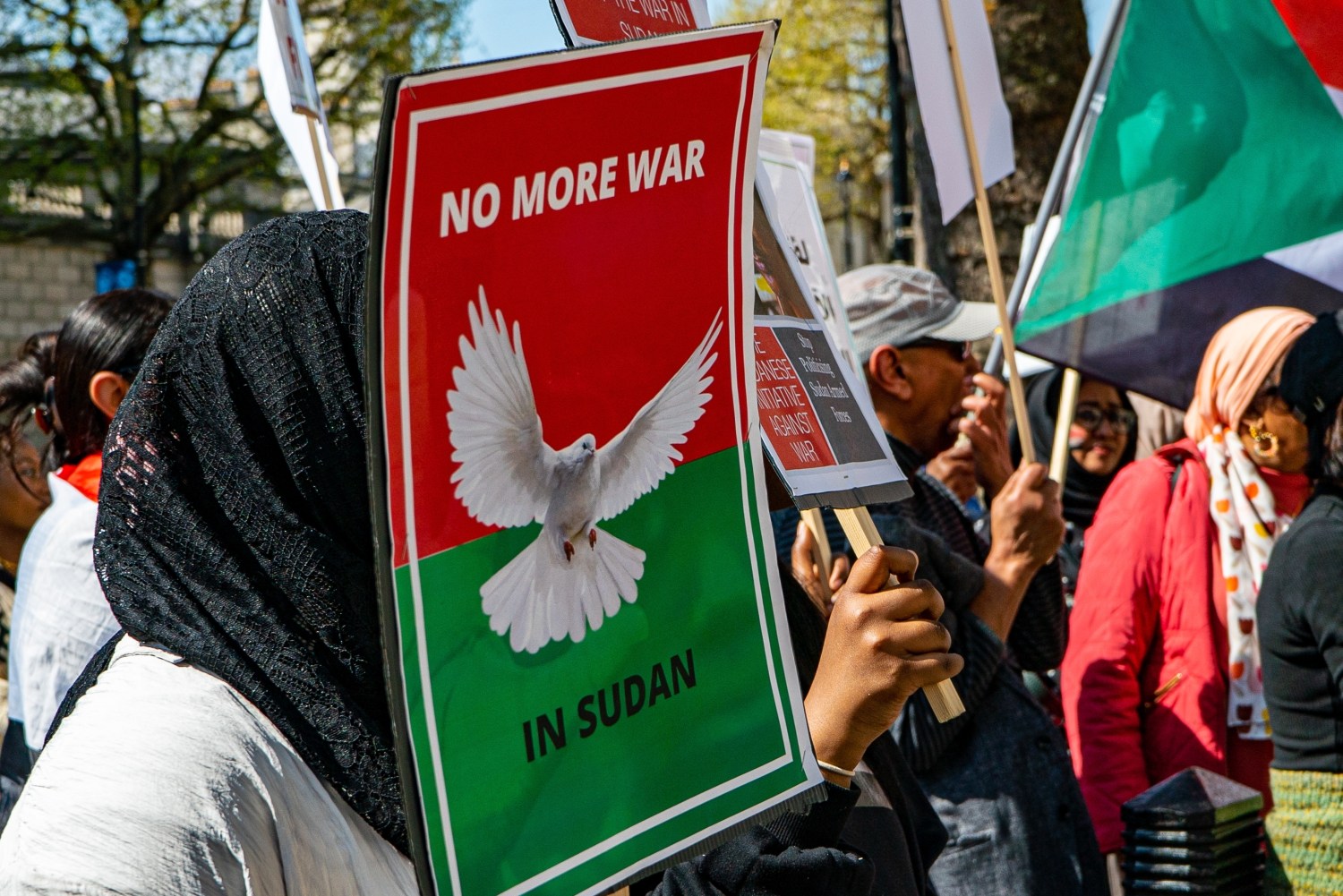 |
| Zak Irfan 123 // Shutterstock |
On a visit to Canada, Mr. Hamdok -- now a civilian, once the Sudanese prime minister toppled in a military coup in 2021 -- is engaged in discussions with Canadian politicians and federal officials, looking for a commitment that Canada is prepared to lend its diplomatic expertise to the Sudanese peace effort. This man is obviously feeling in dire straits for the future of his country but his choice of Ottawa and Canada as representative of a country capable of extending its 'diplomatic expertise' to aid in a ceasefire leading to peace in Sudan is quite naive.
In the sense of what 'diplomatic expertise'? In the sense of a country aspiring to middle power status and repeatedly stumbling in the process, having any diplomatic or political clout to lend to such an enterprise.
What is happening in Sudan, is a matter for North Africa and the Middle East to be more acutely involved in, to strive toward peace. Islam is at war with itself in that extended geography, and always has been. The tendency to resort to conflict is not uniquely Middle Eastern or African, but it is a common enough occurrence aided by the traditional culture of tribal and sectarian hostility and power politics.
How a country such as Canada, far removed both geographically and ethnically, not to mention, culturally could be of any use other than as a cheerleader on the sidelines for reason and a desire to spare the populations concerned from any further threats of death, displacement, starvation and disease, all endemic to the violence of conflict, is beyond imagination.
However, Mr. Hamdok, as a loyal patriotic Sudanese citizen has been travelling the globe to lobby for aid in peace efforts. He is also involved in a process of political unity led by civilians among important Sudanese groups and parties in a country where war rages in various areas -- where hundreds of thousands have been killed and some 13 million citizens were forced to flee from their homes and villages since 2023 when the Sudanese military and the paramilitary Rapid Support Forces have waged a war of control.
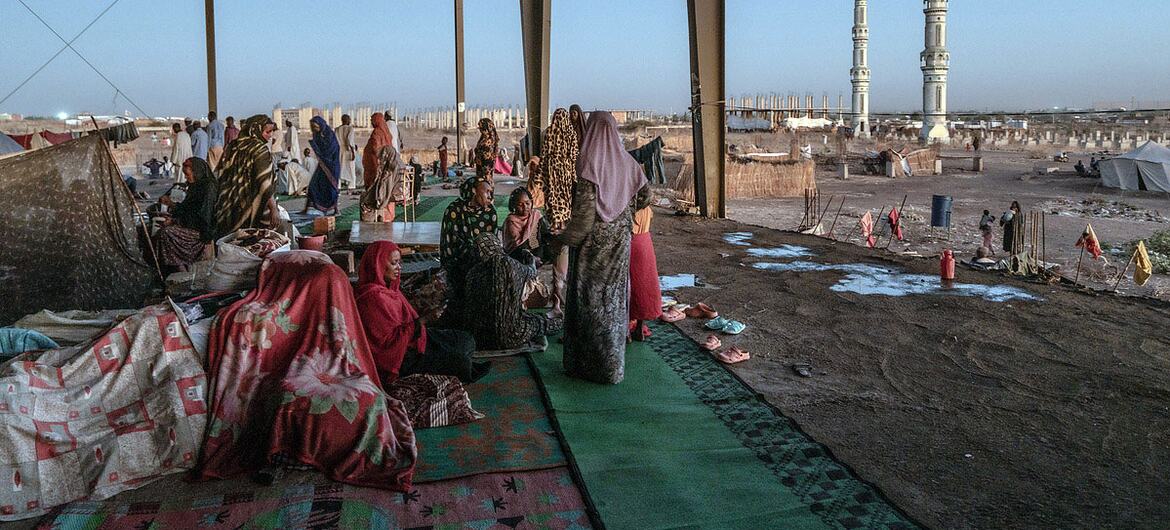 |
| People displaced by conflict take shelter at a bus station in Gedaref, Sudan. |
While over 30 million Sudanese are reliant on emergency food aid, countless ceasefire proposals have been discussed, rejected, and broken with both sides convinced they can win the war where cities have been captured and recaptured, and heavier episodes of dread drone strikes continue to threaten the population. The war has recently spilled into Ethiopia, where the RSF accesses drone bases and weapon supplies. As for Ethiopia, it is beleaguered with Eritrean troops crossing into the north of the country, in its own escalating conflict.
"This has the potential of engulfing Sudan.""It's dangerous because this is the most fragile region in the continent. It's alarming.""All the neighbouring countries are definitely involved. Already our house is on fire, and then you see neighbours' houses also going up in flames."Abdalla Hamdok
In his belief that the peace process in Sudan is the process of gaining momentum, Mr. Hamdok speaks of the emergence of the "Quintet" representing five international blocs involved in attempting to resolve the conflict. The African Union and the European Union, as well as an expanding 'non-aligned' coalition of Sudanese civilian groups and political parties making up its membershipm with the inclusion of Sumoud, Mr. Hamdok's own group.
The Sumoud group has received $2.5 million from Canada since 2024, according to a spokesperson for Global Affairs Canada. Whether Canada has diplomatic involvement in Sudan sufficient to exercise much influence over the peace process is questioned by independent analysts. One the war began in Sudan, Canada closed its Khartoum embassy, and currently relies upon its Ethiopian embassy to cover Sudan. Furthermore Canada has no formal affiliation with the Quintet.
A Canadian based group, the Sudan Solidarity Collective comprised of diaspora Sudanese, argues that Mr. Hamdok's coalition should not be viewed as the sole representative of the Sudanese people in view of its alleged links to the United Arab Emirates, reported to supply weapons to the RSF. Which seems peculiar in the extreme, since the UAE uses a conciliatory approach generally as a peaceful nation for which conflict is anathema and tolerance for differences in human relations a byword. The RSF is, in fact, comprised of former Arab Janjaweed, known for their cruel massacres in the Darfurian Black farming community.
"Canada cannot be helpful in terms of the peace process without meaningfully joining the Quintet and appointing a special envoy for Sudan or the Horn of Africa.""[Canada should push for an expansion of Mr. Hamdok's civilian alliance, which is weak in its representation of youth groups and women].""It is still too narrow [to be effective in its representation]."Khalid Mustafa Medani, chair, African Studies Program, McGill University
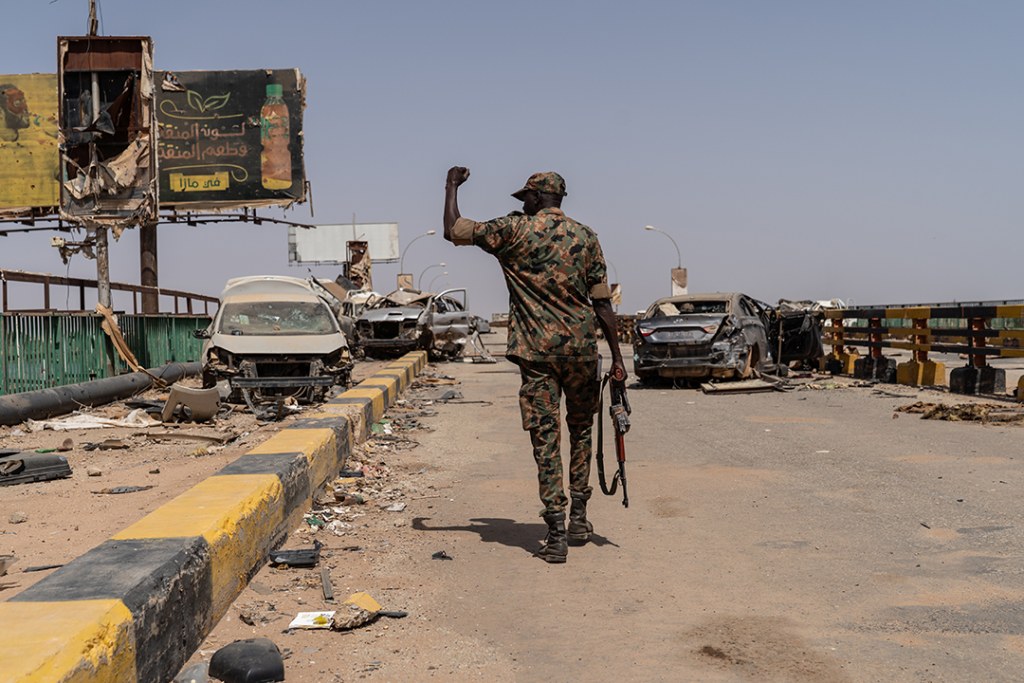 |
| A Sudanese Armed Forces soldier walking on the Shambat bridge that once connected Omdurman with the Khartoum neighborhood of Bahri on the opposite bank of the River Nile on April 27, 2025. Giles Clarke/Avaaz via Getty Images |
"Only three or four of us in the leadership are living in the United Arab Emirates. The bulk of our leaders are in Egypt.""As refugees, we cannot pick and choose where to live.""The UAE is not imposing anything on us."Abdalla Hamdok
Labels: Civil War, Civilian Displacement, Ethiopia, Rapid Support Forces, Sudan Conflict, Sudanese Military
posted by Pieface | 9:45 PM


0 Comments:
Post a Comment
<< Home