Politic?

This is a blog dedicated to a personal interpretation of political news of the day. I attempt to be as knowledgeable as possible before commenting and committing my thoughts to a day's communication.

Saturday, June 24, 2023

"The Smoking Gun"


"The U.S. navy conducted an analysis of acoustic data and detected an anomaly consistent with an implosion or explosion in the general vicinity of where the Titan submersible was operating when communications were lost."
"While not definitive, this information was immediately shared with the incident commander to assist with the ongoing search and rescue mission."
Senior U.S. Navy official
"The fact that they didn't hear it while the search was on means … it must have happened very early." "There's also evidence coming out now from the U.S. Navy, that they did hear an anomalous [sound] in the water around the time that the submersible went missing. So we really are piecing together this story that imploded suddenly on the way down."
"A lot of people have an intuitive idea of an explosion…Imagine things accelerating away from an origin point and going out in all directions. [What happened to the Titan] is the opposite."
"There's a tremendous amount of force, but it's not that it happens and then everything quiets down, there's going to be a lot of energy that is going to send debris in different directions."
"A debris field is consistent with that, it looks like something exploded, but it was an implosion that began it, and then a catastrophic failure of all those pieces."
"It's just really hard to conceptualize exactly what they're looking for at this stage. But certainly they found parts of the submersible and they know which parts of the submersible are going to be where the people were, and that'll be the place to start the search."
Science and technology specialist Dan Riskin
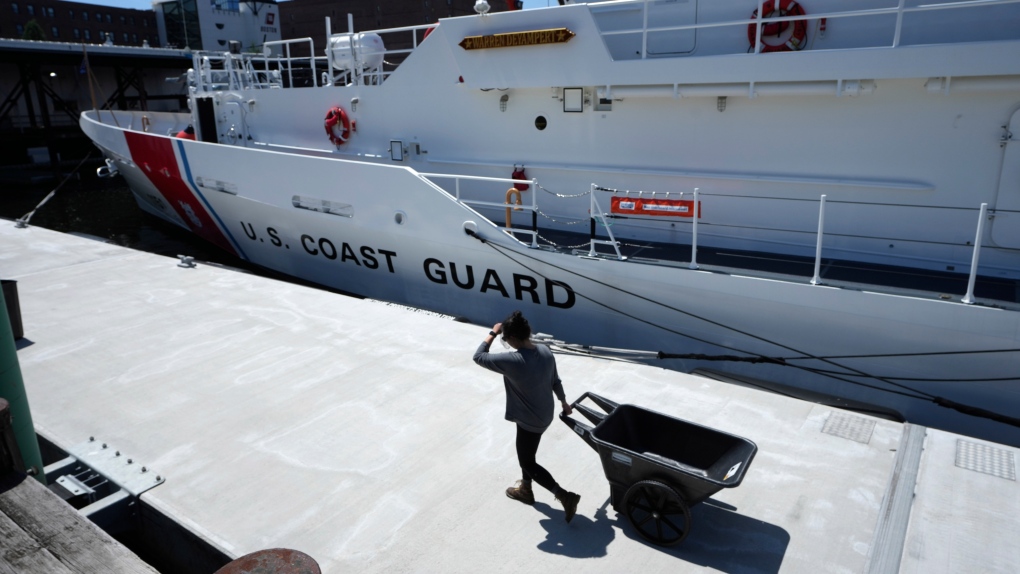
A person pulls a cart past the U.S. Coast Guard Cutter Warren Deyampert, docked at Coast Guard Base Boston, Thursday, June 22, 2023, in Boston. (AP Photo/Steven Senne)
The U.S. Coast Guard Cutter Warren Deyampert, docked at Coast Guard Base Boston, Thursday, June 22, 2023, in Boston. (AP Photo/Steven Senne)

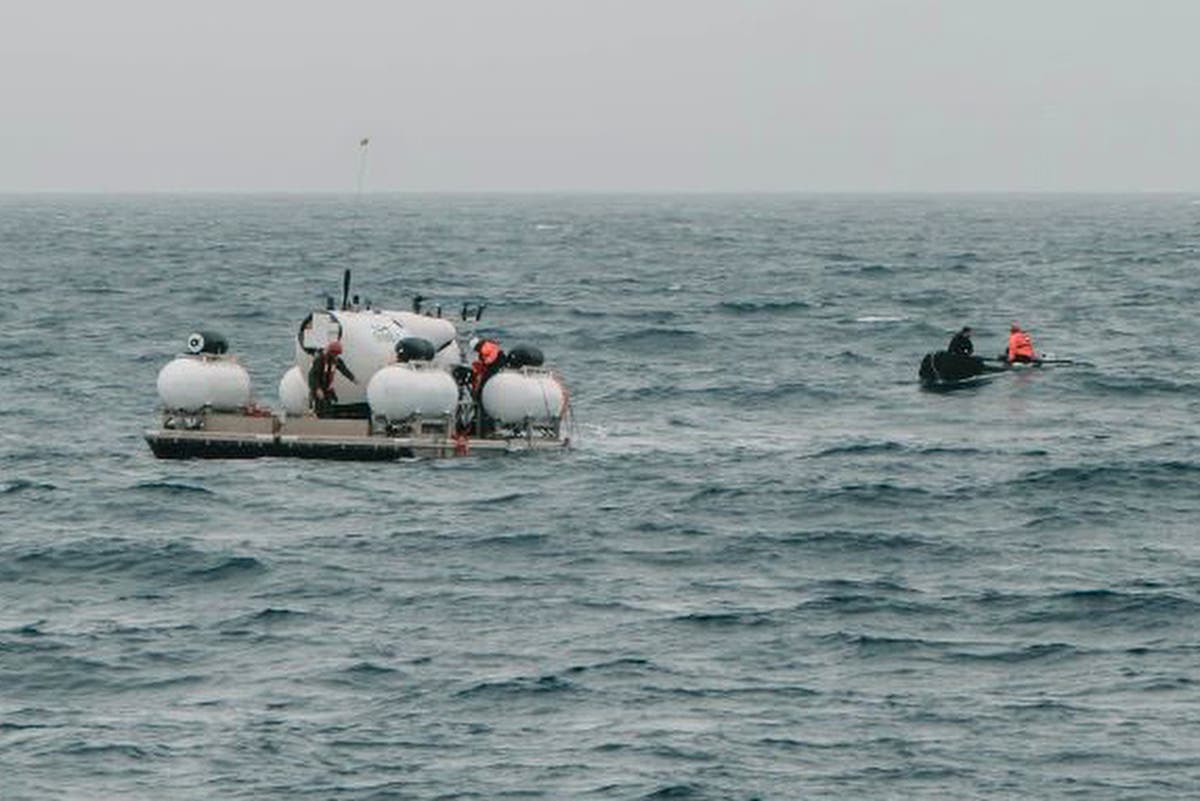
It seems that hours after the Titan submersible entered the ocean above the wreck of the Titanic with the intention of conducting an undersea survey of the wreck for both tourism and scientific purposes the U.S. Navy detected its implosion, recorded by a secret acoustic monitoring system in place to detect submarine traffic in the Atlantic. The Navy returned to the recording to analyze its acoustic data following reports of the missing submersible. In their analysis an anomaly was found consistent with an implosion (or explosion), according to the senior naval officer.

Since the anomaly was found to be in the general area of where the submersible was operating when communication with the surface mother ship was lost, the navy delivered the information to the coast guard, which went on to continue its search.

"[There was] not much chance unfortunately [of remains being recovered]."
"[I felt] heartsick [over] the way that thing was constructed."
"It's one thing for a professional to take a calculated risk, and it's another to be foolhardy and risk innocent lives along with that", declared retired submarine captain Alfred McLaren.
 
As to which of the responsible authorities will be taking on the task of investigating the international disaster, there is not yet a consensus. An official enquiry hasn't been launched yet since the agencies involved remain in search for clues about what it was that caused the vessel to fall apart. "I know there are also a lot of questions about how, why and when did this happen. These are questions [about which] we will collect as much information as we can now", said Rear Adm. John Mauger of the First Coast Guard District.


All agencies involved are attempting to determine which among them has the authority to lead an enquiry, certain to be complex given the mission's international nature. While the Titan imploded in international waters, the U.S. Coast Guard led the search and rescue mission. As well, OceanGate Expeditions which owned and operated the Titan, is based in the U.S. However, the submersible was registered in the Bahamas. The Titan's mothership, the Polar Prince, is Canadian, owned by an Indigenous band. And then there is the fact that those on board were from Britain, Pakistan, France and the U.S.
 
What further complicates the investigation is that the world of deep-sea exploration is not well-regulated; deep-sea expeditions such as those conducted by OceanGate are less scrutinized than are companies that launch people into space. The Titan was not registered as a U.S. vessel, nor with international agencies that regulate safety, and nor was it classified by a maritime industry group that sets standards on such matters as hull construction.  

It is now being revealed that OceanGate CEO Stockton Rush, piloting the Titan, had remarked that progress can be stifled by regulations. "Bringing an outside entity up to speed on every innovation before it is put into real world testing is anathema to rapid innovation", he wrote in a blog post on his company's website. On the other hand, a member of the research team that discovered the Titanic wreck in 1985, spoke of the lack of certification by outside experts as "the smoking gun" in the disaster.

https://image.pbs.org/video-assets/0JSoJqO-asset-mezzanine-16x9-6OKLeu6.jpg?crop=1358x764&format=auto
Still from video
 
"We've made thousands and thousands and thousands of dives ... to these depths and have never had an incident" remarked Bob Ballard. James Cameron, who produced the film "Titanic" and was a personal friend of Stockton Rush said he knew the Titan situation would end in tragedy: "For them to lose communication and tracking at the same time… the sub was gone, there was no question in my mind", he said. "For days I tried to run other scenarios that could account for it [but] I could come up with nothing."
"I never believed in that technology of wound carbon fibre…I thought it was a horrible idea. I wish I'd spoken up. But I assumed somebody was smarter than me because I never experimented with that technology, but it just sounded bad on its face."
"You can't do that with a composite material because it's two dissimilar materials sort of blended together [carbon fibre and titanium mix]." 
"So, we [submersible community] all knew that the danger was delamination, progressive failure over time with microscopic water ingress and fatigue [of materials]."
James Cameron
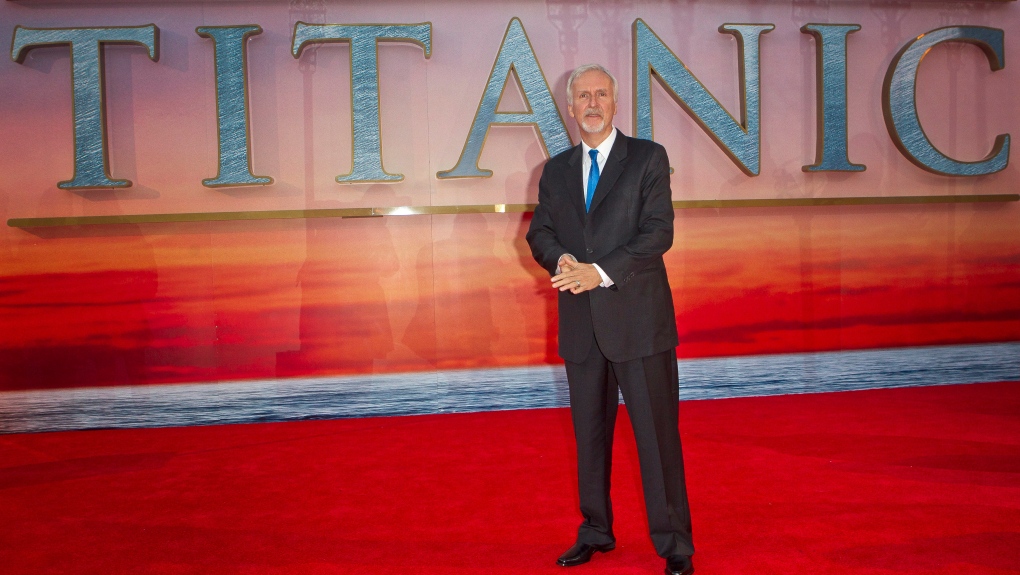
Director James Cameron arrives at the 'Titanic 3D' UK film premiere at the Royal Albert Hall in Kensington, West London, Tuesday, March 27, 2012. (AP Photo/Joel Ryan)


Labels: , , , , ,

Saturday, May 01, 2021

The Anguish of a Tragedy

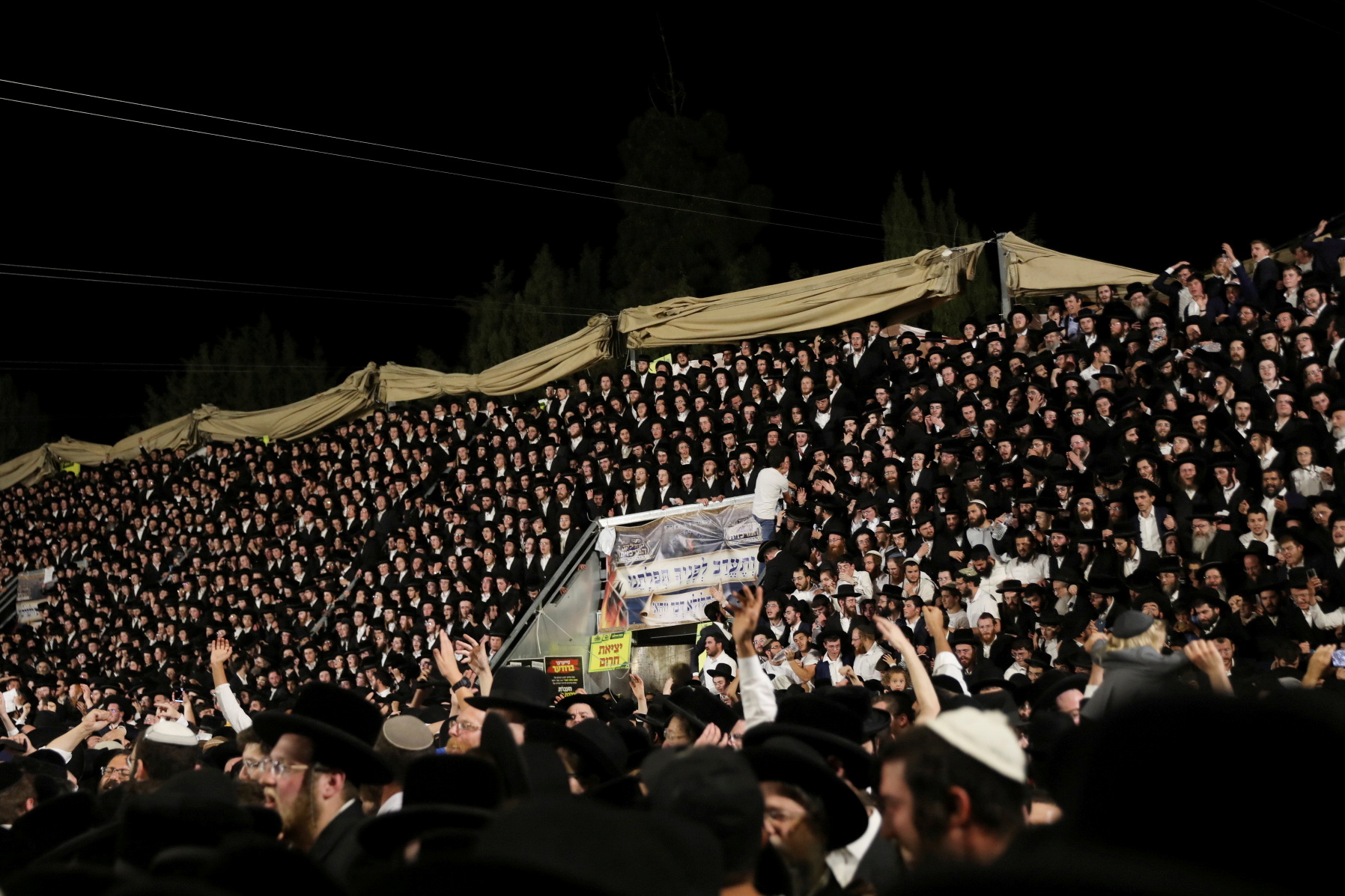
Jewish worshippers sing and dance as they stand on tribunes at the Lag B'Omer event in Mount Meron, northern Israel, April 29, 2021. REUTERS/ Stringer
Lag B'Omer Festival-goers singing in celebration on Mount Meron Friday, April 29   Reuters

"A pyramid of one on top of another was formed. People were piling up one on top of the other."
"I was in the second row. The people in the first row -- I saw people die in front of my eyes."
Injured man, Mount Meron catastrophe victim

"We started to do CPR. One after the other they had no pulse. There was nothing we could do and they kept bringing more [bodies]."
"It was madness."
"It is shocking to think about the last moments of those who died when people were stepping on them. It is really shocking."
Levy Steinmatz, Israeli paramedic

"We started pulling wounded people into the kitchen and treating them."
"We had no rescue equipment so we couldn't give them first aid."
"I grabbed a policeman and showed him the bodies, then he realized something serious was happening."
Meir Gliksberg, 27, festival kitchen volunteer
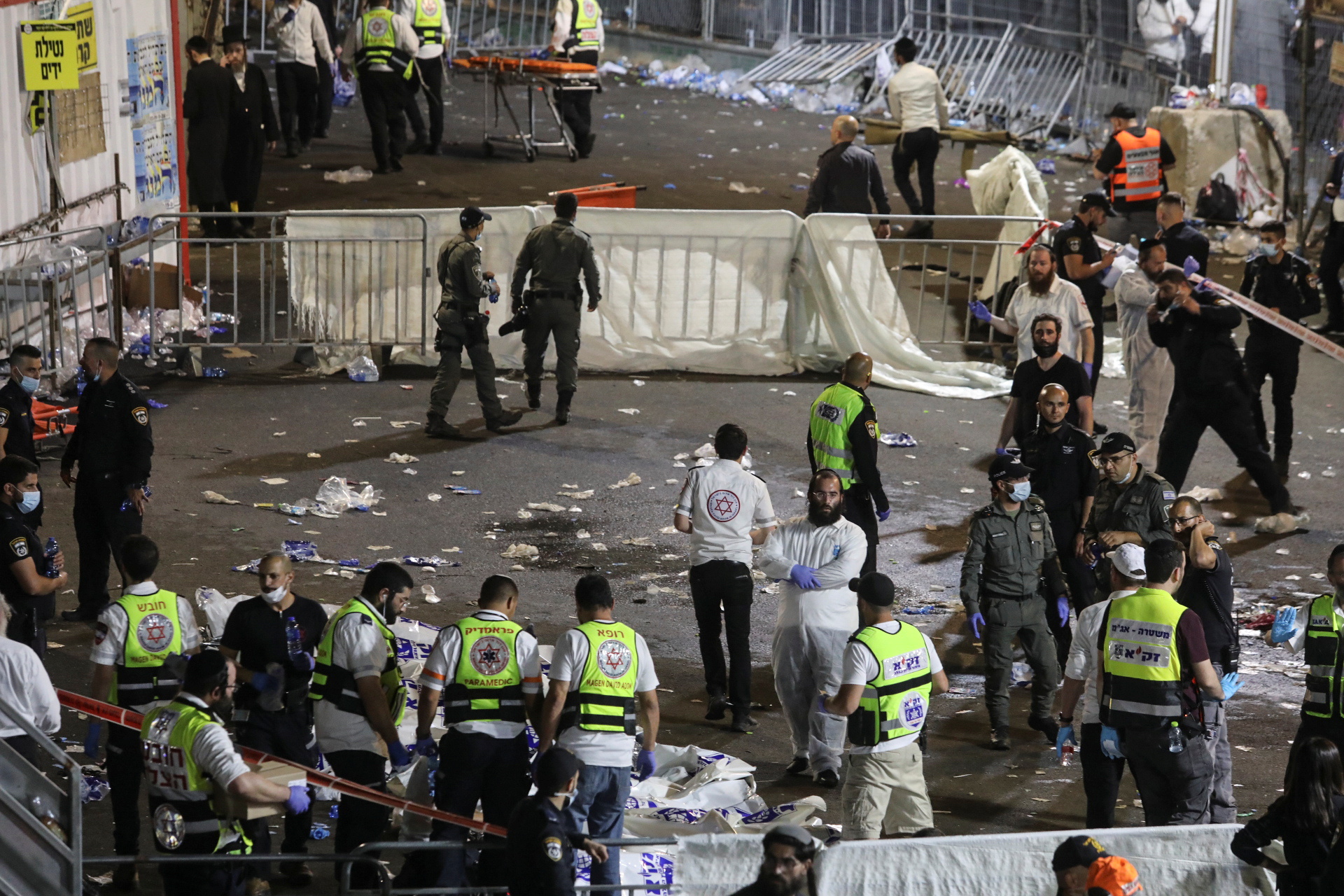
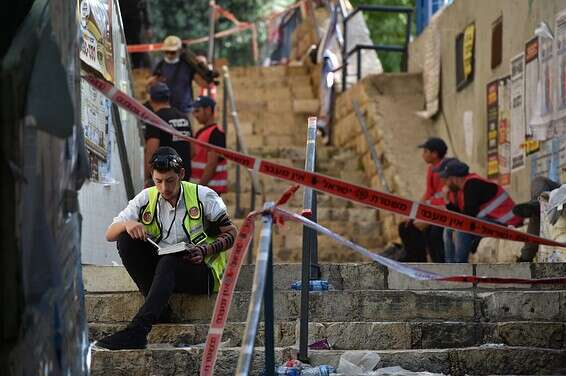
Medics and rescue workers attend to the Lag B'Omer event in Mount Meron, northern Israel, where fatalities were reported among the thousands of ultra-Orthodox Jews gathered at the tomb of a 2nd-century sage for annual commemorations that include all-night prayer and dance, at Mount Meron, Israel April 30, 2021 REUTERS/ Stringer
Medics and rescue workers tend to the Lag B'Omer tragedy    Reuters
 
An annual celebratory event, a festival commemorating the life and mystic philosophy of an early Jewish sage, a joyous occasion of dancing, music, being in the company of friends and co-religionists and the lighting of bonfires, creating a scene of lively happiness. The socially straitened circumstances of COVID lockdowns prevented last year's Lag B'Omer festival honouring the second century Rabbi Shimon Bar Yochai's scholarly vision. Free at last, declared in the zone of herd immunity, Israel's ultraorthodox community descended on the Upper Galilee to celebrate.

Those in authority who were tasked with overseeing the safety and security of the event anticipated the arrival of ten thousand celebrants, at most. They had miscalculated. An enthusiastic and determined crowd of ten times that number arrived. And the festivities and the celebratory fellowship that ensued did justice to the widely heralded event. Visitors from abroad were present to take part in the memorial to an personage of exalted heritage, everyone excited and enthused to be free to mingle and share the goodwill.
Israeli rescue forces and police near the scene after a stampede killed at least 44 during the celebrations of the Jewish holiday of Lag B'Omer on Mt. Meron, in northern Israel on April 30, 2021. (David Cohen/Flash90)
Israeli rescue forces and police near the scene after a stampede killed 45 during the celebrations of the Jewish holiday of Lag B'Omer on Mt. Meron, in northern Israel on April 29, 2021. (David Cohen/Flash90)
 
Because this was an affair arranged by and for Orthodox Judaism, the genders were separated as was seen to be seemly, men here, women there. The exits from the event were separated as well. The men and boys one way, the women and girls the other. One cannot have a celebratory event without food, and food there was aplenty, thousands of plates of food prepared in kitchens set up for that purpose. Speakers were loud as music played, a Klesmer band, more than appropriate to express the joy felt there.
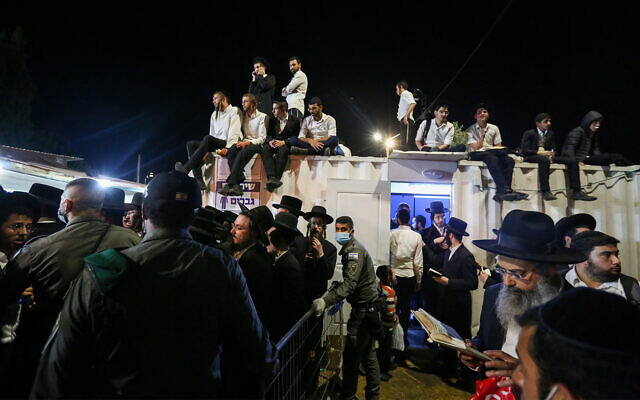
A first responder praying at the scene of the Mount Meron stampede, April 30, 2021 (JINI/Gil Eliyahu)
 
Then the gathering for the lighting of bonfires, the piece de resistance of the evening. And finally, the time came to leave. Police are believed to have barricaded a portion of the exit tunnel with the intention of controlling the crowd flow, effectively narrowing the passageway to exit the event. As people descended metal stairways that may have been slippery someone is said to have fainted, and as that happened the people behind, in their great numbers continued to flow without pause, and a classical domino effect took place and people panicked and pushed and shoved in their anxiety to exit to safety.
 
Bodies cascaded into the narrow tunnel and people were crushed in the suffocating heat. The old and the young, the frail and the physically immature would be most vulnerable in the crush of bodies. There will be an intense investigation, needless to say, to try to understand just what had happened and why it did. There were warnings in years past that there was a choke point that had been troublesome at times and that eventually an event such as this might occur.
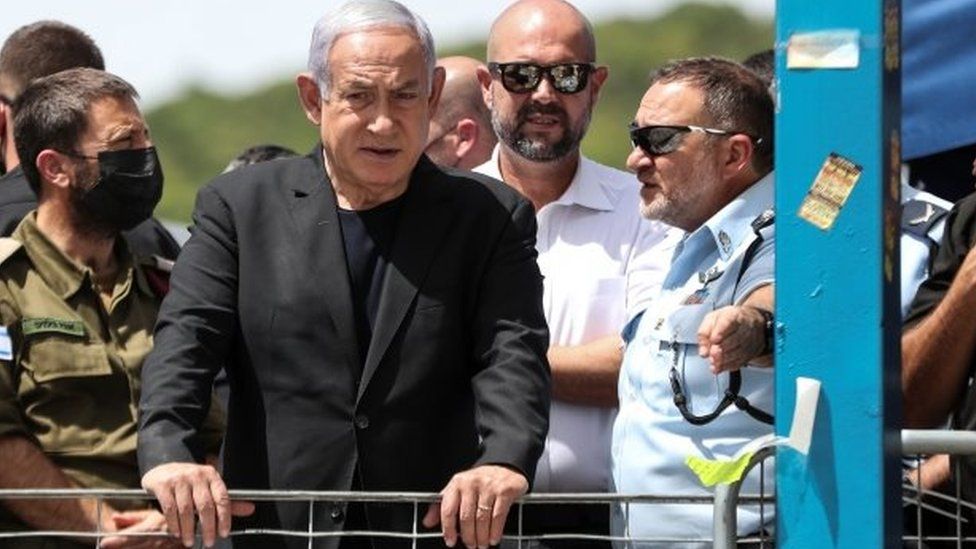
Benjamin Netanyahu visits the scene in Mount Meron. He called the deaths a "heavy disaster"
Benjamin Netanyahu visits the scene in Mount Meron. He called the deaths a "heavy disaster"  Reuters
 
There were 45 people who died in the massive crush of bodies and 150 other people were injured. Israel is in deep mourning. All the dead have now been identified, and most were buried the following morning, on Saturday. This is yet another tragedy for the nation, one that is regarded as the worst of its kind in its 73-year history, one that will henceforth be recalled through a national day of mourning.

Over the decades where Israel  and its people have suffered a multitude of violently convulsive conflicts, suicide bombings and all manner of terror attacks, paramedics have been on the scene, aiding the injured. They feel that this horrific event where they tended to the injured and attempted to save lives, taxed them to their limits. The scene was one of the most dreadful they had yet encountered over the years of being witness to many.

Volunteer kitchen helper Meir Gliksberg described his experience as being among the first to fully realize that a dreadful accident was taking place after hearing screams in the tunnel below where the festival kitchen stood. Zaka, an emergency services group tasked with collecting with reverence the most infinitely minuscule portions of human flesh resulting from explosions to be gathered and given due burial, described the reaction of its paramedics who saw mobile phones belonging to the dead lighting up with anxious calls from "Mum" and "My Dear Wife".

Israeli security officials and rescuers stand around the bodies of victims who died overnight on Mount Meron.

Labels: , , , ,

Wednesday, January 02, 2019

Child Endangerment and Neglect

"I am living with a deep sadness since I learned of my daughter's death."
"But there are no jobs, and this caused the decision to leave [Guatemala for the United States]."
Claudia Maquin, 27, San Antonio Secortez, Raxruha, Guatemala

"Somebody came and tricked people and told them, 'I will get you political asylum -- and take a child with you."
Cesar Castro, mayor, San Antonio, Secortez, Raxruha
Friends and family carry a coffin with the remains of Jakelin Caal, a 7-year-old girl who handed herself in to US border agents earlier this month and died in the custody of US Customs and Border Protection.

Claudia Maquin's 29-year-old husband, Nery Caal, decided to leave their small village to find his future and a hoped-for change-of-fortune by claiming himself to be a refugee and entering the United States where opportunities presumably abound. With little formal education, the small family lived on a parcel of land that they felt was too small to provide for their needs. He aspired to better things and had no trust that their lot would be improved by remaining where he was.

He and his wife had four children aged from 9, to 7, 5 years of age, and an infant of six months. Mr. Caal decided to take a long and perilous journey and that his seven-year-old daughter Jakelin would accompany him. For, he was informed, anyone seeking to be welcomed by the United States would induce sympathy with the presence of a child. Either the smuggler he paid to get them to the border between Mexico and the U.S. or others who had made the same trip persuaded him his chances of remaining would be immeasurably improved with the presence of a child.

According to the town's mayor, Mr. Castro, Mr. Caal's venture was not unusual. On average, ten, twenty or thirty people abandon the village monthly to strike out on a journey for which they pay smugglers handsomely. The same smugglers that tell convincing stories of great success, of welcome committees at the border, of the opportunities to live well that will open to them in the United States; they have just to pay and to leave; preferably in the company of a child, which evokes empathy.

In the community of San Antonio Secortez, where the Caal family lives, corn and beans are grown by families who also raise goats, chickens and pigs. The Caal family's patriarch said the fields are no longer as fertile as they once were but he is uncertain whether it is a decline in soil quality or changing weather patterns, or some other undefined reason that is responsible for the decline in agricultural output.

There are fewer wild deer and boar to hunt and the river fish that once teemed allowing large catches have dwindled, resulting from the forest to the north of the town being cleared by oil palm plantations. Evidently, in relation to the size of the Guatemala economy the government collects a smaller share of tax revenues than any other country in the world, according to the World Bank.

Guatemala is not poor according to the World Bank which classifies it as an upper-middle income nation. One, however, with notable inequalities stemming from centuries of racism and powerful groups controlling the economy, resisting efforts to address discrimination, so Guatemalans have always thought of migration as an escape from these divisions.

Despite that it is well known that apprehensions are taking place at the border between Mexico and the United States, nothing appears to convince Guatemalans that they will not, in actual fact, be welcomed into the country they aspire to travel toward and enter to become entitled to benefits their own country fails to provide for them.
Elvira Choc, grandmother of Jakelin Caal, during the funeral service.

Mr. Caal is now at a migrant shelter in Texas. His seven-year-old daughter Jakelin, although deemed by U.S. border agents to be in sound health, died without seeming cause once they crossed the border and were in the care of the system that evaluates refugee claims. The little girl's mother, grieving the death of one of her four children, insists her husband must remain in the U.S., not rejoin her in Guatemala.

Border Patrol agents in whose custody the child had died, stated the girl hadn't eaten or been hydrated for days during her trip with her father across the border. The implication that the parents failed to care properly for their daughter infuriates Jakelin's mother. Entering the U.S. is their route out of poverty, made all the more acute by the estimated $5,000 to $10,000 they paid to the smuggler, according to the town's mayor.

Jakelin died in a hospital in El Paso, Texas, on Dec. 8, two nights after her father, Nery Caal, turned himself and his daughter in to the custody of U.S. Border Patrol. Cause of death was dehydration and shock after running a high fever. Clearly, the child's most basic human needs were neglected by those most responsible for her well-being; her parents in search of a higher-order of priorities.

Local residents attend the funeral of Jakelin Caal at her home village of San Antonio Secortez, in Guatemala.

Labels: , , ,

Friday, August 10, 2018

Irreconcilable Identities and Challenging Credulity

"[The lawsuits are intended to] hold the person responsible for Colten's wrongful death accountable [and in the process to] force the RCMP to look deeply within itself [to examine how it] interacts with the Indigenous citizens of Canada."
"The search officers who attended the home deliberately engaged in discrimination by subjecting three proud members of the Red Pheasant First Nation to ridicule, unlawful searches and humiliating breath tests."
"While the loss of Colten [Boushie] has devastated the plaintiffs, it has been the unending memory of the defendants' high-handed and egregious conduct that has caused the plaintiffs' injuries."
Lawyers for the Red Pheasant First Nation Reserve Boushie Family

"[There] can be no true reconciliation until the RCMP, itself, acknowledges that the callous manner [in which officers treated the Boushie family] was due -- at least in part -- to the fact that they were proud members of the Red Pheasant First Nation."
Chris Murphy, lawyer, Boushie family
Debbie Baptiste, mother of Colten Boushie, speaks during a press conference on Parliament Hill in Ottawa on Feb. 14, 2018.
Rural communities in Western Canada have a problem with the presence of First Nations reservation young people's obstreperous behaviour and flouting of the law. Many rural properties and farms owned by white farmers whom Canada's Indigenous nations now characterize as "settler" farms are being plagued with criminal entry and theft of all manner of farm equipment. Homes are frequently illegally entered and the occupants made concerned and wary over the presence of young men often inebriated and frequently up to no good.

Such was the case on August 9, 2015 when five young men and women drove a grey Ford Escape SUV from Red Pheasant First Nation over to a popular swimming area by a nearby river. They spend a fun afternoon together, drinking all the while. When they decided to return home they discovered a flat tire on the vehicle. The SUV was steered onto a farm where later evidence made it clear that someone among the five had made an unsuccessful effort to steal a truck parked there, smashing a window with a .22-calibre rifle they had with them.

The attempt unsuccessful, they drove on to a farm 15 kilometres further up the road belonging to a farmer by the name of Gerald Stanley who was making some fence repairs on his property, with his grown son. Both heard a wild commotion in the distance, around their house, and hurriedly went over to see what was happening. Someone among the inebriated five that arrived in the SUV had tried to start a quad on the property and when the Stanleys drove up all got in the SUV and tried to drive off, hitting a parked vehicle in the melee.

Mr. Stanley, fearful for the safety of his wife who was on the scene mowing the lawn, but whom he was unable to see, told his son to enter their house and retrieve a firearm. He went himself to the nearby garage and took possession of a firearm he had stored there. In the heated atmosphere and excitement and fear, Boushie, seated in the driver's seat, alone, because his companions had run off in a panic, was shot in the head, and killed by a single gunshot. At trial, Mr. Stanley testified that his gun had gone off accidentally and he was found not guilty of the charge of second-degree murder.
William Boushie, brother of Colten Boushie, speaks to media during a rally outside of the Saskatchewan Provincial Court in North Battleford, Thursday, August 18, 2016. People rally outside a Saskatchewan courthouse Thursday where a farmer accused of fatally shooting a First Nations man is to make an appearance.

William Boushie, brother of Colten Boushie, speaks to media during a rally outside of the Saskatchewan Provincial Court in North Battleford, Thursday, August 18, 2016. People rally outside a Saskatchewan courthouse Thursday where a farmer accused of fatally shooting a First Nations man is to make an appearance. Liam Richards/THE CANADIAN PRESS
The verdict by jury which had excluded the presence of any Indigenous representatives, had infuriated the First Nations communities who charged that Canada was racist and its policies and laws injured and dishonoured First Nations. Numerous protests took place, but eventually the issue quieted down, as other similar events continued to take place. Now, the mother of the young man who had lost his life, along with her two remaining children are suing those involved in her son's death; the farmer Gerald Stanley and the RCMP. Two lawsuits totalling $2-million.

Colten Boushie's mother Debbie Baptiste faults Mr. Stanley for acting with "excessive force" against her then-22-year-old son. She seeks $60,000 compensation for grief counselling, $100,000 in lost wages, and $200,000 "in aggravated, exemplary and punitive damages to be proven at trial". The attorney general of Canada and several RCMP officers are named in a separate suit. Her son's death, states his mother is "a direct result of the negligent, reckless or intentional acts of the defendant, Gerald Stanley" who failed to assess potential risk, shot her son at "point blank range" and failed to administer assistance to her son.

Ms. Baptise is also claiming over $400,000 in damages for her suffering following her son's death; the grief she was caused, the loss of his "care and companionship" and past and future income (on a reserve with a 74% unemployment rate). As for the statement of claim against the RCMP, another $550,000 is sought in damages while her sons each seek $450,000 for damages as well. She stated that RCMP officers asked if she had been drinking and told her to "get herself together", on their arrival and the delivery of the message that her son was dead.

She had, the lawsuit states, along with her sons, suffered depression, anxiety, nervous shock, interference with normal sleeping patterns, loss of enjoyment of life and suicidal ideation -- all linked to the harsh manner she contends the RCMP officers confronted her with while delivering their message and looking to find evidence in her home. In grieving and continuing to grieve the loss of her son, this poor woman and her son's siblings would find life's cruel consequences of sociopathic tendencies much easier to deal with once in possession of two million dollars that would help to ease their way to dealing with the past and finding peace and harmony in their deprived lives.

And no, no one on either side of this horribly divisive and unfortunate event would ever wish that a young man should lose his life over the ill life-choice of potential theft of property. The outcome of this tragic event represents an abject failure of both communities; that of the Indigenous community to find a life for themselves other than on isolating reserves with no future for their youth, and that of the outside community which understandably has no idea how to deal with the outcome of a failure to resolve the unresolvable.

Faced with the wildly undisciplined, anti-social presence on private property of five inebriated young people it is in fact, little wonder that the Stanley family went into a panic at the presence of strangers whose behaviour they had no idea how to deal with, or whether they were in mortal danger because of that presence. Imprinted into human reaction to perceived danger is the compulsion to act in self protection. The incidence and reputation of Indigenous youth invading private property and lifting goods invoked unreasoning fear, and little wonder.
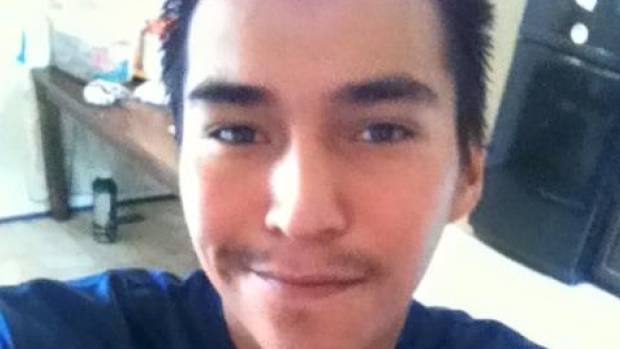
Colten Boushie is shown in this undated Facebook photo.
Colten Boushie is shown in this undated Facebook photo.

Labels: , , , , ,

Saturday, April 09, 2016

A Team Called Peace

"He was a little tall with long hair and he looked different. He was wearing a thick jacket and it was hot. He spoke to us. He said, 'It's a good game, isn't it'?"
"Then he blew himself up, and I felt a fire hit my face. And then I ran away."
Anmar al-Janabi, 12, Asriya, Iraq

"He [his 13-year-old son Karrar] told me he was going to be a goalkeeper for the first time, and he asked me to bring him some gloves."
"But I was working, and I couldn't leave."
Abbas Ali al-Idani, security guard, Asriya, Iraq

"We found pieces of children. There was human flesh all over the ground."
"It was like the end of the world."
Ibtisam Hamid, father of 16-year-old Walid, dead
An image taken from blurry footage that purportedly shows the moment a suicide bomber blew himself up at a ceremony after a soccer match in Al-Asriya, Iraq on March 25, 2016 (screen capture: YouTube)
A blurry image captured from a video still of a suicide blast on March 25, in Asriya, Iraq

On March 25, in a small town not far from Baghdad, all of the boys living in the mixed Sunni-Shiite village of Asriya, an impoverished village in an embattled country, gathered at a playing field for a competitive game of soccer, beloved of the village youth. A final soccer game was being played. There was a team called Ahli and another team called Salam, peace. Spectators stood around the field perimeter, and officials sat on chairs placed on a small podium at the field's edge.

Among the spectators was a 12-year-old boy whom no one seemed to recognize. And despite that he was wearing a thick jacket and it was a warm spring evening where everyone else was wearing T-shirts, no one seemed to notice. Anmar al-Janabi had noticed, but it didn't occur to him to mention anything to any of the few adults present. At the finish of the match the boy wearing the jacket moved along with the other boys toward the podium to witness the trophy awards.


Tamara Adel, 10, with her brother, Ahmed Adel, 5, holds medals won by her soccer-player brother, Walid Adel, 16, who was killed in the March 25 suicide bombing at the soccer field in Asriya. (Ahmad Mousa Qasem/For The Washington Post)

At the field where the village boys played their games daily, a young boy committed suicide and in the process took the lives of 43 people, 29 of whom were boys younger than 17, participating in the match, or watching their friends play. Mr. al-Idani, just come off his work shift, preparing to leave for the field, heard the blast and feared the worst. He had stopped by a store to buy the gloves his son had asked for.

Parents, brothers, uncles, grandparents, all streamed and sprinted the short distance from their homes, alarmed at the  sound of the blast, toward the playing field. Once there, a tangle of dead children greeted them, body parts and blood everywhere. Idani's son Karrar had been taken to hospital before his father reached the soccer pitch. And he died before his father could see him.

And the match outcome? The team called Peace won the match, 1-0. In the sake of peace and sanity what could conceivably have convinced a twelve-year-old boy to sacrifice his life, and to carry away with his blasted body parts, the companionship of so many other people? The Islamic State of Iraq and the Levant has been busy instilling allegiance to martyrdom and killing into the minds of vulnerable children, persuading them that they do the work of Islam, proudly as heroes.

The town, living amicably together, Shiite and Sunni residents alike, obviously were insulting tradition that insists on the big heritage divide, in the process earning the tragedy that befell them.


Ahmed Khazaal, 12, shows his Barcelona team jersey, left, and the Real Madrid jersey of his brother, Mohaned Khazaal, 10, who was killed by a teenage suicide bomber in a village south of Baghdad. (Ahmad Mousa Qasem/For The Washington Post)

Labels: , , ,

Monday, February 22, 2016

Gambling To Win: Losing

"The motor couldn't handle the weight, and halfway into the journey it stopped working. The next thing we knew, the boat had capsized and were all in the freezing cold water."
"We were in the water for over two hours before the coast guard came."
Bilal, Syrian refugee, Izmir, Turkey

"The hardest part of this job is receiving the children. They are at the age when they should be splashing about in the sea and playing, but instead their lifeless bodies are being washed up ashore."
Izmir morgue official

"We decided to give the migrants their own cemetery to make the identification process as easy as possible, even after the bodies are buried."
"We have a whole system in place for the families to identify the bodies for up to 100 years."
"I broke down when I buried a 3-month-old baby. I couldn't help myself. It's hard to accept, because these deaths can be prevented by politicians, but they won't stop and it's getting worse."
"We are now faced with entire families drowning at sea, with no one left to claim them."
Ahmet Altan, imam, Dogancay Cemetery, Izmir, Turkey
turkey migrants drowned shore beach deadDHA via AP    Paramilitary police officers investigate around the body of a migrant on the beach in Dikili, Izmir, Turkey, Tuesday, Jan. 5, 2016

Recently, 35-year-old Syrian refugee Bilal got into an unseaworthy craft with his wife and their three children, 10, 8 and 6. They were determined to set out for Greece. The boat had a 30-person capacity, but on it were 36 adults and 15 children. When the motor cut out they were halfway to their destination, but halfway is nowhere at all, it is the middle of the sea, and there lies death. Bilal and his wife grabbed their children, and a current drifted them from one another.

Ibrahim, 6, began vomiting blood, their daughter lost consciousness, but the entire family managed to survive their ordeal. His cousin was with them on the boat, and his three young children were among those who drowned, 18 of the passengers in all. "Death has become our destiny", Kholoud, Bilal's wife said. "Either you die in Syria from shelling or you die at sea." In an effort to prevent those deaths by stopping the refugees from leaving shore, the Turkish coast guard has increased its patrols.

It was thought that dropping temperatures, and winter-stormy seas would convince Syrian refugees to bide their time for more auspicious conditions, but it is when business begins to slow during the winter months, that the human smugglers drop their prices. And so the hundreds of thousands who flee conflict hoping to find their safe futures in Europe, continue to risk their lives. NATO has dispatched warships to the Aegean Sea hoping to constrain the refugee flow, but the deaths pile up.

At the Izmir morgue -- being expanded to make more room -- photographs of the dead migrants reveal all too many of them are children. When the drowned arrive at the morgue they are retained for 15 days in the hope that families will claim them. With no identification made, the forensics department conducts an autopsy and records the DNA. Every body is bathed and shrouded, according to Islamic burial rites, then sent to the cemetery and there imams conduct an Islamic funeral.

The imams admit to feeling haunted by the sheer numbers of burials of unidentified migrants they buried in the past year. There are four imams working at the cemetery, and each one carries out an average of five funerals every day, both for Turkish citizens and for the migrants. There is no one to mourn the passing of the refugees whom the imams can comfort, and there is no one to comfort the imams, carrying out their last rites for lost souls.

People check bodies of migrants at a port near Izmir, Turkey,  who drowned in Turkish-Greek water routes. Photo: AP
People check bodies of migrants at a port near Izmir, Turkey, who drowned in Turkish-Greek water routes. Photo: AP

Labels: , , , ,

Tuesday, January 26, 2016

Infantalized Communities

"Mental health and addictions come hand-in-hand. If you're depressed or whatever, you cope with drinking or whatever or drugs or whatever. And a lot of our people don't know how to cope. They have lost all ways, all mechanisms to cope, so you just drown your pain."
Connie Cheecham, La Loche Strengthening Families Program

"He was a normal boy. He was not a monster. He was hurting. If we had the supports we needed, this would not have happened."
Perry Herman, La Loche resident
THE CANADIAN PRESS/Jason Franson
Members of the community come out to watch Saskatchewan Premier Brad Wall speak in La Loche, Sask., on Sunday. January 24, 2016. A shooting Friday left four people dead. THE CANADIAN PRESS/Jason Franson

The remote community of La Loche in northern Saskatchewan is mourning its dead. The unthinkable but entirely predictable has occurred there, with a 17-year-old First Nations student taking a rifle to his two cousins, 13 and 17 years of age, then boasting through a social networking site to friends that having dispatched those two, he was heading over to the La Loche Community School to kill more "ppl".  After the carnage was completed, he was arrested by police.

Seven people were wounded, and four were killed outright; two the young cousins of the killer, brothers Drayden and Dayne Fontaine at their home while 32-year-old teacher, Adam Wood and 21-year-old teaching assistant, Marie Janvier were killed at the school. The seven others who were targeted, shot and injured, some seriously may all recover physically, but the emotional scars will be permanent.

So why would a 'normal boy', said to be smarting from the insults of bullying, set out to revenge himself on those presumably whom he felt were guilty of complicating his life? All young people experience some element of ridicule or bullying in their formative years. But of course, this is a community which has experienced a remarkable rash of teen suicides. A community incapable of coping, calling on the outside world to help them help themselves.

There is that about these remote First Nations communities that is shared; a generalized dysfunction where violence rules and despair is deep, drowned in addictions to alcohol and drugs. Children are neglected and disproportionate to their numbers in society, taken from their families to be raised by others. People are bored because there is little to do to keep themselves occupied; employment is scarce to non-existent. There is no emotional investment and pride in home ownership.

Typically, the band chief and the band council make all the decisions about how to allocate the funding that comes through from the federal and provincial governments in financial support of the reserves because First Nations people are taught that they must live where and how their ancestors did to maintain their pride and dignity. So in their pride and in their dignity they struggle to cope with a meaningless life.

The isolated town of three thousand residents struggles to contain itself. It is a tight, emotion-packed congregation of people with similar backgrounds, many of whom are clinically depressed and so, suicidal. Services are held regularly at Our Lady of the Visitation Roman Catholic church, as it was yesterday when Archbishop Murray Chatlain spoke of the devastation that has gripped the town.

On the "main street" there are two bars. There is also a liquor store. And not very much else. Nowhere that bored and restless teens can gather, as an example, to forge deeper ties with one another and perhaps dropping the aggressive streak that leads to violence. There appears to be no community spirit in the sense that a meeting place is available for people to socialize. There is no movie theatre, no sport arena.

But there is Internet.  The very fact that there are no family restaurants, no recreational facilities, no hotels, nor a bank, speaks volumes. The Dene population, historically hunters, find little to do in their town, but they have actively opted for those two bars and the liquor store. This is a matter of choice, of ineffectual guidance on the part of the group's leaders. The council which the previous federal government insisted should publicly list all municipal expenditures may no longer since the current government has lifted that responsibility onus.

The sense of common purpose and individual responsibility is simply absent.

Labels: , , ,

Monday, November 02, 2015

Reality Intrudes

"That statement is premature and is based on no real facts."
"Yes, we know that components of the plane have been thrown over a wide area. That says that the breakup took place in the air, at a high altitude. But it is very premature to talk about the reasons. I would like to call on the aviation community to abstain from premature statements."
Alexander Neradko, head, Russian Federal Air Transport Agency

"The Islamic State has so far focused on acquiring territory and grasping at the trappings of statehood rather than acting like a traditional terrorist organization."
"If indeed the airliner was brought down by ISIS, this would represent a new and dangerous development. ISIS combining the bloodiest aspects of statehood and terrorism into one dangerous mess."
Jens David Ohlin, professor of international law and security, Cornell University

"What the Egyptian affiliate of IS has achieved is that it has shaped the narrative about what happened to the plane."
"That's what matters to IS -- to show its capability, its invincibility when it comes to convince its support base that it is powerful to get vengeance against its enemies, particularly Russia."
Professor Fawaz Gerges, London School of Economics and Political Science

"In terms of perception, it's certainly a temporary win for ISIS, in that they managed to control the public discussion for a while."
"ISIS could not have shot down the plane [but a bomb on board might be feasible]."
"The possibility that ISIS managed to get down the plane with an explosive device on board is theoretically possible, but that would raise other questions about security at Sharm el-Sheikh airport.
But to bring down a plane at that altitude you need a physical support base and ISIS does not have such a base -– at least in that area where the plane came down."
HA Hellyer, Arab affairs specialist, Royal United Services Institute, London


"On the one hand, saying that it was ISIS might be convenient from the point of view that it’s not actually lax maintenance and safety standards [that caused the crash]."
"But on the other hand, saying it was ISIS could be saying it was actually a response to Russia being in Syria, which may also be considered politically unacceptable."
Alex Kazbegi, transport analyst, Renaissance Capital
The small Russian airline whose plane tragically exploded in mid-air killing all 224 passengers and crew aboard, 24 minutes after leaving Sharm Al-Sheikh headed for St.Petersburg with vacationing Russian families, released a statement to the media exonerating itself of malfeasance in operating an aircraft whose mechanical system was not up to par. As far as they are concerned, the chartered Kogalymavia plane's destruction was caused by "external" factors.

The oblique suggestion that a bomb was involved and the immediate assumptions about Russia's involvement in bombing rebel and ISIL sites in Syria being the provocation that resulted in the downed airliner gave Russian officials apoplexy. The Russian investigators tasked to open a probe into the crash were looking for criminal negligence on the part of Metrojet, searching their offices for clues. Metrojet hadn't paid its employees for two months, reflecting troubled finances, according to Russia's Federal Labor Agency.

As validation of the suspicion that the plane was not in prime flight condition, a state-owned television channel broadcast an interview with the wife of the co-pilot, who claimed her husband was concerned about poor plane maintenance. Alexander Smirnov, deputy general director of Metrojet insisted that factors such as bad fuel or engine failure would never have resulted in the midair breakup of the plane. Furthermore, company authorities insisted, the plane was reviewed regularly for structural weakness.

"The only explanation could be a mechanical impact on the aircraft", Smirnov reiterated without elaborating on what kind of impact could conceivably have been involved.
Egyptian soldiers collect belongings strewn about the crash site in Egypt’s Sinai Peninsula. A Russian cargo plane brought the first bodies were brought back to St.Petersburg on Monday -- Washington Post
Sinai Province, a branch of Islamic State, has broadcast footage of its fighters training with and firing at least one shoulder-fired anti-aircraft system, in a video recently posted on jihadist forums. Israeli officials felt the video portrayed a Russian-built SA-18 Igla, capable of hitting aircraft flying at a maximum of 11,000 feet. A year ago, Sinai Province released a video of a fighter shooting down an Egyptian military helicopter with a shoulder-fired missile, the aircraft falling in a fireball of orange flames.
According to James Record, a former commercial airline pilot, and now an aviation professor at Dowling College, New York, the U.S. Federal Aviation Administration "has long warned U.S. airlines against flying over the Sinai because of the risk of hazards from extremists". The most recent warning, he said, "advised airlines to fly at least 26,000 feet above Sinai to stay out of range of anti-aircraft weapons."

None of that will now be useful to the vacationing families whose loss has caused Russians and particularly St. Petersburg residents great anguish over Russia's worst ever airline crash. Now, it might be said, Russians can fully empathize with all those who mourned the loss of life of passengers and crew of the Malaysian airliner that went down in eastern Ukraine. Ironically, it was a Russian buk missile launched by the Kremlin-backed Ukrainian rebels that caused the death of 283 passengers and 15 crew in July of 2014.

Russia's President Vladimir Putin understandably has no wish for Russian citizens to believe that his decision to launch airstrikes in Syria and dispatch Russian soldiers on the ground to aid embattled Syrian President Bashar al-Assad as having been responsible for this kind of deadly pay-back. And nor, for that matter, is Egypt whose tourism industry has suffered so grievously in the past several years, anxious to have other potential tourists be put off at the thought their lives might be endangered by Islamists operating in the Sinai close to tourist sites.

The wholesale deaths of so many people in one  fell swoop will be certain to harm both countries' aspirations, irrespective of what a full investigation will reveal. It seems that other countries' airlines are sufficiently concerned of the possibility that jihadists may have had a hand in the destruction of the St.Petersburg-headed plane to convince them to avoid Sinai air corridors for more complex routes for the time being.

And the hundreds of Russian tourist who fled Russia's early winter cold and dismal dark atmosphere for warmer climes, beaches and relaxation will now have to gird themselves to make the return voyage back home, hoping against hope that they too will not be so horrendously threatened by the latest enemies their president has engaged who are eager to do them harm as payback for another Russian playbill proving unpopular with those whose stock-in-trade is terror.

Labels: , , , , ,

Friday, September 25, 2015

Fearsome Ineptitude Extraordinaire

"What happened was more than they were ready for."
"People were climbing over one another just to breathe. It was like a wave. You go forward and suddenly you go back."
Abdullah Lotfy, survivor, Egyptian pilgrim, Mina, Saudi Arabia

"The reputation of the kingdom is on the line."
"The fact is, despite everything Saudi Arabia has done, accidents and tragedies continue to happen."
Fawaz Gerges, Middle East expert, London School of Economics

"You can't count how many bodies there were. They were stacked high."
Sudanese pilgrim Mohammed Awad, 36
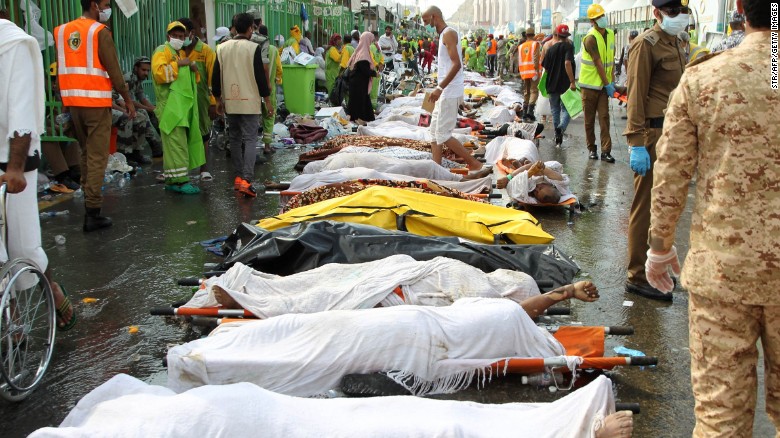
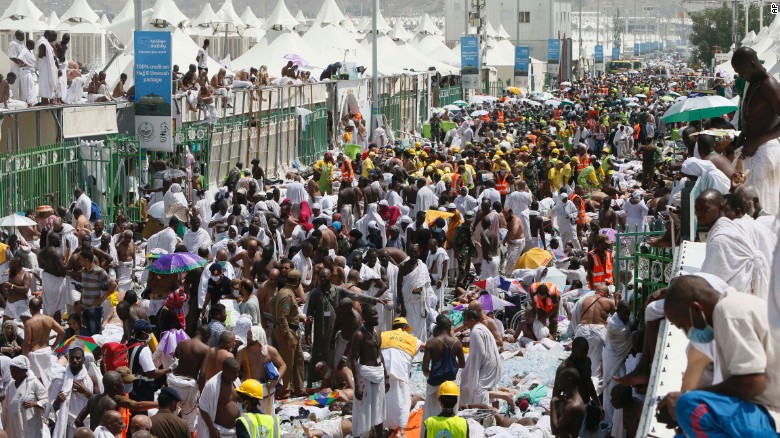
Saudi emergency personnel surround bodies of Hajj pilgrims at the site of a stampede Thursday, September 24, in Mecca, Islam's holiest city. Thursday morning's stampede killed hundreds during one of the last rituals of the<a href="http://www.cnn.com/2015/09/23/world/gallery/hajj/index.html"> Hajj, the annual Islamic pilgrimage</a>.
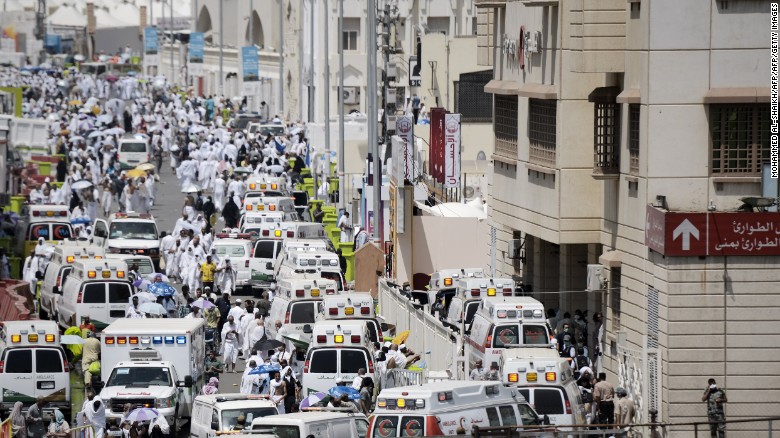
Crowded streets turned into a nightmare as hundreds were killed and hundreds more injured in a stampede Thursday in the city of Mina, on the edge of the holy city of Mecca, Saudi Arabia : AFP/Getty Images

Saudi Arabia, with its vast oil wealth, has invested in advanced technology and complex engineering to minimize the likelihood of just such disasters occurring. From building new approaches to the Islamic sites of sacred heritage to employing greater numbers of security personnel, the Kingdom of Saudi Arabia has assured the ummah that it is once again prepared for the annual hajj, enjoining pious Muslims to place their trust in the House of Saud as custodians of Islam's most sacred sites.

But the catastrophe, the latest in a breathtaking series of misadventures killing hundreds of people and injuring many hundreds more, is once again the fallout of false security. An unsecured giant crane, one among many circling the great mosque in Mecca fell earlier in the month, crushing 111 people and injuring almost 400, as Saudi Arabia goes about modernizing the heritage sites which no longer resemble their original configurations.

In this latest tragedy the simple expedient of being aware of and adequately directing traffic so that two disparate giant groupings of pilgrims did not confront one another with nowhere to turn and inspiring to panic, should never have happened. It represents the most basic of simple enough safety measures; ensuring that horde number one which had completed its devil-bashing mission could exit, allowing horde number two to enter for the same purpose.

Instead, the two masses of people were allowed to use the same thoroughfare, while each was travelling in a direction that guaranteed the human tide travelling in opposite directions would collide with catastrophic results. An episode of fearsome ineptitude. So much for the assurances and self-satisfaction that Saudi Arabia exudes in being custodian and exalted caretaker of Islam's honour and pride.

Muslim pilgrims and rescuers gather around the victims.
AFP/Getty Images

For a religion of peace and human compassion, Islam is proving itself repeatedly to be a religion of war-mongering lack of human compassion. The first horde of pilgrims had completed their stone-throwing ritual to wound the devil and were departing  while the second crowd was in the process of arriving for the very same purpose. The devil obviously refused to be put in its place and decided it would take affront and perform its own deadly act of rejection.

And compassionate Saudi Arabia whose government refused a suggestion that the 160,000 air-conditioned tents set up for the hajj be diverted for use by Syrian refugees fleeing ongoing attacks by the Shiite Alawite government of Bashar al-Assad on Syrian Sunnis, refusing to become involved, though Saudi Arabia is a Sunni stronghold, demonstrated aptly just how supportive they are of human rights.

The Saudi King, Custodian of the Two Holy Mosques in Medina and Mecca, oversees an annual event that brings millions of devout Muslims to the hajj, as the Koran enjoins them to do at least once in their lifetimes. His administration has continued to expand the Grand Mosque housing the Kaaba, circled by the faithful. Sophisticated face-recognition technology counts the numbers present and five thousand CCTV cameras are sprinkled throughout the holy cities.

But adequate numbers of security personnel and the most obvious crowd control methods to be undertaken whereby two massive marches would not confront each other to ensue in panic and death was neglected. At least 771 and likely more people were trampled and crushed to death, making this year the second most deadly such event in the recent history of the hajj.

But rest assured, an investigation is underway.

Saudi ambulances arrive on the scene.
AFP/Getty Images

Labels: , ,

Saturday, September 05, 2015

Political Manoeuvring and Deadly Realities

"Minister Alexander has been one of the strongest allies of the Kurdish community and stood by the Syrian Kurds in their darkest hour in Kobani from where the boy and his family fled in the face of attacks on them by Islamist ISIS and their Turkish allies."
"It is despicable for Liberal and NDP politicians to use the dead boy as a political tool to score partisan political points. Shame on them. They want Canada to stop attacking ISIS, and then shed crocodile tears when a victim of ISIS drowns on a Turkish beach."
"If there is anyone who is guilty of this crime, it is Turkey, Saudi Arabia, Qatar and UN, all those who have refused to embrace hundreds of thousands of refugees fleeing war, not Minister Chris Alexander who needs no lectures on compassion by politicians who are catering to the Islamists inside Canada."
Hadi Elis, spokesman, Kurdish Community Centre of Toronto 
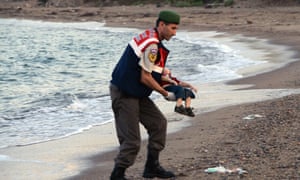
A paramilitary police officer carries the lifeless body of Aylan Kurdi, three, after a number of migrants died and a smaller number were reported missing after boats carrying them to the Greek island of Kos capsized.
A paramilitary police officer carries the lifeless body of Aylan Kurdi, three, after a number of migrants died and a smaller number were reported missing after boats carrying them to the Greek island of Kos capsized. Photograph: AP

When tiny Alan Kurdi was born three years ago, the Syrian conflict was a year in the making, and 500 Syrian Sunni and Syrian Kurd children had already died. By the time, three years later, when Alan Kurdi died, a casualty in his family's effort to flee the conflict and arrive in Europe, fully 12,000 Syrian children had died. None of them deserved to die. Not little Alan nor his five-year-old brother, Ghalib, and not his mother Rehenna Kurdi.

The family had ricocheted from one place to another, from the capital Damascus to the border city of Kobane, and each time they moved hoping to escape the conflict, they became embroiled in the fallout of the Syrian government's war on its own population. In desperation to remove themselves entirely from the scene, they decided to use money sent to them from a relative in British Columbia to buy their passage on a rubber dinghy out of Turkey toward Europe.

The story is a convoluted one, and but so is the Syrian civil war, with the entrance of foreign jihadists to fight alongside Syrian Sunni rebels, and sometimes against them, finally reaching the point where the ultimate jihadist Islamist group formed itself, spurning association with al-Qaeda which itself never practised quite the deadly violence of their new rivals, the Islamic State of Iraq and the Levant. All three however, al-Qaeda, ISIL and Bashar al-Assad rival one another for mass-scale butchery.

Alan Kurdi's aunt who lives in Canada tried to sponsor her older brother and his family to come to Canada. That attempt failed for technical, UN-refugee-status-involved reasons along with Turkey's refusal to grant an exit visa. The aunt meant to sponsor her older brother first, then to go on to sponsor Alan's father. But no completed visa application was ever accepted from Alan's father, Abdullah, to bring himself, his wife Rehenna and their two young sons to Canada.

Which hasn't stopped the leaders of the New Democratic Party and the Liberal Party of Canada, in blaming the current Conservative-led government and its ministers for the death of the little boy whose photographs have circled the Globe, causing a somewhat-tardy reaction to the genocide that Syrian President Bashar al-Assad, along with his mentor the Islamic Republic of Iran and its proxy militias in Hezbollah and Shiite death gangs have targeted Syrian civilians with.

Labels: , , , ,

Thursday, September 03, 2015

One Tragedy of Countless Others

"I started pushing them up to the surface so they could breathe. I had to shift from one to another. I think we were in the water for three hours trying to survive."
"The waves were high, the boat started swaying and shaking. We were terrified."
"I rushed to my kids and wife while the boat was flipping upside down. And in a second we were all drowning in the water."
Abdullah Kurdi, Syrian Kurd, 40, from Kobani

"I was trying to sponsor them, and I have my friends and my neighbors who helped me with the bank deposits, but we couldn’t get them out, and that is why they went in the boat."
"I was even paying rent for them in Turkey, but it is horrible the way they treat Syrians there."
Teema Kurdi, Vancouver, British Columbia
Originally from Kobani, the besieged Kurdish town just inside Syria across the border from Turkey, Mr. Kurdi who had paid smugglers thousands of dollars to take him and his wife and two young boys in a 15-foot boat to one of the Greek islands in a bid to find haven for his family in Europe, is now mourning the death of his wife and two children. The boat they were being transported in, along with another boat, was swamped by high waves, drowning 27 people.

Kobani is now back in the hands of the Syrian Kurds, but Islamic State of Iraq and the Levant terrorists still keep inflicting terror attacks on the partially destroyed town. Its residents who had fled in the initial attacks to refugee camps on the Turkish side in distant view of the destruction their town was undergoing, had to decide how their future would unfold; to return to Kobani and its unsettled status where violence and uncertainty prevails, or to look elsewhere for haven.

Mr. Kurdi had attempted to emigrate to Canada with his family. His sister has lived in British Columbia for years through earlier immigration, and has stated she made every effort open to her to sponsor the little family to join her in Canada. Now, Mr. Kurdi is desolate, alone without his family, completing paperwork in Mugla Province, Turkey, arranging for the bodies of his wife Rehan, 27, and their children Galip, 5, and Aylan, 3, to be returned to Kobani for a funeral and burial.


The body of the younger child, Aylan, three, was discovered on a Turkish beach.

A Turkish police officer carried the body of a young Syrian refugee who drowned off the coast of Turkey’s Bodrum Peninsula on Wednesday. Credit Nilufer Demir/DHA, via Reuters

In an interview, Mr. Kurdi spoke of the panic as the boat capsized, and his frantic efforts to save his wife and children. Attempting to keep all three afloat and alive until help might arrive, he watched as each of his children, exhausted, submitted to the waters, drowning. His wife had been holding on to the capsized boat, and he directed one of the children toward his mother "so he could at least keep his head up", but it was futile.

Turkish police detained four Syrians whom they suspect of having arranged the passage of the capsized boats. Mr. Kurdi's sister Teema had lived in Canada for several decades, and hoped she could aid her brother, sister-in-law and nephews to come to Canada as sponsored refugees. She is also attempting to sponsor another brother and his family. It seems that after a visa application for one of the brothers was rejected it was revealed the cause was that the United Nations had failed to declare the families to be refugees. Moreover the Turkish government had denied exit visas to the family.

"I am meeting with officials to ascertain both the facts of the case of the Kurdi family and to receive an update on the migrant crisis."
"The tragic photo of young Aylan Kurdi and the news of the death of his brother and mother broke hearts around the world. Like all Canadians, I was deeply saddened by that image and of the many other images of the plight of the Syrian and Iraqi migrants fleeing persecution at the hands of ISIS."
"We did not have an application from Abdullah and the children."
Chris Alexander, Minister of Immigration

Labels: , , , , ,

() Follow @rheytah Tweet