Politic?

This is a blog dedicated to a personal interpretation of political news of the day. I attempt to be as knowledgeable as possible before commenting and committing my thoughts to a day's communication.

Sunday, February 01, 2026

Autocratic Regimes

"[Havana] aligns itself -- and provides support to numerous hostile countries, transnational terrorist groups and malign actors adverse to the United States [including Russia, China and Iran]."
"[The communist government provides] defense, intelligence and security assistance to adversaries in the Western Hemisphere [while violating the human rights of its citizens]."
"[Cuba] will be failing pretty soon. They got their oil from Venezuela. They're not getting that anymore."
"[I will impose tariffs on any country that] directly or indirectly provides oil to Cuba."  
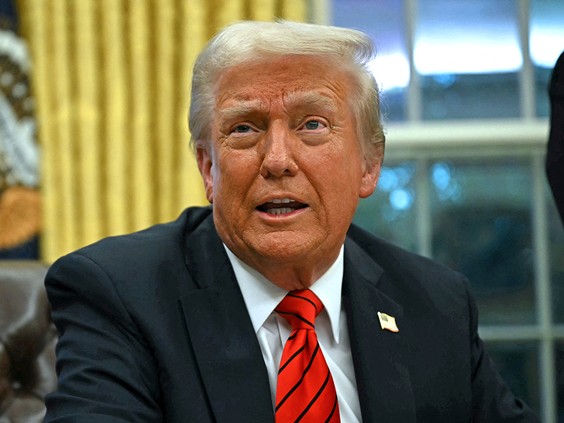
U.S. President Donald J. Trump 
 
"We did not touch on the topic of Cuba [during their 40-minute telephone conversation], and in the evening then this [executive order] came out."
"The imposition of tariffs on countries that provide oil to Cuba could create a far-reaching humanitarian crisis [severely impacting the operations of hospitals, the electrical grid and the food supply]." 
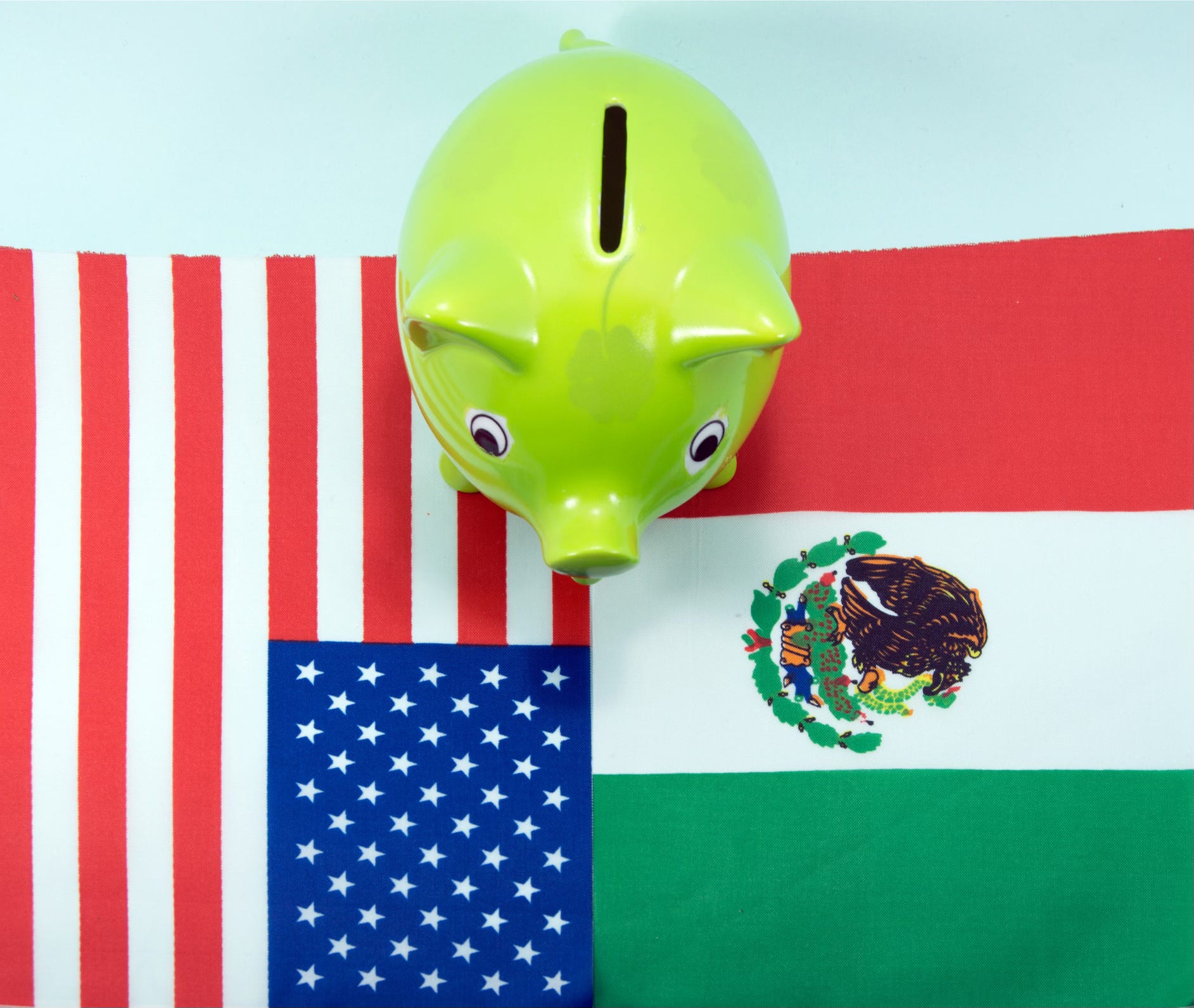
"[Cuba is currently] going through a difficult moment [but Mexico cannot be put] at risk in terms of the tariffs."  
Mexican President Claudia Sheinbaum  
https://i.cbc.ca/ais/74cb9521-b1dd-4f6b-b086-64f47ac356a2,1769814708002/full/max/0/default.jpg?im=Crop%2Crect%3D%280%2C0%2C3339%2C2268%29%3BResize%3D796
A drone view shows the Pajaritos terminal of Mexico's state-owned oil company Pemex, in Coatzacoalcos, Veracruz state. (Angel Hernandez/Reuters)
 
An executive order was signed on Thursday by U.S. President Donald Trump when he declared Cuba represented an "unusual and extraordinary threat" to U.S. national security for which tariffs would be imposed on all U.S. imports from any country supplying Cuba with oil. In the wake of the lightning military raid on Caracas in mid-January that took Venezuela's President Nicolas Maduro into U.S. custody for trucking with drug cartels, Mr. Trump turned his attention directly on Cuba.
 
Subsequent to the raid, the Trump administration now controls Venezuela's oil exports and took the occasion to block deliveries of oil to Cuba, long reliant on its regional ally in Venezuela to supply it with petroleum. Mexico, under critical trade duress found it necessary to cancel its latest scheduled delivery for the month to Cuba, taking into account the looming renegotiation of Mexico's free-trade pact with the United States and Canada.
 
Under these constraining issues, the sobering 'sovereign decision' was made to temporarily halt Mexican oil shipments to Cuba. Earlier in the day following the Trump order appearing on the White House website, the Cuban government attempted to rally Latin American and Caribbean neighbours to its rescue. "The peace, security and stability of Our America are in danger", Cuban Foreign Minister Bruno Rodriguez stated in a social media post, denouncing the U.S. for imposing "peace through force".
 
In an appearance before the Senate Foreign Relations Committee the day before, Secretary of State Marco Rubio -- of Cuban descent -- was asked whether he would rule out forcing "regime change" in Cuba. "I think we would like to see that regime change", responded Mr. Rubio. "That doesn't mean that we're going to make a change, but we would love to see a change. There's no doubt about the fact that it would be of great benefit to the United States if Cuba was no longer governed by an autocratic regime"
 
Long dependent on Venezuelan supplies of oil which it trades for security and medical personnel with Venezuela under Maduro and previously Hugh Chavez, Cuba produces little oil of its own. Imports averaged 37,000 barrels daily, the bulk of which arrived from Venezuela in 2025. Cuba is now left with a mere 15 to 20 days of oil, according to the Financial Times. Island-wide blackouts are common and frequent, impacting basic human services like drinking water.
 
https://i.cbc.ca/ais/bea02522-c182-4e02-8a34-e15e9940e365,1769814792500/full/max/0/default.jpg?im=Crop%2Crect%3D%280%2C0%2C6049%2C4032%29%3BResize%3D796
Preparing dinner during a blackout in Havana on Wednesday, as Cubans from all walks of life hunker into survival mode, navigating seemingly interminable blackouts and soaring prices for food, fuel and transport as the U.S. increases pressure on the communist‑run nation. (Reuters)
 
Signing a new defence co-operation pact with Havana last fall, Moscow pledged $1 billion in investment over the next five years in efforts to retain a hemispheric foothold. Diplomatic support has emanated to Cuba by both China and Russia. The determination of the U.S. to direct oil supplies away from Cuba along with a fleet of navy and coast guard ships in the Caribbean for operations against Venezuela tasked to stop drug smuggling, the oil blockade of Cuba was next on the agenda.
 
Seven sanctioned oil tankers carrying Venezuelan crude have been seized by the U.S. to date -- blockading legitimate shipments to Cuba risks global criticism of violating international law, according to maritime experts. In response to questions in the immediate aftermath of the Caracas raid, the U.S. president responded that he felt no additional actions were required against Cuba, since lacking oil from Venezuela, "Cuba looks like it's ready to fall"


Labels: , , , , , ,

Tuesday, July 15, 2025

Over to You, Donald J. Trump!

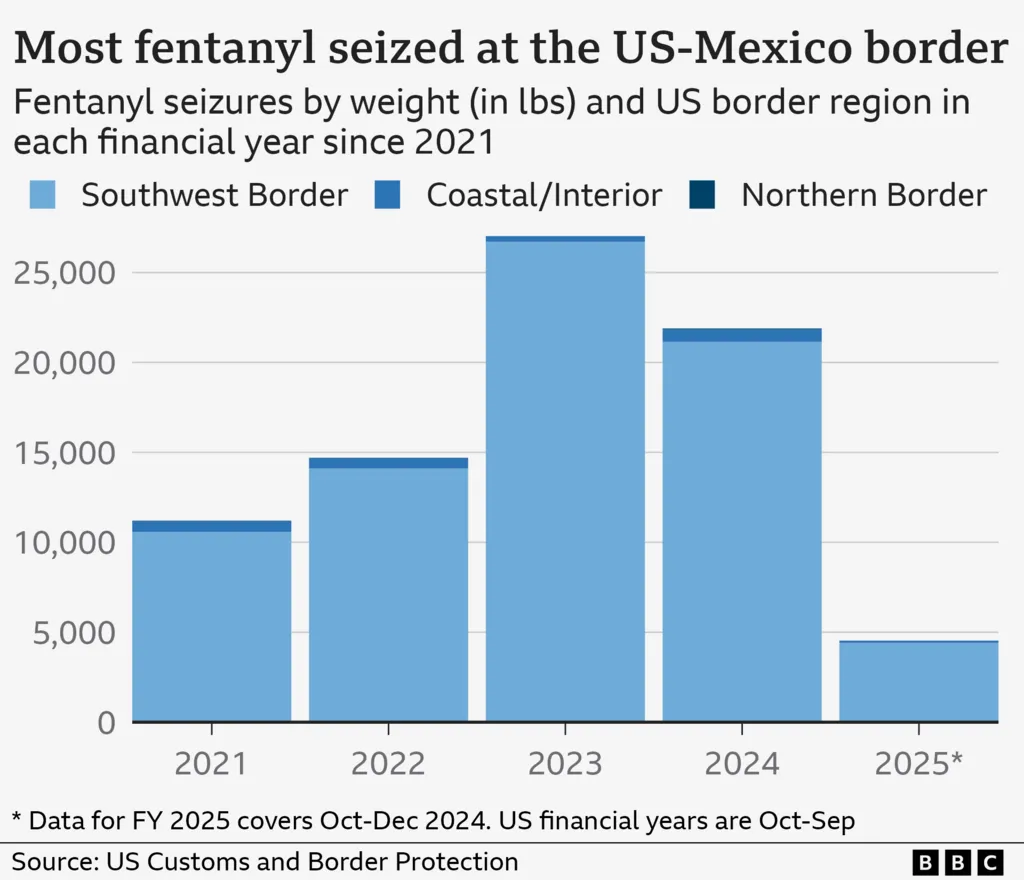
"[New data on fentanyl seizures] largely reinforce previous understanding that most IMF [illegally manufactured fentanyl] enters the U.S. from the south. These data call into question tariffs and other policies and policy justifications that treat the threat from the northern border as comparably severe."
"Counties along the Mexican border account for only 2.35 percent of the U.S. population; but in 2023-24, they hosted about 40 percent of the nation-wide quantity of fentanyl appearing in large seizures, for both powder and pills."
"By contrast, counties in the lower 48 states that border Canada account for 3.1 percent of the U.S. population but only 1.2 percent of the powder and just 0.5 percent of the pills obtained in large seizures." 
Manhattan Institute report 
 
"The basic punch line of this study is that seizures of fentanyl in the United States are disproportionately at borders; no surprise. It's mostly produced internationally and then shipped in."
"But the vast majority of that is on the borders of Mexico, not on the borders with Canada." 
"It's what I expected [to see]."
Jon Caulkins, report co-author. H. Guyford Stever University professor of operations research and public policy, Carnegie Mellon University Heinz College, Pittsburgh 
https://ichef.bbci.co.uk/news/1024/cpsprodpb/9b96/live/55084920-e242-11ef-a819-277e390a7a08.png.webp 
 
A new report published by the Manhattan Institute verifies a fact already known to Canadian authorities. A fact that U.S. border and customs officials have long had knowledge of. That the claims of the Canadian border representing a threat to the United States through the smuggling of large amounts of fentanyl across the border are quite simply false. It is, in fact, the border between Mexico and the United States where the vast bulk of fentanyl emanates from.
 
U.S. President Donald Trump's repeated assertions accusing Canada equally with Mexico of threatening the lives of Americans by channeling the drug fentanyl into the United States largely forms the basis of his punishing tariffs imposed on Mexican and Canadian exports to the United States. Mr. Trump has tied the imposition of steep tariffs to the grievance of fentanyl flooding across its North American borders to threaten the United States.
 
https://smartcdn.gprod.postmedia.digital/torontosun/wp-content/uploads/2025/07/2224640793_297174363-e1752251231433.jpg?quality=90&strip=all&w=564&h=423&type=webp&sig=OhVTlXhCqvKjPomlcVqMwg
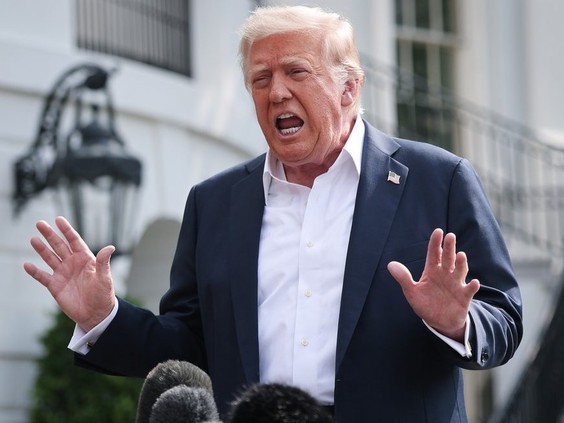
President Donald Trump answers questions while departing the White House with first lady Melania Trump on July 11, 2025 in Washington, DC. Photo by Win McNamee /Getty Images
 
Such concerns, according to the report's authors, Jon Caulkins and Bishu Giri, are completely unfounded, at least in the case of Canada. They could as well, they posit, undermine the ability of the US. to prioritize tightening the country's border with Mexico. The report focused on "large" seizures of fentanyl, defined as over a kilogram of power, or more than 1,00 pills -- that would reflect wholesale trafficking as opposed to smuggling for personal use.
 
Their finding was that officials made more large seizures in U.S. counties along the northern and southern borders when compared to the rest of the country, pointing out that it was in the south that far more seizures were made. Cross-border drug flows, according to Mr. Caulkins, often mirror where seizures occur, and data point to an uncontroversial finding; "not terribly complicated or subtle"
 
On the other hand the report found that some counties in Alaska could be portals from Canada to the broader Alaska market "although those quantities are much too small to be of consequence beyond Alaska". Of the 26 seizures in Alaska bordering Canada "triple what would be expected based on those counties' population", yet small in comparison to the rest of the Alaska market.  
"Maybe Alaska does get its fentanyl from Canada, because there's not necessarily a large presence of Mexican drug trafficking organizations in Alaska, and you can't easily drive from Mexico to Alaska without crossing several international borders."
"I didn't know that was coming, and by all means, maybe U.S. and Canadian authorities can put a few more inspectors on those ferries or whatever."
"But that's not going to move the needle for the country, but it might be useful, right locally."
Jon Caulkins former drug police researcher 
As far as President Trump is concerned, having frequently cited the 9,000-kilometre U.S.-Canada border as a threat to national security and a vulnerability that cartels and smugglers exploit, the way he sees it is that Canada is entirely culpable. That belief is his cudgel to justify  the imposition of high tariffs on Canadian goods entering the United States. For its part, the Manhattan Institute report suggested it might be more useful for the U.S. to direct a more intense focus to the southern border should it wish to reduce the fentanyl flow.
 
https://www.cbp.gov/sites/default/files/styles/webp_original_size/public/2024-10/24_1011_slide_frontline-against-fentanyl.jpg.webp?itok=5i0KjtbT
Fentanyl is extremely potent and incredibly dangerous. Just 2 milligrams – the size of a few grains of sand – can lead to an overdose. CBP is committed to stopping the flow of fentanyl and the devastation it is wreaking on American lives and communities.  U.S. Customs and Border Protection
 
"Counties along the Canadian border are not an important part of this story."
"Whatever the merits or drawbacks of tariffs on imports -- such actions cannot be justified as part of a pragmatic and data-informed response to the threat of fentanyl to the United States."
Manhattan Institute report 

Labels: , , , , , , , , ,

Wednesday, April 09, 2025

Reeling International Markets ... A Trump Specialty


"The reaction from the worlds of business and finance has been swift."
"Wall Street witnessed its worst two-day sell-off in the past five years last week."
"International markets continued their downward trend on Monday, with Japan's Nikkei index and the Shanghai Composite Index dropping over seven percent."
Jesse Kline, The National Post
https://www.reuters.com/resizer/v2/GGYTGKTO2ZLYBITJ6IMOECE4CE.jpg?auth=478810e4fb638b71b91fb09dcf5e929d96c0182b8da3cb2e1a2893fcd3b06daa&width=640&quality=80
A drone view of Stellantis's Chrysler Windsor Assembly facility in Windsor, Ontario, Canada, February 4, 2025. REUTERS/Carlos Osorio

World markets are reacting to the Trump White House announcements on everything from its realignment of chosen allies, to its characterization of NATO members as free-loaders on the American military, to punishing nations across the globe for their protectionism in trade through tariffs on American goods. A very similar protectionism in President Trump's own 'Make America Great Again', prioritizing U.S. jobs and production by suddenly heaping stiff tariffs on imports to the United States worldwide, leaving all those targeted reeling, and international markets in a confusion of utter chaos.
 
Business confidence and investment, high finance hardly knows where next to look for additional shocks to global markets. One man and his seemingly irrational decision-making has managed to roil the world with a major economic crisis, one that threatens to take not only the countries he has targeted into recession, but the United States as well. It was, after, all, North American and European consumers that decided they preferred to buy manufactured goods produced in cheap-labour markets and their buying power bypassed home-produced goods effectively shutting down factories in favour of inexpensive overseas-produced goods ranging from kitchenware to footwear, bedding and clothing.
 
https://smartcdn.gprod.postmedia.digital/nationalpost/wp-content/uploads/2025/04/2208353268_294790716.jpg?quality=90&strip=all&w=564&h=423&type=webp&sig=mBpstGmVnZwg0I0Og3eR0w

There have been a plethora of tariff statements linked to specific dates, complicated by second-thought reprieves which simply had the effect of destabilizing markets even more, and leaving economists and trade authorities in the dark over what next to expect from a mercurial president of the powerful United States of America. Universal tariffs ranging from ten to 49 percent set to come into effect on the 10th of April have now been temporarily suspended, once again. When they are  reinstituted they will be applied to imports from 180 different countries. 
 
In Canada, America's northern neighbour, President Trump's order to carmakers that he expected manufacturing to return to the United States and the closure of U.S. manufacturing plants in Canada and Mexico to facilitate that move, one that in practical terms will raise the price of the finished product to bite the bank accounts of Americans, yet a transition that would take years in the making, to undo a complex system of established integrated manufacturing between the U.S., Canada and Mexico, both of which Mr. Trump accuses of ripping off America.
 
Automaker Stellantis last week announced its production pause at two of its North American plants -- one in Canada, affecting 3,200 employees, the second in Mexico where 900 workers are to be laid off at five U.S. factories. Canada, as a result of this turmoil, lost 33,000 jobs in March and even greater numbers of full-time jobs. So that's how America's partners in the CUSMA Free Trade agreement are faring at the present time.
 
https://smartcdn.gprod.postmedia.digital/nationalpost/wp-content/uploads/2025/04/2207638130_294781542.jpg?quality=90&strip=all&w=564&type=webp&sig=9GDhAmmL_LfXzJGiqvKLsA
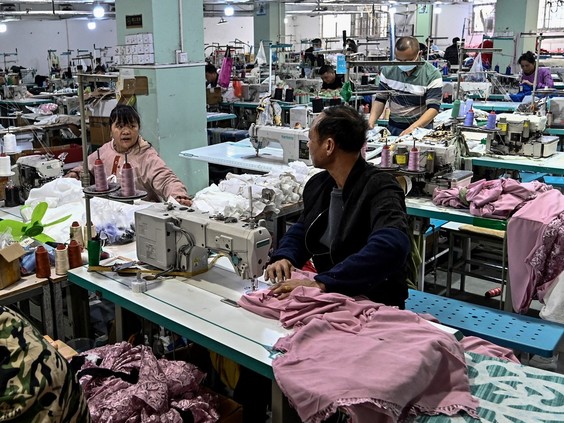
Employees working in a clothing sewing workshop in Guangzhou, China’s southern Guangdong province. Photo by PEDRO PARDO /AFP via Getty Images

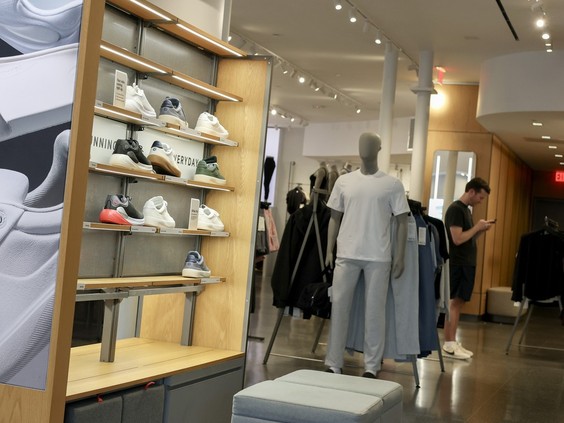
And in the United States, textile and footwear industries have warned that 97 percent of the clothing and footwear sold in the U.S. are imported; the new tariffs on textile-producing countries like Vietnam, Cambodia and China could raise prices by over 50 percent. With free trade, offshoring and strong competition keeps prices down, leaving U.S. consumers with stable pricing on goods over extended periods of time. 

An average car cost is likely to rise between $5,000 to $10,000. These new tariffs are set to cost American households an estimated $1,900 for starters this yer, according to the Tax Foundation think tank; "the largest tax hike since 1982"

President Trump's endgame is to force production in manufacturing back to the United States as it was before the global community gave its complacent blessing to China to become a colossus of manufacturing, flooding the world with cheap products to please the ordinary consumer focused on cost to the exclusion of closing down their own job markets. In his determination to haul production back home, some matters have not been taken into account.
 
Such as the fact that the low-skilled workforce in the United States no longer exists; goods currently made in developing countries in economies of scale will not be reproducible in the U.S. Even as the Trump White House is sending notices to temporary residents of the U.S. that their freeloading on the U.S. taxpayer is over and millions of undocumented immigrants are being rounded up and returned to sender. Is the U.S. prepared to reduce its high minimum wages to challenge the low wages received by skilled workers in 'undeveloped' countries of the world? 
 
Another example was brought to the fore when the Footwear Distributors and Retailers of America contacted the new U.S. Trade Representative informing him that the typical shoe contains 70 materials that cannot be sourced within the United States. Even should American companies begin producing domestic footwear, tariffs would still apply on many of the raw materials they would have to import to produce footwear. 

And then there's the issue of moving automobile production back to the United States. Transplanting auto part producing factories and vehicles would take years to come to fruition. American-made vehicles also contain thousands of components sourced world-wide.  For producing companies to make long-term reshoring plans they would be risking hundreds of millions at a time of uncertainty and instability; both complicating economic conditions the Trump administration has made itself known for.
 
https://substackcdn.com/image/fetch/f_auto,q_auto:good,fl_progressive:steep/https%3A%2F%2Fsubstack-post-media.s3.amazonaws.com%2Fpublic%2Fimages%2F91fcfb90-7195-42c3-bbf8-a981bf360a80_1885x1591.heic
Getty Images


Labels: , , , , , , ,

Tuesday, March 11, 2025

Canada's new Trump-averse "Buy Canada" Mantra

"It's shocking that our view of the U.S. is now veering closer to how we feel about Russia, a country that is viewed very unfavourably." 
"In 25 years of polling I don't recall it ever being this low. And to see the United States viewed only a little more positive than say China, with whom we've had problems, shows how much damage has been done to a relationship with a country that has long seen us as its closest ally."
Jack Jedwab, president, Association for Canadian Studies, Montreal
https://smartcdn.gprod.postmedia.digital/nationalpost/wp-content/uploads/2024/11/iStock-508632322-1-e1740060430521.jpg?quality=90&strip=all&w=564&h=423&type=webp&sig=USiJS1H_I_r7IZ0aqufMDw

A historic 'realignment' regarding the countries that the Canadian population view as their main allies has become sharply evident in the very short reign to date of American President Donald J. Trump. Mr. Trump's hostility toward Canada has reshaped public opinion in Canada to a degree never before countenanced in reaction to his economic and sovereignty threats against Canada. Although he himself signed a trade agreement (Canada-Mexico-United States -- or CUSMA) he has now unilaterally negated it with his imposition of massive tariffs on goods imported into the United States from his North American neighbours.
 
With that imposition of tariffs, interrupting the flow of manufactured and raw materials in a continent-wide intertwined economy in production, has come a warning from the man himself that his more malign intention is to impact Canada's economy to an extent that his invitation for Canada to fold itself into the United States as its 51st state will find favour with a population he has beggared. His conceit of himself as a great 'negotiator' is to go for the jugular and he has done this with gusto, leaving former friends and allies dazed at the swiftness of their inter-relationship's demise.
 
Canadians now look to the European Union and United Kingdom as the countries most likely to remain their friends, allies and trading partners. The wreckage of the Canada-Mexico-U.S. free trade relationship will lead both Canada and Mexico to search out other countries with which business can be conducted on a trustworthy basis. There is now scant-to-none left with the United States whose moves can be characterized as dishonourable.
 
https://smartcdn.gprod.postmedia.digital/nationalpost/wp-content/uploads/2025/02/Donald-Trump-hostages.jpg?quality=90&strip=all&w=564&type=webp&sig=VMS1dxXwIAvSg8lGRfyhUA
U.S. President Donald Trump speaks to reporters after signing an executive order in the White House, on February 10, 2025. Photo by ANDREW CABALLERO-REYNOLDS/AFP via Getty Images

Some two-thirds of Canadians feel that Mr. Trump's "expressed interest to make Canada the 51st American State" must be taken "very seriously", with a slim majority of respondents to the Leger poll commissioned by the Association for Canadian Studies going on to state that they are personally willing to defend Canada should the situation turn into a military threat of invasion. The historical view by Canadians of Americans has been one of deep friendship, trade and military alliance aside. That has now dwindled remarkably.
 
Positive opinions of various countries from June to the present day had been tracked by the survey, with the sole country's opinion on a steep downward trend in Canadian eyes being the United States. The current survey of 1,548 respondents indicates positive opinion of the United States remains most common among young respondents, 25 to 34, a 42 percent. Among an older demographic, 55 upward, it is 27 percent. Asked the same question relating to the American people, rather than their government, positive numbers leap, still reaching overall just 50 percent.
"While the 50 percent is low compared to past surveys, it still shows that a distinction is being made between our views of Americans and our view of their current government."
"Clearly for the time being, President Trump has soured our relationship."
Jack Jedwab 
Over the past year, all other countries' favourability rating remain stable, moving no more than two percentage points: Ukraine at 66 percent, Israel at 36 percent, China at 30 percent, Iran at 17 and Russia at 18. Young Canadians, 18 to 24 appear fairly negative about Israel, just 25 percent with a positive opinion in comparison to 46 percent of people over 65 years of age. Young people on the other hand, are relatively positive on China, at 38 percent, compared to just 28 percent older than 65.
 
Interestingly enough, the young in Canada appear quite a bit more interested on Iran and Russia in comparison with older people, at 30 percent of those age 18 to 24 holding positive opinions of both. Those over 65 are just 12 percent positive on Iran and nine percent on Russia. Men appear more positively disposed than women to the U.S., Israel and Russia. The split is 12 points for Israel with between 42 percent of men with a positive view as compared to 30 percent of women.
 
As for defending their country, fully 38 percent of those 18 to 34, would do so, in comparison to respondents older than 55 seeing 17 percent commitment. Two thirds of Canadians overall agree a travel boycott is an effective response, while among young people that falls to 56 percent. Among those older than 55, 78 percent agree on a travel boycott. "Buy Canada" has become a popular message. 

https://www.readthemaple.com/content/images/size/w2000/2025/02/presidents.png
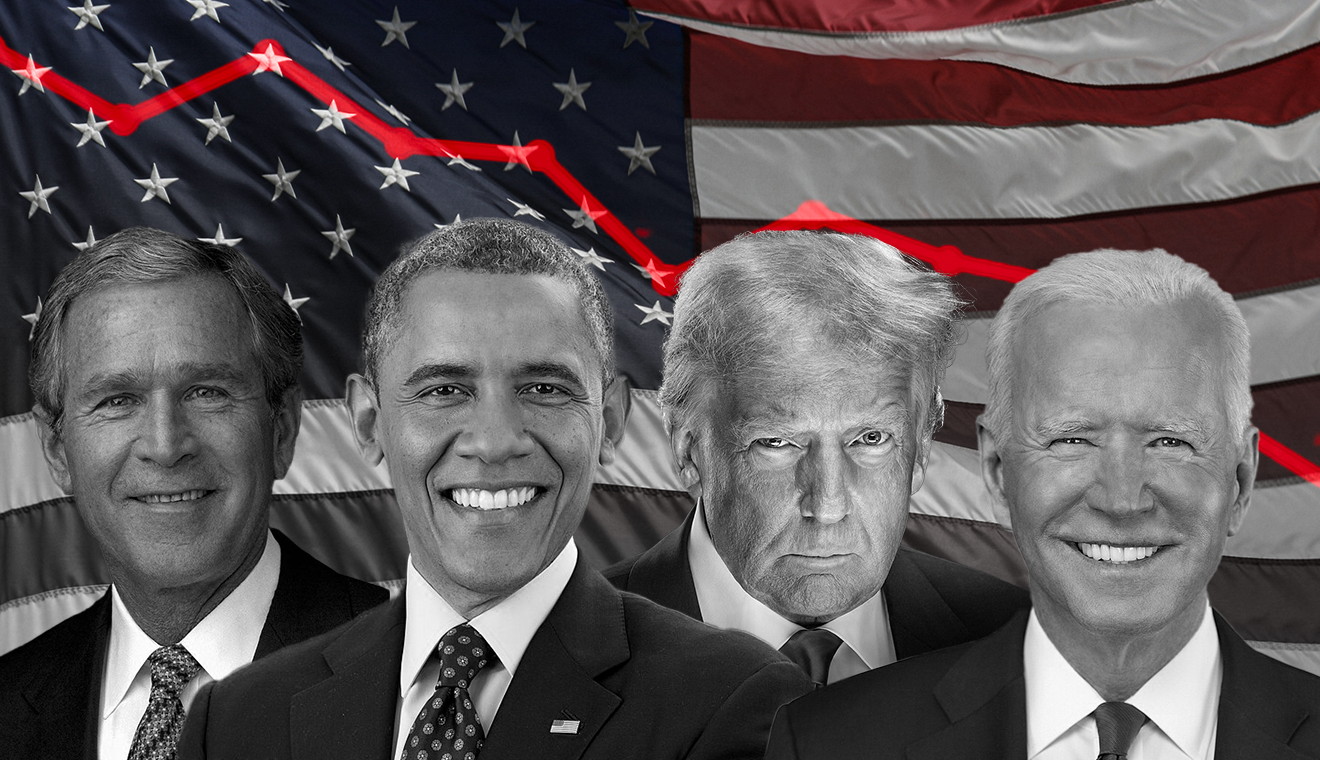
Graphic assembled by The Maple staff using photo of the American flag by Charles "Duck" Unitas via Unsplash and official presidential portraits via Wikiepdia.

Labels: , , , , , , ,

Sunday, January 21, 2024

Looking for Peace, Opportunity, Future

"[We're waiting for] border patrol to come pick us up and give us protection."
"It doesn't matter if it's cold. There is peace here."
Sudanese migrant, Izzeddin, 32, migrant encampment, Sasabe, Arizona

"In terms of migrants per day, December 2023 has been larger than any average we have ever seen."
"Every official who is commenting on it, on all levels, says they're near or past the breaking point."
"If you move to a place that's super remote, there won't be a lot of agents on staff, and that increases your chances of being released into the U.S."
"There is nowhere to put people They can't hold you."
Adam Isacson, migration expert, Washington Office on Latin America
Women wait in a hallway Friday, Dec. 15, 2023, at a Border Patrol station in Ajo, Ariz. (AP Photo/Gregory Bull)

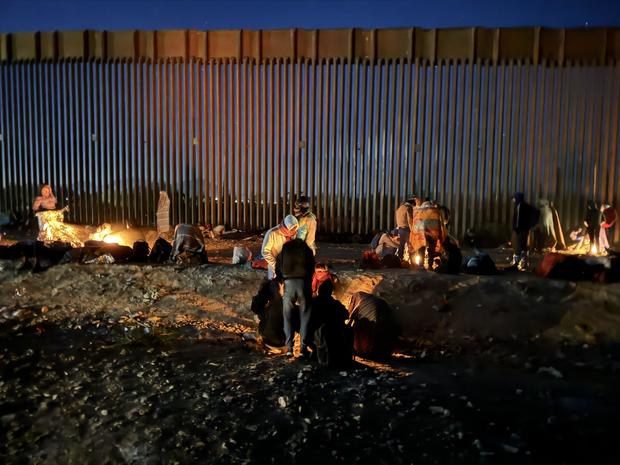
In a remote, cold and lonely place while awaiting the arrival of border guards, dozens of migrants huddle close to a hole in the border wall. They have been given coffee by aid group No More Deaths. Given blankets, food and emergency telephone calls should there be any there who sustained life-threatening injuries on their journey. Those hailing from Sudan have escaped another Darfur-like conflict, patiently waiting for their search for haven to end far from their homeland.

Among them are others, not only themselves fleeing war in Sudan, but those escaping from Central American violent gangs and Mexican cartels. All have crossed illegally into the United States, trekked over rugged terrain for tiring hours, to arrive near Sasabe, Arizona exhausted, hungry and cold. They wait to turn themselves over to authorities to be given the opportunity to ask for asylum; stranded in the Arizona desert, but hopeful.

Just as night time temperatures begin dropping, a convoy of American Border Patrol agents roll in. The men are loaded into a van where they're briefly processed. The van continues driving in its search for more people needing rescue. "We are not equipped to deal with this. It's a humanitarian disaster", comments Scott Carmon, a Border Patrol watch commander, of the crisis unfolding at the southern U.S. border.
 
A migrant walks along a road shadowed by the steel columns of the border wall separating Arizona and Mexico after crossing into the United States, Friday, Dec. 15, 2023, near Lukeville, Ariz. (AP Photo/Gregory Bull)
A migrant walking along a road shadowed by the steel columns of the separation border between Mexico and Arizona. AP
 
Once again, migrant encounters reach toward record levels, testing the capacity of American law enforcement. Thousands of migrants arrive daily, on their way from Africa, Asia, the Middle East or South America. Relentless violence, desperation, fear and poverty drive them from their places of birth where they can no longer find a future.

There was a broad sigh of relief in the spring when crossings into the U.S. declined after the lifting of pandemic border restrictions. The anticipation was that the floodgates would burst, but they held. More lately, numbers have spiked. The number of apprehensions in a recent week soared to over 10,000 a day -- the Border Patrol found itself stretched beyond capacity. 
 
Small towns on both sides of the border were overwhelmed with people funneled through new routes by human smugglers, to evade capture.

American officials monitored a caravan moving north through Mexico comprised of over 2,000 migrants, heading toward the United States; unlikely to complete their journey according to experts, but drawing significant media notice to the migrant tide crossing the border. What has caused the recent swell is as yet unknown.

Theories include larger numbers of Mexicans fleeing from cartel turf battles; rumours of a key legal pathway ending; smugglers who push desperate people of all nationalities to attempt entry at increasingly remote parts of the vast border. Border officials in Arizona closed a key port of entry to legal crossings early in December to enable them to focus on the unlawful entries.

Migrants huddle around fires for warmth along the U.S.-Mexico border near Lukeville, Arizona, on Thursday, Dec. 7, 2023.
Migrants huddle around fires for warmth along the U.S.-Mexico border near Lukeville, Arizona. Camilo Montoya-Galvez/CBS News


Labels: , , , , , ,

Friday, November 26, 2021

Fine-Tuning The Migration Crisis

"I will ... say very clearly that our security forces are mobilized day and night. Maximum mobilization [of French forces with reservists and drones will be watching the coast]."
"But above all, we need to seriously strengthen cooperation -- with Belgium, the Netherlands, Britain and the European Commission."
French President Emmanuel Macron
 
"Yesterday is sad and it is scary [the drowning of 31 migrants attempting to cross the Channel in an overloaded dinghy that deflated], but we have to go by boat, there is no other way."
"Maybe it's dangerous, maybe we die, but maybe it will be safe. We have to try our chance. It's a risk, we already know it is a risk."
Manzar, 28-year-old Kurd from Iran
Fire trucks arrive at Calais harbour Wednesday after at least 31 migrants died in the sinking of their boat off the coast of Calais.
 
When questioned why they would risk their lives on such a dangerous venture, some of the young men opting to leave Kurdistan (Iraq) in hopes of reaching the United Kingdom, speak of their disappointment of their country of origin. The large unemployment figures, the lack of opportunity, the corruption at high level, blaming prominent clans for their role in leading the autonomous region, the inequities and the misery they face in a geography rich with natural resources.

Their anger at their leaders and their determination to seek out opportunities for their futures elsewhere made them ripe for exploitation as human victims to ideological disparities and the ire felt by the president of Belarus at the condemnation heaped upon him, along with sanctions for the role he played in violating the voting and human rights of his population many of whom took to the streets in protest against a sham election returning him to power.
 
Opposition supporters hold a flag in opposition to the government
Mass protests over the discredited election led to a government crackdown, with people sent to prison or exiled   Getty Images
 
Belarusian President Lukashenko promised those anxious to cross into Europe that if they travelled to Minsk, a way could be found. That way was  to bus them in their hundreds to the border between Belarus and Poland, where they were encouraged to cut through the wire fencing and make their way through. The migrants made it clear their destination was not Poland, but the United Kingdom. Not just anywhere in Europe would do; the UK was their choice.

What resulted was a humanitarian tragedy, as all such movements of mass migration end up, with their destination country closing its borders to the masses of humanity camping out beyond their borders hoping for a miracle to transpire, that they would be welcomed, housed, fed, found employment and prosper, leaving their pasts of yearning for such opportunities behind in a fantasy reality that achieved all they had dreamed of.

The scene shifts from that catastrophe with its loss of lives and hopes and collapsed dreams, to the English Channel where for years, migrants from the Middle East, Africa and elsewhere gather with the determination to puncture Europe's defences and gain entry to the opportunities they are convinced awaits their arrival. The same spirit of hope and defiance that people from failed Central American states, Africans and Haitians bring with them when they gather at the border between Mexico and the United States.

France has pledged once again to increase its surveillance of its northern shores to ensure that migrants fail in their attempts to cross the Channel to Britain, their preferred destination. The migrants are unimpressed. Huddling in their makeshift camps they vow that no measure of security to keep them from realizing their aspirations will defeat them. And nor would fear of the venture before them, crossing a waterway full of commercial traffic nor weathering conditions at sea in small inflatable dinghies.

These are watercraft meant to carry no more than ten people, and double and  triple that number are ushered into the boats at a time by unscrupulous people smugglers doing their brisk business with no inconvenient thoughts of placing people in dire danger disturbing the more important thoughts of their extortionate fees. Desperate people leaving behind poverty and war in Afghanistan, Iraq and elsewhere in the world of Islamic social incompetence, corruption and violence view the potential dangers of a sea crossing as nothing compared to the miseries of life they have endured.

When the 31 men, women and children drowned in their failed crossing, relations between France and Britain, already strained, took a deeper dive of anger and resentment; no one likes to take credit for the deaths of vulnerable people fleeing misery and finding death. Prime Minister Johnson feels France to be at fault, while President Macron understands the responsibility for the situation to be entirely Britain's. Finally it seems to have occurred to them that cooperation might achieve more.

Britain has set out five steps for the two countries to embark upon in an effort to ensure there are no further migrant deaths. 
  • Joint patrols to prevent more boats from leaving French beaches;
  • The use of sensors and radar;
  • Immediate work on a returns agreement with France;
  • A similar deal with the European Union.
Having left the EU in Brexit, Britain was no longer part of the bloc's system of returning migrants to the first member-state that was entered. 

"My thoughts and sympathies are, first of all with the victims and their families, and it's an appalling thing that they have suffered."
"But I also want to say that this disaster underscores how dangerous it is to cross the Channel in this way. And it also shows how vital it is that we now step up our efforts to break the business model of the gangsters who are sending people to sea in this way, and that's why it's so important that we accelerate if we possibly can all the measures contained in our borders ... so that we distinguish between people who come here legally, and people who come here illegally."
"[Authorities would] leave no stone unturned to the business proposition of the human traffickers and the gangsters ... who are literally getting away with murder."
"[It was time for Britain, France and Europe to] step up [and work together]." 
British Prime Minister Boris Johnson

A boat from a French volunteer sea rescue organisation, Societe Nationale de Sauvetage en Mer, arrives Wednesday at Calais harbour carrying the bodies of migrants.
A boat from a French volunteer sea rescue organization, Societe Nationale de Sauvetage en Mer, arrives Wednesday at Calais harbour carrying the bodies of migrants.

Labels: , , , , , , , , ,

Tuesday, September 21, 2021

"Give me your tired, your poor, Your huddled masses yearning to breathe free,..."

"If you come to the United States illegally, you will be returned. Your journey will not succeed."
"To ensure control of the horse, long reins are used, but we are going to investigate the facts to ensure that the situation is, as we understand it to be."
"If it’s anything different, we will respond accordingly."
Homeland Security Secretary Alejandro Mayorka
 
"The Biden administration’s continued use of Title 42 to justify sending people back to Haiti is out of step with public health best practice and international human rights law, If Biden doesn’t shift course, he risks making hollow his promise of a ‘whole-of-government initiative to address racial equity and support underserved communities, and redress systemic racism in federal policies, laws, and programs'."
"The U.S. government showed a total disregard for the right to seek asylum when it sent agents on horseback with reins flailing to control and deter this largely Black migrant population."
"This violent treatment of Haitians at the border is just the latest example of racially discriminatory, abusive, and illegal U.S. border policies that are returning people to harm and humanitarian disaster."
Alison Parker, U.S. managing director, Human Rights Watch
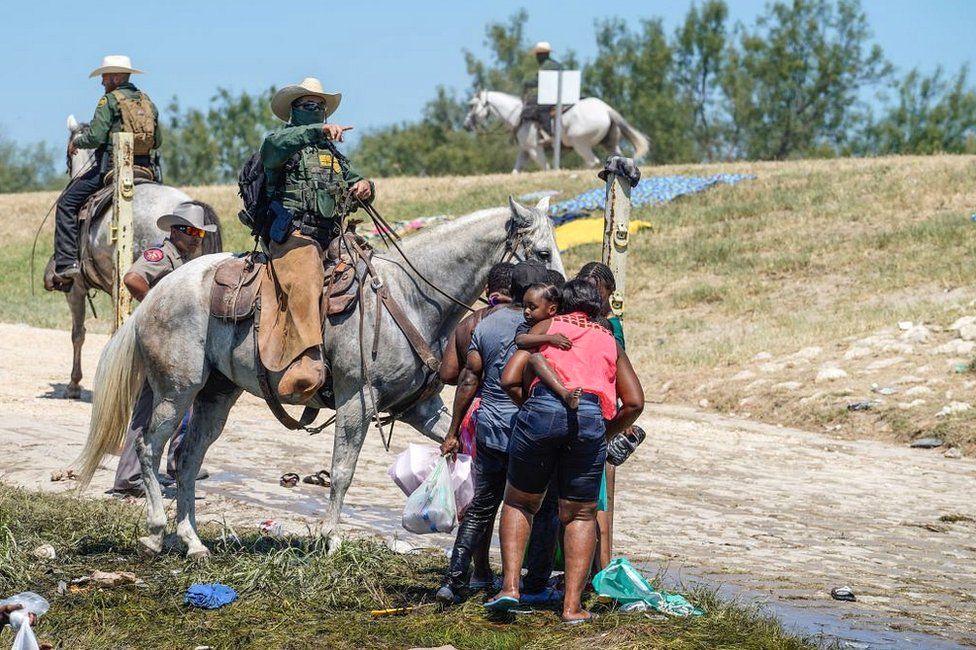
Two Customs and Border Protection agents on horseback approach three Haitian migrants standing in the river. The migrants are holding bags and shoes.
US Customs and Border Protection agents on horseback deployed against Haitian migrants as they cross the Rio Grande from Ciudad Acuña, Mexico, into Del Rio, Texas, September 19, 2021.  AP Photo/Felix Marquez

"The majority of migrants continue to be expelled under CDC’s Title 42 authority. Those who cannot be expelled under Title 42 and do not have a legal basis to remain will be placed in expedited removal proceedings."
"The Biden Administration has reiterated that our borders are not open, and people should not make the dangerous journey."
U.S.Department of Homeland Security
 
"[The situation is] no longer sustainable or acceptable."
Makeshift shelters at a temporary migrant camp under the international bridge in Del Rio on Sept. 17, 2021.
A US Border Patrol agent on horseback tries to stop Haitian migrants from entering an encampment on the banks of the Rio Grande near the Acuna Del Rio International Bridge in Del Rio, Texas, on 19 September 2021
US Border Patrol agents on horseback have been trying to close off crossing points along the Rio Grande river   AFP
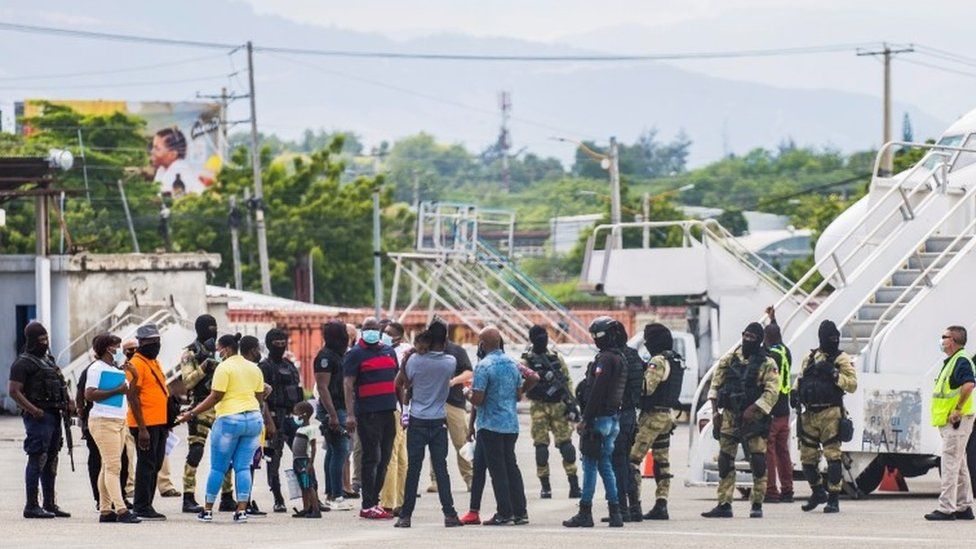
Haitian migrants gather in Port-au-Prince after getting off a plane from Texas
Haitian migrants arrive back in Port-au-Prince   Reuters


Labels: , , ,

Saturday, September 18, 2021

The Surging Tide of Haitians over the Rio Grande River into the U.S.

"There’s people killing each other in Haiti, there’s just no justice."
"I just want to live a calm life without any problems, I want to live somewhere where I know there’s justice."
Jean (last name withheld) Haitian migrant 

"This temporary closure [at port of entry] and shift is necessary in order for CBP to respond to urgent safety and security needs presented by an influx of migrants into Del Rio and is effective immediately."
"It will advance and protect national interests and help ensure the safety of the traveling public, commercial traffic, and CBP employees and facilities."
U.S. Customs and Border Protection
 
"Dire circumstances require dire responses."
"There’s people having babies down there [under the bridge], there’s people collapsing out of the heat."
"They’re pretty aggressive, rightly so — they’ve been in the heat day after day after day."
Del Rio Mayor Bruno Lozano
 
"There’s a lot of abuse on the way here. From people to the police, they steal our money, our passports."
"There’s some people who get stranded on the way."
"Things are calm right now, we just wanted to get here. We’re not afraid anymore."
 Junior Pacheco, 38, Haitian migrant
Migrants cross the Rio Grande between Del Rio, Texas and Ciudad Acuña, Mexico, on Sept. 16, 2021.
Migrants cross the Rio Grande between the United States and Mexico in Ciudad Acuña, across the border from Del Rio. Credit: Jordan Vonderhaar for the Texas Tribune

A new humanitarian crisis assails the United States with thousands of migrants, mostly Haitian, waiting for Border Patrol to take them into custody as the first step they anticipate to filing refugee status. When Haitians were given temporary visas years ago in the wake of the deadly earthquake and tsunami that devastated the Haitian half of the island of Hispaniola shared with the Dominican Republic, as time drew near for their expected return to Haiti with their temporary visas expiring, they flocked to the border between the U.S. and Canada, to declare refugee status in Canada.

Now, they have crossed the Rio Grande between the U.S. and Mexico, overwhelming the town of Del Rio in Texas. The migrants have set up a migrant camp under the bridge spanning the two countries where they wait in their thousands, families with children along with single male migrants in dire straits needing food and water and shelter. Their numbers have overwhelmed the ability of local and state authorities to respond and they have turned for emergency assistance to the federal government.
 
Migrants cross the Rio Grande between Del Rio, Texas and Ciudad Acuña, Mexico on Sept. 16, 2021.
Migrants have waded across the Rio Grande to buy water, food and other supplies in Ciudad Acuña as they wait for their turn to request asylum on the U.S. side. 
Jordan Vonderhaar for The Texas Tribune
 
According to Del Rio authorities, over 12,000 migrants arrived at the impromptu camp, with even more expected to arrive in coming days. Dense crowds, with a deteriorating sanitary situation. Brazil and other South American nations were also the recipients of waves of Haitian migrants stemming from the 2010 earthquake. The journey to reach the United States from their Caribbean island has been fraught with danger, a gruelling journey. Efforts were underway to prioritize the families with children out of the camp and away from the deteriorating situation.

In the past 11 months, over 29,000 Haitians overall have arrived in Texas. The CBP is sending more agents to help process the migrants in Del Rio, issuing numbers as the migrants queue for formal apprehension to enable them to apply for asylum, or some type of U.S. refugee protection. Drinking water, towels and food provisions are being taken to the site which had 20 portable toilets for the thousands assembled there. "We're scrambling to bring every resource we can, but it's a logistical nightmare", commented Jon Anfinsen, top Border Patrol union official in the Del Rio Sector.

The response from the Biden administration was to advise of its intention to use emergency authorities of the U.S. public health code to return or "expel" migrants whom Mexican authorities refuse to accept. In response to which planes have now been assigned to convey the migrants in numbers back to Haiti in hurried deportation flights which had been curtailed in the wake of the 7.2-magnitude July earthquake on July 14 and the assassination of Haiti's president in that same month.

"I thought the worst-case scenario was having a couple of people, maybe 150 people roaming the streets", said Del Rio Mayor Bruno Lozano, as he watched incredulously while the size of the group increased steadily over a number of days, hitting 8,000 and then 12,000, leading him to warn the Biden White House that his community was in dire need of additional federal support to cope with the surge.


Labels: , , ,

Friday, February 14, 2020

Mexican Cartels' War on Farming Villages

"We find ourselves under siege. This is a public cry for help by a community that's been cornered."
"They've been trying to get assistance by federal and state government, unsuccessfully, so they're trying to escalate the language to try to negotiate and get help."
Falko Ernst, analyst, International Crisis Group 

"I don't know how they can get the government's attention aside by doing these sorts of things -- or by dying, and even that will only get the authorities' attention for a few days."
Chris Kyle, anthropologist, University of Alabama, Birmingham
Miguel Toribio, 11, puts a pistol belonging to his father into his belt, before demonstrating newly learnt skills from military-style weapons training, to a Reuters journalist in Ayahualtempa, Mexico, February 3, 2020.   REUTERS/Alexandre Meneghini

The children wear uniforms with jackets emblazoned with "Community Police". They mask their faces with handkerchiefs. Thirteen-year-old Alex spoke of the training he received, how good it made him feel. He could feel the weight of the gun, fully loaded with ammunition. "There was no fear in his eyes. That's how I knew he was ready", his father Santos Martinez said. "I'm preparing to defend my village", Alex added.

Mexico's enormous problem with heroin production and drug cartels and gang killings is legendary. Not so well known is the plight of remote villages in areas where the drug gangs control everything, posing an existential threat to villagers' safety, controlling their comings and goings, exacting vengeance on those they believe betray them, and the ongoing siege of the villages leading to well-founded fears for the lives of village children.

Fathers of families see little option but to allow their children to be involved in military-type training, learning how to handle themselves in dangerous situations, arming them with deadly weapons to enable them to self-protect should/when the occasion arises. Venturing outside her community, a 56-year-old villager, a grandmother, was kidnapped, tortured and murdered by cartel members, a warning to others to remain in their villages, silent, obedient.

The ten-year-old granddaughter of the murdered woman was given her father's permission to obtain training. "They do this to prepare themselves to defend the family, their siblings and defend the village", corn farmer Sanchez Luna explained of the "community police" his rugged region was required to form in self-defence. Arms training is offered to school-age children, seen as a matter of forced necessity.
Children walk in a single file, holding toy and real guns, as they demonstrate newly learnt skills from military-style weapons training, to a Reuters journalist, in Ayahualtempa, Mexico, February 3, 2020. REUTERS/Alexandre Meneghini

Children as young as six years of age are seen carrying guns, demonstrating their military manoeuvres with ease. "They are killing children. We have to arm children", said 25-year-old Isabel Marquez, mother of two. The Indigenous community elders near the city of Chilapa add that young children would not be allowed to fight cartel gunmen; the situation is being used to attract help from far-off officials in Mexico City.

Last month suspected Los Ardillos Cartel members ambushed and killed ten area musicians after they had exited the territory their self-defence militias guard. Their bodies were  later found charred. The cartel dominates Guerrero state, their specialty the trafficking of heroin. A number of murders in the area preceded the attack on the musicians. One murder was a beheading, frightening the 6,500 residents whose land sits surrounded by poppy-growing farmland.

In Mexico, constant violence led by heroin-trafficking cartels threatens the population. President Manuel Andres Lopez Obrador has focused on the method, not the message: Those who arm children "should be ashamed of themselves", he pronounced, denouncing the use of children to grab the attention of an inattentive government. It worked. The government noticed."Giving children weapons and taking videos is an act of cruelty", he added and doesn't seem ashamed that its citizens must resort to such methods.
A community police agent poses for a photo as he guards a check point in Ayahualtempa, Mexico, January 30, 2020. REUTERS/Alexandre Meneghini

Residents, for seemingly good reasons, are suspicious of regional authorities, much less the few local police in their villages. They accuse them of being in league with the Los Ardillos cartel, whose presence forces their children to stop formal education at age twelve, since the middle schools are located in territory the cartel controls.So, from that age forward, the boys become men, carrying weapons as part of their own local "police patrol".

"We are surrounded by the bad guys, so we have to prepare ourselves to defend our town and our families", said Louis 'Gustavo Morales, 13,  holding a 20-gauge shotgun. The self-defence militia is known as CRAC-PF. Last year they managed to repel a major attack by Los Ardillos, leaving residents in fear of the warning siren going off again.

Children with toy and real guns demonstrate newly learnt skills from military-style weapons training, to a Reuters journalist in Ayahualtempa, Mexico, February 3, 2020. REUTERS/Alexandre Meneghini


Labels: , , , , , , ,

() Follow @rheytah Tweet