Politic?

This is a blog dedicated to a personal interpretation of political news of the day. I attempt to be as knowledgeable as possible before commenting and committing my thoughts to a day's communication.

Sunday, January 21, 2024

Looking for Peace, Opportunity, Future

"[We're waiting for] border patrol to come pick us up and give us protection."
"It doesn't matter if it's cold. There is peace here."
Sudanese migrant, Izzeddin, 32, migrant encampment, Sasabe, Arizona

"In terms of migrants per day, December 2023 has been larger than any average we have ever seen."
"Every official who is commenting on it, on all levels, says they're near or past the breaking point."
"If you move to a place that's super remote, there won't be a lot of agents on staff, and that increases your chances of being released into the U.S."
"There is nowhere to put people They can't hold you."
Adam Isacson, migration expert, Washington Office on Latin America
Women wait in a hallway Friday, Dec. 15, 2023, at a Border Patrol station in Ajo, Ariz. (AP Photo/Gregory Bull)

In a remote, cold and lonely place while awaiting the arrival of border guards, dozens of migrants huddle close to a hole in the border wall. They have been given coffee by aid group No More Deaths. Given blankets, food and emergency telephone calls should there be any there who sustained life-threatening injuries on their journey. Those hailing from Sudan have escaped another Darfur-like conflict, patiently waiting for their search for haven to end far from their homeland.

Among them are others, not only themselves fleeing war in Sudan, but those escaping from Central American violent gangs and Mexican cartels. All have crossed illegally into the United States, trekked over rugged terrain for tiring hours, to arrive near Sasabe, Arizona exhausted, hungry and cold. They wait to turn themselves over to authorities to be given the opportunity to ask for asylum; stranded in the Arizona desert, but hopeful.

Just as night time temperatures begin dropping, a convoy of American Border Patrol agents roll in. The men are loaded into a van where they're briefly processed. The van continues driving in its search for more people needing rescue. "We are not equipped to deal with this. It's a humanitarian disaster", comments Scott Carmon, a Border Patrol watch commander, of the crisis unfolding at the southern U.S. border.
 
A migrant walks along a road shadowed by the steel columns of the border wall separating Arizona and Mexico after crossing into the United States, Friday, Dec. 15, 2023, near Lukeville, Ariz. (AP Photo/Gregory Bull)
A migrant walking along a road shadowed by the steel columns of the separation border between Mexico and Arizona. AP
 
Once again, migrant encounters reach toward record levels, testing the capacity of American law enforcement. Thousands of migrants arrive daily, on their way from Africa, Asia, the Middle East or South America. Relentless violence, desperation, fear and poverty drive them from their places of birth where they can no longer find a future.

There was a broad sigh of relief in the spring when crossings into the U.S. declined after the lifting of pandemic border restrictions. The anticipation was that the floodgates would burst, but they held. More lately, numbers have spiked. The number of apprehensions in a recent week soared to over 10,000 a day -- the Border Patrol found itself stretched beyond capacity. 
 
Small towns on both sides of the border were overwhelmed with people funneled through new routes by human smugglers, to evade capture.

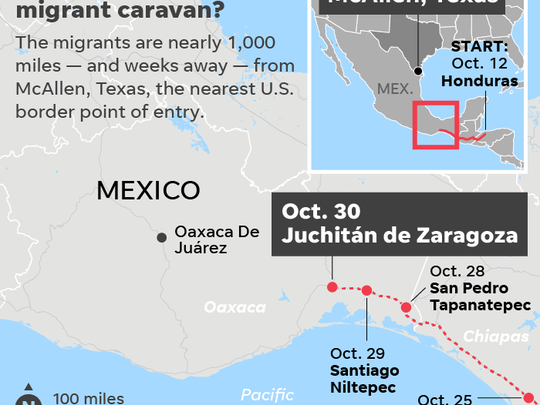
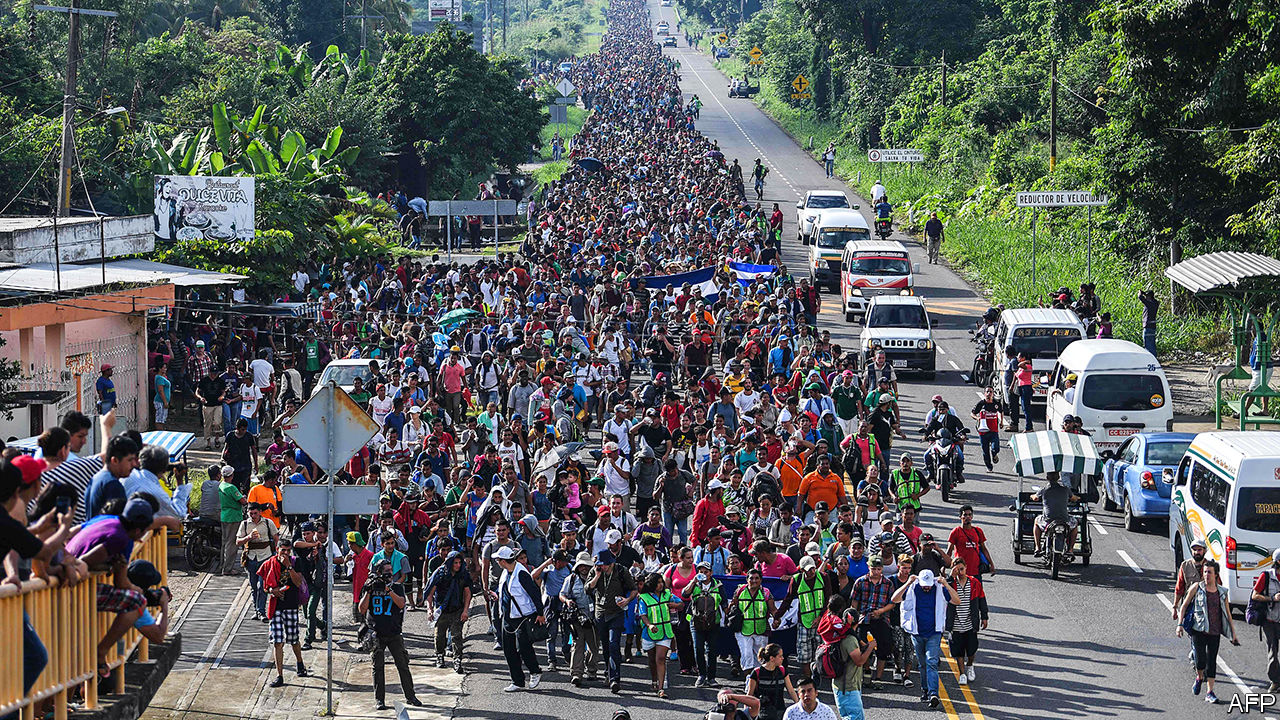
American officials monitored a caravan moving north through Mexico comprised of over 2,000 migrants, heading toward the United States; unlikely to complete their journey according to experts, but drawing significant media notice to the migrant tide crossing the border. What has caused the recent swell is as yet unknown.

Theories include larger numbers of Mexicans fleeing from cartel turf battles; rumours of a key legal pathway ending; smugglers who push desperate people of all nationalities to attempt entry at increasingly remote parts of the vast border. Border officials in Arizona closed a key port of entry to legal crossings early in December to enable them to focus on the unlawful entries.
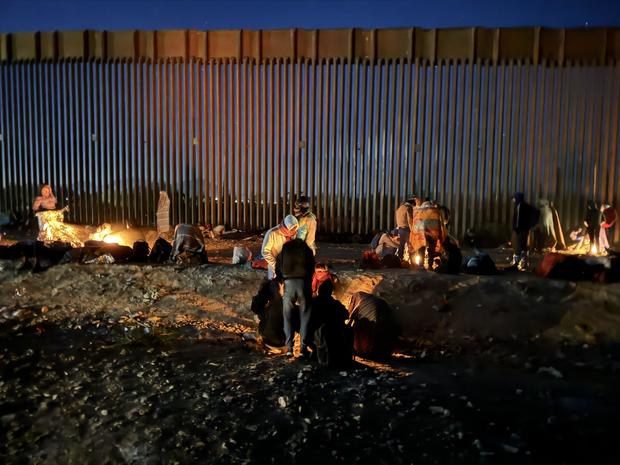
Migrants huddle around fires for warmth along the U.S.-Mexico border near Lukeville, Arizona, on Thursday, Dec. 7, 2023.
Migrants huddle around fires for warmth along the U.S.-Mexico border near Lukeville, Arizona. Camilo Montoya-Galvez/CBS News


Labels: , , , , , ,

Sunday, November 25, 2018

Seeking Refuge -- Or Invading?

"Then in two weeks, another 3,000 will arrive. Hopefully that information will prove false, because we are worried that we will lose control."
"[One person was arrested, who] came to incite the protesters. We are expecting more protests [from residents of Tijuana], but we are prepared."
"That is one of the problems. They [federal government] are the ones that are giving us the problem because they couldn't control it [migrant caravans].
"The situation is very complicated. But we are coordinating it so that we don't lose control. I ask the community of Tijuana for common sense. This is not our fault. Our  obligation is to give security to our community and the people who are arriving."
Tijuana Police Chief Mario Martinez, Tijuana, Mexico

"Don't get it twisted -- this is an invasion."
"Once you cross the borders, once you went through those borders with violence, it became an invasion."
Guadalupe Arangure, local Tijuana resident, Mexico
San Ysidro border crossing shut down
CUstoms and Border Protection shuts down San Ysidro border crossing as caravan approaches  still from video

At first, from news reports, the impression was given that compassionate, good-hearted Mexicans did what they could to ease the travail of hundreds, then thousands of Central Americans determined to cross Mexico for their final destination -- entry to the United States. They were convinced, people who said they were fleeing their countries of origin in Honduras, Guatemala, El Salvador and Nicaragua, out of economic necessity, and to escape violence, corruption, fear and privation. Mexico itself has similar problems of corruption, violence, drug trafficking, poverty.

Clearly enough these are nations failing to observe the most basic of civilized norms in safety and security and good public order along with dependable civic institutions, sound educational opportunities and employment for their citizens. Those citizens who are voting in an unusual manner, not at the ballot box but at the borders of their countries, crossing them to embark on arduous, long journeys that are dangerous and require sacrifice and confidence that their plight will move those who have no wish to welcome them. Insisting on entry to a wealthy country with its own problems of crime, violence, drug trafficking and corruption.

Mexicans, it would appear, have seen their patience evaporate in the face of an ongoing exodus from Central America of haven-seekers. Most of whom, offered the opportunity to remain in Mexico and make application for asylum there, have chosen to refuse. Their goal is to forge onward, since America the land of prosperity and opportunity is where they headed for and where they plan to end up. Their sacrifice in leaving their homes behind obviously imbuing them with a sense of entitlement to do just that.

Tijuana is hosting thousands of Central Americans, desperately attempting to provide shelter, food and medical aid for them. An estimated 6,000 migrants have made their way to that border city, with more on the way. As the initial caravans progressed and updates were made on how they were managing and where they happened to be, they inspired others to join them or to embark on their own journeys assembling caravans of their own. The more 'successful' they are seen to be the more others will feel encouraged to do the same.

Meanwhile, Tijuana has a problem, an imposed responsibility to look after the welfare of thousands of people passing through but meanwhile settling down temporarily as they have been doing awaiting their opportunity to cross the border which the United States refuses to permit. The new president-elect Obrador has made an agreement with the U.S. that Mexico will keep the migrants on their side of the border while the U.S. slowly studies each migrant's application to determine who may cross and who will be refused.

The municipal police in Tijuana have handled the situation and for their pains had rocks hurled at them by migrants a week ago. "Fortunately, there was also no injury", noted Chief Martinez. "We managed to control the situation". That makes quite the impression, doesn't it? Imposing upon the city in Mexico for all their existential needs for however long they will be there, and expressing gratitude for the attention given in a humanitarian situation by tossing rocks at the police whose job is to maintain order.
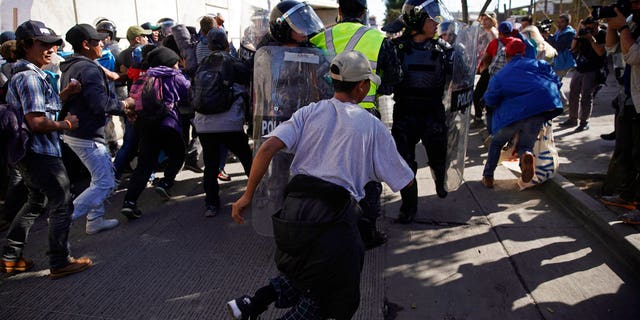
Migrants break past a line of police as they run toward the Chaparral border crossing in Tijuana, Mexico, Sunday, Nov. 25, 2018, near the San Ysidro entry point into the U.S. More than 5,000 migrants are camped in and around a sports complex in Tijuana after making their way through Mexico in recent weeks via caravan. (AP Photo/Ramon Espinosa)

Police in that week arrested 57 of the intruders for such crimes as drug possession, public intoxication, and fighting. Tijuana secretary of public security Marco Antonio Sotomayor listed off 47 of the arrested from Honduras, five from El Salvador, four from Guatemala and one from Nicaragua; 42 of them to be deported, no longer able to remain legally in Mexico. A police officer overheard a number of migrants at the main camp claiming to be MS-13 gang members. U.S. Department of Homeland Security officials claim the presence of over 500 criminals among the migrants.

Dressed in riot gear, 200 Tijuana police officers were deployed to create a barrier between the migrant camp and some 400 local residents who set out to protest the presence of the migrants a week earlier. Local protesters claim to be sick of the migrants complaining about the food given them, and nor are they impressed by the violence the presence of the migrants has sparked in their city. The caravan broke through a fence on the Guatemalan-Mexican border a month ago to push north.
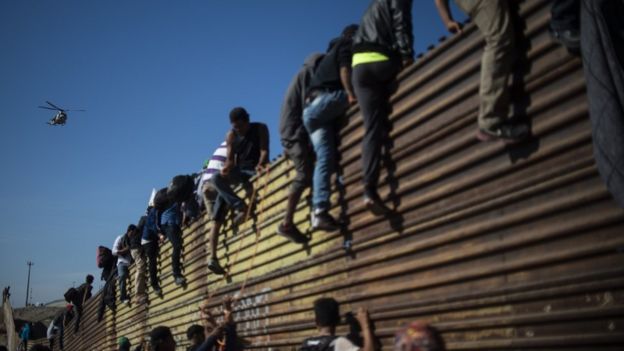
A group of Central American migrants -mostly Hondurans- climb the border fence between Mexico and the United States, near El Chaparral border crossing, in Tijuana, Baja California State, Mexico, on November 25, 2018.
A group managed to climb the first barrier   AFP
And on Sunday a group of 500 of those migrants repeated the performance, storming the barriers near Tijuana to cross into the U.S. Mexico's interior ministry described the attempt as "violent" and "illegal", with video showing dozens of people rushing toward the fence separating the U.S. and Mexico, to be repelled by tear gas used by American border officers. Mexican police rounded up those involved as they "tried to cross the border in a violent way" which was "far from helping their objectives". Violating the legal migration framework could have resulted in a "serious incident", said the interior ministry, now prepared to deport all those involved.


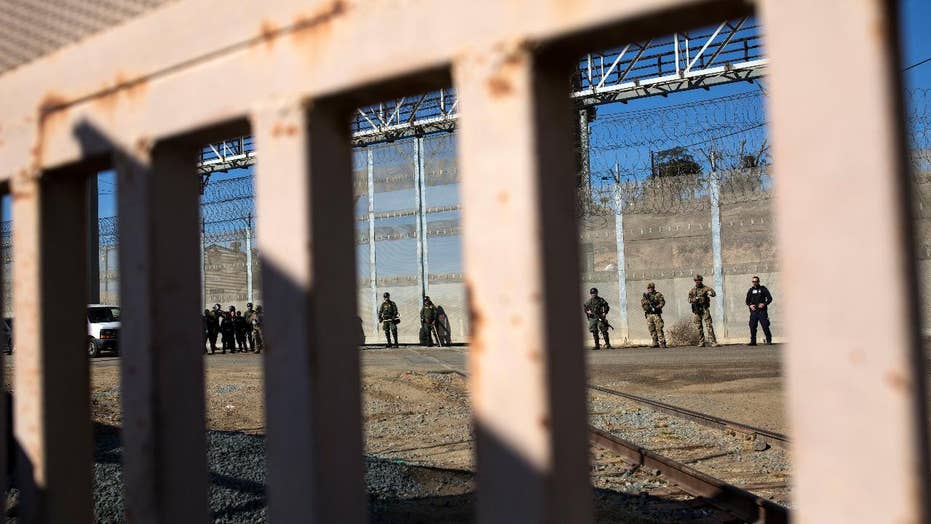
U.S. military personnel and Border Patrol agents gather at the U.S.-Mexico border on Sunday at the San Ysidro border crossing point south of San Diego. (Sandy Huffaker/AFP/Getty Images)

Labels: , , ,

Monday, November 12, 2018

Surging Toward Destination United States

"Trump doesn’t have a heart. He's speaking as if he didn’t have a family, didn’t have children."
"I want to work and work hard and be able to build a house for my mother [back in Honduras]. God’s been guiding me every step of this journey and providing for us."
"I always wanted to take the trip [north,] but didn’t dare to do it alone."
Gabriela López, 20, Honduran migrant heading north with an 11-month-old baby

"We can’t stay in one place for too long."
"Mexico is taking care of us, but our objective isn’t to stay here. The goal is to go northward."
Honduran migrant Jorge Pérez, 29
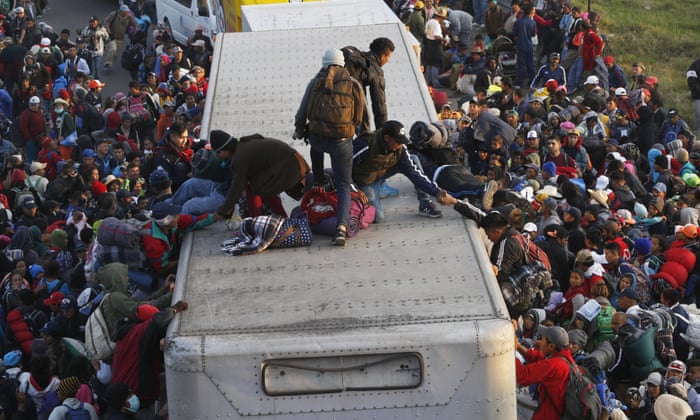
Migrants mob trucks hoping to get a ride north, in Irapuato, Mexico, on Monday. Photograph: Marco Ugarte/AP

The spectacle of thousands of people assembling for a march that will take them weeks, perhaps months if they are forced to turn back -- and that appears to be the likeliest scenario out of this slowly unfolding drama -- is beyond belief. The very fact that people have convinced themselves that their assertiveness and dedication to a joint project, persuading the United States to open its borders to them when it already is crowded with the presence of millions of undocumented migrants is beyond naive, it's downright delusional.

Every country has the right to decide who and how many non-residents it will formally permit to gain entry. Every nation has an obligation to its own population to ensure a secure and orderly process takes place when introducing immigrants or refugees to their social order. The people making up the marchers, from single individuals to families are not immigrants nor are they refugees. They are self-designated economic migrants who feel that the wealthy United States of America somehow owes them a future.

Coming from countries struggling to lift themselves out of third world conditions and beset with corrupt governments, with crime and drug and weapons smuggling, with an overabundance of criminal elements, it is their countries of origin that are responsible for their well being and that responsibility should be demanded in numbers sufficient to move their governments to action. Instead of imposing a humanitarian obligation to relieve them of their discontent with their lot in life on the United States.
WGN-9 Chicago

They march in their thousands, weary but determined that nothing will stop them, that their destination is the United States and nothing else will satisfy their yearning for another kind of life than that which their home nation has given them. They are wilfully unaware that there is poverty in the United States, that there is crime and drug trafficking and inequality and that many citizens of the United States will never have their own aspirational future fulfilled as they too might wish it to be.

The original caravan with thousands of Central American migrants made its way to southern Mexico, inspiring days later another group in the hundreds to set out after them. The success of the first two in arriving halfway to their final destination simply acted like a contagion and another two caravans have begun their own journey. The perceived success of these ventures gives impetus to greater numbers to join them in a spur-of-the-moment decision that life will be better somewhere else. The greener-grass concept that has always provoked jealousy and dissatisfaction in people.

The knowledge that formal applications must be made for entry to a country to achieve a visa as the first step to applying for status seems to have been deliberately pushed aside. In favour of this increasingly spontaneous mass movement to invade a country that really and truly has no need of their presence and doesn't want them.A country that is not prepared to expend vast sums of treasury to ensure that the marchers will have their accommodation and food and health concerns addressed.

"Everyone wants to form another caravan", commented a Honduran farmworker, Tony David Galvez, 22, one of the marchers in the second caravan. Do they really think they should or would be welcomed happily? Can they really believe they have the right to insist on being taken in and that this right is an obligation the United States must acknowledge? The United Nations has passed a non-binding declaration of just such a right, led by non-aligned nations in a world body weighted heavily by undemocratic and human-rights-abusing nations.

The migrants have persuaded themselves that the American president will recognize the deep faith that drives them forward and compassionately welcome them. They are well aware of the statements that have been issued in the press by this president. Mexico is attempting to alleviate the stress of the migrants. Mexicans have always been at the forefront hitherto of illegal entrants to the United States escaping the same conditions that have been driving the Central Americans.

Security forces belonging to Honduras, Guatemala and to Mexico have made attempts to halt the progress of the caravans, to turn them back, to no avail. Their sheer force of numbers, in the main caravan alone thought now to be around 7,000 and growing and the ferocity with which many of the marchers have addressed efforts to stem their tide by throwing rocks and other projectiles at security forces in their way seems to point to violence in the offing should the migrants be blocked at any point.


Canadians were none too pleased when the United States obligingly issued visitor visas to Nigerians, enabling the Nigerians to legally enter the U.S. for their real purpose of travelling directly to the border with Canada, where they crossed illegally despite clearly posted signage indicating that to do so represented a criminal act and they would be arrested. Arrested? The RCMP escorted them to an official station where they could identify themselves as 'refugees' and make application for status in Canada. Very few of the applicants meet refugee status criteria.

The situation is dire and unpleasant. It is guaranteed that if any measure of success were to be realized by these thousands of determined migrants to enter the United States, it would signal to countless others that a repeat of the marches would meet the same success leading to the virtual emptying of failed states like those in Central America, and such as those in many African countries where the indigenous people would be quick to take the same route to what they believe would be a promising future for themselves.

Labels: , , , ,

Sunday, October 28, 2018

Estas en Tu Casa ("This is Your Home")

"Today, Mexico extends you its hand."
"This plan is only for those who comply with Mexican laws, and it's a first step towards a permanent solution for those who are granted refugee status in Mexico."Mexican President Peña Nieto

"The majority plan to cross the border. And that's my intention, too."
"Because, yes, while life here is calmer than at home, it's still not like the U.S. where it would get better. That's the goal: to have a better life."
Jose Santos, from Honduras
 

"It's a kind offer - but it's not the plan that we have, to stay here halfway up."
Anna Lisset Velazquez, from Honduras

"To those in the Caravan, turn around, we are not letting people into the United States illegally."
"I am bringing out the military for this National Emergency."
"They [migrants] will be stopped!"
U.S. President Donald Trump

Central American migrants rest on the steps of a Catholic church in Pijijiapan, in southern Mexico, as a thousands-strong caravan that is slowly making its way toward the U.S. border stops for the night Thursday. (Rebecca Blackwell/AP)
 
Mexico, which has a problem with its own poverty-stricken, violence-averse population seeping over the border into the U.S. has made a generous offer to the estimated seven thousand marchers intent on crossing the Mexican border into the United States to find new homes for themselves in the land of plenty. Mind, there's plenty of poverty and violence in the United States too. But wherever people live in penury, lacking government support and security, their minds swivel to one place and one place only; the United States of America.

Offering to the law-abiding citizens who are wearily making their way on a long journey of hope to a destination where they will be refused entry, a humanitarian gesture of compassion for people who have opted to make themselves homeless. To those people there will be extended temporary ID cards and work permits, medical care, schooling for their children, and housing in local hostels until such time as those who accept and whom Mexico will accept establish themselves and become independent.

Sounds like a solution, and it would be one, if Mexico was the destination that all those people stream toward, but it is not. For the marchers, it is a border they must cross, a country they must traverse to arrive at the point where another border beckons. But beckon it does not. There are lawful means of entry, to make application, to await consent to enter, and these marchers are deliberately bypassing all of that. The U.S. has a monumental problem as it is, of tens of millions of illegals living there.

And should it decide that the plight of all those seven thousand marchers must be resolved, and they will take a deep breath and permit them entry and begin processing them, it would send a signal to all the other disaffected people in Central America, in Africa, in the Middle East and elsewhere that the U.S. border is easily breached, and the kindhearted people of America will welcome them. The size of the current march will seem minuscule in comparison to the unbridled hordes that will assemble to achieve the goal of living where opportunity beckons.
The Economist

Only it doesn't, not for them. For the last hundred years people everywhere, from Europe to Africa, Asia to the Middle East, have yearned to go to America. A hundred years ago the persecuted minorities of Europe spoke of a country where the streets were paved with gold, an allegory that owed its persistence to the knowledge that those who did make it to America wrote home about how successful they had become, how wealthy, how happy with life they were. Everyone wanted to share that. And for a while many did.

Is there any other country in the world where people everywhere else aspire to join? China? Brazil? Egypt? Russia? India? South Africa? France? There are no long marches of desperate people willing to undertake dangerous, long journeys in an effort to find haven and leave the miserable past behind, streaming toward a country promising a future that their current locations do not and cannot and would not offer them. But one country cannot absorb them all, not even a small proportion of those anxious to join it.

And so, for the United States, what the aspiration of so many represents is a "national emergency"; the very notion of tens of thousands, hundreds of thousands, millions of economic migrants joining the already-established illegal migrants now ensconced in the United States represents a nightmare of administrative and accommodation proportions. Those failed nations governed by despots, by autocrats, by inept and inadequate rulers who despise those living under their heel need the rescue of revolution.

And to inspire them there is always the example of Somalia and Syria.

Families with small children get truck rides in Tonala to meet up with the thousands more Honduran migrants and refugees 25km further along up the highway [Sandra Cuffe/Al Jazeera]

Labels: , , , ,

Tuesday, February 07, 2017

Mexico's Crises

"Mexico is facing two crises right now . There’s the situation with Trump and the United States, but then there’s an internal crisis. Gas prices, corruption, the degradation of institutions."
"[While Mexicans are upset over the Trump messages the price of gas] gets Mexicans into the streets  [to march in protest]."
Lorenzo Meyer,  Mexican historian

"I’d like to stand up and have my voice heard [by the U.S. and Mexico] as a migrant worker, [but there’s more outrage currently around issues like gas prices]."
"The thing is, if people in my community can’t go to work legally in the U.S. and send back remittances, or if there are mass deportations from the U.S., people will return here and see there is no work. There is no way to make money. The price of gas won’t matter if no one has any money."
Adareli Ponce, migrant worker, Hidalgo state 
Henry Romero/Reuters   Demonstrators march against a \fuel price hike in Mexico City, January 31, 2017

But if the United States and particularly under its new president, is concerned about the presence of millions of illegal migrants, and is focusing on Mexico as a source of much of the illegal presence as underground workers whose presence is a boon to the economy, despite their undocumented status, complicated by the fact that many of those illegals have settled in the U.S. and lived there for decades, often longer; raise families whose children know no other country, for whom Mexico is foreign, there is another, ignored reality, that Mexico itself is struggling to cope with an influx of migrants.
"It's worrying us. How Mexico can handle that [Haitian, Central American and Cuban migrants] is going to be a whole new area of concern. I don't think the absorptive capacity is there."
Christopher Gascon, chief, Mexico office for the International Organization for Migration
Pipeline to America
Genaro Molina / Los Angeles Times

Shelters crowded with Haitian migrants and Cubans have been popping up in Tijuana, Mexico in churches, community centres, and wherever else homeless people can be sheltered in temporary accommodations on their arrival in Mexico, planning to go on to the United States. In Mexico, they await the opportunity to persuade U.S. visa officers to grant them the visas they need to enter America. The city is a crossroads at the border, crammed with so many migrants private citizens have taken to opening their doors, to feed, clothe and house them.

Now that President Trump has issued directives that the border between America and Mexico is to be tightened and that immigration is being restricted while deportations will be stepped up, a new crisis is emerging in towns and cities along the border throughout Mexico. People have been arriving steadily from Central America in flight from violence and poverty. Close to 409,000 people were apprehended as they attempted to cross the southwestern border illegally last year into the United States.

Earlier, the Obama administration had altered American policy, contributing to the desperate backlog of Haitian migrants, along with Cubans, thousands of whom had been stranded in Mexico and Central America when the previous (Obama) administration decided to end the policy favouring Cuban entry into the United States. While Cubans had been welcomed if they made the journey across land to the U.S. those who made the journey by sea were regularly repatriated. Now, however, Cubans must obtain a visa before entry, just like anyone from anywhere else in the world wishing entry to the U.S.

That change in a longstanding policy has resulted in thousands of Cubans left stranded. The situation for Mexico, a country struggling on a number of fronts, now hit with the threat of a massive tariff of goods exported to the United States, to pay for a restraining wall Mexico abhors and the United States' new president favours, has seen between 400,000 and 500,000 undocumented migrants transit every year through the country, according to the International Organization for Migration.

Haitians experienced few problems crossing into the United States, for quite a while, since U.S. authorities permitted undocumented Haitians to enter under the umbrella of a  humanitarian provision recognizing the 2010 earthquake disaster and resulting upheaval. They would wait for weeks for appointments scheduled with U.S border officials. Until the Obama administration in September announced its intention of resuming deportation of Haitians to dissuade more Haitians from undertaking the migration.

But the migration route into Mexico has widened; not only from Haiti, but from India, Bangladesh and parts of Africa — all of them intending to enter the U.S. Baja California saw 15,000 migrants coming from outside Latin America pass through in 2016, five times greater than the number in 2015.
Many of the migrants chose the long, arduous and dangerous route to Mexico as an alternative to the equally difficult passage to Europe, crowded now with refugees and migrants from the Middle East and Africa.

The sounds of French and Haitian creole mix with Spanish and English in Tijuana's shelters which a year ago were filled with migrants from Central America and Mexicans recently deported from the U.S.   Photo by Genaro Molino


Labels: , , , , , ,

() Follow @rheytah Tweet