Politic?

This is a blog dedicated to a personal interpretation of political news of the day. I attempt to be as knowledgeable as possible before commenting and committing my thoughts to a day's communication.

Sunday, November 05, 2023

Another Deadly Earthquake in Nepal

"I tried to run, but the whole house collapsed. I tried escaping, but half my body got buried in the debris."
"I screamed, but every one of my neighbours was in the same situation and screaming for help."
"It took nearly an half-hour to an hour before rescuers found me."
Bimal Kumar Karki, Nepal

"I was asleep at night and around ten or eleven at night it started shaking and the house caved."
"So many houses have collapsed and so many people have been buried [alive]."
Tika Ram Rana, Nepal
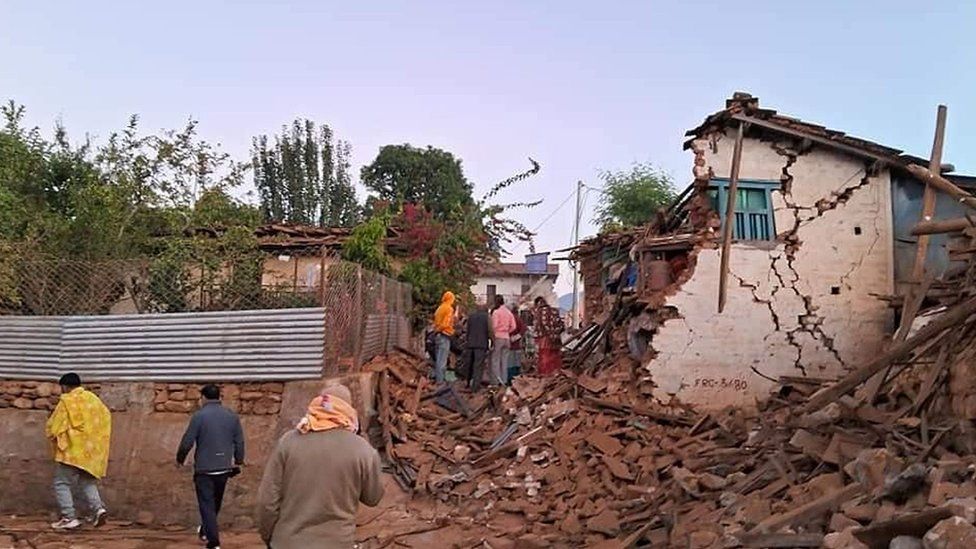
Damaged houses near Jajarkot, Nepal, 4 November 2023.
EPA-EFE/REX/Shutterstock

A strong earthquake struck Nepal's northwest region on Saturday in the middle of the night. Survivors describe sudden earth movement, and then houses collapsing, burying entire families. The early figure of the death toll rose to over 160, but it is assured that the count will rise as collapsed buildings and homes are searched for survivors and the numbers of dead are revealed. Most people were crushed by the debris that resulted when houses -- often stacked rocks and logs -- crumpled under the tremblor's force Friday night.
 
https://i.cbc.ca/1.7018814.1699090806!/fileImage/httpImage/image.JPG_gen/derivatives/original_1180/nepal-earthquake.JPG
Army personnel carry an injured person on a stretcher in Jajarkot on Saturday. (Nepal Army/Reuters)
 
Many of the mountainous villages were approachable only by foot, with approach roads blocked by landslides triggered by the earthquake. Soldiers were seen clearing the blocked roads to enable rescuers to rush aid to the sites. The Nepal government is attempting to provide the affected area with aid, flying in tents, food and medicine.

Thousands of Nepalese are now homeless. The U.S. Geological Survey announced a preliminary magnitude of 5.6 occurring at a 18 kilometre depth. The epicenter was at Jajarkot, about 400 km northeast of the capital, Kathmandu, according to Nepal's National Earthquake Monitoring & Research Center.

Jajarkot district is a mostly agricultural area and there 105 people were confirmed dead. Another 52 were killed in neighbouring Rukum district, officials announced, while another 184 people were injured. Villagers aided by security officials worked through the night to extract the dead and injured from collapsed homes.

It is expected that the death toll will rise since communications were cut off in many areas. Over 100 beds were available at the regional hospital in the city of Nepalgunj, with teams of doctors standing by to provide medical attention to the injured. Small government and military planes, along with rescue helicopters able to land in short mountain strips were used to ferry the wounded to Nepalgunj.

Even in New Delhi, India's capital, the quake was felt, over 800 km away.

https://i.cbc.ca/1.7019033.1699133731!/fileImage/httpImage/image.jpg_gen/derivatives/original_1180/1763951697.jpg
An aerial view shows damaged buildings in Jajarkot on Saturday. (Harihar Singh Rathore/AFP/Getty Images)

Labels: , , , ,

Tuesday, February 14, 2023

The Sheer Scale and Scope Of It

We're going away, but we have no idea what will happen when we get there."
"We have no goal. Even if there was a plan what good will it be after this hour?"
"I no longer have my father or my uncle. What do I have left?"
Musa Bozkurt, 25, Adiyaman, Turkey

"Those who have the means are leaving, but we're poor."
"The government says, go and live there a month or two."
"How do I leave my home? My fields are here, this is my home, how do I leave it behind?"
Fuat Ekinei, 55, farmer, Adiyaman, Turkey

"Everyone's saying they're not in charge. We can't find who's in charge."
"I've been begging and begging for just one crane to lift the concrete ..."
"Time's running out. A crane, for God's sake."
Keyser, Antakya, Turkey
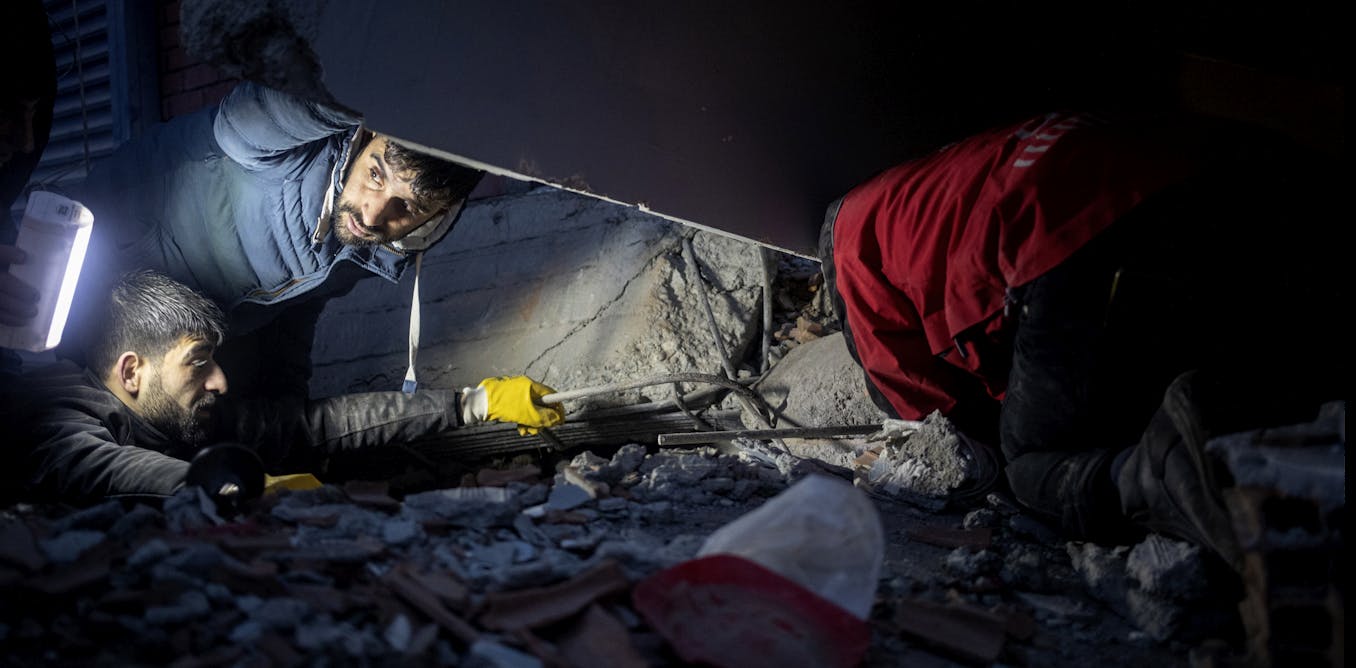
https://images.theconversation.com/files/508380/original/file-20230206-29-1sdsvu.jpg?ixlib=rb-1.1.0&rect=60%2C1116%2C6720%2C3360&q=45&auto=format&w=1356&h=668&fit=crop
People search for survivors beneath the rubble in Diyarbakir, Turkey. February 6 2023. EPA-EFE/Refik Tekin
 
The woman who gives her name as Keyser in Antakya is desperate, but there is no one to help. Through "the stench of dead bodies waft[ing] through the cold, dusty air", her two sons, trapped below the rubble of their collapsed apartment building could be heard crying for rescue. She tried for two days to approach anyone with a vestige of authority to help rescue her children. In the end she failed. There was no one available, no emergency response leader she could make contact with, to order her sons' rescue.

A day later, neighbours reported that there were no more survivors pulled from the building's wreckage. "The general problem here is of organization, especially in the field of health", observed Onur Naci Karahanci, a doctor working out of Turkey's southeastern city of Adiyaman. There were not even enough body bags for the dead, an acute shortage in the first two days following the two earthquakes.
 
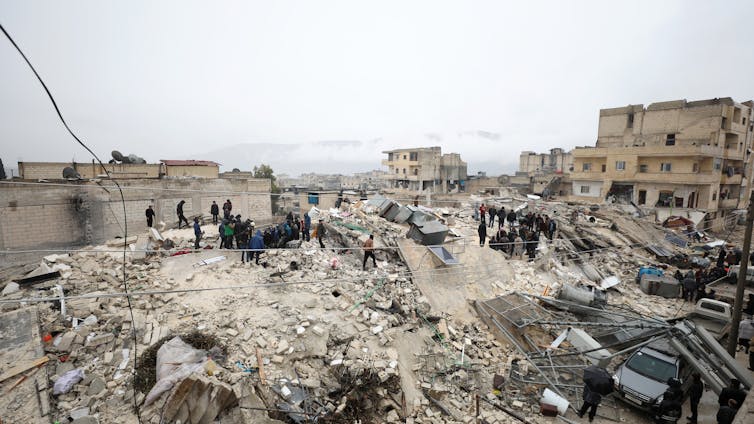
People stand on rubble
Collapsed buildings in Armanāz, Syria. EPA-EFE/Yahya Nemah
 
The trembling of the earth collapsed thousands of buildings in countless towns and cities, leaving rubble under which were thousands of people, a scant handful of whom were rescued. Antakya in particular, known historically as Antioch, the capital of Hatay province. The damage realized in Turkey was estimated by the Turksh Enterprise and Business Confederation at $84.1 billion. Human life was destroyed to a total of 30,000 in Turkey alone.

Rescue teams flew in from various countries, both near Turkey and Syria, and from parts distant. Astonishing stories of survival and rescue have surprised and encouraged rescue teams, but the total, still growing, and standing at 36,000 dead is a grim reminder of the force and extent of the catastrophic natural disaster. On one occasion, a father with a child in his arms was rescued, in another a baby with its mother's hair clutched in its fist; a newborn; a 13-year-old boy saved a week after being buried alive
 
Over 150,000 survivors have been moved to shelters outside the affected provinces, according to Turkish authorities. Turkey is now a country that has been markedly changed, where the massive earthquakes cut a slash through the landscape shifting roads, bending and breaking rail lines, smashing buildings to the ground. There are now new canyons across the East Anatolian Fault running through southern Turkey and northern Syria.
 
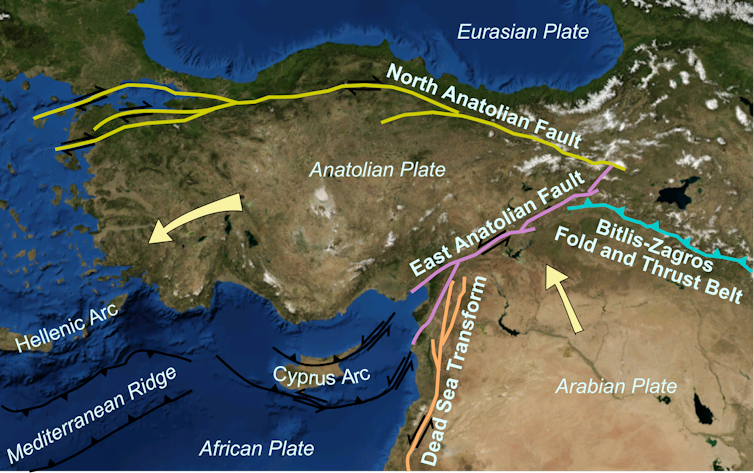
The window for finding survivors is fading. Rescue work moving vast tonnages of steel and concrete to find anyone still alive is now turning to the need to complete the work of destroying unsafe buildings partially destroyed. The work of the moving tectonic plates; where the fault line that slipped to cause the quakes -- the East Anatolian between Turkeys Anatolian Plate and the Arabian Plate -- moving northward created a double disaster.

Turkey's geologic crust was altered in a few seconds when the plates slipped side to side leaving rail lines bent into S-curves, roads laterally split. Where an olive grove in Altinozu split in two leaving a 200-metre-wide rocky chasm between trees growing in neat rows, once side-by-side.

Map of tectonic plate movements around Turkey
Arabia is bumping into Eurasia and pushing Anatolia westwards … or to non-earth scientists, Syria is bumping into Europe and squeezing out Turkey. Mikenorton/Nasa/wiki, CC BY-SA

Labels: , , , , , ,

Thursday, February 09, 2023

The Agony and the Sorrow

"The first 72 hours are considered to be critical."
"The survival ratio on average within 24 hours is 74 percent; after 72 hours it is 22 percent; and by the fifth day it is six percent."
Steven Godby, natural hazards expert, Nottingham Trent University, England

"As of today, there is no hope left in Malatya."
"No one is coming out alive from the rubble."
Ozel Pikal, journalist
People wait for news of their loved ones, believed to be trapped under collapsed buildings on February 09, 2023 in Hatay, Turkey
More than 20,000 people are now known to have been killed in Monday's earthquakes in Turkey and Syria, though the UN warns the disaster's full extent is still unclear. Getty Images
 
The widespread scale of the catastrophe caused by the powerful earthquake that struck Turkey and Syria on Monday led to desperate measures in the hopes of rescuing an untold number of victims trapped in the rubble of thousands of destroyed buildings. The very widespread ground area of devastation meant that rescue teams would never be able to cover the entire area in a timely manner; the time-consuming, careful work involved in a single site, extracting survivors and pulling out dead bodies mitigates against swiftly leaving one site and moving on to another.

Most rural areas were left of necessity to their own resources, leaving people to try with their bare hands to move rubble and respond to the waning voices of the trapped begging for rescue. The more isolated the town, the more devastatingly shocking the trauma in the realization that there would be no speedy rescues. The work involved in identifying victims and burying them is monumental in nature, reflecting the scope of the misery and horror.

The first, most destructive magnitude7.8 quake, shallow in depth, followed by a cascade of aftershocks including one of 7.5 magnitude in strength, almost equal to the original, brought down more buildings, left more victims; tens of thousands of injuries and an entirely traumatized generation of survivors. The destruction stretched hundreds of kilometres across southeastern Turkey and neighbouring Syria where thousands of buildings were toppled.
 
A woman in a red helmet and covered by a gold emergency blanket lies down while people in red helmets carry her.
Rescuers carry Zeynep Polat, who was pulled from a collapsed building in Kahramanmaras in southern Turkey on Thursday. Thinly stretched rescue teams continue their around-the-clock work to try to find any survivors or recover bodies from the rubble in Turkey and Syria. (Ismail Coskun/IHA/The Associated Press)
 
Hatay province in Turkey was among the hardest hit with entire neighbourhoods destroyed and where residents criticized the government's slow response. The earthquake had destroyed Hatay's airport runway disrupting the response of rescuers. From over two dozen countries search and rescue teams joined with tens of thousands of local emergency personnel in both countries. Experts warn the survival window for the trapped under rubble, along with survivors in desperate need of necessities was closing rapidly.

Excavators were used by rescue teams at times, and alternately the debris was tackled delicately where there was cause to believe people were trapped close to the surface of the rubble. The sheer numbers of those trapped is impossible to imagine given the number of buildings toppled. The plan is to photograph unidentified bodies and to bury them within five days once DNA tests and finger-printing was completed. 

The toll of the dead is inexorably rising, and has now eclipsed an earlier earthquake that took 19,000 lives decades earlier. The cold of winter, destroyed roads, a lack of supplies, hamper the work of the estimated 100,000 rescue workers and threaten survival of the now-homeless. The news of 20,000 dead being surpassed and concerns over the final number lend a sense of hopelessness to the ongoing search for survivors. Those who survived and are homeless sleep wherever they can; food, water, medical supplies and shelter slowly trickling in.

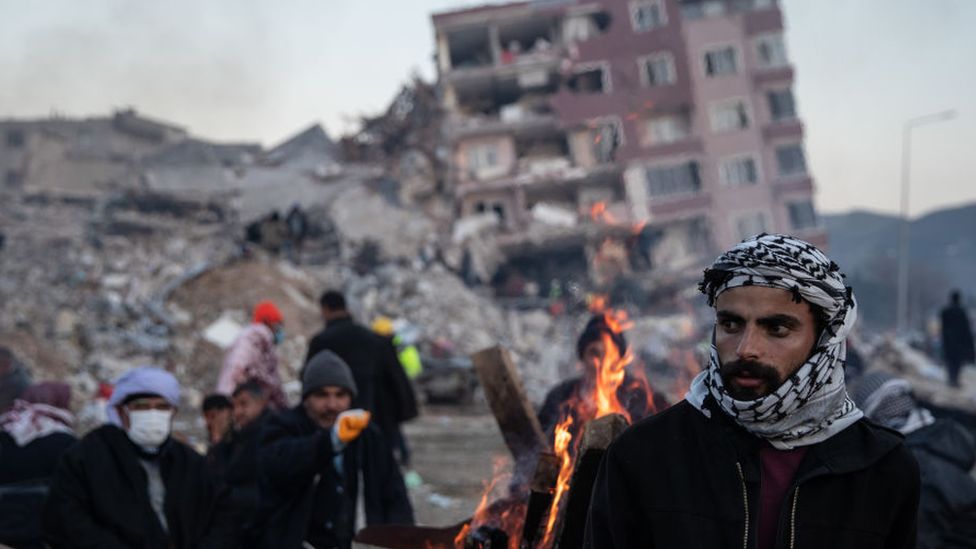
Two people sit near a fire, which lights up their faces in the dark. In the background, a digger and rescue crews work on a pile of rubble.
Hundreds of thousands of people are homeless after Monday's quake hit Turkey and Syria. Here, people warm around a fire as rescuers continue their work on Thursday night in Kahramanmaras, Turkey. (Petros Giannakouris/The Associated Press)

Labels: , , , , ,

Tuesday, February 07, 2023

Hell on Earth

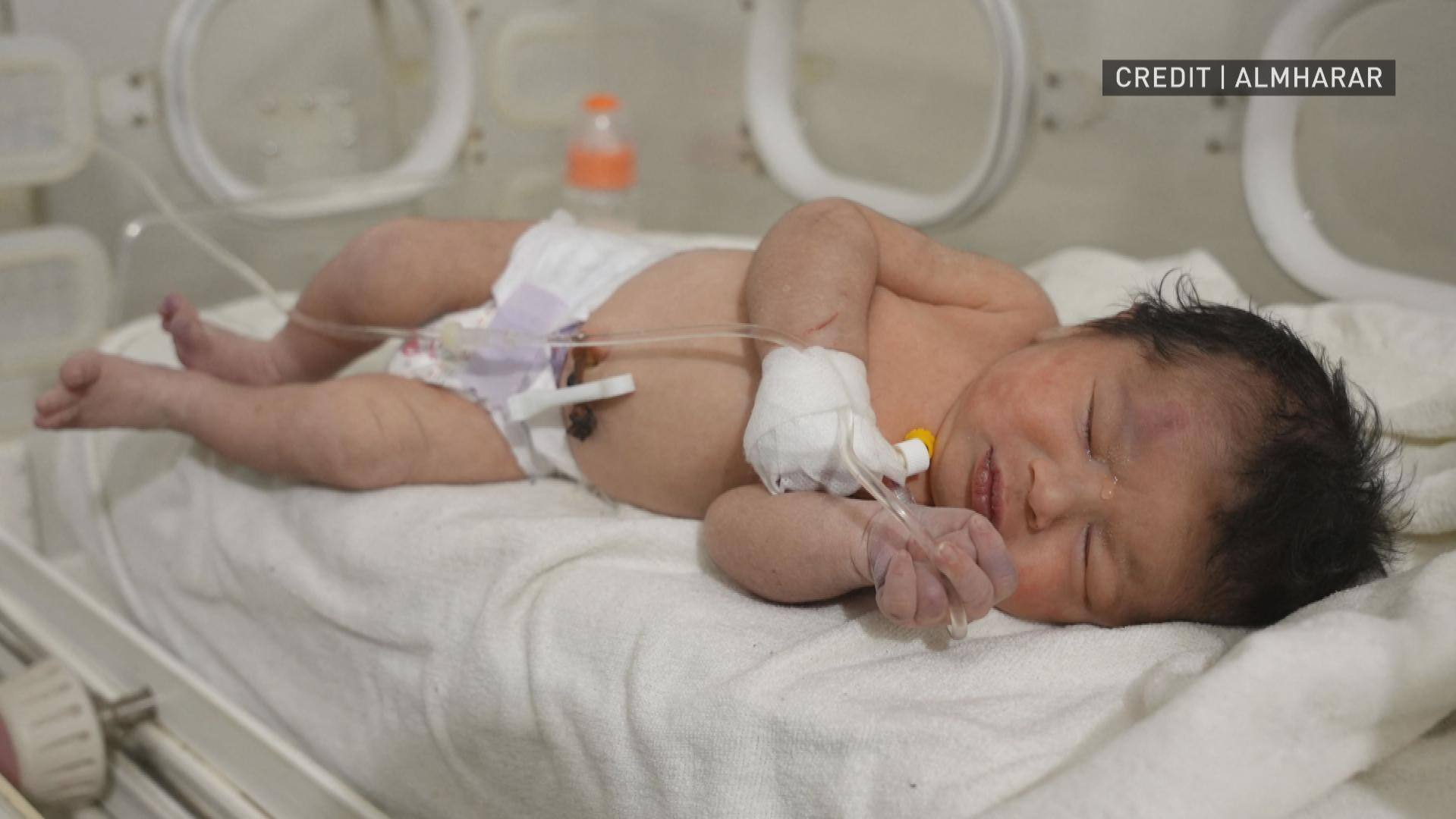
Still from Video:  In this brief video, a man is shown rushing an infant to safety in Jindires, Syria, after the child was born Monday in a site that collapsed because of the earthquake
"It's a race against time because the weather is so, so cold. It's been raining. It's been snowing. There have been heavy rains, heavy winds and the temperatures are below zero."
"So we need to find people as soon as possible because people are stuck under [the] rubble."
Hombeline Dulière, British charity Catholic Agency for Overseas Development 

"We barely escaped from inside the house. We have four children and we left the house with them at the last moment."
"I guess there are several people trapped inside. It was a huge disaster."
Survivor Neset Guler, Kahramanmaraş, Turkey

"There are possibly hundreds more buildings like this."
"Thousands are currently under the rubble. They [Turkish authorities] won't let us save them by our means, but they don't send anyone to help either."
Ahmet Alinak, Turkish city of Malatya
A man stands on a pile of snow-covered debris, holding a jacket, while a woman is sitting in front of him and holding a child.
People sit by a collapsed building in Malatya, Turkey on Tuesday. (Emrah Gurel/The Associated Press)
 
People trapped under rubble scream in pain and despair, calling for help, but help is not always there. The area affected by the massive 7.8 on the Richter scale earthquake that hit both Turkey and Syria in the early hours of Monday, then repeated itself with a 7.5 tremblor twelve hours later is so vast, that even with an influx of foreign disaster relief groups from the international community the spread is too vast for rescuers' relatively thin ranks to be everywhere they're needed. Residents of towns afflicted by the quakes haven't the equipment and the expetrtise to engage in search and rescue in a scene this catastrophic.

Survivors of the quakes camp out on the streets beside the destroyed buildings that housed their family members. Imagining that they're alive still, under the rubble, but unable to do anything, forbidden by government edict to even try, informed to wait until rescuers arrive, when and if they will. The agony of holding vigil, waiting, imagining the sound of people screaming out in extremis hangs like the deathly pall it is, over the scenes of hellish destruction.

Some of those buried under rubble have been found and area hospitals are desperately trying to cope with the numbers and with the wide extent of their injuries. Infants are discovered and rushed to hospital. A newborn child was dug out of the rubble. Children are traumatized, silent and fearful. Some people able to use their phones livestream where their addresses are, begging to be rescued. One of the worst-hit Turkish cities was Diyarbakir where residents spoke of the ground shaking intensity so severe they were unable to stand.

People sit on benches outdoors, surrounding a small fire, with a damaged concrete structure in the background.
People sit near the damaged historical New Mosque following an earthquake in Malatya, Turkey. (Stringer/Reuters)

Rescuers hush the atmosphere, asking for silence, to detect any possible screams of trapped people under destroyed buildings. And there are thousands of destroyed buildings. Night passed, dawn arrived, and the rising sun on Tuesday illuminated vast devastation in the destruction of entire neighbourhoods. The official figures of the dead steadily rise. Experts calculating the situation, the intensity of the quake, the intensely crowded population augmented by millions of refugees from Syria's civil war, warn of the likelihood of the total death count approaching 20,000.

As for the injured, their numbers will eclipse those of the dead. The physical injuries may heal over time, but the memory of the sudden explosive events of mass destruction will have embedded memories for a lifetime of disturbed mental health. The multiples of tens of thousands left homeless by the disaster in both countries slept out in the cold on Monday. People in Gazientep, a provincial capital close to the epicentre, took shelter in shopping malls, stadiums and community centres,while mosques in the region opened to provide shelter.

In Syria, both government-held territory and the opposition-held enclave saw families trapped in rubble, reported the humanitarian rescue group, the Syrian White Helmets. Packed with roughly four million people displaced from elsewhere in Syria by the war, many live in buildings whose integrity had already been compromised by the ravages of wartime bombardment. Health facilities filled with the injured; over 6,400 people were rescued across ten provinces, reported Turkey's disaster management authority. 

In an area extending from Aleppo and Hama in Syria to Turkey's Diyarbakir, over 330 kilometres to the northeast, thousands of buildings had collapsed. Over 5,600 buildings were destroyed in Turkey alone. Among them hospitals. An expert in natural hazards noted that the bitterly cold temperatures could reduce the time rescuers are given to save trapped survivors. Along with the difficulty of working in areas involved in civil war, to complicate rescue efforts.

People sit around a small fire at night.
People warm up around a fire following an earthquake in Antakya, Hatay Province, Turkey. (Guglielmo Mangiapane/Reuters)
 

Labels: , , , , , ,

Thursday, May 27, 2021

The World Community Has a Right to Know

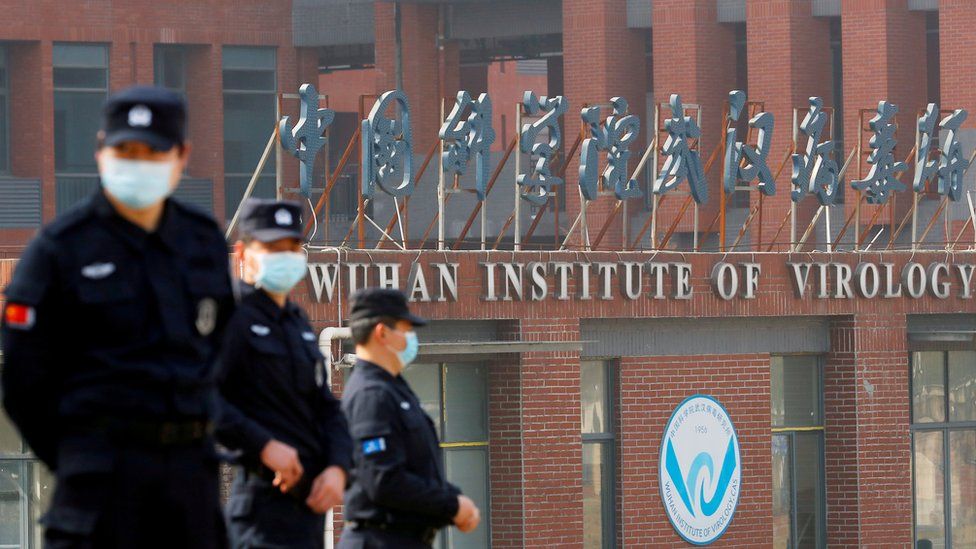
Wuhan Institute of Virology
Lab-leak theories centre on the Wuhan Institute of Virology   Reuters

"[Of the lab-leak theory]: That possibility certainly exists, and I am totally in favour of a full investigation of whether that could have happened."
"[I am] not convinced [the virus originated naturally]."
Dr.Anthony Fauci, U.S. President Biden's chief medical adviser   
 
"From day one China has been engaged in a massive cover-up."
"As the evidence for the lab-leak hypothesis grows, we should be demanding the full investigation of all origin hypotheses that's required."
Jamie Metzl, a fellow at the Washington-based Atlantic Council 
 
"We do need to be a bit patient but we also need to be diplomatic."
"We can't do this without support from China. It needs to be a no-blame environment."
Prof Dale Fisher, Singapore's National University Hospital 

"I've read it, [report released by the Washington Post calling into question when and how the SARS-CoV-2 virus emerged] it's a complete lie."
"Those claims are groundless. The lab has not been aware of this situation, and I don't even know where such information came from."
Yuan Zhiming, director, Wuhan National Biosafety Lab, Wuhan Institute of Virology, Wuhan, China
The story in the Wall Street Journal claims that three laboratory workers at the Wuhan Institute of Virology fell ill in November of 2019, and were admitted to hospital for treatment. A month later, China advised the World Health Organization of the sudden appearance of a zoonotic, a virus transmitted from animal to human, and that authorities in China felt confident the virus had erupted in a fresh food market where wild animals were sold and pangolins were the suspected source.

The U.S. intelligence report cited by the paper had originally been the product of an investigation authorized by then-President Donald Trump who stated  his determination to get to the bottom of the matter that he suspected was Beijing's lack of openness in alerting the world community of the presence of a galloping new virus with unknown properties but a surprising level of lethality, initially presenting as a new kind of pneumonia. 

It was the newspaper's contention and possible purpose of re-visiting the investigative report and coming away with greater details, that what it revealed could conceivably bring support to the evidence already in question, leading to a broader and deeper investigation into what many in the scientific community suspect -- and many others object to -- that the COVID-19 virus could have been a lab escapee.

What is undeniable unless new information arises, is that the first cases of a strange new pneumonia were being reported toward the end of December 2019 in the central Chinese city of Wuhan where coincidentally two high-security laboratories for the study of viruses were located. One laboratory had undertaken studies of viruses collected from bats in caves and theorized that the bats had infected pangolins and the pangolins carried the virus with them when they were trapped for sale at the live animal market in Wuhan.
 
Although rumours have circulated widely that the SARS-CoV-2 virus causing COVID-19 was not a zoonotic that naturally occurred, infecting people who had come in contact with a vector at the Wuhan market, but rather a laboratory-produced virus and that inept, insecure methods led to its escape, China has steadfastly denied any such allegations. Claiming instead that the lab theory was unproven and nonsensical and simply represented U.S. paranoia.
 
Instead Chinese authorities point to the possibility that the virus may very well not have originated in China, or Wuhan, at all, and was imported with frozen food from some other geographic location. Wildlife trading too was cited as a source, as well as a circulating virus that had emerged elsewhere and found its way to China by some unsuspected means. China's foreign ministry rejected the claim that three lab workers had been hospitalized, characterizing it as a lie.
 
The World Health Organization, which had sent an independent team of researchers to Wuhan months ago to undertake a detailed investigation, now entertains thought of another investigation, this time perhaps without Chinese authorities' interference, although without Beijing's approval for yet another group of scientists arriving in Wuhan there can be no follow-up of the original which declared its joint opinion that no lab escape of a virus was a likely explanation for the pandemic.
 
That opinion was reached despite that there were no unescorted interviews permitted where the investigators could privately, without interference and the presence of Chinese authorities, closely question someone who might have information critical to the investigation, nor were the investigators permitted to see collected data directly relevant to the more immediate Chinese investigation of the market where purportedly the outbreak was traced to.
 
According to Tarik Jasarevic, a spokesman for WHO, the organization's technical teams were currently making decisions on whether to proceed further and if so, how. Further study was obviously required into the role of animal markets, as well as the hypothesis of a lab leak. The issue, after all, is that of a lethal, minuscule, unseen pathogen seeking out new hosts, invading body cells and replicating wildly. A virus that has in the space of a year-and-a-half killed three and a half million people worldwide.  

Knowing its true origins could help medical science more fully understand the nature of the pathogen and how best to control it. It could also lead to techniques of detection and deterrence that could help avoid future such global pandemics. As well as teach both the global medical community and governments how best to anticipate new and perhaps even more deadly invasions of viruses from wild animal to humanity.
 
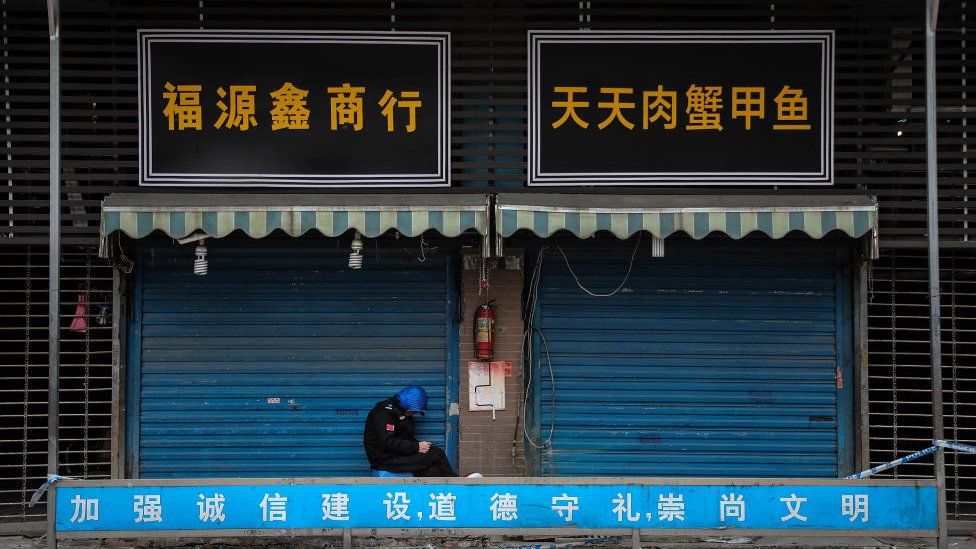
Huanan Seafood Wholesale Market in January, Wuhan
The Huanan Seafood Wholesale Market in Wuhan was linked to early Covid cases   Getty Images


Labels: , , , , ,

Monday, August 24, 2020

Fateful Seconds of Living Hell, Then Death

"Nineteen seconds after the first missile hit the plane, the voices of pilots inside the cockpit indicated that the passengers were alive ... 25 seconds later the second missile hit the plane."                                                                                 "Therefore, no analysis of the performance and effects of the second missile was obtained from the aircraft's black box.”                                                                 "The data analysis from the black boxes should not be politicized."                           "What is evident is that Iran has accepted the responsibility for the mistake and therefore the country is ready for negotiations on paying full compensation."       Touraj Dehghani-Zanganeh head, Iranian Civil Aviation Organization

In this file photo from January 8, 2020, authorities stand near the wreckage of a Ukraine International Airlines plane that Iran said it accidentally shot down near Imam Khomeini airport in Tehran, killing all 176 people on board.
In this file photo from January 8, 2020, authorities stand near the wreckage of a Ukraine International Airlines plane that Iran said it accidentally shot down near Imam Khomeini airport in Tehran, killing all 176 people on board. © Abedin Taherkenareh / EFE

Flight PS752 was struck when two missiles 25 seconds apart hit the plane just moments after it left Tehran's main airport on January 8, with 176 passengers and crew aboard. After initially denying that it was responsible for the downing of the passenger jet heading for Ukraine on a regular route, Tehran finally had little option given the evidence, but to admit an 'accident' had occurred and indeed members of its al Quds branch of the Revolutionary Guard Corps shot down the plane.

They had been on high alert for incoming missiles from the U.S. military it was explained and mistook the airliner for a threat. No one survived the destruction of the civilian airliner. That very night Iran had launched a ballistic missile attack against a U.S. base in Iraq, responding to a U.S. targeted drone strike killing Qassem Soleimani on January 3 in Baghdad. A great hero in Iran for his terrorist exploits against the Islamic Republic of Iran's 'enemies', his death might be seen as a preventive against further attacks such as he had engineered.

Iranian citizens demonstrated their anger at the  shooting down of the airliner with its massive loss of life by taking to the streets and vociferously blaming the regime and the IRGC. Most of the victims were Iranian civilians of whom 55 of the total were Iranian citizens of Canada, others Iranian students travelling to Canada to take up academic studies at Canadian universities. Other nations, Ukraine and France among them, lost citizens and await compensation from Iran to go to the families of the bereaved.

What is staggeringly beyond belief is that the regime's elite command military could have been so oblivious to the danger they were placing a commercial airliner and its passengers in, so consumed with its enactment of vengeance attacks they failed to take common-sense precautions, the most elemental of which would have been to close their air space to civilian aircraft at a time of such high tensions between Iran and the U.S., instead of placing so many lives in jeopardy.

Rescue workers search through the charred wreckage of an aircraft.
Investigators at the scene of the wreckage.(AP: Ebrahim Noroozi/File)

The second missile to bring down Flight PS752 hit the aircraft mere seconds after the first had struck. the gap of time between the two hits, estimated at 19 seconds captured on the black box recordings reflecting the damage the jet sustained from the first missile hit. Difficult to contemplate is the conclusion that the passengers were all alive after the airliner was struck by the first missile. The second one that was dispatched for whatever reason, extinguished all lives. It is the brief intermission between the two strikes that expresses the horror that would have struck all aboard with the realization that their lives were over.

"Our important questions regarding the reason for the delayed takeoff and the pilot's communications within that hour, which should have been included in the report of the black boxes, have also been left conspicuously unanswered." Association of Families of Flight PS752 Victims

The flight crew of the aircraft consisting of two pilots and an instructor travelling in the cockpit had exerted a desperate, last-minute effort to maintain control of the plane -- until the last possible moment, pointed out the Iranian spokesperson. United Nations aviation rules that call for investigations whose aim is solely to prevent future accidents separate from any judicial process, represents the guidelines under which Iran's investigation is being carried out. 

The Civil Aviation Organization of Iran on Sunday published a report on the downloaded data from the Boeing 737 flight and voice recorders which emerged as a focal issue to fully comprehend the prevailing circumstances at the time Flight PS752 was shot down. According to the report released through the French investigation, the recorders had but 19 seconds of conversation following the first explosion, despite the second missile -- according to Dehqani-Zangeneh -- hitting the plane 25 seconds afterward.

People are seen in the background working as the main piece of wreckage belonging to a Boeing 737 sits in the foreground.
Two missiles hit the plane, less than half a minute apart.(AP: Ebrahim Noroozi)

Labels: , , , , , , , ,

Sunday, May 17, 2020

Unregulated Abandonment of the Elderly

"I think the society failed."
"[In Quebec, per capita, there are three times greater numbers of seniors in long-term care homes] than anywhere else in the world, [underfunded, understaffed, the workers underpaid]."
"We will still give ourselves a few days to take a decision on retail business. A crucial element that would help us to reopen is for the majority of people to wear a mask in public.."
"What I want to ask them [Montreal's major health care centres] about is why there has been so many deaths ... why there have been so many infections."
Quebec Premier Francois Legault
North Vancouver’s Lynn Valley Care Centre where Canada’s first known COVID-19 death occurred on 
March 8.   Jennifer Gauthier/Reuters/File
"[The long-term care homes suggest that nurses and other medical staff treating COVID-19 patients in LTC homes represent their own narrow, personal interests, while the privately owned LTC homes represent broad, community-based interests."
"I can imagine that the irony of that submission is not lost on the [nurses]. One need only read the affidavits of the individual nurses in this Application record to understand that they spend their working days, in particular during the current emergency situation, sacrificing their personal interests to those of the people under their care."
"And given the nature of the pandemic, they do this not only for the immediate benefit of their patients but for the benefit of society at large."
"To suggest that their quest for the masks, protective gear, and cohorting that they view as crucial to the lives and health of themselves and their patients represents a narrow, private interest seems to sorely miss the mark."
Judge Ed Morgan, Ontario Superior Court
Crosses have been laid out for the 50 residents who have lost their lives due to COVID-19 at Camilla Care Community, a long-term care home in Mississauga, Ont. (Mark Bochsler/CBC)

The crisis in long-term care homes for the elderly and the health-impaired in Canada echoes in part what has been seen all over the world. Societies everywhere in this brave new world of 'nuclear families' who live apart from extended family members and where both parents in the family work, sending children out to day-care, see such families in no position to assume the traditional role of care for elderly parents, grandparents to their own children. The solution has been generally accepted in Western societies not only to farm out children, but grandparents as well.

Care of the elderly who require special medical attention, and constant daily assistance in performing personal ease-of-living and hygiene rituals is now beyond the capacity of most nuclear families to contemplate; everyone is too busy, too involved in the outside world of working careers. Occasional visits to these abandoned seniors suffice now to demonstrate filial love and attention, and so social, emotional and family duties are seen to have been accomplished.

The vulnerable elderly are left in the care of mostly untrained, low-paid staff that do their best to provide empathetic support and assistance where needed, in dressing, hygiene, feeding, aiding in mobility for the elderly, warehoused along with others just like themselves in confined areas, often sharing bedrooms and washroom facilities with strangers, eating communally, sharing communal entertainment and when infectious diseases like COVID-19 strike, sitting ducks for highly communicable diseases.

A nurse wearing personal protective equipment looks out of a window at a long-term care home in Toronto. (Evan Mitsui/CBC)

Little wonder that of Canada's 4,000 death toll, fully 80 percent are represented by deaths that have occurred in long-term care homes. Not only have the elderly fallen victim to the illness, so have their caretakers and minders, and as the elderly die, so do some of the staff of the homes. Necessitating an emergency call-up of Canadian Forces troops to give aid and assistance to those staff remaining in numbers inadequate to providing full care to LTC home inmates. The result being that now some members of the Armed Services giving aid have themselves contracted COVID.

On March 8, a man in his 80s died at the Lynn Valley Care Centre in North Vancouver which became for a short period of time the focus of public concern. And then speedily additional points of focus emerged, Pinecrest Nursing Home in Bobcaygeon, Ontario, Residence Herron in Dorval, Quebec, in an unfolding countrywide felling of seniors-home outbreaks overrun by infections, the elderly dying sometimes faster than their corpses could be moved out.

Roughly four thousand deaths,of which over four out of five, have occurred at seniors' long-term care homes, including staff. That's a massive over-representation of the elderly residents of long-term care homes. A reality that no one really anticipated, but which makes for just another page in a chapter of neglect. It made sense that the most vulnerable in age and health would be targets for a highly infectious virus communicable wherever people tend to congregate and physical proximity is unavoidable.

A Canadian soldier aids a resident at the Vigi Queen Elizabeth care centre in Montreal. Genevieve Beaulieu/Canadian Armed Forces/AFP via Getty Images

It was reported this week that the Vigi Mont-Royal home in Montreal was rife with COVID; every resident and 148 workers had all tested positive for the virus, attributable to a faulty ventilation system that required repair and cleaning. In a facility where isolation is next to impossible, a reflection of the conditions in all of these long-term care facilities. A long-term care home in Niagara Falls is facing a class-action lawsuit over how it handled an outbreak that saw the deaths of 18 residents.

Claims that it failed to train staff and allowed them to move between patient rooms wearing the same protective gowns front and center. A very similar dispute respecting registered nurses at four privately owned long-term care homes in Ontario has been brought to court. The nurses claim management failed to provide personal protective equipment and to launch pandemic plans already in existence. The cause of widepspread exposure of uninfected people to symptomatic patients not yet tested.

A union grievance was filed, but anticipating a lengthy wait for the situation to resolve, the Ontario Nurses Association requested an "unusual" form of urgent action from the Ontario Superior Court, Justice Ed Morgan presiding. Judge Morgan granted the nurses' request, ordering the homes -- which had argued that the balance of convenience should favour their interests -- to obey a provincial government directive on providing personal protective equipment to the nurses.

Labels: , , , ,

() Follow @rheytah Tweet