Politic?

This is a blog dedicated to a personal interpretation of political news of the day. I attempt to be as knowledgeable as possible before commenting and committing my thoughts to a day's communication.

Wednesday, April 19, 2023

Nature's Cull


"There are enough red flags that we're beholden to prepare."
"If the virus spills over into new species, it always gains an opportunity to mutate and adapt even further."
"So this is really an unprecedented level of viral activity for H5N1."
Dr.Samira Mubareka, infectious disease specialist, clinician scientist, Sunnybrook Research Institute/University of Toronto
 
"The spillover of these viruses from wild birds to mammals could cause a potentially devastating pandemic if the H5N1 viruses mutate into forms that can spread efficiently among the mammalian species."
Research study, Canadian Food Inspection Agency, published in Emerging Microbes & Infections journal
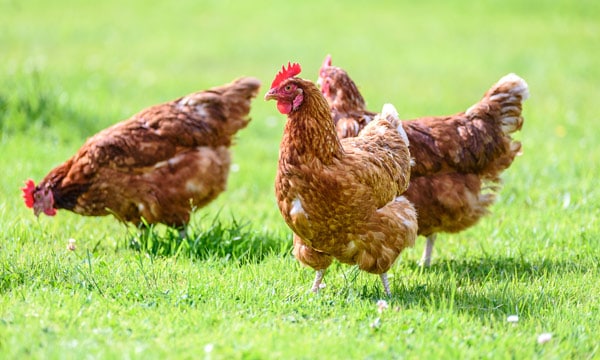
avian-birds-tp4

There have been fewer than a dozen Asian influenza cases confirmed among humans identified globally since 2020. Even among those no instances have been identified of H5N1 passing from human to human. Public health agencies are involved in closely watching how the highly pathogenic avian influenza H5N1 is evolving, a heightened level of alertness, the impetus of which can be traced to the still-and-ever-presence of the previous SARS-CoV-2 pathogen that upended the world community in a massive infection and fatality rate.

First identified in 1996, H5N1 had manifested itself in 2020 with a new type that was detected in late 2021 in North America. Since that date, the virus has decimated huge flocks of both wild and domesticated birds, the result of which has been millions of poultry deaths in Canada alone, from infection and from preventive culls. Dr. Mubareka advised that what has partially captured the attention of scientists is the range of species being infected by the virus.

The first Canadian case was identified in a pet dog earlier this month, among the hundreds of confirmed cases in wild skunks, foxes, mink and other mammals dating to the beginning of 2021. Farmers in Ontario and Quebec have been bracing for a potential wave of cases with the return of migratory birds (bringing the infectious virus with them). Public health agencies throughout Europe, Canada and the United States feel for the time being that risk to humans of contagion is low. There is no risk associated with consumption of cooked birds.
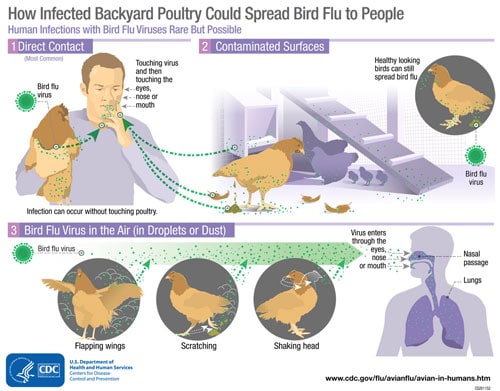
 
Avian Influenza Transmission Infographic
 
Scientists with the Canadian Food Inspection Agency working at a laboratory in Winnipeg where cases of H5N1 are confirmed and genetically sequenced, studied cases in 40 different wild mammals, the researchers finding the virus had undergone some "critical mutations". The critical mutations referred to by the researchers involved that part of the virus that allowed it to replicate; similar findings were reported globally.The scientists found in 17 percent of the cases changes advantaging the virus  to replicate in humans.

On the other hand, the researchers also found that the virus had not developed a preference to lock on to receptors in a human nose, mouth and throat -- the target of an influenza virus, key to human infection. Multiple surveillance networks set to monitor and track the influenza virus have been installed by the Public Health Agency of Canada, which claims to take the situation "very seriously". Its recent experience with COVID-19 aided it in building H5N1-specific plans across government departments.

The 27 member states of the European Union agreed to implement a bird flu vaccine strategy, with Mexico, Egypt and China on a list of countries inoculating chickens against H5N1. Targeted vaccination could help to prevent poultry losses and reduce the spread of the virus, advised Shayan Sharif, professor and acting dean at the Ontario Veterinary College, concerned at the possibility that the virus may mutate to become more dangerous to humans and eventually transmit human-to-human.
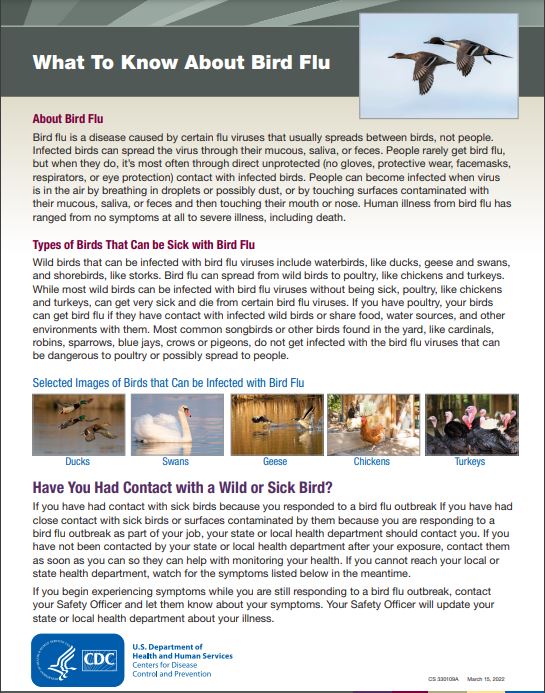
What to know about bird flu pdf


Labels: , , , , , ,

Wednesday, May 27, 2020

The Elderly Health-Vulnerable and COVID-19

"COVID-19 has exposed deep cracks in the long-term care system and it is now up to us to fix these problems."
"This tragedy must serve as a wake-up call to our whole country."
"Until yesterday morning, we didn't know the full extent of what these homes, what these residents, were dealing with,"
"I don't feel our government failed seniors. As a matter of fact, we saved a lot of lives by doing what we did. The system was broken."
"My job is to fix a broken system that has been broken for decades. I'm going to move heaven and earth that we leave no stone unturned."
Ontario Premier Doug Ford
A bench decorated with flowers and signs is pictured outside of Orchard Villa Retirement Residence after several residents died of the coronavirus disease (COVID-19) in Pickering, Ont., on May 26, 2020. (Carlos Osorio/Reuters)
  • Eatonville Care Centre, Etobicoke: Resident Deaths: 42 -- COVID-positive residents permitted to wander about exposing everyone at risk; supplies reused despite compromised sterilization; staff burned out; residents frequently sedated with narcotics when depressed or sad.
  • Hawthorne Place Care Centre, North York: Resident Deaths 39 -- Nurses and PSWs observed wearing same PPE for hours, moving between patient rooms; 'significant gross fecal contamination' noted in rooms; insect infestation, including ants and cockroaches; residents' calls for help unresponded to for significant lengths of time;
  • Orchard Villa, Pickering: Deaths: 69 -- Residents left in soiled diapers, not taken to toilets; PSWs and nurses failed to help residents to seated position prior to meals and medications; 
  • Altamont Care Community, Scarborough: Deaths 52 -- Residents bed-bound for several weeks, no evidence they had been moved to wheelchairs for part of the day, bed-repositioned, or properly washed; frequent arguments between staff with the use of derogatory language;
  • Holland Christian Home (Grace Manor), Brampton: Deaths: 11 -- PPE problems such as moving from a COVID unit to other units without a change of PPE.
When it was first revealed that long-term care facilities were experiencing outbreaks of COVID-19 among their elderly, health-impaired residents, and deaths began mounting, public attention was turned to the treatment of the elderly in these residences, and new stories began to focus on the plight of the helpless elderly, dependent on care provided by staff which in some instances were improperly trained, exposing their charges to dangerous infectious rates, sometimes impacting on the staff as well. As time wore on, it became obvious that Canada's death rate owed much to the vulnerable elderly.
"These are the kinds of complaints we hear all the time. It took somebody from the outside to show what was going on."
"There wasn't anything in the [military report on the situation in long-term care homes] report that particularly surprised me. We hear it on a daily basis."
Jane Meadus, lawyer, Advocacy Centre for the elderly

"Nothing in that report is going to be any surprise for those of us working on the front lines. [I guess] it takes the military to get some action."
"It would be nice for front-line voices to get heard as well."
Candace Rennick, secretary treasurer, CUPE Ontario, (former PSW)
When it was first discovered, both in Ontario and Quebec, that a runaway infection and death rate was taking place in both provinces' long-term care institutions, each government appealed for help, sending in public health officials, followed by hospital workers, and finally in desperation calling for volunteers and then asking for the military to help solve the problem of inadequate help in the institutions to quell the tide of deaths among the elderly/health-compromised. A day ago, the military produced an intelligence report on the situation they discovered in the homes, while giving assistance.

Residents, they found were left in the beds, unbathed for weeks, fecal matter found in rooms, cockroaches, as well, and residents were despondently crying out for help for hours, their appeals unanswered, medical equipment that was contaminated, and improper use of personal protective equipment, were all found, along with outdated medications. A litany of oversights, inadequate care, tardy responses, and lax regulations along with a failure to comply with government-mandated quality of care.

It isn't as though the provinces had no inspectors to take inspection rounds to ensure compliance with the due care and respect owing people in the care of these institutions at a time in their lives when devastatingly ill health compounded by advanced age made them vulnerable and highly dependent on professional assistance in their daily lives. Ontario alone has 175 long-term care inspectors. And though the five care homes whose failings are listed above are considered the worse-case scenarios, there are countless other such care homes which have seen no COVID outbreaks, much less deaths.


Canadian Armed Forces personnel arrive at the Villa Val des Arbes seniors residence, Monday, April 20, 2020 in Laval, Que. (Ryan Remiorz/Canadian Press)
The situation has been so dire that of the deaths from COVID-19 in Canada as a whole, the elderly have represented a staggering 82% among long-term care facilities. It is as though the elderly health-impaired are the expendable members of society. Staffing levels in the facilities have been inadequate with no minimum standard of care for residents. The facilities have always been understaffed, many of the staff inadequately trained. And poorly compensated for their invaluable work with the elderly health-impaired. Afterthoughts from beginning to end.

An independent investigation is to be called by provincial governments into the situation surrounding these homes and the convergence of the pandemic impacting on the residents. In some instances, with some homes, abuse of residents' trust and care has been detected. And rumblings of charges of criminal abuse are bandied about. Presumably a thorough investigation will reveal much. Just as the military personnel tasked to help in these long-term care facilities have observed and catalogued their own shocking findings of neglect.

Who might ever have imagined that Canada would be struck with a global pandemic, a virus that lays in wait to infect the incautious and unwary, a virus whose impact is deadly for the elderly and the health-impaired? Who could have imagined that the Canadian military would have to be called upon to restore a semblance of order and helpfulness in the care of these vulnerable old people whose families have entrusted their care to a system that has largely failed them?

Canadian Forces personnel return from their break at the Vigi Mont-Royal CHSLD in the Town of Mount Royal on Tuesday. (Ryan Remiorz/The Canadian Press)


Labels: , , , ,

Tuesday, May 05, 2020

The New Normal, Living on Planet COVID

"[The virus will keep churning through the population, keep] trying to find humans to do what it does."
"We won't emerge from lockdown suddenly immune, the vast majority of us remain susceptible."
Michael Osterholm, infectious disease epidemiologist

"The world as we know it is dissolving. But behind it comes a new world, the formation of which we can at least imagine. Can anyone remember the political correctness debate?"
"The infinite number of cultural wars? What, we will ask ourselves, was that all about?"
"[The global economy is recovering; the heart muscle quivered, but didn't stop] as if the economy was a breathing being that can also nap or sleep and even dream."
Matthias Horx, German futurist

"Let's be honest here, we are talking about mortality of maybe between one in 1,000 or one in 100. We still don't know, but we're not talking the Great Plague."
"We're not talking about nuclear war or three degrees of climate change or artificial intelligence gone rogue, or super-enhanced transhumans wreaking havoc, which are all possibilities futurists ponder every day."
"We're talking about a relatively weak story that scared the hell out of people, and scared me because it scared people so much that I didn't expect it would be so profound."
"We need to dig our heels into the ground and say we're not simply going to accept a 'new normal' without debate and discussion and a vote."
"We all have to reinvent ourselves. [If we can't shake hands, worship together, eat together, the very core of humanity], what it means to be human and how we thrive [is undermined]." 
Nikola Danaylov, futurist, Toronto

"The world has a lot of inertia. We built up the world we had been living in until a few months ago for a long time, and we really got used to it."
"We've changed temporarily but most people are eager to get back."
"Some politicians will get fired. Pandemic budges will increase. We'll do a lot more tracing and tracking and trying to prepare for the 'next one' [but life returns as before]."
Robin Hanson, economist, futurist, George Mason University

"Airlines will reserve flights according to high or low risk, full-face shields at festivals and ball games."
:Normally after natural disasters, after the earth stops moving and the flood waters recede, we gather our wits, mourn our dead and try piecing our lives back together."
"[This crisis is different, it's like a cancer diagnosis.] The year or years that follow the lifting of stay-at-home orders won't be true recovery, but something better understood as adaptive recovery, in which we learn to live with the virus even as we root for medical progress."
Juliette Kayyem, former U.S. Department of Homeland Security official
An employee wearing protective gear conducts a disinfection inside an Air Europa’s aircraft at Son Sant Joan’s Airport in Palma de Mallorca on April 30, 2020, as the country prepares to ease its tough lockdown measures. JAIME REINA/AFP via Getty Images

These are not normal times. And nor might any of us have been able to imagine the breadth and depth of changes to lives we have always been accustomed to, changing so radically in so short a time in a desperate effort globally to stave off the impetuous resolve of a newly-emerged zoonotic to place itself at the very heart of what it means to be human; to take the humanity out of us and replace it with an aversion rather than an attraction to others, as social creatures that we are.

Or were. Under new restrictions imposed for the 'good of our health', not to mention longevity, we may never again be as freely impetuous as to rejoice in the close physical and emotional presence of others, from those we love within our family groups, to those we casually associate with as friends, acquaintances, neighbours and work fellows. We are by nature gregarious animals, taking pleasure in the company of others; we have not been designed to shrink in the near proximity of other people.

People wearing face masks as a preventative measure against the COVID-19 coronavirus cross a street in the Causeway Bay shopping district in Hong Kong on May 1, 2020. DALE DE LA REY/AFP via Getty Images

Yet this is what we have been reduced to in surprisingly short order. We recoil in fear at the prospect of becoming too physical close to someone who may after all be harbouring the SARS-CoV-2 virus, a dreadfully infectious, vicious disease which may or may not totally debilitate us briefly, or alternately cause a respiratory condition so severe it can and will kill us. No more affectionate hugs, kisses or closely confidential exchanges for fear of loosing a virus-infected droplet.

In most countries of the global reach COVID-19 has come and conquered, leaving populations of millions quivering with trepidation, quaking with outright fear for their lives; a well-grounded fear, as news media grimly report on a daily basis the carnage caused by this new zoonotic unleashed in Wuhan, China, in reflection of an Asian delicacy so popular in cuisine featuring wild animal carcases lovingly prepared for the dinner table. A virus endemic to wild animals leaped the species divide, and now we tremble with fear.

People wait while adhering to social distancing for a food distribution that will provide two boxes containing maize flour, cooking fat, salt and green grams for over 250 people by the Kenya Red Cross during the COVID-19 pandemic in Nairobi, Kenya, on May 1, 2020. PATRICK MEINHARDT/AFP via Getty Images

The new 'normal' bears scant resemblance to the spontaneity of the 'old' normal. We now have a very particular, specialized costume in hospitals and in public that declares our determination not to be yet another statistic, but to defend ourselves and resist the virus so intent on human destruction. Visors, eyeglasses, face masks and gloves have become de rigueur, as a 'normal' reaction to the potential of infection, although there are no guarantees should one finger the wrong surface.

The workplace, whether on a construction site, a farm or an office building, will never be the same again. Although real estate is costly, stifling cubicles are out and distancing is in, ergo working from home is set to become 'normal', attractive for some, anathema for others. Will the lockdown be locked into permanent place with some measure of loosening, to become second nature in weary acceptance to us all, even those now demonstrating violently against that ultimate control removing freedom of choice?

Will we forever be locked in an never-ending cycle of lockdown, flattening the curve, release from lockdown, a raging return of infection, lockdown and achieving a measure of control, to be repeated and repeated ad infinitum? Or will a hope-cherished scientific breakthrough to break the back of the novel coronavirus come as a gift to humanity and solve the problem so we can return to real normalcy?

And then hope against hope that yet another in a long succession of increasingly vicious viruses will not again emerge...?
Employees walk by a sign “Heroes Work Here” outside of the Los Angeles USPS Plant on April 29, 2020, in Los Angeles, California. VALERIE MACON/AFP via Getty Images
"Are we moving to a world where every 'contact' [if we can call it that] will have to be scheduled on Zoom, or managed in a non-spontaneous way, keeping distance, and observing rules, and checking that others observe them too?"
"We are in the midst of a massive 'real life experiment', exploring whether our brains and bodies can do without physical proximity."
Dr.Ophelia Deroy, faculty of philosophy of mind, Ludwig Maximillian University, Munich

Labels: , , , ,

Saturday, March 07, 2020

Transmission, Containment, Control

"[Community spread] is going to be wide-spread. It's going to be severe, young people will get ill, and we have to prepare for all of this."
"You can't pull your punches with some of the messages. This is going to be a challenging situation."
Dr.Marc Loeb, infectious disease specialist, McMaster University

"If transmission is very rapid, the interventions to try and slow down that spread are interventions that will have significant implications for communities and families."
Dr.Amy Greer, Canada Research Chair, population disease modelling, University of Guelph

In a way, it's good news, isn't it, that people aren't running around panicking too much? I've seen some evidence on social media of panicking -- buying toilet paper and other bizarre items."
"My gut feeling is that this is what a 1918-style pandemic might look like today. People have talked for years now about the 'big one'. Well, the big one doesn't necessarily have to have catastrophic mortality, off-the-scale figures like 1918."
"What we're seeing now rhymes. Strip away the media and social media, all of which didn't really exist in 1918. Most people wouldn't really be aware of a thing called Spanish flu until you actually had this mortal wave and lots of people were sent to hospital."
"It's not the zombie apocalypse. You don't need to go up and fill up your car or stock up with toilet paper, but I think it would be wise to make sure you have ibuprofen and basic medical supplies. Not because you might necessarily need them now, but you want to make sure you have them before people panic-buy them."
"That's the kind of bind we're in."
Dr.Mark Honigsbaum, medical historian

"[Since its Wuhan debut eight weeks ago, the virus has infected our global psyche, spawning an] epidemic of catastrophizing [hammering the stock market, stranding cruise ships, cutting oil output, shutting down schools and] increased social conflict and xenophobia."
"[To appreciate the] full and very real -- power of the coronavirus, we need to enter the rabbit hole of evolved human psychology."
"Cues that signal the presence of pathogens tend to elicit automatic disgust responses, so as to help us avoid strangers."
Samuel Paul Veissiere, anthropologist, cognitive scientist

"When conditions are right, epidemics can potentially create a medical version of the Hobbesian nightmare -- the war of all against all. [It begins with fear] fear that I might catch the disease and the suspicion that you may already have it and might pass it on to me."
"The whole environment, human, animal and inanimate may be rendered potentially infectious. If we do not know what is happening, who knows where the disease might spring from?"
Philip Strong, 'epidemic psychology'


Community-acquired COVID-19 signals that the disease has surpassed its original infection sources, that communities far from the origins of the infection have now acquired the means to transfer the novel coronavirus among a population; a second front of contaminated sources. And the moment that a community recognizes that the virus is ensconced within itself, not merely transferable from people who were infected at its original source passing the virus on to others, it becomes inevitable that the infection rate will grow.

The scientific-medical community, once it became aware of the presence of a new communicable virus, focused its resources on containment. Ensuring that the primary victims of the virus were kept well away from others, to stem the tide of communication. Once community-acquired infections begin surfacing, it is acknowledged that containment must switch to control. Assembling all possible medical/scientific resources in an effort to control and stem the outbreak where some people exhibit no symptoms yet are carriers able to infect others.

Dozens of cases where the source of infection is unknown are under investigation in the United States. Predictions resulting from mathematical modelers appear fairly dire that the virus has the capacity to infect between 40 to 70 percent of adult humanity. Projections that saw a downward revision to 20 to 60 percent. But that too is a high prediction of a potential infection rate in any population. Containment was involved in identifying imported, travel-related cases then isolating the infected, tracing their contacts to keep from generating new clusters.

Mitigation was meant to retard the virus's trajectory of infection rate through reducing contact of people with other people. Suspicion of infection meant self-isolation for a two-week germination period. In China, cities were placed in lockdown, no one permitted to enter or to leave. People leaving their homes were expected to wear containment masks to aid the goal of minimizing illness and the death rate. In the West, the focus will be on curtailing "social disruption", while at the same time persuading people to avoid crowds, observe the niceties of personal hygiene, and self-isolate if required.

 The coronavirus outbreak has hit particularly hard in Italy. Francesca Volpi/Bloomberg

Through observation and experience it is expected that people who are healthy will experience mild infections; they will become ill, then speedily recover, while those over 65 and the elderly, those with heart disease, diabetes, asthma, cancer, hypertension and other chronic illnesses and underlying medical conditions have the highest risk of acquiring severe pneumonia, acute respiratory distress syndrome, sepsis, septic shock and death. Health and emergency response authorities pray that a major outbreak will not arrive until flu season departs, when hospitals will be better able to cope.

Substantial hospital resources would be strained under pandemic conditions, leading to a surge of patients to be tested and treated. "A surge of cases appears inevitable", wrote doctors from eight Toronto hospitals, in an article published in the Canadian Medical Association Journal. The World Health Organization adjusted the case fatality rate to 3.4 percent, much more severe than expectations with a typical influenza season. What remains a puzzle is that so few children have been reported infected. Might they be somehow immune to infection, or do children become mildly infected only, while becoming efficient spreaders?

Scientists are working in their laboratories around the world, feverishly looking for an antidote to this virus, but it will be at least a year before a safe vaccine against COVID-19 may be available for wide distribution and use. According to a new DART & Maru/Blue Poll, many people in Canada are trepidatious they may contract the virus. 32 percent of 1,513 randomly selected Canadians representing about 10 million Canadians, responded they were very or somewhat concerned of infection. Five percent of Canadians avoid public transit and an increased number of people are buying hand sanitizer washing their hands more frequently, avoiding sport events, movies, theatres and restaurants.

Coronavirus pop-up store in Washington, DC  Nicholas Kamm/AFP via Getty Images

There were over 98,000 confirmed cases of COVID=19 and at least 3,380 confirmed deaths as of Friday. Frightful statistics to be sure, and growing, but as cognitive scientist Samuel Veissiere put it, a deeply inbuilt negativity bias is in play here; the human tendency to focus more keenly on the negative than the positive, its source in evolutionary reasoning. As for the opinion of Dr.Steven Taylor, professor and clinical psychologist at University of British Columbia, anxiety will be ramped up once the pandemic is officially declared.

Psychological problems involved in persuading people to comport themselves in ways such as to reduce risk to themselves and vulnerable others through societal measures to slow community spread may inevitably increase public anxiety when efforts to slow community spread with travel restrictions, movement restrictions quarantines, will serve to exacerbate people's anxiety levels. Dr. Taylor cautions that we should be listening to health care authorities, but on the other hand, should not be losing sleep over COVID-19.

Labels: , , ,

Thursday, February 13, 2020

COVID-19: CO for corona, VI for virus, D for disease, and 19 for the year it emerged....

"What has happened in China is that they have changed the definition of what the disease really is -- now they are taking people who have lesser symptoms."
"The deaths are quite worrisome, there is an increased number of deaths reported, but if you look overall at the total number of deaths and the total number of cases, the fatality ratio is about the same as it has been - but it is still high, as high as the death rate in influenza."
David Heymann, Professor of Infectious Disease Epidemiology, London School of Hygiene and Tropical Medicine
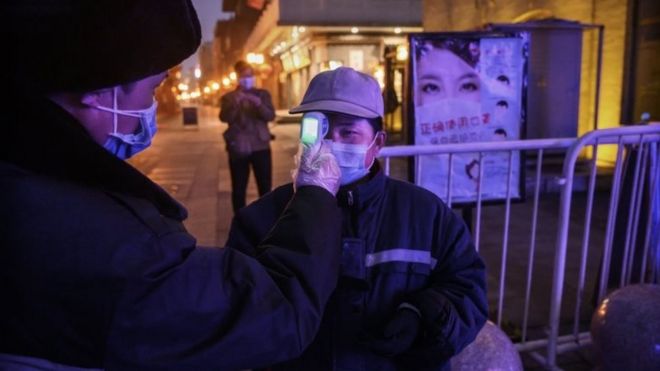
A Chinese worker wears a protective mask as she has her temperature checked on a nearly empty commercial area on February 12, 2020 in Beijing, China.
The WHO has said a vaccine will likely be found but it will take time   Getty Images
China is assuring the world community that it has the Novel Coronavirus -- now officially named COVID-19 -- well in hand. Wednesday, it reported the lowest number of new cases in two weeks following Beijing's senior medical adviser, epidemiologist Zhong Nanshan stating with apparent confidence that this month would see the peak of the epidemic before it subsides, and that by April the outbreak would be in its last gasps. On Wednesday the figures showed 2,015 new confirmed cases diagnosed, bringing China's total to 44,653 representing the lowest daily rise since January 30.

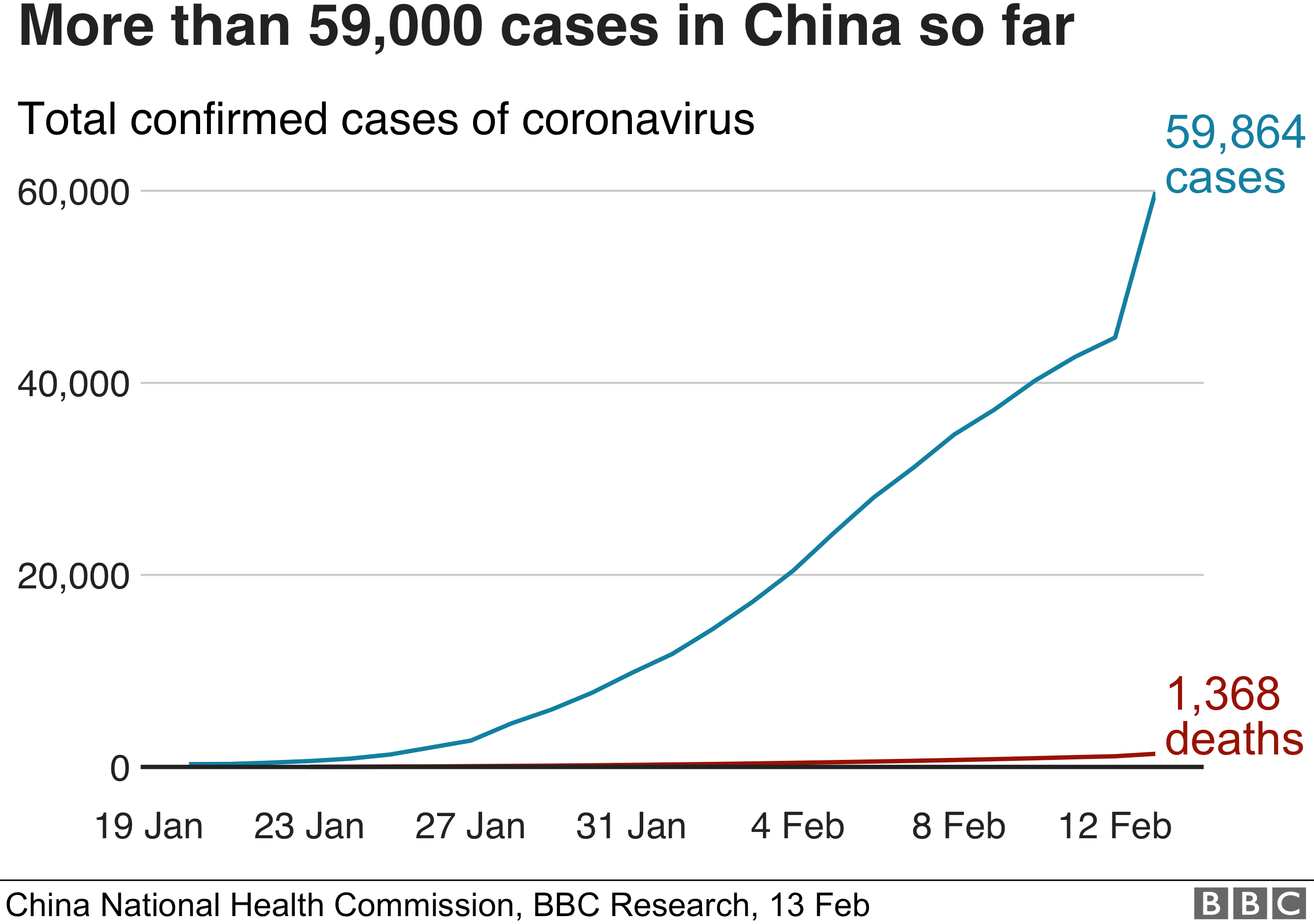
Well, oops, another day, another story. New figures have been released, that indicate new cases and deaths in the province of Hubei, the epicenter of the epidemic, have pushed the national death toll above 1,350 with almost 60,000 infections in total. Quite a leap for a day (Wednesday) that was, according to Chinese officials, the lowest victim-count day yet. But that would have been the count for the day before. The new count is quite displeasing to Beijing, which has taken steps to dismiss two top officials in Hubei province hours after the new figures were released.

The World Health Organization chief, Tedros Adanom Ghebreyesus, though courteously willing to take China at its word, advised that "extreme caution" should be taken when viewing the optimistic Wednesday figures. "This outbreak could still go in any direction", he advised at a Geneva briefing. And it took little time for that to happen. "It has spread to other places where it's the beginning of the outbreak", responded head of the Global Outbreak Alert and Response Network coordinated by the WHO. "In Singapore, we are at the beginning."

Coronavirus data chart

Of Singapore's 50 cases identified at that point, its largest bank, DBS was speedily evacuated at its head office, when one of the cases was found to be located there. Dozens of other countries -- at last count, 24 and growing -- have reported hundreds of cases; so far three people have died of the virus outside mainland China; in Hong Kong, Japan and the Philippines. And though China reported 1,113 deaths by the end of Tuesday, social media is abuzz over suspicions regarding reliability of the data.

On the cruise ship quarantined off Yokohama with around 3,700 people on board, there have been 175 people who have tested positive for the coronavirus. The MS Westerdam, another cruise ship which had been refused docking by Thailand, Japan, Taiwan, Guam and the Philippines was finally able to dock in Cambodia where its 1,455 passengers and 802 crew will be quarantined and medically tended to. The first Japanese medical officer to examine patients on board the Diamond Princes came down with the virus himself. The ship's total confirmed cases now stand at 174 and rising.

Relatives of passengers wave towards the Diamond Princess cruise ship, with around 3,600 people quarantined onboard due to fears of the new coronavirus. | AFP-JIJI

China bitterly accused the U.S. and other countries of victimizing China when they took steps to curb visitors from China. At a time when China itself has strictly quarantined about 60 million of its own citizens in quarantined cities in Hubei province, including the centre of the outbreak, the provincial capital of 11 million people, Wuhan. A commentary in the Xinhua news outlet spoke of "racist reporting" in some Western media, accusing them of ignoring "the unswerving efforts and huge sacrifice China and its people have made".

China, which has staked so much of its future on its 'one belt, one road' enterprise, with its huge investments in Asia, Africa and the Middle East to increase its already enormous trade potential, now finds itself in a quagmire of a stand-off in its aspirations. It sits frozen in time, unable to do anything while the entire country goes into lockdown, for however long is anyone's guess.

Factories are shuttered. Trains sit in their stations, in Wuhan the streets are still and empty of people, and state censors are working overtime to quell criticism and stop insde information and videos from reaching the outside world.

Image result for one road, one belt

Front-line accounts from overflowing hospitals with their scarcity of medical equipment and drugs, and where infected patients lie in crowded close proximity, and overworked health care professionals are at the point of breaking down as tens of thousands of people continue to become ill while ever more die from the virus do not reflect a country that has a viral epidemic well in hand.

The principal deputy director of the Centers for Disease Control and Prevention in Washington stated recently: "We absolutely assume that the reported cases are an underestimate".

Chinese citizen journalists risk their personal freedom to travel to the virus hotspot of Wuhan, to post what they see and  hear of the real situation as it unfolds, and then suddenly they are incommunicado, arrested, imprisoned, silenced.

"In the evening, the people of Wuhan turned off their lights when Li Wenliang passed away and, using flashlights or their cellphones, shot beams of light into the sky and blew whistles. In the deep dark night, Li Wenliang is this beam of light. After all this time, what can Wuhan people do to dispel the gloom, sadness and anger in their hearts? Perhaps it can only be done this way", wrote novelist Fang Fang, before falling silent.
  Li Wenliang  on Weibo, a Chinese social media platform.Kuang Biao

Li Wenliang was warned by Chinese authorities to stop spreading false rumours, when the young doctor communicated with his medical school colleagues to warn them of a strange, new virus that had appeared at a local hospital that looked suspiciously like a viral pneumonia, but was not, and could have been SARS, but was not.... He was among many medical professionals tending the ill who themselves became infected. And he died a week ago.


Labels: , , , ,

Monday, January 27, 2020

How Prepared to Cope? The Classic Closing the Barn Door...

"For me, that is a sign that the information at the border did actually percolate through to the patient and his family."
"The system is working and the person obviously got the information that they needed to enter the health system in a safe and responsible manner."
"[The Toronto man] has been managed with all appropriate infection and prevention control protocols, so the risk of onward spread to Canada is low."
"Nevertheless it would not be unexpected that there will be more cases imported into Canada in the near term given global travel patterns."
"The risk to our community remains low."
Dr.Theresa Tam, Chief Public Health Officer, Canada

"[Once he became more ill], when he needed medical support, in fact, he followed all the information provided at the airport."
Federal Health Minister Patty Hajdu
Passengers, and people waiting to pick them up, wear masks at Toronto Pearson International Airport on Sunday. (Evan Tsuyoshi Mitsui/CBC)

At Pearson International Airport in Toronto, China Southern Airlines flight CZ311 brought home to Canada citizens who had visited relatives in Wuhan, China, the epicentre of a novel coronavirus outbreak. Among the passengers was a man in his 50s who had boarded the international flight in Guangzhou, already feeling ill, but saying nothing to anyone. Throughout the flight back home to Canada the man felt increasingly ill, as well as on arrival in Canada. He failed to report to border service officers that he had been in Wuhan and now felt ill.

The airport has instituted "detection" measures including screening questions at electronic border kiosks, asking whether travel to Wuhan had taken place in the past 14 days. Reminding people to report any symptoms similar to flu to border service agents. At those kiosks fact sheets are available printed in English, French and Chinese, outlining the symptoms that people should be aware of, and to seek out medical attention should they begin to feel ill.

The man left the airport, revealing nothing, and went to his home. This is a typical human reaction; never believing anything could happen to you, preferring to believe you're afflicted with a minor cold, and just need a good rest at home. A family member a day later dialed 911 to report that the man had recently travelled to Wuhan and was feeling ill. Wearing protective gear, paramedics responded, to take the man to Sunnybrooke Health Sciences Centre, where he was placed in isolation in a negative-pressure room. A day later, the man's wife entered the system with the very same symptoms.
"We are informing these people [passengers of flight CZ311 who may have come into contact with the man] that they may have been exposed to a potential health risk, what signs and symptoms they should look out for and when and what type of medical treatment should be sought out, if that becomes necessary."
Toronto Medical Officer of Health Dr.Eileen de Villa
There are now 19 suspected cases of coronavirus under investigation in Ontario. Numbers are growing, in a micro-reflection of China, where it is now reported that there have been 106 deaths from the coronavirus, among a growing case load exceeding two thousand, seven hundred in number and steadily increasing. In Toronto, people are beginning to panic, asking whether their medical procedures including surgeries and childbirth can take place in hospitals other than those holding patients with presumptive coronavirus.
Chinese officials have reported the illness has now infected more than 2,700 people. Several countries throughout Asia, Europe and North America have also confirmed cases. (Evan Tsuyoshi Mitsui/CBC)

Testing of all suspected cases takes place at the national microbiology laboratory in Winnipeg. In China, over 50 million people have been placed under quarantine, with new research arising in fears of "substantive" human-to-human transmission and where travel in Wuhan and 15 other cities have been restricted, all public transportation systems shut down as China desperately scrambles to halt the spread of a new virus that has spread to Europe and North America.

On average, each case in China is held to have infected 2.6 other people, up to January 18. A theoretical estimate given the population density and travel patterns of Chinese at New Year's following traditions of returning home to reunite with family during Chinese New Year. China's health minister has issued a warning that the virus is at a "crucial stage of containment". Which is to say, China hopes that the spread is being contained.

Early studies published several days ago in The Lancet reported people can become infected without being symptomatic, a condition that ensures the virus will be more difficult to contain, of a novel coronavirus of which the initial 41 confirmed cases saw one-third of those people developing acute respiratory distress syndrome or required intensive care.

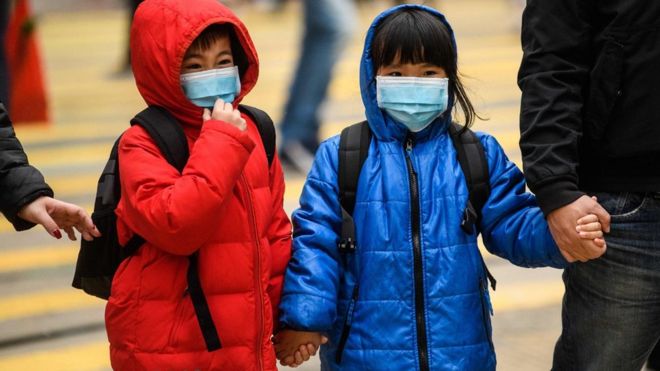
Two children wearing face masks and holding hands
106 people have died from the new coronavirus; newly infected have almost doubled

"There's a certain amount of the infection control system that relies on people's proclivity to self-report."
"You can't rule out that anyone who came into contact with this person, no matter how brief that contact was, could have been infected. But the likelihood is extremely low."
"The real risk would have been for people in his immediate vicinity [to have been exposed to the man] for prolonged periods."
Matthew Miller, associate professor, Michael G.DeGroote Institute for Infectious Diseases Research, McMaster University
It takes approximately 12 hours, slightly longer, for a China-to-Canada flight. That's a considerable amount of exposure time. Given a small enclosed area where at least a hundred people are packed closely together, and from time to time move about to access toilet facilities, to stretch their legs, contact accessibility is fairly high. Air quality aboard planes is not exactly first-class. It appears that self-reporting reliance is a dead end to singling out possible infectious agents. Which translates to Canada's system of detection on arrival is beyond faulty.


Labels: , , , , , ,

() Follow @rheytah Tweet