Politic?

This is a blog dedicated to a personal interpretation of political news of the day. I attempt to be as knowledgeable as possible before commenting and committing my thoughts to a day's communication.

Saturday, April 04, 2026

"Disrupting and Degrading and Blinding Iran's Ability to See, Communicate and Respond"

"The Iranians are throwing everything they have at this."
"It is all hands on deck."
"If their cyber operators are breathing, then they will be on their keyboards."
Chris Krebs, former director, Cybersecurity and Information Security Agency (CSIA) 
 
"An Iran-linked group calling itself Handala claimed responsibility for a cyberattack on Portage, Michigan-based medical device maker Stryker Corp., carried out on March 11, 2026. Handala said the attack was in retaliation for events related to the conflict in Iran."
"The cyberattack affected Stryker’s internal Microsoft software system, disrupting the company’s order processing, manufacturing and shipping."
"As a scholar who researches cyber conflict, I’ve found that in periods of geopolitical tension such as the current U.S./Israel-Iran war, cyber operations often sit right next to missiles and airstrikes as a tool that states and state-linked groups use to inflict damage, probe weaknesses and signal resolve to their enemies."
"The Stryker case is notable because it shows how quickly a regional conflict can translate into disruption for organizations far from the battlefield. It also illustrates the vulnerabilities of U.S. organizations, including those involved in critical infrastructure."
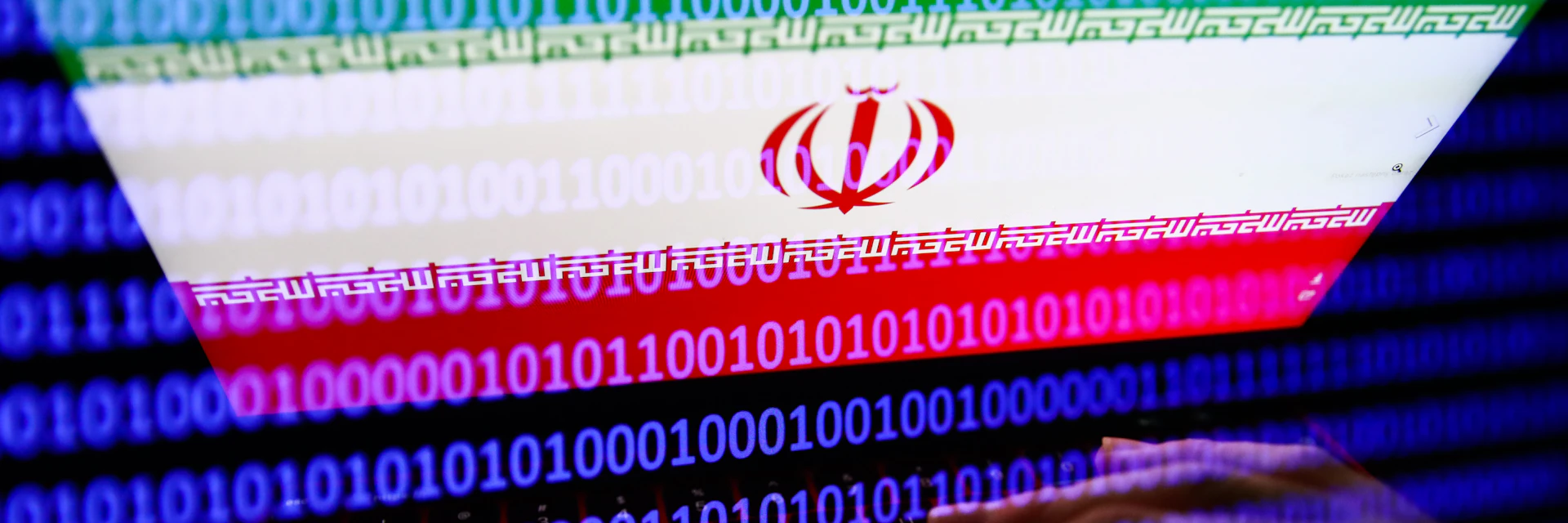
William Akoto, Assistant Professor of Global Security, American University School of International Service, The Conversation  
https://images.theconversation.com/files/727723/original/file-20260401-57-hx4ypz.jpg?ixlib=rb-4.1.0&rect=0%2C335%2C3543%2C1180&q=75&auto=format&w=1920&h=640&fit=crop&dpr=1
Iran has long had sophisticated hacking operations. Jakub Porzycki/NurPhoto via Gettyimages
 
Thousands of Israelis earlier this month received texts purportedly from the IDF that encouraged them to download a fake shelter app. Had they done so, reams of personal data could have been stolen. This, while others in Israel received a mass text that said: "Netanyahu is dead. Death is approaching you and soon the gates of hell will open before you. Before the fire of Iranian missiles destroys you, leave Palestine." An obvious play to strew panic and demoralization. According to cybersecu3rity experts, these messages represent a minuscule portion of a vast cyberwar between Iran, Israel and the United States.
 
Iranian hackers who have stabled themselves in the digital shadows for years are considered among the most reliably battle-hardened operatives Tehran can depend upon in this aspect of the Islamic Republic's existential war of survival. The ploy of sowing fear in the Israeli and American public is a powerful yet little-appreciated weapon remaining at the disposal of the Iranian regime, hoping to see some satisfying results in public chaos and a move in both countries to call off the conflict. These tactics, familiar to both Israeli and American cyber experts who have long engaged in their own counter battle, employ their own.
 
Three different levels of cyber operators have been identified in Iran, with boundaries that are frequently blurry, according to analysts and former cybersecurity officials. The Islamic Revolutionary Guard Corps and Iran's Ministry of Intelligence operate the most experienced corps of cyber hackers, with a wide array of front organizations whose purpose is to introduce plausible deniability for attacks and the issuance of public threats.
 
Semi-autonomous hacking proxies, cybercriminals and contractors are also in the hire of the Islamic Republic, with volunteer hackers bringing up the rear to mobilize behind Tehran. Israel-based employees of a large U.S. defence contractor are believed by cyber experts to have been doxxed. Emails of politicians in Albania which hosts an Iranian opposition group have received similar treatment, while a Polish nuclear research centre has been infiltrated. The most sensitive espionage is thought to have gone unreported.
 
A hacking front named as Handala is believed by cybersecurity researchers and the American government to be tied to Iranian intelligence; the hacking group claimed to have wiped 200,000 devices in the most consequential wartime cyber attack against the U.S. ever seen, according to one of the most senior civilian U.S. cybersecurity officials, Chris Krebs. It was Handala that claimed to have broken into FBI director Kash Patel's personal email account, to publish personal photographs.
 
Iranian hackers, no matter their level and association, are not quite the match of the U.S. and Israel with their formidable offensive capabilities, an illustration being the significant damage the Iranian nuclear program sustained in 2009 with the unleashing of the mysterious Stuxnet offensive. According to General Dan Caine, chairman of the joint chiefs of staff, the U.S. launched cyber attacks just prior to the February 28 airstrikes on Iran "disrupting and degrading and blinding Iran's ability to see, communicate and respond".
 
Years ago, Israel's cyber intelligence dealt one of the most telling blows of the war, when it hacked the majority of traffic cameras in Tehran as part of an extensive intelligence-gathering operation preceeding supreme leader Ayatollah Ali Khamenei's assassination. A popular Iranian prayer app was used by Israel to send notifications to millions inciting regime defections: "Only this way can you save your life for Iran", one of the delivered messages read. 
 
According to analysts in cyber security  Iran's more intensely threatening groups methodically search for vulnerabilities such as entry points to position themselves to target networks. Seedworm, a group the U.S. and U.K. state has links to Iranian intelligence has been identified through attempts to enter U.S. networks since early February, revealed cybersecurity firm Symantec. Resulting in the group being extracted out of a U.S. bank, an airport and software company supplying the defence industry.
 
Iranian cyberhacking is focused on breaking through Israel's hardened cyber defences by launching thousands of wiper attacks on Israeli companies, with success in hitting 50 of them. Security cameras hacked across Israel and the Gulf aided Iran to target drone and missile strikes, pointed out Israeli cybersecurity company Check Point Software. Gill Messing at Check Point added Iranian hackers demonstrated a 'new level' of "scale, effect and sophistication" co-ordinating strikes with the mass text messages sent to Israeli citizens. 
 
There is also speculation that Tehran, in throttling its internet for the purpose of domestic censorship, might have inadvertently set back its own hackers' advances in cyber offences. Although there is  some fear that Iranian hackers may have infiltrated undetected into sensitive economic or military targets, biding time to suck up data. "They could have longterm access that they are not ready to burn", suggested Andy Piazza at cybersecurity firm Palo Alto Networks. 
 
Since war began, Iranian hackers have been at work throughout the Persian Gulf region – and far beyond. Still from YouTube video


Labels: , , , , , ,

Tuesday, April 13, 2021

Canada: Espionage and Foreign Interference

https://nsicop-cpsnr.ca/img/bg_parliament.jpg
"[We have] observed espionage and foreign interference activity at levels not seen since the Cold War."
"The key national security threats facing Canada, namely violent extremism, foreign interference, espionage and malicious cyber activity, accelerated, evolved and in many ways became much more serious for Canadians."
"An example of significant concern are activities by threat actors affiliated with the People's Republic of China that seek to leverage and exploit critical freedoms that are otherwise protected by Canadian society and the government in order to further the political interests of the Communist Party of China."
David Vigneault, Director, Canadian Security Intelligence Service (CSIS)
"The threat from espionage and foreign interference is significant and continues to grow. Several states are responsible for conducting such activities in Canada, but intelligence shows that China and Russia remain the primary culprits."
"Neo-Nazi groups are active and growing. Violent attacks by Incel-inspired extremists also pose a growing threat. The Incel subculture is growing and increasingly overlapping with other types of violent extremism."
Report, National Security and Intelligence Committee of Parliamentarians (NSICOP)

"We were surprised to see the continuation of the threats around science and technology, and research and development in this country, particularly around COVID science and COVID vaccines. That jumped out at us."
David McGuinty, Chair, (NSICOP)

"The COVID-19 pandemic has exacerbated xenophobic and anti-authority narratives."
"Some violent extremists view COVID-19 as a real but welcome crisis that could hasten the collapse of Western society."
"Other violent extremist entities have adopted conspiracy theories about the pandemic in an attempt to rationalize and justify violence."
"CSIS is aware of the serious threat posed by CETs [Canadian extremist travellers] who return from conflict zones."
"The range of training and operational experience they acquire while abroad and the unique environment to which they have been exposed make CETs an especially dangerous threat to the security of Canada."
Report, Canadian Security Intelligence Service (CSIS)
Two reports have recently been made public by Canada's premier intelligence agencies. Alarming conclusions appeared in both separate reports, published by each; the Canadian Security Intelligence Service of Canada and the National Security and Intelligence Committee of Parliamentarians with their mandate to oversee security and intelligence agencies operating in Canada. Each of the reports point out a "sharp increase in the scope and scale of hostile activity toward Canada focusing on the nation's health care sector and research facilities".

"I'm afraid we can't actually tell  you what the numbers are, but they're certainly much higher than you would expect", Sean Jorgensen, NSICOP executive director stated, emphasizing the presence of a "dramatic increase in the first six months of 2020, primarily led by China and by Russia". The executive director was commenting at the huge question mark left in the minds of observers in the presence of redacted details in the report.

CSIS  states in its latest annual report that those two countries, along with other foreign states, continue to target not only the Canadian government in their efforts at purloining political, military and non-governmental organizations like universities and the private sector. "Non-traditional sources collectors of information and expertise, such as researchers, private entities and other third parties" are often engaged in providing information. Some countries such as China, the agency warns, attempt to "deceptively influence" the government of Canada to their benefit.
Foreign actors are interested in Canada's vaccine development and rollout, says a new report from one of Canada's key national security oversight committees. (Evan Mitsui/CBC
 
Harassing, manipulating or intimidating groups within Canada to increase support or to increase support for policies or to mute dissenters represents yet other tactics engaged in. Highlighted for the firs time as yet another threat, is the manner in which China and Russia continue to spy on the Canadian military for the purpose of developing weapons "specifically designed to counter our defences and exploit our vulnerabilities". And there is yet another insidious source within Canada itself, representing threats to national security in Canada growing within the country's borders.

CSIS and NSICOP both noted a trend of deep concern emerging, of growing ideologically motivated, violent extremism in Canada; where xenophobia, gender-based violence or anti-authority narratives and dangerous conspiracy theories thrive. Research suggests that the number of known white supremacist groups tripled in the period of the last five years, becoming close to 300 in number in 2020, from 2015's 100 groups. When members of the parliamentary committee began to understand the level of "proliferation and permeation" of extremist ideologies such as white supremacy within Canada, member of the parliamentary committee became "very, very concerned"

And then, last but not to be overlooked, returning Canadian extremist travellers who had gone abroad to join the ISIL "caliphate" in their diabolical plans of violent Islamist supremacy, with the establishment of the Islamic State of Iraq and the Levant caliphate in Iraq and Syria. CSIS revealed that up to 200 Canadians were known to have left Canada to join ISIL or other terrorist groups operating with impunity n the regime-contested areas of Syria and Iraq. Intelligence agencies know that of the total number, 61 returned to Canada, while 122 remained in Turkey, Syria and Iraq.
"CSIS is aware of the serious threat posed by CETs who return from conflict ones."
"The range of training and operational experience they acquire while abroad and the unique environment to which they have been exposed make CETs an especially dangerous threat to the security of Canada."
CSIS Annual Report
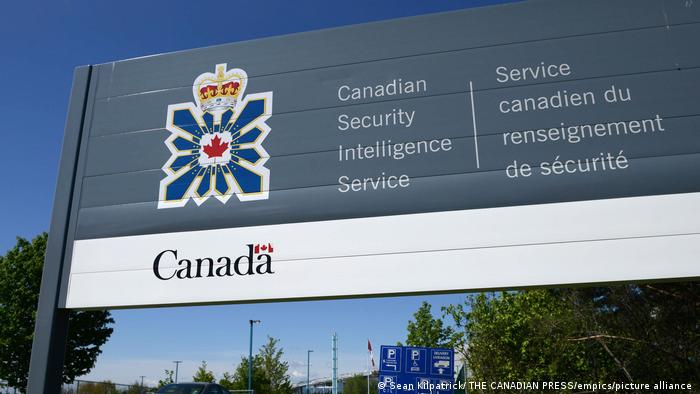
A sign for the Canadian Security Intelligence Service building is shown in Ottawa.

Canada's spy agency said the pandemic had presented opportunities for 'threat actors' overseas


Labels: , , , , , ,

Tuesday, December 03, 2019

Worlds Apart

"Right now, time seems to pass slowly. It is so slow that I have enough time to read a book from cover to cover."
"I can take the time to discuss minutiae with my colleagues or to carefully complete an oil painting. [I have the] luxury of taking my time and enjoying my surroundings."
Meng Wanzhou, CFO, Huawei Technologies
Huawei Chief Financial Officer, Meng Wanzhou, leaves her Vancouver home to appear in British Columbia Supreme Court, in Vancouver, on Oct. 1, 2019. (AFP/Getty Images)
"[I hope the] hardship and suffering] my daughter is going through proves to be] good for her growth."
"Under the grand backdrop of the Sino-U.S. trade war, she is like a small ant caught between the collision of two giant powers."
Ken Zhengfei, Huawei founder, CEO
Ken Zhengfei, father of Weng Wanzhou, speaks of his daughter's suffering, held by Canadian authorities on a warrant through an extradition treaty between Canada and the United States. She is wanted in the U.S. to speak to charges laid by the U.S. Department of Justice that include conspiracy, fraud and obstruction. Primarily the charge that Huawei and Ms.Meng conspired to misrepresent ownership of Skycom to circumvent U.S. sanctions against Iran.

For her part, Ms.Meng wrote of feelings of helplessness, torment and struggle at her arrest in Canada a year earlier. However, forced by circumstances and bail conditions to remain in Vancouver, she suffered within the confines of one of the two luxury mansions she owns in Vancouver. Where she is free to leave her home for appointments, or shopping expeditions garbed in the latest most expensive fashions, sporting an ankle bracelet, accompanied by security.
 Meng Wanzhou leaving her Vancouver home Sept. 30, 2019. (AFP/Getty Images)

Following her arrest in Canada, two Canadians, entrepreneur Michael Spavor and former diplomat Michael Kovrig, both in China on business, were arrested on spurious charges of undermining the national security of China. Their crime of 'espionage' was in fact a vastly delayed charge, long after they had been imprisoned. Where they have been lengthily and frequently interrogated, refused the services of lawyers, unable to see family members, and allowed Canadian consular service but rarely.

China has warned Canada repeatedly that both these men will not be released until Canadian sees the error of its ways and releases Ms.Meng who has been injudiciously charged, her human rights abridged, her country insulted because of Canada's 'mistake'. A 'mistake' that has cost Canada dearly not only in the arrest of two hapless victims of Beijing's rage, but the cancellation of trade talks and a costly bar in the importation to China of Canadian grain products, pork, beef and Canola.
Michael Kovrig (left) and Michael Spavor,  THE CANADIAN PRESS/AP

The People's Republic of China has furthermore warned Canada that should it choose not to include Huawei Technologies in its upgrade to 5G technologies there will be hell to pay. Huawei infamously has close links to the Chinese Communist Party, its founder was himself once part of Chinese military intelligence, and there is the guaranteed prospect of cyber surveillance should Huawei be given the inroads it seeks would endanger Canada's security.

Canada's Intelligence alliance in the Five Eyes intelligence-sharing group including the U.S. Australia, Britain and New Zealand, none of which plan to allow Huawei entry to communications upgrades would be forfeit should Canada accede to China's demand. Beijing's long tentacles have already made political, academic, social and military inroads into Canada through its infiltration network of Chinese-Canadian supporters, nicely balanced by those Chinese-Canadians for whom democracy, not the CCP is the order of their day.

The current Liberal-led government of Canada had aspired to sign a free trade deal with China. The opportunities envisaged to do business and expand entry to the gigantic China marketplace was simply too alluring to dwell on Beijing's agenda of human rights abuses, its occupation of Tibet, its threats to its neighbours of disputed territories on land and sea, its persecution of minorities, Christian and Muslim. All to be overlooked for the greater aspiration of trade and investment.
In this Nov. 20, photo, people stand outside of a Huawei store at a shopping mall in Beijing. The founder of Huawei says the Chinese tech giant is moving its U.S. research center to Canada due to American restrictions on its activities. (Mark Schiefelbein/The Associated Press)

Huawei opening a manufacturing branch plant in Canada? To give employment to Canadian workers? How subtle can pressure get? Intimidation by gift-giving? All other avenues appear to have fizzled. Did Beijing lean on Huawei CEO Ken Zhengfei to give this move a try, to melt Canada's heart by China's sincere wish to do business with Canada to the extent of investing in a manufacturing plant for technology it could not under these new circumstances possibly apurn? To persuade Ottawa to relent and transfer Ms.Meng to China and open its loving arms to Kovrig and Spavor?
“It [considering a prisoner exchange to placate Beijing] effectively normalizes hostage-taking by China, something that either makes it impossible to arrest Chinese citizens, or means that we need to be even more clear in advising travelling Canadians about the risk of becoming a hostage in [China]." "We could expect China to build on its success with hostage diplomacy, possibly using it to pressure Canada to hand over Uyghurs and Tibetans or dissident writers and scholars who have sought refuge in our country."
David Mulroney, a former Canadian ambassador to China

"[A prisoner-exchange would set a] very dangerous precedent [for future extradition cases in Canada involving citizens of the People’s Republic of China, or PRC]."
"It would also give tacit consent to the Chinese regime’s gross violations of the international norms of diplomacy and trade, and embolden the PRC government to subject Canada to more coercive outrages in future."
"Moreover, such a prisoner exchange would be very badly received by the U.S. authorities and in addition damage Canada’s credibility with the allies who have been supporting us in seeking the just release of Kovrig and Spavor."
Charles Burton, China expert, senior fellow, Macdonald-Laurier Institute

Labels: , , , , , ,

Sunday, July 07, 2019

Huawei Doth Protest Overmuch

"Huawei does not work on military or intelligence projects for the Chinese Government. This information is not new and is not secret, being freely available on career websites."
"It is not unusual that Huawei employs people from public service and government."
"We are proud of their backgrounds and we are open about them."
Ed Brewster, spokesperson, Huawei

"Huawei is not aware of its employees publishing research papers in their individual capacity. Huawei does not have any R&D collaboration or partnerships with the [Peoples Liberation Army] PLA-affiliated institutions."
"Huawei only develops and produces communications products that conform to civil standards worldwide, and does not customize R&D products for the military."
Huawei spokesman Glenn Schloss

"Huawei doesn’t customize products nor provide research for the military."
"We are not aware of the papers some employees have published. We don’t have such joint-research projects [with the PLA]."
Huawei Chief Legal Officer Song Liuping
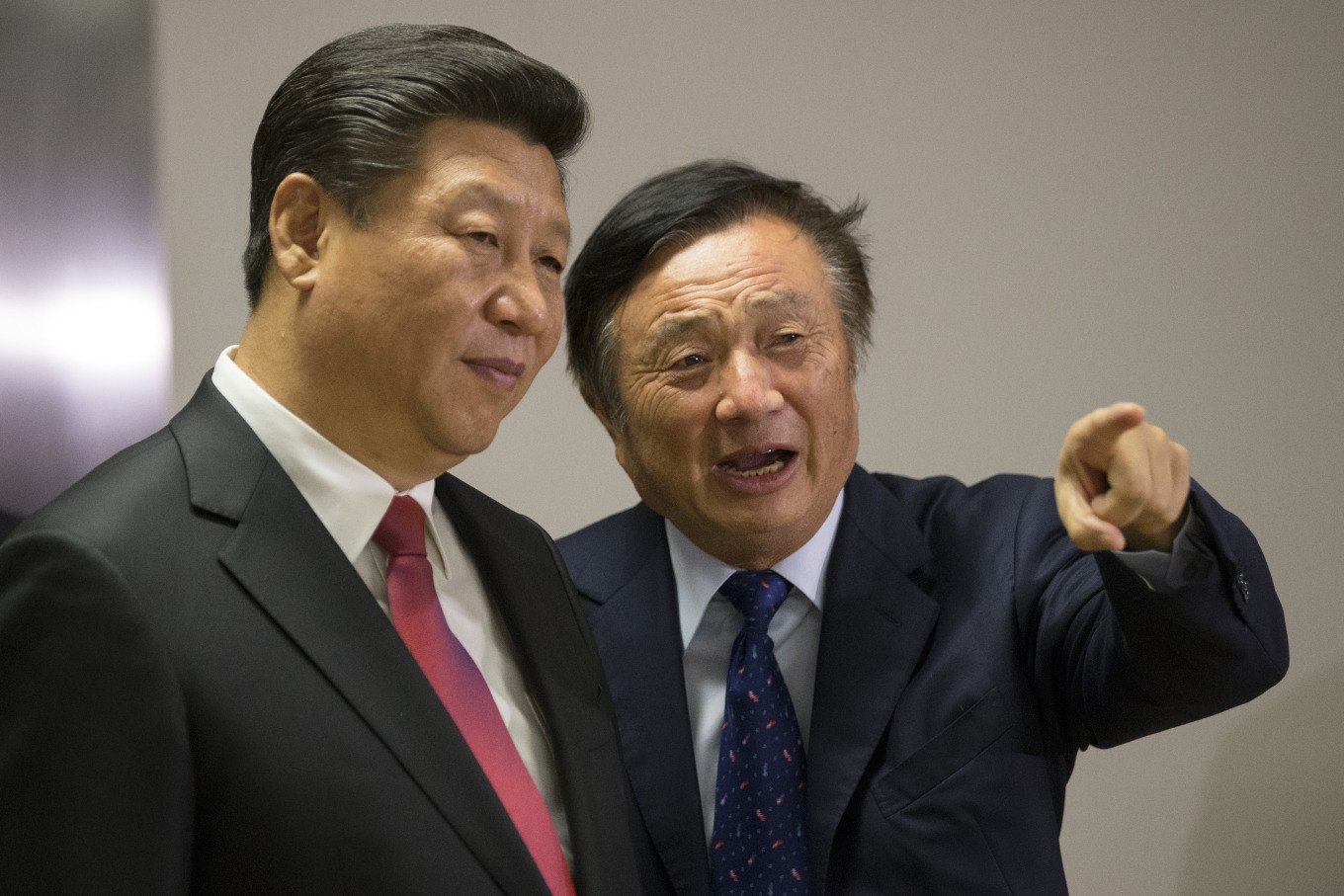
China's President Xi Jinping Visits Huawei Technologies
Xi Jinping, left, and Ren Zhengfei in 2015.
Photographer: Matthew Lloyd/Pool/Bloomberg
A bit of a news scoop there, in that it appears a trove of CVs which link quite a few Huawei employees to the Chinese military have been uncovered. Any western intelligence source was always quick to point out the high likelihood of China's largest communications giant Huawei having been enlisted to do work on behalf of Beijing. It was made abundantly clear by President Xi Jinping that the government has every expectation that all Chinese individuals and corporations alike have an obligation to convey intelligence to their government.

That expectation extends most particularly to Chinese living abroad. Chinese students in their tens of thousands studying at Western universities are tasked by a special branch of the Chinese Communist Party that rules China, to render to them or to the Chinese diplomatic corps abroad at their many foreign missions anything that could be useful to China, apart from doing their utmost when the occasion arises to defend their country from criticism and suspicion.

Huawei, as a telecommunications giant with a global reach has diligently insinuated itself and its communications expertise in the G5 upgrade programs of many countries. That following on their years of integration with other nations' telecommunications networks. That infiltration enabling it to electronically monitor other nations' politics, military, corporate interests and technology helps give China a leg up in intelligence as well as furthering its own corporate and research and development interests.

Now, the trove of data that has been unearthed linked to a search of online data, has released vital information of great interest to the very countries whom Beijing and Huawei are attempting to persuade that there are no suspected intelligence links between the Chinese government and its largest communications giant that should leave doubt in the minds of foreign nations that they would be vulnerable to cybertheft and potential threats of Internet interference, by allowing Huawei entry to their databases.
uncaptioned
Instances of Huawei-employee links with the Peoples Liberation Army now having been unearthed arms uncertain Western governments with the certain knowledge that agreeing to retain Huawei services would indeed be inviting the possibility of Chinese espionage. That sensitive national programs and projects could be exposed to probing foreign intelligence, placing them at an advantage over the nation's security.

The irony is that the discovery was made when a university search for plagiarism was launched. The revelatory site linked to the CVs was stumbled upon, as it were. Plagiarism? That's China's forte! Its predatory data theft practises have been deplored for decades. Its never-ending search for proprietary formulae are legendary. Its disregard of copyright law viewed as just another impediment to China's progress.

Thousands of papers appear to have been co-published with cooperation between Huawei researchers and those of the Peoples Liberation Army. The full extent of their entanglement and cooperation is speculative but appears logically evident. "Far closer links" appear apparent between the telecommunications company and cyber agencies of the Chinese military. Some Huawei staff -- including its founder -- have been employed as agents in the Chinese Ministry of State Security.

Others worked on joint projects with the PLA, were educated at the country's leading military academy and appear to have worked at a military unit known to have launched cyber attacks on American corporations as well as those of other nations. From just the handful of CVs found on that single source it is now known that a number of staff with Huawei had graduated from the PlA's Information Engineering University representing a military academy known for its "information warfare research".

With this fresh data and its assumed reliability, what government of which country would now be willing to undertake the potential risk of enabling the telecommunications giant to remain a fixture for further intense integration into their national communications grid? A month ago British Prime Minister Theresa May gave permission to Huawei to build parts of the British network national security concerns aside.

Now that Christopher Balding, associate professor at the Fulbright University Vietnam in investigating Huawei's ownership structure uncovered up to 25,000 Huawei employees' CVs, how will that play out?

Recruitment platforms had uploaded the CVs allowing them to appear online and on accessible sites. In collaboration with the Henry Jackson Society, a think-tank based in London, Professor Balding concluded that some one hundred Huawei staff had connections to the Chinese military intelligence agencies; their "backgrounds indicated experience in matters of national security".

There is the example of a Huawei employee whose CV reveals she works for both the telecom giant as a software engineer as well as at the Radar Academy of the Chinese Army. According to Professor Balding, the academy "matches closely her work for Huawei". "We have no cooperation with the military on research. Perhaps we sell them a small amount of civilian equipment. Just how much, I’m not clear on because we don’t regard them as a core customer", said Huawei CEO Ren Zhengfei.

"Huawei is not a military company. Do not think that because the head of Huawei used to serve in the military, then the company that he built is part of the military", cautioned Defense Minister General Wei Fenghe. "[Chinese] universities are quite open to working with the military. If it’s very sensitive, it will be classified. Different projects have different sensitivity levels and sometimes the government will own the IP", explained Wong Kam Fai, a Chinese University of Hong Kong professor.

"It’s possible that there’s a lot of research that people are just not seeing, because some military research is sensitive and classified. In the U.S. they have similar arrangements as well. The U.S. has military grants. There are many sources of funding, including from the military for research", accurately pointed out Professor Wong.

Huawei workers walk together at the end of their workday at the Research and Development campus on April 24, 2019 in Dongguan, China.    Kevin Frayer/Getty Images

Labels: , , , ,

Friday, December 21, 2018

China's Global Empire Outreach

"Stability in cyberspace cannot be achieved if countries engage in irresponsible behaviour that undermines the national security and economic prosperity of other countries."
"These actions by Chinese actors to target intellectual property and sensitive business information present a very real threat to the economic competitiveness of companies in the United States and around the globe."
Secretary of State Mike Pompeo
Homeland Security Secretary Kirstjen Nielsen
Deputy Attorney General Rod Rosenstein with FBI Director Christopher Wray, speaks during a news conference at the Department of Justice in Washington, Thursday. The Justice Department is charging two Chinese citizens with carrying out an extensive hacking campaign to steal data from U.S. companies. (Manuel Balce Ceneta/Associated Press)

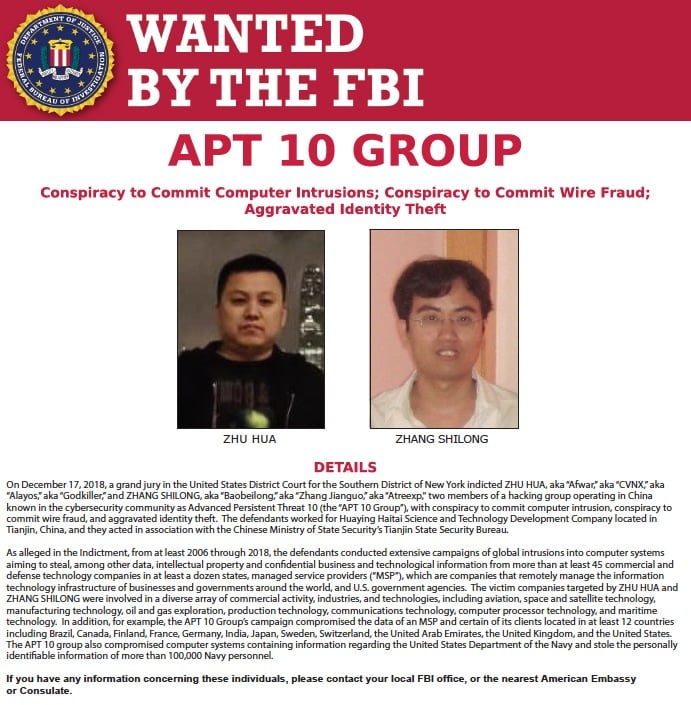
Two Chinese citizens have been charged in the United States when intelligence revealed their extensive role in a data-theft hacking campaign that has taken place over a number of years. U.S. prosecutors allege that Zhu Hua and Zhang Shilong, acting for China's state intelligence agency, pilfered information from a dozen countries they targeted, breaching computers where enterprises involved in banking and telecommunications, to mining and health care, were unaware when vital data was being breached, according to papers filed in U.S. District Court.

Allies of the United States have called China out for its malign acts of industrial espionage. It has always been widely recognized that China has been involved in such internationally illegal acts to benefit its own areas of enterprise to shortcut the time it takes for advances that other countries have made without having to take time and focus themselves to attain like advances in its rush to acquire international status in various types of enterprises as Beijing remains intent on becoming the globe's dominating economic and technological powerbase.

"China's goal, simply put, is to replace the U.S. as the world's leading superpower, and they're using illegal methods to get there."
"The list of victim companies reads like a who's who of the global economy."
FBI director Christopher Wray, United States

"To the best of our knowledge, we do not have reports ... of specific losses, but we are aware of intrusions."
"So the incidents took place, the hacking and compromise took place. Whether there was actually a theft committed or the withdrawal of information or data, that is not information within our domain."
Public Safety Minister Ralph Goodale, Canada
Public Safety Minister Ralph Goodale, shown during an event in Toronto last Friday, says Ottawa isn't aware of any data that was stolen from Canadians. (Frank Gunn/Canadian Press)

On the part of Canada, an admission that its public security is not quite as secure as it would like Canadians and Canadian corporations to believe. And nor does Minister Goodale link these revelations with the detention by China of Canadian citizens; rather as payback for Canadian justice authorities detaining for extradition the chief financial officer of Huawei Technologies, a worldwide technology empire gathering data on behalf of the Chinese state; no link?

"They are two quite separate incidents. As I've mentioned, the information that we're dealing with today in terms of cyber security was first detected going back to 2016", he elaborated. Only to 2016? Doubt it. "Spearphishing", tricking computer users at business and government offices to open malware-infested emails to allow access to login and password details has been around a long, long time, and similarly, Chinese cyber-espionage has, as well...connect...the...dots.

The two men are linked to a group known as Advanced Persistent Threat 10, out of China. In their pursuit of data they broke into computers serving governments and businesses in at least a dozen countries. Working for Huaying Haital Science and Technology Development Co. in Tianjin, they are accused of linking with the Chinese Ministry of State Security's Tianjin State Security Bureau, providing Chinese intelligence with purloined sensitive business and government data.

"This is outright cheating and theft, and it gives China an unfair advantage at the expense of law-abiding businesses and countries that follow the international rules in return for the privilege of participating in the global economic system", stated U.S. deputy attorney general Rod Rosenstein. The APT10 Group gained unauthorized access to computers of an unnamed service provider with offices in New York state, then compromised data of the provider and clients in Canada, the U.S., Britain, Brazil, Finland, France, Germany, India, Japan, Sweden, Switzerland, and the U.A.E.

Screenshot of Wanted by the FBI poster for Zhu Hua and Zhang Shilong, two members of a hacking group operating in China known in the cybersecurity community as Advanced Persistent Threat 10 (the APT 10 Group).

Labels: , , ,

Friday, March 10, 2017

Multi Warfare : Russia/NATO

"We definitely have to get it right. We have to go to Latvia with a strong defensive posture. First and foremost, we recognize cyber as a domain of warfare ... We are constantly under attack."
"We will educate our troops about vulnerabilities, because Russia is quite adept in the cyber and information warfare domains."
Brig.-Gen.Paul Rutherford, commander, Joint Forces Cyber Component, Canada

"When you see how quickly it happened with the Germans, that shows us what to expect. Are they going to try? Yes they will. We fully expect such actions by the Russians."
"[In Latvia Canada's military sees a different arena than Afghanistan] where we went in with a war mindset. We will communicate facts and the truth."
"We will provide clear and transparent information. If we see inaccurate facts, we will take action."
Lt.Col.Richard Perrault, Canadian military
Canadian and Latvian soldiers in Kadaga, Latvia, during Operation Reassurance in September 2015.
Canadian and Latvian soldiers in Kadaga, Latvia, during Operation Reassurance in September 2015. Photo Cpl. Nathan
MoultonDND
rlier this year, Canada, Germany, the United Kingdom and the United States each committed to lead a multinational battalion in the eastern part of the Alliance. I am proud to announce that many other Allies confirmed contributions to these forces today. Albania, Italy, Poland and Slovenia will contribute to the Canadian-led battalion in Latvia. Belgium, Croatia, France, Luxembourg, Netherlands, and Norway will join the German-led battalion in Lithuania. Denmark and France will contribute to the UK-led battalion in Estonia. And Romania and the United Kingdom will join the U.S.-led battalion in Poland,

Read more on UNIAN: https://www.unian.info/politics/1777512-nato-chief-four-robust-battle-groups-to-be-deployed-in-the-baltics-poland.html


Canada's pledged its support of NATO's request of its members to prepare to send in battle groups and equipment to the Baltics to mount an impressive deterrence presence and to help train their military personnel to the level seen to be required to convince Moscow that any plans to harass, cross borders or send in troops to Latvia, Estonia, Lithuania and Poland is not a particularly good idea and will not be tolerated. Germany, Britain and the United States have volunteered their services in the NATO campaign.

Just as Canada is preparing to forward its 450 Canadian Forces troops as a warning to Russia to respect national borders, Russia in turn is expected to let loose its efforts to disseminate false information for the purpose of creating a distance of suspicion between Latvia and the Canadian troops in their midst. The Kremlin's well organized "fake news" campaigns and cyber attacks have become commonplace, striking various countries with their signature propaganda through information warfare.

Last month when the German military took up their stations in Lithuania, stories began circulating that German troops were on a rampage, raping Lithuanian women. And this type of campaign is precisely what Canadian troops are being warned to be prepared for, and the reason why Canadian "cyber warriors" are being deployed alongside regular troops; to be able to respond to the anticipated dezinformatsiya set to occur in Latvia; blatant attempts to place a wedge between the host country and its defenders.

The cyber warriors' first line of defence will be forestalling efforts by Russian actors to hack into Canadian and Latvian military computer networks, along with turning aside the "fake news" campaign. Russia is not quite as busy in Syria as it has been for the past year and a half, having succeeded in giving Syria's president Bashar al-Assad a lifeline and restoration of some of his territory. The Kremlin's and Vladimir Putin's attention is expected to turn back once again to east Europe.

Former Soviet satellites were assimilated into the USSR sphere and ethnic Russians were tasked with colonizing those satellites. Now, with their sovereignty restored, those ethnic Russians living for generations in former satellite countries represent the foot in the door for Vladimir Putin who uses their presence as the reason Russia is concerned -- for their welfare and dignified treatment.

Should he and the Kremlin deduce that ethnic Russians are being marginalized, as was claimed in Georgia and Ukraine, Russia claims this reason enough for intervention.

Estonia experienced the trauma of having its Internet network shut down by a Russian cyberattack. And Ukraine's electrical grid in the east was interfered with in an effort through a Russian cyberattack to shut it down. Russian interference through cyberhacking in countries of the West is well enough known. Vladimir Putin does not take slights lightly and looks for vengeance as pay-back for Europe and North America interfering in its near-abroad and Russia's entitlement to harass its neighbours.

The Russian involvement in Syria's conflict with its rebellious Sunni citizens created tens of thousands of additional refugees fleeing the conflict and the aerial bombardments that succeeded in giving Syria breathing room from certain collapse. That Europe is being inundated by refugees eager to escape the violent Syrian oppression of its own citizens pleases Mr. Putin mightily. European budgets can be strained in attempting to cope with the refugee influx, just as the Russian economy has suffered in part as a result of the EU-imposed sanctions resulting from the annexation of Crimea.

Canada is readying itself for attempts at destabilization, courtesy of Moscow. The Russian revelation that the Canadian Minister of Foreign Affair's grandfather was a Ukrainian supporter of the Nazi regime in German-occupied Poland, operating a newspaper out of a confiscated Jewish newspaper press, where anti-Semitic propaganda and pro-Nazi news was disseminated certainly represents some manner of malice aforethought, particularly since the revelation is not "false news" but reality revealed of historical antecedents.


An Estonian soldier wears camouflage makeup during the multinational military exercise 'Iron Sword 16' near Vilnius, Lithuania, in December. Canadian troops will deploy into Latvia, a neighbouring Baltic state, in June as part of NATO's deterrence force.
An Estonian soldier wears camouflage makeup during the multinational military exercise 'Iron Sword 16' near Vilnius, Lithuania, in December. Canadian troops will deploy into Latvia, a neighbouring Baltic state, in June as part of NATO's deterrence force. (Olivier Hoslet/EPA)

The Lithuanian ambassador to the United States has revealed that broadcasts from Russia casting aspersions on NATO had the purpose of turning Lithuanians against the NATO alliance. Russian minorities living in the Baltic states are able to tune in to television stations emanating out of Moscow. Their loyalties appear to lie with Russia, not with the nations in which they are citizens. And the situation that Ukraine faced with ethnic Russian Ukrainians violently seeking secession is a prospect that grips the Baltics as well.

The examples of Russian cyber assaults aiming to shut down banks and media in Estonia, along with its Parliament, and a similar assault more recently in Ukraine, informs and reminds all the near-abroad nations of their own vulnerabilities. Additionally, Moscow's interference in upcoming elections from Norway to Italy, echo what it is claimed to have done in the United States more recently.

"Hybrid warfare, [Cyberspace] opens wide asymmetrical possibilities for reducing the fighting potential of the enemy", wrote Valeri Gerasimov, Russia's top general, four years ago in a published article. As well, an announcement was recently made that a new military unit for the purpose of conducting "information operations" was in the creation stages, according to Russian Defence Minister Sergei Shoigu.

SHELL-RUSSIA/
It is unclear how Moscow and Russian President Vladimir Putin will respond to the deployment of Canadian troops in Latvia. (Reuters)

Labels: , , , , ,

Tuesday, November 22, 2016

Spycraft's Ubiquity

"Russia and China, in particular, continue to target Canada's classified information and advanced technology, as well as government officials and systems."
Canadian Security Intelligence Service briefing note
A sign for the Canadian Security Intelligence Service building is shown in Ottawa, May 14, 2013.
A sign for the Canadian Security Intelligence Service building is shown in Ottawa.  Photo Credit: PC / Sean Kilpatrick/Canadian Press

"Canada remains a target for the traditional espionage activities of a number of foreign states, which continue to gather political, economic and military information in Canada through clandestine means."
"States and other entities abroad have interests -- political, economic and territorial -- and will pursue those interests by a variety of means. Some will do so through espionage and interference, targeting the Canadian economy, strategic interests and assets, societal institutions and members of the diaspora."
Tahera Mufti, spokeswoman, CSIS

"Information gathering is a vital component of national security of any state."
"[The U.S. National Security Agency's capabilities are] unmatched in imposing surveillance on a global scale [through electronic devices and eavesdropping even on close allies]."
Kirill Kalinin, spokesman, Russian Embassy in Canada

"This position is firm [Beijing opposes all forms of cyberattacks and commercial espionage]."
"The Chinese government will neither encourage companies to carry out cybertheft for commercial secrets, nor take part in such activities."
Hua Chunying, foreign ministry spokeswoman, China

Putting the lie to denials that foreign intelligence agencies attempt to use any means at their disposal for intelligence-gathering, in Canada three years ago Canadian navy officer Jeffrey Delisle was arrested and charged with passing classified intelligence to Russia for cash for a period of over four years. His reason for doing so was not political or ideological, but purely venal; he said he needed the money to pay his debts. Russia wouldn't care what he needed the money for.
Canadian accused of trying to pass sensitive information to China

For his troubles, he is no longer concerned about paying his debts. He pleaded guilty to the charges brought against him and was sentenced to 20 years in prison for handling classified intelligence over to Russian agents. It was not only secret Canadian documents that found their way into Moscow's hands, but documents with a far wider sweep that might have had far-reaching consequences. This was material that was shared by the Five Eyes Intelligence community of nations.

Five Eyes is comprised of other Western countries that share Canada's values and commitments. The Five Eyes intelligence sharing network includes the United States, United Kingdom, Australia, New Zealand, and of course, Canada. The revelation that a Canadian spy handed over shared documents constituted a true embarrassment for Canada, along with the fear that much more than Canadian interests would be compromised.

But then it took someone like Edward Snowden to release damning data of immense proportions in the secret files of the American National Security Agency. A far larger, damaging embarrassment. And the irony is that this man, who felt entitled to betray his country on the "need to know" theorem that the agency was spying on its own population as well as its collegial political partners, and they should know all about it has eluded penalty.

Oh, the truly ironic part is that he found haven in Russia which generously permitted him to remain there, in safety from American prosecution of a man perceived to be a traitor by many, a hero by many more. The irritating and potentially dangerous issue of cyberspying and of suborning the patriotism and trustworthiness of foreign nationals does constitute a threat to national security.

A highly sophisticated intrusion into the network of the National Research Council in Ottawa, was traced by the federal government back to state-sponsored sources in China within the Chinese military. The upshot was that the information technology system of the NRC was forced to shut down for an extended period until it could be reliably secured, even while China vehemently denied charges it was involved.

Russia has used cyberattacks to shut down the entire Internet system in Estonia, interfered through the same means in Ukraine cutting off electricity to a large geographic swathe, and was furious when Latvia cut off Russian Internet connection, to put a halt to Russian propaganda. That's on its near-abroad. It went a lot further when it interfered with the Internet website of the U.S. Democratic Party during the recent U.S election campaign, releasing information inimical to Hillary Clinton's election for the presidency through WikiLeaks. Denials ensued.

All this, at a time when the world, and Canada as well, is immersed in the problems of threatened violence by Islamist terrorists and jihadist extremists setting the world on edge. Espionage from that source represents yet another worrying dilemma. In this era post-Cold War, relationships between countries are continuing to undergo freeze-and-thaw cycles. And into that melange of restoring relations and alternately placing them on ice, espionage continues its traditional role.

Zhang Junsai, China's ambassador to Canada, poses at his Ottawa residence. (Dave Chan FOR THE GLOBE AND MAIL)
China’s ambassador to Canada said that Canadians’ concerns over spying are groundless and stem from a “cold war mentality.”  The Globe and Mail

"I can assure you that our companies working in other countries, they are strictly doing business according to the local law."
"There's all this talk about so-called security concerns, but so far, all groundless."
Zhang Junsai, Chinese Ambassador to Canada

Labels: , , , ,

Saturday, November 07, 2015

The Internet as Weapon of Mass Destruction

"[The electric grid] is extremely vulnerable to disruption by a cyber or other attack. Timely reconstruction of the grid following a carefully targeted attack ... would be impossible [and could] result in widespread outages for at least months to two years or more, depending on the nature of the attack."
Confidential memo to U.S. House Committee on Energy and Commerce *

"A destructive cyber-terrorist attack could virtually paralyze the nation. [It] could shut down the power grid across large parts of the country [resulting in] a cyber-Pearl Harbor".
Former Defence Secretary Leon Panetta, 2012 speech

"...Our enemies are also seeking the ability to sabotage our power grid."
2013 State of the Union address, President Barack Obama

"We are not a pre-emptive democracy. We are a reactive one. Rare are the occasions on which we act in anticipation of a potential problem."
Tom Ridge, Homeland Security
power gridFlicker

*This was the joint conclusion and warning issued by two American former secretaries of defence, two former directors of central intelligence and two former national security advisers; that the United States, hugely reliant on electronic communications transmission, energy lines, manufacturing, shipping, and all that a modern economy uses an electrical grid for, in its communications and production capacity, is hugely vulnerable to sneak cyber-attack.

In modern warfare, it is not only armies marching to belligerently meet one another across a line demarcating where one sovereign state leaves off and the other begins, in the aeons-old intractability of human nature to broaden national territorial imperatives, but other methods by which a population can be impacted, through mass social network propaganda, incitement for interior sympathizers to rise against the host government, and the capacity to neutralize another country's means of conducting commerce and the provision of fundamental services.

The world has already seen what pervasive hacking attempts by organized groups of cyber-terrorists can accomplish, and successful efforts at purloining trade-production and scientific blueprints, as well as surreptitiously planting worms to successfully alter and delay or defeat a nation's most secret computer-driven productions leading to nuclear weapons production act as examples.

We have a fairly good idea, on a more superficial level how a sudden loss of power affects tens of millions of people, their government, its agencies, the social welfare network, municipalities and the people living in them by the example of the 2003 North American power outage impacting on both Canada and the United States when it took up to two days to restore power in urban areas and a week in remote areas when ten million Ontarians and 45 million Americans struggled without electricity.

On that occasion it wasn't malware and the creepily malign interference manifested on a broad scale through the work of foreign hackers in service to an alien entity determined to wreak havoc. It was the result of a software bug in a control room alarm system in Ohio. And because there was no alarm, operators did not redistribute power once overloaded transmission lines came in contact with foliage triggering a malfunction in the control software. A local problem morphed into a massive blackout.

Russia and China, according to military intelligence, have succeeded in embedding cyber-capabilities within the American electrical systems with the capacity to take down parts of a grid. It is believed that Iran has similar capabilities, similar to those of North Korea, working as well toward a goal of accomplishing a North American power takedown.

A former chief scientist at the National Security Agency in the United States has expressed fears that groups like the Islamic State may shortly have at their disposal experts to assemble the equipment required, available on the open market, to present their own cyberwarfare threat. Former secretary of homeland security Janet Napolitano thought chances of an aggressor knocking out a power grid to be "Very high -- 80 percent, 90 percent."

(On the other hand, this is the same superbly-informed intelligence individual tasked with protecting the United States from terrorist penetration from abroad who claimed that the 9/11 attackers all reached the United States to accomplish their mission, through the border with Canada.) Jeh Johnson, currently Homeland Security secretary is more discreet, keeping his opinion to himself on this matter.
"The US Government has set up numerous efforts to help protect the US from cyberattacks. With regard to the grid specifically, there is the Department of Energy’s Cybersecurity Risk Information Sharing Program (CRISP) and the Department of Homeland Security’s National Cybersecurity and Communications Integration Center (NCCIC) programs in which utilities voluntarily share information that allows patterns and methods of potential attackers to be identified and securely shared."
Scientific American: Michael McElfresh
Better keep those emergency supplies handy; food and water, prescribed medicines, cash, flashlights, extra batteries, battery-powered radio. And hope for the best-case scenario. Remember how effective American intelligence was on pre-warning of 9/ll.

Labels: , ,

Thursday, July 09, 2015

As Coincidences Go ....

"In my business, you don't love coincidences."
"But it does appear that there is not a cyber-intrusion involved."
James Comey, FBI director

"The problem is humans can't keep up with all the technology they have created. It's becoming unmanageable by the human brain."
"Our best hope may be that computers eventually will become smart enough to maintain themselves."
"You should be resilient enough to quickly recover from the outage within a half-hour, if not a few minutes."
Avivah Litan, analyst, Gartner Inc.

"Instead of just letting the technology rush ahead of us and then trying to catch up in terms of privacy and security, we should be baking those things into the systems from the start. We need to be a little smarter on how we are coding things."
Lillian Ablon, technology researcher, Rand Corp. 

So, what's all the fuss? Oh, right, the puzzle that the New York stock exchange suddenly suspended trading yesterday for hours, with no explanation immediately forthcoming. And then it was revealed it was the result of a "technical problem". Which took three and a half hours to solve. Yesterday was quite the day, in fact, since United Airlines also suspended all of its flights for almost two hours. There were 800 flight delays and 60 cancellations.

And while this was happening, the Wall Street Journal's WSJ.com website experienced "technical difficulties", as well. But rest assured, the techies that set up all these programs did eventually discover what the problems were and overcame them. Government sources were quick to deny that none of this, the biggest airline in the United States, the oldest stock exchange, the most prominent business newspaper did not fail temporarily as a result of sabotage.

But resulting from technical glitches. Which took awhile to come to grips with. But eventually human intelligence and ingenuity solved the problems. Even while experts warn that technologies that are unfinished are being rushed into use without ensuring that they're capable of withstanding the use they're put to, and not breaking down in mid-use. It's costly, it's destabilizing, it's demoralizing. Human error leading to technological breakdown.

The breakdowns and the coincidence of their confluence, say the experts, should be viewed as a wake-up call to companies and the engineers they employ that their networks should be programmed correctly to begin with with the intention uppermost in mind that glitches and malfunctions are discovered before the programs are released for confident use. And to prevent, of course, malicious outsiders succeeding in their malware attacks.

And just incidentally, there was yet another breach of confidential "sensitive information" relating to 21.5-million individuals whose data was obtained by hackers who intruded last year into the federal Office of Personnel Management's computer networks. It was related to a previous breach which had compromised the personnel data of 4.2-million federal employees. Most unfortunate. Proving the point that secure software programs are a requisite.

And broaching the possibility that perhaps the three breakdowns were not just technical breakdowns but conceivably somewhat more than simply that. In any event, government officials aren't telling.

FILE - This Aug. 9, 2011 file photo shows a Wall Street street sign near the New York Stock Exchange, in New York. U.S. stock indexes are opening mostly higher Monday, Dec. 22, 2014, as the market builds on its big gains from last week. (AP Photo/Mark Lennihan, File)
Wall Street street sign near the New York Stock Exchange, in New York.

Labels: , , ,

Saturday, December 20, 2014

Sony Kaput: Cyber Terrorist North Korea, Take a Bow

"Stop immediately showing the movie of terrorism."
"The world will be full of fear. We will clearly show ... how bitter fate those who seek fun in terror should be doomed to."
"The world will be full of fear. Remember the 11th of September 2011."
"Whatever comes in the coming days is called by the greed of Sony Pictures Entertainment. All the world will denounce the SONY."
The Guardians of Peace, North Korea
Workers remove a billboard ad for "The Interview" in Hollywood on Thursday, a day after Sony announced it was canceling the movie's Christmas release due to a threat from a group of hackers that U.S. investigators have linked to North Korea.
( Veronique Dupont / AFP/Getty Images / December 18, 2014 )   Workers remove a billboard ad for "The Interview" in Hollywood on Thursday, a day after Sony announced it was canceling the movie's Christmas release due to a threat from a group of hackers that U.S. investigators have linked to North Korea.

Whoever might have linked 'guardians of peace' with North Korea? But there you have it. The psychopaths in North Korea are horribly misunderstood. By launching high-powered rockets, and testing nuclear weapons they are doing their utmost to sue for peace world wide. Peace can be had, a precious resource that we understand death achieves. And North Korea offers to deliver peace to those who yearn for death; they offer the means and the mode.

If that appears a contorted passage of thought, do not be overly concerned. Human brains and the cerebral power they bring to understand the subtlety of 'sophisticated' messaging, do have their limitations, when one is not of the elite cabale of North Korean leaders, led by the redoubtable
Kim Jong-un whose brilliance as a film critic cannot be overly stressed.

Here's betting that the West thought that Islamists -- and the hordes of ignorant, ravening Muslims whom they incite to violence at the very thought of anything involved in Islam being degraded by some cartoonist's funny-pen chronicling of the absurdity of a religion celebrating itself as that of peace, slaughtering even its own adherents in its never-ending campaign of conquest -- had lunatic bullying techniques all wrapped up.

Seems they're alert and carefully watching North Korea to learn the techniques used by the 'sophisticated' among the world's psychopathic states. And here we thought the suspected Israeli-U.S. coalition was so brilliantly innovative tying up Iran's spinning centrifuges with StuxNet. Amateurs, clearly, in contrast to North Korea's 'sophisticated' experts in extortionate exploitation of burrowing worms set to explode and disintegrate vital corporate data.

Revolution Muslim in 2010 made a stab at malicious threats at Comedy Central, convincing them to proceed carefully on their Muhammad episode, taking care not to reference Muhammad unduly. Fine for beginners. That was a single episode, Muhammad-washed; this is an entire network down for two days before the coup de grace was even delivered.

"The IT  department has absolutely no idea what him them", said a Sony insider, (ask the Japanese security experts) after the hackers had already been twiddling about the innards of the network for weeks. "Every PC in the company is useless and all of the content files have either been stolen or destroyed or locked away." Gone, by golly: 100 terabyte of sensitive data.

"Wiper malware" destroyed the company's internal systems, its infrastructure melted away.

"It's just business as usual, if the year was 2002. [There are] lots of PAs having to run jump-drives back and forth all over the place, and hand delivering hard copies of files and scripts", a Sony TV staffer stated. It's not fear, but anger that this part of the world exhibits; that a craven surrender to an absurdly costly attack has stumped all those brilliant minds, incapable of dealing with issues that have been long known, but more or less set aside for some future time.

Hello, future time.

Labels: , , , ,

Friday, December 19, 2014

Imperilling American Film Culture - Seriously?

"This is something that's being treated as a serious national security matter. There is evidence to indicate that we have seen destructive activity with malicious intent that was initiated by a sophisticated actor."
"The United States stands squarely on the side of artists and companies that want to express themselves. And we believe that that kind of artistic expression is worthy of expression and is not something that should be subjected to intimidation just because you happen to disagree with the views."
"They [North Korean leaders] would be mindful of the fact that we need a proportional response, and also mindful of the fact that sophisticated actors, when they carry out actions like this, are oftentimes -- not always, but often -- seeking to provoke a response from the United States of America."
"They may believe that a response from us in one fashion or another would be advantageous to them. So we want to be mindful of that."
Josh Earnest, White House press secretary

"Both of us [Rob Lowe and Seth Rogen] have never seen or heard of anything like this."
"Hollywood has done Neville Chamberlain proud today. Wow. Everyone caved. The hackers won. An utter and complete victory for them."
Rob Lowe, Twitter

"We've made progress. But what we just saw with Sony shows a lot more progress needs to be done. That means, by the way, that Congress also needs to take up cyber-security legislation that's been languishing for several years now."
U.S. President Barack Obama
From now on, Hollywood films will have to be Dear Leader-approved.
AP Photo/David Guttenfelder   From now on, Hollywood films will have to be Dear Leader-approved.

Well, now, to characterize North Koreans engaged in any kind of endeavour -- although bullying of one kind or another, whether it is by testing nuclear devices, or shooting off long-range missiles, or threatening a South Korean invasion, or, now, protecting the 'dignity' of their Dear Leader from the outrage of theatre guffaws -- as 'sophisticated', is stretching things a bit. Transforming the proverbial sow's ear to a silk purse of undeserved praise.

There are those who believe that security in corporations, businesses, government offices, is simply not as tight nor as vigilant as present-day realities mean them to be. And that no system is completely and absolutely tight, is a given; there are always areas that have been neglected, overlooked, or not thought of that can be exploited by someone doggedly determined enough to find entrance and spew malice.

And the threats posed by the North Korean group certainly are baleful in their intention. If they wanted to set about proving that they are capable of destroying a company, they certainly succeeded. Making public names, medical records, emails, corporate issues, even the release of not-yet-issued films, all of Sony's computers, servers, its website were fully compromised, and now utterly useless. All its records, its capability of functioning at any level, destroyed.

The hackers calling themselves Guardians of Peace left Sony's infrastructure crippled, whether beyond resuscitation is yet to be seen. In its security department there are "three information security analysts, overseen by three managers, three directors, one executive director and one senior-vice-president"; a covey patterning themselves after the Keystone Kops.

"Stop immediately showing the movie of terrorism", was the demand, and the assent came, abjectly with the withdrawal of the offending comedy, The Interview. A new kind of terrorism, cultural bludgeoning of free speech. Serious films and comedies alike can be made of the U.S. administration, the CIA, the FBI, parodying and holding them up to ridicule, and all is well.

But hold a camera up to the absurdity of a North Korean preening popinjay eager to have the world tremble at his word, and 'sophisticated' actors can engage in cyberespionage and bring the U.S. film industry to its quavering knees.

"The world will be full of fear. We will clearly show ... how bitter fate those who seek fun in terror should be doomed to."
"Whatever comes in the coming days is called by the greed of Sony Pictures Entertainment. All the world will denounce the SONY."
Guardians of the Peace 
Funneee, Ho-Ho.
George Orwell, where are you when we need you most; you'd love the perversion of language and meaning beyond anything you ever imagined back in those days of innocence. Even you might not have foreseen a tin-pot dictator of the pretentious and murderous quality of King Jong-Un as an international film critic of such impeccable and canny sophistication.

Labels: , , , ,

() Follow @rheytah Tweet