Politic?

This is a blog dedicated to a personal interpretation of political news of the day. I attempt to be as knowledgeable as possible before commenting and committing my thoughts to a day's communication.

Tuesday, November 22, 2022

Russia Losing the Battle to Ukraine, And Maliciously Terrorizing Its Population

"This winter will be life-threatening for millions of people in Ukraine."
"Attacks on health and energy infrastructure mean hundreds of hospitals and health care facilities are no longer fully operational, lacking fuel, water and electricity."
Dr. Hans Henri P. Kluge, regional director for Europe, World Health Organization
 
"Russia’s infrastructure bombing campaign has been so severe that in one single attack no less than eight missiles were fired at a thermal power plant in eastern Ukraine to ensure its destruction."
"Despite the severity of the bombing, Ukrainian technicians and engineers have been rushing to repair the damaged infrastructure, often risking their lives amid the threat of further airstrikes."
"Nevertheless, the situation is fast becoming critical."
Aura Sabadus, Atlantic Council 

"The unwillingness of the Ukrainian side to settle the problem, to start negotiations, its refusal to seek common ground — this is their consequence."
Kremlin spokesman Dmitry Peskov
Ukraine needs urgent help to counter Putin’s energy infrastructure attacks

Russia may have suffered losses on the battlefield, but they are still able to carry on their scorched-earth assaults on Ukraine from the east side of the Dnieper River where they are dug in and holding on to the terrain, much reduced from the territory claimed by the Kremlin weeks earlier in its 'annexation' proclamation. Russian bombers have been well practised in shelling civilian enclaves; their work for Bashar al-Assad in Syria stood them in good stead as practise runs.

There too, they bombed hospitals, schools, markets, civilian infrastructure of multiple-family dwellings where Syrian Sunni "terrorists" defied the tyrannical rule of the Assad regime. There was no Russian conscience at that time, and nor is there one at the present time, as the Kremlin feels itself justified in 'saving' Ukraine from its 'neo-Nazi' government as ordered by President Vladimir Putin who enjoys making his own history and whose agenda is the destruction of Ukrainian heritage and culture.

Against all recognized international norms, Russia has embarked on its 'special military operation' to reunite an unwilling Ukraine with the Russian Federation. Moscow's intention was that this would be a swift operation and then it could concentrate similar reunifications with others of its neighbours all of which shudder at the very prospect of once again becoming victims of a sovereign-entitlement Russia deeply engaged in empire restoration. 

Ukrainian authorities are desperately engaged in evacuating civilians from the liberated areas of Kherson and Mykolaiv regions with the prospect of a lack of heat, power and water resulting from Russian shelling producing unlivable conditions for the coming winter. Millions of people, according to the World Health Organization, face a "life-threatening" winter in Ukraine. Residents of the southern regions are being urged to move to safer areas in central and western areas of the country.

The government is providing transportation, accommodations and medical care to evacuees, prioritizing women with children and the elderly. Last month Ukraine's Deputy Prime Minister Iryna Verescchuk urged people living abroad to wait out the winter before returning to Ukraine, as an additional assist in consErving energy. And that residents who have the resources, to leave for several months to save power for hospitals and critical facilities.

Residents are warned of health risks like respiratory and cardiovascular problems with people attempting to warm themselves with the use of charcoal, wood, diesel generators and electrical heaters. Kherson, so recently retaken by Ukraine, has been evaluated for its critical loss of infrastructure destroyed by the Russian military in what could only be an organized, malevolent destruction of civil infrastructure to deliberately make life untenable for Ukrainians.

Ukraine's power grid and allied infrastructure has been continuously pounded and shattered from the air, the cause of widespread blackouts that leave millions of people without electricity, without heat, without water. Four-hour or longer power outages have been scheduled in 15 of Ukraine's 27 regions in a coping strategy of desperation. 

Ukraine's President Volodymyr Zelenskyy has renews\ed his calls for NATO nations and other allies to confer on Russia the label of a terrorist state. The Russian shelling of energy supplies tantamount "to the use of a weapon of mass destruction". "The terrorist state needs to see that they do not stand a chance", he said speaking to NATO's 68th Parliamentary Assembly meeting in Madrid through video conference.
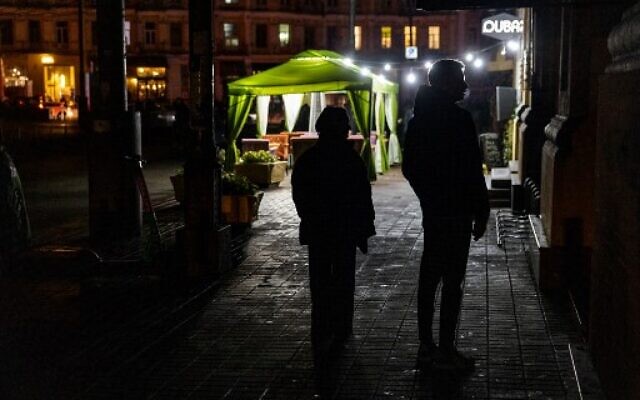
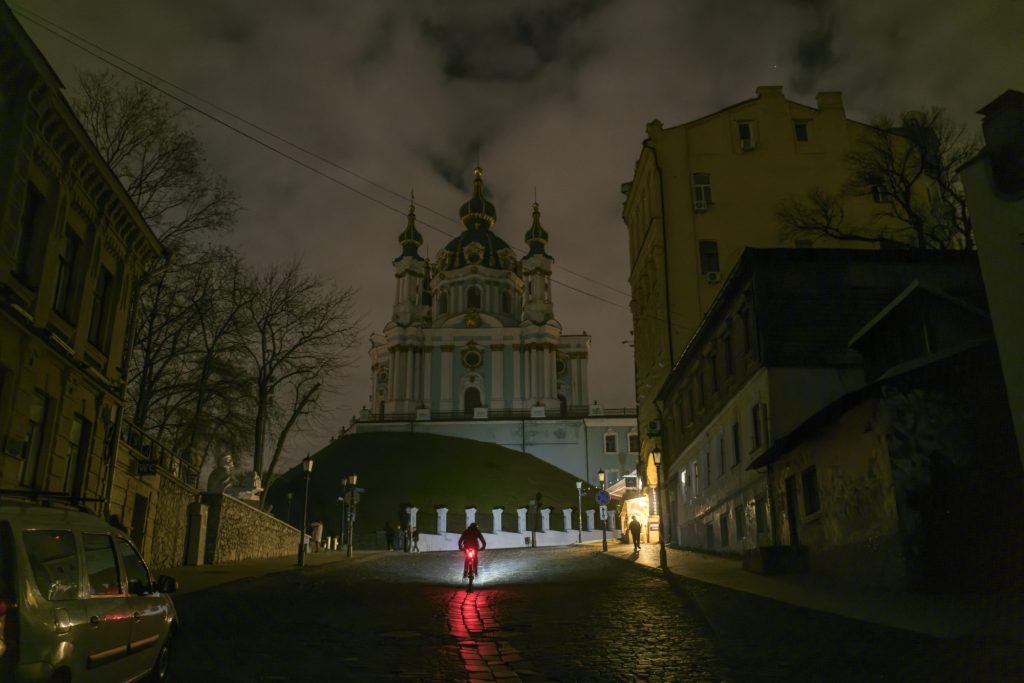
Pedestrians walk down a street during a power cut in downtown Kyiv on November 10, 2022, amid the Russian invasion of Ukraine. (Dimitar Dilkoff/AFP)


Labels: , , , ,

Wednesday, December 01, 2021

The TRIPS Waiver -- In The Round

"Back in March, the president of Tanzania, John Magufuli, died, very likely due to complications from COVID-19. Ironically, the autocratic ruler of the east African nation had been a staunch COVID-19 denier, refusing to vaccinate his country’s population and instead recommending traditional cures and prayer."
"Tanzania is by no means a basket case, nor is it embroiled in civil war, as some other African countries are, and it has a relatively high literacy rate of 77 per cent. Yet, at present, only 1.5 per cent of Tanzanians are fully vaccinated. Their former leader routinely refused offers of vaccine doses for his country, only grudgingly accepting that COVID-19 was a reality shortly before his own death."
"No sensible observer would say that Tanzania’s low vaccination rate is due to “global vaccine inequity,” yet many advocates for global social justice would have you believe that the large disparity in vaccination rates around the world is driven by hoarding in the global north, thus making doses unavailable in the global south. The Tanzania case and others like it disprove this simplistic narrative."
Rupa Subramanya, National Post
A health-care worker administers the Johnson & Johnson vaccine to a woman in Soweto, South Africa, on Nov. 1.
"[The patent waiver would remove one barrier to] more companies being able to produce more vaccine doses in different parts of the world which should lead to greater availability of doses and greater access to them."
"All along, we and many other public health experts have been saying that it is absolutely essential that the world scales out access to COVID vaccine."
"[Both because it is the] morally correct thing to do [and because when it comes to public health] we know that vaccinating people helps to reduce transmission, and that should decrease the chances of the variants emerging from an unvaccinated unprotected population."
Jason Nickerson, humanitarian adviser to Canada, Doctors Without Borders
Pic:getty/olivierlemoal
Getty, OlivierLemoal

The World Health Organization is fond of excoriating the wealthy nations of the world for its selfish behaviour in focusing on inoculating their populations against the SARS-CoV-2 virus, insisting that the stock of vaccines available must be shared. The sharing program, COVAX, set up by the WHO as a method of equalization to be administered by the UN health body accepts donations from wealthy countries both in cash and kind. It also permits those countries to draw from its store of vaccines when needed, even while what it stockpiles is meant to be distributed among the less-advantaged nations of the world.

WHO director-general Tedros Adhanom Ghebreyesus has nagged first-world countries to forestall administering third, or 'booster' doses to address the issue of waning vaccine potency over time, in favour of sending those 'extra' doses to Africa and India. Now that a problematical COVID strain has been identified in South Africa that is rapidly spreading around the world, given its high transmissibility rate, and as-yet unknown virulence, the world community is anxiously awaiting word on what its outcome may spell.
 
After a recent meeting of the World Trade Organization it announced "members expressed unanimous support for maintaining the momentum of the discussions on a common intellectual property response to COVID", referring to a proposal by India and South Africa requesting a patent waiver for COVID vaccines to enable them to produce the vaccines to serve their public, bypassing the pharmaceutical companies' distribution and sales in reflection of a formula they created, patented, and have financially gained from.

In Canada, South African High Commissioner Sibongiseni Diamini-Mntambo spoke to The Canadian Press, stating that the Omicron variant emerged in South Africa as a direct result of vaccine inequality, emphasizing that in South Africa, less than a quarter of the population is fully vaccinated. Any who fail to support a patent waiver, she averred, would "rather protect the profits of pharmaceutical companies than help in the global battle against the pandemic".

"I call on the nations gathering next week for the World Trade Organization ministerial meeting to meet the U.S. challenge to waive intellectual property protections for COVID vaccines, so these vaccines can be manufactured globally", U.S. President Joe Biden said prior to the WTO meeting. The Council for Trade-Related Aspects of Intellectual Property Rights took on the issue. "Members expressed unanimous support for maintaining the momentum of the discussions on a common intellectual property (IP) response to COVID-19".

"[Delegations are] committed to continue engaging in various configurations in the coming weeks to try and harvest any outcome that may still be possible." 
 
In the Canadian House of Commons, a letter was circulated signed by Members of Parliament representing all parties; an open letter calling on support for the waiver: "Opponents of the waiver proposal argue that patent monopolies are necessary to allow firms to recover their investments in research and development. However, given that COVID-19 vaccine development was primarily financed through public investment and advanced market commitments, we strongly believe this justification does not apply."
 
According to the details examined, appraised and published by Rupa Subramanya, vaccine hesitation among populations, alongside denial of COVID threats manifest as one of the reasons for low vaccination rates in India and Africa. Where South Africa, the epicentre of the Omicron variant had a stockpile of vaccine doses it was unable to administer since vaccine hesitancy resulted in a slow rollout. At that juncture, South Africa postponed delivery of new Johnson & Jonson and Pfizer vaccines in a country where distrust of vaccines is nothing new.
 
She points out that Europe, particularly Austria, Germany and Switzerland are struggling with a fourth wave that has devastated their populations and their hospitals' ability to cope. Since the advent of vaccines, Austria has distinguished itself for, out of desperation, being the first developed country to fully lock down. Those three countries are among the wealthiest in the world and though they possess more than ample vaccine doses, they are also reflective of a high degree of vaccine hesitancy among their populations, resulting in low vaccination rates.
 
Not vaccine inequity, but the results of vaccine hesitancy, a situation reflective of that which pertains to the poor countries where the West is being informed their performance in protection of their populations is one of selfish disregard for the well-being of others on the planet without their wealth and accessibility to vaccines.  Two days ago it was announced that the White House spokesperson revealed that South Africa turned down an offer by the US to provide it with additional COVID-19 vaccines.
 
jen psaki
White House Press Secretary Jen Psaki speaks during a daily news briefing at the James S. Brady Press Briefing Room of the White House November 19, 2021.
Alex Wong/Getty Images


Labels: , , , , , ,

Thursday, February 04, 2021

Canada's Gross Mismanagement of Vaccine Procurement, Distribution and Inoculation

"We've been clear from the start. Canada is strongly determined to vaccinate Canadians while making sure that the rest of the world isn't getting left behind." 
"Our  participation into COVAX is a concrete example of that."
"At this point in time, the idea was always with COVAX that you would have developed countries and developing countries participate so that you would have global buy-in and support for the process." 
International Development Minister Karina Gould

"The COVAX vaccines were a way the developed countries, like Canada, were helping poorer countries have access to vaccines."
"The very fact that Canada is the only G7 country asking the COVAX consortium for vaccines is a demonstration that we have no plan, and Canadians need vaccines to get the country working to secure our future."
"It’s hard for me to divorce the inaction of the government over the last 10 months with what I would do today. We would not be in this position today."
Conservative Leader Erin O’Toole
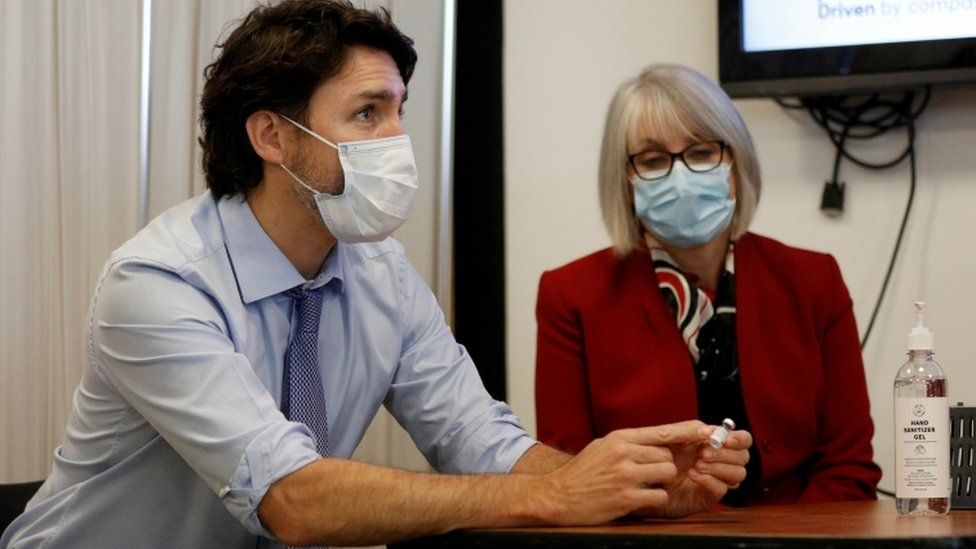
Canada's Prime Minister Justin Trudeau holds an empty Covid-19 vaccine vial
Canada's Prime Minister Justin Trudeau has faced pressure to roll out vaccines faster, after delays    Reuters

The World Health Organization, in a bid to ensure that underdeveloped nations of the world not be left behind while their wealthier counterparts received life-saving vaccines against COVID-19, arranged a global pool to assist in the supply of vaccines to poorer countries unable to afford protection by procuring their own vaccines for their populations. The Liberal government of Prime Minister Justin Trudeau is nothing if not prepared at all times to leap into a project with overtones of doing good, and virtue signalling compels the man to announce such a commitment to a universal do-good cause.

Accordingly, among other announcements he is so fond of promulgating to ensure that Canadians are aware that their government is hard at work on their behalf while at the same time not neglecting the obligation to scatter the fairy dust of good works elsewhere in the world, news of hundreds of millions being donated to such charitable good works enables the media to gush over the compelling news of Canadian charity, making Canadians proud of their collective wisdom and caring. 
 
Canada's investment in the COVAX pool under the auspices of the WHO and the Global Alliance for Vaccines and Immunizations (Gavi) represents a vote-winner for Trudeau at the next election.

Particularly when tallied atop this government's unquestioned expediting of taxpayers' lavish funding of financial aid during the COVID epidemic to Canadians in dire economic need. A need no Canadians not requiring government assistance find fault with, only the sloppy manner in which it has been administered so that people with robust incomes intact, teens, and others who shouldn't qualify have received payments upon application, which process had deliberately loose registration guidelines.

Like most things this government initiates and/or involves itself with, there are jarring realities involved serving to diminish the 'good' the government accomplishes and few things illustrate that more shockingly than the revelation that Canada has requested allocations of millions of vaccine doses through Gavi, a source meant to buy vaccines for poor nations, 92 low- and middle-income nations unable to afford purchasing of vaccines on their own.
 
The Advanced Market Commitment facility through COVAX fulfills that role. Canada made a contribution of $440 million to the COVAX fund, half earmarked to secure doses for itself. The fact of this matter is that Canada's current government decided to place its vaccine eggs in the wrong basket; an agreement with China to take part in research toward a COVID vaccine and share in its trials and production. Which fell through when Beijing decided to stop the export of its military-research-linked CanSino vaccine to Canada, permitting the vaccine to be shipped abroad elsewhere.
 
The investment Canada made in the CanSino vaccine was misdirected; those eggs produced no benefit for Canada, and only once that realization sunk in did the government hastily reach out to other pharmaceutical companies in the U.S. and Britain to sign procurement contracts, at a date much later than other countries in the G7 had seen fit to do, some of whom have their own vaccine-producing installations in place, which Canada did not.
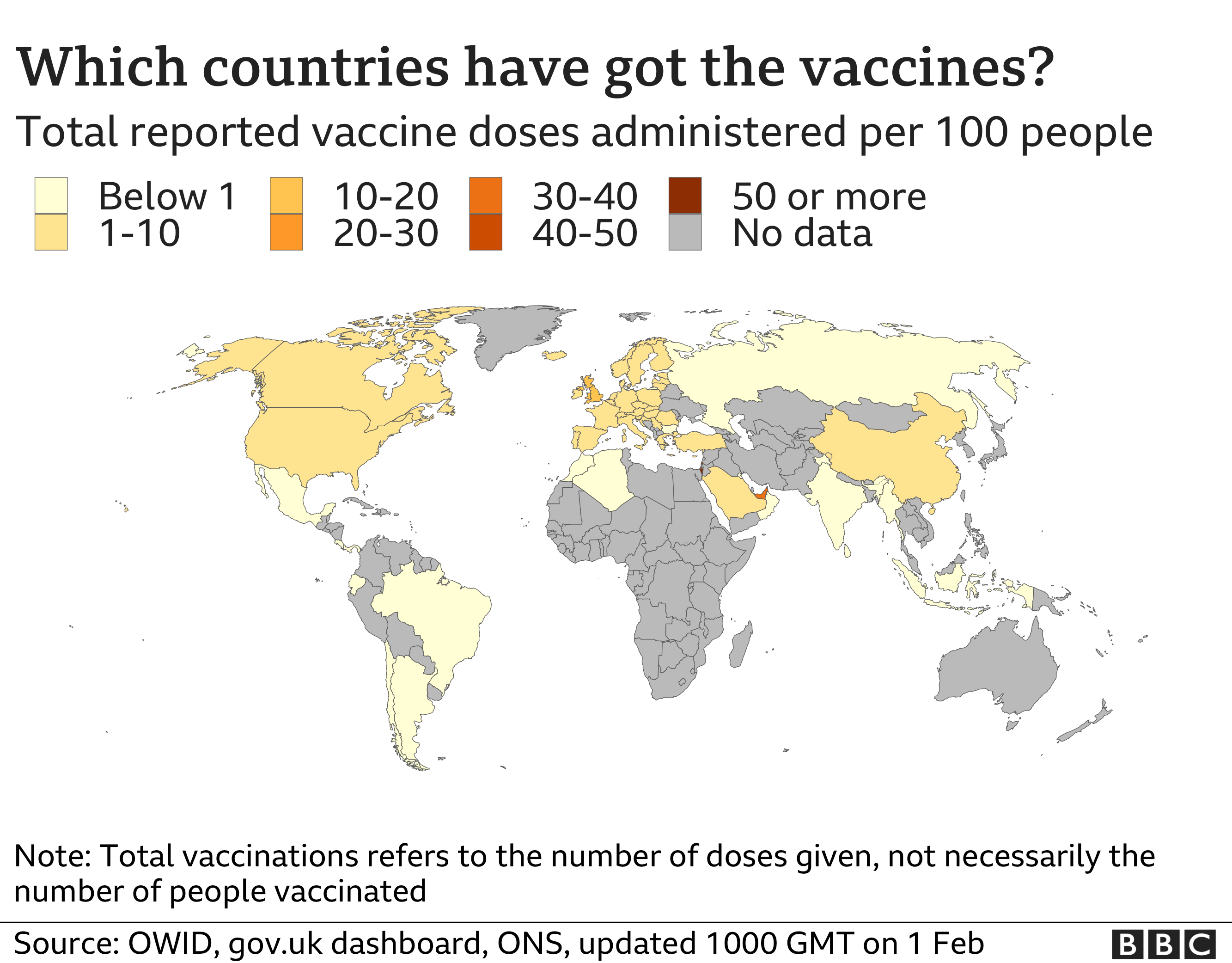
Map showing the number of vaccine doses administered per 100 people. Updated 1 FEB
 
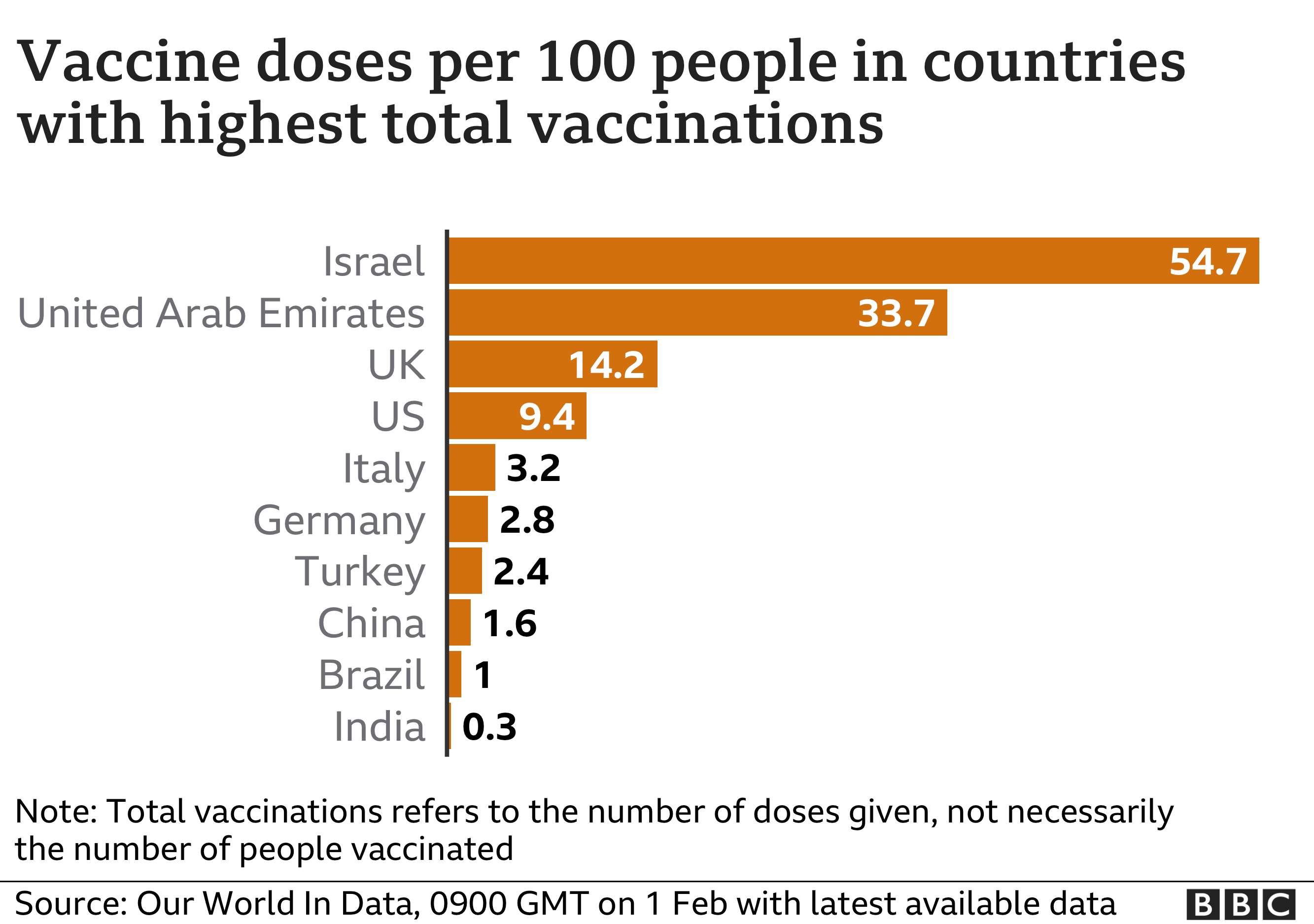
Of over one hundred countries on Gavi's COVAX Interim Distribution Forecast list, Canada is present as one of a handful of wealthy participant countries along with New Zealand, South Korea and Singapore. Not all countries capable of producing the funds to enable ordering their own vaccine supplies participated in the Gavi program; Canada participated and expressed interest in the COVAX supply facility; hedging its bets to obtain sufficient vaccines as a late-starter, for its population. Canada is well behind a steady supply of vaccine volumes struggling behind peer countries like the U.S., the U.K. and Israel.
 
Canada garnered criticism from public health authorities elsewhere and human rights groups for vastly over-ordering vaccines in a desperate measure to 'keep up' with other wealthy countries vaccinating their populations, complicated by the fact that the two Health Canada-approved vaccines by Pfizer and Moderna have run into production-and-delivery problems. Canada is now in the position of being the only wealthy country in the G7 hoping to procure vaccines through a fund whose purpose is to provide vaccines to poor nations.
 
Canada continues to lag behind dozens of countries in taking delivery of vaccines and administering them, even to its most vulnerable population demographics. And when the World Health Organization recently begged wealthy countries urgently to begin donating surplus vaccine orders to COVAX for developing countries, the Canadian government responded that it is 'too early' to commit to any such donations where vaccination rates are  among the world's lowest.
 Chart showing the number of vaccine doses administered per 100 people in the 10 countries with most vaccinations. Updated 1 Feb
 

Labels: , , , , , ,

Sunday, December 13, 2020

Life in Wuhan, China Carries On ....

"Most scientists studying the origins of COVID-19 have concluded that the SARS-CoV-2 virus probably evolved naturally and infected humans via incidental contact with a wild or domesticated animal. But a few persistent voices, including respected microbiologist and biosafety advocate Richard Ebright, PhD, continue to highlight circumstantial evidence suggesting that SARS-CoV-2 escaped from a biohazard laboratory in Wuhan, China. Such an escape might have occurred via accidental infection of a lab worker who came into contact with the isolated virus, an infected lab animal, or animal waste.
For now, we cannot definitively rule out either origin story—a lab accident or a natural animal-to-human transmission. Determining the origins of this pandemic is unlikely to help current efforts to treat and cure the disease. It could, however, be an important determinant for efforts to prevent future outbreaks."
"Most arguments in favor of the lab accident theory are based on geography. Wuhan, the site of COVID-19’s first reported cases in late 2019, is also home to two of China’s most advanced biological laboratories. The Wuhan Institute of Virology (WIV) has come under special scrutiny because it hosts China’s only biosafety level 4 lab facilities."
"Ebright, a former Howard Hughes Medical Institute investigator and current laboratory director at Rutgers University, is the most prominent scientist espousing the possibility of a lab escape. He raised biosafety concerns about WIV when it opened in 2017, as did Tim Trevan, founder of CHROME Biosafety and Biosecurity Consulting. Ebright has long opposed the expansion of preventative research into dangerous pathogens, and he views the possible lab escape of SARS-CoV-2 as strong support for that position."
Genetic Engineering & Biotechnology News
"It  certainly couldn't have been Wuhan ... surely another person brought it in. Or surely it came from some other product brought from outside."
"There were just certain conditions for it to appear here."
Chen, wet-market vendor, Wuhan, China
 
"The first cluster of cases was there, so at least it would be of interest to find out the origin of those and put forward a few hypotheses, like whether it's more likely from the wild animals or perhaps points to a human super-spreader."
Jin Dong-Yan, professor of virology, University of Hong Kong
"There is new evidence to show that China locked down all domestic traffic internally by end January 2020 but pushed to open foreign travel till end March. Data from Tom Tom traffic index, a traffic location site that covers 416 cities across 57 countries show that as a result of this strategy, China, intentionally or otherwise, was able to lockdown its cities unknown to the world. While this reduced the spread of the Corona virus within China, China’s aggressive foreign travel policy lead to a virus explosion worldwide."
Sandip Sen, The Economic Times, April 30, 2020 
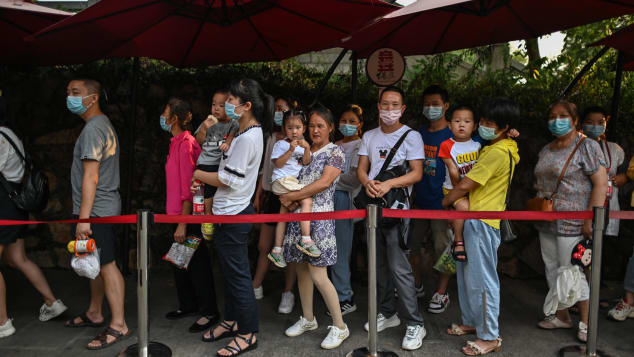
"Tourists wearing face masks line up outside the Yellow Crane Tower in Wuhan, China on September 3.
Tourists wearing face masks line up outside the Yellow Crane Tower in Wuhan, China on September 3.
HECTOR RETAMAL/AFP/AFP via Getty Images
 
The Huanan Seafood Wholesale Market in Wuhan, China where vendors set up their wares in small stalls was a popular place for individuals to shop as well as local restaurant owners who would start their day by passing through the market to pick up fresh-caught fish and bring it back to their restaurants to begin the day's menu preparations. Most Asian cities have such live markets, Tokyo, Japan has a large celebrated market, Ueno district's Koromon market, where crowds of shoppers converge on the market to sample live fish. These markets are part of the food culture, a part of daily shopping life.

On December 31, 2019, four cases of a mysterious type of pneumonia appeared at local Wuhan hospitals and were linked to the Huanan market and overnight it was no longer open for business, taking shoppers by surprise the following morning. A month later, the city went into a strict 76-day lockdown on hours' notice, barring people from leaving their homes. A severely restrictive move that represented the start of a hugely successful gambit to control the new virus's spread. Hubei Province itself was border-shuttered to the rest of China.
 
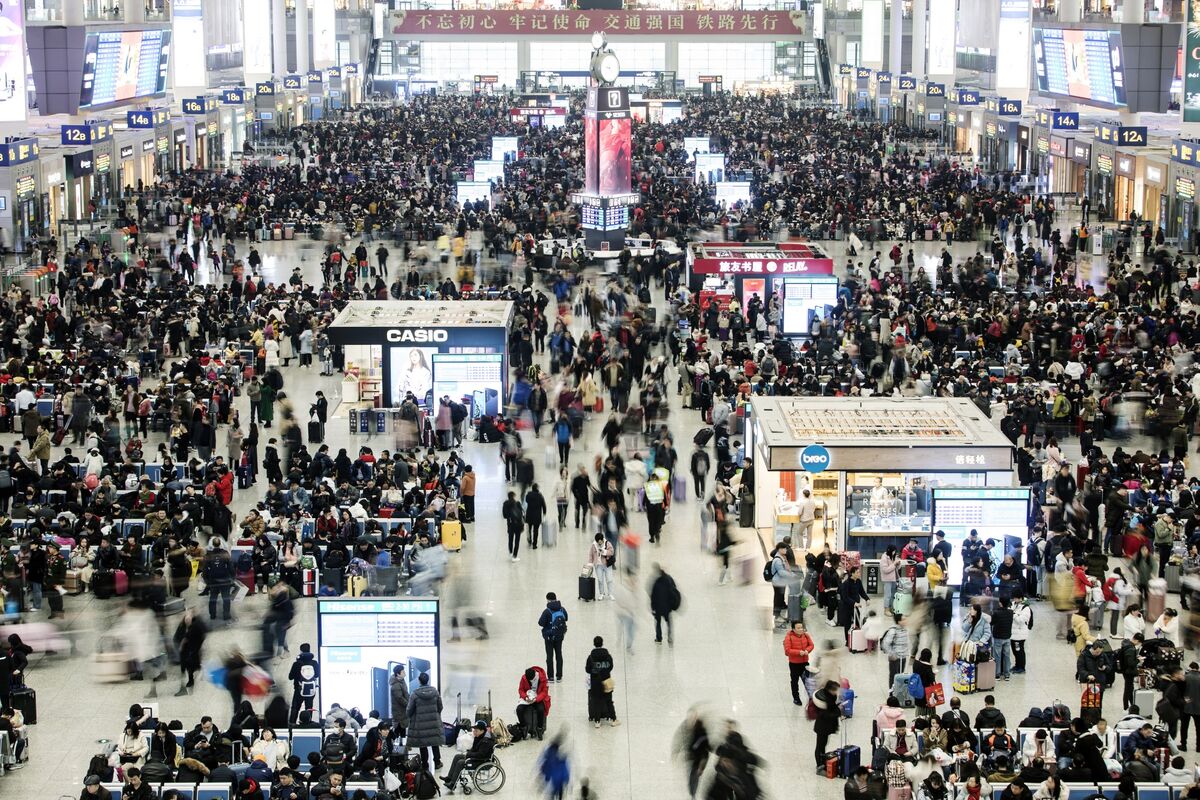
Travelers walk through the main hall of the Hongqiao Railway Station in Shanghai on Jan. 18.
Travelers walk through the main hall of the Hongqiao Railway Station in Shanghai on Jan. 18. Photographer: Qilai Shen/Bloomberg
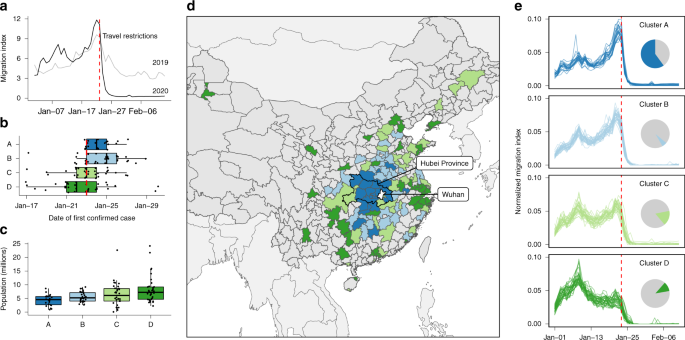
On the other hand, China kept its national borders open so Chinese could celebrate the Lunar New Year as usual, and the population spread out in its customary holiday travel pattern as millions of Chinese travelled back to their home cities and provinces in a tradition as important to the Chinese as Christmas is to Westerners. A massive human migration takes place as individuals travel back to their hometowns. People in China are estimated to make close to 3 billion trips over the 40-day travel period, or Chunyun, of the Lunar New Year holiday. It's estimated that 5 million people left Wuhan, the epicentre of the pandemic before the travel ban of January 23, 2020. An estimated million Chinese went abroad, to Europe and elsewhere during that period.
figure1
 
 The disease spread rapidly throughout China and to neighbouring countries. Despite the aberration of the massive migration for the Lunar New Year celebrations, China and its neighbours then cracked down on their populations, enacting draconian social distancing laws and total lockdowns. Their success in bringing the internal spread of the disease following a massive infection rate in China which led to hastily built hospitals to handle the load and patients being isolated in massive temporary quarters with cots lined up one after another in proximity to one another, did succeed in eventually quelling the massive outbreak.

Which then spread to Europe, devastating the continent which is now grappling in desperation with its second and third waves of the domineering recurring nightmare. Globally, over one-and-a-half million people have died of the effects of SARS-CoV-2. Initially, Beijing had bristled at the global community's attempts to close their borders to Chinese visitors, claiming the move was clearly racist in nature; even the World Health Organization supported China's umbrage, chiding the rest of the world for their reaction. The United States now hosts a ravaging beast of a pandemic.

When both Beijing and the WHO came under criticism, particularly from the U.S. administration, both bridled and responded they had each acted with alacrity to stem the tide of the viral contagion, acting with due respect and regard to public safety globally. China took further umbrage when the virus was referred to as the China virus, and the WHO came up with a neutral designation for the scourge. To their credit, Chinese scientists released to the world at large the genetic sequence of the virus, enabling scientists elsewhere to get on with research to find a vaccine against the virus.

In Wuhan, the city is once again 'normal'. But the wet market remains closed, the stalls shuttered. The origin of the virus remains a topic of fierce political and scientific enquiry. Beijing circulated the claim that the virus originated elsewhere, in Spain or Italy, and was then brought to China where it surfaced to appear as the origins of the virus. Residents of Wuhan certainly don't believe the virus really originated there, but was brought to the city by travellers. When a second wave erupted in China, a strain of the virus brought back by Chinese returning from trips abroad again, it gave impetus to the notion that the virus originated abroad.

Beijing and the United States continue to spar with one another along with other countries, accused by China of bias against the Chinese. Even yet, a team of World Health Organization experts has still to visit Wuhan to gather  information. Origin-tracing efforts, warn health authorities in China and elsewhere, could take years and in the end inconclusive results may be yielded. More recently Chinese diplomats and state media claim their belief the market was not the origin of the virus but the victim of the disease, which originated somewhere other than China.

According to experts the market is critical to any investigation, unlikely to be dismantled even though the bulk of the research would rely on samples sored immediately following the outbreak. Access to the market area is heavily restricted. The bustling building with its hundreds of stalls sectioned off into areas for red meat, for seafood, and for vegetables is now quiet and abandoned. Local government has placed traditional Chinese paintings over the semi-permanent blue barricades the area is encircled by. Wooden boards line the interior stalls and windows.
 
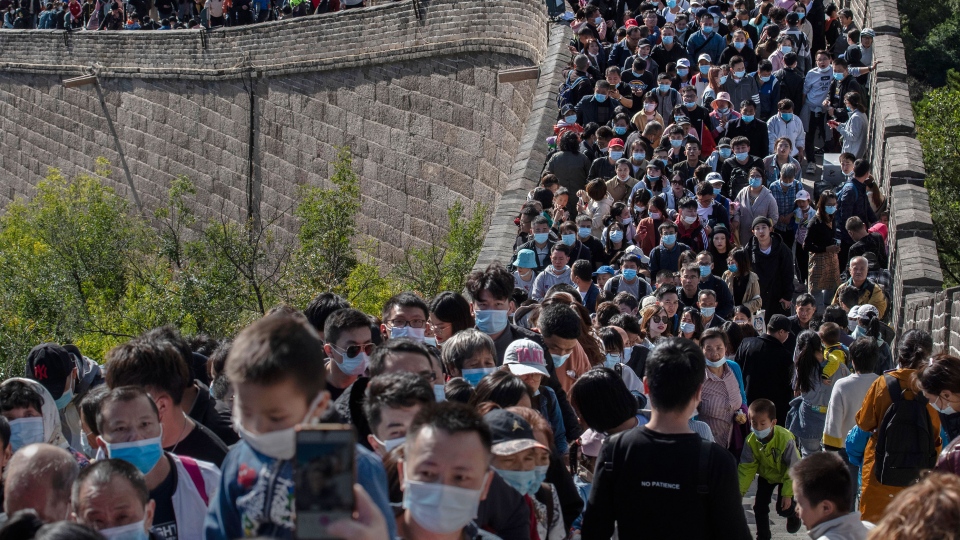
CNN wall of china
Chinese tourists crowd together on the Badaling section of the Great Wall of China in Beijing on October 4, 2020. (Kevin Frayer/Getty Images)
"A report issued by a Shanghai-based online travel agency said people from over 100 Chinese cities had booked to travel to nearly 500 destinations across over 90 countries and regions."
"Thailand, Japan, Indonesia and Singapore are among the most popular destinations while Nordic countries, the United Arab Emirates and Spain have seen the fastest growth of Chinese visitors".
"Traveling schedules covering cultural sites or winter sports that can be enjoyed by a big family are the most popular choices, indicating that Chinese are willing to enjoy high-quality travel experiences."
"Lvmama, another Shanghai-based online travel agency, said in its latest report that more convenient transport, easier visa application procedures and Chinese people's upgrading demand for leisure were major factors in China's booming outbound tourism."
"In 2018, 140 million Chinese traveled outbound, marking a year-on-year increase by 13.5 percent, according to the China Tourism Academy."
XinhuaNet, December 13, 2019
Wuhan has not reported any new locally transmitted cases of COVID-19 since May. A local restaurateur speaks of the market's closure and public panic over the safety of imported seafood, increasing the cost of ingredient procurement substantially. Above the empty, closured market, shops reopened in June selling optometry equipment and eye-ware. Guards at the upper entrance to the market take temperatures, warning that no videos or photos may be taken inside the building. "Maybe some people have some bad feelings about it, but now it's just an empty building ... who feels anxious about an empty building?" a shop assistant remarked.
 
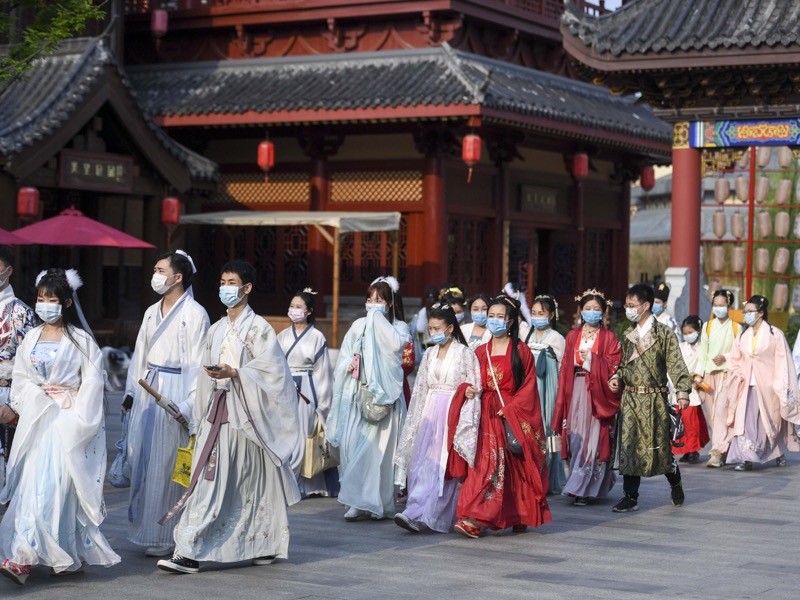
People wearing Chinese traditional clothing of the Han ethnic group walk at Changsha Fantawild Oriental Heritage theme park.

People at a heritage theme park in Hunan province in China, wear face masks and traditional dress.Credit: Yang Huafeng/China News Service/Getty


Labels: , , , , ,

Sunday, November 01, 2020

Mounting Medical Opposition to Virus Lockdowns

"We in the World Health Organization do not advocate lockdowns as the primary means of control of this virus."
"The only time we believe a lockdown is justified is to buy you time to reorganize, regroup, rebalance  your resources, protect your health workers who are exhausted. But by and large, we'd rather not do it."
"This is a terrible, ghastly global catastrophe, actually. And so we really do appeal to all world leaders. Stop using lockdown as your primary control method, develop better systems for doing it, work together and learn from each other. But remember -- lockdowns just have one consequence that you must never ever belittle, and that is making poor people an awful lot poorer."
David Nabarro, special envoy on COVID-19, World Health Organization 

"[Lockdowns are causing] irreparable damage. Coming from both the left and right, and around the world, we have devoted our careers to protecting people. Current lockdown policies are producing devastating effects on short- and long-term public health. Keeping students out of school is a grave injustice." 
"Fortunately, our understanding of the virus is growing. We know that vulnerability to death from     COVID-29 is more than a thousand-fold higher in the old and infirm than the young. Indeed, for children, COVID-19 is less dangerous than many other harms, including influenza."
"[Public health officials should aim to protect the most vulnerable population, while allowing those who are not vulnerable to] resume life as normal."
"The most compassionate approach that balances the risks and benefits of reaching herd immunity, is to allow those who are at minimal risk of death to live their lives normally to build up immunity to the virus through natural infection, while better protecting those who are at highest risk."
"Arts, music sport, and other cultural activities should resume. People who are more at risk may participate if they wish, while society as a whole enjoys the protection conferred upon the vulnerable by those who have built up herd immunity."
The Great Barrington Declaration
A photo of Dr. Martin Kulldorff, Dr. Jay Bhattacharya, and Dr. Sunetra Gupta

After the authors of a declaration promoting herd immunity spoke to White House officials last week, the scientific community immediately called into question the declaration as well as the scientists who wrote it.


"I personally think that herd immunity is inevitable, rather than a strategy."
"We need to do it ... good job of testing and chasing down cases in closed or vulnerable group settings such as long-term care [homes]."
Dr.Neil Rau, medical doctor, assistant professor, department of medicine, University of Toronto

"The idea of selective protection of the elderly and vulnerable is unethical and simply not possible, as there is no way to sustainably protect such a large group of people without imposing huge risks to their mental and physical health."
"Yes, the elderly are significantly more likely to get seriously ill from the virus, but we have seen grave impacts across all age groups."
"Managing the virus is a near impossible balancing act."
Dr.Robert Lechler, president, Academy of Medical Sciences, London

Medical professionals across the world are increasingly taking to alerting governments and policy makers of the harms inherent in total lockdowns of society, beyond the initial lockdowns that took place when the SARS-CoV-2 virus began circulating as a mysterious new respiratory illness whose properties aside from its high infectivity rate were uncertain but clearly ultra-threatening. It is now being recognized that those total lockdowns came with serious side-effects to the general public.
 
In early October the WHO's special envoy on COVID management made an urgent appeal to world leaders to put a stop to the use of lockdowns as their foundational method of control against the spread of the highly infectious virus. The lockdowns are well known to have had a profound effect on the world economy, but Dr.Nabarro in particular stressed the negative effect among poorer countries.While ostensibly seeking to protect vulnerable populations the overall side effects have been utterly destabilizing.

Coincidentally, again in early October three epidemiologists from Harvard, Oxford and Stanford co-wrote a declaration they called the Great Barrington Declaration claiming that lockdowns result in creating worse cardiovascular disease outcomes, fewer cancer screenings, lower childhood vaccination rates, and deteriorating mental health situation, issues that will lead to high mortality rates in years to come. The co-authors are Dr.Martin Killdorff, Harvard professor and epidemiologist; Dr.Sunetra Gupta, Oxford University professor with expertise in immunology; and Dr.Jay Bhattacharya, Stanford University Medical School professor with expertise in infectious disease and vulnerable populations.

Other medical professionals, along with members of the public were invited to place their names on the declaration in an online petition, to which 35 other doctors and professors responded, including biophysicist Michael Levitt, professor at Stanford University, winner of the 2013 Nobel Prize in Chemistry. A counter on the website as of October 14 indicated over 25,000 medical practitioners around 9,500 public health scientists, and over 440,000 members of the general public have also signed the declaration.

Signing medical professionals state their opinion that rather than imposing strict lockdowns until a vaccine becomes available, the focus should be on minimizing mortality and social harm until such time as herd immunity is achieved, when most of a population becomes immune to an infectious disease, providing indirect protection to those who are not yet immune. Public health officials, according to the declaration, should aim to protect the most vulnerable in a population, permitting those not vulnerable to "resume life as normal".

Examples of measures to protect the vulnerable can be inclusive of minimizing staff rotations at nursing homes, delivering groceries and other essentials to retired people living at home, and having the elderly meet with their family members in an exterior environment preferably to indoors, when possible. Everyone, measures emphasized, should take simple hygienic measures like hand-washing and remaining home when ill to reduce the herd immunity thresholds, while low-risk adults should work normally rather than from home; schools should be open for in-person teaching, and extracurricular activities like sports be resumed.

Among those who criticize the value of the declaration, Dr.Irfan Dhalia, general internist and vice-president at Unity Health which operates two hospitals in Toronto, stated that herd immunity cannot be reached "without a massive loss of life or a vaccine". A group of twenty doctors wrote to the Premier of Ontario, Doug Ford, arguing against a return to lockdowns in late September when it became clear that COVID-19 cases were rising again, steeply. "Lockdowns have been shown not to eliminate the virus", the letter pointed out.
 
Research showing declining antibodies over time does not necessarily mean there is somehow less of a chance that we'll be able to develop safe and effective vaccines in the coming months. (Joe Raedle/Getty Images)

The co-signers of the letter include professors of medicine from the University of Toronto, McMaster University and the University of Ottawa, along with different hospitals all of whom agree that lockdowns slow down the virus spread only as long as they happen to be in place: "This creates a situation where there is no way to end the lockdown, and society cannot move forward in vitally important ways including in the health sector, the economy and other critically important instrumental goods including education, recreation, and healthy human social interactions".

Cancelled surgeries, delayed diagnosis for cancer patients, school closures should all be taken into account, resulting from lockdowns. As well as other negative health effects, such as a 40 percent increase in overdoses seen in some jurisdictions, they wrote.

"In Ontario and other parts of the world, such as the European Union, increasing case loads are not necessarily translating into unmanageable levels of hospitalizations and ICU admissions. While we understand the concerns that these cases could spill into vulnerable communities, we also need to balance the actual risk."
"Our society has borne enormous pain over the past six months. It's time to do something different."
Group Medical Letter to Premier of Ontario
A study published in the British Medial Journal in early October states that while initial restrictions were effective in reducing the burden in intensive care units in U.K. hospitals, maintaining the lockdowns would prolong the pandemic and increase the number of deaths. "The model predicted that school closures and isolation of younger people would increase the total number of deaths, albeit postponed to a second and subsequent waves", the study concluded based on data used by the British government in March when it imposed its lockdown.

Labels: , , , ,

Tuesday, September 15, 2020

"A World in Disorder"


"Financial and political investments in preparedness have been insufficient, and we are all paying the price. It is not as if the world has lacked the opportunity to take these steps [in preparation for the advent of an infectious disease pandemic]."
"[This year's report, entitled "A World in Disorder" pointed out that world leaders had never previously] been so clearly forewarned of the dangers of a devastating pandemic [yet had failed to take action]."
[The COVID-19 pandemic has exposed] a collective failure to take pandemic prevention, preparedness and response seriously and prioritize it accordingly."
"Pathogens thrive in disruption and disorder. COVID-19 has proven the point." 
The Global Preparedness Monitoring Board Report
  • Heads of government must commit and invest

  • Countries and regional organizations must lead by example

  • All countries must build strong systems

  • Countries, donors and multilateral institutions must be prepared for the worst

  • Financing institutions must link preparedness with financial risk planning

  • Development assistance funders must create incentives and increase funding for preparedness

  • The United Nations must strengthen coordination mechanisms

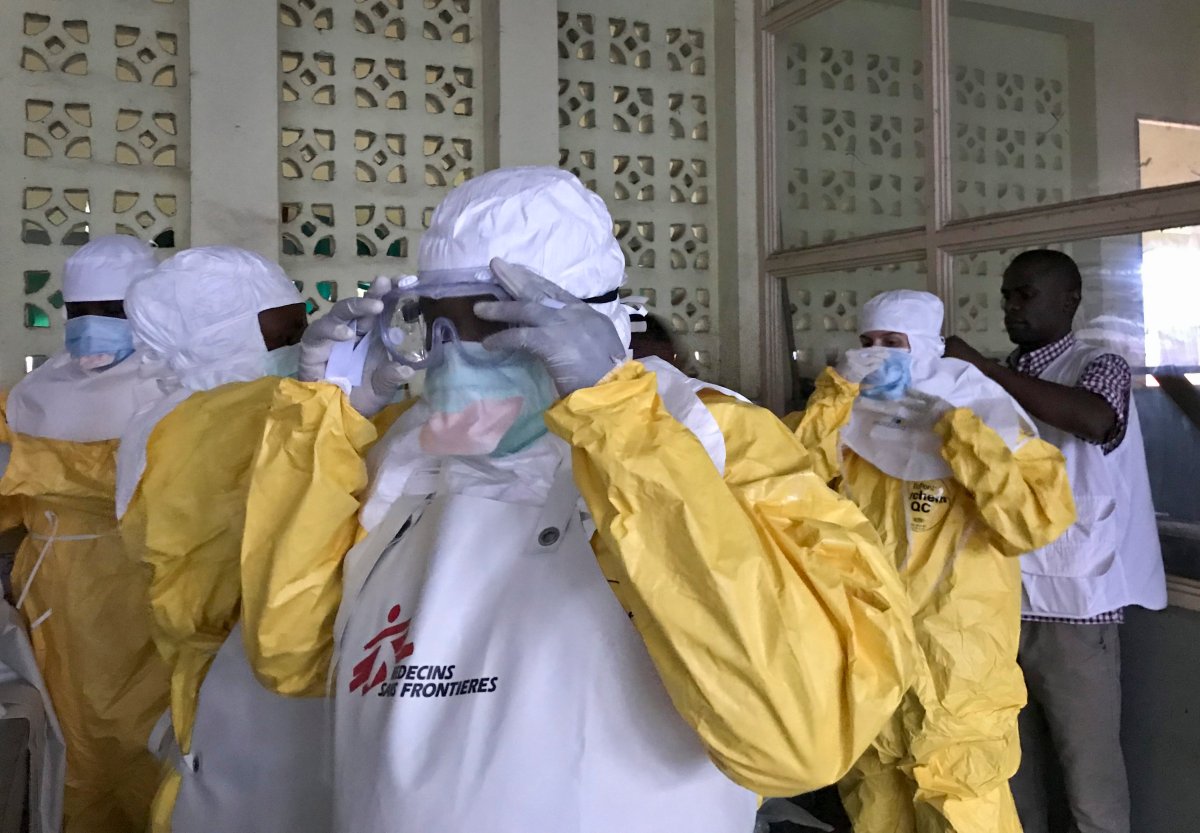
  • In this photo taken Sunday, May 20, 2018, a team from Medecins Sans Frontieres (Doctors Without Borders) dons protective clothing and equipment as they prepare to treat Ebola patients in an isolation ward of Mbandaka hospital in Congo.
    In this photo taken Sunday, May 20, 2018, a team from Medecins Sans Frontieres (Doctors Without Borders) dons protective clothing and equipment as they prepare to treat Ebola patients in an isolation ward of Mbandaka hospital in Congo. Louise Annaud/Medecins Sans Frontieres via AP
"I would say that in our analysis of the data, looking at a variety of sources, the world is really quite poorly prepared."
"[Building the world’s emergency response capacity is a huge job], Not easy, to be sure, but I think we need to start by shining a big light on this."
"[World Bank investments in poorer countries could be tied to those countries using the money to improve their health care.] I think this whole issue is political. We need a lot of political will to make this happen."
"Everyone, including wealthier countries, needs to prepare. We are one plane ride away from someone carrying a major infection that can be an outbreak."
"People get all wrapped up when this happens, all want to act, and when it’s gone, they start forgetting it. ‘It’s not going to happen to me. It’s going to happen to somebody else.’ The fact that you need to put so much work and effort into preparedness — that’s the point we want to make." 
Dr. Victor Dzau, a board member and director of the National Academy of Medicine in the U.S
Forewarned is not necessarily forearmed. Not if the advice is noted, and the report laying out prospects and responses are shelved indefinitely. Nations governed by people who are no wiser than those they govern always believe that disasters occur elsewhere, and why waste time, resources and funding on some concept that may never eventuate? There are, after all, so many concerning issues to be addressed by governments large and small, wealthy or developing. With sometimes the best of intentions while shelving such issues as an imperative but not necessarily right now, the thought is that in good time it will be addressed ... 

And then, stunningly, it hasn't been and it is too late in any event.  And that's when remedial action is recommended, not quite the same as pre-preparedness, with its desperate emergency aura, but patchwork glued together with a hope and a prayer. Now, the world is being scolded by a UN body of substance comprised of medical scientists and politicians with experience in managing catastrophic situations -- if only in theory. Political leaders around the world have failed to heed the warnings issued by august bodies of great wisdom.

And the world is paying the great cost that has resulted from their inattention to priorities. An infectious disease whose rampant rise and destabilizing influence globally has arisen and hungrily seeks out victims be they humble individuals or ranking world-station nations. The anticipated-but-never-credited appearance of SARS-CoV-2 has transformed "a world at risk" to a "world in disorder", as the report on international epidemic preparedness has it, chidingly, chillingly.

The World Health Organization just reported a record one-day increase in global coronavirus cases on Sunday. The total number of cases worldwide rose by 307,930 in the period of 24 hours, one day, a staggering increase. India, the United States and Brazil are responsible for the largest increases which helped raise the global death rate by 5,537 to 917,417, almost a million deaths around the world caused by COVID-19. India reported 94,372 new cases, the United States 45,523 new infections, and Brazil brought up the rear with 43,718 cases.

As for deaths, over 1,000 new deaths were reported both in  India and the United States, with Brazil reported having lost 874 lives in the past day. The Global Preparedness Monitoring Board is co-convened by the World Bank and the World Health Organization, chaired by former WHO director-general Gro Harlem Brundtland -- formerly three-term prime minister of Norway -- now chairing an independent watchdog monitoring the WHO. It's a complex world we live in.

The 2019 report of The Global Preparedness Monitoring Board  noted the existence of a real threat of "a rapidly spreading pandemic due to a lethal respiratory pathogen", warning an event such as this could kill millions while wreaking havoc on the global economy. The report was released just a few months before the novel coronavirus emerged in Wuhan, China. The current report notes -- despite announcing a year ago that heads of government must commit and invest in preparedness for a pandemic, health systems required strengthening and financial risk planning must view the threat of a pandemic seriously -- limited progress was made.

Country Overall Rankings

Ranked: Global Pandemic Preparedness by Country

Overall, the rankings uncover a distressing insight. Global preparedness for both epidemics and pandemics is weak, with the average score in the index sitting at 40.2 out of 100.

The countries with the highest scores have effective governance and politics systems in place, while those with the lowest scores fall down for their inadequate healthcare systems—even among high-income countries.

Here are the 10 highest-ranking countries in the index:

 
The report cites a lamentable lack of leadership exacerbating the pandemic. "Failure to learn the lessons of COVID-19 or to act on them with the necessary resources and commitment will mean that the next pandemic, which is sure to come, will be even more damaging", read the report.
 
Ranked: Global Pandemic Preparedness by Country
 

Labels: , , , , ,

Monday, May 18, 2020

Beijing's COVID Bulldozing of Global Populations and Economies in Total Innocence

Alberta Premier Jason Kenney  (Jason Franson/The Canadian Press)

"I think the Chinese government played a significant role in the devastating public health and economic damage that is being experienced by the entire world."
"And I do not think we should just forget this and walk past it. There must be some kind of a reckoning, there must be some accountability." Western countries, including Canada and the United States, must have a reset in their relationship with China — and part of that reset, in my judgment, must be a deliberate effort to onshore production, particularly on critical supplies."                                                                    Alberta Premier Jason Kenney
"[There is a] large body of facts and data [ to prove that Beijing did not obfuscate the damaging effects of the novel coronavirus]."
"If Mr. Premier did not deliberately turn his head away, these facts and evidence are presenting themselves crystal clearly before his eyes. If there is a comparison between what he has done during the outbreak with what Wuhan has, he will not look smarter."
"However, we disdain to bring the details up, because attacking Mr. Premier was never one of our goals."
"You are based in Edmonton not in Ottawa. [Many Americans -- friendly or not to Trump -- have] profitable and unshakable business with China."
Chinese consulate, Calgary
"[The United States should form a partnership to sue China for damages caused by the pandemic]."
"This will allow us to share information and resources and ensure that any remedy sought takes into consideration our legal capabilities and the devastating impact the virus has had on our States."
Letter to Washington from 14 Republican attorneys general
Handmade face masks are pictured at the workshop of Spanish designer Tila Ares in Portonovo, northwestern Spain, on March 22, 2020, amid concerns of the COVID-19 coronavirus outbreak. - Spain announced 394 new deaths caused by the novel coronavirus, raising to 1,720 the official death toll in Europe's worst-hit country after Italy, a 30 percent increase over the previous day. (Photo by MIGUEL RIOPA / AFP) (Photo by MIGUEL RIOPA/AFP via Getty Images)
Handmade face masks / MIGUEL RIOPA/AFP via Getty Images

Premier Jason Kenney took the unusual and justified step of speaking before a virtual roundtable hosted by the Washington-based Canadian American Business Council, to voice his outrage over Beijing's failure to properly alert the world community of a viral outbreak in Wuhan. Where the Chinese Communist Party chose instead to silence, threaten and arrest, then force to recant Chinese physicians trying to warn their colleagues and the outside world of the worrying appearance of a strange pneumonia causing respiratory failure and death in a growing number of patients.

Beijing chose to give incorrect and alert-damaging information to the World Health Organization, whose purpose is to warn the international community of the emergence of any new health threats certain to cause pandemics. A failure to advise that resulted in the WHO giving credence to China on the global pandemic status of SARS-CoV-2 which emerged in Wuhan, overwhelming its health-care system, in a frightening emergency that went on to replicate a similar exploding disease and death-count worldwide.

Canada's federal government under Prime Minister Justin Trudeau has chosen to downplay Beijing's role in failing to warn the world community which resulted in close to five million infections globally and approximately one-third of a million deaths due to COVID-19. China's abysmal level of transparency is entirely responsible for the prolifterating number of cases besetting an unready world community. One that is adamant that China must be held accountable for its dire failing.

The state of Missouri has taken steps to sue China for compensation, filing a 47-page lawsuit with its attorney general Eric Schmitt stating China had clamped down on information regarding the virus, including the arrest of whistleblowers, playing down the contagiousness of the virus. COVID-19 has killed over 85,000 Americans. And there are many more seriously considering bringing lawsuits against China. Beijing sneered at Australia for its temerity in casting blame for the severity of the epidemic, by telling Australia it is nothing but the gum on China's shoe.
Cases overview
CanadaCanada
Confirmed
78,072
+1,232
Recovered
39,228
Deaths
5,842
+105
WorldwideWorldwide
Confirmed
4.79M
+100K
Recovered
1.78M
Deaths
318K
+5,340
Australia, the U.S. and all 27 nations comprising the European Union are adamantly demanding an independent investigation as well, in the awareness of the complicity of the World Health Organization in aiding China's suppression of vital COVID information. Canada has pointedly failed to join its Western partners in their determination to see that an independent investigation takes place both of  China's actions and that of the WHO.

"Ottawa can't seem to shake the tendency to flatter ... The facts argue that China was delinquent, that it was not transparent enough. That is not a conspiracy theory", pointed out a former Canadian ambassador to China, David Mulroney. The Liberal government of Justin Trudeau seems determined to bow down to China. Canada's position vis-a-vis China's world bullying is that of a unctuous lickspittle. A situation that serves China well, and has earned Canada the compliment of being described as 'calm' in the greater disorder of a sea of complaints against China.

That Chinese diplomats worldwide are increasingly arrogant and insulting toward the countries they have been dispatched to, blatantly and insultingly representing China's interests is intolerable. An appointed diplomat deploying verbal contempt aimed at an elected Canadian politician at the executive-governing level is unheard of and disgraceful. Such lack of diplomatic restraint and vituperation should qualify these diplomats for a swift exit from their international posts.

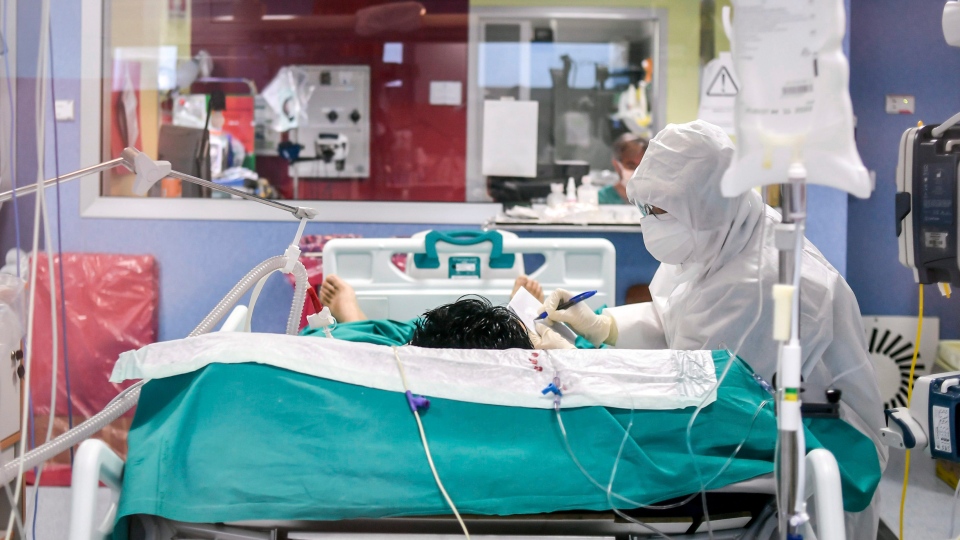
ICU
A medical staffer writes a note to communicate with a patient he is tending to, in the ICU of the Bassini Hospital, in Cinisello Balsamo, near Milan, Italy, Tuesday, April 14, 2020. (Claudio Furlan/LaPresse via AP)
 

Labels: , , , , , , ,

Monday, May 04, 2020

Truth and Consequences, China and SARS-CoV-2


"We've said from the beginning that this was a virus that originated in Wuhan, China. We took a lot of grief for that from the outside, but I think the whole world can see now. There is a significant amount of evidence that this came from that laboratory in Wuhan."
"[I have] no reason to disbelieve [the intelligence community]. I've seen their analysis. I've seen the summary that you saw that was released publicly [that the COVID-19 virus was not man made or genetically modified]. I have no reason to doubt that that is accurate."
"[China] behaved like authoritarian regimes do, attempted to conceal and hide and confused and employed the World Health Organization as a tool to do the same."
"These are the kinds of things that have presented this enormous crisis and enormous loss of life and tremendous economic loss all across the globe."
"The Australians agree with that, you hear the Europeans beginning to say the same thing, and I think the whole world is united understanding that China brought this virus to the world."
"I don't have anything to say about that [whether China deliberately or accidentally released the SARS-CoV-2 virus]. I think there's a lot to know, but I can say this. We've done our best to try and answer all of those questions. We tried to get a team in there, the WHO [World Health Organization] tried to get a team in there, and they have failed. No one's been allowed to go into this lab or any of the other laboratories...this is an ongoing challenge. We still need to get in there. We still don't have the virus samples we need."
U.S. Secretary of State Mike Pompeo 

"China likely cut its exports of medical supplies prior to its January WHO [World Health Organization] notification that COVID-19 is a contagion."
"In its communications, China intentionally concealed its trade activity by publicly denying it has ever imposed an export ban on masks and other medical supplies." 
Department of Homeland Security report, Source
wuhan location map

"[The former CIA director, Mike Pompeo, had] stunned the world with groundless accusations."
"Since Pompeo said his claims are supported by 'enormous evidence,' then he should present this so-called evidence to the world, and especially to the American public who he continually tries to fool."
"The truth is that Pompeo does not have any evidence, and during Sunday's interview, he was bluffing."
"[The White House is continuing to] engage in unprecedented propaganda warfare while trying to impede global efforts in fighting the Covid-19 pandemic."
"As the U.S. presidential election campaigns are underway, the Trump administration has implemented a strategy designed to divert attention from the incompetence it has displayed in fighting the pandemic. It is clear that their goal is to blame China for the pandemic by pinpointing the country as the source of Covid-19."
Global Times newspaper editorial, China
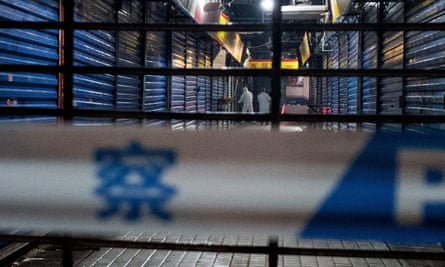
Police tape blocks off Wuhan’s Huanan market, linked to several of China’s first coronavirus patients. Scientists are trying hard to determine how Covid-19 started, where it came from and how it spread to humans.
Police tape blocks off Wuhan’s Huanan market, linked to several of China’s first coronavirus patients. Scientists are trying hard to determine how Covid-19 started, where it came from and how it spread to humans. Photograph: Noel Celis/AFP via Getty Images
Accusations and counter-accusations, lobbed from Washington to Beijing. In essence, nothing other than the Trump administration and Secretary of State Pompeo stated the obvious, that the SARS-CoV-2 virus that causes COVID-19 came out of China. That, additionally, the Communist Party of China chose to aggressively subdue reports emanating from Wuhan, the epicentre of the epidemic that doctors there, alarmed by the presence of a strange new type of pneumonia often lethal, trying to warn their colleagues, deliberately withheld information.

Vital information; that the megacity of Wuhan was increasingly in the grip of a mysterious new virus, which authorities denied the existence of, and when they did eventually admit the presence of the virus, assuring the outside world that there was no human-to-human communication and in fact no epidemic at all. A message relayed to the World Health Organization which itself chose to repeat China's messages of assurances, impacting deleteriously on the world outside China, which, reassured, did not prepare itself for the epidemic that would overwhelm them, and leading to a delay in the WHO declaring the infectious disease a global pandemic.

Then came news that some of the people infected in Wuhan had nothing to do with the Wuhan fish market where the infections were held to have first surfaced. And then other information, of the presence of two biolaboratories in the city, one fairly close to the Wuhan market, and speculation that the virus represented one under study which had somehow managed to escape. The laboratories had a reputation of lax security and this new attribution under the circumstances appeared to make perfect sense. Such that among some members of the scientific community abroad suspicion lingers.

Even so, a report issued by U.S. intelligence agencies disputed the theory that the virus was produced in a laboratory setting. That it is highly infectious and extremely deadly, having killed roughly a quarter of a million people around the world is indisputable. That 67,000 of those victims are Americans is also indisputable, and that number is set to grow, making the U.S. a close competitor to the death count in Italy and Spain, two of Europe's hardest-hit countries.

China takes umbrage at being held to be the place where the virus originated. It is not to be termed a 'Chinese' virus. Beijing bristles with indignation, calling it a racist conclusion, and has had no trouble whatever enlisting the aid of the WHO in condemning any linkage between China and the novel coronavirus, thus allying itself with a completely irrational demand, that the international community as a whole, which has been and continues to be afflicted with a world-changing, future-threatening medical emergency simply set aside the quaint notion that China itself had anything to do with the emergence of the virus.

Aside from the Trump administration's determination to hold Beijing to account for its China-centric withholding of vital information to allow the global community to protect itself, when China insisted that to close their borders from China would amount to a racist attack on the country, U.S. officials linked with intelligence reporting and analysis have claimed their satisfaction in setting aside the theory that Chinese scientists developed the coronavirus in a government biological weapons laboratory, from whence the virus escaped to plague the world.
 
A pangolin
Pangolins ‘the most illegally traded mammal in the world’. Themba Hadebe/AP
While China is so vehement about its reputation, anxious to put a wide gap between itself and the emergence of this deadly new zoonotic which many hold to have resulted from human consumption of wild animals, often sold dead or alive at 'live' market venues of which the Wuhan market was one, originating in bats and passing to other animals such as pangolins, high on Chinese cultural menus, when at some point it leaped the barrier from wild animal  to tame animal in the form of humans, there is responsibility there that has never been acknowledged, despite that many other viruses held to be from like causes such as SARS and H1N1 among others, similarly crossed species to cause epidemics, originated from China.
 
Map of Hubei
Add caption
As of Sunday, over 3.44 million people globally were reported -- through a Reuters tally -- to have been infected by the novel coronavirus. Beijing, however, insists that China had nothing whatever in any form or shape or happenstance, to do with any of that. Despite that it closed its internal borders Hubei Province in which Wuhan City is located, to protect itself, while leaving the border between Hubei and its neighbours open.
 

Labels: , , , , , , , , ,

() Follow @rheytah Tweet