Politic?

This is a blog dedicated to a personal interpretation of political news of the day. I attempt to be as knowledgeable as possible before commenting and committing my thoughts to a day's communication.

Thursday, January 28, 2021

The Vice-Regal Failure : "Walking on Eggshells"

"...Many participants reported conduct that, if it occurred, would lead to a toxic workplace. Reports included allegations of  yelling, screaming, aggressive conduct, demeaning comments and public humiliation."
"The overwhelming majority participated confidentially to raise concerns about the work environment and/or their individual treatment. Forty-three participants described the general work environment as hostile or negative or used other words to that effect. Twenty-six participants used the words 'toxic' or 'poisoned' to describe the general work atmosphere at [Rideau Hall/Governor General's residence] during the current mandate."
"Quintet did not investigate the veracity of the concerns and allegations raised by participants. For example, Quintet did not test the quality of the evidence gathered, or assess participants' credibility. It follows, importantly, that the description of alleged conduct in this Report does not establish that such conduct occurred."
"[There is] a serious problem [that requires the Privy Council Office's] immediate attention. [The government must act] quickly and decisively. Only through meaningful, timely action on the part of senior leadership of the PCO will any restoration of the work environment at [Rideau Hall] be possible."
"In reaching this conclusion, Quintet respects the unproven nature of the reported concerns and draws on its decades of experience in the field of conflict management and prevention."
Quintet Consulting report to Privy Council Office 
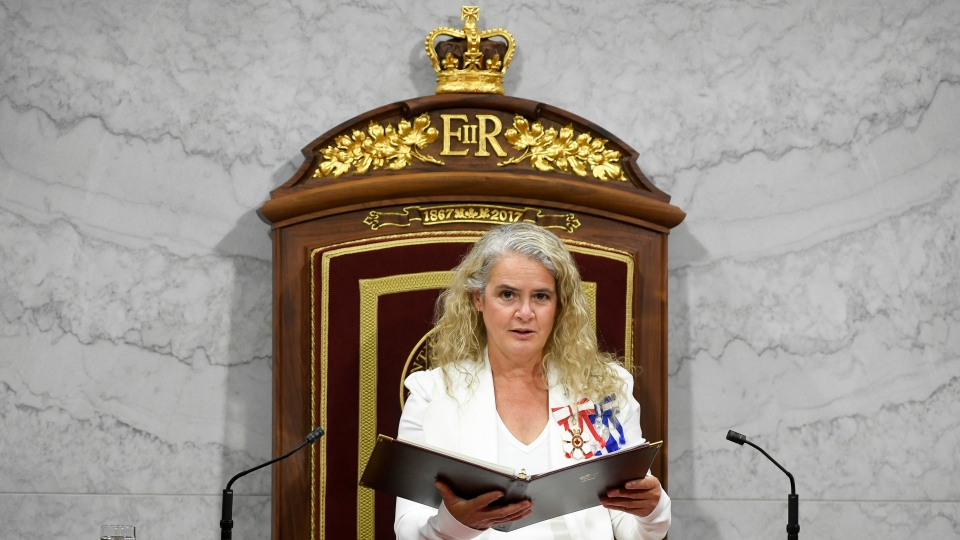
Gov. Gen. Julie Payette
Gov. Gen. Julie Payette delivers the throne speech in the Senate chamber in Ottawa on Wednesday, Sept. 23, 2020. THE CANADIAN PRESS/Adrian Wyld
 
The Privy Council Office retained Quintet Consulting to undertake a review of the situation at Rideau Hall respecting the behaviour toward staff evinced by Governor General Julie Payette and her hand-picked secretary of the Office of the Governor General when the national broadcaster, CBC had reported confidential sources that alleged the Governor General and her secretary, Assunta di Lorenzo, a Montreal lawyer and personal friend of Julie Payette had between them created a toxic workplace, verbally abusive toward staff, belittling them and occasionally leaving some in tears.

The report of the workplace review issued by Quintet and surrendered to the Privy Council Office, saw a heavily redacted version released to the news media a day ago.  While details regarding who is alleged to have committed certain acts remain unknown as a result of redaction, larger conclusions of the overall workplace situation can be read from the text that remains and what it reflects is an intolerable 
atmosphere of dysfunction permeating the vice-regal office, a situation that has no counterpart in the long history of the Queen's representative in Canada.

But then, this choice of Governor General turned out to be  hugely unusual in the demeanor, preferences and presence of the office holder who was forced to resign days ago when the extent of her incapability to act with adequate respect and decorum toward those working for her was fully revealed. What had been revealed on numerous previous occasions was Julie Payette's distaste for the position which she had accepted; her unwillingness to appear at ceremonial occasions at public and private events, her impatience with signing official documents, her insistence on remaining in Montreal, rather than domiciling at the official residence of Rideau Hall.
Prime Minister Justin Trudeau looks on as his wife Sophie Gregoire Trudeau greets Assunta Di Lorenzo, secretary to Gov. Gen. Julie Payette, as they arrive at Rideau Hall in Ottawa, Sept. 11, 2019. (Justin Tang/The Canadian Press)
 
Now, both she and her secretary Assunta di Lorenzo, both equally accused by Rideau Hall employees -- federal public servants skilled in the byways of the office -- of manipulating the office to suit themselves and in the process harassing and abusing their professional staff. Between October and November of last year Quintet conducted 92 interviews with individuals including current employees, former employees and 'knowledgeable insiders' where fewer than 10 people reported positive or neutral feedback relating to the work environment.

Quintet was originally supplied with a list of 197 employees along with their email addresses, despite which by October 6 the firm received "more than 81 requests for interviews from current employees, former employees, and those presenting themselves as having relevant information. This was substantially more than anticipated", they reported. "Turnover is at record levels" and "people are leaving in droves", with "waves of departures", along with an exodus of "quite a few competent, accomplished, experienced personnel", Quintet was informed by staff, all of which episodes undermined morale.

Among the language made use of by participants in describing the atmosphere within the vice-regal residence were "humiliation", "disrespect", "condescension", "a non-inclusive workplace", and "the definition of a poisoned work environment", leaving employees "stressed out" and "worn out". The report was complete with a full dozen pages of "serious" and "oft-repeated" behaviours leading to a toxic workplace. Each and every example, however, had been redacted.

What was made abundantly clear was that the examples given spanned Ms.Payete's entire tenure with her behaviour described in measures "that were in most cases repeated and persistent". The former astronaut whose reputation while in her previous positions reflected that of a poor manager with a short temper and abusive manner, had been overlooked in Prime Minister Justin Trudeau's zeal to place a brilliant scientist and former astronaut in the vice-regal role of Governor General.
 
Astronaut Julie Payette waves before boarding the astronaut van for a trip to launch pad 39-A and a planned liftoff onboard the space shuttle Endeavour Wednesday July 15, 2009 at the Kennedy Space Center in Cape Canaveral, Fla. (Chris O'Meara/Associated Press)
 
Naming this intelligent, short-fused, misanthropic woman as Canada's 29th Governor General in 2017, Mr. Trudeau had done so once he had disbanded a non-partisan, arm's-length committee constituted by the previous Conservative government to exclude politics from the recommendation of likely nominees for the vice-regal post.
 
Appended to the Quintet report was one emanating from the Office to the Secretary to the Governor General, which enumerated measures that were adopted to "improve the health of the workplace" by conducting a "World Cafe", all-staff meeting in fall of 2018, adopting a first-ever Workplace Well-being and Harassment Prevention Action Plan and the organization of training sessions on "Respect in the Workplace", and "Working Minds". The problem here seems to be that Ms. di Lorenzo felt that the stress and manipulation, harassment and agitation emanated from staff, not from her; an unfortunate misunderstanding.
"OSGG [Office of the Governor-General] management specifically spoke about the challenges associated with needing to modernize some aspects of the OSGG, including related to HR policies, technology and the system of honours."
"They reported that some OSGG staff were quite resistant to these changes that were taking place ... Representatives of OSGG management also stated that reports of harassment at the OSGG predated the current mandate, and they had, in recent years, taken many important steps to improve the health of the workplace."
Report, Management, Office to the Secretary to the Governor General (OSGG)
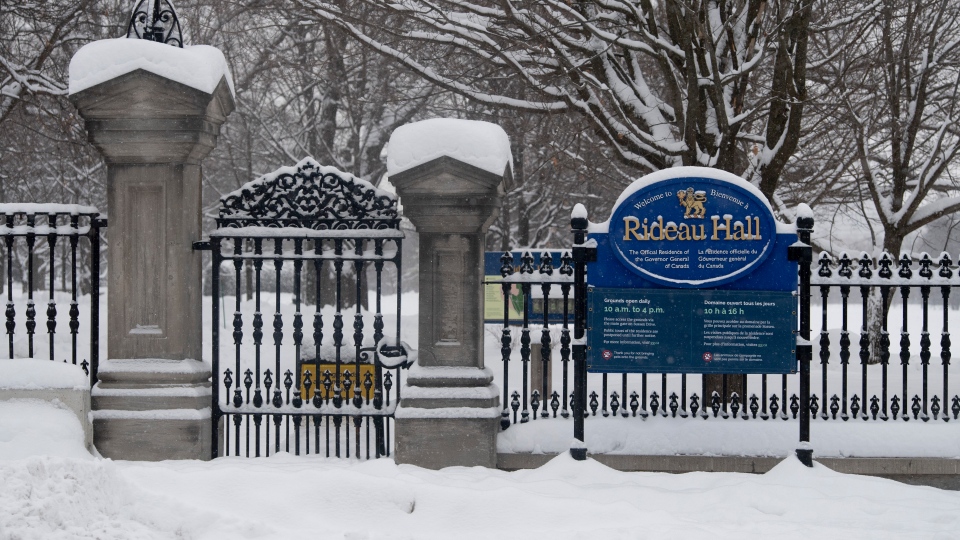
Rideau Hall
The outer wall and visitors gate is seen at Rideau Hall in Ottawa, Thursday January 21, 2021. THE CANADIAN PRESS/Adrian Wyld

Labels: , , , , , ,

Tuesday, September 15, 2020

"A World in Disorder"


"Financial and political investments in preparedness have been insufficient, and we are all paying the price. It is not as if the world has lacked the opportunity to take these steps [in preparation for the advent of an infectious disease pandemic]."
"[This year's report, entitled "A World in Disorder" pointed out that world leaders had never previously] been so clearly forewarned of the dangers of a devastating pandemic [yet had failed to take action]."
[The COVID-19 pandemic has exposed] a collective failure to take pandemic prevention, preparedness and response seriously and prioritize it accordingly."
"Pathogens thrive in disruption and disorder. COVID-19 has proven the point." 
The Global Preparedness Monitoring Board Report
  • Heads of government must commit and invest

  • Countries and regional organizations must lead by example

  • All countries must build strong systems

  • Countries, donors and multilateral institutions must be prepared for the worst

  • Financing institutions must link preparedness with financial risk planning

  • Development assistance funders must create incentives and increase funding for preparedness

  • The United Nations must strengthen coordination mechanisms

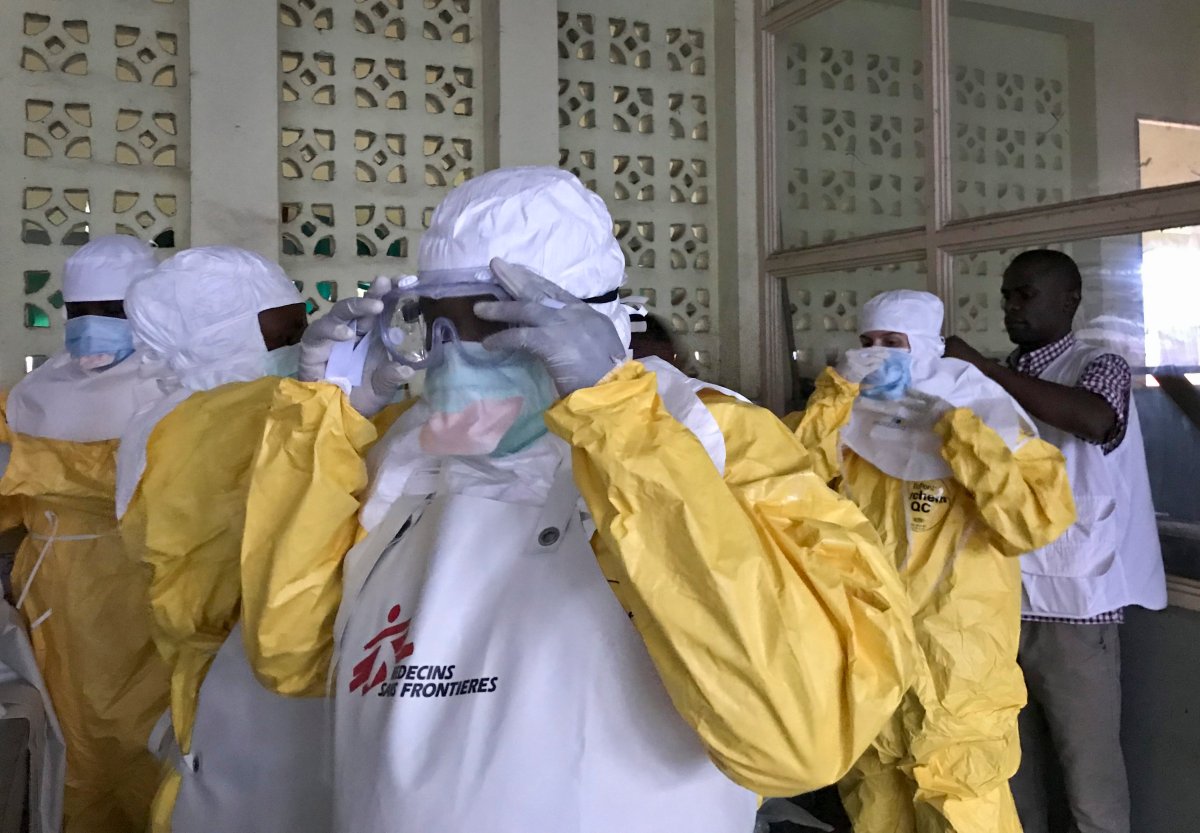
  • In this photo taken Sunday, May 20, 2018, a team from Medecins Sans Frontieres (Doctors Without Borders) dons protective clothing and equipment as they prepare to treat Ebola patients in an isolation ward of Mbandaka hospital in Congo.
    In this photo taken Sunday, May 20, 2018, a team from Medecins Sans Frontieres (Doctors Without Borders) dons protective clothing and equipment as they prepare to treat Ebola patients in an isolation ward of Mbandaka hospital in Congo. Louise Annaud/Medecins Sans Frontieres via AP
"I would say that in our analysis of the data, looking at a variety of sources, the world is really quite poorly prepared."
"[Building the world’s emergency response capacity is a huge job], Not easy, to be sure, but I think we need to start by shining a big light on this."
"[World Bank investments in poorer countries could be tied to those countries using the money to improve their health care.] I think this whole issue is political. We need a lot of political will to make this happen."
"Everyone, including wealthier countries, needs to prepare. We are one plane ride away from someone carrying a major infection that can be an outbreak."
"People get all wrapped up when this happens, all want to act, and when it’s gone, they start forgetting it. ‘It’s not going to happen to me. It’s going to happen to somebody else.’ The fact that you need to put so much work and effort into preparedness — that’s the point we want to make." 
Dr. Victor Dzau, a board member and director of the National Academy of Medicine in the U.S
Forewarned is not necessarily forearmed. Not if the advice is noted, and the report laying out prospects and responses are shelved indefinitely. Nations governed by people who are no wiser than those they govern always believe that disasters occur elsewhere, and why waste time, resources and funding on some concept that may never eventuate? There are, after all, so many concerning issues to be addressed by governments large and small, wealthy or developing. With sometimes the best of intentions while shelving such issues as an imperative but not necessarily right now, the thought is that in good time it will be addressed ... 

And then, stunningly, it hasn't been and it is too late in any event.  And that's when remedial action is recommended, not quite the same as pre-preparedness, with its desperate emergency aura, but patchwork glued together with a hope and a prayer. Now, the world is being scolded by a UN body of substance comprised of medical scientists and politicians with experience in managing catastrophic situations -- if only in theory. Political leaders around the world have failed to heed the warnings issued by august bodies of great wisdom.

And the world is paying the great cost that has resulted from their inattention to priorities. An infectious disease whose rampant rise and destabilizing influence globally has arisen and hungrily seeks out victims be they humble individuals or ranking world-station nations. The anticipated-but-never-credited appearance of SARS-CoV-2 has transformed "a world at risk" to a "world in disorder", as the report on international epidemic preparedness has it, chidingly, chillingly.

The World Health Organization just reported a record one-day increase in global coronavirus cases on Sunday. The total number of cases worldwide rose by 307,930 in the period of 24 hours, one day, a staggering increase. India, the United States and Brazil are responsible for the largest increases which helped raise the global death rate by 5,537 to 917,417, almost a million deaths around the world caused by COVID-19. India reported 94,372 new cases, the United States 45,523 new infections, and Brazil brought up the rear with 43,718 cases.

As for deaths, over 1,000 new deaths were reported both in  India and the United States, with Brazil reported having lost 874 lives in the past day. The Global Preparedness Monitoring Board is co-convened by the World Bank and the World Health Organization, chaired by former WHO director-general Gro Harlem Brundtland -- formerly three-term prime minister of Norway -- now chairing an independent watchdog monitoring the WHO. It's a complex world we live in.

The 2019 report of The Global Preparedness Monitoring Board  noted the existence of a real threat of "a rapidly spreading pandemic due to a lethal respiratory pathogen", warning an event such as this could kill millions while wreaking havoc on the global economy. The report was released just a few months before the novel coronavirus emerged in Wuhan, China. The current report notes -- despite announcing a year ago that heads of government must commit and invest in preparedness for a pandemic, health systems required strengthening and financial risk planning must view the threat of a pandemic seriously -- limited progress was made.

Country Overall Rankings

Ranked: Global Pandemic Preparedness by Country

Overall, the rankings uncover a distressing insight. Global preparedness for both epidemics and pandemics is weak, with the average score in the index sitting at 40.2 out of 100.

The countries with the highest scores have effective governance and politics systems in place, while those with the lowest scores fall down for their inadequate healthcare systems—even among high-income countries.

Here are the 10 highest-ranking countries in the index:

 
The report cites a lamentable lack of leadership exacerbating the pandemic. "Failure to learn the lessons of COVID-19 or to act on them with the necessary resources and commitment will mean that the next pandemic, which is sure to come, will be even more damaging", read the report.
 
Ranked: Global Pandemic Preparedness by Country
 

Labels: , , , , ,

Sunday, March 10, 2019

Solo Living in Canada

"Alberta has a relatively young population within Canada. It's one of the few places where there are still more children in the population than seniors. That's a big factor behind why Alberta has a relatively low share of people living alone."
"It's been a very, very long-term trend over the last 100 years or so. Again, most of it relating to shifts in the population becoming older. But there's also been a lot of different societal trends and evolution that have contributed [to one-person households]."
"Now in more recent years, [with] the advent of social media, it's easier for people to live alone, but maintain contact with the outside world easily."
"Things like improvements in life expectancy, that's meant more people living alone in their senior ages; things like introduction of no-fault divorce has led to more people living alone following a separation or divorce."
Nora Galbraith, senior analyst, Statistics Canada


"Living alone or living in households with more than one person, I don't think that's really the issue. There are people who will feel lonely in a crowd."
"Do we design them [municipalities] to encourage people to talk to each other [or] do we design neighbourhoods so people could drive right into their front garage and walk right into their house?"
"To me, the easier answer out of this for any individual is to find an opportunity to volunteer, be of service to your community. And that'll not only have you bumping into other people, it will also get you out of your loneliness."
Scott McKeen, Edmonton councillor

 “Being alone does not always equate to loneliness. Solitude can be about doing things that are best done alone such as thinking, reading, planning, writing and creating."
“If this goes on [depression] for a long time, they can become desperate and, then, hopeless,” says "When they [depressed people] compare themselves to others, they feel inferior and worthless. Part of the problem with loneliness in our society is that it is stigmatized so people don’t go around telling others they feel lonely."
"We have found that loneliness can predict morbidity, illnesses and mortality." 
"If we are aware of it [loneliness], that’s the first step. The second step is understanding the reason why someone is lonely. Is it because I live in a specific place? Is it because I come across as too aggressive? Is it because I mistreat people? Some people are lonely since childhood, and it’s intertwined in their personality."
"They’re temporary replacements [Facebook, Instagram, Twitter] and cannot replace the human touch. For some people, it can feel like since they have 10,000 ‘likes,’ they must be very popular. But when they need someone to relate to, then they may feel the loneliness even deeper than if they didn’t have Instagram and all those things. So, when they need a hug or someone to go out walking with, that’s when they realize people are electronically available, but that’s it."
Ami Rokach, clinical psychologist, York University, Toronto
Statistics Canada released its latest report a week ago, revealing that there are more people in Canada living alone than ever before. The one-person dwelling is fast becoming the most common configuration of the Canadian household. The number of Canadians living alone amounts to close to four million out of a population of close to 37-million; a doubling of the 1981 number, according to the General Social Survey [Families] 2017 and the 2016 Census. Those living alone now make up 28 percent of countrywide households.

Alberta stands out as the province having the lowest share of one-person households at 24 percent. Couple households with children remain dominant on the Alberta landscape, with 29.4 percent of the population. Quebec has the highest percentage of one-person households with 33.3 percent, followed by the Yukon with 32.2 percent, Nova Scotia with 29.5 percent, and British Columbia with 28.8 percent. The Province of Ontario stands at 25.9 percent one-person households.

Statistics Canada's Nora Galbraith points out, that the one critical factor that accounts for how many people might live alone in a region is the age of the population. Alberta, for example, has one of the lowest rates of seniors, the very demographic most likely to live alone, which can be that key factor in accounting for their lower rate of one-person households and individuals living on their own.

The report suggests that 60 percent of Canadians between the ages of 20 to 34 living alone not in a couple relationship in 2017 intend at some point in their lives to marry or remarry as the case may be. Over 70 percent of that demographic claim they may eventually live in a common-law relationship. Gender as a determining factor for living alone has been ruled out, with men and women equally likely across Canada to live alone.

Partially as a result of longer life expectancy resulting in proportionately fewer senior women living alone as widows, the number of men living alone -- particularly within the senior grouping -- has increased, although women living alone were almost twice as likely to be seniors, points out the report. The country has become more urban and as a result a surge in the number of high rise apartments and condominiums has taken place, geared toward single-person dwellings.


"Our relationships help provide a sense of meaning and purpose in life. And that can translate to better self-care as well as less risk-taking. [Social isolation contributes as strongly to mortality as does smoking 15 cigarettes a day]."
"We tend to assume that this is an issue that may be specific to older adults or the elderly, and while of course, that population is important to consider, it’s not isolated to that group."
"When we look across the data, this loneliness] affects both men and women. We don’t see any effect in terms of it being stronger in older age and in fact, we have some evidence to suggest that it may be stronger in those under 65."

Julianne Holt-Lunstad, professor of psychology and neuroscience, Brigham Young University

Labels: , , , , , ,

() Follow @rheytah Tweet