Politic?

This is a blog dedicated to a personal interpretation of political news of the day. I attempt to be as knowledgeable as possible before commenting and committing my thoughts to a day's communication.

Thursday, April 07, 2022

Not so Simple, is it Russia?

Not so Simple, is it Russia?

"Russia is not in great shape to continue this campaign anytime soon."
"Russian soldiers have been in the field in Belarus for months and in intense combat over six weeks. Physical, mental, psychological and emotional factors have taken their toll."
"Many have committed criminal actions. These troops, in my view, are done."
"You can't throw units like these back into the fight and expect different results. I'd suggest Russia is not in great shape to continue this campaign anytime soon."
Former U.S. Lt.Gen. Mark Hertling
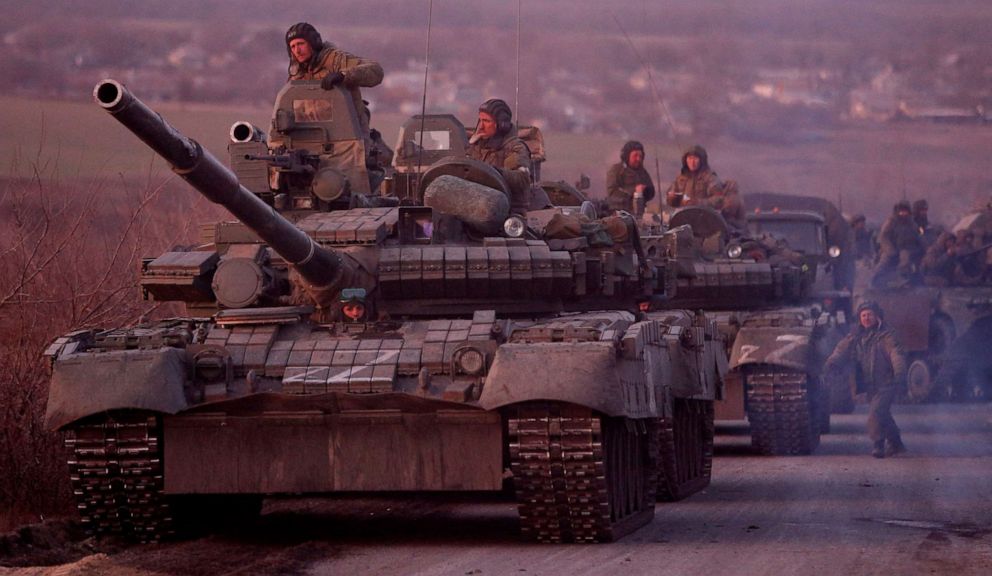
PHOTO: An armored convoy of pro-Russia troops drive down a road leading to the besieged southern port city of Mariupol in Donetsk Oblast, Ukraine, on March 28, 2022, amid Russia's invasion of Ukraine.
Alexander Ermochenko/Reuters
An armored convoy of pro-Russia troops drive down a road leading to the besieged south

Russia has decided to withdraw forces from the Ukraine north where it has been unaccountably bogged down, unable to move forward, meeting unexpectedly strong resistance from the Ukrainian military. And even as the Russian military has been unable to make headway, to realize their intention of entering Kyiv and removing the government, its change of tactics, to assemble the aggregate of its troops in the east to secure the Donbas and bring the self-styled Republics of Luhansk and Donetsk under Russian rule, doubts have arisen that it can succeed in that operation, as well. 

An urgent appeal was made by NATO's Jens Stoltenberg for allies to provide Ukraine with more anti-tank weapons, air-defence systems, humanitarian assistance and financial aid, to be timed prior to Russia being prepared to reconstitute its forces. Russia, he pointed out, has been forced by circumstances to alter its war plans in recognition of the fierce Ukrainian resistance.

"Moscow is not giving up its ambitions in Ukraine. We now see a significant movement of troops away from Kyiv to regroup, rearm and resupply", stated NATOs secretary-general in warning. On the western edge of the Donbas, Kramatorsk, where Ukraine's military headquarters for the country's east sits, has been repeatedly targeted by Russian shelling. Despite which, defence experts insist Moscow will not be capable of reconstituting its forces for weeks leading up to a push east and south.
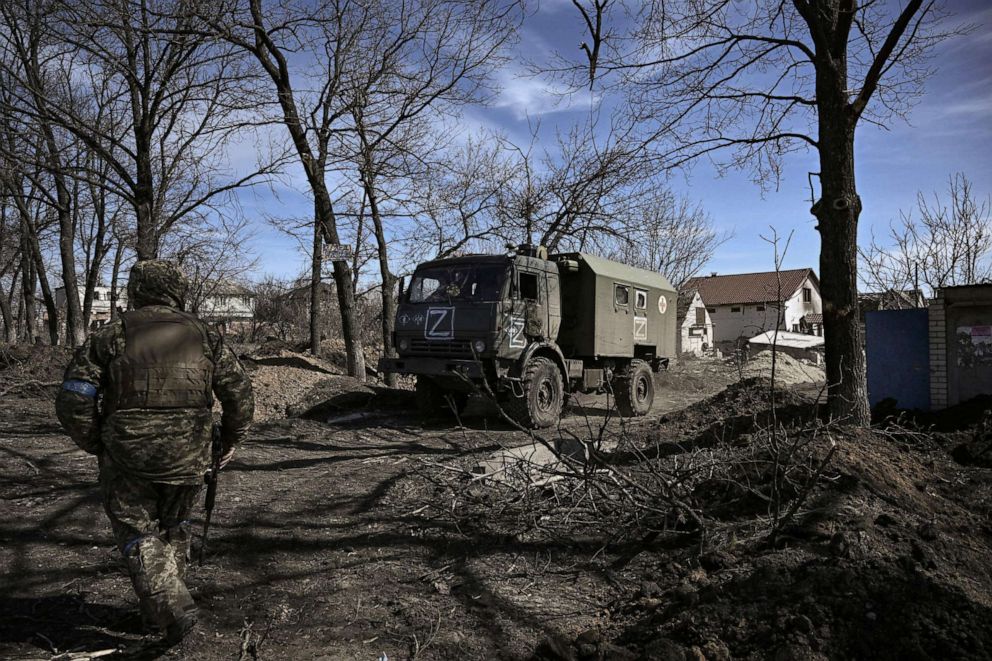
PHOTO: Ukrainian troops drive a captured Russian military vehicle after retaking the village of Mala Rogan, east of Kharkiv, March 28, 2022.
Aris Messinis/AFP via Getty Images
Ukrainian troops drive a captured Russian military vehicle after retaking the village of Mala Rogan, east of Kharkiv, March 28, 2022.
 
Forced out of the north of Ukraine, Russian commanders require the luxury of time in a tight schedule, to assess operational failures and come up with new strategies. Additional training, the construction of new military structures may be required as well, which could take weeks to accomplish. Units will require reorganization, others require time to rest and tend to injured soldiers and repair equipment damaged in the initial weeks of combat. 

Re-equipped and restocked there is the critical issue of physically covering a distance that exists between Belarus and Russia to relaunch into Ukraine. Moscow will find it immensely difficult to regenerate forces because of the loss of commanders as well as soldiers given the "terrible condition of equipment and supplies going into the fight", and the poor training of Russian units, pointed out ,Lt.Gen. Hertling.

At the start of the invasion, Ukraine possessed ten well-equipped brigades representing approximately 30,000 troops in the Donbas region where Kyiv's forces were fighting Russian-backed separatists in the Donetsk and Luhansk regions for the past seven years. In the process becoming acquainted with the failings of the Russian military and the ethnic-Russian Ukrainian rebels, giving them the advantage that the Kremlin had never considered as a potential to motivate and drive the Ukrainian forces to the successes they have since realized.
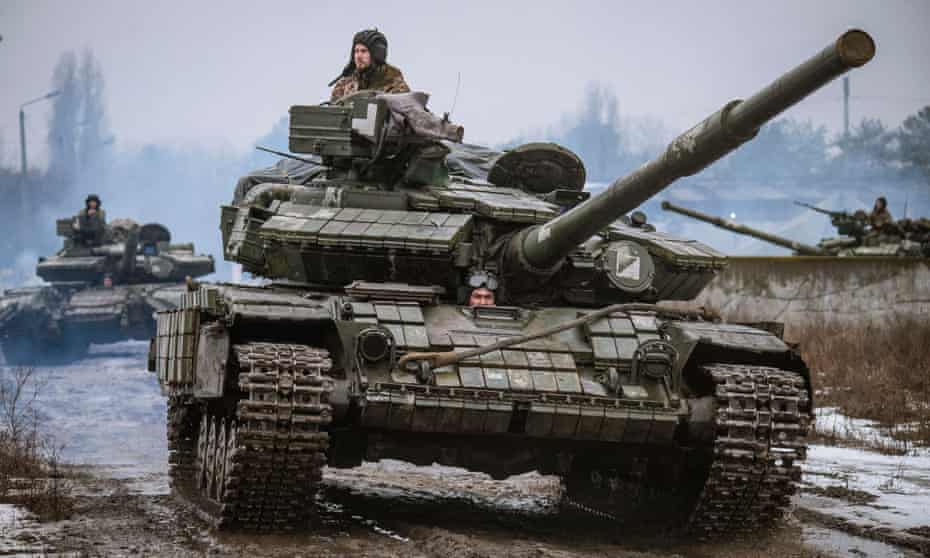
Ukrainian soldiers in  eastern Ukraine’s Donbas frontline battling Russian-backed rebels.
Ukrainian soldiers in eastern Ukraine’s Donbas frontline battling Russian-backed rebels. Photograph: EyePress News/Rex/Shutterstock


Labels: , , , , ,

Wednesday, September 01, 2021

ToThe Victor Go The Spoils

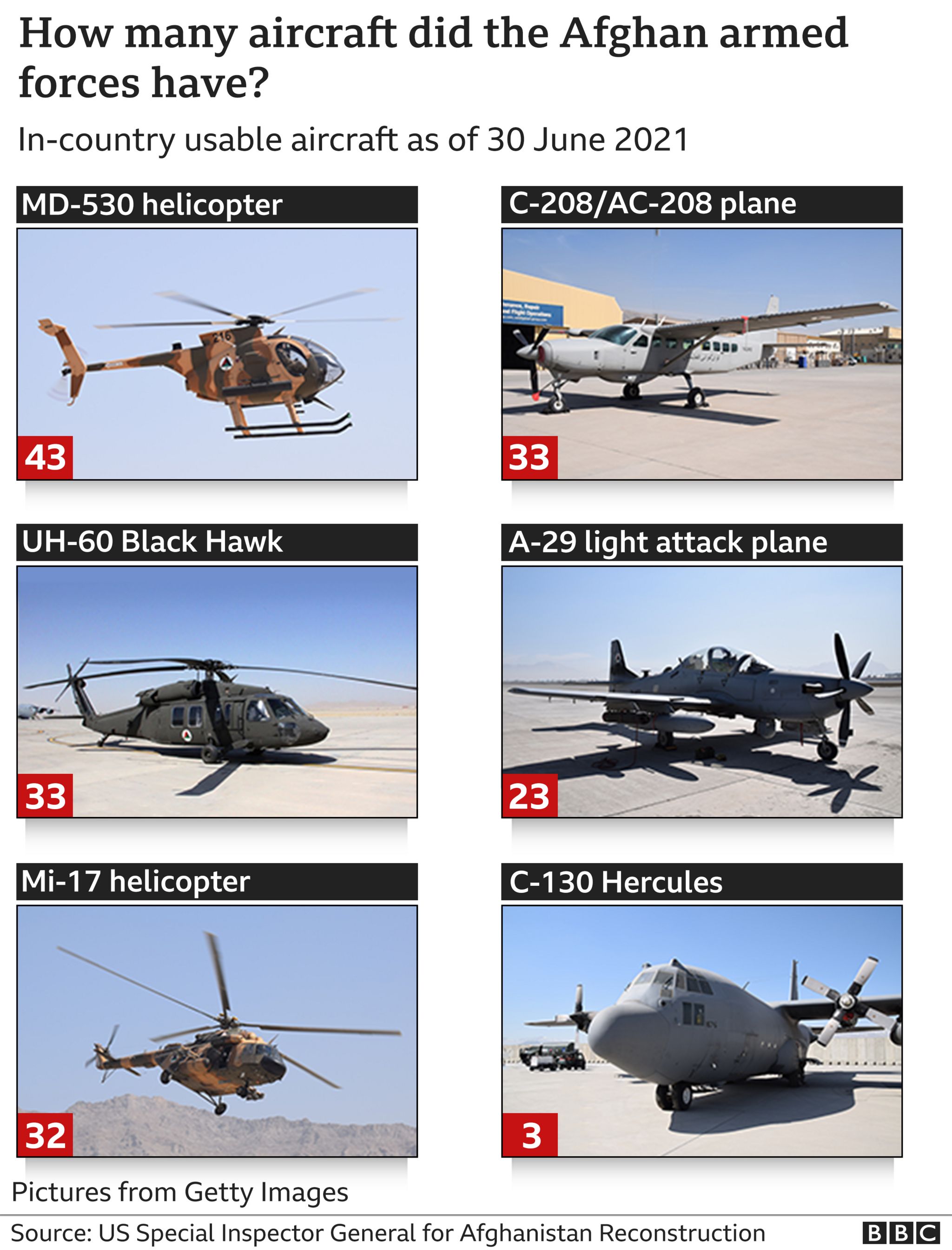
Graphic showing aircraft in use by Afghan armed forces
 
"This decision about Afghanistan is not just about Afghanistan. It's about ending an era of major military operations to remake other countries."
"I was not going to extend this forever war, and I was not extending a forever exit."
"Yes, the American people should hear this. Three hundred million dollars a day for two decades. What have we lost as consequences in terms of opportunities? I refuse to continue a war that was no longer in the vital national interests of our people. We've been a nation too long at war."
"There is nothing 'low grade' or 'low risk' about any war."
U.S.President Joe Biden
 
"I had to go to the bank with my mother but when I went, the Taliban [were] beating women with sticks."
"It's the first time I've ever seen something like that and it really frightened me."
22-year-old, name-withheld Afghan woman
 
"It is a historical day and a historical moment."
"We are proud of these moments, that we liberated our country from a great power."
Zabihullah Mujahid spokesman, Taliban
 
"We demilitarized those systems so that they'll never be used again."
"We felt it more important to protect our forces than to bring those systems back."
Gen.Kennth F.McKenzie, head, U.S.Central Command, Afghanistan
In his interview with reporters General McKenzie confirmed that over 150 military vehicles and aircraft had been disabled by U.S. forces before they left Afghanistan on the cusp of 31 August, the agreed-upon withdrawal date for all U.S. and NATO-allied countries which had taken part in the U.S.-led mission to capture al-Qaeda's leader and in the process oust the governing Taliban Islamists for refusing to surrender Osama bin Laden, the esteemed guest of the Taliban, to U.S. forces.
 
The invasion represented the U.S.'s and its allies' reaction to the al-Qaeda-planned and -executed attacks on the World Trade Center, and Pentagon in 2001. The side-effect of that action was the removal of an Islamist fundamentalist tyrannical government that reviled democratic values and human rights, administering the affairs of the war-wracked country under strict sharia law that marginalized women and girls and practised capital punishment as just desserts for opposing sharia strictures.

The Taliban proved implacable to conventional conflict meant to subdue them and destroy their ambitions; for two decades they regularly spent the winter months in the mountains separating Afghanistan and Pakistan, sponsored by, trained by, and funded and armed by the Pakistan Interagency Intelligence service. In the spring they descended to carry on their insurgency. President Biden's logic and sanctimony over U.S. intervention in the affairs of other countries will not serve his country well.

The very Islamist fundamentalists who succeeded in shocking the world community by the audacity and success of the 9/11 attacks have not been defeated. The Wahhabist, Deobandist and Salafist extremists are firmly established in Afghanistan's hinterlands where the Islamic State of Khorasan lost no time in reminding the U.S. of their presence and their mission when suicide bombers killed 13 U.S.Marines and scores of Afghans at Kabul airport which the Islamic Emirate of Afghanistan (Taliban) were supposedly protecting.
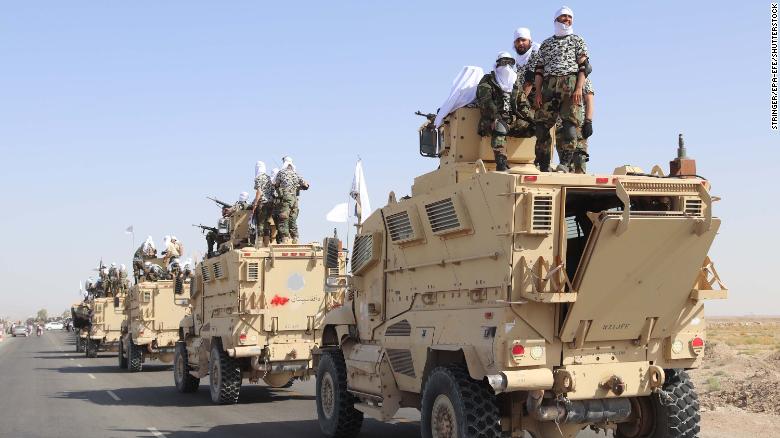
Taliban forces celebrate the withdrawal of US forces in Kandahar.
 
As for the tumult and chaos and violence of the U.S. evacuation of Afghanistan -- a highly preventable event which succeeded in producing inestimable damage to American prestige, its power image, and its relations with its allies, there is no excuse other than rank and deliberate ignorance of the risks involved in such an abandonment despite that U.S. intelligence oversight made it clear that the confusion, chaos and harm done would be the result of such an ignominious exit. "I take responsibility", said President 
 
Biden.

Leaving the Taliban in control of a grater territory than they controlled before the allied West's entry in 2001. "This was a disgraceful and disastrous departure that will allow the Taliban and al-Qaeda to celebrate the 20th anniversary of 9/11 by having complete control of Afghanistan. We are less safe as a result of this self-inflicted wound", lashed out U.S. Senate Republican leader Mitch McConnell.

Almost two-and-a-half thousand U.S. troops were killed in those two decades in Afghanistan, and many others among the militaries of NATO allies supporting the U.S. in the country. At the same time an estimated 240,000 Afghans lost their lives. The cost to the Western treasury, borne mostly by the U.S. for those 20 years in Afghanistan was $2 trillion, a sum impossible to imagine, one that hugely benefited contractors of all stripes in a massive undertaking of undocumented and deliberate corruption.
 
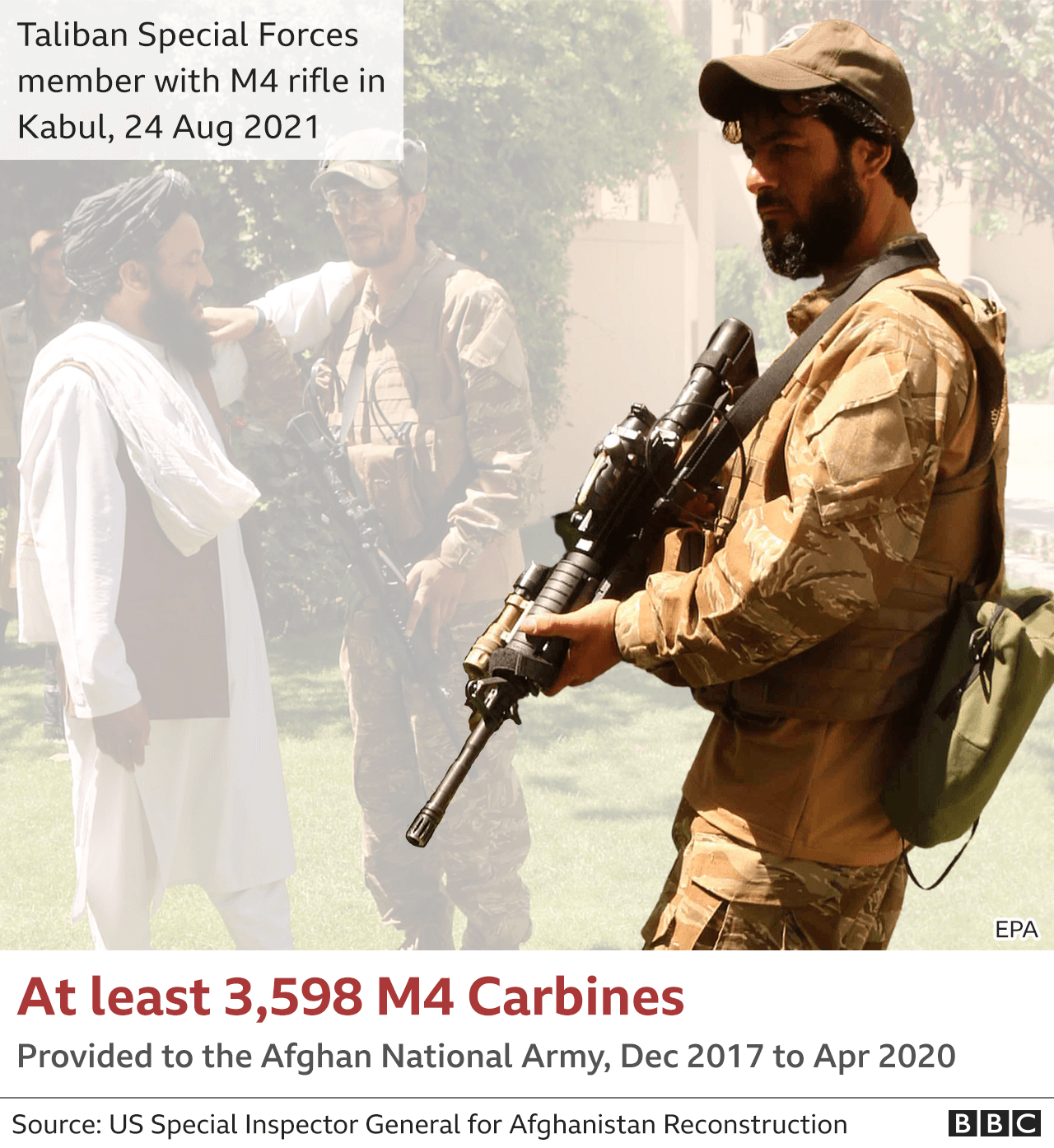
Graphic showing Taliban special forces with M4 carbine
 
In Kandahar, Taliban supporters celebrated the return to power of those who had defied conventional warfare for the troop-defying exploits of guerrilla warfare. In the eastern city of Khost a funeral took place, coffins draped with Western flags, symbolic of Western forces departing in a flurry of excited pressure as desperate Afghans clamoured to be taken along to safety from the Taliban. The image of the powerful, wealthy nations of the Western democracies coffined in their demise, celebrated, not mourned.
 
Taliban supporters gather to listen to the Taliban's governor for Kandahar province.
 
The chaotic airlift managed to evacuate over 123,000 desperate people from Kabul by the United States and its allies in a frenetic two-week period. Many Afghans who had helped the Western forces and their diplomats stationed in Afghanistan, desperate to leave and escape the certain retribution as traitors awaiting them by the Taliban were left behind, to face their fate or somehow manage to extricate themselves.

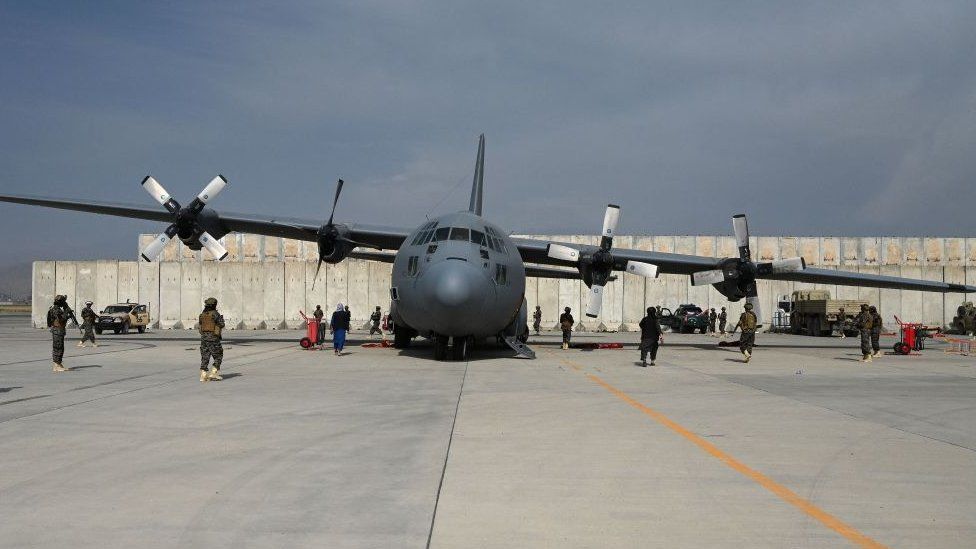
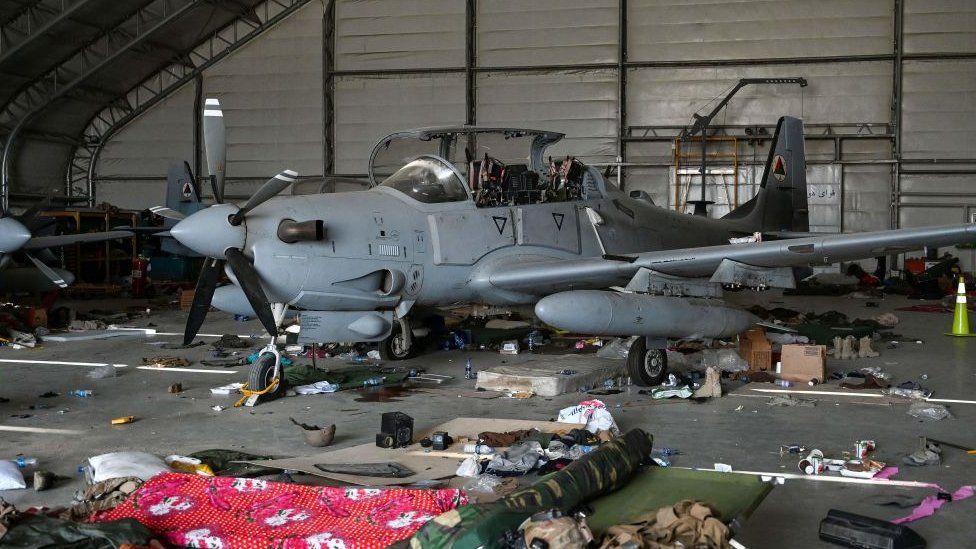
The Taliban are jubilant; not only did they 'force' the largest, best-trained and -equipped military the world has ever seen to retreat and leave the spoils to them, they were left in possession of billions-worth of military equipment. The U.S. spent $83 billion in providing the Afghan national police and military with technologically advanced weaponry. That is all now in the hands of their successors, the Taliban, along with all the rolling stock and weapons left by the departing American troops.
 
C-130 Hercules transport aircraft abandoned at Hamid Karzai International Airport
A C-130 at Hamid Karzai International Airport  Getty Images
 
Videos have been posted online with the Taliban inspecting endless lines of vehicles, opening crates of new firearms, of communications gear, of military drones. "Everything that hasn't been destroyed is the Taliban's now", an American official speaking anonymously, confided to Reuters. The Taliban, it is now estimated, are the proud possessors of over 2,000 armoured vehicles inclusive of U.S. Humvees; up to 40 aircraft, including UH-60 Black Hawks, Scout attack helicopters and ScanEagle military drones. 

The U.S. military, said Pentagon spokesman John Kirby, is unconcerned with Taliban members wearing abandoned American military uniforms, walking about Kabul with American weapons, sizing up U.S. helicopters at Kabul aircraft; they could inspect all they wanted, he said, but would not be capable of flying them. And how wrong he was; members of the Afghan military, trained by Americans to fly the helicopters, who recognized the expediency of going over to the Taliban are more than capable of teaching their new masters.

A-29 light attack aircraft surrounded by abandoned kit
An A-29 surrounded by abandoned kit   Getty Images

Labels: , , , , , ,

Tuesday, July 06, 2021

Out of Harm's Way

"[There was] heightened concern [over the fighting but Russia has no plans to send troops to assist Tajikistan]."
"We have repeatedly said many times that after the withdrawal of the Americans and their allies from Afghanistan, the development of the situation in this country is a matter of our heightened concern." "We’re monitoring it very closely and are noting that destabilization [of the situation] is taking place, unfortunately."
Kremlin spokesman Dmitry Peskov
Feeling Afghan soldiers pause on a road at the front line of fighting between Taliban and security forces,  near the city of Badakhshan, northern Afghanistan on Sunday.
Fleeing Afghan soldiers pause on a road at the front line of fighting between Taliban and security forces, near the city of Badakhshan, northern Afghanistan on Sunday.  Credit:AP

The U.S.-led NATO mission in Afghanistan to free the country from its Islamist Taliban chokehold spent two decades attempting to do just that, and failed. Former Afghan President Hamid Karzai stated his regret that the foreign forces in his country failed in their objective, while adding that their presence and aid to the country had helped it enormously. Now, with their departure, all the advances in human rights, in improvements to living conditions, will go into reverse. Many foreign missions have closed in the capital Kabul, others are still operating on stiffly reduced staff levels. It is clear that foreign emissaries are loathe to leave the country, but they will.

One can only guess the conversations in t he Kremlin. Russia knows how defeat in Afghanistan feels, although from their own inimitable angle. Their decade in Afghanistan was even more disastrous and deadly to Soviet troops in direct confrontation with Afghan tribal fighters than what the U.S. and NATO troops encountered. Throughout its history Afghanistan has been occupied but no invasion has quelled the resistance of Afghans to foreign invasions, including that of Alexander the Great. Britain and Russia in the 19th century competed for 'control' of Afghanistan as a gateway for trade prospects and they too were repelled.

The irony is that while Soviet troops were mired down in Afghanistan in constant brutal combat, U.S. intelligence was training and supplying funds and weapons to fighters from the Muslim world that converged on Pakistan in the border area between Afghanistan and Pakistan, to help mount a resistance to Russian occupation. The 'fighters' that bedevilled the Russian troops became the seed of the Taliban and of al Qaeda. The very monstrous Islamist terrorists now threatening to retake Afghanistan in record time. They no longer even need the assistance of the Pakistan secret service to achieve their goal.

The Afghan forces, trained by NATO special forces in best fighting practices distinguished themselves in the opinion of Western forces by their propensity to simply go AWOL when the mood struck. And nor were they particularly assiduous pupils in modern warfare since what they faced was assymetric warfare and guerrilla tactics by an adversary far more motivated and in the passion of religious fervour. Afghan security forces were  unable to match the passion and the strength and reputation of the Taliban, and were not as well armed both with weaponry and with courage.

Just as Iraqi troops melted away in panic leaving their arms, armoured vehicles, rocket launchers and populations undefended at the advance of the Islamic State of Iraq and the Levant when it was on a roll, marching in to Syria and Iraq, capturing territory, expanding their 'caliphate', their fearsome reputations preceding them, sending panic into the hearts and souls of regular military, so too has the Afghan security forces reacted similarly. And who can blame them? As heedless of human rights and as wedded to mass murder and atrocity-commission under the banner of religion, as ISIL, the Taliban is facing little resistance now that foreign military troops are being withdrawn.  

Everything left behind in the U.S. departure; personal vehicles, armoured military vehicles, in the custody of the government of Afghanistan will now fall to the possession of the Taliban, a situation with a familiar ring; to the victor goes the spoils; as with the Islamic State, so too with the Taliban; cut of the same barbaric cloth, representing the very same ideal of  fundamentalist Islamist entitlements in vanquishing an enemy and inheriting the spoils of victory.

Afghans carry the body of civilians killed during fighting between the Taliban and security forces, during their funeral in Badakhshan province on Sunday.

Afghans carry the body of civilians killed during fighting between the Taliban and security forces, during their funeral in Badakhshan province on Sunday.   Credit:AP

So, an estimated one thousand Afghan troops fled the confrontation they faced with the Taliban, leaving their country rather than defending it from the hugely successful Taliban. Crossing the border into Tajikistan, the Tajik government accepted their presence for asylum, providing them with food and the assurance of safety from the Taliban, for the time being. Tajikistan's president ordered 20,000 of the country's military reservists to be mobilized at the border following the ingress of the Afghan troops in the face of Taliban advances.

International distress calls went out from Tajik President Emomali Rakhmon with allies. Russian President Vladimir Putin, despite Russia's large military presence in Tajikistan, a former satellite of the USSR, withheld offers of military assistance against the Taliban, assuring his Tajik counterpart that Moscow would give its support to the former Soviet republic in establishing its border if required, through a regional security bloc.

The Taliban have wasted no time. Even before the hasty departure of the U.S. troops and their allies, urged on by the Taliban, with promises that they would never again permit any attacks on America to be launched from the soil they once again inherit, while deeply engaged in peace talks with the government of Afghanistan in a blunt show of Islamist pretense, bloody lethal attacks were continually taking place with the Taliban terrorizing Afghan troops, national police and civilians alike, the death toll ever growing to ensure the message was received and well understood; resistance would be futile.

Two days following the vacating of the American main Bagram Air Base on the start of withdrawing all troops by the iconic date of September 11, six key districts in the northern province of Badakhshan bordering Tajikistan and China fell to the Taliban. Once again, Afghanistan is set to become their 'caliphate'. "The Taliban cut off all the roads and these people [1,037 Afghan servicemen] had nowhere to go but to cross the border", said a senior Afghan official.

In this handout photo released by Border Troops of the State Committee for National Security of the Republic of Tajikistan on Tuesday, June 22, 2021, Afghanistan's government soldiers sit at a bridge next to Tajikistan-Afghanistan border in Tajikistan. 134 servicemen of the government forces of Afghanistan were forced to retreat through of the Panj frontier detachment into the territory of the Republic of Tajikistan on Tuesday, June 22, 2021. The Taliban's march through northern Afghanistan gained momentum overnight with the capture of several districts from fleeing Afghan forces, several hundred of whom fled across the border into Tajikistan, officials said Sunday. More than 300 Afghan military personnel crossed from Afghanistan's Badakhshan province as Taliban fighters advanced toward the border, Tajikistan's State Committee for National Security said in a statement.
This group of Afghan soldiers fled to Tajikistan in June  Tajik border troops

Labels: , , , , , ,

Wednesday, December 16, 2020

Fundamentals in the Best/Worst-Laid Plans of Mice and Men

"This is all part of China's education as a rising power. It has taken a flawed model that appeared to work at home, building large infrastructure projects, and hubristically tried to apply that abroad."
"Historically, most infrastructure booms have gone bust. Whether China can avert that fate may depend on its ability to renegotiate loans with countries now in urgent need of debt relief."
"If China is unable or unwilling to provide sufficient relief to its borrowers, it could find itself at the centre of a debt crisis in developing markets."
Jonathan Hillman, author, The Emperor's New Road

"In domestic Chinese media, the frequency of the topic occurring has come down a lot in the last few years, partly to downplay China's overseas expansion ambitions."
"I expect this retrenchment to continue."
Chen Zhiwu, professor of finance, Hong Kong University

"Volatile Sino-U.S. relations and more restrictive access to overseas markets for Chinese companies have prompted a fundamental rethink of growth drivers by Beijing's top economic planners."
"Naturally, if stste-owned enterprises decide to switch back to the domestic market in order to follow the leadership's wishes, the budgeted financial resources for overseas investments will reduce accordingly."
Yu Jie, senior research fellow on China, Chatham House think tank, United Kingdom
 
"This has to be the time for a rethink. It's been such a priority for Xi Jinping, he's invested so much in it that he's not going to just turn the lights off."
"But they need to seriously implement their own debt sustainability analysis and their own social and environmental impact tools."
Kevin Gallagher, director, Boston University Global Development Policy Center
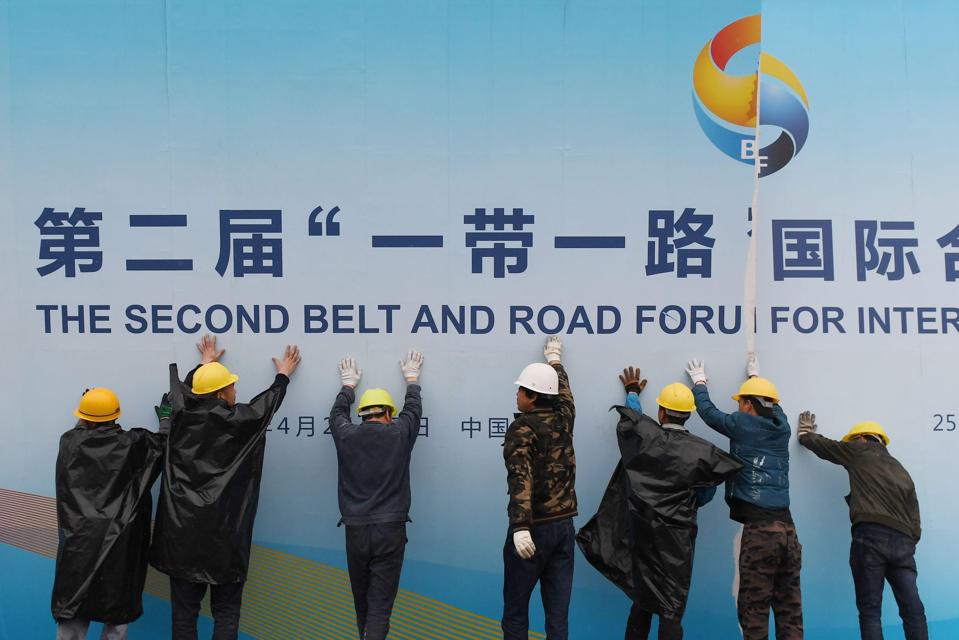
Workers take down a Belt and Road Forum panel.

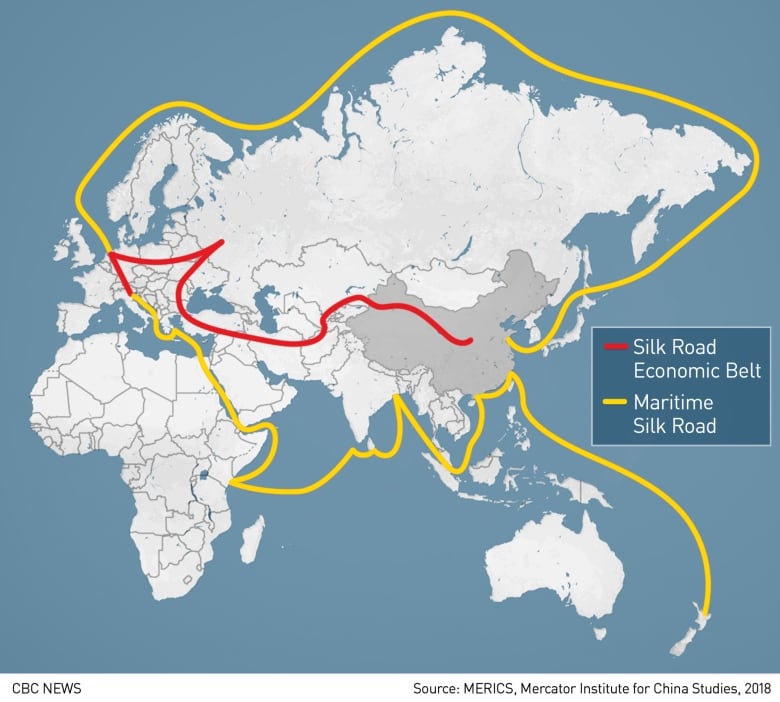
When China initially embarked on its ambitious Belt & Road project, it had plans to link itself to a new 'Silk Road', an enterprise that was meant ultimately to expedite Chinese trade and transport and shipping globally, the trade colossus thinking ahead to the future -- its future -- as the world's major producer and seller of goods. Its plan to finance major infrastructure projects was sold to countries in Africa and the Middle East and Europe convincingly assuring them that this would modernize their countries for the future in new highways and bridges and other forms of infrastructure.

That many of these countries had no basic infrastructure of the type Beijing was describing, or insufficient or outdated ones was because they lacked the financial wherewithal to build them. Beijing obviously reasoned and explained to any governments that were skeptical that the Belt & Road initiative would benefit all concerned; give immediate employment to their nationals in building the projects, and extend employment through operational ties that would ultimately result, enriching both China and the countries it was investing in, so they could pay back the huge loans.

Some economists raised concerns that this would result in massive indebtedness, that some of those countries would never be capable of extracting themselves from. And this was all well before anyone might have thought ahead to a massive economic blow that would strike globally with the introduction from China to the world at large of a global viral pandemic devastating world economies. Long before the Belt & Road initiative rang a bell of opportunity to Beijing it was busy investing in other countries' natural resources.

Security personnel stand guard near a "Golden Bridge on Silk Road" decoration for the Belt and Road Forum outside the China National Convention Center in Beijing earlier this year. (Jason Lee/Reuters) 

As it did in Venezuela, reaching agreement with Hugo Chavez where between 2007 and 2013 the China Development Bank loaned out to Venezuela close to $40 billion with Venezuela's oil wealth as surety, boosting Hugo Chavez's plan for "a Great Wall" erected to fend off U.S. hegemonic reach. And then Venezuela's oil resources ran into trouble with refining problems because no funding was directed to upgrading its oil infrastructure. After investing to that degree Beijing felt compelled to continue in the face of Venezuelan mismanagement and lent out another $20 billion, and all too soon Venezuela defaulted.

That might have been a lesson in not hedging bets, failing to look ahead to the future when all the signals were already in evidence. But the Belt & Road followed nonetheless. "Chinese foreign policy and policy bank officials entered into their outsized economic and political relationship with [Venezuela] with a combination of hubris, ambition and naivete. [This] has contributed to the region's worst economic, humanitarian, and political crisis in decades", wrote Matt Ferchen of Merics, a think tank based in Berlin.

And that hinted at what is now proceeding with the Belt & Road, where at least 18 processes of debt renegotiation with China have occurred in 2020 -- and yet another dozen countries still in discussions with Beijing, covering $28 billion in Chinese loans as renegotiations have proliferated since the pandemic hammered emerging economies in Africa and elsewhere wherein Beijing saw opportunities for  massive Belt & Road investment.

Originally, when Xi Jinping addressed a hall of heads of state and delegates from over 130 countries in Beijing, he proclaimed "a project of the century". Where he promised that China was prepared to spend a stunning $1 trillion on building infrastructure, mostly in developing countries around the world, financing almost all of it through its own financial institutions. Data published this week indicates that President Xi's script has been revised downward. The world's most ambitious development program is now on hold.
 
 
China is now looking at the unwanted potential of its first overseas debt imbroglio. Chinese financial institutions tasked to drive the Belt & Road in tandem with bilateral support to governments has hit a detour leaving Beijing mired in debt negotiations with a host of countries it had so assiduously wooed. Researchers at Boston University maintain an independent database on China's overseas development finance, and they have found lending by the China Development Bank and the Export-Import Bank of China in free fall, collapsed from a peak of $75 billion in 2015 to last year's $4 billion.

Falling under the direct control of China's state council the two banks function as arms of the state providing the overwhelming bulk of China's overseas development lending. Funds disbursed by the two banks rival in scale the disbursement of the world's largest multilateral lender, the World Bank. Between 2008 and 2019, the two Chinese banks loaned out $462 billion, a tad less than the $467 billion the World Bank extended. 
 
https://csis-website-prod.s3.amazonaws.com/s3fs-public/styles/csis_banner/public/page/190408_Risberg.jpg?itok=HBb7RiLW
Photo: LAKRUWAN WANNIARACHCHI/AFP/Getty Images
The sharp scale-back  of lending by the Chinese banks represents an economic earthquake and should it persist, an infrastructure funding gap in Asia alone will be exacerbated, a gap that has reached $907 billion at this point. Chinese credit has formed a large portion of infrastructure financing in Africa and Latin America, and the gap between what is needed and what may be available is expected to become wider, as well.

Beijing has regrouped, examined its losses and decided to scale back, retreating from overseas development finance, to shift policy from outside the country to internal investments. "China is consolidating, absorbing and digesting the investments made in the past", advised Wang Huiyao, an adviser to China's state council, president of the Centre for China and Globalization think tank. The politboro  will now place greater emphasis on China's domestic market, and less on commerce with the outside world.


Labels: , , , , , , , , , , ,

() Follow @rheytah Tweet