This is a blog dedicated to a personal interpretation of political news of the day. I attempt to be as knowledgeable as possible before commenting and committing my thoughts to a day's communication.
The Fate of Taiwan's Independent Status as a Fully Functioning State
"Taiwan is a front-line state in the Peoples Republic of China's outward push to expand its physical and political influence in the Indo-Pacific, just as Ukraine stands in the way of similar ambitions in Putin's Moscow."
"The fate of the island nation's 23.5 million people will have direct repercussions for the future of democracy the global economy, the future of technology and the ambitions of authoritarian regimes to create a world that is more hospitable to their anti-democratic outlook."
J. Michael Cole, academic, Taipei, former intelligence officer
Most Taiwanese consider themselves Taiwanese only, while some among them acknowledge their Chinese heritage. Unlike China, Taiwan has fully embraced democracy, and as Mr. Cole points out, Taiwan is "increasingly incompatible with, and resistant to, Beijing's attempts to annex it." He explains this and much more in his book The Taiwan Tinderbox: The Island Nation at the Center of the New Cold War, arguing that Beijing's annexation determination does not reflect a historic wrong through uniting a divided nation, but far more reflects China's authoritarian territorial expansionism.
On the weekend, the Australian Broadcasting Corporation noted a U.S. intelligence report that there has been a rapid buildup of the commercial ferry fleet by China in preparation for an invasion of Taiwan; roll-on/roll-off ferries are being produced by a Chinese shipyard modified to carry tanks for an amphibious operation. Some 70 of these vessels will have been built to order by 2026's year-end.
Beijing's President Xi Jinping had been governor of Fujian province situated directly across the strait from Taiwan, and irrespective of the fact that 92 percent of Taiwanese have no wish to join China, Xi has ordered the People's Liberation Army to build its military capacity to prepare to invade and take Taiwan by force by 2027 while he is still alive to enjoy his territorial acquisition exploit and perhaps before he turns his ambitions toward accessing disputed territories with his South China Sea neighbours.
(AP Photo/Aaron Favila) A Chinese coast guard boat moves near the
Philippine resupply vessel Unaizah after it was hit by their water canon
blast causing injuries to multiple crew members as they tried to enter
the Second Thomas Shoal in the disputed South China Sea Tuesday, March
5, 2024.
"The Gordian knot tightens, with little, if any potential for a truly peaceful resolution."
"The calm and pragmatism that has characterized the Taiwanese people's threat perception has undoubtedly contributed to Taiwan's resilience. It has prevented panic and stock market crashes whenever China holds major military exercises to coerce Taiwan."
"However, This pragmatism relies on a reading of Chinese intentions and capabilities that may no longer reflect reality."
J. Michael Cole, Taipei
In 2023, a war game by the Washington-based Center for Strategic and International Studies envisaged loss of Taiwan's entire fleet, and half of its air force, while, with the U.S. holding firm to its pledge to aid Taiwan, would lose two aircraft carriers, 20 warships and hundreds of aircraft if a titanic military clash did eventuate. The envisioned scenario would also see the PlA with heavy losses, needless to say.
China's ocean-going ferries are capable of transporting armoured vehicles and soldiers. (Supplied: CCTV)
Taiwan has invested in their own cruise missile stock; they've built beach defences, protected critical infrastructure, reduced trade dependence on China, and created their own satellite network. The growing conviction by Beijing that the U.S is in decline and distracted by domestic infighting, has emboldened Xi. The conviction that Taiwan is "an indispensable element" in the Indo-Pacific state of stability is a true incentive for the West to be highly concerned over Xi's intentions.
And then aside from the dread prospect of hundreds of thousands of lives that might be lost in a conflict of this dimension, there is also the element of world control of rare earth elements and production of critically required communication and technological items. Taiwan produces 60 percent of the world's semi-conductors to a value of $10 trillion -- ten percent of global GDP.
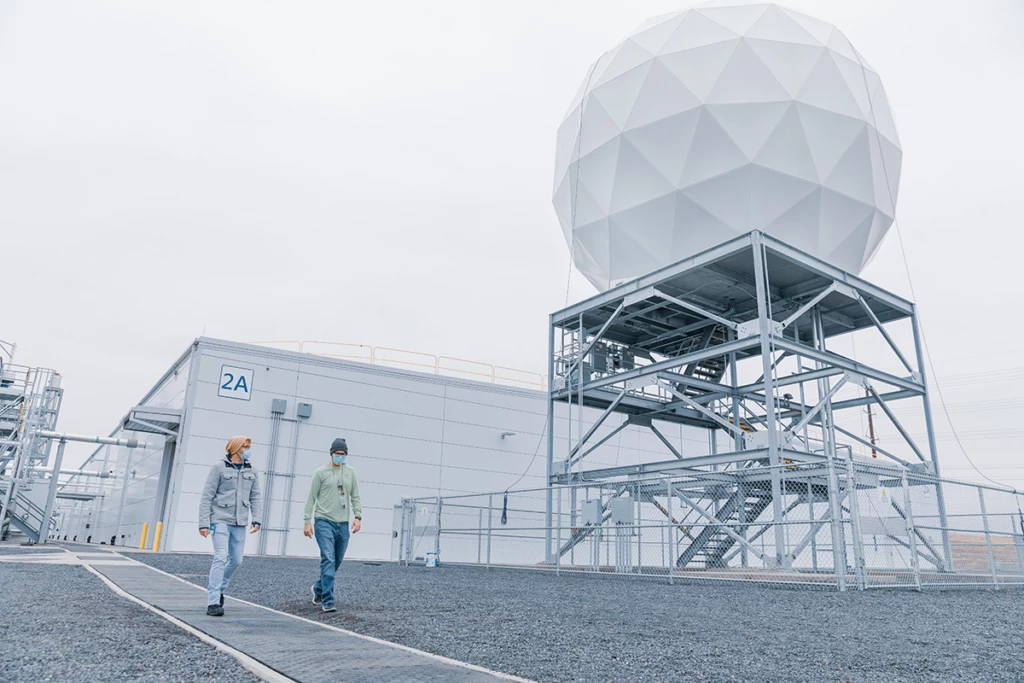
A cargo ship is seen next to a new class of specialised landing dock in southern China. (Supplied: US Naval War College/Maxar Technologies)
"[Volt Typhoon] typically focuses on espionage and information gathering."
"Microsoft assesses with moderate confidence that this Volt Typhoon campaign is pursuing development of capabilities that could disrupt critical communications infrastructure between the United States and Asia region during future crises."
"In addition, Volt Typhoon tries to blend into normal network activity by routing traffic through compromised small office and home office network equipment, including routers, firewalls and VPN hardware."
Microsoft
Research
Threat intelligence
Microsoft Defender
Threat actors
"A [People's Republic of China] state-sponsored actor is living off the land, using built-in network tools to evade our defences and leaving no trace behind."
"That makes it imperative for us to work together to find and remove the actor from our critical networks."
"Indicators of compromise [first discovered by Microsoft, attributed to Volt Typhoon, a Chinese state actor active since mid-2021 using a style of attack described as] living off the land [using existing network tools and valid credentials to avoid detection]."
Rob Joyce, director of cybersecurity, U.S. National Security Agency
U.S. critical infrastructure has been targeted by State-sponsored hackers from China, warned Microsoft, alerting cybersecurity officials across the globe in a co-ordinated strategy to identify and stop the perpetrators. One of several international agencies, part of the Five Eyes intelligence alliance, the Canadian Centre for Cyber Security took its part in amplifying the alert issued by the U.S. National Security Agency.
The Microsoft report indicated that infrastructure facilities around the United States, including Guam, where the U.S. maintains an air force base and naval port, have already been targeted by Volt Typhoon. Both represent central elements of the American military presence in the Pacific Ocean. Guam and its military installations were among the principal targets according to Pentagon officials, of the Chinese spy balloon shot down in February after drifting for a week through North American airspace.
The suspected Chinese spy balloon drifts to the ocean after being shot
down off the coast in Surfside Beach, South Carolina, U.S. on February
4, 2023. (Randall Hill/Reuters)
The Canadian Centre for Cyber Security joins its international partners in sharing this newly identified threat and accompanying mitigation measures with critical infrastructure sectors."
"Let us strike from schools and from work and remove the dictatorial traitor Xi Jinping."
"We don't want COVID tests, we want to eat; we don't want lockdowns, we want to be free."
Banners strung up on bridge in Beijing, China
"We are all on the same path. We are about to take action. I hope you can retweet this."
"Tell dictator Xi Jinping that there are still some men left in China who walk the path to freedom."
Peng Zaizhou Twitter account
"Only underneath that despair will there
be resistance."
"This isn't the first time someone has come
forward, and it won't be the last ... Xi Jinping's rebellious actions
are sure to spark more political agitation."
1989 student protest leader Wang Dan
"The person who hung the banner
posted a link to a website. Everything he did was within the
scope of the constitution of the People's Republic of China."
"He asked for the recall of the CCP
general secretary [Xi Jinping] and also put forward his own views on how
to elect [a new leader]."
"This is all legal and in accordance with the party constitution, so I think he is someone within the [party or government]."
Social media user under the pseudonym Tang
The protester who hung two banners off a
Beijing overpass on Oct. 13, 2022 can be seen on the bridge at the left
edge of the banner. Radio Free Asia
The manifesto of a protester, now identified as Peng Liva, and taken into police custody was removed from the internet. The manifesto called for people to revolt against the tyranny of the Xi Jinping regime by smashing COVID testing centres. This, at the very time that the Chinese president was attending the Chinese communist Party's Congress. Mr. Xi is expected to come out of that congress the first leader to be granted a third term since Mao Zedong. The congress is to open with the president's speech televised, outlining priorities for the next five years.
The month-long process of changing appointments at the elite level of the People's Republic, the party and the government, will proceed from there. And at this conspicuously auspicious time for Xi Jinping awaiting the inevitable outcome, the protest lit by Peng Liva will earn him a long imprisonment in a closed trial, making a martyr of him. The support he will have in his campaign will swell underground and become enormously difficult to control. The immediate result, however, is a censorship shut-down of anything resembling a protest against the current government.
The protester [in orange] who hung the banners off a Beijing
overpass on Oct. 13, 2022 is placed in a police car. Credit: Screenshot
from Reuters video
The immediate impression made by the two banners hung so prominently by Peng Liva on Sitong Bridge in the Chinese capital has seen widespread discussion on Twitter, now banned in China. There is no mention of the event on the censored Chinese internet. Yet another movement that by necessity has gone underground where it sizzles and swells and promises to ignite a wider movement inimical to the plans of the Xi regime. On line users had their accounts frozen on WeChat for posting or discussing the protest, while photographs and videos documenting the event were scrubbed.
The courage of the protester has been praised, he is called a hero, a 'warrior', the 'new tank man'. No trace of the banners or of a fire that had sent up a smoke plume on the bridge remains. Terms related to the picture and the protest on search engines yield no results on China's censored internet. "There was a brave person in Beijing today", one Chinese social media user wrote, with thumbs up and roses. On the WeChat app, support has arisen sharing links to a song called "Sitong Bridge" the name of the bridge in the Haidian sector of Beijing. The song too is now censored in Chinese music apps.
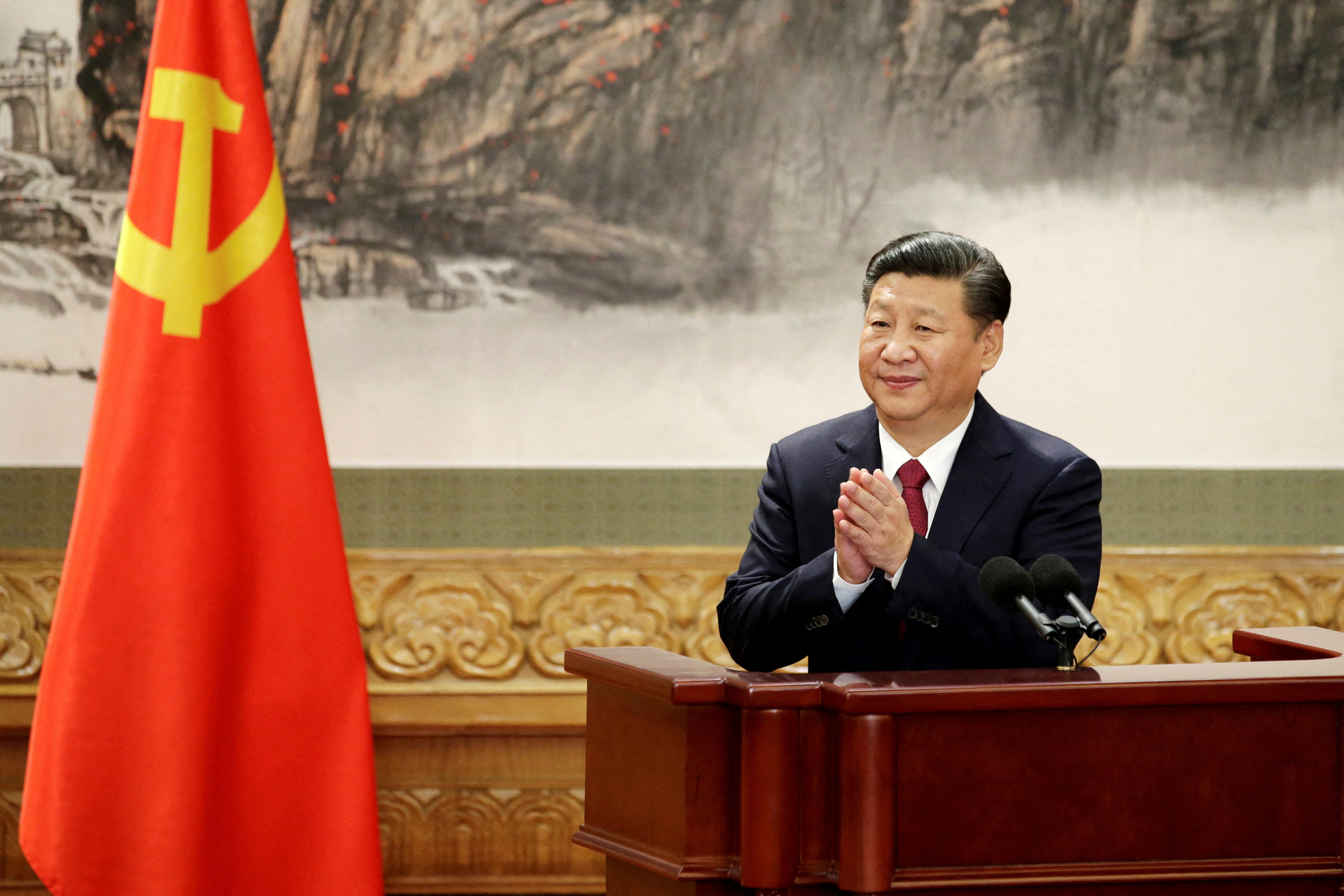
Chinese President Xi Jinping claps after his speech as China's new
Politburo Standing Committee members meet the press at the Great Hall of
the People in Beijing, China REUTERS/Jason Lee/File
Photo
"China is currently stable, especially its capital Beijing."
"The COVID-19 epidemic has been well controlled here."
"In Beijing there is no public dissatisfaction caused by epidemic control as in some other remote places in China."
Hu Xijin, former editor nationalistic Global Times
"The activity that's being alleged [police stations] would be entirely illegal, totally inappropriate and would be the subject of very serious representations."
"[There is] growing evidence of foreign interference] in Canada by China."
"Evidence suggests that the largest source of foreign interference in Canada by state actors is coming from [People's Republic of China] sources [as per report from National Security and Intelligence Committee of Parliamentarians]."
"It's really only in the last couple of years that the balance of conversation has shifted to them [Chinese-Canadian citizens] talking about how intimidated they feel within Canada, and the growing risk they feel for raising concerns, even within Canada."
"There is space for legitimate police liaison state to state, but the allegations reported in the press would fall well outside of that."
Weldon Epp, China specialist, Foreign Affairs Canada
"I don't think any of us are, to be honest, surprised."
"We've heard for a long time about people intimidated and threatened in this country."
Member of Parliament Heather McPherson Foreign Affairs critic, NDP
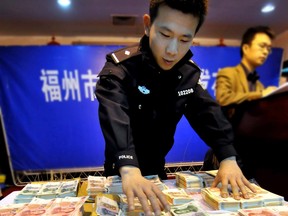
Police
in the Chinese city of Fuzhou show off seized counterfeit money in this
2009 photo. Fuzhou security services have now set up at least three
branch offices on Canadian soil. Photo by STR/AFP/Getty Images
In actual fact, it has not been merely the last couple of years that Beijing has infiltrated Canada at every level, from business, science, elected representatives in governments at different levels, academia, in a deeply concerted strategy to extract commercial and national secrets to advantage China. From the installation of scientists at the most elite level, at Canadian science laboratories and universities, top-level executives at Canadian industries, and elected representatives in provincial and federal legislatures.
From the Winnipeg-based National Microbiology Laboratory, to Nortel Networks, from Confucius Institutes in Universities to sitting members of the Canadian Senate, Beijing has called upon its expatriate community to invest themselves in furthering the interests of the Chinese Communist Party. It is not only by cyberespionage at which China excels, but espionage and appropriation of classified information at every level. Known, and tolerated until Beijing became a trifle too aggressively predatory.
Complaints of harassment by Canadian citizens of Chinese heritage have been amplified just lately, but they have occurred for years, when agents of the Chinese mainland have intruded on people's lives and harassed and intimidated Canadian citizens who express opinions contrary to Beijing's script. China's installation of its intrusive United Front Works Department keeping notes on expatriate Chinese domiciled as citizens in Canada applies pressure for cooperation with Chinese consulate offices in Canada through threats of harm to family members back in China.
A year ago, Beijing made it a crime against the state to criticize China, a crime punishable no matter where Chinese lived and where they had citizenship; China regards them all as Chinese citizens, ignoring their citizenship consonant on where they choose to live, to escape Beijing's totalitarian government. A report surfaced in September issued by the human rights group Safeguard Defenders which detailed the presence of over 50 'service stations' in operation globally; three located in Canada.
The 'service stations' are manned by Chinese police, and their purpose is to keep an eye on Chinese living abroad. So that when Chinese 'dissidents' with citizenship in other countries make disparaging remarks and publicly air opinions contrary to Beijing's stated vision, they are contacted by these police, threatened and forced to 'voluntarily' return to China to face judgement in a Chinese court of law for having insulted China; stiff punishment of incarceration meted out, to silence adversarial critics.
It is Chinese security services that operate these 'service' stations, not Chinese diplomats helpfully giving assistance for mundane and routine issues such as driver's license renewals and visas for expatriate Chinese, as claimed. "The pandemic made international travels not easy and quite a few Chinese nationals found their Chinese ID cards and/or driver's licenses expired or about to expire, and yet they could not get the ID renewed back in China in time", was the helpful explanation given by the Chinese Embassy in Belfast.
"Involuntary return" has become a system through which China compels its expatriate population to return home to stand trial and face punishment for daring to violate Chinese law while abroad. Beijing, to demonstrate just how successful this initiative to control Chinese no longer living in China itself has been, boasted of 230,000 Chinese having been "persuaded to return" on a number of different charges.
Canada, Professor Epp informed the parliamentary commission he spoke before, has failed to file a diplomatic complaint with Beijing over the presence of these stations on Canadian soil, although an RCMP investigation is taking place. Canada does in fact, have bilateral treaties with some nations such as the U.S. which established an intelligence post in Toronto linked to the New York City Police Department in the wake of 9/11. Postings agreed to by all concerned. Which is certainly not the case with China's intrusive police presence in Canada.
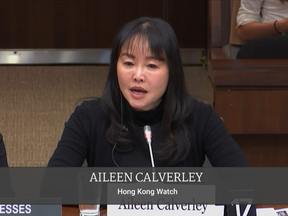
Aileen
Calverley with Hong Kong Watch testifies before a House of Commons
committee regarding reports that the People's Republic of China has
opened three police stations around Toronto. "With the police stations,
they can intimidate people like us," she said. Photo by Parliament of Canada
The People's Republic of China and Canada the "Running Dog" of the U.S.
"We judge it very likely that Canadian voters will encounter some form of foreign cyber interference ahead of, and during, the next federal election."
"The People’s Republic of China utilizes
its growing economic wealth to mobilize interference operations: ‘with
deep coffers and the help of western enablers, the Chinese Communist
Party uses money, rather than Communist ideology, as a powerful source
of influence, creating parasitic relationships of long-term
dependence'."
"[Canada is an] attractive and permissive
target [for Chinese interference that endangers the] foundations of our
fundamental institutions, including our system of democracy itself."
Communications Security Establishment, Canada
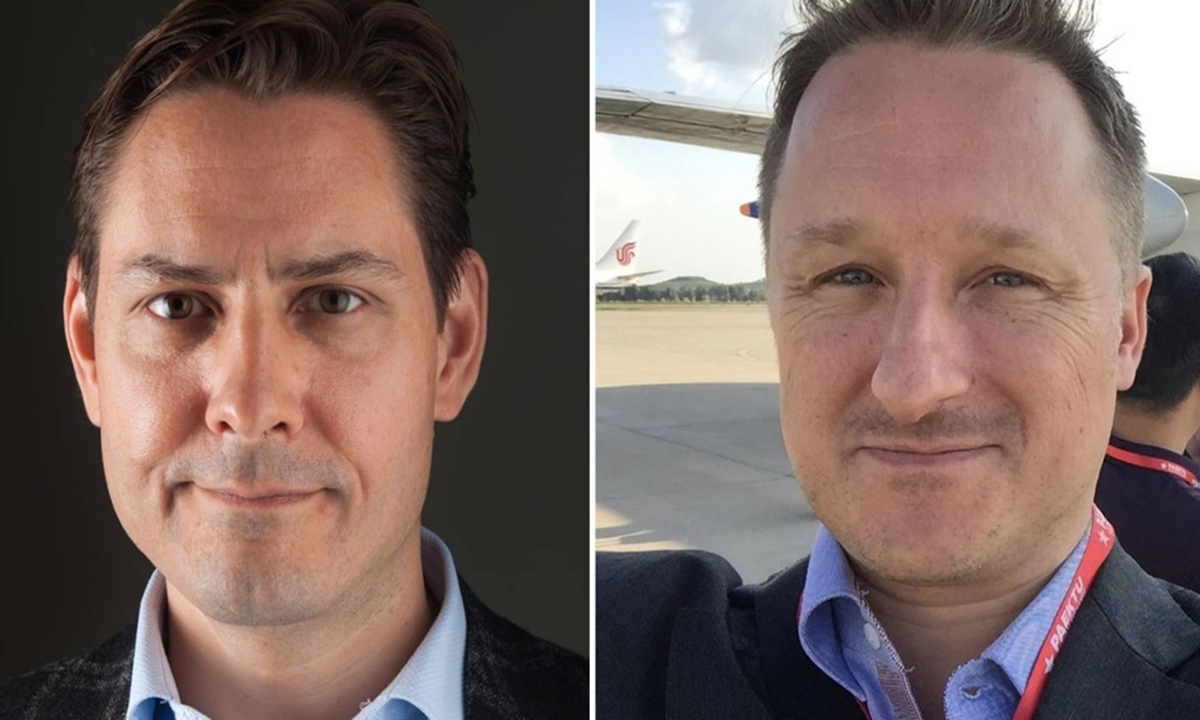
"[The current Liberal government's main political opponent, Conservative leader Erin O'Toole] proposes to [stand up to China with a strong and coherent strategy in collaboration with allies in a robust and co-ordinated international response to China's disregard of the rule of law] to do all that and much much more, which is why it's the Conservatives who really worry Beijing. Among other things, the Conservatives would stop payments to the Beijing-dominated Asian Infrastructure Investment Bank, bar the Huawei Technologies Company from Canada's 5G internet connectivity rollout, suspend the Canada-China Legislative Association, and sanction the most senior Chinese officials, including Xi Jinping, over the arbitrary arrest and detention of Michael Kovrig and Michael Spavor imprisoned over 1,000 days ago to retaliate for Canada's detention of Huawei CFO Meng Wanzhou on a U.S.Justice Department extradition warrant."
Terry Glavin, author and journalist, National Post
"We think that, increasingly, there’s concerns about former public
office holders who have gone and signed contracts with Chinese
institutions and entities that are close to the communist leadership in
Beijing."
"We think that that is a conflict of interest for
recent public office holders and, I think, present a threat to our
national security and the defence of our interests and values."
Conservative Member of Parliament Michael Chong
China infiltrates Canada with the use of a network of political,
business and media operatives directed from Beijing, familiarly known as the United
Front; its purpose, to co-opt the heritage-loyalty of Chinese-Canadian communities and leaders. "The United Front … is an important magic
weapon for strengthening the party’s ruling position … and an important
magic weapon for realizing the China Dream of the Great Rejuvenation of
the Chinese Nation", Xi Jinping himself explained in a speech he gave in 2015.
The Chinese embassy in Ottawa and consular offices elsewhere in Canada are open to actively encouraging Chinese-Canadians to lobby the Canadian government in favour of China; some of the groups both pro- and anti-Beijing, are either praised or harassed by the thousands of Chinese students on study visas at Canadian universities. Chinese-Canadian groups mounted protests against each other when the anti-Beijing groups criticized Beijing's takeover of Hong Kong, while those that took Beijing's position took the opposite tack.
Now that the potential for a Conservative government returning once the September 20 general election is over in Canada threatens China's virtually unopposed interference in Canadian politics, culture, business, technology and education, a none-too-subtle threat has been aired in a Chinese newspaper with state links that there will be 'consequences' should Canadians vote in a Conservative government which has pledged to sanction Beijing political elites over the political detention of the two Michaels.
An article posted on the Chinese social-media platform Weixin with a huge audience of at least a billion in China, claims a proposed Foreign Agents Registry Act brought forward by B.C. Conservative MP Kenny Chiu who sits on a House of Commons subcommittee on international human rights, would force Chinese-Canadians to register as foreign agents should they express views sympathetic to Xi Jinping's Communist Party of China. Claiming falsely that the private member's bill would "suppress" and punish Chinese-Canadians.
The Canadian Security Intelligence Service and National Security and Intelligence Committee of Parliamentarians have consistently given warning of China's overseas belligerence; spying, sabotage and influence operations, representing a grave threat to national security in Canada. None of which gave pause nor hesitation to the Liberal government of Justin Trudeau in continuing to sign contracts with state-affiliated Chinese firms, from pharmaceuticals and technical-communication devices procurement.
"Li [Li Haidong, a professor at the Institute of International Relations of the China Foreign Affairs University] said that even as an opposition party, the Conservatives should take a
"responsible" stance in dealing with China. "There may be no
substantial consequences to pay for hyping the China issue during an
election. But the Conservatives dare not stand up so hostile against
China after taking office. So the promise it made won't turn into
policies, which will end up being a 'face losing' situation for the
Conservatives."
"The expert also pointed out that regardless of the election result, a
deadlock between China and Canada is "structural," and the North
American country will continue to serve as the US' toady to confront
China."
Global Times ... English-language Chinese state media source
Former Canadian diplomat Michael Kovrig and Canadian businessman Michael Spavor (right) arbitrarily arrested as political hostages in China, accused of 'espionage' in retaliation for the detention of Huawei CFO Meng Wanzhou for rendition to the U.S. on a State Department extradition warrant.
"It's lending prestige to an institution that is not deserving of prestige."
"It's now conducting political prosecutions under essentially a state-trial process. For someone as esteemed as the former chief justice of Canada to be a member of that court ... is actively supporting Beijing's goals in Hong Kong, which are to crush the democracy movement."
Ryan Alford, law professor Lakehead University, Thunder Bay, Ontario
"We have to recognize who Beverley McLachlin is, the important role she played as a jurist in Canada."
"If she came to the conclusion that she couldn't make independent and correct decisions, I'm very confident ... she would take the appropriate step and resign."
Jonathan Rosenthal, criminal lawyer, bencher, Law Society of Canada
"The presence of judges from England, Australia or Canada on the court, signing on to the decisions, enhances public confidence in their justice system and in those decisions."
Former Chief Justice, Beverley McLachlin, Supreme Court of Canada
"Losing our foreign judges on the [Court of Final Appeal] in this way would lead to a crisis of confidence in our judicial system."
Simon Young, law professor, University of Hong Kong
Former
Chief Justice of the Supreme Court of Canada Beverley McLachlin in
December 2017. She has recently been a part-time judge in Hong Kong.Photo by Justin Tang/The Canadian Press/File
Foreign judges assigned to sit for three-year stints as overseas jurists in Hong Kong are, according to Philip Dykes, head of the Hong Kong bar association 'ornaments' of the system. The world would have the impression that something was 'seriously amiss', he stated, should a mass departure ensue of those same high calibre overseas jurists. Their presence, in other words, lends trust and prestige to the pursuit of justice in Hong Kong, and by extension, China now that Beijing effectively overrides Hong Kong law.
Britain's Baroness Brenda Hale announced she will not be returning for a second term, following her appointment alongside Canada's McLachlin in 2018. Much has changed during that period, and none of it good for the rule of law and democracy in Hong Kong. "The jury is still out" she commented, on how the court might function under the weight of the new security law where trials with serious criminal charges may be held in camera, where the Beijing-appointed chief executive now has the prerogative to select which judges may sit on national security cases.
: Court of Final Appeal Justice Andrew Cheung (left) will replace Chief
Justice Geoffrey Ma (center) early next year. REUTERS/Tyrone Siu
Doubt over the viability of the Hong Kong court under these circumstances also led another foreign judge to leave the court; Australian James Spigelman, who cited his concerns over the way the new law impacted justice in Hong Kong, Beijing-style. The new legislation has joined the city's constitution, overriding the 1997 Basic Law dating from the British-China agreement when Britain turned Hong Kong, then a British protectorate back to China, giving it autonomous special status under its own constitution.
Professor Alford helpfully pointed out that in the case of the wealthy Hong Kong publisher Jimmy Lai, a critic of Beijing's authoritarianism and anti-Democratic stance, Mr. Lai had to prove he would not be a threat to national security before bail could be granted, thus reversing common-law general onus on prosecutors to demonstrate why a defendant should be denied bail. Where the Court of Final Appeal upheld the lower court ruling indicating its hands to be tied by the new security law.
Beverley McLachlin agreed to sit for another three-year term as a "non-permanent" member of Hong Kong's final appeal court, one of 14 judges from common-law jurisdictions, a reflection of the Basic Law, meant to replace the process under British rule permitting rulings to be appealed to a higher London court. Beijing, however, has encroached on its judicial independence, despite that Ms.McLachlin insists the courts remained "very independent".
PROTEST TARGET: A bystander views damage to a vandalized entrance of the
Court of Final Appeal in Hong Kong’s Central district last December.
REUTERS/Laurel Chor
The national security law was imposed on Hong Kong under the reasoning it was a requirement to enable stability to be restored to Hong Kong after pro-democracy protests roiled the city-state. Punishment up to life in prison for offences viewed as undermining the authority of the state, colluding with foreign countries or "external elements" and pushing for independence sums up the statute. Charges under that statute have targeted over a hundred people since it became law in 2020, mostly protest organizers and pro-democracy politicians.
Ms.McLachlin's decision to sit for another three-year term on the Court of Final Appeal in Hong Kong effectively validates the authority of the People's Republic of China over Hong Kong despite its pledge not to disturb the status quo outlined in the Basic Law for a fifty-year period. In February directors of the Law Society of Ontario, the legal regulator of the province, debated a motion calling on her to re-think her decision. It was defeated by a wide margin as being beyond their purview. All of which typifies official Canada's timidity with the Chinese dictatorship.
DEFIANT: Students don Guy Fawkes masks during a news conference to
support anti-government protests before their graduation ceremony at
Hong Kong Polytechnic University in November. REUTERS/Shannon Stapleton
"The agencies will form a view, and for the partnerships that are deemed high risk, they will not be funded."
"The bottom line is that [research projects] that are found to be high-risk will not be funded and those which come with a low-to-medium risk assessment will be required to have risk-mitigation measures put in place."
Innovation Minister Francois-Philippe Champagne
"Money is no object in Chinese R&D, and the Chinese partner in most cases would be happy to step in to fund what would otherwise have been the NSERC [Natural Sciences and Engineering Research Council] portion."
"This would still have Canadian researchers contributing to projects that hold a national security risk for Canada."
"The guidelines seem to be limited to areas where there is federal funding. National security threats are hardly limited to areas receiving federal funding and these guidelines should cover all university research in a way that reflects federal responsibility for all aspect of national security."
Richard Fadden, former CSIS (Canadian Security Intelligence Service) director
A view by drone of the National Microbiology Laboratory in Winnipeg on Wednesday, June 9, 2021. (Trevor Lyons/Radio-Canada)
The Liberal government was recently on the embarrassing political hot seat with opposition parties insisting on assessing information in Parliament relating to the situation that took place at Canada's high-security microbiology laboratory when two Chinese scientific investigators, a husband and wife, were summarily escorted out of the laboratory in 2019 and a year later when their high security credentials were revoked, fired from the lab. Escorted out of the lab at the time was a number of Chinese biology students working alongside them at the National Microbiology Laboratory.
An unauthorized shipment of Ebola and Henipah viruses left the laboratory, sent to the Wuhan Institute of Microbiology with which the two scientists collaborated. It was also revealed that a microbiology specialist who worked for the People's Liberation Army biology laboratory was employed for a while at the Winnipeg laboratory. China has long had a habit of exploiting secret data, the intellectual property of other countries, lifting it and treating it as their own, providing useful short-cuts to refine their own scientific investigations.
Xiangguo Qiu, her biologist husband and her students were escorted out
of the National Microbiology Laboratory in Winnipeg in July 2019. The
RCMP have been investigating a possible 'policy breach' reported by the
Public Health Agency of Canada. (CBC)
The government of Prime Minister Justin Trudeau fought to deny the opposition Conservatives in the House of Commons access to revelatory documents and it has now seen fit to resort to protecting future federal government-funded research projects from the sticky hands of foreign governments. Without naming China specifically, the federal innovation minister announced new guidelines for scientific research granting to avoid as much as possible in future the kleptocratic inroads that Beijing has made into Canadian research property.
The head of the Public Health Agency of Canada defied a Parliamentary order to present the documents requested that would reveal the explanatory background of the two fired Chinese biologists who worked at the Winnipeg laboratory. The situation surrounding the two and the mystery of specific details aroused attention and gave rise to the urgent matter of security related to scientific research, with Canadian intelligence property falling into the wrong hands. Henceforth, researchers applying for grants through NSERC must complete a comprehensive security risk assessment.
Qiu and her husband, Keding Cheng, were escorted from the
National Microbiology Laboratory in Winnipeg on July 5, 2019. After
that, the University of Manitoba ended their appointments and reassigned
her graduate students. (Governor General's Innovation Awards)
A national-security review conducted by Canadian security agencies and a team of scientists will be called for any project assessed as "higher risk". Any project judged to fall into the category of high risk will not be eligible for government funding. Roughly $1.3-billion is granted each year by the National Sciences and Engineering Research Council to fund research and training. It is not the only funding source, however since the U15 Group of Canadian Research Universities including most of Canada's research-intensive universities lays claim to funding $8.5-billion of annual research.
Last year the Canadian Security Intelligence Service repeatedly gave warning of Canada targeted by sophisticated state-sponsored infiltrators whose function it is in service to their countries of origin to purloin information and intelligence from Canadian companies and researchers. NSERC grants for the present involving researchers and private-sector partner organizations will require inspection and clearance to qualify for federal financial support for their projects. In time the process is meant to be expanded to cover all federal granting councils along with the Canadian Foundation for Innovation.
Grants are to be scrutinized to determine research that could be of potential benefit to other countries' military, police or intelligence agencies, or that would focus on critical minerals, nuclear power, critical infrastructure or technology and software subject to restrictions under the Export and Import Permits Act. All those categories neatly sum up the interests of the People's Republic of China in securing data and rights of all kinds, as well as its focus on monopolizing critical minerals and software and other areas of technological advances.
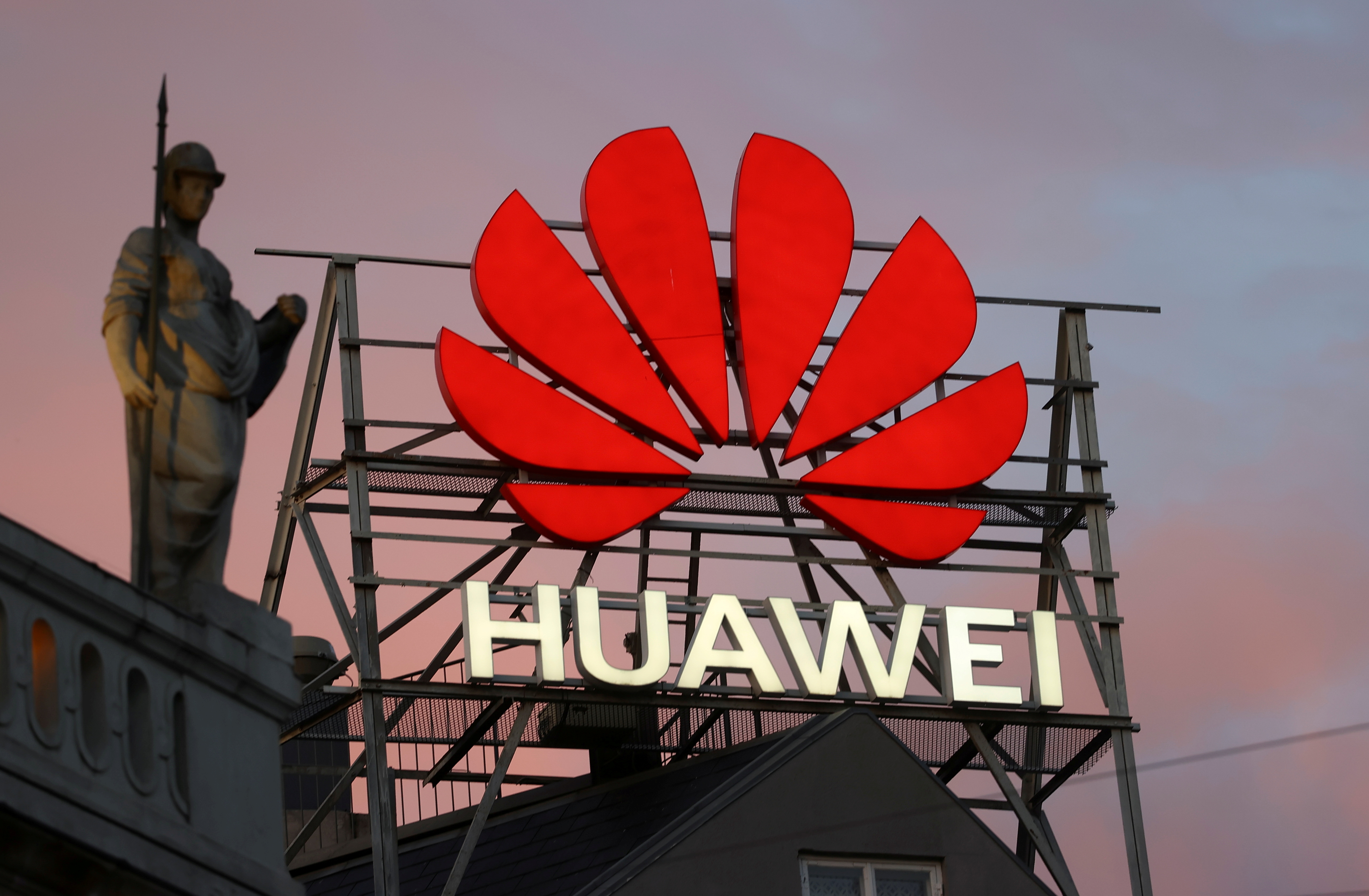
Criticism has come the way of the federal government for its obvious willingness to trust cooperative ventures with China-based corporations which then have the opportunity to cyber-access highly secret information. Such as the federal government partnering with Huawei Technologies in the funding of computer and electrical engineering research at Canadian universities. NSERC announced in February its collaboration with the Canadian arm of Huawei to fund studies, in contrast to top universities in the U.S. and Britain which have halted further research funding from Huawei over intellectual property and national security concerns.
A 2018 investigation revealed Huawei to have established a vast network of relationships with leading research-focused universities in Canada in the creation of a steady pipeline of intellectual property (theft) the company uses to underpin its own mobile technology market position. Western countries have assumed growing concerns over efforts by China to scour the world for technology with both civilian and military value -- characterized by Richard Fisher, senior fellow on Asian military affairs at the International Assessment and Strategy Center as a global "intelligence vacuum cleaner".
The logo of the Chinese telecommunications giant Huawei Technologies is
pictured next to a statue on top of a building in Copenhagen, Denmark,
June 23, 2021. REUTERS/Wolfgang Rattay/File Photo
"Canadians are saying to Chinese friends that we don't want them to make the same mistakes. We do so not because we have a superior moral position, not because we have the answers to the problems they are trying to solve and not because we want to embarrass China. We do it because of the pain we feel over what happened in our own country and for what we can learn from each other in not making such mistakes again."
"[Canadians wouldn't tolerate mass arrests, forcing people to attend schools, sterilizing women or relocating villages], except that we did all of those things, and we did them throughout our short history as a country, most appallingly to Indigenous peoples, but also to recent immigrants and minority groups who were deemed undesirable, untrustworthy or just un-Canadian."
"On a different question about the degree of democracy, respondents in China expressed greater satisfaction with the status quo in their country than did respondents in Canada or the United States."
"The management of relations with other countries, especially great powers, is exceedingly complex and does not lend itself to one-off pronouncements that are based on the desire to perform without the responsibility to manage."
"The fact that China does not share our view of individual freedoms or, indeed, our interpretation of freedoms based on the Charter is not a basis on which to lecture the Chinese on how they should govern themselves."
Senator Yuen Pau Woo, Senate of Canada, Ottawa, Ontario
Independent B.C. Sen. Yuen Pau Woo has criticized Canada for condemning China's treatment of its Uyghur minority. (Justin Tang/Canadian Press)
Beijing is not shy about telling other countries not to interfere in China's internal relations in seeking out harmony between its peoples. Tibetans, Chinese Christians, the Falon Gong movement, Turkic minorities, the Uyghur Muslims in Xinjiang province all face oppressive situations of illegitimacy in the treatment meted out to them by the Chinese Communist Party which wants all of its citizens to be uniformly loyal, speaking the same language, thinking the same thoughts, venerating the CCP and President Xi, never venturing into opposition territory.
All of China's actions against its minority groups are fairly well known to the international community, most of whom feel that whatever China does is China's business, but for many Western democracies which decry China's oppressive autocracy. Rumours of body organs taken from prisoners for transplant in transplant tourism in China have not gained it much admiration abroad. Similarly charges that a million Uyghurs have been imprisoned, used as slave labour, brainwashed to deny their culture, traditions, religion and language have brought universal censure to China.
Beijing has an immense propaganda machine, has invested vast sums in establishing its Confucius centres in foreign academic institutions in the interests of serving as a link to greater friendship between countries through familiarity with Chinese history, culture and traditions to support an aura of relaxed trust between the West and China. It has also infiltrated other countries through its United Front Work Department which calls upon its former citizens living abroad to remind them that they have an obligation to their mother country to come to its defence.
Chinese expatriates the world over have entered governments and business and academia at every level, gaining trust and respect for their intelligence and skills and experience, while some among them at the same time nudge their adopted countries toward closer ties with China. China's influence and control has grown through its generous funding of developing nations' infrastructure in its Belt and Road initiative, through loans and technical assistance, in the process indebting countries to a benefactor and placing them in financial difficulties to repay the loans.
People wearing masks are seen during a rally in Hong Kong in 2019 showing support for Uyghurs and their fight for human rights. (Lee Jin-man/The Associated Press)
The Parliament of Canada, like many of its collegial-nation countries has seen fit to charge Beijing with cultural genocide aimed at its Uyghur and Tibetan population, which enrages President Xi Jinping. And Canadian-Chinese Senator Woo has cleverly and persuasively taken up a gentle verbal cudgel of admonishing Canada for its arrogance in charging Beijing with cultural genocide when Canada itself has perpetrated a very similar program dating from the 19th century targeting its Indigenous First Nations population.
The issue of the residential school system where it became law for Indian, Metis and Inuit children to attend these residential schools operated on behalf of the government of Canada by religious communities, and where First Nations children were scooped into the residential schools away from their families and tribes to be indoctrinated into the superior culture of European settlers laid waste to the culture of First Nations. Their children forbidden to speak their native languages, given new names, unable to see their parents, fed inappropriate food, harshly punished and given inadequate medical care.
Other appointed senators in the Red Chamber of 'sober second thought' in Parliament took umbrage at Senator Woo's first speech after being appointed to the Senate by the current Prime Minister in 2016, as a China apologist when he argued against a motion for the government of Canada to urge China to reduce tension in the South China Sea, his first message being to "deliver a message not on behalf of Canadians, but on behalf of Beijing". Senator Woo has also said that Canada "should give up on the idea that it is part of Canada's mission to change China".
As for Senator Woo's contention that Chinese are more satisfied with their government than are Canadians with theirs and Americans with their own, he might be reminded that Beijing closely tracks each and every Chinese citizen, knows the most intimate things about them; tunes in to their behaviour and their expressed opinions. Chinese simply do not express criticism of their government for legitimate fear of punishment in retribution. Canadians and Americans have the guaranteed freedom to do so if they wish.
In this 2018 file photo, a guard tower and barbed wire fence
surround a detention facility in the Kunshan Industrial Park in Artux
in western China's Xinjiang region. (Ng Han Guan/AP Photo)
It is really difficult to be too harsh over Senator Woo's position. An intelligent man, well spoken and making comparisons between the two countries on a superficial level, bypassing the aggressive stance China has taken toward its neighbours' claims to disputed border territories, from India to the Philippines, Japan to Korea and Vietnam, the world's trading colossus has revealed its agenda as a bully. One that does not hesitate to use the most underhanded methods of spying on other countries to snatch trade, military and government secrets for its own use.
Its transgressions are legion, from cyber espionage to infiltration of other nations while warning the international community that China itself will brook no interference in its internal affairs, much less its external affairs, threatening other nations that spurn offers to link their communication systems to China's, a country that seeks to dominate every sphere of human endeavour, from amassing rare earth minerals to investing in other countries' national enterprises, the better to rise to the top.
China regularly breaches Taiwanese airspace, but rarely with such a large number of aircraft
"In fact, the general public seems to believe that Beijing would not take that one extra step to war."
"Although there is undoubtedly a psychological warfare component to this activity, it nevertheless increases the risks of miscommunication and accidents, which could then quickly spiral out of control."
"The increasingly belligerent exercises added to similarly hostile rhetoric emanating from Beijing, also signal that the Chinese leadership is bent on escalation."
"We can't leave the [Chinese Communist Party] guessing, even less encourage it to conclude that it could get away with an assault against Taiwan."
"One moment of inattention, and the outcome could be catastrophic for Taiwan."
J.Michael Cole, Taipei-based, senior fellow, Macdonald-Laurier Institute
"Canada urges all parties to refrain from actions that undermine peace and stability across the Taiwan Strait and to avoid moves that alter the status quo."
"Canada continues to support constructive efforts that will contribute to peace, stability and peaceful dialogue across the Taiwan Strait."
"We are following the situation in the region very closely."
Department of Foreign Affairs, Canada
"We will stand with friends and allies to advance our shared prosperity, security and values in the Indo-Pacific region -- and that includes deepening our ties with democratic Taiwan."
U.S. State Department
"What we’ve seen, and what is of real concern to us, is increasingly
aggressive actions by the government in Beijing directed at Taiwan, raising tensions in the Straits."
"All I can tell you is we have a serious commitment to Taiwan being able
to defend itself. We have a serious commitment to peace and
security in the western Pacific."
"We stand behind those commitments. And
in that context, it would be a serious mistake for anyone to try to
change that status quo by force."
U.S.Secretary of State Antony Blinken
A Taiwanese soldier stands in front of a M60A3 tank during a military drill in Hualien, Taiwan, January 30, 2018.Photo by Tyrone Siu/ReutersChina has been flexing its military muscle in an obvious bid to intimidate Taiwan of late. Preparatory, it is increasingly seen, to moving into position to test Taiwan's defensive forces against a physical incursion by the Chinese military determined to follow Beijing's dictate that reunification must proceed. China's move against Hong Kong, effectively rescinding the agreement it signed with Great Britain at the transfer of the British protectorate back to mainland Chinese authority under a 'one country, two systems' agreement for Hong Kong's semi-autonomous democracy to be safeguarded for a 50 year span despite international condemnation has emboldened the People's Republic to complete its restoration of Chinese rule of its divided geography.
The recent dispatch of 15 Chinese planes entering Taiwanese airspace once again, the entry of a Chinese aircraft carrier carrying out 'routine exercises' close to the sovereign island, delivered a clear message of China's intent. Taiwanese foreign minister Joseph Wu, hoping to galvanize support from among Taiwan's allies and supporters broadcast a diplomatic 'mayday' message to fellow democracies that his country is prepared to defend itself "to the very last day", should the worst-case scenario develop.
It may or may not give comfort to the Taiwanese leadership to have the Biden administration reiterate its commitment to Taiwan is "rock solid", but then it only has to look at the same administration's assurances to Israel that the traditional U.S.-Israel stance of allowing "no light" to separate their firm commitment to Israel's security and very existence, to cast doubt on the sincerity of the declaration other than for diplomatic nicety conformation. The U.S. has never signed a binding security guarantee with Taiwan as it has with Japan.
As for Canada, whose Prime Minister never tires of pledging himself to peace, security and justice, there is a pro forma vapid response somewhat lacking in sincerity. Canada clearly treads carefully around Beijing these days. Beyond having crafted a declaration on arbitrary detention signed by 58 countries, deploring Beijing's penchant for putting pressure on countries that displease it mightily by 'unwarranted and illegal' criticism of the People's Republic for among, other issues, its penchant for diplomacy-by-abduction-coersion.
A confrontational attitude expressed by Canada against China by the current government of Justin Trudeau in support of Taiwan's democratic independence as a state separate and apart from that of China is simply not in the books. "One wishes that Ottawa would have the clearness of mind to acknowledge that only one side threatens war, and only one side engages in highly dangerous brinkmanship, and that it is that regime, not both of them, which needs to be singled out and called upon to de-escalate", commented Michael Cole of the Macdonald-Laurier Institute.
Taipei is sufficiently concerned over Beijing's strategy and a looming confrontation in gear with its unsubtle threats, to engage itself in the conduct of computerized war games, simulating a Chinese invasion. Hospitals in Taiwan are planning for the potential of mass casualty drills. In close to a quarter of a century, regional tensions have never been quite so high, with China-watchers suggesting risk-calculation has been stepped up in Beijing with the neutralizing of Hong Kong.
The "peaceful" process of reunification that Xi Jinping once spoke of belies the actions it has been taking to exchange muscle for soft words of blandishment. The Pentagon now considers it a high probability that Beijing will resort to force before decade's end. Admiral John Aquilino, commander of the U.S.Pacific Fleet, at this nomination hearing last month stated his opinion that "this problem is much closer to us than most think."
Confidence in the U.S. among its Asian allies would be under great scrutiny and pressure, were the U.S. to do nothing should China invade. Taiwan's geographic position also provides shelter to Japan from any military action by China. The U.S. policy of "strategic ambiguity" whereby it appears vague whether it might respond militarily in aid of Taiwan in the event of an attack now comes under scrutiny. Analysts in the U.S. feel that China has the necessary firepower it would take to occupy the island of 24 million people.
With a defence budget 25 times greater than that of Taiwan, with six times as many warships and six times the number of planes, the potential to swiftly overtake the island bringing brute force to bear would present no difficulties for China, without outside interference. China must consider follow-up implications however, were the U.S. to enter the fray in support of Taiwan where it would lead allies in blocking sea lanesm cutting Chinese imports and exports off\, and expelling China from the global trading system.
As for the Taiwanese civilian population, it appears they are less concerned of a Chinese move against the island than their leaders are. Xi, they point out, sent personal condolences to the families of the 48 victims of last week's train derailment, which they have taken as a sign hostilities are not pending, rhetoric aside and not Xi ingratiating himself with a population he plans soon to command. The risks of accidental escalation are simmering, but many in Taiwan calculate the timing for Xi is awkward, with much taking his attention for the present away from reunification.
There is the approaching 100th anniversary of the Chinese Communist Party in July, the Winter Olympics next February in Beijing, and the 20th party congress, where President Xi will seek approval for a third term. And the fact that U.S. allies most likely to be affected by conflict in the Taiwan Strait, are urging calm. Where Japanese prime minister Yoshihide Suga is promoting a "free and open Indo-Pacific" on rules-based order, to counterweight China's antagonism.
Chinese aircraft carrier Liaoning sails through the Miyako Strait
between Japan and Taiwan on its way to the Pacific in a photo released
on April 4, 2021.Photo by Handout/Defense Ministry of Japan via Reuters
And, as Mr. Cole of the Macdonald Laurier Institute points out, the need for the international community to unequivocally point out to Beijing the consequences of any untoward action involving a reluctant, battle-ready Taiwan militarily-forced to rejoin mainland China, surrendering its independence involuntarily, with attendant loss of life, to bring Beijing to a rational weighing of the price to pay for rash action.
"In the opinion of the House, the People's Republic of China has engaged in actions consistent with the United Nations General Assembly Resolution 260, commonly known as the 'Genocide Convention', including detention camps and measures intended to prevent births as it pertains to Uyghurs and other Turkic Muslims".
Conservative motion, House of Commons, Ottawa
"[I was] deeply disturbed by horrific reports of human rights violations in Xinjiang, including the use of arbitrary detention, political re-education, forced labour, torture, and forced sterilization."
"We have the responsibility to work with others in the international community in ensuring that any such allegations are investigated by an independent international body of legal experts."
Foreign Affairs Minister Marc Garneau, Ottawa
"Based on the evidence put forward during the subcommittee hearings, both in 2018 and 2020, the subcommittee is persuaded that the actions of the Chinese Communist Party constitute genocide as laid out in the Genocide Convention."
Parliamentary Subcommittee on International Human Rights, Ottawa
People gather on Parliament Hill on Monday, Feb. 22, 2021, to protest
the Chinese government's treatment of the Uighur minority in China. (Andrew Lee/CBC)
There, it's done. Elected members of Parliament representing all official parties voted unanimously to declare China an absolute human rights abuser, a genocidal government in Beijing, intent on transforming minority Muslim Uyghurs into Han Chinese citizens; their religion denied, culture denied, language denied; separatist aspirations denied, through an institutionalized disappearance of all that it means to be ethnic Muslim Uyghurs in an irreligious ideology of totalitarian Communism.
Unofficially, that is. In the sense that it wasn't the entire government of Canada that committed itself to that declaration. The sad and sorry fact is that the Cabinet of Liberal Prime Minister Justin Trudeau chose to separate themselves from all other Parliamentarians' decision to label the People's Republic for what it is; a genocidal regime that began with Tibet and now Xinjiang to complete its mission of one-for-all, and all-for-one-Xi Jinping idolatry.
While mouthing an opinion eerily similar to that of the convinced members of Parliament who voted 266 - 0 in support of the motion, Canada's minister of foreign affairs 'abstained' from the vote on behalf of the entire Liberal cabinet. Straddling the fence on China is a Liberal hallmark, after all. Absurdly enough, Canada's ambassador to the United Nations, Bob Rae has stated: "There's no question that there's aspects of what the Chinese are doing that fits into the definition of genocide in the Genocide Convention."
Foreign Minister Garneau's mention of an 'investigation by an independent international body of legal experts' points directly to the United Nations. Where it would be natural under any such circumstances for the Human Rights Council to have a good, hard look at China's ongoing discrimination against and deadly dehumanization of Falun Gong, Tibetans, Uyghurs, Kazakhs, Kyrgyz and Hui people -- if they weren't so busy condemning democratic Israel.
Interestingly enough, China sits on the UNHRC, alongside Russia, Cuba and Pakistan, all stalwarts of human rights support as it pertains to other countries; certainly not their own. Chinese foreign Minister Wang Yi appeared at the UNHRC's 46th session where he proffered out of the goodness of his heart, insight into China's perception of human rights. Where in China "happiness" and"security" are synonymous with China's drive to see its entire population reduced to CCP-supporting zombies.
They will attain happiness and a sense of comforting security by the simple expedient of abandoning the evils of free thought, free speech, freedom of religion, where "terrorism and separatism" are unequivocally universally condemned by all the people of the People's Republic of China which exists solely to represent the very best interests of its happy population, free to do as they are instructed.
A man wearing a face mask to protect against the coronavirus
walks past the Olympic rings on the exterior of the National Stadium,
also known as the Bird's Nest, which will be a venue for the upcoming
2022 Winter Olympics, in Beijing, Tuesday, Feb. 2, 2021. A motion passed
by the House of Commons today calls on the government to lobby for
relocation of the games out of China due to the country's human rights
record. (Mark Schiefelbein/The Associated Press)





![The protester [in orange] who hung the banners off a Beijing overpass on Oct. 13, 2022 is placed in a police car. Credit: Screenshot from Reuters video](https://www.rfa.org/english/news/china/ccp-bridgeman-10142022161722.html/eng_man_bridgeman_10142022-2.jpg/@@images/67ab702e-dc14-43c7-aea4-f1ff757b1a7d.jpeg "ENG_MAN_BridgeMan_10142022.2.jpg")

/https://www.thestar.com/content/dam/thestar/news/canada/2021/09/03/canada-and-china-a-look-at-what-political-parties-are-promising-in-the-federal-election/afp_9ly2h6.jpg)