Israel Alone
"For Israel, every civilian death is a tragedy. For Hamas, every civilian death is a strategy.""You cannot say you support Israel's right to exist and to defend itself and then oppose Israel when it exercises that right.""You cannot say you support Israel's goal of destroying Hamas and then oppose Israel when it takes the actions necessary to achieve that goal.""You cannot say that you oppose Hamas's strategy of using civilians as human shields and then blame Israel for the civilian casualties that result from this Hamas cynical strategy."Israeli Prime Minister Benjamin Netanyahu
 |
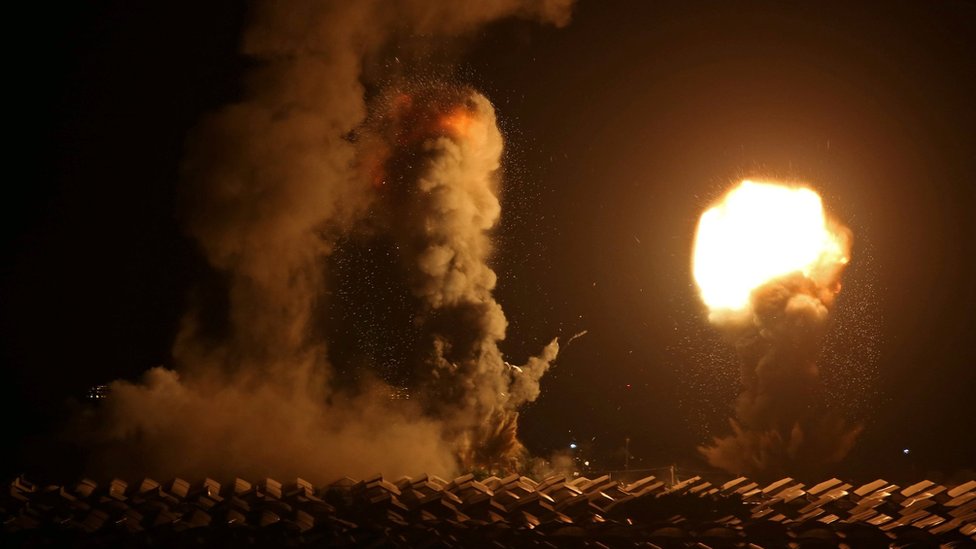
| Netanyahu vows to end Hamas Reuters |
In the best of all possible worlds it would not be possible to hold a moral position that Israel has an especial obligation to the international community to withhold its determination to destroy Hamas before the terrorist death-cult fixated in annihilating Israel and as many Jews along with the Jewish State as they could conceivably manage can succeed in its evil mission. Israel, which has been placed in an existential position that no other country has ever had to deal with; surrounded with majority Arab nations that intended its destruction at its rebirth in 1948.
And the group of Arabs who migrated from Egypt, Syria, Jordan and elsewhere in the Middle East to find a modicum of opportunity toward a vision of prosperity in Palestine at the turn of the 20th Century who took the name 'Palestinian' for themselves when it culturally and socially had been internationally recognized as referring to Jews, along with the fiction that this was not ancestral Judaean land, but Palestinian Arab land from antiquity to the present.
A group of people who mounted a public relations campaign aimed at the outside world to convince the international community that 'Palestine' equated with Arabs, not the original Judean inhabitants. An Arab population so hungry to dispute and claim ownership of the ancient Biblical land of Israel and Judah, their claim encompassed all that was of Jewish origins, and still does. Taught by their leaders to hate Jews with a fine passion, from birth to death. How to excuse the willing gullibility of the West which has succumbed to Arab blandishments to believe the 'victims' who victimize Jews?
Children taught in schools that Jews were the accursed enemies and it was their destiny to grow to adulthood to become martyrs for the cause of destroying Israel and murdering Jews. The education system funded by the United Nations Relief and Works Agency, supporting a society that lived to hate. Where employment for tens of thousands of Palestinians, including those belonging to Palestinian Islamic Jihad, Hamas and the Popular Front for the Liberation of Palestine could find employment.
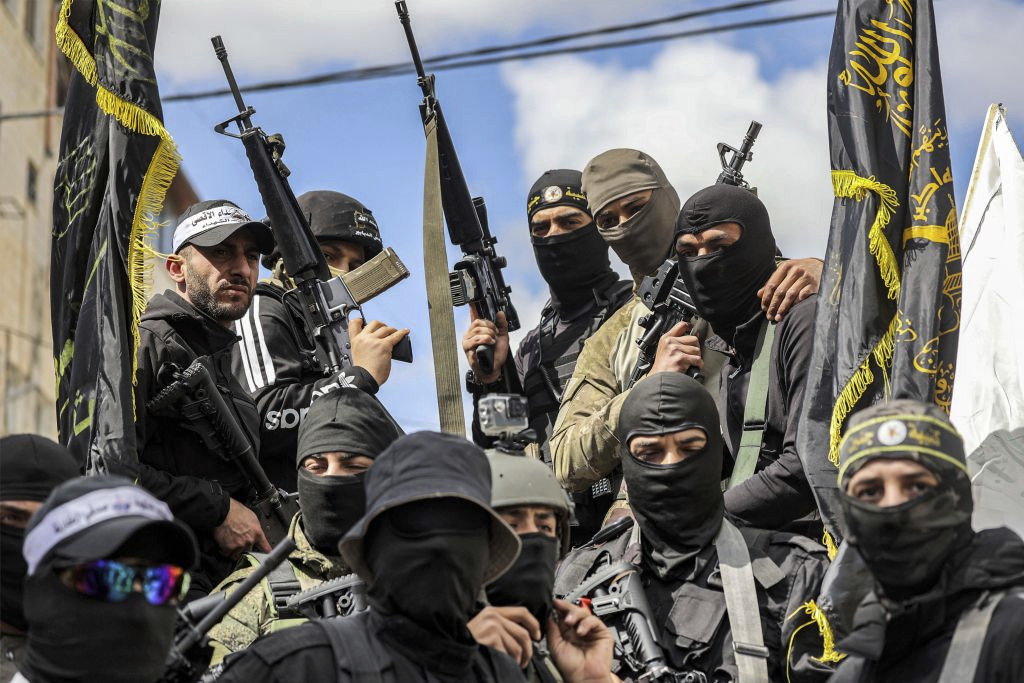
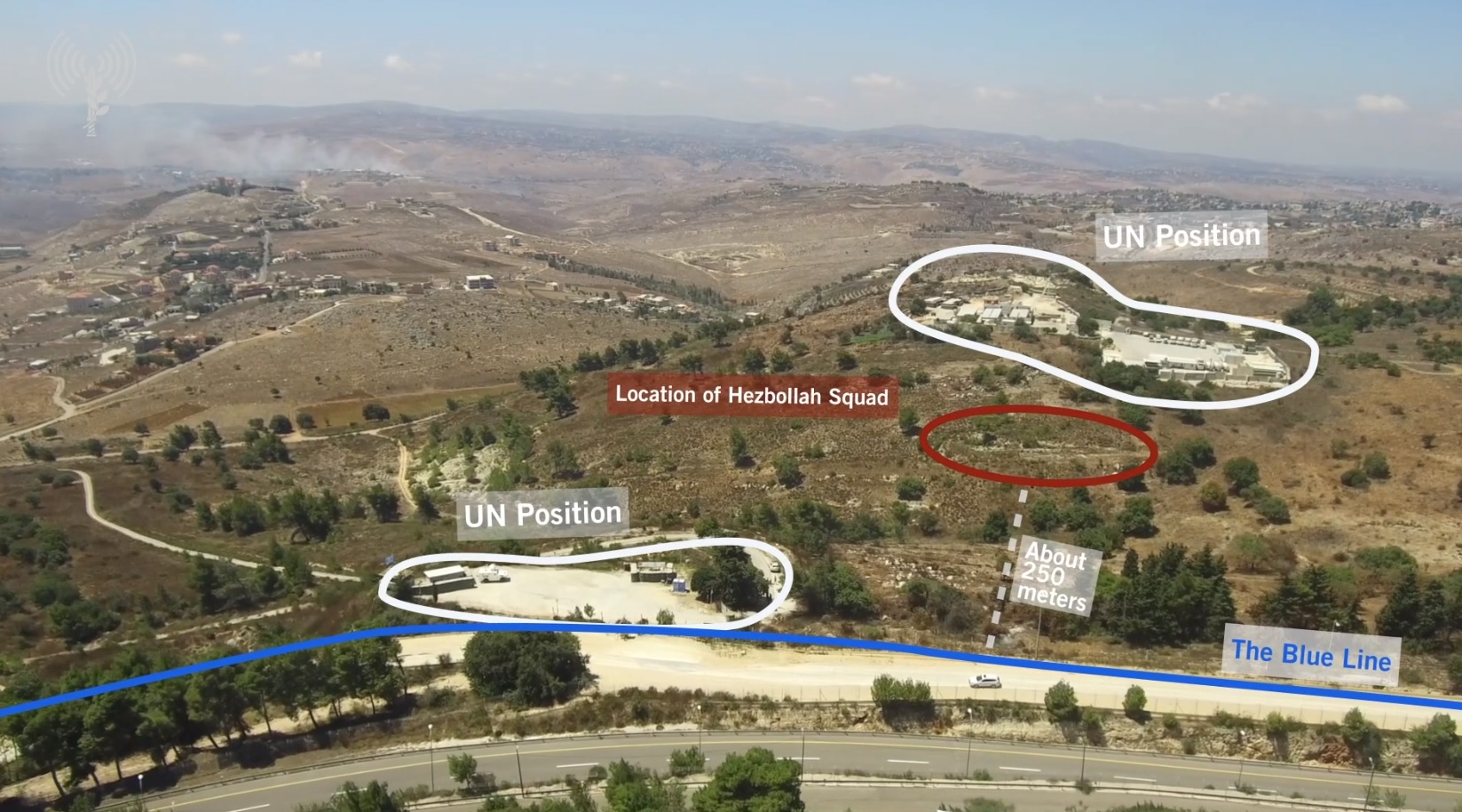
Juggling the Islamic Republic of Iran's proxy terror militia Hezbollah in the north and Hamas, Palestinian Islamic Jihad and the Popular Front for the Liberation of Palestine -- to name but a few of the steadily emerging terror groups that bedevil Israel's security -- the surprise attack of October 7 that swept into Israel from Gaza, a well-orchestrated tsunami of vicious hate, rehearsed and perfected to a degree of malevolently sadistic brutality hard to grasp even with the evidence still accumulating, took Israel's vaunted Intelligence agencies, Mossad and Shin Bet less than attentive to the horrors that would ultimately wrack the southern Kibbutzim and towns and the Nova Music Festival in mass murder and rape of Israelis, the kidnapping of 250 children, women, men, elderly, ailing Israeli victims.
Shock, bewilderment, anger, pain overwhelmed the country. The cohort of supporting nations sympathetic to Israel who have declared themselves repeatedly to be reliable in their kind regard for the Jewish state, its aspirations while admiring of its capabilities in governance, agricultural advances, technical, scientific and economic prowess, all pledged ongoing support. Hamas was condemned and the Palestinians in Gaza and the West Bank who overwhelmingly gave their support to the terror group whose mission of obliterating Israel reflected their own compulsion to hate and destroy swiftly morphed into a vulnerable population as Israel's military responded as any national military would; with the intent to destroy an enemy intent on destroying it.
International support for Israel took a slow dive as Hamas deployed its usual strategy of using Gaza's civilian population as human shields, vulnerable to Israeli bombing missions whose purpose was to flush Hamas operatives out of the incredible maze of tunnels built specifically to protect the terrorists from repercussions relating to their constant barrages of rockets into Israel, and as storage for an array of weapons. This time those tunnels, including those under schools, homes, hospitals -- virtually every square yard of the Gaza Strip -- also hosted Israeli hostages, where grim sexual assaults continued, with young girls and women viewed as legitimate prey for the monsters, both civilian and Hamas who captured them.
The world focused on Israeli bombardment of Hamas operations, the headquarters set up with full intent in delicate areas, hospitals and apartment blocks, leading to numerous but independently unverified numbers of civilian casualties. International law upholds the right of any sovereign nation that has been attacked to respond to its attackers. The Hamas strategy, one adopted by many Islamist terrorist groups, is to hide behind its civilian population, and the more such civilians who become victims of an internationally legitimate military response to an attack, the more fodder for the Hamas public relations machine.
Calling out to the world at large -- agonizingly willing to give credence to any claims of Israeli military malfeasance against Palestinian civilians -- that Israel's military is deliberately targeting Palestinians when it is Hamas that places them deliberately in harm's way, elicits a now-predictable response from the international community, quick to respond by chiding Israel, then blaming her for an independently unverified mounting death toll. The world somehow bypasses the need to demand that Hamas surrender the Israeli hostages it holds, and cease weaponizing hospitals, and allow humanitarian aid to reach the civilian population, but it does not.
And Israel's greatest traditional supporter, the United States? Initial support from the U.S., the E.U. and other nations was swift and firm, but has since waned; a factor of immigration, migration and illegal haven-seekers from the Muslim world, massing in great numbers in the West, and representing a political voting base that Western leaders are quite conscious of, leading to an unwillingness to restrain
hordes of Palestinian/Hamas supporters among a fifth column installed in Western democracies whose calls for the destruction of Israel finds appeal among other Jew-haters.
"He must pay more attention to the innocent lives being lost as a consequence of the actions taken. ... He's hurting Israel more than helping Israel", comments American President Joe Biden, turning his back on Israeli Prime Minister Benjamin Netanyahu, just as his predecessor and mentor Barack Obama had done. As a once-firm supporter of Israel, the United States is mistaken in feeling it has the authority, moral and political, to lecture Israel on what course of action it should take to please world opinion, in responding to the heinous bloodbath Palestinian Hamas perpetrated in Israel's south.
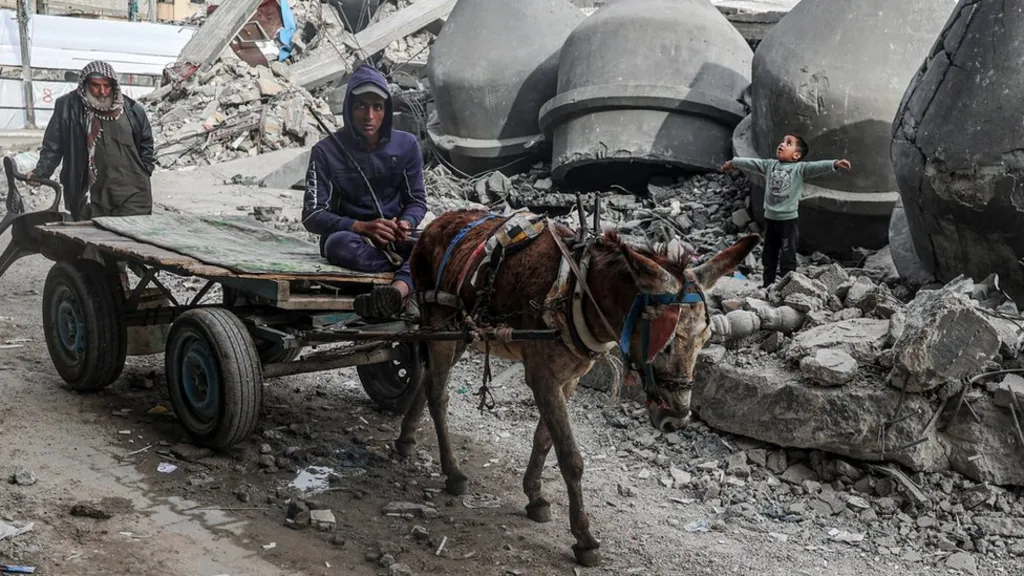 |
| More than a million Palestinians have fled to Rafah from other parts of Gaza Getty Images |
While addressing the issue from an internationally legal standpoint and supporting Israel's right to destroy the death-cult that seeks to destroy it, the international community shrinks back in horror at the potential of civilian Palestinian deaths -- when during World War II or any other war, such casualties were viewed as the unfortunate wages of war, often impossible to contain. Yet the Israel Defense Forces take every conceivable precaution possible, and warn civilians and urge evacuations for safety sake, measures no other nation has ever taken in the interests of preserving innocent lives.
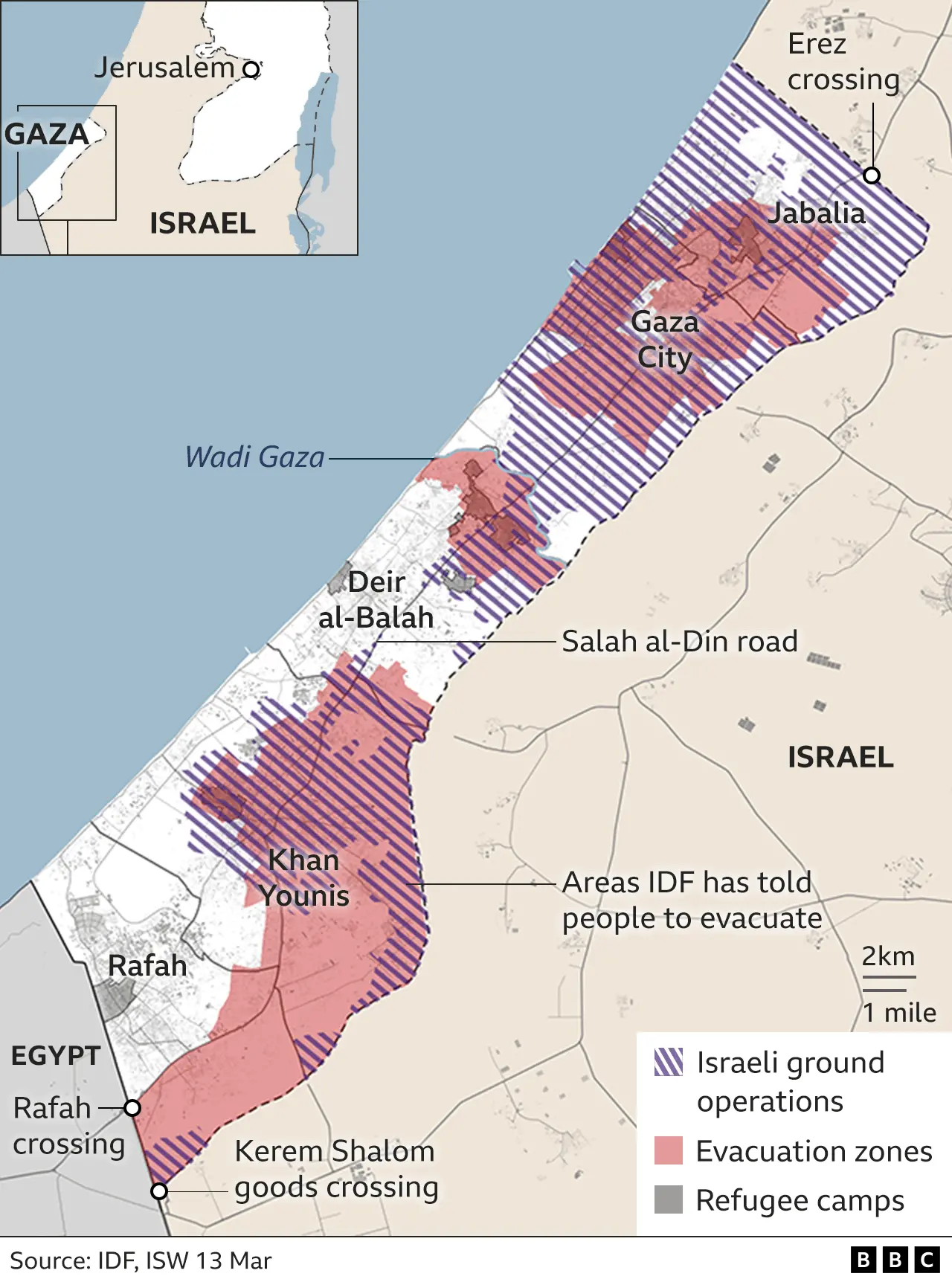
Now, when Israel is close to fulfilling its obligation to itself by destroying the possibility of any future functioning Hamas terrorist group, its Democratic liberal global cohorts, ostensibly in support of Israel's security and autonomy, lecture the democratically elected government of Israel to pull back from its goal. While international military professionals expert in the strategies and reasons for war, support Israel's strategy of eliminating Hamas, their governments urge Israel to cease bombing the tunnel hideaways and to set aside its intention of entering the Rafah stronghold where four Hamas battalions and its leaders shelter, among the 1.4M civilians it urged to stream there to shelter the terrorists from their coming due.
 |
Labels: Defense, International Right of Self Defense, Israel Security, Terrorist Threats, World Opinion
posted by Pieface | 5:57 PM
|
0 comments