
Politic?

This is a blog dedicated to a personal interpretation of political news of the day. I attempt to be as knowledgeable as possible before commenting and committing my thoughts to a day's communication.

Thursday, January 26, 2017

Modernizing Egypt, Slowly Empowering Egyptian Women

"Why cannot we, as a state concerned with the safeguarding of society ... issue a law that only legalizes divorce when done in the presence of a Maazoun [cleric authorized by government to officiate marriage and divorce] so we can give the couple a chance to reconsider?"
"It cannot be just a word that is casually uttered. [Children would be protected under a proposed law, preventing 'inappropriate behaviour'."
Egyptian President Abdel Fatah el-Sissi
(File : AFP)
Egyptian President Fatah el-Sissi, AP

President el-Sissi, with much on his agenda, not the least of which is Egypt's economy, its domestic crime rate, sectarian hostilities, the pressures of Islamists loyal to the now-outlawed Muslim Brotherhood, and the violent attacks taking place in the Sinai by Salafist Bedouin, Islamic State and el-Qaeda militias and Brotherhood-linked Hamas on Egyptian police and military, still obviously uses his nimble brain to ruminate on how Egyptian society could benefit by setting aside some of the Islamist-inspired cultural traditions such as a man's prerogative to end a marriage simply by stating "I divorce you" three times in succession. 

As a devout Muslim himself, President el-Sissi is aware of creeping fundamentalist Islamism and the violence that ensues, and has expressed his frustration in the past over ancient Islamic scripture being revived that reflects the mores of its medieval past, rather than moving forward into the 21st Century. In particular, he has spoken of Islamic exceptionalism and jihad, rejecting both as inappropriate for a world religion and deploring the existence of terrorist groups patterning themselves on the Islam of its early years of bloody conquest.

Now he has addressed himself to his nation's high divorce rate. He feels that legislation that would outlaw the verbally valid divorce in Sharia law -- to make it mandatory for Muslim men and their spouses to seek out alternatives to spur-of-the-moment sundering of a marriage contract -- would represent a step forward. President el-Sissi spoke recently during a televised address of his alarm on hearing from the head of the nation's Statistics Bureau that some 40 percent of Egypt's annual 900,000 marriages last a mere five years.

Legislation was required -- he suggested to the Grand Imam of Al-Azhar, the international authority of the Muslim world and of religious learning and jurisprudence -- that would de-legalize the too-simple social convention of three-times-repeated "I divorce you", which could be initiated only by a man. Divorce should ideally be legal only when announced in the presence of an officially authorized cleric, he sressed. The idea being to avert emotional arguments between husband and wife, descending to a splintering of the marriage.
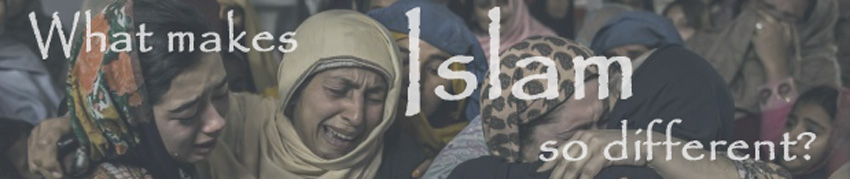
The Religion of Peace

The old verbal protocol, announcing the dissolution of a marriage, satisfies the traditional patriarchy in Egypt which considers that kind of decision the prerogative of the male. President el-Sissi's foray into reforming such outdated cultural traditions is not popularly embraced by either conservative militants or fundamentalist clerics. President el-Sissi understands these dynamics well, that he requires the cooperation of Al Azhar's grand imam, sheik Ahmed al-Tayeb, for success in overturning the male-centric privilege.

But the Egyptian president is firm in his belief that Islam is badly in need of a new image, and to do so would require expunging the interpretation of the radical readings of the Koran, popularized by militant groups such as the Islamic State. "It's a harsh war and the entire world knows that we are fighting it alone", said President el-Sissi in contradiction of pro-government media asserting that the militants were on the verge of destruction, successfully challenged by the Egyptian military.

The President's views on sexual harassment in Egyptian society as a chronic social ill, has him speaking forcefully in condemning the practise. He guided his 596 seat parliament last year on producing tougher penalties for female genital mutilation, where amendments to punish perpetrators with up to 15 years in prison should a child die as a result of the medieval practise, and up to seven years for performing the procedure.

Egypt is well served under his tutelage and guidance.

Labels: , , , , , ,

Saturday, March 07, 2015

Gatestone Institute


What made Egyptian President Sisi's speech remarkable is that he pointed to the problem within and did not blame a Western or Jewish conspiracy for the problems facing Muslims.
The sad fact, which Western leaders and peaceful Muslims do not want to know or publicly acknowledge, is that when Western and other leaders say that ISIS has nothing to do with Islam, they are simply flat wrong.
About a month after Sisi said "We must revolutionize our religion," Ibrahim Eissa, an Egyptian journalist and another hero of the Middle East backed him up, saying, "when the people of ISIS perpetrate slaughter, murder, rape, immolation, and all those barbaric crimes, they say that they are relying on the sharia. They say that this is based on a certain hadith, on a certain Quranic chapter, on a certain saying of Ibn Taymiyyah, or on some historical event. To tell the truth, everything that ISIS says is correct."
Sisi wants to defeat extremism, not use it as a tool of statecraft. He understands the importance of defeating this expansionist ideology, and deserves the full support of America and the international community in this struggle.
For years, intellectuals have called on Cairo's Al-Azhar University to change its pre-medieval mindset of jihadism, without any success. This time might be different.

In December 2014, Egypt's President, Abdel Fattah el-Sisi, gave a speech at Al-Azhar and told clerics there that it is time to modernize the Muslim faith, which has put itself at odds with the rest of humanity.

It was the perfect venue for the speech. Al-Azhar is the pinnacle of Sunni Islam's education system. It is influential not just in Egypt, but throughout the world. Al-Azhar has educated many of the leaders of Islamic fundamentalist groups such as the Muslim Brotherhood and Salafi groups.

Egypt's President, Abdel Fattah el-Sisi, delivered a historic speech to top Islamic scholars and clergy at Al-Azhar University in Cairo, December 28, 2014. (Image source: MEMRI)

For the first time in the history, a heroic head of state stood before Al-Azhar's scholars, insisting they acknowledge that there is a real problem with Al-Azhar's teachings and asking them to reform the religious ideology, primarily through changing its core domain, education. Sisi had the courage to call for a religious revolution within Al-Azhar. In the house of the religious scholars, he took them on.

What made his speech remarkable is that he pointed to the problem within, and did not blame a Western or Jewish conspiracy for the problems facing Muslims.

About a month after Sisi's heroic speech, in which he said, "We must revolutionize our religion," Ibrahim Eissa, an Egyptian journalist and another hero of the Middle East, backed him up. Eissa said on Egyptian television, on February 3, that no one in Egypt has had the courage to admit that the ideology and activities of ISIS are based on Islamic sources. Eissa added,
"when the people of ISIS perpetrate slaughter, murder, rape, immolation, and all those barbaric crimes, they say that they are relying on the sharia. They say that this is based on a certain hadith, on a certain Quranic chapter, on a certain saying of Ibn Taymiyyah, or on some historical event. To tell the truth, everything that ISIS says is correct."
On February 11, Eissa named the extremists among the Al-Azhar leadership, and noted that Al-Azhar had become a shelter of an extremist ideology. In addition, Eissa questioned why Al-Azhar refused to denounce ISIS as "Kufar" or "un-Islamic."

President Sisi is not alone in his call for a religious revolution. Professor Dr. Sheikh Ahmad Muhammad al-Tayyeb, the Grand Imam of Al-Azhar University, made a similar statement, in Saudi holy city of Mecca, no less. There, he spoke of "bad interpretations of the Koran and the sunna [the teachings of Muhammad]."

"There has been a historical accumulation of excessive trends," al-Tayyeb told a Saudi conference, and said that a reform in education was needed.

The major difference between the visionary Sisi and al-Tayyeb is that al-Tayyeb still could not resist blaming others. "We face major international plots targeting Arabs and Muslims, in a way that agrees with the new world colonialism that is allied with world Zionism," he said, relying on the worn-out conspiracy theories that everyone -- especially after the "Arab Spring" -- can see are not true. Such conspiracy theories are merely used to deflect blame from the real source of the problem: the many leaders in the Arab and Muslim world who still practice corrupt and capricious governance.

The real heroes remain Egypt's president, who got the process started, and Ibrahim Eissa, for speaking the truth. Sisi's call for religious revolution encouraged others in Egypt finally to state publicly that Al-Azhar had been hijacked by radicals. Egyptians, for the first time, were also able to state publicly what else everyone knew: that Al-Azhar was producing books promoting hatred and violence. Most Egyptians, however, expect that a great thinker such as al-Tayyeb, who had the courage to come such a long way, will also soon rise to the same stature as President Sisi.

Both Sisi's and al-Tayyeb's statements represent the real "Arab Spring": the beginning of a historic shift in how Sunni Islam will henceforth be interpreted, taught and practiced.
Coinciding with this intellectual assault, a U.S.-led coalition has been bombing the Islamic State of Iraq and Syria (ISIS) for the past several months. These attacks have killed an unknown number of the group's members, but at the same time also actually gaining new recruits for the organization, even in the West.

ISIS has been able to attract new followers mainly because of its online presence, through which it promotes its ideology to restless, disaffected young Muslims across the world. ISIS has gained followers by videotaping and airing its barbaric beheadings of a number of victims -- including American hostages and Egyptian Coptic Christians -- as well as the burning of a Jordanian pilot, and reportedly 45 others in the Iraqi town of al-Baghdadi.
Most people are shocked by these actions, but ISIS takes pride in slaughtering and burning its victims, as it seeks to establish a caliphate in its first step toward world domination. As a totalitarian organization, ISIS is more than a threat to the national security of America and its allies; it is a threat, as Sisi was among the first to see, first of all to Muslims, and then to the rest of humanity.

Sadly, the U.S. has failed to enunciate a comprehensive strategy for defeating this rapacious organization. On February 11, the Obama Administration formally asked Congress to authorize military force to "degrade and defeat" ISIS. Clearly, military force is necessary, but President Obama needs to be honest with himself and the public, and admit that ISIS will not be defeated by a military campaign alone. Bombing ISIS in Iraq and Syria may kill its members, but it will not defeat its ideology.

Obama, for his legacy, would do well to take a leading role in supporting Sisi in the ideological war against Islamic extremists and their ideology. He is fortunate to have a potential Muslim ally in the Egyptian President, as well in the Muslim Mayor of Rotterdam, Ahmed Aboutaleb, yet another hero who clearly wants his people to have far-reaching opportunities.

Sisi is continuing with his heroic campaign. On January 22, he spoke for the first time of the genius of the late President Sadat's vision of peace in the Middle East. He also spoke of not allowing jihadists to use the Sinai peninsula to attack Egypt's neighbors, referring to Israel.
Sisi also refuses to follow in the footsteps of former President Hosni Mubarak, who used the threat of Islamic extremism to blackmail the West. Sisi wants to defeat extremism, not use it as a tool of statecraft.

Sisi understands the importance of defeating this expansionist ideology, and deserves the full support of America and the international community in this struggle.
Michael Armanious, a U.S.-based news analyst, was born and raised in Egypt.

Labels: , , , , , ,

() Follow @rheytah Tweet