Politic?

This is a blog dedicated to a personal interpretation of political news of the day. I attempt to be as knowledgeable as possible before commenting and committing my thoughts to a day's communication.

Monday, April 17, 2023

"Extreme Uneasiness and Horror"

"[The test launch of the Hwasong 18 intercontinental ballistic missile on Thursday would make enemies] experience a clearer security crisis,and constantly strike extreme uneasiness and horror into them by taking fatal and offensive counteractions until they abandon their senseless thinking and reckless acts."
North Korean leader Kim Jong Un 

"[The development of the Hwasong-18 will] extensively reform the strategic deterrence components of the Democratic Peoples' Republic of Korea, radically promote the effectiveness of its nuclear counterattack posture and bring about a change in the practicality of its offensive military strategy."
North Korean state media outlet KCNA
 
“At an earlier stage of North Korea’s missile program, liquid-fuel ICBMs represented the quickest and easiest path to achieving the country’s historic goal of being able to threaten the continental United States."
“The addition of solid-fuel ICBMs to the missile force would make it a more credible strategic deterrent by providing a more capable, less vulnerable pre-emptive and retaliatory capability."
Joseph Dempsey, research associate, International Institute for Strategic Studies
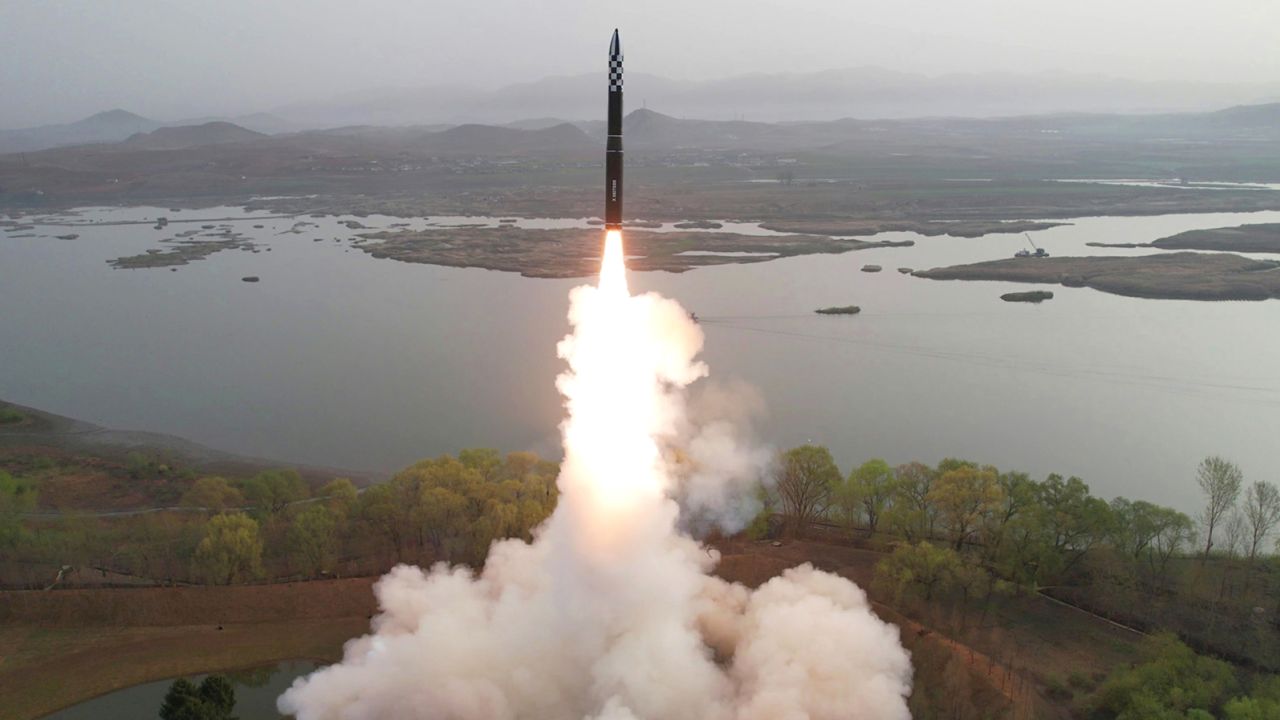
North Korea says it launched a new type of Hwasong-18 Intercontinental ballistic missile using solid fuel, on Thursday, according to state media KCNA.
North Korea says it launched a new type of Hwasong-18 Intercontinental ballistic missile using solid fuel, on Thursday, according to state media KCNA. Courtesy Rodong Sinmun

Both North Korea and China enjoy making extravagantly pompous statements referring to themselves and the place they hold in the world. they both share a sense of awe of their pre-eminence that exists mostly in their collective mindset, and seem to believe their every utterance inspires fear and loathing in the minds of their presumed detractors against whom they struggle to contain malign intentions to do them great harm, while they are themselves the paranoiac threat-masters of global violence. They ascribe to their presumed enemies all the threatening qualities that are their own.

North Korean Leader Kim Jong Un -- impressed with his own belief in his superior intelligence and profound leadership of an impoverished nation grappling constantly with food insecurity, yet heavily investing in advanced technologies meant for no purpose other than to initially intimidate and threaten and eventually to deploy in a bid to destroy the potential for those it identifies as awaiting an opportunity to destroy the Hermit Kingdom, proposing by its actions to act before they do -- presents as an amateur yet sinister director of a very bad film.

Several days ago North Korea officially announced its testing of a new solid-fuel ICBM, meant to "radically promote" the preparation of its forces for an eventual denouement of the forces that threaten its own. Experts interpret the latest provocations from North Korea as a new type of weaponry meant to facilitate missile launches with scant warning. This represents the North's first use of solid propellants in an intermediate-range ICBM. Bringing North Korea into a very specialized field of deploying missiles faster during an actual conflict.
 
A woman watches street TV broadcasting breaking news of a North Korean missile launch in Tokyo on April 13, 2023. Photo by...
 
The weapon remains in the development stage according to its defence ministry, with more time and effort required to perfect the advanced technology, warning that more tests are on the way. The country's state media released photographs of its leader witnessing the launch in the company of his sister, wife and daughter. This, in response yet again -- and predictably -- to joint exercises carried out by South Korea and the United States air forces, drills that were staged with U.S. B-52H bombers joined by F-34A, F-14 and F-15 fighter jets.

Recent U.S.-South Korean joint military exercises certainly exacerbate the situation, sending Kim into paroxysms of paranoia and leading to a series of missile tests in a sabre-rattling contest that no one would win. Japan, threatened by the North's constant barrages that enter Japan's zone of air defence, conducted separate air drills with U.S. B-52 bomber jets on Friday, with four U.S. F-35 fighters and four Japanese F-15 fighters. These are not 'games' but tense back-and-forth feeler-threats.

North Korea's largest ballistic missiles use liquid fuel, requiring loading with propellant at the launch site, time-consuming and dangerous. A former U.S. government weapons expert, Vann Van Diepen, explained that solid-fuel missiles are easier and safer to operate, requiring less logistical support, and making them harder to detect and more survivable than liquid fuel missiles. Analysts feel however, that the U.S. could distinguish between solid' or liquid-fuelled launches with early warning satellites capable of detecting differences in infrared data various missile types produce.
"For any country that operates large-scale, missile-based nuclear forces, solid-propelled missiles are an incredibly desirable capability because they don't need to be fuelled immediately prior to use."
"These capabilities are much more responsive in a time of crisis."
“I think it demonstrates technological progress, but I would not describe this as a game changer.”  
“Based on their competency with materials and engineering that we’ve seen in other areas, developing a robust enough reentry vehicle is not a substantial technical challenge,”
Ankit Panda, senior fellow, Carnegie Endowment for International Peace

"North Korea could have opted to focus on collecting data necessary to check its features at different stages than going full speed at the first launch."
"As it was a test that did not demonstrate its normal flight pattern, North Korea will likely conduct some more tests."
Kim Dong-yup, professor, University of North Korean Studies
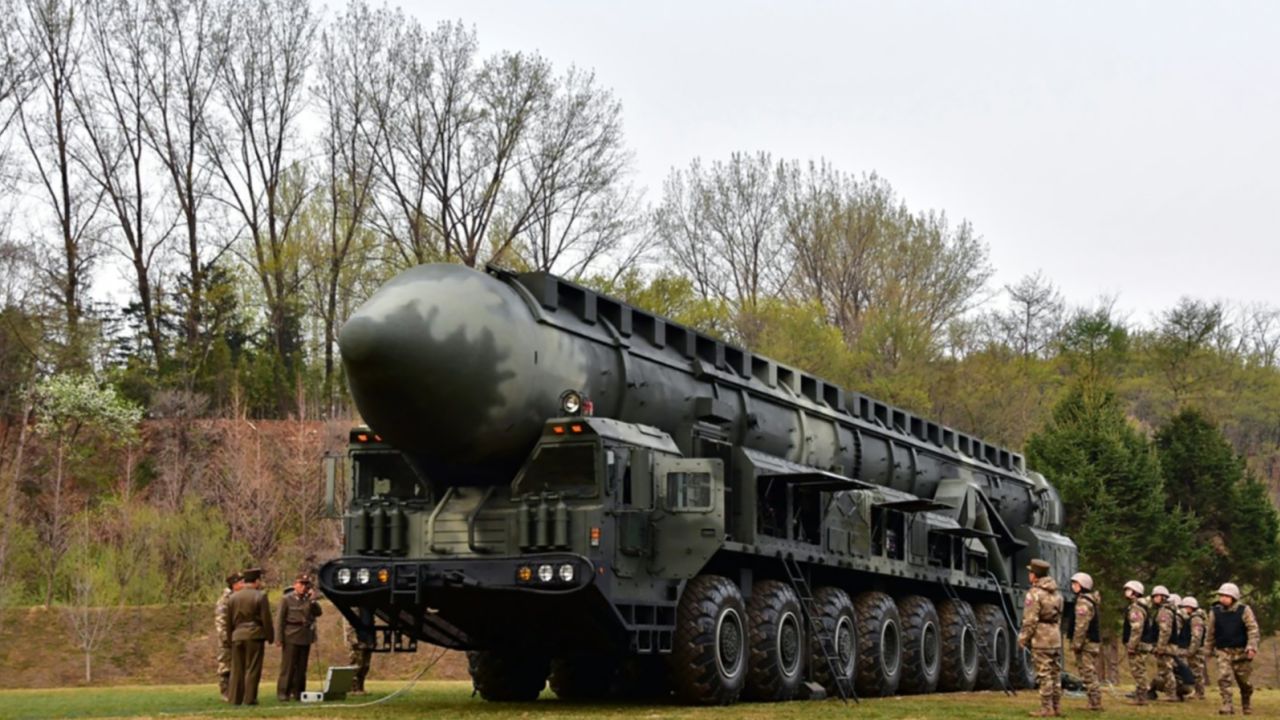
North Korea says it launched a new type of Hwasong-18 intercontinental ballistic missile using solid fuel, on Thursday.
North Korea says it launched a new type of Hwasong-18 intercontinental ballistic missile using solid fuel, on Thursday   Courtesy Rodong Sinmun

Labels: , , , , ,

Thursday, January 20, 2022

The Mountain Speaks

"Any expression that is in line with the Olympic spirit I'm sure will be protected." 
"Any behaviour or speech that is against the Olympic spirit, especially against the Chinese laws and regulations, are also subject to certain punishment."
"Dedicated departments [will evaluate punishment for athletes who violate the IOC political protest ban]."
"I think for the athletes to participate in the Olympic Games, they should follow the spirit and requirements provided by the Olympic Charter,"
"The politicization of sports is one of the things opposed by the Olympic Charter."
Yang Shu, deputy director-general, international relations, Beijing Organizing Committee
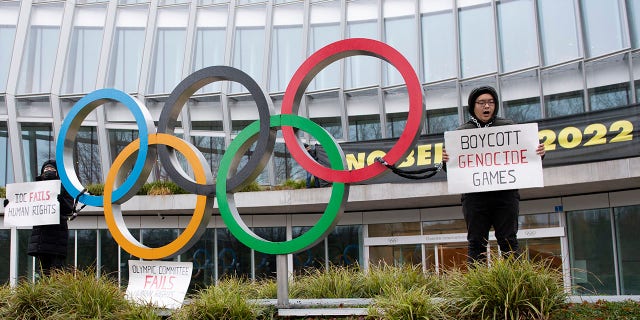
Protesters hold protest posters during a protest against Beijing 2022 Winter Olympics by activists of the Tibetan Youth Association in Europe front of the International Olympic Committee (IOC) headquarters in Lausanne, Switzerland, Saturday, Dec. 11, 2021.
Protesters hold protest posters during a protest against Beijing 2022 Winter Olympics by activists of the Tibetan Youth Association in Europe front of the International Olympic Committee (IOC) headquarters in Lausanne, Switzerland, Saturday, Dec. 11, 2021. (Jean-Guy Python/Keystone via AP)

China is known to get really cranky when it is criticized. And there has been a lot of criticism to date of China. It's exclusive 'ownership' of the South China Sea, its takeover of once-democratic Hong Kong, its threats expressed kinetically against Taiwan, its exploitation of Uyghurs for forced labour, and incarceration of a million Uyghurs in Xinjiang for re-education, forced sterilization of Uyghur women, its occupation of Tibet and persecution of Tibetans...the list goes on, to include its latest forays into hostage-diplomacy.
 
So to state that Beijing is in bad odour in much of the world community is to understate the situation. Beijing feels under pressure to impress the world community once again with its ability to put on a world-class entertainment performance with yet another Olympic Games venue for February of 2022, after the original scheduled for 2021 had been postponed as a result of the very coronavirus that China itself had exported to the world at large.
 
Now that the games' opening is fast approaching and the deadline for completion of all the venues and awe-inspiring details meant to showcase China internationally, authorities involved in preparations for the Winter Olympics opening are getting a little edgy. The temporary mass migration of the international community coming to worship at the shrine of Chinese efficiency and stage production has been denied Beijing once again; not even local Chinese may enter the environs due to concerns over the entry of Omicron and its huge infectability.
 
Beijing will make the most of this collapsed opportunity to boast of its artistic/theatrical skills while hosting a world event in sportsmanship. But it is not prepared to be sportsmanlike about countenancing political criticism from its invited guests competing in this world-class event. Beijing will not tolerate being the subject of complaints, derision, lack of respect, or any hint of dissatisfaction with its internal affairs, much less its vaunted status globally as it expands its reach and offers other nations indebtedness in response to its generosity in allowing their natural resources to further enrich Chinese GDP.
 
And while it is true that in the interests of political neutrality in the celebration of sports excellence in individual and group performance, the International Olympics Committee has established rules against political protests at IOC events, their rules are not quite in the same spirit and rigid disaffection as that of Beijing's. Whose Olympics organizing committee has warned of punishments to fit the assault on Beijing's sensibilities to be meted out to offenders.
 
So would Beijing dare to hold any offenders hostage to its rage over political statements offensive to China? After all, if incarceration is an option for 'seditious' behaviour as a suitable punishment for those offending Beijing's authoritarian sense of outrage at the presumptuousness of its critics, hostage-taking will be in order. A threat, implied but real, that can be guaranteed to silence anyone oblivious to their presence in a country known for its unflinching abuse of international laws while it flaunts its own as supreme.

Toronto's cybersecurity research group Citizen Lab has reported the vulnerability that faces visiting athletes through the smartphone app Olympians are required to download ostensibly to track the state of their health in identifying COVID infections. The Lab has detected security flaws whereby personal data of users will be accessible to Chinese security sources. A list of political keywords identified by the app's code to reveal who might be disobeying the organizers' edict warning of repercussions as a consequence of anything political.

In anticipation of just such complicating, coercive and intrusive events, the U.S. and other free-world countries whose athletes will be participating in the Games advised their athletes to make use of "burner phones" on their Beijing trip in avoidance of surveillance. According to Zhao Lijian, foreign ministry spokesman, those countries "who are guilty of the charge themselves are accusing the innocent party without any evidence". Oh, for shame!

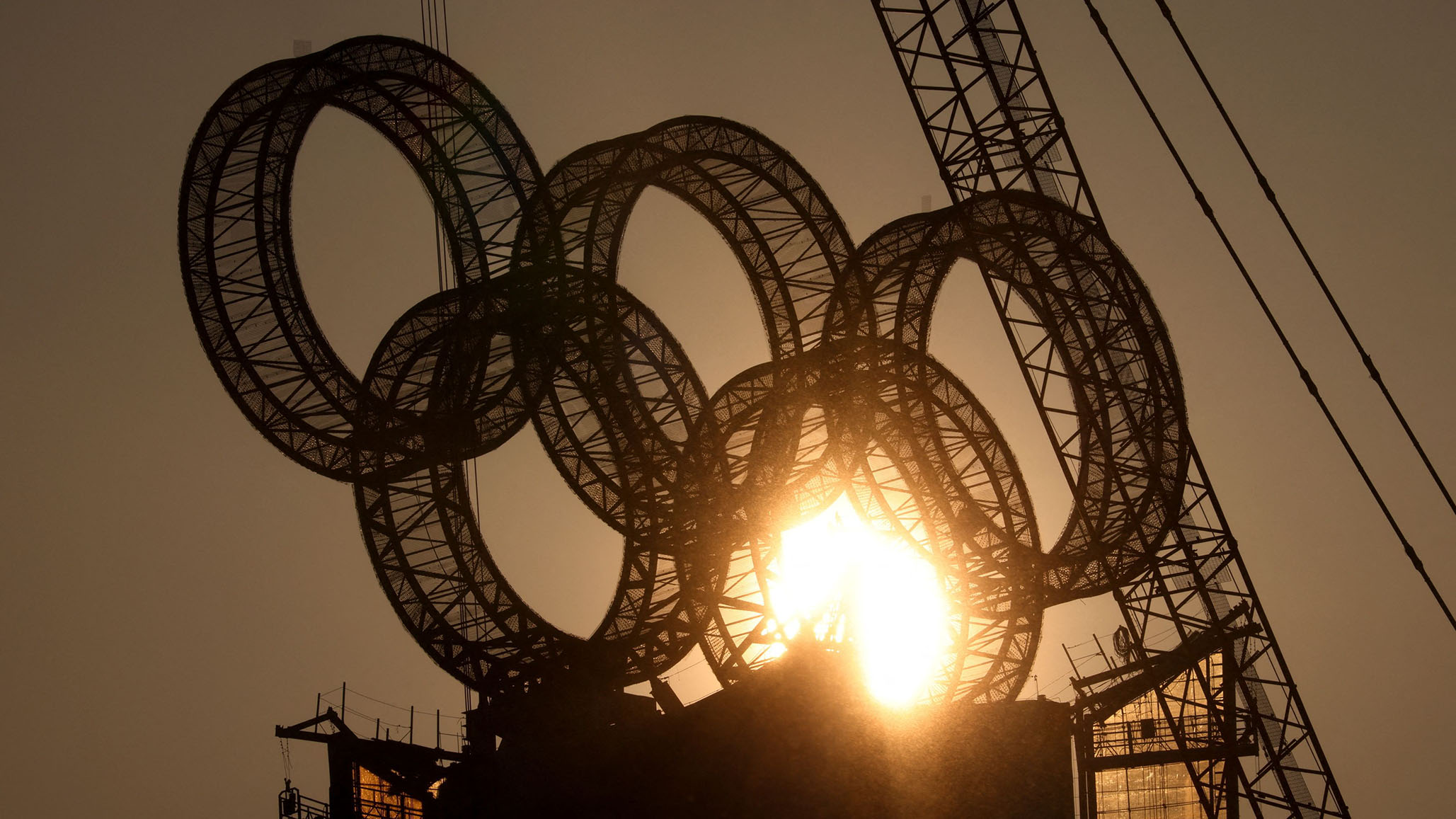
The sun sets behind the Olympic Rings atop a tower near the Yanqing cluster of Beijing 2022 Winter Olympics, in Beijing, China, January 19, 2022. (Thomas Peter/Reuters)


Labels: , , , , , , ,

Saturday, December 18, 2021

Eastern Europe in High Stress

Ukrainian President Volodymyr Zelensky, left, and NATO Secretary General Jens Stoltenberg are seen at a news conference at the European Union headquarters in Brussels on Thursday. (John Thys/AFP/Getty Images)

"The message today to Russia is that it is for Ukraine as a sovereign nation to decide its own path."
"We call on Russia to return to diplomacy. To de-escalate. And to respect Ukraine's sovereignty and territorial integrity."
"Any further aggression against Ukraine will have severe consequences. And would carry a high price."
Jens Stoltenberg, NATO Secretary-General

"We will emphasize here once again, that the inviolability of borders is one of the very important foundations of peace in Europe, and that we will do everything together to ensure that this inviolability actually remains."
German Chancellor Olaf Scholz

"I'm worried because the military concentration, especially on the Ukrainian border with Russia [is] very strong."
"We are prepared to avoid the kind of surprises we met during the occupation of Crimea."
Slovenian Prime Minister Janez Jansa, EU revolving presidency

"Probably we face the most dangerous situation in the last 30 years. I think we have to do everything that is in our hands to prevent the worst scenario, which we [cannot] exclude."
"This scenario is possible military intervention into the territory of Ukraine."
Lithuanian President Gitanas Nauseda
 
"There will be no talks on European security without European allies and partners."
"[Washington will hold discussions with its allies but] we will not compromise the key principles on which European security is built, including that all countries have the right to decide their own future and foreign policy, free from outside interference."
Jen Psaki, White House spokesperson
Russian President Vladimir Putin speaks at a conference in Moscow on Friday. (Sergei Guneyev/SPUTNIK/AFP/Getty Images)

Over 100,000 Russian  troops have been massed on the Russian border with Ukraine, leaving leaders of Europe to warn of the most dangerously tense episode occurring in real time, in the past 30 years since the dissolution of the Soviet Union when its satellites went their separate ways, assuming full sovereignty for themselves after years of orbiting helplessly around the powerfully-enforced magnetic star of the USSR. 
 
With the last European Council summit of the year in Belgium, EU heads of state and government gave ample warning to the Kremlin that it would face "massive consequences and severe cost" should there be a repeat of the annexation of Crimea in a violent 2014 takeover. But Vladimir Putin remains resolute; should Europe wish to achieve a relaxation of tensions, NATO must withdraw its 2008 assurance to Ukraine that it would be welcomed along with Georgia into its bloc. No agreement, no de-escalation.
 
Moscow's published list of demands for de-escalation and recall of Russian troops and war machinery has failed to impress NATO  and the EU. Russia's insistence of a legally binding guarantee that NATO surrender all military activity in eastern Europe and Ukraine is part of its list of security guarantees to be negotiated with the West if any progress is to be made in de-engaging from its current level of intimidation and threat.
 
The detailed demands, Moscow stressed, are essential, without which tensions will not be diminished in Europe, and the crisis over Ukraine defused. However, the world could be assured, Moscow reiterated, that it has no intention whatever of planning an invasion of Ukraine. Demands include an effective Russian veto on future NATO membership for Ukraine. Other elements relate to the removal of U.S. nuclear weapons from Europe alongside the withdrawal of multi national NATO battalions from Poland, Estonia, Latvia and Lithuania. 

None of those demands were met with ingratiating deference. Russia does not, after all, control with the
EU or NATO and its allies, led by the United States, envision for Europe; total abandonment of the Baltic states and the rest of eastern Europe to the kind remonstrances of the Kremlin to convince former satellites that their futures lie with a resumption of their former devotion to a mighty Russia's formation of a strong Europe.

According to Russian Deputy Foreign Minister Sergei Ryabkov, Russia and the West must begin with a clean slate to rebuild relations gone sour. Russia being fully prepared to begin talks as soon as possible. As far as the Kremlin is concerned, its position is one of response to threats to its security from Ukraine's increasingly warm relations with NATO and its aspirations to join the alliance. 

The best possible scenario the Kremlin envisages if that NATO  return to the situation that existed before May 1997; predating the accession to NATO of any of the former communist states in east Europe; that NATO relinquish any military activities in Ukraine, eastern Europe, the Caucasus and Central Asia. Wait for it.

Ukraine’s foreign minister has asked Canada to help strengthen its defences amid escalating tensions with Russia, while NATO warns Russia will face “high impact” sanctions if it attacks


Labels: , , , , , , , , ,

Monday, December 13, 2021

Positions: Antagonistic ... Solution: Uncertain

"Russia should be in no doubt that further military aggression against Ukraine would have massive consequences and severe cost in response."
"We reaffirm our unwavering commitment to Ukraine's sovereignty and territorial integrity, as well as the right of any sovereign state to determine its own future."
Group of Seven statement
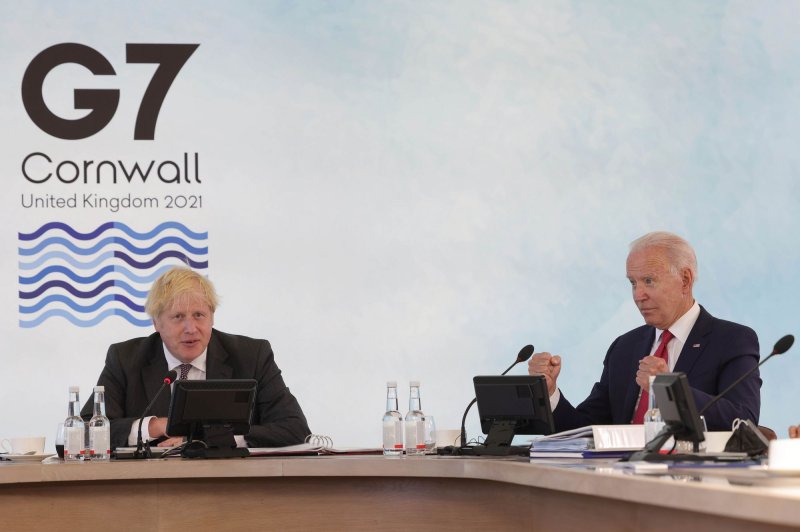
British Prime Minister Boris Johnson and U.S. President Joe Biden during the G7 Summit in Cornwall, United Kingdom in June. The G7 alliance has unanimously warned of consequences if Russia were to attack Ukraine. File Photo by Andrew Parsons/No 10 Downing Street/UPI

A concerted Western response to what American intelligence points out that the Kremlin plans an invasion of Ukraine in the new year, as they steadily mass up to 175,000 Russian troops and military equipment at the border next to Ukraine. It may be difficult to recall that this group was once the G8, when Russia was part of it, before its decision to appropriate for itself the Crimean peninsula with the claim that it always was part of Russia and would remain so, not with Ukraine, despite that Vladimir Putin also claims that Ukraine has always been part of the beating heart of Russia and will remain so.
 
Moscow responded that NATO's expansion into Russia's eastern European sphere of influence contravenes the West assurances to Russia following the collapse of the Soviet Union in 1991. Prior to the release of the joint G7 document, the Russian Embassy in London remonstrated that Britain's frequent phrasing of "Russian aggression" during the Liverpool meeting was misleading, designed only to create a 'cause' for the G7 to rally 'round.
"Russia has made numerous offers to NATO on ways to decrease tensions."
"The G7 forum could be an opportunity to discuss them but so far we hear nothing but aggressive slogans."
Russian Embassy statement, London
Russia is concerned with its "red line" which must not be permitted to be crossed. President Putin demanded legally binding security guarantees that further east expansion of NATO, or that it place weapons close to Russian territory be abandoned altogether, with Washington repeatedly responding that no country has the power to veto hopes nurtured by Ukraine to become part of NATO.

President Putin, according to the Kremlin, informed U.S. President Biden that Russian troops are a threat to no other country; Moscow was being demonized for simply moving troops within its own territory. Ingenuous to the Nth degree. Dmitry Peskov, spokesman for the Kremlin, spoke of very serious conceptual variances between Russia and the United States on Moscow's "red lines". A stated understatement. 
 
Russian President Vladimir Putin has asserted that Russia does not pose a threat to Ukraine. EPA-EFE/Maxim Shipenkov

The West was trying to turn Ukraine into a "bridgehead against Russia", wrote Mr. Putin in a July article. "It would be no exaggeration to say that the course of forced assimilation, the formation of an ethnically pure Ukrainian state aggressively oriented against Russia, is comparable in its consequences to the use of a weapon of mass destruction against us", he wrote.
 
In fact, the meeting was consumed more with a focus toward China and President Xi Jinping's aggressive strategies. It is Beijing's long-term goals that directly impact on the world order as China elbows its way toward recognition as a world power second to none, including the world's sole recognized world power which is unprepared to surrender its unipolar status any time soon. There were "very, very intense discussions especially on China", one official noted.

It is the standoff between Russia, NATO, the United States and now the G7 that is front and centre for now; China in the rear-view mirror. The emphasis for the moment is Russia's plans for Ukraine, which Western powers view through the lens of oppressive military threats meant to intimidate and to bring the country back under Moscow's tender orbit. Despite Ukraine having ousted the Kremlin's previous choice of Russian-linked president of the country in 2014.
"We call on Russia to de-escalate, pursue diplomatic channels and abide by its international commitments on transparency of military activities."
"We reconfirm our support for the efforts of France and Germany in the Normandy Format to achieve full implementation of the Minsk Agreements in order to resolve the conflict in eastern Ukraine."
Group of 7 statement
Ukrainian President Volodysmyr Zelensky (L) welcomes U.S. Defense Secretary Lloyd Austin (R) during their meeting in Kyiv, Ukraine in October. EPA-EFE/Presidential Press Service

Labels: , , , , , , , ,

Tuesday, October 26, 2021

Afghanistan, a Failed Country in Duress

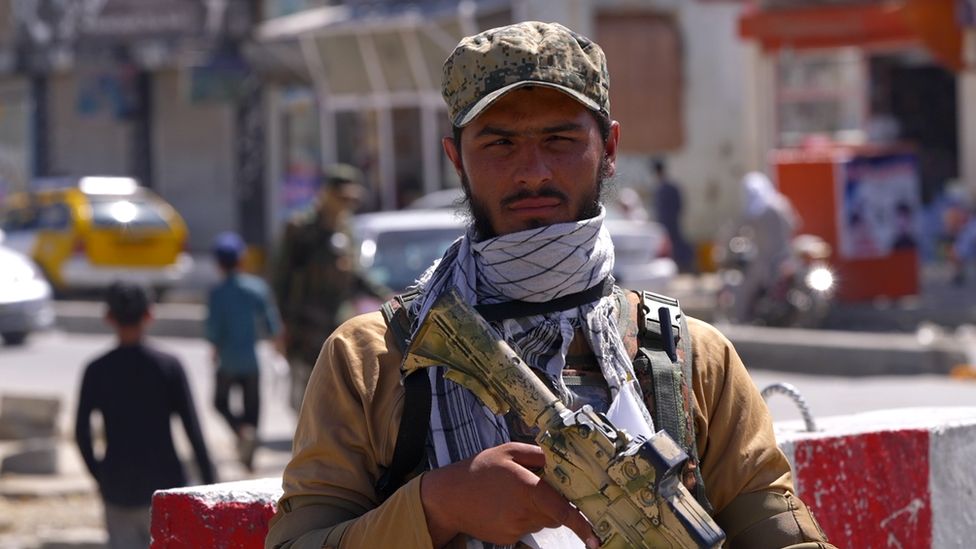
Taliban guard in Kabul
Taliban guards patrol the streets of Kabul
"Children are going to die. People are going to starve. Things are going to get a lot worse."
"I don't know how you don't have millions of people, and especially children, dying at the rate we are going, with the lack of funding and the collapsing of the economy."
"What we are predicting is coming true much faster than we anticipated. Kabul fell faster than anybody anticipated and the economy is falling faster than that."
"You've got to unfreeze these funds [repurposing development assistance to humanitarian aid] so people can survive."
David Beasley, executive director, World Food Program
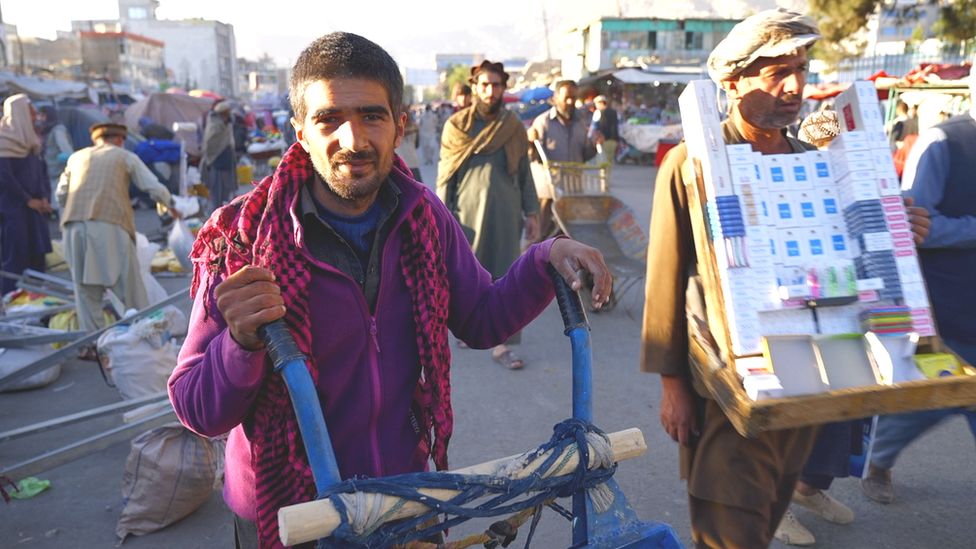
Labourers in Kabul
Every day brings labourers looking for work - but there is little to go round

In the most sorrowful of sinister warnings, it has begun; children are dying and more will follow. Eight orphaned children, all under the age of ten, whose parents had died and who were left to fend for themselves, dependent on handouts from neighbours and strangers in a country where food is scarce and people are facing starvation, did die of starvation. Neglected, no one to be concerned for their welfare, they were simply unable to cope with the challenge of finding enough food somewhere to sustain their existence.
 
This happened in the capital city of Afghanistan. An estimated fifty percent of the population of poverty-wrenched Afghanistan now face food shortages. A serious situation is becoming utterly dire. The country looms on the brink of experiencing the worst humanitarian crisis in the world. Similar warnings are issued by the United Nations from time to time; starvation in Somalia, in Yemen, Democratic Republic of Congo, Liberia, Haiti, Central African Republic, and the list goes on. 
 
Tribal and sectarian conflict, internal and external challenges leading to war and persecution. Where there is war, farmers cannot cultivate their fields. Where there is conflict, people flee their towns and villages, becoming homeless and  refugees, finding both shelter and food and welcome hard to come by. A newly-impoverished Afghanistan, victimized by corruption, by ethnic, clan and sectarian violence, now the Islamic Emirate of Afghanistan, has seen international funding dry up, humanitarian charity unwilling to fund the Taliban.
 
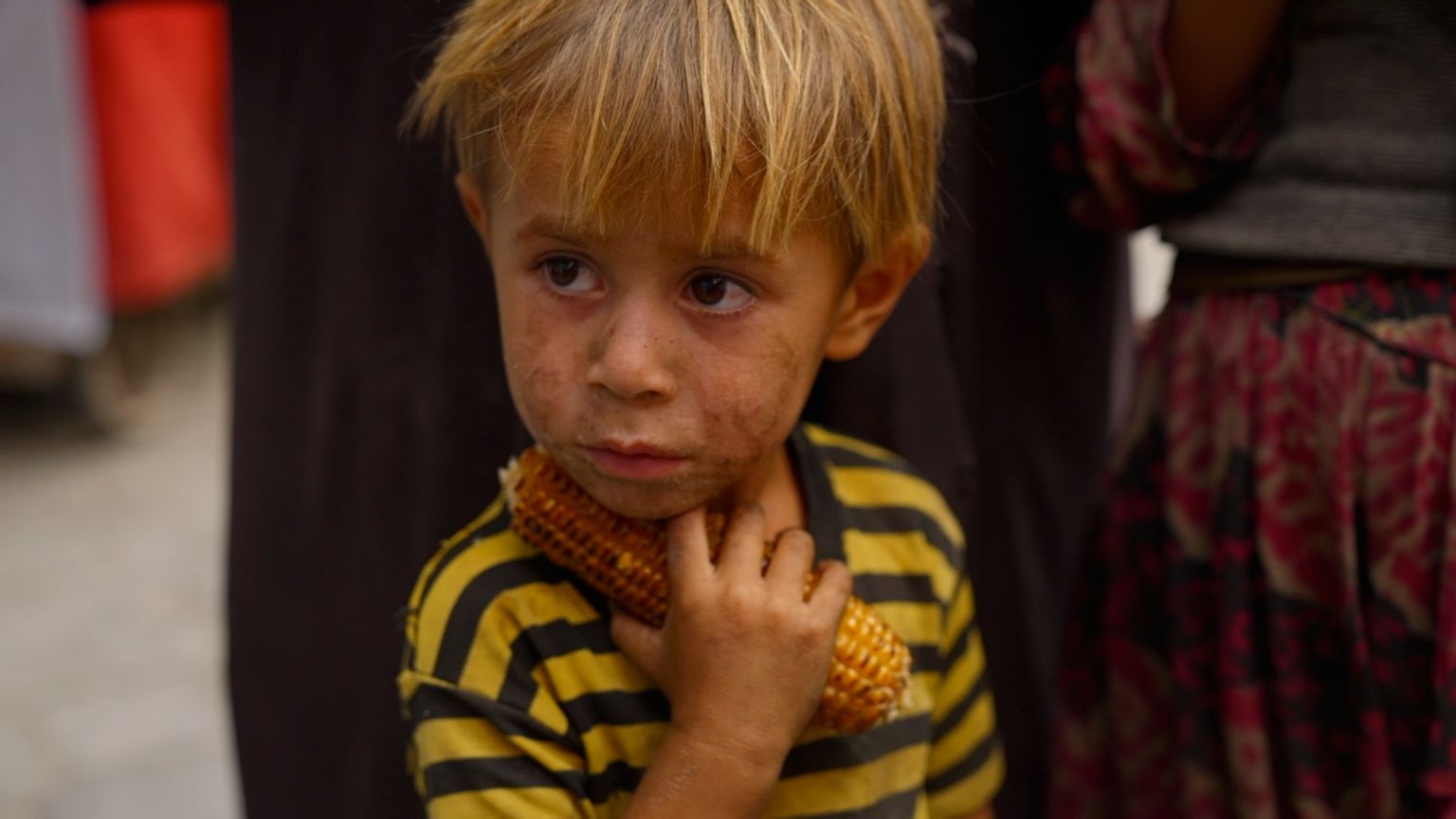
Kabul child with corn
Going to bed hungry is the new reality in a country that has seen decades of war

Drought, war and poverty have accompanied the rise to power of the Taliban; endemic, now acute. The eight dead children left on their own to survive, failed to and their bodies were found in West Kabul according to local leaders. Suffering from a tumour their bedridden father had died, and their mother, with heart disease soon followed their father in death, explained local cleric Mohammad Ali Bamiani. Neighbours occasionally brought them bread and water; it was their landlord who found the bodies.
 
The new Taliban administration in Afghanistan, nurtured by Pakistan, accepted by its near neighbours has been blacklisted from accessing overseas-located assets. Charitable funding meant to aid in reconstruction and development would be better used, suggested the World Food Program head, by transforming its purpose to feeding the hungry in Afghanistan. Who now resort to the desperate measures of selling anything they own to obtain food. 
 
To even hope to begin minimally feeding the 23 million food-vulnerable population as winter approaches, the UN food agency requires $220 million each month. Aid groups urge wealthy nations to swallow their distaste in dealing with a violently aggressive Islamist group by diplomatic engagement in hopes of preventing a social/economic collapse that could launch yet another catastrophic crisis of mass migration.
 
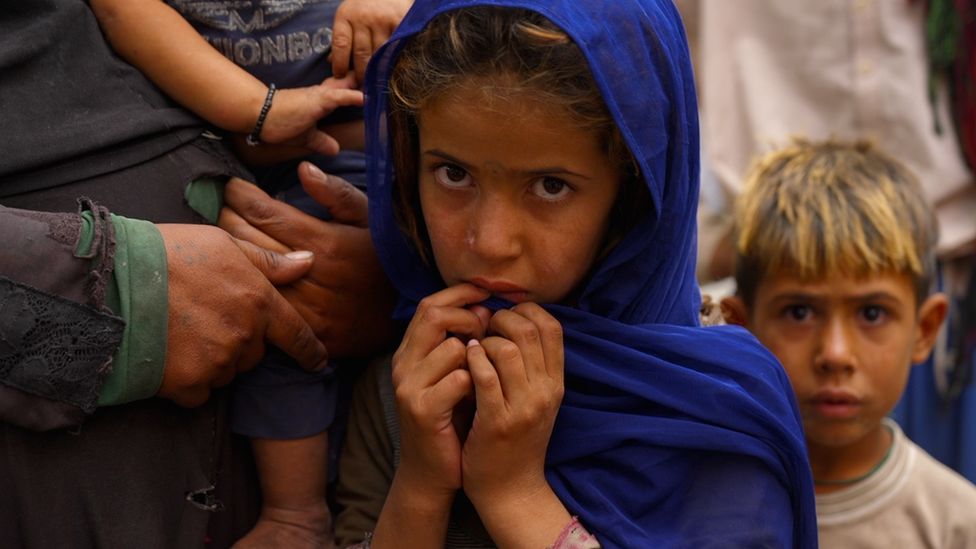
Children in Kabul
Most Afghans are now trying to feed themselves and their children after the economy collapsed


Labels: , , , ,

() Follow @rheytah Tweet