


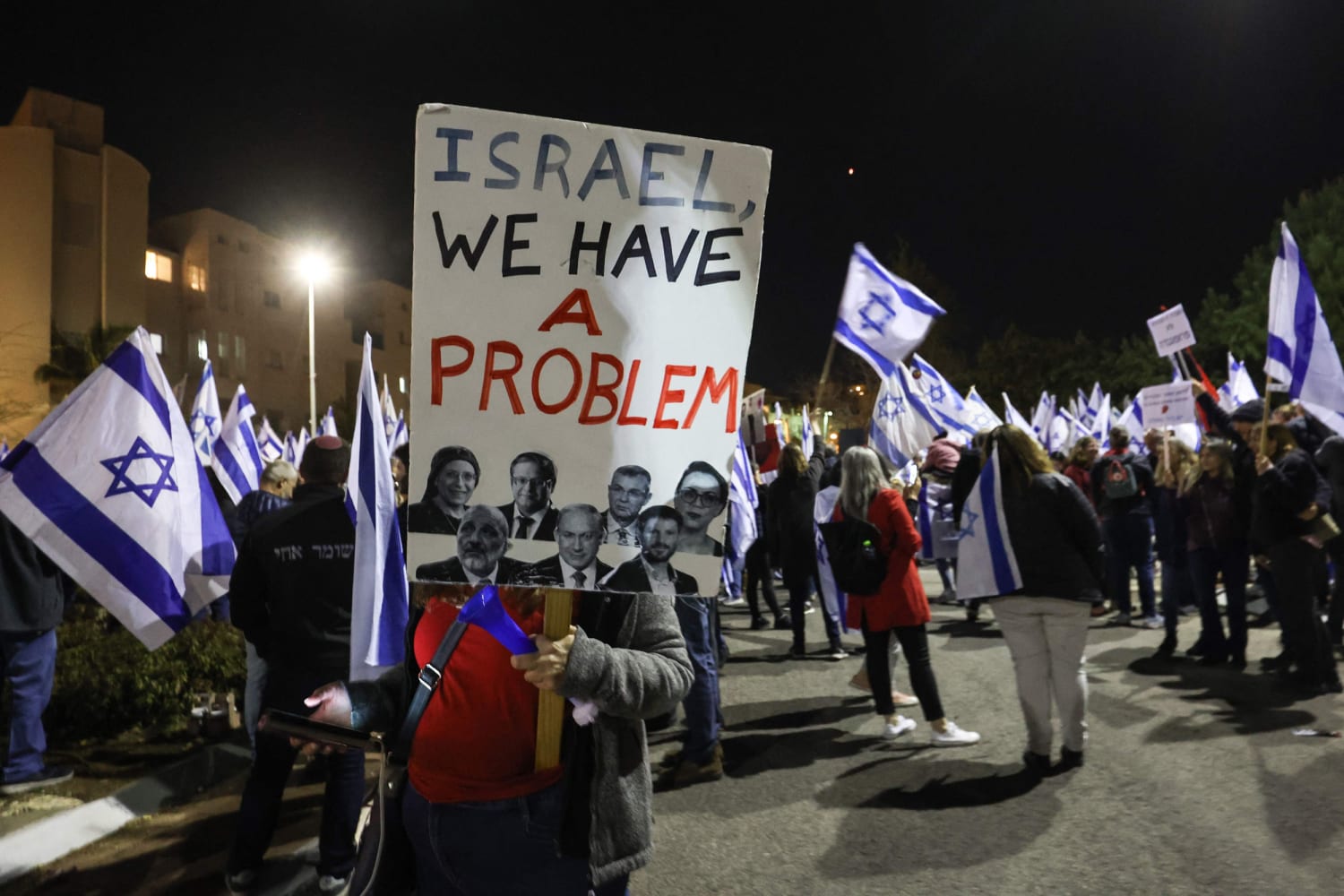
Israel: We Have A Problem
"Palestinian people's voices and aspirations must be at the centre of post-crisis governance in Gaza -- unified with the West Bank under the Palestinian Authority.""We continue to believe that a negotiated two-state solution along the 1967 lines with mutually agreed-to swaps is the best way to advance a sustainable peace.""Beyond any military operation, defeating Hamas requires defeating an idea, which is why it is critical to present a clear vision of a better future and a path to achieve that vision."U.S.Embassy, Jerusalem, spokesperson
 |
Mindless pap. That ship sailed so long ago, there isn't even a wake. Do these diplomats study nothing? Thinking that whatever pops into their minds must be a solution, and that their position qualifies them to dictate to a state under existential threat how it must respond, what it must accept because this is the wish of the United States that bills itself as Israel's 'greatest friend and benefactor', supplier of funding and weaponry?
According to this spokesperson, Palestinian leadership for the future remains "a question for the Palestinian people". Fine. The Palestinian people view Hamas as their favourite leadership option. And as far as the Palestinian Authority is concerned (Fatah) it comes a distant second in popularity. Palestinians in Gaza consider Hamas to be their champions, despite knowing full well its performance on October 7 in Israel, raping, mutilating, killing over 1,200 Israeli children, men, women and elderly.
Three-quarters of Palestinians admire and support their very own terrorist group. In very fact, when Hamas and Palestinian Islamic Jihad broke down the barrier between Gaza and Israel in their planned invasion, hundreds if not thousands of ordinary Palestinian citizens entered after them, and indulged themselves in the general melee of rape and murder and abductions. Of the 240 abducted children, women, men and soldiers, not all are in the hands of Hamas; PIJ maintains some of the hostages and so do 'ordinary' Palestinians.
These are the people whom the United States administration and its diplomats feel will continue to make good neighbours for Israel, entitled to decide who it is they wish to be governed by. And although three-quarters of Palestinians in Gaza admire and trust Hamas, a much greater number, closer to 90 percent in the West Bank, cleave to Hamas, while rejecting the Palestinian Authority. What's the diplomatic solution from the U.S. side on that? Would they accept that if Canada, say, reflected a similar threat to the U.S.?
Two weeks ago U.S. Secretary of State Antony Blinken said the Gaza Strip must be given over to the Palestinian Authority in Ramallah, once 'hostilities' are over. That the solution to governing the territories "must include Palestinian-led governance and Gaza unified with the West Bank under the P.A." He too has a short memory, having conveniently forgotten up on a high memory shelf the civil war that broke out between Fatah and Hamas when the latter fought the former in Gaza, in a not very collegial manner.
U.S. National Security Council spokesman John Kirby clarified that Washington is engaged in support of a P.A. that "has the support of all Palestinians so that they can effectively help with post-conflict governance, particularly in Gaza". What world do these people live in? If the ordinary news reader in countries far from the Middle East can read verified accounts of what is happening there that describe a situation totally unlike what these diplomats speak of, their 'solutions' are utterly risible.
In the very last election held in the territories in 2006, Hamas won the majority of seats in the Palestinian parliament, and it is obvious from polls taken by a credible West Bank polling group that were elections to be held again, Hamas, despite all that has happened, most particularly its willingness to provoke a situation that would inevitably result in tens of thousands of Palestinians being 'martyred' while Hamas invites the Israel Defense Forces to retaliate when missiles are launched from crowded civilian enclaves, would be re-elected.
It seems that Palestinians too, like the declarations made by Islamists, jihadists and Hamas and Fatah, love death more than others love life. So as long as Palestinians are satisfied to keep presenting themselves as martyrs for the greater cause of destroying Israel, Hamas and Fatah and Islamic Jihad will continue their deadly assaults against Israel, unless and until Israel finally destroys them first.
As for ideas being harder to destroy than people's lives, that's completely true. And the Koran is full of such 'ideas', fertilizing the fervently psychopathic minds of Palestinians who love to portray themselves as victims.
 |
| Getty Images |
Labels: Hamas Barbarity, Israel Defense, Palestinian Support of Hamas, United States Intervention
posted by Pieface | 9:29 PM
|
0 comments


