Politic?

This is a blog dedicated to a personal interpretation of political news of the day. I attempt to be as knowledgeable as possible before commenting and committing my thoughts to a day's communication.

Monday, March 01, 2021

Black Skeletons in Canada's Closet

Runaway slave ad posted in the Quebec Gazette by slave owner George Hipps on Aug. 20, 1778.
"There are estimates that over the 200 years of Canadian slavery, between 4,000 and 8,000 were held in bondage. Even at the height of slavery in Montreal, slaves constituted only 0.01 percent of the population."
"By contrast, at the outbreak of the American Civil War, slaves constituted 40 percent of the population of the Confederate States of America."
"The result was a society and economy wholly geared toward slavery in ways that never quite materialized in Canada. Full-time bounty hunters roaming the countryside for fugitive slaves, columns of shackled men and women being marched into frontier settlements, vast plantations of slaves overseen by whip-


wielding overseers; these were all scenes distinct to the territories south of the Mason-Dixon line."
Tristin Hopper: Canada's Best-Kept Secret, National Post

"Canada might not have been a slave society -- that is, a society whose economy was based on slavery -- but it was a society with slaves."
"Canada's best-kept secret."
Afua Cooper. Canadian historian: The Hanging of Angelique, a chronicle of Canadian slavery, 2006
 
"We have a duty to remember slavery, but it is not an identity, and we cannot let slavery define Black history in Canada."
Aly Ndiaye/Webster, Quebec artist and author
 James Croxen and some members of his family are pictured ca. 1912 at Five Mile Plains, N.S. Croxen was born at Liverpool, N.S. and died at Five Mile Plains. He was among the province's first freed slaves.
 
Abolitionist Harriet Tubman lived openly in what is now St.Catharines, Ontario, her actions in shepherding fugitive slaves to freedom aside, though it was considered to be a federal crime in the United States to aid and abet runaway slaves. They were enshrined in U.S. law as personal property. At the time, however, in the 1850s, Canada had long since surrendered as an abomination to humanity the keeping in bondage and owning of human beings.
 
But it was not always that way. During the American War of Independence, the paroxysm when the United States rebelled against the British Crown, to become a new country whose foundation was freedom and liberty, those living in those British-American colonies faithful to the Crown, known as United Empire Loyalists left the United States to trek north to Canada.  "Neither confiscation of their property, the pitiless persecution of their kinsmen in revolt, nor the galling chains of imprisonment could break their spirits", a monument to the loyalists proclaims.

Josiah Henson, philanthropist
Josiah Hanson, Philanthropist
Who knew there were Black Loyalists? These were freed slaves who had escaped from American owners emancipated by the British who settled in Nova Scotia. And then there were the others, the Black slaves who accompanied their owners as they made their way to Canada. The official Act of Parliament welcomed white Loyalist refugees to British North America, allowing them to bring "any negroes in their possession", along with them, exempt from paying duty to the Crown. 

An estimated 2,500 Black slaves were brought to Nova Scotia which became a slaveholding territory. "During the late 18th century practically every county in mainland Nova Scotia had slaves, and this story remains to be told", wrote historian Ken Donovan in 2014. Nova Scotia has always been represented as the final stop of the Underground Railroad, which abolitionist Frederick Douglas called "the real Canaan of the American bondmen"

A generation prior to Abraham Lincoln's Emancipation Proclamation, in Canada human beings were listed for sale in newspapers; enslaved children were presented as gifts, authorities hunted down fugitive slaves, murder and rape of enslaved Africans was permitted by the Crown. A young woman whose name was Angelique was tortured and hanged to death in 1734 after being accused of setting fire to a large section of Montreal. 
 
Incendiary, Marie-Joseph Angelique
Incendiary, Marie-Joseph Angelique      Kit Lang
 
Mohawk leader Joseph Brant who marshalled indigenous armed resistance to the American Revolution was the owner of 40 Black slaves. Advertisements of slaves for sale were published in the Montreal Gazette, as well as rewards offered for the return of escaped slaves. "FOR SALE: A Young healthy Negro Wench between 12 and 13 years of age, lately from Upper Canada, where she was brought up", read an ad from 1735. 
 
In fact 1628 is thought to have been the year that the first Canadian slave arrived in Quebec City where New France was actively encouraging the use of African and Indigenous slavery in order to build and serve the growing colony. Following the conquest of New France in the Seven Years' War, Canada was the westernmost outpost of a British Empire that became the world's leading slave trader. 
 
(Mario Tama/Getty Images)
French law recognized slaves as humans, albeit of diminished rights, while under English law any slave resident in Canada was considered property, nothing more. It took until the early 19th  century for slavery in the British Empire to be reversed when co-ordinated boycotts led to the outlawing of slavery in the British Empire and antislavery patrols off the West African coast. Emancipation in Canada began three decades earlier, the result of grassroots actions of members of Canada's Black community.
 
In 1793, Peter Martin, a free Black Loyalist, veteran of the Revolutionary War, appealed to Upper Canadian authorities at a executive council before which he appeared to speak of the "violent outrage" Americans committed against an escaped Black slave, Chloe Cooley, whom they violently forced aboard a vessel to return her to her owner in the United States. His appeal against the situation where Americans could enter Canada and violently abduct someone inspired the 1793 Act to Limit Slavery in Upper Canada.
 
This 1945 illustration by artist Robert Chambers recreates a common scene in early Halifax.
The act, even while enshrining the legality of slavery, banned the importation of slaves, setting out a program to free the children of Canadian slaves who had reached the age of 25. The act, however, began an inevitable trajectory toward rejecting institutionalized slavery. One that London cemented with its passage of the 1833 Slave Emancipation Act. So that by the 1850s, while Americans were hotly divided over the issue, Canada had long since settled it. Publisher George Brown while negotiating the creation of modern Canada, accused the United States of perpetrating the "sum of all human villainies".
 
In Canada today here are 1.2 million Black Canadians, fifty percent of whom are first-generation immigrants. None of whom may know that centuries ago Black slavery was institutionalized in Canada. Because Canadians simply are unaware of this iniquitous part of Canadian history; best 'forgotten', laid high up on an unreachable shelf of stagnant memory. 
Video thumbnail for Journey to Justice


Labels: , , , ,

Sunday, June 09, 2019

Pernicious Scientific Racism

"The Negro, [kept benevolently in a submissive state accepting that God had ordained them to be slaves] is [then] spellbound, and cannot run away."
"Like children [negroes] require government in everything ... or they will run into excesses; [slavery is the perfect solution for the good of the negro.]"
"There are other differences more deep, durable and indelible. The membranes, the muscles, the tendons -- even the negro's brain and nerves -- are tinctured with a shade of pervading darkness."
"It [cause of the enslaved person's] debasement of mind is [the] defective hematosis, or atmosperization of the blood, conjoined with a deficiency of cerebral matter in the cranium [that] has rendered the people of Africa unable to take care of themselves."
Samuel Cartwright, physician, 1851, Medical Association of Louisiana
Smithsonian, National Museum of African-American History and Culture
"[Captured Africans had] lived like beasts, without any custom of reasonable beings ... [and] only knew how to live in bestial sloth."
Gomes Eanes de Zurara   15th century Portuguese slave trading

"What Black inferiority meant has changed in every generation -- but ultimately Americans have been making the same case."
"[Many Americans] think that there's such things as Black blood and Black diseases and that Black people are by nature predisposed to dancing and athletics. These are common ideas."
"This [Thomas Jefferson's Notes on the State of Virginia] was one of the ... best-selling nonfiction books in early America. And Black and other anti-racist activists were arguing against Jefferson's theory of Black intellectual inferiority into the 1830s."
Ibram Kendi, historian, professor, American University, Washington

"There is a great confusion before us. It is time that we should arouse from our lethargy and prepare for the crises."
"Look around you ... at the Negro races. Their physical type is peculiar; their grade of intellect is greatly inferior; they are utterly wanting in moral and physical energy."
"[The institution of slavery] has grown up with us from our infancy, it has become part of our very being; our national prosperity and domestic happiness are inseparable from it."
Josiah Nott, South Carolina physician, anthropologist, future medical director, Confederate army

"In general, their existence appears to participate more of sensation than reflection."
"In imagination they are dull [and] tasteless... This unfortunate difference of colour, and perhaps of faculty, is a powerful obstacle to the emancipation of these people."
"Deep rooted prejudices ... real distinctions which nature has made ... and many other circumstances will probably never end but in the extermination of the one or the other race."
American founding father Thomas Jefferson
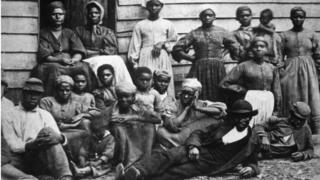
Photos of slaves 1862

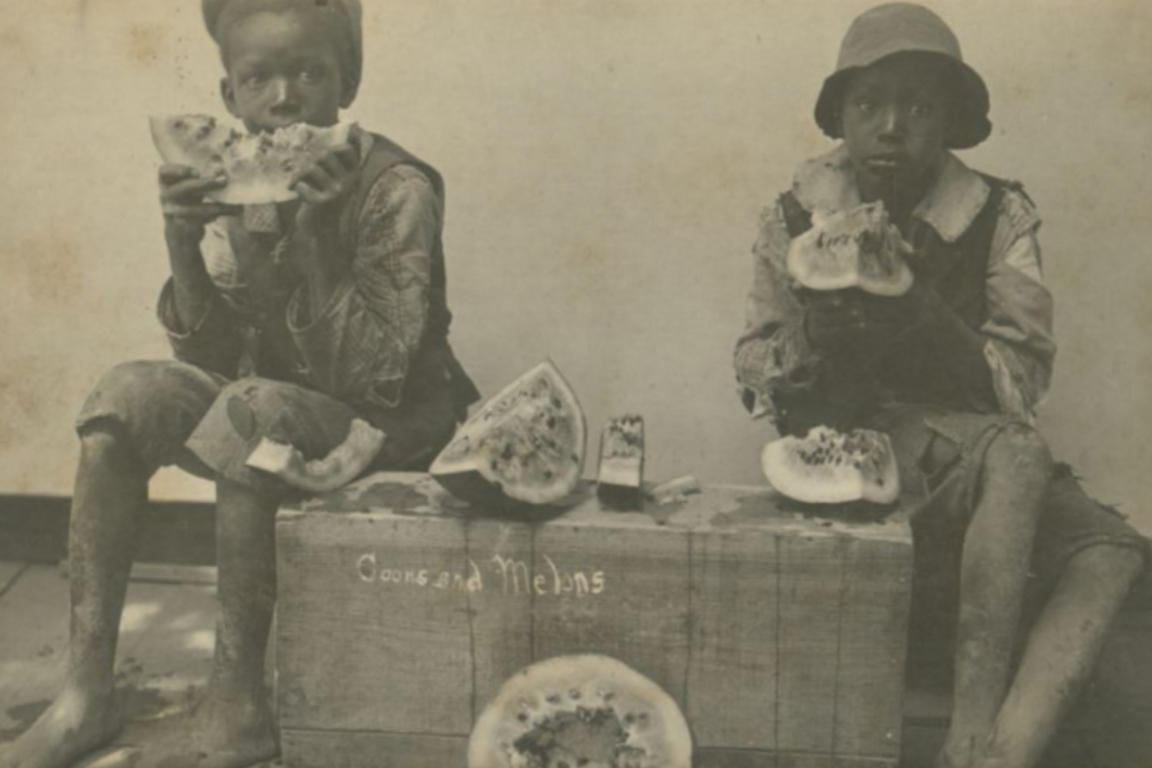
It was undeniable. Black slaves suffered from a mysterious mental illness that overtook their reason, what little of it they possessed. They somehow, infuriatingly, seemed unable, unwilling, defiantly opposed to their God-ordained position in life. After all, they wouldn't be in that position if the Almighty had not warranted it by their imperfections as human beings. Call them if you will proto-human. There was simply too much they lacked, too many deficiencies in physical attributes, attitudes, and personal values.

They were born to serve. Heaven forfend they should be permitted to be free, for they would have no idea how to comport themselves; their savage tendencies would rise to the forefront, and their criminality would swamp law enforcement. Best for all concerned that they reconcile themselves to the plain and simple fact that they were designed by a higher power to be enslaved, to represent the machinery and drudgery that would lead superior beings to prosperity.

Of course, there was a human, moral obligation on the part of their owners to treat their slaves reasonably well. The same kind of moral imperative that rests heavily on farmers, for example, to look carefully to the care and well-being of their domesticated animals. For a bovine creature, well treated, fed and cared for, delivers good milk. And so it is with slaves; treat them well and kindly; overlook their deficiencies out of the goodness of your soul, and they will be forever indebted to you as their master.

Oh, that incurable malady that so disturbed so many of the slave owners, so concerning that they urged good Dr. Cartwright to examine the situation and determine the cause? Well, the cause, of course was that they were so poorly endowed, incapable of rational judgement. Else why would they continually engage in conduct unbecoming a slave, forcing their reluctant masters to impose suitable punishment? Those lashes meted out as punishment could spoil the saleability of the slaves should his owner wish to rid himself of a constant runaway.

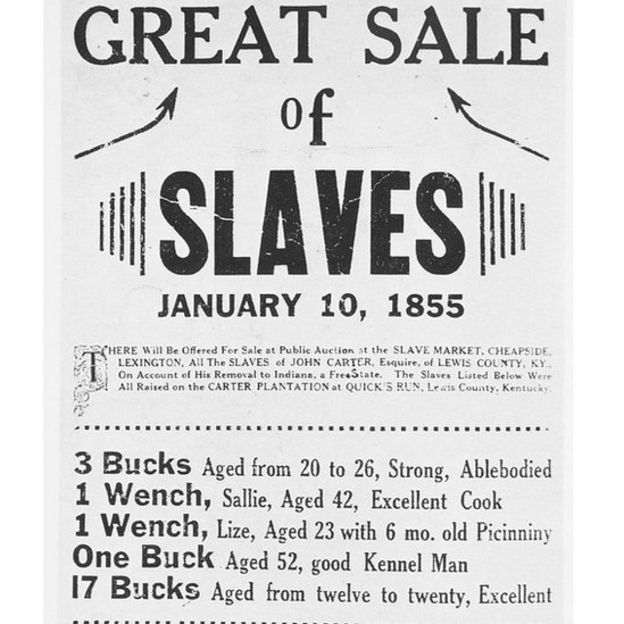
Sale of slaves poster

Well, Dr. Cartwright did as asked of him, concluding that his expert professionalism enabled him to accurately interpret all the signs he had studied and the responses he had extracted from slaves he had questioned post-runaway. The malady, clearly, was born of maladjustment to their lot in life. And so they suffered from Drapetomania. From the Greek; Drapetes: runaway -- mania: madness. So there it is: Underlying the meek and obliging facade of the slave was the malady of madness.

Another type of madness overcame white abolitionists, who hardly knew what they agitated for. For after all, what would become of society, much less the state of agriculture and manufacturing, if slaves were let loose to live among their former masters as free men? Once that occurred, what would be next? What demands would those slaves make to further disrupt society? Too painful by half to contemplate.

As New York lawyer and racial theorist Madison Grant wrote in his The Passing of the Great Race in 1916, "Negroes have demonstrated throughout recorded time that they are a stationary species and that they do not possess the potentiality of progress or initiative from within." A publication much admired by many, but principally by a reader in Germany, for the book was translated into a number of languages. Adolf Hitler was particularly taken with the concept of differentiation in "races".


"The Nazis claimed that Jews used tools which were under their control or subject to their manipulation to advance their biologically driven expansion to world power. Among these tools were, allegedly, the media, parliamentary democracy along with its focus on individual rights, and international organizations dedicated to peaceful reconciliation of national conflicts. If Germany did not act decisively against the Jews both at home and abroad, Hitler claimed, hordes of subhuman, uncivilized Slavs and Asiatics that the Jews could mobilize would sweep away the “Aryan” German race."
United States Holocaust Memorial Museum
Prewar photograph of Kitty Weichherz. This photo was taken from a diary of Kitty's life written by her father, Bela Weichherz (after ... [LCID: 61070]

Photograph of Kitty Weichherz taken before World War II

Kitty Weichherz, pictured here in a photograph taken before World War II began, was born in December 1929. This photo was taken from a diary of Kitty's life written by her father, Bela Weichherz. After Kitty's birth, Bela started to keep a diary of his daughter's life. He made entries recording her childhood in Czechoslovakia until the family was separated and deported during the Holocaust. His last entry reads "I only wish that we can go together." Kitty and all of her immediate family perished in the Holocaust. Bela's two diaries were hidden during the Holocaust and recovered after the war.
Photograph taken in Czechoslovakia, between 1934 and 1937.
  • US Holocaust Memorial Museum, courtesy of Judith Landshut

Labels: , , ,

Tuesday, November 21, 2017

The Resurrection of Slavery

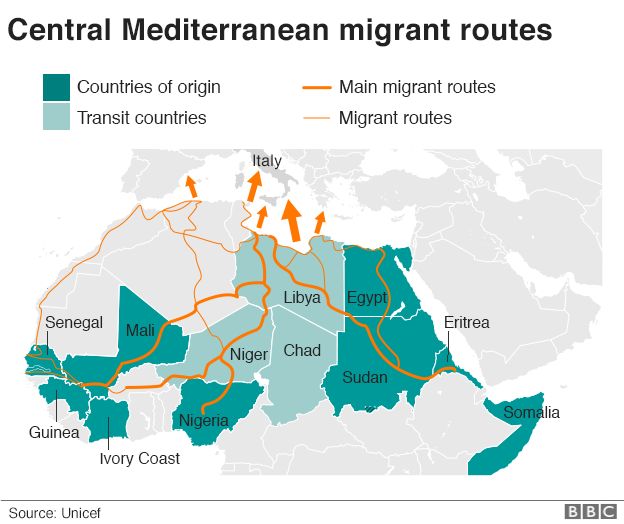
Map showing Central Mediterranean migrant routes
"Slavery has no place in our world and these actions are among the most egregious abuses of human rights."
"[The perpetrators must be brought to justice; appropriate UN bodies are] to actively pursue this matter."
UN Secretary-General Antonio Guterres

"[I plan to establish a] commission to investigate these reports in order to apprehend and bring those responsible to justice."
Ahmed Metig, deputy prime minister Government of National Accord, Tripoli, Libya
Migrants rescued from the Mediterranean arrive at a naval base in Tripoli in October.
Migrants rescued from the Mediterranean arrive at a naval base in Tripoli in October.   CNN
CNN has unleashed its findings on an active slave market in action in Libya, raising outrage in the West and the usual expressions of shock and denunciation in the United Nations, while Libyan authorities of course had no idea that anything of this nature was being carried out and they will immediately launch an investigation to get to the source of the problem. And then, of course, initiate steps to immediately resolve it to everyone's satisfaction.

There is a certain situation which has been previously addressed and that address has resulted in certain consequences. The situation being an ongoing flood of refugees and opportunity-seekers from across the Middle East and North and West Africa to enter Europe and declare themselves refugees, in expectation of being embraced by humanitarian groups and ushered into the countries of their choice which just happen to have the most generous social services available to meet their urgent needs.

But since the European Union, in understandable distress and no little amount of stress emanating from the situation from among their disparate members, many of which have had their resources strained and others which refuse to have their resources used at all, convinced the Libyan government that their coast guard should undertake a strategy to hold back the living tide of people willing to risk death at sea for the opportunity to coast into Europe.
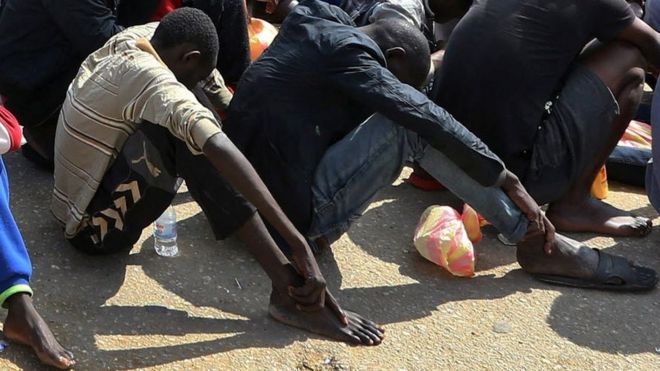
Migrants sit in a detention centre run by the interior ministry of Libya's eastern-based government, in Benghazi
Migrants sit in a detention centre run by the interior ministry of Libya's eastern-based government, in Benghazi Credit: Reuters
The consequences for having stemmed that tide to a sizeable degree is that Libya is stuffed with migrants and refugees. They have been warehoused, their immediate subsistence needs met with donations from the source that refuses them entry and NGOs, and a new business venture other than smuggling the foreigners out of Libya and into Europe has arisen. New opportunities always seem to present themselves, and enterprising criminal elements waste no time taking advantage.

Just think of it: Arab governments failed the needs of their people; Arab governments oppressed their people and when a popular uprising resulted, those same governments went to war against their people, and aside from slaughtering the impudent discontents, created massive numbers of dispossessed, displaced from their familiar geography, along with refugees. And now that the victims have sought alternatives for their lives, Arab traders in human lives have surfaced to gain profit.

According to testimony from the International Organization for Migration and other humanitarian agencies, for months refugees and haven seekers have been crowding the auction blocks of Libyan slave markets to be sold as working slaves throughout the region, where West Africans are advertised as "big strong boys for farm work". Bidders eyeing the migrants succeed in their purchases for as little as $400 for each slave.

The Treeq Alsika Migrant Detention Center in Tripoli, where some migrants are held by Libyan authorities before they are repatriated.
The Treeq Alsika Migrant Detention Center in Tripoli, where some migrants are held by Libyan authorities before they are repatriated.   CNN
So, then, it is not Arab governments at fault for creating these teeming numbers of refugees fleeing conflict, and migrants looking to find a promising future for themselves elsewhere than in their opportunity-scarce homelands, but the West, which has failed to continue absorbing migrants/refugees by their millions. If the smugglers in Libya cannot dispatch the refugees in those unseaworthy vessels taking all their available funds to do so, then they will make their hard-earned wealth by auctioning them off as slaves.

According to Alpha Conde, president of Guinea, chairman of the African Union -- the source of many of the migrants -- an inquiry and prosecutions reflecting the "despicable trade ... from another era", must result from these revelations, while the Senegalese government spoke of the slave market as a "blight on the conscience of humanity". Not a blight on Africa, on Arab and Muslim profiteers, but on "humanity", doublespeak for the West.

African migrants gather at the Tripoli branch of the Anti-Illegal Immigration Authority, in the Libyan capital, 23 March 2017
The International Migration Organization says it has gathered evidence of slavery in Libya   Getty Images


Labels: , , , , , ,

Tuesday, July 25, 2017

The Origins of Slavery

"West Africa had long been targeted by Muslim slavers from the north and east. Now their European counterparts began to make their presence felt. As the slave trade settled into its grisly triangle of suffering between Europe, Africa and America, large stone fortresses mushroomed on the West African coast, complete with dungeons and manned by whoever was willing. Massive barracoons were built to hold the human cargo; and they were built to last -- they were still in use, as dwellings, in the 1950s."*
 Persian miniature :نگارگری ایرانی

Captain James Kingston Tuckey ... entered the River Congo in 1816 on an exploratory, semi-scientific mission with the 100-ton British Admiralty ship Congo and its 56 crew.
"Initially it was like a nursery vision of Africa -- crystal-clear water above a smooth, red clay bed; smoke rising from happy villages; parrots flying in streams at dawn and dusk across the mangrove swamps to feed off the cornfields on the opposite bank; comfortable temperatures which never rose above 76-F; and, to provide the necessary touch of mystery, a huge, natural pillar of stone near the river's mouth surrounded by whirlpools and carved with innumerable symbols, which was a fetish of Seembi, the river's protective deity. As they sailed upriver, however, the reality became apparent. Down-at-heel despots wearing cheap tiaras, cast-off uniforms, beadle's cloaks, and displaying horrible skin conditions, came aboard to demand gifts and rum -- one man stayed five days to make sure the cask was empty. Poverty was endemic, as was warfare. Poisoning was so commonplace that every man of importance employed a food-taster -- not that there was much food to be tasted in most places. Once having purchased a sheep and skinned it for dinner, Tuckey was horrified to find a man chewing its hide, wool and all, that had been roasted to lukewarm on a fire. Even where the land was capable of producing food, agriculture was pursued in a half-hearted, apathetic fashion, cattle being left to roam indiscriminately, never milked and often slaughtered in calf."*

"The cause of this economic ruin was slavery, which had been practised so relentlessly over the last 300 years that it was now a fact of life. Few people dared venture a day's walk from their village lest they be kidnapped by marauding gangs. Being sold as a slave had even entered the penal code as punishment for adultery with a chief's wife. Warfare was conducted for no other purpose than the capture of slaves. Human beings had become the region's major product, the sole currency with which chieftains could buy the shoddy wonders of European civilization. The price of a man was fixed with all the exactitude of foreign exchange. The rate, in Tuckey's time, was two muskets, two casks of gunpowder, fifty-two yards of cloth, one fancy sash, two jars of brandy, five knives, five strings of beads, one razor, one looking-glass, one cap, one iron bar, one pair of 'scizzars' and a padlock. Now and then Tuckey caught glimpses of the trade. Hard-bitten slavers carrying British and
American crews and sailing under Spanish or Portuguese colours flitted by night past the Congo, sending an occasional cannon-ball its way, as they went about the business of lifting what Tuckey estimated to be 2,000 slaves per year from the Congo River -- a relatively modest haul compared to other areas."*

From: Barrow's Boys by Fergus Fleming, Atlantic Monthly Press, 1998


The Barbary slave trade
Around 1600 AD, European pirates brought advanced sailing and shipbuilding techniques to the Barbary Coast, which enabled the corsairs to extend their activities into the Atlantic Ocean, and the impact of Barbary raids peaked in the early to mid-17th century.
While the Barbary slave trade is typically portrayed as Muslim corsairs capturing white Christian victims, this is far too simplistic.  In reality, the corsairs were not concerned with the race or religious orientation of those they captured. Slaves in Barbary could be black, brown or white, Catholic, Protestant, Orthodox, Jewish or Muslim. And the corsairs were not only Muslim; English privateers and Dutch captains also exploited the changing loyalties of an era in which friends could become enemies and enemies friends with the stroke of a pen.
"One of the things that both the public and many scholars have tended to take as given is that slavery was always racial in nature,” said historian Robert Davis, author of Christian Slaves, Muslim Masters: White Slavery in the Mediterranean, the Barbary Coast, and Italy . “But that is not true,"

*Slave trading was banned first by Denmark in 1802, by Britain and America in 1808, by Sweden in 1813, by the Netherlands a year later, by France in 1818 and by Spain in 1820 followed by Portugal in 1836 But under-the-counter trading to the Americas went on well into the 1850s.


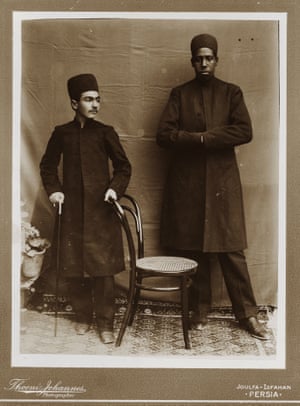
Gholam Hoseyn Mirza Masoud, one of Zell-e-Soltan’s sons, with his personal African slave, Julfa, Isfahan, 1880sGholam Hoseyn Mirza Masoud, one of Zell-e-Soltan’s sons, with his personal African slave, Julfa, Isfahan, 1880s Photograph: Thooni Johannes/Institute for Iranian Contemporary Historical Studies, Tehran, Iran

Labels: , , , , ,

Monday, November 07, 2016

No Nobler Cause to Commit to: Rescue of Yazidi Women and Girls: Immigration to Canada

That the House
(a) recognize that ISIS is committing genocide against the Yazidi people;
(b) acknowledge that many Yazidi women and girls are still being held captive by ISIS as sexual slaves;
(c) recognize that the government has neglected to provide this House with an appropriate plan and the corresponding action required to respond to this humanitarian crisis;
(d) support recommendations found in the June 15, 2016, report issued by the United Nations Commission of Inquiry on Syria entitled, “They came to destroy: ISIS Crimes Against the Yazidis”; and
(e) call on the government to (i) take immediate action upon all the recommendations found in sections 210, 212, and 213 of the said report, (ii) use its full authority to provide asylum to Yazidi women and girls within 30 days.
Conservative Member of Parliament, Michelle Rempel, Official Opposition Immigration critic
Confoundingly, the Canadian left believes that the current Liberal-led government of sunny-face, selfie-addicted Justin Trudeau is a humanitarian camp devoted to extending themselves to better the lives of the unfortunate. What group of people at the present time could be deemed more unfortunate than the Iraqi Yazidis whom Islamic State of Iraq and the Levant have targeted for extinction on the basis that Caliph Abu Bakr al-Baghdadi and his jihadi temporal agents of the divine have identified as apostates, deserving of death.

A migrant child stands next to a placard reading 'Please save the Yazidi people from genocide' at the Moria detention center during a visit of Pope Francis in Mytilene, on the Greek island of Lesbos, on April 16. A religious freedoms group wants the Canadian government to take action and rescue at 400 Yazidi women, who have been raped and tortured.
A migrant child stands next to a placard reading 'Please save the Yazidi people from genocide' at the Moria detention center during a visit of Pope Francis in Mytilene, on the Greek island of Lesbos, on April 16. A religious freedoms group wants the Canadian government to take action and rescue at 400 Yazidi women, who have been raped and tortured.  (ARIS MESSINIS / AFP/Getty Images)

To be clear, death for Yazidi men and boys above a certain age, but for girls and women another fate awaits; a life of being held in contempt and constant rape and sexual slavery. So while tens of thousands of Yazidi men were slaughtered their wives and daughters were taken into slavery, as permitted by certain passages of the Koran, the Hadiths and other sacred writings of Islam promoting sexual license for the Islamist victors of conflict as a symbol of virtue in claiming bounties.

The previous Conservative-led government of Prime Minister Stephen Harper, which had committed itself on behalf of Canada, to rescuing refugees of violence perpetrated upon Sunni Syrians by their own Shiite-led government wanted to focus on refugees from all the territories administered by ISIL in Syria and Iraq. But refugees had to be selected from among those whom the United Nations deemed to be refugees and of whom background checks had been done by the United Nations.

The Harper government had a wish to focus primarily on rescuing the most vulnerable among those whom Islamic State threatened. Their focus narrowed to the rescue of Christians and of Yazidis of whom some 700,000 lived mostly in northern Iraq. The Yazidis who survive Islamic State predations have found haven with the Kurds, the most formidable foes of ISIL. Minority groups such as Christians and Kurds are protected by the Kurds who accept them as equals.

But because they have found haven in the Kurdish parts of Iraq the United Nations does not deem them to be refugees but rather internally displaced persons. They are not designated as refugees and have no formal papers provided to them by the UN, making them inadmissible for refugee status in countries like Canada, and it is this situation that the Harper government pointed out to be a hindrance to rescuing them under the UN refugee selection process.

The Trudeau government, on the other hand, refused to give priority to Christian and other non-Muslim minorities; their stance was that they were prepared to give all refugees equal status, even though under the circumstances Yazidis were not considered to be refugees. They were, however, oppressed, persecuted, faced slavery, mass rape and mass murder. It was not until a Conservative Member of Parliament took up their plight to canvass Members of Parliament representing all political parties that the tide was turned.

Even when the United Nations finally declared through the release of a UN-sponsored report, They came to destroy: ISIS Crimes Against the Yazidis, that Islamic State was committing genocide, Canada's Foreign Minister was reluctant to echo that declaration, which would have meant committing to focusing on the rescue and immigration acceptance as refugees of the Yazidis desperate to find a place of haven and a future for themselves and their children.

Finally, the Liberal government of Prime Minister Justin Trudeau was shamed into acquiescing, admitting that a war crime of genocide was being committed against the Yazidis. And Canada committed to bringing in Yazidi women and children and Yazidi families to give them the opportunity of finding new lives in Canada. A unanimous Commons vote on October 25 committed to a rescue of Yazidi women and girls within 120 days of the vote.


Labels: , , , , , ,

Tuesday, August 18, 2015

ISIL Enslavement

"I told her: 'They can't understand Kurdish, so listen carefully. If you can find a way to get out of that house, I'll try to find someone to bring you back."
"Once a family had to pay $6,000 for 30-day-old baby."
"For IS women and girls are nothing more than goods and our only option is to trade them like you would trade goods and products over the border."
"I told him: 'OK, give me some time and I'll send the money to you. But don't touch my niece'." 
"Sometimes they call and tell us to come and pick up some Yazidis. But when we send someone into IS territory, they are captured and killed." 
Abdullah, Iraqi Kurdish businessman

"There are still too many people being held by IS and we haven't got enough money to pay smugglers to bring all of them back."
Noori Osman Abdulrahman, Kurdistan Regional Government co-ordinator for Yazidi affairs

"I waved down a taxi. The driver asked me where I was going. At first he said he was scared, because if he was seen with me, IS would kill both of us."
"But in the end he agreed to take me to another part of town, where there were good people who could help me."
"When I get upset, I get panic attacks and can't breathe. I get flashbacks about what happened to me and all the other girls." 
Marwa, 22, Iraqi Kurd, former ISIL captive
Marwa, a released Yazidi woman
Marwa was held at a house in Islamic State's headquarters of Raqqa in Syria : BBC News
Abdullah is an Iraqi businessman. At one time, his business involved buying agricultural products from Syria. He is now heavily involved in another kind of trade; paying ransom to enable him to have Islamic State captives released back to their families.He focuses on attempting to free some of the thousands of Yazidi women and children from their Islamic State captors. For ISIL, everything has a price. And tribal people representing ethnic minorities targeted by Islamic State are anxious to be reunited with their families.

Abdullah has dedicated his time to helping to fund their release. There is the instance of 35-year-old Khatoon, with her four children aged between four and ten who were captured by Islamic State terrorists after their village in Iraq's Sinjar region was taken by storm in August of 2014. Khatoon, her children and the other women and children were taken to the Syrian city of Raqqa, purported capital of the caliphate declared by ISIL. "It was horrible," she says. "They didn't give us enough food or water, or let us wash. Sometimes they beat us."

When Islamic State terrorists attacked and captured Yazidi villages, the men and older boys were mostly rounded up and killed. The women were viewed as valuable prizes. They would become slaves to be sold to the highest bidder, particularly young women and teen-age girls; even pre-teen girls. Their value lay largely in the premise that as captured non-Muslim slaves, ISIL men could have sex with them since passages in the Koran gave that legitimacy as pleasing to Allah, and reflective of what the Prophet Mohammad had counselled.

Abdullah's niece Marwa was captured along with 55 of her relatives, a year ago in Sinjar, a Yazidi-majority-populated area in Iraq. She managed to contact her uncle by telephone to inform him that she was living in captivity in Raqqa, Syria. Soon afterward, Marwa stole a key to the house in which she was being held and made her escape. A taxi driver was persuaded to take her to a different area of the town where kind people gave her a place to stay.

From there she attempted, as instructed by her uncle, to call him but by then her ISIL captor had discovered where she was staying and threatened the family who had given her shelter. They were to return her or be prepared to hand over to him $7,500, her purchase price. At the same time, he made contact with her uncle who agreed to raise the money to free his niece. And they were reunited, but Marwa can't be happy, since she is the only one of the 55 of her family members taken by ISIL who managed to escape.

Since the mass abductions, in the space of a year, a network of contacts and smugglers has been established across Syria, Turkey and Iraq, and with their help Abdullah has been able to free over 300 mainly Yazidi women and children from their ISIL captivity. The cost ranges between $6,000 and $35,000 to buy back people held by Islamic State. The price is highest for young girls, valued as sex slaves, although even babies are tagged with a high price.


Khatoon and her children were freed once her father-in-law, Mardan, paid the required $35,000 to achieve their freedom. "I sold everything I had. I had to go door-to-door borrowing money. Now I have to pay it all back, but I'm penniless and 17 members of my family are still being held by IS" he explained in a BBC interview. When Mardan managed to raise another $35,000 for the release of his other daughter-in-law and her two children, the Kurdish smuggler acting as trusted go-between was killed and the $17,500 he had with him was lost.

Now Mardan is being warned that if he has any aspirations to see his daughter-in-law and her children again, it will cost him an additional ten thousand dollars. For Abdullah, confirmation that ISIL contacts are genuine and negotiations will lead to the release of those who have been held by them, is a complex and difficult procedure. Moreover, four of the 23 smugglers Abdullah relies upon to help him free the captives, have been killed by Islamic State terrorists.

Labels: , , , , ,

Friday, August 14, 2015

Pleasing God 

"I kept telling him it hurts .. please stop. He told me that according to Islam he is allowed to rape an unbeliever. He said that by raping me, he is drawing closer to God."
12-year-old Yazidi girl, Iraq

"Every time that he came to rape me, he would pray. He kept telling me this is ibadah [worship]. He said that raping me is his prayer to God. I said to him, 'What you're doing to me is wrong, and it will not bring you closer to God'. And he said, 'No, it's allowed. It's halal'."
"Right away, the fighters separated the men from the women. There [town near Mount Sinjar], they separated me from my mom. The young, unmarried girls were forced to get into buses."
"They laughed and jeered at us, saying 'You are our sabaya [slave]."
15-year-old Yazidi girl, Iraq
A 15-year-old girl who wished to be identified only as F, right, with her father and 4-year-old brother. “Every time that he came to rape me, he would pray,” said F, who was captured by the Islamic State on  Mount Sinjar one year ago and  sold to an Iraqi fighter. Credit Mauricio Lima for The New York Times
"It was 100 percent pre-planned. I spoke by telephone to the first family who arrived at the Directory of Youth in Mosul, and the hall was already prepared for them. They had mattresses, plates and utensils, food and water for hundreds of people."
Khider Domle, Yazidi community activist

"There is a great deal of scripture that sanctions slavery. You can argue that it is no longer relevant and has fallen into abeyance. ISIS would argue that these institutions need to be revived, because that is what the Prophet and his companions did."
Cole Bunzel, scholar of Islamic theology, Princeton University
Aishan Ali Saleh, 40, at a refugee camp on the outskirts of Dohuk. She had lived in Kojo, one of the southernmost villages on Mount Sinjar, which was overrun by Islamic State fighters. Credit Mauricio Lima for The New York Times

"What really alarmed me was that some of [ISIL's] supporters started denying the matter as if the soldiers of the Hilafah had committed a mistake or evil."
"I write this while the letters drip of pride We have indeed raided and captured the kafirah [infidel] women and drove them like sheep by the edge of the sword."
"Prior to the taking of Sinjar, Shariah students in [ISIL] were tasked to research the Yazidis."
ISIS online magazine Dabiq: The Revival of Slavery Before the Hour

A new investigative journalism report out of Qadiya, Iraq into the enslavement and mass rape of Yazidi girls and women by Islamic State of Iraq and the Levant interviewed hundreds of Yazidi girls who had managed to escape from their brutal confinement as sex slaves to ISIL fighters. The women and girls spoke of their horrendous ordeals at the hands of fanatical Islamists dedicated to jihad, who view non-Muslim women and girls as spoils of war.

One 34-year-old had been bought and raped repeatedly by a Saudi national with ISIL in the Syrian city of Shadadi. Although her misery was acute she was more concerned about the welfare of a 12-year-old girl who had been bought as a slave at the same time she had been. The girl was subjected to unending rape. "He destroyed her body, she was badly infected. The fighter kept coming and asking me, 'Why does she smell so bad'?

"And I said, she has an infection on the inside, you need to take care of her." The devotee of peaceful Islam continued to do what he had always done; pray before and after raping the child, despite the obvious agony she was experiencing. "I said to him, 'She's just a little girl' And he answered: 'No, she's not a little girl. She's a slave. And she knows exactly how to have sex. And having sex with her pleases God."

ISIL jihadis invaded villages on the flank of Mount Sinjar in August of 2014 which were home to the Yazidis, a non-Muslim ethnic and religious minority with some distant ethnic links to the Kurdish population of the area. ISIL militias advanced on the Yazidi towns in a purposeful manner and the purpose soon enough became evident when men and women were separated soon after their capture in one village after another.

The men and older boys were marched to fields nearby the villages, and just as systematically shot to death. The women, girls and children were taken away. "The offensive on the mountain was as much a sexual conquest as it was for territorial gain", commented Matthew Barber, an expert on the Yazidi minority from University of Chicago who just happened to be in the area at the time of the invasion. Since then he has helped to form a foundation providing psychological help to escapees.

Fifteen-year-old "F", described to investigators the round-up of girls, their being taken to Mosul, and crowded into the Galaxy Wedding Hall there. Women were taken to elementary schools and municipal buildings in other Iraqi towns. All were held in crowded, strict confinement. Months later three ISIL men registered the girls by name, age, hometown. Later still, they were removed and sold to ISIL fighters.

Since then, two thousand of the girls and women managed to escape their captors. Those whose parents survived were reunited with their daughters. For ISIL, everything is permitted, condoned as their inalienable right, authorized by the Koran. "It is permissible to have intercourse with the female slave who hasn't reached puberty, if she is fit for intercourse", reads a translation by the Middle East Media Research Institute of an ISIS pamphlet published in December on Twitter.

Labels: , , , , , , ,

() Follow @rheytah Tweet