Politic?

This is a blog dedicated to a personal interpretation of political news of the day. I attempt to be as knowledgeable as possible before commenting and committing my thoughts to a day's communication.

Saturday, January 04, 2020

The Face of Evil : Expunged

"Soleimani's martyrdom will make Iran more decisive to resist America's expansionism and to defend our Islamic values."
"With no doubt, Iran and other freedom-seeking countries in the region will take his revenge."
Iranian President Hassan Rouhani
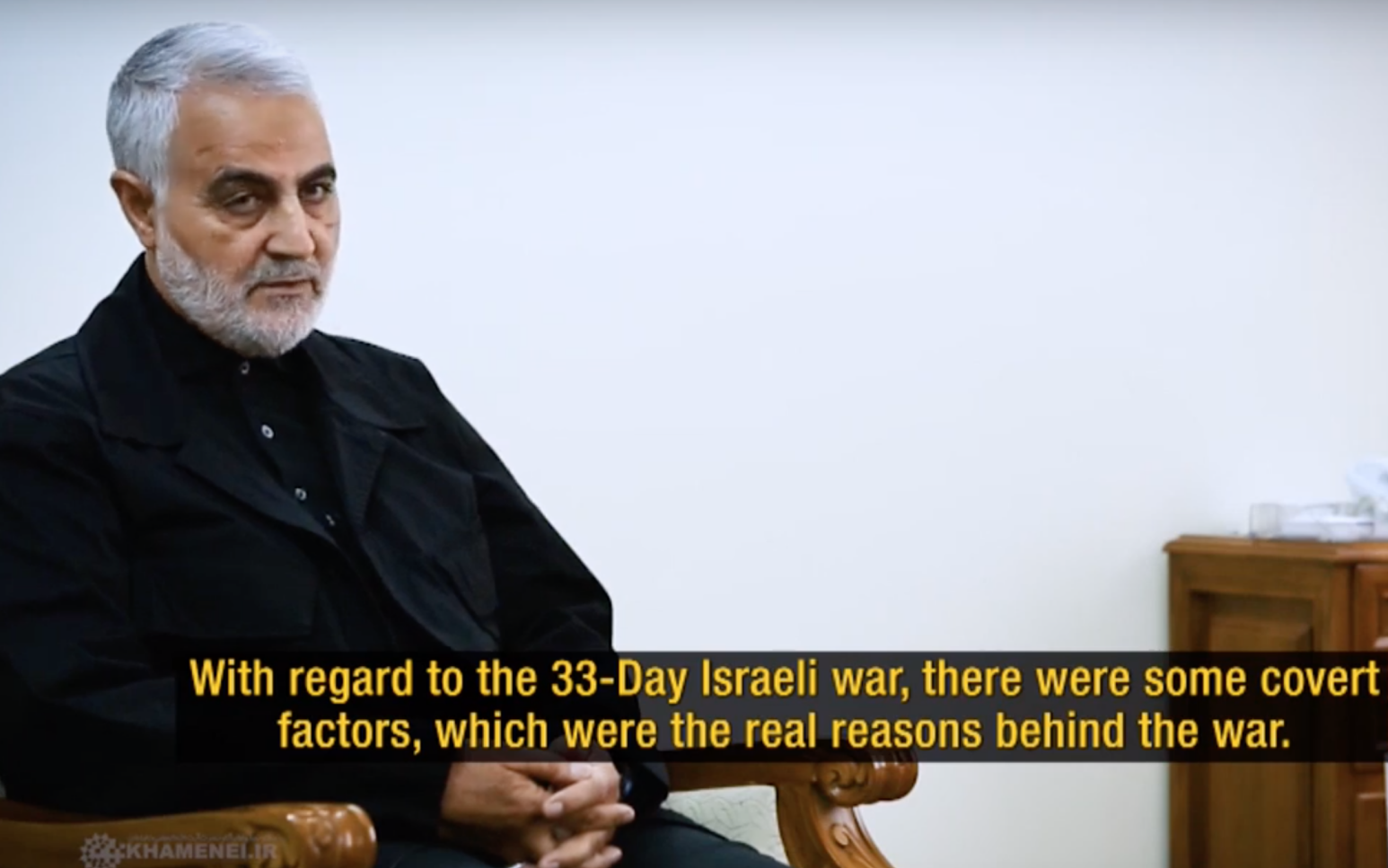
Iran’s Islamic Revolutionary Guards Corps Quds Force commander, Qassam Soleimani, in an Iranian TV interview, October 1, 2019 (YouTube screenshot)
"With Soleiman dead, war is coming -- that seems certain; the only questions are where, in what form and when?"
"While America dominates the world in terms of conventional military force, Iran's advantage is in the asymmetric sphere. So rocket attacks, bombings, assassinations and even attacks like the missile assault on Saudi oil facilities in September 2019 are all possible responses. There really is no underestimating the geopolitical ramifications of this."
"His death will be perceived as martyrdom in Iran and will undoubtedly fuel some form of retaliation -- but not by a disparate terrorist organization, but one of the Middle East's most powerful governments, with an unrivalled and formidable asymmetric tool kit."
"Neither ISIS nor al Qaeda ever had the capacity to expel the U.S. from Iraq and Syria and end the counter-ISIS campaign there, but Iran and its supporters most definitely do. We've entered into very dangerous territory now."
"A single attack on U.S. positions could feasibly catalyze a military withdrawal and second abandonment of the Kurds [in Syria]. The death of Abu Mahdi al-Mohandis alongside Soleimani has just mobilized tens of thousands of PMU militiamen against America's presence in Iraq like never before."
Charles Lister, director, Countering Terrorism and Extremism program, Middle East Instituee, Washington, D.C.
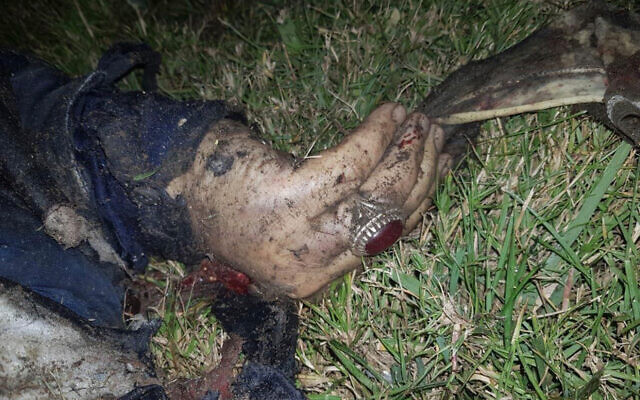
Image circulating on line reportedly shows Iranian general Qassem Soleimani’s severed hand following his death in a US airstrike in Baghdad, January 3, 2020. (Social media)
"The most important military commander bar none in the Middle East [as well as a] mass terrorist [describes the decapitation of the Iranian general considered the second most powerful and influential man in the Islamic Republic of Iran]."
"Iran will avenge his death, we can be sure. The key from a U.S. perspective is how well Trump has anticipated and prepared for Iran's reaction -- in Iraq, in the U.S., throughout the region and across the globe."
Bruce Hoffman, senior fellow, Council on Foreign Relations

The antecedent to this event of course, is the U.S.-led invasion of Iraq with the express purpose of removing former Iraqi President Saddam Hussein from power, as the Sunni Islam version of the Shiite Qassem Soleimani whose fate suddenly matched that of Saddam, both mass murderers, both enablers of terrorism, both convinced they were invincible, both relieved of their delusion of being beyond the reproach of violent justice. The reference to preparedness refers to then-President Bush having no back-up plan for post-invasion with the collapse of the Saddam regime.

The outraged and outrageous language of the 'moderate' Iranian President Rouhani speaking in one breath of Iran as a 'freedom-seeking country' and the United States' 'expansionist' agenda has brought language and meaning to Orwellian heights in its contorted new levels of disingenuousness and febrile delusion. Since its occupation of Iran in 1979 the Islamic Revolution that brought the Ayatollahs to power as a theocratic imperial state focused on jihadic conquest has seen a Shiite minority among Sunni majorities reverse ages-old power structures.

Iran's intention to subjugate the Sunni majority to his Shiite Islamist agenda, restoring a historic realm of power and influence, has led to mass murder and huge population displacements in Syria and Yemen, and permanently altered the character of Lebanon's society. The brutal horror of the Islamic State of Iraq and the Levant that transfixed the world in amazement and fear at the depths of human depravity in the manner of the atrocious deaths visited upon their 'enemies', has its counterpart in the Shiite militias like Hezbollah, Iran's proxies.

Iraq, now completely in the thrall of Iran's web of intrigue and a willing satellite, has joined Syria, Yemen, Palestine and Qatar to counterbalance the Sunni Middle East states weight of majority, leaving the region in a state of suspense and destabilization. Iran's outreach to Africa has been equally disturbing and unsettling. Whatever territory that ISIL amassed and involuntarily vacated created a vacuum that Iran's Shiite militia proxies were swift to occupy, their intentions and violence similar to ISIL's.

Iran's malign influence has spread as far as North Korea and Venezuela. North Korea's Kim Jong Un without doubt is keenly observing events on the ground in the Middle East, to absorb a fuller understanding of American resolve that will have great meaning and consequences for his nuclear ambitions just as it has for Iran's. Perhaps he is weighing just how far he too can push America in the belief that he, like Soleimani and Iran's Grand Ayatollah Khamenei is also untouchable and there are no provocations too advanced, viewed as intolerable by the United States.


Labels: , , , , , ,

Monday, December 30, 2019

Iraq, Increasingly Indistinguishable from Iran

"[The American operations will] degrade KH's ability to conduct future attacks [against coalition forces]."
"Iran and their KH [Kataib Hezbollah] proxy forces must cease their attacks on U.S. and coalition forces, and respect Iraq's sovereignty, to prevent additional defensive actions by U.S. forces."
"KH has a strong linkage with Iran's Quds Force and has repeatedly received lethal aid and other support from Iran that it has used to attack OIR coalition forces."
Jonathan Hoffman, chief Pentagon spokesman

"The Iraqi Prime Minister expressed his strong objection to this unilateral decision and his concern that it would lead to further escalation and demanded that he [Defense Secretary Mark Esper] stop it [airstrikes] immediately."
"These strikes represent a treacherous stab in the back."
Abdelkarim Khalaf, spokesman of the commander of Iraq's Armed Forces

"[The Baghdad government rejects] unilateral action [by coalition forces inside his country]." 
"We have already confirmed our rejection of any unilateral action by coalition forces or any other forces inside Iraq. We consider it a violation of Iraq's sovereignty and a dangerous escalation that threatens the security of Iraq and the region."
Iraqi Prime Minister Adil Abdul Mahdi
Iraqi people walk on a United States flag in a protest after an air attack at the headquarters of Kataib Hezbollah militia group in al-Qaim, Iraq [Alaa al-Marjani/Reuters]
To Iraqis and their leaders it is reprehensible that the U.S. gave warning to its Iraqi hosts that it intended to respond to the attack on U.S. positions in Iraq, then carried out a government-unauthorized mission delivering a compelling message that any militias with plans to bomb Americans should consider themselves placed on notice that repercussions would be swift and deadly. How Iraqi authorities garnered the impression that Washington and the U.S. military are at their beck and call and will act only with their express permission remains a mystery.

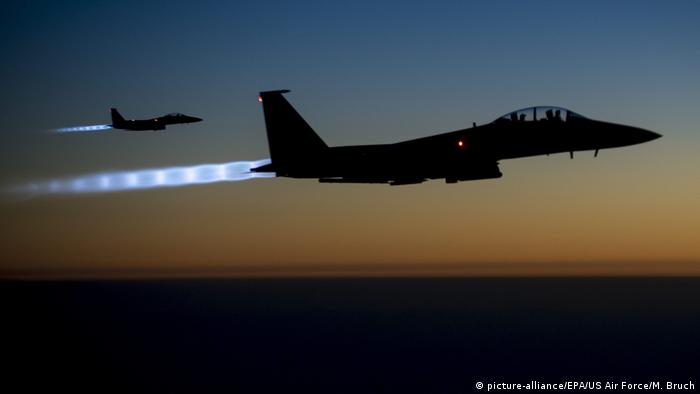
Repeated attacks on U.S. installations on Iraqi bases by Kataib Hezbollah spurred the U.S. to action, as simple as that. Five facilities in Iraq and Syria with ownership of the Shiite militia with its Iranian backing were bombed by U.S. F-15 Strike Eagle fighter planes on order from the Pentagon and the U.S. administration after an American contractor was killed when an Iraqi base was hit. That the Iraqis feel Iran-linked militias have impunity to act as they will targeting the U.S. may very well reflect the fear the Iraqi administration feels that Iran might hold them accountable.

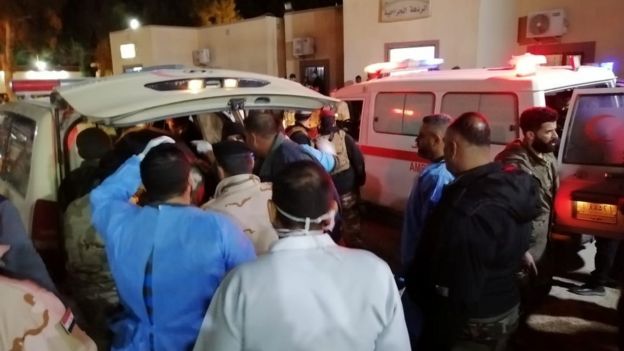
An ambulance transporting wounded Iraqi paramilitary fighters arrives at a hospital in al-Qaim, Iraq (29 December 2019)
Paramilitary Popular Mobilisation: dozens of people killed or injured  Reuters

Pulling the strings on a puppet government cautious lest it give offence to its powerful terrorist neighbour seems appropriate for the Byzantine intrigues and violence of the Middle East. The targeted militia has given its own due warning that it is prepared to draw on its resources to inflict further casualties on U.S. interests. Which will have the effect of drawing the U.S. back into an endless conflict it would prefer to vacate.

The Pentagon knows the militia's links to Iran's Quds Force, the special operating forces of the Iranian Republican Guard Corps tasked to guide their external proxy militias outside Iran. Since Iran controls the militias and they feel secure enough to attack U.S. interests, the provocation is coming from Iran, the response from the U.S. So if any entity is responsible for the potential of heightened hostilities and linked violence it is the Islamic Republic which feels itself indomitable.

It is long past time for a comeuppance and for events to take place to determine whether or not the regime can survive the restive efforts of Iranian protests and the linked Iraqi protests at the involvement of Iran in the affairs of its neighbours to fulfill its viciously nefarious plans of conquest. Those protests are concerning enough to both regimes to elicit deadly means to stifle dissent.

The militia's holdings that were targeted in both Iraq and Syria included facilities for weapons storage, and areas used by the militia in planning attacks against coalition forces.

Syrien US F-15 Kampfflugzeug (picture-alliance/EPA/US Air Force/M. Bruch)

In Iraq about 25 of their fighters were killed and 55 wounded. Among the dead were four local Kataib Hezbollah commanders, the result of one of the strikes targeting the group's headquarters near the border with Syria. Intelligence had alerted Pentagon officials that Iranian backed groups were planning to attack U.S. forces in Iraq. And then, it happened; over 30 rockets had been launched on an Iraqi base near Kirkuk on Friday, killing the contractor and wounding another few U.S. service members.

Concern related to tensions between the U.S and the Popular Mobilization Units, Shiite militias supported and armed by Iran of which Kataib Hezbollah is but one group among many paramilitary groups under the umbrella of the 'popular mobilization units', will lead to further violence within Iraq. "If something happened then we'll be in the middle and it will be chaos", observed Lt.Col.Hassan Kadhim, an officer with the Iraqi army's 8th Division. "It's being done by Iran proxies. Iran wants to have their war in our land."

Iraqi officials failed to effectively respond to a request by U.S. Defense Secretary Mark Esper when he had conveyed his concerns about recent attacks on U.S. bases, with the knowledge it was not the Islamic State that was involved, but rather Iranian proxies. Iraq's co-operation was sought to itself respond to an increase in those U.S. base attacks; an appropriate action since they care so much about their sovereignty. Their previous inaction has led directly to the U.S. defending its own interests.
"My suspicion would be that Iran is behind these attacks, much like they're behind a lot of malign behaviour throughout the region, but it's hard to pin down."
"So again, we need their help [Iraqi military] in terms of getting the security situation under control and stabilized, but we also still retain our right of self-defence."
U.S. Defense Secretary Mark Esper
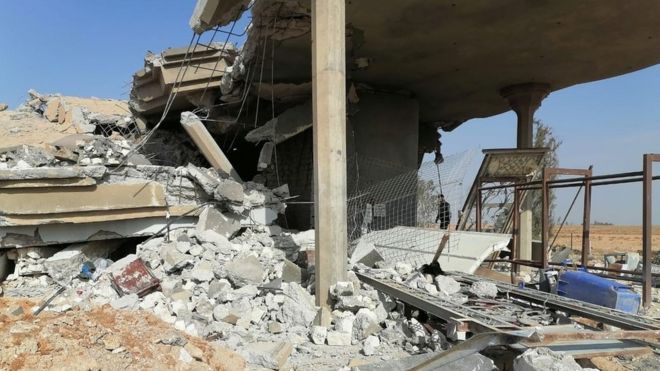
Destroyed facility linked to Kataib Hezbollah in al-Qaim, Iraq (30 December 2019)
Kataib Hezbollah said its headquarters in the western Iraqi town of al-Qaim was hit  Reuters

Labels: , , , , ,

() Follow @rheytah Tweet