Politic?

This is a blog dedicated to a personal interpretation of political news of the day. I attempt to be as knowledgeable as possible before commenting and committing my thoughts to a day's communication.

Monday, January 26, 2026

"He Overcame Trauma By Becoming a Witness"

EW_award
Elie Wiesel:  Israel advocate 1928 – 2016
"I wanted my language to be a monument to my people -- especially those who died."
"I wrote it [And the World Remained Silent ... Night] -- for the other survivors, who found it difficult to speak and I wanted to tell them, Really ... you must speak."
"I have tried to fight those who would forget."
"Because if we forget, we are guilty, we are accomplices."
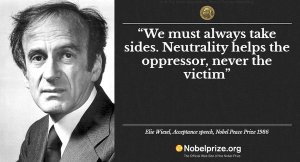
"We must always take sides Neutrality helps the oppressed, never the victim." 
Elie Wiesel, Holocaust Survivor 
 
"My father clearly articulated that the antisemite will always hate, even if they mask that hate as anti-Zionism -- as though it were something separable from antisemitism."
"Our object as Jews is to keep embracing our Jewish faith and heritage and our connection to our over seven million Jewish brothers and sisters in Israel."
Elisha Wiesel, businessman, activist, philanthropist
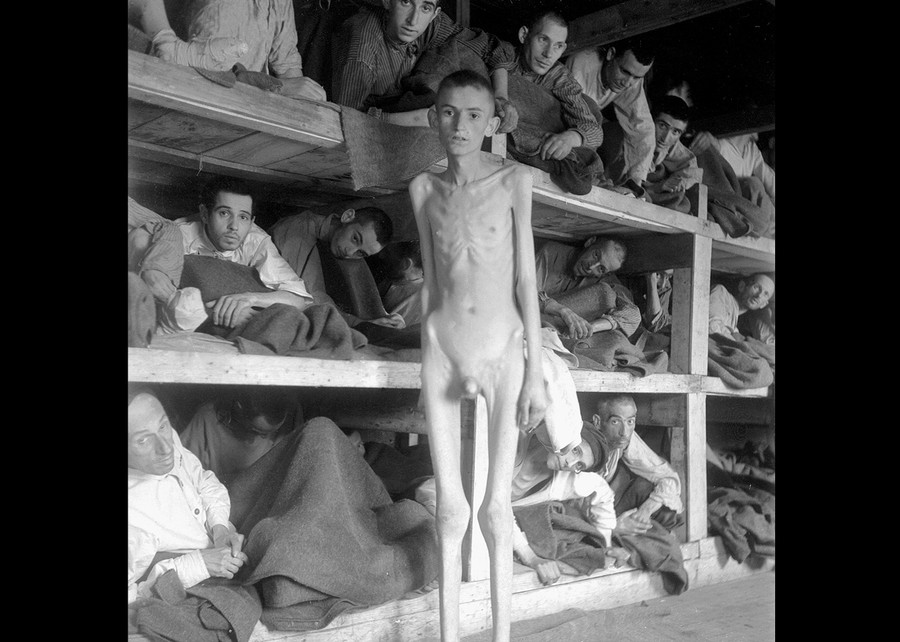
Jewish survivors in Buchenwald concentration camp, after the liberation of the camp in 1945  AFP/Getty 
 
Holocaust Remembrance Day is held each year on January 27. This year, Elie Wiesel: Soul on Fire, premieres at the Montreal Holocaust Museum. Elisha Wiesel, 53, will speak of his father and his mission to ensure the world 'never forgets'. Elisha Wiesel is chair of the board of the Elie Wiesel Foundation for Humanity. Along with his mother, Marion Wiesel, a Holocaust survivor, the Foundation was launched after the death in 2016 of father-and-husband, to continue the work Elie Wiesel dedicated his life to.
 
Directed and written by Oren Rudavsky the 90-minute film addresses the personal story and legacy of a man known as one of the world's most respected Holocaust survivors, known as well as a prolific author, humanitarian, passionate educator and Nobel Peace Prize laureate.
 
Eliezer Wiesel was a boy of 15 when he was deported from Sighet, Romania with his parents and three sisters in May of 1944 to Auschwitz-Birkenau where his mother and younger sister Tzipora were killed on their arrival at the death-and slave labour camp. Elie and his father were selected to go to the slave labour component of the notorious death camp. 
 
By early 1945, as Germany was losing the war and emptying the camps by forcing starving, skeletal inmates on death marches, Elie and his father were sent on a march to the Buchenwald concentration camp where his father later died. In April of that year the camp was liberated by American soldiers. The Jewish orphans in the camp, Elie among them, were transported to France, where his sister Hilda recognized him in a French newspaper photograph.
 
The siblings reunited, along with their sister Beatrice who moved eventually to Montreal. Working as a journalist in France, Wiesel studied at the Sorbonne. "He overcame trauma by becoming a witness", noted a family friend. His memoir of a young boy's reaction to Auschwitz, originally published in Yiddish in 1945 was a 846-page recollection of pain, loss and suffering. Abridged and translated to French, it was published as La Nuit in 1958, and in 1960 as Night, in English.    
 
Night sold over six million copies in 30 languages, and he went on to write many more books. Moving to New York in 1956, Wiesel became a writer, teacher and academic, teaching at City College of New York, then at Boston University in 1976, as Andrew W. Mellon Professor in the Humanities. "Your suffering is not what defines you, but it can inform you. It shapes you and then it is your job to make it the best tool you can", a former student added of her own mental journey under his tutelage.
 
https://canadatalksisraelpalestine.ca/wp-content/uploads/2016/07/wiesel-nobel.jpg?w=300

Having suffered the most inhumane circumstances and losses in his young life, Elie Wiesel matured a determined human rights upholder, refusing to stand silent in the face of immoral human rights abuses, speaking up and bringing attention to some of the modern world's most shameful human rights atrocities. His trauma led him to undertake action of moral outrage against wrongs committed against the vulnerable. Human rights violations that took place in Rwanda, Cambodia, the Sudan and the former Yugoslavia engaged his moral outrage and his propensity to speak loudly, publicly, determined to move others to do the same.  
"[My father] never failed to stand up for Israel, asserting that only Israelis can best decide how to reach their goals of living in peace and security in an extremely hostile neighbourhood."
"And lastly, he insisted that we never relinquish our desire to have a positive impact on the world as a whole."
"He strongly resisted isolationism as a principle."
Elisha Wiesel  
https://static-cdn.toi-media.com/blogs/uploads/2024/10/WhatsApp-Image-2024-10-02-at-02.30.03_e531e148-e1727825564747.jpg 

Labels: , , , , , ,

Monday, November 25, 2019

The Italian Renascence 

"Haters are people we should feel sorry for."
"I thought a committee against hatred, as a matter of principle, should be accepted by everyone. I thought it was almost banal."
"I have been worrying about our society. It made me think of a farcical and dangerous revival of the 'Gott mit uns; [alluding to the motto 'God is with us', featured on Nazi uniforms]."
"I personally experienced how easy it is to move from words of hatred to acts of hatred. I was taught that whoever saves a life saves the whole world."
"For this reason, a world where those who save lives are punished instead of honored sounds upside down to me."
"They’re serial haters who need to hate someone. Wasting time writing to wish death on a 90-year-old, anyway nature will soon take care of that."
"I don’t forgive [her experience at the hands of the Nazis]. I don’t forgive and I don’t forget, but I don’t hate."
Liliana Segre, 89 year-old Holocaust survivor, Rome
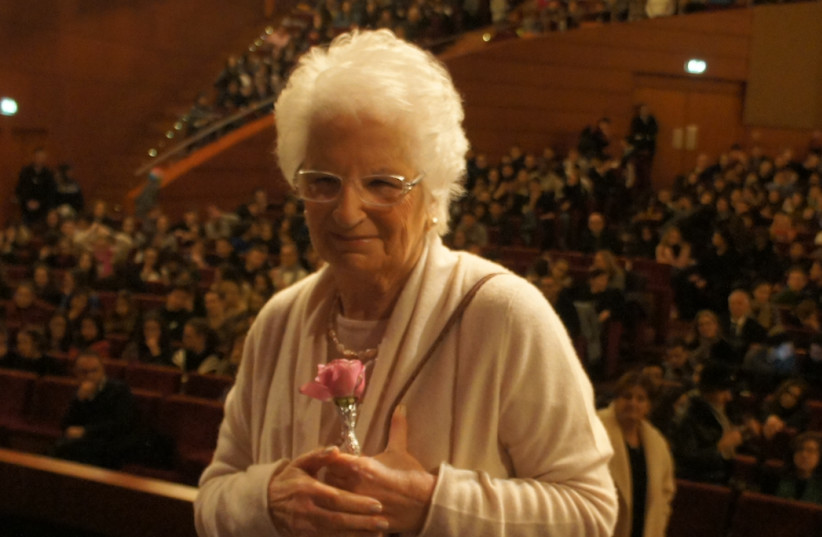
Italian Holocaust survivor and senator for life Liliana Segre (photo credit: DANIEL REICHEL/PAGINE EBRAICHE)
Italian Holocaust survivor and senator for life Liliana Segre
(photo credit: DANIEL REICHEL/PAGINE EBRAICHE)

"She is not afraid."
"She is shocked by these tensions and by this entire situation."
"People who were once forced to feel ashamed of these [hateful anti-Semitic] views now express them with pride."
Luciano Belli Paci, 61, Rome, Liliana Segre's son

"Every time prominent Jews are at the center of media attention in Italy, they get subjected to online anti-Semitic abuse."
"The anti-Semitic insults come from far-right circles that have a past, and sometimes present, of violence. It's part of their radical rightwing code, this pugnacious attitude."
"Since the beginning of the year to the end of September, we recorded about 190 anti-Semitic incidents, about 70 percent online."
"The radical far-right feels more legitimized and stronger, thus they're more active."
"Twenty years ago you couldn't hang around shouting 'Viva il Duce,' there was greater resistance towards extremist themes. The dam barriers have been lowered, so people feel they can freely pour hatred towards Segre online."
Stefano Gatti, Foundation Jewish Contemporary Documentation Center, Milan

She was thirteen years old when she was packed off with her family from their home in Italy to Auschwitz, the death camp in Poland where her family was murdered, and she managed somehow to survive, one of only a few Italian-Jewish children whom fate spared from the death that overcame six million European Jews in Nazi Germany's campaign to completely eradicate Jewish life through a meticulously planned Final Solution, approached initially by dehumanizing Jews, by depriving them of every human right; ghettoizing, then shipping them to work- and death-camps, and finally annihilating them in gas chambers and reducing them to ashes in giant furnaces.

This is a woman who has spent her life reminding the world of what it would far prefer to forget. Who became a public speaker, explaining to those who were too young to know, the dehumanization campaign that allowed Nazi Germany to 'legitimize' the cleansing of the social order, rounding up Jews, political dissenters, Roma, Homosexuals, the disabled, critical clergy, as enemies whose presence within society was a threat to law and order and public decency. In the process succeeding in extinguishing millions of lives of innocents, children, women and men from all walks of life.

Holocaust memorials at a doorstep, Via del Portico d'Ottavia, Rome.
Sylvia Poggioli/NPR

The rising spectre of renascent anti-Semitism has raised its ugly head everywhere in the world, including Italy. Ms. Segre's activism to ensure that the Holocaust not be forgotten, shelved far from public scrutiny, has failed to endear her to the Axis countries that were allied with Nazi Germany. Racist language has begun to consume Italy in lock-step with the rise of far-right groups signalling a return to fascism and a renewed fascination with Italy's dictator Benito Mussolini. No fewer than 200 threats each and every day went out to warn this woman that there were ample Italians who despised her message and threatened her.

A Black Italian soccer star, Mario Balotelli, who had been adopted and raised by Jews, was the recipient of racist chants from fans of the Hellas Verona team, whose leader argued that "Hitler chants are just kidding around". Even games between ten-year-olds are not exempt from the venomous sting of racism, with a mother at a soccer game using a racial epithet on a Black child. A prominent Jewish journalist at a rally of the League party was told "You're not Italian, you are Jewish, go home!"

The country, said Noemi Di Seni, president of the Union of the Italian Jewish Community, was going through a "rise in anti-Semitism, which manifests itself in many ways". The heated atmosphere and the ongoing, copious threats have resulted in police being assigned to protect Ms.Segre when she speaks in public. Rallies have been organized by politicians and Jewish groups in Milan and Rome to show Italians there is solidarity with Ms.Segre. Italian President Sergio Mattarella, recognizing the importance of Ms.Segre's testimony on the Holocaust to Italian students, made her a lifetime senator.

Senator Segre last month called for the formation of a counteracting parliamentary commission that would be tasked with investigating hate, racism and social media in Italy. Her motion passed, despite the nationalist League Party, post-fascist Brothers of Italy and center-right Forza Italia opposing it.
Holocaust survivor Liliana Segre has been put under police protection after repeated anti-Semitic threats against her life [Luca Bruno/AP]

Labels: , , , ,

Friday, November 08, 2019

The Unspeakable Hatred That Refuses To Die

"[After the vote the abstentions made me feel] like a Martian in the Senate."
"I appealed to the conscience of everyone and thought that a commission against hatred as a principle would be accepted by all."
Liliana Segre, 89, Holocaust survivor, Senator-for-life, Italy
Liliana Segre was escorted during a visit to a Milan exhibition on Thursday
Liliana Segre was escorted during a visit to a Milan exhibition on Thursday (Photo: PA)
"[It was] disgusting and shocking. That efforts to combat hate are met with threats of violence show just how much anti-Semitism continues to pollute our world today and how important education and awareness is in the fight against hate."
"A Holocaust survivor, of all people, should not have to face this sort of pernicious racism today."
Karen Pollock, chief executive, Holocaust Educational Trust
The activist Holocaust survivor who like many others whom fate decreed would suffer untold horrors during the Second World War as slave labourers and concentration camp inmates who watched as others were led to the gas chambers and awaited their turn, living in desperate conditions of basic survival, succumbing to malnutrition, starvation, disease, and loss of faith that the world cared about their tormented lives, was shocked on finding that Italy's right-wing parties lacked empathy much less a commitment to shun anti-Semitism.

As an outspoken, high-profile figure as one of the 25 survivors out of a total of 775 Italian children under 14 years of age, who were deported from Italy to Auschwitz in 1944 when she was thirteen years of age, she introduced a motion for the creation of a parliamentary committee to deal with the ongoing incidence of racism and anti-Semitism that she in particular among many others was subjected to. Each and every day on social media sites, this woman has been the recipient of no fewer than 200 hate messages.

At her advanced age, she remains committed to the goal of teaching as many people as she can, by reciting to them her personal agonies suffered as a child in the death camps that took the lives of an estimated one-and-a-half million Jewish children. When she stood in Italy's parliament and asked for an expression of solidarity with the nation's Jews, the League and Brothers of Italy had opposed the call for a parliamentary commission. "Forgive us Liliana. The politics of hate will not stop your commitment, nor ours", Agriculture Minister Teresa Bellanova, responded.
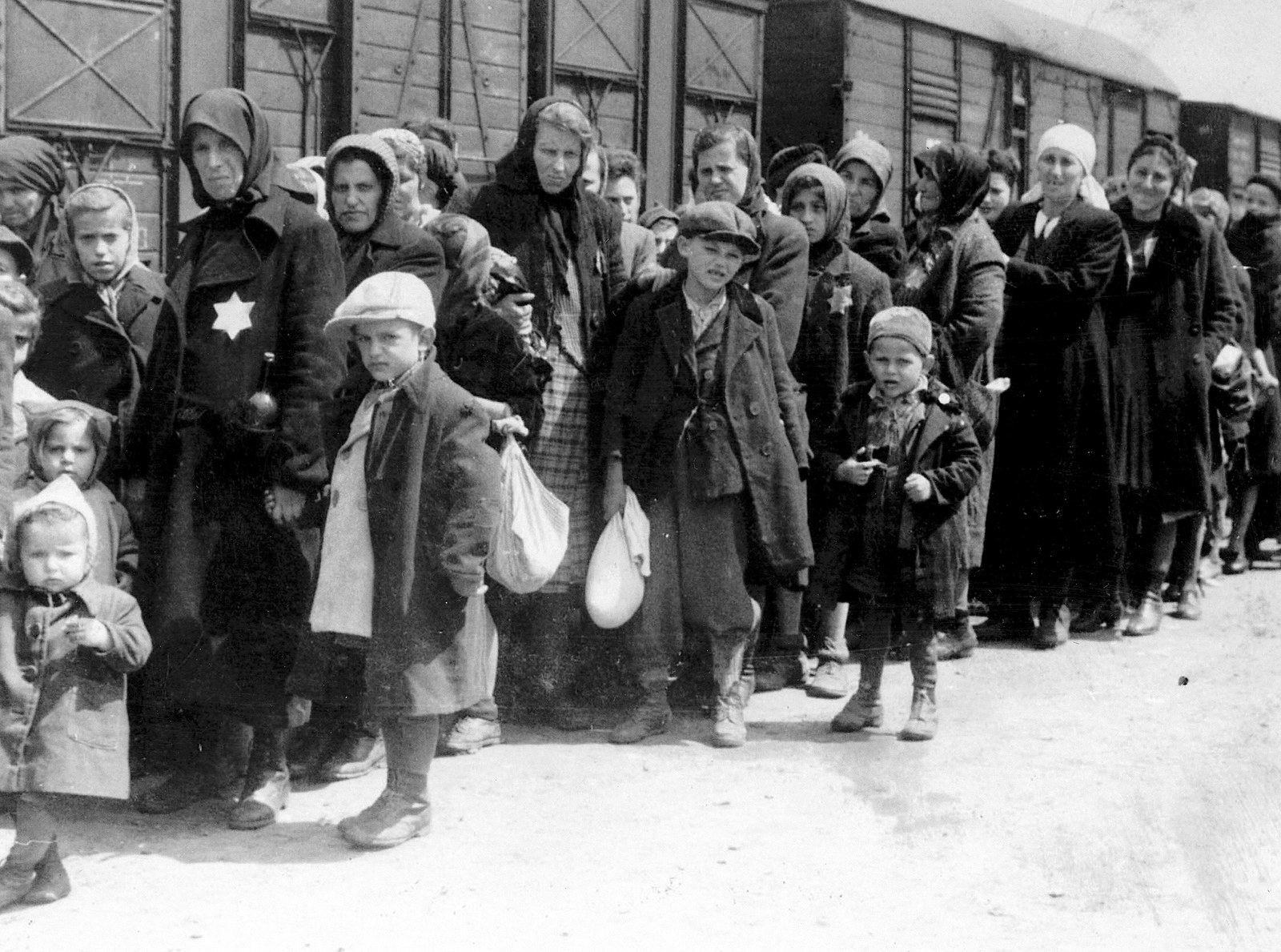
The arrival and processing of an entire transport of Jews from Carpatho-Ruthenia, a region annexed in 1939 to Hungary from Czechoslovakia, at Auschwitz-Birkenau extermination camp in Poland, in May of 1944. The picture was donated to Yad Vashem in 1980 by Lili Jacob
Researcher Stefano Gatti of the Centre of Contemporary Jewish Documentation, revealed that 190 instances of anti-Semitism had been reported so far this year in Italy, a steady increase over the previous years' counts. Although it gives scant comfort, he pointed out that though anti-Semitism is on the rise in Italy, it was manifested to a lower degree than in France and Britain. The result of the Italian far-right parties refusing to endorse a parliamentary commission on hate, was to embolden groups who embrace anti-Semitism.

This week one such group hung a banner denouncing anti-fascism in close proximity to where the Holocaust survivor was scheduled to make a public appearance. Liliana Segre has now been placed under police protection, resulting from ongoing threats from far-right fanatics. An Italian security source pointed out the police were to accompany her to public events, not having been authorized to provide around-the-clock protection in response to the death threats she receives on a daily basis.

The arrival of a deportation train, bringing Hungarian Jews to Auschwitz, circa 1942.  Getty Images
What could conceivably be more cowardly than haters targeting a 89-year-old woman, born in Italy, returned to Italy after having experienced the most horrendous assaults on human dignity and human rights when her country of origin expelled her and other Italian children, in the full knowledge that these children were being sent to their deaths. "It must be said that Liliana receives vastly more messages of support and solidarity than she does hate messages", commented Ms.Segre's parliamentary chief of staff.

Small comfort to the memories that a child was forced to suffer in a fascist cult of death to Jews, Gypsies, political dissenters and homosexuals. The courage and resilience of such survivors in the face of ongoing messages of hate is monumental. As is her determination to continue visiting schools to speak of the horrors she had witnessed and herself suffered. "An 89-year-old Holocaust survivor under guard symbolizes the danger that Jewish communities still face in Europe today", wrote Israel's ambassador to Italy, Dror Eydar.

Liliana Segre was 13 when she was sent to Auschwitz, where her father and paternal grandparents were killed.
Liliana Segre was 13 when she was sent to Auschwitz, where her father and paternal grandparents were killed.   Credit:AP

Labels: , , ,

Thursday, March 29, 2018

Delivering His Own Destiny

"[My grandfather’s] total destruction was complete. He lost his name, his home, his wealth, his status, everything he had and he barely, barely, by unique feat of almost unbelievable fortune, planning and ability, managed to save probably amongst a handful of patriarchs, 14 members of his direct family – children, grandchildren, including me – away from the Holocaust and brought us as nameless refugees living off charity in Switzerland."
"We were taken to a gym [at the Engineering Department, University of Toronto]. And in the gym were trestles, wooden tables set with all kinds of milk, chocolate milk, regular milk, ice cream, hot dogs, hamburgers, doughnuts. … [Back home] hunger was tangible. … The whole thing became a totally unreal, surreal experience."
"I arrived in this place [Canada] not speaking the language, not knowing a dog. This is a country that does not ask about your origins; it only concerns itself with your destiny."
Peter Munk, Canadian extraordinaire, 1927 - 2018
Peter Munk speaks in Toronto in this 1994 file photo.
Roger Hallett/The Globe and Mail
Born in 1927 in Budapest, Peter Munk was destined to make his debut on the world stage many years later. He was privileged at birth, born into a wealthy Jewish family. Like all European Jews, including those in Hungary, their lives and their fortunes became forfeit when Nazi Germany invaded and occupied one country after another, setting up the institutional machinery whereby Jews would be rounded up and transported (with the assistance of local police) en masse to slave camps, concentration camps, death camps.

When the German military occupied Hungary in June of 1944 the Munk family was, along with all other Jews shoved into the confines of boxcars, trains heading for Germany, accompanied by Nazi SS guards to ensure none of the 1,500 Jews in that transport including the Munks managed an escape. The Munk family train was marooned eventually in Bergen-Belsen for weeks. But where most trains that entered the camp carried Jews who would be summarily exterminated in its gas chambers, this train sat there, waiting.

Awaiting the results of negotiations to determine whether and who among them might be allowed to escape death. Finally, families on board that transport were spared death, for vast ransoms had been paid to Nazi Germany through the auspices of the U.S. Jewish community. The Munk family itself surrendered gold, bank notes and jewellery to convince the German authorities to allow them to save themselves. And in August, 1944 the entire family arrived safely Switzerland.

And there, sixteen-year-old Peter Munk went on a tangent of boyish recreation; "I went on long skiing holidays with friends up in the mountains", he told a biographer. "I made enough money of my own to pay for tea dances and entertain all the dates I wanted". Until his father told him "This can't go on. You're going to dances instead of promoting your career". His mother who had been divorced from his father before the Hungarian occupation and was not with the family had been sent to Auschwitz. She survived her ordeal.

And convinced her son from Budapest, where she had returned after the war, to go to Canada where an uncle lived. And so in 1948 he sailed from Liverpool to Halifax and went on to Toronto where he attended high school, learned to become proficient in English and finally won acceptance to engineering at the University of Toronto. His uncle gave him tuition money and the young man wasted it. But then took a job picking tobacco to earn back his tuition.

He ended up being a spectacularly natural businessman. He built and controlled Barrick Gold Corp. which became the world's largest gold producer. And he also built a real estate empire, TrizecHahn Corp. Prior to that, in 1958 he and a partner in Toronto established Clairtone to build high-fidelity equipment distinguished by their sleek, Scandinavian-style wood cabinets, endorsed by none less than Frank Sinatra, Hugh Hefner and Sean Connery.

While this man acquired his business acumen, his reputation and great wealth, hob-nobbing with royalty, celebrities and entrepreneurs of great renown, he was also busy disposing of some of his riches. He is known to have been responsible for charitable donations to a total of over $200-million. He did observe, however, that this amount would be dwarfed in the future through his will when the time came for it to be probated.

His generosity funded the Peter and Melanie [his second wife] Munk Cardiac Centre at Toronto General Hospital, the Munk School of Global Affairs at the University of Toronto, and the semi-annual production of the Munk debates, featuring high-profile, distinguished guest speakers.

One of his biographers, Peter C. Newman, another alumnus of the University of Toronto, and himself a man of Jewish European parentage, born in Vienna, Austria, had emigrated to Canada in 1940 as a Jewish refugee from Nazi-occupied Czechoslovakia.

Summing up what motivated Peter Munk, Newman wrote: "His motives aren't as innocent or uncomplicated as making money. It's restitution, redemption, revenge -- the three great Rs in Peter Munk's life."

FILE - Barrick Gold Corporation Chairman Peter Munk leaves the annual general meeting of shareholders in Toronto May 2, 2012.   REUTERS/Mike Cassese
Barrick Gold Corporation Chairman Peter Munk leaves the annual general meeting of shareholders in Toronto May 2, 2012.  REUTERS/Mike Cassese

Labels: , , , , ,

() Follow @rheytah Tweet