Politic?

This is a blog dedicated to a personal interpretation of political news of the day. I attempt to be as knowledgeable as possible before commenting and committing my thoughts to a day's communication.

Sunday, June 18, 2023

Toronto's Crime and Defunded Police Dilemma

We asked three xperts to review the top mayoral candidates’ platforms on public safety.
"Olivia Chow will defund the police, raise your taxes, and ram bike lanes on our busiest streets. As Mayor, I will hire more cops, freeze taxes, and get traffic moving."
"The choice is clear — it’s time to stop Olivia Chow."
"As former police chief, I had to deal with situations like this in the past [death threats]. But in that capacity, you have access to the tools and skilled investigators and the skill teams and resources necessary to really create the best plan."
"Under this circumstance [as a mayoral candidate] I don't have those privileges or accesses anymore. But my bigger concern really is for my staff."
Mark Saunders, former Toronto Police Chief, Toronto mayoralty candidate
 
"The suspect made threatening remarks about shooting mayoral candidates and showed what appeared to be a firearm."
"[The threats were made against] unnamed [mayoral candidates and represented a] blanket threat."
Const. Alex Li, spokesperson for the Toronto Police Service
Toronto mayoral candidate Olivia Chow takes part in a televised debate hosted Marivel Taruc, in the CBC Broadcast Centre, in Toronto, on June 6, 2023.
Toronto mayoral candidate Olivia Chow takes part in a televised debate hosted Marivel Taruc, at the CBC Broadcast Centre, in Toronto, on June 6, 2023. (Evan Mitsui/CBC)

"Chow, the widow of former New Democratic Party leader Jack Layton, has been a prominent voice in progressive politics for decades. But her path to victory is no sure thing. A record 102 candidates — including one representing a dog named Molly —  are competing in this year’s election."
"Central Toronto’s left-leaning electorate rallied around Chow when she first ran for mayor in 2014, but despite a flood of positive polling at the race’s outset, she lost momentum in the final weeks of the campaign and placed a distant third."
Jacob Lorinc, Bloomberg News
 
"To some observers, it looks like they’ve seen this movie before: Olivia Chow gets an early lead but can’t sustain it, and gets overtaken by someone else in the field."    
"I think that’s going to be harder this time around. The issues are just more complicated and wide ranging."
"As we approach the finish line of this election, and depending on what the polls look like, there will be pressure within those different ideological camps to drop out and support another candidate whose orientation is fairly similar. And that could happen both on the right and the left."
Myer Siemiatycki, professor emeritus of politics, Toronto Metropolitan University
Toronto is in the throes of a mayoralty race. The election takes place in six days' time. The number of candidates for the position was astronomical, but has now, after weeks of campaigning, come down to a handful of potential winners. Crime, law and order is one of the biggest items to be addressed, and most, but certainly not all, candidates have made it a priority issue. It is an issue of great importance to Torontonians, and recognized as such by those candidates identified as 'right-wing'.
 
The leading contender for the position, long-time city councillor with the most-recognizable name is NDPer Olivia Chow, and polling has given her the lead, at 30% of the vote. Crime and punishment is not on her agenda. Many years ago when Olivia Chow and Jack Layton were both city councillors they lived in and had possession of another apartment meant for assisted living for low-income residents. This is the mayoralty candidate who now bemoans that city residents cannot afford to buy homes at astronomical real estate prices in the city.
 
Once known as Toronto the Good, the city can no longer boast of a low crime rate. Over the past few years car thefts including armed ones have been skyrocketing, their numbers in lock step with the reduction of funding for the metropolitan police force. A number of successive city budgets have seen a dramatic drop in funding for the police department and although the last budget saw an increase, it was targeted toward salaries, not the hiring of new recruits and improved services.
 
Six candidates stand at podiums on a stage.
From left to right: Toronto mayoral candidates Ana Bailão, Brad Bradford, Olivia Chow, Mitzie Hunter, Josh Matlow and Mark Saunders at a debate at George Brown College on May 24, 2023. (Nav Rahi/CBC)
 
Toronto has been plagued with violence across the city, many taking place on the Toronto Transit service, in its subways primarily, committed by deranged street people stabbing innocent people to death, shoving unsuspecting people from subway platforms onto tracks below. These events happen elsewhere as well, but Toronto is Ontario's and Canada's most populous city at 2.6 million and rapidly growing, and the number of crimes has escalated dramatically, linked to drugs, gangs, homeless, the mentally challenged. 

Between 2017 and 2021, car thefts rose 90 percent and increased another 42 percent in the last year; just coincidentally a specialized stolen vehicle group was eliminated, leading to the situation where dozens of vehicles are stolen nightly in carjackings; car thefts with weapon up 288 percent in the last year alone. Organized crime has flourished in lock step with the defunding of the police budget. Apprehended thieves frequently are granted bail, leaving them the leisure to re-offend. It's called 'catch-and-release'.

Toronto is no longer a safe, placid, comfortable city in which to live. There was a 21.3 rise in homicides last year, with robberies increasing by a third. Priority 1 calls represented by shootings and murders now takes 21 minutes for a response. Over three times longer than the reasonable target time. Priority 2 calls, for serious crimes outside manslaughter is 50 minutes. Toronto Police Service failed to meet its target response time 72 percent of the time for Priority 1 calls and 92 percent for Priority 2 calls in 2021.
 
canadian
 
Current police Chief Myron Demkiw asserts that officers should arrive at a reasonable time to such emergencies, representative of the most fundamental commitment of the police force to ensure public trust, yet that goal has become unrealizable given the reality of the force's shrunken share of the municipal budget. There are now 600 fewer uniformed officers than in 2010, while every police officer struggles to serve 30 percent more residents as the population increases.

When auditor general Beverly Romeo-Beehler was commissioned last year to analyze where further cuts could be realized, it was her finding that Toronto is hugely underserved with officers for a city of its size. Without an investment of greater funding for policing, the situation would deteriorate even further, she advised. Leading mayoralty candidate Olivia Chow, on her past record, is expected to continue defunding the police. Two other candidates, also left-wing will commit to further defunding as well.

According to recently retired police chief James Ramer, more Torontonians have died as a result of votes to defund the police by councillors, among them those now running for city mayor. 

Toronto's top six mayoral candidates are pictured here. From top left to right, Olivia Chow, Ana Bailao and Josh Matlow; and from bottom left to right, Mitzie Hunter, Mark Saunders and Brad Bradford.
Three Toronto mayoral hopefuls, Matlow, Saunders and Bradford, indicated their campaign activities were disrupted on Thursday as police searched for a man who threatened to shoot several candidates. (Michael Wilson/CBC)


Labels: , , , , , , , ,

Friday, February 21, 2020

The Escalation of Youth Violence

"They went inside, ordered everyone to the ground and demanded cash from the safe."
"It definitely has been shocking for our community [though robberies by children are not unheard of]." 
"[York Region has seen a] big increase [in bank robberies, there have been upwards of 20 so far this year]."
"In previous years, the highest number for an entire year was 17 [in 2019]."
 Const. Laura Nicolle, York Regional Police
Four people were injured during an armed robbery at an RBC on Markham Rd., north of 16th Avenue, in Markham on Wednesday, Feb. 19, 2020. (Chris Doucette/Toronto Sun)

Male teens in the Toronto area appear to be on a rip lately. Teenagers have been involved in quite a number of violent bank robberies in and around Toronto in the past short while. A 911 call came in to police in the northeastern suburbs of Toronto, of a violent armed bank robbery then in progress on Wednesday night. On their arrival, the police discovered four injured tellers, two of whom had stab wounds. They were just in time to see three masked boys racing away from the crime scene.

With the use of dogs, the police ran after the boys, chasing them into a construction site. Overhead a police helicopter took elevated note of the proceedings as police cornered and then arrested three people who had attempted to hide inside a house under construction. One of the three is a 13-year-old boy from Mississauga, now facing charges of robbery with a firearm, aggravated assault, disguise with intent and several additional charges.

The other two boys with the 13-year-old were 15, and 16, and they have been identified as having been involved in a very similar violent attack that took place in the east of Toronto, whee Durham police explain they had pistol-whipped two employees, injuring another, in Pickering a week earlier. Three of the injured were treated in hospital for facial injuries. Charges including robbery with a firearm and three counts of assault causing bodily harm have been laid against the older two boys.

Durham police say the same boys, along with a 13-year-old, robbed this RBC branch in Markham. (Jeremy Cohn/CBC)
One of the older boys, 15, has also been charged with breaching probation. Under the Youth Criminal Justice Act the 13-year-old cannot be charged other than for a capital crime, as an adult. And as youth their names are withheld from public scrutiny. It just happened that while the three teens were in the bank assaulting the tellers -- in their possession, a firearm, a fake gun, and a knife -- someone standing outside the bank saw the commotion and dialled 911.

The three boys had driven to an RBC branch in Markham at closing time, 8:00 p.m. They were armed; a real gun, along with the fake, and knives. They drove a Chevrolet Impala, stolen a few days before in a Toronto car theft. During the carjacking the car owner had been stabbed. When the first officer to respond arrived on the scene the three teens ran off into a subdivision development site. A helicopter was called in, and eventually police dogs tracked them in the house under construction.

All are now charged with possession of property obtained by crime. And of course, under the youth act, their identities are not to be disclosed. The two older boys, 15 and 16 appear to be comfortably familiar with guns, hoisting both the handgun and the replica, while the 13-y6er-old had caused some of the injuries sustained by the tellers by kicking the victims in the face. Two male tellers were stabbed, a female teller was otherwise injured.

These are merely the latest of such violent attacks and robberies by youth and gangs in Toronto where guns are being acquired on the black market, usually slipped into the country through the United States. The prevalence of knife use by teens is growing along with the violence. Low income areas in the city in particular have seen a steep increase in violence and knifings largely attributable to the gangs and drug trade. And nor is Toronto the only city where such violence is an ongoing threat to public safety and security.

Ottawa, the nation's capital, is yet another venue among others. And many of the crimes, the stabbings and the shootings, usually related to drug trafficking and gang activities, take place with older teens and those in their 20s and 30s, and they are named. A majority of those named have Middle-East or North African backgrounds, disproportionate to their numbers within society. Appearing to have a disposition to violence, whether by upbringing or culture.

It would be interesting to know the names of these perpetrators of violence, but the Youth Criminal Justice Act shields youth from being publicly identified. This pertains elsewhere in t he world as well where rising crime, criminal gangs, drug trafficking, knifings and riotous behaviour takes place in France, Belgium, Germany and elsewhere, seeming to be linked with the entrance since 2015 of migrants from the Middle East and North Africa.

And elsewhere ..... in Germany .....
"The knives are growing longer, the attackers are ever younger. The number of knife attacks by asylum seekers grows constantly."
"I call on Interior minister Horst Seehofer to immediately take the suspects into detention pending deportation and then to eject them from the country."
"It needs to be clear that the state is using all its power to protect its citizens."
Alice Weidel, co-parliamentary leader of the Alternative for GermanyThe Local, Germany

"A review by Gatestone Institute of German police blotters found that 2018 was a record year for stabbings and knife crimes in Germany: Police reported more than 4,100 knife-related crimes in 2018, compared to around 3,800 reported during 2017 — and only 400 in 2008. Overall, during the past ten years, knife-related crimes in Germany have increased by more than 900% — from one a day to more than ten a day. The data shows a notable increase in knife crimes since 2015, when Chancellor Angela Merkel opened German borders to hundreds of thousands of migrants."
"German media do not report most knife-related violence. Crimes that are reported are often dismissed as "isolated incidents" that are unrelated to mass immigration. Moreover, many crime reports, including those in police blotters, omit references to the nationalities of the perpetrators and victims — apparently to avoid inflaming anti-immigration sentiments."
"Knives, axes and machetes have become weapons of choice for criminals in Germany, which has some of the strictest gun laws in Europe. People armed with knives, axes and machetes have brought devastation to all of Germany's 16 federal states. Knives have been used not only not only to carry out jihadist attacks, but also to commit homicides, robberies, home invasions, sexual assaults, honor killings and many other types of violent crime."
"Knife-related crimes have occurred in amusement parks, bicycle trails, hotels, parking lots, parks, public squares, public transportation, restaurants, schools, supermarkets and train stations. Many Germans have the sense that danger lurks everywhere, but the lack of official statistics seemingly allows German authorities to pretend that the problem is imaginary."
Soeren Kern, Senior Fellow, Gatestone Institute, New York 

Labels: , , , , , , ,

Wednesday, January 15, 2020

Law and Order : Contrasting Versions

"The NRT's [neighbourhood resource teams] are the centrepiece of the OPS [Ottawa Police Services] neighbourhood policing strategy."
"We are putting them in place in the communities that need the help the most."
"[Meanwhile, investigative units are targeting] violent repeat offenders who are victimizing the most vulnerable populations and marginalized neighbourhoods."
"Reinvesting in neighbourhood policing has been a clear priority all of those conversations [with patrol officers, the police association, senior officers, academics, city councillors, police services board...]" 
"We are looking at improving existing systems to provide the foundation for more action on violent crime. This will ensure that front-line officers have the most up-to-date information and resources available on every call."
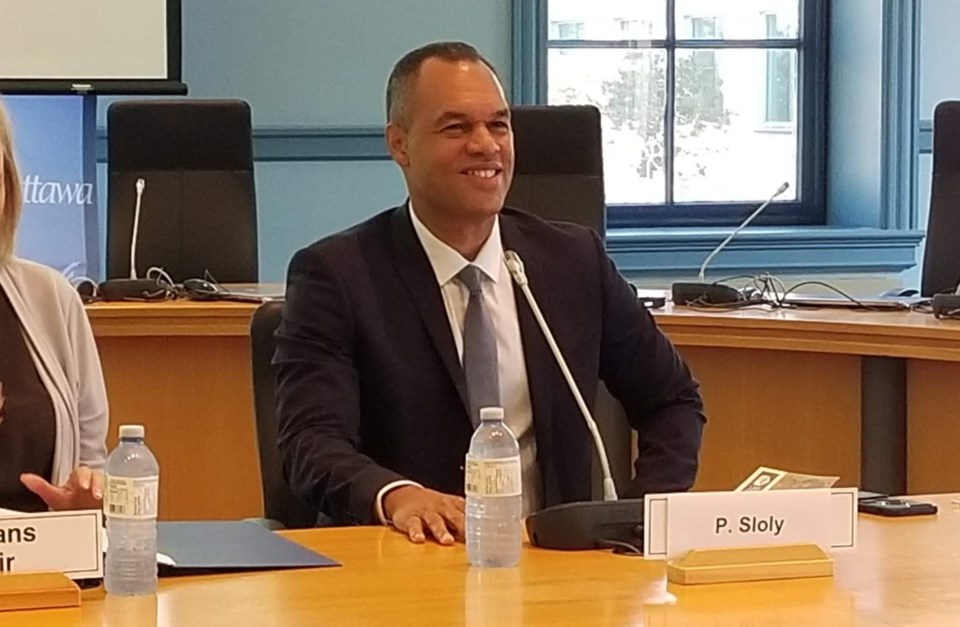
Ottawa Police Services Chief Peter Sloly
2019-08-26 ottawa police chief sloly JP1
Peter Sloly named Ottawa's new police chief, August 26, 2019, Photo: Jenn Pritchard, OttawaMatters.com

The cities of Toronto and Ottawa have a recognized and vexing problem with gang violence and shootouts primarily in low-income areas of both cities. The increasing crime statistics in both cities inclusive of gun, gang and drug-related violent crime, alongside the 'complex social issues that underpin most crime', identified as housing, employment, education and health are linked with marginalization and discrimination, according to both police services, paying obeisance to political correctness.

The City of Ottawa's new police chief served previously as Toronto's deputy police chief, a man known for his 'progressive' views on policing. Both cities have long been accused by members of racial minorities -- chiefly from the Black and Middle East communities -- of profiling them. That it is from among these communities that a disproportional activity level of crime is seen in both cities appears immaterial to the accusers. And in this politically correct climate of 'progressive' values the police have become sensitive to accusations of racism.

The idea is that neighbourhood resource policing teams are to give reassurance to those neighbourhoods acutely involved in high levels of crime (somewhat reminiscent of and possibly to prevent situations such as the self-segregated Muslim-immigrant-occupied banlieues in France rife with violence and criminal activities that have turned into no-go zones for police) and to gain trust among law-abiding citizens who are often targets of the criminals living among them. But the code of silence means that giving information to police is fraught with retributive danger.

On the other hand, the presence of these teams does result in a greater level of neighbourhood scrutiny to the benefit of residents, and their presence has resulted in charges being laid, and guns removed. Homicides in Ottawa fell from 15 to 13 in the past year, and shootings fell from 78 to 73, according to police reports, while a total of 70 "crime guns" were sized by police in 2019.
Ottawa police patrol. Errol McGihon / Postmedia

"It's just another one of the discretionary behaviours that officers have curtailed [diminished traffic stops] because of their perception around risk [the risk of being labelled racist]."
"You can send an officer to work in a neighbourhood, a particular geographic area, but  you can't dictate the kind of work that they do there. Supervisors can't dictate, minute to minute, what officers are going to do in the field."
"Police brutality and justifiable use of force can have the same outcome [where a man's nose can be broken in both instances but] brutality is in the motivation of the officer and the proportionality of the response, not in the outcome."
Greg Brown, former police officer, professor, Carleton University, Fulbright Visiting Research Fellow in the School of Criminal Justice 
Concurrent to Chief Sloly's announcement of an additional three NRTs being deployed as a "cornerstone" of the strategy in tackling street violence, Professor Brown regards neighbourhood officers in his study as being more likely to engage in de-policing. Predicated on the theory that officers partner with the community to understand issues leading to crime, the NRT units should be focusing on proactive discretionary interactions.

But the reality is that there now exists what he describes as a "universal phenomenon" of officers refusing to engage in proactive work, engaging instead on a prevailing 'f*ck it, drive on' mentality. This is an issue he has addressed in a study offering suggestions for police leaders to enable them to mitigate the effects of police disengagement for fear of repercussions. Professor Brown surveyed 3,660 front-line officers from 23 police services in Canada and the United States.

382 Ottawa police officers took part, from all 18 patrol platoons. The study, titled To Swerve and Neglect: De-policing throughout today's front-line police work, identified the reality that the overwhelming majority of front-line police officers representing 72 percent, practise some level of 'de-policing'; choosing not to engage in discretionary or proactive aspects of policing duties because of the fear of public scrutiny.
Officers are weighing the costs of engaging with the public and for many, the cons outweigh the pros. Photo by Ashley Fraser  / Postmedia

A racial profiling allegation, a disciplinary hearing, media scrutiny, a viral YouTube video, or a judge charging breach of charter rights all represent the potential risks of proactive policing. With those potential risks in mind through well-publicized incidents charging police officers practising due diligence in a discretionary manner as is expected of them, police officers make the choice of protecting themselves and decide to change their policing focus, according to acquired data.

Fully 28 percent of front-line police officers were found to police as intended, a group that Professor Brown identifies as new officers whose altruistic intentions, no major incidents with the public, never been (yet) beaten down by an occupational subculture, or have had no negative media scrutiny; "mission-oriented officers", who practise their jobs irrespective of any external factors.

Data collected out of a project reflecting a human rights settlement where the force was mandated to collect information on drivers' race who had been pulled over by officers initiated in 2013 showed that Ottawa police disproportionately pulled over young men with Middle Eastern or Black appearances. Additionally, data indicated traffic stops as an entirety were diminished. Traffic stops are considered to be proactive measures, while pulling someone over even if an offence is observed is not mandatory for police.
Decline in Ottawa proactive policing
This month, an Ottawa police patrol officer pulled over a car for running a red light. A loaded gun was found in the vehicle. Proactive measures allow police to track criminal behaviour -- all the more so when drivers flout the rules, meaning that good policing ensures that officers investigate such incidents. Professor Brown listed a number of recommendations for police services, in an effort to prevent de-policing, chief among those that all senior officers be on the front lines, working themselves.

That they go out on midnight shifts, take out a cruiser and perform the job expected of all officers, to bridge the disconnect between the front line and senior officers, helping to shift morale. Another recommendation is to educate the public on what manner of use of force is sanctioned by law. And that officers be encouraged to treat all whom they deal with, with respect, whether arresting someone or asking them to move a distance from an active scene; to "embrace the notion of procedural justice".
The three new neighbourhood resources teams (NRTs) add to the three already set up in Vanier and Overbrook, Heron Gate and South Ottawa and the Carlington and Caldwell neighbourhoods. Shaamini Yogaretnam / Postmedia

Labels: , , , ,

Monday, May 27, 2019

UNHCR: Pick Up The Pace: Respond to Anecdotal, Evidence-Lacking Emergency

"[The UNHCR wants to] take the pressure off Mexican authorities to take care of this kind of profile [women, girls, LGBTQ2 fleeing violence] and resettle them to Canada."
"Anyone who gets in the way [of rampaging gangs] is at severe risk, so entire families leave. That explains the demographic change."
"[Canada is already] doing a few things in terms of technical support for the Mexican asylum system, resettlement of people who face extreme protection risks in the region.Our pitch to Canada is to do more."
"These are countries that are close by; they are countries with which Canada has close ties, Mexico being the most important of them."
Mark Manly, Mexico representative, United Nations High Commissioner for Refugees (UNHCR)

"It is estimated that six out of ten migrant women and girls are victims of sexual violence carried out by illicit actors, government authorities and intimate partners."
"However, most of what is known is anecdotal and there is an urgent need for a stronger evidence base in order to inform policy."
World Refugee Council, Ontario

"What it demonstrates is that as long as the conflicts take place and the violence going on, you're going to have people trying to escape [their situations]."
"And it's going to be in our region."
"We've been focusing ont he NAFTA issue; well maybe there's got to be some parallel discussion [on migration]."
Lloyd Axworthy, chair, World Refugee Council
Still from video: Asylum seekers reaching Mexico from Honduras, El Salvador and Venezuela caused a 103-per-cent spike in claims in 2018 over the previous year, from almost 15,000 to about 30,000, says the UNHCR.

It's really hard to see where free trade negotiations fit in to the social dysfunction of states incapable of maintaining security for their citizens. And where gender parity and workers' rights become part of such free trade agreements when one country respects and legalizes such rights and its trade partners may not, and actually resent another country interfering in internal systems of social integration and legal assurances for unions acting on behalf of workers.

If a country's human rights record is so abysmal that the most vulnerable of its citizens live degraded lives of poverty, persecution and subjugation why would a country like Canada want to sign a free trade agreement with such a country to begin with? Our former Conservative-led government with Prime Minister Stephen Harper expressing such doubts, specifically with respect to China sat very poorly with the Liberal opposition. Once in power, the current Liberal government under Justin Trudeau hastened to effect a free trade agreement with China.

Window dressing by Prime Minister Justin Trudeau, burnishing his bona fides as a 'progressive' champion of women's and workers' rights imposed a chapter on labour rights calling on Mexico and the United States along with Canada to protect workers against discrimination in employment reflecting sex, pregnancy, sexual orientation and gender identity. A chapter certain to annoy the United States with the unspoken but obvious message that Canada prides itself on the fiction it is more protective of human rights than they are.

American women might have something to say about that. Mexico, on the other hand, is plagued with the same kind of dysfunctional narco gangs disrupting civil life and persecuting ordinary people, as is Colombia and other countries in Central America. Women, youth and other haven seekers, some propelled in the case of young men to find economic opportunities elsewhere, flee threats, fear and misery. The U.S. has taken in its share and more of the world's unfortunates and lives with millions of undocumented, underground migrants.
Colombian President Iván Duque and U.S. President Donald Trump talked about the Venezuelan migration crisis and anti-drug strategies during a bilateral meeting on the sidelines of the 2018 United Nations General Assembly in New York.
Colombian President Iván Duque and U.S. President Donald Trump talked about the Venezuelan migration crisis and anti-drug strategies during a bilateral meeting on the sidelines of the 2018 United Nations General Assembly in New York. Colombian Presidency

Read more here: https://www.miamiherald.com/news/politics-government/article228591129.html#storylink=cpy

Canada has never been averse to absorbing its 'share' of the world's refugees as a wealthy nation which also takes in over a quarter million immigrants annually. But a clapped-out former Liberal politician-turned-human-rights advocate like Lloyd Axworth pursues his righteous advocacy. Mexico has expressed its willingness to absorb large numbers of the economic migrants that have flooded its border cities. Most of these migrants have no wish to remain in Mexico, despite the government's overtures and generosity of spirit; they plan to forge on to advantage themselves by entering the United States; legally or illegally.

Domestic and social violence suffered by women is not a monopoly held by Central American countries; that kind of violence occurs everywhere, including in Canada. Canada has problems with women brought in to the country under false pretenses who are then marketed as sex workers against their will. By accepting people from other countries and other cultures where women hold degraded positions in society and where the traditions and practices of victimizing women and girls continues while in Canada, it transforms society even further for ill.

Urging Canada to accept LGBTQ2 communities and women and children fleeing the threats that consume their lives in Honduras, El Salvador, Colombia and Venezuela will aid a limited number of members of those targeted communities but having done so, will not stem the flow of others like them desperate to escape the grinding poverty, violence and fear they live with within states whose failures present the world with these conundrums of rescue, choice and forging of economic ties.

The flow is endless.

Here are basic facts and FAQs about Central America migration, how World Vision addresses root causes of poverty in Central America, and how you can help.
Central American migrants, mostly from Honduras, wait on the sidewalk for their turn to eat breakfast in a shelter in Tijuana, Mexico. (©2019 World Vision/photo by Israel Carcamo)

Labels: , , , , , , , ,

() Follow @rheytah Tweet