Seizing Greenland
"We don't have any involvement whatsoever in plans to seize Greenland, and I have no doubt that Washington is fully aware that neither Russia nor the People's Republic of China has any such plans.""This is not our issue. Our primary concern is our interest in establishing open and free Arctic co-operation.""[Russia is monitoring developments in this] serious geopolitical situation."Russian Foreign Minister Sergey Lavrov"We are going to do something on Greenland whether they like it or not.""We've not going to have Russia or China occupy Greenland and that's what they going to do if we don't.""Considering your Country [Norway] decided not to give me the Nobel Peace Prize for having stopped 8 Wars PLUS, I no longer feel an obligation to think purely of Peace.""Although it will always be predominant, but can now think about what is good and proper for the United States of America.""The World is not secure unless we have Complete and Total Control of Greenland.""NATO has been telling Denmark for 20 years that 'you have to get the Russian threat away from Greenland'. Unfortunately, Denmark has been unable to do anything about it.""Now it is time, and it will be done!!!"U.S. President Donald Trump"If a trade war is launched against us, which I cannot recommend, then we must of course respond. We would be forced to do so.""I hope we do not get to that point. I hope that we succeed in convincing the Americans that this is not the path we should take."Danish Prime Minister Mette Frederiksen
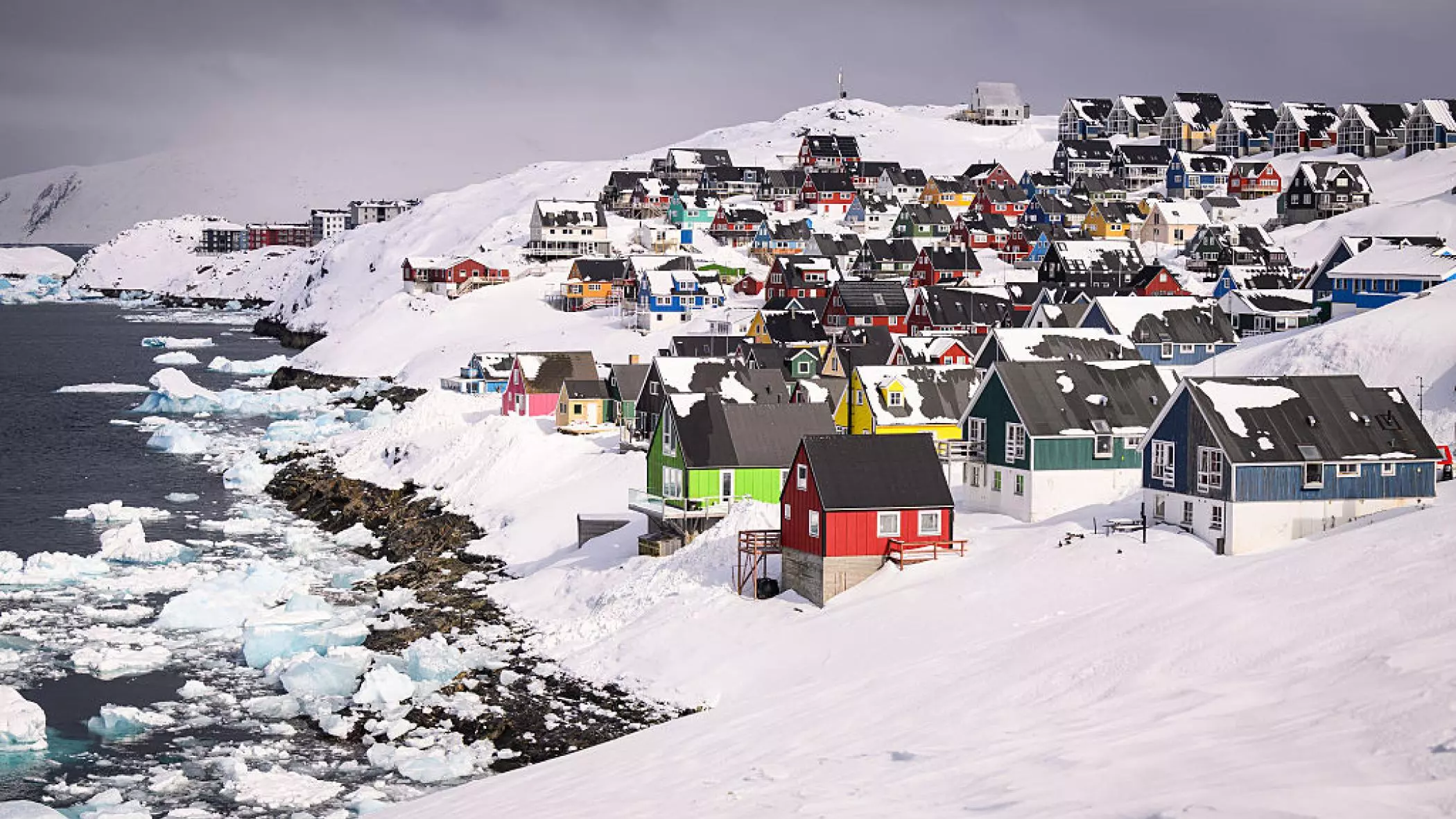 |
| Greenland is not a distant outpost but is of great importance to the whole of Europe. It is an Overseas Country and Territory of the European Union with special rights. Bruegel |
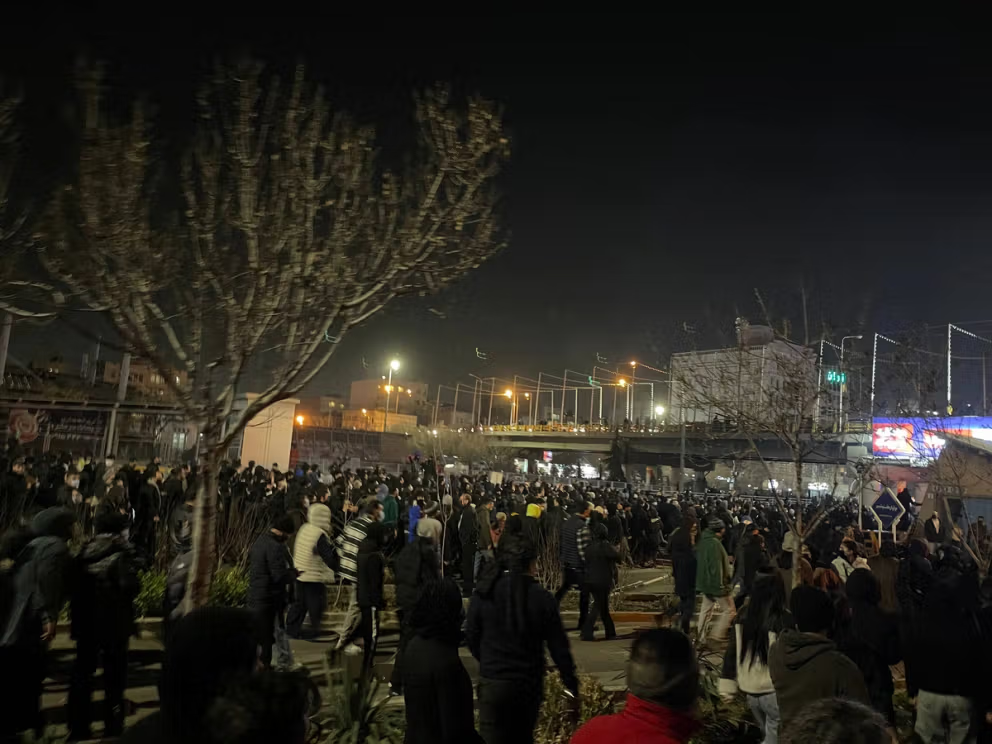
Thousands of Greenlanders marched over the weekend to protest any threat from the U.S. President, warning that their island would be taken over by the United States. "We will not be pressured", responded Greenland Prime Minister Jens-Frederik Nielson, and the tariff threats issued by Trump would make no difference in Greenland's determination of complete sovereignty.
A 10 percent tariff was announced by Mr. Trump to take effect on February 1, rising to 25 percent in June, for eight European countries -- EU members Denmark, Sweden, France, Germany, the Netherlands and Finland as well as Britain and Norway -- as punishment following their decision that they would take part in NATO military exercises in Greenland. This latest threat has given cause to European Union leaders to plan an emergency summit for discussion of possible retaliatory measures, counter-tariffs included.
The uncertainty has led Greenland's prime minister and the people of the Arctic island's population alert to the need to begin preparing for a possible military invasion, a scenario that seems unlikely, but given the U.S. President's mercurial decision-making, not entirely implausible. "It's not likely there will be military conflict, but it can't be ruled out", cautioned Prime Minister Nielsen at a Nuuk news conference on Tuesday.
The government plans to work on distributing new guidelines to its 57,000 population, including a recommendation to ensure each family has sufficient food for a five-day period, in a drive to help people prepare for any possible disruptions to daily life. Earlier on Tuesday, President Trump posted an AI-generated image of himself planting a U.S. flag on the island. Alarming symbolism for Greenlanders.
As part of the Kingdom of Denmark, but with its own government overseeing life on the island, but for defence, Denmark has deployed a greater number of troops there to boost its Arctic defence. As well, Denmark and seven other NATO countries deployed a number of officers on the island, part of the Operation Arctic Endurance. The plan now is for Denmark's Joint Arctic Command to expand the military exercises to operate possibly year-round, according to a Greenlandic newspaper.
 |
| The Greenlandic flag flies over a building as the HDMS Vaedderen of the Danish Navy patrols behind on Jan. 18, 2026 in Nuuk, Greenland. | Sean Gallup/Getty Images |
"I think it's a complete canard that the president would be doing this because of the Nobel [not having know/n anything about the president's letter to Norway].""[Trump] is looking at Greenland as a strategic asset for the United States.""We are not going to outsource our hemispheric security to anyone else."U.S. Treasury Secretary Scott Bessent
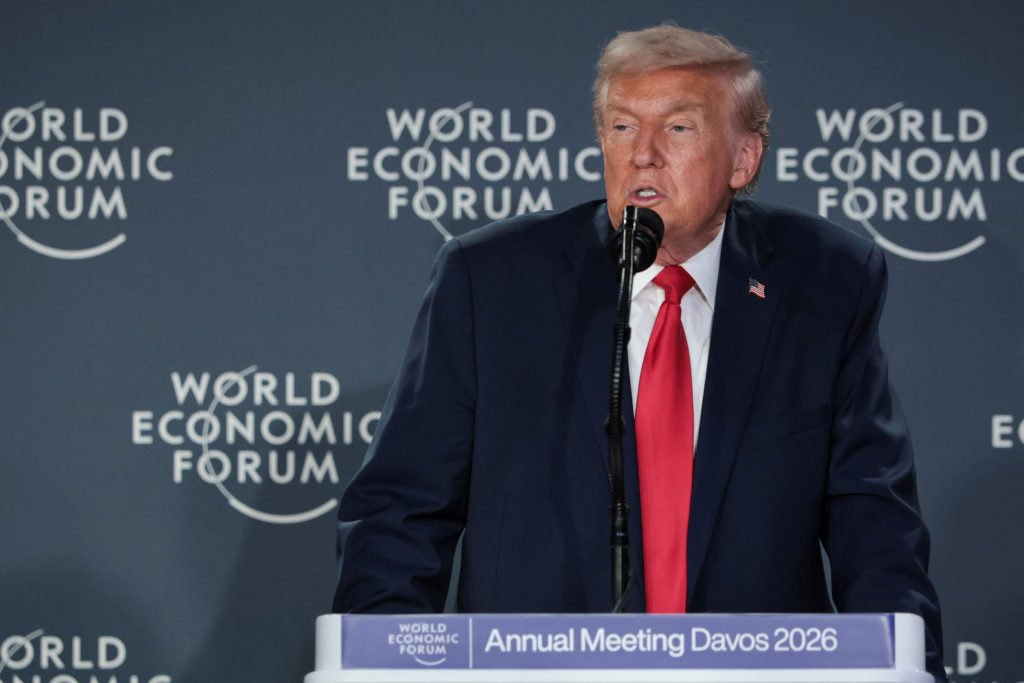 |
Trump cancels tariff threat over Greenland, says NATO agreed to 'framework' of future Arctic deal. PBS News |
"We want a piece of ice for world protection, and they won't give it. You can say yes, and we will be very appreciative. Or you can say no, and we will remember.""[There should be] immediate negotiations [for the U.S. to acquire Greenland. There's a bigger price, [than merely monetary] and that's the price of safety and security and national security and international security."U.S. President Donald Trump
Labels: Denmark Under Fire, Greenlanders Oppose U.S.Rule, Seizing Greenland, U.S. President Donald Trump
posted by Pieface | 8:18 PM
|
0 comments