Syria's Mass Graves
"Shortly after the fall of Bashar Assad in Syria in December 2024, reports emerged of mass graves being uncovered in liberated areas.""Grim as such discoveries are, they should come as little surprise. The scale of the regime’s torture and killings in its detention facilities became evident years earlier, when in January 2014 a forensic photographer defected and left the country with a cache of 55,000 photos of people who had been tortured and died in detention.""As an expert in forensic anthropology and mass casualties in conflict, I was asked to evaluate what became known as the “Caesar photographs.” What was clear to me then, and is even more so now, is that those photos represented a systematic approach to torturing, killing and disappearing massive numbers of people by the Assad regime.""With Assad now gone, the newly formed government of the Islamist group Hayat Tahrir al-Sham has vowed to seek justice for the crimes Syrians suffered under Assad. Doing so will be difficult, even with the civil war in Syria being one of the better monitored conflicts in recent history. Yet it is a task that is imperative for the sake of pursuing justice in a shattered country and reducing the likelihood of violence returning to Syria.", Project Lead for International Technical Forensic Services Global Forensic Justice Center, Florida International University
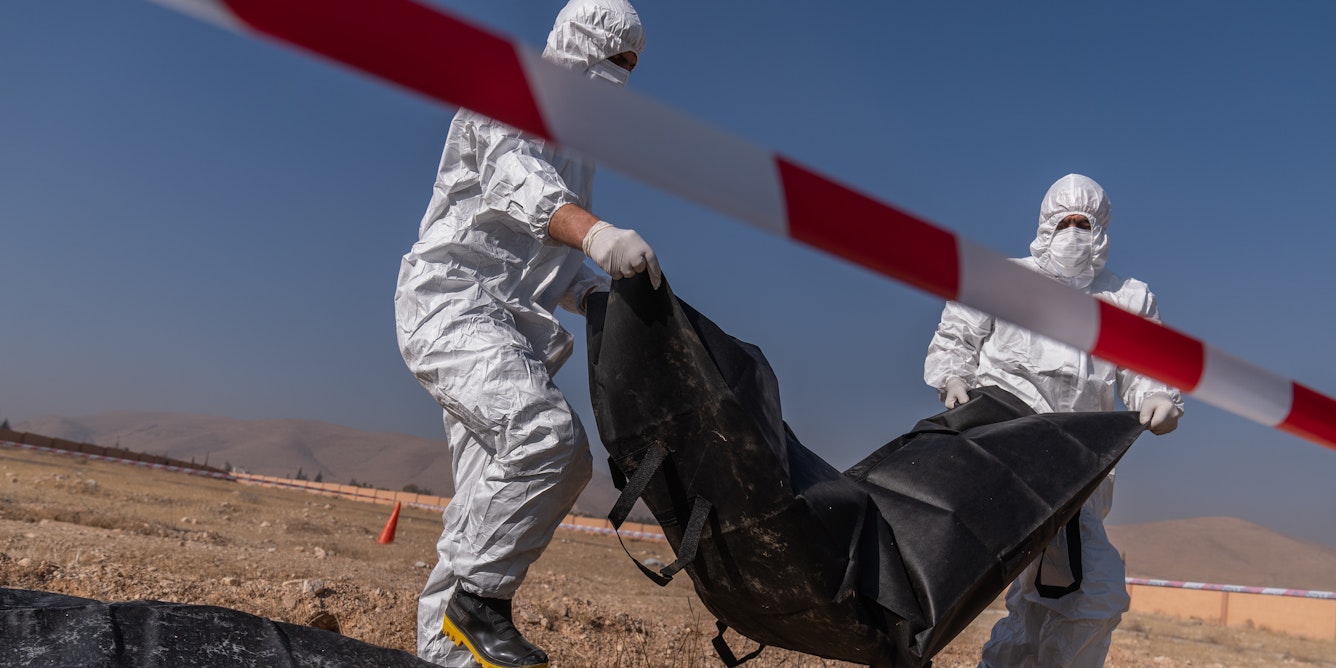 |
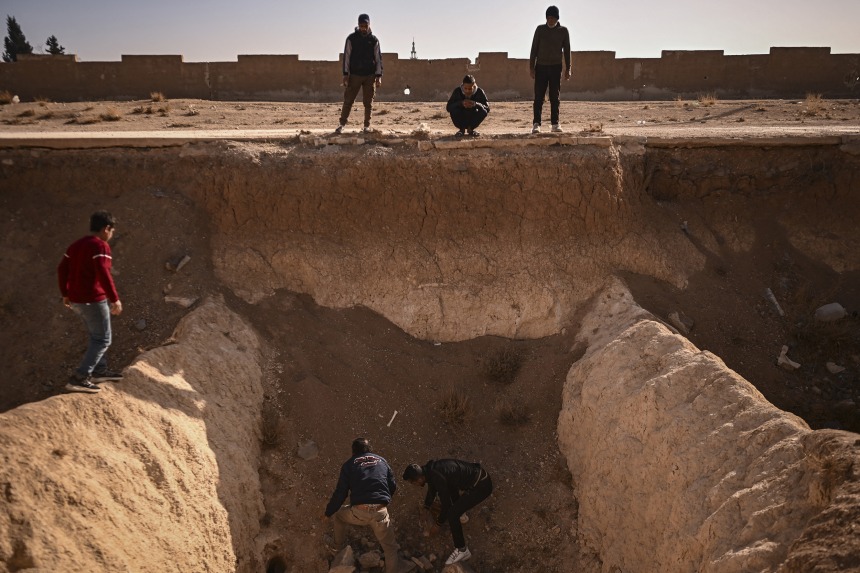
| Members of the volunteer Syrian Civil Defense conduct work at a mass grave in the Baghdad Bridge area outside Damascus, Syria, on Dec. 17, 2024. Emin Sansar/Anadolu via Getty Images |
"According to the Syrian Observatory for Human Rights, the uncovered graves were distributed as follows:*November 6: Remains believed to belong to more than 5 people were found inside a farm near the village of Al-Ghizlaniyah on the road to Damascus International Airport.*November 11: Remains of 3 people were found in a mass grave in the village of Tal Melah, northwest of Hama, during rubble removal. The victims’ identities remain unknown.*November 17: Remains of 6 people were discovered inside the Air Defense Battalion "Batchoura" in the town of Otaya in Rif Damascus, during sewage rehabilitation work.*November 30: A mass grave containing the remains of 10 unidentified individuals was found on the Tarablous road opposite the village of Al-Mazraa west of Homs, during construction work."ANHA, Hawar News Agency
 |
The month of November witnessed a series of
shocking discoveries across several Syrian regions, where a number of
mass graves containing the remains of 24 individuals were uncovered
during debris removal and infrastructure cleaning operations. ANHA |
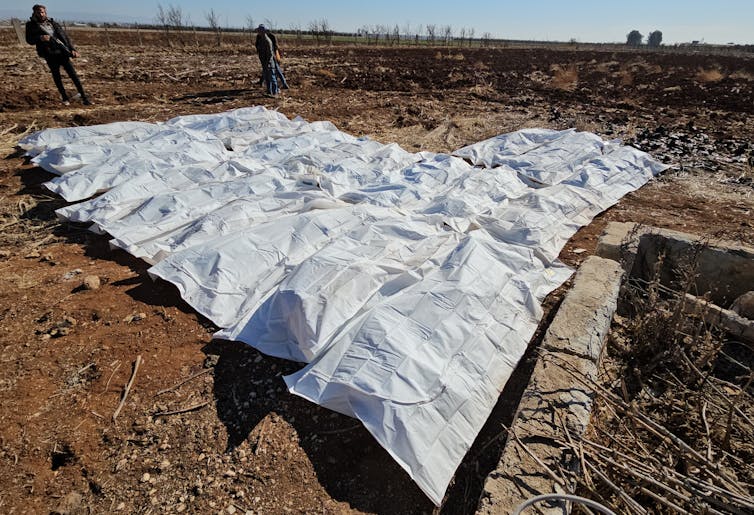
Following the overthrow of Syria's dictatorial president Bashar al-Assad in December, families of missing Syrians would arrive a the Najha cemetery hoping to find remains of their missing loved ones. They were intent on digging up the mass grave there marked by mounds of overturned dirt with their shovels. Once the realization set in that what they would find would represent bones in body bags with no way left to them to determine to whom those bones belonged, they gave up their desperate searches.
Tens of thousands of Syrians whom the Assad regime considered opponents had been detained and disappeared during the 14-year civil war between the Alawite Shiite regime of Bashar al-Assad and the majority Sunni Syrians. Many of those in Assad's prisons were killed under torture or executed, pointed out human rights groups. This was a regime that used chemical agents in their bombs to asphyxiate people, barrel bombs to tear them limb to limb, helicopter gunships targeting people waiting in bread lines.
Uncountable numbers of regime victims were hurriedly buried at the Najha cemetery outside the capital Damascus. Syrian families are haunted by the fate of their missing relatives. No fewer than 60 mass graves have so far been identified in Syria, with new ones discovered on a regular basis. The exacting forensic work to determine the identity of each of the bodies being recovered has become a problem for Syria's new government which has pledged accountability and justice for the Assad regime's war crimes.
For one man, 36-year-old Khaled al-Mishtowli, the loss of his family members are many in number; three brothers, his father, three cousins and two aunts. The agonizing work of identifying the bodies would have been advanced, he says wistfully, if those burying them "had at least buried the people's ID cards with their bodies". The process of of exhuming and identifying the bodies will be a long, arduous, undertaking, which he and others call on the government and international groups to undertake.
 |
According to the Syrian minister of emergency and disaster management, about 140,000 Syrians are missing. The figure of 400,000 deaths by the Assad regime has long been recognized. In 2013, Mr. al-Mishtowli explains, his relatives began disappearing from their town of Sayida Zeinab on Damascus' outskirts as they were engaged in ordinary pursuits, or on their way back home from their workplaces. His family members, all of whom were Sunni Muslim, were apprehended by pro-regime Shiite militias, he believes.
"We are asking for anyone, international organizations, the United Nations, anyone who can exhume the bodies and identify them", he pleaded. In response, a spokeswoman for a new Syrian commission on missing people responded: "This is a very long process, one that began now but will unfortunately extend over many years". Her commission will be dependent on international organizations to assist in building the required technical and forensic capabilities such as DNA laboratories.
"The international community has to help the Syrian authorities to build infrastructure first, and to train their people to learn how to eventually do this on their own", explained Karla Quintana of the U.N. Independent Institution on Missing Persons in Syria, -- whereas in the past the United Nations and other international bodies took responsibility for exhuming mass graves.
"We really haven’t seen anything quite like this since the Nazis.""From the secret police who disappeared people from their streets and homes, to the jailers and interrogators who starved and tortured them to death, to the truck drivers and bulldozer drivers who hid their bodies, thousands of people were working in this system of killing.""We are talking about a system of state terror, which became a machinery of death.""I don’t have much doubt about those kinds of numbers given what we’ve seen in these mass graves."Stephen Rapp, former U.S. war crimes ambassador at large
 |
Labels: Disappeared, Identification, Mass Graves, New Syrian Government, President Bashar al-Assad, Syrian Civil War
posted by Pieface | 8:04 PM
|
0 comments