Politic?

This is a blog dedicated to a personal interpretation of political news of the day. I attempt to be as knowledgeable as possible before commenting and committing my thoughts to a day's communication.

Friday, November 14, 2025

Canadian Security Intelligence Service Report

"Worryingly, nearly one in ten terrorism investigations at CSIS [Canadian Security Intelligence Service] now includes at least one subject of investigation under the age of 18."
"Fortunately, only a small number of youth or adults with extreme views resort to violence. But when they do the consequences are devastating."
"[CSIS has helped to disrupt 24] violent extremist actions [that led to arrests of terrorism peace bond charges in just over three years]." 
"[Our agency is focusing more resources on] particularly alarming [cases involving plots by Iranian intelligence to repress -- and sometimes kill -- critics and dissidents of the regime in Canada]."
"In more than one case, this involved detecting, investigating and disrupting potentially lethal threats against individuals in Canada." 
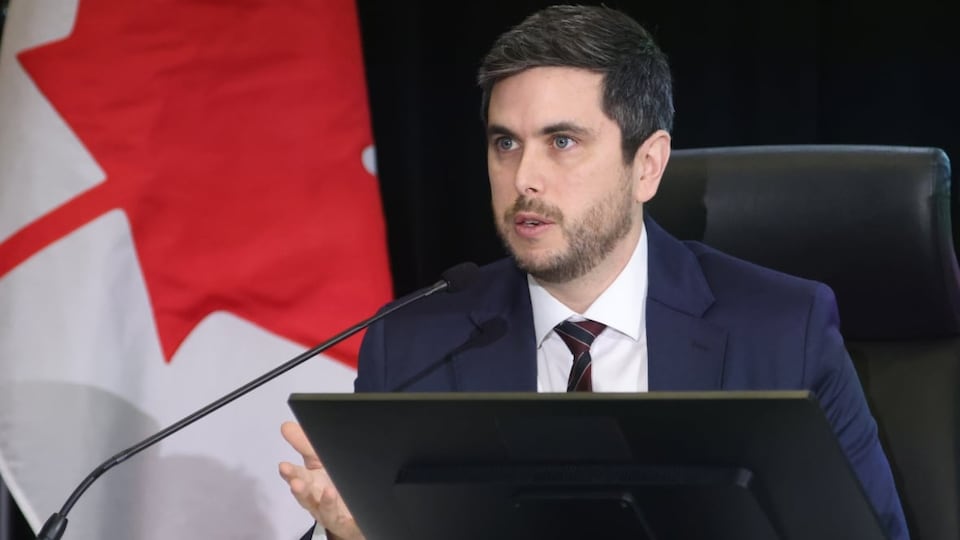
CSIS Director Daniel Rogers 
https://images.radio-canada.ca/q_auto,w_960/v1/ici-info/16x9/foreign-interference-78942.png

Dan Rogers appears at the Public Inquiry into Foreign Interference in Federal Electoral Processes and Democratic Institutions hearings, in Ottawa. (Patrick Doyle/The Canadian Press)

Young people in Canada, warns the director of Canadian Security Intelligence Service, are increasingly radicalized online, resulting in rising violent extremism, markedly among those under 18 years of age. Motivated to extremism by a variety of ideologies among which are antisemitism, xenophobia, misogyny 'extreme interpretations' of religion or accelerationism [an inclination to accelerate the collapse of society], spreading with the momentum of social media's vast influence.
 
Teens and even children appear more susceptible to believing what they see and hear online; the allure and excitement of the socially forbidden; violent extremism seems like an adventure to their immature minds, drawing them into a never-ending cycle of the ever-increasing volume of viciously anti-social tropes. Speaking before an audience of government and police officials, academics and reporters in his first annual speech, Mr. Rogers attested to his increasing concern of the spread of extremism within the Canadian public.
 
A minor in Montreal was arrested, alleged to be planning an attack for Daesh (Islamic State); another, a 15-year-old in Edmonton suspected by police of planning to commit attacks on behalf of an online transnational violent group. 60 people have been injured, 29 killed in Canada in the past 11 years as a result of some attacks that were carried out before they could be apprehended. Many more were disrupted with the intelligence assistance CSIS provided. 
"Chinese spies have tried to recruit Canadians with access to government plans, intentions, information and military expertise, through social media and online job platforms."
"Both of those countries [China and Russia], and others, have a significant intelligence interest in our Arctic and those who influence or develop its economic or strategic potential."
"It's no surprise, then, that CSIS has observed both cyber and non-cyber intelligence collection efforts targeting both governments and the private sector in the region."
"CSIS will be challenged to adopt technology and use data in new and more significant ways to keep Canadians safe and to secure an advantage for Canada."
CSIS Director Daniel Rogers 
 CSIS assisted in the arrest of two 15-year-olds in Ottawa, plotting to commit a mass casualty attack against the Jewish community. Information leading to the arrest of a man planning a Daesh-inspired attack on the New York Jewish community saw CSIS contributing important information. China's reputation for spying on Canada to appropriate state, military and intellectual property continues unabated. Chinese agents entering Canada, he pointed out, increasingly target the private sector. While both China and Russia engage aggressively for more intelligence and influence in the Canadian Arctic. 
 
https://i.cbc.ca/ais/1.7632874,1757708951000/full/max/0/default.jpg?im=Crop%2Crect%3D%280%2C0%2C4032%2C2787%29%3BResize%3D805
Canadian soldiers prepare for a surveillance mission in Pond Inlet, Nunavut, as part of the annual Operation Nanook on Sept. 6. The exercise sees the small team inserted onto a remote mountain top with no additional support, honing their survival skills for multiple days. (David Common/CBC)
"Non-Arctic states, including the People’s Republic of China, seek to gain a strategic and economic foothold in the region. Russia, an Arctic state with a significant military presence in the region, remains unpredictable and aggressive." 
"National governments are still targeted for sensitive intelligence, military and economic secrets but so too are corporations and other levels of government whose data, technological innovations, influence and access to resources can shift the balance of advantage." 
"We benefit greatly from intelligence and security sharing by the United States, and we contribute back, So I think it’s still strong."
"Today, while the goals are similar, the targets are more varied. Some of the world’s most advanced and emergent technology is now held by private sector and academic institutions."
CSIS Director Daniel Rogers 
https://i.cbc.ca/ais/1.7632890,1757709018000/full/max/0/default.jpg?im=Crop%2Crect%3D%2874%2C53%2C2772%2C1529%29%3BResize%3D805
The Chinese vessel Xue Long, seen here in East Antarctica, is believed to be dual purpose, meaning it’s primary role is research but what it surveils can also be used for Chinese military purposes. (Andrew Peacock/Reuters)

Labels: , , , , , , , , ,

Friday, November 25, 2022

The Democratically Helpful Chinese Communist Party

"They are by and large an extension of the apparatus of Beijing."
"I definitely think this is an area where our security agencies or the police should pay close attention."
Karen Woods, founder, independent Canadian Chinese Political Affairs Committee
 
"This really is like an ideological invasion."
"I think that undermines our national security, our social security."
Jonathan Fon, Toronto paralegal
 
China’s Interference in Canada’s Elections
Deposit Photos
"{The Chinese Council for Western Ontario Elections'  goal is simply to] introduce Canadian democracy to the Chinese community, to help Chinese Canadians better understand Canadian elections, participate in the democratic process, and participate actively in elections."
"We support candidates of any race, as long as they oppose racial discrimination and support multiculturalism."
"We are willing to share our network resources with them to help them gain recognition and support from Chinese voters."
Toronto businessman Guo BaoZhang, executive president, Canada Toronto Fuqing Business Association
The Canada Toronto Fuqing Business Association building in Markham, Ontario.
Now that is really interesting. Chinese Canadians have a long history of residence and citizenship in Canada. A history that dates back to the 19th Century with the building of Canada's national railways. Chinese Canadians have established themselves in every facet of life in Canada, from little shop owners to the professions of law and medicine, to professorships in Canadian universities and to the ordinary-man-in-the-street or family-on-your street category.

As Canadian citizens, they know all about Canadian politics, they pay their taxes and they vote in all elections just like any other Canadians. Now, in the last few  years Beijing has turned its eyes on these Canadian citizens of Chinese extraction -- including many who have more recently arrived in Canada as immigrants or to study at Canadian universities, from both the mainland and Hong Kong. Beijing's United Front Work Department operates in tandem with Chinese diplomats assigned to Canada in Chinese consulates and embassy to impress on Chinese Canadians their obligations to China.

That obligation as ethnic Chinese, is to help promote China and China's interests broadly, within Canada. In the 2019 general election, Canadian Intelligence tracked the Chinese Communist Party's interference in promoting candidates of Chinese extraction suborned by China through ideological indoctrination and financial funding to election wins. It has also been revealed that political insiders defend and promote China's interests in various provincial and federal legislatures.

Now the introduction of a new organization whose goals on the surface are to assist Chinese Canadians in becoming more accomplished members of a democracy. Who might've thought? Yet another group has infiltrated Canada whose purpose is to further the interests of Beijing in a country that it is clearly at odds with, given fairly recent events, and a new, frosty relationship between China and Canada. China's growing aggressive tendencies are not limited to Canada, they surface elsewhere as well.

The website of the Canada Toronto Fuqing Business Association identifies it as having been established under the guidance of the United Front Work Department, itself a branch of the Chinese Communist Party with a clear mission to expand Beijing's worldwide influence. Influence made its presence years ago with the endowment by China in Western university-based Confucius Institutes; established ostensibly to help the world know of the wisdom and culture of China.

Beijing is well known for its ulterior motives in relations with other countries; its constant espionage feelers out via Chinese-loyalists in relaying back to China industrial, military and political state secrets. It has latterly been revealed that Beijing operatives and police forces have opened 'police stations' in Canada as well as in other foreign countries to keep tabs on expatriate Chinese, and to 'persuade' those critical of Beijing to return to China, under the guise of giving them assistance in renewing passports and driver's licenses; the while subtly threatening the well-being of family members in China.

The Canadian Security and Intelligence Service saw fit to brief Prime Minister Justin Trudeau's office in January regarding a Chinese program that funded 11 candidates sympathetic to China during the last federal electon; a member of the Ontario legislature and community groups were engaged as go-betweens. In a brief, unscheduled meeting with Chinese President Xi Jinping at the G20 meeting in Indonesia, Trudeau claims to have raised the matter of Chinese political interference in Canada. Followed by Trudeau later denying he had ever been briefed.

Beijing's underhanded, interfering CCP-linked groups have not yet been challenged by the Government of Canada in a manner that would reflect the unwelcome nature of their organizational destabilization of the country. That Beijing is the least bit involved in promoting anti-discriminatory measures in Canada is beyond ironic, given its treatment of Tibetans and Muslim Uyghurs in Tibet and Xinjiang.

A multi-party committee in Ottawa has agreed to examine China's influence in Canada's elections following a Global News story citing a Beijing campaign to subvert Canadian democracy.

Labels: , , , , , ,

Thursday, October 15, 2020

The Powerful New Bellicose China

Ambassador Cong Peiwu  Blair Gable/Reuters

"We strongly urge the Canadian side not to grant so-called political asylum to those violent criminals in Hong Kong, because it is interference in China’s domestic affairs, and certainly it will embolden those violent criminals."
"If the Canadian side really cares about the stability and the prosperity in Hong Kong, and really cares about the good health and safety of those 300,000 Canadian passport holders in Hong Kong and the large number of Canadian companies operating in Hong Kong … you should support those efforts to fight violent crimes."
"I want to make clear that a stable and prosperous Hong Kong … is not only in the interest of the vast majority of Hong Kong residents, but it is also conducive to the majority of those … law-abiding foreigners and enterprises in Hong Kong."
"[Beijing would have a] strong reaction [if Canada's Parliament were to pass any resolution that condemned China’s treatment of its Muslim Uyghur minority as] genocide [referring to the over one million Uyghurs in detention camps in Xinjiang province, facilities for] vocational and education training."
"We will take resolute measures to safeguard our sovereignty and national security. [The Uyghurs] live in harmony … and [China’s] human-rights record is the best in history."
"There is no coercive diplomacy on the Chinese side. The Hong Kong issue and the Xinjiang-related issue are not about the issue of human rights. They are purely about internal affairs of China, which brooks no interference from the outside."
China's ambassador to Canada, Ambassador Cong Peiwu

China has the temerity to have its envoy to Canada lecture the government of Canada on how it may and may not represent China, based on fairly universal knowledge and agreement of China's human rights situation in reference to its treatment of minority populations within the country, its belligerent attitude toward 'splittism' and demand for 'harmony', refusing to honour its commitment to Hong Kong's democratic authority as a semi-autonomous enclave, and its determination to ensure that Shanghai be returned to Chinese authority, through military means if necessary.

China's boastful self-praise over its human rights and respect for the rule of law evinces itself in other ways, as for example the arrest of two innocent Canadians in China, held virtually incommunicado, with no access to lawyers, and charged with espionage. This, in retaliation for Canada holding the CFO of China's Huawei telecommunications giant on an extradition warrant from the United States on a charge of illegally supplying Iran with communications equipment in defiance of UN/US-imposed sanctions. The implied threats in Ambassador Cong's statement are evident and reflect the Politboro sentiments.

"You should focus your minds and energy on preparing to go to war, and stay highly vigilant", a report in the South China Morning Post, a Hong Kong newspaper, quoted China's President Xi Jinping, as lecturing to marine corps at a military base in Guangdong province, at a commemoration of the 40th anniversary of the Shenzhen Special Economic Zone. Priming his military apparatus for action, at a time when the mood in China is decidedly nationalist, fed by this government which has gone out of its way to alienate its neighbours through regional aggression.
 
The Peoples Republic has spent time, energy, and treasury in making friends and influencing people in some parts of the world, happy to be noticed by China, delighted at its investment in upgrading their infrastructure (for its own trade benefit alongside delivering of other countries' natural resources to feed China's rapacious appetite for energy and raw materials), while leaving those dependent countries with debts through infrastructure loans that will ensure they remain vassals-in-debt for the long-range future.
 
Elsewhere in the developed world, Xi and Beijing have soured international relations, while claiming entitlements and ownership of disputed regions it plans to swallow, to China's territorial advantage. China insists it will have jurisdiction over the island democracy of Taiwan off its southeastern coast, sending Chinese warplanes and navy vessels to harass Taiwan in the Taiwan Strait. "The fact that Taiwan is a separate country, democratically elected, they should be seeing Taiwan as a neighbour, not as a point of conquest", pointed out Margaret McCuaig-Johnson, senior fellow, Institute of Science, Society and Policy, University of Ottawa.
 
China's state television recently released a video of military drills with amphibious landing craft, attack helicopters and missile systems. The unsubtle warning is that China could attack should Taiwanese President Tsai Ing-wen who has repeatedly attempted to placate China, continue maintaining Taiwanese independence, not recognize Taiwan as part of China. "I believe that regional tension can surely be resolved", she responded. China is enraged that the U.S. is considering an arms deal with Taipei with whom the U.S. is establishing a growing relationship. China warns against any such deal.

According to Reuters seven "major weapons systems" were undergoing an export process with a mind to equipping Taiwan with advanced weaponry. Lijian Zhao, spokesman for the Chinese Ministry of Foreign Affairs, warns that China will retaliate: "The United States should immediately cancel the planned weapon sales to Taiwan, stop any arms deals and cut off their military ties." Gordon Houlden, director of the China Institute at University of Alberta emphasizes that Xi is satisfying China's growing nationalist sentiment.
 
"Taiwan is a special case. No Chinese president, in my view, would survive a week if he .. abandoned the goal of reunification. The biggest risk for China is the intervention of the United States. The language is always alarming and we should not ignore it, but I don't think there should be panic about it ... it's not the first time and it shouldn't be surprising. But also, it's a warning, perhaps to the international community and to Taiwan that this [unification] is still a Chinese goal, which they still take seriously and which they intend to complete." 
 
Chinese warships, including an aircraft carrier, in formation during drills in the South China Sea, January 2, 2017. Photo by STR/AFP via Getty Images


Labels: , , , , , ,

Friday, March 15, 2019

Chinese-Canadian 'Splitism'

"The reason I came here [to Canada] personally was because of what Canada stands for. I feel free to speak up, I feel free to live the life I want to live without fear."
"As a Canadian, I want to focus on people from China, Chinese-speaking residents to [help them] understand what this country is all about."
Meena Wong, founder, the Civic Engagement Network, Vancouver
Meena Wong is an immigrant from Beijing who openly criticizes her mother country’s government.   Nick Procaylo/PostMedia
"Our goal is to tell them, 'Do not be afraid'. If more and more people speak out, say no to the Chinese Communist Party, we can make progress, one by one, step by step."
"Canada is a country that welcomes all the immigrants, but all the immigrants have a responsibility to respect Canadian values, to respect human rights, the Charter, our culture."
Louis Huang, leader, the Alliance of the Guard of Canadian Values, Vancouver
It's not as though Canada has suddenly realized it has a growing contingent of immigrants from China who are under the influence of Beijing. Chinese immigrants have lived in Canada for a  hundred years. Shamefully, Canada once imposed a 'head tax' on immigrants from China, in an effort to slow down their entry to the country; effectively penalizing them for not being of European stock. The early Chinese-Canadians took menial jobs that other Canadians spurned. They were railroad construction workers, they opened laundries and restaurants, they worked on farms.

There have been large urban communities of Chinese-Canadians populating the centres of Canadian cities for many generations. Most large Canadian cities have a "Chinatown" where Chinese-Canadian residents cluster. In essence, Chinese-Canadians have reproduced in their communities Canadian versions of what Chinese life looks like in China, celebrating their unique culture in the country they have adapted to and which has adopted them.

Newer emigrants from mainland China bring with them the influence of the Communist Party. Years ago when Britain surrendered their rule of Hong Kong to Beijing, wealthy Chinese from Hong Kong, fearful of Chinese government intrusion on their way of life under colonial British rule, envisioning a clampdown by Beijing on Western-style commerce and freedoms, sought to migrate to Canada, buying properties in Vancouver, ensuring they had a second home and an escape route should their fears be realized.

Beijing's government at the time realized the utility of a market economy designed on the free market system and decided it would suit them well to adopt a Chinese-style free enterprise system to encourage entrepreneurial enterprise and control it through communist-style oversight. Which led China to its current status as a manufacturing and trade giant at the top of the world economy, second only to the U.S.

In its zeal to overtake the U.S. on every index of production, trade and influence, it has reached out its tentacles all over the world, offering its technology and construction infrastructure upgrades and loans leading to indebtedness and control through their giant initiative they have titled One Belt, One Road, a modern-day silk road with accompanying power and influence.

China's record on human rights continues to earn it censure, and its ongoing ventures into espionage, stealthily obtaining other countries' trade, political, military and production secrets have earned it constant condemnation. Mr. Huang of the Alliance of the Guard of Canadian Values, a former Shanghai pediatrician, argues that the Chinese Communist party has succeeded in infiltrating "deep in our political, social and economic system", a reality that exists across the globe, but one that most governments seem to choose to ignore.

Through the Civic Engagement Network, Ms. Wong has been active in criticizing her country of birth's government and attempting to influence as many Chinese immigrants as she can reach that as citizens of Canada their obligation is to their new nation, not the one they left behind. "What does being Canadian mean?" events are scheduled for that purpose; to inform and/or remind Chinese Canadians of the importance of Canadian values and human rights.

Mr. Huang speaks of Chinese leaving China for Canada to escape the communist system. In the same token once in Canada new immigrants take care not to criticize the system they have escaped for to do so is to draw attention to oneself by Chinese authorities who have willing informers everywhere. Once held in suspicion, relatives still living overseas can be threatened or their businesses impacted deleteriously by a government that brooks no slights.

Louis Huang of the Alliance of the Guard of Canadian Values says he speaks to Chinese students studying in Canada who know virtually nothing about the 1989 Tiananmen Square massacre. Jeff Widener/AP, File

Labels: , , , , , ,

() Follow @rheytah Tweet