


Indigenous Female Victims ... Indigenous Male Victimizers
"Indigenous people find themselves disproportionately and excessively imprisoned, while Indigenous women and girls suffer from unacceptably high levels of violence and abuse.""The lessons of the sentencing circle are more than just a source of factual information relevant to a fit sentence, but are key to understanding the Indigenous perspective on sentencing...""What is required is that a sentencing judge reasonably engage with the perspectives expressed in the sentencing circle in crafting a fit and appropriate sentence."Supreme Court decision
| The landmark judgement, R. v. Cope, concerns a Mi’kmaw man from Nova Scotia who pleaded guilty after violently assaulting his intimate partner, a Mi’kmaw woman, in 2021. (File photo) |
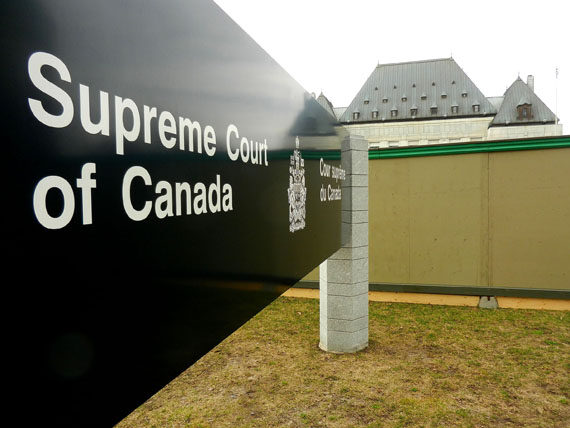
The Supreme Court of Canada has twisted itself like a pretzel to find the halfway point between holding an Indigenous male guilty for his criminal acts, while being aware at all times that Indigenous people are incarcerated for crimes in disproportion to their numbers in society and generally granted lighter punishment. One cannot merely draw the obvious opinion that Indigenous men are more disposed to criminal acts than the general society, for it is deemed to be racist, without considering the effect that 'colonialism' has had on the Indigenous psyche.
At the same time, to hand out lighter sentences to Indigenous males for their propensity toward violence against Indigenous women holds males to lesser account, while victimizing the women they threaten, abuse and murder. This kind of male behaviour to their female counterparts also cannot be construed as a cultural default since this too is racist and one must again consider the generational trauma suffered by Canada's Indigenous population as a whole as a result of colonization and the effect of residential schools which separated Indigenous children from their families and tribes in an effort to provide them with an education analogous to what every Canadian child received in the public school system.
The Supreme Court has recently sat with the intention of resolving competing judicial imperatives in addressing Indigenous over-incarceration and the high rates of violence committed by males of Indigenous descent against Indigenous women; where both victim and victimizer are Indigenous, in a search for a Solomonic solution. There were 22 intervener groups that included three provincial attorneys-general, First Nations and Indigenous organizations, law groups, and human rights, civil liberties and constitutional advocacy organizations. All presumably putting their collective brains to work out a just response to a vexing problem.
 |
| The Supreme Court justices at a ceremony to mark the opening of the judicial year, at the Supreme Court of Canada in Ottawa, Oct. 5, 2026. Photo by David Kawai/Postmedia |
In the end, the justices that comprise the Supreme Court -- nine in number -- were split five to four in their recently released decision. The majority opinion set a framework that judges are to follow in situations of this nature. As, for example, the 2021 case of Harry Arthur Cope who attacked his common-law partner in Halifax on a public sidewalk where he repeatedly struck the woman. When police arrived, her face was swollen and bloody, she having suffered severe injuries to her face and upper torso.
At the man's 2023 sentencing following his guilty plea to aggravated assault after court heard he had severe mental health challenges, no longer took medications and consumed illicit drugs the complications were duly recognized. Mr. Cope also had a significant criminal record. Provincial Court of Nova Scotia Judge Christine Driscoll ordered an Indigenous Background Report. According to a First Nations' sentencing circle it was the opinion of community members that more incarceration would not help Cope, recommending instead in-patient treatment.
Duly considering Cope's background, Judge Driscoll, weighing special factors from the victim's perspective, rejected the proposal for a conditional sentence and decided to sentence the man to five years in prison. His sentence was then reduced to three years by the Nova Scotia Court of Appeal. That appeal decision brought the Cope case to the attention of the Supreme Court.
The majority of Supreme Court judges upheld the appeal decision of a reduced sentence, while dissenting justices in the minority preferred the restoration of the trial judge's five-year sentence. According to the majority decision the sentencing judge should have adhered more closely to the mental heath factors to arrive at the offender's moral blameworthiness and in effect held she should have engaged with the input by the sentencing circle.
According to the minority justice opinion, the original five-year sentence should be restored; that the sentencing judge appropriately considered the nature of the crime and the particular vulnerabilities of the victim, even as the judge had properly, as required by law, considered the circumstances of the offender, taking into account the compelling Gladue factors and Mr. Cope's mental illness.
 |
| eStock Mark Bruxella |
"In cases where an Indigenous offender commits an offence against his intimate partner who is an Indigenous woman, a sentencing judge must apply the principles related to both Indigenous offenders and victims of crime, and do so harmoniously to arrive at a just and proportionate sentence.""[The majority opinion said the sentencing circle process] will be relevant both to understand the availability of alternative sentencing options that may exist in the community, as well as the community perspective on the sentence that will best achieve the relevant sentencing objectives."Supreme Court Majority opinion
Labels: 'Colonization' Factor, Criminal Behaviour, Cultural Violence, Disproportionate Incarceration, Gladue Principle, Mental Health, Supreme Court of Canada
posted by Pieface | 9:42 PM
|
0 comments

