Politic?

This is a blog dedicated to a personal interpretation of political news of the day. I attempt to be as knowledgeable as possible before commenting and committing my thoughts to a day's communication.

Sunday, April 19, 2026

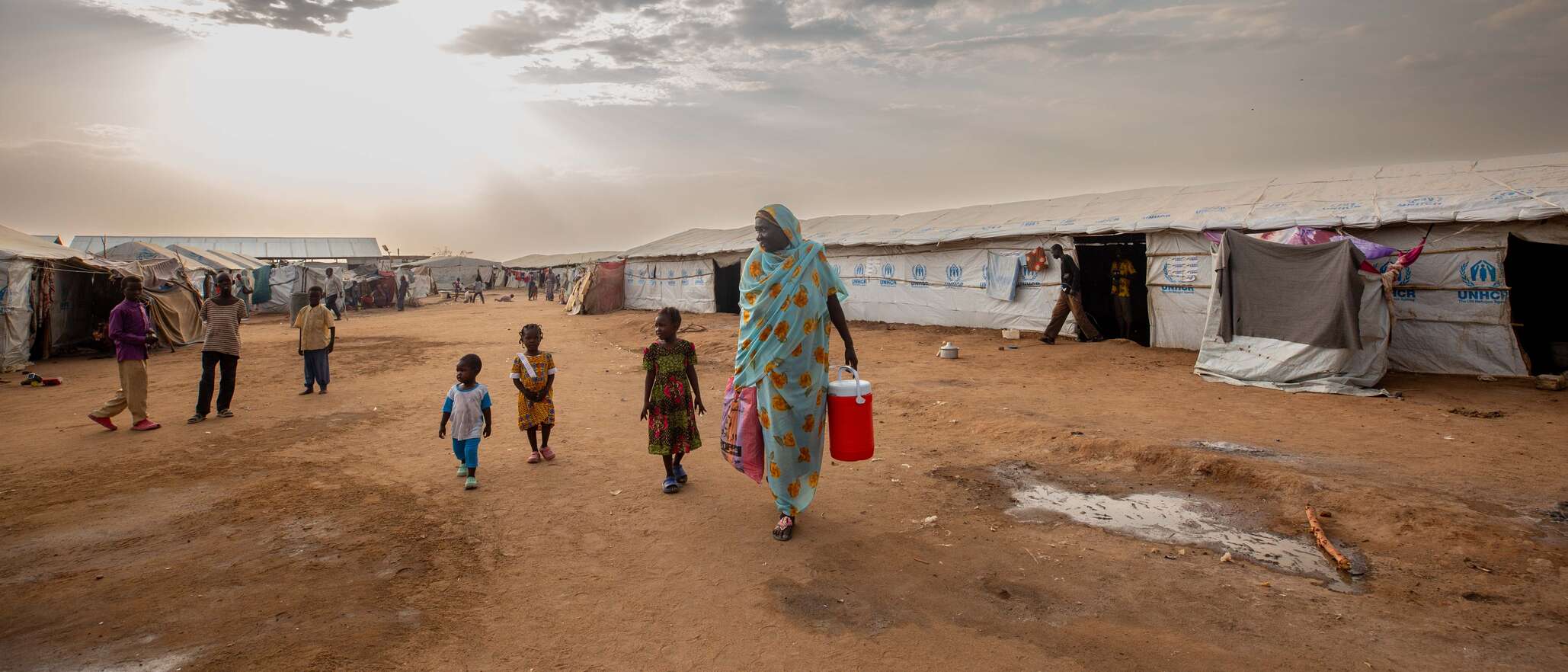
Sudan : An Abandoned Crisis

https://www.rescue.org/sites/default/files/styles/super_widescreen_21x9_2058px_wide/public/2024-07/8S3A8129%E2%80%9321x9%20%281%29.jpg?itok=-uAQ5tC-
International Rescue Committee
 
"Even before the war in Sudan erupted in April 2023, the country was already experiencing a severe humanitarian crisis that left 15.8 million people in need of aid. Now, three years of war have drastically worsened these conditions, displacing approximately 14 million people and leaving 33.7 million people—two-thirds of the population—in need of humanitarian support."
"The country’s food system has been pushed to the brink, with millions of families now surviving on just one meal a day, or less."
"Sudan is the largest humanitarian crisis in the world in terms of number of people who need humanitarian aid. It is also the largest and fastest displacement crisis."
International Rescue Committee
 
 
  • As Sudan marks three years of war, MSF teams continue to treat people whose lives have been devastated by the conflict between the Sudanese Armed Forces (SAF) and the Rapid Support Forces (RSF).
  • A lack of basic services and constrained humanitarian access are compounding people's suffering.
  • The warring parties must protect civilians and be held accountable for their violations, and the international community must use diplomatic pressure to prevent further crimes. 
  • Medicins Sans Frontieres  
    APTOPIX Sudan War
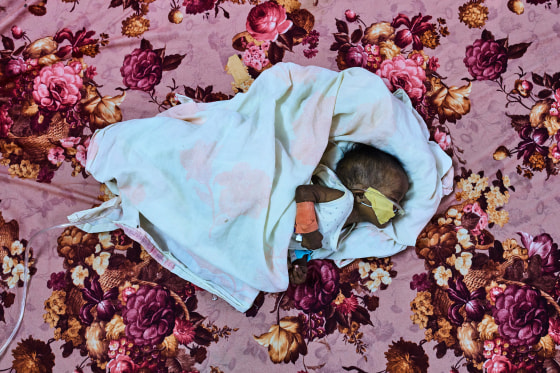
    Patient Saidal Altaher, 2 months old, being treated for malnutrition at the pediatric hospital stabilization center in Port Sudan on Wednesday.  Bernat Armangue / AP
     
    Described as the world's largest humanitarian challenge in terms of displacement and hunger, Sudan is suffering a crisis of abandonment with the world's attention turning to the Middle East and the standoff in Iran, and its blockade of the Hormuz Strait. In Sudan, 13 million people have been forced by the threat and violence of a bloody conflict to flee their homes, becoming internally displaced. Food and medicines are scarce and diseases like cholera are running rampant. 
     
    The number of  dead from the conflict stands at 59,000 with 6,000 having perished over three days alone, as the RSF (paramilitary Rapid Support Forces) bulled their way through the Darfur outpost of el-Fasher in October, an offensive that the UN considers alike "the defining characteristics of genocide". Black Darfurians once again in the rifle sights of the horsed Arab Janjaweed as they were in the early 2000s.
     
    Severe acute malnutrition is set to afflict 800,000 people in parts of Sudan, according to the Integrated Food Security Phase Classification. Two of every three Sudanese require assistance, according to the United Nations. Health facilities have been impacted to the point where only 63 percent remain fully or partially functional to deal with the conflict's wounded and emerging disease outbreaks. 
     
    Denise Brown, the UN's top official in Sudan, criticizing the international community for its failure to press for the end to the conflict, stating: "A plea from me: Please don't call this the forgotten crisis. I'm referring to this as an abandoned crisis", she corrected. 
     
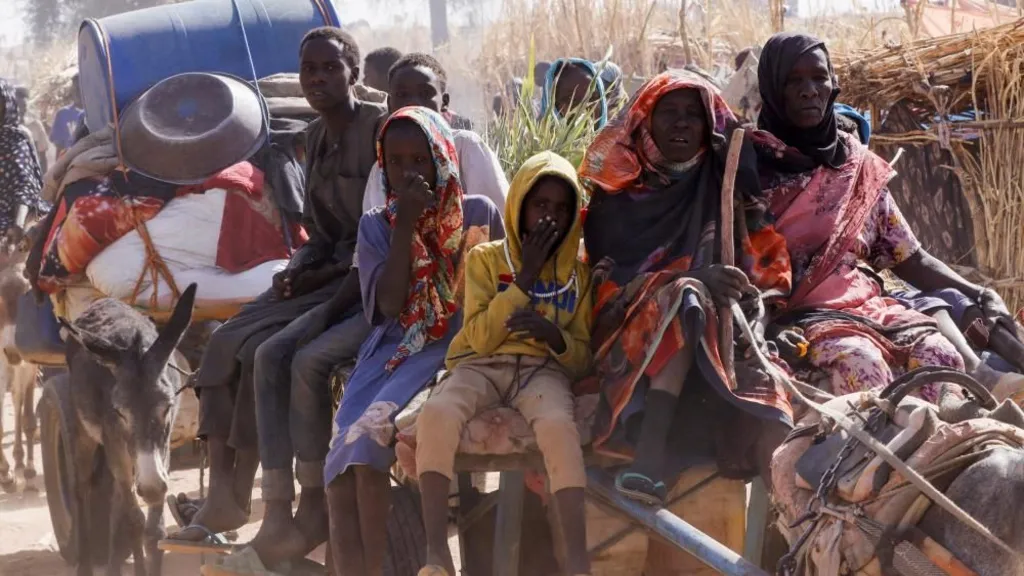
    https://ichef.bbci.co.uk/news/1024/cpsprodpb/3cf9/live/b8148000-373d-11f1-8606-05fe34b06e1b.jpg.webp
    People fleeing conflict in Sudan's Darfur risked being hit by drone strikes   Reuters
     
    Following the deposed dictator Omar al-Bashir in 2019, a power struggle emerged between the Sudanese military under General Abdel-Fattah Burhan, and RSF commander General Mohamed Hamdan Dagalo, who was initially Burhan's deputy at the ruling sovereign council of Sudan. Sudanese "have become powerless and are subjected to foreign dictates", claimed a Sudanese journalist and researcher.
     
    Germany undertook to host a  conference in Berlin, welcoming governments, UN agencies and aid groups to take part, with a goal to rally donors to assist in funding strained humanitarian responses and to "promote an immediate ceasefire", according to the German Development Ministry. For its troubles, the Khartoum government condemned the conference as an 'unacceptable' interference on Sudan's internal affairs. 
     
    The Sudanese military has control over the country's north, east and central regions, its oil refineries and pipelines, and Red Sea ports. The RSF and its allies control Darfur and the region at the border with South Sudan. Regions that both include oilfields and gold mines. Egypt supports the Sudan military, and the United Arab Emirates has been accused by the UN of providing arms to the RSF, which it emphatically denies. 
     
    In the three years of conflict, widespread atrocities are known to have occurred;  rampant sexual violence in gang rapes and mass killings, among them. According to the WHO, hospitals, ambulances and medical workers have been attacked, claiming over 2,000 have been killed.  Most atrocities have been placed at the feet of the RSF and the Janjaweed, notorious for atrocities committed in the early 2000s against Black Sudanese farming communities. 
     
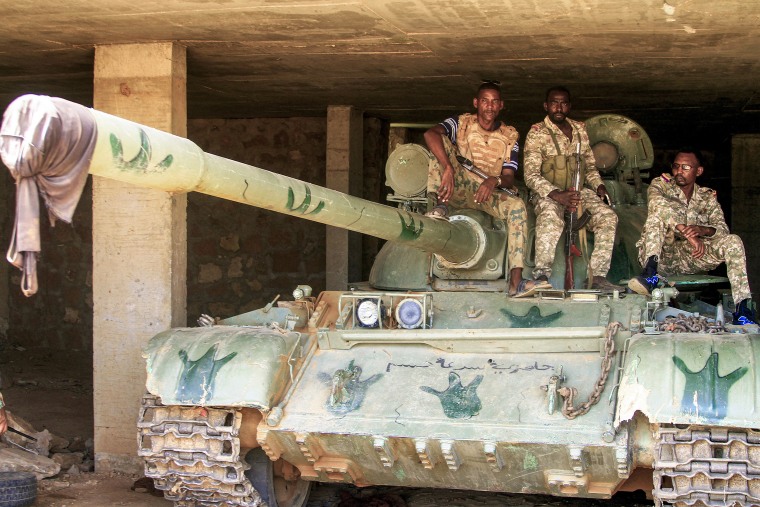
    TOPSHOT-SUDAN-CONFLICT
    Sudanese army soldiers sitting atop a parked tank after their capture of a base used by the RSF, after the rival paramilitary group evacuated from the Salha area of Omdurman, the twin city of Sudan's capital, in May 2025.  Ebrahim Hamid / AFP via Getty Images


    Labels: , , , , , , ,

    Saturday, January 19, 2019

    The Addicton 'Disease' Leading to Theft, Professional Betrayal

    "[The care home had a duty to accommodate the nurse's unquestioned diagnosis of severe opioid use of disorder and  mild to moderate sedative-hypnotic use of disorder, a disease that left her with] a complete inability or a diminished capacity [to resist the urge to feed her addiction]."
    "[Two addiction experts testified addiction is viewed as a health condition and that] to view [addictions] as bad habits stigmatizes these conditions and makes it harder for people to get help."
    Labour Arbitrator Larry Steinberg

    "[Addiction is not a disease but more like a bad habit though it is] acknowledged that this was a minority view in the psychiatric profession and that it was contrary, for example to the DSM-5 [manual of psychiatry]."
    Lawrie Reznek, professor of psychiatry, University of Toronto

    "[Addiction is a result of] the motivated repetition of the same thoughts and behaviours until they become habitual."
    "[Addiction is not a disease, but rather a] developmental cascade [as in a form of learning]."
    Marc Lewis, Canadian neuroscientist, author

    "The ability to make some choices[about drug use] does not negate the trial judge's findings that addiction is a disease in which the central feature is impaired control over the use of the addictive substance."
    Supreme Court of Canada
    An ampoule of morphine
    The issue of nurses addicted to narcotics who have, through the course of their employment stolen painkillers for their personal use is not rare. One nurse took painkillers from an elderly terminal cancer patient whose well-being she was in charge of. The nurse was convicted of theft, had a five-month suspension imposed, and resigned after the College stated she had shamed the profession. Yet another nurse had stolen medication from a dying teen and was stripped of her nursing license, then was  sent to prison for 18 months on conviction of theft, drug charges, breach of trust and impaired driving.

    In 2016, a nurse employed at a long-term care facility in Waterloo, Ontario came across one of her nursing peers holding in her mouth an ampule of Hydromorphone painkiller which she had injected herself with. This was part of the evidence, that nurse DS had been stealing opioids for her own use and in the process falsifying medical records to conceal her thefts, over the past several years. The 50-year-old nurse denied, when confronted by the nursing home management, the charges against her.

    Finally she admitted that she had acted as charged after she had become addicted to painkillers when she was being treated for a kidney condition. Sunnyside Nursing Home fired her for gross misconduct and theft. The nurse, identified only by her initials, testified at a subsequent labour hearing that she had entered residential rehabilitation that weaned her off her addiction. Her nursing license was reinstated with a series of conditions, among them that she have no access to controlled substances and be at all times supervised.

    A decision was handed down by the labour arbitrator that hinged on the issue of whether addiction is a medical disease. That arbitrator held that it is and ordered the regional Municipality of Waterloo to restore DS to her job at the nursing home and that she be compensated financially for unfair dismissal. That compensation to include general damages for "injury to dignity, feelings and self-respect". Obviously that the nurse had herself of her own volition through her choices caused 'injury' to her dignity and self-respect, was not entertained by the arbitrator.

    She was -- according to his acceptance of the now-prevailing view that addiction is a disease that overcomes one's self-agency -- accorded the respect of the injured, not the ignominy earned by someone who, tasked by her profession to ease the suffering of the ill and the elderly, made the decision to avail herself of the medications used to offer them relief from their suffering and pain. The care home had argued that DS had been fired not because of her addiction but for theft and record falsification, abuse of residents and breach of trust.

    The arbitrator stuck to his definition of the situation, that the nurse had been discriminated against unfairly because her actions represented symptoms of addiction disease. And as such it is clearly discriminatory to fire someone because they suffer from the effects of a disease. Addiction, argued, neuroscientist and recovered addict Marc Lewis whose book The Biology of Desire, where he argues addiction is more similar to racism than to cancer; more like violence or domestic abuse than cystic fibrosis and that to consider addiction a disease is wrong for it is actually a "very bad habit".

    The reward for such a very bad habit is a return to duty, but the nursing home must be prepared to accommodate a health professional whose qualifications come with the proviso that she must be denied access to narcotics and monitored at all times, so how, one might logically wonder, would she be enabled to fulfill her obligations to the vulnerable patients, many of whom suffer from advanced dementia.

    Her incapacity for independent work in an environment requiring such, means that constant supervision will take time and attention away from patients; in whose best interests is such an adjudication made?
    Toronto Sun files

    Labels: , , ,

    Saturday, December 06, 2014

    Green Delusions

    "Mr. Speaker, I rise to present a petition, from petitioners in Alberta, British Columbia, Ontario and particularly in the Ottawa area, calling on the Government of Canada to conduct a parliamentary review into the events that occurred in the United States on September 11."
    "As I understand the rules, I had to. It is a duty of an MP to present petitions and does not connote support."
    "[The Green Party] believes that no citizen should be denied the right to make their voice heard in Parliament."
    Green Party Leader Elizabeth May
    9/11 picture: United Airlines Flight 175 crashing into the World Trade Center's south tower
    Moment of Impact    Photograph by Spencer Platt, Getty Images
    "...Your petitioners pray for the Government of Canada to conduct a parliamentary review of the omissions and inconsistencies in the official United States of America 9/11 Commission Report."
    "[This will protect Canada from] future acts of state-sponsored terrorism."
    ReThink911 Canada

    "We have the funny situation of this person [Elizabeth May] who fights for climate change and believes in science ... who here is totally missing the point."
    "She's arguing on behalf of an anti-science lobby, which seems to me to be incredibly ironic."
    Dr. William Bowie, professor of infectious disease medicine, University of British Columbia

    Cranky intelligence-tenuous conspiracy theorists have found a champion in Parliament. Most of the world comprised of sane, rational individuals have weighed the evidence and have evaluated the self-promoting statements of al-Qaeda elite, including the late-unlamented Osama bin Laden, proud to claim responsibility for the monumental atrocity of 9/11, but the delusional and the outliers believe a conspiracy between the U.S. government and Israel planned and executed those attacks.

    And Elizabeth May, the champion of an responsible, hidden underclass of environmentalists and truthers, feels as herself a responsible politically-driven champion of truth and public good, that it is incumbent upon her as a lawmaker to give them their day in Parliament. And that the Government of Canada should at the very least strike an investigative committee to look into the guilt of the United States in destroying its own monumental edifices like the financial district's World Trade Towers, the Pentagon and the White House.

    By committing those profoundly human-destructive acts of terrorism on an unimagined scale, they would be enabled to blame Islamists and promote Islamophobia, and mount military adventures in the Middle East to slaughter Muslims in their war against Islam. A simple-minded, albeit convoluted claim beloved of simple-minded and conspiracy-struck lunatics. Whose very absurdity seems to make sense to their warped mindsets, spurring them on to persuade the sane to join their ranks.

    And to compound the illusion that she is the champion of the common folk who cannot think straight, who defy logic and reality and science, she presented along with the 9/11 petition in the House of Commons, a Green Party bill on Lyme disease. Leading a panel of disease specialists representing the Association of Medical Microbiology and Infectious Disease Canada to appear before a Senate committee questioning that Green party bill on Lyme disease.

    That bill put forth the suggestion that Canadian doctors and nurses refuse to diagnose properly Lyme disease and in so doing are "abandoning sick people with a treatable illness". Yet another absurd movement, this one equating chronic fatigue symptoms with an unproven version of Lyme disease fallout has come forward to plead their case that Canadian health professionals are scientifically illiterate and fail in their professional expertise to practise responsible public medicine.

    As it happens, Canadian parliamentary rules do not urge Members of Parliament to place fringe petitions front and centre before the House of Commons for consideration, when approached to do so by constituents. "Nevertheless, it is evident that many Members consider it a duty to present to the House petitions brought forward by citizens", states the reviewed content. Obviously for reasons blessedly obscure, Elizabeth May responded to that social compulsion.

    That particular 9/11 petition had formerly been rejected by an NDP Member of Parliament, one who often does take up questionable petitions and for the very same reason cited by Elizabeth May. He, however, felt that one a tad too far even for his well-balanced taste in moderation. But which obviously found sympathy with the Green party of Canada.

    The lunatic fringe is now sharing space with a Canadian political party of questionable intellectual repute.

    Labels: , , , , ,

    Monday, October 27, 2014

    Reaction and Over-Reaction

    "Coercive measures like mandatory quarantine of people exhibiting no symptoms of Ebola and when not medically necessary raise serious constitutional concerns about the state abusing its powers."
    Udi Ofer, executive director, American Civil Liberties Union, New Jersey

    "This is not a situation I would wish on anyone, and I am scared for those who will follow me. I am scared about how health care workers will be treated at airports when they declare that they have been fighting Ebola in West Africa. I am scared that, like me, they will arrive and see a frenzy of disorganization, fear, and, most frightening, quarantine. The U.S. must treat returning health care workers with dignity and humanity."
    Kaci Hickox, New Jersey quarantine
    PHOTO: Kaci Hickox is pictured in this undated image provided by the University of Texas at Arlington.

    Doctors Without Borders whom the world at large has supremely good reason to hold in the utmost respect for their selfless dedication to aiding the unfortunates of the world, urges "fair and reasonable treatment" of health workers fighting the Ebola outbreak. And this is a fair and reasonable request, since the humanitarian group-without-peer is hugely dependent on the intentions of volunteers to aid them in their work.

    Should those volunteers feel put-upon, unfairly targeted, held responsible for something beyond their control, and fear facing discrimination on their return home after volunteering their time and medical expertise in West African countries facing the current Ebola virus epidemic, they will not feel quite so eager perhaps to embark on those missions, fearing the outcome on return. They are, however, exposing themselves to a dread disease and could conceivably contaminate others on return home.

    Kaci Hickey, a nurse who volunteered with Doctors Without Borders and was placed in quarantine at a New Jersey hospital as a result of having had contact with Ebola patients as a medical volunteer is hugely critical of the manner in which she was bundled into quarantine. Taking note of the incubation period of Ebola, New York and New Jersey governors imposed a mandatory quarantine for all travellers having had contact with Ebola patients in Ebola-ravaged West-Africa.

    Kaci Hickox is seen sitting inside the isolation tent she has been housed in at University Hospital in Newark, New Jersey.
    Handout image  Kaci Hickox is seen sitting inside the isolation tent she has been housed in at University Hospital in Newark, New Jersey.

    Fresh from her work in Sierra Leone, nurse Hickox was detained at Newark Liberty International airport on Friday, closely questioned and taken to a hospital in a state of nervous distress. There she remained isolated. "The best way to protect us is to stop the epidemic in Africa, and we need those health care workers so we do not want to put them in a position where it makes it very, very uncomfortable for them to even volunteer to go", said Dr. Anthony Fauci, director of the National Institute of Allergy and Infectious Diseases.

    The governors felt that quarantine was a necessary measure to protect public health. They await the federal Centers for Disease Control and Prevention to validate their decision. Their own decision was arrived at in the wake of a New York doctor, Craig Spencer, freshly returned from Guinea, where he had been working for Doctors Without Borders, being diagnosed with having contracted Ebola. But not before he had been on public transportation and come in casual contact with a circle of other people.

    Currently being treated at Bellevue Hospital Center, his condition has taken a turn for the worse, although he is expected to survive the virus replicating and spreading throughout his body. Common sense and caution would seem to mitigate in favour of mandatory quarantine. It seems reasonable that health workers, knowing the devastating effect on their profession in West Africa, would agree to surrendering their freedom for the 21-day incubation period until given a clean bill of health.

    PHOTO: Dr. Craig Spencer and his fiance Morgan Dixon are seen in this undated photo from Morgan Dixon Community Facebook.
    Morgan Dixon Community/Facebook   Dr. Craig Spencer and his fiance Morgan Dixon are seen in this undated photo from Morgan Dixon Community Facebook.

    But nurse Hickox is outraged at her temporary loss of freedom and no doubt she equates it with a loss of personal dignity and autonomy. Her discomfort and misery at her position, being held without her will to agree has infuriated her, and because she was a selfless volunteer, others in her profession have come to her defence. She has been given leave to return to her home state of Maine to serve out the remainder of her quarantine period at home.

    And she promises to sue the federal government for illegal confinement.

    Labels: , , , ,

    Saturday, October 18, 2014

    Mea Culpa

    "[Mr. Duncan] met several of the criteria of the Ebola algorithm."
    "We did not correctly diagnose his symptoms as those of Ebola. We are deeply sorry. Despite our best intentions, and a highly skilled medical team, we made mistakes."
    Dr. Daniel Varga, chief clinical officer, Texas state health resources

    "People's lives are at stake and the response so far has been unacceptable. People are scared. We need all hands on deck. We need a strategy."
    "None of us can understand how a nurse who treated an Ebola-infected patient, and who herself had developed a fever, was permitted to board a commercial airline and fly across the country."
    American Congressman Fred Upton, Congressional hearing

    "We remain confident that Ebola is not a significant public health threat to the United States. We know Ebola can be stopped with rapid diagnosis, appropriate triage and meticulous infection-control practices in American hospitals."
    Dr. Thomas Frieden, director, Centers for Disease Control and Prevention
    Dr. Thomas R. Frieden, director of the Centers for Disease Control and Prevention, said he worries that the spread of Ebola in Africa could pose a long-term threat to America’s health care system. Publish Date October 16, 2014. Photo by Jabin Botsford/The New York Times.


    "I can no longer defend my hospital at all. I'm embarrassed for my hospital. I watched them violate basic principles of nursing care, of medical care." 
    "Our infectious disease department was contacted to ask 'What is our protocol?' And their answer was, 'We don't know'."
    "There were no special precautions, no special gear. We did not know what to do with his lab specimens."
    "I threw a fit. I couldn't believe in the second week of an Ebola crisis the only gear they were offering us allowed our necks to be uncovered."
    "There was no one to pick up the garbage for two days. It was literally piled to the ceiling. The garbage room was full."
    Briana Aguirre, nurse, Texas Health Presbyterian Hospital
    A general view of Texas Health Presbyterian Hospital is seen where Ebola patient Thomas Eric Duncan is said to have died on October 8, 2014 in Dallas, Texas. The patient who had traveled from Liberia to Dallas 10 days ago was the first person Ebola that had been diagnosed outside of West Africa. (Joe Raedle/Getty Images)
    A general view of Texas Health Presbyterian Hospital is seen where Ebola patient Thomas Eric Duncan is said to have died on October 8, 2014 in Dallas, Texas. The patient who had traveled from Liberia to Dallas 10 days ago was the first person Ebola that had been diagnosed outside of West Africa. (Joe Raedle/Getty Images)

    While the United States rode to the rescue, along with other nations' health authorities, responding to the plight of the three West African countries most heavily impacted with the onset and growing threat of the Ebola virus with the message coming through of American competence and the huge unlikelihood of Western countries having at any time any difficulty suppressing the spread of such a virus given their hygiene practices and modern technology, all of a sudden Ebola is grinning its deaths-head from a Texas hospital.

    Greater routine hygiene and access to all the benefits of modern medical technology aside, a litany of failures went to demonstrate how ignorance and unpreparedness has an international mien. When Liberian Thomas Duncan first appeared at the emergency ward of Texas Health Presbyterian Hospital on October 8 only to be turned away and told to rest and given antibiotics, that was the first blip in the system. And there were more, much more, telling a tale of profound ineptness and medically unsound practise, to come.

    That first no-clue inkling could be swept under the carpet of never-happened at the time. Not so when two nurses at the hospital who had helped in his eventual care, Nina Pham and Amber Vinson contracted the virus with its deadly 80% mortality rate. With the added news that Miss Vinson had been given permission by CDC officials to board a commercial flight despite an elevated temperature, and while in the incubation period that required sequestration, public anxiety and White House fury was raised to an incandescent level.

    When one of the Texas hospital's nurses tearfully spoke before the Congressional committee conducting hearings into the state of Ebola preparedness or lack of, in the United States, her testimony was shocking in its revelations of slovenly medical procedure. She incredulously described "chaos" at the hospital treating Mr. Duncan, staff completely ignorant of how they might go about conducting themselves in view of the diagnosis of Ebola.

    The hazmat suits issued had large neck gaps, even while materials used in the treatment of Ebola patients were left to moulder in hospital corridors for days at a time shedding still-viable contagion. Suspected Ebola patients were wheeled about the hospital with no care to protection while doctors were informed it was perfectly acceptable to move from room to room without disinfecting. On Mr. Duncan's arrival in an ambulance he was placed in an area with other patients.

    The nurse who was tasked to look after Mr. Duncan was simultaneously looking after three other patients. So much for undivided attention and scrupulous care not to re-infect. Three hours elapsed before the CDC was contacted. When her friend and colleague Ms. Pham became ill, Ms. Aguirre was tasked with treating her. She was informed by hospital officials to fix the gap between the hazmat suit given her and her neck with the use of tape.

    In its defence the Texas hospital said: "The assertions do not reflect actual facts learned from the medical record and interactions with clinical caregivers. Our hospital followed the CDC guidelines and sought additional guidance and clarity."

    If so, and if it can thus be proven to be so, Ms. Aguirre could be offered a consulting job with a horror production agency.


    Labels: , ,

    Monday, October 13, 2014

    Deeply Concerning But Not To Worry

    "We're deeply concerned about this new development. I think the fact that we don't know of a breach in protocol is concerning, because clearly there was a breach in protocol. We have the ability to prevent the spread of Ebola by caring safely for patients."
    "The level of her [Texas health worker] symptoms and indications from the test itself suggest that the level of virus she had was low."
    Dr. Thoma Frieden, head, Centers for Disease Control and Prevention

    "We knew a second case could be a reality, and we've been preparing for this possibility. Preliminary [test results late Saturday indicated the presence of the virus in the health-care worker at Texas Health Presbyterian Hospital where Liberian patient, Thomas E. Duncan, died last week]."
    "We are broadening our team in Dallas and working with extreme diligence to prevent further spread."
    David Lakey, state health department commissioner, Texas Department of State Health Services
    Lifeline: Dr Kent Brantly (left), who has been cleared of Ebola, has match blood types with Nina Pham (right) and donated so she can receive a blood transfusion to battle the deadly virus she caught treating a patient
    Lifeline: Dr Kent Brantly (left), who has been cleared of Ebola, has match blood types with Nina Pham (right) and donated so she can receive a blood transfusion to battle the deadly virus she caught treating a patient
    Lifeline: Dr Kent Brantly (top), who has been cleared of Ebola, has matched blood types with Nina Pham (bottom) and donated so she can receive a blood transfusion to battle the deadly virus she caught treating a patient

    So much for the advanced technology of Western medical understanding and equipment in assuring the public that Ebola could never become a problem as it has in West Africa. American health officials repeatedly emphasize fever is a reliable sign of infectiousness. According to Dr. Frieden about 150 air passengers daily -- 1,050 on a weekly basis, enter the United States from Liberia, Sierra Leone and Guinea where the Ebola outbreak is ferocious.

    But screening at airports for fever is an assurance that can be relied upon. This is the single overriding symptom above all others that triggers the warning signal for Ebola infection. Confoundingly, on the other hand, the largest study of the outbreak that is currently confusing and terrorizing the world health community is that in almost 13 percent of "confirmed and probable" cases in Liberia, Sierra Leone, Guinea and elsewhere there were no warning fevers in those affected.

    Still, health authorities cling to their claim that there must most certainly have been a breach in protocol leading to the infection of the health care worker in Dallas leading to the first U.S. transmission of the virus. The White House has extended its authority to order federal health agencies to take "as expeditiously as possible" further steps to ensure that health facilities nationwide follow infection control protocols.

    Of course this is precisely what all the American health authorities have confidently been expressing; that in their country they are well prepared to cope with all and any such exigencies should they arise. Well, they appear to have, and in the process to have puzzled the same authorities, since this was definitely not the agreed-upon plot. This was not supposed to happen with a virus that is not air-borne. Perhaps due respect was not given to the deadly pathogen's capacity to transmit itself.

    A full investigation of procedures at the Texas hospital is underway, however. And the Centres for Disease Control is in the process of identifying all other health workers who may have come into contact with the affected worker. In addition to which all health-care workers who had cared for Thomas Duncan before he died will also now be closely watched in quarantine.

    "Unfortunately, it is possible in the coming days that we will see additional cases of Ebola", noted Dr. Frieden. "This is because the health-care workers who cared for this individual may have had a breach of the same nature of the individual who appears now to have a preliminary positive test." Three paramedics who treated Mr. Duncan are now also under observation. Not to worry, Texas health officials are prepared.

    "We expected that it was possible that a second person could contract the virus. Contingency plans were put into place, and the hospital will discuss the way that the health-care worker followed those contingency plans, which will make our jobs in monitoring and containment much easier in this case than in the last one", explained Dallas County Judge Clay Jenkins.

    Labels: , , ,

    Monday, October 06, 2014

    Evidently Not

    From a humanitarian impulse to be of assistance in a medical emergency, to the oblivious understanding that he had become a vector conveying a dread viral disease to other parts of the world from his native Liberia, Thomas Eric Duncan has made history of an unenviable variety. "We expect people to do the honourable thing", Binyah Kesselly, chairman of the board of directors of the Liberian Airport Authority said.
    thomas duncan
    Thomas Eric Duncan, who is being treated for Ebola in Dallas, is shown at a wedding in Ghana in a 2011 photo provided by Wilmot Chayee. Photograph: Wilmot Chayee/AP
    Perhaps one honourable thing was all that Mr. Duncan was capable of performing, shunting aside his moral and public responsibly when the opportunity presented to do the second honourable thing. Perhaps he was just tired of being honourable; responding to an medical emergency where he aided a young pregnant woman in dreadful distress was all he was capable of, and in most circumstances it would be more than enough to warrant him a medal of distinction.

    Instead, he now has a worrisome medal of having transferred the dread Ebola virus from Liberia to the United States, coming into contact with a wide variety of people having no knowledge of his perilous state which could threaten their well-being in a way none might have been able to imagine. He, this neighbourly-helpful individual, had no wish for his travel plans to be delayed, so he preferred not to declare himself to have been health-compromised when he flew from Liberia to the U.S.

    Planning to visit a member of his family. And when it became clear that Thomas Eric Duncan was indeed suffering from Ebola, and his extended family living in Dallas refused to accede to the order to confine themselves to their home until the incubation period for Ebola had passed, they too chose to deny reality and refused to honour that need. Requiring in response that an armed guard be posted to ensure they stayed put. Which wouldn't have been required if Mr. Duncan had stayed put.

    Before he left Liberia for his trip to America, Mr. Duncan responded to aid his 1andlord's pregnant 19-year-old daughter who was experiencing stomach pains. The ambulance they were awaiting never arrived so Marthalene William's parents with Mr. Duncan's help lifted her into a taxi, with Mr. Duncan in the front seat taking the young, 7-month-pregnant woman to hospital where the crowded clinic was unable to accommodate her.

    She died. In a matter of weeks everyone involved in aiding Marthalene was sick or dead.

    Now, struggling for his life in a Dallas hospital, four members of his family remain confined to their home under armed guard, and authorities have made a prodigious effort to find the estimated 60 to 90 people Mr. Duncan may have come in contact with. Should Mr. Duncan survive his personal ordeal and return to his country, authorities there plan to prosecute him for lying about his health status when leaving the country.
    thomas frieden
    Centers for Disease Control and Prevention director, Dr Thomas Frieden, is confident US Ebola cases can be contained. Photograph: Tami Chappell/Reuters
    As for his family members in Texas, the State health commissioner David Lakey explained the necessary measures taken in their quarantine: "We didn't have the confidence we would have been able to monitor them the way that we needed to", since they were "non-compliant" with the request to remain isolated. Not that local health personnel covered themselves in competent glory when Mr. Duncan first admitted himself to hospital, explaining where he'd come from and was sent home by a nurse with an antibiotic and told to rest.

    Even lay people with no medical-health backgrounds know that antibiotics do nothing for viruses. Even the most dim-witted nurse must surely be aware of the health crisis ongoing in West Africa, and that Liberia is the area most impacted by Ebola? Evidently not. In the country that lauds itself as being the most capable of treating the virus should it ever gain a foothold there.

    Don't all U.S. health professionals know that three thousand American military were dispatched to Africa to aid in the mission to halt the disease?

    Evidently not.

    Labels: , ,

    Saturday, August 09, 2014

    Panic Not Advised

    "Every health-care professional (in Canada), every emergency management service and every hospital emergency department needs to be prepared."
    "Panic is not productive. But I think there has to be a high level of respect for the fact this virus spreads."
    Dr. Dick Zoutman leading scientific adviser during the SARS crisis of 2003, Canada

    "This is the largest, most severe and most complex outbreak in the nearly four-decade history of this disease."
    "[The World Health Organization declaration] alerts the world to the need for high vigilance for possible cases of Ebola virus disease, but by no means implies that all countries, or even many countries, will see Ebola cases."
    "[It is, however a]  clear call for international solidarity. [Affected countries] simply don't have the capacity to manage the outbreak on their own."
    Dr. Margaret Chan, director-general, WHO

    "I would suspect that even if it affected Canadians the mortality rate would be significantly lower than it is in West Africa. None of this makes it like a global emergency situation. It's a storm in a teacup."
    Udo Schuklenk, bioethics expert, Queen's University, Kingston, Ontario

    "I think the level of anxiety is definitely high out there."
    "This is not a mysterious disease. This is something that can be stopped."
    Dr. Keiji Fukuda, assistant director-general, WHO
    The Public Health Agency of Canada has warned Canadians that the best manner in which to practise avoidance is to commit to avoiding non-essential travel to Guinea Liberia, and Sierra Leone. And perhaps, now that Nigeria has experienced its own nascent outbreak, that most populous of African countries as well. As soon as anyone presents to any hospital in the West with fever and the information they've returned from western Africa they're whisked to an isolation unit.

    WHO recommends that affected countries struggling with the Ebola outbreaks should conduct "exit screenings" of all travellers at international airports, seaports and major land crossings checking for fever and other likely symptoms of infection, often mistaken for malaria, and often enough turning out to be malarial, not Ebola infection. How efficiently and effectively that can be managed in the affected countries is a reflection of their effectiveness in isolating patients as well.

    The United States has welcomed back two of its citizens, a doctor and a humanitarian aid group volunteer, both of whom contracted Ebola from treating affected patients in the course of their humanitarian work. They have been placed in isolation in Atlanta, and were given a new, unproved but apparently successful experimental medication, not readily available for use anywhere else, and in 'short supply' even in the U.S.

    Liberian nurses remove an Ebola victim from a street in Virginia, left, and right, Nigerian President Goodluck Jonathan
    Liberian nurses remove an Ebola victim from a street in Virginia, and right, President Jonathan [EPA / GETTY]

    And a hospital in Brampton, Ontario, has isolated an individual -- as a precautionary move since the patient was exhibiting flu-like symptoms similar to the characteristics of the Ebola virus -- who had recently returned from a trip to Nigeria. The minimal outbreak there had occurred when a man had flown from Liberia to Nigeria and presented as symptomatic of having contracted Ebola. Hospitalized in Nigeria, he died a few days later.

    And Nigerian health authorities since then have attempted to contact and locate the passengers and crew who came in contact with him during that fateful flight. The nurse who tended to the man in hospital has herself now succumbed to the virus, and another seven people are being investigated, suspected of having contracted the disease. Yet another 139 Nigerians are under medical surveillance, causing President Goodluck Jonathan to declare an emergency in his country.


    According to WHO, the movement of people exiting and entering those specific countries of western Africa should be minimized, enforced if necessary by the military and strict quarantine measures be implemented as required. Unaffected countries are to be prepared to "detect, investigate and manage" possible cases and to help evacuate and repatriate nationals like health workers exposed to Ebola, cautions the WHO.

    In that part of Africa, conflict has taken its toll on their health systems. Leaving them with a shortage of health workers and fewer critical supplies than they should have, including personal protective gear and rudimentary needs such as running water and reliable electricity systems. Doctors Without Borders, committed as they are to such hot spots throughout the world, warn that the epidemic has reached "out of control" status and they have reached their limits of what their teams can accomplish.

    The virus now kills an average of 60 percent of those infected. Direct contact with blood and other bodily fluids transmits the virus. Fear, misinformation and suspicion fuel the spread of this dread virus. Villagers hide their infected  people, in preference to allowing them to be sent to health facilities and special isolation units for treatment, and that reactive fear is spreading. As the fear spreads, so will the incidence of infection.

    Labels: , , , ,

    Saturday, August 02, 2014

    Ebola Heads-up

    "Perhaps someone eats bush meat, or comes into contact with bats. But then the virus makes it into a human body, and that human is pretty unlucky."
    "After about a week, you get a huge frontal headache, a high temperature, maybe a rash. Then a few days later you get nausea, vomiting, diarrhoea -- and then bleeding, from the eyes, from the mouth, from the backside."
    "It doesn't spread very easily -- it's not an airborne virus. You need to get close to fluids, such as blood or vomit."
    "We know it as a filovirus -- not a typical virus, which looks [at a microscopic level] like a kind of tiny football, but this extraordinary-looking thread, like a piece of cotton."
    "[Unfortunately], if you present at a hospital in west Africa with vomiting, you'll probably be diagnosed as having cholera. So nurses and doctors won't take appropriate precautions and will become infected."
    "If you touch the person's face or something, and then touch your eyes or mouth without first having washed your hands, you could be infected."
    Professor John Oxford, virologist, University of London
    Benjamin Black, 32, a volunteer with the charity Médecins Sans Frontières in Sierra Leone Benjamin Black, 32, a volunteer with the charity Médecins Sans Frontières in Sierra Leone
    "The early symptoms are generic, so your judgement on whether the case in front of you is something dangerous depends on what's going on in the region -- if there's been an outbreak of typhus, for instance."
    "A lot of hospital staff abscond when the diagnosis is made. And lots of people who were on the plane with the first man who died in Nigeria have absconded, because they don't want to be quarantined."
    "When I was in east Africa, all sorts of rumours were flying around when we tried to get blood samples -- it's a Western plot to give us HIV/AIDS, that sort of thing."
    Professor Paul Hunter, specialist in health protection, University of East Anglia

    "The 'hospital' is a group of tents in a clearing in the jungle, away from the population to reduce the risk. It's a low-resource setting, just doing basic medicine: hydration, nutrition, fever control, promoting hygiene."
    "There is a sense of -- not fear, but precaution. If you don't pay attention, you do put yourself at risk."
    "What we're doing is gaining trust, dispelling rumours -- showing that we're not here to steal organs or take blood, we're providing food, providing medicine."
    "They go away knowing to wash their hands, and they tell their families"
    Dr. Tim Jagatic, Canadian doctor with Medecins Sans Frontieres
    Dr Benjamin Black, who is treating Ebola patients in Sierra Leone

    Dr. Jagatic has just returned  to Europe after a stint with Medicins Sans Frontieres in Sierra Leone. Even with the limited medical tools at the disposal of health workers his experience was with, they succeeded  in bringing down the death rate from around 90% to below 60%. With the knowledge while they were working with infected patients, some near death, that they were themselves at risk, as has been the experience with some doctors who have succumbed to the virus; one who died thus far.

    Not a minuscule bit of flesh can be unprotected; health workers must be properly geared. The disease is capable of killing nine of every ten people it infects, a painful and horrible death; it kills its victims who bleed to death internally. In Liberia, Sierra Leone and Nigeria more than 700 people have died. There is as yet no cure or vaccine for Ebola virus. This is the most severe of the outbreaks that have resulted from a crossover from bats harbouring Ebola to human beings who come in contact with them. 

    The virus is capable of surviving for several days outside the body. Custom in much of west Africa is to touch the skin of the dead, at funerals. And the problem here is that in a hemorrhagic fever victim, the skin will remain covered with the still-infectious agent that killed them. And that agent-virus is highly communicable through touch. People must be informed that this is a custom that must cease. For their own protection and that of those around them.

    Ebola first came to the notice of the medical-health community in 1975 in Zaire and Sudan. The nature of the disease, and that it survives in bat colonies sporadically moving to the human community, makes this a disease that is difficult to wrestle with; the usual response was what the people in those countries spoke of as "shut you away and bury you nicely." Vaccines and cures have been elusive, but on the other hand, since the disease is specific to sub-Saharan Africa there has been no impetus in the West to find a cure.

    The affected countries' governments have begun the process of control; quarantining, improved hygiene, altered funeral practices that is hoped will be effective in stopping the chain of infection. And in those African countries the one specific piece of advice that has long circulated in the West, repeated ad infinitum by government authorities, health agencies and the medical community prevails there as well, as one of the most effective preventives: people must vigorously, repeatedly as required, wash their hands.


    Labels: , , , , ,

    Sunday, June 01, 2014

    Maternal, Newborn and Child Health

    "Frankly, we've got to keep focused on what we agree on. We are not going to embark on something that's going to cause widespread division [helping to fund abortion]."
    "These are the things [immunization/vaccination, nutrition] that make enormous differences in terms of survivability. We believe that's where efforts are most effective."
    "It makes you realize that the relative problems we have in Canada ... in some ways pale in comparison to the issues of life and death we're dealing with here."
    "By doing these things at very little cost, we are able to make a tremendous difference to the very building blocks of human life around the world."
    "If we all in the developed world put aside our own worries and concerns from time to time and focus on something like this ... you will find that very rewarding."
    Prime Minister Stephen Harper, Saving Every Woman Every Child summit, Toronto

    "In my view it is not fair, not right for a woman to die while giving life to another human being. It's supposed to be an act of celebration and at the end of the day it turns out to be an act of mourning."
    Tanzanian President Jakaya Kikwete, Toronto summit
    Canada maternal health
    From left, Jakaya M. Kikwete, President of the United Republic of Tanzania, Queen Rania of Jordan, Prime Minister Stephen Harper, Melinda Gates, and Laureen Harper pose for a photograph with students after Harper after he pledged an additional $3.5 billion over five years toward the prime minister’s maternal, newborn and child health initiative in Toronto on Thursday, May 29, 2014. THE CANADIAN PRESS/Nathan Denette

    At the summit meeting that wrapped up in Toronto this week, a summit arranged by a Toronto-based aid group, the vast health gains to be achieved in the developing world was highlighted, using as an example a Canadian-developed vitamin capsule. The summit focused on what was originally called the Muskoka Summit when world leaders gathered to endorse Canada's initiative to fund and drive forward a maternal-infant health plan for emerging economies.

    Prime Minister Harper was subject to both praise and criticism in Canada's role in this international project. Praise for committing billions in the initial plan promising $2.5-billion at the G8 summit in 2010, that took place in Muskoka, Ontario, and criticism because the federal government explicitly refused to permit any portion of that allocated sum for the kind of family planning that would include the option to abort during pregnancy.

    The praise was warranted, and so was the criticism; to provide full options in maternal health outcomes, sometimes abortion becomes a necessity for various reasons. The plan, to reduce illness and death among mothers, newborns and other children by 2015, garnered support from other countries. Plan Canada chief executive Rosemary McCarney congratulated Mr. Harper for his additional pledge for Canada of an additional $3.5-billion over five years.

    "The important thing will be to show everybody results, and that we are not just a bunch of people here looking for money", stated the Prime Minister, seconded by Mr. Kikwete. United Nations secretary general Ban Ki-moon mentioned that as a child growing up in South Korea, hospital or health clinics were uncommon, and women feared giving birth. "Today too many people live that reality around the world. We cannot accept it", he said.

    Melinda Gates, co-founder of the Gates Foundation, promoting the importance of "reproductive rights", also hinted at criticism of Canada's refusal to fund abortions; the total initiative, however, has been proven to result in fewer maternal and infant deaths. The funding, stressed Rosemary McCarney, co-chair of the Canadian Network for Maternal, Newborn and Child Health, chief executive of Plan Canada, permits countries in need additional time to "get it right", post 2015.

    Labels: , , , , , , , ,

    Saturday, May 24, 2014

    Otherwise, Have A Good Time!

    "Many [international] sporting events are held in Europe or in a place that is relatively developed."
    "Although Brazil is developed, we're now talking about people going into endemic areas with diseases that are potentially life-threatening."
    "You're not going to New York. You have to think of health issues."
    Dr. Jay Keystone, travel-medicine expert, Toronto
    The official match ball for the 2014 World Cup in Brazil. PHOTO: REUTERS 
     
    Dr. Keystone is speaking with the authority of one who knows, with data on past visitors to Brazil giving more than adequate warning that the flood of World Cup enthusiasts who will enter the country will bring back with them more than fond memories of the sporting events they witnessed. According to a new multi-national study. In the past, such travellers have brought back with them cases of malaria, dengue fever, wretched skin conditions and allied maladies from a geography with its unfortunate share of infectious disease.

    In Canada alone, travelling Canadians bring back with them annually similar maladies from their jaunts in southeast Asia and India, with infectious-disease reputations similar to that of Brazil. Fans who migrate to Brazil over the next two months for the World Cup, or later on into 2016 for the Olympics, would do well to give deep thought to guarding themselves against malarial mosquitoes, tainted water, and allied threats to human health.

    While Brazil itself is mobilizing 157,000 soldiers and police to ensure against violence breaking out in its capital an various sport venues, and security is of immense importance during the event, those travelling from abroad, anticipating fun and games, entertainment and the time of their lives, may find themselves facing the health challenges of their lives if they're not sufficiently attuned to the potential health dangers they will face on their arrival.

    Within Brazil, mass demonstrations, strikes and protests have brought out as many as a million people, angry and outraged that their government is hosting such world events.The protests have become violent at times. "Our feeling is that (the protests) will be smaller than the ones last June [over the Confederations Cup, a dress rehearsal for the World Cup]. But, sincerely speaking, we are prepared for any situation", journalists were told by Justice Minister Jose Eduardo Cardozo.

    The protesters are angry over the more than $11 billion being spent to host the World Cup in a country with glaring social and wealth inequality and pressing needs in education, unaddressed issues in health care, housing and transport. Brazil boasts one of the world's worst crime rates. And, as the World Cup event comes ever nearer, there is a threat of a nationwide strike by federal police. At a time when 3-million Brazilians and 600,000 foreign tourists will be attending the events.


    Infection rates are largely preventable if people exercise due diligence and become vaccinated where appropriate, advised Dr. Keystone. Slated to begin next month, concerns have been raised about the high rate of violent crime, the potential for political unrest, and the prevalence of malaria and yellow fever endemic to parts of the country. Dengue fever has caused massive outbreaks recently. While about 40% of people returning from Brazil over a 16-year-period were bedevilled by skin conditions.

    A man shops for World Cup regalia at a store in San Paulo, Brazil. Fans planning to attend should use mosquito repellent, spurn tap water and avoid street-stall food.
    AP Photo/Andre Penner   A man shops for World Cup regalia at a store in San Paulo, Brazil. 
     
    The recently published study on the issues involved of which Dr. Keystone played a part, appearing in the journal Clinical Infectious Diseases, launched research headed by Mary Wilson of Harvard University's School of Public Health, examining data from the GeoSentinel Surveillance Network which samples travel-medicine clinics on six continents.

    The most common skin condition brought back from Brazil is cutaneous larva migrans; tiny roundworms penetrating the upper layer of the epidermis, occasionally moving under the surface. Next was diarrhea, triggered by various pathogens, and following that in incidence was fever-causing illnesses like dengue and malaria. Dengue, spread by mosquitoes is present throughout Brazil.

    Yellow fever, with the same type of mosquitoes as dengue being responsible for infection, kills about 7% of patients, yet presenting less of a threat in Brazil's main coastal cities, but rather inland. But Malaria and Dengue are present in two cities hosting World Cup matches. And Yellow fever venues take in five World Cup and two Olympic sites.

    Dr. Keystone advises that fans whose plans are to attend either of these events should visit a travel-medicine clinic to obtain vaccinations or anti-malarial drugs. Once within Brazil, travellers should be alert to the use of mosquito repellent, pass on drinking tap water and appealing as it might seem, give an additional pass to consuming street-stall food.

    And then, he added the most common way to heaven for foreign travellers -- 40% of fatalities -- is represented in motor-vehicle accidents. Avoid travelling on rural roads during the nighttime.

    Brazil

    Labels: , , , , ,

    Saturday, March 16, 2013

    Is the war on cancer an ‘utter failure’?: A sobering look at how billions in research money is spent

    Tom Blackwell | 13/03/15 | Last Updated: 13/03/16 10:20 AM ET
    More from Tom Blackwell | @tomblackwellNP
    “This thing called a war on cancer … has been an utter failure with metastatic cancers,” estimates John-Peter Bradford, 70, author of a book about his own experiences as a patient. “We have to try different things, and we have to try them differently.”
    Justin Sullivan/Getty Images      “This thing called a war on cancer … has been an utter failure with metastatic cancers,” estimates John-Peter Bradford, 70, author of a book about his own experiences as a patient. “We have to try different things, and we have to try them differently.”
     
    The side effects John-Peter Bradford endured four years ago as he underwent radiation therapy and surgery for throat cancer were, he says, “barbaric.” Still, the potent treatment worked, eradicating the tumour and saving his life.

    As his family confronts the shock of another, more advanced malignancy today, however, the Ottawa management consultant is agonizingly aware that many cancers remain incurable, despite 40 years of hugely expensive research into the disease and how to treat it.

    “This thing called a war on cancer … has been an utter failure with metastatic cancers,” estimates Mr. Bradford, 70, author of a book about his own experiences as a patient. “We have to try different things, and we have to try them differently.”

    National Post Graphics
    National Post GraphicsClick here to see up to date data on cancer rates in Canada
     
    His sobering view is not exactly embraced by the disease’s most public face: cancer charities and hospitals, which still confidently promise to “outrun cancer,” while exhorting donors to walk, cycle or even play road hockey “for the cure.”

    Yet some scientists believe the quest for an antidote to the world’s number-one health risk is indeed being lost, even as research costs surge well past $100-billion.

    Though the per-capita cancer mortality has fallen, the total number of deaths continues to soar, as the rate of new cases also climbs. Jim Watson, the Nobel-winning discoverer of DNA’s double-helix structure, caused a minor sensation recently by arguing that curing most metastatic cancers — cancers that spread in the body — remains more daunting than ever, while researchers pursue scientific dead ends.

    Lamenting a “conservative” research establishment that he suggested is reluctant to take scientific risks, he urged scientists to follow new, unexplored, yet more promising directions.
    Of all the much-hyped and pricey new cancer drugs entering the market — the most tangible results of so much research — a few have worked wonders, but the benefits in many cases are minimal, some doctors complain, with serious side effects downplayed.

    “It’s been a very, very chaotic process of looking for cancer cures, and it’s not been tremendously successful,” said Jack Siemiatycki, a prominent cancer epidemiologist at the University of Montreal, who suggested that there is little co-ordination among the myriad cancer labs and clinics. “There have been successes, but it’s a modest success story.”

    Michael Pollak, an oncologist and internationally recognized treatment researcher across town at McGill University, maintains that cancer science has, in fact, made great strides in the last 40 years. But even he admits that well-meaning scientists often leave patients with an exaggerated sense of their achievements.

    “The researchers are always announcing fantastic progress and breakthroughs — and the patients are still getting sick and dying,” said Dr. Pollak. “The people who are announcing cancer breakthroughs, I’d like them to walk through the cancer ward. … You see all these thin and kind of desperate patients.”

    The “spectacular” volume of knowledge accumulated about the disease is one of science’s great accomplishments, said Dr. Ian Tannock, an oncologist and researcher at Toronto’s Princess Margaret Hospital. Asked about his cancer centre’s own slogan “conquer cancer in our lifetime,” though, Dr. Tannock is more cautious. He said he doesn’t believe that widespread cures will come in his or his children’s time on earth, foreseeing a series of small advances, but no dramatic breakthroughs.

    The results of modern cancer research are typically measured from the date in 1971 when Richard Nixon, then U.S. president, launched what was dubbed the war on cancer, with many likening it at the time to America’s triumphant drive to put a man on the moon. And the massive dollars assigned by the U.S. since have been mirrored on a smaller scale in other countries, including Canada.

    Yet that era’s great expectations were hopelessly naive, argues Dr. Benjamin Neel, head of the Ontario Cancer Institute and an American whose medical training began in the same era.

    Launching a war on cancer in 1971 “would be sort of like Kennedy trying to put a man on the moon in the 1600s,” he said. “We had no fundamental understanding of the disease.”

    Since then, though, scientists have managed to draw a detailed map of how cancer works, identifying genetic anomalies that allow cells to multiply uncontrollably and resist the natural death that comes to normal cells. Dr. Neel calls it a springboard of knowledge that should lead to something closer to cures for even the most stubborn cases, sometime down the road.

    “I don’t think there has been a single better, more efficient expenditure of public money,” he said of the research into the science behind cancer. “Far from being embarrassed, we should be trumpeting those successes.”

    In the U.S. alone, the National Cancer Institute (NCI) — created by the Nixon administration more than 40 years ago to help fight the war — has doled out close to $100-billion in funding, with hundreds of millions more raised and spent by cancer charities and hospital foundations.

    The numbers in Canada are smaller, even when put on a per-capita basis, but still impressive. Total cancer-research spending here in 2009 was $545-million, according to the Canadian Cancer Research Alliance, with the biggest chunk ($132-million) coming from the Canadian Institutes of Health Research, this country’s counterpart to the NCI. More than 60% of the cancer money goes to work on biology and treatments. By comparison, a recent study put total spending on research into cardiovascular disease — Canada’s next-biggest killer — at under $100-million, a fifth as much.

    Despite definite patches of hope, though, the statistics remain grim, with an estimated 186,000 Canadians newly diagnosed with the disease in 2012 and 75,000 deaths. Even after the effect of an ageing population is filtered out, data show the rate of new cases per capita has been rising, albeit slightly, now at 456 cancer patients per 100,000 people.

    While the overall number of deaths is 50% higher than two decades ago, the good news is that the mortality rate per capita — again after removing the effects of a greying population — has dropped to 184 per 100,000, from 243.

    But here’s the catch: Much of that reduced lethality, is due primarily to one thing, and it has nothing to do with medical breakthroughs but, rather, the precipitous drop in the smoking rate that prevented legions of people from even getting sick with cancer in the first place.

    “I think the most important cancer research of the 20th century by far was the discovery of the smoking association,” said Dr. Siemiatycki. “It wiped out one-third of cancer.”

    An American Cancer Society study last year suggested that overall cancer mortality would barely have shrunk at all after the early 1990s if not for the huge societal shift away from tobacco.

    Dr. Deirdre Meldrum, Dr. Roger H. Johnson, Mr. Vivek Nandakumar/ Arizona State University
    Dr. Deirdre Meldrum, Dr. Roger H. Johnson, Mr. Vivek Nandakumar/ Arizona State University     Three-dimensional images of a cell as it progresses from a normal cell to an invasive cancer. From left to right: normal cell, metaplastic cell, dysplastic cell, invasive cancer cell.

    For some patients struck with certain cancers, it’s true that the prognosis is decidedly better now than four decades ago. Childhood leukemia, a virtual death sentence in the 1960s, now has an 80% survival rate; Hodgkin’s disease is all but curable, while some of the major adult cancers, like breast and prostate, can be successfully treated now, if caught early enough.

    Still, many advances have come through better screening programs — improved mammography for breast cancer that can detect a tumour while it’s still small — and better use of the same tried and true treatments of surgery, radiation and chemotherapy, with the latter two attacking cancerous and healthy cells almost indiscriminately.

    “We still tend to treat cancer today with, in some cases, many of the same tools we used 40 years ago,” said Sian Bevan, research director of the Canadian Cancer Society.

    Those traditional treatments, honed over the decades to reduce the damage to normal tissue, were what saved Mr. Bradford. Yet they still come at a heavy cost. He lost his sense of taste and can no longer create saliva. Much of his throat was removed.

    In a recent book lamenting the limited progress against cancer, Margaret Cuomo, a New York radiologist, also notes that radiation can actually cause more malignancy later in life, citing the case of Robin Roberts, the Good Morning America host, whose 2012 public bout with cancer may have been triggered by treatment for a breast tumour five years earlier.

    The drive in drug development now is to narrowly target the genetic mutations that give cancer cells their deadly characteristics, ideally avoiding widespread harm to healthy cells. There are certainly some success stories.
    For the one-fifth of breast-cancer patients who have the HER2 protein, the drug Herceptin, in combination with surgery and chemotherapy, has helped make the disease virtually curable when found early enough, said Dr. Tannock.

    Gleevac, another targeted drug, has “completely transformed” chronic myelogenous leukemia from a certain death sentence to usually survivable, said Christine Williams, research vice- president at the Canadian Cancer Society.

    Bruce Dickinson of St. Catharines, Ont., who suffers from myelofibrosis, a rare blood cancer, credits the fact he is still alive today to the new drug Jakavi, which has stabilized his fast-deteriorating health. But the 60-year-old relies on manufacturer Novartis to provide it free, on a humanitarian basis, since the $7,500 monthly price is almost four times the income he and his wife receive from disability benefits.

    The agency that assesses oncology medications for the provinces, recently recommended the drug be covered under government plans, but only if the price was cut to make it more cost-effective, noting that Jakavi’s ability to extend life remains uncertain.

    Along with such breakthroughs, meanwhile, have come a slew of new, targeted treatments with less glorious results. Many are approved based on extending patients’ lives by just weeks beyond existing treatment courses, or not at all, and, as Dr. Tannock and colleagues have shown in a series of recent studies, they often feature serious side effects that come to light well after hitting the market.

    And their price tags are typically sky high. A group of oncologists at New York’s Sloan-Kettering Cancer Center recently refused to prescribe Zaltrap for late-stage colorectal cancer, noting in a New York Times op-ed piece that its $11,000 monthly cost was twice that of an older drug, Avastin. Yet both had the same, modest effect, extending survival by 1.4 months on average.

    But even Avastin itself is “a great disappointment” in treating cancer, in Dr. Tannock’s estimation, despite being the world’s ninth-highest-selling drug in 2012, raking in $6-billion in sales, bolstered by extensive, mostly positive media coverage.

    Those extra few weeks or months afforded by new drugs, while seeming insignificant from a distance, can be important to patients, stressed Dr. Bevan at the Cancer Society. On the other hand, some are surprised by the modest benefits after hearing of great breakthroughs, said Dr. Pollack.
    “If you’re a patient, six months is appreciated, but it’s not exactly what they had in mind,” he said. “They want a cure.”

    Tyler Anderson/National Post
    Tyler Anderson/National Post        Dr. Ian Tannock, senior cancer researcher at Princess Margaret Hospital, poses for a portrait in Toronto, Ontario, March 7, 2013.
    On a February day in 1956, surgeon Evarts Graham handed a chest X-ray to a colleague, not mentioning its origin. The verdict? Metastatic cancer, inoperable.

    The image, as it turned out, was of Graham’s own chest.

    “The trouble is, that I smoked for 50 years,” he wrote to a friend.

    Dr. Graham’s death two weeks later was tragically ironic. As documented by oncologist Siddhartha Mukherjee in his book The Emperor of All Maladies, the American physician had earlier spearheaded one of the seminal studies showing a powerful link between smoking and lung cancer.

    The impact of that discovery still resonates, as critics like Sholom Glouberman, founder of the Patients’ Association of Canada, argue for much more work on the prevention of cancer, despite an image less sexy than that of seeking a cure to the devastating disease.

    A new drug with minimal life-extending abilities will earn extensive publicity, noted Dr. Eva Grunfeld, a University of Toronto family-medicine professor.

    However, she said, “you don’t get much fanfare” about the cancer-related benefits of losing weight, though evidence indicates obesity not only makes getting the disease more likely, but curtails survival once someone has it.

    “The most effective way of stopping cancer is to work at the prevention end,” said Mr. Glouberman.

    Jack Siemiatycki, a University of Montreal epidemiologist, argues that an urgent priority is finding more causes. If someone developed a drug that had the same impact on cancer incidence and deaths as has plummeting smoking rates — which has been almost entirely responsible for the drop in cancer mortality since the 1990s — the researcher would undoubtedly win the Nobel Prize, he said.
    Yet he has calculated that just 1% of research funding now goes to identifying new carcinogens, while the number of Canadian epidemiologists doing that kind of research could fit in a small room. And most of them are at, or near, retirement age.

    Such research often begins with large “observational” studies — such as the recent Interphone project that looked for a link between cellphone use and brain tumours — followed, when evidence of an association emerges, by more exacting trials.

    No cause will turn out to be nearly as important as smoking did, Prof. Siemiatycki acknowledged. Research since, however, has uncovered the connection between human papilloma virus and cervical cancer — leading to the first vaccine that can prevent cancer — as well as the risks of sunlight, indoor-tanning beds, asbestos, radon gas and alcohol.

    Still, knowing the contributing factors of cancer does not always lead to concrete action, notes Dr. Benjamin Neel, head of the Ontario Cancer Institute.

    About 17% of Canadians still smoke, obesity is epidemic and indoor tanning remains a $1-billion industry.


    Of course, trying to defeat cancer at the molecular level is a challenge like few others in medical science, despite a history of laboratory discoveries — from Frederick Banting’s insulin to Fleming’s penicillin — that were able to vastly transform the treatment of other illnesses.

    It has turned out, for starters, that cancer is actually as many as 300 different diseases, with qualities that make them uniquely difficult to eradicate. Disease-causing bacteria, by contrast, are foreign invaders whose biology is sufficiently different from normal human cells that it is possible to kill them without harming the patient, noted Dr. Pollak. Cancer cells — a case of the body’s own internal biology gone awry — are so similar to normal cells, that most of the weapons that obliterate them also endanger healthy tissue, he said.

    Plus, cancer patients have as many as 100 million cancerous cells, and each one must be dispatched to prevent the disease roaring back, much like a few neglected weeds multiplying on a front lawn. “The prize [in oncology] for almost succeeding is not that large,” said Dr. Pollak.

    The challenge has proven all but insurmountable when cancer spreads beyond its initial site, Dr. Watson points out in his recent article in the journal Open Biology.

    Once metastasized, the major adult cancers remain incurable; the new, targeted drugs “only temporarily hold back the fatal ravages” of lung, colon and breast tumours that have spread, he wrote.
    He advocates shifting money away from developing therapies designed to stop genetic triggers for specific cancers, and toward uncovering ones that attack features common to various malignancies. Potential targets include a protein called Myc, which he said may be an essential feature in many incurable cancers.

    He complained, though, that researchers, rather than trying to “aim big,” are assaulting the disease on a “never-frantic, largely five-day working week.” The biggest obstacle to progress, Dr. Watson added, is “inherently conservative research establishments” averse to experimenting with innovative ideas.
    Dr. Pollak recounted how Dr. Watson, the field’s elder statesman, visited him recently in Montreal and essentially argued for inventive research that, while quite likely to fail, has a shot at producing truly transformative results.

    The McGill professor said he agreed there should be more of that kind of high-risk, high-yield science in the mix. Funding bodies meting out limited dollars tend to discourage scientific gambles, though, rewarding those who propose building incrementally on previous findings, rather than bolting off in new directions, he said.
    The competition between labs to achieve some sought-after goal first, while healthy in many respects, also risks leading to duplication of effort and secrecy that may not aid the greater good, said Dr. Pollak.

    Dr. Neel said Dr. Watson is right that individual targeted cancer therapies will have limited impact on their own, but predicted the future of treatment will involve using several types of drugs that attack different aspects of a cancer, much as chemotherapy is employed now.

    And Dr. Watson does not have an entirely spotless record as a scientific prophet. He predicted in 1998 that new drugs that curbed blood flow to tumours would result in a cancer cure within two years; once tested on humans, the medications had only minor benefits.

    But if science is making only tentative steps toward overcoming cancer’s worst cases, fundraising campaigns continue to offer a far more reassuring vision, signalling to potential donors that conquest is imminent. “Cancer can be beaten … conquer cancer … end cancer … a future without breast cancer” are among the hopeful messages. No one doubts the importance of generating research dollars, but some critics question the marketing approach.

    “They have no right to talk about [curing cancer],” said Sholom Glouberman, founder of the Patients’ Association of Canada. “I think it’s more than a bit misleading.”

    Dr. Neel maintains that it’s possible that within two decades that significant treatments will emerge even for those now-incurable, metastatic cancers, though he predicts the end will come via a series of small victories: “with a whimper, not a bang.”

    In his Pulitzer-winning book, The Emperor of all Maladies, oncologist Siddhartha Mukherjee is generally optimistic about the fight against cancer, but disavows the notion that a penicillin-like cure is imminent — or might ever come.

    “Much of the battle will remain the same: the relentlessness, the inventiveness, the resilience, the queasy pivoting between defeatism and hope … the arrogance and the hubris.”

    As his family again struggles with cancer, Mr. Bradford is understandably more blunt, calling on science to emerge from its “bubble” and recognize that it needs to aggressively pursue new ideas.
    “Is the war on cancer going too slowly?” he said. “I’d say it’s like Afghanistan. There’s no way to win the way they’re doing it now.”

    tblackwell@nationalpost.com
    National Post

    Labels: , , , ,

    () Follow @rheytah Tweet