

Sudan : An Abandoned Crisis
 |
| International Rescue Committee |
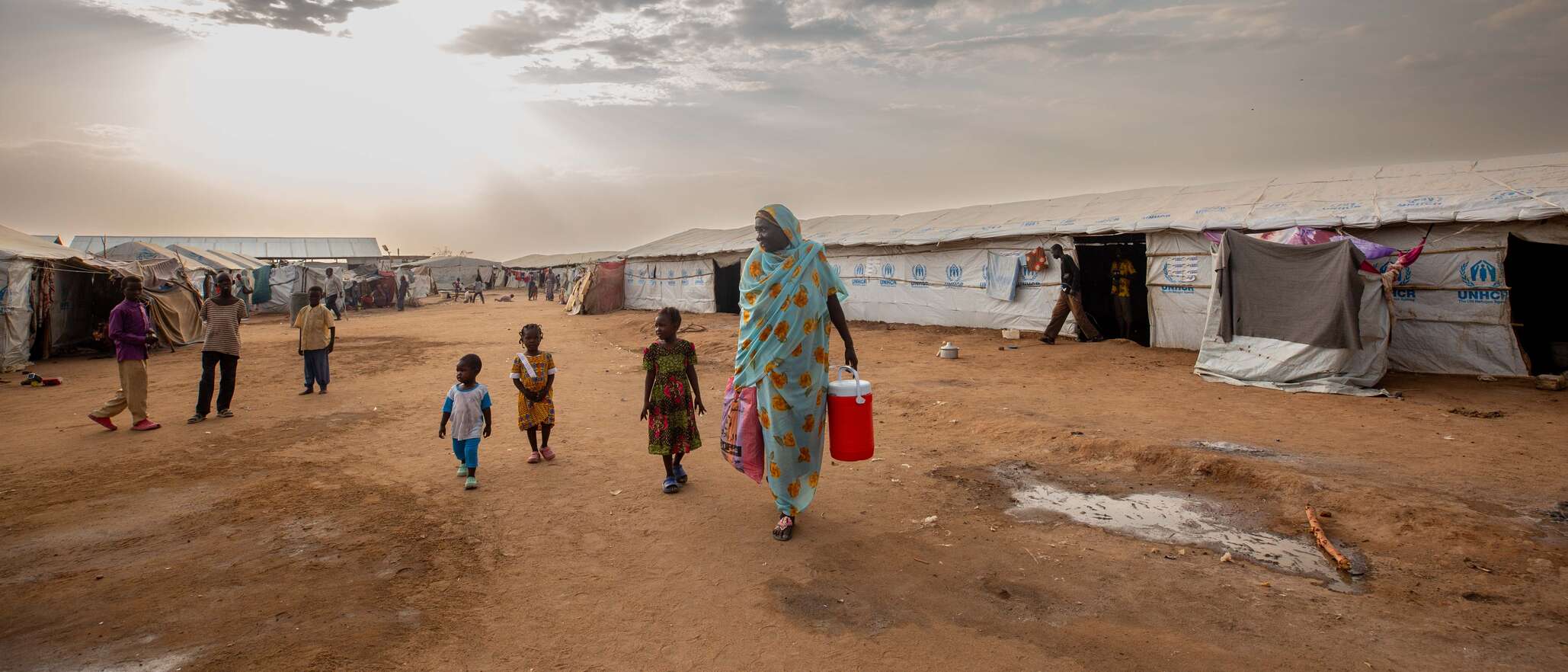
"Even before the war in Sudan erupted in April 2023, the country was already experiencing a severe humanitarian crisis that left 15.8 million people in need of aid. Now, three years of war have drastically worsened these conditions, displacing approximately 14 million people and leaving 33.7 million people—two-thirds of the population—in need of humanitarian support.""The country’s food system has been pushed to the brink, with millions of families now surviving on just one meal a day, or less.""Sudan is the largest humanitarian crisis in the world in terms of number of people who need humanitarian aid. It is also the largest and fastest displacement crisis."
International Rescue CommitteeMedicins Sans FrontieresAs Sudan marks three years of war, MSF teams continue to treat people whose lives have been devastated by the conflict between the Sudanese Armed Forces (SAF) and the Rapid Support Forces (RSF). A lack of basic services and constrained humanitarian access are compounding people's suffering. The warring parties must protect civilians and be held accountable for their violations, and the international community must use diplomatic pressure to prevent further crimes.
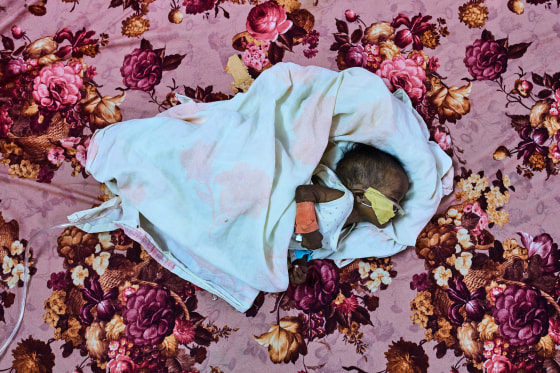 |
| Patient Saidal Altaher, 2 months old, being treated for malnutrition at the pediatric hospital stabilization center in Port Sudan on Wednesday. Bernat Armangue / AP |
Described as the world's largest humanitarian challenge in terms of displacement and hunger, Sudan is suffering a crisis of abandonment with the world's attention turning to the Middle East and the standoff in Iran, and its blockade of the Hormuz Strait. In Sudan, 13 million people have been forced by the threat and violence of a bloody conflict to flee their homes, becoming internally displaced. Food and medicines are scarce and diseases like cholera are running rampant.
The number of dead from the conflict stands at 59,000 with 6,000 having perished over three days alone, as the RSF (paramilitary Rapid Support Forces) bulled their way through the Darfur outpost of el-Fasher in October, an offensive that the UN considers alike "the defining characteristics of genocide". Black Darfurians once again in the rifle sights of the horsed Arab Janjaweed as they were in the early 2000s.
Severe acute malnutrition is set to afflict 800,000 people in parts of Sudan, according to the Integrated Food Security Phase Classification. Two of every three Sudanese require assistance, according to the United Nations. Health facilities have been impacted to the point where only 63 percent remain fully or partially functional to deal with the conflict's wounded and emerging disease outbreaks.
Denise Brown, the UN's top official in Sudan, criticizing the international community for its failure to press for the end to the conflict, stating: "A plea from me: Please don't call this the forgotten crisis. I'm referring to this as an abandoned crisis", she corrected.
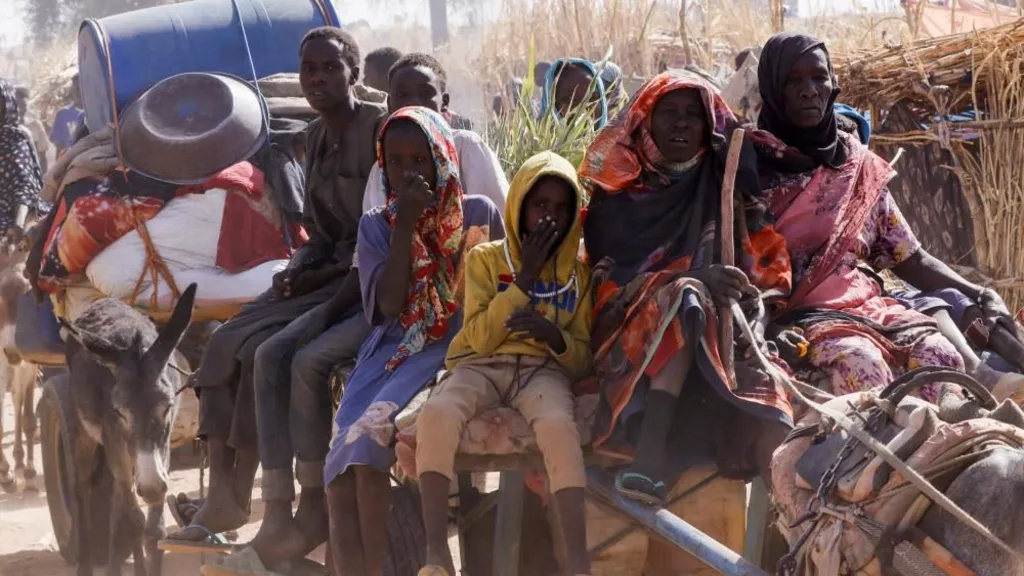 |
| People fleeing conflict in Sudan's Darfur risked being hit by drone strikes Reuters |
Following the deposed dictator Omar al-Bashir in 2019, a power struggle emerged between the Sudanese military under General Abdel-Fattah Burhan, and RSF commander General Mohamed Hamdan Dagalo, who was initially Burhan's deputy at the ruling sovereign council of Sudan. Sudanese "have become powerless and are subjected to foreign dictates", claimed a Sudanese journalist and researcher.
Germany undertook to host a conference in Berlin, welcoming governments, UN agencies and aid groups to take part, with a goal to rally donors to assist in funding strained humanitarian responses and to "promote an immediate ceasefire", according to the German Development Ministry. For its troubles, the Khartoum government condemned the conference as an 'unacceptable' interference on Sudan's internal affairs.
The Sudanese military has control over the country's north, east and central regions, its oil refineries and pipelines, and Red Sea ports. The RSF and its allies control Darfur and the region at the border with South Sudan. Regions that both include oilfields and gold mines. Egypt supports the Sudan military, and the United Arab Emirates has been accused by the UN of providing arms to the RSF, which it emphatically denies.
In the three years of conflict, widespread atrocities are known to have occurred; rampant sexual violence in gang rapes and mass killings, among them. According to the WHO, hospitals, ambulances and medical workers have been attacked, claiming over 2,000 have been killed. Most atrocities have been placed at the feet of the RSF and the Janjaweed, notorious for atrocities committed in the early 2000s against Black Sudanese farming communities.
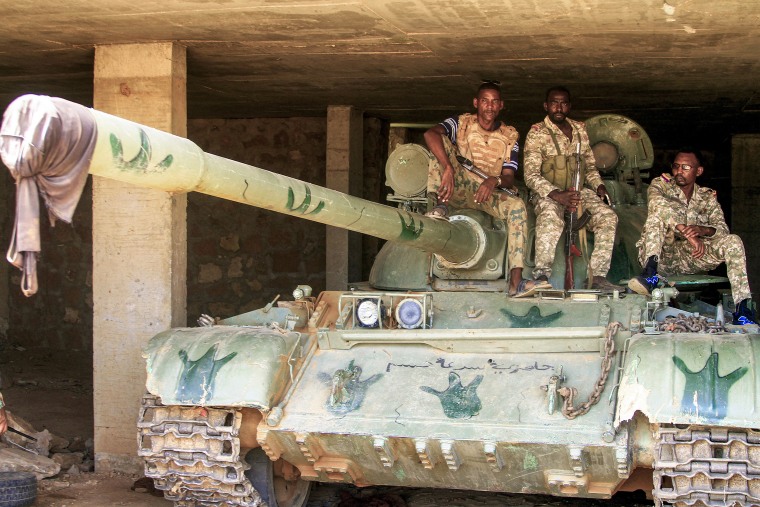 |
| Sudanese army soldiers sitting atop a parked tank after their capture of a base used by the RSF, after the rival paramilitary group evacuated from the Salha area of Omdurman, the twin city of Sudan's capital, in May 2025. Ebrahim Hamid / AFP via Getty Images |
Labels: Arab Janjaweed, Black African Sudanese, Conflict, Disease, Internal Displacement, Malnutrition, Rapid Support Forces, Sudanese Military
posted by Pieface | 8:59 PM


0 Comments:
Post a Comment
<< Home