Politic?

This is a blog dedicated to a personal interpretation of political news of the day. I attempt to be as knowledgeable as possible before commenting and committing my thoughts to a day's communication.

Sunday, December 26, 2021

How Rich? Well.....In the Uber-Lavish Style to Which They've Become Accustomed

"[I will] do my best to come to a conclusion as to what is reasonable, while remembering that the exceptional wealth and remarkable standard of living enjoyed by these children during the marriage takes this case entirely out of the ordinary."
Justice Moor, British High Court

"Some of those figures on the trampolines the strawberries, the ponies -- would be absolutely shocking to average Emiratis or even expats, but the royals in Dubai bring ridiculous spending to a whole different level."
"I'd see it a lot. It wasn't uncommon for them to have tigers and leopards and monkeys just hanging around in their gardens, or they'd just change their cars every few days because they felt like it."
"It's the opposite [that some aristocrats or royals living elsewhere try to screen high-spending addiction from the public] -- if you did that it would be seen that you're not successful, that you're somehow down on your luck."
"So  you've got to have the best of the best."
David Haigh, British human rights lawyer
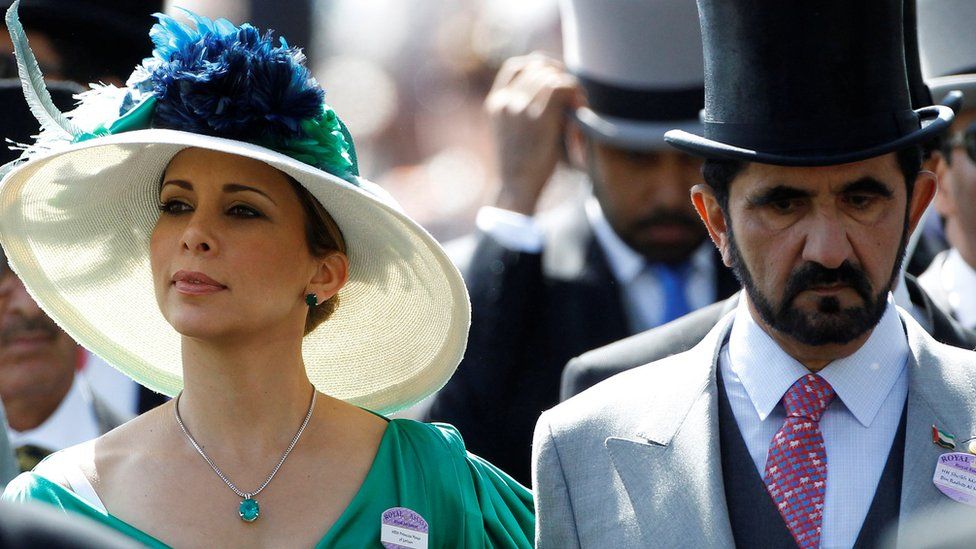
Sheikh Mohammed Bin Rashid Al-Maktoum and Princess Haya Bint Al-Hussain
Sheikh Mohammed Bin Rashid Al-Maktoum and his estranged wife, Princess Haya Bint Al-Hussain  Reuters

For the ruler of Dubai, Sheikh Mohammed bin Rashid Al Maktoum's former wife Princess Haya Bint al Hussein, the best-of-the-best is yawningly ordinary. "Household spending" to those rich as Croesus -- the legendary icon of untold wealth, reputed to have been the richest man on Earth -- comes to a neat $142.7 million annually. This refers not to the purchase of a sumptuous mansion-cum-palace, but the upkeep of said palace. And the two children of the royal pair must have a special trampoline; one that is built deeply inground, like a pool, the cost of which is $69,000. Oh and incidentally, allowance for a nine and 14 year-old each comes to a miserly $1.72 million annually.
 
That old slough-off of 'money is no object'? Well, it applies in spades to oil-wealthy royalty in the Middle East who it seems cannot spend the windfalls of energy exports fast enough or fully enough. For a lifestyle that the judge weighing the absolute minimum needs of a divorced wife and the offspring of a dissolved marriage of the ruler of Dubai, described as "truly opulent and unprecedented standard of living enjoyed by these parties". Yes, indeed!
 
How does $8.77 million annually for holidays, a paltry $1.72 million on leisure activities, $5.16 million to renovate an English country home every ten years, $3.26 million for an extension to a kitchen and addition of piza oven strike you? And why on Earth would a married couple with that kind of disposable income decide to call their marriage quits when each could live in a separate palace at a second's whim for relief from too-close contact?
 
ZABEEL PALACE DUBAI | SHK MOHAMMED PALACE | DUBAI RULER PALACE | UAE PRIME  MINISTER RESIDENCE - YouTube
Zabeel Palace, Dubai, Sheikh Mohammed

Ah well, Sheikh Mohammed lost his temper when Princess Haya had a fling with her bodyguard. So incensed was the cuckold that his wife fled the near geographic vicinity with children Jalila, 14, and Zayed, nine to London three years ago. The good judge found in Princess Haya's favour in a divorce settlement totalling $952.2 million. There remains some uncertainty whether the settlement will in fact fulfill Princess Haya's needs in upholding her living standards.

After all, Sheikh Mohammed has wealth in the stratosphere, his riches valued around $17.9 billion, making his obligation to pay his ex-wife and their two children under a billion in living expenses rather niggardly. In 1979 his first marriage to Sheika Hind bint Maktoum bin Juma Al Maktoum -- mother of a dozen of the Sheikh's thirty children -- was quite the public event in Dubai. He had a 20,000-seat stadium built for the occasion, a five-day extravaganza with a total cost of around $127 million.

The two offspring of this ill-fated marriage can be guaranteed they will never know squalid poverty living out of their $17 million annual allowance. This is a lifestyle shared by others in the oil-rich Middle East. Qatar's second in line to the throne, 30-year-old Sheikh Khalifa bin Hamad bin Khalifa al-Thani, for example, used Los Angeles' Beverley Wiltshire hotel as his student lodgings while attending the University of Southern California.

"From the moment al-Thani stepped off the plane, an entire economy quickly grew up around him to meet his wishes and whims", including drivers, security, fixers and, university faculty members reveal, "a graduate student who served as his academic 'Sherpa'," according to a Los Angeles Times investigation. And then there is the Saudi prince who reserved 80 individual seats on an Emirates plane for his falcons.

And not to be overlooked; Mohammed Bin Salman, crown prince and now de facto ruler of Saudi Arabia, proud owner of the most costly home in the world, a $395-million French chateau. Owner as well of the world's most expensive artwork, a painting of Leonardo da Vinci's Salvator Mundi, purchased at Christie's for $576 million, displayed for his delectation on his superyacht.
 
The superyacht Pegasus VIII in all its glory
The superyacht Pegasus VIII in all its glory   Getty

Labels: , , ,

Sunday, December 24, 2017

Making the Rules

"He has tried to build an image of himself, with a fair amount of success, that he is different, that he's a reformer, at least a social reformer, and that he's not corrupt."
"And this [recent revelations of excessively costly personal acquisitions of real estate property -- sumptuous mansion and luxury vessels] is a severe blow to that image."
Bruce O. Riedel, former C.I.A. analyst, author

"Our country has suffered a lot from corruption from the 1980s until today. The calculation of our experts is that roughly 10 percent of all government spending was siphoned off by corruption each year, from the top levels to the bottom." 
"Over the years, the government launched more than one ‘war on corruption,’ and they all failed. Why? Because they all started from the bottom up."
Saudi Crown Prince Mohammed bin Salman
RTR2OWNQ
Crown Prince Mohammed Bin Salman bought Château Louis XIV in 2015 for about $300 million. REUTERS/Charles Platiau

With vast financial resources, wealth beyond imagining, access to the world's most extravagant and rare properties and art are within reach. It would take enormous self-discipline and a penchant toward asceticism and indifference to the rare and the beautiful, to spurn ownership of desirable objects which 99.9% of the world's inhabitants would never even dream of having. Obviously, the scion to the richest fortune in the world even if it represents a state fortune, is not prepared to deny himself such opportunities when others about  him, extended members of the same royal family, indulge in massive expenditures for desirable properties.

The difference being, of course, is that while the others are indifferent to world opinion and make no effort to establish that they have the greater interests of their country at heart, let alone the fortunes of those living as co-nationals struggling to get by, the heir to the throne of the Royal Kingdom of Saudi Arabia has portrayed himself as a hard-working, abstemious man prepared to sacrifice for the greater good of the future of Saudi Arabia in the face of vastly educed income from falling oil prices.

True, he has distinguished himself through statements of his intentions to liberalize the socially straitened norms of his country in its commitment to bare-bones, fundamentalist, Salafist Islam. The private life he leads is one of self-indulgence, and since his father the king sees no reason to restrain his son-and-heir he appears free to do as he wishes. Crown Prince Mohammed bin Salmon has led a purported crackdown on 'corruption' within the kingdom, deploring extended family members and the elite business class for withholding money from state coffers to stuff their personal bank accounts.
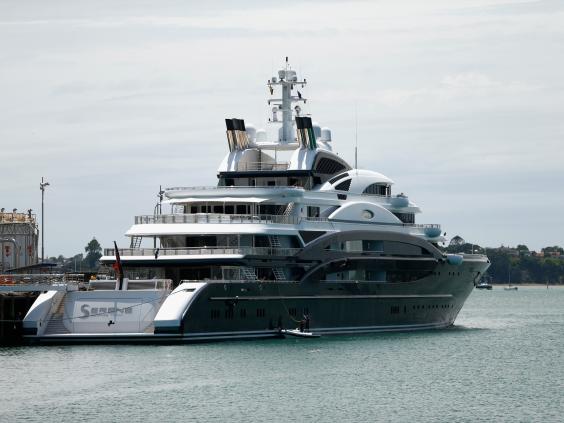
serene.yacht.auckland.new.zealand.jpg
The Serene yacht docked in Auckland in New Zealand in January 2015, when it was then owned by Russian tycoon Yuri Schefler       Phil Walter/Getty

Fiscal austerity is the new byword in Saudi Arabia, a tightening of the financial belt for one and all. With a handful of obvious exceptions, since those who make the rules don't necessarily play by the rules. While the Crown Prince has placed a dozen royals and hundreds of Saudi business elites under luxury detention to crack down on corruption, some view the action a a political purge. "Ludicrous", scoffs the prince: "So you have to send a signal, and the signal going forward now is, 'You will not escape'."

The kingdom's budget deficits must be met with financial discipline. To that end a quarter of a trillion dollars in state projects have been set aside in an effort to balance deficits against revenues. Which did not, evidently cause King Salman to hesitate in his plans to build a luxurious new vacation palace on the coast of Morocco. He is, after all, the king. And Prince Mohammed is the Crown Prince. So that when he went agog over a 134-meter yacht equipped with two swimming pools and a helicopter at a selling price of $420-million euros, he simply proceeded to acquire the yacht.
GettyImages-878274898
Wouldn't you smile ear-to-ear if you were he? Saudi Crown Prince Mohammed bin Salman  Newsweek

He did because he could. He could not deny himself what he impulsively craved. He paid less for the chateau in Louveciennes, modelled on Versailles, recently built to exact standards and 21st-century technology enabling remote control by iPhone of all its electronic and electric features and recognized as the most costly private home ever to hit the market. Not that the Prince spends all his time negotiating acquisitions. There is also work to be done; launching an air campaign in Yemen, blockading Qatar, loosening the religious reins restricting Saudi women.

Just to think of it boggles the mind; ownership of the work of one of the world's most profound artistic, scientific geniuses, Leonardo da Vinci. When Christie's put da Vinci's 16th century masterpiece Salvator Mundi up for auction in the fall, it was bought for a figure that outdistanced any other artwork in the past. How do you, in any event, put a price on such a rare, historical, masterful work of art? One that should be housed in a prestigious national gallery of art in a world capital, to be viewed by the masses.

Now, to be viewed privately by one man, MbS.
Leonardo da Vinci (1452-1519), Salvator Mundi, painted circa 1500. Oil on walnut panel. Panel dimensions 25 1316 x 17 1516 in (65.5 x 45.1 cm) top; 17¾ in (45.6 cm) bottom. Painted image dimensions 15⅜ x 17½ in (64.5 x 44.7 cm). Estimate on request. This work will be offered as a special lot in the Post-War & Contemporary Art Evening Sale on 15 November 2017  at Christie’s
Christie's Auction House


Labels: , , ,

Tuesday, August 08, 2017

"Saudi Vision" 2030 : Wait for It!

"The overall progress with the economic cities has been very slow, even before the collapse of the oil price."
"Since then, the pace of development has moderated even further with a number of projects being placed on hold."
Monica Malik, chief economist, Abu Dhabi Commercial Bank PJSC

"While the current authorities seem to be committed to open up the country to forms of entertainment previously banned, a big test will be the reaction of the more conservative parts of the Saudi society."
Philippe Dauba-Pantanacce, senior economist, geopolitical strategist, Standard Chartered Bank, London
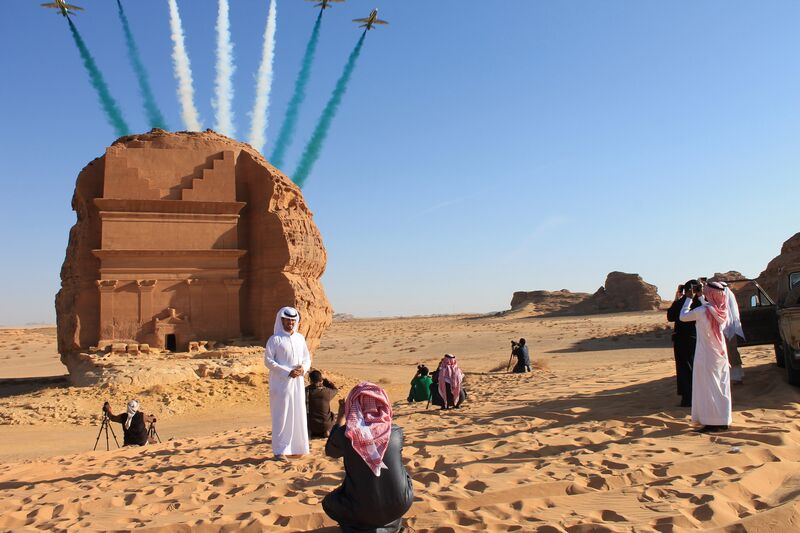
Mada’in Saleh  Photographer: Vivian Nereim/Bloomberg

As a tourism draw, aside from the massive annual trek -- Muslims only -- to Mecca, Saudi Arabia doesn't quite come first to mind. This repressive regime that will not permit the presence of any religious devotion to sully its landscape, other than Islam, which also strictly forbids entry to Mecca of any who are not Muslim (British explorer/adventurer extraordinaire Sir Richard Burton's disguise and Arabic proficiency enabled him in a sole instance of penetrating its sacred precincts in the 19th Century) and where women are expected to wear black, body-and-face-concealing burqas lest they arouse the lust of Muslim men -- doesn't seem at first thought to represent tourism material.

Second thought, recalling that it forbids the consumption of alcohol, frowns upon unseemly conduct such as unattached males and females appearing together in public, in casual social company, views music, dance and theatre as un-Muslim in character, also supports the impression that building specially designed tourism cities on the sands of Arabia might not represent the best of investments. On the other hand, despite the lower returns on petroleum resources, of which Saudi Arabia represents the world's foremost exporter, the Kingdom has untold wealth at its disposal.

Another jog of the memory in the fact that the Kingdom of Saudi Arabia is not particularly known for its charitable generosity. While it has spent and continues to spend, a king's ransom in the establishment of madrassas all over the global landscape, from the Middle East to North Africa, Southeast Asia to Europe and North America and beyond, to teach its very special Salafist brand of Islamic Wahhabism which has produced more than its share of jihadi terrorist groups that have gone on to slaughter Muslims and non-Muslims with fervent abandon, it has spent nothing in support of Muslim refugees.

Al-Shabab
Al Shabab    AtlantaBlackStar.com

The world has seen an unimaginable proliferation of refugees from the Muslim world fleeing the predations of Al Shabaab, the Taliban, Boko Haram, al-Qaeda in the Islamic Maghreb, Abu Sayyaf, Islamic State of Iraq and the Levant, among many others. And there is also the homeless produced by the civil conflict in Syria where its president, like Sudan's attack on Darfurians, has committed civilian slaughter by the hundreds of thousands as punishment for defying the rule of Bashar al-Assad. Neighbouring nations have taken in fleeing Iraqis and Syrians, yet Saudi Arabia which has vast empty spaces it plans to turn into tourism hubs has no space for Muslim refugees.

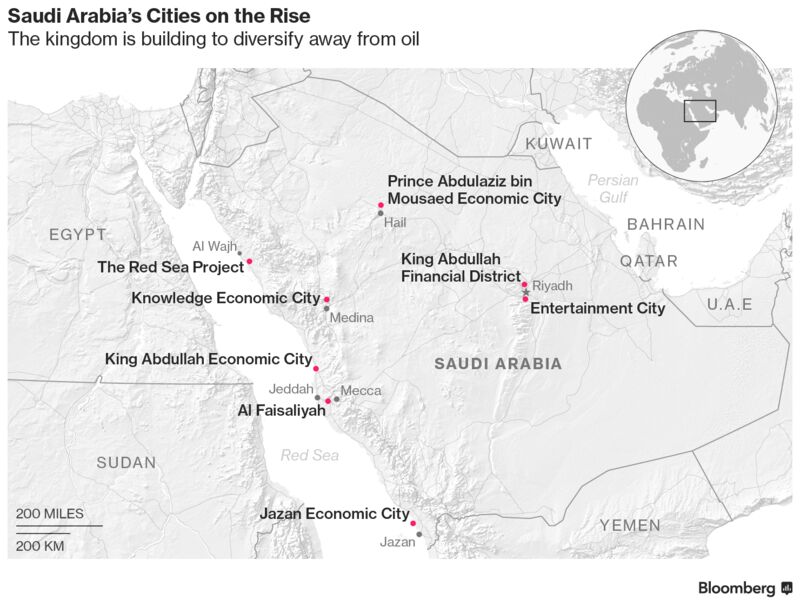
The Kingdom has announced two major developments, one for an area larger than Belgium, the other to include an airport and shipping port, along with a series of economic cities, designed as special zones for tourism, industry and finance. Fifty islands and 34,000 square kilometres along the coastline of Saudi Arabia on the Red Sea are to be transformed into a global tourism destination, to attract cosmopolitan wealthy tourists from every corner of the tourism-hungry world.

Sun-and-surf-lovers arriving to disport themselves on Saudi beaches could rival the millions of Muslim pilgrims trekking to the holy shrines in Mecca and Medina, according to Saudi development plans. West of Mecca, an emerging city to be named Al Faisaliyah, will be complete with thousands of upscale residential units, entertainment facilities, an airport, sea port, all on 2,450 square kilometres, with a completion date projected to 2050.

Another cultural, sports and entertainment city is to be developed southwest of the capital Riyadh, a project to be developed on 334 square kilometres, equipped with a safari area and a Six Flags Entertainment Corp. theme park.  The internal goal is to ensure that household spending on recreation is to double to six percent by 2030. But of course the larger aim is to attract the attention of he wealthy global community of fun-loving, entertainment-seeking tourists to Saudi Arabia. The country that brought to world attention the spectacle of 9-11 has its eyes on an alternate subject of rapt attention.

Labels: , , , , , , ,

() Follow @rheytah Tweet