Politic?

This is a blog dedicated to a personal interpretation of political news of the day. I attempt to be as knowledgeable as possible before commenting and committing my thoughts to a day's communication.

Wednesday, February 11, 2026

Canada/China Agreement :The Winning Score Zip for Canada

"It is very, very upsetting to me and to our organization."
"This is all about expanding the Communist party's influence and expanding their capabilities in Canada, in all those agreements, for transnational repression, political interference and disinformation."
Edmund Leung, chair, Vancouver Society in Support of Democratic Movement
 
"The two sides consented to provide mutual support and convenience for media to work in each other's countries, and provide greater convenience for two-way travel."
Shen Haixiong, director/editor-in-chief China Media Group 
 
"Censorship [including self-censorship] is pervasive and alternative media voices are few or marginalized ... this includes traditional media such as newspapers, and in new media provided by online platforms and applications such as WeChat."
Canadian Security Intelligence Service assessment 
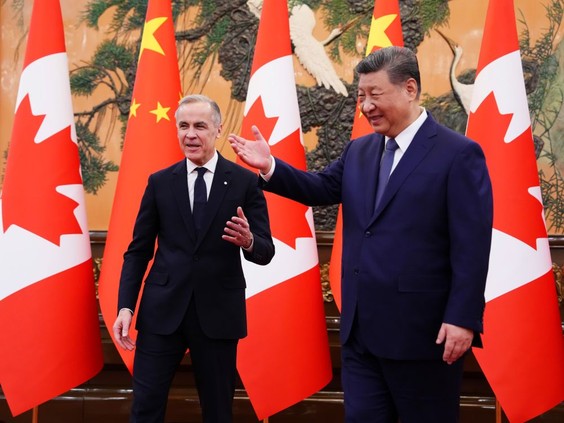
https://smartcdn.gprod.postmedia.digital/nationalpost/wp-content/uploads/2026/01/Carney-China-20260116.jpg?quality=90&strip=all&w=564&h=423&type=webp&sig=2Q_smQV_5-fmuthUdlHTAA
"That was my major concern of the whole trip, this deal between the RCMP and China's public security."
"All we can do is push for clarity, push for transparency and push for safeguards."
"We're not in a position to change what has been agreed on between China and Canada."
"All we can do is push for our own red lines and guardrails." 
Edmund Leung, Vancouver Society in Defence of Democratic Movement 
Canadian Prime Minister Mark Carney's 'strategic partnership' agreement he entered into with Chinese President Xi Jinping in Beijing includes a number of provisions that transcend the expansion of Chinese electric car imports at a preferential tariff rate in exchange for eased tariff barriers on Canadian canola, in Canada's 'reset' with China. According to Cheuk Kwan, co-chair of the Toronto Association for Democracy, speaking for the Canadian Coalition on Human Rights in China, "These are all Trojan horses."
 
Suddenly gone, the awareness and caution occasioned by Beijing's political interference in the 2019 and 2021 federal elections. At face value, the proposed collaboration reflect "people-to-people ties and cultural exchanges", investment in museums, support for "digital content creators" and "visual artists", heritage, education, "travel exchanges and cultural ties", not to mention cooperation in the "creative industries" at the "sub-national level". In other words the very soft-power that Beijing already utilizes to extend its global reach. Now legitimized rather than remaining furtive.
 
As for Beijing's cooperation in a mission to "combat corruption", cyber fraud and traffic in illegal synthetic drugs, the absurdity of the proposal lies in the obvious reality of China being the very icon of corruption, cyber fraud and illegal synthetic drug traffic. Fentanyl has made its mark throughout Canada for years, in deaths by overdose and the increase of opioid addiction with this most dangerous of chemical compounds. 
 
Clients wait outside of Insite, a supervised consumption site located in the Downtown Eastside, Vancouver, British Columbia
Overwhelmingly harmful fentanyl   Photograph: Getty Images
 
As for the memorandum of understanding between the Royal Canadian Mounted Police and China's Ministry of Public Security (dreaded by the Chinese citizenry), a series of scandals involving tortured witnesses and trumped-up corruption charges served to sever a similar, previous such collaboration of 25 years back. That, apart from the fact that a number of Public Security divisions from China were operating clandestine police stations in Montreal, Toronto and Vancouver to harass and threaten Chinese Canadians.
 
Public Safety Minister Gary Anandasangaree commented he was unable to provide any assurance that the pact would interfere with Beijing's persistent deployment of agents in Canada who spy on, intimidate, coerce individuals and organizations within diaspora communities in Canada, to target Chinese-Canadians.
 
In another area of troubling potential, Carney's agreement with Beijing would formalize Canadian operations of divisions of the Central Propaganda Department of the Chinese communist Party's central committee. These are arrangements with the full potential to enhance opportunities for a Propaganda Department deputy minister among others to expand control over media manipulation in Canada, as per the MOU signed by Canadian ambassador to China Jennifer May.
 
There are no independent journalists in the powerful China Media Group, they are, rather, professionally skilled propagandists working for the state. Reporters Without Borders cites China as the primary jailer of journalists among member states of the UN. In the past several decades Beijing's Canadian proxies have directed Chinese-language media in Canada or bully them into submission.   
"If the Chinese police have the ability to request information from Canada in their ongoing investigations, it's very bad news."
"If we feel compelled to share information -- names and addresses or whatever -- we would simply be enabling China's transnational repression."
Charles Burton, former diplomat, China expert
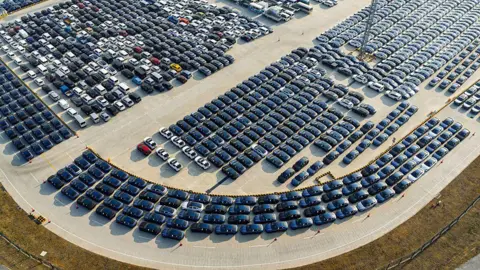
Getty Images Aerial view showing hundreds of new energy vehicles waiting to be loaded onto a ro-ro ship for export at Taicang Port on January 15, 2025 in Taicang, Suzhou City, Jiangsu Province of China.
China is the world's largest producer of EVs, accounting for over 70% of global production  Getty Images
"Prime Minister Carney can be pleased with the results of his first official visit to China. Through a temporary trade truce, and a list of political, economic and cultural MOUs, the federal government has effectively reset relations with China to where they were in 2016, before the arrest of Meng Wanzhou at the request of the first Trump administration."
"The headline announcement is a reduction of Chinese tariffs on Canadian canola seed (from 85 to about 15 per cent) in exchange for a limited number of electric vehicle imports to Canada (49,000) per year at a 6.1 per cent tariff (Canada’s most-favoured nation rate). This outcome, and a one-year tariff reprieve on Canadian lobster and canola meal, will ease some farmer concerns in Western Canada." 
"Autoworkers, on the other hand, are expressing serious concerns about opening the door to Chinese EVs given the impact this has had on auto-producing European countries. “Lifting the surtax risks turning Canada into a dumping ground for China-owned companies at the expense of our domestic auto industry and the Canadian workers who rely on it,” said Unifor, the union which represents most Canadian auto workers, in a statement today."
"The EV tariffs were imposed in 2024 to harmonize with the Biden administration’s cold war–like position with respect to China’s industrial dominance in automotive, renewables and, increasingly, high tech production. The tariffs and Biden-era subsidies, including EV consumer rebates, prompted an inflow of investment into electric battery and vehicle manufacturing in North America. Many of these auto sector plans were reversed when Trump dismantled Biden’s attempt at a green industrial strategy."
"Removing the Canadian EV tariffs looks reasonable from the perspective of improving China relations, but it is a highly risky move absent a more elaborated industrial strategy for the automotive and other struggling manufacturing sectors."
"An official statement from the PMO says that Chinese investment in Canadian EV supply chains and renewable energy is part of the arrangement. But as Unifor points out, this investment is not guaranteed. The anticipated five-year timeframe for the importation of affordable (under $35,000) EVs from China, within the annual vehicle limits, coincides with the introduction of similar and similarly priced models by North American producers including Ford and General Motors but may still undermine the market share (and therefore jobs) of union-made vehicles."
Canadian Centre for Policy Alternatives 

Labels: , , , ,

Saturday, November 29, 2025

Forging Trade Ties -- Forgoing Human Rights

"We highly appreciate the proactive stance of the new Canadian government in promoting the improvement and development of bilateral relations."
"Cooperation between the two countries in trade, energy, and cultural exchanges has yielded fruitful results, and has brought tangible benefits to the people of both nations."  
"Looking ahead, China and Canada should translate the important consensus reached by our leaders into concrete actions and work together to steer our relations back to  healthy, stable, and sustainable path." 
Yang Wanming, president, Chinese People's Association for Friendship with Foreign countries 
 
"[While the world is going through] a period of profound global upheaval, an era shaped by shifting geopolitics and economic volatility, within this uncertainty, there is also opportunity."
"This is one of our most consequential trading relations."
"[Canada is committed to working with China] as we look to address trade challenges and advance cooperation to shape a forward-looking economic relationship."
"[We] can help China simultaneously meet its growing energy needs and climate goals."                                                                                                                                     Canadian ambassador to China Jennifer May   
https://i.cbc.ca/ais/79da9ed4-df0a-4988-96a5-a99276f31eea,1763755685907/full/max/0/default.jpg?im=Crop%2Crect%3D%280%2C372%2C7444%2C4187%29%3BResize%3D860
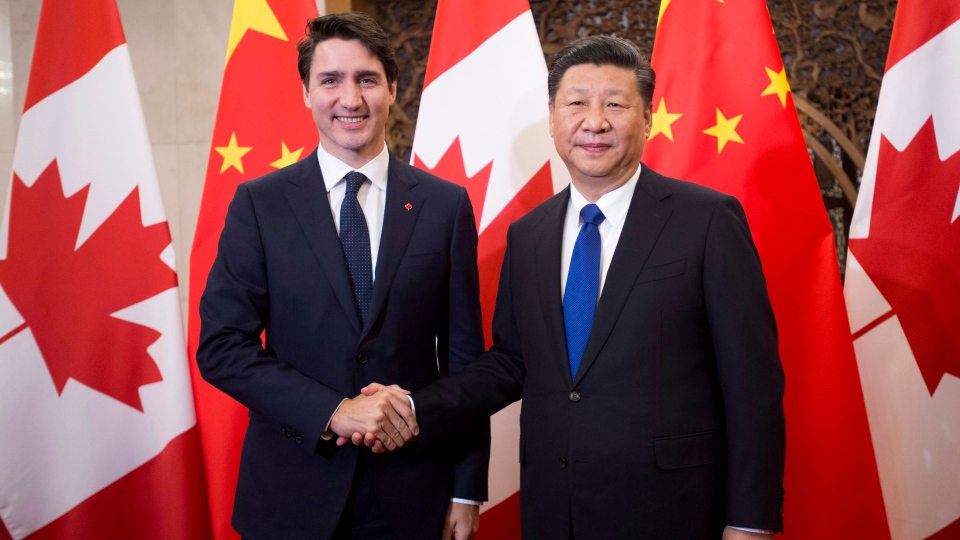
Prime Minister Mark Carney shakes hands with Chinese President Xi Jinping at the start of a meeting in Gyeongju, South Korea, on Oct. 31. (Adrian Wyld/The Canadian Press)
As the Canadian Liberal government wrestles with the trade and political relations problems the second iteration of a Donald Trump presidency in Washington has brought to the fore, the search for new international trade partners has seen Canada finding it suddenly expedient to warm relations with the People's Republic of China, after an interval of frosty relations. The reasons for which have been many and compelling. Not the least of which, but the most recent as it were, Beijing's interference in Canadian politics during elections.
 
There have been other recent issues; the arrest and detention and imprisonment of two Canadians in China known as the 'two Michaels' (Michael Kovrig and Michael Spavor) in 2018, held for several years in extremely rough conditions as purported spies. This was an illustration of Beijing's 'hostage-diplomacy' in retaliation to the arrest of Huawai's chief financial officer Meng Wanzhou on a U.S. warrant, for extradition to the U.S. to stand trial on criminal charges. Other Canadians faced charges related to drugs, leading to death sentences. 
 
Chinese cyber threats in Canada, the regime's threats against Chinese Canadians, its infiltration of academia, along with wholesale thefts of sensitive government and private industry initiatives, the most notorious of which was Nortel where former Chinese national employees lifted sensitive internal documents taken to China enabling groups like Huawai to profit from a successful global enterprise whose operations were repeated in China leading to the collapse of the Canadian firm.
https://i.cbc.ca/ais/1.5307464,1709351885000/full/max/0/default.jpg?im=Crop%2Crect%3D%280%2C0%2C1919%2C1079%29%3BResize%3D860
Xiangguo Qiu wears a biocontainment suit while working in the containment lab at the National Microbiology Lab (NML) in Winnipeg. Qiu, her biologist husband Keding Cheng, and her students were escorted out of the NML in July 2019. Qiu and Cheng were fired in January 2021. The RCMP is still investigating a possible 'policy breach' reported by the Public Health Agency of Canada. (CBC)
 
Another operation of industrial espionage took place at the Winnipeg-based National Microbiology Laboratory linked to the Canadian Science Centre for Human and Animal Health, when two Chinese nationals employed at the facility, Dr. Xiangguo Oju and Keding Cheng, her husband, illegally sent vials of infectious materials back to China in 2019; they and their Chinese students were escorted out of the lab, on suspicion of stealth of scientific data which ended up at the Wuhan Institute of Virology.
 
Relations between Canada and China under Liberal-led governments in Canada have always flourished. Former Prime Minister Jean Chretien led countless trade missions to China, and on his retirement from government working for a prestigious Canadian law firm, became their point man for China through his many high-level government contacts. Under former Prime Minister Justin Trudeau relations were on-again, off-again, with his government yearning to restore trade relations despite setbacks.
 
The current leader of the Liberal Party of Canada and now current prime minister, Mark Carney, whose business background with Brookfield Asset Management Ltd. has warm, profitable relations with China has now once again reinstated relations with China. Mr. Carney has accepted an invitation by Beijing to visit China at "a mutually convenient time", for the purpose of strengthening bilateral ties; read that trade issues of immense importance to Canada, although for China these are fungible trade issues.
https://i.cbc.ca/ais/5c4379b9-d94c-40ed-ba0d-72385ab01c2a,1761951549429/full/max/0/default.jpg?im=Crop%2Crect%3D%280%2C0%2C1920%2C1080%29%3BResize%3D620
Prime Minister Mark Carney has committed to tackling ‘irritants’ with Chinese President XI Jinping as the two countries had their first formal leader-to-leader contact since 2017. Carney was also invited by Xi for a state visit.  Still from video/CBC
 
The Canadian embassy in Beijing arranged a reception to mark the 55th anniversary of the founding of diplomatic ties between Canada and China, co-hosted by the Chinese People's Association for Friendship with Foreign Countries, a state-linked organization. At a meeting last month in the Republic of Korea, the two leaders, Prime Minister Carney and President Xi Jinping congenially agreed to reopen warming talks toward improved relations.
 
That meeting during the Asia-Pacific Economic Economic Leaders' Meeting in Gyeongju marked the first meeting between Canadian and Chinese leaders since 2017. The leaders "agreed that their meeting marked a turning point in the bilateral relationship", with both leaders directing their officials to work toward resolving outstanding trade issues, primarily seafood, canola and electric vehicles. They spoke as well of clean and conventional energy, climate change, manufacturing and international finance.

Even with strained relations, China is Canada's second-largest trading partner after the United States. China is the second-largest source of imports, second-largest export market. A thaw in relations between the two countries will certainly benefit Canada. In the same token, China's human rights record with respect to the Uyghurs...Canada went so far as to pass a motion in the House of Commons condemning the People's Republic of China for 'genocide' against its Uyghur population.
 
China takes advantage of both Canadian products and expertise, including education, financial services and sustainable infrastructure for clean conventional energy. Beijing is also interested in increasing energy resources such as oil and gas, from Canada. For China, it is Canadian raw materials and its abundance of natural mineral resources that draws its interest. For Canada it is finished products that come from China that form the bulk of its imports.  
"Fifty-five years [since former Prime Minister Pierre Elliot Trudeau opened Canada up to China] is a milestone that invites us to reflect on our history, what we have achieved together, and how we navigated deeply complex and changing times."
"I want to be very clear that we are here to build this relationship and to build it strong."
Jennifer May, Canadian ambassador to China 
https://i.cbc.ca/ais/dfedd1f1-d162-435a-bde8-cf4aa6a92d71,1760660082615/full/max/0/default.jpg?im=Crop%2Crect%3D%280%2C0%2C1920%2C1080%29%3BResize%3D620
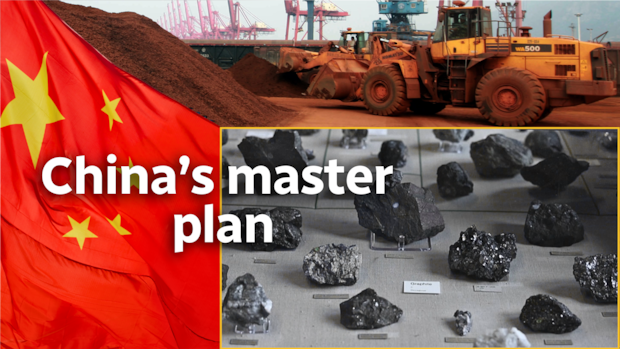
China controls the world's largest reserves of rare earth elements, and now it's tightening its grip. China's export restrictions are giving it powerful leverage over the United States and U.S. President Donald Trump is determined to catch up. Images provided by Getty Images, The Canadian Press and Reuters.


Labels: , , , , , , , ,

Wednesday, October 13, 2021

Canada's Unabashed Fifth Column

"Canada started the war. When you keep on attacking China, it sometimes translates as attacking the Chinese community."
"Why don't we leave the destiny of China to the Chinese people who live inside?  ...Any time you're interfering, what happens? You just raise the nationalism."
"This is the concern that was expressed to me by many Mainland Chinese [immigrants]. They'd call me: 'What's going on with the leader [of the federal Conservative party]?"
"Who started the war first? Canada did. They arrested Meng Wanzhou [CFO of Huawei]. Then China arrested the two Michaels [Michael Kovrig and Michael Spavor on trumped-up nationsl security charges]."
"If China feels that Taiwan is part of China, they have a right to fly their planes over [Taiwan's air space]."
Joe Li, York Region councillor, 3-time former Conservative candidate 

"[The Chinese Communist Party represents a] clear and rising threat [to Canada]."
"Our quarrel is not with the people of China -- part of an ancient civilization that has contributed much to humanity. We stand especially with Chinese Canadians whose contributions to Canada are immeasurable and who are enduring an appalling rise in anti-Asian hate and discrimination."
Conservative Party election platform preamble
Due to a private members bill critical of China that Conservative Kenny Chiu introduced last April, he was hounded by supporters of the Chinese Communist Party during the federal election.
Beijing has tentacles everywhere. It interferes in other countries' politics, social and educational systems, depending on its expatriate Chinese community to uphold CPC values, calling upon their loyalty to the mother country to act on its behalf to influence governments at every level. In Canada's just-held election last month Chinese actors actively engaged Chinese Canadians against voting for the Conservative opposition party in Parliament, succeeding in manipulating the vote in favour of the ruling Liberal party that has hesitated to do anything to annoy Beijing.

Former Member of Parliament Kenny Chiu [he lost his seat in the September election] defeated by 3,000 votes, spoke of Chinese-language news and social media disseminating disinformation on the position taken by the Conservative party on China. He had tabled a private member's bill for a registry for foreign agents to be set up. An organized campaign ensued to distort the message and state-run Chinese media accused the Conservative leader of an anti-Chinese bias, persuading Chinese-Canadians away from voting for the party.
 
Beijing famously bristles at any criticism of its policies and its values, its human rights abuses. And nor will it tolerate any interference in its internal affairs, whether it relates to animosity it arouses in its neighbours, around claiming ownership of the South China Sea, its challenge to India over their Himalayan border line, its imprisonment and persecution of vast numbers of Uyghurs, its treatment of Tibetans, and any number of other abusive actions, including its diplomatic and trade war with Australia.
 
Now the Chinese Canadian Conservative Association advocates less confrontational measures of diplomacy against China by Canada. The puny middle-power nation against the influential trade Goliath that is China which Canada's government hungers to establish good trade ties with, despite all the insults and diplomatic assaults Beijing has seen fit to hang on Canada from hostage diplomacy to trade war reflecting its displeasure of Canada's honouring an extradition treaty with the U.S. in holding Huawei's Meng on a US state department warrant. 

The Liberal government, skewed by the Prime Minister's penchant for evading responsibility, acting not in the public interest but for the interest of aiding Canadian corporations establish a sound footing in China in hopes of deriving benefits out of its vast population, and leaning on every unethical method he can arrange to fulfill that purpose, maintains ties with Beijing through a diplomatic back door. And though Canada's intelligence counterparts in the West through the Five Eyes group have all cut Huawei Communications out of their 5G upgrades for reasons of espionage, Canada fears jeopardizing its trade potential with China.

Conservative Party Leader Erin O’Toole; His tough-on-China stance worries Beijing.
Conservative Party Leader Erin O’Toole; His tough-on-China stance worries Beijing. Photo by Dave Chan /AFP via Getty Images

Labels: , , , ,

Thursday, July 08, 2021

Beijing's Malicious Spite

"This tweet stood out to me because it is so much more provocative [than the usual trifling bite-back comments]."
"It's ramping up things much more than what had come through official channels." 
Adrian Zenz, anthropologist, researcher in China's human rights abuses
Prime Minister Justin Trudeau this week visited the Cowessess First Nation, where a search had found 751 unmarked graves. Beside him is Chief Cadmus Delorme.
"Convincing people of moral equivalence between China and Canada is a huge win for Beijing given our respective reputations."
"It also helps China if foreign observers see Xinjiang through the prism of Canada's residential schools program."
"[Yet, Beijing refuses to admit it is involved in] a vast, ambitious and multifaceted 21st Century genocide."
David Mulroney, former Canadian ambassador to Beijing, fellow, Munk School of Global Affairs
Image
Hu Xijin 胡锡进
@HuXijin_GT
China state-affiliated media
Who is this man? Isn't he worried about the indigenous people spitting on his face?
 
A cartoon derisive of the Prime Minister of Canada who has latterly overseen, though not himself initiating, Parliamentary censures of China for its treatment of minority Muslim groups in China -- with new revelations being unleashed in the world media of sensational discoveries of unmarked graves of Indigenous children at the sites of former mandatory residential schools established in Canada over a hundred years ago by previous Canadian governments with a view to preparing First Nations children to be integrated into the larger society, leaving their ancestral languages, customs and families behind -- has found favour with Chinese diplomats and news media.

The cartoons are the work of a Twitter account holder living in China, even though the Chinese government bans most of its citizens from access to Twitter. Describing herself as an ordinary citizen, her brief bio sketch identifies her as someone proud that Zhao Lijian, the Chinese ambassador to Australia "is really fond of me". Australia has had more than ample lash-back of the fury of Beijing for the Australian government's impudence in insisting that China must be held accountable for its lack of due diligence in preventing the SARS-CoV-2 virus causing COVID-19 becoming a global pandemic.

As pay-back, the Chinese Communist Party has harassed and belittled Australia, punished its large trading partner by cancelling out or holding up imports into China. Australia investigative reports of China's ongoing human rights abuses against Uyghurs in Xinjiang province has been yet another irritant between the two countries, particularly since Australia succeeded in drawing attention to the plight of the Uyghurs and bringing its Western democratic allies on board to censure China.
 
(FILES) In this file photo taken on March 06, 2019, protesters hold photos of Canadians Michael Spavor and Michael Kovrig, who…
Protesters hold photos of Michael Spavor and Michael Kovrig, abducted by China as hostages.

For the past two-and-a-half years, Beijing has been expressing its rage against Canada for arresting Huawei's CFO Meng Wanzhou on an extradition request from the United States, which brought Beijing to retaliate by kidnapping two Canadian citizens in China, accusing them of espionage, and subjecting them over a period of more than two years to inhumane prison conditions in an attempt to coerce the government of Canada to release Ms.Meng from bail custody in Vancouver. 

Canada's Prime Minister Justin Trudeau has long courted China, anxious to sign trade agreements with the trading colossus. Mr. Trudeau has on more than one occasion in the past, expressed his admiration for China's brand of tyranny for its efficiency in governing and excelling in its economic sphere of hugely successful corporate production, trade and profitability. Ever cautious of criticizing Beijing whose agents have been allowed to infiltrate Canada's government, academia, science and technology, in the process scoping out Canada's trade secrets and absconding with scientific and technological advances belonging to Canada, Mr. Trudeau is now the butt of Chinese spite.
 
The man who worked so assiduously to try to ingratiate himself with China and its Communist politburo to advance Canada's interests in free trade with China, but who failed to succeed even though the political party he heads continues to see such an agreement as a priority for Canada, is now being berated and belittled for obliquely causing embarrassment to China on the world stage. Some might call it just desserts. On the other hand, it stands as an example of the low behaviour that China excels at.

The cartoon in question shows Prime Minister Justin Trudeau seated on the skulls of Canada's First Nations people with gravestones in the background and the legend: "We stole your land, we killed your men, we buried your child (sic)", with a smirking Trudeau smugly content as vultures circle in the background, and the finishing line to the statement: "Let's reconcile". A Chinese diplomat and the editor-in-chief of a Chinese Communist Party newspaper re-tweeted the cartoon with their own comments appended.

"Who is this man? Isn't he worried about the indigenous people spitting on his face?", jeered Hu Xijin of Global Times. As for Beijing's consul general in Rio de Janeiro, Li Yang ridiculed the Canadian prime minister: "Do you think your so-called reconciliation is worth showing off?!!!" Needless to say, none of this undiplomatic and juvenile behaviour would be on if it were not encouraged by China's President Xi, seemingly oblivious to the obvious, that world leaders normally do not engage in this type of low-character assassination.

Beijing's calling card.
 
Policemen wearing face masks patrol at the compound of No. 2 Intermediate People's Court in Beijing, Monday, March 22, 2021. The…
Police patrol the compound at No.2 Intermediate Peoples Court in Beijing during the trial of Canadian Michael Kovrig

Labels: , , ,

Thursday, June 17, 2021

The Moral of the Story: Beware, Take Care, Be Wise

"The Government of Canada [should] demonstrate stronger leadership on the issue of procurement and national security, including at the highest echelons -- the Prime Minister, ministers and senior officials."
"[Government should] prohibit Chinese state-owned enterprises, partial state-owned enterprises, including companies receiving undisclosed government subsidies, and technology companies from obtaining federal contracts related to information technology or security equipment or services."
"[The Privy Council Office should look] to develop, implement and oversee a policy to direct all government departments and agencies to review current contracts with China related to information technology or security equipment or services."
"The Committee heard that the federal government should not always choose a supplier based mostly on the lowest price when evaluating bids for security equipment."
"Where circumstances warrant, it should put greater emphasis on national security risks."
"Throughout its study, the Committee became concerned that federal departments and agencies did not collaborate to assess potential threats to Canada's national security when the government was procuring a replacement of security screening equipment in Canadian embassies."
"The Committee recognizes that closer collaboration among federal departments and agencies is required."
House of Commons Government Operations Committee
Trudeau Xi
 
Government procurement infamously selected a Chinese company's X-ray machines to be installed at all Canadian missions abroad until the absurdity of awarding such a contract to a Chinese company was highlighted by an investigative journalist, in the wake of Beijing arresting and charging two Canadians with espionage and imprisoning them on those trumped-up charges in an effort to apply pressure to have Canada release Huawei's CFO who had been detained by the RCMP at a stopover in Vancouver honouring an extradition request by the U.S.Department of Justice.

Relations with China have since descended to their lowest pitch, with Beijing threatening repercussions should Canada decide not to permit Huawei to take part in Canada's 5G upgrade as the rest of the members of the Five Eyes group (an integrated, collaborative intelligence-sharing between members, U.S., Britain, Australia, New Zealand and Canada) have done. Even under those strained relations, the Liberal government still decided to proceed in partnering with CanSino, a Chinese pharmacological company to joint-produce a vaccine for SARS-CoV-2, which Beijing chose to cancel unilaterally.

The Liberal government under Prime Minister Justin Trudeau, tutored and mentored by former Prime Minister Jean Chretien, hungered for a free trade deal between Canada and China. Canadian corporations headquartered in Quebec see such a free trade agreement with China as a profitable venture, sitting on the Canada-China Business Council continuing to promote business with China despite Beijing's hostility and threats.

Canada's government under the Liberals refuses to take China's cybertheft proclivities, political and academic infiltration and influence-peddling seriously. It is only very recently that in public fora, Justin Trudeau has stated Canada's opposition to China as a growing threat to the world order in its focus on control, power, monopolistic trade, influence and its soft power working hand-in-glove with its hard power. Investing in vital infrastructure loans to developing countries while threatening Taiwan, Hong Kong, and abusing the human rights of Tibetans, Christians and Uyghurs.

Now, a parliamentary committee has released a report calling on the federal government to place greater consideration on issues such as national security in tendering contracts and favouring bids by Chinese companies, all of which must, by Chinese law, answer to Beijing's call. Apart from the fact that many are state-owned corporations. The concerns expressed go across party lines since the committee is comprised of Liberal, Conservative, Bloc Quebecois and NDP members.

Government officials testified before the committee, along with experts on China and national security. The committee reviewed a threat assessment from the Department of Foreign Affairs, describing the Chinese company selected to install and service its security equipment on contract to the Canadian government with the company in question characterized as "a Chinese state-owned enterprise with direct connections to the People's Liberation Army and the Chinese Communist Party". 

The X-ray machines were not considered a security risk since their use was in a publicly accessible area, unconnected to embassy computer networks. The committee was informed however, by an official with the government's Centre for Cyber Security, that this view of X-ray machines was outdated; they now typically come equipped with hard drives and USB ports potentially useful to hostile actors "with malicious intent". And that certainly describes Beijing's attitude toward Canada.

The report released by the committee found no effective government strategy in place to manage security risks revolving around China and federal procurement. Stronger security measures were recommended, to focus on screening companies and employees who install and maintain equipment in sensitive federal facilities such as embassies. There is room for improvement at flagging potential security threats.
"We are being introduced in a very rough way to a new world where the rules of the road are decided by the strongest."
"We've always said in Canada that we needed a foreign policy that built on the international rules and regulations… but China is starting to play rogue."
Paul Heinbecker, former Canadian ambassador to Germany, representative to the United Nations 

"Relations between the two countries can't be reset until the two Michaels [Spavor/.Kovrig] are set free. Once that happens, relations should be reset in a different way."
"China is capable of acting aggressively against Canada. China is not our friend and we should stop treating it as though it is. We should form a relationship with China based on mutual needs."
"We should treat China with respect but always protect our own interests and push back when necessary. We also need to find allies who will help us retain our sovereignty in a world where China is trying to encroach on it."
Former Canadian ambassador to China David Mulroney (2009 to 2012) 
China's President Xi Jinping (L) and Canada's Prime Minister Justin Trudeau (R) attend the session 3 on women's workforce participation, future of work, and ageing societies during the G20 Summit in Osaka on June 29, 2019. (Photo by Kazuhiro NOGI / POOL / AFP)        (Photo credit should read KAZUHIRO NOGI/AFP via Getty Images)
China's President Xi Jinping and Canada's Prime Minister Justin Trudeau are shown at the Group of 20 summit in Osaka, Japan on June 29, 2019   (KAZUHIRO NOGI/AFP via Getty Images)

Labels: , , , , ,

Monday, December 14, 2020

Celebrating China's Olympics Coup, Abandoning The Michaels

"China is threatening our citizens and undermining our rights and freedoms with its covert operations in Canada. Everything should be under consideration to defend Canada and Canadians – including a boycott of the 2022 Beijing Winter Olympics ."
"[This is an option where this country has some leverage.] Canada is a winter sports powerhouse. No Winter Olympics could be a success without Canada’s participation."
Michael Chong, the Conservative foreign affairs critic
 
"It is now impossible to remain ambivalent on China, knowing what they are doing in Xinjiang, Hong Kong, the South China Sea, etc., and the way they have punished Canada for the arrest of Meng Wanzhou," 
"[Canada should adopt a concerted approach with our allies, and threaten an Olympic boycott] if they don’t allow a UN delegation to go to Xinjiang to investigate the situation of the Uyghurs, repeal the National Security Law (in Hong Kong), or suspend its application and free the two Michaels."
Guy St-Jacques, a former Canadian ambassador to China 
 
"Olympism is 'based on the joy of effort, the educational value of good example, social responsibility and respect for universal fundamental ethical principles ... with a view to promoting a peaceful society concerned with the preservation of human dignity'."
Olympic Charter
Chinese President Xi Jinping Visits Beijing 2022 Headquarters
Chinese President Xi Jinping visits Beijing 2020 headquarters  Beijing Organizing Committee

Canada's foreign affairs department has issued a travel advisory for Canadians planning to visit China:
China - Exercise a high degree of caution Exercise a high degree of caution in China due to the risk of arbitrary enforcement of local laws. This makes sense. The risk of such arrest is high; witness the fate of  two Canadians who happened to be in China at a time when the Chinese Communist Party was casting its eye about to identify vulnerabilities to enable them to punish Canada for detaining the CFO of Huawei Technologies Co. on an extradition warrant with the U.S.

Michael Kovrig and Michael Spavor were abducted, accused of endangering China's security and held on espionage charges, incommunicado, without direct access to consular assistance, much less legal advice and a lawyer to represent them. Four other Canadians are being held on drug charges, sentenced to death, following the detention of Meng Wanzhou, who is free to live in her two Vancouver mansions awaiting extradition hearings. 
 
People hold signs calling for China to release Canadian detainees Michael Spavor and Michael Kovrig during an extradition hearing for Huawei Technologies Chief Financial Officer Meng Wanzhou at the B.C. Supreme Court in Vancouver, March 6, 2019. Photo by Lindsey Wasson /Reuters
Another advisory was issued to Canadians after Beijing imposed its National Security Law on Hong Kong, to the effect that: Canadians in Hong Kong "may be at an increased risk of arbitrary detention on national security grounds and possible extradition to mainland China". In fact that law, (NSL) goes much further, Article 38 states "This Law shall apply to offences under this Law committed against the Hong Kong Special Administrative Region from outside the Region by a person who is not a permanent resident of the Region". 
 
In other words, anyone living anywhere, within or outside China us to be considered answerable to that law. This is Beijing claiming judicial jurisdiction throughout the world based on the wording of the NSL. Closer to home since the law's introduction, pro-democracy leaders have been imprisoned in Hong Kong, journalists have been prosecuted and elected Hong Kong lawmakers have been summarily disqualified from office while young people of Hong Kong risk their lives to leave for elsewhere in the hopes they can continue campaigning outside of China.
 
/a/20160719/038289.htm#p=1
Beijing Line-up 2020   Beijing Organizing Committee 2020 Winter Games
 
The Chinese ambassador to Canada as good as implied that the 300,000 Hong Kongers with dual Canadian-Chinese citizenship might be vulnerable, their "health and safety" under threat with continuing worsening relations between China and Canada. The United Kingdom declared China in "clear breach" of the Sino-British Joint Declaration dating from the handover of the British-administered colony of Hong Kong to mainland China, stating it had "broken its promises and undermined Hong Kong's high degree of autonomy". Canada, on the other hand, stricken with trade boycotts, threats, the detention of Canadians, fears antagonizing Beijing further.

That the  government of Justin Trudeau and the Canadian Olympic Committee have no interest in reacting to Chinese aggression, its threats and its damage to the lives of Canadians held for years in Chinese prisons, much less the damage it has wrought on the Canadian economy, and its infiltration into Canadian politics, academia and society in general to gather intelligence and to threaten Chinese-Canadians who champion a free and democratic Hong Kong, is quite stunning. 

And in the shadow of all this background, with Canada's foreign affairs department warning Canadians not to travel to Beijing, to avoid risking arbitrary detention, Canada and the Olympics Committee see nothing amiss in celebrating the 2020 Winter Games held in Beijing, to support Beijing and the Chinese Communist Party in being the first and only city to host both Summer and Winter Olympics. That while Canadians are held in solitary confinement and abused by inhumane conditions and treatment, Canada is not averse to sending its Olympic team to China.
 

Labels: , , , , , ,

Sunday, February 24, 2019

Canada-China Relations

"Establishing fake civil society NGOs is an established modus operandi of the United Front [Works Department, a secretive arm of the Chinese Communist Party whose purpose is to convince ethnic Chinese groups overseas to collaborate in supporting the government of China]."
Charles Burton, professor, Brock University, former Canadian diplomat in Beijing

"[The group -- Vancouver-based United Association of Women and Children -- seems to have] all the hallmarks [of a front organization to further Beijing's interests]."
"All but a tiny handful of Canadians of Chinese heritage are here [in Canada as immigrants] because they do not wish to be ruled or controlled by the CCP."
Jonathan Manthorpe, author, Claws of the Panda

"I think China has lots of freedom of speech. The Chinese media in China, they have very much freedom, to talk and to criticize and to make suggestions."
"The Chinese people would like to keep the good relationship to expand the business with Canada."
"But this matter [the arrest and extradition of  Huawei CFO Meng Wanzhou] will damage that because people understand Canada is doing something for the benefit of America."
Chinese-Canadian lawyer Hong Guo, Vancouver
A Chinese security official stands guard in front of the Canadian embassy in Beijing, China, Jan. 15 2019.
EPA/ROMAN PILIPEY
In the news lately there has been notice of Chinese students studying in Canadian universities attempting to demoralize, harass and complain about Canadians of Uyghur and Tibetan heritage speaking on Canadian university campuses about their ethnic groups' trials and tribulations with the Chinese Peoples Republic, calling on the universities to see that such talks are not permitted since they are insulting to China's sterling reputation on human rights.

Now, news of another group representing Chinese immigrants to Canada invested in pursuing China's interests within Canadian politics and the rule of law has come to the attention of the news media. Chinese groups working surreptitiously to influence Canadian politics, raising funds for Liberal governments, federal and provincial, posing for photographs with Prime Minister Justin Trudeau while being connected to the Chinese political hierarchy.

Following Huawei's Meng Wanzhou's detention by Canadian authorities awaiting extradition to the U.S. on fraud charges, two Canadians were detained while doing business in China and charged with plotting against China; both are being held in prison, subjected to torture and interrogation while another Canadian whose prison sentence for smuggling drugs was updated to capital punishment for his crime, have the two countries at diplomatic loggerheads.

And into the fray enters Canada's Foreign Affairs Department. Even while one of their own diplomatic employees on temporary leave, Michael Kovrig languishes in a Chinese prison along with businessman Michael Spavor, both randomly picked up and charged as an obvious reciprocal challenge to Canada to release Ms. Wanzhou, here is the director-general of the north Asia bureau pitching for the Canada-China Scholarship Exchange Program at the Chinese Embassy in Ottawa.

"My department is proud to support the CCSEP and is eager to see a broader representation of Canadians from across the country at the university and college level [travel to China to study there]."
"[Strong] people-to-people connections have been the bedrock of our dynamic bilateral relationship [ and both countries view] education co-operation [as a strategic priority]."
"And that priority is easy to see. China is Canada's most important source of international students with more than 140,000 Chinese students on campuses of Canadian institutions."
"It sends the message to the Chinese that, no matter what we say, we want the relationship to continue as if nothing had happened. I simply can't see us holding such an event with any other country if they were holding two of our citizens hostage."
"[Canada's continued engagement with China on the education exchange is indicative of its] national myopia [relating to the People's Republic]."
David Mulroney, former Canadian ambassador to China

"These exchanges provide international academic experience to both Canadian and Chinese students and researchers -- and foster co-operation between our two countries."
"[Canada continues to call for the release of Kovrig and Spavor after their arbitrary detentions, but relations benefit from student exchanges]."
Adam Austen, spokesman, Foreign Affairs
And take note: even while the government of Canada continues to promote the exchange program where Canadian colleges and universities sweep up enormous tuition fees, the travel advisory for Canadians contemplating travel to China through the Government of Canada website reads:
China - Exercise a high degree of caution
Exercise a high degree of caution in China due to the risk of arbitrary enforcement of local laws; risk of arbitrary enforcement of local laws; Laws and culture - death penalty, penalties for drug-related offences
Exercise a high degree of caution
There are identifiable safety and security concerns or the safety and security situation could change with little notice. You should exercise a high degree of caution at all times, monitor local media and follow the instructions of local authorities.
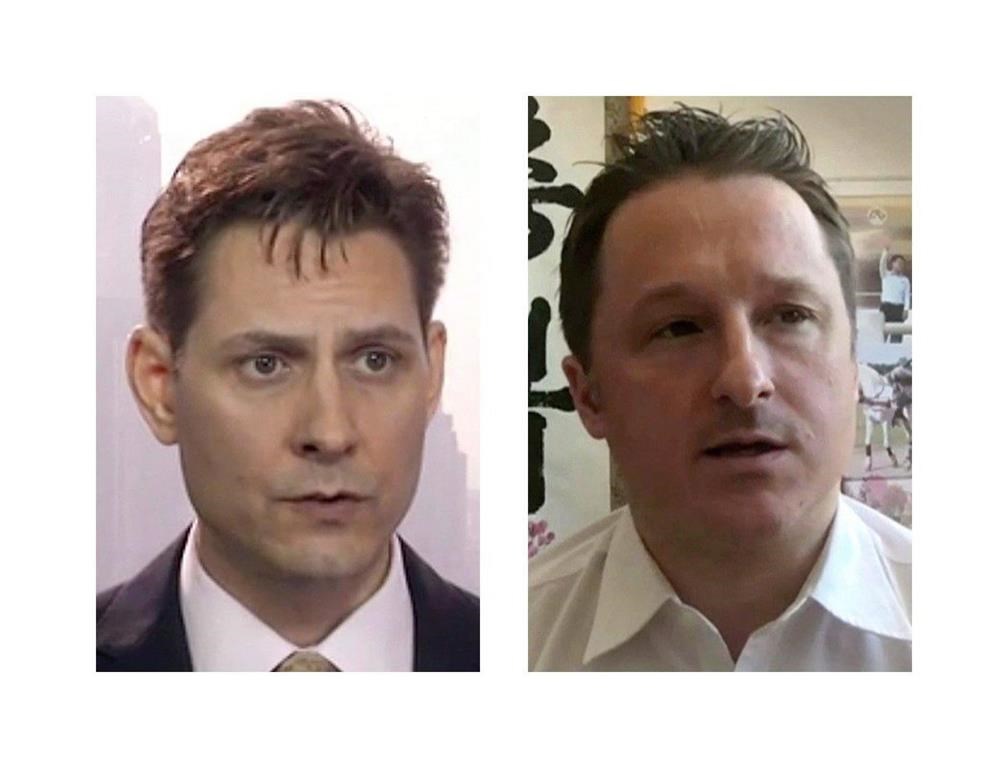
Michael Kovrig (left) and Michael Spavor, the two Canadians detained in China, are shown in these 2018 images taken from video. Canadian diplomats have been granted consular access to one of two Canadians detained in China.  THE CANADIAN PRESS/AP

Labels: , , ,

() Follow @rheytah Tweet