
Politic?

This is a blog dedicated to a personal interpretation of political news of the day. I attempt to be as knowledgeable as possible before commenting and committing my thoughts to a day's communication.

Saturday, November 29, 2025

Forging Trade Ties -- Forgoing Human Rights

"We highly appreciate the proactive stance of the new Canadian government in promoting the improvement and development of bilateral relations."
"Cooperation between the two countries in trade, energy, and cultural exchanges has yielded fruitful results, and has brought tangible benefits to the people of both nations."  
"Looking ahead, China and Canada should translate the important consensus reached by our leaders into concrete actions and work together to steer our relations back to  healthy, stable, and sustainable path." 
Yang Wanming, president, Chinese People's Association for Friendship with Foreign countries 
 
"[While the world is going through] a period of profound global upheaval, an era shaped by shifting geopolitics and economic volatility, within this uncertainty, there is also opportunity."
"This is one of our most consequential trading relations."
"[Canada is committed to working with China] as we look to address trade challenges and advance cooperation to shape a forward-looking economic relationship."
"[We] can help China simultaneously meet its growing energy needs and climate goals."                                                                                                                                     Canadian ambassador to China Jennifer May   
https://i.cbc.ca/ais/79da9ed4-df0a-4988-96a5-a99276f31eea,1763755685907/full/max/0/default.jpg?im=Crop%2Crect%3D%280%2C372%2C7444%2C4187%29%3BResize%3D860
Prime Minister Mark Carney shakes hands with Chinese President Xi Jinping at the start of a meeting in Gyeongju, South Korea, on Oct. 31. (Adrian Wyld/The Canadian Press)
As the Canadian Liberal government wrestles with the trade and political relations problems the second iteration of a Donald Trump presidency in Washington has brought to the fore, the search for new international trade partners has seen Canada finding it suddenly expedient to warm relations with the People's Republic of China, after an interval of frosty relations. The reasons for which have been many and compelling. Not the least of which, but the most recent as it were, Beijing's interference in Canadian politics during elections.
 
There have been other recent issues; the arrest and detention and imprisonment of two Canadians in China known as the 'two Michaels' (Michael Kovrig and Michael Spavor) in 2018, held for several years in extremely rough conditions as purported spies. This was an illustration of Beijing's 'hostage-diplomacy' in retaliation to the arrest of Huawai's chief financial officer Meng Wanzhou on a U.S. warrant, for extradition to the U.S. to stand trial on criminal charges. Other Canadians faced charges related to drugs, leading to death sentences. 
 
Chinese cyber threats in Canada, the regime's threats against Chinese Canadians, its infiltration of academia, along with wholesale thefts of sensitive government and private industry initiatives, the most notorious of which was Nortel where former Chinese national employees lifted sensitive internal documents taken to China enabling groups like Huawai to profit from a successful global enterprise whose operations were repeated in China leading to the collapse of the Canadian firm.
https://i.cbc.ca/ais/1.5307464,1709351885000/full/max/0/default.jpg?im=Crop%2Crect%3D%280%2C0%2C1919%2C1079%29%3BResize%3D860
Xiangguo Qiu wears a biocontainment suit while working in the containment lab at the National Microbiology Lab (NML) in Winnipeg. Qiu, her biologist husband Keding Cheng, and her students were escorted out of the NML in July 2019. Qiu and Cheng were fired in January 2021. The RCMP is still investigating a possible 'policy breach' reported by the Public Health Agency of Canada. (CBC)
 
Another operation of industrial espionage took place at the Winnipeg-based National Microbiology Laboratory linked to the Canadian Science Centre for Human and Animal Health, when two Chinese nationals employed at the facility, Dr. Xiangguo Oju and Keding Cheng, her husband, illegally sent vials of infectious materials back to China in 2019; they and their Chinese students were escorted out of the lab, on suspicion of stealth of scientific data which ended up at the Wuhan Institute of Virology.
 
Relations between Canada and China under Liberal-led governments in Canada have always flourished. Former Prime Minister Jean Chretien led countless trade missions to China, and on his retirement from government working for a prestigious Canadian law firm, became their point man for China through his many high-level government contacts. Under former Prime Minister Justin Trudeau relations were on-again, off-again, with his government yearning to restore trade relations despite setbacks.
 
The current leader of the Liberal Party of Canada and now current prime minister, Mark Carney, whose business background with Brookfield Asset Management Ltd. has warm, profitable relations with China has now once again reinstated relations with China. Mr. Carney has accepted an invitation by Beijing to visit China at "a mutually convenient time", for the purpose of strengthening bilateral ties; read that trade issues of immense importance to Canada, although for China these are fungible trade issues.
https://i.cbc.ca/ais/5c4379b9-d94c-40ed-ba0d-72385ab01c2a,1761951549429/full/max/0/default.jpg?im=Crop%2Crect%3D%280%2C0%2C1920%2C1080%29%3BResize%3D620
Prime Minister Mark Carney has committed to tackling ‘irritants’ with Chinese President XI Jinping as the two countries had their first formal leader-to-leader contact since 2017. Carney was also invited by Xi for a state visit.  Still from video/CBC
 
The Canadian embassy in Beijing arranged a reception to mark the 55th anniversary of the founding of diplomatic ties between Canada and China, co-hosted by the Chinese People's Association for Friendship with Foreign Countries, a state-linked organization. At a meeting last month in the Republic of Korea, the two leaders, Prime Minister Carney and President Xi Jinping congenially agreed to reopen warming talks toward improved relations.
 
That meeting during the Asia-Pacific Economic Economic Leaders' Meeting in Gyeongju marked the first meeting between Canadian and Chinese leaders since 2017. The leaders "agreed that their meeting marked a turning point in the bilateral relationship", with both leaders directing their officials to work toward resolving outstanding trade issues, primarily seafood, canola and electric vehicles. They spoke as well of clean and conventional energy, climate change, manufacturing and international finance.

Even with strained relations, China is Canada's second-largest trading partner after the United States. China is the second-largest source of imports, second-largest export market. A thaw in relations between the two countries will certainly benefit Canada. In the same token, China's human rights record with respect to the Uyghurs...Canada went so far as to pass a motion in the House of Commons condemning the People's Republic of China for 'genocide' against its Uyghur population.
 
China takes advantage of both Canadian products and expertise, including education, financial services and sustainable infrastructure for clean conventional energy. Beijing is also interested in increasing energy resources such as oil and gas, from Canada. For China, it is Canadian raw materials and its abundance of natural mineral resources that draws its interest. For Canada it is finished products that come from China that form the bulk of its imports.  
"Fifty-five years [since former Prime Minister Pierre Elliot Trudeau opened Canada up to China] is a milestone that invites us to reflect on our history, what we have achieved together, and how we navigated deeply complex and changing times."
"I want to be very clear that we are here to build this relationship and to build it strong."
Jennifer May, Canadian ambassador to China 
https://i.cbc.ca/ais/dfedd1f1-d162-435a-bde8-cf4aa6a92d71,1760660082615/full/max/0/default.jpg?im=Crop%2Crect%3D%280%2C0%2C1920%2C1080%29%3BResize%3D620
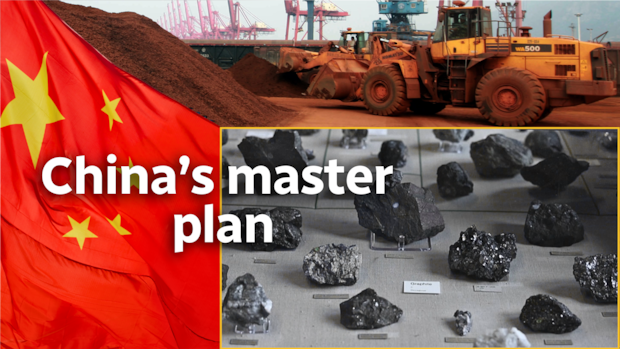
China controls the world's largest reserves of rare earth elements, and now it's tightening its grip. China's export restrictions are giving it powerful leverage over the United States and U.S. President Donald Trump is determined to catch up. Images provided by Getty Images, The Canadian Press and Reuters.


Labels: , , , , , , , ,

Saturday, February 09, 2019

Forewarned Is Forearmed

"[Canada] is a]natural target for politically motivated retaliation from a number of actors worldwide. The attraction of cyber to policy-makers around the world is that it's a tool you can use to gather information and influence events."
"The status quo today is that civilians are generally the first targets of state-on-state cyber combat."
"This proliferation of cutting-edge offensive cyber power, combined with an increased willingness to use it with minimal blowback and spiralling distrust, has set the stage for more disruptive and destabilizing cyber events, possibly in the near future."
"If you make a list of critical industry you're going to defend, then that means you're leaving other industry and everyday citizens vulnerable. It would be important to acknowledge in principle that defending all Canadians and businesses is a priority for the government, as opposed to picking a few winners and losers in critical industries."
"If you practise good cyber hygiene it'll eliminate 95 percent of the threats you face. But there is a point where only a military can counter another military operation."
Christopher Porter, cyber security expert, former CIA analyst
A computer expert operates at the NATO Computer Incident Response Capability (NCIRC) technical centre, at NATO's military headquarters SHAPE in Mons, southwestern Belgium in a Dec. 10, 2013 file photo. (Yves Logghe/Associated Press)

Banks in Canada have been victimized by cybercriminals as for example one cybertheft operation in 2016 traced eventually to North Korea that hit a number of Canadian banks. These attacks can produce an effect directly impacting Canadians. FireEye, the cyber security firm that Mr. Porter represents, routinely finds underground operations where thousands of stolen credit cards belonging to Canadians hoisted from large financial institutions and smaller credit unions are for sale.

Mr. Porter also cited the Trickbot malware campaign using hacked wireless routers in control of a virus stealing money from banks and Bitcoin wallets that targeted a Canadian bank, among its victims. Another fifteen Canadian banks were targeted through a more recent campaign named PandaBot. Governments, asserts Mr. Porter, are required to be prepared to assist financial institutions in fighting off the incursions of these cyber operations.

He likens the bank's operative capabilities succeeding in blocking out the average cyber criminal, but when it comes to military cyber weaponry, a robust opposing military defensive is required in that corporate computer systems cannot oppose state-sponsored attacks. He spoke before a House of Commons committee to address Canada's need to prepare itself for cyberattacks.

An issue currently at debate in the present standoff between Canada and China over a Huawei executive in Canadian custody awaiting extradition on a warrant to the U.S. When countries oppose one another's policies for whatever reason, relying on the facility of imposing sanctions to produce economic damage in lieu of outright war represents a conventional, traditional form of pursuing conflict.

Sanctions, while useful, have been overtaken by the more destructive and confusing cyber-intrusions to wreak havoc and influence events. Once used primarily for spy operations to collect data on military operations or corporate secrets, gravitating cyberattacks through military action can be cause "serious disruption". Estonia as an example, can speak on the issue with authority of experience when Russian hackers effectively shut down the country's cyber infrastructure.

And nor has organized crime ignored the potential inherent in the usefulness of cyberattacks with their growing sophistication in targeting individuals, corporations and government agencies for maximum confusion and effectiveness in blackmailing discreetly for profit in untraceable cybercoinage.

In the United States, authorities there fixated on the need to secure election systems such as voting machines and for their trouble saw a major disruption on high ranking political figures through simple email hacks. Governments have a need to recognize vulnerabilities and to be nimble in responding to such cyberattacks in the interests of both national security and individual freedoms.

The House public safety and national security committee had a timely warning delivered on this vital issue for national security. What the Parliament of Canada and the current government does in response will be of interest both for the present and the future, as international tensions keep rising between countries of opposing ideologies and values.

"The cyberespionage threat to Canada is moderate, but could be on the rise. We have observed 10 separate espionage groups from China, Russia and Iran targeting Canada in recent years", Mr. Porter observed.

Attacks targeting banks can have a direct effect on Canadians and FireEye says it routinely discovers underground operations selling thousands of stolen Canadian credit cards, from big-name banks to smaller credit unions. Getty Images

Labels: , , ,

Tuesday, May 16, 2017

WannaCry?

"We believe it's important that other researchers around the world investigate these similarities and attempt to discover more facts about the origin of WannaCry."
"The scale of the Lazarus operations is shocking."
Kaspersky Internet security (Russian multinational cybersecurity) Moscow

An employee works at the Moscow headquarters of Kaspersky Labs, which specializes in antivirus and internet security software [Sergei Karpukhin/Reuters]
"We are not aware if payments have led to any data recovery."
"This was not a tool developed by the NSA to hold ransom data. This was a tool developed by culpable parties, potentially criminals or foreign nation-states, that were put together in such a way as to deliver phishing emails, put it into embedded documents, and cause infection, encryption and locking." 
Trump homeland security adviser Tom Bossert


There's an inspirational, or is it aspirational, linkage. A Russian and an American-based cybersecurity firm each appear to have concluded through their analysis that there are unmistakable clues linking the current wide-ranging "ransomware" attack on worldwide computers to a gang of cybercriminals they feel could be the signature cyberwar statement of the Peoples Republic of North Korea. If so, this is North Korea at its most ambitious; responding to the new South Korean government's tentative overture and the more strident attitude of the United States toward its dangerous mischief.

Not only is North Korea's Dear Little Leader determined to keep on firing off those Ballistic Missiles while indulging in faster, farther distances, dangling the prospect of more advanced nuclear tests on the way to perfecting a neatly powerful little warhead of the nuclear variety on what is fast becoming an arsenal of Intercontinental Ballistic Missiles, but indulging in the joy of perturbing the international community through mischief of an Internet-disruptive score, putting all manner of public and private interests temporarily out of commission.

But it seems that North Korean hackers simply took advantage of a tool developed elsewhere for the opposite purpose. Having accessed that tool, they simply re-purposed it to better reflect their own goal, transforming an American-security advanced tool into a North Korean formula to extract funding from agencies desperate to have their data and functionality restored so they could return to normal. Researchers appear to have linked a hacking tool originating with the U.S. National Security Agency (NSA) that had been linked online to the current broad WannaCry attack.
Kim Jong-Un
Computer security experts have linked code in the WannaCry ransomware software to North Korea
Ransoming the ability of the world community to manage its resources and infrastructure and vital services, while threatening to obliterate its capacities and record-maintenance. Suddenly Kaspersky, always under suspicion in the West for its ties to the Kremlin, is handing out sage advice worldwide. Of course, this is what a global cybersecurity company is meant to do in any event, so it is merely living up to its billing. Alongside Symantec, no less.

Similarities in coding between an earlier version of WannaCry and a 2014 cyber attack from the Lazarus Group has clues both Symantec and Kaspersky  link to the identity behind this most recent cyber attack. South Korea knows all about the dauntingly disabling effects of such a strike; it experienced no less of an Internet immobilization  in 2014 with the "DarkSeoul" operation shutting down all its infrastructure. And a $81-million cyber robbery of a Bangladeshi bank further distinguished the capability of the dark forces of cyberattacks.

The Lazarus Group operation is running a "malware factory", notes Kaspersky darkly of the North Korean state actor. Thousands of additional computers fell prey to the WannaCry attack with the resumption of week-day business, affecting hospitals, businesses, schools and daily life in over a hundred countries. Computers were paralyzed in factory, bank, government agency and transport systems operations in Brazil, Russia, Ukraine, Spain, India and Japan among many others.
Experts have linked WannaCry to the Lazarus Group, a North Korean operation
Experts have linked WannaCry to the Lazarus Group, a North Korean operation Credit: Bloomberg

Throughout Asia, thousands of new attacks were reported with 600 locations in Japan affected as Hitachi and Nissan Motors reported problems, while in China almost 30,000 institutions were infected through hundreds of thousands of electronic operating devices. Universities with their older computers and slow updating of operating systems and security were particularly hard hit, according to Fang Xingdong, ChinaLabs founder. And Russia too was particularly hard hit by this noxious malware.

Is there any especial irony in the fact that North Korea's only 'friend' and support has also been hit indiscriminately? China will no doubt have much to discuss with its North Korean protectorate in the near future. Even Vladimir Putin may have much to say to Pyongyang, since its most recent rocket test was an especially powerful one, plunging into the sea off the Russian coast, after ascending higher than any of its previous little surprises.
"I want to confirm that we are categorically against the expansion of the club of nuclear powers, including with the Korean Peninsula and North Korea."
"But at the same time, we understand that what we have observed in the world recently, and specifically flagrant violations of international law and incursions into the territory of foreign states, changes in regime, lead to such kinds of arms races."
Russian President Vladimir V. Putin
Oh dear, Mr. Putin! Violations of internal law and incursions into the territory of foreign states, you say?

Labels: , , , ,

() Follow @rheytah Tweet