


B.C. Wildfires -- Up Close and Personal
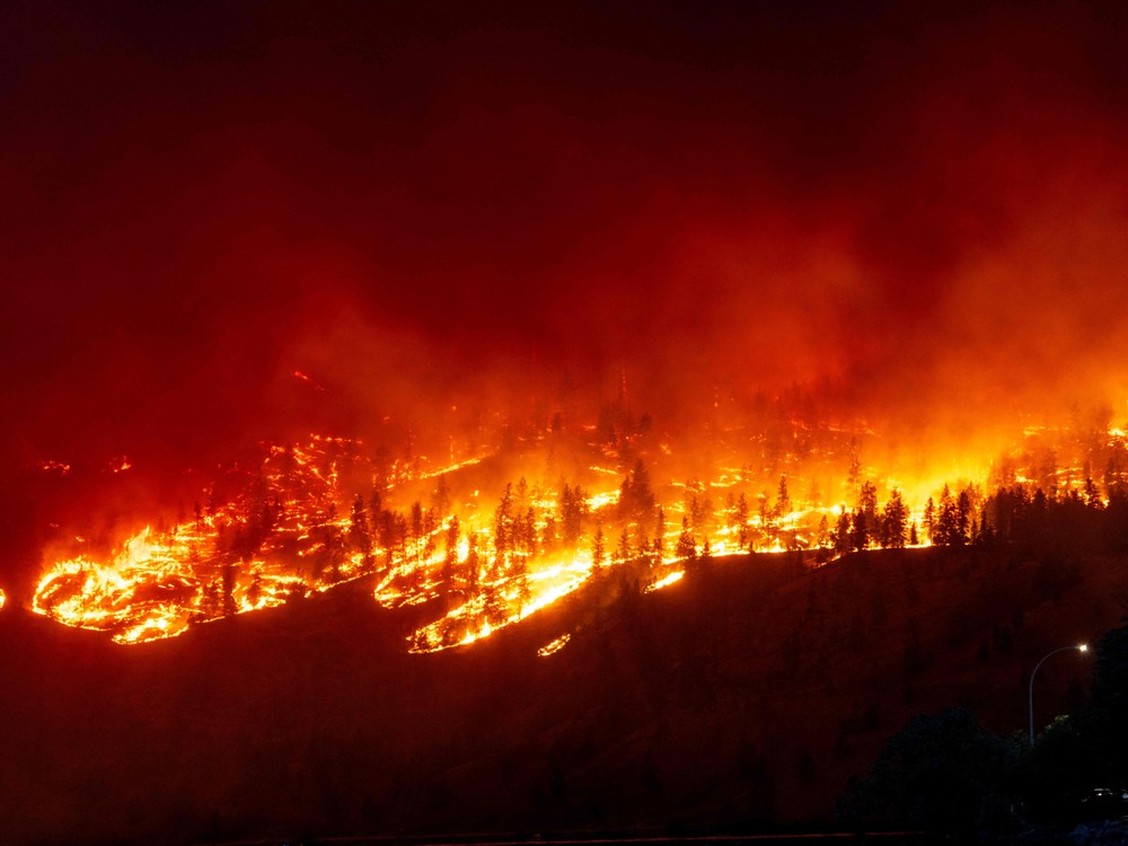 |
| The McDougall Creek wildfire burns in the hills in West Kelowna on Aug. 17, 2023, as seen from Kelowna. Photo by DARREN HULL /AFP via Getty Images |
"Then the flames started, and they started everywhere all at the same time because it was an ember shower.""We're a pretty small fire department, we have three apparatus, so we tried to do our best but there was just absolutely no way that we could attack all of it. And as soon as you don't attack it, it spreads.""We fought for as many houses as we could. We stopped the flame front and saved probably, I'd say, 65 to 75 percent of the houses in Traders Cove.""I saw my house burn. When we were fighting the fires in Traders Cove, we literally had fire personnel with their backs to their house that was burning behind them, and they were fighting the neighbour's, trying to save the neighbourhood.""It was extremely, extremely fast. The wind was blowing directly, I mean literally, at my house. It was a wall of fire 100, 125 feet high, travelling 35 kilometres an hour.""It was surreal. It was watching nature at its worst. ... It just kind of ate my house."Paul Zydowicz, chief, volunteer fire department, Wilson's Landing, British Columbia"I quickly found myself in a pretty tricky battle. I was able to call in our own firefighters to come and help me. And that's when it became real for me that we were surrounded by fire and it was bearing down on our community hard. And we were all in the fight of our careers.""I was thinking: If we just had one more fire engine we could save that house. And if we had one more fire engine, then we can save those other two houses. And if we had one more, we could get the other ones on the other side of the street. And, you know, of course you can never have enough resources in that situation.""It's unprecedented. We are not used to fighting wildfire fire against six-storey condominium buildings."Jason Brolund, West Kelowna, McDougall Creek wildfire"It moved 20 km south in under 12 hours, which is extremely [aggressive] for fire behaviour in British Columbia.""That is a force of nature similar to a tornado, similar to an earthquake or a tsunami."Forest Tower, B.C. Wildfire Service Information officer"[The fire that blew into this region] was something I've never seen before.""When I saw the flames coming that day, it was something bigger than any of us could handle.""but the community rallied together, they saved what they could save. It was actually just among the most impressive displays of community spirit I've ever seen.""I want to stress the fact that we've lost structures, people are hurting, but we haven't lost lives -- not yet."District deputy regional fire chief Sean Coubrough"This MacDougall fire has been a very harrowing experience for everyone. I'm grateful that there has been no confirmed loss of life that we know of, and we hope that this remains.""It's very devastating for the loss of property and the impact of businesses that has occurred. There's lots of collective grief and high emotions."Chief Robert Louie, Westbank First Nation
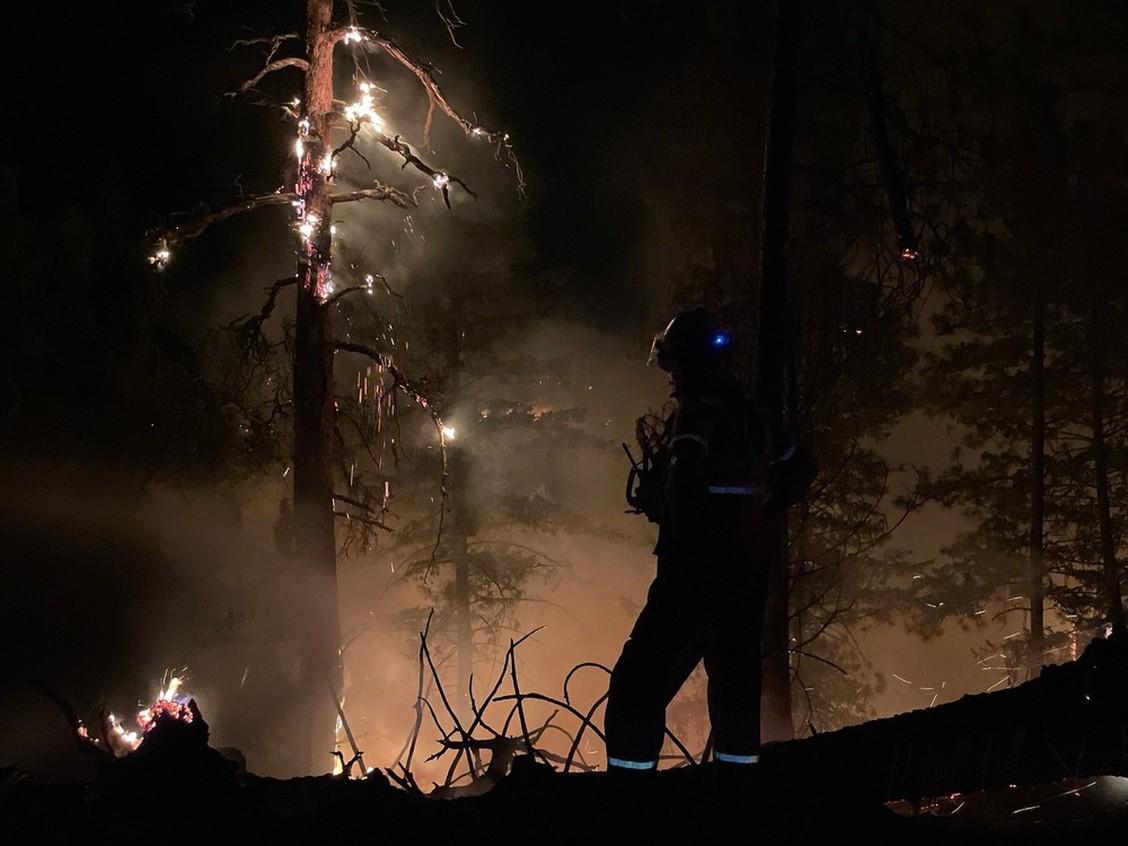 |
As gusting winds whipped up the McDougall Creek wildfire, airplanes dumped fire retardant in the area. Fire chief Zydowlicz had firefighters staked out on the west side of Okanagan Lake, additional crews on a local forest road. As evening fell flames could be seen thrusting toward Wilson's Landing. The two dozen on-call firefighters with three trucks stared down the fast-moving blaze, leaping and growing voraciously.
That was August 17, the start of the worst week of the worst year for wildfires in the history of British Columbia, which led to hundreds of properties damaged, thousands of evacuations across the province, and hundreds of firefighters arriving from near and abroad to pitch in and work as an emergency team to address the crisis. A day later the McDougall Creek wildfire blew into West Kelowna, roughly 13 km south.
Jason Brolund, the city's fire chief spent the day organizing how best to attack the blaze, overseeing the command post in the city. On his way home August 18 for a few hours of sleep he stopped in West Kelowna Estates to check on his firefighters and an "overwhelming" scene assailed him. A colleague pointed him to a subdivision street not yet visited by the firefighters. He knocked on doors to check that residents had evacuated, and as the night sky glowed orange fluorescence, firefighters used water from swimming pools "right before it hits the person's lawn, like inches from the house".
The inferno melted street signs, uprooted large trees, and ripped propane tanks open, blowing them into the woods. At Wilson's Landing firefighters attacked the blaze roaring north along Westside Road, work that stretched into the next morning, staying one step ahead of the flames to protect small communities, but finally forced to retreat 10 km when they reached the Lake Okanagan Resort.
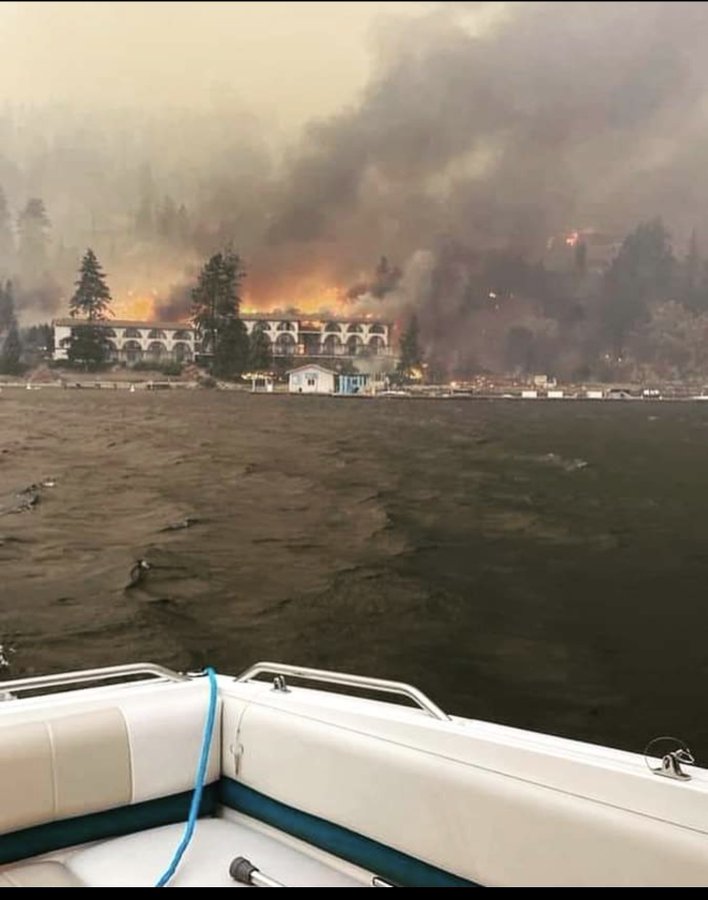 |
| Lake Okanagan Resort on fire Photo: Tedd Buddwell |
"The fire chased us out of Lake Okanagan resort" explained Chief Zydowicz. Boaters posted photographs of the 217-room historic resort engulfed fully in flames. The tradespeople, doctors, lawyers and entrepreneurs who formed the troop of volunteer firefighters experienced a harrowing 22 hours. Two were injured; one with facial burns, the other a broken wrist. "These two firefighters, after being treated at the hospital, called me from the hospital and said put me in a next shift please, and preferably earlier", said Chief Zydowicz.
Along with losing his own house, the fire had destroyed $150,000 in boats and other gear for his riverboat company, Northwest River Boats. Other Wilson's Landing firefighters lost everything and continued to fight the wildfire. The fire in the North Westside rural area destroyed or damaged about 90 properties in both Traders Cove and Wilson's Landing, as well as a children's summer camp. Most homeowners had heeded evacuation orders, even though a handful were rescued after waiting too long to leave.
In the city of West Kelowna and the Westbank First Nation another 84 properties were damaged or destroyed, along with four in Kelowna and three in Lake country. West Kelowna firefighters that afternoon fought a ground fire that was threatening a gas storage facility, a mobile home park and a number of new condominium developments. That day in mid-August was hot, dry and windy across most of the province. Other areas of the province saw mounting fire crises with several communities in the Columbia Shuswap Regional District given evacuation orders as the area faced "its most devastating wildfire day in history".
A base camp for 400 firefighters west of Adams Lake was forced to evacuate when the fire risk was acute and cold air whipped up the nearby Bush Creek East fire. Under 12 km from the camp the Lower East Adams Lake fire was increasing in intensity close to the Interfor Adams Lake Mill, a major area employer. It was saved, while flames tore south attacking other communities on the north side of Shuswap Lake. Losses of 100 homes were reported by residents in Scotch Creek and Celista.
By August 20 the situation began to change when Chief Broland said "We're now four days in. It feels like months. But things are looking better. We are finally feeling like we're moving forward rather than we're moving backwards, and that's a great feeling for all of us to have. In saying that, make no mistake, there will be difficult days ahead, and we are continuing to prepare and address those."
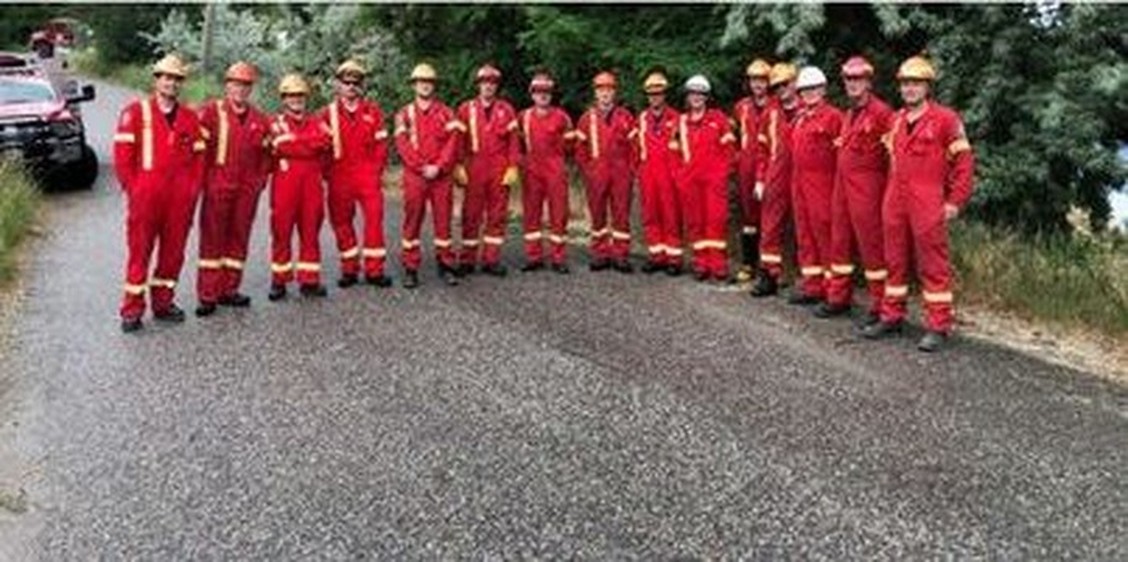 |
| A recent photo of some of the Wilson’s Landing firefighters. Thirteen people in the 24-member department lost their homes in the blaze. Photo: GoFundMe jpg |
Labels: Blazing Infernos, British Columbia, Destruction, Firefighters, McDougall Creek Wildfire, Wildfires
posted by Pieface | 9:14 PM
|
0 comments


